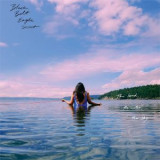
WHITE RING mark a triumphant return with a brand new full-length Gate Of Grief, due out on Rocket Girl on 22 June 2018. Their debut album arrives a full eight years since their benchmark EP, Black Earth That Made Me, which sold out almost instantly, making their records some of the most highly sought after on the underground scene and earning them a cult following across the globe. Swerving from aggressively abrasive to beautifully ethereal, musically they draw from varied and challenging palette, whilst tackling themes of loss and acceptance due to struggles with drug addiction and existential dread on a broader scope.
WHITE RING were originally formed by Bryan Kurkimilis and Kendra Malia, before they were joined by Adina Viarengo, with Bryan and Adina currently touring as a duo. One of the most acclaimed proponents of the "Witch House" movement, WHITE RING blend heavy, distorted electronics with eerie, unsettling vocals. However, their new material, created over the course of seven years, pushes the boundaries further, subverting genre ideas and mashing them all together, with industrial, metal, rave, chopped and screwed, rap, grunge, neo folk, post punk and new wave all in the mix. As Bryan Kurkimilis explains; 'We treat our influences like tools to create a certain feeling. We are interested in covering more ground than sticking to a certain formula.'

Bryan and Kendra originally met on Myspace in 2006. At the time Bryan lived in New Orleans and Kendra was in New York, and they didn't even meet face-to-face until 2008 after they had already released a few singles. In 2010 they released the EP Black Earth That Made Me, which was a collection of songs that they mostly recorded before they met in person. The record confounded expectations by selling out immediately on pre-order, making it very rare and highly sought after, with copies going on Ebay for large sums. It was reissued by Rocket Girl in 2011 and still continues to sell in voluminous amounts.
They started playing live in 2009 and rapidly grew a reputation for their captivating performances, usually bringing their own lighting equipment and putting on a spectacular laser show. They have played for large crowds in their hometown of NYC and toured the UK in 2010 in support of their sold out split 7" with oOoOO, playing InTheCity and SWN festivals - which were their first shows outside of New York. They have since shared the stage with the likes of Cold Cave, araabMUZIK, Liturgy, Blank Dogs, Gatekeeper, Blondes, oOoOO, Clams Casino, and others.
They started recording Gate Of Grief in 2010, with the hope of exploring new musical territory, however they took a while to find their path. Bryan and Kendra had some tough personal battles to fight, a sense that pervades the whole album. Thematically it delves in to some pretty dark places whilst exploring the concept of time and what it does to people, relationships and society. As Bryan explains; 'There is a lot of tragedy in this album but there is also hope at the end of it.'
By 2016 pressure was building to finish recording, however due to Kendra's ill health, they needed to bring in someone new to assist with vocals. Fortunately they found Adina Viarengo, who had played in various bands and gave them the impetus needed to complete the album. Shortly after meeting in Brooklyn, Bryan and Adina moved to Joshua Tree, California to finish recording the album, before settling in Massachusetts. Her vocal style fitted in seamlessly with what Kendra had been doing, and although she sang on half the songs, it's almost impossible to tell who is singing on which track, thus making her the perfect addition to the band.
Gate of Grief can be considered the second part of Black Earth That Made Me, or rather, they are the first two chapters in an overarching trilogy about evolution. As Bryan explains; 'First you are born but then you realize what you are and what is against you and it's a flood of emotion that you can only hope to hold on for and let it pass.'
The album title, Gate of Grief, refers to the real gate between Africa and Saudi Arabia that is believed to be the spot where the first humans migrated out of Africa and went on to populate the rest of the world. The album art ties in with this concept, with an image depicting a group of settlers in the USA in early 1900 during a parade. They were actually from a cult in the early 1900s in Bryan's hometown of Fort Myers, Florida.
M 13) Burn It Down
Search:12 tree
- A1: Yawn Yawn Yawn (Dream Another Reality Mix)
- A2: Yawn Yawn Yawn (Dream Another Reality Instrumental)
- B1: Yawn Yawn Yawn (G-Tar Cannyon Mix)
- B2: Yawn Yawn Yawn (Thankful Mix)
- C1: Beyond The Outside (Feel The Sky, Feel The Wind Nature Mix)
- C2: Beyond The Outside (Feel The Sky, Feel The Wind Nature Instrumental)
- C3: Beyond The Outside (G-Taracapella)
- D1: Beyond The Outside (Storm Mix)
- D2: Song With No Words (Tree With No Leaves Mix)
- D3: Song With No Words (Laughing Instrumental)
- E1: Yawn Yawn Yawn (Chee Shimizu Remix)
- E2: Beyond The Outside (Max Essa Remix)
- F1: Yawn Yawn Yawn (Yabe Mix)
- F2: Song With No Words (Kuniyuki Remix)
"This release is 3xLP and it's individually 1000 hand-numbered limited edition. The first 200 copies are pressed on BLUE TRANSPARENT vinyls (AR012).
It's dedicated to the Organic / Meditative / Groovy 1992 Japanese release, with all the ORIGINAL tracks, contained both in the CD and in the now so rare 12"" + 4 SPECIAL REMIXES from Japanese men, none than... Kuniyuki, Chee Shimizu (Organic Music), Max Essa and Tadashi Yabe (U.F.O.).
Archeo Recordings is a reissue record label that regenerates old, lost, obscure (and forgotten) rare gems of Italian music of the 70s and 80s, and not only.
All outputs are licensed by the artists and the vintage labels; audio tracks are remastered in their original form; the sleeves and center labels are graphically recreated for today but all based on the original images. Archeo would like to make the music available to a wider audience of collectors, DJs, music lovers of a forgotten time.
Lullabies For Insomniacs presents 'For Leena', a collection of unreleased pieces composed between 1991 & 1998 by Dino J.A. Deane for the choreography of Colleen Mulvihill. Gatefold Sleeve
.
Dino J. A. Deane began his professional career, at the age of nineteen, as a musical arranger and multi-instrumentalist (trombone, flutes, keyboards, percussion). He worked in funk bands around Los Angeles before moving to San Francisco in the mid 1970's, where as an improvising artist he became involved in the diverse communities of dramatic theatre, modern dance, free jazz and punk rock.
In the early 1980's Mr. Deane pioneered the use of live-electronics, live-looping and live-sampling in three distinct genres that heavily informed his later compositions: As a member of art-punk band 'Indoor Life', touring and recording with fourth world pioneer Jon Hassell and as an electro-acoustic percussionist in the Conduction orchestras of Butch Morris.
During this period Mr. Deane also worked as a sound designer for the theatre, with directors Sam Shepard, Julie Hebert and Christoph Marthaler. He also maintained a presence in the world ofmodern dance, creating and performing compositions for former Olympic gymnast Colleen Mulvihill.
The couple met in San Francisco in 1979 through his good friend Bruce Ackley, whom was commissioned to compose a score for one of her solo pieces. Colleen, was than a member of the Margaret Jenkins Dance Company and was planning to move to New York City to set out on her own as a dancer and choreographer. Their paths crossed again in 1980 when Dino moved to NYC with Indoor Life, during this time they began a long term relationship both on and off the stage, which continues to this day.
- A1: Original
- B1: Jackknife Lee Remix
Third Man Records is proud to announce the release of "The Blackout," a limited edition U2 12" in conjunction with Island Records. The limited edition U2 12" will be available for Record Store Day Black Friday, November 24th."The Blackout" marks the first physical release from U2's eagerly awaited new album, SONGS OF EXPERIENCE, due later this year. The 12" includes both the original album version backed by an exclusive remix by the band's longtime collaborator, Jacknife Lee. Hailed by Rolling Stone as "a dynamic new track," "The Blackout" was revealed this summer via a surprise live video, filmed during U2's blockbuster Joshua Tree Tour 2017.Third Man co-founder Ben Blackwell said, "The sound quality of this incredibly special record is a perfect example of the caliber of product Third Man Pressing is capable of producing. We couldn't be more proud." TMR's "The Blackout" 12" will be extremely limited, with just one single pressing at Third Man Pressing, the label's state-of-the-art vinyl production facility in Detroit. Black vinyl editions will be available at all participating Record Store Day shops.
- A1: The Cactus Rose Project - Jelly
- A2: Leston Paul - Santa Cruz
- A3: Dancing Fantasy - Voodoo Jammin' (Eros Mix)
- B1: Bandolero - Rêves Noirs (Instrumental)
- B2: Don Carlos - Aqua (Part One)
- B3: Language - Tranquility Bass
- C1: Kamasutra - Sugar Step
- C2: Moodswings - The Jazz Man
- C3: Congarilla - Sacred Tree
- C4: Red Sun - Honey From The Baka
- D1: Coste Apetrea - Hej Där
- D2: Christoph Spendel Group - Forever
- D3: Frank De Wulf - The End
- D4: Cantoma - Gambarra (Unreleased Mix)
Over the years, Phil Mison has become the go-to selector for those looking for Ibiza-themed compilations. None of his previous collections, though, have been quite as personal as Out Of The Blue, a compilation inspired by his first spell behind the decks at the Café Del Mar in 1993 - and the remarkable chain of events leading up to it.
Mison made his first trip to Ibiza in the summer of 1991 and quickly fell in love with the magical music being played by Café Del Mar resident DJ, Jose Padilla. On his return to the UK, Mison began to cultivate his own take on the laidback, open-minded style, recording mix-tapes of Ibiza style chill out' tunes to give to friends.
In November 1992, Mison was hanging out in Tag Records, Soho, when Padilla walked in. He plucked up the courage to speak to the Spaniard because earlier that summer Mison had given one of his friends some tapes to take out to Jose in Ibiza so he wanted to see if he had got them. During the conversation Mison invited him down to his next DJ set at Nicky Holloway's club, the Milk Bar and less than three months later, and clearly impressed by what he'd heard on the tapes, Padilla invited Mison to fill in for him at the Café Del Mar, beginning in April '93.
It's that first trip to DJ in Ibiza - a crazy six-weeks spent dividing his time between spinning records at Café Del Mar, hanging out in Jose Padilla's house in the hills, and meeting some particularly eccentric White Isle residents - that proved the inspiration for Out Of The Blue.
The compilation contains a mixture of records that Mison played in his earliest Ibiza sets, those that remind him of that period, and recent discoveries that boast a similarly warm, loved-up vibe. Mison is at pains to point out that it's not a track-for-track representation of his first sets, but rather a collection inspired by this most momentous of experiences.
As you'd expect from a selector of Phil Mison's standing, Out Of The Blue is an outstanding collection. Some will no doubt hear the influence of his mentor - the man he credits with effectively turning his DJing career around - in the undulating rhythms and new age melodies of Kamasutra's Sugar Step', the meandering synthesizer solos and Spanish language vocals of Congarilla's sublime Sacred Tree', and the lilting flamenco guitars of Gambarra', an unreleased mix from Mison's popular Cantoma project.
Elsewhere, listeners can marvel at the starry ambient bliss of Belgian legend Frank De Wulf's The End', recline to the saucer-eyed fusion jazz of the Christoph Spendel Group, shuffle along to tactile, hard-to-find period deep house from Language, Moodswings and Don Carlos, and marvel at The Cactus Rose Project's ridiculously rare Jelly', a sparkling, disco-era jazz-rock outing partly inspired by the Doobie Brothers' Long Train Running'.
Out Of The Blue may well be a very personal selection of tracks celebrating a moment in time, but it's happily one that we can all enjoy.
Musically and emotionally, Superpitcher's third full-length studio album, The Golden Ravedays is a one sound autobiography that exhibits the skill, feeling and style that the artist has honed over a period of twenty years, musically, and forty-plus-years, emotionally.
And full-length it is:
The Golden Ravedays is an epic album of 24 tracks that was released in January 2017 and is stretching over 12 respective chapter albums during a one-year period.
The fourth chapter of The Golden Ravedays saga will be released on Hippie Dance in April 2017.
Number 4 of the series introduces two further tracks of the sound adventure that Superpitcher is taking us on this year.
Side A features Blood and Berry.
It is a captivating track that reminds one of the very first years when Superpitcher made music under the alias Sir Positive.
The beat is broken and the going is slow and rolling and the listening is a warm bath. There are flutes there that one never wants to stop and they almost don't. However essentially sweet this track is, like a berry on the tongue, it might lead to some blood on the dance floor!
Listening to Side B of this Golden Ravedays edition is entering a ghost town, alone, under a full moon.
Howl is a confluence of melodies and rhythms from Africa to Arabia where the snakes are being charmed out of their baskets and it is downright creepy.
A spooky voice is saying something but we don't know what exactly and it is bothersome because deep down we know that tonight when we are alone in the dark, we should be ready with the answer - or else.
All we can do is wonder:
Did Superpitcher sell his soul to the vampires for the vocals he let lose in this track
He answers by howling at the full moon behind thorn trees, in the shadows.
Entertaining, thoughtful and brave!
We salute the wolves and their master.
Hooo-oooowl!
Musically and emotionally, Superpitcher's third full-length studio album, The Golden Ravedays is a one sound autobiography that exhibits the skill, feeling and depth of style that the artist has honed over a period of twenty years, musically, and forty-plus-years, emotionally.
And full-length it is:
The Golden Ravedays is an epic album of 24 tracks that was released in January 2017 and is stretching over 12 respective chapter albums during a one-year period by record label, HippieDance.
We are thrilled to bring you the third chapter of The Golden Ravedays saga, released in March 2017.
Number 3 of the series introduces two further tracks of the haunting sound adventure that Superpitcher is taking his fans on during 2017.
Side A features 1984.
It has nothing to do with George Orwell's magnificent book but it could remind some of how the apocalypse might sound one day.
1984 is as sweet as the very first track, Little Raver, of The Golden Ravedays album but it stresses the fact that even though Superpitcher produces music mainly intended for the dance floor, he creates sound that is bordering on the shamanic.
1984 might as well be the meeting of a group of supersonic bottlenose whales that are overly excited to see each other after being separated by many an ocean and moon.
Side B of this edition brings us Pocket Love.
Or shall we rather say, Side B gifts us Pocket Love
Because we believe this is nothing other than a gift to us all.
Imagine looking into a kaleidoscope and turning the dial and experiencing all those colors as pockets of love rushing your way and exploding in satin wonderment the moment they past your eyes and ears. Imagine how it must sound like if all the e mails, tweets, facebook posts, instagrams, pinterests, grandma's postcards, text messages, letters on rice paper, hearts scratched into trees, declarations of eternal loyalty written in sand, phone calls and videos of the whole universe were all messages of love stuffed into pockets and sent to you.
Imagine the treasure you will receive!
Imagine being one big ear drum and listening to the very energy that this love exists of - imagine it and you will find yourself inside Pocket Love.
Fresh off Son Of Sound releases on Delusions Of Grandeur and Local Talk, New York based Henry Maldonado is back on his District 30 label with Son Of Sound 05 / The Love Up Beat Down. This 3-tracker features something for everyone, as Jackin' House, Disco-Chug and even Detroit Techno are well represented. Kicking things off on side A is 'Bout Love Again, an adrenalin induced shot of disco house served up the old fashioned New York way. MPC style loops, chop-ups and breakdowns give a nod to the '90s House 2 House style tracks Henry produced on Strictly Rhythm. Not falling too far from that tree is the disco-house chugger Need Each Other.
Rhodes chords accompany a bed of sliced-up New York Disco, for an infectious groove that will denitely keep that 120BPM momentum.Lastly we round out this EP with Inuence Is Bliss. This one will denitely appeal to lovers of Detroit Techno and House alike. Pounding drums, 16th note ride cymbals, arpeggiated synth lines and ghostly soulful chord progressions effectively distract you from the fact this track doesn't even have a bassline.
In autumn 2015, Swedish dream-pop duo Korallreven bid us all farewell by releasing the "round-the-world-in-a-day" sounding final single Here In Iowa, alongside memorable shows in New York City and Scandinavia. Now, they return for one last time with a disco dub dream remix of said song by the mighty Peaking Lights. This forms part of a 12" EP released by Be With Records. The record - limited to just 500 copies - will see its worldwide release for Record Store Day on 16th April 2016.
The 12" will also, for the first time on vinyl, include Korallreven's breathtaking cover of Guns & Roses' November Rain from 2014 as well as Shine On, the duo's rework of their own 2010 single Honey Mine, featuring Taken By Trees' Victoria Bergsman.
From the guys:
"Hard to say if Here In Iowa was an end or a start of something new. You'll see! Whether or not, we hold it as one of our highest heights and, after this beautiful season, we truly deeply madly felt that it was worth some extra limelight. And hey! Thanks for the remix, Peaking Lights! It's so wonderful! Life surely is."
- A1: Interview - Salut Des Salauds
- A2: Philippe Krootchey - Qu'est Ce Qu'il A (D'plus Que Moi Ce Négro-Là)
- A3: Gérard Vincent - Gérard Vincent Pas Gérard Vincent
- A4: Style - Playboy En Détresse
- B1: Pierre-Edouard - A Mon Age Déjà Fatigué
- B2: Casino - Pât Impérial
- B3: Bianca - La Fourmi
- B4: Trigo & Friends - La Dégaine
- B5: Hugues Hamilton - Je M'laisse Aller
- C1: Pascal Davoz - Cinéma
- C2: Anisette - Scratch Au Standard
- C3: Pilou - Ça Va
- C4: Henriette Coulouvrat - Miam Miam Goody
- D1: New Paradise - Easy Life
- D2: Gérard Vincent - Tas Qu'à Fermer Ta Gueule
- D3: Ich - Ma Vie Dans Un Bocal
- D4: Attaché Case - Les Crabes
- D5: Yannick Chevalier - Ecoute Le Son Du Soleilv
This is France in the Mitterrand years: fashions fleet as fast as governments. In the early eighties, the happy-go-lucky gather the nectar of each and every new release.
Believing in a bright future for videotex, and loosened up by the sexy talks broadcasted on the budding pirate radios, the new generation dreams of dance floors and holiday clubs. French Boogie, which preserves the spirit of these years of boodle and bunkum, is the ideal soundtrack to their dreams.
What the web now refers to as French Boogie is some synthetic funk reflecting the spirit of those days when nothing was impossible, or so it seemed. Its syncopated flow heralded the dawning of French rap. Often considered as some kind of post-disco, inspired as much by black music as by new wave, this carefree pop music with bawdy lyrics indulged in simple pleasures: holidays, swank and sun were recurrent themes. Totally in tune with its time, it incidentally glorified luxury, success, and a certain consumerism embodied, for instance, in Bernard Tapie.
In popular clubs such as La Main Bleue in Montreuil, or L'Echappatoire in Clichy-sous-Bois - where Micky Milan could be seen behind the decks - an enthusiastic audience discovered this new sonic wave, influenced as much by French pop as by Sugar Hill Gang or Kurtis Blow. The artists who first launched the movement engaged in it wholeheartedly, but as often the case with new music trends in France, humour and casualness quickly became a decoy to impose a new style. This explosive mixture, in which startling and typically Frenchy French lyrics go along New-York-style tunes, is sometimes reminiscent of the kinky comedies directed by Max Pécas or Claude Zidi. On this prolific scene, partly originating from the Jewish community, everybody was looking for success, trying to hit the jackpot with what was to hand. Famous media personalities, one-hit wonders or John Does in quest of fame, all had a go at French Boogie - more or less successfully. Apart from « Vacances j'oublie tout » by Elégance, « Un fait divers et rien de plus » by Le Club, or « Chacun fait ce qui lui plaît » by Chagrin d'amour (produced by Patrick Bruel), very few songs became hits: the story of funk in France is that of a half-baked robbery.
In this myriad of new musicians, the very young François Feldman and Phil Barney pioneered a fresh and hybrid style. Other well-known artists like Gérard Blanc from Martin Circus (Attaché Case), Richard de Bordeaux (Ich), or Jean-Pierre Massiera (Anisette, Pirate Scratch Band, Mandrake, Scratch Man...) added an eccentric touch to this sound-wave, making it often entertaining, and sometimes showy.
Capture d'écran 2015-10-26 à 12.55.43Singers like Agathe (the author of 'La Fourmi' and of the hit song 'Je ne veux pas rentrer chez moi seule') were far more than just window dressing. They even tried to give an ironic and subversive twist to this rather harmless genre. The very vindictive rebel Gérard Vincent shared in this spirit, but as a whole, French Boogie became associated with nonchalance and sauciness. Thus, Stéphane Collaro, Gérard Jugnot, Alain Gillot Pétré and other TV clowns would clumsily contribute to this French variation on funky sounds. In a few but intense years, French Boogie gave all the tips to party with style.
If some hits made it possible for the happy few to get a real house under truly exotic palm trees, the wave actually ebbed away very quickly, leaving quite a few musicians stranded on the shore. Whether they were sincerely motivated, or simply opportunistic, they had failed. In 1984, French Boogie was already breathless, and got merged with other genres: on the one hand, rap and breakdance adapted its flow to a more urban world, especially with Sydney's show, H.I.P.H.O.P, and Dee Nasty's broadcasts on Radio Nova; on the other, italo, new beat and house began to rule over dance floors, even more strongly asserting the will to develop music for clubs.
Squeezed in between the age of disco and that of modern electronic music, French Boogie was a transitional phase, but it remains an amazingly refreshing testimony to the intermingling of pop and underground cultures. The genre was hastily categorized as anecdotal in spite of its pioneering synthetic groove and matchless bass lines. An attentive ear will discover the poetry of the ephemeral beyond the eccentricities of the genre, as well as a certain unexpected avant-gardism. At the origin of major music trends, always cheerful and catchy, French Boogie is what you need to party.
Four years since they released Dring, Nôze are making a very welcome return to Circus Company with their fifth album Come With Us, and once again the pairing of Nicolas Sfintescu and Ezechiel Pailhes has yielded a collection of captivating and curious songs that could only come from the unique sound world they inhabit. As has been evident throughout their career from their early experimental house days through to the more recent song-based material for Get Physical, the Parisian duo have always moved on from album to album, maturing their sound to deliver a new experience for themselves and their listeners every time. On this occasion, Come With Us finds Nicolas and Ezechiel in a particularly introspective mood. Even as their work has naturally turned more to home-listening craft over the years, here they revel even more in personal reflection both musically and lyrically. Tracks such as Saint' conjure up the romanticism of dustbowl blues with its vagabond guitar tones (played by long time collaborator Thibault Frisoni), while Nicolas's voice reaches new distinctive heights in spellbinding tales like Apache". Emiliano Turi also lends a new sense of natural groove to the Nôze sound with his live drumming, and as ever, Nicolas and Ezechiel are keen to bring their friends into the fold for guest vocal spots. Dani Siciliano spars beautifully with Nicolas on the disco-inflected album opener I Need To Know". dOP vocalist JAW, fresh from his Midtown project, joins in for the bittersweet balladry of Come With Me".
LP version comes with free download card.
Radio support from Benji B & B Traits (BBC Radio 1), Nemone (BBC 6 Music), . DJ support from Ben UFO, Joy Orbison, Caribou, Tessela, Mosca, Kowton, Ron Morelli, Bok Bok
Print features confirmed in Groove, Beat Mag, Faze (DE), Tsugi (FR), DJ Mag (IT), Volkskrant (NL), The Gap (Austria)
Print reviews confirmed in Mixmag, The Wire, Crack, DJ Mag, Uncut (UK), Blow Up, Rumore, Rockerilla (IT), Irish Times (IE), Musikexpress, Doppelpunkt, Westzeit (DE), Exclaim (CA)
Online features / premieres: The Fader, NPR, XLR8r (USA), The Quietus, Dummy (UK), Wasabeat (JP),
Hessle Audio are excited to announce the release of the self-titled debut album by Pearson Sound, aka label co-head David Kennedy. Characteristically minimalist in approach, its nine tracks use a handful of elements to craft mesmerising, self-contained worlds, alive with motion and near-subliminal detail: from vast and inky landscapes, to electrifying rhythm tracks, where layers of percussion and bass tumble over one another like rocks in a landslide. Recorded between 2013-4, Pearson Sound documents a distinct phase of Kennedy's studio explorations. "I had a signal chain set up that I was really happy with, and I started sending my machines through the same processes" he says. Expanding upon the techniques underpinning his recent REM and Starburst 12"s, its tracks emerged swiftly through improvised jam sessions, some were captured in a minimum of takes, while others later took shape through extensive sculpting and post-processing. "A lot of it was made by feeding the the same sounds between two different pieces of equipment and they'd end up feeding back between each other and snowballing. On some tracks it's about harnessing that and taking it to the brink before it disintegrates, and some of them are about just letting it go full-blown out of control." The result is a record of striking contrasts: bold, stark and visceral, yet also subtle, harmonically complex and deceptively playful. While Pearson Sound's livewire percussive energy remains inextricably rooted in the club, this exploratory studio process has created Kennedy's most wide-ranging yet coherent body of work to date: a suite of thrillingly impulsive, expressive and open-ended music, untethered from restrictions of form.