
pre-order now30.05.2021
expected to be published on 30.05.2021
10,04 €
expected to be published on 30.05.2021

Debut solo album from the Black Slate singer originally released in 1979.
Now released on 180 gram vinyl.
‘Red Hot Dub’, originally released in 1979 through West London’s Burning
Sounds label and credited to Elroy Bailey, is a superior dub based collection
that showcases subtle, masterful musicianship rather than electronic pyrotechnics and studio trickery.
The album provides a perfect example of just how far UK reggae had progressed by that time and that the children of the Jamaican diaspora, together
with a multitude of musical accomplices, could now stand shoulder to shoulder
with their Kingston counterparts.
Promotion across social media platforms
Advertising in Riddim, Black Echoes and Record Collector Magazine
expected to be published on 28.05.2021

Kscope Re-Issue Of The Classic ‘Radiation’ Featuring 2013 Mixes, 2 x LP 140Gram Vinyl in a Gatefold sleeve. The CD edition will include both the original 1998 version and the 2013 mixes, whilst the LP edition will host the 2013 mixes with an etched D-side
Marillion formed in 1979 and have since sold over 15 million albums worldwide. Rightly regarded as legends of progressive rock, the band have continued to evolve and have been keen to embrace the possibilities of the internet, using innovative ways to interact with listeners resulting in an incredibly loyal legion of fans around the world.
‘Radiation’ was the band’s tenth studio album and debuted in the top 40 in the UK when it was originally released in 1998. The album saw the band abandon the acoustic approach of ‘This Strange Engine’ and instead revisit a heavier sound previously found on ‘Afraid Of Sunlight’. This change in sound as well as the experimentation with different instrument tones and vocal effects and samples led to a more pop sound than that previously heard from the group.
The album was subsequently remixed and remastered by Michael Hunter in 2013. Kscope are now pleased to present a reissue of this highly regarded album on LP.
expected to be published on 28.05.2021
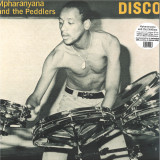
Kalita are proud to announce the first ever official re-release of Mpharanyana & The Peddler's 1979 South African disco and funk recordings 'Disco' and 'Freak Out With Botsotso', backed by a devastating extended edit of 'Disco' courtesy of Amsterdam-based DJ and producer Jamie 3:26. Cut on a loud 12" single and accompanied by an extended edit of 'Disco' courtesy of Jamie 3:26, this truly is another no-brainer from the Kalita camp.
Born on 15th November 1949 in Kattlehong, South Africa, Jacob ‘Mpharanyana’ Radebe was one of South Africa’s greatest ever musicians, releasing a canon of legendary soul, jazz and disco albums before his untimely death in August 1979 at the age of just twenty-nine.
Here, Kalita select his highly sought-after disco and funk recordings ‘Disco’ and ‘Freak Out With Botsotso’, both selected from his 1979 invisible final album, ‘Hela Ngwanana’, re-releasing them for the first time in forty years. Including Paul Simon and Herbie Hancock session musician Bakithi Kumalo on bass and Themba Mokena of Dick Khoza ‘Chapita’ fame on lead guitar, the recordings feature some of the country’s top contemporary musicians joining forces to glorious effect.
With the original album currently fetching eye-watering prices on the rare occasion that they turn up for sale, the time is now ripe to share this masterpiece with the world once more.
Order now and we will order the item for you at our supplier.

1979 gelang mit der Single 'The Nips Are Getting Bigger' und dem Album ‚Get Wet' das erste Mal der Einstieg in die Top 20 der australischen Charts. Für die Single gab es nach Veröffentlichung in Großbritannien eine Platzierung in den Top 40 der Independent-Charts. Die Auskopplung 'Come Around' aus dem 1980er Album Espresso Bongo konnte sich ebenso in der australischen Hitparade platzieren wie '(Just Like) Romeo and Juliet', das jedoch auf keinem Album zu finden war. 1981 erschien das Platin-Album 'Cats and Dogs'. Die daraus ausgekoppelten Songs 'If You Leave Me', 'Can I Come Too?' und 'Too Many Times' waren die ersten Top-10-Hits der Band. 1982 ging Mental as Anything erstmals in den Vereinigten Staaten auf Tour. Dort entstand die Single 'I Didn't Mean to Be Mean', die von Elvis Costello produziert wurde. Mit dem Longplayer 'Creatures of Leisure' und weiteren Auskopplungen. 1985 erschien das Platin-Album 'Fundamental as Anything' mit den Singles 'You're so Strong' und natürlich 'Live It Up'. Für letztere Single gab es einen APRA Award in der Kategorie 'Most Performed Work' und einen 'Countdown Award' für die beste Single. Durch die Verwendung im Soundtrack zum Film 'Crocodile Dundee' wurde der Titel Ende 1986 auch in Europa populär und erreichte rund anderthalb Jahre nach seiner Veröffentlichung hohe Chartplatzierungen in Skandinavien, Deutschland, England, den Niederlanden, Spanien und Italien.
Die Doppel-LP enthält die größten Erfolge der Australier auf zwei farbigen LPs (Red & White Vinyl).
expected to be published on 21.05.2021

Originally released as a 12” single in 1982, ‘Every Brother Ain’t A Brother’ was the final record from Brooklyn multi-instrumentalist and producer Freddie Thompson’s Panaché band. Built around a fully cleared sampled bassline from ‘The Message’ by Grandmaster Flash & The Furious Five, ‘Every Brother Ain’t A Brother’ plays out like a summertime stroll through New York in the early 80s. The streets are full of excitement, but as the lyrics, written by vocalist Denise Williams (not to be confused with Deniece Williams of ‘Let’s Hear It For The Boy’ fame) make it clear, they’re dangerous as well.
Thirty-nine years later, Isle of Jura is proud to present the first official 12” reissue of ‘Every Brother Ain’t A Brother’. A cult classic from the disco-rap era, the reissue includes the original vocal and instrumental versions of ‘Every Brother Ain’t A Brother’ plus a Jura Soundsystem special version with additional live percussion.
Originally made up of Freddie, his wife, the singer Debra Thompson and keyboardist Douglas Glover, Panaché formed at the behest of a local disco DJ, Carl Nelson. In the wake of Chic’s early singles, Carl felt a French name would give Freddie a competitive edge. “He explained it to us that it was a French word for style and elegance. Panaché, a step above chic,” Freddie reflects.
Business minded, Freddie formed his own label, Roché Records and joined SIRMA - The Small Independent Music Manufacturers Association. “It was very hard for the independent manufacturers to get airplay and distribution at the time, so we all came together,” he remembers. Through SIRMA, Freddie met Joe and Sylvia Robinson from Sugar Hill Records, who several years later, let him sample ‘The Message’ for ‘Every Brother Ain’t A Brother’.
In 1979, Panaché scored some radioplay when they covered ‘Not On The Outside’ by ‘60s D.C R&B group The Moments. Emboldened, they brought onboard backing vocalists and recorded their only album. This Is Panache saw the band blurring the boundaries between soul, jazz-funk and disco and become a sought after collectible.
By 1982, Debra had stepped back, and one of Panaché’s backing singers was center stage, Denise Williams. “Denise was good with writing poetry,” says Freddie. "She had one called ‘Every Brother Ain’t A Brother’. It was about the unrest that was going on in the city at the time. I thought I could do something with that.”
After releasing ‘Every Brother Ain’t A Brother’ in 1982, Panaché quietly moved from center stage to behind the scenes. Over the last thirty-nine years, Freddie has continued to work in the music industry as a session musician and producer. “As soon as we stopped trying to become stars as Panaché, we became busy working in the industry,” Freddie laughs.
Order now and we will order the item for you at our supplier.

Ziad Rahbani’s cult album, “Bennesbeh Labokra...Chou?” originally
released in Lebanon only and mixing arabic music with Jazz, Bossa Nova and other western influences, is hailed as an absolute classic.
The album is the soundtrack to his eponymous play and has been highly soughtafter by DJs and collectors around the world. Curated by Lebanese-born music
expert Mario Choueiry from Institut du Monde Arabe in Paris, the album is
reissued on vinyl for the first time since 1978, featuring original gatefold sleeve,
remastered audio and a 2 page insert with a new introduction by Choueiry.
“Bennesbeh Labokra... Chou?” is a skilful blend of Arabic music and Bossa-nova
- “First Introduction” - the recurring theme of the album, groove - the funky
beat of “Second Introduction” and the jazz vibe of “Variation’s 3 and 4.” It’s also
interesting to hear an early version of “Al Bosta” which would grace Fairuz’s
1979 album “Wahdon” in a faster, funkier version.
With a knack for cinematic orchestrations reminiscent of Lalo Schifrin, Ziad
Rahbani also brings more complex arrangements to the album on such tracks
as “Variation 5” making the album such a rich listening. Undoubtedly one of
the most important albums recorded in the Middle East
expected to be published on 07.05.2021

American rock band The Flamin’ Groovies were established in 1965, and are still active today: that marks an impressive career spanning over six decades. Jumpin’ In The Night is their sixth studio album, released in 1979. Although it initially didn’t fare well commercially and eventually led to a change in personnel, the album was a critical success and still is received well among music critics and fans. Mark Deming of AllMusic called the album tighter and tougher than its predecessor. The production by Roger Bechirian and vocalist/guitarist Cyril Jordan flatters the guitars and emphasises the band’s “wall of guitars”, ultimately making it an excellent pop rock effort.
The album is available as a limited edition of 1000 individually numbered copies on translucent green coloured vinyl, and contains an insert.
expected to be published on 07.05.2021

Found from Dennis Bovel's hugeAcollection of master sound sources, the gem of sweet lovers that has not been officially released will be finally released as a 7inch single! The cover take of "Groovin'', originallyAplayed by Young Rascals, which was stored in the collection of the popular female soul singer "Marie Pierre" who left the masterpiece of UK lovers soul "Love affair" released in 1979. B-side is a rare alternative take of her populer tune "Can't Go Through"!
expected to be published on 30.04.2021

Possibly one of the weirdest experiment in the post-punk realm, Vibing Up the Senile Man (Part One) is the second studio album by English anti-heroes Alternative TV, released in March 1979 on small indie label Deptford Fun City. Forget about the influential 1978 debut - The Image Has Cracked – frontman Mark Perry is literally leaving the planet in this effort. ‘There are free jazz influences; I'd got into the Art Ensemble of Chicago, Sun Ra ..) I'd moved into this house with an amazing music room – pianos, clarinets, you name it – and we'd always be picking up stuff from junk shops.’ The description set the pace for a unique performance, not only the afro-american heritage , traces of the Canterbury school are almost evident as the early experiment of the BBC Radiophonic workshop. Is it safe to consider Vibing up The Senile Man on the same time-line as Robert Wyatt ‘The End Of An Ear’ and Throbbing Gristle ’20 Jazz Funk Greats’ (Genesis P-Orridge is on board on two tracks, playing assorted percussion) ? Judge by yourself and don’t be scared.
expected to be published on 30.04.2021

“Some tracks chime and soar like Coldplay. Others are just a post-rock whimper away from Radiohead... Marillion deserve a fair hearing.” UNCUT
Marillion formed in 1979 and have sold over 15 million albums worldwide.
Rightly regarded as legends of progressive rock, the band have also continued to evolve and have been keen to embrace the possibilities of the internet, using innovative ways to interact with listeners resulting in an incredibly loyal legion of fans around the world.
‘Somewhere Else’ was Marillion’s fourteenth album and was originally released in 2007. Following on from the success of the previous album ‘Marbles’, which spawned two hit singles, ‘Somewhere Else’ gave the band their first UK top 30 album in ten years.
This new Kscope mid-price CD edition of ‘Somewhere Else’ is presented in four panel digi-pack packaging complete with a 12-page booklet. And 140gm 2LP edition of ‘Somewhere Else’ is presented in gatefold sleeve and features three bonus tracks recorded live on the 15th and 16th June 2007 at the Forum in London.
expected to be published on 30.04.2021

Minimal Wave presents ‘Recordings 1980-1982’ (MW077), a triple 7” box set by pioneering south Florida synth-punk band Futurisk, in honor of their 40th anniversary. Founded by Jeremy Kolosine in 1978, Futurisk recorded many songs and performed live throughout the early 1980s. Though they had released two 7”s that sold out, had a legendary live show, and even some videos, by 1984 Futurisk was history. Eventually, the main core of Futurisk would be the Jeremy Kolosine, Richard Hess, and Jack Howard line-up though much happened leading up to this point.
In 1979, the teenage Jeremy Kolosine won studio time and money in a competition with his drum-machine-triggered guitar-synth act called ‘Clark Humphrey & Futurisk’. He decided to form a band around the name to record a more punk release titled The Sound of Futurism 1980 / Army Now. It was an ambivalent anti-war anthem with Jack Howard on drums, Frank Lardino on synth, and Kolosine on vocals and guitar synth. Many live shows ensued with the line-up which included Jeff Marcus on bass and Vinnie Scrimenti on drums but in 1981 a rift between the band caused them to part ways. They continued for a bit as ‘Radio Berlin’ (no relation to the Vancouver act) and Kolosine, who had gotten absorbed in a new analog synthesizer with sequencer continued as Futurisk.
He recruited synthesist and recording engineer Richard Hess who had a myriad collection of Moogs, Oberhieims, and CATs. Jack Howard returned on drums and syn-drums and the lineup for the Player Piano EP was cast. The EP, like the live show, was a strange blend of punk, minimalist, and disco-influenced electro-pop, with drum machine triggered synths and often frantic real drums all led by Kolosine’s schizophrenic Bowie / Ferry / Foxx adulations. It was recorded by Richard Hess and the band in the rooms of a friend’s house. The drum sound, recorded in a bathroom, rocks, even today. Reportedly, Futurisk may have been the first synth-punk band in the American South, and their 1981 track ‘Push Me Pull You (Pt. 2)’ was an early pre- ‘Rockit’ excursion into electro-funk.
The ‘Recordings 1980-1982’ box set includes three 7”s, an Army Now (1982) Flexi 5” x 7” postcard, and a 16-page full-color booklet featuring unpublished photographs of the band, the history of the band, and an interview with founder Jeremy Kolosine. The three 7”s are The Sound of Futurism 1980 / Army Now which includes an unreleased track from the same session, the Player Piano five-song 7” EP from 1982, and the Ocean Sound 7”, which has not been released in this format until now. All three 7”s are remastered, pressed on heavyweight 70-gram vinyl, and housed in heavy color printed matte sleeves featuring the band’s original artwork. The box is case wrapped and depicts an early illustration of the band printed in black on white with a spot gloss. Limited edition of 600 copies.
Order now and we will order the item for you at our supplier.

REPRESS!!
These tracks were recorded by Kevin Low and Fiona Carlin in Kevin’s bedroom in Gayfield Square, Edinburgh, in 1986. Me and my dad, Kevin, dug out a huge bunch of his tapes over the lockdown (about 80 of the them at first). Some were…better than others, however, the Gayfield Square demos were the pick of the lot. Previously Kevin and Fiona were part of the Post Punk / indie band ‘Wild Indians’, whose first release “Stolen Courage” had come out in 1983 – released on Flexi Disc via the Edinburgh fanzine Deadbeat. Throughout the mid-1980s they performed across Edinburgh’s clubs, including at the Hoochie Coochie Club (name checked on track 7), where they played alongside bands and close friends Pop Wallpaper and Visitors. The band went on to release two 12” singles, “Love of My Life” in 1984 and “Penniless” in 1986.
After the band broke up Kevin sold his guitar amp and 7inch collection, Fiona her saxophone and they went out and got themselves a Yamaha RX-5 drum machine, Yamaha QX7 sequencer and a Yamaha DX-100. These bedroom tracks are the fruits of their first venture with this hardware, combining their experimentation with synthetic sounds (mostly the DX-100’s famous pre-sets) with a post-punk vocal style.
These eight tracks are also, in part, the fruit of the “Enterprise Allowance scheme” - a policy venture of Margaret Thatcher’s UK government that gave unemployment claimants access to an extra £40 to top up the basic dole money. Following Thatcher’s election victories in 1979 and 1983, the policy sought to reduce the figures of mass unemployment which hung over Britain well into the 1980s. This policy, according to Kevin, helped to keep up the credit payments. He notes that, “when Fiona and I turned up at the DHSS office with the sure-fire money-making plan of making a business as a ‘song-writing’ duo they signed us up. However, I still think they thought we said, sign writing as they were filling out the form.”
Kevin and Fiona stopped making music together shortly after these tracks were recorded so unfortunately, they never saw the light of day…until now!
Fiona went on to work in Film and Television sound. Kevin became a photographer, working mostly in theatre. He is now an artist/painter working in Glasgow.
Order now and we will order the item for you at our supplier.

17 Track compilation of all of their studio recordings, remastered and pressed on Electric Blue Vinyl. Presented in gatefold sleeve with never seen before photographs ,a printed lyric inner sleeve and poster.
The VIP’s were formed in 1978 while at Warwick University. Within weeks they were gigging at clubs in the Midlands, often on the same bill as THE SPECIALS in Coventry. Soon they found a manager, Clive Solomon, who with Timmy Mallet (now a TV and Radio presenter) and both students at the university, financed the group’s first single the EP ‘Music For Funsters. In the summer of 1978 they built up a loyal following in London. The single was picked up by John Peel, who played it constantly on his BBC radio show through the year. The 3 track EP, featuring ‘I’m Perfect’, ‘I Believe’ and ‘Boys of the City’ was released on Clive Solomon’s own ‘Bust’ label.
In 1979 the VIP’s could be found playing all over the country, frequently on the same bill as Squire, stablemates on Clive Solomon’s label.
In early 1980 they went into Olympic Studios in Chiswick to record some tracks with ex-THE ANIMALS bass player and SLADE/Jimi Hendrix manager Chas Chandler. The track ‘I Thought You Were My Friend’ was recorded at these sessions A few weeks later a major record deal was agreed with Gem Records/RCA and ‘Causing Complications’ came out in March. To coincide with the release the VIP’s went on tour supporting SECRET AFFAIR.
After the tour the single ‘The Quarter Moon’ was released, another track produced by Mike Leander. It received extensive airplay around the UK and beyond, and was also picked as BBC Radio 1’s Record of The Week by DJ Mike Reid on his Morning Show, as well as being Radio Luxembourg’s ‘Power Play’ for two weeks. The constant touring, recording and radio play had earned them a spot on Top of The Pops but they were suddenly told -on the afternoon that they were due to appear - that an industrial dispute at the BBC had resulted in the show being cancelled. Disappointed, they continued to record and tour, this time with MADNESS, THE BEAT and DEXYS MIDNIGHT RUNNERS amongst others. This time Bob Seargent (of The BEAT and HAIRCUT 100 fame) was recruited to give ‘Need Somebody To Love’ that sparkle and edge to capture The VIP’s live sound on vinyl. Although perhaps the most representative of the band’s sound, Top of The Pops again eluded them.
By the end of 1980 the VIP’s were selling in Spain, Germany, Italy and France through the RCA label but they seemed to be losing heart with the business. Illness -Jed had been touring with a collapsed lung - and tensions saw the band play their last concert at Leicester University. A fourth and final GEM single, ‘Things Aren’t What They Used To Be’ (a song taken from their earlier Mike Leander recording sessions) proved to be their last. With several songs still to be recorded, it was a frustrating time for all.
Paul Shurey and Guy Morley has already made alternative plans for THE NEW VIP’s and recruited Simon Smith from THE MERTON PARKAS to play drums while Paul returned to his native keyboards. With Tony Conway on guitar and Andy Godfrey on bass they became MOOD SIX.
Paul Shurey played a central part in the birth and proliferation of the Rave movement in the 80’s, 90’s and 2,000’s, initiating a great a great many DANCE RAVES all around the world. Very sadly he died in 2017. He was also a gifted artist/cartoonist, and it’s his picture which graces the album’s sleeve. He is a brother very greatly missed.
Guy Morley works in film editing and Andrew Price is involved in developing community projects in and around his native Bristol.
“We became lifelong friends and shared a great and very exciting rock and roll dream.”
expected to be published on 16.04.2021

Demon Records presents Distortion: The Best Of 1989-2019, the first career spanning
compilation of solo recordings by legendary American musician Bob Mould.
• Bob Mould’s career began in 1979 with the iconic underground punk group Hüsker Dü before forming
the beloved alternative rock band Sugar and releasing numerous critically acclaimed solo albums. At
the vanguard of his field for over four decades, Mould’s music has inspired generations of musicians.
• Compiled by Bob Mould himself, this new collection gathers together 24 essential recordings across
two LPs. Highlights include classic recordings such as ‘See A Little Light’, ‘If I Can’t Change Your Mind’,
‘A Good Idea’, and ‘The Descent.
• Mastered by Jeff Lipton and Maria Rice at Peerless Mastering and pressed on two 140g vinyl. Housed in
printed inner sleeves and a deluxe gatefold sleeve with artwork from illustrator Simon Marchner.
expected to be published on 16.04.2021

Demon Records presents Distortion: 2008-2019, the third in a series of four expansive vinyl box sets chronicling the solo career of legendary American musician Bob Mould.
Bob Mould’s career began in 1979 with the iconic underground punk group Hüsker Dü before forming the beloved alternative rock band Sugar and releasing numerous critically acclaimed solo albums. Volume three in this new series covers the period 2008-2019 and contains many of Bob Mould’s most celebrated recordings including Silver Age (2012), Patch The Sky (2016), and Sunshine Rock (2019).
expected to be published on 16.04.2021

• One of the first punk rock bands of the 70s music revolution, and certainly the first in Ireland, the Radiators From Space came roaring out of a 7-inch 45 with (I’m gonna smash my Telecaster through the) ‘Television Screen’ in April of 1977, a month after ‘White Riot’.
• Before the year’s end, a second 45 ‘Enemies’ (sometimes NMEies) and the “TV Tube Heart” long-player had appeared. Although the second single was on there, the debut was recorded in an altogether more relaxed style, presaging that there would be more to the Radiators than three chords and a polemic. In fact, they were obviously more sophisticated players than some of their contemporaries.
• The album was a full-on assault on all that any self-respecting youth would find wrong about the world at the time. All band members contributed to the songs, but it was Philip Chevron’s acerbic, angry, pointed and literary lyrics that gave the band such an edge. Philip strutted a gritty lead guitar counterpointing Pete Holidai’s underpinning rhythm, with Mark Megaray’s flowing bass lines belying the instrument’s more usual role to sit in with drummer Jimmy Crashe’s taut, driving rhythm. Steve Rapid fronted the band on some tracks, but Pete and Philip carried most of the lead vocals. Steve left before the record came out – he became a successful graphic designer and has re-imagined the sleeve for this 10-inch issue. He also designed the original.
• A second album, “Ghostown”, produced by Tony Visconti, came out in 1979, hailed now as one of the classic Irish albums of all time. Over the years the band periodically re-formed, first with the gay love song of great yearning ‘Under Cleary’s Clock’, and then making two more great albums in “Trouble Pilgrim” and “Sound City Beat”, covering great Irish 45s of the 60s and early 70s.
• Philip went on to a career as a Pogue, sadly leaving us way too young in 2013. Mark Megaray likewise departed at an early age. Pete and Steve keep the flame alive with Trouble Pilgrims, and if you are lucky you can catch them at a Dublin club sometime – well worth it.
• But “TV Tube Heart” is where it all started for Dublin’s finest.
expected to be published on 26.03.2021

Saturations is a composition by Danish multidisciplinary artist Niels Lyhne Løkkegaard, and features a clarinet choir consisting of 19(!) clarinet players.
Niels Lyhne Løkkegaard (b. 1979) considers his work to be a basic research in realities working within the domains of imaginary & physical sound as well as other non-sonic media, and since 2012 Niels Lyhne Løkkegaard has experimented with creating music that lets the instruments transcend their inherent sonic norms and reappear in another form by way of multiplication of sound.
His work with multiplication of sound has led to numerous compositions in which one instrument is multiplied a number of times: One piece is written for 9 pianos, another for 10 hi-hats and yet another for countless triangles and so on.
The multiplication brings out bodily timbral phenomena, interference of sound waves and vibrations, and brings out what Niels Lyhne Løkkegaard calls the sound’s potential of transformation. He describes this as the quality in a musical piece, when you no longer hear recognizable instruments, but instead the individual sound, as well as the individual musician, is dissolved into the collective sound.
A sonic as well as human synthesis.
He explains the concept of this sound as follows:
“Imagine you enter a room with vibrant acoustics, such as a cafe full of people having conversations, and when you’re close to those conversations you hear the language and understand the words. If you step away from the tables, however, and stand in the doorway, you begin to loose the ability to distinguish the words from one another. Now instead of hearing the individual conversations, melts all the conversations together, and transform into a one new sound. A sound of people without words and language. Just as when you hear a group of geese squawk, or the wind in tree tops, a kind of nature given sound of people. Once the language is dissolved and the words stop making sense, what is left, is the sound."
The work of NLL has been presented at a variety of different venues and museums such as MoMA (NY - as a part of the René Magritte exhibition The Mystery of the Ordinary, 2013), Imaginary West Indies (Overgaden Copenhagen, 2017), ISCM (Vancouver, 2017), Radiophrenia (Glasgow’s Centre for Contemporary Arts, 2017), CPH:DOX (Copenhagen, 2017), Roskilde Festival (2017), Harpa (Reykjavik, 2017), G((o))ng Tomorrow Festival (Copenhagen 2016, 2018), Nordic Music Days (Norway, 2019), Akusmata (SF, 2020) and his works has been released on labels such as Topos (DK), Archive Officielle (CA) and Important Records (US). NLL is associate professor at RMC in Copenhagen, and has given lectures at the California Institute of the Arts (CalArts), Goldsmiths University of London a.o.p. NLL has been awarded with several prizes a.o. from the Danish Art Foundation and the Sonning Foundation.
expected to be published on 26.03.2021

Producer extraordinaire John Morales returns to BBE Music, celebrating the life and work of R&B / soul legend Teena Marie with a double album full of brand new remixes, lovingly crafted from the original studio tapes, entitled ‘Love Songs & Funky Beats’. “Teena is somewhat underrated, and people don't really know much about her.” Says Morales. “I set out to immerse people in her music and represent what she really did. That meant for me a dive into more than her R&B hits, to dig into her ballads and dance cuts. People know she was talented. I don't really think they really knew the depth of her abilities, her complete confidence to take it upon herself to do everything – singing, producing, arranging, songwriting. Teena Marie was the total package.” John Morales had the pleasure of mixing many of Teena Marie’s original records over the years, so it felt natural to dig into the archives and select his favourite cuts to rework, extend and subtly update in his own distinctive style. While by no means a definitive collection of Lady Tee’s expansive musical catalogue, ‘Love Songs & Funky Beats’ represents a fitting tribute to a multifaceted and important voice in popular music, by one of the most storied mix engineers and remixers of our age. Jumping into the music industry deep end in 1979 with a three-year mentorship from Berry Gordy & Rick James at Motown, Teena Marie then spent seven fertile years with Epic, which yielded her greatest commercial successes (including the classic album 'Starchild'). After founding an independent label ‘Sarai’, Marie took a ten-year hiatus which ended in 2004 in a deal with hip hop label Cash Money Records; a less unlikely partnership than some might assume, given that Teena was one of the first ‘mainstream’ artists to perform a rap verse, on 1981’s ‘Square Biz’. Teena Marie Brockert forged a unique path through the industry, an artist in-charge of her own destiny, influencing (and heavily sampled by) both the hip hop and R&B sounds of the 90’s and early 2000’s. Her 1982 lawsuit against Motown records resulted in "The Brockert Initiative", which has benefitted literally thousands of other artists by making it illegal for record companies to ‘shelve’ artists by keeping them under contract without releasing their material. She continued to tour regularly and deliver commercially successful, expertly sculpted music, right up until her untimely passing in 2010.
Order now and we will order the item for you at our supplier.

Order now and we will order the item for you at our supplier.
