Producer extraordinaire John Morales returns to BBE Music, celebrating the life and work of R&B / soul legend Teena Marie with a double album full of brand new remixes, lovingly crafted from the original studio tapes, entitled ‘Love Songs & Funky Beats’. “Teena is somewhat underrated, and people don't really know much about her.” Says Morales. “I set out to immerse people in her music and represent what she really did. That meant for me a dive into more than her R&B hits, to dig into her ballads and dance cuts. People know she was talented. I don't really think they really knew the depth of her abilities, her complete confidence to take it upon herself to do everything – singing, producing, arranging, songwriting. Teena Marie was the total package.” John Morales had the pleasure of mixing many of Teena Marie’s original records over the years, so it felt natural to dig into the archives and select his favourite cuts to rework, extend and subtly update in his own distinctive style. While by no means a definitive collection of Lady Tee’s expansive musical catalogue, ‘Love Songs & Funky Beats’ represents a fitting tribute to a multifaceted and important voice in popular music, by one of the most storied mix engineers and remixers of our age. Jumping into the music industry deep end in 1979 with a three-year mentorship from Berry Gordy & Rick James at Motown, Teena Marie then spent seven fertile years with Epic, which yielded her greatest commercial successes (including the classic album 'Starchild'). After founding an independent label ‘Sarai’, Marie took a ten-year hiatus which ended in 2004 in a deal with hip hop label Cash Money Records; a less unlikely partnership than some might assume, given that Teena was one of the first ‘mainstream’ artists to perform a rap verse, on 1981’s ‘Square Biz’. Teena Marie Brockert forged a unique path through the industry, an artist in-charge of her own destiny, influencing (and heavily sampled by) both the hip hop and R&B sounds of the 90’s and early 2000’s. Her 1982 lawsuit against Motown records resulted in "The Brockert Initiative", which has benefitted literally thousands of other artists by making it illegal for record companies to ‘shelve’ artists by keeping them under contract without releasing their material. She continued to tour regularly and deliver commercially successful, expertly sculpted music, right up until her untimely passing in 2010.
Buscar:teena marie
- 1
Ozone were a group on Motown between 1980 and 1983. They were put together by Charles Alexander Glenn from Nashville where he had a band The Endeavors. He then brough his best musicians to Los Angeles where Billy Preston recommended to Motown they become the touring band for Teena Marie. They also played for Luther Vandross and then recorded five albums for Motown. “(Our Hearts) Will Always Shine, also credited as “Our Hearts (Will Always Shine)” on Motown has become a timeless and in demand modern soul record, copies of the 7” original now commanding in excess of £300. It has a Gene Page (of Barry White fame) string arrangement and is produced by the group with Michael Stokes (Creative Source, Enchantment, Magic Lady, LTD, Active Force etc)
Last year the Atlanta artist releaed her debut EP Swan, made with producer Marshall Vore who is known for his work with folk dynamo Phoebe Bridgers. The five song col¬lection found a supportive home with Royal Mountain Re¬cords, and drew remarkable acclaim for a debut EP, earning praise from outlets like NPR, FADER, Nylon, Paste, Under The Radar, Coup De Main and Line of Best Fit among many others.
When I’m Alone is the debut album from Girlpuppy. Across the record, Harvey weaves in several cinematic allusions: a Keanu Reeves look alike pops up in “Teenage Dream,” named for the alternate title of an ‘80s movie he stars in;
- A1: Give It To Me Baby
- A2: Ghetto Life
- B1: Make Love To Me
- B2: Mr. Policeman
- C1: Super Freak
- C2: Fire And Desire
- D1: Call Me Up
- D2: Below The Funk (Pass The J)
Rick James Blends Brazen Attitude, Fearless Sexuality, and Shrewd Charisma on Street Songs:
Punk-Funk Album Aims for the Hips and Head, Includes the Timeless Hit “Super Freak”
Sourced from the Original Master Tapes and Strictly Limited to 4,000 Numbered Copies:
Mobile Fidelity’s 180g 45RPM 2LP Set Presents 1981 Smash in Audiophile Sound for the First Time
1/4” / 30 IPS analogue master to DSD 256 to analogue console to lathe
“Punk funk” was a relatively unknown concept before 1981. But once Street Songs took the charts by storm that year, the world soon knew about what became Rick James’ signature style. And how. True to its name, Street Songs blends outspoken sexuality, brazen attitude, and edgy commentary amid contagious R&B-fueled arrangements that simultaneously aim for the hips, head, and various nether regions. And it’s never sounded better.
Sourced from the original master tapes, strictly limited to 4,000 numbered copies, pressed at Fidelity Record Pressing, and housed in a Stoughton gatefold jacket, Mobile Fidelity’s 180g 45RPM 2LP set presents James’ platinum-certified effort in audiophile quality for the first time. Playing with crisp dynamics, lively textures, airy headroom, and revealing clarity, this collectible edition of the record that stayed at the No. 1 spot on the R&B Album Charts for 20 weeks invites you to get closer to music that beckons you to turn your space into a private dance floor.
Then again, you’ll likely be so taken by how the taut bass lines, snappy rhythms, and four-on-the-floor beats — all rendered in stunning detail and with full-bodied architecture — come across with such accuracy and presence, you might stay pinned to your seat. On this pressing, the soundstaging, imaging, and lit-fuse energy of Street Songs reach new heights. Everything from the rubbery feel of the guitar lines to the depth of James’ temperature-raising vocals to the scale of the horn charts emerges as if James and his ace session crew set up in your room.
The Buffalo native and his ensemble waste no time getting their message across. On the album-opening “Give It to Me Baby,” James and company lay down a mix of sleek funk and pulsing disco that practically activates the bright lights of a discotheque and stimulates the libido of anyone within earshot. Having reached No. 1 on the Billboard Hot Soul charts, the song is pure sex — and just one of the carnal delights on a record that embraces the subject as fearlessly as James does his identity.
Of course, the most famous of James’ erotic excursions — the timeless “Super Freak” — hit No. 1 on Hot Dance Club Play charts, No. 16 on the Hot 100, and, later, No. 153 on Rolling Stone’s list of the Top 500 Songs of All Time. Bolstered by a quavering keyboard theme and electro riffs, the much-sampled track worms itself inside your muscles with smile-inducing subject matter, gliding vocals, nimble movements, a hot tenor-saxophone solo, and backing vocals by the Temptations.
The iconic Motown group isn’t the only celebrated guest artist on the Grammy-nominated Street Songs. James’ then-labelmate, Stevie Wonder, lends harmonica to the frank sociopolitical narrative on “Mr. Policeman,” a protest tune that also manages to stroll ’n’ strut via simmering organ, staggering brass accents, and James’ gritty vocal performance. In addition to contributing backing vocals on several cuts, Teena Marie turns in one of the album’s signature moments on “Fire and Desire,” a romantic old-school duet with James that impresses with smoothness, sensitivity, and smokiness.
High-profile colleagues aside, James remains the undisputed star, a figure whose leather-and-latex attire, braided hair, and natural swagger made him misunderstood by some in the mainstream and embraced by everyone in the know as a true original. As a testament to his magnetism and skills, his charisma and rawness seemingly seep through every note, whether on the balladic sweep of the risqué “Make Love to Me” or strident, poke-and-prod persuasion of the moonwalking “Call Me Up.”
On the closing “Below the Funk (Pass the J),” an uptempo autobiographical tale that addresses the visionary musician’s second-favorite love, the singer acknowledges his upbringing and inseparable connection with his roots — an homage to where he began and a toast to where he’s gone.
Rick James, keepin’ it real on Street Songs, still as real as it gets.
- A1: Malavoi - Te Traigo Guajira
- A2: Los Caraibes - Donde
- A3: Tropicana - Amor En Chachacha
- A4: Ryco Jazz - Wachi Wara
- A5: Eugene Balthazar - Dap Pignan
- A6: Roger Jaffort - Oye Mi Consejo
- A7: Les Kings - Oriza
- B1: Les Supers Jaguars - Tatalibaba
- B2: Super Combo De Pointe A Pitre - Serrana
- B3: L'ensemble Abricot - Se Quedo Boogaloo
- B4: Henri Guedon - Bilonga
- B5: Les Aiglons - Pensando En Ti
- B6: Los Martiniquenos - Caterate
In Guadeloupe, many people think that jazz and ka music are like a ring and a finger. To some extent, the same could be said about so called Latin music and the music played in the French West Indies.
Both aesthetics were born in the Caribbean and bear so many connections that they can easily be considered cousins. In constant dialogue, there are lots of examples of their fruitful alliance and have been for a while. The English country dance that used to be practiced in European lounges came to be called kadrille in Martinique and contradanza in Cuba. They both featured additional percussion instruments inherited from the transatlantic deportation. Drawing from shared feelings about the same traumatized identity – later to be creolized – it would be hard not to assume that they were meant to inspire each other. The golden age of the orchestras that graced the Pigalle nights during the interwar period further proves the point. As soon as the 1930s, Havana-born Don Barreto naturally mixed danzón and biguine music in a combo based at Melody's Bar. In the following decade, Félix Valvert, a conductor who was born and raised in Basse-Terre in Guadelupe, also worked wonders in Montparnasse with La Coupole, which was an orchestra made up of eclectic musicians. Afro- Caribbean performers of various origins were often hired on rhythm and brass sections in jazz bands, which used to enliven the typical French balls of the capital. In the 1930s and onwards, Rico’s Creole Band was one of them.
Martinican violinist-clarinettist Ernest Léardée, who would become the king of biguine music as well as the main figure of French Uncle Ben's TV commercials (a dark stigma of post-colonial stereotypes), had musicians from the whole Caribbean sphere play at his Bal Blomet – and they all enchanted "ces Zazous-là" (according the words of Léardée's biguine-calypso piece). In les Antilles (French for French West Indies), music history started to speed up in the 1950s, when trade expanded and radio stations grew bigger. The Guadelupean and Martiniquais youth tuned in their old galena radio sets to South American and Caribbean music. As for the women traders, les pacotilleuses, they bought and sold goods across different islands (the "passing of items through various hands" was thought to be most pleasurable) and brought back countless sounds in their luggage. Such was the case of Madame Balthazar, who once returned from Puerto Rico with the first 45rpm and 33rpm to ever enter Martinique.
Out of this adventure was created the famous Martinican label La Maison des Merengues, a music business she opened and undertook with her husband and which proved to be a major landmark. At the end of the 1950s, in Puerto Rico, Marius Cultier competed in the Piano International Contest playing a version of Monk's Round 'Midnight. He won the first prize and this distinction foreshadowed everything that was to come. Cultier, the heretic Monk of jazz, was quickly praised for writing superb melodies, always tinged with a twist that conferred a unique sound to his music. It didn't take long for the gifted self-taught musician to get to play with Los Cubanos, making a name for himself thanks to his impressive maestria on merengues.
The rest is history. Besides, in the late 1950s, Frantz Charles-Denis, born into the upper middle class in Saint-Pierre and better known by his first name Francisco, went back home after working at La Cabane Cubaine – a club located rue Fontaine where he had caught the Latin fever. Francisco's music was therefore heavily marked by his Cuban cousins' influence, which gave the combos he led a specific style and also led to renewal. Things were swinging hard in La Savane, located in the main square in Fort-de-France. He set up the Shango club close by and tested out the biguine lélé there, a new music formula spiced up with Latin rhythms. Soon afterwards, fate had him fly to Puerto Rico and Venezuela.
As for percussionist Henri Guédon (percussions were only a part of his many talents), he was born in Fort-de-France in May 22nd 1944, the day marking the celebration of the abolition of slavery. As an old man, he could remember that in " his father's Teppaz, a lot of hectic 6/8 music was constantly playing...". In the opening lines of his Lettre à Dizzy, a small illustrated collection of writings published by Del Arco, he highlighted the huge impact that cubop had on him as a teenage boy, around 1960. He eventually turned out to be the lider maximo in La Contesta, a big band steeped in Latin jazz. He was also the one who originated the word zouk to describe music which brought the sound of the New York barrio to Paris. It was the culmination of a journey that started in Sainte-Marie: "a mythical place for bélé, the equivalent of Cuban guaguancó". In the early 1960s, the tertiary economy developed to the detriment of agriculture. Yet rural life was where roots music emerged in Martinique and in Guadeloupe.
Record companies played a major part in the process of Latin versions sweeping across the islands – before reaching everywhere else. Producer Célini, boss of the great Aux Ondes label, and Marcel Mavounzy, both the head of Émeraude records - a firm which was founded in 1953 - as well as the brother of famous saxophonist Robert Mavounzy, were big names to bear in mind. Although there were many of them - all of whom are featured on this record - Henri Debs was definitely the major figure in the recording adventure. He proved to be so influential that he even got compared to Berry Gordy. In the mid 1950s, when he acquired his first Teppaz, he worked on his first compositions: a bolero and a chachacha. Then, he became the one man who made people discover Caribbean music, from calypso to merengue. He was among the first ones to rush out to San Juan, Puerto Rico, to buy records and distribute them through a store run by one of his brothers in Fort-de-France. He had members of the Fania All Star come and perform there, which he was madly proud about. He was also the first one to pay attention to Haitian music, such as compas direct and various other rhythms which would soon flood the market. As a result, many of the combos hitting his legendary studio would end up boosted by widespread "Afro-Latin" rhythms. However, he never denied his identity: gwo ka drums were given a major role, although they were instruments which had long been banned from the "official" music spheres. The present selection bears witness to such a creative swarming. Here are fourteen tracks of untimely yet unprecedented cross-fertilization: all types of music rooted in the Creole archipelago have found their way, whatsoever, to the tracklisting. Whether originating from the city or being more rural, they all go back to what Edouard Glissant, in an interview about the place of West Indian music in the Afro-American scope, called "the trace of singing, the one which got erased by slavery." "It is so in jazz, but also in reggae, calypso, biguine, salsa... This trace also manifests through the drums, whether Guadelupean, Dominican, Jamaican or Cuban... None of them being quite the same. They all point to the idea of a trace, seeking it out and connecting to each other through it. This is the hallmark of the African diaspora: its ability to create something new, in relation to itself, out of a trace. It may be the memory of a rhythm, the crafting of a drum, a means of expression which doesn't resort to an old language but to the modalities of it." The opening track features one of the emblematic orchestras of this aesthetic identity, criscrossing many music types from the archipelago. The 1974 Ray Barretto guajira – Ray Barretto was a major New York drummer influenced by Charlie Parker and Chano Pozzo – is magnificently performed by Malavoi, a legendary Fayolais group (i.e from Fort-de-France). Additionally, the compilation ends on a piece by Los Martiniqueños de Francisco. It symbolically closes the circle as it is a genuine potomitan of Martinique culture which also functions as a tireless campaigner for Afro-Caribbean music. Practicing the danmyé rounds (a kind of capoeiria) to the rhythm of the bèlè drum, it delivers a terrific Caterete, a kind of champeta of Afro- Colombian obedience which was originally composed by Colombian Fabián Ramón Veloz Fernández for the group Wgenda Kenya. The icing on the cake is Brazilian Marku Ribas, who found refuge in Martinique in the early 1970s, bringing his singing to the last trance-inducing track. These two "versions" convey the whole tone of a selection composed of rarities and classics of the tropicalized genre, swarming with tonic accents and convoluted rhythms. It is the sort of cocktail that the West Indians never failed to spice up with their own ingredients. For instance, the Los Caraïbes cover of Dónde, a famous Cuban theme composed by producer Ernesto Duarte Brito, has a typical violin and features renowned Martinique singer Joby Valente and his piquant voice.
The track used to be – or so we think – their only existing 45rpm. The meaningful Amor en chachachá by L'Ensemble Tropicana, a band which included Haitian musicians among whom was composer and leader Michel Desgrotte, also recalls how Latin music was pervasive in the tropics in the mid-1960s. They were the ones keeping people dancing at Le Cocoteraie in Guadelupe and La Bananeraie in Martinique. Around the same time, another "foreign" band, Congolese Freddy Mars N'Kounkou's Ryco Jazz, achieved some success on both islands by covering Latin jazz classics – such as their adaptation of Wachi Wara, a "soul sauce" by Dizzy Gillespie and Chano Pozo whose interweaving of strings and percussions can have anyone hit the dancefloor. How can you resist Dap Pinian indeed, a powerful guaguancó by Eugene Balthazar, performed by the Tropicana Orchestra and published by the Martinique-founded La Maison des Merengues? It also acts as a symbol of the maelstrom at work. Going by the name Paco et L'orchestre Cachunga, Roger Jaffory used to play guaguancó too: his Fania-inspired Oye mi consejo is one example of his style. Baila!!!!! Dancing was also one of the Kings' focus points. Oriza is a Puerto Rican bomba and a "classic" originally composed by Nuevayorquino trumpeter Ernie Agosto, which reserves major space for brasses, giving it a special sheen.
Emerging from the New York barrios crucible was also La Perfecta, a Martinique group originating from Trinidad, whose name directly references the totemic Eddie Palmieri figure as well as his own band, also called La Perfecta. Here they borrow Toumbadora from Colombian producer and composer Efraín Lancheros and interpret it by emphasizing percussions, which set fire to the track even more than the wind instruments. The same goes for Martinique's Super Jaguars, who use Tatalibaba – a composition by Cuban guitarist Florencio "Picolo" Santana which was made famous by Celia Cruz & La Sonora Matencera – as a pretext for sending their cadences into a frenzy. In a more typically salsa vein, the Super Combo, a famous Guadelupean orchestra from Pointe-Noire that was formed around the Desplan family and had Roger Plonquitte and Elie Bianay on board, adapt Serana, a theme by Roberto Angleró Pepín, a Puerto Rican composer, singer and musician also known for his song Soy Boricua. Here again, their vision comes close to surpassing the original. In the 1970s, L'Ensemble Abricot provided a handful of tracks of different syles, hence reaching the pinnacle of the art of achieving variety and giving pleasure. They played boleros, biguines, compas direct, guaguancó and even a good old boogaloo - the type they wanted to keep close to their hearts for ever, "pour toujours", as they sang along together in one of their songs. Léon Bertide's Martinican ensemble excelled at the boogaloo which had been composed by Puerto Rican saxophonist Hector Santos for the legendary El Gran Combo.
Three years later, in 1972, Henri Guédon, with the help of Paul Rosine on the vibraphone, tackled the Bilongo made famous by Eddie Palmieri. Such a classic!!!!! And so were the Aiglons, the band from Guadelupe: choosing to execute Pensando en tí, a composition by Dominican Aniceto Batista, on a cooler tempo than the original, they noticeably used a wonderfully (un)tuned keyboard in place of the accordion. On the high-value collectible single – the first one released by Les Aiglons under the Duli Disc label – there is a sticker classifying the track under the generic name "Afro". Now that is what we call a symbol. Jacques Denis
Thomas Valverde unveils Polka, his second album. This new record dedicated to solo piano takes the approach of a pared-down, minimalist production. Both upright and grand pianos are used. The grand piano is used to develop a powerful, committed and liberating discourse, while the upright piano brings a more organic sound and allows an intimate experience. The tracks on the album are conceived as sidereal love songs. Songs without words, more apt to translate the invisible, the threads of love and beauty. Everything has to be said on the keyboard, in the notes and between the notes. The album was recorded at the prestigious La Fabrique des Ondes studio, with David Chalmin (collaborator of Thom Yorke, The National, Katia & Marielle Labèque) recording and mixing. The album's title is a nod to two of his teenage heroes: Serguei Rachmaninov (genius composer) and Vladimir Horowitz (legendary pianist), whose music haunts so many musicians and music lovers. It's also a pun on the name of DJ and producer Paul Kalkbrenner (Paul K), whose simple, powerful tunes influenced the title "Polka". Thomas Valverde is also the founder and artistic director of the Biarritz Piano Festival, which features some of the world's finest pianists.
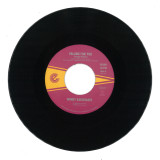
"Falling For You" ist eine massive neue 2025er Soulnummer der aufstrebenden Soulsängerin Windy Karigianes aus Las Vegas. Der Song wurde von Soul-Veteran Randy Hall komponiert und u.a. mit dem Teena Marie-Bassisten Allen McGrier aufgenommen. Da Windy ein Teena Marie-Fan mit ähnlicher Stimme ist, sprang Georgie B ein und schuf mit seiner Version sowohl eine Hommage als auch einen frischen modernen Soul-Groove. Ein Original jenseits der Nostalgie und ein Mix, der derzeit die britischen Soul-Charts anführt - beide zusammen auf einer 7".
- A1: Can't Help Falling In Love
- A2: Heartbreak Hotel
- A3: Hound Dog
- A4: (Marie's The Name) His Latest Flame (Marie's The Name)
- A5: Surrender
- A6: It's Now Or Never
- A7: Stuck On You
- A8: I Forgot To Remember To Forget
- A9: Blue Hawaii
- B1: The Girl Of My Best Friend
- B2: Love Me Tender
- B3: All Shook Up
- B4: Are You Lonesome Tonight?
- B5: A Big Hunk O'love
- B6: I Feel So Bad
- B7: Little Sister
- B8: Rock-A-Hula Baby
- B9: King Creole
- C1: Blue Suede Shoes
- C2: A Mess Of Blues
- C3: I Gotta Know
- C4: My Baby Left Me
- C5: Wild In The Country
- C6: Wooden Heart
- D4: Give Me The Right
- D5: Sentimental Me
- D6: Starting Today
- D7: Gently
- D8: In Your Arms
- D9: Put The Blame On Me
- E1: Jailhouse Rock
- E2: I Slipped, I Stumbled, I Fell
- E3: Good Rockin' Tonight
- E4: Wear My Ring Around Your Neck
- E5: I Was The One
- E6: Judy
- E7: I Want You With Me
- E8: Fame & Fortune
- E9: My Wish Came True
- F1: Return To Sender
- F2: Mystery Train
- F3: Don't Be Cruel
- F4: I'm Coming Home
- F5: It's A Sin
- F6: (You're So Square) Baby I Don't Care (You're So Square)
- F7: Hawaiian Wedding Song
- C7: Flaming Start
- F8: Blue Moon Of Kentucky
- C9: Love Me
- F9: Fever
- D2: There's Always Me
- C8: Lonely Man
- D1: Suspicion
- D3: That's All Right
White Vinyl[31,89 €]
Featured here on this 3LP Silver vinyl gatefold set are some of the vital and most important music ever committed to vinyl. It covers the first seven recording years of Elvis Aaron Presley, years which saw him progress from teenage Memphis truck driver earning $35 a week to a multi-millionaire performer with the music and movie worlds squarely at his size 11 feet. Enjoy this portrait of the King at his imperious best – young, slick and ready to rock.
- A1: Pneuma
- A2: Blue (Feat Leo Wood)
- A3: Reminiscent
- A4: Touch The Sky (Feat Simon Doty)
- B1: Fragments (Feat Jodie Knight)
- B2: Hymn
- B3: All Night Long
- B4: Fall To Pieces (Feat Leo Wood)
- C1: Forgiveness (Feat Wassu & Mariel Beausejour)
- C2: Sleep (Feat Jodie Knight)
- C3: Endless
- D1: Touch The Sky (Feat Simon Doty - Extended Mix)
- D2: Reminiscent (Extended Mix)
- D3: All Night Long (Extended Mix)
Few artists exude as much passion for, and dedication to, their craft as Tom Marshall (AKA Marsh). Since he first emerged on the electronic music scene in the mid-2010s, Marsh has sculpted a uniquely soulful sound that has captivated his listeners and earned him a fast-growing and intensely devoted fanbase. Marsh's forthcoming album 'Endless' follows two previous bodies of work; his 2017 debut 'Life On The Shore', and his critically-acclaimed Anjunadeep debut LP, 'Lailonie', the latter of which has accumulated over 20 million streams to date. Marsh also has an array of widely-supported anthems in his discography. 'Come Together' (with Nox Vahn), 'Little Darling' and the Beatport chart-topping 'Lost In You' are some of his best-loved tracks, all streaming well into the millions and winning support from electronic music's biggest artists, including Joris Voorn, Pete Tong, Diplo, and RÜFÜS DU SOL. The two years since Marsh released his previous album 'Lailonie' have seen Tom moving around the States and touring the globe in a world rapidly opening up post-pandemic. This whirlwind, semi-nomadic lifestyle has inspired his third artist album 'Endless', and caused him to take stock of his values. In his own words, "I've written this entire album on the move, writing from so many different homes. On a deeper, more spiritual level, this has led me to question, what is truly home, and will we experience home after this life?" 'Endless' comprises twelve memorable tracks, including collaborations with vocalists Jodie Knight, Leo Wood, and Mariel Beausejour. Drawing on influences as diverse as the rich trance sounds of the 2000s that soundtracked his teenage years, and the musicality of crossover drum & bass acts like Pendulum, Tom's next offering is perhaps his most expansive in scope. Opening with the subtle first track 'Pneuma', the album moves from the emotive and lyrical, on lyrical, emotive tracks like 'Sleep' and 'Forgiveness', to piano house melodies on 'Reminiscent' and smooth broken beats on 'Blue', all united by Marsh's innate warm musicality.
With songs that run the gamut from heart-breaking to satirical and a host of unforgettable film scores, Randy Newman has used his many talents to create musical masterpieces widely recognized by generations of audiences. After starting his song writing career as a teenager, Newman launched into recording as a singer and pianist in 1968 with his self-titled album Randy Newman. Throughout the 1970s, 80s, and 90s he released several acclaimed albums: 12 Songs, Sail Away, Good Old Boys, Little Criminals, Born Again, Trouble in Paradise, Land of Dreams, and Bad Love.
Good Old Boys is the fourth studio album by Randy Newman, released September 10, 1974 on Reprise Records. It was Newman’s first album to obtain major commercial success, peaking at #36 on the Billboard 200. Good Old Boys was initially envisioned as a concept album about a character named Johnny Cutler, an everyman of the Deep South. Newman made a demo of these songs on February 1, 1973; they were released as the bonus disc for the 2002 CD reissue, titled Johnny Cutler’s Birthday and are now being included on vinyl for the first time in this Run Out Groove deluxe edition.
In addition to his solo recordings and regular international touring, Newman began composing and scoring for films in the 1980s. The list of movies he has worked on since then includes The Natural, Awakenings, Ragtime, all four Toy Story pictures, Monsters Inc. and Monsters University, Seabiscuit, James and the Giant Peach, A Bug’s Life, and Meyerowitz Stories. Randy Newman’s many honors include 7 Grammys,® 3 Emmys,® and 2 Oscars,® as well as a star on the Hollywood Walk of Fame. He was inducted into the Songwriters Hall of Fame in 2002 and the Rock and Roll Hall of Fame in 2013—the same year he was given an Ivor Novello PRS for Music Special International Award. Newman was presented with a PEN New England Song Lyrics of Literary Excellence Award in 2014.
"In Vivo" is the result of the photographic work of Klavdij Sluban at the Fleury-Mérogis Young Offender Institution (France) from 1995 to 2016 Beds in addition to his work from Izalco prison, located in El Salvador, from 2008 visiting rooms connected to the music of Gareth Davis.
Gareth Davis is an artist, composer and musician living in Amsterdam. He plays clarinet(s), the result of a somewhat impulsive purchase whilst window shopping in Covent Garden, London, around ten years before the turn of the century. The serendipitous location of a rather wonderful (and equally important, rather cheap) second hand record shop less than 10m from the bus stop required for seven years of schooling, combined with delivering newspapers on a daily basis, lead to a somewhat eclectic, dusty and generally unclassified taste in music.
The result. Activity covering sonic art and contemporary classical music through rock, improvisation and noise with collaborations that have included the premiering of new written pieces by composers such as Bernhard Lang, Peter Ablinger, Toshio Hosokawa and Jonathan Harvey, soloist with orchestras including the SWR Symphonieorchester, Warsaw Philharmonic and Orquesta de la Comunidad de Madrid, performances with groups and performers ranging from the Neue Vocalsolisten and Arditti Quartet through to improvisers Elliott Sharp and Frances Marie Uitti, electronic artists Robin Rimbaud and Merzbow and multimedia work with artists including Christian Marclay and Peter Greenaway.
"In Vivo" is his second solo release after to have recorded a bunch of collaborative albums with artists such as Scanner, Machinefabriek, Steven R. Smith, Kleefstra Brothers, Frances-Marie Uitti, Merzbow, Adain Baker, Duane Pitre and more...
Klavdij Sluban, winner of the European Publishers Award for Photography 2009, of the Leica Prize (2004) and of the Niépce Prize (2000), main French prize in photography, is a French photographer of Slovenian origin born in Paris in 1963.
He develops a rigorous and coherent body of work, nourished by literature, never inspired by immediate and sensational current affairs, making him one of the most interesting photographers of his generation. The Balkans, the Black Sea, the Baltic Sea, the Caribbean, Central America, Russia, China and the Antarctic (first artistic mission in the Kerguelen islands) can be read as many successive steps of an in-depth study of a patient proximity to the encountered real.
His images have been shown in such leading institutions as the Metropolitan Museum of Photography of Tokyo, the Maison Européenne de la Photographie in Paris, the Rencontres d’Arles, the Museum of Photography in Helsinki, the Fine Arts Museum in Canton, the Musée Beaubourg, the Museum of Texas Tech University. His many books include East to East (published simultaneously by Actes Sud, Dewi Lewis, Petliti, Braus, Apeiron & Lunwerg with a text by Erri de Luca), Entre Parenthèses, (Photo Poche, Actes Sud), Transverses, (Maison Européenne de la Photographie) and Balkans -Transit, with a text by François Maspero (Seuil). Since 1995, Sluban has been photographing teenagers in jails. In each prison he organizes workshops with the young offenders to share his passion. First originated in France, in the prison of Fleury-Mérogis with support of Henri Cartier-Bresson during 7 years, as well as Marc Riboud and William Klein punctually. This commitment was pursued in the disciplinary camps of Eastern Europe –Serbia, Slovenia, Ukraine, Georgia, Moldavia, Latvia – and in the disciplinary centres of Moscow and St Petersburg as well as in Ireland. From 2007 to 2012, Sluban has been working in Central America with imprisoned youngsters belonging to maras (gangs) in Guatemala and Salvador. In 2015, he started photographing imprisoned teenagers in Brazil. In 2013, the musée Niépce showed a retrospective of K.Sluban’s work, After Darkness, 1995-2012. In 2015/16, he was awarded the Villa Kujoyama Residence in Kyoto, Japan. K.Sluban is member of national and international jurys, such as prix Niépce, prix de la Jeune Photographie de Niort, prix Leica, All About Photo…
- 1: Anders P. Jensen – Gamut (Uddrag)
- 2: Ib101 – Real (Demo)
- 3: The Bleeder Group – Here Come The Dead
- 4: Small White Man – The World To You
- 5: Eric Copeland – Fool
- 6: Homies– Live Tomorrow Edit
- 7: Bona Fide – Slouching Towards Bethlehem
- 8: Smerz – Før Og Etter
- 9: Yangze – Keep Me Cold
- 10: August Rosenbaum – Selfish (Selma Harp)
- 11: Bishbusch – Svl Lvn
- 12: Liss – My Lovin
- 13: Søren Kjærgaard – Hiatus 7
- 14: Baby In Vain – Unlikely
- 15: Puyain Sanati – The Rest Is Silence
- 16: Astrid Sonne – Tiden Der Gik
- 17: Joanne Robertson – Doubt
- 18: Ydegirl – Yde In Me
- 19: Søren Kjærgaard – Hiatus 3
- 20: Varnrable – There Are So Many Things Without Any Meaning
- 21: Gullo Gullo – Love Boat
- 22: First Hate – Vampire Boy ¯\_(ツ)_/¯
- 23: Søren Kjærgaard – Hiatus 8
- 24: Iceage – Lord Knows Best
- 25: Collider – When Will It End
- 26: Dane Ts Hawk – Tribute To Cockpit Music
- 27: Søren Kjærgaard – Hiatus 6
- 28: Kh Marie – Hvor Mange
- 29: Thulebasen – Detroit
- 30: Excepter – Abelene
Copenhagen based label Escho release “Escho 15 år: Burgers for my new life” - an extensive compilation of exclusive material for their 15th anniversary (2005-2020). The compilation gathers music by all the currently active artists of Escho - both Danish and international - 27 artists in total. Contributing artists for the compilation are (in alphabetical order): Anders P Jensen, August Rosenbaum, Astrid Sonne, Baby In Vain, BishBusch, The Bleeder Group, Bona Fide, Collider, Dane TS Hawk, Eric Copeland, Excepter, First Hate, Gullo Gullo, Homies, iB101, Iceage, Joanne Robertson, Kh Marie, Liss, Puyain Sanati, Small White Man, Smerz, Søren Kjærgaard, Thulebasen, Varnrable, Yangze and Ydegirl. About Escho and the compilation: The Escho sound was born 15 years ago in small apartments around Enghave Plads, a slightly run-down square at the west end of Vesterbro, Copenhagen, past the kebab shops and the porno shops and the drunks. A few years earlier, as teenagers, several members of the Escho crew had made extremely strange, crisp metal in a very popular band. Escho was a promoter and booking agent as much as it was a label in the early days. They put on small shows to foster and hype the local scene and they brought important performers from all over the world to Copenhagen for the first time. Black Dice, Gang Gang Dance, White Magic, Excepter, Hype Williams, Boredoms, Charles Hayward, they rippled through Copenhagen after they came. Eric Copeland stayed for months. Lorenzo Senni, now well known as a vanguard dance producer, brought his high-school hardcore band to Copenhagen. Escho found and asked these artists to play. And Escho played their humble part in giving sound back to the world. Iceage, Posh Isolation and the Mayhem scene went global. Escho is a lot about being in Denmark, what that sounds like, and projecting it for anyone to hear. Across its releases, Escho’s aesthetic has allowed for the amateurish and the obsessive, the soft and the hard. Escho is about the power of shared experimental experience. Escho has been going for such a long time that the kids who started it are now twice as old as they were when they came up with the name, the idea, the desire to start something. Much younger people, generations younger, work at the label. The world has transformed since then. Escho was born in a period of time where alternative and underground music existed on a private, separate plane to mass culture, and it now finds itself in a time where mass culture and the underground are porous. Tribalism and niche knowledge has been blended by the internet, erasing the border between mainstream and underground modes. Alternative thinking takes many forms now, and new artists continue to expand and interpret the sound of Escho, carrying with them the same curiosity that lit the first Escho sparks 15 years ago. As a whole, this compilation — it is important to note — is jagged in form and tone. It is not even close to a conventional scene compilation, where the sound of a clan flows together. This record doesn’t flow like that. And this, fittingly, makes this anniversary album a ‘classic’ Escho release, because conventions about form and presentation are thrown out the window and new conventions proposed. It is a reminder that Escho quietly remains an ongoing art project as much as anything else. More than its form and tone, however, this compilation is jagged because it is a document of today. It is not final, or conclusive in any way, because the contours of contemporary music are boundless. It’s jagged because Escho has been to a million shows, and put on a million shows, and still loves going to shows. It is a picture of pluralism, discovery and openness. It makes a case for having ears, and making art, and propagating this so that successive generations of young people do it too. This is exactly as it was in the beginning
[v] 22 First Hate – Vampire Boy ¯\_(ツ)_/¯ [2020 Demo]
"In Vivo" is the result of the photographic work of Klavdij Sluban at the Fleury-Mérogis Young Offender Institution (France) from 1995 to 2016 Beds in addition to his work from Izalco prison, located in El Salvador, from 2008 [visiting rooms] connected to the music of Gareth Davis.
Gareth Davis is an artist, composer and musician living in Amsterdam. He plays clarinet(s), the result of a somewhat impulsive purchase whilst window shopping in Covent Garden, London, around ten years before the turn of the century. The serendipitous location of a rather wonderful (and equally important, rather cheap) second hand record shop less than 10m from the bus stop required for seven years of schooling, combined with delivering newspapers on a daily basis, lead to a somewhat eclectic, dusty and generally unclassified taste in music.
The result. Activity covering sonic art and contemporary classical music through rock, improvisation and noise with collaborations that have included the premiering of new written pieces by composers such as Bernhard Lang, Peter Ablinger, Toshio Hosokawa and Jonathan Harvey, soloist with orchestras including the SWR Symphonieorchester, Warsaw Philharmonic and Orquesta de la Comunidad de Madrid, performances with groups and performers ranging from the Neue Vocalsolisten and Arditti Quartet through to improvisers Elliott Sharp and Frances Marie Uitti, electronic artists Robin Rimbaud and Merzbow and multimedia work with artists including Christian Marclay and Peter Greenaway.
"In Vivo" is his second solo release after to have recorded a bunch of collaborative albums with artists such as Scanner, Machinefabriek, Steven R. Smith, Kleefstra Brothers, Frances-Marie Uitti, Merzbow, Adain Baker, Duane Pitre and more...
Klavdij Sluban, winner of the European Publishers Award for Photography 2009, of the Leica Prize (2004) and of the Niépce Prize (2000), main French prize in photography, is a French photographer of Slovenian origin born in Paris in 1963.
He develops a rigorous and coherent body of work, nourished by literature, never inspired by immediate and sensational current affairs, making him one of the most interesting photographers of his generation. The Balkans, the Black Sea, the Baltic Sea, the Caribbean, Central America, Russia, China and the Antarctic (first artistic mission in the Kerguelen islands) can be read as many successive steps of an in-depth study of a patient proximity to the encountered real.
His images have been shown in such leading institutions as the Metropolitan Museum of Photography of Tokyo, the Maison Européenne de la Photographie in Paris, the Rencontres d’Arles, the Museum of Photography in Helsinki, the Fine Arts Museum in Canton, the Musée Beaubourg, the Museum of Texas Tech University. His many books include East to East (published simultaneously by Actes Sud, Dewi Lewis, Petliti, Braus, Apeiron & Lunwerg with a text by Erri de Luca), Entre Parenthèses, (Photo Poche, Actes Sud), Transverses, (Maison Européenne de la Photographie) and Balkans -Transit, with a text by François Maspero (Seuil). Since 1995, Sluban has been photographing teenagers in jails. In each prison he organizes workshops with the young offenders to share his passion. First originated in France, in the prison of Fleury-Mérogis with support of Henri Cartier-Bresson during 7 years, as well as Marc Riboud and William Klein punctually. This commitment was pursued in the disciplinary camps of Eastern Europe –Serbia, Slovenia, Ukraine, Georgia, Moldavia, Latvia – and in the disciplinary centres of Moscow and St Petersburg as well as in Ireland. From 2007 to 2012, Sluban has been working in Central America with imprisoned youngsters belonging to maras (gangs) in Guatemala and Salvador. In 2015, he started photographing imprisoned teenagers in Brazil. In 2013, the musée Niépce showed a retrospective of K.Sluban’s work, After Darkness, 1995-2012. In 2015/16, he was awarded the Villa Kujoyama Residence in Kyoto, Japan. K.Sluban is member of national and international jurys, such as prix Niépce, prix de la Jeune Photographie de Niort, prix Leica, All About Photo…
- A1: Cowboy
- A2: Who’s That Girl?
- A3: Let Me Blow Ya Mind (Feat Gwen Stefani)
- B1: You Had Me, You Lost Me
- B2: Got What You Need (Feat Drag-On)
- B3: Gangsta Bitches (Feat Da Brat & Trina)
- C1: That’s What It Is (Feat Styles P)
- C2: Scream Double R (Feat Dmx)
- C3: Thug In The Street (Feat Lox)
- D1: No, No, No (Feat Stephen Marley)
- D2: You Ain’t Gettin None
- D3: Life Is So Hard (Feat Teena Marie)
- D4: Be Me (Feat Mashonda Tifrere)
Scorpion is the second studio album by Eve. It was by Ruff Ryders Entertainment and Interscope Records on released 6th March, 2001. The album’s title is a reference to Eve’s zodiac sign, Scorpio. It features the Grammy-winning hit single, “Let Me Blow Ya Mind”, a duet with Gwen Stefani, winning their first Grammy Award for Best Rap/Sung Collaboration, a new category at the time.
Scorpion was a critical and commercial success, debuting at number four on the US Billboard 200 and became her second consecutive number-one album on the Top R&B/Hip-Hop Albums chart. Scorpion was later certified Platinum by the RIAA on 10th May, 2001. Scorpion was also nominated for Best Rap Album at the 44th Grammy Awards in 2002
Scorpion will release on 16th April in 2LP 180 gram black vinyl.
Hello Everybody,
I hope that you will have as much enjoyment from my music here as I had performing it!! I would like at this time to give you a little "History" of myself and as to how I came to love the music that I play! Coming from a "Musical Family"; my father was Tyree Glenn, Musical Director and Trombonist with Louis Armstrong and played with the likes of Cab Calloway and Duke Ellington among others and my brother, Roger Glenn, a very "Talented Musician" in his own right, it was not difficult for me to be "Influenced" and get into "Show Business" as a Musician and Entertainer! My early years in the "Fifties" were spent playing the Saxophone with my "Teenage Band" in New Jersey and later, after 4 years at Marietta College in Ohio, in the "New York City Area" in the "Sixties"! As the song goes: "IF YOU CAN MAKE IT THERE, YOU CAN MAKE IT ANY WHERE" which I did and it was in New York City where I got my "Musical Education" which would become a part of me for the rest of my life! In the "Mid-Sixties", I was offered a "Partnership" in a Night Club in the Algarve Portugal and readily accepted the chance to perform "In My Own Club"! Moving on to Lisbon after a few successful years in the Algarve, I performed in TV and recorded records there in Lisbon! By the way, I played Professional Basketball for "Benfica Lisboa" which was and remains to this day, my "Big Love for Basketball" and was to be a big part of my life! From Lisbon, I eventually went on to live and play in Italy in the early Seventies with Rocky Roberts. Returning to Lisbon in the mid-Seventies, I worked with my buddy from my "New York City Days", the very talented "Singer & Entertainer" Wayne Bartlett, and we formed the "Duo": "Wayne & Tyree" and performed in the Casinos in Portugal! We accepted an offer to perform our show in Germany and as things worked out, I have been living and playing my music here since 1976! I have enjoyed bringing my "R&B" to everyone and showing just a little bit of how it was performing "R&B" in NYC back in the "Sixties"! I hope that you will enjoy this Compilation of my work here in Germany from the past years and I would especially like to thank Tramp Records for making this record possible and being a "True R&B Fan" of Tyree Glenn Jr. and my Music!
- A1: Baba O'riley - Confidentialmx Remix - Who, The
- A2: Things Can Only Get Better - Jones, Howard
- A3: Material Girl - Madonna
- A4: Cold As Ice - Foreigner
- A5: She's Got You - Cline, Patsy
- A6: R O.c.k. In The U.s.a. (A Salute To 60'S Rock) - Mellencamp, John
- A7: Neutron Dance - Pointer Sisters, The
- A8: Can't Fight This Feeling - Kevin / Reo Speedwagon
- A9: Wake Me Up Before You Go-Go - Wham!
- A1: 0My Bologna - Yankovic, "Weird Al" / Kieffer, Mike / Yankovic, "Weird Al
- B1: Moving In Stereo - Cars, The
- B2: Never Surrender - Hart, Corey
- B3: Lovergirl - Single Version - Marie, Teena
- B4: Workin' For A Livin' - Lewis, Huey & The News
- B5: We'll Meet Again - Lynn, Vera
- C1: Never Ending Story - Gaten Matarazzo, Gabriella Pizzolo
- C2: Never Ending Story - Upside Down Version - Gaten Matarazzo, Gabriella
The much anticipated follow up to January 2018's 'Season 1' album, which sold over 12k on vinyl and over 6.5k on CD. Formats are double black vinyl with bonus 7"and standard CD. Both formats feature 16 songs. Artists include The Who, Madonna, Howard Jones, The Pointer Sisters, Wham, REO Speedwagon, Teena Marie, The Cars, John Mellencamp, Vera Lynn, Foreigner and more (full track list still TBC). Co op advertising across Netflix. Ads, features and reviews across all press. Online/social media activity. Poster campaign and database mailout. Vinyl format released on July 26th.
- 1