In the swirl of underground music emerging from Dunedin, New Zealand in the 1980s, Peter Gutteridge stands as one of the era’s most intense and shadowy figures. Despite being a founding member of The Clean and The Chills, Gutteridge would eschew indie-rock fame for the hypnotic and driving sounds of his later bands such as Snapper.
Fittingly, it is Pure—Gutteridge’s lone solo album of intimate home recordings—that serves as the most revealing and celebrated release of his career. As Peter Jefferies writes in the liner notes, “That’s what’s so good about Pure. Not only the songs, but the name, the name for the recording. It is as pure as you can get. That’s the real deal, when it goes from nothing to something and he catches it on his machine.”
Originally released on cassette in 1989 on Xpressway, Pure documents Gutteridge’s stunning use of 4-track as instrument. Featuring lo-fi pop gems and interstitial sketches, the LP combines densely layered keyboards and guitars, distorted drum machines and possessed-sounding vocals to create a truly singular work of undistilled artistic vision.
While Gutteridge denied that he was the architect of the “Dunedin Sound,” Pure sits comfortably next to the most revered Flying Nun releases of its time. Shifting exquisitely from churning rattle to an airy ease without losing momentum, these twenty-one songs hold a lasting place in the canon of DIY music. Recommended for fans of Syd Barrett, Jim Shepard and early Fad Gadget. Includes drawing chosen by Peter’s family.
Search:1980
Japan has produced some exceptionally talented jazz drummers and among them is Tatsuya Nakamura, who joins the BBE Music J Jazz Masterclass Series with his album ‘Locus’ from 1984, a session covering several bases, from heavy percussive samba to meditative avant-ambient. This is the album’s first ever reissue, although a track from ‘Locus’, ‘¼ Samba’, was included on J Jazz vol. 3. Nakamura began his drumming career as a teenager, inspired after seeing the documentary film “Jazz on A Summer’s Day” and listening to his idols Art Blakey and Miles Davis. By his early twenties, Nakamura was working with such luminaries as free jazz guitarist Masayuki Takayanagi, pianist Masaru Imada and band leader & composer Mitsuaki Kanno. In the mid-70s, like several other Japanese jazz players, Nakamura decided to make the move to New York where he studied drumming with Roy Haynes, and performed with members of the AACM and players from the loft and free jazz scenes including Richard Davis, George Adams, John Hicks, and Pharaoh Sanders. Returning to Japan, Nakamura continued playing as leader of his Japanese band The Jazz Fellows and in 1979, he went into the studio as leader for the classic “Where Is The Quarter” session featuring Masaru Imada, Hideto Kanai and Kenji Mori. This session includes the original percussion heavy version of ‘¼ Samba’ and was followed by a period back in NYC during which he recorded the funky/free session ‘Rip Off’ in 1980. 1984 saw Nakamura working as leader of a heavy-duty fusion septet and in February of that year he led them in a performance at Audio Technica Hall. The album ‘Locus’ on Sea Horse Records is the label’s one and only release. On ‘Locus’, Nakamura is joined by a stellar line-up. On trumpet is Shinobu Fujimoto and he’s joined by seasoned bass player Hideto Kanai (1931 -2011) who began playing in the mid-1950s, appearing on King Recs All-Star Jazz Series before going on to be a regular fixture on the legendary Three Blind Mice (TBM) label, backing many of its leading artists. He even released his own album on TBM, ‘Ode to Birds’ in 1975. On guitar is Kazumasa Akiyama. Born in Tokyo in 1955, he taught himself guitar at 10 years old and was influenced initially by The Beatles and Ray Charles, and later Jimi Hendrix, Cream, Chicago Blues, and jazz. When he was a student, he got a chance to appear on Sadao Watanabe's radio program ‘My Dear Life’, which led him to join the Isao Suzuki Group and Mikio Masuda Group. Akiyama released his first leader album ‘Dig My Style’ in 1978 and is still an active musician. On keys is the incredible Jun Fukamachi (1946-2010). Born in Harajuku, Tokyo, Fukamachi started playing the piano at the age of three, showing an extraordinary talent, recognised as a child prodigy. He became a professional musician while still in school and released his first album ‘Portrait of a Young Man’ on Polydor in 1971.
- A1: Return Of The Mecca
- A2: For Pete’s Sake
- A3: Ghettos Of The Mind
- A4: Lots Of Lovin
- A5: Act Like You Know
- B1: Straighten It Out
- B2: Soul Brother #1
- B3: Wig Out
- B4: Anger In The Nation
- B5: They Reminisce Over You (T.r.o.y.)
- C1: On And On
- C2: It’s Like That
- C3: Can’t Front On Me
- C4: The Creator (Remix)
- D1: Mecca And The Soul Brother (Remix)
- D2: The Basement
- D3: If It Ain’t Rough, It Ain’t Right
- D4: Skinz
Clear Vinyl
Repressed! Get On Down proudly present Mecca And The Soul Brother, the critically acclaimed 1992 full-length debut from Pete Rock & CL Smooth. The album is considered as one of the greatest Hip Hop albums of all time. Boasting tracks such as the first single, “They Reminisce Over You (T.R.O.Y.)”, a dedication to their deceased friend; “Trouble T-Roy”, which went on to become not only their signature hit, but also one of Hip Hop’s all-time great songs. The album is propelled forward by Rock’s quick, soulful interludes; usually bits of old R&B tunes layered with his signature trumpet and sax loops. Smooth’s liquid freestyle delivery pieces together the perfect vocal match that, together, creates a sprawling, nearly 80-minute-long album on which not a single song or interlude is a throwaway or a superfluous piece.
Mecca And The Soul Brother has stood the test of time. The release has been named one of the essential recordings of the 90s by Rolling Stone, appears on Ego Trips listing of the Top 25 Hip Hop albums released from 1980-1998, and appeared on The Source’s 100 Greatest Rap Albums of all time.
Following nearly 20 years of working together as a trio, and numerous cross-collaborations in different configuration between them, Ideologic Organ presents Placelessness, the debut full-length by Chris Abrahams, Oren Ambarchi, and Robbie Avenaim, comprising two long-form works at juncture of ambient music, minimalism, rigorous experimentalism and improvisation, and machine music. Having carved distinct pathways across a diverse number of musical idioms for decades, Chris Abrahams, Oren Ambarchi, and Robbie Avenaim are each, respectively, among the most noteworthy and groundbreaking figures to have emerged from Australia's thriving experimental music scene. Ambarchi and Avenaim first encountered Abrahams when seeing the Necks - the project that has served as the primary vehicle for his singular approach to the piano since its founding in 1987 - together during the late 1980s, not long after having met in Sydney's underground music community. The pair's collaborations date back more than 35 years, criss-crossing Ambarchi's pioneering solo and ensemble work for guitar and Avenaim's visionary efforts for SARPS (Semi Automated Robotic Percussion System), robotic and kinetic extensions to his drum kit. In 2004, fate brought the three together in a trio performance at the What Is Music? Festival, the annual touring showcase of experimental music founded and run by Ambarchi and Avenaim between 1994-2012. For the nearly two decades since, Abrahams, Ambarchi, and Avenaim have intermittently reformed in exclusively live contexts, in Australia and abroad, cultivating and refining the fertile ground first tilled in that early meeting. Placelessness is the first album to present this remarkable trio's efforts in recorded form. Placelessness is the joining of three highly individualised streams, working in perfect harmony; the point at which friendship, mutual respect, and decades of creative exploration produce a singular spectrum of sound. Featuring Abrahams on piano, Ambarchi on guitar, and Avenaim on drums, the album's two sides draw on each artist's enduring dedication to long-form composition. Its two pieces, Placelessness I and Placelessness II, initially began as a single, 40 minute work, before being divided and reworked into distinct, complimentary gestures for the corresponding sides of the LP. Beginning with restrained clusters of reverberant piano tones, Placelessness I progresses at an almost glacial pace, with Abrahams' interventions increasing met by sparse responses, darting within vast ambiences, on guitar and percussion by Ambarchi and Avenaim. Remarkably conversational within its convergences of tonal, rhythmic, and textural abstraction, over the work's duration a progressive sense of tension unfurls and contracts, refusing release, as each of the ensemble's members contribute to an increasingly tangled sense of density at its resolve. While an entirely autonomous work, Placelessness II rapidly realises a distillation of the energy hinted at across the length of its predecessor. Following a luring passage of harmonious calm, Abrahams' launches into shimmering lines of repeating arpeggios, complimented at each escalation of tempo by Avenaim's machine gun fire percussion work and Ambarchi's masterful delivery of tonality and texture, as the trio collectively generate dense sheets of pointillistic ambience within which individual identity is almost lost, before slowly unspooling into unexpected abstractions and dissonances that deftly intervene with the work's inner logic and calm. What could easily be termed a maximalist take on Minimalism, Placelessness is a masterstroke of contemporary, real time composition, that blurs the boundaries between ambient music, experimentalism, free improvisation, and machine music. Drawing on Chris Abrahams, Oren Ambarchi, and Robbie Avenaim's decades of respective solo and collaborative practice, and the culmination of nearly twenty years of working together as a trio, it's two durational pieces - Placelessness I and Placelessness II - take form with a startling sense of effortlessness and grace, neither shying away from explicit beauty or rigorously tension within their forms.
Tangerine Dream laid the foundations for the birth of multiple electronic music genres that include ambient & electronica & exploring artists that are as varied as The Future Sound of London to Porcupine Tree.
Tangerine Dream have been embedded in popular culture & were featured in the widely popular smash hit TV show "Stranger Things" as well as aiding to write the soundtrack of the household video game name "Grand Theft Auto V".
The group's accolades extend to receiving seven Grammy nominations & have written over 100 studio albums alongside being led by Froese who was a pioneer in electronica. The collective developed an instantly recognisable synth- based style of music that draws on a meditative musical experience that came to prominence in the 1970's & 1980's.
Fast forward to the modern day where synthesisers & sequencers are seeing a huge resurgence & still Tangerine Dream are at the forefront of an ever-evolving electronic music scene.
With 'Recurring Dreams', the new incarnation of Tangerine Dream pay homage to select classics, such as "Phaedra", "Stratosfear", "Tangram" & "Yellowstone Park".
Not only are these recordings re- recorded covers but heartfelt & individual interpretations, featuring new arrangements, new generations of synths & sequencers. 'Recurring Dreams' also includes the new version of 'Claymore Mine Stalking' that was used in the 2018, popular Black Metal movie "Lords of Chaos".
The band are currently set to tour the US in September until October & then take their "From Virgin to Quantum Years 2023" tour to Germany & the UK.
Mysterious Dutch outfit Doxa Sinistra have been operating on the fringes of the industrial-experimental and sound collage tape scenes since the very early 1980s. Their output has long been coveted by fans of DIY and left-field music since their earliest transmissions, and this featured 1983 recording 'The Other Stranger' might well be one of their most known. A truly strange offering, the track is a cascading acidic and minimal stripped piece, bathed in disparate resonant sample sources that could possibly have been recorded straight from the TV set. Nobody really knows what it all means, but it doesn't matter as the end result is an engaging mesmerising hypnagogic masterpiece of sampling and rhythmic free sound. A true classic from the outer reaches of electronic music.
Midnight Drive label owner Brian Not Brian featured 'The Other Stranger' on his now infamous 'Holywell Session' cassette tape for the sadly missed Blackest Ever Black ever label in 2014, and the track was also a highlight of Boards Of Canada's cult 'Societas X Tape' for NTS in 2019. This special 7" vinyl only edition also features the more stripped back rhythm track version entitled 'Strange' on the b-side that is a slightly longer mix with a different arrangement and no samples, letting the minimalist acid and drum machine workout unfurl at its own steady woozy pace. This is the first time both versions have been remastered and have appeared together as a single and it is presented here with the blessing and involvement of Doxa Sinistra.
Setting out to create a future Balearic anthem while doffing a cap to street soul and synth-heavy Italo-disco B-sides of the early 1980s, Orbs of Light’s debut single, ‘Billion Days’ lands on Leng after a tip-off from Mind Fair duo Dean Meredith and Ben Shenton, who booked the duo to play live at their Rotation festival last summer.
Orbs of Light’s Baz Bradley and A Girl Called Kate have been friends for decades and have collaborated musically in the past, though it was only a couple of years ago that they dreamed up this project. It was first trialled via a 2021 remix for Andres y Xavi on Hollis Recordings (‘Perfect Timing’) on which Kate added new vocals to Bradley’s interpretation of the track. Since then, regular recording sessions have taken place, with the duo first crafting tight instrumental tracks before – in Bradley’s words – “dream up the best songs we can” with “melodies that will hopefully stay in your head all day”.
It would be fair to say that they’ve achieved that goal on ‘Billion Days’, a hooky and addictive affair whose vocal hooks and strong chorus could well inspire Balearic sing-alongs in the months ahead. Their original mix (B1 on the vinyl version of the EP, track 2 on the digital EP) is joyous, cheery and kaleidoscopic, with steel pan style melodies, bouncy synth stabs, jaunty lead lines and Kate’s wonderful lead vocal riding a shuffling, post street soul beat and a bubbly bassline.
The accompanying remix package is naturally very strong too. San Francisco crew 40 Thieves, fresh from dropping a killer single of their own on Leng (‘The Gift’, with disco legends Gary Davis and Cinnamon Jones), step up first with a take that stretches out and builds on Orbs of Light’s original mix – think wobbly nu-disco synth bass, fresh flute sounds, dubbed-out vocal snippets and a locked-in groove that’s just perfect for sun-soaked alfresco dancing.
Fittingly, the second and final revision comes from Mind Fair, whose email to Leng HQ about Orbs of Light got the ball rolling. Opting for a rubbery, body-popping beat inspired by vintage electro, they deliver a joyful, effects-laden Balearic dancefloor ‘Dub Mix’ that somehow makes a genuinely life-affirming record even more loved-up and saucer-eyed – despite the presence of only a fraction of Kate’s addictive lead vocal.
RYUICHI SAKAMOTO'S LANDMARK 1981 ALBUM REISSUED FOR THE FIRST TIME IN DECADES OUTSIDE OF JAPAN. THE ALBUM WILL BE REISSUED IN ITS RARE JAPANESE EDITION TOGETHER WITH A 2-LP LIMITED EDITION FEATURING THE ALBUM PLUS A 2ND LP FEATURING ITS NEVER-RELEASED FULL INSTRUMENTAL MIX, ALL REMASTERED BY BERNIE GRUNDMAN.
Wewantsounds is proud to announce the reissue of Ryuichi Sakamoto's third solo album "Hidari Ude No Yume" (Left Handed Dream), originally released in 1981 on the Alfa label. Save for a small-scale Dutch vinyl release in 1981, it is the first time the album's original Japanese edition is released outside of Japan (the European release on Epic Records included significantly different tracks and mixes). Newly remastered from the original tapes by renowned engineer Bernie Grundman, this LP edition comes with original artwork featuring a striking cover shot by famous photographer Masayoshi Sukita (sourced from the original negative), OBI strip and 4-page insert with new introduction by journalist Anton Spice. The album will also be released as a 2-LP limited edition gatefold including the album's full instrumental mix.
Ryuichi Sakamoto's third album, "Hidari Ude No Yume" was recorded at the legendary Alfa Studio 'A' in Tokyo during the Summer of 1981. it came after "B-2 Unit" in 1980 and his debut album "Thousand Knives Of" in 1978, the very year Sakamoto was invited by Haruomi Hosono to join Yellow Magic Orchestra alongside Yukihiro Takahashi. In the process, they became global stars as the group rewrote the rules of electronic pop and toured around the world, yet Sakamoto was keen to remain active as a solo artist.
?In 1981, the musician decided to record an album rooted in Pop, following "B-2 Unit" which had a more of an experimental edge and his landmark electro debut from 1978. For this new album entitled "Hidari Ude No Yume," Sakamoto invited British producer Robin Scott, who had had huge hit with 'Pop Muzik,' to co-produce. They entered the Alfa studio in July 1981, accompanied by a handful of musicians. These included his fellow YMO musicians Haruomi Hosono and Yukihiro Takahashi, keyboard programmer extraordinaire Hideki Matsutake who'd been on Sakamoto's first two albums and became YMO's unofficial fourth member, violinist Kaoru Sato, saxophonist Satoshi Nakamura and American guitarist Adrian Belew who'd played with David Bowie, The Talking Heads' "Remain In Light" and more recently, Tom Tom Club’s debut (co-writing 'Genius Of Love').
?Together, they created a fascinating mix of pop, ambient and electronic music with elements of avant garde and traditional Japanese music, the whole firmly rooted in a solid groove. Sakamoto wanted to give the album a spontaneous feel and decided to let ideas flow and evolve organically during the sessions as musicians would develop them together. From the funk of 'Relâché' to the new wave feel of 'Venezia' and the ambient minimalism of 'Slat Dance,' the album is remarkably consistent while displaying a wealth of global influences as shown by the diversity of instruments featured on the credits: Marimba, didgeridu, traditional Japanese instruments such as the Sho and Hichiriki flutes.
?The album was released in Japan in 1981 and Epic Records picked it up for Europe a year later but decided to release it in a significantly altered version. The sequencing was completely reshuffled and two tracks, 'Saru No Ie' and 'Living In The Dark' were completely dropped while three others, ‘Relâché’, ‘Tell 'em To Me’, ‘Venezia’ were heavily remodelled with english lyrics and became 'Just About Enough', 'Once In A Lifetime' and 'The Left Bank'. Last but not least, a new English-sung track, 'The Arrangement,' was added, making the album nine tracks instead of ten for the Japanese edition.
Altogether this International version called "Left-Handed Dream" was a very different album from the Japanese one and although both were successful at the time and further established Ryuichi Sakamoto as a global solo artist, the Japanese edition of "Hidari Ude No Yume" remains largely unknown to international ears.
Wewantsounds is now delighted to release this original Japanese edition for the first time in decades as a single LP together with a 2-LP limited-edition set adding, as a bonus, its fascinating instrumental mix, discovered in the label's vaults a few years ago (Note that 'The Garden Of Poppies', 'Slat Dance' and 'Saru No Ie' are instrumentals but for the consistency of the album we kept them on the Instrumental Mix). "Hidari Ude No Yume" is an essential album in Ryuichi Sakamoto's rich discography. It is now available in its purest original Japanese form.
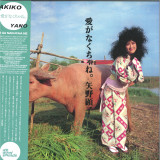
Wewantsounds continues its Akiko Yano series with the reissue of her cult classic 'Ai Ga Nakucha Ne' recorded in 1982 and co-produced by Ryuichi Sakamoto. Featuring Japan, the album includes additional recording in Tokyo with YMO and is mixed by Steve Nye and Shinichi Tanaka. It is the first time the album is released outside of Japan and the deluxe LP features the original artwork with gatefold sleeve and a lavish 24-page colour booklet with sessions photos by Pennie Smith (famous for The Clash's London Calling photo). The reissue also includes a new introduction by Mac DeMarco and a dual interview with Akiko Yano and Steve Jansen by journalist Paul Bowler. The audio remastered from the Original tapes by Mitsuo Koike.
'Ai Ga Nakucha Ne' ('there must be love' in Japanese) is Akiko Yano’s 6th studio album and follows 'Tadaima' in 1981. It continues exploring the electro-pop sound of its predecessor, hot on the heels of her touring with Yellow Magic Orchestra between 1979 and 1980. For this album, Akiko decided to try something new; she enrolled English fellow musicians Mick Karn, Steve Jansen and David Sylvian from Japan and booked the Air Studios in London under the supervision of engineer Steve Nye. Over a couple of weeks, the musicians created a fascinating soundscape full of catchy pop tunes, sung in both Japanese and English. Reminiscing about the studio sessions, Steve Jansen notes "Our music’s different but we maybe had a similar process of working. It was a great environment because the studio was a great place to work. It was very insular. There were four studios and there were always groups working in there 24/7."
The eleven tracks featured on "Ai Ga Nakucha Ne," mostly composed by Akiko - are a great collection of catchy tunes featuring her distinctive vocals and accompanied by the Japan musicians. As Akiko explains about the creative process, "I didn’t think to imitate or to make another Tin Drum. But I had Steve Jansen and Mick Karn, these excellent musicians. They were eager to understand the songs, then they put in everything they had. I knew the material was different from what they usually played in Japan. But it was a great experience working with them.
There are many highlights on the album, from the pop edge of "Aisuru Hito Yo" to the avant groove of "Another Wedding Song", each song is memorable and the album ends with the superb “Good Night” sung by Akiko and David Sylvian.
The original 1982 LP release included a 24 page booklet featuring many photos by Pennie Smith and Japanese photographer Bishin Jumonji. The booklet is reproduced in its entirety here and the album on top of contributions by Mac DeMarco, a longtime fan of the album, Akiko and Steve Jansen making this release of 'Ai Ga Nakucha Ne' a unique testament to Akiko Yano's greatness.
- A1: Fred Und Luna "Intro (Future Sounds Of Kraut)
- A2: Baikonour "Oben Beg (Mk2)
- A3: Musiccargo "Ich Geh Den Weg Mit Dir
- A4: Abrão "Intensidade (Rina Remix)
- B1: Listening Center "Portable Electronic Musical Instrument
- B2: Higamos Hogamos Presents Spacerocks "Elkamonious Split
- B3: Gilgamesh Mata Hari Duo "Florian Schneider-Esleben
- B4: Kosmischer Läufer "In Der Stadt Und Auf Dem Land
- B5: Sankt Otten "Hymne Der Melancholischen Programmierer
- C1: Pyrolator "Die Geschichte Vom Heißgelaufenen Reißwolf
- C2: I Cube "Vantableu
- C3: Organza Ray "Preen Scene
- D1: Sula Bassana "Tropfsteinhöhle
- D2: Halwa "Drehwurm
- D3: Lionel, Julien, Marceau Et Rainer "Reise
- D4: Fred Und Luna "Outro (Auf Wiederhören)
16 moderne krautige elektronische Tracks inspiriert von Kraftwerk, CAN, Neu, Rother Klaus Schulze und Konsorten. Kuratiert und kompiliert von Compost Künstler Fred und Luna. Seine Auswahl (mit sechs exklusiven Stücken!) zeigt, wie gut jüngere Künstler die Kraut-Szene beleben. Die langjährig Bekannteren wie Pyrolator, Sankt Otten, I:Cube, sowieso. Und Vol. 2 ist auch schon in der Mache, folgt im Winter 2023. Die Collage auf dem Cover ist von der fantastischen Künstlerin Norika Nienstedt extra für die FSOK angefertigt worden. Sie lebt in der Kraut Metropole Düsseldorf.
Intro: Future sounds of Kraut, what’s it all about? Keine Ahnung, I don’t know. Überraschung, where we go...Alles andere als einfach oder im Grunde unmöglich, die Begriffe „Krautrock“ oder „Kraut“ zu definieren. Dennoch begeben sich Compost Records und Fred und Luna auf eine Zeitreise, um die unterschiedlichen Elemente deutscher elektronischer Musik der 1970er und 1980er Jahre und ihre Auswirkungen auf die neuere deutsche und weltweite Musikszene zu entdecken. Auf „Future Sounds Of Kraut, Vol. 1“ präsentieren die beiden Kuratoren Fred und Luna als erste „Forschungsergebnisse“ hauptsächlich Bands, die vom repetitiven Charakter vergangener deutscher Elektronika à la Kraftwerk, Can, Neu!, Harmonia und Cluster, beeinflusst sind.
Viel Vergnügen und erfolgreiches Krautifizieren!
Originally released on tape in 1982, »Maraccaba« is the second solo album from electronic wizard Klaus Wiese. Member of the krautrock band Popol Vuh in the early 1970s – Voice, Zither, Tambura, Harmonium, Singing Bowls – Klaus Wiese (1942 – 2009) was a veteran musician, minimalist, and multi-instrumentalist. A master of the Tibetan singing bowl, he created an extensive series of albums using them, alongside zither, Persian stringed instruments, and chimes. Wiese is considered by some as one of the great ambient or space music artists alongside Robert Rich, Steve Roach, Michael Stearns, Constance Demby, and Jonn Serrie. His musical style is much more appropriately compared to the organic soundscapes of drone and dark ambient music, such as Oöphoi, Alio Die, Mathias Grassow, and Tau Ceti.
In the 1990s he founded the Nono Orchestra to play the giant sheetmetal instruments of Robert Rutman. Wiese is known also for his collaborations with Al Gromer Khan, Mathias Grassow, Oöphoi, Tau Ceti, Saam Schlamminger, and Ted de Jong. He collaborated with Deuter on his Silence is the Answer album in 1980 and East of the Full Moon in 2005
Wewantsounds is delighted to continue its Akiko Yano reissue program with the reissue of her superb double album recorded with YMO at a time when she was part of the group's touring line up between 1979 and 1980. The album is pure Akiko Yano featuring her superb singing and piano playing, enhanced by touches of YMO's synth-pop sound (check her cult version of YMO's classic, "Tong-Poo"). It is the first time the album is released outside of Japan and the deluxe 2-LP set features the original artwork with gatefold sleeve and 4-page insert.
Svitlana Okhrimenko (artist name: Svitlana Nianio) is a Ukrainian artist, musician, and signer. She is one of the most prominent representatives of the independent music scene of Kyiv in the late 1980s — early 90s. She has repeatedly recorded and performed in collaboration with other musicians and bands, such as Oleksandr Yurchenko, Sugar White Death (Cukor Bila Smert’), Ivanov Down, GeeNerve & Taran, and Blemish. Svitlana still performs and publishes new recordings today.
“Transilvania Smile” is one of the first solo works recorded in 1994. During this time, Svitlana repeatedly visited Germany, where she had the experience of playing in parks and on the streets, gathering contacts of the local art scene. Her cooperation with the international choreographic group Pentamonia, based in Cologne and consisting of several girls who performed in theaters, took part in various performances, and were engaged in music. They met in the 1990s during joint performances with "Sugar-White Death." After that, they corresponded, and the idea of doing something together arose. Svitlana attended several of their performances, which inspired her to write music for a new project, and the band members helped to realize their creative ideas. Later, they started rehearsing together.
The name “Transilvania Smile” was invented by the project participants, and it symbolized the mold on the mirror and the reflection of a smiling vampire. However, shortly before the premiere, they changed it to “Firefox”, as the participants actively used flashlights and the play of light and shadows in the scenography.
The premiere occurred in the local Urania theater, previously a gallery. Isabel Bartensein directed the choreography, and Svitlana played, sang, and improvised. She said it was an excellent experience for her and the band. Besides Cologne, they also performed in Aachen.
Later, Michael Springer offered Svitlana to record this material in his "Phantom" studio. They had already worked together and recorded music for their project (Svitlana Okhrimenko / Phanton). Michael was also interested in the Ukrainian independent scene and participated in the creation of several compilations that featured bands from Kyiv and Kharkiv. Svetlana played the piano and harmonium in the studio and also sang. After the recording, the material was never released in its entirety. Two compositions appeared on the cassette compilation “Shovaisia” (Hide) in 1995, some episodes were re-recorded for the “Kytytsi” album in 1999, but for a long time, the full version of this recording remained practically unknown to listeners and was kept in Svitlana's and Michael’s archives.
This album is one of the most personal and insightful works of Svitlana Nianio from the 90s, which you can now get to know in its original form and sound.
- A1: The Royal Mile
- A2: I Was A Boy Scout
- A3: Welcome To Hollywood
- A4: Wastin’ Away
- A5: Look At The Moon
- A6: Bring It All Home
- B1: The Garden Of England
- B2: Johnny’s Song
- B3: Didn’t I
- B4: Syncopatin’ Sandy
- B5: Café Le Cabotin
- B6: Don’t Close The Doo
Snakes and Ladders, newly remastered at half-speed by Miles Showell at Abbey Road Studios, out on 25th August 2023. Originally released in 1980, the fourth album from Gerry Rafferty includes "The Garden Of England" which was recorded at Beatles producer George Martin's AIR studio in Montserrat and "Johnny's Song", a remake of a song previously released by his former band Stealer's Wheels.
With hits such as ‘Baker Street’, ‘Right Down The Line’ and ‘Night Owl’, Gerry Rafferty is one of Scotland’s and the UK’s finest songwriters and musicians in history. He first found success as part of the band The Humblebums, which included beloved comedian, actor and musician Billy Connolly. Rafferty went on to form Stealers Wheel with old school friend Joe Egan, who produced a number of successful albums alongside the rock classic Stuck In The Middle With You, a track which has transcended generations with notable syncs in films such as Tarantino’s Resevoir Dogs, and is still widely popular to this day. Following his departure from Stealers Wheel, Rafferty relaunched his solo career in 1978 with the album City To City, including hits such as ‘Right Down The Line’ and ‘Baker Street’, which features the iconic saxophone solo by Raphael Ravenscroft. Rafferty went on to release ten studio albums, solidifying his status one of the finest musicians and songwriters to come out of the UK.
Unidisc 40th anniversary continues with a Saturday Night Band classic featuring brand new Dave Lee remixes!
"Come On Dance, Dance" is a disco funk track by the Saturday Night Band, originally released in 1978. The song features an upbeat tempo and groovy bassline, with brass and string sections adding to the lively and energetic vibe. The catchy chorus invites listeners to join in the dancefloor, with the lead singer's soulful vocals urging everyone to let loose and have a good time. The song is a quintessential disco anthem, with its infectious rhythm and joyous spirit capturing the essence of the era's dance music. "Come On Dance, Dance" has become a classic of its genre and continues to be a popular choice for parties and events.
Dave Lee, also known by his stage names Joey Negro and Jakatta, is a British DJ, remixer, and producer known for his contributions to the house, disco, and dance music scenes. Lee has been active in the music industry since the late 1980s and has released numerous singles and albums under his various aliases.
Throughout his career, Lee has been a champion of disco and funk music, often incorporating these genres into his productions and remixes. He is also known for his expertise in crate-digging and his extensive record collection, which he has used to source samples and inspiration for his music.
Attarazat Addahabia & Faradjallah's album came to us as quite a mystery. Our friends from Radio Martiko got access to the studio archive of the Boussiphone label and a reel labeled “Faradjallah” was among the items they had found there. After listening to the selection of reels they borrowed, Radio Martiko felt it was not a fit for their label and helped us licensing it from Mr. Boussiphone instead. We knew nothing about the band. We just had the reel with the music but very little information. What we knew was that the music was incredible and very unique. Gnawa sounds were combined with funky electronic guitars, very dense layers of percussions and female backing vocals more reminiscent of musical styles further south than Morocco. We started asking around whether anyone knew the band with no immediate success until we asked Tony Day, a musician from Morocco who helped us during our search for Fadoul’s family. His sharp memory came through once again, remembering all the names of the Attarazat Addahabia band members and even how to contact the bands singer and leader Abdelakabir Faradjallah. After visiting him at his home in Casablanca with our Moroccan colleague Sabrina multiple times, he shared his personal story. His father arrived in Casablanca from Aqqa at the age of six and his mother came from Essaouira. Abdelakabir was born in the neighbourhood of Benjdia in 1942. Abdelakabir Faradjallah studied fine arts in Casablanca, graduating in 1962. He also played soccer in the second team of "Jeunesse Societe One". His brother-in-law Ibrahim Sadr worked for one of the biggest football teams of the time in Morocco called "Moroco Sportive Union", which allowed him to travel to France occasionally. While Ibrahim was never part of the band he brought along a few instruments from trips.
Yet the majority of the instruments they could not afford to buy were build by Faradjallah and Abderrazak, Faradjallah's brother who passed away early. For instance they had built a Spanish guitar and a drum made of wood barrel and sheepskin by themselves.During the 1950s Faradjallah was booked as a singer for surprise parties with friends. He started to write his first songs including "L’gnawi" in 1967 and wanted to make people discover Gnawa culture, or maybe rather his take on the culture to be more exact. Faradjallah recalls his first interaction with the genre in the streets of the Dern neighbourhood, where he used to go to elementary school. Gnawa is one of the essential musical genres of Morocco. It combines ritual poetry with traditional dances and music linked with a spiritual foundation. Musically a lot of influences originated from West Africa as well as Sudan. Gnawa is usually played by a selection of specific instruments such as the qaraqab (large iron castanets centrally associated with the music), the hajhouj (a three string lute), guembri loudaâ (a three stringed bass instrument) and the tbel (large drums). People would put shells on their clothes and instruments and use incense at their parties. "Sidi darbo lalla - lala derbo khadem..." came from Gnawa verses Faradjallah used to sing when he was 14. The lyrics tackle a global (im)balance of power and the question of social status in this course. The band Attarazat Addahabia was formed in 1968. The original line-up included 14 members, all from the same family. They played their first small concerts here and there starting in 1969. Later in 1973 they performed bigger shows for instance at the Municipal Theatre followed by the "Al Massira Show" at Velodrome Stadium in downtown Casablanca. Their first album "Al Hadaoui" (the one you are listening to) was recorded at Boussiphone studios in 1972 and was never released before. Nobody seems to remember the exact reason why Boussiphone ended up deciding not to put the album out. The album's title track also served as the basis for Fadoul's "Maktoub Lah", who frequented the same circles as the band for some time.
Their shows sometimes could go as long as 12 hours, starting at 5pm in the afternoon, with an occasional break here and there. In the 1980s the band took a brief break. Faradjallah recalled the reason for that break like this: "Zaki, the bands drummer, had fallen in love with a young girl from Mohammedia. Soon after, he fell very ill. The group members were convinced that the girl had given him ‘s'hor’ (a kind of local Moroccan version of "black magic"). For four years, the whole group stopped playing. It was unthinkable to find another drummer to replace Zaki, even temporarily." So they waited four years for Zaki to "get back on his feet" before going back on stage. Apart from very few gigs here and there Faradjallah stopped playing music in the mid 1990s. Some members from the younger generations formed a new band and still play frequently to this day. Faradjallah runs a television repair shop coupled offerings beverages and snacks in the Belevedere /Ains Sbaa district of Casablanca. While Faradjallah was primarily a musician, he would work for the local cinema and paint their posters for new movies by hand and he designed all artworks and cover posters of the band.
And this eventually led to him participating actively in our first exhibition dealing with Habibi Funk’s work in Dubai 2018. He helped us by creating calligraphic complementations on large photo prints for that show.
- A1: Ennio Morricone - Mio Caro Assassino (From Mio Caro Assassino/My Dear Killer (1971)
- A2: Bruno Nicolai - La Notte Che Evelyn Uscì Dalla Tomba (Feat Edda Dell'orso - Long Version - From La Notte Che Evelyn Uscì Dalla Tomba/The Night Evelyn Came Out Of The Grave (1971)
- A3: Bruno Nicolai - La Dama Rossa Uccide Sette Volte (Edit - From La Dama Rossa Uccide Sette Volte/The Red Queen Kills Seven Times (1972)
- A4: Stelvio Cipriani - Tribal Shake (From Reazione A Catena/A Bay Of Blood (1971)
- A5: Stelvio Cipriani - Il Sesso Del Diavolo (Finale) (Finale)
- A6: Stelvio Cipriani - Deviation-M1 (From Deviation (1971)
- B1: Riz Ortolani - L'etrusco Uccide Ancora (Titoli) (Titoli)
- B2: Daniele Patucchi - Giallo In Tensione (From Frankenstein '80 (1972)
- B3: Ennio Morricone - Ansimando (Feat Edda Dell'orso - From Macchie Solari/Autopsy (1975)
- B4: Manuel De Sica - Black Dream (From Mystery Tour (1985)
- B5: Paolo Gatti & Alfonso Zenga - Cerro Torre (From Cesare Maestri: Il Ragno Delle Dolomiti (1980)
- B6: Berto Pisano - Greta (From La Morte Ha Sorriso All'assassino/Death Smiles On A Murderer (1973)
- B7: Sante Maria Romitelli - Bambola Sensuale (From La Rossa Dalla Pelle Che Scotta/The Sensuous Doll (1972)
- C1: Adolfo Waitzman - Languidamente (From Pensione Paura/Hotel Fear (1978)
- C2: Nico Fidenco - Il Demonio In Convento (From Immagini Di Un Convento/Images In A Convent (1979)
- C3: Ettore De Carolis - Flavour Of Death (From Il Cavaliere, La Morte E Il Diavolo (1983)
- C4: Marcello Giombini - Un Gioco Per Eveline-M11 (From Un Gioco Per Eveline (1971)
- C5: Carlo Maria Cordio - Absurd (From Rosso Sangue/Absurd (1981)
- C6: Stelvio Cipriani - Devil Dance (Performed By Goblin - From Un'ombra Nell'ombra/Ring Of Darkness (1979)
- C7: Daniele Patucchi - E Tanta Paura-M2 (From E Tanta Paura/Plot Of Fear (1976)
- C8: Marcello Giombini - Orinoco: Prigioniere Del Sesso-M19 (From Orinoco: Prigioniere Del Sesso (1980)
- D1: Franco Micalizzi - Bargain With The Devil #3 (From Chi Sei?/Beyond The Door (1974)
- D2: Stefano Liberati - The Prophecy (Version A - From I Pensieri Dell'occhio (1978)
- D3: Luigi Ceccarelli - Walking Through The Shadows (From Difendimi Dalla Notte (1981)
- D4: Daniele Patucchi - Minaccia Sulla Citta (From Belve Feroci/Wild Beasts (1984)
Red vinyl[28,53 €]
PAURA explores the horror repertoire from the precious CAM Sugar archives taking us on a hypnotic journey into the labyrinths of fear, through the different variations that Italian horror took on from the esoteric and supernatural to the slasher films of the early 1970s; to reinterpretations of Romantic literature and gothic fiction to the splatter films of the ‘80s; and from witchcraft to metropolitan horror. This is not a real “best of” but an eclectic menu full of mysterious voices, childlike lullabies, sweet melodies, obsessive music boxes, obstinate harpsichords, crazy distortions and threatening synthesizers, conceived as a succession of sequences, as if a film edit. The new collection includes some of the most creative music ever written and strives to do justice not only to some of the best known composers in this genre, but also to many great unsung composers: From celebrated composers like Ennio Morricone, Riz Ortolani & Stelvio Cipriani to long-forgotten personalities who fed the industrial backbone of Italian cinema such as Daniele Patucchi, Marcelo Giombini & Berto Pisano. The collection includes 6 previously unreleased tracks plus 3 tracks released on vinyl for the first time and 5 tracks available commercially for the first time (originally released only as a limited promo item).
Factory Benelux presents a limited (500 copies only) orange vinyl edition of Retrofit, the seventh studio album from post-punk trailblazers Section 25, originally released in 2010. First time on vinyl.
Recorded before the untimely death of founder member Lawrence Cassidy in February 2010, Retrofit saw cult Factory Records group Section 25 revisit key tracks from their 1980s back catalogue, remade and remodelled for the 21 st century using an appropriate mix of new and old technology.
‘Gathered here is a selection of Section 25 faves, re-recorded and re-thought. The idea is born from their invigorating live set – compelling use of technology to lift them (almost) free from the familiar shards of 80s underground. Shockingly, this newattack works. All this tightening appears to have tugged the band into a sense of Now, gloriously at odds with the contemporary norm’ (The Quietus)
‘Audacious and innovative’ (Record Collector)
‘Section 25 might just be the best band in the world. Since 1980 they’ve been forging music that is as beautiful as it is challenging, from the monochrome psychedelia of their first album through Zen guitarscapes, electronic epiphanies, the arguable invention of Acid House, and on to an unexpected rebirth in 2006. Even within the narrative of such an unusual band, Retrofit is an odd confection: not a best-of or remix album, but a retrospective in which tracks are remodelled as gleaming technosculptures with the most human of hearts.’ (Glasgow Herald)
Now released on vinyl for the very first time, FBN 140 is limited to just 500 copies pressed on orange vinyl. The digital copy contains 5 bonus tracks, including a blistering re-boot of Looking From A Hilltop by Stephen Morris of Joy Division/New Order.
Ceremonie hail from France and have an '80s-inspired sound that hits differently. Their songwriting reaches new levels and draws on well-chosen, well-designed sounds with a wonderful sense of melancholy and just the right balance of drama and subtlety.
After an indie-pop leaning cassette a few years ago they now land on Enfant Terrible with a contemporary take on retro new wave and synth-pop. Three of the tunes are originals, one is a cover of French 1980s new wave band Message and there is a whole new album in the works, apparently. Great stuff.