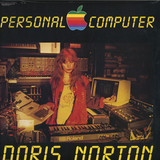
Coeo have been travelling in Japan and discovered the magic of City Pop: That Japanese Disco movement of the 1980ies. Back then there were amazing dance tracks coming out of Japan. Some with Japanese lyrics others with American vocals. Often so perfectly played and recorded that it was hard to tell if the music came out of NYC basement studios or for real Asiatic studio musicians. Coeo found a lot of rare jams and did edits for their DJ sets. As at the Toy Tonics office everybody is always searching for the rare and unknown the crew was totally excited. And so the decision was made quickly: Let’s put out a few of these rare jams & edits. Here they are.
Buscar:1980
Performing throughout the 1980s as Art Carnage to the gloomy hipsters of Portland, Attilio Panissidi III decided he needed a vacation. The result of his creative escape became Art Takes A Holiday, an album of fabricated FM synthscapes and MIDI environments that embrace elements of smooth jazz, new age, and pop.
Attilio had been playing in bands since he was thirteen, and had opened live shows for countless acts, from The Shangri-Las to Bruce Hornsby. The experience of producing, performing, as well as years spent writing for local music magazine The Downtowner, earned Attilio a gig to score a commercial film for a home security systems company. The opportunity allowed him to explore softer elements in his writing, and he created a suite of songs much deeper than the commission warranted. These instrumentals caught the attention of Marlon McClain (Gap Band, Shock), who invited Attilio to produce and release the music on his fledgling Nu-Vision label. Thus Art Takes A Holiday found its commercial release on cassette and CD in 1989. Although originally intended as soundtrack music, the album retains its own momentum, narrative and evocative imagery that betrays Attilio's years of crafting songs. Attilio found a perfect ambience on this mythic retreat, somewhere between William Aura's summer cottage on Half Moon Bay and DJ Alfredo's Balearic island getaway.
Buoyed by the success of Endless, their 2015 primer on forgotten electronic explorer Dimitris Petsetakis, Into The Light Records has worked with the Greek composer to compile a follow-up album that takes an even deeper dive into his archive of previously unreleased material. Like its predecessor, On Shores draws on music recorded in the 1980s and early '90s. It contains just two previous released tracks, the humid 'Clearance (Part 2)' and poignant 'On Endless Shores', both of which first featured on Petsetakis's cult 1991 album Missing Links.
On Shores offers another unparalleled insight into the picturesque and atmospheric soundscapes created in the Piraeus-based composer's basement studio using a mixture of electronic and acoustic instruments, a wide range of global influences and a keen interest in both minimalism and new age ambience. Listeners will encounter a range of stunningly beautiful and beguiling compositions, from the creepy, slow-burn exoticism of 'Pythia's Dance' and rhythmic, otherworldly escapism of 'Violated Asylum', to the gentle bliss of 'Like a Knife' and sun-bright joy of 'Nearxi (Minimal Marimba Edit)'.
fter Liquid Liquid disbanded in 1985 I continued to record electronic music at my home studio inEdison,New Jerseybut I decided to mix the songs for "Concepts" at another studio so I could have another set of ears to help with the mixes. I was lucky when I looked in the local music ads that I to find Gabriel Farm Studios inPrinceton,New Jerseyowned and operated by Andy Gomory. Andy was a true talent, a keyboardist and arranger, we hit it off immediately. After he recorded my mixes we would record songs together. Andy played drum machines and keyboards while I played percussion, keyboards, & guitar and we both sang. When Andy and I parted ways in the late 1980's I decided to add both drums and percussion as well as overdubs from guest musicians many of which are included on this album. The albums timeframe ends in the year 2004. The later recordings have a jazz feel to it yet still had dance music elements mixed in. The title track "Primitive Substance" really sets the tone as you hear the great playing of Michael Gribbrook on Frugel horn/Trumpet and Gerry Carboy on bass. Also, my favorite song on the recording "Forgiveness" has David Axelrod (not the famous one) playing beautiful melodic bass guitar thru out.
Special thanks to Euan Fryer of "Athensof the North" for releasing this album. As I listened to the songs I decided to use for this recording it brought back memories of the hours spent adding the extra sounds and instruments to the point where I wanted to listen to them again and again to see what I missed hearing . Keep a close ear this might happen to you after hearing "Primitive Substance".
Thanks for listening!
Dennis Young/April 2019
U Know Me Records proudly presents a special album showcasing Polish drumming scene - each track was produced by a different drummer - these are their portraits.
official video promo: https://youtu.be/qxuTYjMRUMM
In the 21st century drummers imperceptibly switched from the background to the front line, despite popular music not exactly pandering to them. In the early days of rock culture this joke made the rounds "What's the last thing a drummer says in a band?" "Perhaps we could play one of my songs…?"
In popular music the drummer became the first to compete with machines. They were the first band members that consequently began disappearing, however, as contemporary electronic music took hold, they were also the first to return. First they were incorporated into compositions but gradually - took centre stage. Thanks partly to the ubiquitous culture of Hip Hop recognising the drummer's role as key in any recording, alongside the eclecticism of new music, which demanded fluid transitions between musical forms, a drummer's adaptive skills – as a trained multi instrumentalist – became truly impressive. This new generation of drummers seen on Polish stages today are exceptional even against the backdrop of today's unusually creative and well-educated music scene which rejects narrow minded or genre-centric views.
This album exhibits portraits from the cream of today's Polish drummers. Kovalevo Tone Bank by Michał Bryndal tags the 1980's, the era which began stealing drummers' bread. Incidentally, the heavy groove laid down by the artist references a hit by Wham!, the same hit in which the group decided to cut the drummer's part because he was late and replace him with a LinnDrumm machine. Hubert Zemler in The Life and Death of Ben Bekele and Łukasz Moskal in Father Sparrow show they've found themselves perfectly in close cooperation with electronic instruments.
Multifaceted improvisors - Qba Janicki (Kabina projekcyjna) and Jan Młynarski (Roj) - transform their drums kits into multifunctional devices capable of delivering wildly diverse palettes of sound. Rafał Dutkiewicz (Displaced) showcases drums as the lead instrument on a club track. Marcin Rak (Alpaka) does the same, but with the conventions of Funk and Hip Hop, whereas Krzysztof Dziedzic (Vagabonde) gravitates towards the edges of jazz. Each of them here is a leader and… plays one of their songs.
Bartek Chaciński
(translation: Sean Palmer)
With such a raft of quality music coming across the Summer from NuNorthern Soul, we thought we would put together an EP of some of the tracks featuring across the upcoming months...
We have taken our favourite tracks from various digital releases and present them on one vinyl 12" EP On the A side we take Nick J Smith's 'Waves Take Hold' from the Waves Take Control EP'
'Waves Take Hold', is a kaleidoscopic, life-affirming exercise in late 1980's style Italian Dream House, that's so warm and rush-inducing that it's likely to get the hairs on the back of your neck standing to attention.
Full of ricocheting drum machine hits, sun-bright lead lines, elongated chords and rich bass, it sounds like it was tailor-made to soundtrack sunrise in Rimini...
Bonnie & Klein 'Ocean Leap' taken from the Ocean Leap EP
There's a deeper and dreamier feel to the 'Ocean Leap' track, whose bubbly melodic motifs and synthesizer panpipe flourishes offer subtle nods towards 1980's Greek new age electronic composers such as Vangelis Katsoulis amd Dimitris Petsatakis.
Bonnie & Klein's synthesizer-heavy melodiousness comes accompanied by dub disco strength bass and undulating, off-kilter drums, but retains the rush-inducing bliss associated with the pioneering work of their Greek predecessors.
AA is given up to the 10 minute + track from Mirage: 'Endless Ocean' taken from their Reflections of the Sun EP.
'Endless Ocean' is a slowly building masterpiece. After a hushed, atmospheric opening, the track bubbles away on waves of hazy bongo beats, lapping water sounds and seductive chords before rushing skywards in a swarming swirl of trance-style synthesizer lead lines, echoing electronics and picturesque piano motifs.
Chen Yi aims for a collective approach of art. As an isolated group of humans/numbers operating directly from a secret place in Chelmsford (UK), they developped a personnal and “bizarre” utilisation of guitars, machines, voices, distortion, giving as result an unconventional regroupment of compositions amongst a lot of lost/unreleased recordings. This is likely what got John Peel interested which leads to an inexplicable CBS contract. More couldn’t be finalised, because CBS suddenly pulled out of the contract. “Due to their raw and alternative ’self-made’ musical approach, they’ve been compared to the likes of Throbbing Gristle, Borghesia & Severed Heads or more underground names as Het Zweet, Biting Tongues…
Hard-to-obtain, vintage highlife from three true giants of the sound; Ebo Taylor, Pat Thomas & Uhuru Yenzu. Originally released in 1982.
In 'Hitsville Re-Visited', the mighty trio add a dose of uptempo funk into traditional highlife grooves.
The legendary Ebo Taylor was involved in many funk and highlife records to emerge from Ghana in the 70's and 80's. He worked with bands such as Apagya Show Band, C.K. Mann as well as Pat Thomas, on this, and several other records.
Taylor recorded another album with Uhuru Yenzu in 1980 – 'Conflict' – which is also available on Mr Bongo.
Pat Thomas career began in 1969 with the ‘Broadway Dance Band’, leaving a year later to join the ‘Uhuru Dance Band’. He then played with Ebo Taylor’s ‘Blue Monks’ and finally formed the ‘Sweet Beans’ in 1973 where he really made his name.
Thomas and Taylor's careers span more than 50 years now and they both still tour to play around the world.
The story of TodoTodo is one of the most incomprehensible and surprising in the history of Spanish electronic music. Without doubt it is, sadly, also one of the most ephemeral. The curse that has haunted them since their forming in 1980 and during their short year and half of life is already legendary. Domestica Records did justice to the group in 2012 with a comprehensive compilation and this EP joins this initial tribute as it reimagines some of these trailblazers most representative productions: Digital Dancer and Autoga´s.
Almost forty years later, Frigio is bringing some of their music to a fresh audience. Juanpablo with his extended edit of 'Digital Dancer.' A steady kick tethers a tripping mechanical melody, a melody that bubbles and simmers as toms, horns and daring funk collide for this seven minute odyssey into the world of Iberian underground synth. The original version from 81 closes the A, a brief and brilliant piece of proto-techno. The flip is introduced by Catalan Dj, journalist and author of ¡Bacalao! Historia Oral de la Mu´sica de Baile en Valencia, Luis Costa. Costa re-imagines 'Autogas' with his Tool Edit, reshaping the off-kilter keys and future highways and byways of the original. The finale is a true treasure from the annals of time. A live version of 'Autogas' from the legendary Rock'Ola club in Madrid, an unreleased work that is as audacious and bold as it was when it was first performed in 1981.
- A1: Noel Kelehan Quintet - Spon Song
- A2: John Wadham - Floatin
- A3: Louis Stewart - Araby
- B1: Joe O'donnell - Caravan
- B2: Taste - On The Boards
- B3: Granny's Intentions - Nutmeg, Bitter-Sweet
- B4: Mellow Candle - Lonely Man
- C1: Sonny Condell - Red Sail
- C2: Supply, Demand & Curve - When You're By Yourself
- C3: Rosemarie Taylor - Mister Sleep
- C4: Apartment - Weekend
- D1: The Plattermen - Africah Wah Wah
- D2: Jonathan Kelly's Outside - Misery
- D3: Dr. Strangely Strange - Mary Malone Of Moscow
- D4: Stacc - Holy Smoke
- D5: Zebra - Silent Partners
'Buntús Rince' translates from Irish as 'basic rhythms', and this new compilation explores how Irish musicians were influenced by strands of different genres of music from around the world, merging them to create their own unique sounds. The compilation features some of the most innovative and talented figures in the history of Irish music and includes rare Irish jazz, fusion and folk outliers from the 1970s and early 1980s from musicians relatively unknown outside of Ireland.
Often regarded as a musical backwater, the 1970s finally saw Ireland begin to make its mark on international music. The nature of this feat is all the more commendable, considering how isolated and conservative the country still was in the middle of the last century. The emergence of acts like Skid Row, Thin Lizzy and Van Morrison instilled in budding young Irish musicians the belief to dream big.
Unlike many other European countries, Ireland had not benefited from the cultural impact of immigration. Pioneering Irish musicians did not have access to the type of vibrant music scenes ubiquitous to most European cities at that time. With no talented players or even in some cases recordings of the music, they had to cultivate and invent their own small scenes.
A jazz scene had begun to blossom in Dublin in the late 1950s. Self-taught players like Noel Kelehan and Louis Stewart emerged as the Irish standard-bearers. Their level of musicianship saw them play with some of the world's most renowned artists. The 1960s would see the emergence of the 'beat' scene in Ireland, with groups like Granny's Intentions, Taste and Eire Apparent finally challenging the hegemony of Irish Showbands. Change was in the air.
The late 1960s also saw many Irish emigrants returning home, bringing with them inspiration from the new styles and sounds of London and further afield. The arrival in the late 1960s of pirate radio stations like Radio Caroline, new music magazines and the availability of music on vinyl meant that different genres were now becoming more accessible. The musical landscape of the country began to transform and evolve, influencing a new generation of musicians in the process.
The 1970s saw advancements in studio technology. 8-track studios began appearing in Dublin, offering more opportunities for groups to record singles and albums. Synthesizers and other instruments were also becoming easier to acquire as the younger generation turned to electric jazz and fusion music.
While the level of musicianship was high, the levels of opportunities in Ireland were still very limited. Many groups and solo musicians had to emigrate to try and succeed.
Thankfully for those who remained, this new emerging scene didn't go totally unnoticed and local labels began to take a chance on more obscure Irish groups. Labels like Mulligan and also producers like John D'Ardis and Terri Hooley championed and documented music from the Irish underground of the 1970s.
Their valuable work is a common thread which connects many of the tracks on this compilation. From the soaring flute playing of Brian Dunning, to the swinging piano of Noel Kelehan and the sonic force of Jolyon Jackson's synthesizers; 'Buntús Rince' lifts the lid on a vastly underappreciated period of Irish music history.
One for the collectors.
Minimal Wave presents a full length album by Dutch electro pioneer, Das Ding. Das Ding is Danny Bosten, who was active in the early 1980s releasing his music and friends’ music via his own cassette label called Tear Apart Tapes. While studying graphic design in art school, he designed all the tape covers himself. Meanwhile, he recorded his own music as Das Ding. Powerful dark electro, some tracks are quite addictive and danceable while others are more for at home listening enjoyment. The dancefloor killer is somewhere between Reassurance Ritual and H.S.T.A. The record is pressed on 180 gram vinyl and comes in a printed innersleeve featuring artwork by Danny Bosten, and heavyweight outer jacket with photographs by Dima Belush. Definitely one of this year’s favorites
An LP of tracks, taken from various cassette releases, by Belgian synthwave luminaries The Misz (Jan Van den Broeke and Dries Dekocker)! 600 copies on 180 grams vinyl.
The Misz formed in Gent in 1983 by Jan Van den Broeke and Dries Dekocker at a time when they had both just relocated from the country. They lived on the same street and collaborated freely with the limited equipment they had, which always centered around the Fostex 250 4-track tape recorder. They used an unknown monophonic synthesizer, casio synths, roland drum machines, hand drums and guitars through effects pedals, improvising with their voices and often and included friends for additional voices and sounds. They captured these sonic experiments and sometimes released them on cassette in editions of 100-200. They were also included on numerous cassette compilations throughout the 1980s on labels like Mad In Belgium, The Cassette Factory, 3RIO Tapes, Minimart production, Fraction Studio, Cauchy Productions, Home Product, R.R. products, ZNS Tapes, and Body Records. They described themselves as young, immature and bit strange yet totally bold and fearless. They sang about what surrounded them from world politics and environmental catastrophes to love and lust. The songs on The Lonely Crowd span from various cassette releases and have been remastered from their original reel to reel tapes.
Almost four decades since it’s domestic release, Karen Marks’ 1981 single Cold Café has finally reaped it’s deserved international credit to become one of Australia’s most recognised minimal wave recordings. Efficient Space now showcases the Melbourne artist’s brief but entire discography, including two previously unheard demos, all produced with experimental synthesist Ash Wednesday (The Metronomes, Modern Jazz, Thealonian Music). A rarity in the then male dominated industry, Marks found her footing in music, first through rock journalism and then in band management. Formally of Adelaide, newly arrived synth-punks JAB (Johnny Crash, Ash Wednesday and Bodhan X) approached her for representation, subsequently contributing tracks to seminal 1978 snapshot Lethal Weapons and playing the Crystal Ballroom’s opening night. Wednesday and Crash would soon dissolve JAB, enlisting Mark Ferry and Sean Kelly to create Models. Still under Mark’s management, Models became one of the fastest rising new bands of the punk movement, playing to full houses of dedicated and frenzied fans everywhere. Sadly, internal frictions forced Wednesday and Marks to leave after two years, with Crash following three months later. Her creative relationship with Wednesday fortified with the co-production of his 1980 machine-pop prank Love By Numbers, her swooning chorus uplifting his deadpan count to 100, before the two collaborated on Marks’ own recording persona. Immortalised by the icy Oz wave of Cold Café, her Astor issued 7″ also boasted the caffeinated flip Won’t Wear It For Long - a should be hit with guitar from future Icehouse member Robert Kretschmer.
In late 2017 Hyperdub released 'Diggin In The Carts', a compilation put together by Nick Dwyer and Kode9 of pioneering and rare Japanese video game music from the 1980s and 1990s.
Since then, from Sonar Festival in Barcelona to Liquid Rooms in Tokyo, Kode9 has been touring a live audio-visual set in collaboration with visuals from anime legend Koji Morimoto, who also designed the artwork for the original compilation.Finally, on this first new Kode9 EP since 2014, a handful of these remixes see the light of day.
9 rivets his 80/160bpm rhythms onto these classic 8bit and 16bit melodies, re-animating the Steve Reich-ian arpeggios of Soshi Hosoi, the grimelike horn fanfares of Yuzo Koshiro, the sour pads of Koichi Ishaibashi, and pitching Tadahiro Nitta down into a slow building, frantic low end grind.
Sleeved in artwork by Konx-om-Pax, adapted from the visuals from the live A/V performance
- A1: Throbbing Gristle – Dead On Arrival
- A2: Deutsch Amerikanische Freudschaft – Der Musolini
- A3: Cabaret Voltaire – Walls Of Jericho
- B1: Polyphonic Size - Zas
- B2: The Neon Judgement - Chinese Black
- B3: Da Davo - Sex Head
- B4: Borghesia - No Hope No Fear
- C1: Chris & Cosey - Exotika
- C2: Click Click - Headf
- C3: Front 242 - Body To Body (1988 Mix)
- C4: The Cassandra Complex -One Millionth Happy Customer (Ebm Mix)
- D1: The Weathermen - Poison (Lethal Mix)
- D2: Nitzer Ebb - Control I’m Here (Strategic Dancefloor Initiative Mix)
- D3: Meat Beat Manifesto - Radio Babylon
Electronic Body Music, abbreviated as EBM, is a term whose origin stems from the Belgian group Front 242, chosen to describe their electronic music; cold and dancing, free of the dominant influences of the time. Powerful, cold and minimalist electronic rhythms were the hallmarks of this new genre.
The movement quickly garnered followers with the British group Nitzer Ebb but also in the rest of Europe, with the likes of Borghesia and The Neon Judgment, later signed to labels like PIAS, Antler- Subway, Wax Trax!, Mute, Off Beat, Zoth Ommog, Pendragon and Metropolis.
EBM’s popularity grew rapidly in the underground scene during the 1980s and early 1990s, especially in Europe, before breaking through in the rest of the world, also influencing the subsequent electro-industrial scene.
‘Dancing In Darkness: EBM, Black Synth & Dark Beats From The 80s’ - to give it its full title - is a compilation of some of these bands; bands that changed contemporary music in terms of ideology, politics and aesthetics.
CD version in digipack with poster booklet. 2LP version in gatefold sleeve.
RE-pressed and available again on 9th november 2018! The Gunesh Ensemble was founded in 1970 in Ashkhabad, Turkmen Soviet Socialist Republic, then part of the Soviet Union. They started out as a vocal group with supporting musicians from Turkmenistan State Radio and TV. Later several young musicians came to play with them and the band's music became much more modern. The group began to play jazz-rock tightly intertwined with traditional Oriental music. With that new musical style the band participated in some popular festivals around the Soviet Union. They received various awards and became very popular. Gunesh has always been in the process of developing and was one of the first and best local jazz-groups to organically combine the principles of jazz and melodic improvisation. The remarkably beautiful arrangements and polyrhythmic compositions were always further developed thematically. This process was highly praised at the Moscow competition With A Song On Life in 1977 where the ensemble became a prize-winner. The Organizing Committee of the Festival Spring Rhythms in Tbilisi (1980) called out members Rishad Shafi as best drummer and Stanislav Morozov as best saxophonist. This, their very fine first LP was originally released in 1980 on the Soviet state label Melodyja and contains traditional Central Asian music in jazz-rock arrangements plus a Vietnamese singer. The line-up has changed many times. Around 65 musicians have been a member of the group at some point in time.
- A1: The Mountain
- A2: Revel In Your Time
- A3: Tech Noir
- B1: Shwadow Fury
- B2: Pink Mist
- B3: Kitsune
- C1: Black Sun On The Horizon Feat Martin Grech
- C2: The Hegemon
- C3: Fly For Your Life
- C4: Maximum Black
- D1: Tech Noir (Carpenter Brut Remix)
- D2: Revel In Your Time (Miami Nights 1984 Remix)
- D3: Black Sun On The Horizon (Makeup & Vanity Set Remix)
- D4: Lionface (Gunship Remix)
Erstmals Auf Vinyl: Das Debütalbum Des Synth-pop-trios Gunship Aus 2015. Exzellenter 1980er Retro-sound Aus Analogen Synths, Cineastischen Vocals Und Cyperpunk-attitüde, Mit Einem Feature Von Horror-meister John Carpenter Höchstpersönlich. Exklusiver Bonustrack Ist Der Gunship-remix Für Lionface "no Hope State" (2017), Der Hier Seine Erstveröffentlichung Auf Tonträger Erfährt. Für Fans Von Empire Of The Sun, Mgmt Oder Röyksopp.
In the lead up to part two of the highly anticipated Outro Tempo compilation, MFM drops this teaser EP with the never before heard cassette madness of São Paulo's Bruhahá Babélico and Individual Industry's ethereal electro pop on the flip.
Music From Memory announces a series of Brazilian releases for this Spring that pick up where their 2017 Outro Tempo compilation left off. Circling around the musical projects that emerged out of the art world in Brazilian cities during the late 1980s and 1990s, 'Outro Tempo II: Electronic and Contemporary Music from Brazil, 1984-1996' takes anotherdive into the depths of the Brazilian underworld, exploring the rhythms that lurk beneath the Ipanema sunset. It shines light on more illustrious unknowns and on the genre-defying music that maintained asymbiotic, yet uneasy, relationship with mainstream popular culture.
Amazing and unique private soul/jazz-funk fusion LP, 'New York To L.A.: Coasting' is the first release (1980) on Andrew Scott Potter and David Eric Tillman's PO/ET label. Sublime from the beginning to the end, it has become, just like their second and final release '...Space...Rapture...', a sought-after collector's item.
Andrew and Eric both come from Chicago. They met in the early 70's, shortly after Eric's discharge from the U.S. Air Force. They played together on the local jazz scene for several years (among others, with Maulawi). During that period, Andrew also toured with Minnie Riperton and Eric toured with The Dells, Linda Clifford and others. In the late 70's Eric left Chicago for Los Angeles, when he began touring with The Temptations. Since moving to California Eric has played and/or recorded with a variety of artists, including, Willie Bobo, Justo Almario, Alex Acuna, Norman Connors, Billy Paul, GAP Band, Linda Hopkins, Billy Higgins, O.C. Smith, and many others.
In 1980, the 9th Creation began working on new music at a Modesto studio, South East of Stockton. The studio was suspiciously cheaper than all of its competitors. After recording weeks of material, the band discovered the reason. 'We didn't know that the guys that were running the studio were drug dealers,' A.D. Burrise recalls. 'There was a big raid.' All the studio's master tapes were confiscated by the DEA. J.D Burrise unsuccessfully sued the DEA to recover the tapes but to no avail. Luckily Mike Micenheimer saved cassette mix-downs of some of the group's songs from those sessions. 'A Step Ahead' is the the 9th Creation's lost album. 8 unreleased songs of pure soul, funk, disco and boogie.
We are proud to present this lost album for the first time. The ultra talented Jacob Arnold also wrote the complete story of the band that we are presenting with never seen before pictures.
Finally the CD version includes bonus tracks from the Love Crime 12', the Mellow Music 7' and 3 previously unreleased (rough) demos.
(Because of the source of these recordings, please know that (sadly) some of the songs have drops in stereo and are not 100% audio quality.)
- A1: Born Under Punches (The Heat Goes On)
- A2: Crosseyed And Painless / Lady
- A3: The Great Curve (Featuring Alicia Keys, Questlove, And Blood Orange)
- A4: Once In A Lifetime
- B1: Houses In Motion (Featuring Tony Allen)
- B2: Seen And Not Seen
- B3: Listening Wind (Featuring Ezra Koenig)
- B4: The Overload See Press Release Here
Global pop star and 3-time Grammy winner Angélique Kidjo has partnered with 2015 Grammy producer of the year Jeff Bhasker (Kanye West, The Rolling Stones, Beyonce) for a full circle re-imagining of Talking Heads' 1980 landmark album Remain in Light. The album features appearances by Alicia Keys, Questlove of The Roots, Ezra Koenig of Vampire Weekend, Blood Orange, Tony Allen, Angelique's longtime guitarist Dominic James, and Magatte Sow (percussionist for the 'Black Panther' film score). Visual artist Kerry James Marshall collaborated on the album artwork.
Remix extravaganza ahead! What started as an attempt to transport Feater's brillant outsider pop 'Time Millionaire' (taken from the Socialo Blanco album) onto a dance floor with one or two remixes, ended up as a feast served on three different platters with some heavy hitters. First up, Pépé Bradock and Ricardo Villalobos are crossing their beams. Spread over two 12s, the masters of idiosyncrasies and splendid aural design, Bradock and Villalobos treat the voice of Vilja Larjosto with love and care and bring it into their respective universe during peak time: vocals, dubs, acapellas and bonus bits included. Expertly, tricky and inventive. Remix EP no. 3 merges different trajectories of UK dance music traditions (or Ireland for that matter). Man of the moment Krystal Klear takes the material down to love town: the sound of 1980s Island records meets NYC boogie and UK street soul sounds. Hessle Audio's Pangaea follows the other path: uptempo bass fun with a driving dub and an instrumental pass. Last but not least, Feater & Sam Irl themselves deliver a blissed out dub of the original. Oh, and if you have enough time, flip over to the 10 with an Aba Shanti-I approved UK reggae and lovers rock take on it by Blood Shanti.
Active in the late 1980’s Swedish EBM-scene in bands like Sound Manufacturers, clubs like Piz Off and labels like Osmium, Stockholm based producer Conny Fornbäck reappears after a 30+ year hiatus. This time in the incarnation of Majestoluxe.
On the debut album Septic Shock, Majestoluxe presents nine EBM-tinged experimental industrial pop songs inspired by an actual near death experience. Fully produced on an analogue Eurorack modular system, Septic Shock should appeal to fans of the sounds of the late 70’s UK, the early german 80’s, the mid Belgian 80’s, or last night in Sweden.
Available as a six track high quality vinyl with download card, and as a nine track digital download.
RIYL Front 242, The Normal, Powell, The Klinik or P·A·L.
Christy Essien was one of the leading female recording artists of her time in Nigeria. She was born in Akwa Ibom State in 1960 and enjoyed an accomplished career as a musician and an actress. Having conquered the music and TV worlds Christy moved on to feature in some of the early Hollywood films such as "Flesh and Blood" and "Scars of Womanhood", both of which addressed issues of child abuse and female circumcision. With a desire to make life better for Nigerian artists. She is also credited as having initiated the first meeting that brought about the formation of the Performing Musicians Association of Nigeria in 1981.
Dubbed Nigeria's "First Lady Of Song", Christy produced a respectable 9 studio albums across a number of labels. Her fifth album "Give Me A Chance" was released in 1980 by Afrodisia, and is being officially reissued again by the prolific Nigerian label.
"Give Me A Chance" showcases an impressive move on from her last album with a nice amount of variety. Her classic funky disco sound is most evident in what is her most notable song on the album "Rumours". This much sought after disco number is joined by a couple more disco grooves such as "Nobody Can Stop You" and "Onwu". "Ife" meaning love inflicts a little bit of reggae into the mix while the remaining tracks ("Saboteurs", "Don't Let Me Down", "Ikan Idomo" and title track "Give Me A Chance") take more of a traditional afrobeat - meets ballad approach.
Christy died after a brief illness in 2011. Close to the time of her death, she was involved in numerous successful businesses, organization and running the non-governmental organisation Essential Child Care Foundation involved in child welfare. Christy's achievements and awards are numerous. Too numerous to mention. Perhaps her greatest achievement however is her contribution to building a peaceful and tolerant Nigeria - which, alongside moral uprightness, remain constant themes of her songs.
serenitatem, the fifteenth installment of FRKWYS, RVNG Intl.'s collaboration series pairing intergenerational artists in creative conversation, joins Visible Cloaks with Yoshio Ojima and Satsuki Shibano, two trailblazers of the Japanese avantgarde music and visual arts scenes of the 1980s and 90s.
Yoshio Ojima began his career as a composer of environmental and ambient music, with a particular interest, and optimism, in the possibilities of generative software. His compositional pursuit of human synthesis with computerized forms was realized in its fullest potential alongside Satsuki Shibano, a pianist renowned for her interpretations of Erik Satie and Claude Debussy. Together, they were among a handful of influential Japanese artists whose innovations still resonate, if not more vibrantly than ever, well beyond the tightly-knit scene's original core. In the early 90s, Ojima was among the programmers of the influential satellite radio experiment St. Giga, a constantly-evolving sonic landscape that combined field recordings and sound collage with occasional readings of Japanese poetry. Satsuki was a regular reader for the station. This musical terrarium bloomed out of sight in a small Tokyo studio, a greenhouse of sound with no set start or finish time that audiences could tune into, absorb, and immerse.
The perpetual flow state of St. Giga — recordings of which Ojima shared with Visible Cloaks — would be highly influential to serenitatem's constitution. As Visible Cloaks, the Portland, Oregon duo of Spencer Doran and Ryan Carlile have developed their own set of creative strategies that form an aesthetic fuse point between human intention, aleatoric composition, and improvisation.
These are notions most recently reflected in 2017's Reassemblage and Lex, a respective album and EP in which the duo combined generative software and virtual representations of global instruments into lacy, interlocking patterns. Long time admirers of Ojima's work on albums like 1988's Une Collection Des Chainons, Doran and Carlile discovered after an online introduction that they shared with Yoshio and Satsuki an abiding interest in pre-classical composers, the Lovely Music, Ltd. label, and the British avant-garde, as well as a mutual respect for one another's techniques and processes.
The four musicians met in Tokyo, Japan at Sounduno Studios in December 2017, at the tail end of Visible Cloaks' first Japanese tour, to commence work on serenitatem. Leading up to the studio sessions, Doran and Carlile sent Ojima processed sound sketches recorded while on a European tour, which Yoshio would add to and return. Visible Cloaks would then fold Yoshio's edits back into the original compositions, which Doran and Carlile brought to the exploratory recording session. During that week together in Tokyo, the quartet made use of a number of creative strategies — 'echoing sound together,' as Yoshio puts it. Among the strategies, MIDI randomization gave the quartet melodic lines and what Doran calls 'randomized clouds,' or 'tightly grouped notes that become smeared tonal clusters functioning more like chords in themselves.' Carlile would also feed Ojima and Satsuki's text into Wotja, a generative music software which produced a MIDI language around which the quartet expanded their compositions.
'The aim,' Doran says of serenitatem, 'was to make a work that was not specifically ambient (or environmental), but something more multi-hued, weaving these deconstructive concepts into an album that has a deeper architecture underpinning it.' Accordingly, serenitatem is a marvelously sharp record, its sutures between human and machine virtually impossible to find but suggested everywhere you turn. The collaboration among Ojima, Satsuki, and Visible Cloaks is both musically and conceptually inseparable from the technology that made it possible. Throughout the album, Shibano's playing resonates like Satie's, her rhythms cascading like drops from leaves an hour after the rain. Overtones are stretched and warped like modeling clay, then spun around and shown off from multiple angles.
A single soaring note might seem to be suddenly plunged underwater, its richness of sound made shallow and its sharp edges blunted. Pittering chimes and rapidly warping vocal samples hang in the luxuriously glossy space, water trickles from ear-toear, familiar melodies rise from nothing and dissolve before they can be traced. With the depth of its emotional charge, serenitatem burns away the easy cynicism of the day, presenting itself as the kind of delocalized work of art the internet promised us decades ago — a synthesis of artistic visions, technological sophistication, futurist ambition, and, occasionally, ancient polyphony. Listening to it can feel a bit like tuning in to a 21st Century version of St. Giga: It's a place where the future still grows.
Visible Cloaks, Yoshio Ojima, and Satsuki Shibano's serenitatem, FRKWYS Vol. 15, will be available across LP, CD, and digital formats on April 5, 2019. The quartet will perform select live shows throughout 2019.
It's easy to fall for a nostalgic approach to dance music, to cuddle oneself in the warm analogue sounds of late 1980's dance productions - especially with the heavy ongoing reissue trend going on. However, we have to stay focus: look out for contemporary sounds and means of production. Parisian producer Nathan Melja makes his debut on Antinote with an idiosyncratic three-tracker and our guess is that it sounds contemporary.
On the A-side: one tune: Deadrums. Both the name and the music speak for themselves. It's hard, it's efficient and at the same time, there's quite a lot going on, tiny bumps on the straightforward road to techno ecstasy. Nevertheless, Deadrums is a precise piece of machinery, an atmospheric banger, yes, but with deadly jaws made out of tempered steel to tear a dancefloor apart, piece-by-piece. On the B-side, Angels stands out as a perfect example of a song that has many dancefloor qualities but, like some of DJ Sprinkles' seminal recordings, turns out to be more of a late-night tale of urban wanderings on wet pavements (think Taxi Driver and its soundtrack by Bernard Hermann). Contemplative, melancholic and - let's say it - sad, its nagging melody can bring a little tear to the eyes of the most sensitive ones. Rounding up the 12' is Candy, a tune under the influence of bad boys like DJ Overdose, or Ghettotech legend DJ Assault - so that you can dry your tears.
It's Nathan Melja's first release on Antinote, but he's definitely not a newcomer. He's been around since Antinote exists, and we're glad to finally collaborate with him.
Emotional Rescue and Mountains In The Sea are thrilled to team up to revive a lost rarity of American ambient music: Chris Spheeris and Paul Voudouris' 1982 album 'Passage'.
Living and recording in Milwaukee, Wisconsin, Chris and Paul composed and released several albums of folk-rock and album-oriented synthpop before their attentions turned towards sound healing music in the early 1980s. The duo was approached by a company doing biofeedback therapy and asked to create an aural component for patients looking to regain control of nervous disorders. After extensive preparations and just one day of studio time, 'Passage' was the result, recorded live with no additional overdubs.
The LP consists of 3 long tracks which flow together as a single piece. Opener 'Prism' contains the album's most frenetic moments, glittering guitar and synth tones designed to draw the listener out of their distressed state. Next comes the soaring 'Mosaic', a renewing sunrise of warm chords that beckons slowly towards the album's summit, the over-20 minute title track which contains a sonic ecosystem of it's own. The album concludes in a state of pure serenity, in which the passage of time has seemed to slow to a halt, and the outside stresses of the world eradicated.
Over 3 decades since its initial conception, 'Passage' still retains all of its inestimable healing power, but remains incredibly difficult to find. It's an album that belongs in discussions of landmark early American ambient works, alongside names like Michael Stearns, Constance Demby, Kerry Leimer and Pauline Anna Strom. ER and MITS have worked with original cover artist Vinayak to render the album artwork as originally intended, in even greater detail than on its first release. We're overjoyed to be able to share this
Recorded Between The Release Of Sand (1977) And Lost Secrets(1981), Symphonic Songs Is A Formerly Unreleased Work That Chronicles The Dynamic Shift And Development In Experimental Swedish Composer Ragnar Grippe's Canon.
Following His Seminal Release Sandin 1977, Swedish Experimental Composer Ragnar Grippe Worked On Various Art And Performance Commissions, Often Returning To Stockholm During The Summer Months To Focus His Efforts On His Compositional Practice. It Was There At The Famed Ems Studioswhere He Began Employing The Buchla Synthesizer And The Facilities Multi-tracking Capabilities As New Instruments To Map His Mining Of Sound And Movement.
During The Late 1970's, Grippe Formed A Creative Collaboration With Choreographer Susan Buirge, Specifically Writing Compositions For Her Works restes And tamis, Thus Pushing Grippe To Start Working In A More Intricate Studio Environment. These Passages Inspired Grippe Into A More Complex Layering Process That Focused More On Placement And Structure, Rather Than The Aural Floods And Flourishes Of His Previous Sand Album, Eventually Germinating In His First Full 24-track Composition Entitled orchestra.
After Debuting orchestra In 1980 At The Electronic Music Festival In Stockholm, Grippe Holed Up At Ems Studios With Those Lessons And The Fussy Buchla Synthesizer, In Which Grippe Affectionately Recalls needed To Be Tuned And Calibrated Every 20-30 Minutes. He Emerged With A New Commission For Susan Buirge Later Formally Titled Symphonic Songs And Used In Her Avant-garde Theater Piece ci-déla Which Debuted In Paris In 1981.symphonic Songsshowcased Grippe's Sound Au Courant, Pushing Dense Against Sparse, Calm Into Cacophonous, Using Each Track As Its Own Intersecting Plane. Using The Machinations Of Studio And Structure To Drive Symphonic Songs' Voice, Grippe Culled A Haunting, Often Cinematic Electronic Work That Dots And Darts Into Unexpected Corners With Curious Aplomb.
Listen To The Words, Both Terms Have Their Root In Classical Music, But Not In Its Form But Because Now I Had So Many More Stems Or Voices That Could Be Played Simultaneously Compared To My Earlier Pieces. Coming From A Classical Background, But With Big Nostrils For Pop And Jazz Music, I Can Now See A Thread In Which Classical Got A New Costume, Dressed Up In Buchla Synthesizer And Real Bass Sounds Grippe Says. Since Its Live Theater Debut Over 37 Years Ago, Dais Records Releases For The First Time Symphonic Songs, One Of Grippe's Most Ambitious Compositions, As A Deluxe Double Vinyl Lp (with Limited Edition Color Variants) And On Digital Formats. Artwork Packaging By Artist J.s. Aurelius (ascetic House) With Reflective Linear Notes By Ragnar Grippe.
Baby Buddha is the experimental new wave duo of Charles Hornaday (vocals, guitar, electronics, drums) and David Javelosa (vocals, electronics, clarinet). Born from late night improvisations of San Francisco synth-punks Los Microwaves with a rotating cast of musicians. Live shows would include music, projections, dance and performance art in both clubs and gallery spaces. In 1980, Howie Klein's 415 Records released their first single of Tammy Wynette's 'Stand By Your Man'. In 1981, 'Music For Teenage Sex' was their first full length album released via Poshboy Records. It featured Los Microwaves' Meg Brazill, Poshboy boss Robbie Fields, and Kathy Peck as "Tammy Why-not", who later went on to found H.E.A.R (Hearing Education and Awareness for Rockers). In January 1983 Kathy, Charles and David went into the studio with a couple of Kathy's original 'country' songs and began working on a sophomore album. They also incorporated songs from a live multi-track recording of a concert at the Graffiti Club on June 6th 1984. The album titled 'Everyone Is My Age' sat unreleased until 1987 due to relocation to Los Angeles and eventually found a home on David's Hyperspace Communications, the original label for the first Los Microwaves singles. For this first time reissue we've added a previously unreleased bonus song 'What's Going On,' a Kathy Peck original. All songs have been remastered by George Horn at Fantasy Studios in Berkeley. The vinyl comes housed in the original jacket featuring a collage by David Javelosa and includes an insert with lyrics, photos and liner notes. Alternative.
The New Creation were a local Los Angeles group who during 1974 recorded the H.B. Barnum produced 'The Fish Song' a tribute song dedicated to the door to door fish sellers of Whiting H&G. With the flipside again a tribute song dedicated to Elijah Muhammad the leader of Afro-American religious and political movement ,The Nation Of Islam. At the time of release the song received little radio airplay due to the radio stations deeming it a commercial song and demanding spot payments for it's promotion. Undeterred the group self promoted and distributed the 45 amongst the local community and the audiences at their shows. The group continued to perform right through until the early 1980's often sharing the stage with Philadelphia's The Delfonic's, L.A,s own The Youngheart's, New York's Cool & The Gang (who also recorded a LP track dedicated to Whiting H&G). Fast forward to the present and 'The Fish Song' and it's flipside 'Elijah Knows' has become a very desirable and sought after 45 (although most copies of the few copies found are not in great shape) amongst Lowrider, Crossover, Sweet and Group Harmony collectors both in Europe and the 45's native USA.
A prodigious guitarist at an early age, Willie George Hale earned the nickname "Little Beaver" from friends in family in Arkansas, remarking on his prominent teeth. Over the years Hale would make a name for himself as a reliable session guitarist, appearing on recordings by Betty Wright, Al Kooper, and Blowfly, and gradually developing his own distinct, rhythmic style of blues guitar playing. As the mid-70s approached Hale would embark on his own solo career, cutting albums and singles with Florida's TK Records, working alongside famed musicians like Jaco Pastorius, Benny Latimore, and Timmy Thomas. His career effectively ended in the 1980s with TK's collapse, but he would find new life in 2003 after performing on several Joss Stone albums, and his works would be sampled in hip-hop tunes by the likes of Jay-Z, Slum Village, and People Under The Stairs. Not long after his solo debut in 1972, Hale released the sophomore album Black Rhapsody, which did away with the vocals so Hale could put his own blues guitar chops at the front. Black Rhapsody featured a slew of original deep funk jams from Hale, as well as his own soulful spins on songs by Al Green, The Temptations, The Jackson 5, and even George Gershwin. A rare gem of 70s funk, famously featuring the track "A Tribute To Wes", which beatsmith J Dilla would sample to great effect on the Slum Village track "Conant Gardens."
- This is the debut album from American hip-hop trio,
pioneers of jazz, hip-hop and house fusion
- 11 track vinyl LP has been reissued on 180g
heavyweight classic black vinyl with printed inner
sleeve.
- Includes the classics 'Black is Black' and Because I got
It Like That'
- Cult classic originally released in 1988 on the Warlock
label
- Founders of the Native Toungues, a 1980/90's hip-hop
collective with members from De La Soul, Tribe Called
Quest and Q-Tip
- A1: Turn Around & Count 2 Ten (6:54)
- A2: Give It Back That Love Is Mine (3:28)
- A3: Baby Don't Say Goodbye (5:58)
- A4: Stop Kicking My Heart Around (6:08)
- B1: Come Home With Me Baby (4:09)
- B2: I Don't Wanna Be Your Boyfriend (4:40)
- B3: Get Out Of My House (4:17)
- B4: I Cannot Carry On (5:02)
- B5: My Forbidden Lover (3:32)
180 GRAM AUDIOPHILE VINYL
- INCLUDING INSERT
- FEAT. THE HIT SINGLES 'TURN AROUND
AND COUNT 2 TEN' & 'COME HOME (WITH
ME BABY)'
- 30TH ANNIVERSARY EDITION OF 1.500
INDIVIDUALLY NUMBERED COPIES ON
COLOURED (PINK & BLACK MIXED) VINYL
Nude is the fourth album by the English pop band Dead or Alive. After the separation from their successful production team Stock-Aiken-Waterman band members Pete Burns and Steve Co took over the control of the ship. They created a respectable release which covers most of their highly attractive and energetic dance, pop and euro-disco music. The big hits of this release were 'Turn Around And Count 2 Ten' and 'Come Home With Me Baby', both an eclectic fusion of electronica beats and danceable rhythms. One thing that makes this album so remarkable is the fact that each song flows into the next and perfectly accompanies the previous one.
Dead or Alive gained success in the mid-1980s and sold over 50 million records worldwide. Founder and vocalist Pete Burns passed away in 2016 and since the band discontinued.
Nude is available as a pressing of 1.500 individually numbered copies on pink & black mixed vinyl.
"As members of one of New Orleans' most esteemed soul/funk groups of the 60's and 70's (The Delltones) Roland Treaudo & Manuel Herrera Jr. made a name for themselves recording iconic albums and sharing the stage with the likes of Lou Rawls, The Commodores, Dorothy Moore, Etta James, Bobby Womack and Jackie Wilson.
As a duo, Roland & Manwell went on to produce some of the best electronic funk tracks of the time and this record is our effort to shine a light on these underappreciated masters.
The tracks on this new 12" are some of their home recordings from 1980-1985 which showcase their massive talent as composers, instrumentalists and vocalists. Truly a must-have record for anyone interested in obscure 80's Synth Funk."
Book/ Cd/ 7''/ Flexi
There are still precious few women at the helm of record labels, let alone Indian women, but Vinita stands out as a proud anomaly... a champion of the underdog, an underdog herself, a surrogate mother to unsung musicians, a relentless workerbee, a fan, a carer, a catalyst...' (Richard Milward, from the Rocket Girl 20 book)
2018 marked the 20th anniversary of Rocket Girl, one of the most eclectic and resilient small independent labels in the UK, steered single-handedly by Vinita Joshi. To celebrate this milestone, in March 2019 Rocket Girl will release a very special collection of music and literature, comprising a 16-track CD compilation of Vinita's artists past and present, a collectable 7' and flexi disc, exclusive Anthony Ausgang print, full 20 track download, plus a strikingly illustrated 70-page hardback book uncovering the history of the label.
Based on extensive interviews with Vinita, with contributions from many of her bands (Füxa, God is an Astronaut, Coldharbourstores, Pieter Nooten), the book's text is written by Faber author and long-time Rocket Girl supporter Richard Milward. Beginning with Vinita's formative years in Rugby in the 1970s and 1980s, the story covers not only the eventful history of Rocket Girl but also Vinita's teenage initiation into the music industry: managing The Telescopes, founding Ché with Nick Allport out of the ashes of Cheree, before finally going it alone and setting up her own label in 1998. It is both an inspiring and bittersweet tale. Vinita's staying power alone in such a challenging industry is worthy of its own tribute: she has built a record label on her own terms from scratch, she has overcome the loss of loved ones, survived a breakdown at the height of her label's popularity, and all in all her immense love of music, her strength and positivity in the face of adversity blazes throughout the book. Along the way we learn of the hits (and why Kurt Heasley's vocal cords seemed to be malfunctioning during the Lilys' Top of the Pops appearance), the near-misses (including a never-before-seen letter from Richey Edwards of the Manic Street Preachers), the triumph of Vinita's first self-released LP A Tribute to Spacemen 3, her heartbreak losing Jason DiEmilio of The Azusa Plane in 2006, plus sad revelations concerning Television Personalities' Daniel Treacy's condition following his brain trauma in 2011...
Regular Rocket Girl designer Xiaofei Zhang has been given access to Vinita's vast collection of personal photographs, letters, flyers, press clippings and other keepsakes, arranging these alongside the text to give the book the feel of a technicolour scrapbook, a vivid chronicle of indie music past, present and future.
As Milward writes: 'The artists Vinita has worked with over the years are undisputed luminaries of alternative music, and stand up to any major indie label's roster: Spacemen 3, The Telescopes, Bark Psychosis, Disco Inferno, Lilys, Low, Bardo Pond, Mogwai, Cocteau Twins' Robin Guthrie, My Bloody Valentine's Kevin Shields, Patti Smith, Jonathan Richman, Television Personalities, to name just a handful.' Likewise, the artists featured on the accompanying CD compilation reveal just how far-ranging Vinita's taste is, and how loyal her bands have been to her over the years. The disc opens with a special 'Rocket mix' of Silver Apples' 'Susie' - the band that adorned the A-side of rgirl1, the label's first 7'. From here, there are cuts from Rocket Girl stalwarts like Füxa and Bell Gardens, as well as tracks contributed by friends and supporters of the label, such as Andrew Weatherall and Mogwai. Arguably the most notable track (certainly the most poignant) is the Television Personalities' 'All Coming Back', one of just a few unreleased songs recorded before Treacy's accident, and released here with Daniel's sister's blessing.
Vinita began her career selling Loop/Telescopes flexi discs on New Year's Eve 1988 and, in homage to this bygone format, she has included a 7' flexi (featuring 'Fight For Work', an outtake from Mogwai's most recent LP, Every Country's Sun) as well as a standard 7' bringing together rare tracks from two Philadelphia bands she has championed since their formation: Bardo Pond and The Azusa Plane. The three discs are housed in pockets found in the book's inside covers, and there are yet more gifts: an exclusive print by Anthony Ausgang (the instantly recognisable artist behind MGMT's Congratulations and Füxa's Electric Sound of Summer covers), plus a free download code for all tracks featured across the various formats of the collection.
Vinita's story is anything but ordinary, and this extraordinary collection is the most fitting tribute to the label's legacy so far: a treasure trove of rare tracks and unheard stories for Rocket Girl devotees, a comprehensive introduction to the label for the uninitiated, and both an inspirational chronicle and cautionary tale for anybody interested in the history of British independent music in the past thirty years...
Two sizzling South African boogie tracks from Kabasa's Tata Sibeko. A killer producer, arranger and bass wizard, Tata channels the gloomy current affairs landscape of 1985 into a glimmering Afro-synth nugget. As South African pop embraced 1980s synth sounds, Maxi Singles on 12-inch vinyl became a new canvas of expression with wider grooves for fat beats and extended mixes that suited dancefloors.
.
The supergroups of the 1970s fragmented into solo recording artists with the likes of Harari's Sipho 'Hotstix' Mabuse releasing his seminal 'Burnout' single in 1984. Former Kabasa frontman Tata Sibeko dropped 'It's A Mess' in 1985, addressing the world's Cold War climate with an appeal to 'learn to love each other' and 'save ourselves from catastrophe.' The B-side 'Afro Breakdance' marked the evolution of Tata's Afro-global sensibilities from 'Afro Funkin'' that had appeared five years earlier on Kabasa's self-titled debut in 1980. Tata Sibeko (RIP) passed away in 2017 after approving the restoration and reissue of this single. This release is dedicated to his kindness, charm and creative zeal.
Soundway Records present a special summer tribute double a-side 12" with two tracks from African musicians that both passed away within a couple of months of each other at the end of 2013 / start of 2014. Both tracks are perfect smooth summer tropical DJ fodder for the dancefloor.
On the first side South African singer Shaluza Max's massive Mashkandi / house anthem from 2002 gets a first release on vinyl. This track was a huge hit in South Africa and around the world on its release. With a soaring Zulu vocal and big sound it's a fitting reminder of a very talented musician who worked as a very well respected producer, composer and arranger who died tragically young at the age of 47 in January of 2014.
On the flip we drop a fairly unknown track from the mid 1980s from one of the biggest names in African music, Tabu Ley Rochereau. With a kind of almost balearic proto-house congolese pop cut with drum machines, and trademark sweet congo horn section, Hafi Deo is a beautiful track that fell into obscurity by perhaps being too smooth for the world music crowd in the mid 80s. Tabu Ley passed away in November 2013 in his late 70s with over 250 albums and 3000 songs to his name. A true pioneer of the congolese soukous sound, he was also one of the most influential African musicians of his generation.
Lowell Dunbar and Robert Shakespeare are the renowned Jamaican rhythm section that has worked with a range of international stars, including Bob Dylan, Mick Jagger, Joan Armatrading, Garland Jeffries and countless others. They first came to know each other in the early 1970s, when both were based in rival bands playing in clubs on Kingston's Red Hills Road and started working together at Channel One studio in the mid-1970s, when Sly was musical arranger for the Revolutionaries house band and Robbie the main bassist for Bunny Lee's Aggrovators. After a stint of international touring in Peter Tosh's Word, Sound and Power band, which exposed them to the tastes and markets of overseas audiences, the pair joined forces more concertedly with their Taxi label, producing hits with Gregory Isaacs, Dennis Brown, Sugar Minott and the Wailing Souls. At the same time, as the driving force behind the Compass Point All Stars, they brought Grace Jones to prominence worldwide and made Gwen Guthrie a star through reggaefied disco, and then brought Black Uhuru into the top spot in the wake of Bob Marley's passing. Then, when Jamaican music went digital with the 'Sleng Teng' craze of the mid-1980s, Sly and Robbie made the shift in that direction too, becoming among the most prominent producers as the 80s gave way to the 90s. Dubs For Tubs: A Tribute To King Tubby is a digital dub salute to the King issued shortly after his terrible murder; it is mostly comprised of synthesizer re-cuts of classic Jamaican rhythms, with 'Dub For Joy' being a tough re-working of the Heptones' 'Love Me Girl' and 'Dub To Make You Move And Groove' a take on their 'Party Time'; Dennis Brown's 'Here I Come' is here mutated to 'Dub For Roots People' and his 'Here I Come' anthem shifted into the spongy 'Dub For All Seasons.' An intriguing offshoot of 'Sleng Teng' is among the other highlights.
Top-debütalbum Der International Teachers Of Pop, Bestehend Aus Den Moonlandingz-gründern Adrian Flanagan (eccentronic Reaserch Council) Und Dean Honer (all Seeing I/i Monster) Sowie Sängerin Leonore Wheatley (the Soundcarriers). Itop Erzeugen Begnadeten Electro-pop Aus Analogen, Pre-1980er Us- Und Sowjet-synthesizern Und Einflüssen Aus Disco Und Pop Von Giorgio Moroder, Martin Rushent Und Bobby Orlando Bis Kraftwerk, The Human League Und Broadcast. Ihre Sheffielder Kollegen Jarvis Cocker Und Roisin Murphy Sind Itop Fans Der Ersten Stunde Und Luden Die Band Bereits Zu Supportgigs Ein.
- A1: Daisy Fields
- A2: Sruthi Dub Resonance
- A3: Barefoot
- A4: Pollinator (Eternal Opuscule #120)
- A5: Stamens (Eternal Opuscule #121)
- B1: Oregano In Dub Minor
- B2: Sunken Forest
- B3: Daisy Dub
- B4: Beat Resonance (Eternal Opuscule #118)
- B5: Gyration (Eternal Opuscule #119)
- C1: Time Zone Conversations
- C2: Deeping Breathely
- C3: Oregano In E-Minor
- C4: All That Spins (Eternal Opuscule #124)
- D1: Sruthi Box Resonance
- D2: Galaxea
- D3: Be As You Are
- D4: Be As You Will (Eternal Opuscule #126)
- E1: Sundog Suite
- E2: Pear Strings
- E3: Pair Of Seeds (Eternal Opuscule #122)
- F1: Spiral Activator
- F2: Final Oscillator (Eternal Opuscule #117)
- F3: Sundog Reprise (Eternal Opuscule #125)
It gives me the greatest honour to finally be able to announce the release of this amazing triple vinyl masterpiece by log(m) and Laraaji on Invisible, Inc.
It's been over a decade since Laraaji first joined forces with log(m) in their Canadian studio in early 2007. In those ten years the trio recorded many hours of music. Over time these recordings, beginning essentially as live jams, were polished, dissected, processed, re-arranged and then finely and painstakingly distilled down to the 105 minutes of music that now form this album, which finally reached completion just earlier this year. The wait has been more than worth it.
The Onrush Of Eternity is a melding of minds like no other. Ever the pioneer of experimental ambience, Laraaji's signature hammered dulcimer, zither, mbira, auto harp, sruthi drone box and of course his exceedingly positive vibes are here combined with log(m)'s unique vision of gronky hi-tech psychedelic space dub. The resultant voyage into deeply meditative ambience and trance-inducing dub is as unexpected an outcome as it is a bona fide "Eureka" moment. It sounds neither like log(m) OR Laraaji....but of course like both. It is one of those rare collaborations that is, without a doubt, even greater than the sum of its already great parts.
Log(m) started making waves in the early '90s as Legion Of Green Men with their visually striking 12"s, complete with eternal opuscules (locked grooves) and mathematically inspired titles, all lovingly issued on their own Post Contemporary imprint. These deservedly got the attention of Richie Hawtin who promptly asked the duo for an album on his own classic Plus 8 Records. 20+ years later and the music (much like their name) has morphed into something more sophisticated: even more complex, atmospheric and deeper than ever.
Laraaji's reputation of course precedes him: he first came to wider attention when Brian Eno released his "Day Of Radiance" as part 3 of his Ambient Series in 1980. Since then, Laraaji has released over 40 albums, yet his stellar path seems still to be on the ascendant - a recent landmark being the 2017 "Sun" series of albums for the wonderful All Saints' Records.
This unique triple LP in tri-fold sleeve is limited to 200 copies on coloured vinyl and 300 copies on black vinyl featuring ten of log(m)'s signature eternal opuscules and cryptic engravings on all three discs.
- A1: Learning To Cope With Cowardice
- A2: Liberty City
- A3: Blessed Are Those Who Struggle
- A4: None Dare Call It Conspiracy
- B1: Don't Ever Lay Down Your Arms
- B2: The Paranoia Of Power
- B3: To Have The Vision
- B4: Jerusalem
- C1: Intro (The Lost Tapes)
- C2: May I
- C3: Conspiracy
- C4: Jerusalem (Prototype)
- C5: Paranoia
- C6: Liberty Dub
- D1: Vision
- D2: Cowardice
- D3: High Ideals & Crazy Dub
- D4: The Weight C
'learning To Cope With Cowardice', The Groundbreaking Debut
Solo Album By Visionary Post Punk Iconoclast Mark Stewart, Is To Be Given A Definitive Reissue Alongside 'the Lost Tapes', A Newly Discovered Cache Of Unreleased Material.
'learning To Cope With Cowardice' Is Released On Double Cd,
Double Vinyl With Digital Download Code And Separately As
Digital Download Albums. 'learning To Cope With Cowardice' Is A Vital Chapter In The Legacy Of Mark Stewart & The Maffia, A Project That Would Prove To Be A Revolutionary Benchmark For Many, From The Innovators Of The 'bristol Sound' (the Wild Bunch, Smith & Mighty, Tricky, Massive Attack) Through To The Likes Of Trent Reznor And Nine Inch Nails. Collected Together This Set Realizes An Expansive Restoration Of One Of Stewart's Most Audacious Statements. As It Was In The Early 1980s So It Is Now, 'learning To Cope With Cowardice' Is A Masterwork Of Mutant Design And A Rude Awakening Of Extraordinary Bite.
Mark Stewart Himself Perceives 'the Lost Tapes' As A Document
That Now Possesses A Storied Significance: it Was A Real
Adventure Discovering This Forbidden History, A Twisted Tale Of
Muswell Hillbillies, French Pirates And A Dutch Schizophrenic
Doctor Doing Psychic Archaeology.' Whilst Adrian Sherwood
Describes These Works As Characteristic Of A Distinct Primitivism: ('the Lost Tapes' Represent) The Early Childhood Of The Songs Before Mark And Me Conducted Frenzied, Scorched Earth, Slash And-burn, Twenty Hour Mental, Manic Editing Sessions At Crass' Studios That Led To Birthing The Finished Album.'
From Mississippi, Veatrice Thomas moved to Los Angeles and in 1967 began recording as Ty Karim. She worked closely with her writer/producer husband Kent Harris since her debut single 'Lighten Up Baby' through to the rare groove/modern soul masterpiece 'Keep On Doin'' first released in 1980. Both the 7' and 12' have been highly desirable on the collectors scene, exchanging hands for vast sums of money. This is pure quality, as you would expect from Expansion. Features co-lead vocals by George Griffin.
Die mit Hochspannung erwartete zweite Ausgabe der Dancer-Anthologie von Pauli Steinbach, Sascha Dive und Patrick Kunkel dreht sich rund um eines der vermutlich meist zitierten Vocal-Samples der Housegeschichte - eine mehr als würdige Hommage an Soul Train, Paradise Garage und andere Hotspots
aus den Frühzeiten elektronischer Tanzmusik zu Beginn der 1980er Jahre. Funky, flächenbetont und mit dem Dancer-typischen modernisierten Kinky-Verständnis tänzeln
Pauli und Sascha durch die glitzernden Pforten des Soul Train, eine entspannte Deep- Disco-Hymne, bei der sogar Saxophon-
Samples wie das Tüpfelchen aufs i passen.
Der von Pauli gemeinsam mit Patrick produzierte Remix auf der Flipside bewegt sich etwas weiter weg von den originalen
Songstrukturen und präsentiert sich dabei als kongeniale Handclaps-Orgie mit Aciddisco- Anleihen. "Come on spread yourself over me like peanut butter", aber sehr gerne doch.
The highly anticipated second issue of the Dancer anthology by Pauli Steinbach,
Sascha Dive and Patrick Kunkel centres on one of the most quoted vocal samples in the history of house music. It is a
homage to Soul Train, Paradise Garage and other hot spots from the initial period of electronic dance music in the early
80s. Pauli and Sascha dance through the glitzy portal of Soul Train, a relaxed deep disco hymn where even the saxophone
samples fit like the icing on the cake.
Pauli and Sascha do this in a funky way and with the modernized kinky understanding that is characteristic for Dancer.
The remix on the flip side produced by Pauli in cooperation with Patrick ventures a little further from the original sound structures. It presents itself as a kindred handclaps orgy with borrowings from
acid disco. "Come on, spread yourself over me like peanut butter", but of course -- with pleasure.
* These recordings stretch back to the tail end of the late 1980's, with the original line up of Dub The Earth, who were one of a few dub reggae-inspired groups sprouting up in the west of England in those times, such as Military Surplus (who morphed into Radical Dance Faction), Rhythmites and Revolutionary Dub Warriors who all had a strong presence in the free festival scene in the UK at that time.* Featuring the late Steve Swann (Revolutionary Dub Warriors, On-U Sound) on vccals and mixed & produced by Rej Forte from Jah Works.
* The 10" features a vocal, dub and a violin cut.
* The vocal and violin cut have only previously appeared on the cassette only various artists release `One Foundation' from 1990.
Born the 26th of October 1956 in Aïn Azel near the Algerian city of Sétif, Nordine Staïfi, real name Larbi Smati, was very young when he emigrated to the French Chambéry region.
After having recorded 'Sraoui' style songs, his real devotion as a singer took place in 1978 when publishing the song 'El Ghorba S'hiba', a disco version of a traditional East-Algerian piece. This song would revolutionize the modern Algerian music, and made Nordine one of its most important protagonists of the 1980s.
For nearly ten years he dedicated himself to the modernization of his music, traversed by the themes of exile, love and the nostalgia of his country.
Nordine Staïfi died prematurely on December 17th 1989 in France, at the age of 33.
Lance Ferguson's Raregroove Spectrum is a collection of newly recorded versions of classic funk, soul, jazz and latin vinyl rarities, which features some of Melbourne's finest musicians across the album, including past and present members of The Bamboos, The Putbacks and Hiatus Kaiyote.
As the man at the helm of many musical projects over the years including Cookin' On 3 Burners, Menagerie & his solo project Lanu, Lance is no stranger to the art of imaginative musical re-interpretation, be the material soul, funk and jazz based or the works of James Blake, Roxy Music and Prefab Sprout.
For Raregroove Spectrum, Lance explains that much of the inspiration for the re-works comes from his experience as a DJ, "Some of these versions can almost be looked at as DJ re-edits, sometimes we're extending what may be a really short track into something longer, or teasing out the elements in a song that really make it work on a dance-floor. It's essentially what someone does with a club re-edit, except we went the extra step and re-recorded the whole thing with a live band".
In other cases, top-shelf classics have been re-imagined in different guises: James Mason's 'Sweet Power, Your Embrace' as a sun-drenched Samba, or Anderson Paak's sure shot tune 'Am I Wrong' given an 1980's style Boogie/Jazz Funk makeover. Stir into this musical gumbo stew the raw Deep Funk of 'Egg Roll', the swinging Mod R&B of Googie Rene's 'Smoky Joe's La La' to the epic, widescreen Jazz-Funk of Pleasure's 'Joyous' - Rare Groove Spectrum provides new perspectives on the obscure to the well-loved, from old-school to new sounds - this is rare grooves re-grooved... beautifully.
Dark Entries is honored to release a 4-track EP by Swiss musician Carlos Perón, founding member of Yello. Carlos was born in 1952 in Zurich and began collecting music at a young age. Inspired after attending a concert of Karlheinz Stockhausen in the 1960s, he began to compose Musique Concrete pieces using a 4-track reel to reel and found sounds. In 1979 Perón founded the trio Yello with musician Boris Blank and vocalist Dieter Meier. Yello released their first album in 1980 and the following year Carlos released his first solo album 'Impersonator'. In 1983 Carlos left Yello in order to pursue a solo career and released the soundtrack to Die Schwarze Spinne" and 1984 his second solo album Nothing Is True, Everything Is Permitted'. In 1988, Belgian label LD Records released a 4-song EP of instrumental tracks from 1984 that predated, influenced and became staples in the New Beat scene.
Dirty Songs' is a collection of songs from Carlos Perón recorded between 1980 and 1986. The recordings were made with the core set up of an ARP 2600, Roland's Drumatix, TB-303 and TR-808. Nothing Is True, Everything Is Permitted (Instrumental)' recorded in 1984 is a slow burner with dark, gloomy atmospherics, presented here in an extended version with a bonus intro. The song was inspired by William S. Borroughs' Naked Lunch' and paints a bleak futuristic landscape. Breaking In (Instrumental)', from 1984, is a crossover of electronic body music and pitched down Chicago acid house featuring overplayed snares by hand though an Ovomaltine Box. Originally featured on the soundtrack for Die Schwarze Spinne', the song is about breaking into a large pharmaceutical company to steal drugs. On the B-side is A Dirty Song (Instrumental)', originally recorded in 1986 and released by Play It Again Sam in 1988. The song uses one of the earliest Roland SH synthesizers, the SH-1 A, as a solo instrument and is strikingly aggressive with percussive rhythms. Et' was recorded in 1980 on a 4-track and later and remixed to 8-tracks in 1984 for the Frigorex' EP, which is where this extended version comes from. Featuring eerie, cut up vocals and Dadaist lyrics by Isa Nogara atop a proto-Techno beat.
All songs have been remastered for vinyl by George Horn at Fantasy Studios in Berkeley. The jacket features a never before seen black and white photo of Carlos taken in 1988. Each album includes an double-sided postcard featuring the cover art from the Frigorex' EP. Prepare to make your own movie to the Swiss John Carpenter soundtrack vibes of Carlos Perón.
Les Disques du Crepuscule presents Signals Into Space, a brand new studio album by acclaimed electronic duo Ultramarine. SIS is their seventh album, having debuted on Crepuscule back in 1990.
The new long player was conceived by Ian Cooper and Paul Hammond over a three year period and features four songs co-written with North American musician Anna Domino, a firm favourite of the group since her leftfield pop releases on Crepuscule and Factory in the 1980s. 'For this project we wanted to do something more ambitious and perhaps more accessible than our last album in 2013,' explains Paul. 'We were keen to start collaborating with other musicians again, as well as develop our method of performance-based writing and recording, which is partly improvised.'
Signals Into Space also features contributions from saxophonist Iain Ballamy (ECM, Food, Loose Tubes) and percussionist & vibraphone player Ric Elsworth. It was recorded and mixed in London with Andy Ramsay (Stereolab) and mastered by Noel Summerville.
'To some extent Signals Into Space is an escapist record,' reveals Ian. 'Our rehearsal space is a small windowless room on an industrial estate in Essex. Possibly as a result we ended up with a collection of visually suggestive tracks, conjuring mental images of cities, deserts and tropical islands, which gradually came into focus as Anna's lyrical ideas developed. So while the music might have been conceived in a closed space it's imbued with a positive spirit - looking outwards, seeking contact.'
Cover art by Studio Heretic. Available on CD, digital and vinyl LP (vinyl format includes a free digital copy on MP3).
Welcome to the strange musical world of Tolley & Dara, an experimental duo whose incredible music held a marginal yet vital position on the fringe of the Australian music industry during the late 1970s and early 1980s.
Consisting of jazz bassist and synthesist David Tolley and percussionist Dure Dara, their union was a relationship of romance and intense creativity, a deep spiritual bond consecrated amidst banks of modular synthesizers and racks of exotic percussion instruments.
Recorded over a series of live performances in the spring of 1979, the music featured on Cutheart was edited and assembled from eight improvised pieces recorded at the Universal Theatre Melbourne. Comprised of analogue synthesizers and a vast array of tuned and non-tuned percussion, Tolley and Dara sculpted a cluster of electronic abstractions and organic splashes of Gamelan-influenced percussion; a dense otherworldly soundscape coloured with trance-like vocal scatting and deranged muttering.
Known for his bass playing on the classic Australian jazz-rock album Carlton Streets by The Brian Brown Quintet and also as a member of EX-, (the collaborative project with Daevid Allen from Soft Machine/Gong), Cutheart sees Tolley explore the outer realms of heady improvised electronic music.
While the music of Tolley & Dara exists in a sonic universe all of it's own, similarities could easily be drawn to another likeminded musical partnership, the American husband and wife duo Annette Peacock and Paul Bley. Cutheart is a pioneering recording of extended synthesiser and percussion technique from the Australian experimental underground.
Starr's known output consists of a single release, the hyper in-demand 'She's So Fine' single, but this is only the first light in a constellation of recordings he made in the 1980s. Being the go-to guy for collaboration in Harrisburg offered him the best local talent. A young and soulful singer, the aptly named Fawn came into Starr's life, laid down a session or two and went back to the real world. Aside from an incredibly rare cassette-only compilation appearance, this is the first time her sweet and sultry voice makes an appearance on the world stage. Backed by Starr's stellar production, these tracks are truly lost gems, ready to shine for the first time on a lovingly remastered 45 straight from the original tapes.
Obituary's death metal debut album Slowly We Rot was a ground-breaking release at the end of the 1980s. As one of the pioneers of this genre they created a heavy album where everything was monstrous. From their down-tuned guitar riffs, deep growls and moans and distinct tempo changes. The songs are often slowing down to a doomy tempo, a revolutionary thing at the time of release. Slowly We Rot is inspired brilliance, where the meaning of the title is illustrated in the music and lyrics. Overall, you're in for one hell of a package with this album, as this is the true classic from the death metal.
The Floridian death metal band Obituary is one of the most successful death metal bands of all time. With the exception of their 1997-2003 split, they continue to perform live around the world.
Obituary is available as a limited edition of 2000 individually numbered copies on coloured (solid yellow & transparent green mixed) vinyl.
RIYL HIDDEN CAMERAS/ARTHUR RUSSELL
Since his recording debut as Choir Boy in 2016, Adam Klopp mined a sound swirls 1980s synth noir with captivating, cinematic songs sweeping with pensive sorrow and glowing hope. As a former member of the Mormon faith, Klopp spent his youth both in the pews of his place of worship, but also churning through DIY punk venues, before leaving the sect in the thick of a mission in Tahiti.
The duality of faith and fiction are central to the lush explorations on his debut album Passive With Desire. Recorded at Studio Studio Dada, the album's tracks permuted as bedroom sketches, awash with camp, the sting of loss, and allusions to halcyon days of nocturnal, electronic driven pop. Retaining elements of Klopp's original demos, Passive With Desire was recorded with a full band and polished with trumpet, strings, as well as archival samples calling back to Klopp's hazy youth.
Engineered by Klopp, Bret Meisenbach, and Stephen Cope, Passive With Desire is the entry point to Choir Boy's world of emotive wit, novella kissed lyricism, and bouncy, synth-forward takes on traditional song writing bound by the universal themes of loss, desire, evolution, and exploration.
Now available for the first time in wide release, Passive With Desire is a proper introduction to Klopp's unique storytelling, orated by his full, rangeful vocals. The expanded CD version comes with a 12-page lyric booklet, and combines the album with seven bonus tracks, including the Sunday Light EP and tracks from the limited Part Time Punks cassette. The repackaged LP edition comes in a sturdy matte jacket with matte Eurosleeve insert with lyrics. The first pressing comes in limited editions of 100 on Clear/Black/Red Splatter, 400 on Metallic Red, and standard black vinyl.
Key Selling Points:
- Expanded CD version comes with a 12-page lyric booklet, and combines the album with seven bonus tracks, including the Sunday Light EP and tracks from the limited Part Time Punks cassette.- LP edition comes in a sturdy matte jacket with matte Eurosleeve insert with lyrics. - LP comes with download- Reissue of debut album
Turbo Kid Is A Contemporary Classic From The Depths Of Cult Cinema With Quebec-duo Le Matos' Score To This Acclaimed Science Fiction Picture.
Turbo Kid. A Stirring Tale Of A Boy, A Girl, And A Bmw Amidst A Post-apocalyptic Landscape, The Film Is A Delightful Throwback To The Teen Wish-fulfilment Fantasy Films
Of The 1980's Through The Prism Of Modern Splatter, Complete With A Deliciously Villainous Performance By Legendary Genre Character Actor Michael Ironside (scanners, Total Recall).
Propelling This Insanity Is An Incredible Score That Cherry Picks Its Influences From The Best Of Electronic Film Music From The Past Thirty Five Years,
Running The Gamut From The Inevitable John Carpenter Bleed Through - With Some Beautifully Malevolent Atmospheric Pieces -
To Riffing Off Of The Classics Of Van Halen All The Way Through To Modern French Electronic Music From The Like Of Daft Punk & Ed Banger Records.
Turbo Kid Is Diverse But Not Disparate; It Plays Fast And Loose But Not At The Expense Of Cohesion, So There Are Moments Where You Can Just Lie Back And Relax
To The Mesmerizing Ambience And Dream Of Authentic Alien Landscapes, Or Freak Out To The Best Of The 80's Hedonistic Synth-pop,
Or Let Yourself Be Inhabited By An Eerie Chill From The Evocative Electro-goth Vocals.
Turbo Kid - A Place Beyond Your Dreams, A Record Beyond Your Imagination.
German electronic originator Gudrun Gut's latest solo collection distills a lifetime of persuasions and obsessions into a compelling 14-track statement: "Moment." Stark, somber, sultry, and clever, the sides slide between ballad and lament, synth-pop and spoken word, anthemic and abstract.
Gut's background as a key figure in Berlin's first-wave industrial uprising still casts an aura in the music's mechanized rhythms and frozen emotional palette but decades of improvisation and collaboration have deepened her sense of composition and melody beyond any easy genre categorization.
If anything "Moment" finds Gut's muse at its most enigmatic, threading shades of motorik hypnosis, technoid laboratory, coldwave pop, glitchy gauze, and even a gender-bent Bowie cover ('Boys Keep Swinging') into its eclectic web. It also showcases the depth and detail of her voice, reserved but suggestive, intoning blunt truths and opaque poetry in both German and English.
This is music of history and heartache, modernity and desire, alienation and expression, by a singular creative committed to the complexities of sound. - Britt Brown
Gudrun Gut's story spans many years, scenes, and sounds, from the 'ingenious dilettantes' subculture of early 1980's Berlin as part of Mania D, Einstürzende Neubauten, and Malaria! to her twilit industrial pop trio Matador into an expansive solo catalog of later work scoring films, videos, and radio plays. Her talents extend beyond musician, however, to include founding record labels (the influential imprints Moabit Musik and Monika Enterprise), club nights (progressive electronic pop collective Oceanclub), and experimental feminist collaborations (Monika Werkstatt).
Gut also works extensively in the technical sector of the recording industry, as a producer. Recent projects have included collaborations with Antye Greie (AGF) and Hans-Joachim Irmler of Faust, participating on the advisory committee for Musicboard Berlin, and performing at The Royal Albert Hall with Âme as part of an Innervisions label night.
This triple pronged battle weapon from Cowboy Rhythmbox takes is inspiration from a wealth of disparate elements, the brutal drum machine swagger of early Chicago house, the murky world of 1980's video arcades, the bleeps of Sheffield, arcane home computing documentaries recorded to VHS, public access TV, yes there really is something here for everyone.
Terminal Madness:
A quirky track about the paranoia surrounding artificial intelligence, inspired by early Dance Mania releases and broken pocket calculators amongst other things.
Beware, you'll begin to think that computers have minds of their own!!!
Hands Inside The Car:
Proof that there is joy in repetition, a wonderfully eccentric number with a deadpan vocal hook that wraps itself around a killer combination of sub bass, freestyle beats and deranged reversed elements.
Vodonik:
A stark, glacial rave beast, very much a reaction against Cowboy Rhythmbox's usual maximal approach. This is stripped-down-to-the-bone body music that will work in the most cavernous of rave palaces or the most intimate seedy basement club.
For the last 20 years London-based author and party organiser Tim Lawrence has dedicated himself to excavating the history of New York City party culture and bringing some of the most powerful aspects of that culture to London's dance scene, from where it has ricocheted around the world. Having conducted the first set of major interviews with David Mancuso, Lawrence started to put on Loft-style Lucky Cloud Sound System parties with David and friends in London in June 2003. In early 2004 he published Love Saves the Day: A History of American Dance Music Culture, 1970-79, which tracked the influence of the Loft on the wider New York DJ, dance and disco scene. In 2009 his biography of the iconic musician Arthur Russell became the first book to map the wider downtown music scene. These beautifully written and politically insightful histories have educated, inspired and celebrated the previously overlooked foundations of contemporary dance music.
Lawrence's most recent publication, Life & Death On The New York Dancefloor, 1980 - 1983, published in late 2016, shines a light on 'one of the most dynamic and creative periods in the history of New York City'. Falling between the more regularly celebrated sounds of disco, house and techno, the period produced a uniquely hybrid series of sounds that never acquired a settled name. This led them to be largely ignored by historians and even DJs, yet the power of the period's music and the scenes it birthed, Lawrence argues, remains undeniable. Met with a rapturous response, Life and Death On The New York Dance Floor saw Lawrence on the road for most of the next year as he spread the word about the characters, the records, the clubs and the bands that shaped the post-Disco, post-Punk, and burgeoning Hip Hop landscapes of New York City during the early 1980s—a period when freedom still ruled.
This, the first of a 2-part sonic tribute to the 1980 - 1983 era as well as a musical companion piece to Life & Death On The New York Dance Floor sees recognised musicians (David Byrne of Talking Heads) nestle up alongside the belatedly recognised (Arthur Russell's Dinosaur L and Loose Joints, and Suicide's Alan Vega) and the downright obscure (Gray, 2 Teens Kill 4 and Tuxedomoon). An indication of what's to follow, Dinosaur L's original album version of 'Go Bang' has been dramatically overshadowed by the definitive François Kevorkian remix yet received regular play by David Mancuso and remains an enthralling experimental Arthur Russell jam.
Lovingly curated across 2 slabs of vinyl, the album introduces listeners to a stunning array of sounds, styles, vibes and feelings that encapsulate this most fertile and forward-thinking era, when music, fashion, sound system innovations, leaps in music technology, a DIY attitude and a freedom from corporate politics combined with extraordinary expressivity. All music contained within this album has been hand-picked and programmed by Tim Lawrence. It represents a selective yet rich introduction to one of the most extraordinary periods in New York City's epic musical history.
This is the first release on Reappearing Records, a label led by Tim Lawrence and distributed worldwide by Above Board distribution. Licensing courtesy of Tracksuit Music. Mastering by Optimum Mastering, Bristol UK. Artwork & design courtesy of Atelier Superplus. 2018.
"In 1978, Nova performed for Obama. Well, kind of: Nova was the band for the Punahou School prom in Honolulu, Hawaii, and a young student named Barack (known then as 'Barry') was in attendance.
Backtrack to 1976, and Nova was the opening band for Donald Byrd at the nearby Blaisdell Arena. The day was Sunday, June 27. The following day, Isaac Hayes would perform on island for the admission price of $1.
Nova, led by singer Checo Tohomaso, was one of several go-to party bands during the golden era of Hawaii funk and soul music in the mid-1970s through early 1980s.
The band's infectious gospel-funk-disco can be heard on their sole release, a self-titled 1980 LP that feels like one big party recorded live in the studio. (Check out the Marvin Gaye-inspired 'I Feel Like Getting Down' on the 2016 'Aloha Got Soul' compilation on Strut Records).
The story is all too familiar, however: funk band releases LP, the music goes dormant in years to follow, and today original copies sell for hundreds online.
Not long after the album's 1980 release, Checo met Marvin Gaye, who was living on Maui (where George Benson also resided). Shortly after, Marvin invited Checo and his counterparts to join his multi-city tour across Europe. Videos of Checo rocking keyboards, percussion and singing background vocals for Marvin Gaye's last European tour can be found online.
Checo, born in Florida yet raised in lush Manoa Valley as well as Okinawa, Japan, now resides in Vancouver, Canada, where he leads the VOC Sweet Soul Gospel Choir and continues to deliver his signature sound: high energy, positive, 'sweet soul' music.
AGS-7010 features two non-stop groovers with a 7' edit by Roger Bong on the A-side. LP reissue in the works!"
Africa Seven's next installment returns to Cameroon with a special edition version of Momo Joseph's in-demand LP, "War For Ground", with three extra tracks. Momo may be better known for his work as an actor, having featured in such titles as "La Haine" (1995) and "The African" (1983), but his small foray into music is definitely memorable as he lays it out in true Afro-Boogie style. Apart from two singles, "War For Ground" represents Momo's only other body of work, and only studio album which was self-released in 1983. With this "Edition Speciale" reissue we provide you all the originals from "War For Ground" remastered alongside his party-time classic "Cameroon Airline", "Love Africa Soul" and his lesser known tack "Oh Momo".
The A-side starts with "Africain", which also featured on our compilation "Africa Airways Four". Glistening synth lines work it out over the top of romantic guitars, while the continual and hypnotic vocal chant of "Africa" tells you exactly where this music is coming from and what it means. The tempo creeps up a bit with "N'Gon Le Bek" which again takes advantage of driving guitar lines, this time facing off with the horn section. The last cut on the A-Side is "Out Side No Fine", which flows great after the previous two, keeping up the same aesthetic with a bit more of a tropical feel to it.
The B-side kicks off with the title track "War For Ground". In this one Momo starts off rather melancholic before things end more triumphantly with the backing vocals and horn section again providing much of the driving force. The final two tracks on this record make up the "Edition Speciale" element of this reissue. "Love Africa Soul", taken from Momo's 1980 single of the same name, at first seems to be one of the more straight forward disco led tracks on this release until an ecstatic synth line breaks things up in a forward thinking break down before a trademark Momo groove kicks back in. The other track featured on that single was"Cameroun Airlines", a bonafied afro-disco classic. Next we delved into the vault and unearthed a recording session for "Oh Momo", this never released version of the track reflects a slightly different side of the signer, with a more afrobeat feel.
This "Edition Speciale" version of "War For Ground" offers a thorough observation of Momo Joseph's work as a musician and looks to help shine a light on Momo's career and musical genius.
With MEL013, Melodies International are extremely proud to bring you at last, a disco anthem from Detroit that was originally recorded in 1980 and dedicated to the 'King Of The Champion Fighters': Le Stim - A Tribute to Muhammad Ali (We Crown The King).
Le Stim was a band formed by lead vocalist Donald Jennings in the late 70s. Now an ordained deacon back in Detroit, Jennings was brought up in a gospel environment and was said to be born to sing. Growing up picking up songs from the likes of Nat King Cole, Ella Fitzgerald or Sam Cooke, Jennings frequently performed for family and friends and went on to sing for audiences in New York, St. Louis and all around Detroit.
We Crown The King is a song written in the mid 70s by the late Herbert Andrei Duncan, also from Detroit. Duncan approached Jennings with the song who was initially reluctant to sing it because it took him out of his usual vocal range. However, Duncan finally (thankfully!) managed to persuade Jennings after five years to record a tune that would prove to become a party anthem decades later.
Remembering Duncan, Jennings says: 'Andrei was positive..inquisitive.... and determined. I was only 18 or 19 years old at the time and remember Andrei coming over to my house.... He had a cellphone in his car!.. I remember going to Andrei's house, and he said he wanted to do the track. Andrei did not take no for an answer! The answer had to be yes! However Andrei didn't have any money to record the song with. So we made a deal. In exchange for the use of his P.A., Loc (the drummer) provided the seventeen musicians for Le Stim to record 'We Crown The King'. The session itself was recorded at a studio in Southfield, Michigan.
According to Jennings, Muhammad Ali did hear the track back then and liked it! Le Stim were in touch with Ali's management and were about to meet him on a number of occasions which unfortunately didn't work out.
Licensing this record has proven to be Melodies' biggest research effort as of yet and has involved visiting it's author, Duncan's former house in Detroit only to discover it had burned down and that his family had moved years ago. It wouldn't have been possible without the invaluable help of Jeremy from Rain&Shine records (NZ) who then managed to track down the family back in Texas!
Officially licensed, remastered and cut to half-speed lacquers at 45rpm (instead of it's original 33rpm format) to bring the shine out of the top end - MEL013 comes forth in it's original 12' vinyl format with exclusive Melodies stickers and digitally too.
- 1: White Wedding (Cray Remix)
- 2: Dancing With Myself (Rac Remix)
- 3: Eyes Without A Face (Tropkillaz Remix)
- 4: Rebel Yell (The Crystal Method Remix)
- 5: (Do Not) Stand In The Shadows (Moby Remix)
- 6: Flesh For Fantasy (St. Francis Hotel Remix)
- 7: Catch My Fall (Juan Maclean Remix)
- 8: One Breath Away (Paul Oakenfold Remix)
- 9: To Be A Lover (Djds Remix)
- 10: Don't Need A Gun (Shiba San Remix)
- 11: Hot In The City (Shotgun Mike Remix)
Los Angeles - September 7, 2018 - Billy Idol's 1980's remix collection, Vital Idol, is getting a modern-day upgrade with Vital Idol: Revitalized, set for release on CD and digital by Capitol/UMe on September 28. A 2LP 180-gram black vinyl in addition to a limited edition, color variant will follow on November 16.
More than 30 years after his groundbreaking Vital Idol compilation cemented the vibrancy of the dance-rock remix genre in the second half of the 1980's, Idol's Revitalized collection features 11 brand-new remixes of his most classic and enduring hits. Lending their hands to the Revitalized proceedings are electronic dance luminaries Moby, The Crystal Method and Paul Oakenfold as well as current innovators including Tropkillaz, Shiba San, Juan Maclean, CRAY and RAC, who's remix of 'Dancing With Myself' debuts today.
Vital Idol, initially released in Britain in 1985 and subsequently issued in the United States in 1987, was the first remix record released by a rock superstar. Besides being certified platinum, Vital Idol was accompanied by a version of 'Mony Mony' that reached No. 1 on the Billboard Hot 100 Singles chart, as well as hitting the Top 10 on the U.K. Singles chart.
Highlights found within the grooves of Revitalized include The Crystal Method's percussive, explosive stab at 'Rebel Yell,' CRAY's bass-and-keyboard-blessed 'White Wedding,' Tropkillaz's trop-house framing of 'Eyes Without A Face,' St. Francis Hotel's shimmering stop/start caress of 'Flesh For Fantasy,' and RAC's retro-harmonic, fist-pumping 'Dancing With Myself.'
Meanwhile, the digital version of Revitalized features four additional exclusive remixes, namely the brand new Billy Idol/Steve Stevens Remix of 'Mony Mony,' Paul Oakenfold's Extended Remix of 'One Breath Away,' Moby's 'Half Time Version' of his take on '(Do Not) Stand In The Shadows' and 'Save Me Now (Lost Dog Remix),' reworked by Billy Idol's son, Willem Wolfe with Brandon Rauch and Ed Bedrosian.
- A1: Babooshka (2018 Remaster)
- A2: Delius (2018 Remaster)
- A3: Blow Away (2018 Remaster)
- A4: All We Ever Look For (2018 Remaster)
- A5: Egypt (2018 Remaster)
- B1: The Wedding List (2018 Remaster)
- B2: Violin (2018 Remaster)
- B3: The Infant Kiss (2018 Remaster)
- B4: Night Scented Stock (2018 Remaster)
- B5: Army Dreamers (2018 Remaster)
- B6: Breathing (2018 Remaster)
*Black vinyl press* Reissue of his debut album from 1980. Beautiful experimental sound design which results in proto-techno soundscapes. A gem in the genre!
Minimal Wave is honored to present a reissue of Sympathy Nervous' pioneering debut album originally released in 1980 on Vanity Records out of Japan. Sympathy Nervous was Yosihumi Niinuma's lifelong project which he started in his Tokyo living room in 1979. Through Sympathy Nervous, Niinuma was able to channel his energy into what he loved - building his own synthesizers and speakers from scratch. Niinuma was inspired by German Krautrock and through his music created intense proto-techno soundscapes. Now finally available for the first time ever, remastered from the original tapes used for the 1980 release, is the timeless masterpiece in its entirety.
Freedom To Spend's first catalog wide deep dive into an artist's career focuses on four albums from Rimarimba, beginning with 1983's Below The Horizon, followed by 1984's On Dry Land, 1985's In The Woods, and finally, the once-imagined, now-realized assembly of 1988's Light Metabolism Number Prague.
Somewhere out there around the turn of the 1980s, to the left of the post-punk crew, to the right of the minimalists, and surfacing with a friendlier face than the dour industrialists of the time - there existed, seemingly unbidden, an entire, networked, tape-trading community; a community that crossed continents and oceans, that relied on the postal service to do its bidding; a community full of humble visionaries and lost, misunderstood, or just plain ignored home steeped genius.
Exploring that thicket of weirdness in the UK wild, you'd likely stumble across labels like Cordelia, Hamster, and Unlikely; compilations like the should-be-legendary Obscure Independent Classics series, or the Real Time cassettes; and inexplicable one-offs like The Deep Freeze Mice, Jody & The Creams, R. Stevie Moore, Leven Signs, Jung Analysts, and Rimarimba.
Rimarimba was the project of Robert Cox, based in Felixstowe, on the seaside in Suffolk, UK. Rimarimba was not Cox's first entry into the world of recorded music, but was the first time he explored, most perceptively, the parameters of a particular musical mode: one where minimalism is removed from its 'high-art' mantle, Cox inveigling its practices in amongst the doit-yourself creativity of a burgeoning and beguiling underground, letting the music breathe - and most importantly, letting it play, gifting it with imagination.
The first in the Rimarimba series, 1983's Below The Horizon, feature Cox in exploratory mode, figuring out exactly how to make his music. There's a pleasure in hearing how he feels out the parameters of his aesthetic, here - there's a boxy minimalism, slightly clunky and charming with it, that reflects the home-spun, improvisatory tenor of the compositions. It's ambitious music, though, wanting to do the most and the best it can with its limited resources. Cox himself admits to not being 'pre-wired' to making this music, but that only makes it more compelling: 'Were I to be properly musical, it wouldn't actually work as well in some ways; it'd be just another album of contemporary clattery music.'
On October 5, Freedom To Spend will offer Below the Horizon in a one-time edition of 750 copies, followed On Dry Land and In The Woods on January 8, 2019 and February 22, respectively. Each album features artwork reinterpreted from its original edition by Will Work For Good, and accompanying abstracts by Jon Dale.
Lance Ferguson's Raregroove Spectrum is a collection of newly recorded versions of classic funk, soul, jazz and latin vinyl rarities, which features some of Melbourne's finest musicians across the album, including past and present members of The Bamboos, The Putbacks and Hiatus Kaiyote.
This 2 track single provides just a hint of what delights the full Raregroove Spectrum album contains - Lance explains that much of the inspiration for the re-works comes from his experience as a DJ; "Some of these versions can almost be looked at as DJ re-edits, sometimes we're extending what may be a really short track into something longer, or teasing out the elements in a song that really make it work on a dance-floor. It's essentially what someone does with a club re-edit, except we went the extra step and re-recorded the whole thing with a live band".
First up is a reinterpretation of a super obscure deep funk acetate 45 released by Keb Darge, Egg Roll - the follow on track is Lance's take on The Soul Vibrations The Dump.
The forthcoming album reaches further - and includes James Mason's 'Sweet Power, Your Embrace' as a sun-drenched Samba, or Anderson Paak's sure shot tune 'Am I Wrong' given an 1980's style Boogie/Jazz Funk makeover to the epic, widescreen Jazz-Funk of Pleasure's 'Joyous' - Rare Groove Spectrum provides new perspectives on the obscure to the well-loved, from old-school to new sounds - this is rare grooves re-grooved... beautifully.
- A1: Ohiyee
- A2: Yabaal
- A3: Heelo
- B1: Hiyeeley
- B2: Aw Baahilowlow
- B3: Doon Baa Maraysoo
- C1: Intro Vol 2
- C2: Jaceyl Mirahiis
- C3: Dab
- C4: Saafiyeey Makaa Saraayeey
- D1: Jaajumoow Jees
- D2: Diinleeya
- D3: Caashaqa Maxaa I Barayee
- E1: Keene Gardaran
- E2: Jubba Aaka
- E3: Aduun Hawli Kama Dhamaato
- F1: Salkuu Dhigey
- F2: Haddi Aanan Gacaloy
In the expansive sleeve notes accompanying this superb triple-album, Analog Africa founder Samy Ben Redjeb accounts, in great detail, the epic tale of Dur-Dur Band, a Mogadishu-based deep funk outfit that took Somalian radio by storm during the early 1980s. It's a remarkable story, all told, but nowhere near as remarkable as the music contained on this essential retrospective. Redjeb has managed to license both of their previously cassette-only albums, stretching them across three slabs of wax. Brilliantly played and performed, the songs mix killer American and African style funk grooves with hooky Somalian vocals, spacey synths and occasional nods towards other styles (most notably reggae on later period cut "Diinleeya" and Juju on "Salkuu Dhigey"). Simply essential.
The New York Downtown Producer/Composer Returns With His First New Album In 3 Years
EIGHTEEN: the year of release, 2018. EIGHTEEN: the age at which I first used a synthesizer.
In creating EIGHTEEN I worked independently in the studio, initially building up tracks with synthesizers and found sounds recorded in my daily comings and goings. After working with the tracks over a period of months,I shared them with a few musicians, who added their own instrumental layers. Though working independently, we all shared a similar working process: working in our personal recording spaces, as opposed to larger recording studios.
The musicians are: Gabe Gurnsey (drums) of Factory Floor, with whom I collaborated on the Beachcombing EP and performed live at London's ICA. I appear on Gabe's newly released album Physical;
Larry Saltzman (guitar) has played in my Love Of Life Orchestra since the 1970's. Well-known for his work with Arthur Russell ('Kiss Me Again', Flying Hearts), he is in high demand in NYC by acts such as Simon and Garfunkel;
Paul Nowinski, (bass) has played with LOLO since the 1980's. Paul has an impressive list of credits, including Les Paul, Keith Richards, Bernard Purdie and the Boston Pops; Matt Mottel, (electric piano), is the newest addition to the Love Of Life Orchestra. He is half the duo Talibam!, a leading act in the noise jazz scene; Lewin Barringer, (guitar), is a talented guitarist and producer in Philadelphia.
After mixing the final tracks, I brought the mixes to Berlin. There I worked with the brilliant mastering engineer Mike Grinser who helped to give the album a unified sound.
I think of this album as electronic music. It was created in my home studio, using analog and digital synthesizers, found sounds recorded on my phone, and instrumental parts contributed by friends. Finely crafted melodies and harmonies are set against subway noises, street construction, and distant foghorns. Sometimes there are sustained clusters, generated by my leaning against the keyboard. Deliberateness paired with randomness: this is what guided the artistic process.
This album is atypical for me as I am not playing saxophone. (I do play one reed instrument - a harmonica.) I grew up with the sax as my primary instrument. Yet my father was a radio journalist so the reel-to-reel tape recorder was a ubiquitous presence in the family home. From an early age,
I experimented with the tape machine: recording, overdubbing and splicing tape. I learned about Varese from Frank Zappa liner notes; I read John Cage's 'Silence.' Electronic music was on my radar.
My first exposure to an actual synthesizer came when I recorded my first single at the fabled Sound City Studio in Van Nuys, CA. The studio had a custom Neve board, but it also had a firstgeneration Moog modular synthesizer sitting unused in the maintenance room. I asked and they kindly let me experiment with it. Soon, I enrolled at the University of California - San Diego after I discovered they had separate studios for their Moog and Buchla systems. These large modular synthesizers were affordable then only by institutions and rock stars. But these would be soon eclipsed by smaller, cheaper synths in the 70's and early 80's. In the same way, recording studio technology became accessible in the 90's. . And thus the personal computer and digital audio allowed studio quality production in the home studio. Electronic music had become democratized.
Handmade music by way of digital technology: this is the music of EIGHTEEN
- A1: David Stout - The Seven Rays
- A2: Phyllyp Vernacular - The Clinging
- A3: Peter Thomas - Shimmer
- A4: Peter Kardas - Other Playgrounds
- B1: Kim Carter - Energy
- B2: Nathan Griffith - Great Moves
- B3: Joel Horwitz - Finale From A Walk Down Serenity Lane
- B4: Michael Chocholak - Skomorokhi
- C1: Derryl Parsons - Floating Landscape (Including Chase Scene)
- C2: Scott Blair - Dance Pacific
- C3: Heather Perkins - Burning Through
- C4: Carl Juarez - Self-Regulation (Ii)
- C5: Talvé - The Ride
- D1: Kevin Courcey - Fallout
- D2: Suse Millemann - Patterns
- D3: Peter Nothnagle - New Snow
Switched-on Eugene Documents The Eugene Electronic Music Collective And Some Of The Many Synthed-out Figures In And Around Oregon's Iconic Hippie Stronghold During The 1980s. Whether Connected By Membership, Geography, Or The Tape Trading Scene, The Artists In And Around The Eemc Shared Compelling Visions Of The Future We Now Inhabit, Vividly Captured On Home-recorded Tapes And Distributed Via Zines, Classifieds, And Local Radio. Switched-on Eugene Is A Deep Dive Into A Heretofore Forgotten Sonic Microcosm Unlike Any Other.
righteous expensive: motohiko hamase's 1986 album "reminiscence" scores a decent prize at online vinyl selling platforms and it is worth each coin!
it's a perfect "refuge from nasty reality", as the glorious british 20jazzfunkgreats blog once said. and it comes from a man that knows his trade: bass play - an artisan on which he also already wrote many theoretical books in his more than four decades long career.
in the 1970's hamase was no stranger to tokyo's vibrant jazz scene. together with jazz pianist tsuyoshi yamamoto and jazz-rock guitar-ist kazumi watanabe he played in the isao suzuki sextet and was part of their classic landmark jazz-funk album "ako's dream" from 1976.
in the following years he also participated on records like mikio masuda's latin-funk-jazz gem "moon stone" or japanese female jazz singer, actress, and essayist minami yasuda's last album "moritato". in the early 1980ees his work shifted from pure jazz to electronic and ambient spheres and he started to compose his own music around his deeply emotional bass play.
from 1985 to 1993, hamase released five solo albums. just recently studio mule dropped his first one, "intaglio", in a new recording that sounds as stunning as the original release from 1986.
now the previously mentioned "reminiscence", his second work for the celebrated defunct japanese new age record label shi zen, follows in a fresh shape on studio mule.
as the original, it features deeply touching moments of sheer pristine perfection and distributes hamase's inner emotional landscape with a bewitching bass performance. a soothingly beauty of an album, that reflects hamase's search for spaces of melancholy.
a rhizome of soundscapes that capture, settle and sound elusive while simultaneously being awe-inspiring. as for "intaglio", the 66-years old artist gathered again some befriended musicians, rented a studio, staged his gear and recorded most of the original "reminis-cence" material new, while keeping the moving musical story arc of the original album alive in a fresh wrapping.
the result is a dazzling, blue mood seething, strongly hypnotic longplayer, full of personality and hybrid ambient electronic jazz spheres that open doors to unheard sound universes and that perfectly work for all those stress-relieved souls that love the disclosure of the mind and seek for a "refuge from nasty reality".
- A1: Woken Furies
- A2: Darl All Day (Feat. Timmy Capello & Indiana)
- A3: When You Grow Up, Your Heart Dies
- B1: The Drone Racing League
- B2: Rise The Midnight Girl
- B3: Thrasher
- C1: Black Blood Red Kiss (Feat. Kat Von D)
- C2: Time After Time
- C3: Honour Among Thieves
- C4: Art3Mis & Parzival (Feat. Stella Le Page)
- D1: Symmetrical
- D2: Cyber City
- D3: The Gates Of Disorder
Auch Auf Seinem Zweiten Album "dark All Day" Überzeugt Das Synth-pop-trio Gunship Mit 1980er Retro-sound Aus Analogen Synths, Cineastischen Vocals Und Cyperpunk-attitüde. Und Genau Wie Beim Selbstbetitelten Debütalbum Aus 2015 Übernehmen Diverse Persönlichkeiten Sprech- Und Gesangsparts, Darunter Schauspieler Wil Wheaton (the Big Bang Theory, Star Trek, Stand By Me), Celebrity-model Kat Von D Sowie Der Tina Turner- Und "the Lost Boys"-saxofonist Timmy Capello. Die Doppel-lp Wurde Audiophil Auf Halber Geschwindigkeit Gemastert Und Läuft Auf 45rpm.
After years of working as a graphic artist, designer, and creative director, Pilar Zeta will release her debut album Moments of Reality on Ultramajic Records on October 5th, 2018.
Inspired by Japanese post-modern art from the 1980s and produced using synthesizers from the 1990s, the new age album of nine electronic pieces is ambient and cinematic with an off-world feeling.
Her sound draws on the style of bands like Art of Noise and Steve Roach that she was exposed to early in her life and evokes the work of Yasuaki Shimizu, Yello, and Laurie Anderson. Each of the nine tracks will feature a cover with different objects in absurdist settings. Much the same way Zetas visuals seem to be artifacts from a parallel universe, Zetas ethereal and melodic compositions sound like a coded language transmitting from a neighboring galaxy.
I feel privileged to be able to translate my visual world into sound, the unknown was the most fun and fascinating aspect of it
Fueled by a lifelong love of the paranormal, Zetas metaphysical iconography and music exist in futuristic, surreal, and elegant spaces. Her visual and sonic works function as a form of practical magic in a machine-centric world, connecting different mediums through a singular, transcendent vision.
Freshly Re-pressed
Auf Einer Unscheinbaren Kassette, Die Nur Mit 'robert Rental' Beschriftet Ist, Liegen Diese Demos Seit Jahren Ungehört In Den Kostbaren Besitztümern Seiner Familie. Gepflegte Artefakte Eines Viel Zu Früh Geendeten Lebens.
Diese Lieder, Die Robert 1980 In Seiner Wohnung In Battersea Aufgenommen Hat, Geben Einen Verlockenden Einblick In Seine Allzu Seltene Soloarbeit. Meistens Arbeitete Robert Mit Thomas Leer, Daniel Miller Oder Anderen Musikern Zusammen. Es Handelt Sich Um Rohe Aufnahmen Auf Denen Seine Kreativität Durch Die Dunkelheit Scheint Wie Ein Ungeschliffener Diamant.
Mit Diesen Aufnahmen Scheint Sich Robert In Richtung Mehr In Richtung Songstrukturen Zu Bewegen Als Auf Seinen Früheren Arbeiten, Die Wild & Experimentell Waren Und Oft Direkt Aus Dem Fernsehen Aufgenommene Samples Beinhalteten.
Wir Kennen 2 Dieser Tracks Von Ihrer Späteren Neuaufnahme Für Die Mute Records Single'double Heart' Ende 1980. Robert Sprach Mit Freunden Über Seine Frustration, Seinen Sound In Einem Kommerziellen Studio Nicht Reproduzieren Zu Können - Es War Der Sound Dieser Demos, Den Er Nachbilden Wollte. Manchmal Kann Der Zugang Zu Den Rudimentärsten Geräten Das Kreative Talent Zu Etwas Schärferem Und Konzentrierterem Verfeinern.
Black Truffle is honoured to present the first reissue of a true underground masterpiece, Massimo Toniutti's Il Museo Selvatico (The Wild Museum), originally self-released on LP in 1991. Like his better-known brother Giancarlo (whose classic 1985 Broken Flag LP La Mutazione was reissued by Black Truffle in 2015), Massimo Toniutti was active in the vibrant underground industrial/noise scene of the 1980s, contributing to releases on legendary labels such as Broken Flag and RRR and self-releasing a series of cassettes between 1984 and 1988. Existing in a private world apart from the noise and dark industrial tropes of many of his contemporaries, Toniutti's Il Museo Selvatico is an entirely singular work of domestic electro-acoustic exploration. Made up primarily of what Toniutti calls 'small and rare noises' or sonic 'knick-knacks' recorded between 1987 and 1990, the five pieces that make up the original LP usher us into a crepuscular space populated by mysterious traces of everyday life. Toniutti weaves a loose net of distant clanks, dull thuds, metallic resonance and skittering percussive sounds, allowing the sounds to breathe against a backdrop of near-silent atmosphere. Although the haunted ambience recalls the work of contemporaries like Organum, Toniutti generally steers clear of long tones and drones, preferring to arrange brief, sometimes staccato sonic objects into patters of repeating figures and isolated events whose overall compositional shape remains somehow ungraspable. Although glimpses of recognisable location recordings and instrumental sounds can occasionally be made out, for most of the record the sources of the sounds we hear remain teasingly mysterious, an abstracted memory of everyday actions and atmospheres. l Museo Selvatico is accompanied here by an additional LP of material recorded at the same time, composed especially for this reissue into two side-long suites that inhabit the same haunted space as the original LP while occasionally making use of more maximal compositional strategies. Black Truffle is pleased to return this overlooked masterwork to the world. Essential listening for fans of Organum, Nurse With Wound, Christoph Heemann, and the tradition of outsider musique concrète. Lovingly presented as a double LP in a lavish gatefold with printed inner sleeves featuring archival images and notes. Remastered and cut at D&M, Berlin
'Jump Trax' is another essential piece of early Chicago house music crafted by the legendary Duane Thamm JR back in 1984. Fusing together a myriad of influences including early 80's Euro pop, Italo Disco and HI NRG, Thamm JR was responsible for helping create and influence the burgeoning House sound that would emanate from the city all throughout the second half of the 1980's. Not only were these sounds new and fresh, they were experimental too, 'Jump Trax' sees the BPM's gradually shift throughout the duration of the tracks seamlessly giving the more adventurous DJ's out there more ammunition and room to experiment with styles and BPM's. A truly visionary approach to production and all recorded and mixed within Chicago's city limits by Thamm JR at his Reel To Reel Studio located in Villa Park, Illinois. 'Jump Trax' continues to be as influential today as it was back in '84, with many top DJ's still citing the record as a 'go to', powerful indeed.
Chicago's Still Music are proud to present this fully legit, remastered and repressed piece of Chicago house history. A truly pivotal record now made available again for 2018. Essential sound for those who love the real deal - snoozing not advised, OG copies of this monster are hard to come by!
'Garage bands suddenly obtain cult status and become the antithesis of their initial appeal'
Garage Class were a group of reluctant outliers who produced one of the finest contributions to the wave of UK DIY music that emerged during the late 70s and early to mid-80s.
Hailing from Alsager in North West England and comprised of Tim Shutt (vocals) Phil Murphy (lead guitar) Clive Williams (guitar) Lynne Sanders (bass) and Phil Bourne (drums / bass on studio recordings) Garage Class originally went by the name of The Pits before their then manager Steve Hurt imposed an alias which, though unpopular within their ranks, would nevertheless reflect the shambolic art they would eventually capture on their first and only single.
As The Pits the group offered a loutish inflection on glam-punk flamboyance, evoking Johnny Thunder hitting the north and remaining disowned yet undeterred in a dreary old boozer. But as Garage Class the group distilled a roughcast and homespun primitivism that felt quintessentially their own. In this they proved too unruly to be assimilated into any wider scene. Early gigs descended into acrimony and recognition proved elusive. Yet what they managed to make back then now sounds like an extraordinary article of underdog ambition.
Released in 1984, four years after it was originally recorded, the Terminal Tokyo single is an unlikely triumph of exceptional messthetic punk. Though raw and unpolished the songs here are precariously pop-minded and indisputably anthemic. The titular A-side reveals the dry and detached drawl of Shutt aka The Subliminal Kid, a sharp, jaded and poetic voice that has some of the most iconic lines never heard in punk. Accompanied by second-hand guitars, on-the-fly handclaps and a chorus like a terrace chant this is the cult hit that never was, a heroically artless masterpiece that has all the ragged character and misfit euphoria of Swell Maps and The Buzzcocks if they were more impulsive and boisterous, and left to their own devices in the remote margins of a Cheshire town. The original B-side is here substituted for I Got Standards, a track that, until now, has somehow remained unreleased. An ideal twin to Terminal Tokyo there's the same brusque and dog-eared quality to the band's delivery, as well as the same upfront emphasis on strong hooks and insistent momentum. Yet again, Shutt is on impeccable form, perfecting an inflated, adolescent antagonism that has all the sardonic, malcontented charm of similarly 'shirty' buggers like Dan Treacy (Television Personalities), Patrik Fitzgerald and Mark Perry (Alternative TV).
Although never accepted in their own time both tracks represent a brief but inspired moment of fervent imperfection, one that epitomized the best of a diffuse and autonomous underground movement spearheaded by The Desperate Bicycles and built upon by the likes of Amos & Sara, The Homosexuals, The Cleaners From Venus and Family Fodder. Like them Garage Class were situated at a point where punk, art, humour and a sense of stubborn independence all intersected.
In the years since Terminal Tokyo has accumulated a retrospective appeal among certain trusted circles, with Jon Dale celebrating the single in his exhaustive and essential Story of UK DIY for Fact Magazine, and original copies regularly changing hands for a foolish forty quid or so. With this inaugural release on the Outer Reaches label Terminal Tokyo is not only restored for the very first time but given a worthy expansion courtesy of JD Twitch (Optimo).
Continuing his own fascination with the fringe history of UK DIY - documented on his own outstanding compilation Cease & Desist: DIY! (Cult Classics From The Post Punk Era 1978-1982) and in his re-edits of Crass Records classics for an early release on RVNG INTL - Twitch reinterprets I Got Standards as an incisive, dubwise outing that pictures Jaki Liebezeit and Muslimgauze on a bender in England's provinces, tasked with remixing the raw product of local punks. A new slant on Garage Class' crude magnificence, built to play loud on contemporary soundsystems.
Although the latter part of 1980 spelled the end for Garage Class with members moving on to other projects (Bourne fell in with The Colours Out of Time, Murphy went on to front The Regular Guys and Shutt eventually left to form Happy Refugees) this reissue attempts to give their fleeting time together and the unique single statement they made the treatment it deserves. If this means Garage Class have obtained cult status, their initial appeal remains. Just listen for yourself.
- A1: Emad Youssef - Al Bareedo Ana (The One I Love)
- A2: Abdel El Aziz Al Mubarak - Ma Kunta Aarif Yarait (I Wish I Had Known)
- B1: Kamal Tarbas - Min Ozzalna Seebak Seeb (Forget Those That Divide Us)
- B2: Madjzoub Ounsa - Arraid Arraid Ya Ahal (Love, Love Family)
- B3: Khojali Osman - Malo Law Safeetna Inta (What If You Resolve What's Between Us)
- C1: Zaidan Ibrahim - Ma Hammak Azabna (You Don't Care About My Suffering) (Live)
- C2: Saied Khalifa - Igd Allooli (The Pearl Necklace)
- C3: Taj Makki - Ma Aarfeen Nagool Shino! (We Don't Know What To Say!)
- D1: Hanan Bulu Bulu - Alamy Wa Shagiya (My Pain And Suffering) (Live)
- D2: Abdelmoniem Ekhaldi - Droob A Shoag (Paths To Love)
- D3: Samira Dunia - Galbi La Tahwa Tani (My Heart, Don't Fall In Love Again)
- E1: Mohammed Wardi - Al Sourah (The Photo)
- E2: Abdullah Abdelkader - Al Zaman Zamanak (It's Your Time)
- F1: Mustafa Modawi & Ibrahim El Hassan - Al Wilaid Al Daif (The Youth Who Came As A Guest)
- F2: Ibrahim El Kashif - Elhabeeb Wain (Where Is My Sweetheart)
- F3: Mohammed Wardi - Al Mursal (The Messenger)
In Sudan, the political and cultural are inseparable. In 1989, a coup brought a hardline religious government to power. Music was violently condemned. Many musicians and artists were persecuted, tortured, forced to flee into exile — and even murdered, ending one of the most beloved music eras in all of Africa and largely denying Sudan's gifted instrumentalists, singers, and poets, from strutting their creative heritage on the global stage.
What came before in a special era that protected and promoted the arts was one of the richest music scenes anywhere in the world. Although Sudanese styles are endlessly diverse, this compilation celebrates the golden sound of the capital, Khartoum. Each chapter of the cosmopolitan city's tumultuous musical story is covered through 16 tracks: from the hypnotic violin and accordion-driven orchestral music of the 1970s that captured the ears and hearts of Africa and the Arabic-speaking world, to the synthesizer and drum machine music of the 1980s, and the music produced in exile in the 1990s. The deep kicks of tum tum and Nubian rhythms keep the sound infectious.
Sudan of old had music everywhere: roving sound systems and ubiquitous bands and orchestras kept Khartoum's sharply dressed youth on their feet. Live music was integral to cultural life, producing a catalog of concert recordings. In small arenas and large outdoor venues, musical royalty of the day built Khartoum's reputation as ground zero for innovation and technique that inspired a continent.
Musicians in Ethiopia and Somalia frequently point to Sudan's biggest golden era stars as idols. Mention Mohammed Wardi — a legendary Sudanese singer and activist akin to Fela Kuti in stature and impact in his music and politics — and they often look to the heavens. A popular story is of one man from Mali who walked for three months across the Sahel to Sudan because the father of the woman he wanted to marry would only allow it if he got him a signed cassette from Wardi himself. Saied Khalifa is said to be the one of the few singers to make Ethiopian emperor Haile Selassie smile.
Such is the stature of Sudanese singers and the reputation of Sudanese music, particularly in the "Sudanic Belt," a cultural zone that stretches from Djibouti all the way west to Mauritania, covering much of the Sahara and the Sahel, lands where Sudanese artists are household names and Sudanese poems are regularly used as lyrics until today to produce the latest hits. Sudanese cassettes often sold more in Cameroon and Nigeria than at home.
But years of anti-music sentiment have made recordings in Sudan difficult to source. Ostinato's team traveled to Ethiopia, Somalia, Djibouti, and Egypt in search of the timeless cultural artifacts that hold the story of one of Africa's most mesmerizing cultures. That these cassette tape and vinyl recordings were mainly found in Sudan's neighbors is a testament to Sudanese music's widespread appeal.
With our Sudanese partner and co-compiler Tamador Sheikh Eldin Gibreel, a once famous poet and actress in '70s Khartoum, Ostinato's fifth album, following our Grammy-nominated "Sweet As Broken Dates," revives the enchanting harmonies, haunting melodies, and relentless rhythms of Sudan's brightest years, fully restored, remastered and packaged luxuriously in a triple LP gatefold and double CD bookcase to match the regal repute of Sudanese music.
A 20,000-word liner note booklet gives voice to the singers silenced by an oppressive regime.
Take a sail down the Blue and White Nile as they pass through Khartoum, carrying with them an ancient history and a never-ending stream of poems and songs. It takes two Niles to sing a melody.
The second album release on Cordial Recordings is a re-release of Afrodisia's highly collectible album 'Elephant Sunrise' from 1980 on Comma. the album is limited i pressing to 500 units. Afrodisia were combination of US soldiers with local musicians from Worms, Germany that were formed in 1978 and recorded two albums during their years together with 'Elephant Sunrise' being the only one that was actually released. Cordial Recordings will be issuing the previously unreleased album in 2019. 'Elephant Sunrise' has become a revered album by collectors because of the high quality of songs featured on the album which cross from soul to funk to disco and jazz with great ease. The band's leader Darnell Summers is originally from Detroit and is the brother of Headhunter Bill Summers who also features on the album as a player and songwriter. 'Sugar Free' is highly regarded by aficionados on the soul scene for it's glowing summer sounds and is one of the two songs that Bill Summers co-wrote on the album. This is one album not to be missed.
2022 repress
currently the rediscovery of long forgotten japanese electronic, jazz and new age music is at a peak like never before. but although many re-issues already flood the record stores around the world: the large, diverse musical culture of japan still got some gems in store that are really missing.
for example, it is still quiet around the the work of japanese bass player, new-age and ambient musi-cian motohiko hamase. when the today 66-years old artist started to be a professional musician in the 1970's, he quickly gained success as a versed studio instrumentalist and started to be part of the great modern jazz isao suzuki sextett, where he played with legends like pianist tsuyoshi yamamoto or fu-sion guitar one-off-a-kind kazumi watanabe.
he also was around in the studio when legendary japanese jazz records like 'straight ahead' of takao uematsu, 'moritato for osada' of jazz singer minami yasuda or 'moon stone' of synthesizer, piano and organ wizard mikio masuda been recorded.
in the 1980's hamase began to slowly drift away from jazz and drowned himself and his musical vision into new-age, ambient and experimental electronic spheres, in which he incorporated his funky medi-tative way of playing the bass above airy sounds and arrangements.
his first solo album 'intaglio' was not only a milestone of japanese new-age ambient, it was also fresh sonic journey in jazz that does not sound like jazz at all. now studio mule is happy to announce the re-recording of his gem from 1986, that opens new doors of perception while being not quite at all.
first issued by the japanese label shi zen, the record had a decent success in japan and by some overseas fans of music from the far east. with seven haunting, stylistically hard to pigeonhole compo-sitions hamase drifts around new-age worlds with howling wind sounds, gently bass picking and dis-creet drums, that sometimes remind the listener on the power of japanese taiko percussions. also, propulsive fourth-world-grooves call the tune and all composition avoid a foreseeable structure. at large his albums seem to be improvised and yet all is deeply composed.
music that works like shuffling through an imaginary sound library full of spiritual deepness, that even spreads in its shaky moments some profound relaxing moods. a true discovery of old music that oper-ates deeply contemporary due to his exploratory spirit and gently played tones. the release marks another highlight in studio mule's fresh mission to excavate neglected japanese music, that somehow has more to offer in present age, than at the time of his original birth.
The wonderfully monikered Golden Flamingo was one of many labels operating alongside the now legendary P&P Records imprint in late 70's to early 80's NYC. Fans of deep Disco, raw gritty Soul and rare as hen's teeth Electro and early Rap know of the cult status of it's brief but influential output and in recent years the P&P label and it's associated entities have enjoyed further popularity through the exposure of it's music by some of the world's most respected DJ's and selectors, and rightfully so. An amazingly lo-fi, endearing and overtly underground aesthetic runs through all of the labels, from the label artwork down to the music itself. This style is evident on Margo Williams' epic 'God Save And Protect All The Children', a colossally rare 12" from back in 1980.
A huge, drifting soulful Gospel number, 'God Save...' has been an oft overlooked gem in the wider P&P related catalogue. Not much info is known about Williams other than she contributed backing vocals to some classic Disco records including Inner Life's 'Inner Life II' and The Salsoul Orchestra's christmas LP as well as appearing on other P&P projects. The production on this record was handled by the absolute powerhouse duo of Peter Brown and Patrick Adams so it oozes that amazing quality that these 2 legendary studio figures brought to all of their projects - the trademark P&P sound. It's all here in this beautiful stirring plea to the lord to look after all of us set to some incredible arrangement and production. It's obvious these self-made music industry legends were at the top of their game back then and one only has to explore the rich and diverse catalogue of amazing music they've given us over the decades. Absolutely essential repress action here.
This is a 100% legit reissue, made in conjunction with Above Board distribution and the Demon Music group, lovingly remastered with love by Optimum Mastering, Bristol UK. Housed in original 1980 release full sleeve artwork.
Mr 'Please Don't Send Me Away' Garfield Fleming returns to vinyl for the first time since the early 1980s with this 7" release on Cordial Recordings with the boogie bounce back of Ain't Nothing Too Good For My Woman coupled with the acoustic version of Hustlin'. Both songs are new productions with Devon based Ourra (Star Creatures) providing the magic of "Ain't Nothing Too Good For My Woman." which has received radio support from Gilles Peterson (BBC Radio 6) and Richard Searling (Solar Radio) amongst many others. New York based Ben Pirani producing the acoustic version of "Hustin'", which does not feature on our forthcoming mini album by Garfield Fleming.
Official Mr Bongo reissue of the ultra-rare Nigerian disco-boogie, 'Viva Disco', album from 1980.
Originally released on the Afrodisia label, this one is unknown to even the most knowledgable collectors out there.
Tunde Mabadu recorded two albums in the 70's - 'Viva Disco' and 'Bisu' as Tunde Mabadu & His Sunrise. Perfect examples of golden-era Nigerian disco & boogie that still hold their own today.
On Video Age's forthcoming album Pop Therapy, out June 22nd via Inflated Records, longtime friends and songwriting partners Ross Farbe and Ray Micarelli conjure up a thrilling assortment of experimental pop songs. Using a palette of vintage synthesizers and the propulsion of a Sequential Circuits Drumtraks drum machine, the New Orleans-based group's buoyant synth-pop echoes from some imagined vision of the past, leaning on an invented nostalgia to soundtrack an ideal future that never arrived. Video Age brings that future fully to life on Pop Therapy. Emerging from New Orleans' DIY scene and label collectives, Farbe and Micarelli were intrigued by each other's songwriting among several curiously satisfying guitar pop bands. As a producer and prolific engineer, Farbe has helmed some of the most exciting releases from genre-pushing New Orleans artists, whose singular visions are made possible with his gifted ear and love of tape recording. Micarelli's talent for crafting simple, tangible melodies complements Farbe's studio world-building, letting ideas drift until they emerge into impressive arrangements. The pair's seemingly effortless gift for crafting earworm hooks was glimpsed on their 2016 debut Living Alone, a gorgeous collection of guitar-driven melancholy. On Pop Therapy, they're joined by Duncan Troast, Nick Corson and Jordan Odom, taking inspiration from the limitless possibility on sonic canvases of the late 1970s and early 1980s (Yellow Magic Orchestra, McCartney II, Donald Fagen's The Nightfly). Where Living Alone catalogued the solitude of reflecting on what was and could have been, the sentimental love songs on Pop Therapy gaze longingly at the likeliness of a brighter tomorrow.
At last, the vinyl reissue of this masterwork, adding two hitherto unreleased gems recorded solo for Charles Fox's Radio 3 programme Jazz in Britain, in the same few months of 1980 as the stunning Aida performances.The phrase 'in the moment' is often bandied about with reference to free improvisation, and indeed there's no better way to describe Derek Bailey's playing. The acoustic guitar is notoriously lacking in natural reverberation — notes barely hang in the air for a couple of seconds before they disappear — which explains the almost non-stop flow of new material in these stellar performances. Bailey knew from one split-second to the next exactly where to find the same pitch on different strings, either as a stopped tone or a ringing harmonic, and there's never a note out of place. 'He who kisses the joy as it flies,' in the words of William Blake, 'Lives in eternity's sunrise' — and this music is forever in the moment, constantly active but never gabby, kissing the joy.One of the special pleasures of the BBC set is the guitarist's own laconic commentary, a deliciously deadpan description of what he's doing while he's doing it — 'I like to think of it... as a kind of music' — and the interaction between words and music is a particular delight. 'You may have noticed a certain lack of variety,' he quips, while unleashing a furiously complex volley. Is it a coincidence that the final seconds recall the famous cycling fifths of the coda to Thelonious Monk's Round Midnight Surely not — for Bailey, like Monk, was a note man par excellence. And they're both still alive and well in eternity's sunrise.
'syncho Sound System & Power' Features The Music Of Nigeria Fuji Machine,
Which Includes Some Of The Country's Finest 'fuji' Master Drummers And Singers, And Is Newly Recorded By Soul Jazz Records In Lagos, Nigeria. Fuji Is The Heavily Percussive And Improvisational Style Of Nigerian Popular Music, At Once Modern And Yet Deeply Rooted In The Traditional Islamic Yoruba Culture Of Nigeria.
Here On This Album Nigeria Fuji Machine's Striking And Powerful Lead Vocalist Taofik Yemi Fagbenro Soars Above A Wild And Energetic Backdrop Of Polyrhythms Played On Traditional Talking Drums, Trap Drums, Electronic And Street Percussion To Create A Powerful Wall Of Intense Sound. Fuji Is A Hi-energy Street Music, Heavily Percussive Which Evolved Out Of The Islamic Celebration Of Ramadan, Which Became A Major Event In Mid-20th Century Lagos. Groups Of Young Men Walked Through Muslim Neighbourhoods At Night Singing Improvised 'wéré' Music To The Accompaniment Of Pots, Pans, Drums, Bells
And Anything Else Available, Waking Believers For The Early Morning Prayer. By The Early 1970s This Music Had Crossed-over Into Popular Nigerian Culture Where It Came To Be Known As Fuji, First Made Popular By The Artist Alhaji Sikiru Ayinde Barrister, As The Music Began To Be Performed Commonly At Parties And Social Events. In The 1970s And 1980s Three Nigerian Artists - King Sunny Adé, Chief Ebonezer Obey And Fela Kuti - All Secured International Major Record Deals Bringing Popularity To The Nigerian Musical Styles Of Juju (adé And Obey) And Afro-beat (fela Kuti's Unique Mixture Of Highlife, Funk And Jazz) Abroad, But In The Process Ignoring Much Of Nigeria's Rich Musical Landscape. Fuji Is, Alongside Highlife, Juju, Afro-beat, Sakara, Afro-reggae, Waka, Igbo Rap, Apala And Numerous Others - One Of These Central Styles Of Nigerian Music. The Singer Barrister Described The Music As Follows: 'fuji Music Is A Combination Of Music Consisting Of Sakara, Apala, Juju, Aro, Afro, Gudugudu, And Possibly Highlife.' Juju Performer King Sunny Adé Described The Difference Between The Two
Styles Of Fuji And Juju Somewhat Competitively Thus: 'fuji Music Is More Or Less Like My Music Without Guitars. It's Like I'm Singing In A Major Key And They Are Singing In A Minor. The Music Itself Is The Music Of Juju Music.' Today Fuji Remains A Powerful Popular Music With Deep And Powerful Islamic Roots
Which Continues To Modernise And Attract New Generations Of Young Nigerians And Nigeria Fuji Machine's 'syncho Sound System & Power' Is A Powerful And Intense Musical Experience. This Album Is Released As A Limited-edition Heavyweight Vinyl Edition (+free Download Code), Deluxe Cd And Digital Format.
Die Beiden Ambient/krautrock/avantgarde-meisterwerke "plight & Premonition" (1988) Und "flux & Mutability" (1989) Entstanden Ende Der 1980er Im Can-studio Bei Köln, Bestehen Aus Jeweils Zwei Überlangen Tracks Und Gelten Als Klassiker Ihres Genres. An Den Aufnahmen Waren Neben Sylvian Und Czukay Auch Die Beiden Can-musiker Jaki Liebezeit (an Beiden Alben) Und Michael Karoli Sowie Marcus Stockhausen, Trompeter Und Sohn Des Berühmten Komponisten Karl-heinz Stockhausen, Beteiligt (letztere Nur An "flux & Mutability"). Der Re-release Auf Grönland Erscheint In Chicen Doppelformaten Mit Neuen Linernotes Des Renommierten Britischen Journalisten David Topp. Beide Alben Sind Nicht Bestandteil Der Jüngst Erschienenen Holger Czukay-retrospektive "cinema" Und Seit Ihrer Original-veröffentlichung Damals Auf Venture/virgin Records Und Limitierten Reissues Anfang Der 1990er In Japan Und Uk Nicht Mehr Erhältlich Gewesen.
In its second venture into reissuing hidden gems of electronic music produced in Eastern Europe in the 20th Century, LITTLE BEAT DIFFERENT ISSUES focuses on the work of a Czech composer, musician and producer, Alexander Goldscheider. Born in Prague in 1950, Goldscheider started as a music orrespondent in New York in 1968/69, went onto reading Music at Charles University whilst continuing as a music critic and radio/club DJ, before becoming a record producer at the top Czech label, Supraphon. As a composer, he pioneered the use of synthesizers in his songs for major Czech pop/rock singers as well as in his own instrumental tracks. After moving to London in 1981, he first recorded two albums at the renowned Red Bus Studios, then proceeded to work at the legendary BBC Radiophonic Workshop, before co-founding and establishing Romantic Robot, a software and hardware design and manufacturing company which later moved into music recording and publishing. Of the many original products, THE MUSIC TYPEWRITER was ground-breaking software enabling the writing and printing of real notation on the Sinclair ZX Spectrum. Similarly TEREZÍN: THE MUSIC 1941-44 was the first ever release of CDs with music written in the Theresienstadt Concentration Camp during World War II. Goldscheider's 1980s LPs THEMES FOR A ONE-MAN BAND Vol I & II reflect his work as a solo artist, always writing, recording and producing single-handedly. He had, though, a team of technical aficionados and inventors back in Prague, who adapted and developed his electronic music equipment incl. synthesizers, sequencers and even a Studer multitrack recorder, thus creating a revolutionary set-up, on par with the much later MIDI.This LP samples Alexander Goldscheider's music produced for records, films, TV and even an art exhibition in the space of 25 years starting from 1975.
- A1: The Hell Raisers - Syd Dale
- A2: The Eyelash - Johnny Hawksworth
- A3: Walk In A Nightmare - Syd Dale
- A4: Beat Street - Johnny Hawksworth
- A5: Walk And Talk - Syd Dale
- A6: Big Bass Guitar - Bill Martin / Phil Coulter
- A7: Mr. Chestertons Dog - Bill Martin / Phil Coulter
- A8: Mods & Rockers - Bill Martin / Phil Coulter
- A9: L.s.d. - Bill Martin / Phil Coulter
- B1: Stand By - David Lindup
- B2: Take A Goosie Gander - Syd Dale
- B3: Juggernaut - David Lindup
- B4: Grand Prix - Johnny Pearson
- B5: Veiled Threat - David Lindup
- B6: Sixth Sense - David Lindup
- B7: Funky Flight - Keith Mansfield
- B8: Raver - Alan Hawkshaw
- B9: The Washington Affair - Syd Dale
Way back in 1967, an animated superhero cartoon was released into the world. It was created by Grantray-Lawrence Animation and was based on a web-spinning, crime fighting blue and red dressed character that had originated in1962, in Marvel Comics by Stan Lee and Steve Ditko. This amazing series (that we're not allowed to mention the name of for legal reasons) ran on ABC TV in the USA, then Canada, then a few years later started to spread its web further, running here in the UK throughout summer holidays, after school and possibly early mornings at weekends in the late 1970s. The series then got released on VHS video (and probably Betamax too) in the mid 1980s and still continues to spin its animated magic around the world through further broadcasts, YouTube and DVDs.
The series was notoriously low budget, with animated errors everywhere and numerous scenes, sequences and backgrounds being re-used all the time, often across the same episode. Even a certain spider logo on a costume would appear with six legs, then eight legs later on, then back to six again in the same show.
Series One opened with a newly written spider theme, a classic, hooky song all about doing whatever spiders can, and had, as Big George (RIP) once pointed out to me, a set of session singers falling slightly out of time with the backing track after the first verse. Series One also featured background music by jobbing composers Bob Harris and Ray Ellis but these cues and master tapes are now believed to be lost.
After Series One the company Grantray-Lawrence went bankrupt, so the amazing spider series (that we're not allowed to mention for legal reasons) was taken on by producer Steve Krantz. He brought in new talent, including animation director Ralph Bakshi who later went on to turn a Robert Crumb strip cartoon into the feature Fritz The Cat. Krantz also slashed the already cripplingly small spider budget, and brought in the idea of using economic library music. Here, thanks possibly to an independent sync agent (it has been suggested that a company called Music Sound Track Services may have been the one) production turned to the KPM catalogue. This was one of the few really established library catalogues around at the time with a modern edge, it was full of fabulous, modern dramatic music tracks - often all on the same LP. But more importantly all the tracks were far longer than the one minute musical cuts that many of the fledgling USA library companies were issuing at the time. Not only would this KPM music be efficient, affordable and very easy to use, it would also mean syndication worldwide would not be held up by any future musical issues. Krantz produced two amazing spider series (that we're not allowed to mention for legal reasons), and both were smothered with KPM music. In fact barely a spider second goes by without music playing in either the background or foreground.
For many years I - and many nostalgic others - have been thinking about putting this vinyl album together. For many enthusiasts this really is formative music - a junior foray into hip swinging crime jazz and esoteric musical grooviness. I've also read on line accounts by DJs from WFMU on the trail of original spider master tapes, and there's even a whole forum dedicated to Spidey-Jazz'. Then recently I was looking at an old spider tracklist and realized that several of my favourite KPM cues were there including Syd Dale's Hell Raisers' and Walk And Talk', both from one of the most elusive and desirable KPM albums of all time (yes, you just try and find yourself a copy of KPM 1002 right now), so I decided to push on and get the album made.
So, what features on this Spider-Jazz Lp Well it's music from the amazing TV series we are not allowed to mention for legal reasons, BUT, not music from Series One. No, but it is all from Series Two and Series Three. From looking at archival cue sheets, over 50 tracks from various early KPM 1000 series albums were used across episodes. I've distilled this down into one exciting and enthralling LP, and if this works a further Spider Jazz album may well swing in to production. If you're interested (and I'm sure you may well be) cues here came from KPM1001, KPM1002, KPM1015, KPM1017, KPM1018 and KPM1043 and were composed by master library composers of the era - Dale, Hawkshaw, Hawksworth, Mansfield etc.
And if you are listening over there in the USA, you may well recognize many of the cues here not just from the amazing TV series (that we're not allowed to mention for legal reasons) but also from classic 1960s and 1970s NFL highlight shows that we are allowed to mention.
Pseudocode in a kind of free form minimal electronique concrete mood. There`s even the odd suggestion of a pop tune here and there, maybe even some danceable beats, if you`ve got one leg shorter than the other. While Xavier S. contributes most of the lyrics and vocals, Guy-Marc Hinant plays often the core melody on guitar or electric piano, Neffe's contributions are particularly noteworthy throughout, as he weaves together the bulk of the sonic cloth through overdubbing and mixing.one of his parts are remotely virtuosic (hence his self-identification as a non-musician), but they are always unexpected and perfect in and of themselves, emotionally and sonically, and in that sense they are deeply musical.This could be seen as the missing link between Slaughter In Tiny Place and Europa - third and final LP by Peudocode.All songs are unreleased. Recorded and mixed between 1980 and 1981.
Miss Kittin & The Hacker are the Electro duo of Caroline Hervé and Michel Amato from Grenoble, France. The pair met during the early 90s at a rave and soon after bought turntables and began DJing. In 1996, they started writing music heavily influenced by 1980s synthpop and post-punk bands like Fad Gadget, DAF, Liaisons Dangeuresues, and Yazoo, as well as Italo Disco. Bored by the techno scene at the time, they set out out to lighten the serious tone and bring a campy sexiness to the dour musical landscape. Upon hearing their demos DJ Hell signed them to his Munich-based International DJ Gigolo label and released their first 2 EPs in 1998 and 1999. Their debut album 'First Album" was released in 2001 followed by . in .
Lost Tracks Vol. 2' contains 4 previously unreleased demos recorded between 1997 and 1999. The duo fused 80's European New Wave/Italo Disco with 90's Detroit Electro acts like Le Car and Dopplereffekt. By utilizing verse-chorus structures, they playfully shook up the loop based hard techno and electro that was popular at the time. Their studio set up at the time was a Korg MS-20, Roland SH-101, TR-606, TR-808, Siel DK80, and Boss DR-660 drum machine. The songs are direct, spontaneous, seemingly improvised in places. Miss Kittin sings about falling in love in the new millennium, snuff movies and controlling the unknown trip to death, all in her cheekily derisive French accent.
All songs have been transferred from the original DAT tapes by the band and remastered for vinyl by George Horn at Fantasy Studios. The vinyl comes housed in a glossy jacket featuring a black and white photo of the duo taken in 1996. Each LP includes a postcard with liner notes from Miss Kittin and The Hacker designed by Eloise Leigh. As Miss Kittin says of these demos, We were naive, innocent, adventurous and we didn't expect anything in return'
Only those who read all the credits on record liner notes will know the full details: Areski is of course Brigitte Fontaine's partner in life, but also her creative alter ego, and the composer of the music of most of her songs. Even though it was his wife Brigitte and not him who wrote the lyrics, Areski is a poet in his own right. Furthermore, he is polyvalent: composing, arranging, singing, improvising, playing every possible instrument and even acting! Areski, to sum up, is the perfect mix of the tradition of Munir Bashir with the European sophistication' of someone like Jean-Claude Vannier, one foot permanently in Versailles (where he was born) and the maghreb. Areski, is left bank French songs without the stylistic effects, revised and updated through contact with arab-andalusian music. He is a Living Theatre style happening with a dose of cosmic free jazz, surrealist poetry viewed through the prism of Kabyle culture... All that and a lot more!
Areski honed his talent observing the stars of traditional chaâbi, testing it out in bars and dives before meeting, during military service, the singer Jacques Higelin with whom he would record his first cult album, and who would present him to his wife-to-be, Brigitte Fontaine. Between 1969 and 1980, with her, Areski would contribute an essential chapter to French underground music including classics such as Comme à la radio (with the Art Ensemble of Chicago), Je ne connais pas cet homme, L'Incendie, Le Bonheur and Vous et nous. For all that, Areski has never really tried to have a career under his own name, in spite of the wonderful Un Beau matin first published in 1970, and which it is high time to de (re)discover (better late than never). Those already in the know will not be surprised to see, especially, Jean-Charles Capon, author of the inspired L'Univers-solitude, Brigitte Fontaine of course, or Daniel Vallancien, author of a no-less inspired duo with saxophonist Philippe Maté. All contributing to an acerbic poetic universe, concerned but never militant, and open to worldwide influences long before they became a fashion.
Inspired, poetic, in a word essential: Un Beau Matin is one of the best albums of the French underground produced by Pierre Barouh on his label Saravah, alongside those by Maurice Lemaître, Catharsis, Claude Yvans, Mahjun, Barney Wilen, Cohelmec Ensemble et Michel Roques.
Having debuted with a fine EP by Job Sifre, Artificial Dance has returned to the source for release number two. The 12' pays tribute to one of the most influential figures of original DIY electronic music scene of Holland, Hanjo Erkamp.
During the first half of the 1980s, Erkamp had a hand in some of the most experimental and forward-thinking releases on the now legendary cassette label, Trumpett. Famously, he was a member of two of the label's key bands - industrial outfit Doxa Sinistra and new wave combo Ende Shneafliet - but during the period he also recorded a swathe of solo tracks as C. Stein, most of which only saw the light of day decades later.
La Bombe Plastique', a thrillingly spacey and futurist cut rich in proto-techno rhythms, intergalactic electronic motifs and drowsy choral vocals. For this timely reissue, the superb original version comes accompanied by a fresh re-edit created primarily for DJ use.
- A1: Lesbian Mouseclicks - Bye Bye
- A2: Bakeliet - Don't Let Them Know
- A3: Distel- Dögn
- A4: Neurobit - Inner Hideaway
- B1: Pornologic - Pterodactyl Extraordinaire
- B2: Staatseinde - Ruimtevaart Vooruit
- B3: Hunter Complex - Desert
- B4: Autonon - Not For Immortals
- C1: Sololust - Space Drama
- C2: Milligram Retreat - Allégement
- C3: Puin+Hoop - Slaapstaking
- C4: Hadewych - Apse
- D1: Logosamphia - La Hars
- D2: Peter Quistgard - Nono
- D3: Murw - Een Soort Van Geel
- D4: Treasure Of Grundo - Itli
Enfant Terrible was one of the first labels to give recognition and attention to the pioneers of minimal electronics / proto-elektro / avant-garde pop / experimental pop music from the late 1970's and early 1980's. Next to that it is one of the few labels in this field of music that truly invests in the development of new talents in this music tradition. In short: Enfant Terrible has been mapping the field of this counter culture and contributing to its development since the very start of its activities.
But in this world of followers and copycats we have an agenda of our own. We go furthur and dare to move into new territories. Both when it comes to content and ways of organizing the business part we are at the forefront of independent music culture. We keep it real, stay ourselves and a hundred percent independent.
While Enfant Terrible for an important part has built the current niche of minimal electronics we also have always looked beyond rigid style definitions and established artists. All our compilation releases have been highly acclaimed for this.
The time is now... we go for the logical next step... supporting and contributing to the local music scene.
'Kamp Holland' is an overview of the current independent electronic music scene from Holland. Some of the artists on this compilation have been inspired by the music tradition we have been building. Others are inspiring Enfant Terrible in its current development. Always furthur we go...
This is the Royal Dutch Underground!
Raga Abhogi
1) Alap
2) Jod
3) Jhala
Raga Vardhani
4) Alap
5) Jod
6) Jhala
Zia Mohiuddin Dagar : rudra veena
Annie Penta : tanpura
Concert recorded at the home of Shantha and Niranjan B. Benegal, Seattle, Washington 9 March 1986.
Recorded by Niranjan Benegal. Files obtained from Jeff Lewis.
Mastered & Cut by Rashad Becker at Dubplates & Mastering 1117 & 0318.
Liner notes by Renaud Brizard, edited by Stephen O'Malley & Ian Christe.
Front and back cover photos by unknown.
Interior photography by Niranjan B. Benegal, Dan Neuman & unknown, Seattle 1978-1980. .
Around ten years ago, deep into a cozy and hazy night following a concert with my sound brothers Daniel O'Sullivan and Kristoffer Rygg in London (as Æthenor), they graciously introduced me to a recording of rudra veena (a kind of noble deeper bass relative to the sitar, in a way) as performed by dhrupad master Zia Mohiuddin Dagar.
Dhrupad, for those who do not know, is a branch of Hindustani classical music said to "show the raga in its clearest and purest form". It's pacing concentrates heavily on the slow, contemplative alap section and works with specific microtonal gestures and deep characteristics of resonance ... in short I was hooked on this new (to me) and ancient form of music from the first listen, and feel that a more or less continual listening & reviewing of Zia Mohiuddin Dagar's recordings in the years that followed have influenced my own approach to music quite heavily (if, albeit, indirectly).
In early 2015 I was able to make contact with Zia Mohiuddin Dagar's son Bahauddin and some of his American students/disciples, primarily Jeff Lewis. Over time we developed a friendly and educational exchange, access a massive archive of recordings and developed these two paired titles for my label. It's been a long path to arrive at actually releasing them but also probably in many ways one of the most significant releases I've worked on. And I'm proud to be able to reveal these to date unreleased archival recordings of one of the masters of dhrupad, Z. M. Dagar, to the public for the first time.
Zia Mohiuddin Dagar was the nineteenth generation in a family tradition known as Dagar gharana, a rich lineage which continued and performed the musical form of dhrupad (Bahauddin Dagar continues the lineage as a master rudra veena dhrupad player of note today). Initially, dhrupad was a rigorous, austere, devotional genre that was sung in Hindu temples. But between the 16th and the 18th centuries, it became the preeminent genre in royal courts in North and Central India, and the Dagar gharana developed and continued publicly following the eventual loss of court patronage for dhrupad in the 19th century. The French ethnomusicologist Renaud Brizard covers the story of Zia Mohiuddin Dagar's life and teaching (a long story also in Seattle, my hometown!), the Dagar family and gharana, the rudra veena and more topics in an extensive set of liner notes in this release.
Ragas Abhogi & Vardhani were recorded in a private house concert in Seattle at the home of the Benegals in March 1986 (the week before the accompanying release SOMA029 Raga Yaman was recorded). The Benegals were friends (& Shantha Benegal was also a student) of Dagarsahib who sometimes hosted Hindustani music concerts in their home. It's a rare glimpse of a more intimate, personal and perhaps different kind of performance considering the form of dhrupad.
-Stephen O'Malley, March 2018, Paris, France
Stephen O'Malley would like to especially thank Bahauddin Dagar, Jeff Lewis & Jody Stecher for their enthusiasm, cooperation, patience, insight & advice toward developing these editions. Thank you also to Laurel Sercombe & John Vallier from the University of Washington Ethnomusicology Archives, Shantha Benegal, Philippe Bruguière, Dan Neuman, Ira Landgarten, Renaud Brizard, Ian Christe, Peter Rehberg, Rashad Becker, Daniel O'Sullivan & Kristoffer Rygg, all for their direct or indirect cooperation, assistance & patience.
With MEL011, it is Melodies International's immense pleasure to direct their focus towards both Soul and House royalty, selecting and reissuing two of Frankie Knuckles' scarcer remixes of an all-time classic: Womack & Womack - MPB (Missin' Persons Bureau). Now known as Zekkariyas and Zeriiya, partners Cecil and Linda Womack, two eminent members in an extensive lineage of music artistry (i.e. Bobby Womack was Zekkariyas' brother, Zeriiya is Sam Cooke's daughter) engaged in one of music history's most successful and exciting singing and song writing partnerships in the early 1980s. Zeriiya says her process with Zekkariyas flowed like water, their shared complicity and talent led them to write and produce strings of chart topping hits and classic albums as Womack & Womack but also for other renowned artists of the time such as Patti Labelle, Teddy Pendergrass and the O'Jays to only name a few. The original version of Missin' Persons Bureau was first released in 1988 on 'Conscience' (Island Records), a classic album with impeccable instrumentation and thoughtful and relatable narratives that reflect on the nature of life, true friendship, love or in the case of MPB, it's subsequent loss. Following the release of the LP, Island records founder Chris Blackwell introduced the idea of getting Missin' Persons Bureau reworked by House legend Frankie Knuckles and whilst the Womacks weren't originally set on the idea of having their songs remixed by other artists, Blackwell, who Zeriiya describes as a 'record label manager seriously involved in making sure the project is what the creators really want it to be", had earned their trust. With these remixes, Frankie managed to turn a radio hit into underground club classics. The Paradise Ballroom mix conserves the essence of the original, reinterpreting the rhythm section whilst drawing it out over 8 minutes, with expert tension building and release clearly aimed at the dance floor.
A seminal album of the 1980s DC Punk sound, the album was the first to feature drummer Dave Grohl, who replaced Stax for the album, and stayed with the band until they disbanded in 1990. This was the first ever album the now world famous musician ever played on.
Since disbanding, several incarnations of Scream have reunited/resurfaced for tours and recordings since. Members of the band went on to form countless other influential acts, including Nirvana, The Foo Fighters, Wool, Queens of the Stone Age, Goatsnake, The Suspects, and others.
Southern Lord is proud to be chosen to reissue Scream's everlasting 'No More Censorship' album. The band found the original multi-track tapes and Southern Lord had them baked/prepped for a remix at Grohl's 606 Studio. The new mix sounds vital and intense; the entire packaging, layout, and design are completely different from the original, including unreleased photos of the band during that era.
Scream was formed in 1981 by vocalist Peter Stahl, and brother Franz Stahl on guitar, Skeeter Thompson on bass, and Kent Stax on drums. The next few years would see the addition of second guitarist Robert Lee Davidson and keyboard player Bobby Madden, following three LPs through Discord Records — "Still Screaming" (1983), "This Side Up" (1985) and "Banging the Drum" (1986) — Scream's 'No More Censorship' was released via reggae label RAS Records in August 1988.
originally released in 1990-with Liz Lamere - Never released on vinyl-
Born in Brooklyn, Alan Vega was reared on the rock 'n' roll sound of Elvis Presley and Roy Orbison, but originally struck out on a career as a visual artist and light sculptor, making pieces out of electronic debris. But on the occasion of seeing Iggy Pop fronting the Stooges at The Stooges at the New York State Pavilion in 1969 was an epiphany for Vega. It showed me you didn't have to do static artworks, you could create situations,' he said. That show was the first time in my life the audience and the stage merged into one." It was that eradication of barriers between the two that Vega took to heart.
Their first two albums, 1977's Suicide and their 1980 follow-up, remain two of the era's greatest touchstones, beacons for others seeking to transform their worlds with sound. And even during the group's hiatus through the 1980s, Vega continued to pursue his singular vision across an individualistic solo output. From his 1980 self-titled debut and rockabilly-infused albums like Saturn Strip, through bracing albums like Power On to Zero Hour and IT, Vega forged his own singular path.
For all the darkness and despair that encompasses this moment in our world - and despite his work being depicted as bleak and nihilistic - for Vega there was always a sense of hope and a place for dreams to become reality. People have always told me that my music is angry,' he said. To me, it was always just an energy. It was the way I perceived the world. The key Suicide song was 'Dream Baby Dream,' which was about the need to keep our dreams alive. I knew back then that something poisonous was encroaching on our lives, on all our freedoms.' He fought to his very last breath for that freedom.
originally released in 1993 - with Ric Ocasek & Liz Lamere-Never released on vinyl-
Born in Brooklyn, Alan Vega was reared on the rock 'n' roll sound of Elvis Presley and Roy Orbison, but originally struck out on a career as a visual artist and light sculptor, making pieces out of electronic debris. But on the occasion of seeing Iggy Pop fronting the Stooges at The Stooges at the New York State Pavilion in 1969 was an epiphany for Vega. It showed me you didn't have to do static artworks, you could create situations,' he said. That show was the first time in my life the audience and the stage merged into one." It was that eradication of barriers between the two that Vega took to heart.
Their first two albums, 1977's Suicide and their 1980 follow-up, remain two of the era's greatest touchstones, beacons for others seeking to transform their worlds with sound. And even during the group's hiatus through the 1980s, Vega continued to pursue his singular vision across an individualistic solo output. From his 1980 self-titled debut and rockabilly-infused albums like Saturn Strip, through bracing albums like Power On to Zero Hour and IT, Vega forged his own singular path.
For all the darkness and despair that encompasses this moment in our world - and despite his work being depicted as bleak and nihilistic - for Vega there was always a sense of hope and a place for dreams to become reality. People have always told me that my music is angry,' he said. To me, it was always just an energy. It was the way I perceived the world. The key Suicide song was 'Dream Baby Dream,' which was about the need to keep our dreams alive. I knew back then that something poisonous was encroaching on our lives, on all our freedoms.' He fought to his very last breath for that freedom.
A native of the Caribbean coast of Colombia, Abelardo Carbono achieved legendary status in his country's storied ranks of musical icons by combining the homegrown sounds of cumbia with the chiming guitars of West African soukous, enormously popular with the local tropical sound systems, and drenching the whole thing in his off-kilter, surreal and slightly psychedelic sensibility.
With the exception of a well-received compilation of songs from his 1980s heyday, Carbono has been rarely heard from outside the sweaty dancehalls he still commands in his hometown of Barranquilla. Now, Names You Can Trust has welcomed the reclusive guitarist and singer back to the vinyl format with a simmering Afro-Carib beast of a cut, recorded with the assistance of Will "Quantic" Holland on rhythm guitar and Mario Galeano (Frente Cumbiero, Ondatropica) on keys and in conjunction with Lucas SIlva of Palenque Records & Polen Records. It's a true cross-generational and international collaboration that is uniquely possible via Colombia. The first release of this expansive & power packed studio session is a cover of vallenato pioneer Guillermo Buitrago's La Piña Madura. This updated take veers heavily towards Africa on a rock solid foundation of bass and drums, with Abelardo's trademark guitar and quirky vocals leading the way.
"Emotional Rescue begins the first in a series of reissues looking at the music of guitarist Carl Weingarten and his Multiphase Records label, starting at his highly sought after collaborate album with Walter Whitney, Dreaming In Colors. With an early interest in photography and Super 8 film leading to a degree in cinema production, Weingarten's other, self-taught, love was the slide guitar. Taking its blues roots and merging them with his visual arts background created a unique "painting in sound" style of playing. While looking to break into the film industry he began writing and recording his own film scores and other music for modern dance companies. From this, he founded Multiphase Records in St Louis in 1980. By the time of Dreaming In Colors, the label had released a series of cassettes and vinyl albums offering abstract, experimental, jazz-fusion, new wave and increasingly, new age compositions. Throughout this period the work of engineer, keyboardist and programmer, Walter Whitney was often present and by the 1985 release of Dreaming In Colors the duo had collaborated for a number of years and released several projects together, most notably as members of the Delay Tactics band. Recorded during off days from the Delay Tactics sessions, the album came together at Whitney's Subterranean Sound studio with a focus away from the bands guitar driven instrumentals to explore a multilayered approach to synthesis, blending textures with Whitney's original samples and sound design, while Weingarten's guitar moved from shining solo moments to complimenting the overall oeuvre, all with heavy washes of delay. This ecumenical approach led to the creation of this compelling album. A masterful conceptual whole that is linked by rich melodies and a concise playing style, heavy on substance while never forgoing the uplifting vibrations. "
The new release features 6 tracks and follows Julien's critically acclaimed debut album, Fallen. Released in 2016, the autobiographical LP was a bold new direction for Julien, and the first release under his birth name. Over the years, the Apron Records boss' bold, experimental electronics, jagged club cuts and outside-the-box collaborations have seen him carve out a lane all of his own making. His debut LP was divided into two musically contrasting sides, and told the tale of a fallen angel though jazz-fusion, chiming soundscapes and dark acid-tinged techno.
Since his album release, Julien has continued his creative streak by playing across the globe, from Tokyo, Seoul and Shanghai to Montreal and Melbourne, and further developing his label, which released a string of underground 12's in 2017 from the likes of Max Graef, Hanna, Molinaro and more.
On 'Bloodline', Steven continues the soundtrack style mood of 'Fallen' - channeling ominous analog techno, drifting synth-house masterpieces, warm soul and hints of new age. Both the title and artwork is a nod to the influence of Julien's family on his rich musical world and distinct nonconformist style, explaining how: 'the influence my family has given me growing up and my ancestors from Africa to native Indians from the Caribbean, has all played a big part in the music I create.'
Recorded in Apron Studios based in East London, each track on 'Bloodline' also features a tr808 or a piece of a 808, as a dedication to the iconic Japanese engineer Ikutaro Kakehashi, who passed away April 2017. The much-loved Roland founder and TR-808 creator revolutionised electronic music in the 1980s and 90s.
· Bart Davenport's 7th album since his 2002 solo debut
· West Coast yacht rock meets '80s English pop
· Produced by L.A. Takedown's Aaron M. Olson
· Confirmed live dates in Los Angeles, San Francisco, Portland, Seattle, San Diego, Vida Festival (Spain)
Recorded in Boyle Heights, Los Angeles, Blue Motel is the new album by Bart & The Bedazzled, a brand new musical enterprise by Bart Davenport and his seventh album proper since his solo breakout in 2002. Alluding to Los Angeles with the lights down, it's an amalgam sound of '80s English pop and West Coast yacht rock jams, sprinkled with cinematic flourishes clearly influenced by the understated production of L.A. Takedown's Aaron M. Olson. The jangly pop aesthetic, resplendent with choppy chorus tinted guitar, snappy snares, sax and bass is underlined with life trodden stories about day jobs, dating, financial insecurities, lost innocence and most prominently, time travel.
The album lives somewhere in an imagined past (or future) that is curiously both the 1960s and 1980s conveying the groups's nostalgia for a fantasy world with a cheeky cynicism, despite a perception of a world that is, for Bart, on the downfall. To that end, Davenport's songs are, as always, delivered with a happy and sad sensibility reminiscent of the great Burt Bacharach. From the surreal yet humorous 'The House That Built Itself' to the sad surf music of 'Halloween By The Sea' or the romantic L.A. noir of the title track, Blue Motel arrives with a spoonful of tears, a nod and a wink.
The Bedazzled band lineup, united by their love of the 'Elegant '80s', includes the guitar of Wayne Faler (Dream Boys), drums, percussion and beats by Andres Renteria (Jose Gonzales) and post-punk bass lines from Jessica Espeleta (L.A. Takedown). The four friends from Los Angeles, united in their affection for the more sophisticated sounds of English '80s groups like Prefab Sprout and Style Council give the setlist a more distinctively pop flavour compared to Bart's soulful last outing on his album Physical World, also released on Lovemonk. Blue Motel features regular appearances from female vocalist Nedelle Torrisi (Domino, Asthmatic Kitty) who notably adds the lush layers of harmony on 'The Amateurs'. Saxophonist Billy McShane is also featured on three songs with improvisations that evoke the scene of whales in outer space.
Producer Olson often incorporates soundtrack and avant-garde elements in his own work. His gift for song arrangement, understanding of the synth and penchant for subtlety all shine brightly on Blue Motel.
The band Gruppenbild was named after Heindrich Böll's famous novel and was the first musical output by the versatile Stijn Meuris (Noordkaap, Monza). Drummer Frank Coonen would later go on to be a member of 90ties indie powerpop trio 'The Romans'. Also joining in here are Luc Vrancken (Bass), Marc Guffens (Guitar) and Stijn's brother Koen Meuris on the Keyboards. As legend has it Meuris got the idea of starting his own band through his history teacher in the small provincial town of Overpelt. Said teacher was the bass player of 'De Brassers', a by then already notorious new wave punk band who had made it to the finals of Humo's Rock Rally in 1980. Blown away by the sheer simplicity and power of De Brassers music, the teenage 5 piece Gruppenbild was formed that same year. Taking inspiration from both British postpunk cornerstones as well as Belgian bands like 'Siglo XX', 'TC Matic' and the Dutch band 'De DIV' 2 years later they too found themselves in the finals of the Rock Rally. Noordkaap (Stijn's future band) would win the contest in 1990. Onbereikbaar On the Gruppenbild 7' one can already hear Meuris' melancholic singing style and his ability to write excellent lyrics in Dutch that would define the future of his musical career. The Tranquillity EP was originally released on Blitz Records in 1982, this was the band's first & only release & has become quite the rare collectable that is fetching hundreds on the second hand market. Now finally back available as a limited 7' EP (500 copies), released exclusively for Record Store Day Belgium 2018.
Instant is the trio of Bernd Schöll (Bass, Vocals, Rhythm), Mike Hauer (Guitar, Synth, Percussion), and Marion Siekmann (Vocals) from Munich, Germany. They formed in 1980 after meeting through mutual friends attending the local art and graphic design school. The trio were dissatisfied with their surrounding musical environment. Inspired by the Velvet Underground, Kraftwerk, and Giorgio Moroder, they set out to create their own brand of Neue Deutsche Welle fusing Dada, disco, and Krautrock.
Over the course of 2 weeks in Summer 1980 the band teamed up with local producer Mario Strack to record 6 songs. These would make up their debut eponymous album that was originally self-released on 10' vinyl in 1981. They utilized a simple set up of guitar, bass, and keyboards, plus the BOSS DR-55 Dr. Rhythm drum machine. Metal scraps clanging appear on the tracks 'Do Not' and 'Optimate Minimum', and a washing machine was sampled on the track 'Joyboy', which features Marion reading from the appliance's instruction manual. The A-side features 4 tracks in 11 minute, while the B-side hosts 2 songs in the same stretch of time. 'Charade' features no wave saxophone accompaniment from Kai Taschner of Munich New Wave band Luna Set. Marion's vocals are between Nico's Teutonic chill and Alison Statton's (Young Marble Giants) playfulness, while Bernd takes a monotone approach. Lyrics for 'My Boy' and 'Everybody's Gotta Mutate' were adapted from 'Rotwang', a fragmented novel written by Tim Hildebrandt, one of the brothers famous for illustrating the works of Tolkien.
All songs have been remastered for vinyl by George Horn at Fantasy Studios in Berkeley. The vinyl comes housed in a replica of the original jacket design, which features a neon red screen-printed drawing of a cut-out doll family on a stark white background. Each LP includes a postcard insert with lyrics.
Forest Bathing, or Shinrin-yoku, is a term that means taking in the
forest atmosphere.' It was developed in Japan during the 1980s and has become a cornerstone of preventive health care and healing in Japanese medicine.
Taking in the forest atmosphere' became the inspiration for A
Hawk and A Hacksaw's newest album. Their forest bath of choice is the Valle De Oro National Wildlife Refuge in New Mexico. This new album features ten original compositions by Heather Trost and Jeremy Barnes. The opening track Alexandria' features Barnes on the Persian Santur, an ancient hammer struck dulcimer, and Trost's string and woodwind melodies. The composition evokes the long trader's route between what is now Bulgaria and the wealthy cities of Istanbul and Alexandria.
The band has always had a bird's eye view of this part the world—
looking for the connections between places and even eras: a belief in the power of music to reach across borders and unite.
The band is based on the idea of collecting music and inspiration
through travel. They are not of a place, but their music evokes places along a route. This is not urban music. It's rural: songs of the woods and roads where there are no sidewalks or street lamps to light your way.
While the bulk of the music heard on this record is played by Barnes and Trost, they do have some incredible guest performances, namely the clarinet virtouso Cüneyt Sepetçi, from Istanbul, Hungarian cimbalom master Unger Balász, and closer to home, Chicago trumpeter Sam Johnson, Deerhoof's John Dieterich and Noah Martinez, of the band Lone Piñon.
- A1: Precious Little
- A2: Deep Hole Ends
- A3: Never Hurt You
- A4: I Sense
- A5: Everso
- A6: Never Learn Not To Love
- B1: Wish Of You
- B2: Celeste
- B3: All A Dreams
- B4: Celestial
- B5: Flying
- B6: Soul Full Of Tears
- C1: High On Fire
- C2: The Sleepwalk
- C3: Tornado (Alternate Version)
- C4: Sunspray
- C5: 16T#3
- C6: From The Inner Void I Fear
- D1: The Sleepwalk (Sitar Version)
- D2: Candy Says
- D3: The Good's Gone
- D4: Please Tell Mother
- D5: Splashdown
- D6: To The Shore
- D7: The Presence Of Your Grace
The Telescopes were founded in England in 1987 by chief member Stephen Lawrie and released several recordings in the late 1980s but it is in 1990, when the band signed to legendary label Creation, that they hit their stride and helped to define a decade of UK rock music. Fusing elements of psychedelia with noise-rock, and dreamy pop, The Telescopes were near the forefront of the early shoegaze scene and hugely influential on the next wave of early 1990s Brit-pop. This crucial collection complies all 4 of their 12" singles on Creation as well as a 1991 John Peel session and other bonus tracks. Issued on 180 gram 2LP with a deluxe double sided poster insert.
For our third Leroy Hutson 45 Acid Jazz have commissioned an exclusive edit by London DJ stars the Disco Freaks.
This see's Mr. Hutson's seminal classic Lucky Fellow make it's first appearance on 7 inch vinyl. Backed by his dance-floor winner 'Don's it make you feel good'.
This release forms part of Acid Jazz's ongoing reissue campaign of the recordings Mr. Hutson made for Curtom in the 1980s. All these releases are fully approved my Mr. Hutson, we are committed to honouring his legacy.
- 1000 Hand Numbered Limited Edition rsd 2018
- First UK release
- Original US copies worth £300
- Curtis Mayfield song, first released on Curtom
These two classic tracks from the elusive Mary Clark were originally released on the P&P distributed La Shawn label in 1980. The Original 45 is now extremely rare and in demand and now sells for circa £200 if you can find one.
'Take Me I'm Yours' has that classic Patrick Adams NY Disco/Boogie sound and is a very popular club anthem, being reissued on 45 for the first time here.
'You Got Your Hold On Me' is a beautiful Modern Soul /2-stepper that has gained popularity in recent years. It is re-released on a single for the first time here.
This single will be very popular with DJ's and Disco and Soul collectors.
Limited to 1000 hand numbered copies with RSD and date in text.
Mannequin Records presents a trilogy of reissues from the avantgarde Italian-born producer Doris Norton, "Nortoncomputerforpeace" (1983), "Personal Computer" (1984, originally released by Durium Records), "Artificial Intellingence" (1985).Apple's first music "endorsement" and Roland affiliate, Doris Norton is one of the most important women pioneer in the use of synths and in the early electro / computer music. Norton is the wife of Antonio Bartoccetti, progressive rock guitarist, and mother of the musician and techno producer Rexanthony. As a teenager, she was drawn to medieval, Renaissance and Baroque music, not to mention quantum physics, differential equations, organic chemistry, the experimentalism of John Cage and animated movie soundtracks. Her love for modules and circuits found expression through the waves of an old harmonium, the frequencies of a Minimoog, a Roland System 100M, a Roland System 700 and the ARP 2500/2600.
In 1980, Norton began her solo career by recording at Fontana Studio 7, the Milan studio of the composer and musician Tito Fontana, resulting in the electronic opera "Under Ground". Norton became more prolific, continuing her adventures in experimental electronics and computer music with Parapsycho (1981), Raptus (1981), Nortoncomputerforpeace (1983), PC (1984) - whose album cover prominently features Apple's colored logo - and Artificial Intelligence (1985).
While the beat-oriented style of Norton's music aligns her with such global fellow-travelers as Yellow Magic Orchestra and Kraftwerk, her championing of the personal computer as a tool for self-sufficient musical creativity also connects her to more artsy musicians such as Pietro Grossi, Laurie Spiegel, and the League of Automatic Music Composers. Norton's predilection for the bright, glossy timbres of early digital instruments also recalls Hubert Bognermayr and Harald Zuschrader's bizarre 1982 one-off Erdenklang.
Later, her talent and expertise attracted the attention of IBM, who in 1986 named her as an official consultant. Already the reigning queen of the Italian electronic scene, she recorded two CDs for IBM: Automatic Feeling and The Double Side Of The Science. Influenced by her son, the musician and producer Rexanthony, Norton brought her fascination with the early days of techno into the 1990s, when she released three volumes of Techno Shock on Italian trance/hardcore label Sound Of The Bomb.
While her music remains largely out of print and inaccessible, Norton's early records have recently begun to receive the inevitable rediscovery treatment.
"In the late sixties I had already conceived computers as personal.' I have always trusted in the benefits of solitude, (being) alone means freedom... What's better than a personal' computer for materializing ideas, by oneself" (Doris Norton)
Tommy Mandel's Mello Magic' on Invisible City Editions is a compilation of personal synth-laden pop songs created between 1980-87 in NYC. BIG BIG TIP!
.
His professional work as a keyboardist and vocalist found him on stage and in the studio with many of the 80s greats from the Clash, Todd Rundgren, B-52s, Violent Femmes, The Ramones, Tina Turner, Mark Ronson, Dire Straits and Bryan Adams. While offstage and out of the major studio sessions, Tommy wrote in little books, made animation films and hooked up a massive amount of synthesizers, sequencers,microphones and recorded songs like diary entries. He self released almost 20 CDs, cassettes and one Self Titled 12' Ep. Each song selected here is stunningly simple, lush, desperate, playful, and harmonic, touching on disparate trangents like Brian Wilson, Egyptian Lover, Michael Shrieve,Holger Czukay, Ariel Pink, YMO, AOR FM West Coast Rock, Arthur Russell, Martin Denny, Peter Gordon, Drexciya, Prince and Private Issued New Age Boogie. Tommy recently jokingly coined his music corporate ambient' and and it all shouldn't work, but somehow he manages to effortlessly make each song a Tommy Mandel song - DIY, homespun,personal, stunning, and not too serious. This is perfect pop, charming, sincere, infectious and the work of a humble, good hearted, romantic savant. Tommy Mandel's Mello Magic' will be out on limited LP Vinyl release and available Spring 2018. Be sure to check his ambient new age LP from his cassette Music For Insomniacs'also out soon on ICE/Intelligent Instruments. Designed by Marko Vuleta-Djukanov. - Sesto F
Organic Analogue may be best known for its deep-diving techno and house and star-gazing electro, but on this latest transmission it digs into its roots in 1980s club music by way of the supremely talented Croza.Florence-based Adrien F Costes makes his first solo outing here with tracks lifted from his treasure trove of home-made, boogie-influenced beats. The sounds may tap up a direct line to the 80s, but there's a distinctly modernist slant to the heads-down groove that Costes cooks up.
Italian producer Ad Bourke also makes a rare appearance to remix "Night Heat". His version plays out like a hazy dream sequence injected with a little Italo strut, rounding this record out as a celebration of the deep-seated influences that guide Organic Analogue.
- A1: Romeo Delight
- A2: Unchained Drum Solo
- A3: The Full Bug
- A4: Runnin' With The Devil
- A5: Jamie's Cryin
- B1: Little Guitars
- B2: Dance The Night Away
- B3: Somebody Get Me A Doctor/I'm So Glad
- B4: Little Dreamer
- C1: Mean Street
- C2: Secrets
- C3: Everybody Wants Some!!
- C4: Ice Cream Man
- D1: Intruder
- D2: (Oh) Pretty Women
- D3: Eruption
- D4: Ain't Talkin' 'Bout Love
- D5: Bottoms Up!
- D6: You Really Got Me
DELUXE VINYL EDITION !!! By the start of the 1980s, following a string of multi-Platinum albums and electric live performances - due in no small part to the onstage chemistry between guitarist Eddie Van Halen and singer David Lee Roth - Van Halen were an unstoppable force. Their 1982 album Diver Down followed peaking at No. 3 on the Billboard chart and went four times Platinum in the U.S. alone. In support of the album, the group toured worldwide through 1982 and 1983. 1983 would also be the first and only time the group would travel to South America, and it is from this leg of the tour that the show featured on this release originates. Recorded at the first of three dates at Venezuela's 20,000-capacity Poliedro de Caracas, the performance was broadcast simultaneously over FM radio. On top form and playing a rich selection from their current and back catalogue - including '(Oh) Pretty Woman', 'Eruption' and 'Ain't Talkin' 'Bout Love' among numerous other Halen classics - this extraordinary show is now finally available for fans of this enduring collective to add to their collections.
Originally trained in classical piano through his mother and some of Indonesia's legendary classical music virtuosos, Fariz made his own historical moment when he became Indonesia's legendary Pop Icon of the eighties. With his unique talent as a multi instruments musician, Fariz wrote not less than 1,760 songs within his magnificent years between 1980-2000 and still leading the role as one of the most in demand and legendary Indonesian performers and producers ever noted by history. During his brilliant career, Fariz collaborated with the most famous names in the business, locally and internationally. This stunning compilation of incredible and hard to find tracks covers his early years from 1977 to 1982.
- Remastered from original sources in collaboration with the artist
- Strictly Limited Edition of 500 copies
- First reissue ever of collector's material
Ltd. edition of 500 numbered copies on clear vinylGnashing, thrashing and teeming with enchanting microtones - Machine Guitars is the definitive recorded work of Remko Scha, although the late Dutch artist didn't play a single note himself. Rather, Scha arranged a motorized, rotating wire brush and saber saw in front of suspended electric guitars and let these metallic torrents flow.Scha was a linguist and generative artist, enamored of computers' capacity for algorithmic creativity. A leading researcher at the University of Amsterdam, he also cofounded the famed arts-space Het Apollohuis in a former cigar-factory in 1980. This haven for intellectuals and underground autodidacts served as the recording studio for most of Machine Guitars (as well as Ellen Fullman's brilliant The Long String Instrument), which originally appeared in 1982 on the small Dutch label Kremlin. Machine Guitars, as the critic Byron Coley has noted, ranks among the best of the era's minimalist-inspired, avant-garde guitar statements by Glenn Branca and Rhys Chatham. The semiautonomous sound-making sculptures also evoke contemporaneous work by Christian Marclay. Scha's work falls somewhere between conceptual art and avant-garde music - a total revelation for minimalists and No Wave fans alike.First-time vinyl reissue. Limited edition of 500 numbered copies on clear vinyl.
Das norwegische, in Berlin lebende Electro-Pop-Duo Soft As Snow, bestehend aus Oda Egjar Starheim und Oystein Monsen, präsentiert mit "Deep Wave" auf Houndstooth sein Debütalbum, co-produziert von WIFE (Tri Angle Records). Die 13 Tracks bestechen durch einen frischen, originären und innovativen Leftfield-Pop, inspiriert von Cabaret Voltaire, Throbbing Gristle, Detroit Techno, 1990er IDM, Fever Ray, Cold-Wave und den 1980er "Mutazione" Compilations.
Digipack, 4C print w/ solid color. Cover artwork expands over all pages, liner notes inside.
2 x 12", silver grey vinyl
5 1 1 5 9 3 is the first full-length album release of Vienna based artist Electric Indigo, who started DJing in the late 1980s, worked at the legendary Hard Wax record store in the early 1990s, and effortlessly manages to entertain the dancing crowd at Berghain as much as the contemporary music avant-garde at Wien Modern.
5 1 1 5 9 3 combines influences of both worlds into a consistent and coherent album. Crystalline metallic objects collide, embedded into fractured endless spaces, sparse rhythmical syncopations shaping grids, holding sonic particles in place. Rare vocal transformations inject a human touch. 5 1 1 5 9 3 offers a unique universe, full of color and light, partially flirting with current club music and at other times diving deep into sublime sonic areas.
'Rockin live ruff and tuff', this is the untrammelled counterpart to Dadawah, six years later in 1980, fresh from the Black Ark: free, rawly spiritual trance-music, a full-force nyabinghi freak-out.
The drummers are headlong and rollicking, thunderous and explosive. Even more so than Dadawah, the mix is ecstatically echoey, giddily dubwise without let-up. Ras Michael himself sings from the mountain-top, like he just don't care — at the top of his lungs, in voices, screeching like a bird — with the delirious abandonment otherwise owned in reggae by Lee Perry.
Amongst the uncredited performances swirled into proceedings, there are squiggles of flute straight from the Upsetters song-book, the minor-key organ stabs and abstraction of electric space-jazz, and sax-playing more attuned to the Headhunters than the Blazing Horns. (I Ya I in particular is a stunning fifteen minutes.)
This is the real thing, music without affectation. Pure reggae. Sun Ra fans should love it, anyone with ears to hear.
Prepared and manufactured at Abbey Road, D&M and Pallas, beautifully presented in rigid, old-school, tip-on sleeves, with matt-coated fronts and untreated-paper backs, 180g vinyl.
'These sounds are sounds of inspiration and love and culture to the universal benefit of mankind... So therefore meditate and stop hate.'
Very hotly recommended.
Vol.9[22,14 €]
Vol.1[23,49 €]
Vol.13 PT2[23,40 €]
Vol.13 PT1[23,49 €]
Vol.15[26,47 €]
Vol.16[26,01 €]
Our latest examination of Esoteric, Modal & Progressive Jazz of the 20th Century has taken us to Japan. The liberating force of jazz has been created and felt all around the world, but few nations on earth embraced the jazz message with the passion and intensity of Japan. From the dawn of the jazz age to the present day, Japanese audiences have been renowned tastemakers, enthusiasts and champions of the music - in the 1980s, Japan was the biggest per capita market in the world for jazz records, and it has even been said that Japanese jazz fans kept the jazz record industry alive through the lean years of the 1970s, when the music fell from commercial favour in the land of its birth.
But while the jazz aficionados of Japan are celebrated as sophisticated fans and consumers of the music, comparatively little is known outside Japan of the remarkable and abundant music produced by generations of Japanese jazz musicians. Numerous Japanese jazzers have found enormous success on the international stage - Toshiko Akiyoshi, Sadao Watanabe, Teramasu Hino, and many others are household names among jazz listeners all over the world, and with good reason. But if such global figures are put aside, the stunning heritage of Japanese jazz remains poorly understood outside Japan. As a result, the work of many celebrated Japanese jazumen has remained largely unknown to international audiences, and the extraordinary scope and depth of Japanese jazz has not been widely recognised.
Compiled for the Spiritual Jazz series in collaboration with the celebrated collector and DJ Yusuke Ogawa (Deep Jazz Reality, Tokyo), this 2CD/twin set of double LPs aims to correct that omission by uncovering the uniquely deep sound of esoteric, modal and progressive jazz from Japan - music of the heart, soul and Japanese spirit!
Each 2LP set comes complete with OBI strip and thick, textured sleeve. Our extensive liner notes extend onto printed inners, and are in both Japanese and English.
Lullabies For Insomniacs presents 'For Leena', a collection of unreleased pieces composed between 1991 & 1998 by Dino J.A. Deane for the choreography of Colleen Mulvihill. Gatefold Sleeve
.
Dino J. A. Deane began his professional career, at the age of nineteen, as a musical arranger and multi-instrumentalist (trombone, flutes, keyboards, percussion). He worked in funk bands around Los Angeles before moving to San Francisco in the mid 1970's, where as an improvising artist he became involved in the diverse communities of dramatic theatre, modern dance, free jazz and punk rock.
In the early 1980's Mr. Deane pioneered the use of live-electronics, live-looping and live-sampling in three distinct genres that heavily informed his later compositions: As a member of art-punk band 'Indoor Life', touring and recording with fourth world pioneer Jon Hassell and as an electro-acoustic percussionist in the Conduction orchestras of Butch Morris.
During this period Mr. Deane also worked as a sound designer for the theatre, with directors Sam Shepard, Julie Hebert and Christoph Marthaler. He also maintained a presence in the world ofmodern dance, creating and performing compositions for former Olympic gymnast Colleen Mulvihill.
The couple met in San Francisco in 1979 through his good friend Bruce Ackley, whom was commissioned to compose a score for one of her solo pieces. Colleen, was than a member of the Margaret Jenkins Dance Company and was planning to move to New York City to set out on her own as a dancer and choreographer. Their paths crossed again in 1980 when Dino moved to NYC with Indoor Life, during this time they began a long term relationship both on and off the stage, which continues to this day.
'Intimate Connetion' by Kleeer on US 7' single is one record that's been indemand in recent times and has seen it's value soar in price. The rare 7' mix has never been previously released in the UK. 'Intimate Connection' is one of the smoothest of cuts of the early 1980s and that has a groove that glides effortlessly with great ease. For us in the shop it epitomises the changeover sound from full live bands to electronic based recordings with the amazing Deodato at the production helm overlording the groups synthesisers & drum machines. On the flip with 'Tonight' the jam continues with great aplomb and features it's distinctive vocoder lead. This was always one of the finest double headers of the 1980s and one that we're proud to be re-releasing in 2018
- A1: Power Failure (Feat. Kero)
- A2: So Many Places (Feat. Daren Dobski, Kero)
- A3: Glostic (Feat. Graig Gloster)
- A4: Eniko Moon (Feat. Kero)
- A5: Other Side Of A Dream (Feat. Craig Gloster, Fjord Rowboat)
- B1: Cubic
- B2: Don't Say My Name
- B3: Apport (Feat. Charlie Mckrittch Drums)
- B4: Coulee
- B5: Not Afraid (Feat. Daren Dobski)
Fayze came of age in Windsor, Ontario, a diverse, gritty Canadian city in the immediate shadow of Detroit. During the 1980s, this fortunate geography placed the local scene in the inner orbit of the emergent Detroit techno scene. From that starting point, Fayze fell deeply in love with experimental, original sounds. Today, his innovative, genre-defying soundscapes flirt occasionally with global schools like avant-pop and krautrock, but his sound is all his own. Fayze 's new music uses vintage analog synthesizers, which he's been collecting since the early 1990s, to build organic, textural compositions. An idiosyncratic collection of ambient, dreamy soundscapes, the album features inspired collaborations with Detroit, Windsor, and Toronto artists. Its myriad influences include Aphex Twin , Stereolab , Led Zeppelin , and Boards of Canada . A well-travelled creative professional by day, Fayze previously made music with Marc Houle and Marshall Sfalcin of King Kool Flipped . This is his first major solo project.
Released in 1980 as the follow-up to their debut album, Three Imaginary Boys, and featuring a new line-up that included Simon Gallup and Mathieu Hartley, this is the album that gave the band their first hit ('A Forest'), and also began to solidify the brooding atmospheric sound that would soon make these grandfathers of goth international pop icons. Includes bonus tracks in a deluxe gatefold 180 gram 2LP version.
Cut by CGB at Dubplates & Mastering, Berlin, June 2017
Digital Transfer: Jonathan Fitoussi
Translations: Valérie Vivancos
Layout: Stephen O'Malley
Coordination GRM: Daniel Teruggi & François Bonnet
Executive Production: Peter Rehberg
Tremblement de terre très doux (1978), 28'14
climate 1 / transit 1 / landscape 1 / climat 2 / landscape 2 / transit 2 / landscape 3 (walking - jumping - sliding - flying) / climate 3 / landscape 4 / climate 4 - transit 3 / landscape 4, end.
The familiar generates the strange.
These rolls, these hums, these sudden rushes, this song, these peaceful circlings, these sudden outbursts, these returns to quiescence - what do they remind us of
This piece's trajectory could also be a representation of the dramatic unfolding of a day - of a life - from sunrise (climate 1) to night-time (landscape 4) via restless encounters, transitions (1 to 3) that announce the drama climaxing in landscape 3, before reaching its denouement in climate 4... A whole concrete 'story'.
The subterranean properties inherent to listening gently shift our ideas...
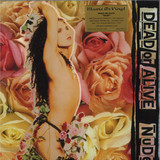
François Bayle
First performance: 19 March 1979 - Grand Auditorium of Radio-France,
Ina-GRM's Cycle Acousmatique. .
Toupie dans le ciel (1979), 21'
A wave is swaying on two minors thirds. This constantly uniform yet constantly varied swaying revolves in a swarm of sharp designs that blink on and off in a layer of growing density and mobility.
Distance, speed, pressure, density, temperature, colour, intensity, are the "themes" of the 27 short interconnected cells flowing together though this seemingly unified movement.
Occasionally, a breach in the texture reveals skyes dotted with little comets. In the centre, a slow gliding picks up the distant harmonics of a basic chord. Toward the end, this gliding returns with a fiery burst.
Fine lines and whirs are generated from the song of a spinning antique top.
To end on a lighter note the title Toupie dans le ciel - Spinning Top in the Sky reminds us of Lucy in the Sky with Diamonds by The Beatles as well as Lucy, the oldest Australopithecine (3 million years), our African grandmother in the Erosphere...
The overall title Erosphere alludes to the desire inherent to the listening experience, and to the very primitive cues that sustain the auditory attention and are the basis of all musical pleasure.
François Bayle
First performance: 21 January 1980 - Grand Auditorium of Radio-France,
Ina-GRM's Cycle Acousmatique.
- A1: Steppers
- A2: Rubber Foot
- A3: Elasticated
- A4: Rocking
- A5: Lovers
- B1: Front Line
- B2: Scientific
- B3: Jungle
- B4: Bali Hi
- B5: Chemistry
Hopeton Brown, better known as Scientist, has been a pioneering figure in the world of dub for nearly 40 years. His early love of electronics proved fruitful when (still a teenager) he was hired at King Tubby's studio in Kingston. Brown quickly ascended the ranks and became heir to Tubby's throne, producing imaginative and technically impressive mixes that solidified his forward-looking nickname.
Introducing Scientist - The Best Dub Album In The World, his 1980 debut LP, lives up to its boastful title. Recorded with Sly & Robbie at Channel One Studio and mixed at King Tubby's, the album features hypnotic basslines, reverb-drenched keyboards, and fluid, start-stop rhythms. Opening track "Steppers," with its well-balanced phrasing and organic contours, shows Scientist's mastery of the studio-as-instrument concept. On "Scientific," the effects-laden guitars are stretched to their outer limit to create magnificent, spaced-out textures and muted tension. Introducing Scientist displays the talents of a man obsessed with every element of production, drawing out the very best of the dub form.
- A1: Void - Isotope
- A2: Echophase - Silent Sky
- A3: Berserk In A Hayfield - Berserk
- A4: Silicon Valley - Transit 6
- A5: The Lord - Production Line
- A6: The Good Missionaries - Bending A Border (Dub Version)
- B1: Berserk In A Hayfield - August Haze
- B2: Echophase - Continental Drift
- B3: Lives Of Angels - Golden Age
- B4: Modern Art - Colliding World
- B5: Lives Of Angels - Pavillion
here is the long-awaited fifth volume of the well received electronic compilation series from the 1980's color tapes label. As with the other volumes you can find great examples of cold wave, minimal wave and synth electronics made by obscure British bands such as: Berserk In A Hayfield, Disintegrators, Lives of Angels, The Lord, plus a rare track by The good Missionaries, post Alternative TV.
Another tape extracted from the Sony vault for the first time since the records was released in 1980. A Floaty disco masterpiece that has been on the soul scene for time but deserves a broader appreciation. We present this in the much rarer issue format with the excellent ballad on the flip "Blame it on me", most o.g copies are missing this track. How the band never made it past one single i don't know as both tracks are fire.
2x12" Repress
Answer Code Request returns with his sophomore album Gens on Ostgut Ton, entering darker but equally bass-heavy territory.
Answer Code Request's 2014 debut LP Code was an exciting moment for electronic music in Berlin - one that offered a break from the eternal hall and monolithic 4/4 kicks that ruled the city's club landscape. As a hybrid gesture, the album's spirit recalled an especially fruitful era in the German capital from the mid-90s to early 2000s, when dub and paddriven Detroit techno cross-pollinated with Berlin's industrial aesthetic to create one of the city's most exciting musical chapters.
Today the musical vision offered by Berghain resident Answer Code Request, real name Patrick Gräser, has proved far-sighted. While at first glance electronic music in 2018 seems increasingly balkanized, borders between genres have once again become fuzzier.
Now, on his follow up LP Gens, Gräser looks beyond the bass euphoria of Code toward darker horizons and a desolate atmosphere befitting of current global circumstances.
In a sense, Gens (Latin for tribe or lineage) reverses the notion of the hardcore continuum as proposed by music journalist Simon Reynolds: embedded in a tradition of US andcontinental European techno, Gräser seeks its disruption through hardcore outgrowths, from ambient jungle to later variations of British bass music and IDM. It's an interesting twist when seen in the larger biographical context of Gräser who, born and raised outside of Berlin in early 1980s, jumped from East German youth radio DT64 to American hip-hop, acid and early UK hardcore - a radical shift of musical interest born of a radical shift in political circumstances. On Gens, the unsettling atmosphere is established early on with the fading rave opener of the album's synonymous title track, and continues through the scrambled military communications and post dubstep rhythms of 'Sphera'. From there, sci-fi pads, heavy phasing and alien syncopation lead explorative third track 'Ab Intus' out into space. Aglimmer of otherworldly positivity arrives with the warm, distorted breakbeats and interwoven synth melodies of album standout 'knbn2', while Gräser's most dancefloororiented melds jungle and techno, Amen and 4/4 kicks, on 'Cicadae'.
Nach Releases auf Kompakt, Turbo, Rumors und Founders Of Filth und nach Kollaborationen mit Guy Gerber, Tiga, Felix Da Housecat und Jamie Principal, veröffentlicht der kanadische DJ/Produzent Clarian sein Debütalbum nun auf dem australischen Vorzeigelabel Balance. Die 10 Tracks auf "Television Days" weisen einen starken 1980er Synth-Pop-Einfluss auf, den Clarian zuvor schon als Mitglied des Duos Footprintz auf dem von Ewan Pearson co-produzierten Album "Escape Yourself" (Visionquest) vollends auslebte.
S>>D aka Sean Dorris from Belfast delivers his debut album 'Co Intel Pro' on CPU. Refined sampling alongside hip hop influenced breaks sees S>>D operating in a similar dimension to VHS Head. Reminiscent of 1980s sci-fi soundtracks interwoven with IDM-tinged electro, haunting atmospheres prevail throughout with hints of a genre that has yet to emerge. Presented over 2x12" vinyl at 45rpm for superior sound quality.
Fans of Pye Corner Audio, Gescom or indeed anything on Skam will certainly dig this.
The band project Drums Off Chaos was one of the central and on-going projects of the recently deceased drummer Jaki Liebezeit (who is normally associated first and foremost with the Cologne-based band CAN). In the early 1980s he had initiated an - at first - loose collective of drummers, who created a rhythmic concept on the basis of simple, strictly binding codes that enabled expansive improvisations.
Over the years the ensemble became smaller and refined its collaboration marked by repetitive patterns and their variation. You have to play monotonous,' a membr of the audience had already told Liebezeit in the 1960s. He took this to heart and there was hardly any other formation where he could bring this concept to life as regularly and with as much inspiration as in Drums Off Chaos.
During a development spanning more than three decades, this extra-ordinary band, which never saw itself as such, made numerous recordings but rarely any releases. However, in the last few months of his life Jaki Liebezeit, with colleagues Reiner Linke, Maf Retter and Manos Tsangaris, earmarked some tracks for imminent release on vinyl and CD - on different compilations. Liebezeit's death is all the more reason to go ahead with this plan.
(Disclaimer: release notes refer to the combined CD double-album release "Hot Flash: Best of The Voltags" on which all tracks appear together. "Electric Nightmare" and "Danger High Voltag" are released separately on vinyl format)
It does not happen that often any more that unreleased music from 40 years ago surfaces. Even more unlikely it is that the songs put on tape are such treasures. The Voltags were right at the forefront of the local Washington DC New Wave/Punk scene of the late 1970s. Influenced by Kraftwerk, Gary Numan, The Clash, and The B-52's, they have released only one 45rpm single during their existence. But during the time span of not even 18 months, they had recorded enough material for an entire album - but the songs remained in the can.
This is the story of The Voltags, a short-lived band which could have become famous and mentioned in the same breath as the aforementioned music legends of that era - if their songs had been released back in the day. Dive in and enjoy the sound of The Voltags, it is truly special. We here at Perfect Toy are thrilled to be label to finally release their work and we sincerely hope that they are finally getting the appreciation they so richly deserve.
Detailed information:
Dave Bennett and Hangnail Phillips grew up in Brookside Park, Newark, Delaware, USA, a small suburban college town nestled midway between Philadelphia and Baltimore. Their first band project evolved into Pump Productions (Pump) under which they released their only 45rpm single in 1970 (one of the two songs, "Pappy's Rug", can be heard on "Down & Wired 3", Perfect Toy Rec.). Soon after the recording of the single the two graduated from High School and disbanded Pump. Both moved on to form two new Newark bands. Dave was a founding member of "Snake Grinder & The Shredded Fieldmice" and Hangnail co-founded "Rudy Baker & The Vegetables".
In early 1979, two friends of Dave's, Nick Norris and Mike Fisher, became partners in a music production company, White Clay Productions. One of White Clay's first artists was Dave Bennett who had just written two excellent songs: "Electric Jungle" and "Son Of Sam". White Clay set up a recording session and Dave assembled a group of friends to record the songs. Before the recordings were even mixed, Dave asked Hangnail if he would join in a band to support the single and other songs he had written. When James Keesey (drums) and Rick Reid (bass) were added the line-up was complete. For a while they didn't have a name and then one day Nick Norris was looking at a photo of Dave standing next to a "Danger High Voltage" sign. Dave's head was in front of the E in Voltage and Nick laughed "Danger High Voltag" and so it was soon suggested that the band should be called "The Voltags" (pronounced Vol'-togs). After months of preparing a repertoire they were ready to play out. Their first gig was (October 20, 1979) at a gay disco in nearby Wilmington called The Backstage. On December 30, 1979, White Clay decided to put on a big show at the State Theater to celebrate the end of the Seventies ("The End Of The Decade Bash").
For the next year, with the help of White Clay, they recorded 19 songs, both studio and live recordings with White Clay's mobile unit. If not for these "off the board" recordings, many of their songs would have never been recorded. There was always talk of a second Voltags single but the strains of working so closely together were taking their toll on them and Dave decided to leave the group in December of 1980. The Voltags couldn't be The Voltags without Dave, and by the end of 1981, Hangnail, James and Rick, too, were ready to disband.
- all songs previously unreleased
- mastered from the original reel-to-reel tapes
- limited vinyl release
In 1980 Ilitch mastermind Thierry Müller released his second LP, 10 Suicides, on the French imprint S.C.O.P.A. Unlike his debut Periodikmindtrouble (also available from Superior Viaduct), which featured intricately layered instrumentals, 10 Suicides explores a more art-damaged pop sensibility. While distorted guitars and atmospheric synth workouts remain a part of Müller's signature sound, several songs credit the mysterious Ruth Ellyeri, who was not an actual person, but rather Müller's female alter-ego. Opening track "Elle Voulait Que Je Sois Drôle" shows Ilitch's new direction with overloaded vocoders, driving Moog basslines and soft, Eno-like melodic flourishes. The androgynous vocals on "Waiting For Mabelle (Je Ne Viendrais Pas)" resemble an upbeat Gregorian chant bent through a 20th century lens. 10 Suicides is a staggeringly personal album that still sounds years ahead of its time.This first-time vinyl reissue comes with 16-page booklet and is recommended for fans of Ghédalia Tazartès, Chris & Cosey and Monoton.
IMA (Intense Molecular Activity) is the duo of Don Hunerberg (synthesizers) and Andy Blinx (drums and percussion). Based in New York City and active between 1979 and 1982. Don, a studio Sound / music engineer and musician, Andy an electronic clothing designer, drummer and sound reinforcement engineer at downtown clubs like Max's Kansas City, Mudd Club and CBGB. In between doing sessions at Radio City Music Hall Studios for groups such as Ramones, Richard Hell, Sonic Youth, Liquid Liquid, John Zorn, Glenn Branca and many others, IMA took advantage of off hours to create their own music. As far as influences go, Don's background was in electronic music and Andy's in prog rock. To produce the songs, Don used his own method of creating patterns from 2-track tape loops and then edited them together on to a 24-track recorder adding more tracks of overdubs, In a very similar way that sequencers are used today. By 1980 the duo honed their own unique sound and version of Post Punk and No-Wave with the tools of the trade of the early 80s. Situated above the proscenium of the Radio City Music Hall stage, the studio was outfitted with a variety of orchestral instruments (timpani, bells, xylophone, etc). They self-released a 4-song EP titled 'IMA' on an 8' flexi-disc which was distributed by Ed Bahlman of 99 Records. The music bridges the wild psychedelic-rock of the 60s, the synth-punk of the late-70s and the elaborate constructions of progressive-rock. There are nods to the freak-outs of Chrome and the super neurosis of Suicide, but IMA takes a more clinical approach which also takes notice of Hawkwind and Pink Floyd's interstellar overdrive. We've added 4 bonus tracks recorded during the same studio sessions and included them here for the first time on vinyl. DJ Hell lifted elements of IMA's song "Blurb" virtually intact and uncredited for his electroclash club hit "Keep On Waiting" 20 years later. All songs have been remastered by George Horn at Fantasy Studios in Berkeley. The record is housed in an exact replica of the original jacket featuring a spray painted IMA tag a top a red dashed 'Do Not Enter' sign. Each copy includes a double-sided postcard with notes. This Album Is dedicated to the memory of Andy (Blinx) George.
This special collector's edition electronically reproduced stereo 7' single (only 200 copies), comes in two fantastic coloured vinyl options (100 x red vinyl and 100 x purple vinyl). A refreshingly new take on mono to stereo conversion. Elvis fans growing up in the 1960's and 1970's unwittingly listened to his 1950's catalogue in electronically reprocessed stereo, love it or loathe, it was pretty much all there was back then unless you could afford to track down expensive mono copies. To better understand where the electronically reprocessed stereo versions originate from, we need to go back to 1961, at which point RCA had begun the process of taking Elvis' 1950's mono masters and converting them into a stereo sounding effect. By 1960 when Elvis returned from the army, he was recording in true stereo and as far as RCA were concerned, mono was a thing of the past. You just need to listen to the sound quality of the 1960 'Living Stereo' version of the 'Elvis Is Back' album, to appreciate just how much the recording industry had moved on in just two years. Such was the demand for stereo records in the early 1960's most major labels had created their own process for converting mono into stereo or 'fake' stereo as it became known, with some labels producing better results than others. Opinions on Elvis' 1960's electronically reprocessed stereo versions are mixed, with some recordings making the transition from mono to stereo effect better than others. Some DJ's actually preferred playing the electronically reprocessed stereo versions, believing they gave a wider fuller sound on the dancefloor. By late 1970's, RCA had once again begun to re-issue original mono masters, giving many fans their first opportunity to hear how these tracks were originally issued. By the time compact discs had arrived on the scene in the 1980's, electronically reprocessed stereo was well and truly dead and buried. Very few electronically reprocessed stereo recordings ever made it onto a digital format and the few that did are now highly collectible. Recorded at RCA Studio 1, New York on the 30th of January 1956, My Baby Left Me is a driving powerhouse rockabilly masterpiece with a real Sun Records vibe to it (produced by Steve Scholes with Elvis on vocals and acoustic guitar, Scotty Moore on electric guitar, Bill Black on bass and D.J. Fontana on drums). Our flip side Blue Moon Of Kentucky is another rockabilly classic which first appeared as the opposite side to That's All Right (Sun 209) in 1955 (Elvis' first single). Blue Moon Of Kentucky was recorded on the 7th of July 1954 at Sun Records (produced by Sam Phillips with Elvis on vocals and acoustic guitar, Scotty Moore on electric guitar and Bill Black on bass). Both tracks have been painstakingly re-engineered to create a stereo effect sound. The result is a bigger, sharper sound that jumps straight outta the grooves at ya! One reviewer described the process as - it's as if a veil has been lifted off the tracks'. Both tracks are taken from the forthcoming album titled 'Elvis Presley - The 50's In Stereo' (mono to stereo re-visited). For best results play this killer double-sider very loud!!!
MW present two classic Minimal Wave tracks which have been on heavy rotation for years now, Computer Bank' and Like I Am, Comme Je Suis' remixed by The Floor (Veronica Vasicka & Karl O'Connor).
Five Times Of Dust was formed in Bristol, U.K. in 1981 by Mark Phillips and Rob Lawrence. Mark had answered an advert that Rob had placed in a local record shop and later that year they went on to record and release their first tape, The Dadacomputer. A standout track from that tape, Computer Bank' is a seminal, proto-techno banger'. The Floor remixed it a while ago to DJ it out and since then have been receiving many requests about where it could be purchased.
The flip side features Unovidual & Tara Cross' Like I Am Comme Je Suis'. It appeared on our first compilation entitled V/A The Lost Tapes LP, in 2006. Unovidual was a Belgian producer involved with the Micrart Group (Autumn, Linear Movement, Twilight Ritual) and Tara Cross, a long lost girl from Brooklyn' who used to play in small NYC downlown clubs alongside Madonna during the early 1980s when she was still an unknown. Unovidual and Tara collaborated on several tracks through the mail during this time as well as in the studio. Like I Am Comme Je Suis' was recorded in a studio in Ghent, Belgium in 1985.
We find both of these tracks prime examples of innovative and pioneering synth wave tracks that work on and off the dance floor. And through these mixes, The Floor aim to stay true to the artists' original intentions whilst making the songs more dance floor oriented.
Featured alongside these remixes, are two unreleased tracks. Rob Lawrence's Armoured Car' which at one point was released on a compilation CD as Robert (not to be confused with Rob Doran from Hard Corps) and Unovidual's Imponative', a beautiful minimal synth track which has remained unreleased to this day.
The Five Times of Dust / Unovidual & Tara Cross EP is pressed on standard weight royal blue clear vinyl and housed in a hand stamped disco sleeve. Limited to 600 numbered copies.
'Malik' is an unreleased song that was recorded in the early 1980s and features legendary percussionist Bill Summers amongst the players. The sprightly jazz dancer keeps the pressure high with a strong lead which culminates with a series of male and females harmonies to die for at the end. For the first time ever 'A Fool No Longer' is now available on 7" vinyl after originally being included on a German rock compilation in 1981.
This is available for pre-order and is a Love Vinyl DRS Ltd distribution title.
Alésia Cosmos was a collective of musicians led by Bruno de Chénerilles formed in the early 1980s in Strasbourg, France. The group consisted of Pascal Holtzer (guitar, synthesizer, tapes, drum machine, vocals), Pierre Clavreux (vocals, gong), Marie-Berthe Servier (vocals), Bruno (guitar, tapes, synthesizer, drum machine, vocals) and Tunisian percussionist Lotfi Ben Ayed (darbukas, bendir). In 1981 Bruno composed and wrote some sci-fi radio plays for French state radio channel France Culture. Under the influences of William Burroughs, John Cage, Pierre Henry and others, he developed tape music studio work. By 1982 he appeared for the first time under the name Alésia Cosmos Furi Show. It was a solo performance on guitar, voice, analog synth and tapes. This experimental show lead to a music project based on Bruno and Pascal's compositions to be performed and recorded with other musicians in the beginning of 1983.
Exclusivo! was the group's debut album recorded and self-released in 1983 on Planetarium. Pascal and Bruno would compose tunes in their personal home studios. Then they would bring the tapes, electronics, guitar lines and lyrics to experiment and rehearse with the other members of the group. Improvisations and adaptations brought more ideas and the album was recorded in a few days. The result was a musical mixing of electronic music, field recordings, North African and Asian percussion, electric guitars and voices, compositions and free improvisations. All four musicians take turns singing onomatopoeic phrases and backing vocals, even sometimes in an unknown language, a sort of mixed bag between Breton and Japanese. All songs have been remastered cut by George Horn at Fantasy Studios in Berkeley. Each LP is housed in a replica of the 1983 cover and includes a 6-page insert with photos, lyrics, reviews and liner notes by Bruno de Chénerilles.
A new label from Hugo Mendez, co-founder of Sofrito ! A series dedicated to cross-cultural experimentation, kicking off with this exhilarating dive into the African underground of 1980s Paris: a four-track EP from Congolese singer Albert Siassia, backed by a group of young French dreads, rechristened Tokobina — 'let's dance,' in Lingala — for the occasion. A mixture of post-punk, rumba, afro-disco and reggae, in two dancefloor sureshots reviving their sole 12' from back in the day, plus previously unreleased fire from the same session.
It's already been 5 years since the last Zombie Zombie album 'Rituels d'un Nouveau Monde', after which the group explored other territories by signing 2 film scores, namely 'Loubia Hamra' by Narimane Mari and 'Irréprochable' by Sébastien Marnier, as well as creating the music accompanying a contemporary circus show called 'Slow Futur' created by Martin Palisse and Elsa Guérin. Wouldn't these beautiful parentheses make you want to return to the sources After 10 years at Versatile Records, 2017 also marks the decade anniversary of the release of their first album 'A Land for Renegades' in 2007, at the time considered to be one of the 10 best albums of the year according to Rough Trade.
'Livity' - Zombie Zombie's latest opus seems to plunge us deep into science fiction, with a cover designed by the mythic cartoonist Philippe Druillet, who is also the founder of the cult Métal Hurlant comic series. The title of the album is somewhat misleading, as one could mistakenly think of a certain dub record made at
the famous Island Records Compass Point studio in the Bahamas. For the uninitiated 'Livity' or 'Life force' is actually a Rastafarian spiritual concept based on the idea that an energy exists within, and flows through, all people and all living things. The record was recorded last winter in Paris, in a very short time frame. 7 tracks played live in 7 days, by Etienne Jaumet (synthesizers / rhythm box / metallophone / sax), Cosmic Neman (drums / vocals / sound effects), and Dr. Schonberg (percussion / electronics / trumpet), recorded at the Red Bull Studios by Thibaut Javoy and Jerome Caron, 2 very competent engineers. To keep it in the family, the album was then mixed by another member of the Versatile stable, the mysterious and legendary DJ/producer I:Cube, done in the label's Victor Studio.
On this album the principles that are dear to the group rest being respected, still as far away as always from the standards of 'radio play', A living kind of music, composed of long instrumental moments recorded with analog synthesizers and drum machines, accompanied by drums and percussion. But I:Cube's touch may bring the unique energy that one may find at Zombie Zombie's concerts; on certain cuts like title track 'Livity' that the group recorded in Laos, a wild combination of 808 kick drums and bewitching jungle sounds that sound quite unlike anything else out there, and especially on 'Hippocampe', which gives the impression of hearing an old school hip hop rhythm with the power of a metal band who have replaced their guitars with an army of synthesizers: we recommend you listen to this particular track in a convertible while speeding down the highway.
As with all of Zombie Zombie's music the cinematic component is still strong, on titles like 'Ils existent..' 'Acera' which was originally composed for ciné-concerts accompanying the films of Jean Painlevé et Maurice Pialat. The energy of the beginning is still very present, as is - of course - the kraut inspiration. But it's also an album that takes new directions and sonic risks, like on 'Looose', which brings to mind the Art Ensemble of Chicago, or the groove of James Chance in New York in the early 1980's, featuring the free sax solos of Etienne Jaumet and Dr. Schonberg on the trumpet. The group also offers some slower and calmer titles, like 'Heavy Meditation' as well as exploring more experimental tracks in the line of French 70's groups such as Lard Free or Richard Pinhas, for example on the bonus track 'Black Moon'.
Please - Take your time, and enjoy listening!
SPECIAL LIMITED EDITION X 300 WITH BONUS 7 :
Limited special edition with the 7" containing the track "Lune noire", in 2 parts - one per side.
It's already been 5 years since the last Zombie Zombie album 'Rituels d'un Nouveau Monde', after which the group explored other territories by signing 2 film scores, namely 'Loubia Hamra' by Narimane Mari and 'Irréprochable' by Sébastien Marnier, as well as creating the music accompanying a contemporary circus show called 'Slow Futur' created by Martin Palisse and Elsa Guérin. Wouldn't these beautiful parentheses make you want to return to the sources After 10 years at Versatile Records, 2017 also marks the decade anniversary of the release of their first album 'A Land for Renegades' in 2007, at the time considered to be one of the 10 best albums of the year according to Rough Trade.
'Livity' - Zombie Zombie's latest opus seems to plunge us deep into science fiction, with a cover designed by the mythic cartoonist Philippe Druillet, who is also the founder of the cult Métal Hurlant comic series. The title of the album is somewhat misleading, as one could mistakenly think of a certain dub record made at
the famous Island Records Compass Point studio in the Bahamas. For the uninitiated 'Livity' or 'Life force' is actually a Rastafarian spiritual concept based on the idea that an energy exists within, and flows through, all people and all living things. The record was recorded last winter in Paris, in a very short time frame. 7 tracks played live in 7 days, by Etienne Jaumet (synthesizers / rhythm box / metallophone / sax), Cosmic Neman (drums / vocals / sound effects), and Dr. Schonberg (percussion / electronics / trumpet), recorded at the Red Bull Studios by Thibaut Javoy and Jerome Caron, 2 very competent engineers. To keep it in the family, the album was then mixed by another member of the Versatile stable, the mysterious and legendary DJ/producer I:Cube, done in the label's Victor Studio.
On this album the principles that are dear to the group rest being respected, still as far away as always from the standards of 'radio play', A living kind of music, composed of long instrumental moments recorded with analog synthesizers and drum machines, accompanied by drums and percussion. But I:Cube's touch may bring the unique energy that one may find at Zombie Zombie's concerts; on certain cuts like title track 'Livity' that the group recorded in Laos, a wild combination of 808 kick drums and bewitching jungle sounds that sound quite unlike anything else out there, and especially on 'Hippocampe', which gives the impression of hearing an old school hip hop rhythm with the power of a metal band who have replaced their guitars with an army of synthesizers: we recommend you listen to this particular track in a convertible while speeding down the highway.
As with all of Zombie Zombie's music the cinematic component is still strong, on titles like 'Ils existent..' 'Acera' which was originally composed for ciné-concerts accompanying the films of Jean Painlevé et Maurice Pialat. The energy of the beginning is still very present, as is - of course - the kraut inspiration. But it's also an album that takes new directions and sonic risks, like on 'Looose', which brings to mind the Art Ensemble of Chicago, or the groove of James Chance in New York in the early 1980's, featuring the free sax solos of Etienne Jaumet and Dr. Schonberg on the trumpet. The group also offers some slower and calmer titles, like 'Heavy Meditation' as well as exploring more experimental tracks in the line of French 70's groups such as Lard Free or Richard Pinhas, for example on the bonus track 'Black Moon'.
Please - Take your time, and enjoy listening!
Music From Memory's final 12" for 2017 is a reissue of Dub Oven's self released, and sadly one-off, 1983 EP 'Skin N Bones'.
.
Pioneers in the Post Punk Industrial and New Wave scene in 1980's San Francisco, Gary Miles (Voice Farm) and Blaise Smith (Minimal Man), met at San Francisco's notorious 181 Club in December of 1982. This straight/same sex/swing-both-ways late night dive bar was tucked away in one of the city's most risky, drug riddled neighbourhoods. Stationed near the SF Museum of modern Art it attracted a wild audience of local patrons, aspiring young artists and music heads. In the thick of all this the duo felt impartial to a lot what was going on musically and set out to produce electronic music that could break through the "somewhat exhausted post disco sound that was then competing in the local San Francisco clubs". Enlisting soul vocalist Celeste Miller, the duo were also inspired by Lee 'Scratch' Perry / Upsetters dub tracks being produced in Jamaica and created a unique breed of avant guard hybrid New Wave/Electronic Funk.
With it's influences seemingly as much rooted in the past and the present as it was focused on the future, Dub Oven formed a distinct, mystical approach to music intended for the dance floor. All three tracks on this 12" embody a signature groove and an inventive synthesized abstraction to express a languishing urban unsettledness and spiritual awareness. Recorded at L7 Studios in San Francisco with the assistance of the the studio's in house producer Marco Perry (who currently now works with Bjork) the record was unfortunately overlooked by A&R at several major and even local labels and was finally self-released in very limited quantities. Utilising analog electronics and instrumentation, the record draws on elements of dub, new wave, soul and funk to create a sound that is uncategorizable and one that was perhaps simply too forward thinking for it's time.
- A1: Elbernita "Twinkie" Clark - Awake O Zion
- A2: Dee Edwards - Put Your Love On The Line
- A3: Anubis - Ecology
- B1: Guy Cuevas - Ebony Game
- B2: Kiru Stars (Julius Kang'ethe) - Family Planning (Julius Kang'ethe)
- B3: Teaspoon & The Waves - Oh Yeh Soweto
- C1: Leny Andrade - Nao Adianta
- C2: Rosa Maria - Samba Maneiro
- C3: Tom & Dito - Obrigado Corcovado
- C4: Inezita Barroso - Maracatu Elegante
- C5: Joao Diaz - Capoeira
- C6: The Equatics - Merry Go Round
- D1: Elias Rahbani & His Orchestra - Liza... Liza
- D2: The Beaters - Harari
This instalment follows on from our acclaimed 'Volume One' - Lauren Laverne's 'Compilation Of The Week', supported by the likes of Disclosure, Jeremy Underground, Horsemeat Disco, Hunee and Laurent Garnier. 'Volume Two' picks up where the last one left off — with a touch more soul and disco — records we've been spinning in our DJ sets and on the radio show of the same name, that inspired this series.
We opened a new record shop in the centre of Brighton late in 2016 - 13 years after the mighty London store closed it's door. Now situated on the ground floor of our Gloucester Yard home the shop is open every Saturday to sell records that we love, some of which you'll hear on the radio shows, and on this album.
It's been a resounding success and we've been able to host sunny instore events and Facebook Live broadcasts with guests including Nick The Record, Dimensions Festival family Debora Ipekel, Flamingods, Slugabed, The Physics House Band and Remi Kolawole & Sensible J.
In 2017 and beyond, we will be releasing more of our official reissues including lesser-known essentials from Brazil, such as Gal Costa's 'India', Robson Jorge & Lincoln Olivetti, Burnier & Cartier alongside 1980's Mexican psychedelia from Luis Perez. We've been digging deep, and will share another edition of our 'The Original Sound of...' series, this time across the border from Mali to neighbouring Burkina Faso. As ever, you'll hear these first, on our radio shows.
There will be more 'Mr Bongo Presents' events - we brought Alain Mion & Cortex to the Jazz Cafe in London in 2017 - and we've highly anticipated slots at Bestival and Lost Village festivals, plus a return to RAPPCATS in Los Angeles, more guest shows on Worldwide FM and NTS Radio and, of course, the continuation
of our own radio shows.
Compiled by David 'Mr Bongo' Buttle and Gareth Stephens,
plus a few personal favourites from Gary Johnson, Ville Marttila and Graham Luckhurst.
Juris Boiko (1954-2002) and Hardijs Ledinš (1955-2004) were the core members of the NSRD, which is best known as Latvian avant-garde, postmodern, experimental and underground music group active in 1980s. BIG TIP! STROOM BRINGING IT...! comes with download code.
.
Their activities were widely multidisciplinary and they can not be considered as purely musicians since none of them had a professional musical education. Their creativity was manifested through variety of media - music, performance and action art, visual arts, poetry, samizdat, the introduction video art in Latvia etc. NSRD also made a significant contribution to the explanation of the theoretical aspects of art in the interpretation of the postmodernist movement, and developed the independent concept of 'Approximate Art'. At the end of the 80s, NSRD got connected and performed with several artists and musicians living in West Germany, including Indulis Bilzens, Micky Remann and Maximilian Lenz aka Westbam and others.
Professor Rhythm is the production moniker of South African music man Thami Mdluli. Throughout the 1980's, Mdluli was member of chart-topping groups Taboo and CJB, playing bubblegum pop to stadiums. Mdluli became an in-demand producer for influential artists (like Sox and Sensations, among many others) and in-house producer for important record companies like Eric Frisch and Tusk. During the early '80s, Mdluli projects usually featured an instrumental dance track. These hot instrumentals became rather popular. Fans demanded to hear more of these backing tracks without vocals, he says, so Mdluli began to make solo instrumental albums in 1985 as Professor Rhythm. He got the name before the recordings began, from fans, and positive momentum from audiences and other musicians drove him to invest himself in a full-on solo project. It was the era just before the end of apartheid and house music hadn't taken over yet. There wasn't instrumental electronic music yet in South Afric a. As the '80s came to a close, that was about to change. Professor Rhythm productions mirror the evolution of dance music in South Africa. They grew out of the bubblegum mold - which itself stems from band's channeling influences like Kool & the Gang and the Commodores - into something based on music for the club. His early instrumental recordings First Time Around and Professor 3 mostly distilled R&B, mbaqanga and bubblegum grooves into vocal-less pieces for the dance floor. Musically, these were a success and commercially the albums all went gold. There were countless bubblegum albums flooding the marketplace, with nearly disposable vocalists backed by mostly similar-sounding rhythm tracks. Most of the lyrical content was light and apolitical. But the keyboards used formed the musical basis for what would come next. By the time Professor 4 and this recording Bafana Bafana - the name references South Africa's national soccer team - were released in the mid-1990s, k waito had fully emerged. Access to instruments and freedom of expression helped its rise in influence among youth. According to Mdluli, "Once Mandela was released from prison and people felt more free to express themselves and move around town, kwaito was becoming the thing." Lyrically, kwaito championed the local township lingo while adapting "international music," house music, into the local context. "International Music," as house music and early kwaito were interchangeably known, in many ways reflects the sounds coming from America. But South Africans made it their own. Today, the largest part of the music industry is occupied by house music and its relatives.
Mick has been active in the seedier corners of electronic music for more than 30 years, first immersing himself in the world of hi-NRG and new wave before embracing the house, techno, acid and electro explosion of the late 1980s. Aligned with DJ Hell in the 90s and more recently the Intergalactic FM crew, he's the quintessential selector. A life spent digging in the undergrowth for deviant dance music has given him the edge that makes a truly gifted spinner, without riding on hype or studio productions. However, Mick isn't adverse to the odd outing on vinyl, having previously appeared on International DJ Gigolos both solo and as The Kinky Lovers with sometime partner Isabella Venis, but these moments are few and far between. For this release on Arma, Mick has given us two edits that speak to his distinctive style as a DJ - the original tracks are cult choices re-moulded into deadly, subversive club weapons. The brooding darkwave of 'Himmelfahrt 89' is enough to turn the most indifferent bar crowd into swaying, baying denizens of the night, while 'Stay Silent' pummels out a relentless electro motif that teeters on the edge of destruction for 11 thrilling minutes. These aren't crowd-pleasing DJ tools, and neither are they slick and easy edits of obvious classics. This is a peek into the inner workings of a man with decades of experience working masses of flesh into a sweaty fever pitch using sounds you've never heard before. The mastering on Mick's edits was undertaken by none other than Dutch electro legend Rude 66, while the striking artwork on the sleeve sees Arma reach out for the first time to French artist Judex. The nerve-shredding, broken Op-Art assault was originally found in a book published by cult illustrator Sam Rictus. Cover Artwork by J
Al Johnson came from the 60s Washington group The Unifics, then in 1978 he released a debut album Peaceful' on an independent label. It featured the original version of I've Got My Second Wind' that would later be re-recorded and become a popular song from his 1980 CBS album Back For More' and is featured here. The song I'm Back For More' was a duet from the album featuring Jean Carn which is released in its full length version here on Expansion for the first time. Both songs timeless moern soul classics.
In 1980, during her run on Broadway in the musical, Ain't Misbehavin' and before being cast in Dreamgirls, singer/actress and Detroit native ROZ RYAN teamed up with the legendary team of DENNIS COFFEY and MIKE THEODORE on a six song album that wound up being unreleased. Recently, the folks at Super Disco Edits released this 45 featuring Roz' taking on Preston Glass' KEEP SHINING' b/w PUT LOVE BACK' (composed by Eric McClinton). Both tracks were from the Theo-Coff sessions and make their debut for lovers of dancin' ( Keep Shining') and romancin' ( Put Love Back'). Enjoy!
Fresh from his 'Vanishing Point single on UK label Hypercolour, which saw the lead track hit the Beatport Leftfield House & Techno sales chart at #1 for four weeks, A Sagittariun is back on his Elastic Dreams label with the 'Slightly Ajar' EP. As always, A Sagittariun brings an eclectic melting pot of flavours to each of his EPs, blending Detroit techno, ambient house, highly charged electro, dramatic synths and transcendental vibes. 'Stingray' combines future techno beats with apocalyptic bass and melodious keys, with an almost early 1980s synth pop vibe to it, whilst 'Burning Crystal' is the kind of introverted and deep ambient electronica that has shaped the two A Sagittariun albums (2013's 'Dream Ritual' and 2016's 'Elasticity'). 'An Infinite Number Of Possibilities' is relentless, frenetic and funky, as a myriad of warped sounds and riffs flash past the heavy drum work, and '720 Degrees' closes the EP with crunchy 808 electro patterns, FM bass and huge melancholic strings straight out of the Derrick May rule book. A Sagittariun will be performing at the Berghain, Berlin on 26th August, showcasing a new live set before embarking on further dates at the end of the year.
2024 Repress
Hotel Record is the second release from the duo/couple of crys cole and Oren Ambarchi, following on from Sonja Henies Vei 31 (Planam, 2014). Where their debut recording presented a disquieting portrait of the erotic dimension of romantic intimacy, the follow-up continues to explore the pair's simultaneously musical and romantic relationship in a more subtle fashion, presenting four long-form pieces that touch on the variety of forms the life of this couple takes: as a musical duo, as a pair of travelers to exotic locations, as opponents in a game of cards...
Each of the double LP's four sides presents a distinct sound-world, yet each manages to attain the same suspended, half-sleeping feeling, outlining a space where improbable combinations of the electronic and the acoustic, of extreme closeness and amorphous distance, occur with the gentle insistence of a dream.
The opening Call Myself calmly unfolds a fabric of long tones from electronic organ and guitar, combining the sliding, aleatoric effects of classic David Behrman with a more hands-on feel. Over the top of this slowly shifting tonal bed, cole's voice mutters unintelligibly into a Buchla synth, teasing the listener by suggesting a meaning that remains always out of the ear's reach. Francis Debacle (Uno) builds on the foundations of a heavily amplified session of the titular card game, overlaying vocal murmurs and exhalations and mysterious room-sounds to create an impossible aural environment. On Burrata, a palette of vintage 1980s digital synthesizer sounds combined with guitars create an irregular texture of lush chords and bubbling melodic details, into which cole's voice processed by a vocoder, is interwoven, reading fragments of romantic correspondence. Finally, on Pad Phet Gob, field recordings made in Thailand become an ambiguously acoustic/electronic rainforest, eventually giving way to a mysterious, wavering electronic tone-field punctuated by sibilant, popping mouth-sounds.
Carving out an intimate and human sonic space across a diverse array of compositional approaches, sound sources, fidelities and textures, Hotel Record is the latest dispatch from the continuing explorations of a unique duo. Ambarchi and cole reimagine electro-acoustic music, not simply as 'abstract' sound, but as a diary, a love poem, a dream.
Deluxe gatefold sleeve with photography by crys cole and LP design via Stephen O'Malley
Mastered and cut by Rashad Becker at D&M, Berlin February 2017
Scissorgun are a two-piece soundscape project from Manchester comprising Alan Hempsall (of Crispy Ambulance) on treated guitars, vocals, prose and trumpet, and David Clarkson (formerly of Triclops and Illuminati) on synths, keyboards, drum programming, rhythms and percussion.
The duo came together in the summer of 2016 with a view to creating spontaneous music, and by November had laid the foundations of Assault Two, their debut release, so named because it is the second release on Aural Assault Records, whose first outing was the debut single by Crispy Ambulance way back in April 1980.
This special 10' and CD package is released in a limited edition of 500 copies. The extended CD features longer versions of the five tracks on the vinyl disc as well as two bonus cuts. The artwork is by Pascal Blua.
What's the definition of a treasure Something precious hidden in a safe place by a king maybe Offen music begin their journey.. 3 sides of music with an etched 4th TIP!
.
Serbian electronic music pioneer Rex Illusivii (The King of Illusions in Latin) left an extensive collection of never-heard-before musical gems in his mother's place, and other secluded corners of the world. They have been properly archived, years after his death in a studio fire in Brazil in 1999, the evening of the promotion of the São Paulo Confessions album he made as Suba.
From this archive that spans the 1980-1991 period, reflecting both his cutting-edge creative spirit and his classical training, In The Moon Cage (1988) has been selected as a first newly mastered release to emerge on two 12''. It is meant as an invitation to take a peek into the now finally unlocked treasure chest, filled with valuables of an undeniable intensity and sincerity, belonging to the multifaceted man behind the Rex Illusivii and Suba monikers: Mitar Subotic.
On In The Moon Cage, Subotic treats us to Yugoslavian folk lullabies, rain songs, ancient incantations, combined with equally mesmerizing electronics. These works, circulating on tapes that Subotic sent out in person, were awarded the UNESCO International Fund for Promotion of Culture, enabling him to start his influential career as a producer in Brazil. Yet, In The Moon Cage and the rest of his early projects have remained mostly uncharted and unrecognized until this day.
Subotic being as comfortable producing for Yugoslavian new wave bands as for bossa nova singer Bebel Gilberto, already manifested an exciting divergence in his likings and interests. The disclosure of his own more personal material leads to a renewed appreciation, perceiving him as the righteous king of illusions that he was.
Tangerine Dream hatten seit ihrer Gründung Ende der 1960'er in Westberlin einen massgeblichen Einfluss auf die Entwicklung der elektronischen Musik und galten als einer der führenden Vertreter des Krautrock. In den 1980'ern lieferten sie beachtliche Soundtracks zu Filmen wie "Firestarter", "Risky Business", "Near Dark", "Thief" und Sorcerer" ab, ihr musikalischer Einfluss auf den Soundtrack der Netflix-Kultserie "Stranger Things" ist enorm. Ihr neues Doppelalbum "Particles" ist eine Mischung aus brandneuem Material und Reinterpretationen, darunter des Titelstücks ihres Albumklassikers "Rubycon" (1975), Liveaufnahmen u.a. des Titeltracks des "White Eagle" Albums (1982), sowie eine eigene Coverversion des "Stranger Things" Theme.
Minimal multi-instrumentalist weirdo zone brilliance on another obscure uncovering from the excellent Growing Bin...big tip!
.
"If you've kept a keen ear to the underground, you may have noticed a trance revival creeping into the dance floors and darkrooms of late, a post ironic return to the 64 bar breakdowns and peak time key changes of your serotonin drenched youth.....
So what's this then Has Growing Bin gone from groundbreaker to copycat Dig a little deeper folks, for the Trance is question is Jürgen Petersen, a forgotten cosmic kingpin in tune with true electronic excellence. When Danielle Baldelli wanted to show off his eclectic tastes, which record did he reach for Petersen's 1980 LP, 'Here And Now' of course. And when John Schaefer put together his essential exploration of New Sounds, who did he describe as Germany's answer to Eno Trance, damn right! After blessing the world with a trio of essential electronic LPs between 1979 and 1983, Petersen moved out of the limelight and lived off the grid, collecting his mind expanding music on a series of self-recorded, self-released cassettes, known only to the inner circle of elite European diggers. The sounds found within were unusual, experimental and ecstatic.
Fusing the organic tones of piano, 12 string guitar and sitar with soothing sine waves and hypnotic synthesis, Petersen harnessed the healing frequencies out there in the cosmos and transfixed the
listener with pure otherworldly beauty - ambient music for a new age... Unravelling these rare cassettes for music lovers everywhere, Growing Bin treats us to 'Tapes', a five track vision quest for the
horizontal travellers and fourth world nomads. Sven can keep his cocoon, we're off in search of the butterflies..."
3 overlooked jams on one 12" single, excavated from the deepest realms of the TK Disco vaults. Remastered, represented and brought back into focus for 2017's DJ bags and dance-floors. Side A sees Wizzdom's 1980 boogie jam 'Free bass' kicking off proceedings. A P-funk-ish, low slung jam indeed, it has everything you'd want including some Furious Five esque shouts of 'Free-Bass!' weaving in and out of the mix. This one is a true heads cut, one for the diggers! Over on side B we get Jimmy 'Bo' Horne's slamming 'Is it in' - a stomping piece of Disco-funk that in the right hands will cause maximum damage. Also, Jimmy's mildly double-entendre lyrics are hugely entertaining! Following up we have a cut from Herman Kelly & Life, 'A refreshing love' was an LP only release and is some serious downtempo Latin tinged soul super soaked in Miami sunshine! All in all, 3 majorly overlooked gems nestled away in the TK archive now brought back into the light. As usual, these TK represses are always done in the proper manner. 100% legit re-edits, from the archive, remastered and released in conjunction with Henry Stone Music / TK Disco - Miami FL.