1997 saw the release of The Aquabats! second studio album, an ultimately legendary addition to their
catalogue. The lineup produced an eclectic ska classic - most notably the mega-single "Super Rad!" A fan
favorite over the past 25 years, it's hard not to find unbridled joy in tracks like, "Red Sweater!," "Magic
Chicken!," "Martian Girl!," "My Skateboard!" and many more!
With two critically acclaimed albums and a swathe of award-winning production turns under their belt, Ana Frango Elétrico present their most confident and accomplished work to date: Me Chama De Gato Que Eu Sou Sua / Call Me They That I’m Yours. Gesturing to a tradition of Brazilian boogie music, but bouncing with modern pop ebullience, the album sees the Rio artist evolve from a captivating upstart into a surefooted scene leader in full stride.
At just 25, the prolific artist and producer has already garnered worldwide admirers. Ana’s sophomore Little Electric Chicken Heart was nominated at the 2020 Latin Grammys. Since then, standalone singles have received the WME ‘Best Music Producer’ Award, recognising Ana’s deep passion for music production – a passion which has led to collaborations with nascent Brazilian stars Dora Morelenbaum, Illy and Sophia Chablau. Most recently, Ana was hailed for their co-production of Bala Desejo’s 2022 Latin Grammy-winning album Sim Sim Sim.
The new album finds Ana at their most assured and full voiced. Album opener “Electric Fish”, with funky bass and shimmering backing vocals, sets a buoyant tone. “Boy of Stranger Things” is its bombastic counterpart. It’s the grooviest Ana has ever sounded. And the most brazen. Lyrically, where Ana was once oblique on personal matters, they are now forthright – lucidly exploring their gender identity, citing accessible cultural references, and often singing in English.
“I started this album in 2021 with the intention of showing, in means of sound, understandings and feelings about queer love, subjectively exposing myself,” the non-binary artist states – before qualifying that though “feeling was its driving force, the album is really about musical production.”
“There’s so many references to different decades,” Ana explains. “Seventies drums with eighties processing … Going back, getting beyond … Testing the limits of organic sounds”. Characteristically playful, on Me Chama, Ana takes vivid and rewarding detours through funk-inflected R&B (“Dela”) and art pop (“Dr. Sabe Tudo”). “Nuvem Vermelha” is a cinematic chanson with lush strings that recalls Arthur Verocai. Then, “Coisa Maluca” loafs with the indie insouciance of Canadian slacker Mac Demarco. Later, “Let's Go Before Again”, is a full-on drum machine workout evocative of Stereolab.
out of Stock
Last delivered 2 years ago available to reorder, subject to availability
Ethio-jazz composer Dawit Yifru dropped a real classic when he first released his self-titled solo instrumental album. It is strictly a compilation of 11 songs that he wrote and recorded during the 70s and have since been restored and remastered from original cassettes. They helped to make him one of the most notable artists in one of the most important eras in Ethiopia's music history as he mixed up Ethiopian Chickchika music, Twist, Congolese Rumba, and Waltz styles that all represented that time in music in the Horn of Africa country. This collection is the first in a new series from Muzikawi's Archive & Research project which looks to shine a light on some of Ethiopia's most celebrated but not internationally renowned sounds.
out of Stock
Last delivered 2 years ago available to reorder, subject to availability
THE 1968 ALBUM ON WHICH JOHNNY CASH BECAME A LEGEND: AT FOLSOM PRISON AMONG THE MOST IMPORTANT AND POTENT STATEMENTS OF THE 20TH CENTURY
Johnny Cash already knew his way around Folsom Prison when he and his band stepped inside the institution’s forbidding walls on the morning of January 13, 1968 to record At Folsom Prison. He’d played there two years prior. But this time was different.
Cash took the stage that day for two shows amid a darkening sociopolitical atmosphere and a raging war in Vietnam, as well as the knowledge his career and health hung on by a thread. The Arkansas native shared many of the long odds and abject failures of the inmates for which he performed. The songs he chose, and the conviction with which he delivered them, say as much. The point at which Cash transformed from a country star into a legendary artist, and a bold statement about the American prison state and its commitment to rehabilitation, the triple-platinum At Folsom Prison remains one the most important, potent, and fabled records of the 20th century.
You can hear it echo off the walls of the room; pulse through the itchiness of the Tennessee Three’s acoustic-based boom-chick rhythms; crackle in the announcements conveyed over the intercom; ring in the comedy of the off-cuff remarks and pair of novelty tunes; sense it in palpable energy that wells up within Cash and his audience. And you can experience it like never before via Cash’s knockout singing. The bedrock foundation of all his music, the singer’s baritone resonates with profound degrees of depth, pliability, and passion that underscore how much this appearance meant to him — and the extent he was living the narratives.
Indeed, every song on At Folsom Prison serves a purpose and speaks to the conditions — mental, emotional, physical, geographical, legal, social — the inmates confronted on a daily basis. Beginning with the explicit messages of the opening “Folsom Prison Blues,” Cash makes it clear he understands and shares many of their plights. Not for nothing did the myth of Cash having done hard time persist for decades once this record hit the streets. That’s how real it is, and how dedicated Cash remains to conveying every note with the same truth he invests in the impromptu comments he makes between and amid songs.
Listen to the sorrow, regret, pity, and loneliness of Merle Travis’ “Dark as the Dungeon,” Cash pulling syllables til they threaten to break and inhabiting the mood of bleak phrases such as “pleasures are few” and “the sun never shines.” Witness the isolation, dejection, and sadness punctuating the walking-blues “I Still Miss Someone,” matched in gravity by a solemn reading of “The Long Black Veil” — a traditional dirge that involves murder, cheating, and deception. Cash cuts even deeper on a heartbreaking solo rendition of “Send a Picture of Mother” and plainspoken version of Harlan Howard’s “The Wall,” detailing a suicide disguised as jailbreak through cliched-jaw deliveries that softly curse the impossible situation.
In chronicling temptations, mistakes, mortality, punishment, and life “inside” — for better or worse, the stories of the disenfranchised, forgotten, written-off, and unrepentant — At Folsom Prison also has a blast playing the outlaw role. Cash captures wild-eyed craziness and out-of-control mayhem on a revved-up take of “Cocaine Blues,” taking extra satisfaction in its dastardly tales by way of voice that shifts into character for the sheriff and judge. The gallows humor and racing drama of “25 Minutes to Go”; quicksilver accents and resigned acceptance of “I Got Stripes”; train-whistle blare and twangy locomotion of “Folsom Prison Blues” — all fight the law only to see the law win.
Cash remains deeply committed at every moment, and inseparably connected with the tortured souls removed from the goings-on of the outside world. No wonder all but two songs here stem from the day’s first performance that saw Cash, Luther Perkins, Marshall Grant, and company give everything. As does the Man in Black’s soon-to-be-wife, June Carter. The couple’s fiery duet on “Jackson” scorches; their combination of surrender and fortitude “Give My Love to Rose” puts us in the dying protagonist’s shoes.
And with the closing “Greystone Chapel,” famously penned by convict Glen Sherley, who watched it all happen under the watchful eye of guards, Cash separates the corporeal from the spiritual, relaying lessons about salvation and survival. Heady themes to which he’d return for the remainder of his illustrious career.
AAA Audiophile 200g 45rpm Triple Disc LP!
Sourced from First Generation Analogue Recordings without Any Digital Corruption!
2xHD Mastering on Nagra Equipment by René Laflamme!
Sound Restoration by George Klabin & Fran Gala!
Cut All Analogue at Bernie Grundman Mastering on Tube Cutting Equipment!
There have been many guitar gods, but there's never been an electric bassist as deified as Jaco Pastorius. – Michael J. Agovino
This live album by Jaco Pastorius and the Word-of-Mouth Big Band, featuring harmonica virtuoso Toots Thielemans as special guest, was recorded in analog 24 tracks by the Record Plant mobile truck at Avery Fisher Hall in NYC on June 27, 1982, as part of George Wein's Kool Jazz Festival. This Deluxe 45rpm 200g edition is the first one to be mastered from the original 2 track master tapes that were found some 30 years later (the previous digital download versions were released from a digital remix of the 24 tracks). What we have here is the direct copy of the original pure analogue 2 track mix.
The brightest star in the electric bass firmament, Jaco Pastorius burst onto the national scene in 1976 with his audacious self-titled album on Columbia Records, featuring a line-up of top jazz musicians. With his extraordinary fretless electric bass playing as the centerpiece, Jaco Pastorius created an immediate sensation with the public and the media. His signature approach employed Latin-influenced funk, lyrical solos on fretless bass, bass chords, and innovative use of harmonics. In Jaco's work with Weather Report and beyond, the self-described "greatest bass player in the world" (an assessment shared with virtually the entire music world) established a new identity and role for his instrument and became the torch-bearer for a new way of playing both technically and conceptually. But behind it all was an ever present R&B and Latin-influenced groove and a screaming rock-'n'-roll attitude that he refined and incorporated into sophisticated jazz harmonic structures.
In addition to his extraordinary virtuosity, Jaco was also developing into an accomplished and sophisticated composer and arranger and those talents are gloriously on display on this album. The 3-time Grammy Award nominee was inducted into the Down Beat Jazz Hall of Fame in 1988, one of only seven bassists so honored (and the only electric bassist). His legacy as a bass innovator continues to this day, more than 30 years after his untimely death in 1987.
Shit And Shine return to Riot Season where it all began with their debut 'You're Lucky To Have Friends Like Us' (2004) for their 20th anniversary.
Rum And Coke, is only available as a limited edition white vinyl LP (300 copies worldwide) with download code and hype sticker. The album also features vocals from Callum Howe (The Shits) and it’s Shit And Shine at their filthy/noisy best. NON-RETURNABLE.
Guitar/Vocals - Craig Clouse
Vocals - Callum Howe (The Shits)
Drums - He Who Will Remain a Mystery
Mastered by James Plotkin
‘Rum And Coke’ comes stumbling out the speakers with the week old stench of an alcoholic exiting his late night hideaway into the sunshine of a new day
Rum And Coke is the sound playing inside his fermented brain as he heads of in search of his next tipple
It’s grimey, it’s noisy. It’s a bit of a bastard.
Heavy, impenetrable layers of gnarled guitars, slurred vocals, pounding drums all wrapped in a blanket of thick sludge
Funky Chicken brings together some of the best Belgian dance tracks from the early seventies. Emerged in a country where virtually every musical wave passes through, most of these tunes were created and recorded by hired guns, in this case a few clusters of gifted session musicians and composers. The music on Funky Chicken is their take on (afro-)funk, soul and Latin. Some of their releases were hit parade cannon fodder, but occasionaly, some spare studio time or the urgent need for a B-side allowed for memorable musical experiments.
Funky Chicken is a post-fact documentation, the result of a quest into a period on which information is few and far between, the 'black hole' in Belgium's history of popular music. The barren wasteland between the variety orchestras of the sixties and the electronic revolution of the late seventies and early eighties. This series explores the ground the dance pioneers built upon.
out of Stock
Last delivered 2 years ago available to reorder, subject to availability
Black Truffle is pleased to announce the first vinyl reissue of Trancedance, a wild slice of Swedish Afro-fusion from Christer Bothén, originally released in 1984. A major figure in Swedish jazz and improvised music since the 1970s, often heard on bass clarinet and tenor sax, Bothen studied doso n’koni (the large six-stringed ‘hunter’s harp’ of the Wasulu) in Mali in 1971-2 before turning to the guinbri (the three-stringed lute of the Gnawa/Gnauoua) in Marakesh later in the decade. In between, he performed extensively with Don Cherry during his Organic Music Society period and taught Cherry the doso n’koni. In the later 70s and 80s he worked with the most important figures in the distinctive Swedish jazz-rock-world fusion scene, joining Archimedes Badkar for their African-influenced Tre and participating in Bengt Berger’s legendary Bitter Funeral Beer Band. Many of the musicians who played on the Bitter Funeral Beer Band’s ECM LP (including Berger on drums, Anita Livstrand on voice and percussion and Tord Bengstsson on piano, violin and guitar) joined Bothén for one of the sessions that produced Trancedance, the first release under his own name, dedicated to his compositions. The other session introduced his seven-piece group Bolon Bata, heard on the second track of each side. The title track opens the album with the rubbery buzzing strings of the doso n’goni playing a hypnotic ten beat pattern, soon joined by bass and piano before the entire nine-piece group kicks in with a rollicking Afro-jazz workout, Berger’s drums driving an intricate, winding melodic line played by the horns with Mattias Helden’s cello throwing in pizzicato slides and smears. Bothén then takes centre stage on tenor sax, soloing with a wide, vibrating tone and moving seamlessly from soaring melodies to guttural stutters. After a return to the composed horn lines and a solo from Elsie Petrén on alto sax, the piece builds to an ecstatic conclusion of yelping voices and handclaps, gradually simmering down to return to the solo doso n’koni where it began.
The hypnotic sounds of the hunter’s harp carries over to ‘Mimouna’, where it is joined by Bothen’s overdubbed guinbri. The piece develops into a haunting whispered and sung invocation, gradually building momentum until the organic textures of strings, voices, and hand percussion are ruptured by Lennart Söderlund’s distorted guitar, which brings an unmistakable touch of 1984 to the otherwise timeless sound. Joined by chicken scratch guitar and increasingly dominated by the insistent clang of three of Bolon Bata’s members on karqab (a kind of cast-iron castanet), the grove develops frenetically.
The B side opens with the multi-part epic ‘9+10 Moving Pictures for the Ear’, at over 16 minutes the record’s longest piece. Though Bothen is heard only on horns on this piece, the hypnotic repeating bass line carries on the first side’s link to African musical traditions. Using an expanded 16-piece ensemble, the music balances untethered improvisation with carefully arranged passages of knotty ensemble playing that at points suggest Mingus, Moacir Santos or some of the ambitious post-free work being done in the same years by figures like David Murray or Henry Threadgill. The piece ends with a triumphant passage of looping unison melody reminiscent of the Scandinavian folk explorations of Arbete och Fritid (whose Kjell Westling is heard on bass clarinet and soprano sax here). The sound of Bjorn Lundqvist’s fretless bass introduces the odd left turn made by the record’s final track, a spaced-out expedition into bluesy horn lines and distant guitar atmospherics set to a semi-reggae beat, perfumed by the core Bolon Bata group and bearing the appropriate title of ‘The Horizon Stroller’. A must for fans of the Swedish scene around groups like Arbete och Fritid and Archimedes Badkar, as well as any listener who has been seduced by Louis Moholo’s Spirits Rejoice!, The Brotherhood of Breath, or, more recently, the guinbri grooves of Natural Information Society, Trancedance is a lost classic ripe for rediscovery.
out of Stock
Last delivered 2 years ago available to reorder, subject to availability
Late Night Load Out is the debut LP from Dublin five piece band Papa Romeo.
The release is a collection of work which catalogues their first two years of rehearsing and gigging together around Ireland, a process which has forged their sound. The tracks journey through sound palettes which variously touch on dreamy spaced out indie rock, moments of ambient contemporary jazz, and rougher post-punk influenced sounds.
The ‘Late Night Load Out’, became the term to describe loading gear out of venues late at night after a show, which is a moment to both dread and cherish, the (sometimes) hard work which follows elation.
Now primarily based in London, Papa Romeo’s music has connected with London based DJs and broadcasters. Their debut single ‘Yellow Magic Orchestra’ was supported by Flo on NTS, as well as Avalon Emerson, and appeared as the A1 on a vinyl compilation from All City Records Dublin. Singles from ‘Late Night Load Out’ have also gained early support on BBC 6 Music and from Ross Allen on NTS.
In the meantime the band have been busy on the Irish circuit with appearances at Cork Jazz Festival, Other Voices, All Together Now and Another Love Story, as well as repeat sold out shows at Dublin’s Sugar Club. They have built a reputation as a versatile band who can bring the energy to a packed room, and were named an Artist to Watch for 2024 by Hot Press Magazine.
‘Late Night Load Out’ will be released on digital and vinyl in May 2024.
Papa Romeo is Paddy Rogers, Mark Rogers, Dan Coyne, Rob de Boer and Chris Wong.
Radio Support:
Ross Allen - Soup to Nuts NTS
Colleen Cosmo Murphy - NTS
Lauren Laverne - BBC 6 Music
Esk - Rinse FM
District Magazine (Ireland)
Peter Curtin - RTE
New Music Fix on BBC 6Music
Bill Brewster
out of Stock
Last delivered 2 years ago available to reorder, subject to availability
"Und du singst eine Melodie. Zuerst nur du, dann ihr beide. Eine Melodie die euch an irgendwas erinnert. An etwas, das vielleicht noch gar nicht stattgefunden hat. An etwas das vielleicht einmal gewesen sein wird - Genau solche erträumten Melodien gab es schon immer und wird es wohl auch immer geben, so lange sich junge oder nicht mehr ganz so junge Menschen singend zur Fiktion machen - zur Comic Figure, in einer leider halb kaputten Welt. (Robert Stadlober) - Die beiden Songwriter Paul Buschnegg (PAULS JETS) und Tobias Hammermüller (LAUNDROMAT CHICKS) haben sich im Wiener Nachtleben kennengelernt und sich kurzerhand zu einem Tischtennis-Date verabredet. Statt dass sie dann doch Ping-Pong-Bällen hinterher gejagt sind haben sie beschlossen, vielleicht doch lieber einfach gemeinsam Musik zu machen. Rausgekommen sind zwei Songs, die jetzt bei Siluh Records auf einer einzigartigen 7" erscheinen wird. Die beiden entpuppen sich im gemeinsamen Ping-Pong-Gesang als Meister der schönen Melodien. - "Sie haben Lieder in die Welt gewünscht. Und sie erzählen mit den Tönen die vielleicht schon waren, von dem was vielleicht noch kommen wird. Was zu sehen sein wird in den Rückspiegeln. Sie erzählen von einer Erinnerung an die Seltsamkeit der Zukunft." (Robert Stadlober) - Das Cover Artwork stammt vom Pauls Jets Kollegen Kilian Hanappi.
Wenn der 18-fache Grammy-Preisträger Béla Fleck über seine jahrelange Zusammenarbeit mit dem verstorbenen Pianisten Chick Corea spricht, klingt er manchmal wie ein schüchterner Musikstudent, der noch immer Ehrfurcht vor dem Jazz-Titan hat, dessen Einfluss ihn als Teenager in den 70er Jahren veränderte.
Remembrance, ein neues Doppelalbum, das am 10. Mai erscheint, ist ein bewegendes letztes Dokument der tiefen kreativen und persönlichen Beziehung, die Fleck und Corea erstmals auf Albumlänge mit dem 2007 mit dem Latin Grammy ausgezeichneten The Enchantment unter Beweis gestellt haben. Es ist auch eine wichtige Ergänzung zu Coreas Vermächtnis und enthält drei bisher unveröffentlichte Corea-Kompositionen sowie fünf kurze freie Improvisationen oder Impromptus, die Fleck mit selbst komponierter Musik unterlegt hat.
Coreas Tod im Jahr 2021, als er im Alter von 79 Jahren an Krebs starb, erschütterte die Jazzgemeinde, die in dem Pianisten eine ständige
internationale Präsenz sah, einen lebendigen Musiker, der nie aufhörte zu touren und Aufnahmen zu machen.
Nachdem er zig Millionen Alben verkauft, Milliarden von Streams generiert, die Charts gestürmt und Arenen und Amphitheater auf der ganzen Welt gefüllt hat, kehrt Sebastian Bach auf seinem lang erwarteten sechsten Album Child Within the Man mit neuer Musik zurück. Sebastians Rückkehr ist, gelinde gesagt, längst überfällig. Sein letztes Soloalbum, Give 'Em Hell, erschien 2014. "'Child Within the Man' klingt wie ein Album aus den 70ern in einem Video aus den 80ern im Internet im Jahr 2024", lässt er verlauten. "Es wurde von echten Musikern und einem echten Produzenten gemacht und mit echter Dynamik gemastert. Es soll groß klingen".
Mit seiner unnachahmlichen Präsenz, die so laut ist wie seine unverkennbare Stimme, hat Sebastian Bach in Musik, Theater, Film, Fernsehen und Kultur einen Abdruck in der Größenordnung der San-Andreas-Verwerfung hinterlassen. Er hat, unter anderem als Sänger von Skid Row, einige der kultigsten Hymnen der Rockgeschichte geschrieben und eingesungen mit Hits wie "18 and Life", "I Remember You", "Youth Gone Wild" und "Monkey Business". Mit seiner inzwischen legendären Rolle in Jekyll & Hyde: The Musical und seinen Hauptrollen in The Rocky Horror Picture Show und Jesus
Christ Superstar hat er Geschichte geschrieben als "der erste Heavy-Metal-Sänger am Broadway". Er hat in Dutzenden von Fernsehserien und Filmen mitgewirkt, von Trailer Park Boys und Robot Chicken bis hin zu Spongebob Schwammkopf, The Masked Singer und Hell's Kitchen. Was seine Vielseitigkeit betrifft, so ist er die seltene Naturgewalt, die mit Axl Rose im Duett singen kann und eine wiederkehrende Rolle in Gilmore Girls übernehmen kann.
Nachdem er zig Millionen Alben verkauft, Milliarden von Streams generiert, die Charts gestürmt und Arenen und Amphitheater auf der ganzen Welt gefüllt hat, kehrt Sebastian Bach auf seinem lang erwarteten sechsten Album Child Within the Man mit neuer Musik zurück. Sebastians Rückkehr ist, gelinde gesagt, längst überfällig. Sein letztes Soloalbum, Give 'Em Hell, erschien 2014. "'Child Within the Man' klingt wie ein Album aus den 70ern in einem Video aus den 80ern im Internet im Jahr 2024", lässt er verlauten. "Es wurde von echten Musikern und einem echten Produzenten gemacht und mit echter Dynamik gemastert. Es soll groß klingen".
Mit seiner unnachahmlichen Präsenz, die so laut ist wie seine unverkennbare Stimme, hat Sebastian Bach in Musik, Theater, Film, Fernsehen und Kultur einen Abdruck in der Größenordnung der San-Andreas-Verwerfung hinterlassen. Er hat, unter anderem als Sänger von Skid Row, einige der kultigsten Hymnen der Rockgeschichte geschrieben und eingesungen mit Hits wie "18 and Life", "I Remember You", "Youth Gone Wild" und "Monkey Business". Mit seiner inzwischen legendären Rolle in Jekyll & Hyde: The Musical und seinen Hauptrollen in The Rocky Horror Picture Show und Jesus
Christ Superstar hat er Geschichte geschrieben als "der erste Heavy-Metal-Sänger am Broadway". Er hat in Dutzenden von Fernsehserien und Filmen mitgewirkt, von Trailer Park Boys und Robot Chicken bis hin zu Spongebob Schwammkopf, The Masked Singer und Hell's Kitchen. Was seine Vielseitigkeit betrifft, so ist er die seltene Naturgewalt, die mit Axl Rose im Duett singen kann und eine wiederkehrende Rolle in Gilmore Girls übernehmen kann.
Nachdem er zig Millionen Alben verkauft, Milliarden von Streams generiert, die Charts gestürmt und Arenen und Amphitheater auf der ganzen Welt gefüllt hat, kehrt Sebastian Bach auf seinem lang erwarteten sechsten Album Child Within the Man mit neuer Musik zurück. Sebastians Rückkehr ist, gelinde gesagt, längst überfällig. Sein letztes Soloalbum, Give 'Em Hell, erschien 2014. "'Child Within the Man' klingt wie ein Album aus den 70ern in einem Video aus den 80ern im Internet im Jahr 2024", lässt er verlauten. "Es wurde von echten Musikern und einem echten Produzenten gemacht und mit echter Dynamik gemastert. Es soll groß klingen".
Mit seiner unnachahmlichen Präsenz, die so laut ist wie seine unverkennbare Stimme, hat Sebastian Bach in Musik, Theater, Film, Fernsehen und Kultur einen Abdruck in der Größenordnung der San-Andreas-Verwerfung hinterlassen. Er hat, unter anderem als Sänger von Skid Row, einige der kultigsten Hymnen der Rockgeschichte geschrieben und eingesungen mit Hits wie "18 and Life", "I Remember You", "Youth Gone Wild" und "Monkey Business". Mit seiner inzwischen legendären Rolle in Jekyll & Hyde: The Musical und seinen Hauptrollen in The Rocky Horror Picture Show und Jesus
Christ Superstar hat er Geschichte geschrieben als "der erste Heavy-Metal-Sänger am Broadway". Er hat in Dutzenden von Fernsehserien und Filmen mitgewirkt, von Trailer Park Boys und Robot Chicken bis hin zu Spongebob Schwammkopf, The Masked Singer und Hell's Kitchen. Was seine Vielseitigkeit betrifft, so ist er die seltene Naturgewalt, die mit Axl Rose im Duett singen kann und eine wiederkehrende Rolle in Gilmore Girls übernehmen kann.
Nourished By Time follows up his 2023 critically-acclaimed, breakout album Erotic Probiotic 2 with his debut EP on XL Recordings: Catching Chickens, set for physical release on May 3rd. Written between 2022 - 2023 in his home studio in Baltimore, and along his world travels this past year, Catching Chickens is derived from the film Rocky, and the iconic scene in which Rocky’s trainer makes him chase and catch a flock of chickens as a test of agility. With tracks like “Hell of a Ride,” in which Nourished By Time contemplates the fall of the American empire and late-stage capitalism loneliness, and “Hand on Me,” which traces the paranoia from distrust in a post-traumatic world, Nourished By Time chronicles his own test of agility as he weaves through the motions of his newfound notability.
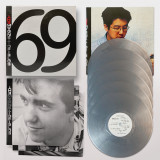
Limited edition silver vinyl anniversary reissue of the Magnetic Fields' classic 1999 rumination on, of course, love. Funny, smart, dark, memorable, and a lifetime's worth of listening. Stephin Merritt solidifies his songwriting genius on his "most ambitious and fully realized work". (AMG) This vinyl reissue is remastered for vinyl and beautifully packaged in a 10" slipcase box with three double gatefold sleeves and a 24 page booklet!
Bobby Hutcherson’s 1968 album Total Eclipse was the vibraphonist’s first recording to feature saxophonist Harold Land who would become a key collaborator for years to come. Rounding out the band were pianist Chick Corea, bassist Reggie Johnson, and drummer Joe Chambers on this impassioned post-bop set. This stereo Tone Poet Vinyl Edition was produced by Joe Harley, mastered by Kevin Gray from the original analog master tapes, pressed on 180g vinyl at RTI, and packaged in a deluxe gatefold tip-on jacket.
Whether you’re on a journey towards self acceptance, or locking yourself away for days, it’s safe to say the human experience can be an emotional rollercoaster; GAMI GANG explores the highs and lows, and all the twists and turns in between. In similar fashion, joyous and anthemic tunes find themselves winding their way into their somber and soft spoken counterparts, swerving through explosive bridges along the journey. Throughout manic momentum shifts, the ride slows down to make way for moments of clarity. Happiness and innocence are sprinkled in with displays of darkness or arrogance, and most of the time we exist in the middle. However, those unexpected jumps of adrenaline are what make this ride enticing. It’s human nature to get back on, and feel that rush one more time.
A leading Norwegian bassist for over 30 years, ECM legend Arild Andersen forges promising relation-ships with two rising stars - Daniel Sommer (drums) and Rob Luft (guitar) in an expansive, playful exploration of song and collective improvisation. As Time Passes " is set to release on April 26th on April Records. Led by Sommer, the release signifies the first chapter of the drummers much much-anticipated Nordic trilogy on April Records, aiming to capture and document Nordic improvisation and composition across three carefully curated ensembles. Bassist Arild Andersens storied career stretches back to the 1970"s as one of ECM s first recording artists, collaborating with household names of the genre including Jan Garbarek, Don Cherry, Bill Frisell, John Taylor, Sonny Rollins, Chick Corea, and the list goes on. Welcoming the opportunity to work with and nurture younger artists, the ensemble was born when Daniel Sommer selected Andersen for a project during his studies at the Danish National Academy of Music. Later, impressed by Luft s performances in Ireland and Norway, Andersen suggested expanding the pair into a trio. A transcendent musical voyage, As Time Passes " blurs the lines of conventional trio roles, and celebrates the evolution of jazz as a fluid, versatile form of expression. By providing each musician the freedom of becoming a key contributor in the melodic discourse, the trio channels the spirit of jazz veterans such as the Bill Evans Trio and free free-jazz ensemble Air, while echoing the sounds and innovations of pan pan-European contemporary jazz. Mixing pensive rubato ambience with energetic grooves, instrumental dexterity, a modern ECM ECM-esque sound and folk undertones, the record s compositional clarity combined with the spontaneity of a live performance flows across and between genres, borders and generations alike. Luft s intricately over-dubbed layers of acoustic guitars, vast reverbs, and contrapuntal melodies expand the sound of the three piece into an immersive world of textures. Rendered in the stark beauty of Andersen"s bass lines, the nuanced strokes of Sommer"s drums, and capped with the lush, expansive timbres of Luft"s guitar, "As Time Passes" is a testament to enduring and ever ever-evolving wonder of Jazz.
Bobby Hutcherson’s 1968 album Total Eclipse was the vibraphonist’s first recording to feature saxophonist Harold Land who would become a key collaborator for years to come. Rounding out the band were pianist Chick Corea, bassist Reggie Johnson, and drummer Joe Chambers on this impassioned post-bop set. This stereo Tone Poet Vinyl Edition was produced by Joe Harley, mastered by Kevin Gray from the original analog master tapes, pressed on 180g vinyl at RTI, and packaged in a deluxe gatefold tip-on jacket.
Amadis and The Ambassadors" are a music group who came together in London, through front man Amadis Ferreira; cooking up a blend of music with flavours of Afro, Funk, Reggae and Soul on the menu. Rich in melody and groove, it will take you on a journey of rhythm and conscious vibration.
I want to express my unconditional gratitude to my mother and my father for all the love they have given me, all the guidance and for showing me how to share the same with all peoples in the most prosperous manner. I would like to thank my musical family, The Ambassadors, for their courage, advice, musicianship and having believed in this vision, without visionaries beside me the journey would be much harder and dimmer to see. Words alone cannot describe the joy in my heart, this is why we play music. You are blessed. My infinite gratitude also spreads to my beautiful sisters and nieces along with family dotted around various parts of the world, Angola, Portugal, India, Switzerland, Spain, Luxemburg, France, England; and to my spiritual family of dear friends, cousins, uncles and aunties spread throughout this planet all under one firmament. You are loved. Last but not least, I would like to praise my brother and friend Jonathan Rogers for opening up his studio and being the binding cord that enabled the possibility of this album to come to fruition along with the love that only true higher spirituality brings.
Das Ambient Jazz Ensemble liefert mit "Suite Shop Reworks" elektronische Upbeat-Dancefloor-Versionen seines gleichnamigen Albums aus 2014. Mastermind des AJE ist der Filmkomponist und Musikproduzent Colin Baldry, ihm zur Seite stehen Topmusiker wie Neil Cowley (Adele, Brand New Heavies), Finn Peters (Chick Corea) oder Nichol Thomson (Jamie Cullum). Gemastert wurde das Album von Guy Davie (Jon Hopkins, FKA Twigs, Jamie T) am Mischpult von Fela Kuti in Lagos, Nigeria.
out of Stock
Last delivered 2 years ago available to reorder, subject to availability
REISSUE OF THEE HEADCOATS' FINAL ALBUM IN THEIR ORIGINAL INCARNATION! Originally released by Friends Of The Buff Medway Fanciers Association Records in 2000! The final studio release by Thee Headcoats (until last year's Irregularis: The Great Hiatus) gets a long-awaited vinyl reissue! Includes eleven Billy Childish originals plus a cover of Bo Diddley's 'Great Grandfather'! Recorded at May Road & Red Studios. Engineered by Graham Semark. "Thee Headcoats, who put out their first album in 1989, have recorded raw, primordial romps that seem inspired by American Delta blues musicians like Sonny Boy Williamson or the Southern swamp rock of Hasil Adkins, while maintaining a decidedly English sound. They've recorded under a slew of monikers, and issued an amazing discography of full-lengths, EPs, 7"s, and what-have-you for virtually every cool indie label since they formed (including US-based labels like Sub Pop, Get Hip, Sympathy for the Record Industry, and K, among others). Whether he's covering songs with a Bo Diddley beat, garage rock chug, or playing one of his angry young man/dysfunctional family rantings ('The Day I Beat My Father Up', for example), Billy Childish has built up a solid and somewhat rabid fanbase by releasing songs that you wouldn't normally think would attract a huge audience to begin with. However, I Am the Object of Your Desire has the distinction of being the last album by this band, as their prolific leader Billy Childish moved on to a new band; they're called the Buff Medways, which is apparently an ancient and now extinct breed of chicken which had feathered legs. It's also the name of the UK imprint this record was released on. This collection kicks right off with the album-titled track reveling in pure Headcoats fashion: that warm, fuzzy vibrato guitar with Childish's fuzzy, electronically distorted voice (an effect repeated throughout the album); Johnny Johnson's soft, flowing bassline; and Bruce Brand's primeval drums. The group keeps this sort of mid-tempo riffage going for the next couple of tracks. Johnson plays a mean harp on 'Hurt Me (Slight Return)', but things don't really take off until 'In a Dead Man's Suit' and the swaggering, Texas blues 'Chatham Town Welcomes Desperate Men'. The band's punk roots show up in songs like 'An Image of You' and 'Your Crying Means Nothing to Me' while 'Come into My Mind' has a definite Kinks influence. All in all, an excellent album from this soon to be sadly missed band." - Review from 2000 by Bryan Thomas (All Music Guide)
15 Heavy Funk Rarities Presented As A Double LP Cold Heat is Eothen “Egon” Alapatt’s a follow-up to the famous Funky 16 Corners set he curated in the early 2000s. And like that one, Cold Heat is overflowing with great bits that had barely (or never) been heard by the rest of the world at large. Egon went through a range of rare singles, masters, and demos and came up with tunes that burn with a brightness that's undeniable. The grooves are all on the harder end of the James Brown Funky People side of the spectrum and some tracks are by names that finally got their due here, thanks to Egon, Now-Again, and some of the other funky forces doing the good work over the years.
Having built a loyal local Antwerp following off of the success of their 2019 debut self released album, ‘Forgotten Kingdom’, and growing reputation for electrifying stage performances, Kolonel Djafaar achieved worldwide recognition in 2021 for the ‘Cold Heat’ EP on Batov Records, attracting praise from Music Is My Sanctuary (“triumphant), and support from Gideon Coe on BBC 6 Radio Music, and DJs across Worldwide FM, Soho Radio, Le Mellotron, and KEXP.
The group overcame busy schedules and frequent quarantine periods to hit the studio in February 2022 to lay down four tracks. However, the creative itch persisted, leading to an intense writing session in August, deep in the heart of a tranquil forest. From noon until midnight, the band immersed themselves in the creative process, embracing the freedom to make noise without restraint.
Fueled by hearty breakfasts, unwavering focus, and the ambient clucking of chickens roaming the studio, Kolonel Djafaar crafted the majority of ‘Getaway’. This period marked a pivotal shift as a number of new band members joined just in time for the August sessions.
Membership changes, including Emiel Lauryssen joining on trumpet, alongside guitarist Philip Matthhijnssens, the band's palette has broadened and new sounds are able to break through. From psychedelic rock and soul influence of the Daptone Records’ affiliated Budos Band, surf rock (“Urban Dweller”), Morricone Spaghetti Western guitar, and Afro Cuban (“Kelmendi”), alongside the brassy Afrobeat and Ethio jazz vibes the group have been known for.
The broader dynamics of ‘Getaway’, and the band’s more cinematic and experimental approach, is particularly apparent on "Siren’s Glitch" and "Phil’s First Tear". The latter, first conceived by drummer Anton Van Hove, features the lead guitar doubling up with the bass guitar for added impact. Whilst the origins of "Convoi Exceptionnel", a brass & synths stomper of a march, trace back to a jam session during the band's Hungarian tour, another vital period of prolonged time together, capturing the organic essence of their experiences on the road.
Each track on ‘Getaway’ holds a unique connection to at least one band member, and all benefit from a collaborative approach to songwriting. "Sparking Clover'', an Ethio-inspired psych & soul groover penned by tenor saxophonist Doyin Smith, carries a poignant undertone inspired by personal loss, while psych rock leaning tracks like "Apologies in Advance" showcase the band's evolution and increasing professionalism in crafting a distinct sonic experience.
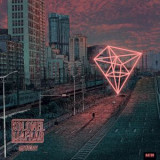
The curious cover art depicts a lone individual heading down an empty city street towards a large mysterious glowing object, evoking the common emptiness and struggle of urban life, and the search for meaning or just something better. The band envision the object to represent this album, offering a beacon to like-minded listeners. Kolonel Djafaar invite music enthusiasts on an immersive journey, to ‘Getaway’ from the daily grind of life, on an album reflecting diverse influences and marking a new chapter in their musical exploration.
Miles Davis' boundlessly influential On the Corner was so far ahead of its time upon release in 1972, the jazz cognoscenti rejected its groundbreaking concoction as middling in nature. Yet time has a way of righting wrongs and shifting views by adding needed context and perspective to visionary ideas, music, and approaches — the likes of which fill Davis' boldest and most controversial — undertaking. Designed to bring the focus back on the groove and bottom-end frequencies, the funk-loaded On the Corner revolutionized jazz. It also set new standards for record production, presaging remixing and electronica by more than a decade. And the work has never sounded more thrilling thanks to this very special pressing.
Sourced from the original master tapes and pressed on MoFi SuperVinyl, Mobile Fidelity's numbered-edition 180g 33RPM SuperVinyl LP of On the Corner exposes the internal mechanisms, free-associated playing, and then-unmatched studio techniques in vivid fashion. The low end, crucial to every composition here, is both heard and felt, with locked-in bass lines and low-range percussion conveyed as taut, solid, and visceral passages. You can discern the multiple layers of rhythm Davis employed on complex tracks such as "Black Satin," as On the Corner stands as his first effort to use overdubbing and multiple tape machines. As a pioneer, Davis likely would’ve loved MoFi’s groundbreaking SuperVinyl profile that features the lowest-possible analogue noise floor as well as pristine transparency, dead-quiet surfaces, and superb groove definition.
New degrees of spaciousness and airiness — equally important to the musique concrete arrangements — give the impression Davis and Co.'s creations float in space. Instruments are portrayed in three-dimensional manners, rhythmic loops retain tonal purity, and horn solos skitter across an extra-wide soundstage that takes listeners into Columbia's Studio E. Mobile Fidelity's SuperVinyl LP captures Teo Macero's innovative production — and the trumpeter's cutting-edge aural collages — in definitive fashion.
Heavily inspired by Sly and the Family Stone, On the Corner portrays street vibes and remains Davis' Blackest-sounding record. The conscious attempt to connect with youthful audiences tapped into rock and funk is evident not only on the colorful cartoon cover art depicting hot-pants and zoot-suit revelers, but in the music's emphasis of recurring drum and bass grooves. Distinct from Davis' earlier fusion experiments, the record's long-misunderstood set dials back improvisation in favor of beats, loops, and atmospherics that generate trance-like effects. While Davis utilizes his band for core duties — Chick Corea and Herbie Hancock prominently figure — he also relies on an all-star cast of side-men for concentrated soloing and additional support.
With rhythm providing the basic foundation, other notes fall into place, with their positioning steered by Macero and Davis' editing-room techniques. Looking to the manipulation-based work of Karlheinze Stockhausen and teaming with Stockhausen disciple Paul Buckmaster, Davis re-imagines what grooves constituted and could accomplish throughout On the Corner. The shapes of the songs become completely transformed as they progress. Faint melodies, spacey chords, chunky riffs, wah-wah fills, and repeated motifs bounce in and out of a sonic funhouse that wouldn't be out of place at a Harlem block party.
Exotic, intrepid, and filled with Davis' "jungle sound," On the Corner remains daringly hip more than four decades later.
LIVERPOOL’S LONG LOST 90’s INDIE ROCK NOISEMAKERS. COMPILING THREE SINGLES AND UNRELEASED TRACKS. “If these guys were American they’d have a massive following” STEVIE CHICK. Back in the 1990's PLAYHOUSE were Liverpool's premiere 'honey souled indie rock band' (NME, 1997). They had a devoted following around the country after supporting the likes of Sleater Kinney, Unwound, Penthouse, Pavement, Sebadoh, Feeder and Gary Numan. With three 7" singles under their belt and support from the NME and John Peel, the band were due to record their debut album until disaster struck when the drummer, Simon, broke his leg in a bizarre incident. Simon later went on to play with the rock band - Black Spiders and now performs under the name of Blobb Ross. Singer and guitarist Pete continues to write songs, over a 1000 at this point. He is Liverpool's most prolific and enigmatic figure, writing some of the most beautiful songs around. Bassist Jason went on to perform with Mugstar, Sex Swing, Klamp, Domes, Twin Sister & JAAW. 'Dynamo' compiles the three singles they released, alongside unreleased tracks, including a cover of Sebadoh's 'It's So Hard To Fall in Love'
'Born Sandy Devotional' ist das zweite Album der Australischen Alternative-Rock-Band The Triffids und enthält mit 'Wide Open Road' einen ihrer erfolgreichsten Songs. Es erschien erstmals im März 1986 und wurde damals von Mark Angelo und Gil Norton (Pixies) produziert. Nun wieder als LP erhältlich!
With two critically acclaimed albums and a swathe of award-winning production turns under their belt, Ana Frango Elétrico present their most confident and accomplished work to date: Me Chama De Gato Que Eu Sou Sua / Call Me They That I’m Yours. Gesturing to a tradition of Brazilian boogie music, but bouncing with modern pop ebullience, the album sees the Rio artist evolve from a captivating upstart into a surefooted scene leader in full stride.
At just 25, the prolific artist and producer has already garnered worldwide admirers. Ana’s sophomore Little Electric Chicken Heart was nominated at the 2020 Latin Grammys. Since then, standalone singles have received the WME ‘Best Music Producer’ Award, recognising Ana’s deep passion for music production – a passion which has led to collaborations with nascent Brazilian stars Dora Morelenbaum, Illy and Sophia Chablau. Most recently, Ana was hailed for their co-production of Bala Desejo’s 2022 Latin Grammy-winning album Sim Sim Sim.
The new album finds Ana at their most assured and full voiced. Album opener “Electric Fish”, with funky bass and shimmering backing vocals, sets a buoyant tone. “Boy of Stranger Things” is its bombastic counterpart. It’s the grooviest Ana has ever sounded. And the most brazen. Lyrically, where Ana was once oblique on personal matters, they are now forthright – lucidly exploring their gender identity, citing accessible cultural references, and often singing in English.
“I started this album in 2021 with the intention of showing, in means of sound, understandings and feelings about queer love, subjectively exposing myself,” the non-binary artist states – before qualifying that though “feeling was its driving force, the album is really about musical production.”
“There’s so many references to different decades,” Ana explains. “Seventies drums with eighties processing … Going back, getting beyond … Testing the limits of organic sounds”. Characteristically playful, on Me Chama, Ana takes vivid and rewarding detours through funk-inflected R&B (“Dela”) and art pop (“Dr. Sabe Tudo”). “Nuvem Vermelha” is a cinematic chanson with lush strings that recalls Arthur Verocai. Then, “Coisa Maluca” loafs with the indie insouciance of Canadian slacker Mac Demarco. Later, “Let's Go Before Again”, is a full-on drum machine workout evocative of Stereolab.
“Even if people don't find my own references here, they'll find theirs,” observes Ana. “Maybe that’s this record’s biggest goal.”
96kHz - 48-bit HD Audio with digital booklet including original photography by Christopher Kayfield and liner notes by Shaun Brady.
Pianist Kevin Hays, bassist Ben Street, and drummer Billy Hart reunite for a second, scintillating trio date, BRIDGES, featuring original compositions by Hays and Hart with classics by Wayne Shorter, Bill Frisell, The Beatles, and Milton Nascimento.
Hays Street Hart, the trio of pianist Kevin Hays, bassist Ben Street, and legendary drummer Billy Hart, recorded their acclaimed 2021 debut, ALL THINGS ARE, under less than optimal conditions. The album began life as a performance in honor of Hart’s 80th birthday in December 2020, live-streamed from an empty Smoke Jazz Club in the final weeks of that grueling pandemic year. Despite those adversities, the music they created that night was spectacular enough to convince all involved that it should be released.
Two years later, the trio has reconvened, this time fully cognizant that they were going to record an album at Sear Sound Studios in NYC. The captivating BRIDGES brilliantly spotlights the unique chemistry and shared spirit of exploration that emerged fully formed on that initial impromptu session. The title succinctly hints at some of the reasons why Hays, Street and Hart work so well together: this is a trio that bridges generations, certainly, as well as a wealth of diverse experience and inspiration. But it also sums up a mutual desire to bring people together through music.
“In this world that seems to be crumbling beneath our feet,” Hays explains, “we sense the need to make allies where there might be adversaries. On the most intimate level, interpersonally and inter-psychically we set out to overcome any number of misunderstandings and adversarial situations.”
Not that there was any antagonism to overcome within the trio itself. More than anything, Hays Street Hart is a mutual admiration society of the highest order. The esteem in which the pianist and bassist hold Billy Hart likely goes without saying. The drummer was ordained in 2022 as an NEA Jazz Master, just one of the many honors he has chalked up over a breathtaking career. He began his career with an apprenticeship under the revered vocalist Shirley Horn and went on to make notable music with such luminaries as Miles Davis, McCoy Tyner, Herbie Hancock, Wes Montgomery, Jimmy Smith, Stan Getz, and as part of the quartet Quest featuring David Liebman and Richie Beirach.
But Hart is if anything, even more laudatory toward his younger bandmates. Street has been a member of the drummer’s stellar quartet for two decades, alongside pianist Ethan Iverson and saxophonist Mark Turner, a tenure that speaks for itself. As for Hays, Hart is quick to place the pianist in the exalted company of some of his iconic former collaborators.
“I’ve been lucky enough to have the chance to perform with Herbie Hancock and McCoy Tyner,” says Hart modestly. “Each generation presents their own equivalent, and Kevin is an example of the latest innovations. There was Herbie and McCoy, then it was Chick Corea and Keith Jarrett, and then you have what's coming next. I think Kevin is definitely part of that continuum.”
Though Hays sticks strictly to the piano on BRIDGES, he is also an accomplished singer whose vocal instincts fuel his inventive and lyrical melodicism. Street points to those facets as key to the connection between the pianist and Hart, who has enjoyed several meaningful collaborations with vocalists.
“It always seems to me that Kevin has the capacity to sing in his mind and then accompany himself on the piano,” Street describes. “That makes for such a nice connection with Billy, who has played with and learned from so many singers. I don't even feel like we're playing as a piano trio most of the time; it feels more like a quartet.”
Those qualities are especially clear on Hays’ “Butterfly,” which opens the album. Though it’s performed here as an instrumental, the pianist has composed lyrics for the piece, and its gorgeous, song-like quality shines through. Hays also contributed the breathtaking ballad “Song for Peace,” highlighted by Hart’s gentle, embracing brushwork and Street’s sturdy, stentorian tone. The pianist’s third original, “Row Row Row,” is constructed on a twelve-tone row, but as the playful title suggests, it has none of the more stringent qualities of the serialist composers.
Hart’s stunning “Irah,” originally recorded on his quartet’s self-titled 2006 debut, is dedicated to the composer’s mother and was recorded at Street’s suggestion. The bassist also brought guitarist Bill Frisell’s reflective “Throughout” to the date, imagining Frisell’s Americana influences would resonate with the similarly inclined Hays, who approaches the tune with a harp-like beauty. Hays’ love of pop and rock music is also reflected by the inclusion of The Beatles classic “With a Little Help from My Friends.”
The trio pays tribute to the late, great Wayne Shorter with “Capricorn,” originally released on the composer’s 1969 Blue Note album SUPER NOVA and later included on the Miles Davis Quintet set WATER BABIES. Hart called Shorter one of a kind. I think of the many times I heard him excel – with the Maynard Ferguson Big Band, with Art Blakey's Jazz Messengers, with Weather Report. And in each case, he was innovative.”
BRIDGES closes with the title track, a dazzling piece by the great Brazilian singer and songwriter Milton Nascimento, which Hays calls “one of my favorite compositions ever, by anybody.”
BRIDGES was recorded under ideal studio conditions by a now-established trio with a weeks-long European tour under their belts. Perhaps what’s most remarkable about the album is not that Hays, Street, and Hart play so masterfully together – with three artists of their caliber, who could expect any less? – but that this second outing maintains the bold spirit of inquisitiveness and spontaneity that its predecessor naturally possessed. Credit that to a trio perpetually determined to discover new bridges worth building.
Mr Lee Perry who in no uncertain terms defines the words musical genius, recorded some of the most inspiring, soulful, funny and weird / wild reggae music ever put down on tape. Working through all the manifestations of reggae from Ska to Roots and Dub, where his ground breaking 1973 ‘Blackboard Jungle’ LP, set the standards, he was an innovator. If this was not enough his recordings of THE WAILERS, many believe to be their finest work. Born Rainford Hugh Perry, 28 March 1936, Hanover, Jamaica. He began his career at the grand age of 16, working for Clement ‘Coxone’ Dodd’s sound system, rising quickly to the position of record scout and organising recording sessions during his 3 year period 1963-1966. Restlessness and unsatisfied with credit he felt due to him he moved on to work with Producers J.J. Johnson and Clancy Eccles, the later of which would help him set up his ‘Upsetter’ label in 1968,which would see his first of many recordings telling the injustices done to him by previous employees. ‘The Upsetter’ track itself pointed at Mr Dodd but reflected back to Perry when he inherited it as a nick name along side many others during the coarse of his career, including ‘Scratch’, again taken from one of his recordings ‘Chicken Scratch’ recorded in 1965/1966. Perry’s work in 1968 with producer Joe Gibbs was fruitful and resulted in many successfulreleases, but again lack of credit and itchy feet, it was time to move on. But not without leaving his trademark recording summing up his feelings at the time ‘People Funny Boy’ this time aimed at Mr Gibbs. Still not having a studio of his own, Perry recorded at the various Kingston establishments of the time, Randy’s Studio 17 on North Parade, Dynamics on Bell Road and Harry J’s on Roosevelt Avenue where the bulk of the aforementioned recordings with The Wailers were carried out. During this time and the years that followed Perry has built up a vast catalogue of backing tracks / instrumentals, he had cut over a 100 releases on his ‘Upsetter’ label alone. A library of music that he has an uncanny knack of reutilising to work into something new when put against a new song / singer. This collection of rare and unreleased dubs stems from his 1971-1974 period. We can here on tracks like ‘Perry’s Jump Up’ Ska-ish up tempo chopping guitar cuts leading through to organ laden tracks like ‘Roots Rock Dub’. The sound moving to a slowed down rhythm on ‘Perry in Dub’ which would predominate his sound, when in mid 1974 he’d open his own studio at his home in the Washington Gardens district of Kingston. We hope this selection of lost treasures will add to the jigsaw that makes Mr Perry’s output now spanning over 5 decades so remarkable.
RESPECT.... JAH FLOYD.
out of Stock
Last delivered 2 years ago available to reorder, subject to availability
In 1967 Four Young Musicians From Nottinghamshire, England Formed Ten Years After. Alvin Lee, Chick Churchill, Ric Lee & Leo Lyons Became One Of The Most Explosive Quartets On The World Stage And Cemented Themselves As One Of The Biggest Bands In Rock N Roll History.
The Band Scored Eight Top 40 Albums On The Uk Albums Chart And Twelve Multimillion Selling Albums On The Us Billboard 200 Between 1967 And 1974.
In 2014 Founder Members Ric Lee And Chick Churchill Put Ten Years After Back Together With A New Lineup. This New And Exciting Lineup Features British Bass Icon Colin Hodgkinson (backdoor, Peter Green, Alexis Corner, Spencer Davis, Chris Rea, John Lord) And Multi British Blues Award Winning Guitarist And Singer Marcus Bonfanti (van Morrison, Ginger Baker, Ronnie Wood).
This New Lineup Has Been Touring Extensively Since 2013 With Over 150 Shows Under Their Belt And Has Received Rave Reviews From All Corners Of The World As They Continue To Produce The High Energy Of A Vintage Ten Years After Show 50 Years Down The Line.
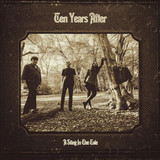
To Tie In With The Bands 50th Anniversary In 2017, Ten Years After Have Recorded A New Studio Album,a Sting In The Taleand Are Touring Throughout The Year To Promote This New Release And To Celebrate Their Anniversary.
Miles Davis' A Tribute to Jack Johnson is the best jazz-rock record ever made. Equally inspired by the leader's desire to assemble the "greatest rock and roll band you have ever heard,” his adoration of Johnson, and Black Power politics, Davis created a hard-hitting set that surges with excitement, intensity, majesty, and power. Bridging the electric fusion he'd pursued on earlier efforts with a funkier, dirtier rhythmic approach, Davis zeroes in on concepts of spontaneity, freedom, and identity seldom achieved in the studio — and just as infrequently accepted by the mainstream.
Sourced from the original analog master tapes, pressed on MoFi SuperVinyl, and housed in a Stoughton jacket, Mobile Fidelity's 180g LP reissue brings it all to fore with startling realism. Benefitting from SuperVinyl’s nearly inaudible noise floor, superb groove definition, and clean, ultra-quiet surfaces, this 180g LP showcases everything — from the bold tonality of the headliner's white-hot trumpet solos to the decay of crashing cymbals, carry of wiry guitar notes, and echoes of the studio — in reference fashion.
Bristling with exuberance, Davis' high-register passages explode with authority and commanding presence. Around him, a barrage of urgent backbeats, knifing riffs, and supple bass lines emerge amidst black backgrounds. One of the most prominent differences long-time fans will notice is how much more aggressive, immediate, and vibrant the music sounds, with those aspects central to the composer's original desires.
Utilizing wah-wah and distortion, the go-to instrumentalist of the performances— guitarist John McLaughlin — attacks with a nasty edge, slashing style, and vicious streak that allows A Tribute to Jack Johnson< cross the until-then-impenetrable divide between rock and jazz. Davis puts both feet in the former camp and erases any gap. The stories of the record’s creation are nearly as legendary as the sounds within: Two sessions, multiple jams, different sets of musicians (several uncredited), and near-miraculous production perfectionism that made it all appear cohesive.
The least-well-known masterpiece of Davis' career, the 1971 record — seamlessly assembled and spliced together by producer Teo Macero — was a victim of limited record-label promotion. Audiences also didn’t immediately know what to make of its original cover art — faithfully replicated here. In addition, the powers that be at Columbia Records were directing the public’s attention to Miles at Fillmore, a completely different kind of album guided by two keyboardists. A Tribute to Jack Johnson practically lives in a different universe, one from the future. To many listeners who did manage to hear it — among them critic/musician Robert Quine, Stooges leader Iggy Pop, and renowned critic Robert Christgau — it surpassed everything that came before.
Indeed, Davis treated it as a personal manifesto: An opportunity to salute the Black championship boxer admired for his threatening image to the establishment and impeccable taste in clothes, cars, women and music. Davis explains in the liner notes his affinity for Johnson — a stance mirrored by the defiant music, which hits with a prize fighter's force and reflects the graceful elegance with which a pugilist navigates the ring — and closes the album with a Johnson quote read by Brock Peters.
Inspired not only by Johnson but by Jimi Hendrix and Sly Stone, Davis changed his approach and his band. He surrounds himself with a cadre of musicians in their 20s and, in the case of bassist Michael Henderson, a 19-year-old fresh from touring with Stevie Wonder. Henderson gives Davis what he requested: boogie-based grooves that don’t lose shape or direction. Soprano saxophonist Steve Grossman, drummer Billy Cobham, and organist Herbie Hancock adhere to a similar aesthetic that prizes brazenness, innovation, and energy.
In that vein, during a portion of “Yesternow,” Davis segues into a separate performance (which became known in its entirety as “Willie Nelson”) played by guitarists McLaughlin and Sonny Sharrock, bass clarinetist Bernie Maupin, keyboardist Chick Corea, bassist Dave Holland, and drummer Jack DeJohnette. Dig it!
Talking with jazz scholar Bill Milkowski — who himself noted how McLaughlin’s unrestrained style, decibel-forward volumes, and rapid-fire power chords engendered himself to the rock crowd at the same time that his harmonics and syncopation still definitely made him a jazz player — guitarist Henry Kaiser summed up part of the appeal of A Tribute to Jack Johnson as well as anyone, saying: “It’s a jazz record that way way more open than other jazz records at the time, but still not free jazz. McLaughlin’s rhythm guitar playing on ‘Right Off’ — the use of different chords in a rock shuffle than what anybody had used before — was revolutionary.”
And to think that’s just one aspect of a record that contains multitudes. “Never let them forget it.” Indeed.
FÜR FANS VON: Scorpions, Victory, Jane, Epitaph, Eloy, Mob Rules, Thunderhead, Nitrogods / Vinyl Farbe: schwarz, bedruckte Innentasche, 140 g
Fargo zählten Anfang der Achtziger zu Deutschlands wichtigsten Rock-Acts. Mit vier Studioalben zwischen 1979 und 1982 und ihren Tourneen unter
anderem mit AC/DC und Mothers Finest hat sich die Hannoveraner Band einen echten Kultstatus erspielt. Am 23. Februar 2024 werden ihre vier
frühen Klassiker wiederveröffentlicht, darunter auch "F" (1982), welche neu gemastert wurde.
Sdban Records continues its reissues of the legendary library series 'A Special Radio - TV Record' with Selection 23, releasing a variety of notable tracks from the 70s library label together on a physical compilation for the first time. With this release, the label continues the vinyl reissues of the Belgian imprint 'Selection Records,' featuring tracks originally released between 1976 and 1981.
Essentially, the tracks take you through a cinematic musical landscapewhere funk and soul merge with a hint of jazz, always evoking a sense of familiarity.
One name that immediately springs to mind is René Costy. From this virtuoso and insatiable artist, the compilation 'Expectancy' was previously released. With 'Strange Dream' and 'Crystal Waltz,' he shows once again that he was not only a versatile composer but also a curious jazz cat. With 'Space Shuttle Jazz', pianist and harmonica Jacques Siroul shows his fascination for synthesizers. Which, as a composer, earned him an unofficial title as an expert in music on demand. This, and much more, make Selection 23 a must-have for fans of previous compilations like Beat Action, Funky Chicken, and Funky Chimes!
Nach einer zehnjährigen Pause gibt die schwedische Country-Band Bourbon Boys stolz bekannt, dass ihr brandneues Album "Forever Rebels" am 23. Februar auf Faravid Recordings erscheinen wird. "Forever Rebels" ist das dritte Album in der Diskografie der Band, dem die Alben "Shotguns, Trucks & Cattle" (2013) und "Hail to the Chief" (2013) vorausgehen. Die Band wurde bereits mit zwei schwedischen Gold Awards ausgezeichnet; für die Singles "Hillbilly Heart" (Shotguns, Trucks & Cattle) und "Taxman" (Hail to the Chief)."Forever Rebels" liefert einen klassischen, gitarrenbetonten Country-Sound mit Einflüssen u.a. von Outlaw-Legenden der siebziger Jahre und rockigem Country der späteren Jahrzehnte. Das Album bietet mitreißende Chickien Picking-Gitarren und gleichmäßige Trainbeats, aber auch ruhige Balladen mit Texten, die von zerbrochenen Leben, einer unversöhnlichen Natur und unbezwingbarer Liebe erzählen. Jeder der Tracks kann mit einem Moment aus dem täglichen Leben auf dem Land in Verbindung gebracht werden, geschrieben mit Worten, die tief in einem hart arbeitenden Rebellenherz verwurzelt sind; mit Liebe für die Familie, die Tiere und die Freiheit.
All tracks licensed from Makkum Records | Produced and mixed by remix artists | Mastering by Detlef Funder, Paraschall Studios Düsseldorf | Artwork by Darko Kujundžic
It's the kind of project that brings the old mad scientist cliché out for an airing, "It's insane, but it just might work." The insanity in this case being a motley cast that features Andy Moor (The Ex, Amsterdam), Desmond Denker (Cologne), Phanton (Cologne), Yürke (Düsseldorf), Dubby King Knarf (Knarf Rellöm, Hamburg), Istari Lasterfahrer (Hamburg), Begritty (Cologne) laying down their versions of tracks from the demento-a-go-go-electro-pop-rock-mono-mind known as Zea.
How could we resist the spasmodic schizoid psychedelic menace of that devilish Dutch juggernaut called Zea. This bastardised twelve inch slab of wax has Zea sonically re-assessed, dissected and twisted in side out. And it had to happen, it had to be made.
"Standing up I forgot what came to mind when I was lying on the kitchen floor. Standing up I forgot what came to mind, something I tried to remember before." It's the punky pop intro of the song 'Staande ben ik vergeten wat ik dacht toen ik lag', the Dutch translation of the first sentence of the song that provided the title for this collection of remixes. Zea, a.k.a. Arnold de Boer, a musician who skips sitting down, who either jumps or lies on the floor fumbling with a dictaphone trying to remember the ideas that just came to mind jumping around from the couch straight into the kitchen, trying to write the next song while cooking spicy food that makes his head explode. It's all inthere, everyone is in there; shrinking people, growing people, dead people. And all "Sub specie ludens" (from the perspective of human play).