CFUNK 050 is presented as a special collector edition commemorating the 50th Cyberfunk release. The package celebrates more than two decades of the label's music, artwork and visual identity.
The accompanying booklet brings together artwork from across the Cyberfunk catalogue, including labels from some of Quest's biggest and most memorable releases, alongside a personal retrospective from DJ Quest looking back at the creation of the label, the artists who shaped it and the journey back to vinyl.
Dedicated artist pages introduce DJ Quest, Paket, Destroyers, Code BreakerZ and Groovebox, connecting the artists behind release 050 with the wider story of Cyberfunk and the international breakbeat community that continues to support it.
More than simply a four-track 12", CFUNK 050 is designed as a physical celebration of Cyberfunk: its records, its artwork, its artists and the people who have kept the sound alive.
Cyberfunk reaches release number 50. To mark the milestone, DJ Quest opens up the Cyberfunk archives for a special four-track vinyl release featuring new interpretations from Paket, Destroyers, Code BreakerZ and Groovebox.
CFUNK 050 connects the label's original UK Bassline Breaks foundations directly with a new generation of producers. Each artist has been given the freedom to reinterpret classic Quest material in their own style while retaining the character, bass pressure and dancefloor attitude that made the originals unmistakably Cyberfunk.
From Paket's reworking of Muffled Mayhem and Destroyers' take on Cybanet, through to two very different versions of Back To The Old Skool from Code Breakerz and Tech House maestro Groovebox, the release moves across modern breaks, heavyweight club production and rolling groove-led territory.
It is both a celebration of 50 Cyberfunk releases and a statement about what comes next.
A1. DJ Quest feat. Yoof - Muffled Mayhem (Paket Remix)
Spanish breaks heavyweight Paket takes on Muffled Mayhem, retaining the attitude and personality of the original while rebuilding it for contemporary dancefloors with heavyweight drums, powerful bass and the polished low-end pressure that has made him a leading figure in the new generation of Andalusian Breakbeat.
A2. DJ Quest - Cybanet (Destroyers Remix)
Destroyers turns his attention to Cybanet, pushing one of Quest's darker electronic productions firmly into modern club territory. Futuristic electronics, heavyweight rhythm programming and serious dancefloor pressure meet the machine-driven character of the original.
B1. DJ Quest - Back To The Old Skool (Code BreakerZ Remix)
Code BreakerZ completely re-engineer one of Quest's defining tracks for a new generation. Their acid-tinged, hard-hitting approach injects fresh energy into Back To The Old Skool while keeping the hooks and attitude that made the original such an important Quest record.
B2. DJ Quest - Back To The Old Skool (Groovebox Remix)
Groovebox closes the release with a deeper, tech house, groove-led interpretation. Built around movement, rhythm and rolling dancefloor momentum, his remix takes the original somewhere different while preserving the unmistakable old-skool spirit at its core.
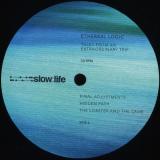
Stockholm house mainstays Ari Bald & CJ Scott return to Studio Barnhus with Colombiance, their fourth EP for the label and another generous serving of homegrown dance music from two of our most dependable suppliers.
“Trippin’ Totems” opens in suggestive, hypnotic mode, rolling forward on layers of percussion and a groove that seems to tighten the longer it runs. “Coral Capers” brings the piano to the party, bright and buoyant on the surface with just enough melancholia underneath to keep things interesting.
“Mole Patrol” picks up the pace considerably, a chugging and increasingly intense workout built for peak-time deployment, before “Baobab Bonanza” closes proceedings in more spacious fashion, with great waves of sound washing in and out over a floaty, rolling house groove.
Another intriguing chapter in an increasingly distinctive Stockholm house story, out October 30 on 12'' vinyl and digital platforms, with lovely artwork by Eliot Axelsson.
Phillip George Allison was born and raised in Denham Town, West Kingston, the last of six children and the only boy. As a boy he sang hymns at his mother's side. Before long he was singing radio hits at school concerts, where he did Curtis Mayfield, Smokey Robinson and Eddie Kendricks in a falsetto so close to theirs that friends called him "George Smokey."
With Delroy Williams and Shirley Forbes he formed The Mad Lads. Leroy Sibbles auditioned them at Studio One and called Coxsone Dodd over to listen, and they recorded the same day, with Sylvan Morris as engineer and the Sound Dimensions backing them. Ten To One, Losing You and You Never Know were big with the sound systems. George then left music to study electrical engineering at CAST. Years later producer Carl Prince of Gibbous Records asked him to re-record Ten To One, and that brought him back into the studio for the 1984 album So Unusual, where both of these sides first appeared.
Gypsy Woman was one of the first songs he ever sang in class. "Gypsy Woman was originally done by Curtis Mayfield and the Impressions, one of my favourite groups. I chose to do it a little differently, in my falsetto style, like Ten To One that I recorded while singing lead with the Mad Lads."
War Is Ugly "I wrote War Is Ugly during the politically motivated tensions and killings between rival gangs and gunmen all over the island in that period. My message was to the gunmen: turn in their arms and come. War is ugly, love is lovely."
New York-based Japanese jazz and electronic music polymath Takuya Nakamura presents his debut album Shape The Future - almost 35 years into his storied musical journey.
An expansive double album, the album’s first LP documents a spellbinding live performance by Nakamura recorded at fabric. A hybrid set combining DJing, live electronics, vocals, and trumpet, the set also features studio versions of special collaborations with Shigeto, Currency Audio and Tim Reaper. The second LP complements the first by assembling studio recordings of select album tracks. Altogether the two volumes make for a definitive display of Nakamura’s exceptional musicianship across jazz, DnB, jungle, broken beat, deep techno and more.
Across his career, Nakamura has played Brazilian music, merengue, salsa and straight-ahead jazz. He’s opened for Sun Ra Arkestra, performed with David Byrne, Laurie Anderson, Lee “Scratch” Perry, Wu-Tang Clan, and Arto Lindsay, appeared on sessions with Terry Riley, ASAP Rocky, Goldie, and TV On The Radio, and remixed the likes of Quincy Jones, Sun Ra, Billie Holiday, and The Streets. He’s also played under director and playwright Robert Wilson.
Although the musical past and present of the Tokyo-born, New York-based DJ and trumpet player is undoubtedly eclectic, Nakamura is abidingly steeped in the sounds of jazz and jungle. This’ll be obvious to casual observers who may have seen any viral videos of him. But there’s more to this. The depth of Nakamura’s engagement with these kinds of music, the way they’ve made him into the person he is, the decades-long path they’ve taken him on; to now arrive at the summit of a solo album is all truly remarkable. Shape The Future resonates with every chapter in this story.
In high school, Nakamura’s friends started listening to jazz and jazz fusion, which piqued his interest, especially when they started going to clubs to see it live, where they managed to see US legends like Sonny Rollins play. Eventually he began to play jazz every day and his musical skill emerged early. He soon became obsessed with getting closer to the source of this music, which led to his studies at the New England Conservatory of Music in Boston with George Russell, an influential figure who had taught Miles Davis and John Coltrane. Nakamura drank it in: not only the technical aspects but the sense of a direct connection to “a music culture where Russell and his friends changed harmony forever. I wanted to know how that was possible!”.
This was a radical experience in itself, but then another revolution happened for Nakamura. He was playing in a venue called The Western Front, near Boston and discovered that the elderly owner had his own soundsystem and was playing what was then - in 1992 - only just becoming known as jungle. This was as freeing a musical revelation as his proximity to the giants of jazz was, and in that instant the two things fused. He understood that using technology to fill a dancehall with sound and a jazz musician’s reflexes are all working to the same ends: “You’re always making decisions,” he says, “but it doesn’t have to be really difficult. It’s the truth of the frequencies, and how they’re affecting people’s minds.”
From that moment on, his life path was set. Moving to New York City, he sought out jungle and its offshoot sounds wherever he could find them, gigging and collaborating relentlessly, and gradually developing his own live and hybrid live/DJ shows. Through regular appearances at New York fixtures Zebulon and CBGBs, and continual shows elsewhere in the city, Nakamura developed his live performance and DJing and it was in these environments that he gradually weaved together his twin loves without compromising either, building an international reputation in the process.
It’s only fitting then that his first album, almost 35 years after he first found his musical direction, should be a live one: a window into this never-ending process. Even here, he had to be persuaded that he should make a record. A member of the fabric team got turned on to his music after their daughter saw him play. Of course, as a jungle lover, Nakamura knew fabric – which has a special place in the history of jungle and drum’n’bass – and “had wanted to play there since I was very young.” You can hear the club in the record: this isn’t just a live show, in keeping with his jungle roots, it’s Nakamura duetting with the soundsystem, and you can feel how the emotions in the room would have ebbed and flowed.
This dynamic translates to a transfixing record. Setting the tone with lushly textured ambient and reverberant jazz, Nakamura segues into cinematic breakbeat and stellar fusion, infusing it all with intoxicating low end and hypnotic rhythms. The LP’s midway point locks into mesmeric percussion heightened by resonant echoes of piano and trumpet. There’s an endless pull to this music. Nakamura adjusts the levels for maximum impact throughout, and the overall effect begins to evoke some harmonious hybrid between a jazz ensemble, a classic Metalheadz 12” and a Theo Parrish DJ set. His electric form continues through surreal jazz, intricate electronics and rolling sub-bass velocity, right up to the subtly devastating final cover of Peter Gabriel and Kate Bush’s ‘Don’t Give Up’, with Nakamura’s fragile vocal sitting in the heart of a huge sound.
From Tokyo jazz nights to formative studies and encounters in Boston to his artistic development in New York, Nakamura reaches another milestone with his monumental debut album. It’s a release that happened just the way a Takuya Nakamura record should. In the same way his instincts led him to musical revelations, taking his own sweet time has led him to make one of the most extraordinary debut albums imaginable, all executed in his own singular style. In Nakamura’s world, the universe finds a way.
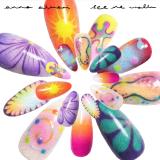
Anna Almani might be your new favourite producer. IFYKYK.. If you don't, then let's get to know..
Anna Almani is a Berlin based “Drag-DJ & Fun-House-Queen”. She is “Big Sister” at ‘Love Letter’ an imprint “for flinta & queer sonic goodness” and she is the alter ego of deep house producer and Poker Flat & Watergate artist ‘Iorie’.
Anna says “This EP is part of my queer expression. It’s all about the attitude to resist, it’s about being yourself unapologetically. It’s a big hug to the queer community and a love letter to resistance on the dancefloor. Be radical, have an attitude and lose yourself.”
When we picked the tracks for this EP we were completely spoiled for choice. There’s so much personality in Anna’s music that every track list made sense. And that’s because there’s a common thread that runs through all of Anna’s music - Balance. Ying & Yang. Dark & Bright, Passive & Assertive, Masculine & Feminine, Fun & Depth all in kept in amazing dynamic balance.
This is Share Now & Save for Later… Gratification immediate and delayed. .. . four tracks to take you through from open to close. From Berlin to NYC and round again
‘See Me Walk’ is gonna be the track that grabs the attention and connects with dancers everywhere. Fast, fun and full of attitude it’s a 909 workout with the energy and syncopation of Ballroom Vogue aaaaand a fabulous diva vocal to match. ’Tender T’ counters the audaciousness with some tenderness. Energetic yet embracing, this introspective proggy, dubby afterhours roller is a proper trip! Full of colour but hazy af.
On the flip ‘Gimme Some’ ramps up the tempo. Fast, urgent and cyclic grooving techno - with a strut - that’s both dubbed out and in your face. ‘Anladın mı’ is a collaboration between Anna and German/Turkish producer Zettka. Low slung house that both jacks and grooves. Rolling basses balanced with playful chords. “Anladın mı” it translates as “Do you understand? or “Got it?”. By now I think we do understand.. That certain je ne sais quoi… Anna Almani has definitely got it.
In Dead Deities, SATANIC PLANET’s new album for Relapse Records, we see a band coming into its own while offering an aggressive, pitch-black, deeply surly call-to-arms against autocracy in the age of Christian Nationalism. Lucien Greaves (The Satanic Temple co-founder and spokesperson), Luke Henshaw (Planet B, Sonido de la Frontera, First Power Crew, Variations In the Key of the Afterlife), Dave Lombardo (Slayer, Misfits, Mr. Bungle, Dead Cross), and Justin Pearson (The Locust, Swing Kids, Deaf Club) are now a fully together-in-the-studio band with razor-sharpened focus, creating a sound and lyrical catalog of ideas that Greaves says is both more personal and even closer aligned to the goals of The Satanic Temple, which through art, action, and activism seeks to “encourage benevolence and empathy, reject tyrannical authority, advocate practiced common sense, oppose injustice, and undertake noble pursuits.” The Satanic Temple and SATANIC PLANET are here to empower all those who are needed in the ongoing battle against theocracy, apathy, and inequality. Dead Deities begins as a brooding, doomy soundscape with backwards ritualistic vocals that churn forward like a barbaric horror flick scene before launching into the aptly named “Antichrist,” with a hypnotic, screamy post-post-post-hardcore intro that melds into a slow, nasty, heavy vision of what pop music might sound like in Hell. This 11-track stygian brute of an album is a journey through modern dark music with tolling bells, blackened synth, diabolical noise interludes, drums as heavy as a mountain, and group vocals torn straight out of your best-worst nightmares.
It’s a rare occurrence for a band to continue making music into their fifth decade, even fewer top off that achievement with one of their most recent albums being named one of “2023’s Best Albums” by a venerable magazine like SPIN. But The Church did just that with The Hypnogogue, an album so adored by critics and fans alike that it ushered in an entirely new era for the Australian band.
Now armed with their 28th album Lacuna, the psychedelic dreampop legends continue to evolve and transform, remaining not only relevant but consistently delivering music that is innovative yet true to their signature sound. “Intense, forlorn, and exultant,” is how bassist/vocalist/founder Steve Kilbey describes the album.
With a measured command of melody and instrumentation that only comes with experience and age, it’s an album rife with indelible musical clasps that fasten hold of your attention and refuses easy surrender. It’s a steadfast talent that Kilbey hosts close to his chest that’s been ever-present in the 27 albums that preceded it (best evidenced by the jubilant, nearly sold out 2025-2026 Singles Tour legs across Australia and North America, featuring night after night of incredible three-hour sets).
Starting in 1980, The Church continued expanding their highly cinematic and atmospheric blend of indie rock, shimmering post-punk, icy dreampop and psychedelic post-rock without retreading their steps. Beginning with classic early albums Of Skins and Heart, The Blurred Crusade, and Heyday which built a sturdy foundation, 1988’s Starfish broke into the mainstream and gave The Church the international hit “Under the Milky Way.” The hit single has been regarded as one of the most influential and recognizable Australian rock anthems of all time.
Zweite Auflage 2026 -Ein PUNK-ROCK-MEISTERWERK neu aufgelegt - mit, aus aktuellem Anlass, aktualisiertem 2026 Cover-Artwork, Vinylfarbe Starlight Yellow! Das erste Studioalbum von NOFX auf Fat! Die Band behandelte ernste Themen (Punk-Kultur und Politik) mit ihrem typischen Witz und Sarkasmus und zielte auf George W. Bush. Nun ist ein neuer Clown am Start! Damals (2003) schaffte es das Album sowohl in Großbritannien als auch in den USA in die Top 50 und war auch auf dem europäischen Festland erfolgreich, wo es in der Schweiz und in Deutschland die Top 30 erreichte, in Österreich die Top 50 und in Frankreich die Top 100. "Musically, NOFX fuses its political cynicism with criticism of punk rock itself and suggests that the best thing for all the kids and the bands might be to close ranks and start their own little hardcore community. 'Irrationality of Rationality' and 'Franco Un-American'_two of the album's most melodic, catchy songs_are also two of War on Errorism's most biting commentaries. The first personalizes the trickle-down effect of corporate decision-making over a lockstep hardcore rhythm; the second gets all-new wavy as Fat Mike reasons out his own world view, and somehow rhymes "apathy" with "Noam Chomsky.'" - NOFX hat sich zwar aufgelöst, aber das Vermächtnis lebt weiter. Die Band ist derzeit Gegenstand ihrer ersten umfassenden Ausstellung im Punk Rock Museum in Las Vegas. Die Dokumentation "40 Years of Fuckin Upmakes" feiert beim SXSW 2026 Premiere und ist ab April umfassend zu sehen (Score & Original Soundtrack mit neuer Musik von NOFX folgen in Kürze). Der zweite Teil der A-Z-Raritäten-Trilogie "I to Q" soll Ende 2026 erscheinen. Und behaltet Fat Mike im Auge, denn Gerüchten zufolge hat er eine eigene Meinung zur aktuellen Weltlage. Warning: owning this record might piss off (more than ever) your army recruiter, grizzled grampa, or those wacky flag-wavin' nationalist buddies of yours.
Repress of 2024’s self titled masterpiece. ‘One More Death’ and ‘Goatbrain’ are spectacular curtain-raisers, embodying a hedonistic spirit driven by incisive funk and possessed by merciless fuzz/wah-drenched guitar. Yet elsewhere, the band’s love of hip hop is the fuel for the end-credits-epic album closer ‘Ourobourus’ which marries infectious chant to breathless Lalo Schifrin-style breakbeat action. And which also means ultimately, like the titular oldest allegorical symbol in alchemy, we’re right back where we started. As Brad Dourif’s character Hazel Moates intones in the 1979 movie Wiseblood, “Where you come from is gone; where you thought you were going weren’t never there. And where you are ain’t no good unless you can get away from it”; in Goat’s eternal now of renewal and revelation, there’s never been a more potent means of escape.
EPILOGUE is the culmination of more than four decades of music-making by Japanese composer, producer and multi-instrumentalist Ken-ichiro Isoda, an album in which environmental sound, electronics, contemporary classical composition and memory converge into a deeply personal late-career statement. Isoda moved through video-game music, film composition, classical production, Okinawan music, television and collaborative projects, continually developing an approach in which acoustic instrumentation, field recordings and electronics could coexist naturally.
His collaborative album Interwoven with aus, released through WRWTFWW, further demonstrated the openness of a musical philosophy Isoda describes as being rooted in fluctuation, imperfection and organic movement.
EPILOGUE brings those threads together while refusing to function simply as a retrospective. The album consists largely of older compositions that Isoda has returned to, reconstructed and reinterpreted from the perspective of the present.
Opening track “TANEKOMA” refers to the Izu Robin, a rare bird native to Hachijō-jima, the volcanic island where Isoda lives. Its song, recorded by Isoda in the mountains, becomes part of the composition itself. Placed at the beginning of the album, “TANEKOMA” becomes both document and prayer.
Elsewhere, “Circulation 2” develops from a work created around the relationship between forest, sea and the movement of water. Flutist Dogen Kinowaki replaces Isoda’s original piano melody with a performance that gives the piece a distinctly Japanese sense of place. Kinowaki also appears on a newly reimagined version of “Beach of the Pliocene”, one of Isoda’s most recognised compositions.“STEPS”, first composed for film in 2008, looks back toward the electronica of that period. For this definitive version, Tsutomu Sonoda of maya ongaku provides vocals, bringing new emotional and lyrical depth to a piece Isoda had wanted to properly complete for more than a decade.
The title track from Isoda’s 1991 New Age album “Yume no Sazanami” is similarly reconsidered. Originally recorded with a small chamber orchestra, the new arrangement replaces elements of the harp and cello with layers of nylon-string guitar performed by Tatsuro Murakami. Perhaps the album’s clearest meeting point between past and present is “WATERWAYS.”The mysterious European ambient artist Aiko Takahashi, transforming an abandoned demo into what is simultaneously the oldest and newest work on the album.
“A Flowering Tree,” written for film in 2013, is reconstructed around multi-tracked flute performances by Dogen Kinowaki. Isoda carries that association into his own arrangement, allowing the piece to function as another quiet meditation on memory, loss and hope.
The album closes with “EPILOGUE” —less a grand conclusion than a moment of acceptance. Isoda chose it as the album’s title piece to hold what he describes as the complex emotions that accompany the twilight of a life spent making music. EPILOGUE is not simply a look back. It is the sound of older music continuing to move, change and breathe in the present: a lifetime of ideas distilled into Isoda’s own form of pure music, shaped by memory, collaboration, nature and the world immediately outside his home on Hachijō-jima.
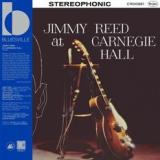
The Bluesville Series from Craft Recordings and Acoustic Sounds!
Inspired by the original Prestige label imprint established in 1959
All-analogue mastering by Matthew Lutthans at The Mastering Lab
Highlighting trailblazing blues musicians from legendary labels
Studio recreation of an electrifying 1961 setlist from Carnegie Hall. This album includes the enduring classic, "Bright Lights, Big City," which was included in The Rock and Roll Hall of Fame's 500 Songs that Shaped Rock and Roll.
Released in partnership with Acoustic Sounds, the album has been (AAA) remastered from the original tapes by Matthew Lutthans at The Mastering Lab and pressed on 180-gram vinyl. A replica tip-on jacket completes the package.
33rpm Lacquer-cuts: Kevin Gray
200g Double Ultimate Record®
Limited Edition: 4000 copies
Box and Tip-on Gatefold printed in Italy
Pressed by Simon Garcia, Marciac, France
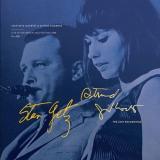
When the concert started that 4 November 1966 at the famous Berliner Jazztage, four musicians took the stage. Close-knit to the point of telepathy, they were about to give one of their last concerts. The mythical partnership of Stan Getz on saxophone and Gary Burton on the vibraphone was coming to an end, but were they even aware that this was one of their last acts? Accompanying them was an exceptional rhythm section with Chuck Israels on bass and the great Roy Haynes on drums.
With the first notes of “On Green Dolphin Street” the audience was won over by the rapport of empathy within the quartet. The programme was beautifully compiled to alternate flamboyant standards conducive to the most exuberant solos (“The Blues Walk”), heady ballads where Getz demonstrated his splendid sound and lyrical singing (“The Shadow of Your Smile” and “Once Upon a Summertime”), and compositions by Gary Burton where the vibraphonist displayed his subtle harmonic universe (“The Singing Song” and “Edelweiss”).
Suddenly, a high-spirited version of “O Grande Amor”, the standard by Antônio Carlos Jobim and Vinícius de Moraes, sounded out to prefigure the distinctly bossa nova vibe of the second part of the concert: Astrud Gilberto was to take the stage. With the opening bars of “Samba de Uma Nota Só” the flavours of Brazil were palpable. Gilberto’s voice, fragile yet mischievous against the background of the iridescent vibraphone and wrapped within the airy countermelody of the saxophone, recreated all the freshness and innocence of the legendary recording of 1964. As if they were performing together for the first time, Gilberto and Getz played a subtle game of seduction to create music that was sensual, light and melancholic.
The colourful sequence of bossa nova standards – “Você e Eu” by Gilberto Gil, “Corcovado” and “The Girl from Ipanema” by Jobim – intermingled with numbers that were jazzier in both form and spirit – “Jive Hoot” by Bob Brookmeyer, “The Shadow of Your Smile” and “It Might as Well Be Spring” – was simply irresistible.
With the final notes of “Jive Hoot”, Stan Getz smiled and bid farewell to the audience with a simple “Auf Wiedersehen”. The recording of this dream-like performance lay untouched for nearly sixty years, until we unearthed the original tapes in the archives of Berlin Radio. This album is the very first edition of a memorable live concert, entirely restored using Phoenix Mastering®.
Memoria returns with MEM064, welcoming Brizman to the label for a four-track journey through stripped-back grooves, deep atmospheres and dub-infused minimalism. The A-side sees Brizman on solo duty with Detroit Awareness and That Chord, two subtle but effective club tracks where rolling rhythms, warm chords and hypnotic details do the work. On the flip, Brizman joins forces with Szafran (Oskar Szafraniec) for Reworking The Dub. Spacious, bass-heavy and deeply hypnotic, the track takes the record into distinctly dubby territory. Cirkel Square closes the EP with his remix of Reworking The Dub, reshaping the original into his own tightly-wound interpretation while retaining its deep, soundsystem-minded character. Four cuts covering the space between minimal house, dub and late-night electronics, understated, functional and made for the floor.
The A-side delivers two sublime cuts drenched in that unmistakable Italo-Balearic magic. Warm chords, sun-kissed melodies and effortless grooves transport you straight back to the golden days of mid-'90s Italian house music. Eyes closed, you're cruising along the Riviera with the top down, lost in pure bliss.
Flip it over and the mood shifts firmly toward the dancefloor.
The B-side explores deeper territory, moving through a range of shades while keeping things locked into a tough, clubfocused framework. There's a distinct New York stomp running through these tracks—driving, hypnotic and full of attitude— yet they never lose the emotional depth and musicality that have become a Westcoast Goddess trademark.
Just when you think the journey is complete, the EP saves its ace for last. Closing things out is a hypnotic funk groove built around silky Rhodes, a tight rhythm section and an iconic bassline—a fitting finale that leaves a lasting impression. A seriously strong package from start to finish, and another essential chapter in the ever-expanding world of D3 Elements.
Ed Nine hails from the birthplace of house and brings plenty of Windy City magic to this EP on Spanish label MATE. It's deliciously emotive tackle drenched in meaningful pads and, in the case of opener 'Feel It In Your Soul', an aching vocal sample that really sets it alight as the organic drums jack down low. 'Free Acid' is a stomping workout with prickly 303 lines defining the peak time vibe, then 'Out Of Line' cuts back into a more sunny sound with synths rising up through the mix and bringing joy. Closer 'The Drum Tool 3' is just that - a raw jam to help you get the floor locked in while moving through the gears.
Mark Funk and Danny Cruz's Cruise Music label continues to offer-up the best of its digital-first EPs via the popular Vinyl Jams sampler series. There's a real sun-splashed, dancing-on-the-terrace feel to much of the music contained on this 14th volume in the series. Mark Funk steps up first with the loopy, filter-rich disco-house release of 'Never Never', which rises and falls in all the right places in search of hands-aloft action, before Makito drops the vibraphone solo-laden deep house-meets-garage-house flex of 'Heavy Vibes' (think Masters at Work collaborating with Roy Ayers and you're close), Over on side B, Danny Cruz serves up 'Sugar', a tooled-up, house-style re-edit of a joyous disco gem, while Filth & Smell's 'Panama Sweet Spot' is an electric piano and sax-loop-fired slab of thickset house funkiness.
The Bratislava-based band 52 Hertz Whale release their new album Present Sense Impression in a collaboration of the labels Weltschmerzen and Full Moon Forum.
Three years since their album I've Met a Lot of People, the band brings forth a lot of new ideas, finding a new resonant space, and utilising the fierceness // savageness of their live shows, in an intimate stare at contemporary guitar music.
52 Hertz Whale is a band well known in the Central European music context. Their ferocious sound, mixing the intensity of post-punk, heavy guitar wails, and melancholic // stark vocals of Dominik Prok has been tearing down the fixtures of many festivals and venues, all the while being a great example of a band driving at 200mph nonstop. On Present Sense Impression, the band, composed of Dominik Prok, Dominik Fabian, Patrik Nagy, Tomáš Tabiš and Adrián Krišák, have arrived at a record full of manifold manifestations of their live sound, but at times recalling the more marginal waves of 80s pop // rock sound. Resolute drums, heavyweight guitar and bass riffs now deem closer to the lightness of early ethereal darkwave, just to indulge in the classic melancholic heaviness they are known for only seconds after.
Some of the songs have been produced by "Prague's favorite rock'n'roll enfant terrible" Lazer Viking as well as Pulp Studio's Jakub Hríbik, and one features a special guest - the cemballo virtuoso Marcel Comendant. The traditionally stunning artwork was created by the accomplished Martin Mesaroš.
Present Sense Impression is the 20th album released under the Slovak romantic // experimental label Weltschmerzen focused on emotionally hypercharged, humanely intertwined, and acutely sounding contemporary music. This time in collaboration with the czech label Full Moon Forum. It releases August 26th on limited edition baby pink, standard edition black vinyl and on all streaming platforms.
The creation and release of this record have been supported using public funding by the Slovak Arts Council, and SOZA. Fullmoon Forum project was supported by the Ministry of Culture of the Czech Republic.
Electronic music legends Soft Cell release ‘Out Come The Freaks’, the very first single from singer Marc Almond and multi-instrumentalist and producer Dave Ball’s final album ‘Danceteria’. Download and stream the track, featuring vocals from the late Dave Ball and special guest vocals from Nona Hendryx.
‘Out Come The Freaks’ is a cover of Was (Not Was)’s mutant disco classic and sends Soft Cell into prime disco territory, conjuring the hedonist spirit of early 80s Manhattan and a Danceteria floor filler spun by DJ Mark Kamins. There couldn’t be a more fitting alternative disco banger to pull back the curtain with and beckon you into the world of ‘Danceteria’. The final album is a homage to the legendary nightclub where young Marc and Dave would party until the small hours after the recording sessions for their seminal 1981 debut ‘Non-Stop Erotic Cabaret’. The final flourish of glitter to Soft Cell’s ‘Out Come The Freaks’ comes courtesy of guest vocals from Nona Hendryx, the iconic singer, one third of Labelle of ‘Lady Marmalade’ fame, and producer of Lisa Lisa and Bush Tetras.
This is the very first material to be released from ‘Danceteria’, Soft Cell’s forthcoming sixth and final album. It is also the first time new music has been released since the sad, untimely passing of Dave Ball in October 2025. Almond led the tributes, describing Ball as a “brilliant musical genius” and the world’s media hailing Dave as an electronic music pioneer. Dave finished ‘Danceteria’ very close to his passing and it is in full tribute to him that the album release goes ahead as planned. More details are to follow very soon about the release date.
Xistence Records reaches its eighth release with what may be its most important record so far, bringing together four artists whose music carries the spirit and evolution of Detroit techno. With selections reaching back three decades alongside new material, the EP connects different eras of tracks that exemplify the raw soul, machinery and futuristic thinking at the style's core. Sean Deason opens with 'Time Warp', originally appearing on his Matrix label in 1996 and finally receiving its first vinyl release. Thirty years later, its dramatic entrance and surging rhythm have aged perfectly. Energy is matched by genuine depth and soul, with its futuristic energy at the heart of it all. Label owner Arbilla follows with 'Electric Storm', harnessing the power of a great techno groove creates a blend of infections elements working in harmony. The second side reaches back to 1998 for a previously unreleased DX-9 production. A pounding Chicago warehouse beat meets the mechanical precision of Detroit, while a heavily over-arching acid line fuses the marriage these two deep-rooted cities. Legendary producer, Orlando Voorn closes proceedings under his Basic Bastard alias with 'Alone Together'. Perhaps the sickest groove of the EP. opens up a spacious atmosphere that gives the track an almost celestial quality. Inspired by Detroit techno’s evolution and its key figures, Xistence continues to show why it has become one of the rare trusted homes for proper techno.”
After fifteen years of shaping dancefloors around the world, Mele is set to release his long-awaited debut album Alive On Arrival via Defected Records Far from an introduction, the album marks the arrival of an artist operating with complete creative clarity, bringing together the sounds, collaborators and influences that have defined his journey into one cohesive body of work.
"Alive On Arrival draws inspiration from what feels like my entire life as a producer, a DJ and a music fan, bringing together everything I love about house, hip- hop, UK music, soulful R&B and wider global sounds. The name comes from Wu-Tang Clan's C.R.E.A.M., which felt fitting to where I'm at in my musical journey. It's been 15 years as Mele, but I'm still alive and feel like I've got so much more to give. I've finally arrived at this point with my debut album. The album was made in, and heavily influenced by, London, Miami and Liverpool - three places that are close to my heart. Sonically, it's inspired by some of the best: Jungle, The Neptunes, Gorillaz and Masters At Work." - Mele aka Krissy Peers Set for release on 25 September, Alive On Arrival is Mele's most expansive project to date. Across fourteen tracks, he draws together house, hip-hop, soul and R&B into a record that reflects a lifetime spent moving between genres rather than being limited by them. Created between London, Miami and his hometown of Liverpool, the album captures the energy and musical history of three cities that have shaped both his sound and perspective. At the heart of Alive On Arrival is collaboration. Rather than simply assembling a list of featured artists, Mele has curated a cast of voices whose individual perspectives deepen the emotional and cultural narrative of the album. Long-time collaborators sit alongside new creative partnerships, each contributing to a record built on shared musical language and mutual respect.
Tiger Stripes unveils part one of ‘A Tiger Never Loses Its Stripes’ on Rekids. The series will culminate in the Swedish artist’s sophomore album later this year.
Sweden’s Tiger Stripes, aka Mikael Nordgren, drops the first part of the ‘A Tiger Never Loses Its Stripes’ EP series on Rekids. The EP previews his upcoming sophomore album, his first in two decades, due out later this year, and follows three recent releases and a remix for Dino Lenny on Matt Edwards’ Rekids label.
Tiger Stripes kicks off the ‘A Tiger Never Loses Its Stripes’ EP with ‘Slow’, a snappy groove driven by weighty bass and vocals that are as playful as they are drenched in soul. ‘Twelve’ picks up the pace with irresistible low-end and funky, jazz-inflected key riffs, before ‘Stay Hypnotic’ takes things somewhere more dream-like, pairing shimmering synth sequences with glitched-out percussion and fragmented vocal snippets on the flip. ‘Shape The Future’ closes the first instalment with a squelchy bassline, slightly off-key strings and gorgeous dubbed-out chord progressions, bringing a classy, club-ready finish to this preview of Tiger Stripes’ next album.
Founder of the Strange Idols label, Tiger Stripes has spent over two decades forging his own path with standout releases on Hot Creations, Kaoz Theory, Kwench Records, and more. After stepping back to focus on his indie-rock project Little Lies, he made a full return in 2024 and quickly recaptured the form that’s made him an international favourite, returning three times to Rekids since.
A limited 45, lifting two of the most transportive moments from Manifest, the fifth studio album from BALTHVS, and pressing them together on a standalone 7". "Eternal Flow" closes Side A of the LP, a slow-building groove that became the lead single of the album campaign. "Pale Blue Dot" opens Side B, a meditation on smallness and the cosmos that stretches out over nearly five minutes.
BALTHVS is the Colombian trio of guitarist and producer Balthazar Aguirre, bassist Johanna Mercuriana, and drummer Santiago Lizcano. Over five years the band has amassed more than 140 million streams, performed in over 26 countries, earned a Libera Awards nomination, and appeared at Electric Forest, Austin City Limits, Outside Lands, Lollapalooza, Jam Cruise, and SXSW Sydney. Manifest, out 10/9/2026, marks their most adventurous work to date, reaching past psychedelic rock into drum and bass, Ethio-jazz, and trip hop.
This 7" is a collector's companion to that album, not a reissue of it. Both sides are drawn from the LP sequence and paired here as a standalone 45 for the shops and the heads who chase the format. Limited to 300 copies worldwide. The band supports the release with a US fall tour running October 8 through 25.
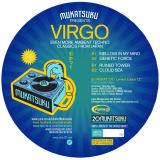
Mukatsuku's endless thirst for archival gold and knack for killer reissues burns strong with this latest third in the series hand-numbered 12" , which digs deep into classic ambient techno from Japan. The man behind the music is Virgo, a solo project by Yasutaka Sato that was active from 1996 to 2004 and then reappeared in 2024. This EP revisit some of his best moments from more than two decades ago, starting with the soothing, pulse-slowing beauty of 'Mellow In My Mind' before cosmic charm defines 'Genetic Force' and 'Ruined Tower' has a more melancholic, sombre feel. 'Cloud Sea' lifts the mood with a gently hopeful closer with soft new age chords and oh-so gentle rhythms that break like waves on a distant island paradise.
DJ Support: Katia Curie, Inkasso, Lea Occhi, Chloe Caillet and many more
Chris Gerber & aljalj return with the second vinyl release on Computer Toys. Featuring three driving, bassline-led house cuts built for the dancefloor, the record closes with a spacious ambient finale, providing the perfect landing after the house journey.
Still Music are proud to present the reissue of “A Message For The DJ” by one of Detroit’s finest, Delano Smith featuring the distinct vocals of Diamondancer. Featuring the now legendary remix by Jimpster, that has constantly been played since it’s initial release in 2005 by DJ’s across all scenes within the House spectrum.
Original copies of this Deep House classic are hard to come by on the second-hand market, regularly changing hands for close to £70, if you’re lucky enough to find one! Here’s your chance to get one over on those pesky Discogs sharks. Don’t delay!
Ashley Beedle’s remix of "Unmask Me" by MAMA is a masterpiece of deep, atmospheric house music. Characterized by shimmering chords and shuffling percussion, Beedle transforms the original into a sunlit, Balearic-tinged gem. It famously became a signature track for the late DJ Andrew Weatherall, he notoriously played and closed his set with it at his Convenanza Festival in September 2017. Where a now trended meme video of The Guvnor vibing to the gem, whist the crowd was in absolute euphoria to the magic being made.
Now released on purple vinyl, with all profits donated to our friend Mr Beedle and his ongoing care.
Italian-Iranian DJ/producer Sciahri lays down a deeply hypnotic seven- track EP on return to Mutual Rytm. Heading up the agenda-setting Sublunar label, which is one of Mutual Rytm boss SHDW's personal favourites, Sciahri has been deep in the scene for more than a decade ever since he turned heads with a debut on Ilian Tape in 2014. Well respected for his carefully balanced love of the classic sound with new school influences, always delivering cuts with a refined and personal touch, highlighted and showcased via his widely-loved ‘Pareidolia’ release series. Returning on the label following his appearance on the ‘Federation of Rytm IV’ compilation, he lands with a freshly evolved EP that kicks off with the much hyped ID, ‘Moonwake’. That cut is built on robust, rumbling drums and layered up with flashy synths that bring stark futurism to the dance floor. ‘Liminal’ follows a similar linear path with musical drums and synths that twist and twitch, firing your synapses while your body is locked to the rhythm, before ‘Night Sentinel’ transports you to a more eerie world of anxiousness and tension - the synths are spooky, and the sonar pulses keep you on edge as immersive drums race nonstop. ‘Unmoved’ lands heavy, the bulky kick drums coming on like a storm with howling synth winds adding to the all-consuming atmosphere. ‘Too Much Time’ closes out with a wall-rattling groove and subtle synth motifs that creep in the shadows. As always with the label, digital cuts ‘Silent Frontier’ - which gets dancers on their toes with a backlit synth glow - and ‘Louisiana’ - which brings a more psychedelic energy and hard, hammering groove, rounding out a stylish, meticulously produced offering.
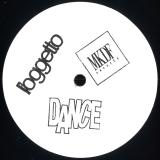
The third chapter of l’oggetto’s DANCE trilogy continues the sought-after series of instrumental DJ tools. Four new tracks, conceived as techniques to reach ecstatic states on the dancefloor through different moods, tempos, and vibes.
“Vallee,” with its infectious 12-bit groove, opens the EP with a syncopated, never-ending jazz-infused vibraphone. “Bone” takes it from there, staying midtempo and percussive while pushing funky horns into trippy, repetitive territory.
Side B turns moodier, as expected. “2600’” unfolds through digital strings of life, enabling a sense of suspension, release, and transcendence. Lastly, “Ambientale” closes the record with the ethereal, wobbly analog warmth of a downtempo drift into dawn.
Around seven years ago I became a father and that changed my life. E Dee has always been about my son Carlo’s world seen through my eyes, and this third and final chapter closes the series as he is now seven years old and about to start his second year of primary school.
As with the previous volumes, all the titles come from our family’s own little dictionary. “Cazia” is the name used to call his mother, while “Wager” and “Illu” are two nicknames invented by his sister Camilla for Carlo.
Words that once belonged to a child’s private language have stayed with us over the years. E Dee Vol. 3 is the last chapter of that small family archive.
In Permanent Vacation 20th anniversary year, Joe Goddard returns to the label with You — a fivetrack EP that feels both timeless and deeply connected to the label's musical DNA. Blending disco, house, electronica and subtle folk influences, the release captures the optimistic spirit of the early 2000s while sounding effortlessly contemporary.
Across five beautifully crafted tracks, Goddard balances warm melodies, organic textures and dancefloor elegance with his unmistakable songwriting touch. The EP features three standout collaborations: Glynn joins on the uplifting "Cutting You Loose", fellow Hot Chip member Alexis Taylor lends his unmistakable voice to "Hide & Seek", while Absolute appears on the intimate closer "Gentle Man".
You is a fitting addition to the Permanent Vacation catalogue—music that looks back without nostalgia, embraces the present, and reminds us why timeless records never go out of style.
Amazzonia is the new album by Alex Puddu and the second volume following the erotic series
I Desideri Di Sadie (Piaceri Tropicali), where the inspiration took us to an imaginary journey in Southeast Asia. With this new album “Amazonia,” Alex Puddu takes us on a trip to Central America, the Caribbean islands, and South America, exploring a new groove of Latin-funk, reggae, and seductive sleazy disco . Here, Sadie’s adventures unfold, from the jungle to the cities and onto the enchanting tropical beaches. Another journey through temptations, on the islands, discovering the beauty of Alex Puddu’s “Erotic World.”
"Amazzonia" was written, arranged, produced, and recorded by Alex Puddu, who plays all the instruments on the album himself. He was assisted by two of the best bassists on the Italian nu-disco and Balearic scene: Domenico Andria—who has played with Pellegrino/Zodyaco and worked closely with Alex Puddu on several releases—and Daniele Labbate, who has performed as a session bassist for artists including Nu Genea and Mystic Jungle.
Other featuring musicians on the album are:
Imelda : Lead and backing vocals
Adrian Wilding: Vocal on Gimme Dub
Hendrik Jørgensen: Trumpet
Jesper Løvdal: Saxophone
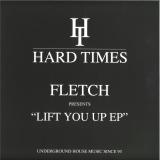
For his debut on Hard Times Records, Manchester's FLETCH delivers 'Lift Me Up’ - a four-track EP rooted in rolling grooves, warm musicality and a refined dancefloor energy.
The release follows a busy run for FLETCH, with releases on Circoloco, Three Six Zero, MVSON and ANOTR's No Art, where his Play House EP reached the top of the download charts. His connection with Hard Times began behind the decks at the label's sold-out Miami Winter Music Conference showcase, where a shared appreciation for the music soon developed into plans for a release.
"After playing for the Hard Times crew in Miami, I told them how I'd been a fan of the label for years and that i’d love to release something with them one day," says FLETCH. "I sent over some tracks that I felt were a natural fit and the guys signed them on the spot. The rest, as they say, is history!"
The title track sets the tone for the EP with rolling drums, elastic basslines and understated vocal hooks, while 'Stand Up’ leans into swung percussion and classic chord stabs. On the B-side, 'Touch Me' shifts into deeper territory with stripped-back, late-night groove, before '1000 Years' closes the EP with dusty scratches, crisp hats and an understated sense of drive.
Since its digital release, lead track "Lift You Up" has received strong support on BBC R1, plus heavy DJ support from the likes of TSHA, Hilit Kolet, Laurent Garnier, Jamie Jones, Groove Armada, Riva Starr, and more.
FLETCH's sound continues to evolve while remaining firmly rooted in the traditions of house, making 'Lift Me Up' the perfect debut on Hard Times.
Forty years of cassette releases, pressed for the first time on vinyl
First of two instalments exploring the previously unreleased sonic archives of one of Poland’s most enigmatic
living artists - with its first volume focused on his deep listening practice and spiritual reverie (recorded 1990–2013)
The last time Andrzej Dudek-Dürer took a banknote bearing the face of the Polish anarchist Jarosław Dąbrowski from his pocket to trade it for a pair of shoes was in 1969. He bought them for 120zł - the equivalent of 100€ today - and never replaced them since then. Only rebuilt them, year after year, drawing a needle and thread through the leather each time it split, closing one wound before the next one opened. It became a ritual of precision, stitching a record of another year into their soles.
That same year, in Wrocław, he arrived at a conclusion that would recalibrate everything that followed. Convinced he was the reincarnation of Albrecht Dürer, he adopted the surname Dudek-Dürer, stopped cutting his hair and began wearing the same garments every day. It was the first ritual of many, though he wouldn't have called it that yet. Look closely enough, over the decades, and it is always the same gesture, returning in different material: hair growing in a single unbroken strand, a needle drawing thread through leather, sitar strings pulled taut across a neck he built with his own hands and magnetic tape spooling forward inside the cassette boxes stacked against his walls.
None of this began in a vacuum. Dudek-Dürer emerged from the Wrocław neo-avant-garde, in a Polish art world where an exhibition could be cancelled overnight by the stroke of a censor's pen. In 1973, his exhibition Auto-crucifixion was shut down by the state, and for a time he found himself blocked from exhibiting his own art at all - the one force in his life that ever came close to cutting the thread.
He seemed to experience it differently. In 1974, after long, patient research into sitar craftsmanship, he built his first prototype with his brother, a knowledgeable luthier. In 1978, in a smoked-out jazz club, he took his first steps into sound recording with the unreleased album Jazz From Underground with his first band. By 1979, recognition started to travel further than he could.
Turning toward Far-Eastern philosophy, meditation and the idea of reincarnation was another language of freedom for him. It was a way of claiming an inner territory the state could not reach, a border it could not close. Mail Art served a parallel function, reaching further out: in a country that restricted travel and expression, sending and receiving art through the postal system became an act of quiet rebellion.
The body, in his understanding, is only an envelope readied for constant transformation. From this came Metaphysical Telepathy: during the years he could not leave Poland, he treated that confinement as a rehearsal room, sending his mind out ahead on the same thread his body would later follow. Living Sculpture grew from the same root with performances of stillness beside static art objects, until the boundary between the object and the man beside it simply dissolved. Camera Meditation extended the same instinct into photography: a shutter click flattening three dimensions into two so that a single instant could be held forever. Inspired by the pioneers of self-portrait photography like Robert Cornelius, he used it to document time itself, and kept explaining to me: "You know. This is not about vanity. This is about observing time passing.”
The isolation did not end suddenly. It ended the way his own philosophy had already predicted it would, from the inside first. Mail Art quietly solved the problem politics couldn't. Correspondence built during years of confinement slowly worked its way through doors the state itself had kept locked. Contacts made through folded paper and stamps became invitations. Ultimately, invitations became passports.
In 1983 he made his first trip outside Poland, to Germany, in search of the audio technology he couldn’t get his hands on before. In 1985, he was invited by the Indian embassy in Poland to give a sitar concert on an instrument he had spent a decade patiently stringing together - half sitar, half tanpura, built from patience and determination. After the collapse of the People's Republic of Poland, the travels kept unspooling: South Korea, then Mexico, then Australia, Canada, New Zealand, Singapore, Japan and the United States - each stop leaving behind its own small knot of tape, tied off and carried home.
In the decades since, recognition arrived at the same unhurried pace: he conducted workshops at UC Berkeley, served as vice-president for artistic affairs of the Union of Polish Art Photographers and the Union of Polish Visual Artists between 2010 and 2014 and received the Bronze Medal for Merit to Culture - Gloria Artis. His visual work gradually entered collections including the National Museums of Warsaw, the Stedelijk Museum, Tate Modern, MoMA and the Venice Biennale. His musical practice, by contrast, never found that kind of room - left to circulate quietly, sharing his cassette tapes directly, waiting for someone willing to follow it further.
It took months before I could find a way to reach Andrzej Dudek-Dürer - his presence online is very close to nonexistent. Surprisingly, LinkedIn turned out to be the only door still open, a faintly absurd irony given everything else about him. I packed the strict minimum for a three-day trip and an empty notebook and made my way to Wrocław. His headquarters sits in the neighbourhood of Grabyszyn: a two-storey pre-war house that has belonged to his family for generations. The man who opened the door was long-haired, long-bearded, in his trademark leather shoes and patched jeans. We sat in his living room, in front of a computer where decades of recordings sat organised in cryptically named files, surrounded by books and objects that had arrived one layer at a time, leaving room for only two chairs in the middle. His shoes sat by the door, rebuilt so many times they had become their own quiet sculpture. Cassette tapes filled boxes against the walls, almost unlabelled, each one a spool of thread holding decades of sound that had never once been asked for, until now.
I listened for hours: meditating in front of strangers on the porch of a Seoul temple until the tourists stopped taking photos and simply waited with him; a stand-off with border guards at the US–Mexico crossing over an instrument they couldn't identify and didn't trust; a session with the Stockhausen family that he still, decades later, describes like it happened last week. All of it interrupted, occasionally, by the smell of soup boiling and fresh bread warming on the ceramic stove. After two days, it felt like being handed the end of a very long thread and asked, gently, to keep following it. I left with a USB drive holding his full discography, signed with his unmistakable signature.
Astral Meditations From A Living Statue is a length of that thread, drawn out from the boxes stacked against his walls - recordings gathered from different rooms, different countries, different decades. This first record breathes slowly: incense-thick, meditative, built for stillness. A cutting-edge séance in outer space where machines learn how to dream.
It begins with the neo-classical improvisations of Andrzej, space-delayed, recorded at Klub Muzyki i Literatury in Wrocław in 2002. 'When..So' opens the curtains with a deep-rooted meditation accompanied by slow-decaying piano figures illuminated by a candle-lit spirit gathering.
Los Angeles, 1990: a dormant villa, a grand piano, the voice of Bonnie Barnett. 'Exception' is captured in a single room, in a single afternoon - voice and keys circling each other, neither one leading, until the silence between the notes starts to feel like the instrument.
'The Meta...' and 'Tired Of...', recorded at Studio Morandi in Ponte Nossa, Italy, in 1992, settle into a sitar drone built entirely from patience - overtones stacking and beating against each other, strung by a man who never once set foot in India. 'Mastery Of...' follows, recorded the same year at Studio Suski in Łomianki, pushing that same hum further still, until pitch dissolves into a spectral reverie. 'Transcendental Sound', from 2000, closes the first record in a slow bath of celestial frequency - better heard beside the shores of the Odra river.
More than fifty years after deciding that a life could become an artwork, Andrzej Dudek-Dürer continues to inhabit that decision. His shoes keep wearing thin against the earth's crust. His hair keeps growing, one strand at a time. His cassette tapes keep spooling in the dark of their boxes.
Now the thread finds its last shape: a single unbroken groove, spiralling inward from the outer edge to the label at the centre. Never cut - the way nothing else in his life ever was. Drop the needle and it will find that groove and follow it, the same way a needle once followed leather, once followed a border it couldn't cross, once followed string into an instrument that didn't exist until he built it. This record is the other end of a thread that has been travelling for fifty years. For the length of both sides, it rests here, in your hands. This is a timeless proof that the Lord of the New Age was never lost."
Gi Gi describes his process as “dubwise sampledelia.” It begins with fragments and ends somewhere else entirely, destabilizing its source material until it stops pointing backward. A borrowed sound, looped and bent, eventually forgets where it came from; it stops referencing anything but itself.
This liquid sensibility shaped his earlier work, music that hovered between drift and propulsion, suggesting the dance floor without fully stepping onto it. Presence was implied, edges stayed soft. The center was always there, but diffused like mist on a screen.
With In Lieu, that center comes into focus. Half written in Texas, half in Australia, the shift isn’t simply geographic, but internal. The record moves with a coiled, anticipatory energy; the drums arrive with more force and the bass organizes the room instead of melting into it. It's dense with the feeling of more bodies in the frame. Textures still smear and refract, but they move around a clearer axis.
Where past records circled their core, these inhabit it, pulling closer to the body. “Some Of” and “Arque” lean into low-end pressure without abandoning his instinct for drift. "Pink Dirt" circles around mechanical drums and dizzying vocal chops, head-down and visceral. Elsewhere, voices gain newfound contour, materializing in “Downswept” with intimate musings and nearly forming a lead vocal on the title track before dissolving again.
In Lieu moves with a newfound confidence, compressing inward, sounding closer to the source of its own pulse.
*Originally pressed in 2021 - this is a brand new master and cut.**
In partnership with Analogue Foundation, Oshu Records is proud to present the exclusive vinyl repress of "Laroyê" in a thick cardboard tip-on gatefold jacket on 2x 180g vinyl.
Acclaimed Hungarian, Berlin-based producer, composer and pianist Àbáse (AKA Szabolcs Bognár) returns, sharing a special, 5 anniversary remaster of his breakthrough project 'Laroyê'. Releasing on Friday 1 May via Bridge The Gap & Oshu Records, this sensitive exploration of Afro-Brazilian culture originally began as an audio diary, documenting Szabolcs’ travels and collaborations in Brazil through a collection of voice memos, fragmented beats, sketches and field recordings. As his journey progressed, and his collaborations and research deepened, the music project started to take on its own life:
"Laroyê evolved through weeks and months of research and collaborations into the album that it is now. That means that all the sessions were done in different apartments, small studios, often with borrowed equipment, which all adds to the character, but makes the creation of a coherent sound a challenge. Benjamin Tierney, Erik Breuer and Analogue Foundation did an incredible job with the mixes and with this new remaster. I truly believe that we are able to hear the tracks in a new light, with even more depth and clarity."
Coming from the West African Yoruban language, Àbáse stands for "collaboration" – a key element of the music perfectly encapsulated on 'Laroyê'. Recorded in Rio de Janeiro and Salvador, Àbáse spent five months working with diverse artists, from young talents to veterans of the Brazilian scene including Letieres Leite, Luciane Dom, Dofono d'Omolu, Afrojazz and more. The album explores the rich heritage of afro-brasilian culture through samba, MPB and Candomblé, mixing these with broken beat, hip hop and afrobeat, creating a contemporary homage to the classic Brazilian sound. Szabolcs shares:
"Despite already leading and managing musical projects that are close to my hearth, I always felt that one day I would like to start a solo project, where I could take full responsibility for the artistic direction and the music would reflect a truly personal vision. In 2017, I decided to take five months to fulfil a childhood dream and travel to Brazil to expand my creative horizon and expose myself to new influences."
An album standout is the bass-heavy, afro-brazilian ‘Agangatolú, which Àbáse describes as "best exemplifying the story and concept of Laroye as a collaborative effort - a research project exploring the rich heritage of Afro Brazilian culture through my own lens." The track features singers and percussion players Jadson Xabla and Gabriel Santana - two artists based out of one of the oldest terreiros (houses of worship) in Bahia, whilst drummer Jorge Dubman is an integral part of one of the most famous afrobeat bands from Salvador IFA. The contributions of one of Szabolcsoldest collaborators - Hungarian flautist Fanni Zahar - also made the track a full-circle moment.
On a quest for cosmic grooves of unity, Àbáses music pulls from an eclectic blend of global reference points, including modal jazz, Hungarian folk, West African, Brazilian, hiphop and underground electronic music. His work has drawn widespread critical acclaim from the likes of MOJO, Songlines, Soulection and The Guardian, and been supported by key tastemakers including Gilles Peterson, Jamz Supernova and BAMBII. As a keyboard player, Szabolcs has also collaborated with the likes of Wayne Snow, Dele Sosimi, Patti Smith, Emmanuel Wilkins, Gulty Simpson and Zeitgeist Freedom Energy Exchange.
'Laroyê' (2026 Remaster) will release on Friday 1st May via Bridge The Gap & Oshu Records.
A torrent of brilliance released from the fingertips. The art of the piano trio by a giant of arrangement.
In 1968, Norio Maeda, the genius arranger once described as being able to “write different scores with his right and left hands at the same time,” welcomed his close musical allies Takeshi Inomata and Tatsuro Takimoto and took on the piano head-on in his first piano trio work as a pianist. This album brings together the refined melodies of the new mainstream style that led the jazz scene at the time, experimental elements using prepared piano, and even a strikingly inventive recording approach in which as many as seven microphones were placed inside the piano. With the outstanding structural power of a composer and arranger and the sharp instincts of a performer woven together at a high level, this is an important work that deserves to be engraved in the history of Japanese jazz.
Scott Fagan’s new album Soon, 55 years in the making, revives songs from his lost 1971 Broadway rock opera.
Alongside songwriting partner Joe Kookoolis, Fagan conceived and wrote the rock opera, an age-old story of an artist forced to make a devil’s bargain between their principles and success, intending it to be the follow-up to his classic 1968 debut, South Atlantic Blues. But fate intervened. The production (which starred Fagan and a young Richard Gere) closed early, the album was shelved, never to be recorded or heard. Until now.
Recorded over seven days in July 2025 at the hallowed Sam Phillips Recording Service in Memphis with a crack rhythm section, the thirteen songs on Soon illustrate Fagan’s extraordinary facility and range as a singer and songwriter of great sensitivity, passion, and humour.
From its rousing gospel opener (“Let The World Begin Again”), through fiery, protest songs (“Faces Names and Places”, “Straight”), and tender-hearted ballads (“Child of Sympathy”, “To Touch the Sky”), the album is by turns, uplifting, mournful, righteous, giddy, soulful (title track, “Soon), and anthemic (closer, “Please Be Well”). This feels like an album of lost classics waiting to be rediscovered.
Scott Fagan has been waiting a long time for the world to hear these songs. The long, long wait is over, Soon.
Twenty-five years after its original release, Markus Guentner's debut album In Moll returns in a special anniversary reissue on Black Knoll Editions, reaffirming its place as one of the defining ambient recordings of the early 21st century.
Released in 2001 during the formative years of Kompakt's influential Pop Ambient series, In Moll emerged from a period of rapid transformation in electronic music. New technologies, expanding digital networks, and shifting creative possibilities allowed artists to imagine entirely new sonic worlds. Amid this fertile landscape, Guentner's music stood apart. Combining delicate melodic fragments, slow-moving harmonies, and a remarkable sense of spatial depth, In Moll introduced a distinct artistic voice whose impact can still be felt a quarter-century later.
The album arrived shortly after Guentner's contributions to the inaugural Pop Ambient compilation, including the now-beloved "Regensburg 1," named after his Bavarian hometown. Those early recordings immediately captured the attention of Kompakt founders Michael Mayer and Wolfgang Voigt. Recalling his first encounter with the music, Mayer describes listening to a demo CDR with Voigt while wandering through Cologne late into the night, replaying the tracks for hours. "We knew that we had found something outrageously beautiful and we wanted the whole world to listen."
Across its running time, In Moll unfolds like a series of dreamlike landscapes, inviting the listener into a world that feels both familiar and strangely other. Bells, hisses, distant textures, and slow-moving bass tones drift through vast expanses of atmosphere while luminous synthesizer washes seem to blur the horizon in a fine digital mist. The album's transportive qualities are matched by a remarkable sense of compositional discipline. Every gesture feels deliberate, every texture carefully placed. Balancing warmth and melancholy with restraint, Guentner created a body of work that rewards both close listening and complete surrender.
Reflecting on the album twenty-five years later, Wolfgang Voigt describes Guentner as "one of the first, but also one of the most important ambient artists" associated with Kompakt, calling his music "an integral, timeless part of the long history of pop ambient." Music critic and former Pitchfork Editor-in-Chief Mark Richardson, who reviewed In Moll upon its original release, similarly noted that the album "marked the arrival of an important new voice," and today regards it as "one of the finest ambient releases of the decade."
The album's influence continues to extend far beyond its original audience. For many listeners, In Moll served as an entry point into a new understanding of what ambient music could be. Black Knoll boss Rafael Anton Irisarri first encountered the album shortly after its release in 2001. "It immediately opened a door to a world of music I didn't know existed," he recalls. "At a time when I was still discovering my own creative voice, Markus showed me entirely new possibilities for what electronic music could communicate." Simply put, "The Sight Below would not have existed without In Moll paving the way."
Far from a historical curiosity, In Moll continues to feel strikingly contemporary. What once sounded futuristic now feels timeless, its patient pacing, attention to detail, and sense of wonder remaining entirely intact. The album's enduring power lies not only in its influence, but in the curiosity it continues to inspire, inviting listeners to step inside its world and lose themselves within it.
To mark its twenty-fifth anniversary, Black Knoll Editions presents the most complete edition of In Moll to date. Newly remastered in full analog by Rafael Anton Irisarri, this expanded release pairs the original album with a newly reworked interpretation by Markus Guentner himself, revisiting the material through the lens of twenty-five years of artistic development. The anniversary edition also features a new visual presentation designed by Guentner, offering a visual counterpart to the album's continued evolution. Together, these recordings and visuals celebrate both the enduring legacy of In Moll and its ability to reveal new dimensions twenty-five years later.
This 25th Anniversary Edition on Black Knoll Editions celebrates a recording whose quiet impact has only grown with time, preserving a work that remains as evocative, singular, and essential today as it was in 2001.
Twenty-five years after its original release, Markus Guentner's debut album In Moll returns in a special anniversary reissue on Black Knoll Editions, reaffirming its place as one of the defining ambient recordings of the early 21st century.
Released in 2001 during the formative years of Kompakt's influential Pop Ambient series, In Moll emerged from a period of rapid transformation in electronic music. New technologies, expanding digital networks, and shifting creative possibilities allowed artists to imagine entirely new sonic worlds. Amid this fertile landscape, Guentner's music stood apart. Combining delicate melodic fragments, slow-moving harmonies, and a remarkable sense of spatial depth, In Moll introduced a distinct artistic voice whose impact can still be felt a quarter-century later.
The album arrived shortly after Guentner's contributions to the inaugural Pop Ambient compilation, including the now-beloved "Regensburg 1," named after his Bavarian hometown. Those early recordings immediately captured the attention of Kompakt founders Michael Mayer and Wolfgang Voigt. Recalling his first encounter with the music, Mayer describes listening to a demo CDR with Voigt while wandering through Cologne late into the night, replaying the tracks for hours. "We knew that we had found something outrageously beautiful and we wanted the whole world to listen."
Across its running time, In Moll unfolds like a series of dreamlike landscapes, inviting the listener into a world that feels both familiar and strangely other. Bells, hisses, distant textures, and slow-moving bass tones drift through vast expanses of atmosphere while luminous synthesizer washes seem to blur the horizon in a fine digital mist. The album's transportive qualities are matched by a remarkable sense of compositional discipline. Every gesture feels deliberate, every texture carefully placed. Balancing warmth and melancholy with restraint, Guentner created a body of work that rewards both close listening and complete surrender.
Reflecting on the album twenty-five years later, Wolfgang Voigt describes Guentner as "one of the first, but also one of the most important ambient artists" associated with Kompakt, calling his music "an integral, timeless part of the long history of pop ambient." Music critic and former Pitchfork Editor-in-Chief Mark Richardson, who reviewed In Moll upon its original release, similarly noted that the album "marked the arrival of an important new voice," and today regards it as "one of the finest ambient releases of the decade."
The album's influence continues to extend far beyond its original audience. For many listeners, In Moll served as an entry point into a new understanding of what ambient music could be. Black Knoll boss Rafael Anton Irisarri first encountered the album shortly after its release in 2001. "It immediately opened a door to a world of music I didn't know existed," he recalls. "At a time when I was still discovering my own creative voice, Markus showed me entirely new possibilities for what electronic music could communicate." Simply put, "The Sight Below would not have existed without In Moll paving the way."
Far from a historical curiosity, In Moll continues to feel strikingly contemporary. What once sounded futuristic now feels timeless, its patient pacing, attention to detail, and sense of wonder remaining entirely intact. The album's enduring power lies not only in its influence, but in the curiosity it continues to inspire, inviting listeners to step inside its world and lose themselves within it.
To mark its twenty-fifth anniversary, Black Knoll Editions presents the most complete edition of In Moll to date. Newly remastered in full analog by Rafael Anton Irisarri, this expanded release pairs the original album with a newly reworked interpretation by Markus Guentner himself, revisiting the material through the lens of twenty-five years of artistic development. The anniversary edition also features a new visual presentation designed by Guentner, offering a visual counterpart to the album's continued evolution. Together, these recordings and visuals celebrate both the enduring legacy of In Moll and its ability to reveal new dimensions twenty-five years later.
This 25th Anniversary Edition on Black Knoll Editions celebrates a recording whose quiet impact has only grown with time, preserving a work that remains as evocative, singular, and essential today as it was in 2001.