Suche:2 gott

Styles
Alle
Various - SEX– We Are Not In the Least Afraid of Ruins 2x12"
 
23
auch erhältlich

Black Vinyl[44,50 €]


The second installment of gems and nuggets straight from the infamous jukebox at Malcolm and Vivienne's King's Road SEX boutique.

Compiled again by Marco Pirroni (Adam and The Ants, Siouxsie and the Banshees) another collection of carefully curated tracks that were played on rotation at 430 kings road Chelsea, throughout 1974-1976.

Years in the making, this follow up to Marco’s 2004 “SEX: Too Fast To Live Too Young To Die” continues to complete the jukebox playlist with tracks contributed from those friends who frequented the shop - Jordan Mooney (RIP), Paul Cook, Steve Jones and Sam Bully amongst others – remembering those all-important songs that soundtracked the shop and left lasting impressions on them over 47 years ago.

Another wild ride and a kaleidoscope of jukebox bangers from The Animals to Max Bigraves, Nico to Burundi Black, these tracks undoubtedly played a heavy influence on SEX’s customer’s young ears many who would go on and change the musical world forever - Sex Pistols, The Clash, Chrissie Hynde, Siouxsie Sioux to name just a few.

Artwork supplied by Personality Crisis with unpublished photographs from Jane England, a student at the time but already understood the cultural significance and beauty of both the shop and Jordan Mooney who the compilation is dedicated to.

vorbestellen14.10.2022

erscheint voraussichtlich am 14.10.2022

46,18
Danielle Arielli - The Green House Experience

Danielle Arielli is a young and promising producer based in Berlin, completely devoted to the DIY ethos. Her banging DJ sets are full of energy, mixing classic Chicago House with Detroit Techno, Ghetto House and all the black magic in between. After her first full length
EP on her own label TOOFLEZ MUZIK, her follow-up EP on "Smile for a while" sublabel "All That Jelly" is completely on the same level as her DJ sets - bang dat sh*t!

nicht am Lager

Bestelle jetzt und wir bestellen den Artikel für dich beim Lieferanten.

10,04

Last In: vor 12 Monaten
Daniele Baldelli & DJ Rocca - Cielarko EP

Italian legend Daniele Baldelli & DJ Rocca team up for ‘Cielarko’ on Gottwax this May.

Often mentioned in the same breath as DJing pioneers Francis Grasso, David Mancuso and Nicky Siano, Baldelli’s storied history includes his various long-running residencies, the most well-known being the legendary Cosmic club in Italy, and establishing the now world-renowned ‘cosmic sound’. Teaming up here with his regular production partner DJ Rocca, the duo reunite for four immaculately produced and colourful tracks for Gottwax Records, the record label from the UK’s Gottwood Festival.

Leading the release, ‘Blanka’ brings rolling low end and psychedelic synth work together with floaty yet punchy percussion for a mid-tempo trip. ‘Flava’ follows with sharp staccato drum hits and Italo disco inspired leads, making for a light and playful closer to the A-side. On the flip, ‘Verdeta’ brings twisted basslines, FX-laden licks and wonky drums for a fun and enjoyable track before ‘Helblua’ rounds out the release with light keys, chugging percussion, and catchy riffs.

nicht am Lager

Bestelle jetzt und wir bestellen den Artikel für dich beim Lieferanten.

15,08

Last In: vor 2 Jahren
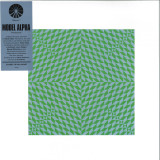
Model Alpha - Perceptions

Jonathan Fitoussi & Julie Freyri are Model Alpha. 8 years on after their first album Dimensions, Perceptions is the duo's second album and was entirely composed on analog synthesizers.
Model Alpha is inspired by electronic artists such as Kraftwerk, Laurie Spiegel, Manuel Göttsching or early Detroit techno productions. An elegant blend of synthesizers and drum machines including remix by Chloé (Thévenin).

nicht am Lager

Bestelle jetzt und wir bestellen den Artikel für dich beim Lieferanten.

21,81

Last In: vor 9 Monaten
Tiga - Easy - Remixes

Tiga

Easy - Remixes

12inchTURBO217
Turbo Recordings
07.10.2022

We are proud to present he latest from Turbo Recordings Executive Honcho Tiga, a massive ode to passive-aggressive income remixed by Héctor Oaks, Der Zyklus, and Decius.
“No one wants to work their body anymore,” says the Montreal merrymaker from atop a throne in the exact shape of a digital wallet. “I get it. Who wants their surplus sweat equity vacuumed up off the dance floor by corporate parasites when the real future’s in decentralized skanking? But that’s why people in my position - the top one-percent in terms of nightlife and hospitality take-home pay - have to offer real benefits to risking it all in the clubs. I’m talking dance-move insurance, competitive drink ticket packages, and - most of all - the kind of brick-and-mortar bangers Rhythm Nation was founded upon back in 1814.”
While gratingly content with the original version, Tiga has nonetheless chosen to flood the Marketplace of Ideas with a plurality (3) of voices he feels will optimally position this release in today’s unforgiving Neo-Centrist landscape. This stunning grassfed vinyl 12” opens with a remix by Berlin-based vinyl-only DJ Héctor Oaks, who has been described as “operating at the absolute vanguard of rave.” Please remember that describing people this way is basically injecting them with Imposter Syndrome.
The release also features a remix by Der Zyklus, an alias of Gerald Donald, the epochal genius from Drexciya, Dopplereffekt, Japanese Telecom, Abstract Thought, Zerkalo, Zwischenwelt, and many other fantastic projects. Finally, Decius closes out the EP with all the British Mischief you might expect from UK luminaries from Trashmouth Records, Fat White Family, and Paranoid London.
"I’ve designed my entire life around the concept of ease,” adds Tiga. "I never wanted to work for a law firm. I wanted to make beats for a law firm. I’ve always been selfemployed, and that why my street cred’s off the street charts. And I’ve let as much of
that freedom trickle down to the audience as I can. Because when it comes to music,
there’s no such thing as an acceptable minimum wage. You gotta know that you gotta
give it all you got or you’re gonna get got.”

nicht am Lager

Bestelle jetzt und wir bestellen den Artikel für dich beim Lieferanten.

12,23

Last In: vor 5 Monaten
Wer Bist Du - MEGAHERZ LP

Wer Bist Du

MEGAHERZ LP

12inchTZ400011
Zyx Music
07.10.2022

WER BIST DU ist das erste Album von MEGAHERZ! Ein
echter Klassiker auf Vinyl und somit ein absolutes Must Have
für alle MEGAHERZ Fans, denen die Songs wie „Gott sein“,
„Finsternis“ oder auch „Hänschen-Klein“, schon damals
mega ans Herz gewachsen sind.

vorbestellen07.10.2022

erscheint voraussichtlich am 07.10.2022

13,82
Bob Weir - Bobby Weir & Wolf Bros: Live in Colorado, Vol. 2

Bobby Weir & Wolf Bros—consisting of Bobby Weir, Don Was, Jay Lane and Jeff Chimenti—are set to release their second batch of live recorded material this year. Bobby Weir & Wolf Bros: Live In Colorado Vol 2 is out October 7 on Third Man Records, a follow-up to the first volume of the critically acclaimed live performance collection. Bobby Weir & Wolf Bros: Live In Colorado, Vol 2 features more songs recorded at the band’s live performances at the historic Red Rocks Park & Amphitheatre in Morrison, Colorado and the Gerald R. Ford Amphitheater in Vail, Colorado on June 8, 9, 11, 12, 2020, including classic Grateful Dead hits, "Ripple" and "Brokedown Palace" along with covers of Merle Haggard and Marvin Gaye. These shows were the group’s first live audience concerts in over a year and featured Greg Leisz on pedal steel, along with The Wolfpack: Alex Kelly, Brian Switzer, Adam Theis, Mads Tolling and Sheldon Brown. “Been too long,” Weir said of the performances, “but I can’t think of a better place to pick it back up…” Live in Colorado, Vol 1, received acclaim from LA Times, Forbes, USA Today, Billboard and more. In their review for Volume 1, Pitchfork Says, "Weir's rootsy trio offer a more intimate reimaging of his former group's historic counter cultural songbook." Weir explains “I’ve been workin’ in my spare time on expanding the sonic coloration of the songs I do. The Wolfpack is basically a step toward full orchestration - and further, I gotta say, these guys are game. We worked on the arrangements a bit but eventually we needed to trot it all out and play it for folks - and right at that moment, the folks in Colorado reached out and told us they were gonna open up. Holy Shit, WTF? Let’s Go.” Bobby Weir and Wolf Brothers will be performing four nights at the Kennedy Center in Washing DC this fall. 8/4 - Announce/Pre-order w/ IG: Ripple 9/2 - 2nd IG: Other One 10/07 - STREET DATE w/ focus track: Brokedown

vorbestellen07.10.2022

erscheint voraussichtlich am 07.10.2022

23,74
The Kinks - The Kink Kontroversy LP

The Kinks

The Kink Kontroversy LP

12inch4050538813043
Sony Music
07.10.2022

Ray Davies reifte als Songwriter, und hat ihren rauen
frühen British-Invasion-Sound mit anspruchsvolleren
Texten und einer durchdachten Produktion versehen.
Kinks Kontroversy ist voller kraftvoller Raver wie dem Hit
"Til the End of the Day" (der ein weiteres "You Really Got
Me"-artiges Riff verwendet) und das raue, von Dave
Davies gesungene Cover von "Milk Cow Blues", aber
aber auch Stücke wie das Calypso-Pastiche "I'm on an
Island". Weitere großartige Songs auf diesem
unterschätzten Album sind "Where Have All the Good
Times Gone?", die klagenden Balladen "Ring the Bells"
und "The World Keeps Going Round" sowie die von Dave
Davies gesungene Unabhängigkeitserklärung "I Am Free".

vorbestellen07.10.2022

erscheint voraussichtlich am 07.10.2022

27,10
Víkingur Ólafsson - From Afar LP (2x12")

Kindheitserinnerungen und ein musikalischer Held sind die Inspiration für From Afar, das bislang persönlichste Album von Víkingur Ólafsson. Der isländische Pianist hat eine ungewöhnliche Entscheidung getroffen und das Repertoire sowohl auf einem Steinway als auch auf Klavier eingespielt. From Afar nahm im September 2021 Gestalt an, als Ólafsson einen seiner Lieblingskomponisten traf, den »Meister der wenigen Töne« György Kurtág. Dessen Aus der Ferne hallt wider im Titel der neuen ufnahme. Weil Ólafsson nicht die richtigen Worte fand, um Kurtág für die Begegnung zu danken, die ihn so »leicht und froh« gemacht hatte,
suchte er stattdessen nach der richtigen Musik. From Afar ist ein »Brief an einen Freund«, wie Ólafsson sagt. Originalminiaturen und Transkriptionen des ungarischen Komponisten hat er ausgewählt. Er verwebt sie mit isländischen und ungarischen Volksliedern und Stücken von Schumann, Brahms und Thomas Adès – Musik, die das Leben des Pianisten durchzieht. Zwei Klangwelten öffnen sich durch die verschiedenen Instrumente – farbenreich und atmosphärisch. From Afar erscheint am 7. Oktober 2022 bei Deutsche
Grammophon.

vorbestellen07.10.2022

erscheint voraussichtlich am 07.10.2022

31,47
Lee Tracy & Isaac Manning - Is it What You Want LP

As the sun sets on a quaint East Nashville house, a young man bares a piece of his soul. Facing the camera, sporting a silky suit jacket/shirt/slacks/fingerless gloves ensemble that announces "singer" before he's even opened his mouth, Lee Tracy Johnson settles onto his stage, the front yard. He sways to the dirge-like drum machine pulse of a synth-soaked slow jam, extends his arms as if gaining his balance, and croons in affecting, fragile earnest, "I need your love… oh baby…"

Dogs in the yard next door begin barking. A mysterious cardboard robot figure, beamed in from galaxies unknown and affixed to a tree, is less vocal. Lee doesn't acknowledge either's presence. He's busy feeling it, arms and hands gesticulating. His voice rises in falsetto over the now-quiet dogs, over the ambient noise from the street that seeps into the handheld camcorder's microphone, over the recording of his own voice played back from a boombox off-camera. After six minutes the single, continuous shot ends. In this intimate creative universe there are no re-takes. There are many more music videos to shoot, and as Lee later puts it, "The first time you do it is actually the best. Because you can never get that again. You expressing yourself from within."

"I Need Your Love" dates from a lost heyday. From some time in the '80s or early '90s, when Lee Tracy (as he was known in performance) and his music partner/producer/manager Isaac Manning committed hours upon hours of their sonic and visual ideas to tape. Embracing drum machines and synthesizers – electronics that made their personal futurism palpable – they recorded exclusively at home, live in a room into a simple cassette deck. Soul, funk, electro and new wave informed their songs, yet Lee and Isaac eschewed the confinement of conventional categories and genres, preferring to let experimentation guide them.

"Anytime somebody put out a new record they had the same instruments or the same sound," explains Isaac. "So I basically wanted to find something that's really gonna stand out away from all of the rest of 'em." Their ethos meant that every idea they came up with was at least worth trying: echoed out half-rapped exhortations over frantic techno-style beats, gospel synth soul, modal electro-funk, oddball pop reinterpretations, emo AOR balladry, nods to Prince and the Fat Boys, or arrangements that might collapse mid-song into a mess of arcade game-ish blips before rallying to reach the finish line. All of it conjoined by consistent tape hiss, and most vitally, Lee's chameleonic voice, which managed to wildly shape shift and still evoke something sincere – whether toggling between falsetto and tenor exalting Jesus's return, or punctuating a melismatic romantic adlib with a succinct, "We all know how it feels to be alone."

"People think we went to a studio," says Isaac derisively. "We never went to no studio. We didn't have the money to go to no studio! We did this stuff at home. I shot videos in my front yard with whatever we could to get things together." Sometimes Isaac would just put on an instrumental record, be it "Planet Rock" or "Don't Cry For Me Argentina" (from Evita), press "record," and let Lee improvise over it, yielding peculiar love songs, would-be patriotic anthems, or Elvis Presley or Marilyn Monroe tributes. Technical limitations and a lack of professional polish never dissuaded them. They believed they were onto something.

"That struggle," Isaac says, "made that sound sound good to me."

In the parlance of modern music criticism Lee and Isaac's dizzying DIY efforts would inevitably be described as "outsider." But "outsider" carries the burden of untold additional layers of meaning if you're Black and from the South, creating on a budget, and trying to get someone, anyone within the country music capital of the world to take your vision seriously. "What category should we put it in?" Isaac asks rhetorically. "I don't know. All I know is feeling. I ain't gonna name it nothing. It's music. If it grabs your soul and touch your heart that's what it basically is supposed to do."

=

Born in 1963, the baby boy of nine siblings, Lee Tracy spent his earliest years living amidst the shotgun houses on Nashville's south side. "We was poor, man!" he says, recalling the outhouse his family used for a bathroom and the blocks of ice they kept in the kitchen to chill perishables. "But I actually don't think I really realized I was in poverty until I got grown and started thinking about it." Lee's mom worked at the Holiday Inn; his dad did whatever he had to do, from selling fruit from a horse drawn cart to bootlegging. "We didn't have much," Lee continues, "but my mother and my father got us the things we needed, the clothes on our back." By the end of the decade with the city's urban renewal programs razing entire neighborhoods to accommodate construction of the Interstate, the family moved to Edgehill Projects. Lee remembers music and art as a constant source of inspiration for he and his brothers and sisters – especially after seeing the Jackson 5 perform on Ed Sullivan. "As a small child I just knew that was what I wanted to do."

His older brother Don began musically mentoring him, introducing Lee to a variety of instruments and sounds. "He would never play one particular type of music, like R&B," says Lee. "I was surrounded by jazz, hard rock and roll, easy listening, gospel, reggae, country music; I mean I was a sponge absorbing all of that." Lee taught himself to play drums by beating on cardboard boxes, gaining a rep around the way for his timekeeping, and his singing voice. Emulating his favorites, Earth Wind & Fire and Cameo, he formed groups with other kids with era-evocative band names like Concept and TNT Connection, and emerged as the leader of disciplined rehearsals. "I made them practice," says Lee. "We practiced and practiced and practiced. Because I wanted that perfection." By high school the most accomplished of these bands would take top prize in a prominent local talent show. It was a big moment for Lee, and he felt ready to take things to the next level. But his band-mates had other ideas.

"I don't know what happened," he says, still miffed at the memory. "It must have blew they mind after we won and people started showing notice, because it's like everybody quit! I was like, where the hell did everybody go?" Lee had always made a point of interrogating prospective musicians about their intentions before joining his groups: were they really serious or just looking for a way to pick up girls? Now he understood even more the importance of finding a collaborator just as committed to the music as he was.

=

Isaac Manning had spent much of his life immersed in music and the arts – singing in the church choir with his family on Nashville's north side, writing, painting, dancing, and working various gigs within the entertainment industry. After serving in the armed forces, in the early '70s he ran The Teenage Place, a music and performance venue that catered to the local youth. But he was forced out of town when word of one of his recreational routines created a stir beyond the safe haven of his bohemian circles.

"I was growing marijuana," Isaac explains. "It wasn't no business, I was smoking it myself… I would put marijuana in scrambled eggs, cornbread and stuff." His weed use originated as a form of self-medication to combat severe tooth pain. But when he began sharing it with some of the other young people he hung out with, some of who just so happened to be the kids of Nashville politicians, the cops came calling. "When I got busted," he remembers, "they were talking about how they were gonna get rid of me because they didn't want me saying nothing about they children because of the politics and stuff. So I got my family, took two raggedy cars, and left Nashville and went to Vegas."

Out in the desert, Isaac happened to meet Chubby Checker of "The Twist" fame while the singer was gigging at The Flamingo. Impressed by Isaac's zeal, Checker invited him to go on the road with him as his tour manager/roadie/valet. The experience gave Isaac a window into a part of the entertainment world he'd never encountered – a glimpse of what a true pop act's audience looked like. "Chubby Checker, none of his shows were played for Black folks," he remembers. "All his gigs were done at high-class white people areas." Returning home after a few years with Chubby, Isaac was properly motivated to make it in Music City. He began writing songs and scouting around Nashville for local talent anywhere he could find it with an expressed goal: "Find someone who can deliver your songs the way you want 'em delivered and make people feel what you want them to feel."

One day while walking through Edgehill Projects Isaac heard someone playing the drums in a way that made him stop and take notice. "The music was so tight, just the drums made me feel like, oh I'm-a find this person," he recalls. "So I circled through the projects until I found who it was.

"That's how I met him – Lee Tracy. When I found him and he started singing and stuff, I said, ohhh, this is somebody different."

=

Theirs was a true complementary partnership: young Lee possessed the raw talent, the older Isaac the belief. "He's really the only one besides my brother and my family that really seen the potential in me," says Lee. "He made me see that I could do it."

Isaac long being a night owl, his house also made for a fertile collaborative environment – a space where there always seemed to be a new piece of his visual art on display: paintings, illustrations, and dolls and figures (including an enigmatic cardboard robot). Lee and Issac would hang out together and talk, listen to music, conjure ideas, and smoke the herb Isaac had resumed growing in his yard. "It got to where I could trust him, he could trust me," Isaac says of their bond. They also worked together for hours on drawings, spreading larges rolls of paper on the walls and sketching faces with abstract patterns and imagery: alien-like beings, tri-horned horse heads, inverted Janus-like characters where one visage blurred into the other.

Soon it became apparent that they didn't need other collaborators; self-sufficiency was the natural way forward. At Isaac's behest Lee, already fed up with dealing with band musicians, began playing around with a poly-sonic Yamaha keyboard at the local music store. "It had everything on it – trumpet, bass, drums, organ," remembers Lee. "And that's when I started recording my own stuff."

The technology afforded Lee the flexibility and independence he craved, setting him on a path other bedroom musicians and producers around the world were simultaneously following through the '80s into the early '90s. Saving up money from day jobs, he eventually supplemented the Yamaha Isaac had gotten him with Roland and Casio drum machines and a Moog. Lee was living in an apartment in Hillside at that point caring for his dad, who'd been partially paralyzed since early in life. In the evenings up in his second floor room, the music put him in a zone where he could tune out everything and lose himself in his ideas.

"Oh I loved it," he recalls. "I would really experiment with the instruments and use a lot of different sound effects. I was looking for something nobody else had. I wanted something totally different. And once I found the sound I was looking for, I would just smoke me a good joint and just let it go, hit the record button." More potent a creative stimulant than even Isaac's weed was the holistic flow and spontaneity of recording. Between sessions at Isaac's place and Lee's apartment, their volume of output quickly ballooned.

"We was always recording," says Lee. "That's why we have so much music. Even when I went to Isaac's and we start creating, I get home, my mind is racing, I gotta start creating, creating, creating. I remember there were times when I took a 90-minute tape from front to back and just filled it up."

"We never practiced," says Isaac. "See, that was just so odd about the whole thing. I could relate to him, and tell him about the songs I had ideas for and everything and stuff. And then he would bring it back or whatever, and we'd get together and put it down." Once the taskmaster hell bent on rehearsing, Lee had flipped a full 180. Perfection was no longer an aspiration, but the enemy of inspiration.

"I seen where practicing and practicing got me," says Lee. "A lot of musicians you get to playing and they gotta stop, they have to analyze the music. But while you analyzing you losing a lot of the greatness of what you creating. Stop analyzing what you play, just play! And it'll all take shape."

=

"I hope you understood the beginning of the record because this was invented from a dream I had today… (You tell me, I'll tell you, we'll figure it out together)" – Lee Tracy and Isaac Manning, "Hope You Understand"

Lee lets loose a maniacal cackle when he acknowledges that the material that he and Isaac recorded was by anyone's estimation pretty out there. It's the same laugh that commences "Hope You Understand" – a chaotic transmission that encapsulates the duality at the heart of their music: a stated desire to reach people and a compulsion to go as leftfield as they saw fit.

"We just did it," says Lee. "We cut the music on and cut loose. I don't sit around and write. I do it by listening, get a feeling, play the music, and the lyrics and stuff just come out of me."

The approach proved adaptable to interpreting other artists' material. While recording a cover of Whitney Houston's pop ballad "Saving All My Love For You," Lee played Whitney's version in his headphones as he laid down his own vocals – partially following the lyrics, partially using them as a departure point. The end result is barely recognizable compared with the original, Lee and Isaac having switched up the time signature and reinvented the melody along the way towards morphing a slick mainstream radio standard into something that sounds solely their own.

"I really used that song to get me started," says Lee. "Then I said, well I need something else, something is missing. Something just came over me. That's when I came up with 'Is It What You Want.'"

The song would become the centerpiece of Lee and Isaac's repertoire. Pushed along by a percolating metronomic Rhythm King style beat somewhere between a military march and a samba, "Is It What You Want" finds Lee pleading the sincerity of his commitment to a potential love interest embellished by vocal tics and hiccups subtlely reminiscent of his childhood hero MJ. Absent chord changes, only synth riffs gliding in and out like apparitions, the song achieves a lingering lo-fi power that leaves you feeling like it's still playing, somewhere, even after the fade out.

"I don't know, it's like a real spiritual song," Lee reflects. "But it's not just spiritual. To me the more I listen to it it's like about everything that you do in your everyday life, period. Is it what you want? Do you want a car or you don't want a car? Do you want Jesus or do you want the Devil? It's basically asking you the question. Can't nobody answer the question but you yourself."

In 1989 Lee won a lawsuit stemming from injuries sustained from a fight he'd gotten into. He took part of the settlement money and with Isaac pressed up "Saving All My Love For You" b/w "Is It What You Want" as a 45 single. Isaac christened the label One Chance Records. "Because that's all we wanted," he says with a laugh, "one chance."

Isaac sent the record out to radio stations and major labels, hoping for it to make enough noise to get picked up nationally. But the response he and Lee were hoping for never materialized. According to Isaac the closest the single got to getting played on the radio is when a disk jock from a local station made a highly unusual announcement on air: "The dude said on the radio, 107.5 – 'We are not gonna play 'Is It What You Want.' We cracked up! Wow, that's deep.

"It was a whole racist thing that was going on," he reflects. "So we just looked over and kept on going. That was it. That was about the way it goes… If you were Black and you were living in Nashville and stuff, that's the way you got treated." Isaac already knew as much from all the times he'd brought he and Lee's tapes (even their cache of country music tunes) over to Music Row to try to drum up interest to no avail.

"Isaac, he really worked his ass off," says Lee. "He probably been to every record place down on Music Row." Nashville's famed recording and music business corridor wasn't but a few blocks from where Lee grew up. Close enough, he remembers, for him to ride his bike along its back alleys and stumble upon the occasional random treasure, like a discarded box of harmonicas. Getting in through the front door, however, still felt a world away.

"I just don't think at the time our music fell into a category for them," he concedes. "It was before its time."

=

Lee stopped making music some time in the latter part of the '90s, around the time his mom passed away and life became increasingly tough to manage. "When my mother died I had a nervous breakdown," he says, "So I shut down for a long time. I was in such a sadness frame of mind. That's why nobody seen me. I had just disappeared off the map." He fell out of touch with Isaac, and in an indication of just how bad things had gotten for him, lost track of all the recordings they'd made together. Music became a distant memory.

Fortunately, Isaac kept the faith. In a self-published collection of his poetry – paeans to some of his favorite entertainment and public figures entitled Friends and Dick Clark – he'd written that he believed "music has a life of its own." But his prescience and presence of mind were truly manifested in the fact that he kept an archive of he and Lee's work. As perfectly imperfect as "Is It What You Want" now sounds in a post-Personal Space world, Lee and Isaac's lone official release was in fact just a taste. The bulk of the Is It What You Want album is culled from the pair's essentially unheard home recordings – complete songs, half-realized experiments, Isaac's blue monologues and pronouncements et al – compiled, mixed and programmed in the loose and impulsive creative spirit of their regular get-togethers from decades ago. The rest of us, it seems, may have finally caught up to them.

On the prospect of at long last reaching a wider audience, Isaac says simply, "I been trying for a long time, it feels good." Ever the survivor, he adds, "The only way I know how to make it to the top is to keep climbing. If one leg break on the ladder, hey, you gotta fix it and keep on going… That's where I be at. I'll kill death to make it out there."

For Lee it all feels akin to a personal resurrection: "It's like I was in a tomb and the tomb was opened and I'm back… Man, it feels so great. I feel like I'm gonna jump out of my skin." Success at this stage of his life, he realizes, probably means something different than what it did back when he was singing and dancing in Isaac's front yard. "What I really mean by 'making it,'" he explains isn't just the music being heard but, "the story being told."

Occasionally Lee will pull up "Is It What You Want" on YouTube on his phone, put on his headphones, and listen. He remembers the first time he heard his recorded voice. How surreal it was, how he thought to himself, "Is that really me?" What would he say to that younger version of himself now?

"I would probably tell myself, hang in there, don't give up. Keep striving for the goal. And everything will work out."

Despite what's printed on the record label, sometimes you do get more than one chance.

nicht am Lager

Bestelle jetzt und wir bestellen den Artikel für dich beim Lieferanten.

23,49

Last In: vor 3 Jahren
Charles Stepney - Step on Step LP 2x12"

International Anthem proudly presents Step on Step, a double LP collection of newly unearthed solo home recordings created by enigmatic producer, arranger, and composer Charles Stepney in the basement of his home on the Southside of Chicago during the years before his untimely death in 1976. Stepney’s signature “baroque soul” sound is known to many as it’s heard in his prismatic orchestral arrangements for Rotary Connection, Minnie Riperton, Howlin Wolf, Terry Callier, Earth, Wind & Fire, and many more. His sound has been used by countless samplers in the hip-hop world including Kanye West, The Fugees, and MF Doom. But in comparison to the post-mortem renown of his sound, or the artists he supported while he was alive, Stepney is a greatly underappreciated figure… a genius relegated to the shadows.

Step on Step is Stepney’s eponymous debut album, featuring 23 bare-bones, demo-style home recordings, most of which are Stepney originals that were never again recorded by him or any other artist. Highlights from those original works include “Denim Groove,” which hears Stepney on piano and congas alongside his first instrument (the vibraphone), and “Look B4U Leap,” one of several kinetic lo-fi dance numbers that feature Stepney having fun with an early-gen Moog synthesizer. It also features prototypical, seedling-style demos of Stepney compositions for Earth, Wind & Fire, including “That’s The Way of The World,” “Imagination,” and “On Your Face,” as well as the original version of “Black Gold,” which would eventually be recorded by Rotary Connection (as “I Am The Black Gold of The Sun”).

A collection of home recordings Charles Stepney -- the late composer/producer who worked with Earth Wind & Fire, Deniece Williams, Rotary Connection, Minnie Ripperton, Muddy Waters, Howlin Wolf, Terry Callier, and more, and was sampled by Kanye West, Madlib, MF Doom, A Tribe Called Quest, The Fugees, and more -- called Step On Step is coming out September 9 via International Anthem.

nicht am Lager

Bestelle jetzt und wir bestellen den Artikel für dich beim Lieferanten.

37,77

Last In: vor 3 Jahren
Lemonheads - Creator Lp

Lemonheads

Creator Lp

12inchFIRELP255
Fire Records
19.09.2022

Black vinyl LP with DL.

Note - Sleeve says contains a bonus CD, these represses do not have a bonus CD, they have a download card.

Hate Your Friends is the 1987 debut album by the Lemonheads, one of only three full-length releases to feature the original band line- up of Evan Dando, Ben Deily, and Jesse Peretz. The album showcases a hardcore-punk-to-pop-rock sound and sensibility as playfully fierce as it is surprising…especially to listeners who know the band only from their better-known major label recordings of the 1990s. The roots of Hate Your Friends begin with the genesis of the band itself: when high school friends Ben Deily and Evan Dando—inspired by a shared love of the 70’s absurdist comedy troupe the Firesign Theatre, literature, and punk rock—began playing their own songs together in 1985. Dando and Deily first started out as a two-piece ensemble: swapping back and forth between a shared Guild guitar (and a crappy amp) and vocal mic, and pounding a drum kit “borrowed” from the high school jazz band. With the addition of classmate and friend Jesse Peretz on bass, the two-man outfit quickly became a power trio. With a handful of original songs, a passionate love for their favourite bands—from Husker-Du, the Replacements, Black Flag and the Germs, to the Saints, Wire and ‘77 UK punk—and a tiny recording budget, the Lemonheads set about their first studio session within days of their high school graduation in June of 1986. During that summer, a significant amount of what would become the band’s debut album was recorded in Brookline, Massachusetts, with Deily and Dando sharing vocal, guitar and drumming duties. Above and beyond bass, Jesse proved pivotal as the band’s manager, booker and tireless promoter—helping arrange for the Lemonheads self-released debut EP, Laughing all the way to the cleaners, later that summer, and shortly thereafter helping establish the relationship with Curtis Casella of TAANG! records that paved the way to full-length LP Hate Your Friends. Finally, with the addition of full-time (and fairly short-lived) drummer Doug Trachten, the last songs of Hate Your Friends were recorded in the winter of 1986-7. BONUS TRACKS: This Fire Records re-issue features bonus tracks including 12 never-before-released live tracks from a 1987 radio session, rare tracks from the early compilation Crawling From Within, and additional tracks not included on the original release of Hate Your Friends (“Buried Alive” and “Gotta Stop”).

vorbestellen19.09.2022

erscheint voraussichtlich am 19.09.2022

24,33
Patrice Rushen - Patrice LP 2x12"

Patrice Rushen

Patrice LP 2x12"

2x12inchSTRUT223LP
STRUT
16.09.2022

Strut continue their Patrice Rushedn original album reissue series with the definitive edition of her influential classic ‘Now’ from 1984.

Released after the global success of ‘Straight From The Heart’ and the huge hit ‘Forget Me Nots’, ‘Now’ stripped back the arrangements and explored a new sonic palette, combining top level musicianship with the evolving studio technology of the mid-‘80s. “By this time, I had built a little home studio,” explains Patrice, “and the new synthesizers and drum machines opened a lot of possibilities. A lot of the pieces on ‘Now’ started off as demos based on these instruments and we just went with it quite naturally, adding guitar, bass and drums.”

The album continued Patrice’s unerring skill in fusing intricate jazz musicianship with infectious grooves. The solid boogie classic ‘Get Off (You Fascinate Me)’ lit up dancefloors and ‘Feels So Real’ became one of Patrice’s best loved songs, an effortless mid-tempo soul stepper. The album is also celebrated for the tender ‘Gotta Find It’ and one of Patrice’s most poignant ballads, the intricate and politically charged ‘To Each His Own’.

The album marked the end of Rushen’s tenure with Elektra before a move to Arista and remains a much-referenced part of her career. “I think it was a great representation of where we were at the time and it may have been a little bit ahead of its time”, she reflects. Famously, Jimmy Jam and Terry Lewis had become fans, attending her live shows, and, allegedly, the feel of Janet Jackson’s debut album ‘Control’ two years later was heavily influenced by Rushen’s approach on ‘Now’.

vorbestellen16.09.2022

erscheint voraussichtlich am 16.09.2022

34,24
FREDERIK CROENE - SOLASTALGIA EP

Frederik Croene

SOLASTALGIA EP

12inchCORTIZONA016
CORTIZONA
16.09.2022

Vessels promise an escape from responsibilities towards the landscape, they facilitate our avoidance of conscientiously feeling our attachment to the mainland. The visual nothingness of deep water and clean horizons fools the brain and delivers a treacherous feeling of independence.

We ignore the truths expressed by landscapes, so we mould them into urban projects for our strange desires. We clean up the irrationalities by which nature constructs itself. Then we look up to the skies, where the abstractions we have to draw in our minds should reside and inspire us.

We peer into the various shades of blue above the waters, the emptiness guarantees possibilities of our abstractions becoming realities. The apathetic stare into neat, straight horizons transforms our ancestral landscape into dirt and danger, when looking back to it.

To be on a ship under quarantine, is an upside down experience, for the promised escape has turned into a forced paralysis. The Lima flag (? - ? ?, in morse code), presented on the outer sleeve of this record, indirectly demands of all passengers to stay aboard and contemplate their escape from the land they now desire to return to.

These four piano pieces could be considered as a classical sonata (allegroadagio-scherzo-rondo). In a recital they are accompanied by four video pieces by artist Karl Van Welden. We picked the videos out of his extensive archive, choosing images intuitively while listening to the piano music. The theme of ships relating to quarantine thus came unannounced but of course, we were in the middle of the pandemic at the time.

Solastalgia was already waiting as a title for the new album before march 2020. I first came across the word in Underland, a book by Robert Macfarlane (2019). He defines the word as "The unhappiness of people whose landscapes are being transformed about them by forces beyond their control". These forces and this unhappiness are, I believe, what constitutes the modern human. Solastalgia, about the music We haven't found them yet, the words to talk to each other about the worrying signs of climate change. Feeling worried when walking on autumn leaves in the beginning of August should be completely normal. But how do we communicate about it? We don't want to be just the next hysterical doomer.

With this music I try to focus on the climate pain itself, gently inviting the listener to investigate their latent feelings of unease and growing concerns about the environment. As in real life, we circumvent the real issues because they are just too big, there are no words, no expressions yet.

This album tries, in four different attempts, to carve out a path towards communicating about a deeper pain that eventually will connect us all. My general method is to start with a comforting melody, full of fake nostalgia, which, after changing gear to autodestruct mode, morphs into a painful question mark.

The first part sets off with an idyllic melody, accompanied by repeated notes, as a far, muted echo of an alarm. The melody starts to explain itself painfully into a dissonant whirlwind in the high register, sounding not unlike Ravel's Gaspard de la Nuit bravura. In the second piece a warm Beatles like melody (And I love her) gets confronted with the weird hippie mantra of a later Lennon song War is over, if you want it. Sentences get reduced to syllables and result in lonely notes that crash and shiver under the burden of too much meaning. Like Shostakovich's latest work, the Sonata for viola and piano.

The descending melody of Bach's Erbarme dich, Mein Gott is echoed in the upper and lower voicings of the third piece, juxtaposed to a typical, threatening Ennio Morricone Western dotted rhythm accompaniment. This rhythm eventually evolves into citing the 1972 Captain Beefheart early ecological warning song Blabber and Smoke (there's a big pane/pain in your window, it's gonna hang you all,... dangle you all). Towards the middle of the piece, the music explodes and the three layers get dispersed all over the keyboard in a virtuosic maelstrom towards another painful question mark. The bitter answer is going back to business with a barely noticeable citation of the first notes of the RZA's Liquid Swords album.

The final piece is some kind of mantra, the same 7/4 pulse all throughout the piece. The dampers of all A's and B's on the keyboard are released by the middle pedal, thus sustaining an ever present resonance. Melodic cells alternate in shifting quantifications with small, bell like percussive cluster playing. While composing this piece an image crept up: walking out of the church on Sunday morning, tolling bells enthusiastically moderating the churchgoers' small talk in the local dialect. Apparently I have tried to evoke this kind of conversation, but injecting it with fictitious alarming conversation topics, the contemporary.

Frederik Croene (August '22)

vorbestellen16.09.2022

erscheint voraussichtlich am 16.09.2022

21,39
Rishin Singh with Martin Sturm - Mewl Infans

Deep-listening organ piece from Malaysia-born, Berlin-based composer Rishin Singh, performed by Martin Sturm on the Lizst organ in Thuringia, Germany. RIYL: Kali Malone, Anna von-Hausswolff - "An endless and captivating exploration of one organ's timbres and tones. Both whispered and shouted, large and small, close and far, Singh's work is both unsettling and a balm, and has invited me to reconsider pitch, consonance, dissonance, tension and release." – Clarice Jensen, artistic director of the American Contemporary Music Ensemble (ACME) In the 1850s the influential composer Franz Liszt, who was living in Weimar, Germany at the time, carried out, with the famous cantor Alexander Wilhelm Gottschalg, a series of “ländlichen Orgelexperimente” (rural organ experiments) in Thuringia – investigating various instruments and their capabilities for contemporary music. They eventually settled on the organ in Denstedt because of its high quality. Many years later, award-winning organist Martin Sturm would invite the Berlin-based composer Rishin Singh to repeat these “ländlichen Orgelexperimente” with him and they again chose the organ at Denstedt, now named in honour of Liszt, as the best instrument – the most flexible and expressive – to perform and record Singh's music for organ. mewl infans is a contemporary classical piece that invites modern listeners to ponder the enduring pull of an instrument that was first conceived more than 2,000 years ago and has, in recent years, been rediscovered by a new generation of composers and listeners. Throughout the larger architecture of the four movements, melodic motifs return over and over, fractured by noise, fragmented by carefully calibrated alternate tunings, dissolving into thin air, and generating drones which then transform into new melodic variations. Over the 44 minutes of the piece the organist at times attempts to exert complete control over the instrument, and at other times relinquishes all control entirely. Conceptually rigorous and emotionally charged, mewl infans rewards deep listening and patience. At times conjuring a sense of doom, at other times suspense, pastoral drift, or aquatic submersion, the album is a universe of tiny details comprised of noise and air, of the journey each tone takes from birth to expiration. HIGHLIGHTS: – Singh has been commissioned by the GRAMMY-nominated JACK Quartet. Premiere in NYC Spring 2023 – Collaborations between Singh and Sturm are ongoing: Sturm will premiere Singh’s concerto for organ, timpani, and string orchestra later this year – Sturm is the youngest professor of organ in German history – The debut album from Singh‘s ensemble Leider, A Fog Like Liars Loving, was released by Beacon Sound in May of 2021 Bios: Martin Sturm, born 1992 in South Germany, in an International award-winning organist (ION, Schwäbisch Gmünd, Festival St Albans, Haarlem, Bavarian Culture Prize, and Keck-Köppe Foundation). He performs regularly as an interpreter and organ improviser at festivals, churches, and concert halls around the world. In 2019 he was appointed Professor for Organ and Organ Improvisation at the University of Music “Franz Liszt” in Weimar (Germany), after teaching at the Universities of Music in Würzburg and Leipzig. Rishin Singh (b. Kuala Lumpur, Malaysia) is a composer and trombonist living in Berlin. He has been commissioned to compose for the JACK Quartet (US), Piano+ (US), Claire Edwardes (AUS), DNK Ensemble (NL), Prof. Martin Sturm (DE), the Amsterdam Wandelweiser Festival (NL), Quiet Music Ensemble (IE), and others. Upcoming premieres include “every day” a concerto for organ, timpani, and string orchestra (Martin Sturm, Thuringia, 2022), and “melancholy objects” a string quartet (the JACK Quartet, New York, Spring 2023). He is currently working on his first chamber opera and is the composer and lyricist for the art song ensemble Leider.

vorbestellen16.09.2022

erscheint voraussichtlich am 16.09.2022

27,31
Ash Ra Tempel - Seven Up

Ash Ra Tempel

Seven Up

12inchMG.ART613
MG Art
09.09.2022

After the 2021 Re-Release of “Schwingungen” (MG.ART612) we proudly announce “Seven Up” as Part 2 of the authorised 50th Anniversary “A.R.T.” Re-Edition Series.
“Seven Up” is the third studio album by Ash Ra Tempel and their only album recorded in collaboration with American Ph.D. in psychology, Dr. Timothy Leary. The Coverart for “Seven Up” was designed by famous Swiss Artist Walter Wegmüller. Recorded in August 1972 at Sinus Studio in Berne, Switzerland, remixed September 1972 at Dierks Studios in Stommeln, Germany. First release in spring 1973 by OHR Musik - the first release on the new sub-label "Kosmische Kuriere", Kat-Nr. KK 58001.
We release “Seven Up” in a Re-Cut carefully overseen by Manuel Göttsching himself, on September 9th 2022, also being Manuel Göttsching´s 70th Birthday. Our Edition features the full original text for the “7 levels of consciousness” by Timothy Leary in English, i.e. “Instruction Manual for Pleasure Panel” plus a previously unreleased glimpse view of the original scripts incl. notes and mark ups as well as partly unreleased photos from the recording session. ->continued on page 2->continued on page 2 As for the music itself we again refer to Julian Cope´s review and remarks from his book "Krautrocksampler” (published by Head Heritage, 1st ed. 1995):
“When the Leary Mob met the Kaiser Gang, the sparks flew ever Up-wards... 7up is a stone classic in every way. Yes, it is unlikely to find Timothy Leary singing lead vocal in a cosmic group, but even weirder that he chose to sing a wild yelping freaked out blues !
Manuel Göttsching and Hartmut Enke had begun their careers in The Steeple Chase Blues Band back in the mid-'60ies, and they quickly felt their way through what Barritt and Leary were aiming for. They reconciled it all as a kind of West Coast chordless psychedelia, where blues riffs sparkle out of nowhere and the sheer weight of synthesizers renders everything with an unreal Pere Ubu/early Roxy Music quality.
The greatness of Ash Ra Tempel burned so brightly on 7Up that there is really nothing else like it. Hartmut Enke and Manuel Gottsching here returned to their riffy roots. It can hardly be called a retro act, though, as the context of music is everything. And with Dierks at the controls, even the New Kids on the Block would have sounded psychedelic.
7Up is like a late night radio show glimpsed through a shattered tuner where all but the most truly dangerous sounds have been allowed to stay, to drift and to dance around the performers.
The result is an extreme gem, a flash of hysterical white lightning, and a pre-punk Technicolour yawn in the grandest of traditions.
In typical Ash Ra Tempel style, the record is divided into two pieces, “Space” and "Time”. Within this, though,
Timothy Leary’s ideas are allowed to free-flow and the two sides are therefore divided into mini-songs all segued together. The highlight of Side 1 is “Power Drive”, a West Coast burn-up that transcends any W.
Coast music I ever did hear. Leary and Barritt present the greatest twin-vocal of all time, coming on like Jagger and Morrison but too caught up in their own maelstrom to be anything less than Heralds of the Punkfuture still five years away.
In chaos it was conceived and in chaos it was recorded. Yet Dieter Dierks, the great Aural Architect of the Cosmic Couriers, turned 7Up into a personal triumph and a Kosmische dream.”

Ash Ra Tempel – “Seven Up”
TIMOTHY LEARY - voice
BRIAN BARRITT - voice
MICKY DUWE - voice & flute
LIZ ELLIOTT - voice
BETTINA HOHLS - voice
PORTIA NKOMO - voice
HARTMUT "HAWK" ENKE - bass, guitar & electronics
MANUEL GÖTTSCHING - guitar & electronics
STEVE A. - organ & electronics
DIETMAR BURMEISTER - drums
TOMMY ENGEL - drums
DIETER DIERKS - synthesizer & Radio Downtown

vorbestellen09.09.2022

erscheint voraussichtlich am 09.09.2022

22,65
Ash Ra Tempel - JOIN INN

Ash Ra Tempel

JOIN INN

12inchMG.ART614
MG Art
09.09.2022

After the 2021 Re-Release of “Schwingungen” (MG.ART612) and together with “Seven Up” (MG.ART613) we proudly announce “JOIN INN” as Part3 of the authorised 50th Anniversary “A.R.T.” Re-Edition Series.
“JOIN INN” is the fourth album by Ash Ra Tempel. It was recorded at Studio Dierks and originally released on LP by Ohr Musik-Produktion, catalogue number OMM 556032. Each side of the LP comprises one long track.
In 1972 ASH RA TEMPEL teamed up again with Klaus Schulze during the recording of Walter Wegmüller's Tarot album, and after one of the recording sessions, ASH RA TEMPEL members: Enke, Göttsching and Rosi, together with Klaus decided to "play it again" in a late night session. This recording led to the birth of the “JOIN INN” album, as well as two legendary last concerts in February 1973 in Paris and Cologne.
Manuel Göttsching recalls Hartmut Enke on bass and Klaus Schulze on drums being a dream-team rhythm section for him to play his guitar, especially here to hear on “Freak'n' Roll”, that was ingenious and not to replace ever since.
It was the last recording ever where Klaus Schulze (who sadly passed away this Year) played the Drums and also Hartmut (the Hawk) Enke soon after quit the Bass and music forever.
Join Inn marks the end of the collaboration with Klaus Schulze.
However, together with Ash Ra Tempel, their eponymous first album, which will be released in 2023 as the final edition of our Series, it is considered a highlight of the Krautrock movement.
As for the music itself we again refer to Julian Cope´s review from his book “Krautrocksampler” (published by Head Heritage, 1st ed. 1995):
""Freak’n’roll” fades in like it never started - just was always there from the beginning of time, a dry wah-guitar freerock riff-out unlike any of the other Ash Ra Tempel LPs, and not much like any other music. Yes, there are bluesy riff but none of them have a blues context. Manuel Gottsching’s guitar is so confident that he sometimes drops down to a simple major chord groove, whilst the Hawk pushes that round woody bass into strange overlapping rumbling melody. And ... it’s the return of Klaus Schulze on drums which propels “Freak’n’roll” to its height. No-one but Klaus has the ability to
transcend rock’n’roll in such an on-the-beat non-groove-y way and still send sparks of light into the cosmos as he does it.
-> continued on page 2“Freak’n’roll” is so egoless that it even works at a quiet volume as meditational music. Themes rise from the high tempo pulse beat, then are carried along the muscles of the song into the main area where the riff actually becomes real and expressionist for just long enough before slipping back into the musical fabric of the song.
As usual with Ash Ra Tempel, the other side is an enormous drift piece called “Jenseits (The Next World)”, a beautiful Klaus Schultze meditation of haunting synthesizer chords over which Rosi Muller tells the story of the Cosmic Couriers’ meeting with Timothy Leary. Gradually, the pulsing guitar becomes increasingly intense and turbulent, but Rosi never sounds less than freaked out. Essentially, “Jenseits” is a precursor to Klaus Schulze’s later spacey minor-key grooves.
Unfortunately, this was the last Ash Ra Tempel album in its particular ‘series.
(…) After “JOIN INN”, Manuel Gottsching took over the Ash Ra Tempel mantle alone.”

vorbestellen09.09.2022

erscheint voraussichtlich am 09.09.2022

22,65
CHARLES STEPNEY - STEP ON STEP LP 2x12"

Chicago-born composer, producer and arranger Charles Stepney is known to some for his work with Earth, Wind & Fire, Deniece Williams, and Ramsey Lewis, or for his work with Chess Records in the 1960s, where he was an essential creative force behind seminal recordings by Rotary Connection, Minnie Riperton, Marlena Shaw, Muddy Waters, Howlin Wolf, Terry Callier, The Dells, The Emotions, and many many more. In the decades since his untimely death in 1976, the presence of his name in liner notes and on vinyl labels has become a seal of quality for record collectors, music historians, and aficionados, while his sound has been used by countless samplers in the hip-hop world including Kanye West, A Tribe Called Quest, The Fugees, MF Doom, and Madlib. But in comparison to the post-mortem renown of his sound, or the music he created and the artists he supported while he was alive, Stepney is a greatly under-appreciated figure... a genius relegated to the shadows.

nicht am Lager

Bestelle jetzt und wir bestellen den Artikel für dich beim Lieferanten.

26,26

Last In: vor 2 Jahren
Artikel pro Seite:
N/ABPM
Vinyl