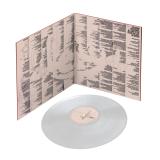
Packaging: 1 X Black 140 grs vinyl, gatefold sleeve reversed board, black dust inner sleeve, marketing sticker, marketing sticker
- Alewya's acclaimed debut album Zero - digitally released June 2026, establishing her as one of the UK's most distinctive voices in alternative music
- Ethiopian-Egyptian heritage meets London's underground, blending electronic, R&B, percussive and experimental influences into a distinctive sound and visual world.
- A deeply artist-led record, developed over three years and built around themes of identity, instinct, freedom and self-discovery.
- Physical release November 27th :
Disco Collected celebrates the dance music which originally developed from R&B, soul, and funk from the late 60s and 70s and turned into a mighty subculture in discotheques, with Studio 54, Manhattan, New York as one of the most famous and extravagant discos all over the world. Disco used a steady four to the floor beat, string sections, horns which created a perfect setting for DJs who mixed their special 12 inches to an eager dance crowd.
Movies like Saturday Night Fever and Thank God It’s Friday contributed to disco’s mainstream popularity. Compiled on Disco Collected are some of the best, well-known and great disco hits by Rose Royce, Chic, Kool & The Gang, The Trammps, Thelma Houston, KC & The Sunshine Band and 16 more guaranteed floor fillers.
The 2LP Disco Collected is available as a limited edition on disco ball silver vinyl and includes an insert.
Vintage Pleasure Boutique returns to the classic Hotsound Records catalogue with Primero’s “Oh Que Calor”, another unmistakable production from Michiel van der Kuy.
This vinyl edition brings together three newly remastered original versions: Extended, Radio and Instrumental, preserving the sound and atmosphere of the original release, alongside fresh remixes from A.P. Mono, Spacehawk and Disco Computer.
All three remixers share a fascination with Van der Kuy’s signature sound. Their interpretations may take different routes, but the original DNA remains intact: pulsing synths, Linn Drum, cosmic melodies and that unmistakable late-’80s vocal spacesynth energy.
And “Oh Que Calor” still has the power to transport you somewhere else entirely: to a seaside resort on some Spanish coast, sometime in the late 1980s – hot nights, neon lights, open-air dancefloors and a whole summer soundtrack built from Italo Disco, spacesynth and electro. Somewhere between the beach and the club, Primero feels completely at home.
For fans of Laserdance, Koto, Cyber People, Proxyon and Sisley Ferre, this is both a return to the original and a new chapter.
Three original versions. Three new remixes. One unmistakable Hotsound DNA.
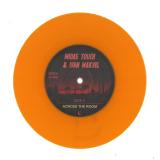
“Across The Room” brings together the elegance of contemporary R&B and the infectious groove of Nu-Funk. With music composed by Midas Touch, arranged by Ivan Makvel, and led by Ivan’s smooth vocal performance, the track captures the chemistry of an instant connection across the room. Warm synth textures, tight rhythmic movement, and a sensual late-night atmosphere make it a refined yet danceable Modern Funk/R&B crossover.
“Stay With Me” captures the romantic side of Modern Funk and Nu-Disco, blending smooth talkbox vocals with a polished late-night groove. Composed by Midas Touch, with lyrics written and performed by Ivan Makvel on talkbox, the track carries a warm, nostalgic, and cinematic feel, perfect for night-drive moments. Emotional but still groove-driven, it connects classic synth-funk sensibility with contemporary R&B and Nu-Disco elegance.
“Across The Room” brings together the elegance of contemporary R&B and the infectious groove of Nu-Funk. With music composed by Midas Touch, arranged by Ivan Makvel, and led by Ivan’s smooth vocal performance, the track captures the chemistry of an instant connection across the room. Warm synth textures, tight rhythmic movement, and a sensual late-night atmosphere make it a refined yet danceable Modern Funk/R&B crossover.
“Stay With Me” captures the romantic side of Modern Funk and Nu-Disco, blending smooth talkbox vocals with a polished late-night groove. Composed by Midas Touch, with lyrics written and performed by Ivan Makvel on talkbox, the track carries a warm, nostalgic, and cinematic feel, perfect for night-drive moments. Emotional but still groove-driven, it connects classic synth-funk sensibility with contemporary R&B and Nu-Disco elegance.
Bobby Rush (born Emmett Ellis Jr. in Homer, Louisiana on November 10th, 1933) is an American blues musician, composer, record producer, and singer. His style incorporates elements of blues, rap, funk, as well as a comic sense about blues tropes.
Rush has won twelve Blues Music Awards and in 2017, at the age of 83, he won his first Grammy Award for the album Porcupine Meat. He is inducted into the Blues Hall of Fame, Mississippi Hall of Fame, and Rhythm & Blues Music Hall of Fame.
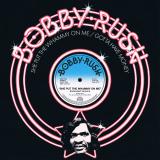
Earth Libraries is proud to share a glance back in Bobby Rush's incredible career with a track that shows off his funky side to the utmost degree. "She Put The Whammy On Me b/w Gotta Have Money", originally recorded in the 80s to be marketed towards DJs, are funky, disco inspired tracks you can't help but dance to.
Ontario-based hip-hop editors, builders and sculptors Suckaside are not afraid of taking on any challenge big or small and have worked across timeless house, r&b, hip-hop and disco joints. This time though, they take on a hip-hop staple and flip it into a Latin hearted with a shuffling samba groove, organic percussion and natty piano melodies. The edit is first up and has a female vocal line oozing soul and attitude and then on the flip one of the East Coast's finest mic men appears with one of his most well-known verses layered into the same groove. Perfect for late summer fun.
New release from Stockholm-based producer Anders Enge (BÖRFT rec, Blank Forms), once again based on tracks pulled from his live set: L’Angle du Hasard and Tempest Chords. Two solid and moody pieces with a healthy dose of euphoria stuck in there somewhere. They are complemented by a slightly more experimental and housey approach with Rêve Familier and Winny & Wanda. All things considered an interesting ride! Handstamped discobag with download code. Edition of 100. Mastered by Jesper Dahlbäck.
In the seclusion of a house in the Bavarian Forest, something unfolded that felt less like a conventional album production and more like an internal process of condensation. This house wasn’t a studio - it was a retreat. Its 1960s-inspired interiors, creaking wooden stairs, and crackling fireplace shaped the sound of Carl Gari as much as the instruments themselves. Though the house no longer exists, its atmosphere remains present in the recordings.
The music of Carl Gari - Jonas Yamer, Till Funke, and Jonas Friedlich - resists easy categorization, a trait that continues on this monumental new album. From the friction between electronic music and guitar textures, the trio forges a distinctive, idiosyncratic sound. Distorted electric guitars and pulsating basslines intertwine with analog drum machines, tape delays, and intricate effect chains, creating music that is raw, organic, and psychedelic. A new element on the album is the trio’s first use of vocals: Jonas Yamer, usually on bass, raises his voice in a punk-tinged, invented language that hints rather than narrates, unsettling more than it explains.
The guest artists do not merely decorate the sound - they alter its very structure at critical points. Polygonia contributes layered vocals that mesh seamlessly with the album’s technoid architecture. Will Brooks of Dälek delivers a dark rap feature on ‘Poison Shyness (Anti-Social)’, his words carving the sonic space with precision. Coby Sey adds introspective vocals that hover between experimentation and restraint on ‘Inner Link’. New York rap pioneer Sensational introduces a deliberately rough, individual counterpoint on ‘Disco Lights’, while the German percussionist Simon Popp drives the album forward with an uncompromising drum performance that insists rather than accompanies on ‘Zeitesser’.
The cover photographs, taken by Jonas Yamer, project images of corridors onto paintings located in the now demolished house where the album was recorded. Visually, this reflects a key motif of the album: spaces exist only as overlays and echoes - not mystical ghosts, but traces of a place that has physically vanished.
Recorded between 2016-2024 in Neunburg vorm Wald and Munich. With kind support by Kulturreferat der Landeshauptstadt München.
Mixed by Johannes Wagner aka J.Manuel at Apollo Studio, Berlin (A1, D1 w/ Fadi Mohem). Mastered & cut by Stefan Betke at Scape Mastering.
Photography by Jonas Yamer. Packaging design by Sepehr Mokhtarzadeh.
The next WOLF Music EP is here, and once again it comes courtesy of a new addition to the label roster. New York-based DJ and producer DJ Alone Again is a natural fit for what we do at WOLF, delivering a sound that hits that sweet spot where deep meets soulful, with the raw, understated energy of the authentic New York underground running through every track.
With a growing catalogue of original productions and edits, DJ Alone Again has released music through labels including YORE Records, House Salad Music, Dobro, Fantin Zoo Records, and Dealt With Records. His musical roots extend beyond house, too. Earlier work with the band Vain Pursuit, alongside a wealth of SoundCloud mixes and underground edits, reveals an artist with a deep appreciation for melody, songwriting and the emotional side of dance music.
Opening the EP is ‘Freedom of House’, a sublime take on the classic NYC-meets-Chicago deep house sound. Warm, soulful and hypnotic chords sit at the heart of the track, surrounded by intricate, skippy percussion and a deep, driving bassline. Carefully placed female vocal snippets drift in and out of the groove, while a spoken-word ode to the freedom and self-expression that house music offers provides the track with its emotional centre. It’s a celebration of movement, individuality and that unspoken connection forged on the dancefloor.
On the A2, ‘State of Flux’ keeps those warm, evocative chords front and centre, building an infectious groove around an instantly memorable melody courtesy of the vibes. Subtle synth strings add depth and atmosphere, bringing a touch of late-night melancholy to the arrangement, while the rhythm rolls steadily underneath. Everything is expertly layered without ever feeling crowded, giving the chords, melody and percussion room to breathe whilst pulling the listener deeper into the track.
‘Horizontal Patterns’ takes the winning formula of ‘State of Flux’, adding a beautifully understated vocal hook that sums this track up perfectly: deep in the groove.
Closing out the EP is ‘In Your Orbit’, a serene, dream house number with a deeply hypnotic edge. Ethereal flute lines drift through the arrangement, weaving around vocal phrases that seem to lift the consciousness somewhere beyond the dancefloor. There’s a sense of weightlessness and escape in the arrangement, but the dance floor pulse courtesy of the warm chord stabs never lets you float too far away. Dreamy yet deeply rooted, it’s a meeting point between introspection and movement; music to lose yourself in.
If this EP had landed on Guidance 30 years ago, it would probably be changing hands for a small fortune on Discogs by now.
'Life As A Duck' marks the return of Fergus Sweetland's imprint Pressure Systems and the label's first vinyl release. The title originates from a joke between two friends - friends that are ducks. These ducks found one another whilst discovering themselves, trying to navigate a world built for humans. Being a duck is another way of saying neurodivergent; existing adjacent to everything whilst trying to make sense of a strange planet, determined to remain as true to themselves at the same time as trying to be accepted in society. The tracks were made in direct response to a challenge presented to Fergus from a close friend: strip it back. The test was to apply brain-licking sound design to as few elements as possible and work them into functional club tracks. 'Tickle My Tism' meets the challenge. Fergus' signature low end captures the hips as the tension builds, expanding into an unexpected soundscape with precise smoothness. 'Trouble In The Bubble' is a dark yet dubby rolling club track full of texture and soundscapes. Nørbak's remix of 'Trouble In The Bubble' strips things down further with the Portuguese Garage (PTG) version, providing a more club-focused slant to the tune. 'Mind Easer' closes out the EP. The concluding track was written to ease the mind of a fellow duck when their feathers were ruffled by life. Its soothing focus allows one to melt into the sound and calm their mind. It tells you that everything is going to be okay. Expect the unexpected as Fergus' distinct sound design carries you through a four-track journey that emphasises that less is more - from a duck just trying to do his best.
A well needed vinyl re-issue of these sought after Break 3000 Electroclash classics from the period 1999-2003.
Originally released on Meuse Muzique in Maastricht, The Netherlands.
"Plastique People feat. Zusi" became a club hit again these past few years and saw the original vinyl prices soar on Discogs. "Last Emotion" was previously unreleased and brought back to live again thanks to the great Argentinian label "Calypso's Dream" who did the fine "The Rise Of Poseidon I" release three years ago that also included the fierce banger "Sacrifice", which became a hit back in the days when it was first featured on the massive DJ Kicks compilation by Tiga in 2003. The re-issue by "Calypso's Dream" sold out in a few weeks and was never re-pressed. The vocoder anthem "Emolotion" saw a vinyl only comeback on the cool Italian label "Mondo Phase" from Milan together with "Plastique People" in 2023, these limited copies were gone in days as well.
As a lot of people missed out on these Electroclash anthems by Break 3000 in the first vinyl re-issues we thought now is the right time to give them another run and make them available again. Enjoy!
All tracks were re-mastered by Salz Mastering in Cologne. Music & Art by Break 3000.
DJ Support: Marco Carola, Funk D'Void, Fish Go Deep, Quentin Harris, Carl Craig, Horse Meat Disco, moodymanc and many more
Me Me Me is back after 2 years on ice, with a new focus and new priorities, built around the regional music community being driven by Man Power and friends in North East England.
Written, recorded, performed and pressed in the North East, Newcastle live artist Mac Seldom's Twenty Twenty-Three EP see's the artist find his stride after early outings on Skream's "Of Unsound Mind" label and Scuba's "Hotflush Recordings" and leans into a more house-not-house rhythmic palette to further cement his status as being one of the most exciting and adept sound designers to recently emerge in club music.
The first release in the B.I.T. Productions 30th Anniversary 12″ Collection, BIT30-1 M-ULATE “M-Pathic E.P. 2025”. Originally released as a very limited white label 12″ in 1992 as a 3 Track E.P.,this 6 TRACK E.P. features: “M-Pathy (All Come Together)” K69 Dream Frequency Remix - uplifting piano house M-ULATE Anniversary Remake - breakbeat piano/rave Original 1992 Mix“ - Old Skool piano/rave A Need For Love” SARASOTA Anniversary Remake - uplifting piano house Stu Chapman Remix - breakbeat piano Original 1992 Mix - Old Skool hardcore Gold Coloured Vinyl, with a rounded anti-static inner sleeve in a black discobag sleeve.
Feelin’ Love returns to Soulfuric Deep with a fresh remix package built around one of house music’s most recognisable vocal anthems, bringing new energy to a timeless dancefloor favourite.
Originally released by Soulsearcher, the track has remained a staple across house and disco sets for decades, celebrated for its uplifting vocal, infectious groove and enduring crossover appeal.
This new edition pairs the original Soulsearcher Club Mix with a selection of contemporary reinterpretations, including brand-new remixes from RUZE & Chesster and Dr Packer, alongside the Ian Carey Main Mix, offering a versatile package for both modern and classic house DJs.
Blending soulful vocals, groove-led rhythms and contemporary production touches, the release bridges generations of house music while retaining the feel-good energy that made the original such a lasting success.
Back on fresh 12" vinyl, Feelin’ Love continues to resonate with both long-time collectors and a new wave of DJs, making it a strong addition to any house-focused record selection.
A highly recognisable and DJ-friendly release for stores supporting house, deep house and soulful dancefloor sounds.
Repress! Back by popular demand–VSR 001 is designed to take you to the outer reaches of where you need to go. Wiersma has created a world where with your eyes closed and head down, the dance-floor can transport you to the outer reaches of space and back again for another beautiful night with all your favorite people.
Vermilion Sun Records was started as a passion project in 2025 with a belief in the magic of physical media juxtaposed against the incursion of AI. The original release featured just 100 copies and utilized US-only distribution; it was sold out in less than 5 months. After being brought across the pond from Boston to Brussels by local DJ & tastemaker Rasaaq, it was subsequently shared, quickly gaining popularity on Discogs. This repress is a testament to Vermilion Sun’s core belief; that is meant to be shared and enjoyed by everyone, and there is magic in that ritual.
Wiersma is a cherished member of the electronic music scene in Boston/Cambridge, MA. A DJ, partygoer, and prolific producer, he has played many of the city’s favorite nights sharing bills with other local talent and setting the stage for international acts like Bradley Zero, Garrett David, and Cinthie. Tapping all of these channels brings forth a creativity where memories from nights in Boston and other global travel transform his unique productions. His release VSR 001 showcases this style, exploring the darker and proggier sides of the house universe while making sure to stay tethered to a reality with firm roots on the dancefloor. A1 begins with Once Around Vega where a cinematic opening draws you into groovy and spacey loops demanding you to move. Syntactic Roles churns more deeply, incorporating layered dystopian vocals, rolling basslines and light acidity that is sure to help you close your eyes and put your head down for a dance. The B side keeps the space station grooving with Transmission from L3, and closes out with Rules of Teleportation incorporating more vocals over chugging electro infused grooves.
The breakthrough hit that cemented THE SOUNDLOVERS
as one of the leading international dance acts of the ’90s.
A timeless anthem about overcoming loneliness,
embracing emotional growth, and finding the strength to
move forward. Beneath its uplifting dance groove lies a
message of hope, resilience, and self-discovery.
DJ Koze's 2013 album opus Amygdala has continued to bewitch all who encounter it since its release. Tipped as his own personal Sgt. Pepper, the sublime long-player revealed a fully-realised and personal body of work, complete with a classic songwriting at its core, House in its heart, and veins coursing with psychedelic color. La Duquesa' was the album's dreamy single standout, a journey into deep, tropical ecstasy. XTC' begins in the same spirit, and captures the all the blissful allusions of its name, but its initial gentility belies the deep intensity to come. Floating pads glow with celestial ambience as a kick drum is gradually coaxed into solid form, and the introduction of spoken text begins the second act. Many people are experimenting with the drug Ecstasy,' it says, ...is the drug like the lie and meditation the truth Or am I missing something that could really help me". XTC' then transforms: sweetly imploring tones become demanding, gentle gradients between chords turn hard-edged, and sharp hi-hats cut through the haze. Complete with Koze's signature percussive quirks, it drives towards the track's final pay off: an undeniable, all-consuming, irresistible high. Knee On Belly' recalls Koze at his most tongue-in-cheek and overt, it is bright, bold and literally brassy, using cut-up horns of all shapes and sizes to patchwork together his own unique arrangement. With the highs and mid ranges accounted for, Koze adds in a swollen, thrumming bass line to mix to bring this floor-filler to life. Knee on Belly' recalls a raw, filtered and funky approach to groove, with a nod to disco house and the art of artful sampling, as it orbits between its own neon highs and simmering lows.
Ilija Rudman is marking the 30th release on our musical town of Sakskøbing. The Croatian artist has told this particular story how he wanted with 4 tracks crucially being together on this disc so it would be a complete tale of “Egg of the Sun”. From heavenly pads & guitar riffs he has given birth to this particular disc which is ready to enter into the vast world of music. The artist has been putting out discs since the early 2000’s and has developed a vast discography behind his name that only deserves respect and admiration whether he is working solo or in collaborations with other musical souls. The label is welcoming a true visionary to its roster and it can only yield the feelings of excitement, admiration and proudness. The egg is so close to the sun like Icarus used to be in his time however instead of burning it only shines with brilliance.
SHORT INFOS
Because Music celebrates the 50th Anniversary of Cerrone's debut album "Love In C Minor (Cerrone I)" .
A record which is one of the mots important of its time. It brought French Disco to the World and established Cerrone as the French King of Disco.
- Pressed in exclusive 2026 Apple Green Crystal Clear vinyl
- Original 1976 artwork - Digitally remastered from original tapes.
BIOG
Cerrone I
Love in C Minor (1976)
The story behind Cerrone's first album could be summarised in the libertarian atmosphere and the creative energy of the 70s, inherited from the 60s revolutions, spiritual, aesthetic or sexual. Looking back now, this record is one of the most important of its time. It helped creating the sound of an era and brought French disco to the world. It is also, and this is fundamental to understand its success, the result of a man's vision: Marc Cerrone, a free spirit inhabited by music, who ended up with a major work of art. With this album, Cerrone accumulated the main elements that make a record timeless, even bigger than its creator: the pure originality, the madness of a vision without compromise, a sense of the market and a great dose of luck too. To some extent, this is the perfect record to start a career, even though Cerrone's one already existed in an implicit way. He actually began in a rather popular band, Kongas, signed by Barclay. Between 1972 and 1974, the band was famous and made it abroad, particularly in Japan, where people loved its sound. Despite this success, probably fed up with the music and not ready to follow the orders of a label that wanted the band to sound more pop, Cerrone disbanded Kongas. He had the sound of his instrument in mind and mostly its central element: the bass drum. The idea of this first solo album came to him after a detour via selling records. Wishing to forget about the studios, he took the head of a small chain of stores, selling records imported from the States. That's when he discovered a daring new sound coming from New York: disco music. This energy inspired him to record again. He then remembered the crazy reaction of the audience when, during the Kongas' concerts, he used to hit his bass drum hard. Cerrone felt like going back into the studio but to make something different. He decided to record a sixteen minutes long track, driven by its beat, that would fit on its own on one side of a LP (during these vinyl days, musicians used to think in terms of sides…), with girls' voices simulating sex. This concept of musical and physical orgasm was recorded at Trident Studios in London (where pop stars used to record at the time… ) with Don Ray, of Kongas, man in the shadows and brilliant arranger who'd follow Cerrone during his whole career. Obviously, like always in pop music (it happened to the Beatles), record companies started by turning this weird track down, convinced that radios would never play sixteen minutes of beats and moaning. Cerrone, a born fighter, decided to trust his instinct (a mix of ego and business sense) and chose to believe that if the radios wouldn't play the track, people would dance to it in the clubs. He released the record himself, with a sexy cover a bit provocative where he wore a black bathrobe, a young short-haired girl leaning on him. Being played here and there, thanks to Cerrone's own network, the record started to work a bit in France. But luckily, things really happened in the States. Due to a mistake, a box of "Love In C Minor" albums were sent to the States via Cerrone's record shop instead of some unsold American LPs. Once in New York, the box was opened and the record with its intriguing cover was instantly loved and passed through the hands of radio and club DJs. All of a sudden, and unknown to its creator, the track that was turned down by every French label, became a hit on the New York disco scene. Casablanca, the US disco label, released a cover recorded by an ad hoc band because nobody knew Cerrone of how to find him. Once he discovered what was happening in the States, Cerrone flew to New York. He realised he had a hit, one of the biggest then, that opened the doors to every record company and especially Atlantic. He was welcome by Ahmet Ertegun, one of the main visionaries of the American music who, among other artists, signed Aretha Franklin and John Coltrane. It's believed that Ertegun understood that the French young musician, like some Atlantic artists, was about to define the sound of his time and that his work would live long after its birth date. "Love In C Minor" was the first step, adamant and successful.
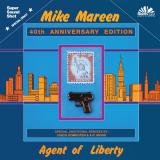
1986 was a very good year for Mike Mareen. It was the moment when something changed in his music. After years of searching for the right sound, Mike decided to change his production team and it turned out to be exactly the right decision. The first major result was “Love Spy”, with Lutz Rahn playing a crucial role in shaping its sound. The record simply exploded. Even without the kind of massive promotion normally associated with an international hit, “Love Spy” became one of the defining records of that peculiar German intersection between synth-pop, electro, Hi-NRG and Italo Disco. But Mike and Lutz were only getting started. Soon afterwards they wrote and recorded “Agent Of Liberty”. And once again, everything worked. The single travelled far beyond Germany, appearing in places as distant as Mexico, Australia, Sweden, Denmark, Norway, Venezuela and South Africa. It was another demonstration of how sophisticated Euro Disco could be when it was treated as serious electronic music rather than disposable dance-pop. The sound was simply dope. Sharp digital synthesizers, metallic FM textures, punchy electronic drums, dramatic arrangement changes and the kind of bright, futuristic timbres that made the Yamaha DX7 era so instantly recognizable. But the biggest change… was Mike himself. This was no longer the romantic lover of “Dancing In The Dark”. On “Agent Of Liberty” he sounds tougher, sharper and more confrontational. His half-spoken, half-rapped delivery cuts through the production with almost streetwise confidence, while huge uplifting backing vocals and highly melodic synth lines keep pulling the track back towards the dancefloor. And beneath the attitude there was something much more interesting going on. “Agent Of Liberty” announced a new chapter in Mike Mareen’s music, a direction that would later be developed much further on the “Let’s Start Now” album. Mike wanted to belong to the intelligent side of the electronic scene. And, just as importantly, he wanted to help shape where that scene was going next. “Agent Of Liberty” is probably one of the clearest examples of that ambition. It has all the ingredients of a huge club record, but there is tension in it, drama, attitude and a sense that something bigger is happening behind the beat. Four decades later, it still sounds completely distinctive. Not merely like a record made in 1986, but like a record that captures what was exciting about 1986 in the first place.
For its 40th anniversary, Vintage Pleasure Boutique brings “Agent Of Liberty” back to vinyl in newly remastered form. The release will be available on classic black vinyl and in a striking bright orange edition. And because this is not meant to be just another archival reissue, we have added two brand-new interpretations. Disco Computer takes the track into more adventurous territory. His remix is the more unconventional of the two, approaching the original from a slightly more modern and experimental angle while keeping its unmistakable melodic identity. A.P. Mono takes almost the opposite approach. Rather than trying to reinvent “Agent Of Liberty”, his version works more like a contemporary DJ edit. The original character remains intact, but the structure has been reshaped for the modern dancefloor, with stronger build-ups, clearer mixing points, carefully controlled changes in dynamics and moments designed to let the tension rise before the track hits again. The idea was simply to give DJs two new ways of playing it.
Forty years after its first release, “Agent Of Liberty” remains one of the most characteristic records not only of Mike Mareen’s career, but of the entire German electronic dance scene of the 1980s. Powerful, melodic, intelligent and wonderfully excessive. The Agent is back.
This year marks the 40th anniversary of one of the true cult classics of the Italo Disco universe: Mike Mareen’s “Love Spy.” Released in 1986, the track sounded strikingly different from much of the dance music around it: futuristic, dramatic, playful and instantly recognisable. It quickly found its way into DJ cases across Europe and became one of the records that would define Mike Mareen’s electronic sound.
But the story actually began under a different name. An early incarnation of the song was called “Batman,” with lyrics inspired by the adventures of the famous comic-book hero and the villains surrounding him. A small number of promotional copies circulated before copyright concerns meant that the concept had to be abandoned. The title and lyrics were rewritten and “Love Spy” was born. The early “Batman” version has since become one of the most fascinating curiosities in Mike Mareen’s catalogue.
Four decades later, we felt an anniversary like this deserved something special.
LOVE SPY 40th Anniversary will therefore arrive in two parts, bringing together some of our favourite producers from today’s Italo, synth and electronic scene.
Part One features brand-new remixes by Luca Dell’Orso, Flemming Dalum, Also Playable Mono and Disco Computer. And enthusiasm was never going to be a problem here. “Love Spy” is not simply an ’80s classic, it remains a genuine DJ favourite, loved by old-school collectors and a new generation of Italo-wave selectors alike.
Alongside four killer new interpretations, we are bringing back the original Badman Mix, plus the highly sought-after “MAKE YOUR OWN MIX” material – rare set of individual elements created for DJs to deconstruct, combine and rebuild “Love Spy” themselves. These samples have become particularly desirable among collectors and make the perfect addition to the first chapter of our anniversary edition.
Four new remixes. Two pieces of history. Forty years of LOVE SPY.
And we are only halfway there.
LOVE SPY 40th Anniversary Part Two, featuring another line-up of major names from our scene arrives in November.
Soak’s fourth album, decembers, was born in literal silence. Contending with an autoimmune disease that prevented them from singing, it was the absence of sound that birthed the Derry artist’s most sonically and lyrically remarkable album to date.
The space that expanded from that enforced quiet, and the life lived within it - transitionary, liminal, escaping in search of connection - cracked something open. What floods in, is an album of stunning tenderness, honesty, and astonishing storytelling from an artist discovering the revelations at the end of the line.
In decembers, we travel on the road through America, walk the frost-glistened paths of Dublin at night, search for a meteor in Portugal, and return home to Derry. Everywhere, here is an artist evolving, exploring, releasing themselves, coming undone, and eventually, becoming.
At the core of the album is this lyrical statement: “Getting lost is getting free.” How brave it is to face the unknown. Because when you really go there, that’s where discovery lies. That discovery in decembers is a creative one, but it’s also about connection to people and place, to forgiveness, and ultimately to prioritising honesty. “A consistent theme is struggling for direction, battling the urge to run,” Soak says, “and instead, planting my feet.”
Soak’s fourth album, decembers, was born in literal silence. Contending with an autoimmune disease that prevented them from singing, it was the absence of sound that birthed the Derry artist’s most sonically and lyrically remarkable album to date.
The space that expanded from that enforced quiet, and the life lived within it - transitionary, liminal, escaping in search of connection - cracked something open. What floods in, is an album of stunning tenderness, honesty, and astonishing storytelling from an artist discovering the revelations at the end of the line.
In decembers, we travel on the road through America, walk the frost-glistened paths of Dublin at night, search for a meteor in Portugal, and return home to Derry. Everywhere, here is an artist evolving, exploring, releasing themselves, coming undone, and eventually, becoming.
At the core of the album is this lyrical statement: “Getting lost is getting free.” How brave it is to face the unknown. Because when you really go there, that’s where discovery lies. That discovery in decembers is a creative one, but it’s also about connection to people and place, to forgiveness, and ultimately to prioritising honesty. “A consistent theme is struggling for direction, battling the urge to run,” Soak says, “and instead, planting my feet.”
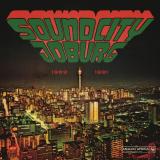
Analog Africa's latest essential compilation began with a ruined needle. Samy Ben Redjeb, who was newly back from a 2002 digging trip, dropped a stylus into a groove that censors at the SABC had gouged with a blade. The record had been marked "not suitable," and the story behind it runs through the whole compilation. The 22 tracks pull American soul, funk and disco toward jazz, reggae and local rhythm until the result sounds utterly Jo-burg. 'How Long?' and 'Take It' are the early standouts, though the Beat Set two-parter and Dudu And The Big Time Boys hold their own. The 16-page booklet fills in the context nicely on this well assembled deep dive.
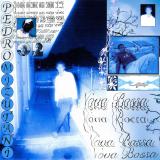
NOVA BOSSA: aquele abraço aos ratos vivos stands as a musical capsule centered around the life of a young adult. Moving between MPB, indie pop and alternative rock, its eclecticism perfectly reflects a thirst for discovery and new experiences, while highlighting a sincere search for identity.
NOVA BOSSA acts as a mirror to the contradictions of contemporary youth
between the desire for independence and the fear of abandonment
between rejecting norms and searching for meaning
between solitude and a deep craving for connection
between social disillusionment and creative resilience
The lyrics blend urban poetry, raw introspection and social critique, all carried by a musicality that oscillates between melancholy and energy. Pedro embodies a generation torn between the urge to burn through life and the fear of burning out, desperately trying to find his place in a world he often sees as absurd.
crédits
Last summer, Psychederek released his four-part cosmic journey Thinkin' 'Bout U as the debut release on his label, Via Jupiter.
This summer, he's brought together a gang of local mates to deliver a fresh and unexpected set of remixes of the underground psychedelic hit.
Synkro, Moodymanc, ATM Musick and Bobby Thorpe serve up a diverse selection of remixes, bringing Psychederek's galactic world into the realms of drum and bass, deep disco, baggy krautrock swagness and pure-up voodoo energy.
Cold, Bold & Together (CBT) CBT was founded in Bellingham, Washington in 1971 by percussionist Tony Gable and musicians Solomon Harris, Keith Hooks and twin brothers TC & Jamar Jenkins. It soon became evident that Bellingham was not a particularly welcoming environment for R&B music, so they moved to Seattle to try their luck and plumb the rich supply of venues, which they successfully did until disbanding in 1978. They spent their early Seattle years playing a combination of covers and originals in clubs, later becoming the "go to" opening act for various nationally known artists, such as Ohio Players, Kool and the Gang and Earth, Wind & Fire. While they were paying their club circuit and opening act dues, they squeezed in recording sessions whenever they could and released their own material, which was well-received and got strong regional airplay. However, because of the feudal nature of the music business at the time, they just couldn't break out, and like a lot of Northwest bands with great potential, they inevitably broke up and went their separate ways. Upon disbanding, they left behind a collection of original recordings at Seattle's legendary Kaye-Smith studios.
Unfortunately for CBT, the studio passed through several owners and at some unknown point in time, one of them did the unforgivable and destroyed the storied studio inventory of two-inch tapes and quarter-inch masters. Unknown to the band, a copy of their masters was smuggled out by their producer who added them to his legacy collection of cloned quarter-inch masters. After several years and many moves, he became concerned about the tendency for magnetic tape to deteriorate over time.
He sent the tapes to a Seattle lab to be restored and digitized, with the hope that perhaps, some day, they might be made available for the listening pleasure of R&B fans. The hoped-for day has finally arrived. Russell Paine and Super Disco Edits has pressed two of the Kaye-Smith CBT tracks: "Go For It", a jazz-influenced instrumental, featuring Kenny G, and "Unity", sung by the group en masse with Tony Gable singing lead. The musicians on these tracks are: Tony Gable, leader, vocals and percussion Harry Alexander, drums Kenny Gorelick (now world-renowned "Kenny G"), sax, flute and horn arrangements Chris Ishi, trumpet Michael Young, Trombone Jamar Jenkins guitar, vocals TC Jenkins bass, vocals 1 Philip Woo, keyboards Footnotes: CBT gave legendary saxophonist Kenny G his start in the music business. Kenny was still in high school when he was recruited to play sax and write horn arrangements. Kenny co-wrote, arranged and played sax and flute on the instrumental "Go For It." He rips a smoking tenor sax solo in the middle, which showcases his already masterful technique and solidifies his R&B bona fides. He went on to have a spectacular career recording for Clive Davis and Arista Records. Before his untimely passing in 2016, Tony Gable went on to found contemporary Jazz group, "Tony Gable and 206" (206 being Seattle's then only area code). With songwriting, performance and production help from Kenny G.
French producer Yse Saint Laur'ant is exactly the sort of artist you want to hear from as the sun begins to shine more often. He's a master of escapist, beauty, classy grooves that marry disco and Balearic into pure magic. 'Space Ride' does that on a bubbly groove with a cosmic edge and 'Saint Tropez' brings loose-limbed funk and boho percussion to a Provencal sound. 'Monaco' is bathed in sunlight and made all the more classy with some gorgeous stings and mellifluous chord work then 'Esplanade' shuts down with a dubby, flute-led sound with a whimsical charm. Twenty First release on the much sought after Vinyl Only label.
A second collection of cuts from New York electronic music fusionists Aries Project, a collaboration between producers Collin Suttles and moe.BPM focused on fusing 21st century deep house grooves with elements inspired by hip-hop, jazz, funk and soul. Their trademark sound, as showcased across four guest and collaborator-heavy cuts, is certainly one that blurs boundaries. For proof, check opener 'Celebrate' (featuring Jermaine Holmes), a hybrid nu-disco-meets-synth-heavy house affair, and 'Nobody', a colourful, tactile and synth-heavy broken house number rich in vibrant riffs and sparkling electronics. Elsewhere, Stefan Ringer lends a hand on the smooth deep house/garage-house warmth of 'Down', while vocalist Larie E Edwards does a superb turn on the organic, sub-heavy and Rhodes-rich loveliness of 'Freedom'.
10 years since his first edits outing on RNT, label co-founder JKriv digs into his deep well of reworks for a four-tracker of cheeky dancefloor madness. Coming in hot on the A side, I Feel Amor is modern twist on the disco classic anthem, a peak time weapon of epic proportions with hard-hitting beats and churning synths, and the inimitable sing-along vocal (pero en Español). Love Dub is a stripped down deep house affair, a solid driving groove with thunderous bass, synth accents and acapella flourishes. On the B-side, Cuando Bailo is the edit you didn’t know you needed; a callback to a bygone era of one-hit wonder magic, flipped masterfully to be all-club and just a sprinkle of camp. And rounding off the record Dance Sexy takes an obscure purple-hued cover into hypnotic red-light territory, with funky synth stabs riding a pulsing and infectious bass line, in classic JKriv fashion.
Body Clinic enters the realm of Big Trouble Records with 4 no nonsense, hard hitting club tools.
“Connection Lost” EP tells a story, between the influences of the early 2000’s East London scene, and the classic elements of House with an ever-evolving modern yank. Deep rolling subs keep the body moving, while classic organ sounds weave through the soul. A true diggers paradise, with tracks that journey their way through all hours of the night.
Somewhere between extraterrestrial techno and intergalactic disco lies Oli Silva. A waveform of multi-dimensional energy filled with analog heart and electric soul.
His first outing finds him land his spaceship directly on Craig Richards' The Nothing Special, with the genre bending Unlikely Punctuality EP.
Die Rare Groove Collection: Ethiopian Rare Groove beleuchtet einen der faszinierendsten Schmelztiegel moderner Musikgeschichte. In den Clubs und Cabarets des vibrierenden Addis Abeba der 1960er und 1970er Jahre entstand ein einzigartiger Sound, der äthiopische Traditionen mit Soul, Funk, Jazz und Disco verschmolz. Diese Edition versammelt rare und prägende Aufnahmen einer Szene, die bis heute weltweit nachhallt. Künstler wie Mulatu Astatke, Mahmoud Ahmed oder Getatchew Mekurya stehen für eine Musik von hypnotischer Kraft, getragen von polyrhythmischen Grooves, markanten Bläserlinien und unverwechselbaren Melodien. Das Doppel-Vinyl ist mehr als eine Compilation: Es ist ein musikalisches Zeitdokument, das die kreative Energie einer urbanen Hochphase einfängt - rau, elegant und zeitlos zugleich.
Turbo was a part of Joe Robinson and Sylvia Robinson’s All-Platinum Records set up in New Jersey which operated from 1967 to 1979. At one stage the fiercely independent and proudly black owned label threatened to become another Motown or Philadelphia International. That never happened, but the Robinson’s dream of worldwide success came later when Sylvia discovered Rap, recorded Rappers Delight by The Sugarhill Gang and Sugar Hill records was born.
Music historian Steve Guarnori describes All Platinum as "probably the most unusual record company there ever was. Dysfunctional, but at the same time wonderful."
The All-Platinum chaos extended to Turbo. But despite anarchy - some superb albums went straight from manufacture to be deleted and sold as cut-outs - sublime music was created. This 10" 6-track release collects together some of the most hallowed Turbo releases which between them have become cherished by collectors.
Brother to Brother "The Bottle" captures the label at its most astute. Gil Scott-Heron and Brian Jackson’s original version was an album only track on Strata-East so Turbo seized the opportunity to quickly make a worthy cover version and rush release it a single which enjoyed success.
"Ton Of Dynamite" by Frankie "Love Man" Crocker was Turbo’s debut release in 1968 (it actually sounds a later recording). At the time Frankie was a DJ on WWRL radio station in New York and the release was essentially a reward for his previous support of All-Platinum releases. The record (a b-side) is actually made Willie & The Mighty Magnificent who went on to re-record it as
"Funky 8 Corners". It took until 1975 for "Ton Of Dynamite" to get recognition when it became an anthem as the UK Northern Soul scene adopted it as part of the movement away from old skool 1960’s Soul. Whatever its’ provenance, "Ton Of Dynamite" is now revered by the Rare Soul and Funk communities.
The Optimistics "Man" from 1971 is another b side single. The group specialised in smooth harmony Soul but "Man" is a funkier affair which won support from Rare Soul aficionados and will cost you £600 plus if you are lucky enough to locate a copy of the hard to find 45.
Willie & West "Attica Massacre", also from 1971, is an even more elusive single. It is a powerful protest against the killing of 29 prisoners, many black, following a riot at a prison - Attica Correctional Facility in New York. The deaths and a subsequently discredited cover up caused outrage. John Lennon was amongst the first musicans to make a recording about the bloodbath, but the most emotional protest is this Willie & West track. Only 300 copies were manufactured of one of the most powerful civil rights recordings ever made. The vocal sounds like anti-War Edwin Starr at his most bristlingly aggressive.
Perhaps the strangeness of All-Platinum is best illustrated by the later success of Lonnie Youngblood "Sweet Sweet Tootie" which is essentially the backing track of "Attica Massacre" plus exquisite sax playing by Lonnie. Despite it selling 100,000 plus copies the label did not see this as a reason to reissue "Attica Massacre". Strange. Or as Marvin asked "What’s Going On"?
The New Sounds "Don’t Take Your Love From Me" was only issued by Turbo as an album track. Despite good music on it the LP was poorly (it at all)/ promoted and flopped. The superb "Don’t Take Your Love From Me" is a long time Northern Soul / X-Over favourite.
Larry Saunders mesmerising "On The Real Side" made no impact when released on Turbo in 1974 but was nevertheless issued in the UK by London Records. The Northern Soul discerning dancers instantly latched on to its combination of uplifting lyrics, heartfelt vocal and clomping beat and since then its’ appeal has extended across the whole of the Soul community. Without doubt an all time classic.
So six treasures from a label that despite frequently advocating cash out of chaos frequently conjured up awesome music.
ANORAX is grateful to have the opportunity to present this very special Soul selection.
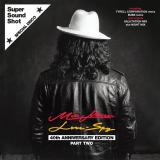
The first chapter of our 40th Anniversary celebration brought “Love Spy” back to vinyl and invited a new generation of producers to look at Mike Mareen’s 1986 classic from their own perspective.
Part 2 continues the story, but there is no reason to tell the same tale twice.
This time we reach once again into the original 1986 package and bring back the “Salutation Mix”, pairing it with two completely new remixes created by two remarkably colourful personalities from today’s European electronic underground.
And colourful is definitely the right word.
The first comes from Tyrell Corporation.
Behind that name stands Martijn Hoogendijk, better known to most electronic music heads as Alden Tyrell.
For almost three decades, Tyrell has been one of the most distinctive characters of the Dutch electronic scene. His musical world has moved freely between Italo Disco, electro, techno, acid, house and EBM, always with an obvious fascination for machines, analogue synthesis and the raw energy of early electronic dance music.
His relationship with Italo is certainly not a recent fashion. One of his earliest Alden Tyrell releases, “Love Explosion”, appeared on I-F’s Viewlexx label back in 1999, at a time when only a relatively small group of Dutch fanatics were already rediscovering and reinterpreting the forgotten European electronic sounds of the previous decade.
Since the early 2000s he has also been deeply connected with Rotterdam’s legendary Clone Records, not only as a producer and collaborator, but as one of its most important mastering engineers. His fingerprints can be found on an enormous number of Clone releases, including the label’s celebrated work restoring and reissuing the Drexciya catalogue. His studio tells much the same story. Synthesizers, drum machines and hardware collected over decades surround a producer whose fascination with electronic instruments started when he bought his first synthesizer in the 1980s.
For “Love Spy” he appears as Tyrell Corporation and delivers exactly what one might hope for from someone with that history: a remix that understands the original language of Italo and Hi-NRG, but speaks it with the experience of nearly three decades spent inside Dutch electro, techno and machine music.
The second new interpretation comes from France. Bubs, real name Maxime Bunel, followed a very different route.
His earlier productions grew from house, disco and French-touch influences, but over the last few years his attention has increasingly shifted toward Italo Disco, Hi-NRG and the rapidly expanding contemporary italowave scene.
In 2025 he made that commitment official by launching Filter Phaser, his own label dedicated specifically to the new generation of Italo Disco and Hi-NRG. And his “Love Spy” remix shows exactly why his name has been appearing more and more often in this scene. This one is pure dancefloor ammunition.
Bubs keeps the elements that make “Love Spy” instantly recognisable, but raises the temperature considerably. The energy is harder, the dynamics are bigger and the production has been pushed towards the sound of contemporary italowave without sacrificing the melody, drama and personality of Mike Mareen’s original. Old DNA, new blood.
The result is not an attempt to drag “Love Spy” away from 1986. Quite the opposite.
Both remixers clearly understand why the record still works forty years later. They simply approach that DNA from two different generations and two different corners of European electronic music, but with the same respect and adoration to Mike Mareen’s legacy.
The 40th Anniversary Edition Part 2 comes pressed on classic black vinyl and a special ruby-red vinyl edition.
It is also the final Vintage Pleasure Boutique release of 2026.
And somehow it feels like the right record to close the year.
DJ Support: Sam Don, Severino Panzetta (Horse Meat Disco), Chris Howler, Sean Johnston, Bill Brewster, For Mankind, Craig Thompson, Andy Taylor, Massimiliano Pagliara, Dean Dixon, Nathan Detroit and many more
Underground Institution Stompa Phunk Re-Launches Vinyl Label with Raw, Chi-House-Inspired Energy. After three decades of defining the UK’s underground club landscape, legendary Brighton party collective Stompa Phunk is officially moving from the dancefloor to the wax with the relaunch of Stompa Phunk Records Inc.
The Heritage: From The Warehouse: The releases will directly honour the roots of house music, a genre born in 1977 at Chicago’s legendary nightclub, The Warehouse. As that scene matured, a grittier, faster, and more experimental counterpart emerged. Defined by an uninhibited, bass-heavy style, it was a movement driven by local innovators who pushed drum machines and synthesisers to their breaking point... It wasn't just a genre; it was a collision between pure imagination and raw machines. A true "sound klash" transformed the local underground subculture into something global...
Release 1: You Had It (Edit) / Music Got (Dub): Capturing the exact spirit of rough, tape-spliced dubbed cuts. The 12-inch from SP resident Sound Klash pairs a vintage production ethos with old hardware pushed to its limits...
The Philosophy: This EP perfectly mirrors the exact philosophy that has fueled Stompa Phunk’s dancefloors since 1996: uncompromising electronic music rooted in heavy sample-delia, jackin' bodies, Acid energy, disco-dub mentality and second-hand technology. Jackinacidiscotech!
Hell Yeah welcomes back Tonarunur for an EP of future-facing Balearica straight out of his native Iceland. Someone Else EP is drawn from vast production archives and reveals two distinct sides to his sound, with artwork from Planet Luke.
Tonarunur last appeared on the label with a track for the Buena Onda compilation in 2021, and has also released his unique blend of electronic boogie and space disco on Citizen of Vice, Eskimo Recordings and Whiskey Disco. Whether laying down horizontal Sunday sounds or soundtracking the dance floor, he always brings a strong sense of personality.
Both A-side cuts feature Norway's bass player Arctander, starting with opener 'Someone Else' is a lithe mid-tempo groove with a playful, wriggling groove and sun-dappled 80s keys. The blissful 'Dawn' unfolds slowly through liquid rhythms, gently broken beats and cosmic melodies awash with good vibrations. On the flip, 'Lundur 1' drifts into the stars on shimmering pads and floating grooves and is romantic yet melancholic, before 'Lundur 2' closes with a more grounded rhythm and wispy melodies tracing patterns across a starry night sky.
Equal parts sunset escapism and after-hours introspection, Someone Else EP drifts effortlessly between the club and the cosmos.
On the occasion of the 40th anniversary of the release of Remek Depo, the very first electronic record from the former Yugoslavia, the group Beograd has decided to unveil eight previously unreleased tracks in the context originally intended. The band initially planned to title their first album as Mrak ( eng. Dark). Recorded with Du Du A and other collaborators, this album serves as a manifesto of resistance—not only in Belgrade and Yugoslavia but everywhere else.
The A-side opens with the track 1984, named after George Orwell’s seminal novel. This piece was recorded in a single night in the same year, featuring Zoran Zagorcic (Du Du A) and one of the first Yamaha DX7 synthesizers. It encapsulates the dark and tense atmosphere of Belgrade during a period marked by economic crisis, characterized by shortages of essential products like coffee and oil, as well as electricity restrictions. This oppressive environment also impacted personal relationships, leading to unconventional expressions of passion and desire, as exemplified by the subsequent track from 1985, Mracni Predjet Zelja (eng: That Obscure Object of Desire). However, the primary source of frustration was political, stemming from the abuse of nationalism and the incitement of inter-ethnic conflicts within the complex Yugoslav society. This sentiment is vividly illustrated in the songs Hare Krishna and Belgrade Beat, recorded just before the country’s collapse in 1991. Remarkably, despite their protest, these songs convey messages of strong optimism and hope. In “Belgrade Beat Dejan Kostic (Du Du A) raps and Dejan Stanisavljevic sings. ”Od Studija B do Amerike, Beograd širi svoje talase, mi nismo sami u nama je svet, dolazi veliki preokret” (eng. “From Studio B to the USA, Belgrade spreads its waves, we are not alone, the whole world is with us, a great change comes!”). It is no surprise that this song was frequently broadcast on student Radio Index during the student and anti-war protests in 1992.
The B-side features contemporary songs produced by Beograd, which reflect protests against the current societal conditions in post-war Belgrade. Crafted with musical clarity and irony, these tracks satirize figures of repression, hitting their mark with an almost childlike purity, reminiscent of Hans Christian Andersen’s fairy tale, “The Emperor’s New Clothes.” The collaboration between Dejan Stanisavljevic, the leader of the Beograd and the Du Du A group not only influenced his musical expression but also laid the groundwork for the group’s socially engaged music in their later career.
As we remember the two late leaders of the Du Du A group, Dejan Kostic and Zoran Zagorcic, alongside the recently departed member of the Beograd, Milan Bubalo, this gramophone record stands as an important testament to the contributions of previous generations of artists in the fight for a fairer society. We hope it will inspire the younger generation in their current struggles, especially at a time when such inspiration is needed more than ever.