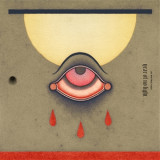
"Different Talking", das sechste und bisher beste Album der vierköpfigen New Yorker Indie-Rock-Band Frankie Cosmos, scheint über Zeit und Raum hinweg zu existieren, so wie wir alle es irgendwie tun. Es ist eine Sammlung von Fragmenten und Erinnerungen, erinnerten Orten und neu interpretierten Gefühlen, die sich zu einem leuchtenden, summenden Ganzen zusammenfügen: eine robuste, weltgewandte Indie-Rock-Platte über das Altern und den Lauf der Zeit, die es dennoch schafft, sich hochaktuell zu fühlen. Die Sängerin, Gitarristin und Songschreiberin von Frankie Cosmos, Greta Kline, gilt seit langem als eine der gewandtesten und notwendigsten Autorinnen zeitgenössischer Indie-Musik, doch auf "Different Talking" werden ihre Texte etwas weicher, und der schräge Zynismus, der die letzten Alben prägte, weicht nun einer Anerkennung der großartigen und notwendigen Fehlbarkeit des menschlichen Gehirns und Herzens. "Different Talking" als Rückkehr zur alten Form oder zumindest zur üppigen Direktheit früherer Frankie Cosmos-Platten zu bezeichnen, wäre unhöflich, aber auch völlig falsch: Wie "Different Talking" deutlich macht, kann man nie mehr zu der Bequemlichkeit und dem Mut seiner frühen Zwanziger zurückkehren, aber diese Person lebt irgendwie immer in einem, egal wie sehr man sich verändert. Bei Different Talking geht es darum, diese Person zu finden, sie zu ehren und von ihr zu lernen. "Ein großer Teil des Albums handelt davon, erwachsen zu werden und herauszufinden, wie man sich selbst erkennt - wie zum Beispiel: 'Was ist ein Weitermachen?'", sagt Kline. "Wie kommen wir weiter, wenn wir süchtig nach einem Kreislauf sind, der uns in unserer Vergangenheit verfolgt? Das Schreiben von Songs ist nur ein Weg, um das zu überwinden". Kline ist seit ihren späten Teenagerjahren ein fester Bestandteil des amerikanischen Indie-Undergrounds. Ihre zahlreichen Bandcamp-Veröffentlichungen und ihr Debüt bei dem Indie-Label Zentropy aus dem Jahr 2014 führten dazu, dass sie als "Poet laureate of New York City DIY" bezeichnet wurde. Ein solches Etikett ist eine Menge für junge Schultern, aber es ist schwer zu leugnen, dass sie einen einzigartigen Einfluss auf die zeitgenössische Popmusik hatte. Wenn die Vorstellung, dass eine junge Frau in ihrem Schlafzimmer einen Synthesizer in die Hand nimmt, ein paar Songs ins Internet stellt und schnell zum Superstar wird, heute gang und gäbe ist, dann liegt das daran, dass Kline und ihre Kolleginnen das (weibliche) DIY-Genie normalisiert und verherrlicht haben, lange bevor sie in den Marketingbüros der Major-Labels an die Pinnwände geheftet wurden. Seitdem hat sich viel verändert: Nachdem Frankie Cosmos in den letzten zehn Jahren eine Handvoll verschiedener Permutationen durchlaufen hat, besteht die Band heute aus vier Mitgliedern: Greta Kline, Alex Bailey, Katie Von Schleicher und Hugo Stanley. Kline ist die einzige Konstante, aber Stanley, Bailey und Von Schleicher sind wichtige Mitstreiter, und es wäre falsch, die Namen "Greta Kline" und "Frankie Cosmos" synonym zu verwenden. Kline ist nach wie vor die primäre Songschreiberin, und die Musik auf "Different Talking" wurde von der Band als Ganzes arrangiert, aber dies ist das erste Album, das von der Band selbst aufgenommen und selbst produziert wurde. Nicht zufällig fühlt es sich wie eine reinere, destilliertere Aufnahme an. "Es fühlt sich an wie die beste Version von dem, was ich machen wollte, seit ich ein Teenager war", sagt Kline. "Obwohl dies in einem Wohnzimmer aufgenommen wurde, ist es so originalgetreu wie alles, was wir im Studio gemacht haben."
"Different Talking", das sechste und bisher beste Album der vierköpfigen New Yorker Indie-Rock-Band Frankie Cosmos, scheint über Zeit und Raum hinweg zu existieren, so wie wir alle es irgendwie tun. Es ist eine Sammlung von Fragmenten und Erinnerungen, erinnerten Orten und neu interpretierten Gefühlen, die sich zu einem leuchtenden, summenden Ganzen zusammenfügen: eine robuste, weltgewandte Indie-Rock-Platte über das Altern und den Lauf der Zeit, die es dennoch schafft, sich hochaktuell zu fühlen. Die Sängerin, Gitarristin und Songschreiberin von Frankie Cosmos, Greta Kline, gilt seit langem als eine der gewandtesten und notwendigsten Autorinnen zeitgenössischer Indie-Musik, doch auf "Different Talking" werden ihre Texte etwas weicher, und der schräge Zynismus, der die letzten Alben prägte, weicht nun einer Anerkennung der großartigen und notwendigen Fehlbarkeit des menschlichen Gehirns und Herzens. "Different Talking" als Rückkehr zur alten Form oder zumindest zur üppigen Direktheit früherer Frankie Cosmos-Platten zu bezeichnen, wäre unhöflich, aber auch völlig falsch: Wie "Different Talking" deutlich macht, kann man nie mehr zu der Bequemlichkeit und dem Mut seiner frühen Zwanziger zurückkehren, aber diese Person lebt irgendwie immer in einem, egal wie sehr man sich verändert. Bei Different Talking geht es darum, diese Person zu finden, sie zu ehren und von ihr zu lernen. "Ein großer Teil des Albums handelt davon, erwachsen zu werden und herauszufinden, wie man sich selbst erkennt - wie zum Beispiel: 'Was ist ein Weitermachen?'", sagt Kline. "Wie kommen wir weiter, wenn wir süchtig nach einem Kreislauf sind, der uns in unserer Vergangenheit verfolgt? Das Schreiben von Songs ist nur ein Weg, um das zu überwinden". Kline ist seit ihren späten Teenagerjahren ein fester Bestandteil des amerikanischen Indie-Undergrounds. Ihre zahlreichen Bandcamp-Veröffentlichungen und ihr Debüt bei dem Indie-Label Zentropy aus dem Jahr 2014 führten dazu, dass sie als "Poet laureate of New York City DIY" bezeichnet wurde. Ein solches Etikett ist eine Menge für junge Schultern, aber es ist schwer zu leugnen, dass sie einen einzigartigen Einfluss auf die zeitgenössische Popmusik hatte. Wenn die Vorstellung, dass eine junge Frau in ihrem Schlafzimmer einen Synthesizer in die Hand nimmt, ein paar Songs ins Internet stellt und schnell zum Superstar wird, heute gang und gäbe ist, dann liegt das daran, dass Kline und ihre Kolleginnen das (weibliche) DIY-Genie normalisiert und verherrlicht haben, lange bevor sie in den Marketingbüros der Major-Labels an die Pinnwände geheftet wurden. Seitdem hat sich viel verändert: Nachdem Frankie Cosmos in den letzten zehn Jahren eine Handvoll verschiedener Permutationen durchlaufen hat, besteht die Band heute aus vier Mitgliedern: Greta Kline, Alex Bailey, Katie Von Schleicher und Hugo Stanley. Kline ist die einzige Konstante, aber Stanley, Bailey und Von Schleicher sind wichtige Mitstreiter, und es wäre falsch, die Namen "Greta Kline" und "Frankie Cosmos" synonym zu verwenden. Kline ist nach wie vor die primäre Songschreiberin, und die Musik auf "Different Talking" wurde von der Band als Ganzes arrangiert, aber dies ist das erste Album, das von der Band selbst aufgenommen und selbst produziert wurde. Nicht zufällig fühlt es sich wie eine reinere, destilliertere Aufnahme an. "Es fühlt sich an wie die beste Version von dem, was ich machen wollte, seit ich ein Teenager war", sagt Kline. "Obwohl dies in einem Wohnzimmer aufgenommen wurde, ist es so originalgetreu wie alles, was wir im Studio gemacht haben."
Da Taylor Nordberg und Jeramie Kling den Titel der 1992er Massacre-EP "Inhuman Condition" als Namen für ihre neue Band wählten, nachdem sie das Death-Metal-Flaggschiff 2020 verlassen hatten, erscheint es plausibel, dass in den letzten fünf Jahren an diesem bewährten Old-School-Sound festgehalten haben. Das dritte Inhuman-Condition-Album "Mind Trap" ist jedoch mehr als nur Massacre 2.0 und markiert eine Steigerung auf allen Ebenen. Die Tatsache, dass sich das ursprüngliche Trio, das durch den altgedienten Bassisten Terry Butler (zu verschiedenen Zeiten ebenfalls Mitglied von Massacre) vervollständigt wird, bei der Arbeit an neuem Material nie Ziele setzt, hat sich als Segen erwiesen: "Wir haben das Gefühl, dass wir unsere Identität gefunden haben und endlich über die Verbindung zu Massacre hinweg sind", sagt Nordberg. "Beim Schreiben, Aufnehmen, Mischen und so weiter wurde nichts überstürzt. Dieses Album zeichnet sich durch eine gewisse Behaglichkeit aus, hat aber immer noch diese knallharte Kante." Die Songs auf "Mind Trap" sind dem Gitarristen zufolge ein "Kommentar zu der Welt, in der wir leben". "Einige meiner Texte befassen sich mit dem erdrückenden Einfluss der Technologie auf unsere Spezies. Die Platte hat alles - Blut, Eingeweide, Serienmörder, Sci-Fi-Horror, schlechte Menschen." Die Band produzierte das Album vollständig in ihrem eigenen Studio, und das Ergebnis kann sich mehr als hören lassen. "Mind Trap" kommt mit einem weiteren bestechenden Artwork von Dan Goldsworthy (Accept, Alestorm) und zeugt von der besonderen Chemie des produktiven Duos hinter Inhuman Condition.
The Bluebells' Sisters is a perfect snapshot of early '80s "Sound of Young Scotland": Glasgow indie pop with bittersweet spirit, sharp hooks, and heartfelt harmonies. Signing to the then-nascent London Records, and working with a procession of esteemed producers (including Elvis Costello who became a mentor and teacher to the band), The Bluebells enjoyed three UK hits in the 1980s ('Cath', 'Young at Heart' and 'I'm Falling') before touring widely throughout Europe and North America, developing their live sound and signing to Seymour Stein's Sire Records in the U.S.
A decade later in 1993 that 'Young at Heart' hit the U.K. No 1 spot following its use as a T.V. advert for Volkswagen. Fast forward to this decade The Bluebells have reformed with a flurry of shows across the past two years including a triumphant return to Glasgow at Barrowlands for Celtic Connects, and just announced for the Acoustic Stage for Glastonbury Festival 2025.
This new edition of Sisters has been remastered and produced in consultation with the band, using the best audio sources available, including non-album singles and B-sides, bonus tracks from the original cassette edition and new liner notes from Will Hodgkinson.
"Chasing the funky symphonies that filled my head and my dreams..."
December 25th, 2023 - an Instagram post. Stimulator Jones shared half a dozen FIRE tracks from his beat tape archive. We were immediately drawn to the rough hewn boom bap.
"I'd release that", Rob commented.
Hours of material was shared and the result is this: Cool Green Trees (1999-2005). A collection of beats and loops Stimulator Jones created between the ages of 14-20 at home in his basement, bedroom and computer room in Roanoke, Virginia.
You will not believe the profound soulful genius contained within these naive schoolboy melodies.
December 25th, 1998 - 25 years ago to the day and his much-coveted Yamaha SU10 sampler was finally bestowed upon young Stimmy AKA Sam Lunsford: "I immediately hooked up a CD Walkman to the input jack and looped the beginning two bars of Grover Washington Jr.'s "Mercy Mercy Me". I don't know what exactly was so thrilling about hearing two measures of music repeating over and over but it was so infectious and hypnotizing and enthralling to me. I'll never forget that ecstatic rush of making my first loop - an uncontrollable, gleeful smile plastered all over my face." When you hear the pocket breakbeat symphonies featured here on Cool Green Trees, you'll feel the same sense of frisson.
In the wake of his Stones Throw breakthrough - Exotic Worlds & Master Treasures - Stimulator Jones was pegged by many as a 90s throwback artist. However, he literally IS a 90s artist. He's been recording music most of his life and he's now 40. He created the bulk of Cool Green Trees as a teenager. Everything before 2004 was recorded when Sam was still in school. He was in 8th grade when he made the 1999 tracks - he didn't even have his learner's permit. This album is a snapshot of a young man in a simpler time. Things were still mysterious back then and he was flying blind, relying on his ears and having to figure things out for himself: "I had no road map for becoming a beatmaker. I have been collecting music since I was a kid, I am a lifelong digger and seeker of cool and interesting sounds. I was there in the golden age of Hip Hop, and while I may have been a suburban white kid in Roanoke, Virginia, I was tuned in and I bought so many classic albums when they came out. I was attracted to Hip Hop because of the musical and poetic quality. I was hypnotized by the rhythms, partially because I was a drummer. I didn't brag about collecting my breakbeat records or making beats - it was something I did in isolation. It wasn't something I generally wanted to bring attention to and it didn't really score me any cool points. I certainly wasn't flexing on social media about it."
Hell, he can do that now!
Opener "Pharoah Jones" was inspired by Yesterday's New Quintet and Madlib's ability to capture that classic 70s sound whilst playing all the instruments. Sam created this one stoned afternoon by laying down a 2 bar loop and a shaker loop on his Yamaha SU700 sampler. He hung a microphone from the ceiling and played his Yamaha Stage Custom drum kit over the top before adding ender Rhodes and playing his dad's Selmer tenor sax through an Electro Harmonix Memory Man echo pedal. Yes! Up next, "Ghost Gospel" utilises a dope loop from a gospel record and adds some soul-funk drums overtop, whilst working that filter knob. Says Sam: "The loop reminded me of something Ghostface would rap over. The sample was in 3/4 waltz time but I flipped it for a 4/4 groove, a technique I picked up from RZA. "Ill Feeling" uses sped-up pieces from a dusty old funk record and putting them over a classic NOLA drum loop; gain chopping up a slow, bluesy 3/4 time signature and bending it to a 4/4 groove. Classy shit. "Capital Punishment" features drums tapped in live, inspired by MF Doom's Special Herbs series. "Do Not Adjust" consists loops found on a compilation of 70s French music at Happy's Flea Market, a classic Roanoke digging spot.
The sublime, evocative title track, "Cool Green Trees" was created when Sam was still living at home. He dumped samples off his SU10 into the family desktop and arranged them in a demo version of Pro Tools: "This track was sort of my ode to the DJ Shadow style of sample based production. Super spacey, slow, and moody. The heavily filtered drums were inspired by Alec Empire's 'Low on Ice' album. I later added some scratches and sounds from a Spider Man storybook record." "Chill Scratch" snags the final bit of a bossanova record and pairs it with a drum loop before adding experimental scratching run through an Electro Harmonix Memory Man echo pedal. "Poisonous Fumes" was made using a sampler, mixer and a turntable; a kind of mixtape beat collage with added scratches and sounds from various records. Using dialogue from superhero records was a nod to Madlib. "Welcome Aboard The Starship" is dark, downtempo trip-hop with a spooky bent. Sam paired a slow, hard drum loop with a guitar sample grabbed off a psychedelic rock record. To finish, he added various backwards sounds and weird atmospheric effects and a little scratching. Swoon.
Side B opens with "Keep On Runnin", made on a borrowed Roland SP202 sampler. Having always loved the sound of the Lo-Fi filter on those machines, reminiscent of the Emu SP1200, Sam always imagined Del or another of the Hieroglyphics crew rapping over this beat. You can certainly hear why. "Sounds Impossible" sees Sam experimenting with layering multiple kick samples at different volumes to create patterns similar to those heard by Showbiz and Lord Finesse during their God-level 1995 period. "Painted Faces" was made by chopping up a REDACTED record which he had gotten from Happy's Flea Market and paired it with a REDACTED drum loop. By the time Sam recorded "The Knew Style", he had acquired a shitty old 1960s portable turntable off eBay. It didn't function properly when he bought it but his brother opened it up, cleaned it out and got it working: "I remember he told me that there was a bunch of sand inside of it when he opened it up, as if its previous owner had taken it to the beach. I would take that turntable on my Happy's Flea Market digs so I could preview records...that's how I found this loop."
"Chicken Wing Blues Sauce" loops up a classic blues joint and pairs it with some REDACTED drums. A bit of filtering and arranging et voilà! "Kool Breeze", from 1999, is one of Sam's oldest surviving beats, as is "Sexx Bullets". The Roots sampled the same record, leaving Sam frustrated yet vindicated. "Soul Child" was an early SU10 creation, looping a dusty old Soul Children 45 and pairing it with 70s rock drum loops to great effect. "Take Off Runnin" was another loop found digging with a portable turntable. Paired with some boom bap drums it makes for a hypnotic head-nod groove. "Centurian" was intended to be a little beat interlude a la Pete Rock. The sample is from a sun-dappled soft-psych record and it's paired with a Robin Trower drum loop that just happens to fit perfectly. Sometimes you slap things together kind of haphazardly and magic happens. "Bozack" was the first beat Sam made using Pro Tools, his first foray into using chopped sounds instead of loops, an exciting new world. "Church" is beat interlude using a Phil Upchurch loop with the "Long Red" drums - a favourite break of Dilla et al. Sam was really on a tear in late 2004, probably because he was unemployed and phoneless and able to just make beats all day. He made "Splash One" on a borrowed Yamaha SU700 and again was experimenting with tapping the drums in live with his fingers, instead of using a loop or sequenced pattern. Channeling 9th Wonder, Sam used a water splash sound effect from a Batman record as a percussive element, hence the title (also a 13th Floor Elevators reference). The main loop is a backwards portion of one of his favourite Roy Ayers songs.
"Hank" is another fun little beat interlude thing, created on a borrowed Roland SP202 sampler with the fantastic Lo-Fi effect that resembled the Emu SP1200 at a fraction of the price. "73 goatee", from 99, is another of his oldest surviving beats, created in his bedroom with his Yamaha SU10 and his brother's Vestax MR-300 4-track recorder: "This one will always feel special. I can remember having a feeling all the way back then on the night that I created it that this was a solid beat with a catchy loop. There was something in the Fender Rhodes melody that resonated with me emotionally, and I had never heard a producer sample that portion before. I felt like I had found my own unique sound, my own unique loop. It came from an Ahmad Jamal '73. I actually even recorded myself rapping and scratching over this beat way back then, I still have that version in all its imperfect sloppy glory."
Sam explains just how much these tracks mean to him: "They all have immense historical and sentimental value and I'm proud of them. These beats come from an innocent, simple time when I was just figuring out how to craft these sounds. They're something very personal to me. They are the initial part of a journey that I really was taking *alone*. There was no YouTube. I couldn't Google shit. I didn't even know any other beatmakers, producers or DJs in my town that could teach me anything. It was always just me, alone, in a room with some equipment - chasing the funky symphonies that filled my head and my dreams. What I was doing wasn't cool. Most of my peers thought I was a weirdo and couldn't care less. Creating these sounds was an anti-social endeavour. In a sense, I felt like it was me against the world, and all I had to instruct and assist me were the recordings produced by my heroes - RZA, DJ Premier, Erick Sermon, Beatminerz, Showbiz, Diamond D, Beatnuts, Prince Paul, The Bomb Squad, Pete Rock, Q-Tip, E-Swift, Mista Lawnge, DJ Shadow, Cut Chemist, Peanut Butter Wolf, El-P and so many more...I dedicate this collection to them, and to my older brother Joe who has always been a musical and technical guiding light for me.
This was a time before every kid was a self-described producer and beatmaker, before everyone had a DAW, before Kanye and "chipmunk soul", before Red Bull beat battles, before there was any social media beyond chat rooms and AOL Instant Messenger, before Soundcloud, before SP-404 mania, before lo-fi beats to study to, before Splice, before targeted ads for MIDI chord packs, etc. In 99 when I told people that I had a sampler and made beats I was mostly met with bewildered confusion and indifference. Kids and adults alike would wonder why I got this weird machine for Christmas instead of something worthwhile like a Playstation or a mountain bike or even a guitar for that matter because at least that could be used to make "real music". Back then, sampling was still not widely respected as an art form - it was seen as lazy, talentless and unoriginal at best and outright criminal theft at worst. I had gotten respect for playing drums and guitar and things of that nature but this was a step in the wrong direction in the eyes of many."
The cover photo is a picture of Sam standing on his back porch in the latter part of 1998, just before he got his first sampler. He was 13 years old, in 8th grade. His dad took the picture with his 35mm film camera: "I actually wanted to be pointing my dad's .22 pistol at the camera lens but he wouldn't let me. He gave me an old walking cane to use instead. The Tommy Hilfiger puffer jacket came from the lost and found at William Fleming High School where my mom worked as a secretary. I was thrilled when she brought it home because we never spent money on expensive name brand clothing like that - we were for the most part strictly a sale rack, bargain bin, thrift store, yard sale, flea market kind of family when it came to clothes. My watch is some cheap off-brand fake gold department store watch." Mastering for this vinyl edition was overseen by Be With regular Simon Francis and it was cut by the esteemed Cicely Balston at Abbey Road Studios to be pressed in the Netherlands by Record Industry.
out of Stock
Last delivered 15 months ago available to reorder, subject to availability
One of Norways most acknowledged and established drummers, is finally ready to unleash his debut album as an
solo artist. DUMMY THICC - who’s real name is Sigmund Vestrheim - has played for acts such as Boy Pablo,
AURORA and with his own R&B/Soul-group Giddy Gang.
This album tells the story of DUMMY THICC, with crisp
snares and drums being the focal point of the soundscape. He invites a bunch of his friends in on the
journey, members from Giddy Gang, Ivan Ave and Vuyo jumps on the mic and instruments to help DUMMY
THICC complete his awaited debut album. The album is a travel in sound, and a perfect introduction to the world
of DUMMY THICC as a producer and artist.
Sit back and enjoy 44 minutes of beautiful beats, R&B and hiphop in the spirit of DJ Harrison, Ohbliv, Madlib and other inspirational figures that have been a key source
for Sigmund.
Folk isn"t exactly a genre and it isn"t always an aesthetic, it"s the lore that"s curled around the roots of myths, ballads and anecdotes, burying itself just inches beneath the surface of contemporary culture. On their debut album, Canzonieri brush away some of the dust from Western civilization, excavating forgotten sonorities, philosophies and motifs to figure out what impact this knowledge might have on a chaotic, apocryphal modern reality. Processing familiar acoustic instruments and utilizing an arsenal of idiosyncratic self-built devices, acclaimed artist Emiliano Maggi and musical artist Cosimo Damiano - both members of Italian surrealist quartet Salò - survey the uneven, challenging landscape that surrounds them, calling attention to the conflicts and illusions that underpin art in all its forms. They take a widescreen view of centuries of musical evolution, juxtaposing simplicity and complexity, past and present, city life and the pull of nature to distill the essence of folk - emotional histories that are whispered from person to person.
VERY LIMITED 2025 REPRESS ON BEAM OF LIGHT VINYL .
Everything changed for The Beths when they released their debut album, Future Me Hates Me, in 2018. The indie rock band had long been nurtured within Auckland, New Zealand’s tight-knit music scene, working full-time during the day and playing music with friends after hours. Full of uptempo pop rock songs with bright, indelible hooks, the LP garnered them critical acclaim from outlets like Pitchfork and Rolling Stone, and they set out for their first string of shows overseas. They quit their jobs, said goodbye to their home town, and devoted themselves entirely to performing across North America and Europe. They found themselves playing to crowds of devoted fans and opening for acts like Pixies and Death Cab for Cutie. Almost instantly, The Beths turned from a passion project into a full-time career in music.
Songwriter and lead vocalist Elizabeth Stokes worked on what would become The Beths’ second LP, Jump Rope Gazers, in between these intense periods of touring. Like the group’s earlier music, the album tackles themes of anxiety and self-doubt with effervescent power pop choruses and rousing backup vocals, zeroing in on the communality and catharsis that can come from sharing stressful situations with some of your best friends. Stokes’s writing on Jump Rope Gazers grapples with the uneasy proposition of leaving everything and everyone you know behind on another continent, chasing your dreams while struggling to stay close with loved ones back home.
"If you're at a certain age, all your friends scatter to the four winds,” Stokes says. “We did the same thing. When you're home, you miss everybody, and when you're away, you miss everybody. We were just missing people all the time.”
With songs like the rambunctious “Dying To Believe” and the tender, shoegazey “Out of Sight,” The Beths reckon with the distance that life necessarily drives between people over time. People who love each other inevitably fail each other. “I’m sorry for the way that I can’t hold conversations/They’re such a fragile thing to try to support the weight of,” Stokes sings on “Dying to Believe.” The best way to repair that failure, in The Beths’ view, is with abundant and unconditional love, no matter how far it has to travel. On “Out of Sight,” she pledges devotion to a dearly missed friend: “If your world collapses/I’ll be down in the rubble/I’d build you another,” she sings.
“It was a rough year in general, and I found myself saying the words, 'wish you were here, wish I was there,’ over and over again,” she says of the time period in which the album was written. Touring far from home, The Beths committed themselves to taking care of each other as they were trying at the same time to take care of friends living thousands of miles away. They encouraged each other to communicate whenever things got hard, and to pay forward acts of kindness whenever they could. That care and attention shines through on Jump Rope Gazers, where the quartet sounds more locked in than ever. Their most emotive and heartfelt work to date, Jump Rope Gazers stares down all the hard parts of living in communion with other people, even at a distance, while celebrating the ferocious joy that makes it all worth it -- a sentiment we need now more than ever.
Thirteenth studio album by the British rock band. Released in September 1987, it is the first album featuring the later three piece line-up: David Gilmour, Nick Mason and Richard Wright.
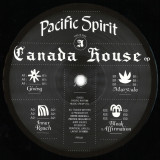
Pacific Rhythm is proud to introduce the first EP from label founder DJ D.DEE's new production alias, Pacific Spirit. The EP is a collaborative effort with long-time friend of the label Patrick Holland and was recorded at the Jump Source studios in Montreal, Quebec, earlier this year over the course of a few snowy days.
The Canada House EP slips through a myriad of influences, and the tracks aim to service the warm-up slot and the late-night crew. From slouched 78 bpm Balearic featuring D.DEE's vocals to storming acid, down to life-affirming disco with Holland ripping live bass, keys, and guitar. It's all here and ready for the club, radio, or wherever you choose to enjoy it.
out of Stock
Last delivered 12 months ago available to reorder, subject to availability
New R&B discoveries continue to emerge and entertain the many followers of the New Breed musical cult; nobody finds more than the Kent connoisseurs.
Berna Dean’s two previously unheard recordings are by far her best. They were laid down at Cosimo Matassa’s New Orleans’ studios by GNP Crescendo but eschewed in favour of two relatively average sides. The great 50s R&B songwriter Jesse Stone provides a rocker for the much-admired Jimmy Breedlove and a super-catchy ‘This Morning’ for an unknown mixed vocal group that has a joyous gospel feel. Jesse also penned ‘Private Eye’, a classic early 60s story-song, for Buddy Wilkins which was issued on Al Sears’ Tri-Ess imprint.
The title track is used twice, on two very different Fraternity recordings. Kenny Smith’s version was issued in 1964 and has many followers, but the equally meritorious Coasters-inspired composition by the Citations is newly discovered. Win Menifee’s ‘I’m Runnin’ Around’ from the same Cincinnati label comes complete with a fascinating back-story.
There are three cover versions. Vermettya Royster’s ‘All Around The World’ is backed by James Brown’s 1961 band, while Roosevelt Lee's 1970 update of the 1947-originated ‘Hey Little Girl’ funks the tune up a la Godfather of Soul. The cover that will make the biggest noise is undoubtedly west coast band the Afterglows’ version of Barbara Lynn’s evergreen dancer ‘I’m A Good Woman’ – this is a future monster.
Golden Crest provides two fabulous male vocal group sides – the swinging ‘What’s On Your Mind’ by Eddie Daye’s Four Bars and the delightful harmonies of the appropriately-named, but unknown Delights ‘Mary Don’t You Weep’.
Blues still thrived into the 70s as Albert Washington’s mean and moody ‘Case Of The Blues’ proves. Smokey Wilson took the music into the late 70s with the storming ‘Goin’ Away Baby (Round Like An Apple)’, which benefits here from a 45-style edit. His Pioneer Club on 88th Street in South Central L A provides the atmospheric photo for this collection.
More early 60s movers come from Wilbur “Hi-Fi” White with ‘Don’t Look Now’, future hit songwriter Johnny Madara’s raucous ‘You Make Me Mad’ and Big Boy Groves ‘Bucket O’ Blood’ which brilliantly describes the kind of club these tracks would fit right into.
The LP version loses a few tracks, but so many collectors have strong preferences we’ve thrown the vinyl junkies a lifeline.
Gabba Gabba We Accept You is a children's picture book that tells the story of how a kid who was bullied and felt like a misfit grew up to become a hero to so many as lead singer of The Ramones. This story speaks to one of the greatest silent majorities in the world - all the kids who feel a little off. It contains an essential message that the world of punk rock has always meant to communicate.
All of us, regardless of our diverse and non-exclusive design, have something that we are meant to have and share, in a place that we can call our own. As children, these things may appear to many of us as problems and shortcomings. The challenging passages of life that brought Jeffrey Ross Hyman to the place where he became Joey Ramone provide a natural lesson to young folks navigating their way through the complexities of growing up. Working in collaboration with visual artist Lucinda Schreiber, Jay Ruttenberg guides the story of Gabba Gabba We Accept You in unexpected directions, with Lucinda's lyrical illustrations and colorful design opening the sense of possibility in what feels like the path less traveled on every page.
3rd limited edition vinyl EP in the series of EPs celebrating the 20th anniversary of the group Chinese Man and Chinese Man Records. For this 3rd opus, we take a look back at the various collaborations between Chinese Man and O.B.F over the years. Two versions of Salune included, plus two O.B.F.-Remixes of CM tracks. 20 years logo by Joan Oaï of Life. Available on limited transparent purple vinyl.
Haunting, discordant and deeply unsettling, `Les Maîtres Fous' (`The Mad Masters') was written by French post-metal collective Year of No Light in response to French filmmaker Jean Rouch's controversial 1950's docufiction of the same name. Commissioned by Musée Du Quai Branly in Paris for their 2012 `L'Invention Du Sauvage' exhibition, trance-metal pioneers Year of No Light approached the ritual practices of the Hauka movement as depicted in the film and responded with their uniquely hypnotic heaviness. Performed only twice, once at the exhibition on the 6th January, 2012 and again in Bordeaux on the 29th January, 2015; this release is a live recording of the second and final performance of `Les Maîtres Fous'. Whilst Year of No Light have a long history of collaboration with forward-thinking filmmakers and visual artists, the sensitivity of this documentary's problematic subject matter and the intensity of the band's performance made this performance both a physically and emotionally demanding experience; something that can be keenly felt upon listening. Founded in September 2001 by a collection of Bordeaux's heavy scene stalwarts as an ongoing side project encompassing elements of sludge metal and shoegaze, Year of No Light released their debut album, Nord, in 2006 to critical acclaim. The subsequent years however saw a significant lineup change with the band replacing their vocalist with a third guitarist to become a fully instrumental sextet incorporating aspects of black metal, drone electronica and dark ambient into their already formidable sound. 2010's four track epic Ausserwelt and the 2013 follow up Tocsin saw Year of No Light distilling their punishing sound even further; stalling the tempo to a glacial crawl and tuning guitars ever downwards to new uncharted depths. Consolamentum, the band's first full-length release in nine years and their first with Pelagic Records, brought the outfit's crushing double-drumming percussion to the fore as a masterclass in dynamic control saw Year of No Light embrace the highest highs and the lowest lows of the intervening years. Now approaching their 25th anniversary, `Les Maître Fous' is a pressing reminder that, despite the band's long and ongoing journey, Year of No Light have never been afraid to experiment, to take risks, to square up to life's ugliness and look it straight in the eye. FOR FANS OF Neurosis, Cult of Luna, SWANS, ISIS, Russian Circles, My Bloody Valentine, Chelsea Wolfe
Haunting, discordant and deeply unsettling, `Les Maîtres Fous' (`The Mad Masters') was written by French post-metal collective Year of No Light in response to French filmmaker Jean Rouch's controversial 1950's docufiction of the same name. Commissioned by Musée Du Quai Branly in Paris for their 2012 `L'Invention Du Sauvage' exhibition, trance-metal pioneers Year of No Light approached the ritual practices of the Hauka movement as depicted in the film and responded with their uniquely hypnotic heaviness. Performed only twice, once at the exhibition on the 6th January, 2012 and again in Bordeaux on the 29th January, 2015; this release is a live recording of the second and final performance of `Les Maîtres Fous'. Whilst Year of No Light have a long history of collaboration with forward-thinking filmmakers and visual artists, the sensitivity of this documentary's problematic subject matter and the intensity of the band's performance made this performance both a physically and emotionally demanding experience; something that can be keenly felt upon listening. Founded in September 2001 by a collection of Bordeaux's heavy scene stalwarts as an ongoing side project encompassing elements of sludge metal and shoegaze, Year of No Light released their debut album, Nord, in 2006 to critical acclaim. The subsequent years however saw a significant lineup change with the band replacing their vocalist with a third guitarist to become a fully instrumental sextet incorporating aspects of black metal, drone electronica and dark ambient into their already formidable sound. 2010's four track epic Ausserwelt and the 2013 follow up Tocsin saw Year of No Light distilling their punishing sound even further; stalling the tempo to a glacial crawl and tuning guitars ever downwards to new uncharted depths. Consolamentum, the band's first full-length release in nine years and their first with Pelagic Records, brought the outfit's crushing double-drumming percussion to the fore as a masterclass in dynamic control saw Year of No Light embrace the highest highs and the lowest lows of the intervening years. Now approaching their 25th anniversary, `Les Maître Fous' is a pressing reminder that, despite the band's long and ongoing journey, Year of No Light have never been afraid to experiment, to take risks, to square up to life's ugliness and look it straight in the eye. FOR FANS OF Neurosis, Cult of Luna, SWANS, ISIS, Russian Circles, My Bloody Valentine, Chelsea Wolfe. The Dim Gleam edition is kind of a beige vinyl colour
Wytch Hazel's stellar 2016 debut Prelude confirmed these Lancastrian apprentice wizards to be Britain's most promising new hard rock band. Two years on, that promise comes to abundant fruition on II: Sojourn, an album that moves Wytch Hazel on from the innocence and exuberance of the debut to a darker, more profound and complex place, carefully wrought into optimum shape by the band's singer, guitarist, songwriter and mastermind Colin Hendra. "I'm really into the idea of an album," notes Colin. "I don't do mix-tapes, I don't listen to singles, I'm interested in albums. I want to make a good, listenable, cohesive work, that is the whole thing." Asked what inspirations were brought to bear this time, Colin has good news, and even better taste: "I was listening to plenty of Judas Priest, Thin Lizzy and Wishbone Ash last year," remarks the frontman. "This seems to be more of a hard rock album, where the last one was more rock-folk. It's definitely more rock than folk!" The most crucial influence fully expresses itself via Les Paul guitars in sweet twin harmony through cranked Super Lead Marshalls - "Exactly the same type of amp that Thin Lizzy would have used," beams Colin - a benefit of working in James Atkinson's Hand Of Law Studio, a converted gaolhouse in Leeds. "We knew there would be a lot more great gear, more amps, more options," enthuses Colin of this productive new work environment. "We were more prepared, we planned better. I had a lot more vocals to record on this album, pretty much every song has at least three harmonies, but James is a really chilled out guy, he made it easy for us. I had a very clear idea of how I wanted each song to sound, I thought about every single aspect. I probably over-prepared for this album, and it paid off!" Wytch Hazel's proud, avowed Protestant Christianity continues to set them apart from the occult hocus-pocus of their peers, and the very title Sojourn has a Biblical inspiration: "It's used a lot in the Old Testament, people would travel somewhere to stay for a short period of time," explains Colin, comparing the idea to Wytch Hazel's development since Prelude. "We're going to reside here with this sound for a while, and the next album might not sound the same. Come and have a listen to this aspect of Wytch Hazel - it's a temporary stay. We'll be here for a while, then there will be something else. I'm always writing, it's a constant stream, but I'm always trying to raise the bar, because I don't want the next album to be not as good as the other ones!"
This is an album made during a crucial period in South Africa’s history during which there was a palpable feeling of a slow turning towards the collapse of the apartheid state side by side with an increasingly well-organised culture of resistance through the formation of the United Democratic Front (UDF) and various affiliated bodies. However, as a result, there was increased pushback from the state security establishment, a turning to dirty tricks and the formation of hit squads whose members murdered and tortured many of our friends and created chaos throughout South Africa as well as neighbouring countries.
This album is situated in this political environment however it took advantage of the new do-it-yourself music technologies available at that time. Technologies that made it possible to make and release records without interference from traditional record company executives. Two musician friends of mine pooled their resources after their respective bands had broken up. Ivan Kadey (National Wake) and Lloyd Ross (Radio Rats) built an 8-track recording studio control room and fitted it out in a second hand caravan and called it Shifty. They parked it in a garage attached to the only house left in a demolished and derelict mining village near Soweto on the outskirts of Johannesburg.
All the work on this album was completed there, mainly after hours and mostly alone where I enjoyed an exhilarating freedom to develop a whole new set of musical skills and ideas, incorporating my love of a wide range of music I’d grown up with. Influences of 1970s progressive/kraut/and psychedelic rock combined with mbaqanga bass styles, early reggae/dub and Indian tabla rhythms. Stockhausen, early Zappa and Holgar Czukay were radio text and shredding influences, and Chris Cutler’s band Henry Cow & Art Bears helped me see a way to political expression. Mostly though was the exciting post-punk and no-wave music coming through to us from Europe and America: bands like This Heat, the Mekons, Raincoats, Sonic Youth and Pere Ubu were immensely important to me as was my reading from the period: J.M.Coetzee’s first 3 novels are strong influences on Free State Fence; the stark landscape, superstition, ritual, and sexual repression are in many of his settings. JG Ballard was a constant presence throughout that period, especially whilst living in such a surreal environment, surrounded by mine dumps, but mostly I think the whole French post-modern philosophical movement—Derrida, Foucault and of course, Baudrillard’s Simulacra and Simulation—set out a new sense of possibilities, possible ways to express oneself, ways to think, and ways to try and analyse the political intersection of public and private life. Most important at that time was the influence of sound recordings I had made and experiences garnered from working as a sound recordist on documentary films. These financed my work and later the studio and were consistent employment throughout the 1980s. Film work also enabled me to experience much of South Africa that was hidden from most. The track Independence Day is a good example; drawn from some time spent in the rural homeland of Venda. This then was the first full length Kalahari Surfers album, completed in summer of 1984 it was taken to EMI pressing plant but rejected by the cutting engineer as being ""political, pornographic and anti religious"". Chris Cutler at Recommended Records took up the challenge and released the album through his label. He wrote the original liner note
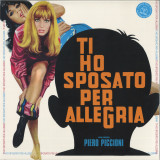
“Ti Ho Sposato Per Allegria” (1967) is a comedy directed by Luciano Salce, taken from the theatrical play of the same name (1965) by Natalia Ginzburg. The main characters are Pietro and Giuliana, respectively interpreted by Giorgio Albertazzi and Monica Vitti. A lawyer from a good family, serious, accustomed to a calm and regular life who got married to a indolent and dazed girl with a difficult past a month after meeting her at a party. Despite Giuliana's inability to transform herself into a good housewife, his relationship with Pietro continues to flourish, because he seems to find enjoyment in each of his wife's many mistakes. The reason for their union lies not in love but, perhaps, in a genuine sympathy, as strong as it is mutual. The story has become a minor classic with each new representation. On both stage and screen the themes of everyday life, and the more complex and existential ones, are addressed. The subtle irony of the work relies on recounting problematic events in a carefree tone: realities such as abortion, death, separation and the couple's incommunicability are underplayed with naturalness. The funny events of the film are commented on by Piero Piccioni's music, published for the first time on vinyl by Musica Per Immagini, with an harmonious tracklist. For this first orchestra rehearsal with the director, which will be followed by other important soundtracks, the composer makes an effective and elegant synthesis: on the one hand he reworks moods and aesthetic intuitions of some previous and happy experiences, while on the other he identifies and anticipates the first bars of that unmistakable sound between bossa nova, funk and lounge nuances that will characterize almost all the production of the Seventies. In fact, the Turin-native artist simplifies in a positive sense the articulated harmonic structures that have always distinguished his authorial figure – where the so called jazz features are to be considered more than central in the musical texture, as prominent elements of the harmonic syntax – and he tries a melodic reduction that will make the compositions more catchy or memorized, but not easier for this. Lightness of spirit and rarefied elegance are the keys of this new Dionysian world.
out of Stock
Last delivered 15 months ago available to reorder, subject to availability
Limited reprint of the sold-out Volume 3 from the Underground Wave series, featuring Belgian and Dutch wave, synth, and minimal artists. Most tracks were previously only on cassette. Walhalla Records is dedicated to reviving the 80s/90s cassette scene by releasing rare material, often for the first time
out of Stock
Last delivered 15 months ago available to reorder, subject to availability
Demon Music Group are delighted to confirm the signing of ‘Night Mirror’ – the fourth solo album from electronic music legend, Claudia Brücken. • Written and recorded in London between 2023-2025 with longtime collaborator John Williams, ‘Night Mirror’ is a stunning collection of 10 brand new songs, suffused with optimism, loosely bound by themes of reflection and rebirth. •
Having first come to notice as the lead singer of Düsseldorf electronic music pioneers Propaganda, one of the first signings to the celebrated ZTT Records (Frankie Goes To Hollywood, Art Of Noise, 808 State), Claudia’s striking image and distinctive vocals made her one the most influential and inspiring female musicians of her generation. Propaganda enjoyed chart success with hit singles like ‘Dr Mabuse’ and ‘Duel’ and their 1985 album ‘A Secret Wish’ is frequently cited as one of the landmark electronic pop albums of all time. • In subsequent years, along with collaborations with the likes of Wolfgang Flür (Kraftwerk), Martin Gore (Depeche Mode), ACT, Andrew Poppy, Andy Bell (Erasure), and Peter Hook (New Order). Claudia was most recently in the limelight fronting the reimagined xPropaganda whose 2022 album ‘The Heart Is Strange’ garnered ecstatic reviews and reached No. 11 in the UK album chart. •
On ‘Night Mirror’ Claudia is reunited with musical partner John Williams, whose work as a producer, writer, engineer, and record label head has seen him work with such luminaries as The Housemartins, Alison Moyet, Blancmange, Simple Minds and The Proclaimers. Contributing to the album are an accomplished series of musicians, whose credits include The Lighthouse Family, Cathy Dennis, Orlando Weeks (The Maccabees), and Kaiser Chiefs. • This LP release is presented on Dark Cherry vinyl. • This is a priority release for Demon, and we will be supporting with full retail, press, radio and online campaigns.
out of Stock
Last delivered 15 months ago available to reorder, subject to availability
The Nigerian princesses of afro-funk arrived on the international scene with 1976’s Danger and never looked back. Produced by multi-instrumentalist Adeniyi “Biddy” Wright, the six-song LP is a low-slung affair, awash in dreamy psychedelic guitar, crisp hi-hat shuffles, and telepathic harmony vocals from twins Taiwo and Kehinde. This 2025 remaster is housed in a deluxe tip-on jacket and includes lyrics in both Yorurban and English. Danger, danger, danger please come on back.
out of Stock
Last delivered 77 days ago available to reorder, subject to availability
From the moment she began writing her new album, Japanese Breakfast’s Michelle Zauner knew that she wanted to call it Jubilee. After all, a jubilee is a celebration of the passage of time—a festival to usher in the hope of a new era in brilliant technicolor. Zauner’s first two albums garnered acclaim for the way they grappled with anguish; Psychopomp was written as her mother underwent cancer treatment, while Soft Sounds From Another Planet took the grief she held from her mother‘s death and used it as a conduit to explore the cosmos. Now, at the start of a new decade, Japanese Breakfast is ready to fight for happiness, an all-too-scarce resource in our seemingly crumbling world.
Jubilee finds Michelle Zauner embracing ambition and, with it, her boldest ideas and songs yet. Inspired by records like Bjork’s Homogenic, Zauner delivers bigness throughout - big ideas, big textures, colours, sounds and feelings. At a time when virtually everything feels extreme, Jubilee sets its sights on maximal joy, imagination, and exhilaration. It is, in Michelle Zauner’s words, “a record about fighting to feel. I wanted to re-experience the pure, unadulterated joy of creation...The songs are about recalling the optimism of youth and applying it to adulthood. They’re about making difficult choices, fighting ignominious impulses and honouring commitments, confronting the constant struggle we have with ourselves to be better people.”
Throughout Jubilee, Zauner pours her own life into the universe of each song to tell real stories, and allowing those universes, in turn, to fill in the details. Joy, change, evolution - these things take real time, and real effort. And Japanese Breakfast is here for it.
Secret Soul Society aka Cal Gibson backs up his already assured reputation for being something of an edit maestro here. 'Julians Cabbages' kicks off with dubby downtempo drums and some lovely twinkling arps. 'Make It All True' then refracts a shimmering vocal and some nice musical percussion around a lazy groove and 'Finally Got My Life Together' has a dreamy feeling and widescreen synth architecture. 'Next To You' shuts down with more textured bass and another weird yet wonderful vocal sample.
out of Stock
Last delivered 8 months ago available to reorder, subject to availability
Tartelet is pleased to welcome the tranquil acid delights of fast-rising Frankfurt-Leipzig duo not even noticed for a brightly melodic, rolling EP of positive party gear.
Since forming in 2020, the pair have won over a succession of well-established labels and dancefloors with their infectious, easy-going approach to acid and breakbeat. The mellow, soulful mood on their Aerial EP arrives as the perfect soundtrack to the brightening skies of Spring in the Northern hemisphere.
From the airy pads of 'Aerial' and the psychedelic chill-out breaks of 'Voidness' to the tough groove of 'Fidelity' and 'Affected's tightly wound electro framework, there's plenty of scope across the whole record without losing a grip on the warm and grounded mood that makes this duo such a resounding success wherever their music gets an airing.
Coming correct with an all-too-rare restorative quality to their tunes and a serious weight that comes to life over a big system, not even noticed are a perfect fit right here on Tartelet.
The 12-inch is limited to 300 copies and comes in a black sleeve with sticker.
out of Stock
Last delivered 16 days ago available to reorder, subject to availability