David Eugene Edwards has always been larger than life. His music with innovative heavy droning folk band Wovenhand, and before that the haunting revivification of high lonesome sound antique Americana of 16 Horsepower breathed a near apocalyptic sense of urgency and power into musical archetypes long abandoned in the latter-20th Century. On his first-ever solo album under his own name, Hyacinth, David Eugene Edwards delivers a sound uniquely his own, with a vulnerability and introspection unheard from him before. Stripping back the heavy rock of his recent work with Wovenhand, Hyacinth puts the man's voice, and sparing instrumentation into the main focus. There's a somber beauty and world-weary tone throughout these songs. The album could've been considered a slight return to the more melodic sounds of 16 Horsepower's Secret South (2000) and the first, self-titled Wovenhand album (2002). But there's more going on here: a rhythmic, pulsating undercurrent reminiscent of the tape loops and rudimentary rhythms of 80s Industrial post-punk as well as 808 Drill Style beats. The overall effect is often as if we're hearing the clock ticking away our own mortality. "Hyacinth was a sort of vision," Edwards says. "A dream. I sought out of my old wooden banjo and nylon string guitar a hidden path. Secrets they had kept from me within themselves all these years and created a new Mythos to myself of philosophical and spiritual ideas or concepts." Once he'd harnessed the music within, he enlisted multi-instrumentalist and producer Ben Chisholm (The Armed, Chelsea Wolfe, Converge) to help him realize the album's recording and mix. "Overall, the album is a weaving of narratives ancient and modern, of humankind's search for understanding of this world we find ourselves in and of each other. In all its simplicity and complexity," Edwards continues. "Hyacinth is a reference to the Greek myth of Apollo. And, the word meaning a precious stone and blue larkspur flower of purple and pall."
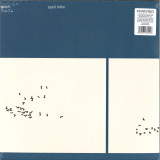
Cerca:2 loop
new project from Remy Pablo (The Anomalys, Weird Omen, King Khan Unlimited, Escobar), with Triple Axelle (The Silly Walks) on drums, Weird Ben (Weird Omen) on guitars and Quentin Tarantula (72 records Bruxelles) on bass. "The album is a classic case of a punk-oriented Jack-of-all Trades-Master-of-None production effort laced with influences of psyche, post-punk, and industrial. "Harder We Fall" falls into such a description with Pablo's distorted, wailing vocals over crude, looping riffs reminiscent of the early Wax Trax! releases, screaming-loud psychedelic-guitar cues taking influence from the Kiss To The Brain LP by Helios Creed album, and hard-hitting multi-tempo drum work." (Matthew Hutchison, New Noise Magazine)
David Eugene Edwards has always been larger than life. His music with innovative heavy droning folk band Wovenhand, and before that the haunting revivification of high lonesome sound antique Americana of 16 Horsepower breathed a near apocalyptic sense of urgency and power into musical archetypes long abandoned in the latter-20th Century. On his first-ever solo album under his own name, Hyacinth, David Eugene Edwards delivers a sound uniquely his own, with a vulnerability and introspection unheard from him before. Stripping back the heavy rock of his recent work with Wovenhand, Hyacinth puts the man's voice, and sparing instrumentation into the main focus. There's a somber beauty and world-weary tone throughout these songs. The album could've been considered a slight return to the more melodic sounds of 16 Horsepower's Secret South (2000) and the first, self-titled Wovenhand album (2002). But there's more going on here: a rhythmic, pulsating undercurrent reminiscent of the tape loops and rudimentary rhythms of 80s Industrial post-punk as well as 808 Drill Style beats. The overall effect is often as if we're hearing the clock ticking away our own mortality. "Hyacinth was a sort of vision," Edwards says. "A dream. I sought out of my old wooden banjo and nylon string guitar a hidden path. Secrets they had kept from me within themselves all these years and created a new Mythos to myself of philosophical and spiritual ideas or concepts." Once he'd harnessed the music within, he enlisted multi-instrumentalist and producer Ben Chisholm (The Armed, Chelsea Wolfe, Converge) to help him realize the album's recording and mix. "Overall, the album is a weaving of narratives ancient and modern, of humankind's search for understanding of this world we find ourselves in and of each other. In all its simplicity and complexity," Edwards continues. "Hyacinth is a reference to the Greek myth of Apollo. And, the word meaning a precious stone and blue larkspur flower of purple and pall."
Vinyl mit Downloadcode. Die LP und CD Versionen dieses Albums unterscheiden sich in einigen Details: Nicht mit an Bord bei der LP-Version sind die Songs "Intro" und "Ends", die sich auf der CD finden lassen. Dafür gibt es auf der LP den Track ,Body And Blood" in einer längeren Version. Außerdem tummeln sich auf der D-Seite 100 Locked Groove Audio Loops, die exklusiv nur auf dem Vinyl auftauchen. ,CLIPPING. machen Partymusik für den Club, bei dem man sich wünscht, nie in ihm gelandet zu sein; das Auto, bei dem du dich nicht erinnerst, wie du eingestiegen bist und die Straßen, auf denen man sich nicht sicher fühlt." (Aus der Pressemitteilung für das CLIPPING. Debüt ,Midcity", das im September 2012 veröffentlicht wurde). Seit das verfasst wurde, hat sich einiges geändert für CLIPPING. Die Band fand heraus, dass die potentiellen Hörer bereiter für sie waren, als sie es erwartet hatten. Vor ,Midcity" erwartete keins der Mitglieder (Rapper Daveed Diggs und die Produzenten Jonathan Snipes und William Hutson), dass ihr kantiger Rap ein Publikum finden würde. Die Band war ursprünglich als Remixprojekt und Fußnote im wahren Leben der Mitglieder gedacht: Diggs ist ein Bühnenschauspieler; Snipes komponiert Filmmusik und Hutson ist ein etabliert Noise Musiker (Snipe und Hutson kollaborierten beim Soundtrack zur IFC Dokumentaion ,Room 237"). Doch seit der Gründung von CLIPPING. weitete sich das Feld der kommerziellen Musik leicht aus, so dass plötzlich Platz für mehr Noise und mehr Abenteuer in der elektronischen Produktion war (obwohl CLIPPING. selbst natürlich darauf bestehen, dass sie Rap Musik machen). ,Clppng" ist ambitionierter als ,Midcity". Das Album wartet mit Gästen wie Gangsta Boo (Ex-THREE 6 MAFIA und momentan bei DA MAFIA 6IX), Guce (Veteran der Bay Area; Mitglied von BULLYS WIT FULLYS), King T (Gangster Rap Legende der Westküste; Gründer der Likwit Crew; Mentor von XZIBIT und THA ALKAHOLIKS) und COCC PISTOL CREE (Newcomerin aus Compton, bekannt vom DJ MUSTARD Mixtape ,Ketchup"). ,Clppng" weitet die experimentellen Sounds der Band aus, um eine größere emotionale Palette zu bedienen. Doch die Band ist nicht zum Softie geworden; das Intro des Albums ist eins der brutalsten Stücke, das die Band je aufgenommen hat und ,Or Die" (feat. Guce) ist so bitterböse wie alles auf ,Midcity". ,CLPPNG" ist ein Album, das unter Beweis stellt, wie vielschichtig Sound sein kann, wenn die Regeln eines Genres mutwillig in Frage gestellt werden.
Ed Sheeran’s brand-new album Autumn Variations will be available for pre-order on the 24th August at 5pm before a worldwide release on the 29th September. It will be available to stream on all platforms as well as purchase physically as a CD or various limited Vinyl editions.
Ed Sheeran is an era-defining artist who has sold over 52 million albums and 150 million singles across the world. Through his fusion of thought-provoking songwriting, universal pop and multi-genre influence, his rich tapestry is not only perfectly suited to his audience but it’s something that transcends generations.
Since surfacing on the UK circuit in 2010 with his ‘No.5 Collaborations Project’ – an eight-track EP featuring his favourite grime artists of the time – the Suffolk-raised recording artist has resonated with fans across the world through his peerless songcraft and versatility. And now, with six consecutive UK No.1 albums to his name – ‘+’ (2011), ‘x’ (2014), ‘÷’ (2017), ‘No.6 Collaborations Project’ (2019), ‘=’ (2021) and ‘-‘ (2023) – Sheeran continues to reaffirm his status as one of the most in-demand pop stars on the planet.
Prior to the release of ‘=’ (October 2021) – an album that’s now surpassed five million global sales - Sheeran secured two UK No.1 singles in the UK with ‘Bad Habits’ and ‘Shivers’, which sat atop the UK’s Official Singles Chart for a combined total of 15 weeks. Moreover, the LP saw him take home 2 x EMA’s for ‘Best Artist’ and ‘Best Song’; an American Music Award for ‘Favourite Male Pop Artist’; British GQ’s ‘Solo Artist of the Year’; 4 x Los40 Awards; a BRIT Award for ‘Songwriter of the Year’ alongside a nomination for ‘Song of the Year’ at the 2022 GRAMMY’s.
Sheeran’s most recent album, Subtract, secured Ed his sixth No.1 album. Produced by Aaron Dessner, the album was anchored in his love of singer/songwriter compositions and written against a backdrop of personal grief and hope. Ed’s most critically-acclaimed album to date, it housed the heart wrenching UK No.1 single ‘Eyes Closed’ – a song about his late friend, Jamal Edwards.
But it’s not just his recorded music that’s seen the former Glastonbury headliner become one of the sought-after artists of the 21st century. Possessing a mystical ability to turn 90,000 capacity venues into the pub back-rooms that he first started playing in, Ed made history in 2015 after becoming the first-ever artist to play Wembley Stadium solo - without a band, just with his guitar and loop pedal - over three, consecutive sold out nights. Move forward to the summer of 2019 and Ed would re-enter history books after the completion of his mammoth two-year Divide tour, officially becoming the most-attended tour of all time after it culminated with special homecoming shows in Ipswich, Suffolk. Beginning last summer, Ed is currently travelling the world on his ‘+ - = ÷ x Tour’ (pronounced ‘The Mathematics Tour’), which saw him return to Wembley Stadium for a five-night run last June.
Ed Sheeran, who was awarded an MBE for his services to music and charity in 2017, is the proud recipient of 1 x IFPI Award (best-selling global artist of 2017); 4 x Grammys; 4 x Ivor Novello’s; 7 x BRIT Awards (including two consecutive wins for ‘Global Success’ in 2018 and 2019); 7 x Billboard Awards + more. Moreover, to this day, his blockbusting third studio album ‘÷’ remains the fastest-selling album, ever, by a male artist in the UK, while the LP’s lead single, ‘Shape of You’, maintains its status as the most-streamed song in Spotify’s history.
At the end of 2019, Sheeran was presented with the Official Chart Company’s first-ever ‘No.1 Artist of the Decade’ award following a host of accomplishments in his native UK including the most No.1’s across the UK’s Official Singles and Albums chart from the years 2010-2019. Most recently, Ed scored two more feats with the OCC after becoming the first British Solo Artist to claim 52 weeks – an entire year – at No.1 on the Official UK Singles Chart, with only Elvis Presley and The Beatles achieving more overall weeks at the top, as well as becoming the first-ever artist with four albums spending an entire year or more in the UK Top 10.
Bar Musica's fourth EP is a fascinating one from Jesse Marcell with a remix by Pier Bucci. El Calvario De Los Indecisos opens up with intense minimal sounds, relentless drum and bass loops tying your mind in knots. All manner of dark and grubby sounds and effects scuttle across the groove and make this a late night head wrecker.
Pier Bucci then steps up to smooth things out and layer in some more soft and soulful late night chords. It flip the cut into a more dreamy number for trance inducing late night sets.
Last of all, Marcell offers La Fe' with it's high tempo drums, pressurised kicks and sweeping sense of minimal tech funk really getting you deep in the groove. This is a superb offering from this vital label.
Ted Milton and Graham Lewis return as Elegiac with their second release – a four track EP inch titled “Meet My Stalker”. The pair of idiosyncratic sonic stylists, bullish outsiders with a Dadaist's ear for unexpected rhythms and ear-catching turns of phrase return showcasing a new track – the title of the EP - along with three bass heavy dubbed out no wave versions of tracks from their self titled debut LP.
Ted Milton is a prolific poet, with several volumes under his belt, as well as an avant-garde puppeteer. Yet he's probably best known as vocalist/saxophonist with psycho-funk afro punk fake no-wave pogo jazz trio Blurt. Milton's group has produced an impressive string of albums, not to mention his numerous solo recordings.
Meanwhile, Edvard Graham Lewis has a history of strong solo releases, both under his own name and as He Said. And of course, as bassist, lyricist and sometime vocalist with post punk innovators Wire, he's been responsible for numerous landmark releases, from 1977's Pink Flag, to 2003's Send, to 2020's Mind Hive.
Arranged, like the album, by electronic composer and sound artist Sam Britton whose sure touch pieces all the elements together. Kicking off with a stripped down driving shortened version of “He Folds” with its eerie honking sax and kraut like pulsating bass the perfect complement to Milton’s chorus echoing throughout. “Boat” is another album track beefed up with Milton’s chants backed by layered percussive blasts and squawking sax. “Meet My Stalker” makes its first appearance here with its infectious snarling looped bassline and Milton’s refrain “It’s a wind up”. Closing out with another album highlight an elongated version of “Vancouver Slim” all synth bleeps and ricocheting grumbling sax and hypnotic vocals. Punchy, idiosyncratic, packed with melody and groove, this second release is the fascinating sound of an evolving Elegiac.
- 1: Subterranean - Movement I
- 1: 2 Subterranean - Movement Ii
- 1: 3 Subterranean - Movement Iii
- 1: 4 The Long Wait - Movement I
- 1: 5 The Long Wait - Movement Ii
- 1: 6 To Hold And To Be Held - Movement I
- 1: 7 To Hold And To Be Held - Movement Ii
- 1: 8 Mon Coeur - Movement I
- 1: 9 Mon Coeur - Movement Ii
- 1: 0 Mon Coeur - Movement Iii
- 1: Be Without Being Seen - Movement I
- 1: 2 Be Without Being Seen - Movement Ii
- 1: 3 Be Without Being Seen - Movement Iii
- 1: 4 Les Parenthèses Enchantées - Movement I
- 1: 5 Les Parenthèses Enchantées - Movement Ii
- 1: 6 Les Parenthèses Enchantées - Movement Iii
- 1: 7 Les Parenthèses Enchantées - Movement Iv
- 1: 8 Les Parenthèses Enchantées - Epilogue
- 1: 9 Night Looping - Movement I
- 1: 20 Night Looping - Movement Ii
- 1: 2 Night Looping - Movement Iii
Colleen thrives on reinvention. For over two decades under the name, French artist Cécile Schott has continuously pushed her compositional practice into new directions. Her creative approaches have included complex samples and loops, instrumental processing and even dub production techniques applied to the baroque viola da gamba. Each album immerses the listener in a wholly unique world while remaining unmistakably a work by Colleen. Schott"s compositions glow with carefully considered textures that move in captivating revolutions while subtly evolving. A connective thread of Schott"s work is the exploration of the intricacies of emotion while reveling in the act of contorting pop and classical forms into new shapes. Colleen"s Le jour et la nuit du réel is a voyage deep into the world of synthesis, a dense thicket populated by drifting echoes and pulsating arpeggios. More than just a creative approach, sound synthesis here becomes a means to interrogate complex concepts, from the self and perception to shifting notions of what is "reality".
Built around recordings by the acclaimed pedal steel player Henry Senior, the album's six hypnotic and enveloping tracks are supplemented with piano, strings, synths and field recordings performed by Wallis.
The making of the album took an unplanned route. During the winter 2021 lockdown, Wallis began work on an album of more conventional songs, sending several to Henry Senior (Danny & The Champions Of The World, Honey Harper) to record pedal steel parts remotely. Though subsequently deciding to shelve the album, he realised that Senior's pedal steel outlines of the songs formed the basis of something completely different.
The result is an immersive, meticulously crafted album that recalls the ambient pedal steel work of Chuck Johnson and Daniel Lanois mixed with the ethereal post- classical instrumentation of Stars Of The Lid and the field recording work of Claire Rousay.
In Huge Gesturing Loops' is Wallis' fourth release in as many years. The album's title comes from a poem by Philip Larkin. The artwork was put together by designer Luke Jarvis based on the 1930s swimming pool on Marshall Street in Soho, where Wallis swam regularly while working on the album.
- Mission Statement
- First Strike
- Guillotine Dreams
- Grey's Lament (Grandmotherland)
- New Sight
- Quiet Strength
- Molotov Cocktails At Brunch (A Love Song)
- Dirty Hands
- Mood Swings
- Far Away (Champagne Steam Rooms)
Committed to tradition, yet set on innovation, Super Duty Tough Work is a constantly evolving, art-rap ensemble with their intentions set on shaking up the industry and providing offerings that elevate joy, while standing in opposition to the homicidal capitalist ideals of the ruling class and their aspiring accomplices.
Rooted in the tradition of Black American resistance arts, Super Duty Tough Work is known for their scathing wit and thorough analysis, pushing their radical politic of revolution, party, and bullshit - both on record and on stage.
Inspired by the dirty jazz sample sound of 90s east coast hip hop, Super Duty Tough Work are the live incarnation of hip hop culture's quintessential era, appearing as a band but manifesting a sound that's more akin to something straight out of an MPC or SP-404 sampler.
Revered for their methodically curated sets, Super Duty Tough Work mixes laidback rap action and razor- sharp delivery with hypnotic loops and effortless transitions, keeping audiences on their feet and transfixed in anticipation for what's coming next.
Simply put: internationalism is the theme, liberation through hedonism is the dream, and satisfaction is guaranteed from the team whose specialty is taking audiences on a journey through a culture where loops are slayed and jewels are the tools of the trade.
Super Duty Tough Work. Paradigm Shift. Worldwide 9/8 via Next Door Records.
Sara Dobbs and Jenny Shore used to work summer stock theater in St. Louis, Missouri. They'd do the hand jive with TV stars past and future; they'd get coldly corrected by the ancient, legendary choreographer Gemze de Lappe. Sara went on to Broadway, including a run as Anybodys in West Side Story. Jenny went on to choreograph in the independent dance scene of early 2000s Chicago. Julie Shore is Jenny's sister. She's always made music_playing Chopin, writing songs, making bands with her friends. She's had the archetypal Millennial journey of entering adulthood in the '08 financial crisis and figuring out what stupid series of jobs you have to take to pay rent while keeping an artistic life alive. Miles Francis grew up in New York City with Backstreet Boys posters covering their walls. An extraordinary drummer since youth, Miles thrives in collaboration_ whether producing artists in their West Village studio, performing with artists like Angelique Kidjo, or powering protests with a big marching drum. These four_Miles, Julie, Jenny, and Sara_are Sister Squares. What made them a musical unit was working with Grammy winner and Oscar nominee Will Butler. They've all just finished a new record together: Will Butler + Sister Squares. "After Generations, I considered making a weird solo record. Me alone in the basement, etc., etc. Mostly I realized that what I wanted was the opposite," says Will. He increasingly turned to the band for feedback on lyrics and song structures. He asked Miles if they'd produce the record. The band played a run of shows in August 2022, airing out studio ideas in live rooms. After coming home, the band regrouped at Figure 8 Studios in Brooklyn. "I had quit my band Arcade Fire very recently, after 20 years_maybe the most complex decision of my life. I had spent the preceding two years at home with my three children. I was 39 years old. I was waking up every morning and reading Emily Dickinson, until I had read every Emily Dickinson poem. I was listening to Morrissey, to Shostakovich, to the Spotify top 50. I had unformed questions with inchoate answers," says Will. "But, honestly, I was feeling great about the record." The album projects widescreen emotional landscapes. Lead-off single "Long Grass" is like a Harry Styles song with 20 more years of life behind it. Standout track "Saturday Night" has a beat, according to Miles, "with that robot-alien-dancing-at-a-haunted- dive-bar feeling that we were going for." The back half of the album is a danceable, weird choral record with harmonies both beautiful and dissonant. Closing song "The Window" is the comedown after the party_Julie playing a Chopin Nocturne on a three-years-out-of-tune piano, slowed to half-speed on tape with Will singing over it in a voice exactly as tired as he was. It's a record with a warm, humane soul.
Mit einer fesselnden Zusammenstellung neu-geschriebener, klangmalerischer Arrangements für Violine und Orchester von bekannten Film- und Serien-Soundtracks und neuen Kompositionen der Oscar-prämierten Komponistinnen Rachel Portman und Anne Dudley zeigt die Geigerin Esther Abrami auf Cinéma ihre Vielseitigkeit, musikalische Sensibilität und Raffinesse. "Ich bin so stolz auf mein neues Album. Ich wollte eine abwechslungsreiche musikalischer Reise zusammenstellen, die meinen klassischen Hintergrund, mein französisch-jüdisches Erbe, meine Unterstützung für Frauen in der Musik und meine Liebe zu Filmen und Anime widerspiegelt und verschiedene Genres, Kulturen und Generationen verbindet. Ich hoffe, dass sich die Zuhörer*innen in die Musik von Cinéma genauso verlieben wie ich", erklärt Esther Abrami. Cinéma enthält neue Arrangements von Blockbuster-Hits aus Animes, Serien und Kinofilmen wie Naruto und Demon Slayer, The Witcher oder The Hunger Games, genauso wie Musik aus ikonischen französischen Filmen wie die Die fabelhafte Welt der Amelie und Die Kinder des Monsieur Mathieu. Darüber hinaus sind klassische Stücke aus Filmen mit Musik von Pjotr Tschaikowsky, Dmitri Schostakowitsch und Astor Piazzolla sowie zwei Weltpremieren der Oscar-prämierten Komponistinnen Anne Dudley und Rachel Portman enthalten, mit denen Esther Abrami persönlich bekannt ist. Besonders emotional ist die Verbindung der durch ihre Großmutter zur Geige gekommenen Musikerin jedoch zu den Filmen Das Leben ist schön und Das Tagebuch der Anne Frank. Ein ebenfalls sehr emotionales Stück auf Cinéma ist das neue Arrangement vom Thema des Protagonisten "Zeyn" aus dem Oscar-nominierten libanesischen Sozialdrama Capernaum, das Komponist und Film-Produzent Khaled Mouzanar eigens für Esther Abrami geschrieben hat. Für die Erstellung der Arrangements von Cinéma hat Esther Abrami mit einem Team von Arrangeur*Innen zusammengearbeitet. Bis auf das ursprünglich für Klavier geschriebene Stück "Comptine d'un autre été, l'après-midi" aus Die fabelhalte Welt der Amelie, das Esther Abrami mit einer Loop-Station auf der Geige neu aufgebaut hat, und "Libertango" von Astor Piazzolla aus Le Pont du Nord, für das sie nur von dem Gitarristen Marcin begleitet wird, ist jedes Stück auf dem Album mit Orchester produziert. Die Aufnahmen zu Cinéma fanden mit dem City of Prague Philharmonic Orchestra unter der Leitung des Dirigenten und Arrangeurs Ben Palmer in den legendären Smecky Studios in Prag statt.
"RTR makes a dazzling return to WeMe Records with Circle coming through with 6 new tracks. 6 ways to outline his love for playful melodies, sauntering arrangements, squelching synths. Less breakbeat, more dancefloor oriented, RTR shows off some of his best and most colourful material as of late The record is both raw and punchy, kicking into gear over and over like an old fashioned detuned drum machine loop."
A Crimson Shore is Saåad’s first studio album since Présence/Absente in 2018. In the interim, Toulouse-based composer and producer Romain Barbot has enriched his experience as an artist through multiple collaborations, the composition of soundtracks and commissioned pieces, as well his involvement with the bands FOUDRE! and Sables Noirs.
This new chapter in the artist’s discography reflects this artistic maturity, evoking the project’s finest ambient recordings while revealing a new, unfiltered and decisive personality. Saåad’s use of a more direct musical language (exclusively electronic on this album) is intended to lay bare the inner life of its creator: the tracks are structured in a cycle of loops, vibrations and drones which respond to and confront each other like the torments of existence, torn between the twilight of sombre music reduced to its purest function of catharsis and the dawn of a new, luminous narrative journey.
A Crimson Shore is a raw, all-encompassing album, shot through with the fear of death, of growing old, of accepting it, of grief — past, present, imagined and future — and the search for a transcendental refuge.
Vienna has a storied history as a ground zero for new music. Radian, who call Vienna home, embodies the city"s spirit of innovation. Martin Brandlmayr (drums, electronics), Martin Siewert (guitar, electronics) and John Norman (bass) are stalwarts of the European contemporary music community. Distorted Rooms presents a dazzling new elevation of Radian"s employment and manipulation of microtones with a new emphasis on abstracted guitar motifs, often employing a more loop-based or electronic approach to the guitar"s sonics. Radian"s visionary approach to composition speaks to a lifetime of working in forward-thinking music. The trio expertly hone in on sounds often removed from the sheen of the recording process and mine them for unique, rich textural sound palettes which they then meticulously arrange. Distorted Rooms creative process began with multi-stage recording of often the smallest sounds, from pick-scrapes to an amplifier"s latent hiss. These slivers of sound are then restructured and processed through a variety of techniques that transform them drastically. Radian have always been interested in sounds that might be considered byproducts and maximizing their creative and aural potential. More minor gestures like switching a pedal on and off or toggling the guitar"s pickup are mic"d and spun into textures that crackle and froth to fascinating effect. Radian"s angular, expansive music delights in tension and contradiction, sound and silence, improvisation and composition. The trio employs a singular and wholly unique sense of microtonality. While their creation process is complex, the resulting music is emotionally affecting, creating an aura of suspense and at times unease. Brandlmayr, Siewert, and Norman share an unconventional, wildly imaginative approach to sound.
- Unblock Obstacles
- Over & Over
- Over & Over Nena
- Bootgirl
- If I'd Known
- Blindfold 2
- Every House Has A Door 3
- Whinny
- Every House Has A Door 4
- Sun Inspector 2
They've crafted a swirling, past- future, future- past, sorta- rock, collage- rock, melange borne from the confined anxiety of the pandemic. It's a full- length undeniably of its moment, rich with musical references while radiating a visionary path forward.
To assemble Giddy Skelter, Kinsella and Pulse aggressively culled their tracklist until they had a lean and impactful 11 songs, unlike anything either musician has released before. Opening track "Unblock Obstacles" chugs along on a three-chord riff and dubbed-out drums before venturing into a hypnotic, feedback-filled drone that channels pre- Loveless My Bloody Valentine. "Over and Over" imagines a world where Slowdive or Lush collaborated with Prefuse 73. On "Nena," one minute features loops of classical piano, the next Spacemen 3-style psychedelic drone, and the next contemporary R&B. The majority of songs on Giddy Skelter foreground Pulse's yearning, ethereal vocals, giving the music a distinctly feminine overtone.
Sometimes the thing that makes great rock n' roll is the ineffable and the intangible, something you can only describe as alchemy; other times it's the rigors of process. On Kinsella and Pulse's Giddy Skelter, it's both -- and it sounds unlike anything else you'll hear this year.
- A1: You're Gonna Get Yours
- A2: Sophisticated Bitch
- A3: Miuzi Weighs A Ton
- A4: Timebomb
- A5: Too Much Posse
- A6: Rightstarter (Message To A Black Man)
- B1: Public Enemy No. 1
- B2: M.p.e
- B3: Yo! Bum Rush The Show
- B4: Raise The Roof
- B5: Megablast
- B6: Terminator X Speaks With His Hands
Yo! Bum Rush The Show was the debut album from Public Enemy, originally released in April 1987 on Def Jam Recordings. The album debuted the sample-heavy sound by production team The Bomb Squad and was very much a Rick Rubin-directed production. Each track is comprised of kicking heavy guitars toward the front, honing the loops, rhythms, and samples into a roar with as much in common with rock as rap.
- A1: Eazycon -Double Life
- A2: The Modern Model - (The) Days On
- A3: Die Form - No Kill
- A4: Bisca - Dott. Jekyll
- A5: Funkwagen – Ebdomero
- A6: Nofun –Mongolia
- B1: Hakkah – Stairs
- B2: Illogico - 871Zx
- B3: Rinf - Was Besonders
- B4: State Of Art - Scoop 'N' Loop
- B5: Hi-Fi Bros -Stranger In The Night
- B6: Band Aid - L’inviato D’oltreoceano/Festa Happening
- B7: Confusional Quartet - Nebdo Zip
Taking up the gauntlet thrown down by New York's no wave scene, many Italian bands of the early '80s, playing far from the footlights of the world's stage, began creating compelling, and often cutting edge, hybrid sounds. This kind of experimenting soon went viral along the entire peninsula: from Southern Italy to the Alps, creating a brave new Italian take on post-punk. From the nervous white funk of Neopolitans Bisca, to the instrumental explorations of Confusional Quartet, to the "fake jazz" of the Hi-Fi Bros (who even had a track produced by Arto Lindsay), to Band Aid, this collection testifies to one of the most creative periods of the Italian underground. Also features: Eazycon, Modern Model, Die Form, Funkwagen, Nofun, Hakkah, Illogico, Rinf, and State Of Art. Includes CD; CD features the previously unreleased bonus track by La Maison, "Noise Express".
Norm Talley returns to his Upstairs Asylum label alongside fellow US house pioneer Delano Smith for Straight Up No Chaser, an eight-track opus featuring four solo cuts each.
Talley's gritty, dubbed-out, low-rolling house style is present and correct throughout with the loopy chords of 'Blak Bottom' getting things going, 'The Flip' getting more cavernous and aqueous and 'ISO Vision' leaning into dub techno.
'Believe It' is a soulful deep house looper, while Smith gets bubbly with 'The Bassline', lays down thumping kicks on 'Travels 23' and his trademark synth smears on 'The Drive' while 'Remembrance' is a heady dub house cut that locks you into a state of perfect hypnosis.
Proper full-length outing from Naarm quartet and venerable live show Polito! Though prior associations with Butter Sessions have birthed EP's and compilation appearances, Collapse Phase gathers the most cohesive body of work from the group to date. Self-described as "a meeting of improvised contemporary dance and live improvised techno music, working together to create entrancing performance experiences", the project translates impressively to the long-player format. Holding no pretence with its title, opening cut 'Chuggalug' swirls around the stereo field building upon sustained synth warbles with low-key basslines and breaks propelling the track. As the album progresses from the chug into gridlocked, Mills-ian loops and fast, extra-terrestrial sound design (all swinging 909s + decay), we're also treated to contrasting downtempo acid cuts and dubwise, day-time festival vibes ('Fortune Teller'). 'Nine Lines' layers various patterns in a classy exercise of dancefloor tension building, with an undoubtedly in-the-moment feeling evidencing Polito's live show foundations. Across the board the group showcase their mastering of a kind of addition/subtraction push and pull, but the varying influences in sound design provide an extra layer of depth to the whole thing and cement the Polito brand. On both 'Inside The Sphere' and 'The Sphere Is Collapsing', the dreamier, more reflective edges of 90s IDM are given a nod and these two strike as up there with the best on the album. Head for 'Mercado Waltz' for a super interesting fusion of loopy techno and modular dubstep.
Polito is a collaboration between musicians Robert Downie and Finnian Langham, and dancers Arabella Frahn-Starkie and Hillary Goldsmith.
- A1: Mondial Scoop (Number Iii) 2 04
- A2: Phasing Percussions A 2 23
- A3: Phasing Percussions B 1 41
- A4: Phasing Percussions C 1 27
- A5: Phasing Percussions D 1 59
- A6: Phasing Leitmotive A 2 40
- A7: Phasing Leitmotive B 1 10
- A8: Phasing March 2 07
- B1: Devil Dance A 2 31
- B2: Devil Dance B 2 30
- B3: Flower Dance A 2 42
- B4: Flower Dance B 1 08
- B5: Happy Smith (Number Ii) 1 14
- B6: Phasing Cymbals 1 56
- B7: Phasing Winds 0 51
- B8: Phasing Suspense A 1 46
- B9: Phasing Suspense B 1 23
Volume 1[23,49 €]
Every once in a while, a library record's absurd level of perfection will be enough to throw up your hands and pack it all in. "How will I ever find this record in the wild?!", you may despair. And, yes, up until now, Michel Gonet's Phasing News Volume 2 was such a work of this ridiculous standard. Not just hyper-rare, but hyper-brilliant. Its high points transcend the "library" genre. This is a record that has always been so so hot on secondary markets. And it's easy to hear why! It's a big big French library classic with mad crazy demand.
Opening with "Mondial Scoop (Number III)", it continues on from where the dramatic tracks of Phasing News Volume 1 left off. The group of "Phasing Percussions" get under your skin, sample material for days here. "Phasing Leitmotive A" and "Phasing Leitmotive B" hypnotise with their analogue synth loops. Yet it's "Phasing March", closing out the side, that is absolutely sensational. Timpani drums merge with open breaks making for an irresistible neck-snapping tour de force.
Side B starts with "Devil Dance A", an unbelievably infectious bass instrumental whilst "Devil Dance B" adds more percussion and bass flourishes and is all the more funky for it.
And now for the main event. "Flower Dance A". What can we even say? An instantly captivating, sparkling keys loop and glittering percussion neatly arranged atop a very strong bassline and drums, all lean and potent. The melody was lifted wholesale by The Soulsavers for "Rumblefish" back in 2002 and you can't really blame them. "Flower Dance B" removes the bassline for a lighter feel but that loop still burrows inside your brain. It's perfect.
"Happy Smith (Number II)" was used by Madlib for Erykah's "My People" (!!!) whilst the set closes out with a group of tense, phased workouts.
The audio for Phasing News Volume 2 has been remastered by Be With regular Simon Francis, ensuring this release sounds better than ever. Cicely Balston's expert skills have made sure nothing is lost in the cut whilst the original, iconic Tele Music house sleeve has been restored here at Be With HQ as the finishing touch to this long overdue re-issue.
The xx existieren in einem selbstkreierten Kosmos. Ihr Debütalbum "xx" bewegte sich mit wundersamer Vollkommenheit zwischen Vieldeutigkeit und Reduktion. Im Zeitalter der totalen digitalen Öffentlichkeit war "xx" Popmusik mit maximalen Privacy Settings und definierte einen neuen Stil. Nun sind Romy Madley Croft, Oliver Sim und Jamie Smith zurück mit einem neuen Album: "Coexist".Vieles ist zwischenzeitlich passiert, vor allem ist die Band erwachsen geworden. Nach der Veröffentlichung des Debüts im Sommer 2009 verbrachten die drei den größten Teil der folgenden eineinhalb Jahre weit weg von zuhause, um ihren Sound in Ohren und Herzen rund um den Globus zu tragen. Von Amerika über Australien und Japan wurde die Band von Publikum und Kritik gleichermaßen gefeiert, und der Erfolg zeichnete sich auch in steigenden Albumverkäufen und dem Gewinn von Awards wie dem renommierten Mercury Music Prize ab. Während der anschließenden Bandpause wurde dann der stillste der 3 Bandmitglieder, Jamie, zum Gesicht von The xx. Zwischen seinen vielen DJ-Gigs arbeitete er stetig an seinen Fertigkeiten als Produzent und entwickelte dabei einen ganz eigenen Stil. Remixe wie etwa für Adeles Über-Song "Rolling In The Deep" oder die Bearbeitung von Gil Scott-Herons letztem Album machten aus Jamie einen hoch angesehenen Produzenten auch jenseits des Band-Fames. Für Drake produzierte Jamie den Titeltrack seines Millionensellers "Take Care". Für das neue Album arbeiteten dann erstmals alle drei von Anfang an zusammen in ihrem eigenen Studio. Während weiterhin Spuren von R&B im Sound von The xx zu finden sind, ist ein vermehrter Einfluss von elektronischer Musik spürbar. In Romys Loop-artigem Gitarrenspiel und den entsprechenden Basslines spiegelt sich dieser Aspekt. Alles in allem ist "Coexist" ein selbstbewusstes, erwachsenes Album geworden, auf dem sich wenig und doch zugleich vieles geändert ändert. Älter und weiser klingt es, sicherer und immer noch von außerordentlicher, zarter Tiefe. Es ist das Album geworden, auf dem das Licht nach dem Leid zurückkehrt.
Trumpeter, bandleader and composer Matthew Halsall announces landmark new album An Ever Changing View, an expansive, immaculately conceived project which presents Halsall’s signature blend of jazz, electronica, global and spiritual jazz influences.
An Ever Changing View will be released on September 8th on Gondwana Records (the label Halsall founded 15 years ago) ahead of a landmark show at The Royal Albert Hall in London on September 21st and UK and EU tour dates.
Halsall who has been hailed as one of the leading figures of the UK jazz renaissance has never seen himself as part of any one sound or scene: he builds his own sonic universe instead. An Ever Changing View finds him at his most experimental yet, once again expanding his sound and production techniques to create his unique brand of deeply meditative music.
During the album's creation, he was staying in both a beautiful architect’s house with breath-taking sea views and a striking modernist house, where he composed what he saw “like a landscape painting”. In these new environments, Halsall wanted to capture “the feeling of openness and escapism” and to approach making music again from scratch. “I hit the reset button and wanted to have complete musical freedom,” he says. “It was a real exploration of sound.”
It was hearing jazz on the dancefloor as a teenager that first opened up new possibilities in Halsall’s mind and his music has long drawn on his love for the spiritual jazz of Alice Coltrane and Pharoah Sanders and contemporary electronica from the likes of Warp Records and Ninja Tune. An Ever Changing View melds those forms in a way that feels heady and, at times, even otherworldly. One of the album’s starting points was Halsall’s ever-expanding box of percussion, from congas and kalimba to various clusters of seeds, bells and chimes, which he sampled and looped to use as a foundation for the songs – a first for him and his band. Elevating, charming, totally modern jazz tracks jostle with deft warm magic realism; and laid back grooves with hand percussion, deep bass and the gorgeous glisten of the Fender Rhodes meet hip-hop beats. Halsall himself sparkles, illuminating his beautiful tapestries of sound with lithe, glistening elegiac trumpet.
Trumpeter, bandleader and composer Matthew Halsall announces landmark new album An Ever Changing View, an expansive, immaculately conceived project which presents Halsall’s signature blend of jazz, electronica, global and spiritual jazz influences.
An Ever Changing View will be released on September 8th on Gondwana Records (the label Halsall founded 15 years ago) ahead of a landmark show at The Royal Albert Hall in London on September 21st and UK and EU tour dates.
Halsall who has been hailed as one of the leading figures of the UK jazz renaissance has never seen himself as part of any one sound or scene: he builds his own sonic universe instead. An Ever Changing View finds him at his most experimental yet, once again expanding his sound and production techniques to create his unique brand of deeply meditative music.
During the album's creation, he was staying in both a beautiful architect’s house with breath-taking sea views and a striking modernist house, where he composed what he saw “like a landscape painting”. In these new environments, Halsall wanted to capture “the feeling of openness and escapism” and to approach making music again from scratch. “I hit the reset button and wanted to have complete musical freedom,” he says. “It was a real exploration of sound.”
It was hearing jazz on the dancefloor as a teenager that first opened up new possibilities in Halsall’s mind and his music has long drawn on his love for the spiritual jazz of Alice Coltrane and Pharoah Sanders and contemporary electronica from the likes of Warp Records and Ninja Tune. An Ever Changing View melds those forms in a way that feels heady and, at times, even otherworldly. One of the album’s starting points was Halsall’s ever-expanding box of percussion, from congas and kalimba to various clusters of seeds, bells and chimes, which he sampled and looped to use as a foundation for the songs – a first for him and his band. Elevating, charming, totally modern jazz tracks jostle with deft warm magic realism; and laid back grooves with hand percussion, deep bass and the gorgeous glisten of the Fender Rhodes meet hip-hop beats. Halsall himself sparkles, illuminating his beautiful tapestries of sound with lithe, glistening elegiac trumpet.
Woods are in bloom again, inviting you to disappear into a new spectrum of colors and sounds and dreams on Perennial. Formed in Brooklyn in 2004, Woods have matured into a true independent institution, above and below the root, reliably emerging every few years with new music that grows towards the latest sky. Operating the Woodsist label since 2006 and curating the beloved homespun Woodsist Festival for the musical universe they’ve built, Perennial is the sound of a band on the edge of their 20th anniversary and still finding bold new ways to sound like (and challenge) themselves. Perennial grew from a bed of guitar/keyboard/drum loops by Woods head-in-chief Jeremy Earl, a form of winter night meditation that evolved into an unexplored mode of collaborative songwriting. With Earl’s starting points, he and bandmates Jarvis Taveniere and John Andrews convened, first at Earl’s house in New York, then at Panoramic House studio in Stinson Beach, California, site of sessions for 2020’s Strange To Explain. With a view of the sparkling Pacific and tape rolling, they began to build, jamming over the loops, switching instruments, and developing a few dozen building blocks. The album’s resulting 11 songs, 4 of them instrumental, are in the classic Woods mode--shimmering, familiar, fractionally unsettling--but with the half-invisible infinity boxes of Earl’s loops burbling beneath each like a mysterious underground source. From source to seed to bloom, each loop unfolds into something unpredictable, from the jeweled pop of the aching “Little Black Flowers” to the ecstatic starlit freak-beat of “Another Side.” They are blossomings both far-out and comforting, like the Mellotronic cloud-hopping of “Between the Past,” or sometimes just plain comforting, like the widescreen snowglobe fantasia of the instrumental “White Winter Melody,” touched by Connor Gallaher’s pedal steel. Woods have long used the studio as a place of songwriting, naming 2007’s At Rear House after their shared dwelling and recording space. But Perennial also carries with it an even longer view of Woods. Emerging from the process alongside the music was Earl’s reflection that “perennial plants and flowers are nature’s loops,” an idea rolling under the album’s lyrics like the loops themselves. It certainly applies to the band, too, who have quietly tended to a long, committed project of being a band in the weird-ass 21st century, both individually and communally. Though separated by coasts, the communal sprit carries through Earl, Taveniere, and Andrews’ collaboration, a living embodiment of the freedoms rediscovered every time a new collectively created piece of music emerges. For nearly two decades, Woods have survived subgenres, anchored in the fertile soil below hashtags like lo-fi and freak-folk and psychedelic and indie, and built a shared history that’s something to marvel at. As the flagship band for Woodsist, they’ve accumulated a striking extended family of collaborators (and Woods alum) that have made the label one of the most dependable imprints in the kaleidoscopic low-key underground. It’s a glow that’s transferred whole to the blissed-out Woodsist Fests held in Accord, New York in recent years, which have folded in a wide range of diverse sounds, from the the jazz cosmoverse of the Sun Ra Arkestra and adventurous legends Yo La Tengo, to a hard-to-even-count family tree of contemporaries, like Kevin Morby (who served a few tours of duty as Woods bassist) and Kurt Vile (who released his 2009 debut on Woodsist), a living community in sound. Perennial carries all of this, shaped by decades, but made in the moment, and here right now. The smell of the flowers doesn’t remain, but sometimes the flowers do. Jesse Jarnow Recorded and mixed by Jarvis Taveniere at Panoramic House in Stinson Beach, CA with additional recording at The Ship in Los Angeles, CA and Cottekill Bird Sanctuary in Stone Ridge, NY. Produced by Jarvis Taveniere and Jeremy Earl. Mastered by Timothy Stollenwerk at Stereophonic Mastering in Portland, OR. Jeremy Earl - vocals, guitars, drums, percussion, sk-5, mellotron, vibraphone, autoharp, loops Jarvis Taveniere - guitar, bass, upright bass, hammond, vocals John Andrews - piano, organs, mellotron, drums, vocals Connor Gallaher - Pedal Steel Kyle Forester - sax, wurlitzer
- A1: Indian Pop Bass 2 35
- A2: Prélude À Une Angoisse 2 20
- A3: Patio Bass 2 30
- A4: Tension Nerveuse 2 10
- A5: Amour, Délices Et Contrebasse 2 30
- A6: Percussion Bass 2 50
- A7: Obsession Diabolique 2 02
- B1: Les Copains De La Basse 2 32
- B2: Doucement La Basse 2 22
- B3: Bass Session 2 25
- B4: Bass After Love 2 06
- B5: Ballade Pour Une Basse 2 02
- B6: Cosmic Bass 2 55
Guy Pedersen, French jazz-soul-funk double-bass player extraordinaire, recorded Contrebasses in 1970 for Tele Music. It's one of the most outstanding - yet puzzlingly slept-on - releases in the library's catalogue. Forget library, this is basically a sublime, straight-up moody jazz record with monster breaks. It's brimming with sensational psychedelic/jazzy bass-heavy moments throughout; it's absolute gold.
"Indian Pop Bass" contains a deep, abstract breakbeat that intersects with a bassline that loops as if it sinks into the swaying, heavy, slow drums. The mysterious, deliberate "Prélude À Une Angoisse" is an eerie, magical number with ace effects whilst "Patio Bass" is a breezy deep jazz knockout with fantastic drums and a sashaying melody. "Tension Nerveuse" creates an atmosphere that's exactly as the title suggests, full of genuine suspense, rumbling percussion and deep drama jazz. "Amour, Délices Et Contrebasse" is a touch lightweight so you're advised to head to the much darker, peculiar funk of "Percussion Bass", bursting with imaginative sounds and effects. "Obsession Diabolique" closes out the A Side, with a funky walking bassline and sparkling percussion battling against droning strings to create a uniquely unsettling, beatless track.
Enlivening the B-Side immediately is the fantastic, propulsive funky-jazz of "Les Copains De La Basse". "Doucement La Basse" is largely forgettable but "Bass Session" is a blazing psych-jazz-rock burner. Absolutely thrilling. Equally, "Bass After Love" is devastatingly psychy, funky and unique. "Ballade Pour Une Basse" is a classic funky French jazz piece with an infectious bass melody that seems to anticipate "Before The Night Is Over", the Joe Simon track that Outkast sampled for "So Fresh, So Clean".
The audio for Contrebasses has been remastered by Be With regular Simon Francis, ensuring this release sounds better than ever. Cicely Balston's expert skills have made sure nothing is lost in the cut whilst the original, iconic Tele Music house sleeve has been restored here at Be With HQ as the finishing touch to this long overdue re-issue.
Der aus Seattle stammende Produzent Jeff McIlwain, alias Lusine, kehrt mit seinem 9. Album Long Light zurück und feiert damit sein zwanzigjähriges Bestehen bei Ghostly International. Lusine, der als Einfluss für unzählige elektronische Künstler wie die Londoner Loraine James und andere gilt, ist bekannt für viszerale, kinetisch neugierige Musik, die Techno, Pop und experimentelle Kompositionen miteinander verbindet. In den letzten Jahren hat McIlwain sein Handwerk mit mehr kollaborativer, songorientierter Arbeit in die Höhe getrieben. Long Light" zeigt die durchgehende Linie; seine charakteristischen Looping-Muster und Texturen sind dynamisch und dennoch minimalistisch wie immer. Strukturell geradlinig, straff und hell, strahlt das Material als das direkteste in seinem Katalog, mit Gesangsbeiträgen von Asy Saavedra, Sarah Jaffe und den Sensorimotor-Kollegen Vilja Larjosto und Benoît Pioulard. Lusine hat seinen Sound schon früh gefunden, aber er hat nie aufgehört, an seinem Potenzial zu feilen, geduldig die Ablenkungen zu dekonstruieren und die Rätsel zu lösen. Mit Long Light erreicht ein prozessgeleiteter Künstler ein außergewöhnlich erfreuliches Niveau an Klarheit und Unmittelbarkeit. McIlwain sieht den Titel, der der lyrischen Phrase "long light signaling the fall again" entnommen ist, die Benoît Pioulard für das spätere Titelstück geschrieben hat, als einen Leitfaden, der mehrere Bedeutungen widerspiegelt. "Es gibt diese Art von Paranoia, bei der man nicht weiß, was real ist, es ist ein Zeitalter der großen Angst und es gibt all diese Ablenkungen", erklärt McIlwain. "Es ist wie ein Spiegelkabinett." Dem langen Licht zu folgen ist der einzig wahre Weg, und diese Metapher wendet er auf die Aufnahmen des Albums an, die ebenfalls einen zyklischen Charakter haben, ähnlich wie die Jahreszeiten. Wie der Beginn des Herbstes schließt das Album eine Periode der Kultivierung ab; "Musikmachen ist ein Kampf und man muss eine Menge Geduld haben." Long Light ist der Beweis dafür, dass das, was jenseits des Lärms, am Ende des figurativen Tunnels liegt, all die Arbeit wert ist, die man auf dem Weg dorthin geleistet hat. In der gesamten Sammlung identifiziert McIlwain das zentrale Klangelement, einen Gesangsausschnitt oder eine einfache Beatsequenz, auf dem alles andere aufbaut. Auf dem Opener Come And Go" vervielfältigt er eine Gesangseinlage seiner langjährigen Mitarbeiterin Vilja Larjosto zu einem himmlischen Chor, der an den Sensorimotor-Hit Just A Cloud" erinnert. Es ist die Bass-Hook auf der Single "Zero to Sixty", die sich um die Stimme von Sarah Jaffe windet, deren geschmeidiger Tonumfang und coole Darbietung die Quelle für Lusines unverwechselbares Mapping ist.
Adrian Borland and Graham Bailey might be better known as members of legendary post-punk group The Sound, but the two were childhood friends and had been playing together even earlier in The Outsiders, and continued their deep musical rapport as a duo, creating these intense and engaging songs as Second Layer at the same time as their higher profile band output. Following our release of Courts Or Wars, combining their early material, we are proud to reissue their only full length album, World Of Rubber.
Fueled by experimentation in both song construction and recording techniques, the duo leave you enveloped in what The Quietus described as, “a monochrome worldview morbidly obsessed with the dehumanizing effect of war, nuclear weapon annihilation, and the fracturing and negation of the self within an increasingly distorted and technologically mediated society.” Indeed, the goal had been to make each album a concept album, with this to be titled: Second Layer’s World Of Rubber. Alas, this was to be the first and last of those efforts. New detailed liner notes from Graham Bailey shed considerable light on the creation of this cold classic and its immediate aftermath.
Bailey’s inventive construction and deconstruction of various electronics, effects boxes and tape loops form the propulsive base for these songs. Borland’s guitar playing is jagged and unleashed. Above it all is an undeniable sense of melody and Adrian’s distinctive vocals. Soon, they would wonder where Second Layer ended and The Sound began, but World Of Rubber would stand as a document of this fertile period. It would also be a lasting testament to their desire to push the boundaries of their creativity. Dark and brooding the result is what Bandcamp described as “brutally bleak, blank-eyed post-punk that remains chillingly compelling.”
ORKA is a duo comprising Francine Perry from London and Jens L. Thomsen from the Faroe Islands. They crossed paths in the vibrant club scene of London, an immersive world that had a profound impact on their creative journey. ORKA's music draws inspiration from the Hardcore Continuum and UK sound system culture, blending it with elements of minimal techno, progressive electro, and ambient music, resulting in a diverse range of stylistic influences. Now ORKA emerges with their long-awaited new album. Once again, they greet us with their distinct blend of earthy tones and a bold, adventurous spirit, taking us to a realm bursting with neon-lit hues, pulsating club beats, and an abundance of sensory stimulation. Aptly named "All At Once," the album title provides a clue to the auditory and sensory experience that awaits the listener in this immersive record. ORKA has continuously evolved as a project over many years and iterations, embracing fluidity and a relentless quest for fresh sonic amalgamations. Their journey has been marked by a gradual refinement, stripping away layers to reach the core essentials. This transformative process has unfolded over the years, reaching from their site-specific, cowshed sampling and band-based expedition in "Livandi oyða" (2007) to the bold, innovative exploration of minimalist techno in "Vað" (2016). However, their latest release, "All At Once," signifies yet another remarkable leap forward in their artistic evolution. The seeds of this artistic progression were already planted in previous releases like the <13 EP (2017) and the hard-hitting techno single "Juno" (2018). However, it is with the arrival of the album "All At Once" that ORKA's vision fully blossoms, unveiling a vivid and expansive sonic landscape. This latest offering presents a glorious and vibrant tapestry, showcasing a maximalist approach to techno that pulsates with energy coupled with their signature meticulous attention to sound design, reflecting a deep awareness and intentionality in their creative process. If this album was to be thought of as a place, it would be a shimmering, futuristic, buzzing kind of city with vibrating night-time drizzle from above and endless glowing lights in the distance. Several of the tracks are built around cut-up vocal samples that are divided from their semiotic meanings and reconfigured as loops, and thus mined for their timbral and percussive qualities. Recurring collaborators South London duo LV (Hyperdub, Keysound, Brownswood) are featured on a handful of these tracks, mixing in their complex cocktail of grime and bliss. The result is a sort of queer erotic dance-floor mysticism, and the closest to a full-blown dance record that ORKA have ever made. There must be a club in that shimmering futurist city of the night.. and it is a collective, inclusive and alluring place. There is no need to fear any dancefloor exhaustion by listening to this album though, as there are also moments of floating cyber beauty and pure enveloping warmth to be found among its tracks. As always, following the artistic journey of ORKA is a joyous experience, filled with unexpected twists and turns that keep us captivated.
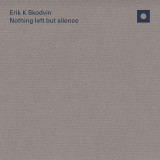
'Nothing left but silence' is Erik K Skodvin’s third solo album for Sonic Pieces and his most quiet to date. Subtitled as "Musical improvisations and quiet collages from the subconscious”, Skodvin reduces his instruments to guitar, reverb and amp - and creates a skeleton of eight hypnotic ragas that meanders in an eternal loop between ephemeral and singular.
Only on the horizon it’s possible to sense that Skodvin has also touched the neoclassical terrain in earlier productions - on Nothing left but silence, however, he acts as a twilight player who is not afraid of the coldness of endless space and who knows how to subjugate the shadowiness of the visible world. Carried by the noise of the amp and the occasional click of the effects pedals, a monolithic, reduced blues emerges, whose mediumistic quality nevertheless reveals that Skodvin's music always comes from the body - and as such is always searching for space. A space that - in this case - blends the vastness of the Norwegian steppe with the brittleness of American wasteland (as if Deathprod and Loren Connors were one and the same person), creating a persistent state between deceleration and absence of presence - that leads Skodvin ever closer to the inner essence of sound.
Initially recorded at Saal 3, Funkhaus, Berlin by Nils Frahm in 2015, the album has itself been subjected to silence as a forgotten relic, re-found and now released in a time where it might connect more with the contemporary state of mind. Welcome to the entrance to the periphery.
Woods are in bloom again, inviting you to disappear into a new spectrum of colors and sounds and dreams on Perennial. Formed in Brooklyn in 2004, Woods have matured into a true independent institution, above and below the root, reliably emerging every few years with new music that grows towards the latest sky. Operating the Woodsist label since 2006 and curating the beloved homespun Woodsist Festival for the musical universe they’ve built, Perennial is the sound of a band on the edge of their 20th anniversary and still finding bold new ways to sound like (and challenge) themselves. Perennial grew from a bed of guitar/keyboard/drum loops by Woods head-in-chief Jeremy Earl, a form of winter night meditation that evolved into an unexplored mode of collaborative songwriting. With Earl’s starting points, he and bandmates Jarvis Taveniere and John Andrews convened, first at Earl’s house in New York, then at Panoramic House studio in Stinson Beach, California, site of sessions for 2020’s Strange To Explain. With a view of the sparkling Pacific and tape rolling, they began to build, jamming over the loops, switching instruments, and developing a few dozen building blocks. The album’s resulting 11 songs, 4 of them instrumental, are in the classic Woods mode--shimmering, familiar, fractionally unsettling--but with the half-invisible infinity boxes of Earl’s loops burbling beneath each like a mysterious underground source. From source to seed to bloom, each loop unfolds into something unpredictable, from the jeweled pop of the aching “Little Black Flowers” to the ecstatic starlit freak-beat of “Another Side.” They are blossomings both far-out and comforting, like the Mellotronic cloud-hopping of “Between the Past,” or sometimes just plain comforting, like the widescreen snowglobe fantasia of the instrumental “White Winter Melody,” touched by Connor Gallaher’s pedal steel. Woods have long used the studio as a place of songwriting, naming 2007’s At Rear House after their shared dwelling and recording space. But Perennial also carries with it an even longer view of Woods. Emerging from the process alongside the music was Earl’s reflection that “perennial plants and flowers are nature’s loops,” an idea rolling under the album’s lyrics like the loops themselves. It certainly applies to the band, too, who have quietly tended to a long, committed project of being a band in the weird-ass 21st century, both individually and communally. Though separated by coasts, the communal sprit carries through Earl, Taveniere, and Andrews’ collaboration, a living embodiment of the freedoms rediscovered every time a new collectively created piece of music emerges. For nearly two decades, Woods have survived subgenres, anchored in the fertile soil below hashtags like lo-fi and freak-folk and psychedelic and indie, and built a shared history that’s something to marvel at. As the flagship band for Woodsist, they’ve accumulated a striking extended family of collaborators (and Woods alum) that have made the label one of the most dependable imprints in the kaleidoscopic low-key underground. It’s a glow that’s transferred whole to the blissed-out Woodsist Fests held in Accord, New York in recent years, which have folded in a wide range of diverse sounds, from the the jazz cosmoverse of the Sun Ra Arkestra and adventurous legends Yo La Tengo, to a hard-to-even-count family tree of contemporaries, like Kevin Morby (who served a few tours of duty as Woods bassist) and Kurt Vile (who released his 2009 debut on Woodsist), a living community in sound. Perennial carries all of this, shaped by decades, but made in the moment, and here right now. The smell of the flowers doesn’t remain, but sometimes the flowers do. Jesse Jarnow Recorded and mixed by Jarvis Taveniere at Panoramic House in Stinson Beach, CA with additional recording at The Ship in Los Angeles, CA and Cottekill Bird Sanctuary in Stone Ridge, NY. Produced by Jarvis Taveniere and Jeremy Earl. Mastered by Timothy Stollenwerk at Stereophonic Mastering in Portland, OR. Jeremy Earl - vocals, guitars, drums, percussion, sk-5, mellotron, vibraphone, autoharp, loops Jarvis Taveniere - guitar, bass, upright bass, hammond, vocals John Andrews - piano, organs, mellotron, drums, vocals Connor Gallaher - Pedal Steel Kyle Forester - sax, wurlitzer
Recorded in 1989 on the remaining ten minutes left at the end of Swiz’s Hell Yes I Cheated reel-to-reel and originally released at the time as a 33 RPM 7-inch, this 2023 release presents a 12-inch 45RPM version remastered by Tim Green with an extra song recovered from the tape archives of Jason Farrell. The brief story of Fury: At some point in 1989, members of Washington DC punk bands Swiz and Ignition formed Fury as a loose experiment with no intentions beyond being a diversion. The band existed for a few months, wrote six songs, and played two shows. Shawn Brown and Chris Thomson switched their musical roles from their regular bands as vocalist and bass player. The eyes-closed leap into those unfamiliar positions imbued the recording its feeling of deranged chaos, while the well-seasoned duo of Jason Farrell and Alex Daniels nailed down each song with the signature agility and power displayed in their more familiar work together. The recording is a vexing listen that sounds like a Neapolitan swirl of Swiz, Void, and the Germs. Was it precision theatre? Or was it a natural step back into a more primitive and comfortable place for four young veterans that just wanted to fill the daily void of existential restlessness? The track “Resurrection” famously made it onto the final Swiz LP. The final track “Last One” got cut off halfway through recording and the band looped and spliced it into a dizzying psychedelic nightmare / masterpiece. The recording has faded into somewhat of an obsurity, a footnote to the larger careers of all of its members. In its time, it was revered by a small cult of obsessives from numerous early ’90s underground punk circles. It notably had a pronounced influence on the emerging Gravity Records scene, where its echoes can be heard on quite a few of the earlier releases. Resurrection is finally getting the deluxe treatment that it deserves after 34 years!
Piotr Kurek’s new album “Smartwoods” is a sprawling root system of tiny melodic phrases that loop and curl around subtly evolving instrumental thickets. The Warsaw-based producer and composer takes his cues from early music, baroque music and experimental jazz, entangling his influences with filigree traces of contemporary computer music and fueling it with sonic vapors from the near future.
Made up of seven distinct segments, the album blurs its acoustic and electronic elements into an illusory hedge of abstract sound. Harp, saxophone, clarinet, double bass, voices and guitar twist into computerized processes and synthesizer chirps, creating an uncanny dreamworld where the real isn’t always what it seems. Each player is entwined with the other to create a living, breathing whole.
Like Kurek’s painterly 2021 album “World Speaks”, “Smartwoods” is also inspired by visual art - particularly the whimsical work of Algerian-French graphic designer Jean Sariano. The album cover features artwork by Polish painter Tomasz Kowalski, whose shapeshifting creatures and miniature stories aptly reflect the music’s wild fantasy. The first manifestation of “Smartwoods” – a live show at Unsound in Kraków in 2022 – featured animations by Italian artist Francesco Marrello, who put together a visual treatment for the single “Harps”.
Music composed, arranged and produced by Piotr Kurek
Anna Pašic - harp
Tomasz Duda - clarinets, saxophone, flute
Wojtek Traczyk - double bass, electric bass
Piotr Kurek - keyboards, MIDI wind controller, electric guitar
Recorded in June and November 2022 by Piotr Kurek, Piotr Zabrodzki (Studio Pasterka) and Tomasz Duda
Federica Grappasonni aka Mistura Pura is an Italian DJ, composer, singer, vinyl collector and music producer. She started to play and produce music at the age of 19 in Bologna, Italy. Before becoming a DJ she wrote and performed her songs live, either as a duo or with a complete band. In the ‘Acid Jazz’ era she was totally immersed in Bossanova, Jazz-funk and Jazzy Hip Hop music. At the time she wrote poetry and songs, singing melodies that burned in her mind. ‘Ed è…’ is one of the first songs she wrote. While ‘Vamo Vive’ is the result of the mix of more songs connected as part of her repertoire, made as a later piece of her musical puzzle.
At the end of the ‘90s and for the following decade Federica became known in the so called ‘lounge scene’ as a selector with Mistura Pura DJ sets in great demand, she gained residencies in the most beautiful and cool places in Milan, the isle of Panarea, Eolian Islands, and Sicily. Coming into the present day she decided to edit and rework some of her repertoire with both songs being revisited while keeping the original voice she recorded at the time and with the support of the pianist and co-arranger Alberto Napolioni and the flautist Carlo Nicita whom worked very well to define the harmonies of the musical works. After 25 years from that period and during the pandemic, Federica repeatedly told herself as a loop ‘go to live Fede’. It was during a walk on the beach that she remembered capturing a frame of a couple of children building a castle in the sand on the Adriatic sea with all the meaning and poetry that this image portrays; a sense of freedom, innocence and truth. In this sense ‘Vamo Vive’ and ‘Ed è…’ is a gentle scream of hope in a time when humanity was closed and living like prisoners in their own houses.
A true surprise success for Paharas Musica, originally written during the end of the pandemic, 'White Isle Memories' captured the loss of not being able to visit the white isle of Ibiza and combines the producer talents of Ridney & Inner Spirit (aka Richard Earnshaw).
A production aimed at the beach bar culture of the island the production duo are joined by multiinstrumentalist, vocalist and loop pedal extraordinaire Michael Sebastian. In it’s original guise the track has racked up well over 1.3 million streams and in that gained the attention of German producer SOMMA (1.7 million monthly listeners), who was keen to grab the stems and deliver a special 2023 remix.
Adding to the package Ridney’s sunset reprise from his Café Mambo Ibiza DJ sets and Inner Sprits own incredible 2023 remix.
DJ Support:
Mark Knight (support on Kiss FM), Purple Disco Machine, Mousse T, Ken Fan (Café Del Mar), Ryan McDermott (Café Mambo Resident), Hector Romero, Des Mitchell (Radio One Mallorca), Mr V, Lenny Fontana, Loeca, Jazzy M, Dario D’Attis, Danny Rampling, Chad Jackson, Brandon Block, Booker T, Black Legend, David Dunne, Graham Sahara, Lizzie Curious, Martyn the Hat.5
This unusual trio album combines electronic musician and tape loop specialist BlankFor.ms with MacArthur fellow pianist Jason Moran & the wizardry of drummer Marcus Gilmore. The electronics interact with the piano and drums in real time, by spontaneously recording loops grabbed on the fly and re-infusing the sonic planes with various effects, resulting in sounds and energies rarely heard before.
- A1: Return Of The Mecca
- A2: For Pete’s Sake
- A3: Ghettos Of The Mind
- A4: Lots Of Lovin
- A5: Act Like You Know
- B1: Straighten It Out
- B2: Soul Brother #1
- B3: Wig Out
- B4: Anger In The Nation
- B5: They Reminisce Over You (T.r.o.y.)
- C1: On And On
- C2: It’s Like That
- C3: Can’t Front On Me
- C4: The Creator (Remix)
- D1: Mecca And The Soul Brother (Remix)
- D2: The Basement
- D3: If It Ain’t Rough, It Ain’t Right
- D4: Skinz
Clear Vinyl
Repressed! Get On Down proudly present Mecca And The Soul Brother, the critically acclaimed 1992 full-length debut from Pete Rock & CL Smooth. The album is considered as one of the greatest Hip Hop albums of all time. Boasting tracks such as the first single, “They Reminisce Over You (T.R.O.Y.)”, a dedication to their deceased friend; “Trouble T-Roy”, which went on to become not only their signature hit, but also one of Hip Hop’s all-time great songs. The album is propelled forward by Rock’s quick, soulful interludes; usually bits of old R&B tunes layered with his signature trumpet and sax loops. Smooth’s liquid freestyle delivery pieces together the perfect vocal match that, together, creates a sprawling, nearly 80-minute-long album on which not a single song or interlude is a throwaway or a superfluous piece.
Mecca And The Soul Brother has stood the test of time. The release has been named one of the essential recordings of the 90s by Rolling Stone, appears on Ego Trips listing of the Top 25 Hip Hop albums released from 1980-1998, and appeared on The Source’s 100 Greatest Rap Albums of all time.
Omformer is the collaborative project from Ute cornerstones Mikkel Rev and Oprofessionell. Mostly focusing on the live act they still have managed to build an impressive catalogue covering everything from one-hour long ambient tracks to loopy psychedelic peak time weapons.
And for their long overdue debut EP you can expect no less, presenting four summer ready trance excursions extracted straight from previous live sets and jam sessions.
Dive into their most maximalist, drama inducing and dancefloor-shattering project to date. Get lost in layered psychedelic trance endlessly looping arpeggios, mind bending squelching resonances and big melodies best consumed under the forest canopy.
Pressing Info: 180g black vinyl double LP, etched D-side, hand-numbered gatefold sleeve, limited to 500, download card included. Porto-based trio 10 000 Russos will release their new 'Live In Berlin' double LP on March 24th 2023 via Rubber Duck, a new live album imprint by Fuzz Club Records. The record captures the band storming through their subterranean motorik psych-drone live at Berlin's Astra Kulturhaus on October 16th 2021. Recorded whilst out on a European tour, 'Live In Berlin' finds 10 000 Russos performing their 2021 'Superinertia' LP in full the album's five songs expanded and taken to even more transfixing and hedonistic heights in a live setting. These shows were 10 000 Russos' first with the new, more-electronic line-up and sound, with newly-recruited synth player Nils Meisel making his debut on the 'Superinertia' LP and completing the line-up alongside founding members Joao Pimenta (drums/vocals) and Pedro Pestana (guitar). Across the hour-long set, Pimenta's deadpan sprechgesang vocal and machine-like percussion, Pestana cascading psych guitar-loops and Meisel's repetitive synth basslines all combine on a performance that will pull you into a trance at times and get you on your feet at others.
Minor Science—aka UK-born, Berlin-based musician Angus Finlayson—makes his Balmat debut with Absent Friends Vol. III, the third installment in a shape-shifting series across a variety of formats and platforms. And with it, he pushes forward his vision of ambient music as neither static vista or merely mood-setting atmosphere, but rather a dynamic matrix of textures, sensations, and even rhythms.
The first two Absent Friends—a 2014 set for Blowing Up the Workshop, and a 2017 cassette and web player for Whities (now AD93)—were hybrid affairs, part DJ mix and part collage, mostly featuring music made by other people. Then, in 2020-21, Finlayson developed the project into a live show of his own material. Armed with hundreds of bespoke stems created in his studio—idiosyncratic FX chains, feedback loops through cheap rack gear, heavily post-processed field recordings, found voices, etc.—he would improvise on four CDJs, mixer, FX, and live synths, extending techniques he learned as a club DJ into a live context, accompanied by visuals by Stockholm-based artist Paul Witherden.
Absent Friends Vol. III is an album of studio versions of the music developed for the live show. But in Minor Science’s world, even a category as simple as “studio versions” is slightly opaque. “Most of these tracks weren’t ‘composed’ in the studio,” Finlayson explains: “The sounds started out as stems and source material for the live show, and might not have been intended to go together—but then through performance, they settled into shapes that worked. I then recreated those performances in the studio.” That organic process of ideation and realization might help explain the unusual coherence of the album, in which sounds and textures flow seamlessly from one to the next, sometimes seeming to stand still, and sometimes looping back. There are virtually no melodies, few recognizable motifs or riffs, yet the eight-track album nevertheless moves with a distinctive logic and a determined sense of purpose, from the frozen-in-time shimmer of the opening “Introduction” through the early cuts’ studies of space and light; from the seemingly autobiographical “Summer Diary” through the rushing trance (yes, trance) arpeggios of “Contingency” and on to the dulcet denouement of the closing “Gather Your Party (Dispersed Mix).”
Fledgling but already well-formed French label Endangered Musique mints a new series here, Easy Trax Part 1, with four 90s-tinged house cuts. The Sexy Mix of Higher Level's 'Sax Maniac' opens up with loopy sax lines and throwback drums in a tune that is easy to love. There is a more sweaty, New Jersey style to Native Groove's pumping and dubby 'I Need A Man' before Side Kick's 'I Got The Hots' comes in two forms. The Hot dub loops a recognisable melodic pattern over chunky but deep drums and the Hot mix layers up bright, neon-hued chord stabs over an unresolved groove.
Moiss Music released a hot pair of EPs in February and repeat the same trick in May with another quality double drop. It is a various artists offering as always with DJ Delivery's 'Never Gonna Give You Up' a sure-fire floor-filling anthem to start things off. It's got loopy drums and string samples as well as sumptuous vocal harmony then Borka & The Gang keep the feel-good vibes alive with 'Kidding Feelings and Even Funkier's' Dance With Your Feet' is another smile-inducing bit of disco warmth with withering sic-fi synths and hip swinging claps. Jordan Reece's 'Prayer' has hints of gospel in the vocal while noodling keys and tight kicks all get looped to perfection.
Following up some big recent tunes on Noire & Blanche and Scruniversal Tunes, Juravlove is back with more party starting and sample-heavy jams. These are DJ and dancer-friendly tunes suited to a range of settings. First up classic vocal samples define the fresh beats of 'Eleonora' then 'Crystal Cave' is all silky disco loops and 'Stoner Doner' slips into a sunset vibe for beach parties and open-air dancing. There is more of heady feel to the deep house grooves of 'Warm Gate' while 'Tap Water' goes for the peak time and the EP highlight comes at the end with 'Grand Delux'.
Baguette Magique returns with four original tracks produced by Madrid’s own Babu, who shares with us a beautiful and timeless piece of work.
The Ep starts off with “The Chamber”, a perfect intro to the electric energy of the record with a mischievous bass line, laser sounds and trippy chopped-off vocals from video game Halo that welcomes you literally into’s Babu’s universe.
Then comes “Play My Game” which shares the same name of the EP as we consider it to be the center piece of the record. A timeless electro gem, cut for the club and for the after hours.
The beautiful deep bass, malicious synths and ominous robotic voices are genuine and powerful. The Madrid based producer keeps on giving bangers for the club on the flip side with “Radio Transmission”.
The electricity is tangible in this hybrid track between Minimal, Techno and Electro topped off with glitchy fx and looped vocals. We conclude the ride with the lovely retro house track “Alpedrete House”. The deeper and groovier sounds make it the romantic cut from the record to dance and maybe fall in love on the dance floor.
A new EP by The Untouchables is always a treat to be savoured, but the opening track of their latest for DNO is so deliciously tense, so foaming at the mouth with anticipation, that it’s hard not to gulp down the whole release in one go. A minute and a half of sinister notes trying to jab their way through a thick filter and there’s no doubting ‘Emu’ is gonna be one hell of a ride — and it doesn’t disappoint, revealing the stabs in all their gritty darkcore glory, and unleashing a torrent of system-shaking subs.
As per, the Belgian duo present a masterclass in merging dub’s unparalleled spaciousness with techno’s unrelenting drive, and delivering it all at a drum & bass tempo.
On ‘Punjab Chant’, a South Asian vocal call and various wind and percussive instrumentation from the region are pulled apart, lashed with delay, and layered over rubbery subs, resulting in an intense intercontinental dubwise belter.
‘Ragga Ting’ goes full digi dancehall, maintaining pace while employing sultry dembow-style syncopation and a hefty droning bassline that seems to loop ad infinitum. It’s an innovative move and one that’s sure to get hips swinging in the dance.
And the final track on wax, ‘86 Dread’, is pure bass weight, its boxy drums almost swallowed up by the sullen low-end, with only crisp shakers and the odd sonic squiggle poking above the gloom.
Digital bonus track ‘Planetarium Space’ brings the tempo down, but fills the mix with the hurried tick of hi-hats and pattering congas, dollops of reverse bass that add slippery off-kilter movement, and a rogues’ gallery of ghostly organ and other haunted samples and synths that wouldn’t feel out of place in an ‘80s horror flick.
Always taking a leftfield route to rattle your ribcage, The Untouchables and DNO once again prove they’re a perfect pairing. Yum, yum.
Rhythms of postmodern realism at the very bottom of the DNO.
For BiD006 we're very pleased to announce that renowned Artist Matt Sewell has agreed to release his fledgling audio project, Sewell & The Gong on the label.
4 guitar led mystical meanderings and deep meditations of cosmic transcendental psychedelic folk.
Matt's acoustic guitar has been a fixture of his studio for many years, although nobody would ever of known as he kept it pretty much to himself.
Over the years he developed a self taught, repetitive, finger picked style in hushed tones to not bother anybody. Just a quiet little part of his studio practise, calming looping melodies.
Like his art, his music is very much inspired by nature, earth magic and cosmic wanderings. His 'A Crushing Glow' compilations are pretty much a defining list of inspirations.
Never heard by anybody outside of the family home that all changed after Matt started working with Newcastle based multi-instrumentalist, fellow pathfinder and astral traveler Chris Tate.
Combining forces Chris helped build a beautiful world for Matt's melodies to wander in, deep and lush and always, always positive.
Australian label Lunatic Music’s second release (LM002) comes from London-based, Tokyo-born producer, DJ Himitsu. The first EP from Himitsu, Three Acid’s A-side offers up percussive dance tracks entangled with solid acid lines – a generous offering perfect for the party’s deepest hours.
When it’s time to relax, the B-side delivers with a balearic track full of looping organic samples. Complementing the release is renowned lunatic, Dexter Gregg, going hard with his take on B3 – Squid Friends (Solid State Remix.)
- Panda Bear, Voice of the Seven Woods, Mammane Sanni Abdoulaye. File under: Jazz / Electronic. Titi Bakorta almost didn't make it. Born in and raised in Kinshasa, the Congolese multi-instrumentalist was on his way to Uganda when he fell off the boat as it traversed the mighty Congo River. Unable to swim, Bakorta was saved by a friend who dragged him to the closest city Kisangani, where he was unexpectedly acquainted with local singer Dancer Papalas. Soon they were performing in bands together, traveling across the continents and settling in Tanzania, South Sudan and Dubai - they even appeared in front of General Defao, the beloved Congolese vocalist who fronted legendary soukous bands Grand Zaiko Wawa, Choc Stars and Big Stars. Now based in Kampala, Bakorta offers his own unique take on Congolese pop and folk sounds, weaving traditional elements through a psychedelic lattice of guitar loops, mangled voices and eccentric beatbox rhythms on his debut full-length. He bends woodblock snaps on 'Kop' into stuttered blurs, wailing emotionally over twanging riffs and bizarre, theatrical xylophone twinkles. It's still pop music on some level, but curved around Bakorta's unwieldy personal narrative - there's a sense that everything could unravel at any time but it all hangs together, strengthened by Bakorta's confident, contemporary production smarts. 'Elles Vais' is more airy, with celestial soukous vocals that float above tight, electronic drums. Tangled guitar echoes overlap each other like dense, weaved tapestries, contrasting perfectly with Bakorta's urgent, driving pulse. Occasionally, he transcends completely, like on 'Molende' where his chants and phrases neatly flutter between praise music and contemporary R&B. "Hustling, hustling, hustling, everyday I'm hustling," an angelic voice coos over phased electric guitar plucks and looped, AutoTuned chorals. It makes perfect sense that Bakorta should team up with Metal Preyers' Jesse Hackett on the album's final track, the aptly-titled 'Titis Haunted House'. The two artists share a similar obsession with moonlit, carnivalesque soundscapes, and Hackett's eerie synths provide a suitably eccentric foundation for Bakorta's ghostly wails and fuzzy guitar sounds.
Athens, Georgia's Telemarket emerges with force and finesse on its debut full length, Ad Nauseum, due out August 25th on Elephant 6 label affiliate Cloud Recordings and Science Project Records. The record by tums navigates loops of existential quandary, heartache, and hilarity in a world gone awry. Running at 34 minutes and 34 seconds, this thirteen track odyssey discovers itself through bouts of exuberant feedback and snappy hooks, and ultimately finds resolution surrounded by good friends in its musical home of Athens. Among these friends is John Fernandes of Cloud Recordings, a former member of projects Olivia Tremor Control and Circulatory System and longtime Elephant 6 collaborator, who teamed up with Telemarket to release and distribute the group's LP. Ad Nauseum features artwork from late Georgia artist Patrick Dean, to whom the record is dedicated. Dean’s piece ‘Welcome to Athens, Y'all” was featured on Athens GA publication Flagpoles cover in August of 1999, and now adjourns the Telemarket cover reflecting the themes of repetition, redundancy, and relief. Telemarket provides a distorted vessel for the shape-shifting songeraft of vocalist / guitarist Adam Wayton, and features collaborations with many of his talented Athens friends. Wayton together with guitarist and engineer Will Wise hunkered down in their Odd Street home studio (originally built by a former Widespread Panic fiddle player) for much of 2021-2022 a piece of time many would just as soon forget and managed to create something memorable together in Ad Nauseum
In 1972, a foursome of design students set out to make a record. This was, in many ways, a strictly creative endeavor. The quartet — composed of Dave Pescod, Alan Lewis, Phil Rawle, and Ted Rockley — were all trained, not as musicians, but as creatives. Art school heavyweights, the four were well-versed in the methodology of intentional experimentation, in the delicate balance of pushing the limits without completely unmooring oneself from a guiding creative intention. Emboldened by a high-brow familiarity with thoughtful experimentation and all the non-conviction of non-musicians, Bowes Road Band’s stint in the world of popular music yielded a record that is as much mind-melting as it is a direct product of its time. Their sprawling LP “Back in the HCA” embodies the exigence “art for art’s sake,” but it is for art’s sake that this record, however off the deep end it seems to travel (hear: “Doctor, Doctor”), remains a unified, and stunning, body of work. The LP’s do-ityourself garage rock noisemaking meets highfalutin creative processes. “Back in the HCA” is warbling psychedelic freakout (“Two Fingers,” “Doctor, Doctor”), Donovan-esque English countryside folk stylings (“Inside My Head,” “Goodbye to Rosie”), and avant-garde jazz improvisions (“Grass is Grass,” “Tomorrow’s Truth”) in one luminous release.
Originally an 9-track LP, Jakarta, Uno Loop, and Bowes Road Band decided to mine the six most cohesive tracks for the reissue, though the extras may be released somewhere down the line. Cohesion efforts aside, “Back in the HCA” stands alone in its singular conception of a genre-bending continuum — it evades definition. That said, the LP can easily be situated in the sonic environment in which it was conceived. By the end of the 60s, England was crawling with blues-based rock outfits that were starting to venture into prog rock territory. You can hear this popular dint cast over the folkier side of the LP. But Bowes Road Band was armed with their non-musicianship: they existed completely liberated from the motivating yet ultimately paralyzing lust for stardom. Enjoying this liberation, Bowes Road Band was utterly free to make noise. This freedom meant drawn out sax interludes amidst sweetly folk stylings (“Grass is Grass”) and Shaggs-like fuzzed-out freakouts that spiral into a void (Doctor, Doctor). This freedom also meant straight-forward tuneful cuts like “Goodbye Rosie” that conspicuously introduce heavily distorted auto-organ accompaniment mid-track amidst poignant lyricism. Bowes Road Band crafts a unified sound and then cracks it open.
With a completely off-the-radar status, Bowes Road Band could only press 50 copies of the record — 10 for each of them and 10 for the school. The band’s lifespan was to end there, or so they thought. “Back in the HCA” was the accidental fruit of a Berlin flea market treasure hunt by Jannis Stürtz, DJ and co-founder of Habibi Funk and Jakarta Records. After finding and sharing the LP with a few colleagues, Stürtz managed to get in touch with the band, get ahold of the master tapes collecting dust in Ted Rockley’s attic, and start the reissuing process. The record is still adorned with its original cover art designed by Alan Pescod, both reminiscent of bygone school days and the Zoom calls of yesterday — in short, reunion. Its re-discovery was happenstance and ought to be listened to as such. That is, “Back in the HCA” was not made to be listened to on a broad scale, or, at least, was not made with this goal in mind; it is neither in its time nor of its time. Of course, the group explicitly cites the folk tunes of the English countryside, the distorted rock groups that reigned during the record’s conception, and the fringes of psychedelic music that only the uber-underground might recognize (e.g., “Dreaming of Alice”). Yet still with these obvious influences, “Back in the HCA” always existed beyond the domain of both traditional musicianship and conventional commodification. Bowes Road Band’s DIY musicality beams through in technicolor across “Back in the HCA.” The vinyl includes an 8-page booklet detailing the albums creation and interviews with the band.
Lead single “Grass is Grass,” out July 14 along with album pre-order, encapsulates the record’s range: the track unfurls into a sprawling sax-driven trip following a sundrenched, Donovan-esque intro w/ lyrics “naively about parks and gardens, not marijuana!” The keyed-down folk cut “Goodbye to Rosie” is single 2 and elevates stripped-down acoustics with golden tinges, out August 4th. Focus track “Tomorrow’s Truth” constructs the fuzzed-out underbelly of acid folk. Listen for echoes of late Beatles, Mark Fry, and Donovan (if they were armed by an unshakabele willful naiveté). Like Sgt. Pepper’s on a shoestring budget—take a trip to the underground with LP “Back in the HCA,” available everywhere physically and digitally on September 1st via Jakarta Records and Uno Loop.
Besides online promotion from label profiles, the album will be further promoted by external agencies within the UK and US.
Bump 'n Grind Wax takes another turn in their vinyl-only exploration into the intersections of dance and sound system music. The Uganda Connect, Swordman Kitala, brings two dancefloor killers straight from Kampala's active underground hip hop and dance scene to this limited edition vinyl-only 7" release on Bump 'n Grind Wax! An MC with heavy influences from dancehall and hip hop traditions, Swordman Kitala has been tearing up leftfield dance-focused productions from cross-genre artists like Tom Blip, Soft-Bodied Humans, and DJ Scotch Egg. With memorable performances and releases with the musical-trendsetting Nyege Nyege Festival, Swordman Kitala's infectious flow pairs perfectly with club-ready tracks, crafting a sound that is being felt in all corners of the world!
The A-Side of BNG-006, "Chidongo", hits straight to the gut with militant drums, off-kilter claps, industrial tones, and rapid-fire lyrics. The elements combine for a rough and tough dance track that will have necks breaking, bodies shaking, and sweat-dripping from your brow as your gun fingers pop off in the dance. B-Side brings the magic man from Richmond, VA, Charles Benjamin, into the fold, with this special edit of Swordman Kitala's "Bade". Swordman Kitala's rudeboy lyrics champion him as the "Uganda Connect" while Charles Benjamin adds the omnipresent low-end, sirens, and wick drum pattern which crescendos towards the end of the track into a dance-ready drum groove that DJs will be looping for years to come.
Black Truffle is pleased to announce The Leisure Principle, a new solo LP from London-based bassist and sound artist Otto Willberg. A key player in the London underground, Willberg is often heard on acoustic and electric bass in free improv settings and bands with Laurie Tompkins (Yes Indeed) and Charles Hayward (Abstract Concrete), as well as the fractured No Wave unit Historically Fucked. His previous solo releases have ranged from extended technique double bass to explorations of the acoustics of a 19th century artillery fort. But nothing Willberg has committed to wax so far prepares a listener for The Leisure Principle, six unashamedly melodic improvisational workouts created almost entirely with heavily filtered bass harmonica and electric bass. On the opening ‘Reap What Thou Sow’, a single-note bass harmonica loop pulses along underneath a roaming bass solo, the side-chained envelope filtering (where the dynamic behaviour of the bass determines the filter for both bass and harmonica) fusing the two instruments into a single stream of burbling shifts in resonance. After several minutes of patient exploration of this low-end landscape, the music suddenly opens up in widescreen with the entrance of Sam Andreae’s graceful melodica chords, spreading out across the stereo field. From this epic opener, each of the remaining pieces goes on to explore a slightly different aspect of the terrain. On ‘Shadow Came into the Eyes as Earth Turned on its Axis’, a similarly buoyant harmonica bass line provides the foundation, but this time playing a soulful descending riff, its almost R&B feel abstracted and half-obscured by the filtering. On ‘Mollusk’, echoed bass arpeggios skitter between elegiac chords somewhat reminiscent of the opening of John Abercrombie’s ‘Timeless’, before settling into a hypnotic groove. On the record’s second half, Willberg pushes further into the possibilities of his idiosyncratic instrumentation. On ‘Wetter’, bass and harmonica come together into a monstrous, growling jaw harp; on ‘Had we but world enough and more time’, the subtly shifting pulsating patterns start to feel almost like a kind of evaporated, drum-less dub techno until an eruption of wheezing bass harmonica gives the piece a comically folkish turn. Willberg’s melodically inventive and virtuosic bass performance calls to mind any number of fusion touchstones, from Jaco Pastorius to Mark Egan’s singing tone in the early Pat Metheny Group—even Anthony Jackson’s work with Steve Kahn. But with its radically reduced instrumentation, The Leisure Principle is also an exercise in minimalism, and the absence of percussion gives even its funkiest moments a strangely abstracted quality. At times, its uncanny blend of the abstruse and the immediate suggests the fried pop experiments of David Rosenboom or the skewed but deeply musical DIY of 80s underground groups like De Fabriek. Both easy on the ear and profoundly strange, The Leisure Principle proudly takes its place among the most eccentric offerings on the Black Truffle menu.
- 1: The Big Bad Wolf
- 2: Meet The Bad Guys
- 3: Let’s Bounce
- 4: Push Pop
- 5: Step 3
- 6: Security Surprise
- 7: The Dolphin Heist
- 1: Going To Go Good
- 2: Turn On The Charm
- 3: Marmalade
- 4: A Heist For Good
- 5: The Sharing Laboratory
- 6: Save The Cat
- 7: Good Tonight - Ft. Anthony Ramos
- 8: So Long Suckers
- 9: The Lair Of Loot
- 1: Loot Loops
- 2: Bedtime Story
- 3: Double Crossed
- 4: Tricky Fox
- 5: The Crimson Paw
- 6: Secret Hideout
- 7: Evil Masterplan
- 8: The Sad Guys
- 9: One Last Push Pop
- 10: Finish Them
- 11: Huff + Puff
- 1: Just Robbing This Place
- 2: Freeway Escape
- 3: Who Said It Was The End?
- 4: Redemption
- 5: The Old Switcheroo
- 6: Feelin’ Alright - Elle King
- 7: Brand New Day
- The Heavy
The Bad Guys is a 2022 animation feature film by DreamWorks Animation. Directed by Pierre Perifel, the film stars Sam Rockwell, Richard Ayoade, Zazie Beetz, Alex Borstein and Awkwafina amongst others. The story follows a notorious fun-loving criminal animal crew. After a heist has gone wrong, the pack agree to become model citizens - or at least try to.
The score was composed by Daniel Pemberton who is known for composing the score to Spider-Man: Into the Spider-Verse (2018) and its sequel Spider-Man: Across the Spider-Verse (2023). He has also composed the soundtrack for King Arthur: Legend of the Sword (2017) and The Man From U.N.C.L.E. (2015). Besides the original score, this soundtrack also features the songs "Good Tonight" feat. Anthony Ramos, "Feelin' Alright" by Elle King and "Brand New Day" by The Heavy.
The Bad Guys is available as a limited edition of 500 individually numbered copies on yellow & orange marbled vinyl and includes a 4-page booklet with liner notes by Daniel Pemberton and Pierre Perifel.
Lady Tazz’s Mind Medizin imprint drops NO.NAME’s ‘Unseen EP this September.
Following the success of the label’s debut release ‘Serpent Kiss’ from Canadian/Bangladeshi producer Lady Tazz and Colombia’s Gotshell, catching the attention of Daniel Avery, Ancient Methods and Sigha, newly-minted imprint Mind Medizin returns with a fresh selection of high octane techno. Arriving following support from Rekids regular Dustin Zahn and more, Italian DJ and producer NO.NAME makes his first outing on the label as he delivers his impactful and hypnotic ‘Unseen’ EP.
Loopy synths ride a pummeling bassline in ‘Monochromatic’ as fierce kicks meet crashing symbols and unnerving vocals before ‘Unseen’ serves up more modular artillery over steamy low-ends and chilling echoes in this warehouse-ready cut.
- A1: Puppet (Equinox Remix)
- A2: Daisy Takes Two (Meat Beat Manifesto Dub Selection Remix)
- B1: Stachybotrys (Coco Bryce Rework)
- B2: Lucky Gonk (Macc & Dgohn Remix)
- C1: Electryon (Wisp Remix)
- C2: Lucky Gonk (Forest Drive West Remix)
- D1: Turnips Are Ok (Rognvald Remix)
- D2: Conty (Scrase Remix)
- E1: Ninnyhammer (Djrum Remix)
- E2: Robin's Windmill (Skee Mask Remix)
- F1: Af0156984 (Quavis Remix)
- F2: Invisible Sandwich (Carl Brown's Pea & Mint Mix)
repressed !
Undesignated remixes is an expansive project containing 12 remixes of tracks from dgoHn’s iconic 2020 full-length by some choice artists from in and around the Love Love sphere. Remixes that take dgoHn’s unique razor-sharp original productions and send them through a loop and round the twist, some stripped down, some messed up, most but not all maintaining the speedier tempos that dgoHn likes to work around. The result is a collection of seriously futuristic electronic music with some stylistic leanings towards labels like braindance or drumfunk or jungle but completely genre-eluding as a whole, reshaped from the minerals of the original LP by some absolute dons of their craft.
Opening the album Equinox does a fantastic job highlighting the lushness of ‘Puppet’ layering sky-high sunshine pads before sliding into Meat Beat Manifesto’s heavy sci-fi acid dub version of ‘Daisy Takes Two’. A woozy remix of ‘Lucky Gonk’ by Macc & dgoHn marks the first new material from them as a duo since ’09 and Wisp also makes a rare appearance bringing his inimitable post-rephlexian vibes on an agonisingly wonderful, melody-heavy remix of 'Electryon'. Skee Mask’s choice of remixing ‘Robin’s Windmill’ turns the original into a bundle of writhing rhythms organically unfolding with swelling ambient tones. Homegrown heroes Rognvald & Scrase both opt for pumped up post-breakcore in unconventional time signatures while Djrum emphatically provides the LP’s dose of peak jungle choppage, tempering the drum breaks of ‘Ninnyhammer’ with a blistering amen. Also featured on the LP are crisp and beefy drum workouts courtesy of Coco Bryce and Forest Drive West, visceral and apocalyptic half-time bass from Activia Benz affiliated duo Quavis and virtuosic noir-jazz tearout from fellow East-Anglian Carl Brown.
Starting in 2019, Fairytale have carved out a unique sound that is both ethereal and chaotic, beautiful and terrifying. This New York City band are back with their debut LP, Shooting Star. Wretched soaked guitars and a rhythm section that sounds like a horde of demons are blended together with dynamic vocals that meander between gruff and choral, at times reminding one of Tozibabe. We dare you not to have the disc on a loop as each listen reveals more and more layers.
When picturing the German techno scene, one likely imagines the concrete monoliths of its capital city Berlin rather than the vineyards and valleys of the enchanting city of Stuttgart in the southwest. But small cities lack the oversaturation and noise of the metropolis, allowing them to develop their own inspired and distinctive subcultural visions. Stuttgart’s David Löhlein exemplifies this potential, manifesting a singular style of sight and sound through his Vision Ektase project and residency at Lehmann Club. Now, Löhlein’s warm-blooded techno is slinking, slithering and seducing its way through BNR, with the upcoming Hotel Pool EP release.
There’s no hesitation before plunging into the EP’s titular track, with its rushing fingered basslines and rolling polyrhythms. Löhlein cites solo travels in Columbia as the source of his Latin influences, and one hears them throughout “Hotel Pool” in vocal and percussive samples. Elements more commonly found in Latin and tribal house feel uncommonly fresh once Löhlein recontextualizes them within a 144 bpm techno foundation. The words “groovy” and “sexy” are usually reserved for the stuff of Buddha Bar compilations, but “Hotel Pool” is exhilarating because it serves both of the former and none of the latter.
A stream of hedonism flows beneath all of the four-tracker, but if the opener is erotic, A2 “La Piscina” is psychedelic. The bass flutters like a mescaline come-up, as infinite loops of chattering voices and deep bamboo pipe notes mesmerize. Again, Löhlein takes certain genre tropes - in this case from psytrance - and transposes them through his own stylistic signature with thrilling results. Ask Löhlein if he likes psytrance and the answer might be “Yes, when it’s techno.”
Leading the flip, “Cuando Vengas” heats up around a dark and sticky loop of ambiguous, organic origin. Here Löhlein’s masterful sample and drum programming is clearly on display, with vocal chops and subtle rhythmic variations leading the dancefloor to shivering bliss. The EP closes with “I Just Want,” a sparse, cold, and bitcrushed stalker of a track that seems to answer Baudrillard’s famed question “What are you doing after the orgy?” That the Hotel Pool EP’s wild romp ends in the Berlin oeuvre perhaps proves the city’s primacy in the German techno scene, but after a few listens one begins to wonder what rare pleasures they’ve been missing in David Löhlein’s Stuttgart.
Odd Nosdam really doesn’t need an introduction, unless you’ve been living under a rock for the last 20 years then undoubtedly you’ll know what’s up, and what an absolute humbling pleasure it is to now introduce Nosdam to the Where To Now? catalogue with two new cuts that flow from ethereal, meditative contemplation through to downtown abstracted machine damage..
The record opens with ‘End is Important’, A looping, spiritual lament which forces observation, or resolution around the concept of ‘Endings.’ Passages from Tsunetomo Yamamoto’s ‘Hagakure’ seep in and out of the mix throughout, where spiraling and glistening arpeggios dance across a glorious choral mantra, intended to elevate minds towards some kind of plume of awakening. This is a heady and deep cut which finds Odd Nosdam in full introspection mode.
‘Here to Know’ recalls the work of Patrick Cowley in his best downtown ultra slow swinging funk suit, or the more obvious nods to John Carpenter’s Assault on Precinct 13 OST. However, this is far from a straight up ode to creeping machine funk - Nosdam’s injection of energetic, pulsing synth stabs move the piece into a more surreal territory, creating a masterful and experimental injection of life and colour into an otherwise smoked out landscape.
“Where I found myself when Where To Now? reached out - asking if I'd consider a vinyl release with the label - was over in Barcelona spending time with loved ones at my family's apartment in the district of Sant Gervasi.
After my initial contact with WTN?, I ventured north to Cadaqués to visit Salvador Dalí's house in Port Lligat, where Gala & Dalí spent some 50 summers. While inspired asf touring the glorious property, I captured recordings from a looping video screening in an open air theater. These recordings became the foundation of Here To Know.
Sometimes there’s a break in the road. End Is Important was realized after re-watching the Jim Jarmusch film, Ghost Dog. Stealthy and evanescent, a familiar voice carries this slow-diver with a message to the world warped cruiser in all of us.” - Odd Nosdam
- A1: We Crossed The Atlantic
- A2: The Love You Bring
- A3: When I Was Howard Hughes
- A4: Failed Adventure
- B1: Stars (Twilight Mix)
- B2: Grand Central
- B3: International Exiles
- B4: Merry-Go-Round
- B5: Radios Appear
- C1: City Terminus
- C2: Min Min Light
- C3: Oregon Snow
- C4: Cherry Lake
- C5: Blackout
- D1: Please Don’t Say Goodbye
- D2: Museum Station
- D3: Blue Train
- D4: You Were There
- D5: Something Better Beginning
Selected Songs 1997-2003 compiles some of the finest moments in the recording history of Hydroplane, the Melbourne-based indie-pop three-piece that operated alongside The Cat’s Miaow through the second half of the nineties. It’s the third release in what feels, now, like a loosely planned series by World Of Echo, documenting the music made by this group of friends in Melbourne sharehouses (The Cat’s Miaow’s Songs ’94-’98, 2022), or in the case of The Shapiros (Gone By Fall, 2023), while traversing the International Pop Underground.
Hydroplane would be familiar to anyone already following these breadcrumb trails – Andrew Withycombe, Bart Cummings and Kerrie Bolton were the group’s core, all members of The Cat’s Miaow. With Cat’s Miaow drummer Cameron Smith itinerant, having moved to London, the trio used this opportunity to expand their music. It’s a subtle, but important shift. If The Cat’s Miaow was about the perfect, minimalist, two-minute pop song, Hydroplane’s music was far more open-ended, embracing the loops and drones, sampled house-y shuffle beats, the burbling of a Roland Jupiter-4 synth, all of which the trio joined, effortlessly, to their endless capacity for moving, elegant melodicism.
They may have only planned to release one seven-inch single, but the sound Hydroplane created was so bewitching, so compelling, that the project’s lifespan ran for around half a decade, and they ended up releasing three albums, including a self-titled debut recently reissued by Efficient Space, and seven singles. There are all kinds of compelling things happening in the music compiled here – the hazy repetition of the gentler side of Krautrock is in here, somewhere, which also suggests Stereolab at their most intimate and disarmed; the gently drifting guitars, gauzy and oneiric, set the songs adrift and floating, each one lost in its own imagined, distracted world. Songs like “The Love You Bring” set indistinct tonal floats across dance rhythms, in a way not quite heard since My Bloody Valentine’s “Instrumental” – but with the added gift of Bolton’s gorgeous voice.
This loose coalition with dance music, and the quiet experimentalism at the heart of Hydroplane, also gestures towards peers like Hood, Acetate Zero and Other People’s Children, and releases on renegade labels like Wurlitzer Jukebox and Enraptured. Like those groups and labels, The Cat’s Miaow were reconciling independent pop music’s past – sweet melody and melancholy, chiming and droning guitars – with the futures promised by DIY electronics and nascent digitalia, the interface of indie and IDM that led to some of the underground’s most blissful, texturally swoonsome music. All that is here, but also, the poise of the melodies is pure Cat’s Miaow, though, with Bolton’s voice sailing, pacifically, over some of the most pared-down, gorgeous music made during their decade.
It was a time, too, when such music could make waves – “We Crossed The Atlantic”, one of their early singles, was picked up by John Peel, who played it repeatedly on his legendary radio show, the song reaching #13 on his 1997 Festive 50. That the song itself was a cover of a tune by 1960s Australian beatnik-pop-poet Pip Proud felt even more perfect – a group of outsiders paying tribute to another outsider, played on the radio one of the few broadcasters brave and human enough to take a chance on this music. But it was a time where everything was up for grabs, and genres were flowing into each other: folk songs went drone; indie re-discovered noise; ambient pop floated, again, out onto the dancefloor. And while they may have been sequestered away in Melbourne, Australia, Hydroplane felt core to that scene, a quietly driving force.
Compiling material from across their brief but mercurial career, this double album perfectly captures the magic and mystery of Hydroplane’s dreamlike, perfect pop songs.
Label head DJ SUPERHERB debuts under this alias on Full Dose, in collaboration with fellow Glaswegian compatriot, TEN YEARS LOST. " Concrete City Merchandise " is a timely selection of iced out beats - a perfect companion to an unusually sweltering summer.
A surprising collision of minds has produced an album of near-horizontal belters. "Ocarina of Time", with its dusty vocal loops and shimmering high end induces a lazy euphoria like no other. The title's reference to Zelda aligns the pair with a long list of talented and game-obsessed beatmakers, matching the vibe of the track perfectly.
In an album clearly representing an evolution of the Full Dose sound, "Yeah"s dembow programming and stabby riff will be familiar to those who've been around since the beginning. Combine this with the clear G-funk influences found throughout, and you're on to a winner. "Pagan Golf" continues this amalgamation of styles, resulting in a sound that's perfectly Full Dose.
In a similar vein, "On the Rise" is as true to the West Coast sound as you're likely to find this side of the Atlantic. This hit sounds like the housier end of Stones Throw filtered through the mesh of the Glaswegian underground. Moogy synths carry loopy vocals, with the occasional fizzy and elongated riser to ensure you're not too deep in a trance.
Retaining these themes but slowing the pace right down is "Key Notez". Pulsating samples of running water sit low in the mix, providing a bed for the emotive pads and gently arpeggiated synth lines. The track somehow manages to combine elements of R&B with the more emotional end of electronic music, in a way that's rarely found."
Whoop whoop, it’s the sound of the inimitable KRS One’s ‘Sound of da Police’ and the mind bogglingly clever ‘Hip Hop vs Rap’, reissued here for the first time ever on 7 inch vinyl, housed in an original artwork picture sleeve this is a must have for anyone in the know.
First up ‘Sound of da Police’. A song that spoke out against the long running history of the Black community experiencing police brutality, violence and racism at the hands of those that were meant to be protecting them. The hard-hitting words from KRS touch on the history of slavery and it’s manifestation into systemic racism throughout the ages since.
“Change your attitude, change your plan
There could never really be justice on stolen land”
Couple that with a rough breakbeat, chopped through the MPC alongside choice funk samples and that legendary police siren ‘Whoop, Whoop’ and you had a certified golden era rap classic that ignited the fire in the belly of many across the globe.
On the flip, ‘Hip Hop Vs Rap’. A bumping hip hop loop lays the foundation for KRS to work his genius melding all manner of classic hip hop lines that are the perfect ammunition to cut up on the decks and results in a flow that certifies that hip hop is the culture that you live and breathe.
“Rap is something you do,
Hip-Hop is something you live!”
It’s a true, headsy b-boy gem which deserves a place in every collection.
- 1: Southern Rock
- 2: Inside The Majestic
- 3: Badhat Town
- 4: Intermission
- 5: Standing Water
- 6: Standing Sunday Morning
- 7: The Old Versailles
- 8: Dial Painters (Radium Girls)
- 9: The Tipping Point
- 10: High Seas (Won & Lost)
- 11: On The Move
- 12: Esplanade By Moonlight
- 13: They Come Free With Cornflakes
- 14: Zoom (Glittering In The Sun)
- 15: Drag Time
blue LP[27,10 €]
As Wreckless Eric he needs little introduction - he wrote and recorded the classic Whole Wide World and had a hit with it back in 1977. Since then it"s been a hit for countless other artists including The Monkees, Cage The Elephant and Billie Joe Armstrong of Green Day. Eric"s version featured in the 2022 Expedia / Superbowl / Ewan MacGregor travel ad, and the Cage The Elephant version is the new theme tune for the podcast Smartless. This new album, Leisureland, marks a return to his more ramshackle world of recording - guitars and temperamentally unpredictable analogue keyboards, beat-boxes and loops in conjunction with a real drummer, Sam Shepherd, who he met in a local coffee shop in Catskill, New York. He was delighted to find that Sam lived around the corner and could easily drop by to put drums on newly recorded tracks. The recording methodology may have been Contemporary American but the subject matter is almost entirely British. It also contains more instrumentals than any of his previous albums.
- 1: Southern Rock
- 2: Inside The Majestic
- 3: Badhat Town
- 4: Intermission
- 5: Standing Water
- 6: Standing Sunday Morning
- 7: The Old Versailles
- 8: Dial Painters (Radium Girls)
- 9: The Tipping Point
- 10: High Seas (Won & Lost)
- 11: On The Move
- 12: Esplanade By Moonlight
- 13: They Come Free With Cornflakes
- 14: Zoom (Glittering In The Sun)
- 15: Drag Time
black LP[26,01 €]
As Wreckless Eric he needs little introduction - he wrote and recorded the classic Whole Wide World and had a hit with it back in 1977. Since then it"s been a hit for countless other artists including The Monkees, Cage The Elephant and Billie Joe Armstrong of Green Day. Eric"s version featured in the 2022 Expedia / Superbowl / Ewan MacGregor travel ad, and the Cage The Elephant version is the new theme tune for the podcast Smartless. This new album, Leisureland, marks a return to his more ramshackle world of recording - guitars and temperamentally unpredictable analogue keyboards, beat-boxes and loops in conjunction with a real drummer, Sam Shepherd, who he met in a local coffee shop in Catskill, New York. He was delighted to find that Sam lived around the corner and could easily drop by to put drums on newly recorded tracks. The recording methodology may have been Contemporary American but the subject matter is almost entirely British. It also contains more instrumentals than any of his previous albums.
London label Mysticisms knows how to dig out some truly lush house grooves whether that's in the form of unreleased house meets IDM, classic reissues or debuts from new school artists. N-GYNN falls into that latter camp having started to make waves on the likes of Hamam House Pleasure Club and his Superlux Records label. He explores a dreamy and cuddly house world here with rolling analogue drums, wispy new-age percussion and whimsical cosmic melodies that all make for otherworldly grooves. 'Journeys' has the feeling of an ancient ritual in the sky, 'Alistera' is a kaleidoscope of colour and 'Kebaya' has a more earthy Afro feel. 'Funk Break Beat' closes with a jumbled groove peppered with dial tones, string loops and bulbous acid.
Jonny 5 is known for his superlative edits as well as heading up the Bahnsteig 23 label and here he returns from time out becoming a father to kick off this new one from Duca Bianco. 'Joy riding' is loopy disco-post-punk for a peak-time trip. Multi Culti man Dreems then brings the Afro party vibes with his 'Bususua' which is packed with dub fx and steeped in fun. Miserymix then throws in his Italo-licked post-disco and punk sounds on 'Adjust Your Love' before a big finale by Black Bones. He offers deep and dubby house that has been a secret edit for a while but finally gets unveiled here to great effect as it worms its way into your brain.
Robert and Lyric Hood return as Floorplan to Classic Music Company with another double release of divine house goodness. ‘We Give Thee Honor’ is a high energy rave number with an instantly recognisable hook as a syncopated organ stab is juxtaposed with a wild vocal loop and unpredictable gospel interjections, creating the unique energy of worship in full flow. The second cut, ‘Makes Me Wanna’, has a more minimal approach to production, playing to Floorplan’s club expertise. Both tracks are packed full of powerful, feminine vocals that celebrate the duo’s spiritual influences.
- An Anxious Host Is Described
- A Grift Is Detailed
- One Man's Trash Is Another Man's Garbage
- Skull Of Cortázar
- The Aftermath Of Post Office Arson Is Described
- The Sunken Cost Is Detailed
- Goes Reptile
- The Other Side Of The Coin Of The Confession Of The Medievalist
- Cart Dog
- Tired To The Bone
- Spanish House Is Described
Since the early 2010s, Josh Mason has slowly amassed an enchanting discography, publishing recordings on labels such as Florabelle, Dauw, Longform Editions, and his retired Sunshine Ltd. imprint. Whether focusing on electric guitar or modular synthesizer, Mason approaches his music with intentionality, tenderness, and a keen ear for detail, resulting in an exceptional and enduring oeuvre.
His workmanlike approach to craft and monomaniacal interest in circuit design culminated in 2021’s “Utility Music,” a daunting book/CD project that documents and unpacks a yearlong exploration of a Doepfer A-100 Eurorack system. The irony of such a project is that it might lead listeners to believe that academic technique and synthesis technology are the animating principles of his practice, but the reality is that this is only part of the story. Listening to Mason’s music one gets the sense that, like a good novelist, he truly cares about his characters, which take the forms of the textures and timbres of archaic wavetable oscillators, idiosyncratic filters, pulverized samples, and exotic noise sources.
“An Anxious Host” feels like a pivotal release in Mason’s catalog. It’s his first vinyl outing since 2019’s astounding “Coquina Dose,” and it may be the most succinct and potent album he’s made. The track titles function like stage directions in a play, intimating a hazy, filmic narrative populated by schemers, dreamers, and lost souls. As ever with Mason’s work, place is paramount, and this record is thoroughly shot through with the humidity, warmth, and “end of the line”-ness of the state of Florida. Seasick swells and sunken melodies; swampy, sputtering loops; sonic flotsam pooling together and flowing out, beckoning the listener to come have a soak.
For Fans Of... El Michels Affair, Adrian Younge, Roy Ayers, Karriem Riggins, The Roots, Khruangbin. Producer "Grimez" has been making music for 20 years deep. Grimez has ghost produced tracks for 50 cent, Hi-Tek, Kool Keith, Stick man (DEAD PREZ), Killah Priest, Sadat X, MOOD & Talib Kweli, and Mighty Diamonds to name a few. Gritty & raw analog instrumentals Deep, Hard Hitting Soul-Jazz Meets Dub Instrumental Analog Grooves For Your Psyche. In few words, Doctor Bionic can be described as Instrumental b-movie psych-hop. But that doesn't tell the whole story. Doctor Bionic is the brainchild of Cincinnati's Jason Grimes, formerly the producer of the hip-hop group MOOD (with emcees Main Flow & Donte). Having grown up in the Scribble Jam scene here in Cincy, and running in circles that included artists like Hi-Tek & Talib Kweli, Grimes' music has continued to evolve from sample-based loops, to live instrumentation with deep layering; provided by a revolving door of local musicians. The common thread in most Doctor Bionic tracks are the neck snapping drum breaks, but the tempo adjustments and varying instrumentation lends itself to a collection of non-genre specific songs - held together in unity by the flawless drums, often provided by Josiah Wolf (of indie-rock band Why?). The result of these recording sessions are a masterclass in musical juxtaposition. Spacious yet clustered. Futuristic nostalgia. Ideal for long car rides or setting the vibe during a laid back gathering of friends. Also Available From Doctor Bionic: Animal Totem LP, The Invisible Hand LP
- Gumbo’! 4 Tha Folks, Hold On
- Wayans Bros
- Roscoe’!
- Fk U Mean/ Hold Me Dwn
- Bussin’ (Cold)
- Pink & Green, White & Gold
- Back’!
- Doin Tew Much. (In My Mama Name)
- 4: Sho’7
- Living Proof (Family)
- Scurrrrd
- Smile (Wit Yo Gold)
- Call Tha Bro (Tapped In)
- Bravo’!
- Voicemails Uptown
- Big Ole
- Lng Hair Dnt Care
- Play On’! Inshallah
Pink Siifu’s latest release, GUMBO!, is another sprawling Afrocentric vision from one of the boldest voices in contemporary rap. Following up on 2020’s NEGRO, the album’s songs are as rich and varied as its titular stew. Siifu’s boundless style makes for an unpredictable but rewarding ride across the album’s 18 tracks, as he explores the diverse sounds of his influences and breaks new ground with a unique class of co-stars.
Siifu, born Livingston Matthews and raised between Alabama and Cincinnati, has already notched a conspicuous list of collaborations in his burgeoning career, from legendary producer the Alchemist to Australian electronic group the Avalanches. Siifu also embodies various inspirations through a range of alter-egos, often producing under the moniker “iiye,” or as half of the duo B. Cool-Aid with Ahwlee, both of which appear on GUMBO!.
The variety of guest features and production on GUMBO! only elevates Siifu’s ability to push the boundaries of genre and song structure. “Voicemails Uptown” (produced by Soulection’s Monte Booker) is the second of two back-to-back posse cuts, sporting five plus vocalists each. “Lng hair dnt care,” the album’s first single, was produced by Ted Kamal, who first garnered attention for his outside-the-box edits of contemporary rap staples. And while several of the album’s tracks are well within his bag, the jazzy, drumless loop on “Fk U Mean/Hold Me Dwn” could’ve been a cut off of his collab album with Virginia rapper Fly Anakin, FlySiifu’s.
Though rife with standout tracks, GUMBO! is greater than the sum of its parts. Siifu’s ambitious range and impressive pool of features create an otherworldly listening experience. Overall, it reflects an intense desire for self-expression and creative growth, one which he shares with many of his influences. Like Outkast, Sun Ra, Baraka, or Bad Brains, his unique soundscapes re-imagine a genre without restrictions, breaking new ground in search of artistic and personal freedom.
Dutch multi-instrumentalist Felbm returns with the conceptual album "cycli infini" : a 38-minute composition of metamorphosing tape loops, musical patterns and instrumental sketches. Further exploring the concept is the vinyl release which features the track spread over both sides and cut to the end of each locked groove - creating an essentially never-ending piece that challenges the idea of the traditional listening process. The idea came to fruition by way of a lifelong interest and growing awareness of the cyclical nature of the world around him - be it through observing nature, or the mathematical and mind-bending works of Dutch artist MC Escher, or minimalist composers such as Erik Satie, Laraaji and Melaine Dalibert.
"The openness of Laraaji"s and Satie"s music have also been an influence to create a certain softness and feeling of comfort, as I like this piece to be a place you want to revisit", says Felbm, real name Eelco Topper. While Topper"s previous releases on Soundway Records comprised series of short, individual sketches, on cycli infini the tapestry is sewn seamlessly together using a step-like progression through the circle of fifths, which as the name suggests, brings the listener back to the musical key and soundscape at which they started. Should the full track be on repeat, it begins anew without being noticed. The piece began life with a layer of drone loops using tapes and delay pedals, over which acoustic instruments such as flute, saxophone and bass trumpet would playfully but gently interpret a melody - toying with jazz, ambient, fourth world and percussive sounds. As the music evolves through the key progression, organic elements such as birdsong and wind chimes ground the piece in nature. Says Topper: "the never-ending metamorphosis of matter has always fascinated me, the idea that nothing ever really disappears and everything has already been here... just in different shapes."
Produced alongside Aaron Dessner (The National, Sharon Van Etten, Taylor Swift), Collections From The Whiteout heralds the first time Ben has opened the door to production outside of he and his bands closer confines.
The foreboding darkness that coated Ben’s second record I Forget Where We Were and thinly veiled its follow up Noonday Dream, isn’t so evident on Collections.. These are songs written from headlines scanned, or news stories scrolled past. Ben has taken those snippets and let his curiosity take control, creating an aural scrapbook that reverberates with tape loops and guitar FXs.
There are sounds akin to Brian Eno, Durutti Column and Steve Reich in there, but also Neil Young and Townes Van Zandt. It’s a million miles away from Ben’s multi-platinum selling debut, but a path plotted from Ben’s then to his now isn’t so far removed.
The door was also left open to some new players too. Yussef Dayes, one of the UK’s most innovative young drummer/producer’ especially in the field of jazz features, as does Kate Stables from This Is The Kit, James Krivchenia from Big Thief, Kyle Keegan from Hiss Golden Messenger, and the aforementioned Aaron Dessner lent his hand too where needed. Long-term guitarist to Ben’s band, Mickey Smith, remains a reassuring presence. Rob Moose, a long-standing arranger of strings for Bon Iver and a collaborator to Laura Marling, Blake Mills, and Phoebe Bridgers is also present, peppering the mix.
- A1: California Girls
- A2: I Get Around
- A3: Surfin' Safari
- A4: Surfin' Usa
- A5: Fun, Fun, Fun
- A6: Surfer Girl
- A7: Don't Worry Baby
- A8: Little Deuce Coupe
- B1: Shut Down
- B2: Help Me, Rhonda
- B3: E True To Your School (Single Version)
- B4: When I Grow Up (To Be A Man) (To Be A Man)
- B5: In My Room
- B6: God Only Knows
- B7: Loop John B
- B8: Couldn't It Be Nice
- C1: Getcha Back
- C2: Come Go With Me
- C3: Rock & Roll Music
- C4: Dance, Dance, Dance
- C5: Barbara Ann
- C6: Do You Wanna Dance?
- C7: Heroes & Villains
- C8: Good Timin
- D1: Kokomo
- D2: Do It Again
- D3: Wild Honey
- D4: Darlin
- D5: I Can Hear Music
- D6: Good Vibrations
- E1: All Summer Long
- E2: Good To My Baby
- E3: This Whole World
- E4: All I Wanna Do
- E5: Disney Girls
- E6: Kiss Me, Baby
- E7: Let The Wind Blow
- E8: Forever
- F1: Sail On Sailor
- F2: Long Promised Road
- F3: Cotton Fields (The Cotton Song) (The Cotton Song)
- F4: Pom Pom Play Girl
- F5: Wind Chimes (Smile Version)
- F6: I Went To Sleep
- F7: Farmer's Daughter
- G1: Let Us Go On This Way
- G2: You Need A Mess Of Help To Stand Alone
- G3: The Night Was So Young
- G4: Marcella
- G5: You're So Good To Me
- G6: Aren't You Glad
- G7: Baby Blue
- H1: It's About Time
- H2: Do You Like Worms (Roll Plymouth Rock) (Roll Plymouth Rock)
- H3: Surf's Up
- H4: Add Some Music To Your Day
- H5: It's Ok
- H6: Goin' On
- H7: San Miguel
- I1: The Warmth Of The Sun
- I2: Everyone's In Love With You
- I3: All This Is That
- I4: California Saga (On My Way To Sunny California-I-A) (On My Way To Sunny California-I-A)
- I5: Feel Flows
- I6: Wendy
- I7: Girl Don't Tell Me
- J1: Let Him Run Wild
- J2: All I Want To Do (Alternate Take)
- J3: Susie Cincinnati
- J4: Vegetables
- J5: Time To Get Alone
- J6: Where I Belong
- J7: I Just Wasn't Made For These Times
- K1: Little Bird
- K2: Til I Die
- K3: (Wouldn't It Be Nice To) Live Again (Wouldn't It Be Nice To)
- K4: Friends
- K5: Devoted To You (Unplugged Version)
- K6: Can't Wait Too Long
- K7: California Feelin
Double LP[41,13 €]
Black Vinyl[9,12 €]
Blue Vinyl[10,29 €]
Black Vinyl[34,24 €]
Translucent Blue vinyl[35,92 €]
"To kick off the yearlong celebration and provide the perfect summer soundtrack, Capitol Records and UMe will release a newly remastered and expanded edition of The Beach Boys career-spanning greatest hits collection, Sounds Of Summer: The Very Best Of The Beach Boys, on June 17. Originally released in 2003, the album soared to no. 16 in the US and stayed on the chart for 104 weeks. Now certified 4x platinum for sales of nearly four and a half million albums, the collection has been updated in both number of songs and audio quality, expanding the original 30-track best of with 50 more of the band’s most beloved songs for a total of 80 tracks that span their earliest hits to deeper fan-favorite cuts and from their 1962 debut album, Surfin’ Safari through to 1989’s Still Cruisin’.
Assembled by Mark Linett and Alan Boyd, the team behind 2013's GRAMMY® Award-winning SMiLE Sessions and last year’s acclaimed boxed set, Feel Flows – The Sunflower and Surf's Up Sessions 1969-1971, Sounds Of Summer features nearly every US Top 40 hit of The Beach Boys’ incredible career, including “California Girls,” “I Get Around,” “Surfer Girl,” “Surfin’ U.S.A.,” “Fun, Fun, Fun,” “God Only Knows,” “Good Vibrations,” “Be True To Your School,” “Wouldn’t It Be Nice,” “Kokomo,” “Barbara Ann,” “Help Me, Rhonda,” “In My Room,” and many others. Fifty additional tracks showcase a broad mix of songs from across their wide-ranging catalog with some of the many highlights including “All Summer Long,” “Disney Girls,” “Forever,” “Feel Flows,” “Friends,” “Roll Plymouth Rock,” “Sail on Sailor,” “Surf’s Up,” and “Wind Chimes.”
The collection boasts 24 new mixes including two first-time stereo mixes, plus 22 new-and-improved stereo mixes, which in some cases feature the latest in digital stereo extraction technology, allowing for the team to separate the original mono backing tracks for the first time.
The expanded edition of Sounds Of Summer will be available in a variety of formats, including a 3CD softpack, and as a Super Deluxe Edition 6LP vinyl boxed set on 180-gram black vinyl in two options – a standard set or a numbered, limited edition version featuring a rainbow foil slipcase and four collectible lithographs. Both versions will feature color printed sleeves that replicate the original “Capitol Catalog” sleeves that highlight the entire Beach Boys discography, and all formats will include a booklet with new liner notes and updated photos. The original 30-track version will also be available in its newly remastered and upgraded form on single CD or double gatefold LP on standard weight vinyl or as a higher-end limited edition numbered version pressed on 180-gram vinyl with a tip-on jacket and a lithograph. "
Vom kultigen Live-Act in seiner Heimatstadt Kapstadt bis hin zu einem Album, das im Inland die Charts toppt – Jeremy Loops legt mit seinem musikalischen Werdegang eine Bilderbuch-Karriere hin. Als Tour Support von Twenty One Pilots gelang Jeremy Loop sein internationaler Durchbruch. Es folgte eine eigene ausverkaufte Headline-Show mit 30.000 Besuchern, die eine ebenso ausverkaufte Headline-Show in Londons zur Folge hatte. Es ist die Kombination aus verschiedenen Genres, die er stimmig in einanderfließen lässt
– moderne Folklore mit einer urbanen Note, die von sanften, mitreißenden Balladen bis hin zuhymnischen, arenafähigen Knallern reicht. Mit seinen Shows erobert und begeistert Jeremy sein Publikum – denn diese sind absolut nicht Genre-typisch! Statt langsamen und bedachten Shows erschafft er eine einmalige und energiegeladene Atmosphäre, die seine Fans mitreißt.Mit seiner Hit-Single„Down South“ aus seinem Debütalbum „Trading Change“ wurde Jeremy zu einem gefeierten Star in seinem Heimatland Südafrika. Sein zweites Album hingegen schaffte es weit über die Grenzen hinaus und begeisterte auch den Rest der Welt.Durch seine Kollaborationen, darunter mit Will Hicks (Ed Sheeran’s Perfect) und Jake Gosling (The
Libertines, Shawn Mendez), machte er sich einen hervorragenden Namen in der Musikszene. Jeremy Loops hat ein wahrhaftes Händchen für musikalische Meisterwerke.
Edna Wright's idiosyncratic "Oops!" is one of the most sublime vocal refrains in soul music history. Anchoring its host album's leadoff cut, it sets the tone for a uniquely satisfying modern soul LP. Indeed, whilst many of its ilk come laden with filler, Wright's one solo record is an exercise in elegant restraint, a concise killer.
Originally released in 1977 on RCA, this rare and sought-after album followed the 1973 disbanding of Edna's much-loved Honey Cone. Produced by her husband, legendary producer/songwriter Greg Perry, the album was somewhat of a risk, a deep soul album released during the period when disco was altering the landscape of popular music. And perhaps inevitably, despite the stellar production and spine-tingling vocals throughout, the album glided gracefully under the radar, spawning only one single and seeing no chart action.
That single - the magnificent title-track - soon became a notorious rare groove stepper in its own right. However, in the years since, it has become a crate diggers classic. Its fame was elevated among hip-hop heads when Prince Paul memorably looped the shimmering intro when crafting the melodic hook for De La Soul's late-summer-stunner "Pass The Plugs", a wistfully melancholic back-porch nostalgia trip. And, more recently, Leon Vynehall liberally lifted the same intro for his sepia-tinged "Midnight On Rainbow Road" to augment the excellent Rush Hour compilation Musik For Autobahns 2.
Yet this album is so much more than its most famous song. An assuredly lean masterpiece from start-to-finish, the album features a further six dynamite tracks of warm, smooth soul. As such, it's an impossible task to choose certain tracks to highlight alongside the mighty title track. Throughout, Edna's strikingly mature vocals are wonderful, proudly stepping out with a sophisticated groove reminiscent of Jean Carn or Gloria Scott, whilst Greg Perry's gorgeous string-drenched backdrops add a rich depth. So much so, many of the other tracks have been sampled by producers with impeccable taste, from 9th Wonder to The Alchemist for songs featuring Nas and Talib Kweli.
Following her glowing role in the acclaimed documentary 20 Feet From Stardom, we pray this long overdue reissue will allow further light to shine on Edna. Officially licensed and beautifully remastered for vinyl by celebrated engineer Simon Francis, it has been pressed on audiophile 180g vinyl for the first time and features the original iconic artwork. Each copy includes a printed inner sleeve with a sumptuous black & white photo, full lyrics and heartfelt notes from Edna herself.
- A1: Doctor Who Opening Title Theme
- A2: Death And Taxes
- A3: Mahogany
- A4: One Thousand Metres
- A5: Six Suns
- A6: The Others
- A7: Subway 13
- A8: Subway 13 (Continued)
- A9: A Heart As Big As Your Mouth
- A10: A Little Hop
- A11: Jelly Babies
- A12: Something In The Air
- A13: K9, Bite!
- A14: Humbug
- A15: The P45 Return Route
- B1: The P45 Return Route (Reprise)
- B2: Morton's Fork
- B3: I’ve Heard That One, Too
- B4: The Rebellion Begins
- B5: Static Loop
- B6: The Steaming
- B7: The Steaming Continued
- B8: Gentlemen, Good Luck
- B9: Nobody Works Today
- B10: The Gatherer Excised
- B11: Doctor Who Closing Title Theme (53" Version)
Green Vinyl[26,47 €]
The Sun Makers (written by Robert Holmes) aired in November and December of 1977 with Tom Baker as the Doctor and is set on a tax-crippled planet Pluto. Along with trusty assistant Leela and faithful K9, he exposes the corrupt Company, defeating the Collector and freeing the population from financial misery.
Composer Dudley Simpson (1922-2017) wrote prolifically for the BBC, producing hundreds of soundtracks for Doctor Who, The Tomorrow People, Blake’s Seven and many others. The Sun Makers was scored for just six musicians and recorded, for the main part, live in the studio. However, such is the musicianship of the players, several of whom where multi-instrumentalists, the resulting sound is much bigger. The sleeve includes full notes by Mark Ayres.
- A1: Doctor Who Opening Title Theme
- A2: Death And Taxes
- A3: Mahogany
- A4: One Thousand Metres
- A5: Six Suns
- A6: The Others
- A7: Subway 13
- A8: Subway 13 (Continued)
- A9: A Heart As Big As Your Mouth
- A10: A Little Hop
- A11: Jelly Babies
- A12: Something In The Air
- A13: K9, Bite!
- A14: Humbug
- A15: The P45 Return Route
- B1: The P45 Return Route (Reprise)
- B2: Morton's Fork
- B3: I’ve Heard That One, Too
- B4: The Rebellion Begins
- B5: Static Loop
- B6: The Steaming
- B7: The Steaming Continued
- B8: Gentlemen, Good Luck
- B9: Nobody Works Today
- B10: The Gatherer Excised
- B11: Doctor Who Closing Title Theme (53" Version)
Orange Vinyl[26,47 €]
The Sun Makers (written by Robert Holmes) aired in November and December of 1977 with Tom Baker as the Doctor and is set on a tax-crippled planet Pluto. Along with trusty assistant Leela and faithful K9, he exposes the corrupt Company, defeating the Collector and freeing the population from financial misery.
Composer Dudley Simpson (1922-2017) wrote prolifically for the BBC, producing hundreds of soundtracks for Doctor Who, The Tomorrow People, Blake’s Seven and many others. The Sun Makers was scored for just six musicians and recorded, for the main part, live in the studio. However, such is the musicianship of the players, several of whom where multi-instrumentalists, the resulting sound is much bigger. The sleeve includes full notes by Mark Ayres.
The album opener, “Fainted Fog,” reintroduces this fuller, panoramic version of Helios. Woozy synths give way to a propulsive drum pattern as the track’s characteristics populate in the haze. A piano plays between the beat, and another synth solos overtop, ascending towards the peak with an exhale of live kicks and looping guitar. For every bold moment on Espera, there are more muted, counter-balancing stretches; “Intertwine” offers one of the most meditative. Strums mingle with keys in the front half before the beat returns to deliver a hypnotic nod.
Kenniff sees each song as integral to the whole — “if you took one out, it would be like tearing a page from a book,” he says — but still functional independently, like a series of self-contained epics. “All The While” best represents this intention; a song in three equal parts constructed on a resonant drum sequence. Shimmering synth notes surface first, then pastoral guitar and piano flutters, converging at the end to evaporate into the ether.
The collaboration between Klara Lewis and Nik Colk Void somehow seemed inevitable. Both artists having seen their releases published by Editions Mego, individually carving out idiosyncratic voices in the worlds of extreme, abstract electronic music. With Full-On, Lewis and Void explore and assimilate the very edge of their individual practice where a unique collaborative interface allows two voices to combine and morph into a third voice.
Lewis and Void play ping pong with the conversation of sounds, generating ideas and bouncing them off each other, simultaneously encouraging the other to go further with their ideas opening up an opportunity to engage with previously unexplored terrain. Guitars, synths, euro rack modular systems, voice, sampling and outboard processing are folded in a playful unification with a propensity to tease, explore and extract new ideas and shapes, sometimes brutal, sometimes playful.
Trust was also a compositional tool allowing instinct to freely move on any aspect of the sound and space. This sound/feeling/instinct/association let this wild and wonderful material grow organically into something new.
The result of this exploratory interplay are 17 intense miniatures reveling in the process of unadulterated experimentation and whimsical interplay, not just between the humans, but the machines themselves. United in an endless series of sonic U-turns, this daring duo intertwine pop and noise whilst also bringing together visions of tender techno and forthright ambient.
The various zones which manifest from all this reveals vocals shifting in mysterious ways, dust drenched beats churning limpidly and devilish string loops navigating a disorientating domain. The experience of listening to Full-On is to be confronted with a range of ideas resulting in a platter of emotions. A place where beauty and the beast collide with the impulsive and outright weird. What a wonderful world.
Tom James Scott holds a unique position in experimental music. With a soft brush approach Scott, who currently lives on the North-West coast of England, has explored delicacy in music with a variety of sublime releases on a variety of labels. Predominantly known for gentle investigations of guitar and piano, Scott has shifted to incorporating different technology and tactics over time. All of this, either in performance or recording, is embedded with a spirit that is quintessentially his own. Nightshade is the latest in his expanding catalogue, one which ignites an alarmingly new take on his approach to music. Echo on Water initiates proceedings with the unmistakable sound of tape.
Any instrumentation is buried amongst the woozy sway of the medium itself, with its rough dynamics soon morphing into an overwhelmingly swirling mass of emotionally decayed sound. The movement of matter takes on a haunted shape with sounds looping and falling apart as the physicality of the medium holds it all together. The second track Blue Mist furthers this approach with its smeared haze of gorgeous emotion. This is deep exploration of ideas meeting matter. Wasting Stars takes up the entire flip side with the sound of tape recoiling a bit to allow the delicate glow of instruments to come more to the fore, with gentle effects that weave the musical matter. As a skewered take on Scott’s earlier piano explorations the atmosphere here is a subdued soundscape evoking the spiritual sadness found in the piano works of Gurdjieff/De Hartmann, with a modern lo fi angle.
Nightshade is a deeply effective journey and one of the most exquisite examples of Scott’s delicate approach so far. Two sides of form which inhabit contrasting yet complimentary clouds of sound communicating in an stunning emotional flow. As music with only trace elements of melody, Nightshade is a beautiful take on tools being used to explore paths both highly idiosyncratic, deeply moving and discreetly personal.
Chtapodi is a brand-new label from London-based producer VRRS. It takes its name from a classic Greek grilled octopus dish - hence the artwork - and kicks off with the first new vinyl music from this artist in some seven years. These are straight-up party cuts with big character: opener 'Glowing' layers in plenty of iconic samples to a slamming house groove that goes high and higher through the sky. 'Look At Me' is more streamlined and warm, with subtle horn stabs and filtered vocals bringing a French touch feel to the smooth loops. It's a heady one but still has plenty of drive. Last of all is the EP highlight - 'Baby, Don't Worry' is another house cut heavy on the filters, with heart-aching vocal samples blurred amongst soft focus chords. It's dynamic, emotive and destined to get the floor loved up and vibing.
Carl Finlow keeps on keepin' on. Not only is Finlow one of the most respected names in electro, a producer who boasts a sprawling catalogue that takes in a wide variety of aliases, but he's also spent recent years establishing himself as a mainstay for Sheffield's Central Processing Unit label. Soft Robotics, the new EP from Finlow's Silicon Scally project, is the fifth Silicon Scally release in five years to boast one of CPU's instantly-recognisable black-and-white covers.
The reason that Silicon Scally and CPU keep linking up is simple; they're a perfect fit for one another. Central Processing Unit has established itself as a haven for post-Drexciya producers since launching in 2012, and there are few artists better than Finlow at building on the Detroit group's sound. The union bears fruit once more on Soft Robotics, an EP of lithe machine-funk jams that will both do damage in the dance and also reward more concentrated home listening.
Things begin at a steadier speed than one might expect. Rather than barrelling off with the kind of sinewy roller one associates with the CPU name, Soft Robotics' title-track takes things at mid-pace. The groove reveals itself without hurry, Silicon Scally adding or subtracting elements - twitchy modular loops, pensive pads, the occasional blurt of low-end - atop the chugging bass/drums groove. It's a track which wins you over with guile rather than force.
As the name of subsequent cut 'Jitters' intimates, this one picks things up a little after 'Soft Robotics'. The tempo is higher here, the central beat more nervy. At their cores, though, 'Jitters' and 'Soft Robotics' are kindred spirits. Here, another slyly insistent bit of drum programming comes swirled up with all sorts of extraterrestrial tones, from little nuggets of melody supplied by the keys to electrifying synth stabs and percussive squelches.
Things limber up further still on first B-side 'Spin Ratio'. The track's 808 kicks are punchier than those of the A-side jams, and there's a dizziness to the bass tone which gives 'Spin Ratio' an intriguingly off-kilter feel. Atop the booming beat we find ourselves hypnotised by cells of melody and harmony interlocking or moving apart - particularly the staccato module at the track's heart. Sure enough, 'Spin Ratio' is the Soft Robotics joint which cleaves closest to Drexciya, invoking other Detroit disciples like Jensen Interceptor in the process.
After Soft Robotics picks up speed in the middle, closer 'Super Fluid Tones' brings us back to where we started. This track returns to the more measured delivery of the record's opener - there's a steady pulse to the drums, and once again Silicon Scally packs the mix with so many intriguing whizzes, bangs, blips and blurts that it's impossible not be won over by this tune's construction. 'Soft Robotics' and 'Super Fluid Tones' bookend Soft Robotics very nicely, and Silicon Scally's smart pacing gives the EP a lovely ebb and flow.
The ever-excellent Carl Finlow drops a Silicon Scally release via Central Processing Unit for the fifth year running. Like its predecessors, Soft Robotics is an excellent and deftly-crafted collection of modern machine-funk.
RIYL: Drexciya, Jensen Interceptor, Fleck E.S.C., The Advent
2026 Repress
Underground 3 deck vinyl legend Jeff Amadeus returns to Cluster with an epic journey of thumping beats, frenetic rhythms, and slowly building textures on Predators. The track lives up to its name being a monster slice of menacing 'chase and kill' techno - wholly individual and unique but capable of having a devastating effect on hard dancefloors. On the flip Bad Boy Pete delivers a slamming remix of tough beats and driving rhythms, whilst Chicago Loop adds his take with pounding kick, wobbly synths and attacking 303 stabs. 3 versions that take no prisoners!
Part 2[12,19 €]
Last summer saw youANDmedelivered his “Diva 2022” mix of "PPPPP" a track that would ignite dancefloors across Ibiza and become one of the smashes of the summer in the process. The label was always certain the record was a hit and the response that followed justified their faith.
The track went on to be championed across the globe by the likes of Ame, Dixon, Matthias Tanzman and Pete Tong (Radio 1) leaving a succession of dancefloors demolished in its wake. Fast forward to 2023 and the Cult brings in a smorgasbord of house music’sfinest to breathe fresh verve into what is rapidly becoming a future house classic.First, comes the unmistakable dancefloor call of the “Diva” mix, with its fierce retro vocal and contagiously looping house sound. Its raw undeniable groove shook dancefloors for a reason the first time around and here it is to do the damage all over again. Next, house music legend Ian Pooley hops on board to serve up a delicious slab of fat analogue deepness.
A rework for the real house heads, it drenches the original vocals in reverb and creates a tough sub-laden groove bound to work deeper floors. House music’s producer of the moment Cinthie delivers a red-hot reinterpretation that ups the bpm count and zones in on the drums. The Berlin-based producer creates a colossal house-breaks crossover that is bound to tear apart dancefloors. Reese subs fill out the lows while organs deliver the original rave flavour and take the track into orbit.
Finally, Tel Aviv’s Yotam Avni turns out a remix that delivers shades of the pure old-school house with piano stabs sitting alongside deep chords before he puts his tougher-edged modern techno stamp onto it. Rhythm Cult is on a roll now returning with one of the most hyped tracks of 2022. This package delivers the goods with fresh remixes for 2023 from some of the best in the industry who are now added to the label's impressive roster.
- A1: Enter (Intro) (4 36)
- A2: Magi's Love (Feat Sharis) (2 02)
- A3: Little Miss Petty (Feat Ls&B, Thurz, Speed Walton & Point Of Realization) (5 18)
- A4: No Particulars (Feat Syd, Didda Joe & August Rose) (5 26)
- B1: All Night (Feat Deva, Karenbe & Colin Devane) (4 01)
- B2: Sofas (Feat Didda Joe, Aqeelion, Bobby Earth & Muwasa) (4 45)
- B3: Loving You (Feat Ivory T) (4 48)
- B4: Unconditional (Feat Jimetta Rose, Bunchy & Coultrain) (5 15)
- C1: Crush You (Feat Anderson Paak) (3 43)
- C2: Maybe Baby Winter (Feat Jimetta Rose) (4 48)
- C3: Thorns & Roses (Feat Sharis & Keng Zae) (4 46)
- D1: Supastar Youngin (Feat Anderson Paak) (4 22)
- D2: Smile For Me (Feat Peyton) (3 26)
- D3: If You Miss You Kiss You (Feat Sa-Ra & Maurice Ii) (8 50)
Acclaimed producer, songwriter, and vocalist Shafiq Husayn has been a vital force on the Los Angeles music scene for decades. A member of trendsetting trio Sa-Ra Creative Partners, Shafiq has produced tracks for a staggering spectrum of talent, including Erykah Badu, Ty Dolla $ign, Pharoahe Monch, Robert Glasper, Ice T, Bilal, Jurassic 5, and many more. Over the last few years, the Grammy winner has also become the leader of The Dove Society, an expansive L.A. musical collective. Now, Shafiq Husayn and The Dove Society are debuting the new album So Gold, an eclectic masterpiece emerging from sessions Shafiq describes as “pure love, magic, inspiration!” A worthy follow-up to Shafiq’s acclaimed 2018 opus The Loop, the album features contributions from Anderson .Paak, Syd (of The Internet), Peyton, Thurz, Jimetta Rose, Speed Walton, and many more. Bursting with the kinetic energy of vibrant creative collaboration, the album synthesizes disparate styles into a cohesive tapestry of lush cosmic soul. “It’s new age everything and above,” Shafiq explains. “Focused and direct in the songwriting and production, but still adventurous and refreshing.
smokey vinyl
French label and promoter Much More recordings is proud to present the first vinyl our collection.
This vinyl features 6 tracks ranging from breaks to techno and passing by acid and electronica, designed for soundsystem and anchored in their proper original and analogic techno sound.
We believe that redefining the essence of the genre is now critical. After years of promoting parties in Paris and Europe, Much More has gathered artists considered to be the essence of techno. Artists who know how to turn knobs without screens.
They continue to make the mob sweat on the dance-floor, with a simple at first yet efficient recipe that holds a myriad of subtleties.
On our table lies a lemon slowly withering away, a fruit that once was as much suave than sour. Our artists are as ripe as this yellow sphere lying in the open. They possess the experience and knowledge needed to forcefully broadcast this emergency rebirth that techno desperately needs. Our creations are neither nostalgic nor futuristic, they aim to be atemporal. They are naked to artifices, raw to over-tuning, built and cut upon the very ageless tools that defined and will name what is Techno.
Far from us the desire of claiming to be the only definition of the genre, nor forgetting about its primal cravings. Whereas Amarou, Skudge and Sawlin showcast the narrative scope of our passion, Wrong Assessment, Arnaud le Texier and Falling Echoes will remind us what is raving under the strobe's fire.
It's music from urban centers and countrysides, for big room and inner space.
It's music without tag or time, where every loop stops and unfolds on its own.
We are back to the essence, and yet, much more.
- A1: Terence Fixmer - Threetwoone
- A2: Kujo - Cardioid Resonance
- A3: Nocturnal Emissions - Settimio
- A4: Vatican Shadow - Predawn Coup D'etat
- B1: Alessandro Adriani - Lyra01
- B2: Phase Fatale – Fabricated Fog
- B3: Ancient Methods - Thus Spoke The Leviathan
- C1: Key Clef - Dreaming Sun
- C2: 3 14 - Taltos Remembers
- C3: Ezuri & Rsot - Blasphemous Bath
- D1: Junk Dna - Capacitance
- D2: Cpr - Fire Gathering
- D3: Zoviet*France - Floresiense
Summer’s here with Limbic Resonance ‘s first vinyl release giving a strong impression of our exploration into the darker sides of electronic music & ambient soundfields.
Spread over 13 tracks by pioneering artists, established current acts, upcoming new faces and under the radar mavericks, LDRR is a sound canvas representing LR ongoing interest in unpredictable & undertow sounds & atmospheres.
Compiled by Alexandra Ismalone
Limbic Resonance is a platform set up by Jeroen Lauwers (Red Stars Over Tokyo, Hot Hair Records, Testtoon), Alexandra Ismalone (Alekzandra/CPR) & Tobias Lisius (Liziuz, CPR) bringing together their solo and cooperative output.
LR conjures a sound that paradoxically traverses dark & light, a wave of dark ambient music punctured by rays of light sculpted w/ lush loops, heartbeat pulses & psychedelic electronics. Their vision is abstract primitivism and modern romanticism bypassing the artificial modern day present, a soothing meditative space w/ indefinable mysterious undertones.
Creating a “beyond logic” world & vision that melts smothered spectral ghostlike dreampop soundfields with unbound dark occult ceremony exercises. A cross pollination of two universes where space and time confront themselves and will be burned down within the ritualistic circle, the remaining void filled with warmth and sparkles, detached from their original source, a rebirth of natural primitivism.
RITUAL MUSIC AND URBAN SURVIVAL STRATEGIES
Thomas Brinkmann creates a new moniker for his latest project to push technical limitations and challenge perceptions; classic Brinkmann agendas. Mele is Italian for Apples, and with Mele Boy, Thomas Brinkmann uses Apple Loops and Apple Logic Pro as the foundation of this music, invoking what he terms Apple Incest, apropos the controversy surrounding Serge Gainsbourg and the song Lemon Incest. What he has produced here for the Seduction ep is simply brilliant music regardless of the machines used or the sounds he works with, reinforcing the axiom that it's the artist not the tools that establishes the greatness of the work.. Those who are prejudiced against such ubiquitous tools may not be swayed. But Brinkmann is not attempting to change opinions, instead he is asking us to challenge our perceptions and the fact that we have prejudices at all... through some brilliant music for the body and the soul.
- 1: Part Of The Poetic Talent - Yeong Die
- 2: Dome Cciaran Jacob, Flora Yin-Wong
- 3: Catch - Yl Hooi
- 4: Borghese Gardens September - Chantal Michelle
- 5 07: 182018-02.03.05 - L'vovna
- 6: Rare Endless Stirring Sun - Burning Pyre
- 7: Tethered Snakes - Severin Black, Zeynep Ağcabay
- 8: Memory Loss - Geklaper
- 9: Not Ready For Whistles - Suburban Cracked Collective
- 10: Visit To The Optometrist - Saint Abdullah
Archaic Vaults is pleased to present the first vinyl album for the label, cataloguing ten tracks from ten artists spanning the globe. This curation brings together a multiplicity of genres within the label’s ongoing thematic output - durational ambience, field recordings, oversaturated improvisations and spatialised synthetic loops among them. A diverse cohort of familiar and new collaborators alike.
- 1: Marrakesh Vertigo
- 2: Out Of The Atlas Pt
- 3: Fait Atencion, Pas De Confiance
- 4: Ali Baba
- 5: Tetfout Radio Loop
- 6: Pista De Olhinhos Frogs And People In Ain Tamda Park, Zaouiat Cheikh - 08.08.17
- 7: On The Road To Ouarzazate -09.08.1 21-08
- 8: Festivities In Boumalne Du Dadès -10.0.17 17-55
- 9: Raining In The Desert, Ziz Valley -11.08.17 16-36
- 10: Raining In The Desert Plains, N13 Road, Middle Way Between Rissani And Merzouga 11.08.17 18-58
- 11: Street Shop With A Radio In Merzouga -12.08.17 13-52
- 12: Morning In The Mountains By Chefchauen -15.08.17 10-05
- 13: Stranded In The Port Of Ceuta - 16.08.17 23-56
- 14: Out Nowhere — Ferry Between Ceuta And Algeciras -16.08.17 05-17
Companion piece to O Morto's album »Dans la Gorge d'un Monstre«. The diaristic approach goes deeper where field recordings and fragments of memory take center stage , O Morto expands his LP masterpiece to a very direct and free-flowing tape. Also based on a number of field recordings taken during a life-changing trip to Morocco that felt like a fever dream, ‘Iffrits Habitent‘ is the perfect companion piece with a more impressionistic and unadulterated account of the same travel that could well be this side of the mirror. Then again, maybe he never made it from the other side. Who’s to know?
Japanese born but nowadays NYC resident, DJ Monchan is a long-time purveyor of Disco edits and early House music, something you'll clearly hear on his debut release on GAMM.
The first track 'What is your love worth' is really something special as it starts off with a gritty and raw early house loop but then makes a dramatic turn over to high energy NY Disco...and then back to the grit.
A great jam session!
The B-side offers a deeper Disco-House track that easily could've been released in the early 90's on any of the relevant NYC labels of the time.
La Bestiole comes back with her dancefloor eclectism: 4 tracks celebrating friendship with various producers & musicians and different approaches.
BEST006 musical journey begins with a classic sample-based latin house track, including a cheesy Pleyel grand piano introduction. An oriental & electronic downtempo track follows, to bring some mystery on the classic foor of the floor pattern.
B-side changes the rhythm with two breakbeat productions: deep & sweet electro on B1, and a funky jam to conclude, with the help of Paris jazzmaster Anthony Honnet for the fire synth solo.
As always, a bunch of loops are included, for the skilled DJ to play with and to do your remix yourself.
Limited to 100 copies with stencil handsprayed cover art.
The Moiss Music label seems to like to drop their EPs two at a time. They did it in February and they're doing it again in May. This eighth outing collects four more lively disco cuts, each with their own subtle influences. Berobreo's 'White Rabbit' for instance has funky undertones with loopy guitar riffs and nice breaks. The Magic Track's 'Jamming With Mom' meanwhile is more sensuous and deep, with late-night synth work and seductive vocals. Oldchap's 'I Want To Show You' has an expressive soul vocal with more low-slung grooves and Alexny's 'Not Bad' then gets quick, clipped and loopy for its lip-pouting disco thrills.
Barcelona's Oscar Escapa debuts on DCLTD with a trio of searing cuts. 'Motion' brings in a propulsive atmosphere, a building tool essential for every set. 'Shake' is an absorbing percussive rattler, dynamic and colourful with lots of interesting sounds throughout while 'Lights' is a classic peak time loop, crunchy and rhythmic.
Frantic breakbeats, epic strings and a booming sub kick off this percussive belter. Tension decreases and rises through a breakdown, before things get switched up with a more percussive bassline and various little elements and fx. One to tease out that last bit of energy in the late hours..
“Scrollers” is a mad, industrial, syncopated, 140 bpm, not-quite-garage slapper. Built from messy, undulating percussion loops and filtering snares, lots of noise and warping bass interludes, it’s a hectic piece of tuneage that unexpectedly delivers a sliver of respite at the very end. Picture scrolling through your endless feed of doom and nonsense until you chance upon than one clip that reinstalls a bit of hope, giving you the resolve to finally put your damn phone away and actually do something.
Wisdom Teeth co-founder K-LONE returns with his second full length project, ‘Swells’: a kaleidoscopic and expansive record that looks to deep house, synthpop, leftfield R&B and beyond for a spellbinding masterwork of melodic electronica.
His debut LP ‘Cape Cira’ became the accidental soundtrack of the long strange summer of 2020 - its lush marimbas, hazy atmos and synthesised bird calls providing the ideal soundtrack for some much needed collective escapism. The record was widely deemed one of 2020’s standout electronic LPs, gaining glowing reviews in Pitchfork, DJ Mag, Mixmag and Resident Advisor, and ranking highly in end of year lists by Crack Magazine.
Approaching its follow up, the Brighton-based producer felt a fresh perspective was needed. Originally landing on the name ‘Swells’ as a secret pen-name to write the record under, the intention was to keep the project as separate as possible from ‘Cape Cira’ to avoid settling into familiar territories - but as the record took shape it became clear that it made perfect sense amongst his already diverse discography.
Like ‘Cape Cira’, there is a distinct and intentionally limited sound palette at play on ‘Swells’. Looping vocal cuts, rich cluster chords and undulating arpeggios sit front and centre here - as does the lo-fi plonk of of the CR78 drum machine. But while the record clearly takes influence from a range of vintage sound sources, its overall aesthetic is unmistakably contemporary. Sounds are not artificially degraded nor obscured under washes of sampled tape hiss. Rather, everything is processed with a gloss, hi-fidelity sheen. The record’s rhythms are bright, dry and snappy, and its melodies are processed with a neon poppy glow.
The producer’s unabashed love of contemporary pop music is most obviously exemplified by the appearance of British singer-songwriter Eliza Rose. The pair met for a session at a North London studio back in 2021, and the now Brit Award-nominated singer’s warm, emotive vocal takes became an immediate source of inspiration early in the record’s conception. As such, Rose’s voice is heard in various states of manipulation throughout its duration - initially as reduced and looped phrases, and then finally in full form on ‘With U’: a low-lit, dubbed-out slice of leftfield R&B that beckons comparisons with Tirzah, Little Dragon and even Erykah Badu.
Elsewhere, there are references to G-Funk (‘Oddball’), Autonomic drum and bass (‘Shimmer’), hip-house (‘Love Is’) and even Metronomy-era electro pop (‘Love Me A Little’).
As always, the true magic of K-LONE’s artistry is to present complex, subtle and original ideas in ways that feel familiar and immediate. Melodies are introduced as effortless earworms, only to be twisted out of shape into strange and unusual formulations. Looping rhythms unspool into washes of hazy, dubbed-out ambience before rebuilding themselves. Refined and endlessly creative, ‘Swells’ marks a captivating next step for a producer and record label that have both reliably positioned themselves at the very forefront of contemporary electronic music.
N-gel is back on Memento with his brand new 4-track “Wild” vinyl, plus an exclusive extra track for the digital release. Following up to his 2020 EP “No matter who I’m” that saw him debuting to much acclaim on Idriss D’s label, the talented producer returns to what he does best. “Control” is an energetic, stripped down groovy Chicago House-inspired number, with an infectious bassline and robotic vocal samples. “Dance” opens with a steady beat and flows with a crescendo of synth arpeggios that create a hypnotic mood. “Dreaming” speeds up the tempo with plenty of jacking snares and sounds from outer space. Title track “Wild” is upbeat and pumping, its swinging melody a catchy ear candy for the most discerning dance floor connoisseurs. “The night is my house” closes off the release as the digital bonus: loopy vocal snippets and an old school big room melody take it up a notch, ending the EP on a high note
This new album compiles several songs made in the years following Black To Comm's classic "Alphabet 1968" album. Originally released on the seminal Type label in 2009 (and to be reissued on Cellule 75 this year) "Alphabet 1968" combined the sound of vintage shellac and vinyl loops with broken electronics and field recordings, the press release mentioning disparate influences "ranging from Moondog to Basic Channel by way of Bernard Herrmann". In a beautiful one-page review in The Wire magazine (later reprinted in his book Ghosts Of My Life) Mark Fisher compared Richter's music to JF Sebastian’s miniature automata in Blade Runner ("with their bizarre mixture of the clockwork and the computerised, the antique and the ultramodern, the playful and the sinister"), ETA Hoffmann's inventor-magicians and Auguste Villiers de l'Isle-Adam's 1886 tale of Thomas Edison's (fictitious) construction of an artificial human.
Now titled "Coh Bâle" (inspired by a strange dream) these recordings were supposed to become a follow-up to said album but for reasons unknown it never materialized and the album seemed forever lost. At the time Richter started to dive deeper into several strains of (so-called) world music aka the folk music of Southeast Asia and Eastern Europe as well as liturgical and medieval music, the Kraut-Electronica of Harmonia and several certain Mediterranean experimentalists from the 1980's who started to merge their mostly electronic and field recording based compositions with traditional musics from all over the world by way of new sampling technology.
Many of the songs for the album were recorded while travelling and at various residencies around Europe: a detuned piano in a Thessaloniki basement (Richter played at a children's birthday party there), vintage synthesizers in the GRM studios in Paris, decaying acoustic instruments found in an old Black Forest mansion, childrens' voices at a workshop in Karlsruhe's ZKM Institute; then mixed on headphones in the ICE trains running between these places and his hometown Hamburg.
"Coh Bâle" is taking inspirations from old Nonesuch Explorer and Ocora LP's, Crammed Records, 80s Mediterranean Ambient (Nuno Canavarro, Roberto Musci) combined with the DIY spirit of Deux Filles and Flaming Tunes and the playfulness of Asa Chang & Junray. The songs are both mysterious and transparent, intricate and frugal, vibrant and patient. One of the album's unexpected climaxes is a gorgeous (artificial) berimbau version of the Welsh traditional "Iechyd o Gylch".
No two songs feature the same instrumentation and many acoustic sources (pianos, flutes, wood percussion, viola, tablas, autoharp) were disassembled and later coalesced into new configurations or used as virtual instruments; later combined with samples, field recordings, electronics and (on a few tracks) autotuned vocals reminding of recent works by the likes of Claire Rousay or More Eaze.
We had to wait for a worldwide pandemic for Richter to dig deep into the vaults and finally bring these recordings to light. This is the 2nd release from his archives after the "Diode, Triode" LP which presented Musique Concrète/Acousmatic recordings made at INA/GRM and ZKM. Another massive Double-CD (MM∞XX Vol. 1 & 2) was released last year featuring collaborations with 33 artists such as Andrew Pekler, Richard Youngs, Eric Chenaux, Maja Ratkje, Radwan Ghazi Moumneh of Jerusalem In my Heart, GRM boss François Bonnet (Kassel Jaeger), Felix Kubin, Timo van Luijk (In Camera, Af Ursin), Luke Fowler and many others, showing Richter's versatility and his willingness to reinvent himself for every new release.
Marc Richter is widely known under his Black To Comm moniker, having released (at least) 12 albums under this alias in the last 20 years. He is currently signed to the Thrill Jockey label. Richter composes soundtracks for film and has worked with visual artists such as Mike Kelley and Ho Tzu Nyen. He also records as Jemh Circs and Mouchoir Étanche for his own Cellule 75 label (named in tribute to the late Luc Ferrari).
***AUGMENTED REALITY COVER***
Merak EP by Sev Dah marks the debut release on the Berlin-based label Dust in Grooves. Heavily influenced by the grit and zeal of Berlin, Detroit, Birmingham, and, his own, Sarajevo, Sev Dah unleashes his distinctively punchy and deviously structured spheric sound across this 4 track EP.
Opening with a stomping dancefloor tool that sets the energy high with playful and nostalgic loops, "Audio Grape" showcases the dynamic range of the techno proletarian. The dexterity of "Butter Knife" cuts intensely through the air with unexpected tones and drums, evolving into a steamy big-room journey made of sinister spins all the way through.
On the B side, "Dense Fog" permeates the space with a thick grip, softly engulfing all the senses in a labyrinth of sound, steadily building up anticipation with gleaming pads and elevated melodies as the story unfolds. The final track "Meraki" glistens with cold, robotic, fast-paced beats, roaring with otherworldly chords, like omens from the dystopian future, and melancholic subtlety that leaves a feeling of bitter hope.
From start to end, the EP Merak is an expression of the thriving and techno-revolutionary spirit of Sev Dah, crafting powerful narratives through a minimalistic approach. As a founder of DIG records, Olivia Mendez aims to bring precisely this signature sound, and a dedication to vinyl culture, which puts Dust In Grooves at the forefront of the contemporary techno scene. Further bridging classic and current formats, is the dynamic augmented reality cover designed by visual artist Bileam Tschepe. To unlock its motion, follow the riddle on the back.
All tracks are mastered by Nihad Tule.
Words by Lora Mateeva, MONUMENT
RAR001 was featured in Resident Advisor's Best music of July list
RANT & RAVE
An enigmatic new sound is oozing out of your speakers. Seemingly self-tasked with reviving the essence of the techno rave style, Rant & Rave Records presents the world with an updated vision that sounds exactly like it should. Based in Berlin, the techno epicenter, It's a dangerous new label, unafraid to stir things up and break the rules. Run by Tresor resident and Sonic Groove recording artist Maedon, the label intends to inject some hard-hitting fun back into the techno underground. About to be revealed; EPs from Maedon, Lady Starlight, JoeFarr (of Turbo fame), and veteran industrial techno guru Mark Crumby, (aka Codex Empire, Konstruktivitis). Look for Rant & Rave records this summer at all fine record shops.
RAR 001
Berlin-based American expat Maedon (Tresor, Sonic Groove) ushers in the arrival of Rant & Rave Records with a slickly produced debut EP entitled 'Cease and Desist'. '1989' opens with booming kicks, driving mechanical percussion, and hallelujah samples interspersed throughout. The droning rave synths sound eerily akin to kamikaze dive bombers heading directly for your brain. 'Grandstand' and the title track 'Cease and Desist' continue in this direction, abundant with hypnotic electronics and relentless energy. On 'The Worlds So', Maedon shares her thoughts on the state of world current events with looped vocals 'The worlds so fucked... all we can do is dance'. Gritty, dark rave tracks for peak time workout that provide a nice blueprint of what to expect from this label. No prisoners taken.
Third chapter for Wild Circus, this time a new v/a featuring the italians Carebears, the Amsterdam based Sota and Shacklo from UK. A collection of deep / minimal house vibes!
»Blank Vault / White Stains« is the new solo album by Franz Joseph Kaputt (DRNTTCKS, Otomatik Muziek, Hager/Kaputt). Under his S.U.V. alias, he presents nine highly personal, improvised synthesizer miniatures, accompanied by heavily delayed drum machines and enveloped in clouds of feedback. The music unveils a background rooted in years of noise exercises and ventures into the territories of dark, psychedelic folk, while showcasing a fondness for delicate synthesizer sounds and repetitive song structures. Layers of sound and rhythms collide and arrange themselves to create an idiosyncratic ambient/kraut music that explores the borders of when intimacy becomes toxic. It also delves into how relationships involving kink strategies can be used in a way that don‘t render one powerless or hurt, but ultimately leading to empowerment.
Side A is kind of an utopian dark room, filled with peculiar beats, drones, and dreamy synth arpeggios. Pleasure and joy are subversive acts that challenge and upend stereotypical role models. The pieces revolve around the mutual and consensual exploration of individual boundaries and the transformative states that emerge within these encounters – a unique entity, a »Body Of The Mind« if you will, is formed between individuals. Side B then represents the counterpart. Acid synths, distortion cascades and looped pianos evoke the regression from this playful and subversive approach on to sheer brutality and perverse destruction.
Following a 2020 debut on DJ Monchan’s Dailysession Records, Tinker’s Knob returns with a five-tracker on a new imprint, Pinehurst Music. “These edits were selected from projects dating back to 2017,” he explains, “and most of the revisions have to do with structure and arrangement, which are indispensable. I’m beholden to the original musicians and producers for providing the ‘bones’ of these edits. Some of the recordings are uncommon, some less so, but each has elements of magic, sparks blowing off of a burning branch that drove me to follow them into the night.”
Highlights from the collection include: “Juice,” an early Tom Moulton mix refreshed and dripping with strings (fiddle, not philharmonic); “Thief,” a looped-up boogie number with a break that goes all the way across the urban highway; and “Happy Air Dance,” a heartfelt homage to the late Hamilton Bohannon. Limited to 212 copies.
Marc Richter aka Black To Comm released his debut record 20 years ago. In 2023 he is still busy releasing music under various disguises and is currently signed to the Thrill Jockey label. To celebrate this anniversary his own Cellule 75 label is re-releasing some classic out-of-print vinyl albums that originally came out on the defunct Type and De Stijl labels. The LP will feature a full-colour lyric sheet / poster exclusive to this edition.
After releasing the critically acclaimed Alphabet 1968 on the seminal Type label (Grouper, Jóhann Jóhannsson, Yellow Swans), Richter chose De Stijl for this 2012 album, an American label that had just put out future classics by the likes of Circuit Des Yeux, Hype Williams and Wolf Eyes.
EARTH is a 2009 silent film by Ho Tzu Nyen, one of Singapore's foremost visual artists. After hearing Black To Comm's Alphabet 1968 Ho Tzu Nyen invited Richter to accompany the film at Berlin's Asian Film Festival, Unsound in Krakow and several other art biennals and music festivals around the world.
In his own words: "Most of the music was composed under the influence of heavy pain killers while recovering from a broken leg (the recordings literally took place in bed). The music (like the film) is about slowness and decay, states of unconsciousness, sleeping and waking up, dying and being reborn. The film is a post-apocalyptic collage based on paintings by classical European painters (Caravaggio, Delacroix, Rembrandt, Gericault) -- the music translates this concept employing corresponding collage-based sampling techniques using loops made from vintage vinyl and shellac records combined with acoustic and electronic instrumentation and voice."
From the original De Stijl one-sheet:
"Richter’s already formidable expressive power stretches over all of EARTH. Reflecting the countless cyclical forces that make up, oh, more or less everything we know and are, the music on EARTH is bracing, lovely, bustling and still, and at times bittersweet, a commingling of sensations and emotions that can’t be neatly separated from one another. (EARTH is complex, as you know.) Guests on EARTH include David Aird, a.k.a Vindicatrix (on the Mordant Music label), contributing startling vocal work; Renate Nikolaus on an array of instruments and noise devices; Rutger Zuydervelt (singing bowls); and Christopher Kline (singing saw). EARTH is Black to Comm’s seventh album and his debut for De Stijl, following the acclaimed Alphabet 1968 (on Type) and last year’s vinyl-only collaboration with Mike Kelley of Destroy All Monsters (on the En/Of label)."
Alex Neilson in The Wire:
"The most marked aspect of Earth is the voice of David Aird, aka Vindicatrix. Imperious and dolorous, he has the gravity of post-Climate Of Hunter Scott Walker, David Sylvain or Klaus Nomi stripped of the pathetic ritz. This is something that's easy to do badly, but Aird pulls it off with aplomb. On "The Children" he breaks into a morose yodel, rolling the words around his palate and colouring each syllable black before gifting them to the air. The meaning isn't understood verbally as much as viscerally. Beneath Aird's ululations, Richter casts handfuls of angelic debris from keyboards and digital devices, generating a celestial electronic tapestry reminiscent of Japanese musician Nobukazu Takemura. Sounds vie and twist at frequencies you can't so much hear as feel in the bridge of your nose, and the variety and full-bloodedness of the accompaniment is what prevents Aird's vocal from occassionally lapsing into shtick."
ME LOST ME led by Newcastle-based artist Jayne Dent announces a new album RPG via Upset The Rhythm on 7th July, and is touring across the UK including support dates with Pigs x7. RPG (recorded in Blank Studios with Sam Grant of Pigs x7) is ME LOST ME’s fourth outing as a collective, having transitioned from an ambitious solo project in 2017, Jayne now regularly collaborating with acclaimed North-East jazz musicians Faye MacCalman and John Pope.
ME LOST ME delights in experimenting with songwriting and storytelling, creating a beguiling mix of soaring vocals and atmospheric electronics that playfully weave together disparate genres, drawing influence from folk, art pop, noise, ambient and improvised music. Hauntological in part, RPG is concerned with tales and with time - are we running out of it? Does insomnia cause a time loop? Do the pressures of masculinity prevent progress? Jayne Dent asks these questions and more on RPG, her homage to worldbuilding and the story as an artform, calling back to those oral traditions around a campfire, as well as modern day video games - bringing folk music into the present day as she does so.
ME LOST ME presents sound reaching in opposite directions, straddling time towards the archaic and timeless traditions of folktales, and towards the possible and potential futures of pastoral Britain and the world at large. Part speculation, part reminiscence, what results on the new album RPG is music that sounds ultimately displaced and yet omnipresent, adjacent to a hapless Vonnegut hero whose life is scattered throughout time and history, but full of wonder and curiosity rather than fear.
On track “The Oldest Trees Hold The Earth”, we see time stretched out between the branches of impossibly old beings in the woods. This track was co-written in Aarhus, Denmark with fellow Newcastle folk musician (with Danish heritage) Ditte Elly. The pair wordlessly passed a sheet of paper between each other to write the lyrics, inspired by Højbjerg and Mosegård, the woods they were sitting in. “How long should I wait/Before the moss grows?/On my skin, on my outstretched arms,” the lyrics are sung in a round, the close harmonies delicate and detailed.
A central thesis of this album is the joy of creation, something which is paid homage to in the album’s final track, “Science And Art” (Not because we need it to last/just because we needed to make it - so we invented the words/this language). It is also reflected in the definition that Jayne gives for “folk” itself. She comments, “To me, folk is quite an expansive idea. I think of it as creative work that's often made ad-hoc, with things that are at hand and more often than not it's born of a DIY ethos. It is songs and stories of the people, as in the traditional sense, but also creative coding, game design etc. Whatever outlet someone has for their creative expression could be described as folk. It's the things we make because humans need to make things, and the stories we tell about ourselves and the world around us.”
Crucially, on latest album RPG, Dent expands her songwriting and looks towards the unreal locations of worldbuilding in video games for inspiration. She comments, “I think the main similarity is the importance of a song's setting/environment to inform its narrative and textures, I'm often most inspired when out walking in the natural landscape, in cities and travelling to places I've never been before - the environment I'm in really impacts the work I make. While writing this album, however, I found myself inspired by imaginary landscapes, those in video games, paintings, etc. I was writing stories into these unreal locations instead. Even the songs inspired by real places, like The Oldest Trees Hold the Earth, have a very surreal quality to them in the songs, like they're being warped and turned into something not of this world. I think that's the main difference for me in terms of the thematic content and inspiration behind this album - I've been getting more and more interested in balancing surreal and fantastical environmental elements with ordinary and everyday settings.”
RPG upends the concept of the eternal return - we may be in the midst of inevitable repetition, but we tell stories whilst awaiting the passage of time.
"Being familiar with, and a fan of Jayne's earlier work, it was great to get the opportunity to work with her on the production of her new record. I had in mind a sense of what the record might be, but what came of the sessions, led by the vision Jayne had for the record, totally exceeded my expectations. As far as albums go, it has a breadth of writing and a sonic depth that made it a truly brilliant record. Having Jayne join us on a leg of the Pigs x7 tour in April is going to be ace. The creative nature, the sincerity and bold strokes of ME LOST ME put it in that space outside of any genre pigeonholes, and between our two sets I imagine the audience is going to have a proper sonic bath..."
Sam Grant, Pigs Pigs Pigs Pigs Pigs Pigs Pigs, 2023
“The music of Me Lost Me is beguiling, idiosyncratic and cinematic - or should that be video-game-omatic? This suite of songscapes often hits the sweet spot between ancient and modern with its masterful blend of stark folk, neon electronic burbling and unusual arrangements. Jayne's singing is refreshingly straightforward and nuanced - it's exquisite! - and perfectly punctures the nebulae of synths and brass which billow around the old wooden frames of the songs. Whilst listening I had images in my mind of what Northumberland might look like through the eyes of Simon Stalenhag - foggy moors, a robot looking across the sea to Lindisfarne, twinkling lights on metal towers.... that sort of thing. It's a really great album.”
Richard Dawson, 2023
Lost private press gem "The Swimmer" by Florida native Danny Morgan, is a cool and breezy, beguiling easy glide from 1987. It should've been huge. It still could be. It's a mellow marina masterpiece and quintessentially Balearic. Over the past few years, it's gathered a cult following yet the album from which it derives is virtually impossible to come by.
Finally available on a standalone, fully remastered 12", it's been backed by an instant classic "Seahawks Swimming Through Space Remix", courtesy of those beloved cats Jon Tye and Pete Fowler.
These won't be around for long, limited to just 500 copies for the world, so don't drown in procrastination.
One listen and you'll want to dive in.
Fans of the deeply entrancing, nautically and narcotically-enhanced cuts of Dennis Wilson or Michael Nesmith’s The Prison will be instantly mesmerised by the sheer beauty of "The Swimmer". After tracking Danny down, we wanted to know more. How does something so magical come about? The man himself answered thusly:
"At the time I was running many miles on the Sanibel Island beach and doing a bit of swimming in the Gulf Of Mexico. Keeping my mind busy on a long run, I imagined a “what if” movie scene. Almost every run or swim someone is sitting there on the beach watching what goes by. Back at my desk I started finger picking some chords and the picture in my head showed up. I punched in a rhythm loop and the song was on its way.
Adrian Belew and I had the same manager Stan Hertzman so I was listening to some of Adrian’s work. I was a huge fan of Joni Mitchel and the unusual chord changes and melodies in some of her songs. All of this influenced the sound on “The Swimmer”
I had a support band at the time living in my house on Sanibel Island so we practiced a lot. We came up with an arrangement of the song and we took across the bridge to John McLane’s Important Studios and recorded it. I played finger picking acoustic guitar and sang, Tim Miller played drums, Jeff Holck played fretless bass, Dave Dust played lead guitar and John McLane played keyboards and sang harmony."
Our deep thanks must go out to Jon Tye (MLO / Seahawks / Ocean Moon) for first hipping Be With to this stunner. We returned the favour by giving him the keys to the stems and requesting a strung out remix to go on the flip - he returned having conspired with Pete Fowler to conjure a cosmically copacetic rerub with the subtropical chug of the "Seahawks Swimming Through Space Remix".
Putting together the artwork for this 12" release was an enjoyable process. It was nice to be able to flip the original sleeve for the Beach Life album by using previously unseen photos, sent to us by Danny. We wanted to create something that looks like it would've gone with the LP sleeve. We think we've cracked it. Simon Francis remastered Danny's original audio and Cicely Balston's precise cut for Alchemy at AIR Studios ensures this 12" sounds appropriately outstanding. The immaculate Record Industry pressing will ensure this previously lost masterpiece stays forever found.
Sharing a mutual love for Dance Music in all its shapes and forms please welcome Philipp Lauer & Johannes Albert for the first time together. These Bucketheads overcame the franko-hessian border and give us a 3-Tracker on the A side that is "Based On Boss". The title track swims in 909 Drums, vocal samples shine through, and organ chords lead the way. You will be moving your feet with "Four 44", still all about a basement, a red light and lots of feeling. Rounding things up with the loopy powers of "Posh-O-Rama", if you are in need of soft breaks with a lovely twist. Now who's the boss?
Speaking B sides: Hamburg-Moenchengladbach-London? Probably not your everyday route. Three pillars in their own leagues team up for "Survivor": Boris Dlugosch, Marc Romboy and C.A.R. on vocal duties. Created in times of lockdowns and standstills "Survivor" is a midtempo stomper, slightly dark yet extra moving. Clocking in at 110 BPM a percussive beat is haunted by C.A.R.'s voice and a hypnotic robot bassline. Occuring melodies and pads do the rest. Remix time? Oh yes! Spicing and speeding things up a little the Johannes Albert remix arrives with additional chords, gated snare drums and maybe even happiness.
5th release coming next, the 8th district is now the subject.
We're super excited to welcome estonian duo Abdul Raeva for the first time on the label and to have close friends like Ginko, Max Cohle, MLM and Takadoum
First nug is the Abdul's bomb, Concorde, which is a track with a lot of energy and starts the release with high notes. Synths, drums and the rumbling techy loops give an original energy to this track.
Second one is the Ginko's track Jungle Palazzo which is a very nice and powerful house track.
To close this side, we welcome our friend Takadoum with a very melancholy track, almost like a lo-fi track but very fast.
On the other hand, murdering tracks with MLM & Max Cohle and their acid groovy track, and the Ginko's one which is a breaky dancefloor killer.
We hope you'll enjoy it :)
- A1: Continental Op
- A2: Heavens Gate
- A3: Don't Start Me Talkin
- A4: Kid Gloves
- B1: Mean Disposition
- B2: The Loop
- B3: Tattoo'd Lady
- B4: The King Of Zydeco
- C1: Moonchild
- C2: Out On The Western Plains
- C3: Ride On Red, Ride On
- C4: Walkin Blues
- D1: Empire State Express
- D2: Shadow Play
- D3: I Wonder Who
- D4: Shin Kicker
- E1: Middle Name
- E2: When My Baby She Left Me
- E3: Ghost Blues
- F1: Messin' With The Kid
- F2: Keep A Knockin
- F3: Bullfrog Blues
- F4: All Around Man
A1 - Interconnected
Taking the reigns again for his latest solo EP, Aural Imbalance opens in style as Interconnected blends delicate keys and ambient soundscapes swirling together creating a sumptuous, serene intro before brisk amen patterns gently roll their way into the mix, filtered perfectly and set over silky, graceful 808 undertone bass, transporting your mind across the oceans to distant shores - while equally catering for the discerning dancefloor.
A2 - Solitude
Aural Imbalance showcases all aspects of his incredible production journey on Spatial with Solitude, an anthemic, almost spiritual track with enveloping escalating swathes of powerful somber mood ambience, set upon finely crafted rousing drum patterns which punctuate proceedings perfectly. Solitude is a track which lives long in the memory - it is an experience you will identify with on your own level, within, as the title suggests.
AA1 - Subliminal Messages
A melancholic, unnerving amtmosphere introduces Subliminal Messages, shaped with enchanting synthwork and light hi hats, accentuating a mournful audio landscape. As the tightly constructed breakbeats unfold, immersive sub bass adds depth and presence to the mix and the listener is taken on a meditative voyage to the inner spirit, challenged to understand and reflect.
AA2 - Sentience
Closing the EP, Aural Imbalance shakes things up again as Sentience carves a more upbeat vibe, a beautiful addictive earworm melody composed with gently refined keys instantly grabbing the attention. Filtered breaks are slowly introduced before announcing themselves fully, a sublime drum loop layering a dynamic percussive energy as the catchy melody captivates us throughout.
It has been some five years since US ambient maestro zake dropped the first volume of his Orchestral Tape Studies. We're glad to finally have the second instalment in the series available because there has rarely been music as cathartic and soothing as this on our shelves. It's made from drones, field recordings and richly layered movements of fragmented orchestral loops.
It is heavily inspired by the sound of the greatest minimalist symphonic composers and orchestras of the last 100 years and comes in several different colours.
This version is a transparent rose vinyl LP and download code.
Nothing compares to Lewis Taylor and nobody crafts a "B-Side" quite like him. Indeed, his long deleted B-Sides are the stuff of legend. So, gathered together for the first time on one slice of wax, we present The Damn Rest: an album's worth of B-Sides from the era of the 1996 Lewis Taylor ("Damn") album. More off-the-wall and abstract than the album proper, these rare, underheard tracks burst with Lewis's uncompromising genius. A lot more experimental, the music is still drop dead beautiful. The Damn Rest is the essential bridge between Lewis Taylor and Lewis II.
Lewis Taylor's self-titled masterpiece from 1996 was to be originally called Damn. You can see the word right there on the from cover. However, concerns over distribution in the US scuppered this desired title. When thinking about what to call this collection of essential B-Sides from the era of that first album, we thought The Damn Rest would be appropriate. But these tracks aren't simply throwaways or outtakes, as Lewis himself states: "each little group were recorded specifically for the release of each 'single'." These B-Sides were simply the next thing to happen after self-titled, and before Lewis II. In other words, you need this!
The collection opens with "Asleep When You Come", the A2 on the original "Lucky" 12". It's a slow-mo string-drenched soul offering, cast in cinematic soft-focus with a vocal performance from the heavens set against wonky, shuffling drums and delicate instrumental flourishes. Beautiful. Also from the "Lucky" single, "You Got Me Thinking" may actually be Lewis' funkiest moment and is definitely one of our favourites, a great, gently psychedelic funky club track, that's for sure. Next, the gorgeous, meandering "I Dream The Better Dream" is just sheer, metronomic bliss, with shades of Stevie Wonder. Just ask D’Angelo, who included the track on his Feverish Phantasmagoria show for Sonos. Not only a celebrity-fan-favourite, it's Lewis's, too: "My favourite has always been this track. In my fantasy it’s what early Soft Machine would’ve sounded like if Marvin Gaye was their lead singer."
As we move to the B-sides from the "Whoever" single, the first to feature is "Pie In The Electric Sky / If I Lay Down". It's a brilliantly sprawling classic. A head-nod funk workout in two parts; part psychedelic heavy soul jam, part breezy Marvin-esque near-instrumental of the deeply lush variety. It needs to be heard to be believed. Astonishing! Flip over for "Waves", a shimmering, dramatic, sweeping string-led fan favourite. The climax of the song is just too stunning for words. It's followed by the deep wyrd-soul of "Trip So Heavy" the final, dizzying track from the "Whoever" single and another celestial funk delight featuring strings, organ, twisted bass and heavy drums. From the "Bittersweet" 12", "A Little Bit Tasty" is a building, schizophrenic soul-jazz epic that starts out with Lewis performing a call and (distant) response with himself over a gentle mid-90s drum loop before snatches of heavy, crunching metal guitars blast apart the otherwise neat song structure. Ultimately, it's unarguable that The Damn Rest is worth it for the inclusion of the jaw-dropping "Lewis III" alone. A dazzlingly lush and stunningly sophisticated prog/soul hybrid that owes as much to "Pet Sounds" as "What's Going On" with arrangements that grow and unfold in layers. Just sparkling.
A compilation like this feels like one of those promo-only rarities they used to give out to a select few back in the good old days, so when it came to the artwork it only made sense to follow what Cally Callomon (head of Island’s art department) had done for the singles and promos back in the 90s. He even did us some fresh scribbles of “The Damn Rest” to match his handwriting that’s all over the first album and its singles. We hope you like it as much as the music contained within. Simon Francis’s vinyl mastering ensures these classic recordings sound as great as they deserve to. The record has been cut by Cicely Balston at Air Studios and pressed at Record Industry. We've lost Prince. We still have Lewis.
Marc Richter aka Black To Comm released his debut record 20 years ago. In 2023 he is still busy releasing music under various disguises and is currently signed to the Thrill Jockey label. To celebrate this anniversary his own Cellule 75 label is re-releasing some classic out-of-print vinyl albums that originally came out on the defunct Type and De Stijl labels. The LP will feature a full-colour printed inner sleeve exclusive to this edition.
In 2009 the Type Recordings label run by John Twells had just released seminal records by Grouper, Jóhann Jóhannsson and Yellow Swans when they signed Richter and put out his breakthrough Alphabet 1968 album. The LP sold out within two weeks, receiving a glowing full-page review in The Wire Magazine by the late Mark Fisher (later reprinted in his book Ghosts Of My Life), was selected for Boomkat's Top 10 releases of the year (alongside debut albums by Leyland Kirby, Demdike Stare and Oneohtrix Point Never) and was greeted with universal praise in the underground blog network as well as established magazines such as The New Yorker and Pitchfork.
The music itself played with the notion of nostalgia without being nostalgic itself. It's the sound of half-remembered dreams, a surreal distorted vision of the past, an aural polaroid of long forgotten musics, a ghostly voice from a non-existent era.
From the original Type one-sheet:
"The mission statement for Alphabet 1968 was to write an album of "songs" for want of a better word. Short tracks which represented genre points, the milestones which stuck in Richter's mind when he thought back to his favorite records. What we arrive at is a breathtaking 10-track album which, over the course of 45 minutes, explores world music, techno, noise, avant-garde, ambient music and even exotica. Each track is linked with a loose thread of radio static or environmental sound, dragging you through the album, as if tuning in to a stray broadcast or a particularly adventurous mix. Richter has pieced the album together from hours of recordings made at his studio with home made gamelan, small instruments and loops gathered from a collection of ancient vinyl and 78 records. The scope of the album is admirable, but ignoring this, it is simply a shockingly arresting collection of experimental oddities, with references ranging from Moondog to Basic Channel by way of Bernard Herrmann. It's not hard to fall in love with Alphabet 1968, far harder would be to place exactly where the record should fit into your collection."
Mark Fisher in The Wire:
"But what if we were to take Richter's provocation seriously - what would a song without a singer be like? What would it be like, that is to say, if objects themselves could sing? It’s a question that connects fairy tales with cybernetics, and listening to Alphabet 1968, I’m reminded of a filmic space in which magic and mechanism meet: JF Sebastian’s apartment in Blade Runner. The tracks on the LP are crafted with the same minute attention to detail that the genetic designer and toymaker brought to his miniature automata, with their bizarre mixture of the clockwork and the computerised, the antique and the ultramodern, the playful and the sinister. Richter’s musical pieces have been built from similarly heterogeneous materials - record crackle, shortwave radio, glockenspiels, all manner of samples, mostly of acoustic instruments. ….. JF Sebastian's apartment was itself an update of older spaces in which science and sorcery co-existed: the workshops of ETA Hoffmann's inventor-magicians, or of Pinocchio's creator, Geppetto. I think, too, of Auguste Villiers de l'Isle-Adam's astonishing 1886 tale The Future Eve in which Edison, using the expertise he has recently acquired from inventing the phonograph, sets himself the task of constructing an artificial woman. But if there are songs here, they are sung by the gramophone and other recording and playback machines. Richter so successfully effaces himself as author that it is as if he has snuck into a room and recorded the objects as they played (to) themselves. Rather than simply automating his music, as in the case of Pierre Bastien and his mechanical machines, Richter makes us feel that he has merely recorded the unlife of objects. ….. Indeed, the impression of things winding down is persistent on Alphabet 1968. Entropy has not been excluded from Richter's enchanted soundworld. It feels as if the magic is always about to wear off, that the enchanted objects will slip back into the inanimate again at any moment."
Images Of Goo is what Munich sound bricolageurs Leo Hopfinger aka LeRoy (head of Das Hobos, H, Spiritual Emojis and others) and Cico Beck aka Joasihno (active member of The Notwist, Aloa Input, Spirit Fest and others) call their first musical dialogue in album format.
It is equally a dialogue with the elements of their sonic repertoire of echo variations and sonic shadows from the percussive instrument box. In their sum, a Wunderkammer of a panaudic, which can be approached and departed in six tracks per side.
There we pass a fuzzy factory flow music of sound tiles and find ourselves in the next station in a game of pot banging and gong shower with firecrackers and other sound explosions. Tinpan tinkertoy and sparkler warehouse become an offbeat downbeat of sound loops, and already we imagine ourselves amid the hammering and pounding of a magic sound forge at the center of the earth, which may be the center of a distant galaxy.
On side two, we enter a dripstone cave boogaloo ("Let's start tripping") and it drips candle wax from a vocoder space-age melody, emoting and coagulating into a Morse-coding cumbia chant. Wax music this is - music that grows out of itself, even if by the means of tape and collage.
At the end there is a music snake, which, having become snake music itself, disappears in front of our ears with a swing. And maybe this is the beginning ...
Brian Jonestown Massacre, Velvet Underground, TOY. “Upon the highways of Freedom, where Evil is like a Ferrari… “ Unbeknownst to its members, Index For Working Musik was born on an evening in late 2019 amidst the discovery of a collection of faded b&w photocopies that had been marinating on the floor of a urine-alley in the Gothic Quarter of Barcelona. An assortment of sacred and profane imagery were crumpled amongst an essay on early Christian hermits, entitled Men Possessed by God, the meaning of which was enticingly vague. Received together, they planted the seeds for a new endeavour. Though Max Oscarnold and Nathalia Bruno were already engaged in a creative ping-pong of sorts, the results to this point had only totaled a 30 min long ½ inch tape containing one track and four interludes. They needed a page and they needed ink, and they needed a place and it needed energy. Suddenly by chance or divine intervention, their experimental venture had been given form and direction. Back home in London’s cursed smog, they moved themselves and their 8-track studio into a basement in E8, where the project’s gravitational pull gained strength, quickly developing into an unexpected collective with the incorporation of drummer Bobby Voltaire, double bass player E. Smith and guitarist J. Loftus. As the world shifted around them and the Plague Years followed, it became increasingly clear that they were not going to leave that small basement room. The scarcity of light or outer world presence was less a limitation, instead the main tool at hand, allowing the recording to stretch for boundaryless days in architectural isolation, and forcing them to make straight forward free guitar music, adopting a ‘first thought, best thought’ approach. 35 minutes of repeat phrased guitars, slow-clipped drums and dulcet vocals where the recurring landscape is the desert. Reel-to reel-loops of Afghan music compete with the found sound overlays of voices recorded at the queue of the pharmacy and drum machines borrowed from Spanish heroes, channelling both far-off climes and snippets from a closer reality. It’s a strange psychic brew, built of imagined mysticism and domestic realities, of fever dreams and days that stretched into weeks of months. What was sparked by that discovery in the Gothic Quarter was actually a realisation that what they were looking for was with them all the while, buried as it was in piles of voice memos and recorded guitar feedback. Men Possessed By God they may be not: it was self-possession that was to guide their way in the end. “Life, despite all its destructive changes, remains indestructibly powerful and joyful
- A1: Daytime Tv (Rainy Miller Remix)
- A2: It’s Hard To Get To Know You (Space Afrika Ambiv)
- B1: Pigeon Flesh (Mobbs' Butcher Mix)
- B2: Love Like An Abscess (Aho Ssan Remix)
- C1: Nervous Energy (Teresa Winter Remix)
- C2: I Was Born By The Sea (Morgane Polanski Remix)
- D1: I Was Born By The Sea (Fila Brazillia Remix)
- D2: Dream About Yourself (Bonus)
Richie Culver had been waiting his whole life to record I was born by the sea. His debut album immediately and messily inscribed the artist into the canon of outsider music and experimental electronics, serving both as an arresting statement of intent and a painful reckoning with the difficult path that lead up to it, stealing one last glance back at a place he always knew he had to escape. Between grim lamentations, faded memories and anxiety attacks, all told with searing honesty and disarming openness, I was born by the sea excavates a space for hope, finding Culver digging through Humberside silt to find a world weary optimism, the raw material from which his visual and sound art is shaped. For this collection of expansions and inversions, Culver invites a collection of kindred spirits, contemporary inspirations and old heroes to wade into the salt water of his formative years spent living for impromptu raves and afterparties, connecting vivid memories of his birth place of Withernsea to artists hailing from as nearby as Preston and Bridlington, further afield, from Manchester and London, Berlin and Paris, before returning back to Hull, to where it all began.
For some, responding to I was born by the sea means diving even deeper into the record’s furthest reaches. Space Afrika clear away the pummelling loops of noise from ‘It’s hard to get to know you,’ revealing a cool and cavernous expanse in its wake. Distant chatter, previously heard as though through thin, plasterboard walls, now echoes from outside the maddening claustrophobia of the original’s Sisyphean sonics, illuminated as a dense storm cloud suspended amidst a more open scene, washed clean by a lighter rain, allowing the tender heart of the track to beat clear. London producer MOBBS stretches out ‘Pigeon Flesh’ into an epic, 10-minute, cold-sweat spiral, strung-out tension wrung from disconnected phone tones twisted in unexpected directions, snatches of Culver’s voice turned inside-out and deep fried bass threatening to tip the track over into oblivion, the build-and-release of a nervous breakdown experienced in real time. In an act of subversive self-reflection, Morgane Polanski switches one kind of ennui for another in her adaption of ‘I was born by the sea,’ swapping the sea for the city, English seaside towns in January for summer evenings in Paris and flashing lighthouses and sparkling oil rigs for the Eiffel Tower and the traffic around L’Arc de Triomphe. Even Culver finds time to revisit ‘Dream About Yourself,’ a track taken from his EP Post Traumatic Fantasy, breathing new words into its glacial drift, the half-remembered testimony of a shut-in: Woke up in the evening / Pray for me / Don’t trust anyone / Pray for algorithm. Reframed in a more melancholy light, the track’s reverberant keys even more clearly evoke a mournful nostalgia, fresh pain felt in old wounds.
Others find a parallel universe in Culver’s visceral world building. Rainy Miller flips the script with a scorched, avant-drill rework of ‘Daytime TV’, threading puncturing hi-hats and queasy low-end surge through the track’s steady ambient cascade, invoking the irresistible Preston beat magic of Miller’s own essential debut album, Desquamation. Aho Ssan melts away the crystalline textures of ‘Love Like an Abscess’ with the ominous crackle of a nascent fire, building through swathes of organic Max/MSP squelch and brittle, nails-down-chalkboard scrape, swelling and metastasising the original to spill over Culver’s desperate hymn to corporeal desire, at once flesh and not. Teresa Winter transports us an hour up the coast from Withernsea to her native Bridlington, replacing the sea wall of synthesis on ‘Nervous Energy’ with muffled ASMR murk and fever dream whispers, transforming Culver’s unflinching observations into a haunting call-and-response, filling in the blanks with her own eerie utterances, a fleeting conversation with a ghost. In a touching victory lap, Fila Brazillia, eccentric stalwarts of beloved ‘90s trip hop imprint Pork Recordings, whose performances at Hull institution The Lamp convinced a young Culver of the necessity to make his mark on club culture, resurface for their first remix in 20 years. Steve Cobby and David McSherry lead a low-slung, heartfelt stroll back through a suite of tracks from I was born by the sea, tracing a full circle saunter from Culver’s origins to his current musical practice, the sounds of his present repurposed by the sound of his youth. In a gesture that reflects the emotional complexity of the project, Fila Brazillia find joy at the end of Culver’s troubled reflection, picking out an undeniable groove in the stasis of feeling trapped in your hometown. Underlining Hull’s vital musical legacy, from Baby Mammoth to Throbbing Gristle, Cobby and McSherry demonstrate that, though there are certainly storms, by the sea there is also sun and through the fog, if you listen, you can hear a singular sound, a sound now carried by Richie Culver.
Participant is a record label and creative studio run by William Markarian-Martin and Richie Culver
- A1: 20
- A2: Little Love (Ft Roland Faunte)
- A3: I Looked Into Her Eyes (Ft Ural Thomas & The Pain)
- A4: Bonxair
- B1: Nomadics
- B2: See You Dancing In The Dark
- B3: Emotional
- B4: Don’t Smoke
- C1: Thinking Of
- C2: Memories (Ft Lord Apex)
- C3: Dreams
- C4: Mo1994By
- D1: Cuzratatat
- D2: Aye
- D3: When My Heart In Your Heart
- D4: Outro (End Of The Part 1)
Three years after his last album ‘I Need Space’, Mounika. is back on his favorite playground: electronic music, which arouses his curiosity since his beginnings. He is now ready to unveil ‘Don't Look At Me’, a new opus that takes us, by other paths, to his unique universe. Recorded during the confinement in the intimacy of his home studio, the French artist reveals little by little another facet of his artistic personality, more raw and affirmed, without totally abandoning the cottony sounds already proposed on titles like ‘Cut My Hair’ (diamond single) or ‘Tender Love’ (gold single). We discover sensitive compositions, still inspired by his love for trip-hop, piano and artists who made his musical culture during his youth: Moby, Ratatat, Air or Bonobo. After all, a Mounika. album without a tribute to these figures is not really an album...
But something new was needed to distinguish this opus from the previous ones. From the very first tracks, we can clearly feel this need for exploration that has always guided the French producer. ‘BonXair’ or ‘Nomadics’ take us, for example, in a more straight electronic, more heady than usual. In the same spirit, the rhythms close to the deep house of a track like ‘See You Dancing In The Dark’ offer to the album a new direction, and yet is quite representative of the work undertaken by Mounika. these last years.
In this new record that will also satisfy the fans of the first hour (a sample loop well felt, as on ‘Little Love’ or ‘I Looked Into Her Eyes’, always makes its effect), the French artist has also opened to collaborations of choice. Mounika. works on the heart, and thus wished to welcome those who have particularly marked him during his more or less recent discoveries. The American artist Roland Faunte lends his voice to the effective ‘Little Love’, while Ural Thomas & The Pain (discovered notably on the series ‘It's Bruno’) takes care of the chorus of ‘I Looked Into Her Eyes’. The British rapper Lord Apex delivers a spellbinding performance on ‘Memories’.
Finally, if you listen carefully, you can even hear Mounika. singing on some tracks... like ‘20’ or ‘Don't Smoke’. Put together, these appearances perfectly complement the energy transcribed by Mounika. throughout ‘Don't Look At Me’.
And what could be better than an amazing graphic universe to open the doors of this album like no other? Meet Carl & TJ, two cartoonish characters created in collaboration with Berlin-based artist Joe Taylor, who take care of guiding the listener through this new adventure. One is dreamy and contemplative, the other asks himself a lot of questions... and between them, they form a colorful duet illustrating with tenderness the universal emotions that punctuate this third opus, and that Mounika. will notably defend in the first part of Wax Tailor's French tour starting next April.
The successive pianos composing the productions of ‘When In My Heart In Your Heart’ then ‘Outro’ come, at the end of the record, to conclude the setting in orbit proposed by this ‘Don't Look At Me’. One more step in the sensory journey that Mounika. is committed, from the intimacy of her room to the international success, to build relentlessly.
A growling echo came from deep within the tunnel. There was movement, he was sure of it, but was it living? The wind brushed the darkness, stroking his ears as it passed through the entrance where he stood. Whispers of air danced along the concrete walls and he felt the presence of another. Something stirred down there, but whether it was friend or foe, he could not be sure...
As the name suggests, this EP guides the listener with voices, vocal samples, and choral pads, glueing dub techno soundscapes together. The work brings a dark and brooding, yet warm sonic structure. Distortion provides textured atmospheres, while analogue rhythms build on sturdy 4/4 foundations in meditative cycles.
Guided By Voices: The title track beats with heartthrob kicks, gently arpeggiated melodies, and flecked, illusive vocal samples. Messier808 builds curiosity in the listener, as we try to catch hold of the voices. Each time they remain out of reach. Understated and subtle, the release marks a new outlet - bringing psychedelic, dub, and meditative techno under one roof.
Road to Frederikshavn: Driving, robust and punchy. This track comes with a clarity and forward motion that energises the meditative feel of the previous song. Falling choral pads juxtapose sturdy drums to combine meditation with movement.
Redshift: Bleepy stutters chime like electronic birdsong, looping in with the cyclical soundscapes of the EP, inducing another trance-like state.
This engaging and thoughtful release from the Dutch producer, Messier808, marks the first imprint on The Messier Objects. The tone has been set with breathtaking artwork and intricate soundscapes for what is to become an absolutely intriguing record label and a talented emerging artist.
Originally released back in 1999 via Mindfood Records, Tiny Elvis ‘Desire’ EP gets a much-needed reissue on Cosmocities, topped off by two incredible remixes from Bushwacka! and Max in the World.
A smoother-than-smooth introduction into Tiny Elvis’ deep and progressive headspace, ‘Desire’ blazes with a modern soul and timeless fire at heart. While there’s no denying the time and era emanating from the grooves, the record prefigures a lot of the mind-expanding house music that’s come to fill the shelves and crates of vinyl shops two decades on. A distinctive blend of pumped-up, 303-brined jazz and abstract-leaning vocal loops ushering us into a pulsating heart of LSD-fuelled visions and climax-seeking energies.
Adding his invariably genius spin to ‘Desire’, UK house maestro Bushwacka! tweaks the original’s trademark wonkiness into that of a floor focused weapon, geared up for deep boogie action down the basement but lacking none of that prominently silken, loungey magnetism either.
On the flip side, ‘Howze The Music’ cuts a path of squelchy, strings-driven hypnosis, beautifully combining the liquid-like essence of acid with a neo-classical sense of evolutive emotion, injecting it with a tang of trancey tribalism for good measure.
New York's Max in the World gives a further dreamy, cinematic twist to proceedings, taking us on a lush ride across flickering landscapes flush with honey-dipped synth stabs, a-propos sampling and blissful strings stirring all kind of emotional flows with unrelenting verve.
Hand the king of re-edits Late Nite Tuff Guy the keys to an unreleased Silk recording from the ‘70s hey days and you’ve got yourself a recipe for greatness. A’s and Bees line up their second heavyweight 12 inch pressing, with two exhilarating edits from LNTG alongside the first ever release of the original recording. As ever 50% of the profits from this release will be donated towards the British Beekeepers Association.
It's rare to crack the vaults on a recording that’s as good as this, that never saw the light of day. Courtesy of ‘70s Philly International wonders Silk, most famed for their soul sensation ‘I Can't Stop (Turning You On)’ that was sampled by LF System for their 8 week strong number 1 release, ‘Somethin' 'Bout The Way’ has all the elements of a smash hit. As catchy as they come, singalong sensibilities and musicianship of the highest order with vocal harmonies to match, it’s genuinely astonishing that this never got released. Who better to tweak this into an all-out disco stomper, than re-edit royalty Late Nite Tuff Guy. His Disco Dub teases in, loops up and adds extra punch to all the elements that make the original such a standout track, before letting loose those joyous vocals. Big room, full body, DJ friendly business this!
On the B side, the original mix gets it’s first ever release, with LNTG providing a shorter edit of his full throttle re-work to round off the package.
Eaux proudly announces the second full length LP from Rrose, Please Touch, released on vinyl, CD, and digital download. The LP follows 2019's Hymn to Moisture in ways that are both subtle and striking: Please Touch further hones the artist's tensile sound while exploring new aesthetic vistas and basking in an undeniably erotic sense of play. Moving with undulating power, the album's nine tracks drift across tempos from a weightless 0 bpm to a crawling 100 to a lunging 140 and back, with a rich palette of sculpted noise and cross-talking microtones.
Rrose's compositional process, rooted in their studies with West Coast avant garde trailblazers at Mills College, centers on "seed" sounds being fed through elaborate webs of interrelated audio processing. The result is a world where changes in any one element have downstream implications for some or all the others. It's a rich interdependence that lets the tracks breathe, grow and mutate with uncanny organicism. Please Touch addresses in equal measure the perceptual and the corporeal: these are sounds that sink into the body, exhibiting a tactility that pushes, pulls, bends and yields with fearsome vibrancy.
The album splits its time between radical techno iterations and pieces which pare back the percussion, letting the synth textures uncurl in their own time and space. The quivering drone and rolling sub-bass of "Joy of the Worm'' set the tone for the record, while "Rib Cage," Spore" and "Spines " swing with stepping rhythmic underpinnings. Building with finely calibrated tension, they use their few elements to startling, snarling effect. "Pleasure Vessels" is a rare moment of becalmed introspection in Rrose's oeuvre, hinting at a melodic ambiance that is practically unseen in previous works. It glows with a soft, dawn-like light before dissolving into a tidal fizz. "The Illuminating Glass'' brings the tempo down to a languorous chug, nodding its way through a field of glistening chirps and leaden gasps. "Feeding Time," "Disappear" and album closer "Turning Blue'' meanwhile nod to the cerebral psychedelia of Rrose's forebears, with mesmeric, looping textures and long, magisterial tones not dissimilar to the spectral works of James Tenney (whose work Rrose regularly performs) and the deep listening pieces of Pauline Oliveros.
The title of the album refers playfully to the tactile quality of the music while hinting at a forbidden sensuality that is only permitted within the confines of this microcosm. The phrase is also another nod to Marcel Duchamp, who gave this title to a 1947 exhibition of Surrealist art. Across the nine tracks, Rrose follows the lead of the sound(s) rather than trying to impose on the flow of the sonic material. Each move changes the parameters of a track's evolution. Thus, a non-hierarchical, symbiotic relationship forms between the so-called "music-maker" and the music itself. Please Touch acts as a collection of limbs, organs, parasites, and growths which both devour each other and keep each other alive.
Matrixxman's The Grid welcomes its first ever guest artist with none other than the newcomer Alarico. In a short time he has already made a name for himself with shuffling loops and blistering sci-fi sound design. The mysterious Toru Katsuta and Matrixxman assist with remix duties alongside a further contribution from legend Takaaki Itoh on the digital. Jump into Neo Tokyo and plug into The Grid!
The third Mollono.Bass Album is dedicated to what we need most. We as inhabitants of the same planet, we as members of a free society, and we as a culture. We have to stick together more than ever, rather than drifting further and further apart. At the same time, Together brings together everything Mollono.Bass stands for since more than 20 years: Ritualist Afro-influences and acid loops, the sensual physicality of House, the laid-back boost of Dub Techno, analogue depth and digital highs, hope transcribed into groove and utopia set into rhythmic motion. It’s the dynamic novelty and pioneering spirit of the arrangements that reflect the unmistakable signature style of this producer. True to the traditional idea of an album, complete with previously unreleased tracks and special versions, Together is a highly immersive listening experience from start to end and works beautifully on the dancefloor and far beyond it.
Label boss Carlo rallies the troops again. This time for his own new collaborative EP, ‘VERSUS’.
Aterral regular, firm family favourite and one of the labels founding artists, Black Loops, steps up on the gorgeously groovy ‘Hungover’. No cloudy heads or slow steps on this collab. Woozy keys yes, but these are kept true by the spritely xylophone melody and warm rolling bass. A perfect opener from this pairing.
Following his popular DOS despatch, ‘Be Pe Em’, much was expected of Emanuele Barilli’s new adventure alongside Carlo. ‘Lelazo’ doesn’t disappoint. Sharp shuffle, filtered keys and popping bassline, all make for a perfect beach-bound soundtrack. Close your eyes, feel the sun on your skin.
From Hungover to another victim of the session, as Carlo teams up with German producer Hauke Freer on ‘Maison.’ Deep, low slung vibes on this ode to the sound we all love. Beautifully constructed, from its patient creamy bassline to its bright rimshots and tender vocal. This is our house. Our home. Come on in.
The most personal of Carlo’s new tracks brings things to a close as he teams up with his young son on ‘Einhorn Poops’. The sun’s warmth is felt again on this beautifully crafted slice of balearic house that matches O's vocals to the equally innocent chimes and bird song to create a fitting and sublime finale.
Spanish label DiscoGram hits release number 30 in fine style here, not least because it is their first ever vinyl release. The in-house production team here go big with some fiery sounds coloured by Afro, funk and soul. 'Eko' is a whirlwind of big vocals, wild synths and live sounding drums then 'Affair' goes straight for the hips with its big horn stabs and slinky drum work. On the flpside the busy cut up loops of 'Love Gayle' will get hands in the air like you just don't care and 'To Be Dancing' slips into a classic era disco groove with lush strings and more vibe-fuelled horn work. A real doozy.
„Phyktoria“ is the first album of Stavros Tilkeridis aka Second Tension. Very few projects have managed to develop such an unmistakable signature sound as it is laid out on this album and the two previous EP’s on Persephonic Sirens. Hailing from Central Macedonia, Second Tension influences of Greek cultural and mythological heritage are obvious while the music acquires transcendence through relentless loops of maximal euphoria and hypnotism. Effortlessly Stavros conducts crispy noise experiments without ever sounding academic or nihilistic. Literally uncompromising.
After a convincing self-released EP in 2019 and a first introduction on BMM Records with a track feature on the "Groove
Dingueries Vol. 1" compilation, Swiss quartet mohs. present their debut album "Mirage", an ode to creativity.
Guitarist Erwan Valazza, trumpeter Zacharie Ksyk, bassist Gaspard Colin and drummer Nathan Vandenbulcke distill jazz,
hip hop and afrobeat elements in an ocean of blissful synths while keeping a wary eye on the sound texture. From the funky
instrumentation surrounding Fang The Great's vocals on "Heartbreaker" to the the nostalgic guitar loops of "Mirage", all the
way to the relaxing, almost ambient soundscapes of "Lonely Cowboy", this album will comfort your ears like a warm blanket.
- A1: Madman (4 22)
- A2: Keep Right On (5 30)
- A3: Reconsider (3 51)
- B1: When Will I Ever Learn 2 (3 44)
- B2: Out Of My Head Is The Way I Feel (3 05)
- B3: Carried Away (3 32)
- C1: Stoned Part 2 (4 13)
- C2: Positively Beautiful 2 (4 09)
- C3: Throw Me A Line (3 42)
- D1: Shame 2 (3 34)
- D2: Won’t Fade Away (4 05)
- D3: Keep On Keeping On (4 47)
Part 1[30,21 €]
Stoned Part II is Lewis Taylor's pure, perfect dance-pop album. His second self-released album and fourth album proper, it initially appeared on his own label Slow Reality in 2004. It's been licensed to Be With for this long-awaited double LP release, its first ever vinyl edition. Gravely misunderstood at the time by hardcore fans and the music press alike, it has aged quite magnificently. An experiment in the sounds of contemporary pop and dance music, Lewis's wonky take on funky pop would annihilate anything kicking around the charts, then or now. If only it were given half a chance.
Stoned Part II is brimming with Lewis's trademark soul, his singing as beautiful as ever, but the rhythms throughout are more upbeat, the overall sound a more smooth and slicker dance-funk presentation. Roughly half the tracks are absolutely essential, fascinating re-workings of tracks from the eternal Stoned Part 1, as Lewis explains: "When we were doing Stoned we were trying different approaches with everything so we ended up with more than one version of nearly all the songs which left us with more than an album's worth of material. There was a lot of really cool house tunes around at the time which we were both really into and that shaped the sound and production, some songs more directly than others." Amen to that.
The swoonsome, string-drenched opener "Madman" is quite the departure, a bleepy, bumping soulful disco-house record with a bassline to die for. Is there anything he can't do? It's followed by another huge dancefloor stomper, "Keep Right On" again riding another killer bassline over funky drums and featuring Lewis's dazzling vocals. There's no let-up with the sparkling "Reconsider" which sounds an awful lot like Daft Punk meets Nile Rodgers (prescient as ever, our Lewis). The wide-eyed French filtered house vibe is to the fore here, and how this wasn't picked up by someone like Kylie and taken wholesale to the top of the charts is something we'll never understand.
Opening the B-Side, "When Will I Ever Learn 2" really slaps, presenting a breezier, more upbeat funk take on the brilliant original and incorporating "From The Day We Met" from Stoned Part I. "Out Of My Head Is The Way I Feel" is absolutely fantastic and one of Lewis's very best songs. The vocals, self-harmonising and virtuoso playing are next level. To close out the side, "Carried Away" is a real standout, Lewis's gorgeous falsetto riding a quasi D&B groove to begin with before adorning a more classically funky 2-step rhythm. The marriage of undulating synths and guitars is stunning, giving way to Lewis indulging his goosebump-inducing Brian Wilson harmonies.
The funky, Rhythm King drum machine soul of "Stoned Part 2" refashions the original in the style of an unearthed Sly Stone classic, circa There's A Riot Going On. Yes, it's that good. On we then glide to "Positively Beautiful 2" which, if it's even possible, manages to be better than the original. The epic, orchestral opening truly captivates before Lewis truly gets down with kaleidoscopic dancefloor-slaying Philly soul-funk. It's surely tracks like this which help explain why he was soon to be tapped up by Dangermouse and Cee-Lo for the musical director role with Gnarls Barkley. "Throw Me A Line" closes out the side
"Shame 2" is a blissful, restrained version of the massive original, without the crazy psych-soul wig-out. Definitely more radio-friendly, that's for sure. The gorgeous mellow vibe continues with "Won't Fade Away", featuring more Beach Boys harmonies over a barely-there pulse (a version of which later pops up in an altered state on The Lost Album). The album bows out with - you guessed it - a psych-soul wig-out! "Keep On Keeping On", a real highlight, opens with looped sampled drums a la Massive Attack and Lewis's multi-layered self-harmonising again very much high in the mix. It amps up gradually to feature vocals dripping with tune and bite before screaming guitars and crashing drums really blast this whole set into the stratosphere.
Simon Francis’s vinyl mastering, approved by Lewis himself, presents the twelve tracks over a double LP so it sounds exactly as it should. The records have been cut by Cicely Balston at Air Studios and pressed at Record Industry. Allow Lewis Taylor to get you Stoned, Part II.
- Celebrating 20 years since the release of ‘Neon Nights’
- ‘Neon Nights’ saw Dannii Minogue enter her imperial pop phase, with four consecutive UK Top Ten singles and UK Club Number ones
- The album entered the UK Top 10 and reached Gold Sales
- This picture disc features the Official Bootleg Edition track listing, with 2 key mash-up versions following the trends of the day. The CD+DVD with bonus track, music videos & BBC performances
- Begin to Spin Me Round mashes Dannii’s I Begin To Wonder with Dead or Alive’s Number One hit You Spin Me Round (Like A Record)
- Don’t Wanna Lose This Groove mashes Dannii’s Don’t Wanna Lose This Feeling with Madonna’s Into The Groove, her first formally approved sample usage
- Features new mash-up artwork by Argentinian graphic artist and collagist Molokid
Cinthie joins the Heist fam with an EP full of lush, epic house music with 3 originals and a St. David remix.
Cinthie is the kind of artist who seems to be everywhere all at once. In the past years, we’ve seen her compile a lush DJ Kicks compilation, release numerous EP’s on labels such as Aus music, run one of Berlin’s finest record stores (Elevate Records), tour the world fiercely, and create an all-new live show. Her EP for Heist has been in the works for a long, long time and it’s an absolute pleasure to finally present the ‘Music for Discotheques’ EP. Spoiler alert: It’s a no holds-back, ‘all killers, no fillers’ record. Just the way we like it.
In classic Cinthie fashion, this EP has the Berlin-based artist explore various sides of house music, starting with the vocal cut ‘Won’t u take me’. Lush pads, shuffling snares and a dreamy female vocal work together to bring a warm and classy house track with a clear nod to 90’s US house, but with its feet firmly rooted in the present.
Piano heaven takes you on an Italo-meets-deephouse excursion straight into…Drum roll…: Piano heaven. A driving 909 groove and a deceptively simple bass form the foundation of the track, but it’s the keys (and strings) that bring this track to its full peak-time potential. The energy in this track is of the ‘hands-in-the-air / screaming-out-loud’ type and it has already become one of the biggest tracks in Cinthie’s live-show.
On the flip, Cinthie explores the pacier electronic side of the dance spectrum, with the footwork inspired jam ‘Masterplan’. Think classic 808’s, loopy synths and a cheeky spoken word piece that lifts the song to a level where it’s extremely danceable and quite simply put; really fun.
The final track of the EP is the expertly crafted remix by Italian house maestro St. David; an artist Cinthie has always been a big fan of. He’s made a dazzling rework of ‘Piano Heaven’: A deep and driving deephouse version that’s layered in sweeps, fx and bleeps for an altogether mesmerizing effect.
We’re thrilled that we can share Cinthie’s music on the label and have her join the family after having played so many shows together and having spoken about doing something together for such a long time. As always, play it loud and dance, dance, dance!
Yours Sincerely,
Maarten & Lars
A track first recorded by Felix Dickinson, DJ Shacra and Blane Lyon in 2001 finally gets a release in Blane’s memory with remixes from Ron Trent, Crazy P and Brother Lee Love.
Felix’s Dub offers a stripped back, slouchy workout that previews Blane’s lyrics in tastefully dubbed-out snatches. From this open canvas, Blane’s voice melts into disco glitter and cool funk, courtesy of UK mainstays Crazy P. On track three, house royalty Ron Trent spotlights Blane’s vocals underneath a steady groove, soaring into euphoria with passionate pads and colourful synths.
Next, Brother Lee Love’s Heads Down remix pulls the record into techy minimal territory: Blane’s voice loops pensively, speaking to the sultry, eyes-closed part of the night. The digital release also features the bonus Brother Lee Love’s Hands Up mix which takes us back to the surface of house music’s hopeful vision with the help of tender melodies, Blane’s direct speaking voice, and a chorus of joyous synths.
Long out-of-print release available digitally for the first time. Extensive notes by a local writer in English and French. Previously unpublished family photos. Urbanized traditional music at a dance-floor-friendly tempo. The very definition of an "Awesome Tape From Africa". Roger Bekono made a deep mark in the contemporary history of Cameroonian music through the four-on-the-floor, ribald intensity of bikutsi. The Ewondo-language dance-pop style that forms an undulating tapestry of interlocking triplet rhythmic interplay came to international prominence in the European "world music" scene as the 90s began. But the relentless sound of bikutsi developed in Yaoundé at the hands of Bekono and many others, as it developed from a village-based singing style performed mostly by women into a cosmopolitan music force that rivaled the popularity of established musics like Congolese rhumba, merengue and makossa. With his unique—some say suave—voice, Bekono contributed much over a period of more than 10 years as part of the evolution of this traditional rhythm-turned-urban dance movement. Bekono worked with legendary producer Mystic Jim, who had built a prolific home studio along with a crack team of musicians. They joined as part of the production of his self-titled album, which became known locally as "Jolie Poupée," the name of the album's lead single and most popular song. For "Jolie Poupée" Mystic Jim programmed the kick or bass drum, adding effects to have a heavier bass. Overall the album represented a new level of finesse and professionalism for his second release. In the middle of 1989, Jolie Poupée was released by the label Inter Diffusion System and aggressively hit the radio, discos and national television. The music video for the title track was on loop on TV. It felt like everyone was talking about it, even artists in adjacent music scenes like makossa. The album came out on vinyl and cassette and remains Bekono's best-selling recording to this day. With Jolie Poupée Bekono finally made an impact outside Cameroon as the record captured listeners in some Central African countries like Equatorial Guinea, Gabon, Republic of Congo and Sao Tome & Principe. In these countries, we find the Fang or Mfan people (also known as Ekang), Bantu-speaking ethnic groups that are also found in Cameroon. This umbrella language group includes the language in which bikutsi is mainly sung. Most of Bekono's songs are in French, Ewondo (of which Beti is a dialect) and Pidgin. The four songs on Jolie Poupée are all considered bikutsi classics. On September 15, 2016, Bekono died of a long illness at the age of 62. In the wake of his passing the media published a wave of tributes, thanking him for what he did for Cameroonian music. He was an admired musician, songwriter and guitarist, and some of his old colleagues and some of the new generation of performers showered Bekono with vibrant tributes via social media, many of which noting something to the effect of: "The artist dies but his works remain."
More recently best regarded as soundtrack composer, Ben Frost here follows work with interdisciplinary sound artist Francesco Fabris on the »Dark« OST with a plunge into purest rock music, as in the actual sound of molten material rising to the surface and solidifying. With an impressionistic-artistic license also found in work by Chris Watson, Jana Winderen or Giuseppe Ielasi, the duo uncompromisingly revel in the sounds of nature’s biting point, using various production methods to make audible the sound of the earth beneath our feet in the process of creation, on location at Fagradalsfjall, Reykjanes Peninsula Iceland.
»As stable as we might choose to think it is, this planet is anything but that. A paper thin crust, the zone in which we find ourselves, and mostly concern ourselves with, exists as a modest veil cloaking a dynamic seismic turbulence that is as powerful as it is unknowable. There are moments though where ruptures occur. The pressure from within carves its way to, and through, the surface of the planet simultaneously delivering destruction and virgin landscapes, as primordial as any we might care to imagine. It is here, in these places, where we can literally see the living planet, that geologic time is condensed and world building is made visible, and audible to us, in an unrestrained and provocative detail.
These volcanic ruptures, such as those captured on Vakning by Francesco Fabris and Ben Frost, speak to the very living geology of Earth. These recordings, captured at close range, exist at a nexus where liquid rock becomes solid. They capture moments of transformation, of obliteration and of creation, often all at once. These are recordings of a living, material planet, dynamic and unrestrained«. (Lawrence English)
The next chapter of the Natural Information Society is here. Since Time Is Gravity, credited to Natural Information Society Community Ensemble with Ari Brown, presents a newly expanded manifestation of acclaimed composer & multi-instrumentalist Joshua Abrams nearly 15 year, 7 albums &-counting flagship ensemble. Joining the core NIS of Abrams (guimbri & bass), Lisa Alvarado (harmonium) Mikel Patrick Avery (drums) & Jason Stein (bass clarinet) are Hamid Drake (percussion), Josh Berman & Ben Lamar Gay (cornets), Nick Mazzarella & Mai Sugimoto (alto saxophones & flute), Kara Bershad (harp) & Chicago living legend of the tenor saxophone Ari Brown. Recorded live to tape at Electrical Audio & The Graham Foundation, cover painting Vibratory Cartography: Nepantla, by Lisa Alvarado. 2xLP on Eremite USA, 2xLP & CD on Aguirre/Eremite Europe. Out 14-04.
Since first developing Natural Information Society in 2010, Joshua Abrams has been gradually expanding the group’s conceptual underpinnings, its musical references & the sheer number of the group’s members. Its music is, in a sense, an expansive form of minimalism, based in repeated & overlaid rhythmic patterns, ostinatos & modality. Its roots, its scale & its meaning become clearer in time. If time is gravity, it also allows us to carry more. Having begun as fundamentally a rhythm section with Abrams’ guimbri at its core, the version here can stretch to a tentet, including six horns.
Abrams has been expanding his minimalism gradually, but he has long understood a key to minimalism’s potential: the breadth of its roots in the late 1950s & early 1960s, ranging from the dissatisfaction of young European-stream composers with the limitations of serialism to the simultaneous dissatisfaction of jazz musicians with the dense harmonic vocabulary of bop & hard bop. The former began exploring rhythmic complexity & narrow tonal palates in place of harmonic abstraction (Steve Reich’s Drumming, Philip Glass’ Music with Changing Parts; perhaps above all Terry Riley’s In C & his late ‘60s all-night organ & loop concerts); the later reduced dense chord changes to scales (signally with Miles Davis' Kind of Blue, but rapidly expanding with John Coltrane’s vast project). In the 1950s the LP record opened the world with documentation of Asian & African musics, key influences on both minimalists & jazz musicians. If John Coltrane’s soprano saxophone suggested the keening shehnai of Bismillah Khan, the instrument was rapidly taken up by two key minimalists, LaMonte Young & Riley, similarly appreciative of its flexible intonation, the same thing that kept it out of big bands.
If the guimbri, the North African hide-covered lute that Abrams plays with NIS, involves a rich tradition of hypnotic healing music associated with the Gnawa people, Abrams’ music also touches on other musics as well — other depths, memories & healings, different drones, rhythms & modes. As the group expands on Since Time Is Gravity, he has made certain jazz traditions in the same stream more explicit as well. If there is a mystical & elastic quality involved in the experience of time, both in direction & duration, you will catch it here. The parts for the choir of winds expand on the roles of Abrams’ guimbri, Mikel Patrick Avery & Hamid Drake’s percussion & Lisa Alvarado’s harmonium: at times, the winds are almost looping in the tentet version, each hitting a repeating note in turn, at once drone & distinct inflection on temporal sequence. The brilliance of the work resides in Abrams’ compositions, the NIS’ intuitive execution & in Ari Brown’s singular embodiment of the great tenor saxophone tradition, including the oracular genius of Eddie “Lockjaw” Davis, & Yusef Lateef. The three pieces by the expanded NIS featuring Brown —the opening “Moontide Chorus” & “Is” & the ultimate “Gravity”— have an immediate impact, & togther might be considered a kind of concerto for tenor saxophone. Here Brown presses almost indistinguishably from composed melody to improvised speech, getting so close to language that he might have a text. Everything here is a sign. Note the tap of the Rhythm Ace that links “Moontide Chorus” to “Is”, the attentive heart always present, even when signed by a machine. There’s a link here to the methodologies & meanings of dub music & the linear & vertical collage of beats, textures & tongues: treated with reverence, a sample of a beat-box can be as soulful, as hypnotic, as a mbira or a tamboura. If those pieces with Brown are heard as a suspended concerto, the three embrace & enfold the other works, like the sepals of a flower. That placement will also touch on the mysteries of our perception of time.
Particularly in “Is”, but elsewhere as well, a phenomenon of transcendence arises in which time appears to be tripartite, at once moving backwards & forwards & standing still. This is an act of technical brilliance certainly, but also an illumination of music’s ability to represent temporal consciousness through polymetrics. This particular listener has only heard it before in a few places, including the horn shouts & bowed basses of Coltrane’s Africa, in moments of Charles Mingus’ The Black Saint & the Sinner Lady, in certain pieces where tapes were literally running backwards, & earlier still in Dizzy Gillespie’s Cubana Be, Cubana Bop, in which the composer George Russell & conguero Chano Pozo found a music that spoke at once in the voices of Stravinsky’s Rite of Spring & the vestigial rites, rhythms & songs of the Yoruba language & Santeria religion of inland Cuba.
In Joshua Abrams’ compositions & the realization of them by the NIS, in the time of one’s close listening & memory thereof, distinctions between the “natural” & the “social”, the “quotidian” & the “transcendent” are erased, suspended or perhaps irrelevant. Consider two of the ensemble pieces, one named for nature, the other social science. In “Murmuration” the repeated wind figures of flute & alto saxophone combine with the interlocking patterns of harp, guimbri & frame drum (tar) to create a perfect moving stillness, not an imitation but a witness to the miracle of the starlings’ astonishing collective art, a surfeit of beauty that might be the ultimate defense tactic.
“Stigmergy” takes its name & concept from the Occupy movement’s Heather Marsh, who proposes a social system based on a cooperative rather than competitive models, one in which ideas are freely contributed & developed as ideas rather than an individual’s property. In its form, Abrams’ “Stigmergy” is the closes thing to traditional jazz, a series of accompanied solos by each of the wind players. However, the composed accompaniment is a radically collectivist notion: a repeated rhythmic figure, call it ostinato or riff, in which the different winds each play only a note or two of the figure, a concept both more collectivist & individualistic in its conception than any typical unison figure. It suggests another of the underlying recognitions that propel the Natural Information Society, the group as social organism, the teleology of hypnotic anarchy, all parts in place, functioning systematically, evolving & expressing itself, its nature & society, as a transformative organism.
George Lewis has described music as “a space for reflection on the human condition”. This suggests that, rather than a “distraction”, at least some music might serve as a distraction from distraction. It’s a focus, a clarity, a awareness, an external invitation to interiority, as if music itself is a model for form & contemplation, an organism contemplating for us or as us. If that is a possibility, & I am sure I have heard such musics, than this music is among them. How many of our rhythms, melodies & harmonies (cultural, historical, biological, psychic) might such music carry, translate & transform in the particulate ecstasy of our own murmuration? (Stuart Broomer, April 2022)
If Bach can go Moog, so can cumbia! This surprisingly funky novelty tune has one of those break-beat intros that loop makers drool for. Weird synth noodles and chipmunk chorus vocals only add to the “what the?” factor (in a good way!). On the flipside, another updated Costeño classic, with crazy synth noodles, scratchy guitar looping and odd vocals. Hats off to Fruko and Fuentes for letting this experiment in Afro-modernization happen. First time reissue as a separate release, previously only available as part of the long-deleted “Big Box of Afrosound” (VAMPI 45062).
Assured UK house producer Andy Ash takes care of the next EP on SAFTX while the equally esteemed Mark E steps up to remix.
For well over a decade now, Andy Ash has been turning out high-quality house music on a range of labels. Last year he served up a tasteful full-length on Quintessentials, the year before he dropped a double 12" on Still Music and he is also a regular at the likes of Delusions Of Grandeur. From deep and dusty to disco-tinged and dynamic, he has a stylish sound that is well-versed in the classics but always his own twist. He shows that again here with four fresh tunes which cannot fail to make you feel good.
Opener 'You:Me' features Faber and os brilliantly warm house groove. The drums and hi-hats are prefectly designed, the vamping chords bring a playful funk and swirling pads add diffuse late-night energy. It's timeless cut with nods to the US midwest and subtle vocal sounds.
Remixer and Merc label boss Mark E has a rich history of edits and originals on the likes of Running Back, Delusions Of Grandeur and Studio Barnhus. On this version, he lays down hazy, heavy kicks for a beatdown workout that comes alive with gorgeous synt work akin to all the best Detroit dons.
Ash's 'Momentary Days' is a slow and roomy, dubbed-out house swinger. Well-placed samples - vocal coos, guitar riffs, jazzy chords - all peel off the loose drums and can't fail to get you moving. 'Reach' is another humid house cut for cosy back rooms and basements. The Scruffy drums have frayed edges while dreamy melodies loop up top. It's a heartfelt sound that slowly turns you to deep inward reflection.
Last of all is 'Rico! Rico!', a downtempo jazz-funk jam with crisp broken beats, keys that take you to the Riviera and strings so lush you can almost feel the sun on your face.
This deep house music as it should be - raw, expressive and full of human soul.
Teesy (Künstlername für Toni Mudrack) musste sich immer öfter Zweifeln stellen, hat die Freude am Musikmachen verloren - Doch irgendwann platzt der Knoten und er nimmt die Studioarbeit wieder auf. »Das war ein Gefühl wie früher. Eine Leichtigkeit, die ich sehr lange nicht mehr gespürt habe.« Die neue Motivation zeigt sich nicht nur im Texten, sondern auch in der Musik selbst. Er spielt Drums, Klavier, Gitarren und Bässe selbst ein. Keine Libraries, Loops. Kein Copy'n'Paste. Stattdessen handgemacht von vorne bis hinten, wie aus einem Guss. Eben richtige Songs. Mit Dynamik und Struktur. Keine Zweifel, keine Ängste. Wenig Kopf, stattdessen viel Bauch und noch mehr Herz. Teesy ist eben doch Kein Künstler.
‘Deep Blue Dreams’ ist das Debütalbum des in Berlin lebenden, 26jährigen Musikers, Sängers und Produzenten Lucas Herweg alias LLUCID. Inspiriert von Vorbildern wie Kendrick Lamar, J. Cole, Frank Ocean oder Ty Dolla $ign, lässt LLUCID jegliche Grenzen zwischen Rap und R&B konsequent verwischen. Die 12 Songs stehen fernab aller Stil- und Genreschubladen und liefern Banger zwischen Rap und Trap, sanfte Soundwellen mit exquisiten Beats und traurigem Autotune, hymnisch-sakralen Hip-Hop und ein ungewöhnliches Duo mit der britischen Sängerin Kimbra, die mit ‘A Reckoning‘ bereits eines der Alben des Jahres veröffentlichte. Nach Kollaborationen mit Samy Deluxe, Hundreds und Wallis Bird und der ersten 6-Track-EP ‘Getting In Touch’ im Frühjahr 2022 auf Grönland pusht LLUCID jetzt konsequent sein Solowerk.
- A1: Escapement
- A2: Swift Automatons
- A3: Vibration Consensus Reality (For Spectral Multiband Resonator) (For Spectral Multiband Resonator)
- A4: Scatterbrains
- A5: Phantasia Telephonics
- B1: The Violet Light
- B2: Void Manifest
- B3: Clockwork Fables
- B4: Mass Lossless Interbeing
- B5: A Floating World Of Demons
- B6: Endless Flower
Black Vinyl[28,53 €]
Ocean Abyss Colored Vinyl. Edition of 500 copies.
(Whirring Marvels In) Consensus Reality is the new album by Eluvium - the renowned moniker of prolific modern composer, Matthew Robert Cooper . Taking initial inspirations from T.S. Eliot 's The Waste Land and Richard Brautigan 's All Watched Over By Machines Of Loving Grace , (Whirring Marvels) inherently deals both with humankind's need for meaning, and the emergence of algorithms reflecting the feedback loops of humankind's interactions with machines themselves.
This complicated relationship that we have with technology, automations, and algorithms - and the influence they in turn have on shaping our image of the world - is the mechanized heart and soul of an album that almost instantly establishes itself as a peak in Eluvium 's inimitable catalog.
During the writing process for (Whirring Marvels In) Consensus Reality , Cooper began experiencing shoulder and arm pain that rendered his left arm increasingly debilitated. This inspired new compositional methods that blended varying degrees of electronic automations with traditional songwriting. Lyrical themes were built using algorithms to cull content from a notebook filled with years of scribbled thoughts, poems, considerations, conspiracies, scientific notions, and notes on the spirit of existence.
Employing musicians from all around the world - including members of the American Contemporary Music Ensemble ( ACME ), Golden Retriever, and the entire Budapest Scoring Orchestra - much of the music was conducted and recorded remotely via teleconference during the global COVID lockdowns of 2020 and 2021. This approach to composing served as an unintended but serendipitous challenge for an album inspired by the complicated convenience of technology.
(Whirring Marvels In) Consensus Reality blends an ornate combination of ingredients to construct a narrative of our dynamic invention; technological advancement; loneliness and isolationism; and unchecked idealism in a world of never-ending growth. The resulting hope that somehow emerges is itself a marvel of innovation and inspiration.
'Malombo music is an indigenous kind of music. If you listen to it, you can feel that it can heal you, if you’ve got something wrong. It’s healing music.'
Lucky Ranku
"Lucas ‘Lucky’ Madumetja Ranku (1941-2016) was one of the greatest African guitarists of his generation. He first made his name with the Malombo Jazz Makers – the successor group to the legendary Malombo Jazzmen, formed in Mamelodi township by guitarist Philip Tabane, drummer Julian Bahula and flautist Abbey Cindi. When Tabane left the Jazzmen in 1965, Bahula and Cindi called on Lucky to replace him, and the Malombo Jazz Makers were born. Building on the popularity and success of the original Malombo Jazzmen, the Malombo Jazz Makers become immensely popular, touring widely, winning numerous jazz competitions, and recording two successful albums for the Gallo label.
The deep and hypnotic Down Lucky’s Way was their third album. Recorded in 1969, it was the first Malombo Jazz Makers album to feature additional instruments, and the first to feature Abbey Cindi on soprano saxophone as well as flute. But more than anything else, Down Lucky’s Way is a transfixing showcase for Lucky Ranku’s sui generis guitar virtuosity. Quite different from their previous recordings, the album shifted the Jazz Makers’ sound toward hypnotic, extended compositions, layered by organ bass and guitar overdubs. Of all the Malombo Jazz Makers recordings, Down Lucky’s Way is the deepest of mood, and the richest of vision.
However, through one of the erasures that are ubiquitous in South African musical history under apartheid, it seems that the record may not ever have been properly issued. Original copies are outrageously rare – only a few are known among collectors. When we asked Lucky about the album, he was unaware it had ever been released, and had never seen a copy. Perhaps it was pulled; perhaps it was pulped; perhaps Gallo simply took their eye off the ball. Nobody knows, but it is not impossible that the apartheid authorities were involved, for by 1969, the Malombo Jazz Makers were well known to them.
Julian Bahula’s introduction of malopo drums to the music of the original Malombo Jazzmen was a moment of crucial political and cultural radicalism for South African jazz. Traditionally used by BaPedi people for healing, the malopo drums of Malombo music re-centered jazz
around indigenous sounds and culture, and over the next decade, the Malombo Jazz Makers became deeply involved in political opposition to apartheid. Their recovery of indigenous sounds made them the musical standard bearer for the Black Consciousness movement, and they toured South Africa clandestinely with the writer and anti-apartheid activist Steve Biko. They also broke apartheid laws by playing with the white rock group Freedom’s Children, sometimes appearing on stage in masks or made up with UV paint to avoid detection by the authorities; they appeared regularly at the rule-bending Free People’s Concerts organized by David Marks, where Marks’ clever exploitation of a loophole – mixed audiences were prohibited from attending ticketed concerts where anyone was being paid, but the law said nothing about private functions played by artists for free – meant people could come together in defiance of apartheid laws. The notorious Special Branch would raid their concerts; Lucky remembered police storming an auditorium, throwing smoke bombs.
Eventually the political situation became too dangerous, and the band were being actively sought by the police. Though Abbey Cindi remained in South Africa, both Julian Bahula and Lucky Ranku went into political exile in the UK, where Bahula founded the group Jabula with Lucky and former members of Cymande, Steve Scipio and Michael ‘Bami’ Rose. With Jabula, Julian and Lucky worked tirelessly for the anti-apartheid movement, raising funds and awareness all over Europe and in the US. They played with Dudu Pukwana’s Spear in the joint formation Jabula-Spear, and worked together in Bahula’s Jazz Afrika formation, and Bahula organized the first Concert for Mandela in 1984 (it was Jabula that supplied the chorus for The Special A.K.A.’s hit single ‘Nelson Mandela’). Lucky also played and recorded with Chris McGregor’s South African Exiles Thunderbolt group. After the fall of apartheid, they both remained living and working in the UK. In 2012 the South African government awarded Julian Bahula the Gold Order of Ikhamanga for his cultural work during the struggle against apartheid.
Until his death in 2016, Lucky continued to play with countless groups and musicians. putting together the band Township Express with Pinise Saul, and leading his own African Jazz Allstars. The influence of his playing on the international perception of South African township music was immense, and he was held in the highest regard by his peers – ‘Lucky was a guitarist who could bring any house down’, said Michael ‘Bami’ Rose.
But despite his continuous presence on the UK live circuit over four decades, Lucky Ranku never recorded an album as leader. And so as well as restoring an important lost piece of South African musical heritage, Down Lucky’s Way is a precious opportunity to hear one of Africa’s foremost guitarists stretching out, in focus and in his element."
First issue since 1969 of the Malombo Jazz Maker’s unknown third album.
Liner notes featuring interviews with Julian Bahula and Lucky Ranku.
Fully licensed from Julian Bahula.
zake's fruitful contributions as an artist to his own Past Inside The Present label continues on this new album Deep Into The Unknown We Shall Endlessly Roam. It is an assemblage of arrangements made using archaic tape machines such as a Sony M-570V microcassette voice recorder and obsolete VSC Soundpacer, all on analogue tape. Of course that lends the music a misty, grainy quality that defines much of zake's ambient. Here his loops and found sounds meld and melt to create vast open spaces that are pregnant with emotion and tension. It's another magical work of ambient art that, says the artist, "is dedicated to those who continue to yearn for greater understanding."
Tim Brown and Donna McKean's legendary lost album "Evolver" is lost no
more! Out for the first time on vinyl, sparklingly remastered with bonus
session tracks, this Twentieth Anniversary edition of a psychedelic
masterpiece fills a crucial hole in the Lunchbox oeuvre
Recorded in the couple's 1990s Oakland basement between stays in Berlin, tour
dates in London, and dreamy sojourns up the rugged Mendocino coastline,
"Evolver" fuses jangle and jungle, ambient and dub into a striking pop statement.
Marrying refined songcraft to the serendipitous magic hidden in half-broken reelto- reel tape decks and vintage synthesizers, the LP plants its pop flag on the
terrain of magic and mystery. Dreamy jangle pop gems emerge seamlessly out of
a sea of loops, drones, and dubbed- out horn fanfares, cascades of tape echo
feedback and whispers from outer space providing a trance-inducing backdrop to
the pop sensibility for which Lunchbox is well- known. Hook- filled and hypnotic,
"Evolver" is a sublime slice of post-pop psychedelia that you won't want to miss.
Erik K Skodvin's alter persona “Svarte Greiner” re-appears with another chapter in his “zen music for disturbed souls” series, channeling both spiritual distress and meditation in a live recording from the bunkers of a bombed out brewery.
The first piece, entitled “Devolving Trust” is recorded live in the bunkers of Schneider Brewery in Berlin, 2018. Erik explains : “I was invited to use the vast old cellars located underneath the site for a performance / installation. Wet and hollow with a dark past and long reverb, it was a perfect location to channel a cello and electro-acoustic improvisation in the spirit of my two long-form, meditative albums Black Tie & Moss Garden. As a 30 minute piece, it was left looping in the room for hours after it ended as an echo of the performance, allowing people to walk around and soak up the sounds and empty hallways alone.
I am usually not into the idea of releasing a live recording, as there are so many factors that are lost in the translation from being present and listening to it in another space. The eyes, ears and body can often see beyond small mistakes once a live performance unfolds in front of you. The details are usually lost in translating it to a pure recording. I made an exception for this as I feel it translates the live feeling in a way I like. Very personal and full of small mistakes it creates its own life. Also, as an improvisation, I am very happy with it, and have been listening to it on and off since a few years. With this in mind I decided I want it to be another document in my ongoing series of longform, atmospheric pieces following the aforementioned two albums.
The second track simply called “Devolve” is mostly constructed out of fragments from the performance as a sort of minimal, reversed echo, further tunnelling into the unknown. These pieces has given me calmness, reflection and escape from the madness escalating outside of our doors. I hope it can do the same for you”.
- A1: The Loop Digga: Sounds Of The Studio - Prelude
- A2: The Professionals - Madlib & Oh No: Hold Up
- A3: The Loop Digga: Handmade Hustle (Instrumental)
- A4: The Professionals: Start Sumthin' - 93033 (Feat. Roc C)
- A5: Guilty Simpson: Thoughs Of An Old Flame •
- A6: The Loop Digga: Minze - Come Closer
- A7: Madlib: Louder - Blast Your Radio Theme
- B1: The Loop Digga: The Ride - Nightcoastin' (Instrumental)
- B2: A.g.: O.g. Pt. 1 (Whirlwind Mix)
- B3: Oh No: O.g. Pt. 2 (Underwater Mix)
- B4: Frank Nitt: Stageridin' (First Demo Double Image Mix)
- B5: The Loop Digga: Love/Hate (Instrumental)
- B6: Strong Arm Steady: Loose Girl (Electronic Drunk Demon Version)
- C1: The Loop Digga: Smoke Break - Whodat?
- C2: Supreme Team - Madlib & Karriem Riggins: Interview #4080
- C3: The Loop Digga: Embryo Thought (Instrumental)
- C4: The Loop Digga: The Adventures Of Soul Bra And Docta Dic'em Pts. 1 And 2 C5. Med & Poke: Cheaters - Episode #3
- D1: The Loop Digga: Interliberation Interlude
- D2: The Loop Digga: Mic Check - Smoke Break Ii
- D3: Lmd: Real Talk
- D4: The Loop Digga: The Sound Of Champions (Instrumental)
- D5: Strong Arm Steady: Charlie Hustle
- D6: The Loop Digga: Girls - Prelude
- D7: The Loop Digga: Same •
- D8: Med: Snakes 101
- D9: J Rocc: Girls
- D10: J Rocc: Uh - Outro
Reissue! In 2010, Madlib launched an ambitious series of releases known as the Madlib Medicine Show, which allowed the prolific producer to release new material on a monthly basis. The series touched on all the genres Madlib digs, and that’s just about any genre you can consider - from Jazz to Rock, Soul to Disco, myriad African musics, Brazilian and Reggae. On the 11th installment in series Madlib returned to his hip hop roots with Low Budget High-Fi Music. Featuring a run-down of regular Madlib collaborators who provide the Beat Konducta’s foil, it also included a hint of what was meant to come on the never-realized second Jaylib album, with a previously unreleased J Dilla collaboration.
Foyer Red’s debut LP, Yarn the Hours Away, plays out as a collection of short stories, each with its environment and protagonist(s) meticulously crafted by the band, with lead singer, vocalist, and clarinetist Elana Riordan at the helm. Foyer Red’s debut EP, Zigzag Wombat, showcased their playfully chaotic arrangements, which bridge art-punk, math rock, and sweetly sung indie with a dash of the zoomies.
The band synthesizes their homespun take on magical realist indie rock that was centered on their EP with their varied musical influences; taking cues from the otherworldly melodies of Cate Le Bon, Yucky Duster’s jangle-filled crayon rock, and the organized chaos of Deerhoof’s iconic polyrhythms. The songs that makeup Yarn the Hours Away are fantastical, surrealist stories that hinge on contemporary, post-digital life.
The lead single “Etc” captures this dynamic perfectly. Anchored by Eric Jaso’s hypnotizing bass line, the song unfolds with off-kilter call-and-response vocals between Riordan and Kristina Moore, their stilted deliveries bouncing around the mix. The track is searching but discontent with the algorithmic and claustrophobic realities of daily life: singer/guitarist Mitch Myers throws the song for a loop singing, “gathering information / will set you free once you’ve reached / 37 percent / of the database.” While there’s paranoia and cynicism undergirding the lyrics, the song itself is a thrilling and playful listen.
The songs on Yarn the Hours Away are uniformly exciting and compelling; each track feels distinct and sometimes even in direct conflict. The peppy opener “Plumbers Unite!” belies its themes of gamification of our daily lives and delves into the science fiction and fantasy songwriting of Foyer Red’s debut EP. Centered around a relentless rhythm section, their dueling vocals never abate; Moore and Riordan’s honey-sweet but getting more frantic as the song progresses, while Myers’ erratic talk-singing culminates in one final frustrated scream. Juxtapose this with “Gorgeous,” a lovely song about Riordan and drummer Marco Ocampo’s relationship that sees the band slowing their pace into a blissful sway. Riordan coos and sighs over the track while recalling “Marco-isms”; botched colloquialisms that Ocampo uses.
“Gorgeous” shares little in common with “Pocket,” a loose lamentation on late capitalism that touches on time travel and human evolution. Moore and Riordan’s exclamations are chopped up and used as rhythm instruments, layered over the intricately frenetic guitars of Myers and Moore. Foyer Red thrives on these extremes and contradictions. Where their first release was self-recorded, this LP found them in Figure8 Studios with a deadline. “It was really liberating,” says Jaso. “We're all just kind of throwing in our own voices and challenging each other to make the songs better.”
Yarn the Hours Away comes from a lyric on the closer “Toy Wagon.” The song that first marked the time Moore and the rest of the band worked together, a promising spark of a thrilling collaboration to come. “It harkens back to all of us coming together and spending the hours together in music,” says Moore. “There are few moments where you get to relax and exhale,” adds Riordan. “It's what happened when the five of us got together and started writing. We just wrote all of these out there songs and we didn't see a reason to dial that back. Its natural form is in its chaos and layered craziness.”
mule musiq dives into the archives of humanoid ambient music history, bringing the vinyl premiere of a masterwork by german dj, producer, and musician david moufang, globally known as move d. released in 1995 on pete namlook’s fabled fax +49-69/450464 label, the album marks his only output as solitaire, featuring heroic, supple ambient music, that some folks call one of the best works by move d.
just three years before he dropped it, moufang launched with jonas grossmann the celebrated label source records, active from 1992 to 2005. it was the platform for his first move d album “kun-ststoff”, likewise released in 1995, highlighting diverse genres like techno, house, idm, ambient, electro, and downtempo.
“solitaire” works with pulsating rhythms, too. gentle ones, that cater sensations beyond the propel-ling dance sectors. a spiritual album. recorded at the resource studios/heidelberg in july/august 1994. it reaches out to higher ground, never leaving the sediment.
still state of the art. not a single melody, note, tone has aged. all sparkle, all innocence is still there, somewhere deep in the arpeggiated space, absorbing time. an exploratory early electronic work by an artist, who still had his most prolific years to come.
and yet, “solitaire” sounds like being shaped by a fully mature creative mind, that defined his sonic language already profoundly. six epic tunes between five and 16 minutes, listening to emblematic titles like “damaskus/dakar, “sergio leone’s wet dream”, or “indian mantra”, while opening ambient into investigative textural layer landscapes, that subtly incorporate acid, downbeat, idm, or early techno districts.
for those who have been around in the electronic music sphere for a while, “solitaire” is a classic. for those who are young at heart, it opens new horizons. each new passive or active listing loop fresh ones. hidden in the harmonies. hidden in the melodies. somewhere inside the sound. leading outside into a visual texture, where you can almost see the music!
Jimmy LaValle’s The Album Leaf has spun from solo outlet to full band and back in its nearly 25 years. His acclaimed catalog spans releases for labels such as Sub Pop, City Slang, Relapse, and others. He also composes music for film and television, scoring over 20 projects (narrative features, documentaries, and TV series) since 2009. The cinematic sensibilities of The Album Leaf were present from the beginning. His 1999 debut introduced the start of a signature sound: melodic and meditative electro-organic soundscapes constructed with guitar, percussion, Rhodes, and field recordings.
His seventh full-length LP, and first since 2016, arrives in 2023 via Vancouver’s Nettwerk Records. FUTURE FALLING finds LaValle working with an array of musicians, shaping slightly darker, more spacious, and synth-driven songs with contributions from Bat For Lashes, Kimbra, and many others.
The music registers a shade darker and more synth-driven than most moments in his acclaimed catalog, a bridge between shadowy, cerebral terrain and dreamy precision pop, where softly percussive frameworks meet shimmering sound design and emotive instrumentation.
LaValle sees the construction of FUTURE FALLING as less conventional than past work. Contributions were done remotely with a “throw everything at it” mindset, making LaValle the arranger of layers from all over: drums, synths, horns, violins, voice, and more. LaValle created a pastiche of these layers and elements; in some cases even moving vocal takes to new tracks entirely. Without the in-the-room dynamics, he had more time to experiment, adding and subtracting ad infinitum.
The album opens on “PROLOGUE,” an evocative, slow-building instrumental that rides a pattern into a symphonic sea of static. Keys and horns glide atop the rhythmic pulse of “DUST COLLECTS,” setting the contemplative scene for “AFTERGLOW,” the record’s most pop-minded performance. Here Kimbra, the Grammy-winning New Zealand singer-songwriter, renders a striking recollection of past love as percussive elements shimmer and swirl.
A plaintive piano line moves throughout “Cycles 19.9” encircled by light ambient washes, both a valley between two peaks and a powerful composition in its own right. “Future Falling” follows; with origins tracing back to 2015, the track embodies the full sonic journey LaValle has taken. All the hallmarks of The Album Leaf — melodic builds, vivid sprawl, tonal shape-shifting — assemble to a blissful finish.
For the next stretch, “Cycles” begins with a uneasy Rhodes loop that builds and erupts into a wall of texture paving its way into “Give In,” where LaValle models a movement that begins subtle and measured before curving up with skyward, percussive bursts (“Stride”) and settling back down to the album’s back-half centerpiece, “Near” featuring the acclaimed English artist Natasha Khan aka Bat For Lashes. “Do you feel me near?” she sings into a mist of widescreen synths and soothing, distant drum beats as if searching through the dark.
* 300 COPIES FOR UK/EU* With a friendship stretching back nearly 20 years, it strangely ended up being a couple of childhood photographs that finally brought Ben Chasny and Rick Tomlinson together as collaborators. Both have rich musical backgrounds: Chasny being a member of the psych-rock outfit Comets on Fire but probably best known for his solo project, Six Organs of Admittance, while Tomlinson has released numerous records as Voice of the Seven Woods/Thunders and under his own name. “A mutual acquaintance, Jamie Tugwell, took me to go see Rick play live around 2005,” remembers Chasny. “Jamie kept saying how Rick was sort of an ornery fellow and that I would like him a lot. He was right. I loved his guitar playing right away, which seemed so far from what a lot of players were doing. We had drinks and hit it off. We remained friends over the years.” Chasny became a regular visitor to Tomlinson when on tour in the UK and one particular stay unearthed something serendipitous that would kickstart the making of a joint album. “I was staying at Rick’s house after a show and I looked over and saw a photo of him in a Halloween costume as a box of matches,” Chasny recalls. “It cracked me up because I have a similar photo of me as a robot and I tried to explain to him how it matched his photo.” About 6 months later Chasny found it and sent it to Tomlinson to show him the uncanny likeness of their childhood outfits. “Pretty soon after that we realized we needed to do a duo record and have those photos be on the cover,” says Chasny. “The entire record comes from the photos on the cover.” Tomlinson adds: “It was a pretty odd coincidence. Even down to us both standing on flags with a conifer behind us. We obviously had no option but to use these for the sleeve.” Recorded at Tomlinson’s house in Todmorden over three days one June, initially the pair didn’t quite know where they wanted to go with their musical direction. Tomlinson kept pulling out super rare records from his vast collection for inspiration and they sat and listened to the solo piano recordings of Popol Vuh’s Florian Fricke but they knew they needed to land on something that was intrinsically them. “We knew we wanted to do a record together but we weren’t sure what direction to take,” says Chasny. “When we first sat down to work out some ideas it was pretty much just us getting down to finally having a guitar showdown where each of us tried to outdo each other with flashy moves and ridiculous riffs and playing. After we got that out of our system, we were able to settle down and concentrate on a mood for the record to focus on.” The result is 6 instrumental tracks that capture beautifully fluid and interlocking guitars played with deft grace and skill but also a subtle looseness. On the 9 minute-plus ‘Wait For Low Tide’, the sparse and spacious back and forth playing becomes utterly hypnotic, neatly capturing the kind of natural and intuitive playing that can only come from music made between friends who understand the crucialness of leaving space for one another. While acoustic guitars are the primary means of expression on the record - from the soothing and gentle ‘i’ to the intricate playing of ‘Waking of Insects’ - the pair delve into ambient drone tape loop territory on the humming 16 minute ‘Paths of Ocean Currents and Wind Belts’, which further adds to the deeply textural, spacious and immersive feel of the album. All the tracks were recorded in one take, with the titles all stemming from translations from the Chinese book, The Dream Pool Essays, and then mixed in London at Jimmy Robertson's SNAFU studio, with additional mixing and mastering from Andrew Liles. The laid back, breezy and spontaneous approach to making this record is one that was reflective of the pair’s friendship and camaraderie, with their relationship ultimately driving the tone and feel of the finished album. “We hiked around the countryside, climbed into church bell towers, drank delicious beer in the middle of sunny afternoons, and had fantastic dinners,” says Chasny of the three-day recording period. “I think all of that wound up in the music. I really had the best time in the world.
A dynamic configuration of rhythms plus melodies, overlaid with musings on repetitive neverlands: R.i.O. welcomes KXB, aka Sam Gill and Wes Holland, a duo that, as they put it, “was born and baptised on the balcony at Robert Johnson in 2019, while Wes lived in London and Sam in Melbourne.” “Areas of Uncertainty” is their first musical outcome. It carries a rhythmic show bag, that circumnavigates streamlined track architecture. From Can-ish live drumming submitted by guest rhythmist Graeme Pogson to sequenced synth spheres, the three multilayered groove landscapes of the Australian duo punch severely arcane. Sometimes techno frankness messes with the big bad dub universe. Or Hacienda- Breakbeats cut tellingly through looped vocal waters, sanctified sung in by “Thrush”, one third of the Melbourne based Aussie/Deutsch swamp beat trio Concentration. Additionally, their buddy Richard Fearless added a remix for the premiere, fishing in dark dub zones, bringing in anxious cosmic tones. All recorded in a deeper shade of space somewhere in Melbourne, Berlin, and Fearless’ Metal Box studio in London, while diving into an avalanche of infinitely hyperlinked cadences.
Waage is a firm favourite amongst dub techno fans. The Icelandic producer has long been turning out icy and atmospheric rollers for the heads and here he works alongside a fresh name, Quantal, who is sure to go on to big things. Here they land on Thule Records, a legendary label in its own right with roots going back to 1995. They kick off with the textured dub of 'WQ1' which has glitchy sounds paying over the rolling drums. 'WQ2' is much more smooth and streamlined, with an underwater current that sweeps you off your feet, then 'WQ3' leans into the wind with hypnotic techno drums and vamping chords that melt the mind. Last of all comes 'WQ4', a timeless dub with infinite horizons and the most frictionless drum loops.