Coming at you hard with a brand new release, thats moved away from or usual unissued releases. DJ Rude Lead played me a demo he and Tom Noble from Superior Elevation cooked up whist Tom was in Denmark deejaing. They approached in indemand vocals of Jay Nemor from the states., who layed over some killer sultry lyrics and tones.The song was only in demo form, so Super Disco Edits in house engineer Matt Fletcher and Owner of Super Disco Edits Russell Paine gave the song the boost and heaviness it desired! We really are pleased with the result, thats cut super loud and sounds awesome over a big system
2 banging tunes... loud sounders... Banging and progressive, with a pinch of acid and discret pumpin effect... Trippy tunes excellent in the mix !!! Must have, once again !
Red hot drum lead track backed by boiling point late night to early morning long haul truck driving or dancing music. Shazam!
Vital Sales Points:
(Drum track playing loudly)
The saws and sines have aligned! It's HOW007 time.
The release in front of your face is called The 417. It is three songs by Daniel Savio released on 12" vinyl strictly limited to 200 copies + an everlasting (we'll see how that works out) digital version of those same songs.
This recording was conjured up on machinery people are known to touch and sell. MK1 menu diving desktop stuff. Stuff that is ten years old, stuff that may be older. Stuff that purrs, rocks, bounces and skates. Machine prototypes on trade show floors will not be able to make songs like these. Unless you would hand them to Daniel which would lead to all sorts of inconsistencies in time.
Last year Daniel Savio's "Race To The Bottom" and his "Plejjern från Plejaderna" album took Swedish house music by storm. It is now with great delight that we hand you this 12", acclaimed by well-informed DJs. Music centred around feelings for what is in front of our faces at the moment. HOW007, get in while you can.
The turning point between Pumpin tribe and « back to techno »... X-tech have always been a bit electro and on this EP he defently goes for it... This is the successfull turning point for his artistic choice. Even if you can still feel the acid, and the pumpin and the breakbeat of a classic tribe tune, there is here already the elcrto (this is a Marseille thing), the down pitch to more reasonable speeds, and aslo the variety of style into a single, witch was kind of a revolution and will always be ! A breilliant record that deserved a descent repress ! Was mastered and cut at DK Mastering, near toolbox. Brightening old this old DAT before it's too late !
"The kind of melancholia I'm talking about, by contrast, consists not in giving up on desire, but in refusing to yield. It consists, that is to say, in a refusal to adjust to what current conditions call 'reality' - even if the cost of that refusal is that you feel like an outcast in your own time." (Mark Fisher, Ghosts Of My Life, Zero Books 2014, p. 24) In Ghosts of My Life: Writings on Depression, Hauntology and Lost Futures', the author Mark Fisher outlines - to put it in a big way - a resistant melancholy. This stands in contrast to leftist melancholy resignation', as well as something which Fisher does not talk about: its common masculine counterpart, habitual post-left cynicism - as in seen it all before'. Fisher calls this hauntological melancholy. Haunting, spooks, ghosts and apparitions are an almost constant presence on I Started Wearing Black', the second album by the Cologne-based artist Sonae (pronounced so-nah'). The term hauntology shares a fate with retro-futurism when it comes to inflationary overuse and abuse. It's a conceptual container that looks good and can hold a lot, indeed, too much. Furthermore, hauntology has its peak season behind it, a term on the threshold of its expiration date. Nevertheless, I would like to rehabilitate hauntology and use it properly to characterize I Started Wearing Black', because the term is rarely as compelling to describe music as is the case here. The most recent other example could be Asiatisch' by Fatma Al Qadiri, but with a completely different frame of reference. What are the ghosts of this music It rustles, crackles, ruffles, crunches, rattles, scrapes, sometimes a beat emerges from the constant noise, sometimes an obscure voice mumbles incomprehensibly, sometimes a melancholy piano figure is prevented by this noise from coming too much to the foreground. It definitely is eerie - to bring into play another term used by Fisher in the title of his latest book, The Weird and the Eerie'. In British pop-jargon, eerie first occurred to me more often when referring to particularly leftfield, spooky and... well... ghostly dub, a bass-heavy, echoing noise, from Augustus Pablo to Creation Rebel to Burial. Unlike the Wald & Wagner records by Wolfgang Voigt, Sonae is not a kind of neo-romantic veiling with a tendency for escapist nebula. It is more a noise of latency. The noise signals a latent - not necessarily acute - threat, a latent uneasiness about... yes... about what About a System Immanent Value Defect' That's the name of a track on I Started Wearing Black' where something that sounds like a French Horn (or a foghorn) battles for attention through or against the background noise. An email from Sonae: The piece 'System Immanent Value Defect' should actually be called 'I See Turkey'. I wrote it for my fellow student Elif - she is a pianist and Gezi Park activist from Istanbul. Through her I witnessed the inner conflict and agitation that political circumstances can create: her feelings of guilt when there was an attack, with her safe in Germany as a student, watching the events from afar. It was horrible. When her mother begged her not to come home because she feared for her safety, I felt a cold shiver run down my spine. I started with the piece from this mood, beginning with the piano, then the noise (modulated sinusoidal curves), which reminded me of waves and the then heatedly discussed Mediterranean sea: atmospheric, melancholy motifs. In contrast is the anger, the pressure, represented in corresponding sounds - hopefully audible! - During this time I started to think about world views as they can be found around the globe, in how far they held by societies and their political representation. I realized that I know of no political system that is actually about the people and what would do them good. It's always about positions, power, money. I thought that was a lot more frightening on a global scale than merely viewing Turkey in isolation. That's why the piece is called "System Immanent Value Defect", because our world suffers from precisely that. Everywhere, it's all about the wrong things.' Between the wrong things there are happy moments. In the title track, after 184 seconds of rattling and hissing, a beat is unleashed, like an arrow released from a spanned bow, a beatific relief, if there is such a thing. White Trash Rouge Noir' first meanders along spookily, then after 144 seconds it transforms itself into a distant cousin of Einstu¨rzende Neubauten's Yu¨ Gung', but there is no Big Male Ego to be fed here, and the black in the album title is a completely different type of black from that of the Neubauten. Furthermore, I Started Wearing Black' was finished long before the black dresses were worn at the Golden Globes as a sign of protest against sexual violence. Sonae writes that she herself started wearing black some time ago. Her reasons are so-called personal ones: ... resulting from an individual situation (lovesickness), I started to wear black (gaining weight and feeling ugly).' The political dimension of gaining weight, feeling ugly and therefore dressing in black in I Started Wearing Black' lurks within the noise and never becomes explicit and only rarely manifest - or a manifesto. Sonae writes about the track We Are Here': A piece for minorities... in this case, considering the current pop-feminist discourse, explicitly for women. Female artists have long been saying loud and clear that 'we are here' and 'electronic music is not a boys club!' But this pop-feminist moment should only be seen as one part of the dedication of the piece. It is for minorities, for the oppressed, who didn't belong enough.'
The Lucid Dream return in April with the release of new single 'SX1000', the first taster from the recently completed 4th album.
Driven by fans raising £10,000 to hell replace all equipment robbed after a Paris show in early 2017, a new album became the instant focus for The Lucid Dream in the summer of 2017.
The track is a slice of pure acid house, and will again see them acknowledged for venturing into pastures new, setting themselves apart from 'genres', 'scenes' or what any other band are currently doing.
'SX1000', as with the whole album, was penned over the summer by Mark Emmerson (vocals/guitar/synths), using only the classic Roland 303/808 synths, bass and vocals as tools for writing.
Inspiration for the writing was formed via continuous listening to the Chicago to UK acid house works of 1986-1992, the focus predominantly on the groove. 5 months on from those writing sessions and The Lucid Dream have competed their 4th album in 5 years, this track a perfect indicator as to what awaits. A record made for the dancefloor.
The Lucid Dream formed in Carlisle, Cumbria, in 2008. A string of sold-out 7s was followed by the debut longer player, 'Songs Of Lies and Deceit', in August 2013. The album gained critical acclaim from the likes of Uncut, Q, Rocksound, Clash, The Quietus, and leading French culture magazine, 'Les Inrocks', to name a few. The initial vinyl pressing of the debut album (500 copies) sold out within 2 days, and was backed by a main stage slot at Kendal Calling, and supports to Death In Vegas and A Place To Bury Strangers (full UK tour).
The bands 2nd album ('The Lucid Dream') was released in March 2015 to further acclaim. This included 2 BBC 6 Music sessions, and press from Uncut, The Skinny, Louder Than War, and Drowned In Sound, who named the album #7 UK album of 2015. Further supports to Clinic and A Place To Bury Strangers coincided.
3rd album, 'Compulsion Songs' was released in September 2016, on Holy Are You Recordings. The vinyl pressing of the album sold-out within a day, prompting an immediate 2nd press, with pre-sales of the album topping 1,000 before release. The album was backed by a headline UK tour, and a main slot at Liverpool International Festival of Psychedelia (for which they were singled out for major plaudits from The Quietus, The Skinny and Drowned In Sound). The album again received acclaim from the likes of Mojo, Uncut, Classic Rock Magazine, BBC Radio 2 (Huey Morgan) and across the board on BBC 6 Music (Lauren Laverne, Marc Riley, Tom Ravenscroft, Gideon Coe, Stuart Maconie).
The X Vinyl Series continues with label head Florian Meindl at the helm with the upcoming release Metaphysics. Synonymous with deep, dark techno, Florian does not disappoint with this 4 track EP, enlisting in demand producer and Rabe label boss Denise Rabe on remixing duties. Playing live with his Modular Synth set up, Florian began working on the concept for what would become these three original tracks while playing shows over the last month. The live jam character can clearly be felt in the first two tracks Metaphysics and Holomorphic Function. Florian's original Bell's Theorem has a deep melodic structure. With Denise Rabes interpretation, the track is contorted through some serious distortion pedals and broken beat to match her dark take on the synth line. The outcome is an impressive piece for one of those never ending nights in concrete walled rooms with oversized loudspeakers.
Dark Entries present the debut album from Bézier titled 'Parler Musique'. Bézier is Taiwanese-American musician Robert Yang who is also part of the Honey Soundsystem crew. A multi-instrumentalist, Robert grew up in Southern California then planted his roots in San Francisco in 2005. Over the years in SF he has built an impressive analog synth-based studio, which also serves as the creative hub for his riveting live performances.
Parler Musique clocks in at over 52 minutes with 8 tracks are spread across four sides for maximum loudness. The album title is a French transliteration on the phrase Parlor Music' and is evening music for a meeting of minds in a drawing room or a literary salon. To 'talk about music', the actual translation of the title, the album is a hotbed of ideas. Different genres are crisscrossed: punk, synthpop, jungle, new romantic, industrial and new wave. Airy melodies, surging arpeggios and symphonic breakdowns counterpoint cold digital drum sounds to convey beauty within inescapable and impending daily processes. The track titles for 'Parler Musique' zoom in on Romantic preoccupations with mystery, unknowns, depths--where themes combine to form an occult revelatory experience.
All songs have been mixed by Mark Pistel (Meat Beat Manifesto, Consolidated) at Room 5, San Francisco and EQed for vinyl by George Horn at Fantasy Studios. The vinyl comes housed in a jacket featuring a surreal circuit board pattern with pink bubbles flickering on an abstract horizon of water designed by Eloise Leigh. Each copy includes a postcard risograph-printed in fluorescent pink and dark blue with Dadaist text by Justin Aulis Long.
Is the drum the successor of human sacrifice or does it still sound the command to kill' Adorno, Motifs (1951)
more talking all that jazz, more high aiming music by fumio itabashi: mule musiq is ready to release another record by the legendary japanese jazz pianist, born in ashikaga, tochigi in the year 1949.
this time his first solo record ever: the heavy jazzing 'nature', which has never been reissued on vinyl since its birth in 1979. it has been recorded at nippon columbia 1st studio, tokyo from march 13 to 15 in the year of its release.
it features itabashi making feverish love with the piano and sharing the studio with the great bass players hideaki mochizuki and koichi yamazaki, drummers kenichi kameyama and ryojiro furusawa, soprano saxophonist yoshio otomo and vibraphone wizard hiroshi hatsuyama.
they all joined him to perform his very own songs, composed by itabashi himself and produced by ryonosuke honmura, who also produced japanese jazz heroes like saxophonist keizo inoue during his career.
but enough background information. what counts is sound. it is fresh, propulsive, twitchy and melodi-ous from the first to the last tone. sometimes the instrumentalists play a classic solo in an overall deep modal jazz atmosphere that seems to be made for cats that love the good old stars and inventors - from john coltrane to mile davis, from thelonious monk to art blakey.
'nature' also shows how deep itabashi studied the history of the genre, while keeping his very own vision of jazz alive. the man that made his professional debut as a member of the sadao watanabe quintet in 1971 and that also was a member of the elvin jones jazz machine world tour from 1985 to 1987, plays the piano in all tempos: nervous high-flying quick, deeply blue blues style slow.
besides the traditional jazz flavours, you get a feeling of mind-expanding spiritual jazz, that grand mas-ters like pharaoh sanders or gary bartz turned into a sacred music genre. a master-class record in ravishing big city jazz music, adventurous, sometimes meditative, sometimes faster than the speed of light, always grooving with a bright, pure-toned sensibility and deeply soulful melodic imaginations.
it extends the jazz history with a fine balance between tradition and innovation. and it stays infectious all the time while sounding surprisingly fresh due to a lot of thrilling musical spontaneity that touches profoundly even though all notes have been written down by fumio itabashi before he and his combat-ants entered the studio.
and maybe that's the mystery of these timeless five at times epic recordings: all notes been written on paper but each musician had the freedom to dance with them in his very own unique way. so, turn the volume loud and get ready to be steamrolled by fumio itabashi's 'nature', an inebriant album that is talking all that jazz deeply!
Camarão - The Imaginary Soundtrack to a Brazilian Western Movie 1964 - 1974
In 1960 we received an invitation to play in Recife, a wonderful, exciting and dangerous place, often described as a social jungle'.
The Forró party took place at Caxangá´s neighbourhood theatre, on the first floor, with its high ceilings, wooden floors and balconies, the place was perfect for these kinds of events. When all the windows were wide open, there would be a wonderful breeze during the hot tropical evenings.
Since everyone was looking for amusement, the place was packed on weekends. People from all corners of society would arrive nicely dressed, animated and chatting loudly over the sound of clinking glasses.
Pernambuco´s Cachaça, considered by many, especially by the locals, to be the best in the country, had started flowing generously and the popular sugar cane based alcohol lives up to its reputation.
We always had a few shots to warm up before performing and by the time the place was packed we were already in a very good mood.
Our local cachaça had loosened the bodies and minds of everyone in the room, people started to pair off and twirl around to the sound of forró music, smiling and sliding their feet off the floor - a reflex picked up from dancing in rural villages to avoid kicking up the dust'.
Goes Noord is back! Genosha 21 sees the The Outside Agency collaborate with four different artists from all corners of the world on the third volume of their label's Goes Noord vs the Rest of the World collaboration series. Fracture 4, Broken Rules, Dep Affect and Sei2ure all stepped up to help deliver four awesome tracks ranging from 155 to 160 BPM with ridiculously loud ride cymbals. Highly recommended for fans of super loud ride cymbals and people who are into good music.
Deadly styles we've got many, deadly vibes we've got plenty...
45 Live is proud to welcome the new record 'Ready', a masterclass to mash up yer dance from club dub doyens The Nextmen, featuring badass Bristol babe Eva Lazarus (Mungo's HiFi/Gentlemen's Dub Club), the goddess with the golden pipes.
'Ready' is a sweet slice of dancehall that feels tightly sprung, with songbird Eva Lazarus rolling on the rhythms' rise from sweaty and soulful to saucy, priapic pop. You will want to wiggle. This joint feels infectious.
Much loved music makers The Nextmen have been busy twiddling knobs and working wires purely for people's pleasure over two decades deep, having worked with everyone from Public Enemy, Wilkinson, The Pharcyde, Ms Dynamite, Groove Armada, Plan B, Chali 2na, Tippa Irie, Cutty Ranks and a million more.
Good. Grooves.
Crate diggers quickly quickly, make it snappy to make Daddy happy, this limited edition 45 release is exclusively vinyl only.
Pressed loud on 45.
'Ready'. The whole room knows it's on...
The Aroma are a production unit from Bristol UK who supply a bedrock of masterfully crafted soundscapes for a very carefully selected set of guest MCs. The beats are created by DJ Rumage and engineered and produced by Rola (both from the mighty Bristol Hip Hop crew The Numskullz) with scratch wizard Sir Beans OBE on turntable duty.
Volume 1 has vocals supplied by Junior Disprol, Upfront MC (of Split Prophets), NK (p/k/a Blaktrix), NiLLa, Retna, MCM (of Caveman), Stepasaur (a/k/a Stepchild), Kelz (of 3PM) and last but not least additional vocals by Lizz.E (of the legendary Fresh 4).
At 8 tracks deep this album is short by modern standards but takes you back to a time when albums were 7 or 8 tracks long but overall were a higher standard. Too often now albums have 20 plus tracks with 10 or more fillers and quiet vinyl pressings.
Here you have 8 killers no fillers cut nice and loud and so gives a better sounding product which is something very important to Ruztik Records and AE Productions who have joined forces for this release.
With the A-side offering an Industrial Dancefloor solid Hard techno Kick at a reasonable speed... B side opening with a loud bass kicker trippy acid techno... and last tune for a Dave Clarke kind of techno with a little pinch of Frenchtechno toutch.
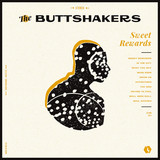
Driven by a vicious and visceral soul, The Buttshakers are known for their fierce and fiery music: turntables steam from the heat of their records, dance floor buckle under the blistering pressure of their infectious grooves, a group with a burning Midas' Touch.
Yet after nearly a decade of touring and recording, it was with a different musical vision that they approached Sweet Rewards, their first collaboration with Underdogs Records.
Accustomed to the raw, primitive sounds of 60s garage rock and the crude sexuality of pre-Motown soul music, the Buttshakers have created a reputation as a must see live band perfectly aligning loud rock riffs and lustful desires. A sound they could have continued to dig into again and again. Instead they decide to take another route. A creative shift, a return to a style of soul music that no longer has to rely on pure energy alone, a sound that concentrates on the quality of writing composition and interpretation rather than pure virility.
Back to back in-demanders from producer - King Jammy's vaults recorded and mixed by Jammy at Channel One studio, Two of Johnny Osbourne's finest roots classics seeing first time single release complete with their lethal dub companions. Hi-Times band in full effect, top draw vocal and dubs cut loud and proud and housed in the classic Greensleeves 12" bag.
Motörhead, Kings of the Road for over förty years, are immortalized one more time in Clean Your Clock, the superb live album recorded at The Zenith in Munich, Germany during the Winter 2015 Bad Magic tour. The indomitable cocktail of power, purpose and head-crunching volume that Lemmy Kilmister, Phil Campbell and Mikkey Dee always succeeded in producing is captured superbly by long-time producer Cameron Webb's mix, giving this landmark Motörhead release the warmth, curve and punch which helped the band achieve international acclaim during a career which saw the Grammy-winning icons sell over 15 million albums and play to millions worldwide.
Clean Your Clock is also a fitting salute to the power of Ian 'Lemmy' Kilmister, who founded Motörhead back in 1975 and so sadly passed away on Dec 28th 2015. Recorded only weeks before, Lemmy snarls, roars and bangs that bass with the magisterial air of a man who knows he's a leader.
Perhaps more than with any other Motörhead album, you need to TURN-THIS-UP because as Lemmy himself said, the only way to feel the noise is when it's good and loud...
This special collector's edition electronically reproduced stereo 7' single (only 200 copies), comes in two fantastic coloured vinyl options (100 x red vinyl and 100 x purple vinyl). A refreshingly new take on mono to stereo conversion. Elvis fans growing up in the 1960's and 1970's unwittingly listened to his 1950's catalogue in electronically reprocessed stereo, love it or loathe, it was pretty much all there was back then unless you could afford to track down expensive mono copies. To better understand where the electronically reprocessed stereo versions originate from, we need to go back to 1961, at which point RCA had begun the process of taking Elvis' 1950's mono masters and converting them into a stereo sounding effect. By 1960 when Elvis returned from the army, he was recording in true stereo and as far as RCA were concerned, mono was a thing of the past. You just need to listen to the sound quality of the 1960 'Living Stereo' version of the 'Elvis Is Back' album, to appreciate just how much the recording industry had moved on in just two years. Such was the demand for stereo records in the early 1960's most major labels had created their own process for converting mono into stereo or 'fake' stereo as it became known, with some labels producing better results than others. Opinions on Elvis' 1960's electronically reprocessed stereo versions are mixed, with some recordings making the transition from mono to stereo effect better than others. Some DJ's actually preferred playing the electronically reprocessed stereo versions, believing they gave a wider fuller sound on the dancefloor. By late 1970's, RCA had once again begun to re-issue original mono masters, giving many fans their first opportunity to hear how these tracks were originally issued. By the time compact discs had arrived on the scene in the 1980's, electronically reprocessed stereo was well and truly dead and buried. Very few electronically reprocessed stereo recordings ever made it onto a digital format and the few that did are now highly collectible. Recorded at RCA Studio 1, New York on the 30th of January 1956, My Baby Left Me is a driving powerhouse rockabilly masterpiece with a real Sun Records vibe to it (produced by Steve Scholes with Elvis on vocals and acoustic guitar, Scotty Moore on electric guitar, Bill Black on bass and D.J. Fontana on drums). Our flip side Blue Moon Of Kentucky is another rockabilly classic which first appeared as the opposite side to That's All Right (Sun 209) in 1955 (Elvis' first single). Blue Moon Of Kentucky was recorded on the 7th of July 1954 at Sun Records (produced by Sam Phillips with Elvis on vocals and acoustic guitar, Scotty Moore on electric guitar and Bill Black on bass). Both tracks have been painstakingly re-engineered to create a stereo effect sound. The result is a bigger, sharper sound that jumps straight outta the grooves at ya! One reviewer described the process as - it's as if a veil has been lifted off the tracks'. Both tracks are taken from the forthcoming album titled 'Elvis Presley - The 50's In Stereo' (mono to stereo re-visited). For best results play this killer double-sider very loud!!!
This special collector's edition electronically reproduced stereo 7' single (only 200 copies), comes in two fantastic coloured vinyl options (100 x red vinyl and 100 x purple vinyl). A refreshingly new take on mono to stereo conversion. Elvis fans growing up in the 1960's and 1970's unwittingly listened to his 1950's catalogue in electronically reprocessed stereo, love it or loathe, it was pretty much all there was back then unless you could afford to track down expensive mono copies. To better understand where the electronically reprocessed stereo versions originate from, we need to go back to 1961, at which point RCA had begun the process of taking Elvis' 1950's mono masters and converting them into a stereo sounding effect. By 1960 when Elvis returned from the army, he was recording in true stereo and as far as RCA were concerned, mono was a thing of the past. You just need to listen to the sound quality of the 1960 'Living Stereo' version of the 'Elvis Is Back' album, to appreciate just how much the recording industry had moved on in just two years. Such was the demand for stereo records in the early 1960's most major labels had created their own process for converting mono into stereo or 'fake' stereo as it became known, with some labels producing better results than others. Opinions on Elvis' 1960's electronically reprocessed stereo versions are mixed, with some recordings making the transition from mono to stereo effect better than others. Some DJ's actually preferred playing the electronically reprocessed stereo versions, believing they gave a wider fuller sound on the dancefloor. By late 1970's, RCA had once again begun to re-issue original mono masters, giving many fans their first opportunity to hear how these tracks were originally issued. By the time compact discs had arrived on the scene in the 1980's, electronically reprocessed stereo was well and truly dead and buried. Very few electronically reprocessed stereo recordings ever made it onto a digital format and the few that did are now highly collectible. Recorded at RCA Studio 1, New York on the 30th of January 1956, My Baby Left Me is a driving powerhouse rockabilly masterpiece with a real Sun Records vibe to it (produced by Steve Scholes with Elvis on vocals and acoustic guitar, Scotty Moore on electric guitar, Bill Black on bass and D.J. Fontana on drums). Our flip side Blue Moon Of Kentucky is another rockabilly classic which first appeared as the opposite side to That's All Right (Sun 209) in 1955 (Elvis' first single). Blue Moon Of Kentucky was recorded on the 7th of July 1954 at Sun Records (produced by Sam Phillips with Elvis on vocals and acoustic guitar, Scotty Moore on electric guitar and Bill Black on bass). Both tracks have been painstakingly re-engineered to create a stereo effect sound. The result is a bigger, sharper sound that jumps straight outta the grooves at ya! One reviewer described the process as - it's as if a veil has been lifted off the tracks'. Both tracks are taken from the forthcoming album titled 'Elvis Presley - The 50's In Stereo' (mono to stereo re-visited). For best results play this killer double-sider very loud!!!
Most of the musicians who gathered to record this fantastic spiritual jazz record for the Strata-East label on May 24th, 1974 had crossed each other's paths in various musical pairings over the preceding few years. Husband and wife team Dee Dee Bridgewater (vocals) and Cecil Bridgewater (trumpet) had been working together on albums like Frank Foster's "Loud Minority", and Roy Ayers' "Coffy" and "Virgo Red". Ten weeks before the "Freedom Of Speech" session, the couple had been joined in Tokyo by Cecil's brother Ronald Bridgewater (tenor saxaphone) to record Dee Dee's debut album, the beautiful "Afro Blue". Also in the studio on May 24th, 1974 was Donald Smith, (piano, vocals), fresh from recording on his older brother Lonnie Liston Smith's "Cosmic Funk" - on which Ronald Bridgewater had also played percussion. Cecil McBee (bass) was also there - just two weeks before, he'd completed his own Strata East date "Mutima", and in February he'd played on Mtume's "Rebirth Cycle" - with both albums also featuring Dee Dee Bridgewater on vocals. He'd also played on Lonnie Liston Smith's "Astral Travelling".
So 1974 was a huge year for all five of these people. Donald Smith and Cecil McBee were six months away from recording on Lonnie Liston Smith's massive "Expansions", with McBee fitting in a few Pharoah Sanders albums in between.
AND THEN, THE MYSTERY ... So with all this fervent activity, the question has to be asked ...Who was Billy Earl Parker Jr (drums), the leader of this session
Billy Parker remains unlisted as a musician on all major jazz sites. His only other recording appears to be as a percussionist on Charles Tolliver's "Impact" in 1975. Then there's nothing.
Finally, by backtracking one of those Zoom info pages, I found a summary of a "SUNY Rockland Community College" 2002 press release that no longer exists :
"Billy Parker's Fourth World Legacy Concert ...The concert, Billy Parker's Fourth World Legacy, is the eighth annual tribute honouring the late percussionist and RCC educator, Billy Parker. A long-time Rockland County resident, Parker began his affiliation with RCC in 1987, building its jazz program and maintaining his life-long tradition of teaching and inspiring others. A lifelong student himself, Parker was near completion of his doctorate in music education at New York University when he died in 1996.
But then people began to read this blog post, and in the comments, Aaron Fuller said :
"Billy Parker was my uncle. He was an incredibly talented, smart, and kind man. I'm very happy to see that folks are still enjoying his masterpiece. Just to give you a bit more information about him... He was born and raised in Buffalo, NY and then attended college at Michigan State University. He met my aunt in Lansing. They lived in NY and toured in Europe for quite a while. Sometime later they relocated to Nyack, NY and he ended up on the faculty of the community college while he pursued advanced degrees from NYU. He was an Ellington scholar. Although his name isn't well-known even among the most avid jazz fans, I think that if you were to talk to some of the great NY musicians that were around in the late 60s and 70s you would find that most knew him. He also had a huge impact as a music educator and I have no doubt that his former students are all over the place, continuing to put his love of the art into practice."
Super Rhythm Trax boss Jerome Hill is back on the label with 3 otherworldly tracks cut loud for maximum dancefloor devastation. Beginning with the wistful acid pump of 'Back & Forth' moving through to the alien jacking of 'Weird Language' and leaving you wide eyed in the grip of 'Close Encounters'.
The 'industry' of dance music can be as soul-crushing as any other. Those thrills and spills of late, loud nights come with a best-before expiry date, after which even the most seasoned selector-producer-scenemaker begins to wrinkle their nose. To have experienced it all over 15+ years and seek to see it unfold again through fresh eyes, what sort of lunatic would willingly put themselves through that V would. So it's a new character, but who was the mysterious V in a past life Make your own conclusions. A little digging will lead you toward the origin story, but sometimes the pleasure comes from the unknowing. Opt to enjoy the Silence. Silence, however, is not the focal point for V. In fact, this new form is a way to discard baggage and revitalise the process of music making. Tremors had become to show up in recent years on record labels in Glasgow and London, flickers of subterranean volcanic activity. Yet what proved to be rising was no big bang, nor even a phoenix from the ashes - but closer perhaps to a Nautilus. A relic by some standards but a pretty point of curiosity to others, slowly bobbing to the surface. Something ever-present and familiar to thousands, yet with mysteries left to be revealed. But hey - what does V stand for anyhow For Vilnius By origin and by where the heart lies, yes, although V for Vedett is also an acceptable answer given the artist's transposed second home of Belgium; so too is V for Volkswagen, given the production work put in around Frankfurt as of late. For Vendetta Too strong, although V does bear a grudge match against hobbyists and dilettantes. If you're going to be a new name in town, you may as well be a new name in town with years of hidden history, right For Vishnu Perhaps this is the one. V's tangle of arms extend forward in many directions: some clutching 303s and LinnDrums; others pushing fingers i
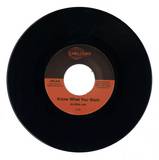
Melodies International proudly moves forward with an elusive piece of mid-tempo Chicago soul originally performed by Gloria J. Jennings in 1977.
Gloria was signed to Stage Productions as a gospel singer with pure and raw talent she had developed in the choir of her father's Southern Baptist Church. She was 16 years old at the time. To tutor her for R&B vocals, Willie C. Nance of Stage Productions spent 3 months taking the artist back and forth for vocal training 25 miles each way, 3 days per week.
At the time, Mr. Nance had made plans to work with singer and songwriter Theresa Eagins to record Know What You Want'. However, two days before the recording was set to begin, Ms. Eagins refused to move forward with the recording as she chose to take her religious faith more seriously and forgo the singing of secular music. Hence, Stage Productions turned to Gloria Jay to perform a song that would go on to move people thousands of miles away, many years later.
One of them was Patrick Forge: Back around 1990 I had a residency upstairs at the Wag Club on a Friday night alongside Paul Martin (he was Gilles P's A&R right hand man at Talkin Loud), the night was called Respect and we played mainly Soul, Boogie and Jazz-Funk. Many years later I bumped into Paul at a record shop and he quizzed me about a tune I used to play at the end of the night at Respect. Hhe described it as being an independent Soul seven inch on a red label, slow to mid tempo... and more to the point a bullet of a record. It piqued my curiosity so much I burrowed through my seven inches and even made Paul a compilation of likely contenders, his response was lovely selection, but it's not on there!'. Damn, a mystery! Many moons later whilst I was living in Japan, my tenant in my London flat said she'd found an old mixtape I'd done for her way back when and was desperate to know the identity of something she was calling the choo choo song'. Eventually when I was back in London she played the mixtape and I quickly identified her tune as Fabrica' by Cesar Mariano, however letting the tape play some time later a familiar descending chord sequence catapulted me back to those Friday nights at The Wag, and Gloria Jay's plaintive vocals reminded me of a record that had been absent from my life for far too long. I've no idea what happened to my original copy, I hunted another one down straight away, and I've kept it close ever since. Know What You Want' is a song that goes deep in such a simple, unaffected, almost naive way, Gloria's voice is both sweet and raw, it's built on simple chords and obvious instrumentation, but it's so much greater than the sum of its parts.
Know What You Want' is soul music, pure and unadulterated, there's nothing getting in the way of the feeling, it's straight from the heart.' Carefully re-mastered from the tapes, MEL008 comes forth in its original 7' format with a 14'x14' poster.
Super deluxe lo fi 7" grape-colored vinyl housed in DIY low-budget sleeve, + includes "I love my VCR Sticker"
WRWTFWW Records is thrilled to announce the release of the long anticipated, always delayed, 30-years-in-the-making PSYCHOS IN LOVE Original Soundtrack, available at last and for the first time ever in a super deluxe low fidelity _7" grape-colored vinyl edition, housed in a DIY no-budget sleeve, and loaded with extras, including words from film director Gorman Bechard, lyrics of the theme song, a promotional postcard with a picture of the cast, a poster of a woman attacked in a bathroom, and the infamous as-seen-in-the-movie "I LOVE MY VCR" bumper sticker!
Filled with sleazy funk, macabre synths, homemade electronic kitsch, anti-grape propaganda, and rewind-worthy dialogue excerpts, Psychos In Love is the ultimate lo-fi horror-romcom soundtrack adventure with a theme song so memorable you'll find yourself humming it every morning. In Gorman Bechard's words, "For the Psychos In Love theme I purposefully wrote what I hoped were the worst lyrics of all time, giving them to Carmine Capobianco with one note, 'use them to write the worst song of all time.'"
The movie Psychos In Love (1986) is a trenchant, laugh-out-loud indictment of slasher films, romantic comedies, and grapes (that's right, pal, grapes), a true genre-defying post-modern cult classic that will wind its way into your heart as its characters work _their way through vats of gore. Packed tight with sly homages to - and parodies of the work of such cinema legends as Alfred Hitchcock, Woody Allen, Roger Corman, Groucho Marx, and Gerard Damiano, Psychos In Love foreshadows the grand guignol culinary delights of Silence of the Lambs, served up with a healthy portion of wry wit and all-American t&a.
Much may have changed over a two-decade period, but Drumcode's commitment to releasing the scene's most cutting-edge and refined techno remains resolute. 2017 has already seen releases from Adam Beyer Vs Pig&Dan, Alan Fitzpatrick, Ilario Alicante, Julian Jeweil, as well as a debut album from Layton Giordani. The label continues push forwards; bringing fail-safe, club-ready music to the techno community.
Perennial pushers of the techno envelope, Dense & Pika are renowned for their standout studio output that seems to constantly conjure up a particularly unique take on their distinct sound, D&P have rather outdone themselves in 2017.
Kicking off the year with a selection of back catalogue remixes from the likes of Danny Daze, Scuba, Slam and Yotam Avni that illustrated the high esteem in which D&P are held by their peers right across the spectrum; From heritage acts to current headliners and cutting edge talent, the duo have gone on to drop bomb after bomb after bomb.
Their universally lauded remix of Tiga's 'Louder Than A Bomb' was the first of a run of chart topping cuts; With a remix of ME & her's 'Wild Rage' on Jamie Jones' Hottrax imprint and their own 'Casino' single both challenging the norm of what techno sounds like in the here and now.
Cooked up with a more melodic vibe and fusing elements of house and techno, Dense & Pika's latest outing on Drumcode offers something different compared to their previous work.
There is still that vintage feel to each of the tracks with analogue sounds and arrangements born and developed from experimental studio jams. Indeed, 'Suki' heavily utilizes the distinct harmonic tones of the Dave Smith Prophet 8 keyboard. While 'Little Sun' - A staple of D&P performances over the last three months - delivers a more classic Drumcode sound. 'Lanky' closes out the release with an infectious slab of wonderfully wonked-out raw funk.
out of Stock
Last delivered 5 months ago available to reorder, subject to availability
Genre blending and audience crossing drummer/percussionist Eric Thielemans is proud to present a brand new, exciting combo together with Rudy Trouvé , Mauro Pawlowski , Roman Hiele and Jean-Yves Evrard . With this eclectic band ET sets out to explore, or rather rub against the obscure repertoire by Jazz masters such as Ornette Coleman, Alice Coltrane, Sun Ra and Albert Ayler .Are The Mechanics a Jazz combo The Mechanics don't know. As of yet, The Mechanics have no real memory of their own. What they do know is that they are impatient to check out the mechanics behind those musics that tick their tock. They will do so as they are feathered. In colours, primal and expressive. And what better way to understand something than by breaking it and then trying to fix it .Tagging The Tag : The Ex, Liquid Liquid, Ornette Coleman, Sun Ra, James Chance, Alice Coltrane, Aphex Twin, Roland Kirk, John Cage, The Love Substitutes, Hiele, Evrard, Trouvé, Pawlowski & Thielemans.
Tag Away ! The Mechanics is an exciting new band operating out of Antwerp, home base to bands and musicians such as dEUS, Evil Superstars, Dead Man Ray, Chantal Acda, Tape Cuts Tape, Gruppo Di Pawlowski, The Love Substitutes, Kiss My Jazz, Mâäk's Spirit, The Mechanics bring together 2 generations of musicians out of the avant jazz, improv, rock, songwriter and electronics scenes. Mixed into an exciting cocktail of energies childishly bald and raw, maturely tender and constructive, spiritually curious and rocking loud with electronic burning sonic edges.
fter the world applauded sascha funke for his latest album 'lotos land', he gave away some tunes to friends for remix duties.
düsseldorf based tolouse low trax formed 'twirl' into a foggy dark mpc-seducer for romantic nighthawks that love dancing.
also australian boy dreems prepared a remix that grooves odd and uncommon. his percussive version of 'im feiern und feuer' is a slow whirlwind, perfect to start and end a great dj night.
with tuff city kids a duo formed a remix that is good for big room love affairs. their version of 'purple hill' is a heartfelt melange between trance and house deepness that works on any dance floor.
the final edit comes from glasgow's junto club, who transformed 'comola', a tune that they already produced originally with sascha funke, into a longing dark melodic synth stepper.
four versions, four hits, four atmospheric dimensions beyond words. tune it loud!
130 Limited is a new born label, downtempo techno down to 130 BPM, inroducing the first record from Nico Pluto, from Brittany. 2 solid electro tekhouse tunes, trippy and progressives... Loud sound 45 RPM mastered and cut by Shane The Cutter !
4 pumped up jams for djs to take control - don't hold back, just let go and feel the n·r·gee. Early support by Eduardo De La Calle, Jennifer Cardini, Andrew Claristidge, Gilb'r, Daniel Kyo, Photonz, Angel Molina... Points of interests - Only for the headstrong tripping on strictly undeground massive hits. - For fans of techno, warehouse, (old school) breaks and bleeps. - Pure reel-2-real analog recording and extra loud mastering by F.Stader at MMM. - Features 6 eternal loops and bonus samples for extended dj pleasure. - 121th release from renowned Swiss Mental Groove Records est. 1989 (Dj Rush, Eduardo De La Calle, Sun Araw, Miss Kittin, Luciano, Brodinski, Donato Dozzy,...), also home of Musique Pour La Danse (Olivier Abbeloos, Frankie Bones, Orlando Voorn, Nate Krafft, Dirk De Saever, Todd Sines...) and We Release Whatever The Fuck We Want (Midori Takada, Michel Legrand, Kenji Kawai, John Carpenter...).
'Your Satisfaction' first appeared on a mysterious CDr back in 1996. Produced by a well known Belgian band interested in experimenting with electronic sounds, it became part of Moneymax' first and only album called 'Analog Beats For General Use'. The track remained a well kept club secret that didn't get much play outside of Belgium, though on home turf its forward thinking aesthetic ensured a fair few spins on Sven Van Hees' legendary 'Liaisons Dangereuses' radio show. More than 20 years later, 'Your Satisfaction' finally finds its way onto vinyl. Belgian dj Gratts' sleazy extended treatment, remastered and cut loud and clear, will satisfy any adventurous slow motion dance floor. Flip the record for a whole other universe dreamed up by Gratts and partner in crime Eluize. Inspired by the original, the pair turn Moneymax into Ca$hminus to deliver two tracks born in a place where Belgian new beat, EBM and early rave sounds meet. The result is club monster 'No Satisfaction', which comes in two incarnations: the original vocal version plus an even meaner acid dub for those anxious strobo moments.
An addendum horrificata to the fantastic LP, Haex-Hrll AKA DJ Overdose returns from the nether regions of space with a louder dancefloor cut of sleeper hit 'North Of Warren' accompanied by witchy and dread filled extras. Remixes are provided by label heads Antoni Maiovvi who takes Test Tube Babies from the 'Further From The Truth' LP into tripped out waters and Vercetti Technicolor, who reimagines 'North Of Warren' for blood-soaked 90s Hollywood vampires. Brand new master by Brassica! Art by Eric A. Lee.
Between the end of the 70's and the early 80's, a new sound appeared in London and its surroundings, a unique mix of Funk, Jazz-Funk and Disco labelled as Britfunk. Characterized by its raw energy that can put the needle In The Red, this up-tempo sound was a match for the UK's dancers and Jazz-Funk clubs.
This first release by French label Chuwanaga features some of the most exciting, rare and powerful tracks from that era compiled by the Parisian DJ and activist Saint-James, with bands such as Equa, Potion, Inch by Inch, Congress, Index and Spookey. It features also an insert with an in-depth focus on this musical era.
These young British musicians were equally inspired by the American Jazz-Funk productions and by Dub music and Reggae pushed by the Afro-Caribbean community who were at the heart of Britfunk's development. They gave Funk a unique British flavor. However, more than just a music genre or an enclosed expression of black Britishness, it was part of a genuine musical and social movement with its own dedicated labels, fashion sense and most importantly its own set of values that fueled the whole scene. Britfunk built itself within a multicultural evolution: black people, white people, straight and queer, all dancing in the same room to the same loud sound.