Miles Away Records are proud to introduce a brand-new, never before released piece of music.
In September 2024, Rob J Madin reached out to us with a collection of instrumental covers he had created. Immediately drawn in, we loved both the musical approach to these covers and the fact he tastefully selected these tracks to cover. Following up, we asked Rob, an accomplished musician, if he had any original compositions in a similar style.
The result is "MONSTRO", six instrumental slabs of jazz-funk heat! Produced primarily in Rob's attic studio in Sheffield. Rob showcases his talents on guitar, bass, keys, and percussion, with each track built around iconic drum samples. Listeners can expect spacey synths, silky electric pianos, and irresistible hooks. Think BADBADNOTGOOD meets Mildlife with a side plate of Herbie Hancock.
From the kick-your-door-down energy of "Callisto Disco" to the slow-burning allure of "Heartbreaker" and optimistic sunny day feel of "Cherryade" to the fully grown earworm synth lines of "Bouquet Garni". In addition to four original songs, the collection features two cover versions from that initial SoundCloud link: Michael Miglio's "Never Gonna Let You Go" and Rupa's "Ayee Morshume Be-Reham Duniya." Both are rare early-80s gems, wonderfully reimagined by Rob.
"MONSTRO" will be officially released on May 16th, 2025 on digital and physical formats. The 12" EP comes with printed inner sleeves and is pressed at 45rpm for maximum audio depth.
Suche:2 mad
Jules Elipse from Paris, Tursio from Australia and Drowncast from West Coast US on the first in a series of collaborative releases.
Three flavours of jungle, from the raw late leanings of WBD to the jump up inspired Wanna Be and the more melodic vibe of Celestial Plain. Something for everyone, assuming everyone is a fan of jungle that sounds like it was made in the mid 90s.
"Dame café", originally released on Discos Fuentes in 1965 to meet the tropical music demand of the time, features a mix of traditional rhythms like vallenato and cumbia, alongside more experimental beats. The vibrant musical scene of the 1960s in Colombia owes much to a group of versatile accordionists who blended genres such as cumbia, charanga, guaracha, vallenato, and Cuban-influenced rhythms. This group included notable figures like Andrés Landero, Aníbal Velásquez, Lisandro Meza, and Alfredo Gutiérrez, among others. A prime example of their diverse musical styles is the album "Dame café", released in November 1965, which features a mix of traditional rhythms like vallenato and cumbia, alongside more experimental beats such as paseaíto and pasaje. The album includes six previously released singles composed by José Castro, Policarpo Calle, and others. The album highlights the commercial strategy of Discos Fuentes, which often created short-lived studio bands to meet the tropical music demand of the time. Los Gavilanes de la Costa, the band behind "Dame café", had a brief existence but left a lasting impact, especially in Mexico's sonidero scene. The group's creation was driven by the high demand for tropical music in the 1960s, with many musicians adjusting to market trends. Most of the members, including composers Campillo and Castro, vanished from the scene, while others, like Calle and Zambrano, went on to have notable careers in music. Calle, in particular, became a cumbia legend, later settling in Mexico City. The album "Dame café" has gained cult status due to its rarity and the intrigue surrounding its origins. The album features a remarkable contribution from Colombian jazz legend Justo Almario, who, at just 16 years old, played tenor sax on the track 'Pues no da pa' más'. Over the years, pirate editions and elusive original copies have made it a highly sought-after collector's item. The album's lively sound, combining accordion melodies, deep bass, and vibrant guacharaca rhythms, continues to resonate in the tropical music scene.
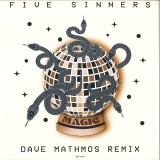
With the reissue of ''Magic" the circle of the works originally published by Eyes Records and composed in the earliest 80s by Celso Valli is completed: Future State, Blue Gas and now precisely Five Sinners !!! Best Record thus creates ''the triplet'' of the Italo-Disco operas made by the immense musician from Bologna, who used various nicknames at that time - as the trend of the main Italian arrangers - feeling 'a certain shame' in making commercial pieces, songs that were danced in the discos. He hid under dozens of pseudonyms (Adal-Scandy, Azoto, Bulldog Lama, Sandon, Super Band....) ''Magic'' and ''Precious Lies'' kept hidden, almost buried for over 40 years (but with many followers abroad) now shine their own light! Indeed. To further enrich this latest vinyl production by Claudio Casalini there is - in addition to the successful artwork of graphic designer Nerina Fernandez - the new captivating version of ''Magic'' (timing 6'20'') skillfully remixed by the talented Italian-Australian DJ-producer Dave Mathmos. In short, a 12-inch reissue not to be missed for both collectors and club DJs.
- A1: Sepehr - Twilight Calls
- A2: Sissy Fuss - No Restraint Instrumental Def
- A3: God Is God - Na Gore More Dub Edit
- A4: Alex Loveless - Voicenote
- A5: Suemori - Kisou
- A6: Mari Herzer - Limbal Ring
- A7: Elena Colombi Feat Juno Roche - Lost In A City
- A8: Loma Doom - Sisterresister
- A9: Decha - Mujeres
- B1: Pose Dia - Lovers Rock
- B2: Low End Activist - Need To Know Blue Room Version
- B3: Decha Wir Sind Da
- B4: Mayurashka - Libra Man
- B5: Nar John Silvestre - Ensel Ham
- B6: E-Bony - Slow Machines
- B7: Riva Ft Tommy Khosla - Resurfacing
- B8: Anenon - Length-Of-Night Improvisation
Following on from the celebrated first instalment, the second part of The Male Body Will Be Next compiles an entourage of daring sonic experiments, composed in response to bell hooks’ landmark book The Will to Change. Prompting artists and musicians to envision cross-gender solidarity, Osàre! Editions founder Elena Colombi presents an enrapturing, narrative album, conceptualised around collective transformation.
Resonating with hooks’ challenge to men to reclaim the sensitivity that patriarchy denies them, the name of the record arises from a photograph by Peter de Potter and Rebecca Salvadori’s film of the same title. In these depictions, naked flesh is exposed, made vulnerable and trembles with emotion as the fragility of masculine bodies are examined through the queer and female oppositional gaze. Transforming this visual language into musical expression, The Male Body Will Be Next swirls with punk vitriol, electrified noise, acid, electro and free-wheeling encounters charged by love, lust and limerence.
Gently plunking chords signal Pose Diva’s reimagining of lover’s rock before Sissy Fuss smashes in with a heavy-weight instrumental version of their erotic anthem ‘No Restraint’.
Made up of Turkish musician Etkin Çekin and Belarussian songstress Galina Ozeran, God is God delivers a gentle lullaby, while Low End Activist flirts with dark and brooding bass, shattering penetrating frequencies into luminous fragments. Riffing off the 2020 documentary about female early electronica pioneers, Loma Doom crafts a slowly oscillating drone zenith, the ultimate climax. In line with the conceptual underpinning, there are plenty of collaborations – Daytripper’s Riva and Sitar player Tommy Khosla, Lebanonese experimentalist N R and Swiss-French producer John Silvestre (AKA Typhon), as well as Colombi herself and trans author/activist Juno Roche. Within these partnerships, new modalities come alive as mediums, practices and perspectives are ignited and pushed in otherworldly, metamorphic directions.
In 2020, when I had just started Future Retro London & was messaging producers I wanted to work with on tracks for the Meeting Of The Minds releases, I reached out to Worldwide Epidemic and we made "Losing Control" on Vol. 2 of Meeting Of The Minds, one of my favourites of the series.
I was quite keen on getting him back on the label at some point in the future & I can't remember exactly the chain of events that transpired during then and now (I'm sure I told him at some point to work on some music for me but I honestly can't remember how or when I did this, sorry Dan!) but around the start of 2023, he sent me Bells Of Arptazia & I knew it was perfect for the label.
Without a doubt, it's my favourite tune of his and to be honest, I'm actually a bit jealous of how lush and intricate that intro is and when I was in New Zealand on tour in March this year, he showed me the project file for it and the amount of detail that went into this tune, I'm really glad that he was willing to let me release this tune on Future Retro London.
To accompany his tune, there's remixes from Kloke, me & Dust-e-1, all taking the original into different directions to make for hopefully a well rounded release, representing a variety of styles & flavours.
Thanks to Liquid Silk for his fantastic track, to Kloke & Dust-e-1 for their remix work & to James Lacey (aka Pointless Illustrations) for the artwork.
Respected Swedish drummer and composer Dennis Egberth introduces new sextet in his first album with 577 Records.
"If you love the era in which electronic elements began to enter contemporary jazz, you’ll love what Sweden’s Dennis Egberth has been creating. The esteemed drummer/composer introduces us to his hand-chosen ensemble, The Dennis Egberth Dynasty, in the artist’s first album with 577 Records. The self-titled release highlights his creativity, painting a hypnotic soundscape that soothes the soul.
Experimental wizard Dennis Egberth is known for his distinguished approach to experimental music, free improv, and alternative pop, as well as his fascinating skills in blending cosmic composition and chilled ambient and electronic sounds. He presents floating melodies of irresistible bass lines and long, modal buildups that come alive with exploding lyricism. His new record highlights his compositional roots and was inspired by the evolution of electronics in this genre during the late ‘60s and ‘70s.
Egberth fused his talents with those of Fredrik Ljungkvist on tenor sax and clarinet, Niklas Barnö on trumpet, Alexander Zethson on Wurlitzer, Linus Hillborg on electronics, and double bassist Joe Williamson, forming an unforgettable sextet. Together, they’re more like a thriving ecosystem than anything else. Each member brings critical elements from their dynamic roles in the Swedish and European creative music scene and contributes them to the manifestation of a higher wave of sound unlike any other."
Tenor saxaphone and clarinet by Fredrik Ljungkvist.
Trumpet by Niklas Barnö.
Wurlitzer by Alex Zethson.
Electronics by Linus Hillborg.
Double bass by Joe Williamson.
Drums by Dennis Egberth.
Recorded by Niclas Lindström on December 14, 2023 at Atlantis Studio, Stockholm, Sweden.
Mixed by Anders af Klintberg.
Mastering by Kristofer Göransson.
Cover painting by MiHee Kim Magee.
Graphic design by Mark Smith.
All music by Dennis Egberth.
This record was made with support from the Swedish Arts Council.
"Grey Hoodie is the 1st official album of the young producer and DJ Pentola, born in Apulia and based in Milan. Grey Hoodie is a mixture of electronic vibes inspired by the UK sound from 90s and 2000s. Broken-Beat, UK Garage, Jungle, Deep-House are the ingredients of these 8 tracks in which you can also recognize a post-Dilla flavor, all embellished by the presence of jazz musicians like Stefano De Santis, G-Foxxx and Stefano Nardon, and the singer Aljiaa. Anyone could write a good review of this album just by listening to the snippets that compose it and realize the conceptuality of the work that aims to achieve different goals, including that of being the album made with the greatest passion possible and with the greatest spirit of aggregation. Grey Hoodie is Pentola's sonic refuge, the place where the artist feels most at ease, where he manages to bring together the harmonies of jazz with the percussions and grooves of modern electronic music with that "touch" inspired by J Dilla, leader of Detroit's underground hip-hop scene in the mid-1990s."
The first release to document the solo cello work of musician and composer Lucy Railton, the 40-minute composition Blue Veil recorded at Église du Saint-Esprit in Paris invites listeners into the realm of precision-tuned states of resonance: states made manifest through Railton's careful traversal of her cello's most subtle acoustic characteristics as they harmonically interlock with mind's embodied modalities of attention and imagination. Blue Veil arises out of, is sustained in and finally dissolves back into Railton's momentary presence with her intimate connection to the cello, a way of hearing that allows for a deeper engagement with harmonic resonance, one that opens a space for immediate encounters of mind and sound. Railton's exploratory practice of harmonic perception emerges from a focus on the physical qualities of intervallic and chordal sounds, their textural qualities, degrees of friction, and inner pulsations. Composing in the moment guided by resonances within the cello's body, her own, and their shared vibrational space, Railton moves through Blue Veil by giving sounds what they ask for: sounds of pure texture manifesting as a move through temporal transparency, sounds of rough texture marking regions of dimensionally dense space. Railton's creative and highly refined use of just intonation harmony deforms sound's inner movements in ways that suggest a mode of listening that actively supplies imagery of sounds implied or completely absent rather than merely savouring those fully present. This active mode of "listening-with", playfully and semi-metaphorically referred to by Railton as "sing-along music", allows listening to reflexively participate in the music's movement as it gradually passes through richly saturated domains of harmonic imagination. And just as the precision-tuned tones of Blue Veil lose their individuality when fusing multifaceted uniformity, listening's structures of reference and recognition dissolve into nameless waves of intensity, continuously unfolding themselves upon and merging with the listener. Blue Veil is the result of a deep exploration of the inner worlds of tuning, an undertaking in turn informed by and emerging out of Railton's realisations of the music of Catherine Lamb and Ellen Arkbro, her collaborative work with Kali Malone and Stephen O'Malley as well as her interpretive practice in performing the work of Maryanne Amacher, Morton Feldman and others.
A sonic journey across Tweak's collection tracks that offering a unique blend of rhythm and atmosphere.
"Generations" stands out with its pulsating grooves and hypnotic melodies, fusing electronic precision with an old-school soul. The "Red Rover" (Rework) injects fresh energy, layering tight beats and atmospheric synths for a tension-filled club experience. "Fathorn" dives into darker, tribal territory, driven by deep bass and mesmerizing percussion that evoke a ritualistic intensity. Meanwhile, Raw Deal’s Freedom Time remix of "Fathorn" expands on this mysticism, infusing the track with a freer, more fluid groove that heightens its immersive power.
For this record, Back To Life made a 100% recycled vinyl that reduce waste, minimize environmental impact and support the planet.
Daryl Systems: The Wall Street Investor Turned Synth Maestro_
Daryl Systems, a former Wall Street stockbroker, found his true calling in music after a successful career in finance. Born and raised in the heart of New York City, Daryl made his fortune in the high-stakes world of stocks during the booming 90s. By the mid-90s, he had amassed significant wealth, allowing him to retire early and turn his attention to his lifelong passion: music.
Daryl relocated to Sweden, a country known for its rich history of electronic music, and began amassing a vast collection of vintage synthesizers. Inspired by the analog sounds of 70s and 80s synth music, Daryl became deeply immersed in the world of electronic production, creating lush, nostalgic melodies with a modern edge. His music blends the warmth of classic synths with innovative soundscapes, capturing a sense of retro-futurism.
Daryl's work is rooted in the tradition of vintage synth music, drawing influences from early electronic pioneers, while adding his own contemporary twist. He quickly gained a reputation within the underground scene for his impeccable taste in synthesizers and his ability to weave intricate, atmospheric tracks. His unique background and sound have made him a sought-after producer within the global electronic music community.
Mr. Fantasy: The Latin Italo Lover and Synth Collector
Mr. Fantasy is a true embodiment of the Italo disco movement, with a deep love for the genre and a keen passion for synthesizers. Hailing from Latin origins, Mr. Fantasy’s music is a vibrant tribute to the golden era of 80s Italo disco, blending nostalgic melodies with rich, rhythmic layers. With a particular obsession for collecting vintage synthesizers, Mr. Fantasy's music brings the analog warmth of the past into the present, creating a captivating blend of melodic hooks and captivating synths.
He grew up listening to the Italo disco classics, developing a fascination for the genre's distinctive sound, which he now incorporates into his music. Mr. Fantasy’s tracks are filled with pulsating beats, dreamy synths, and smooth basslines, all influenced by the golden age of Italian disco and electronic music.
His passion for synthesizers is matched only by his dedication to creating the perfect track. By blending his Latin roots with the shimmering sounds of Italo disco and the energy of modern electronic dance music, Mr. Fantasy has carved a niche for himself in the underground electronic scene.
The Collaboration: "Sensazione Elettronica" EP
In a highly anticipated collaboration, Daryl Systems and Mr. Fantasy have teamed up to release a new EP for the Italian record label Maledetta Discoteca. This collaboration brings together their shared love for vintage synthesizers, the Italo disco influence, and a passion for deep, atmospheric electronics.
Sensazione Elettronica features four electrifying tracks that blend retro vibes with fresh, forward-thinking production. Drawing from their unique backgrounds—Daryl's transition from the world of finance to full-time music production, and Mr. Fantasy’s deep connection to Italo disco—they have created a sound that is both nostalgic and innovative.
The EP showcases their mastery of classic synthesizers, with catchy melodies, driving basslines, and smooth, atmospheric textures that transport listeners to a world of neon-lit discos and timeless electronic rhythms. It’s an exhilarating project that marks the beginning of an exciting new chapter in both of their musical journeys.
- A1: So I Don’t Forget (Intro)
- A2: Nothing’s Gonna Fill You Up
- A3: No Joke
- A4: Catch Me
- B1: Pocketful Of Paranoia
- B2: Lay Low
- B3: Before It’s All Over
- B4: The Love That I Feel
- C1: Motel
- C2: Sell My Memories (Interlude)
- C3: Get Me Some Grief
- C4: I’m Alive
- C5: Caught (Catch Me Reprise)
- D1: Won’t Let This World Break My Heart
- D2: No One
- D3: Mallet Groove
DJ Support: Jamie Cullum (BBC Radio 2), Huey Morgan (BBC Radio 6), Gilles Peterson (BBC Radio 6), Deb Grant (New Music Fix, BBC Radio 6)
On debut album ‘While I'm Distracted’, London-based New Zealander Arjuna Oakes draws inspiration from contemporary soul and jazz, touches of global folk, electronica, modern classical, and post-rock, with dynamic arrangements and production. ‘While I'm Distracted’ is an album about fighting for your innocence and right to be a vulnerable and honest human. Arjuna’s songwriting explores themes of identity, depression, existentialism, social media, loss of innocence, and finding hope for the future through artistic expression.
'I'm obsessed with albums,' says Arjuna. 'I've made seven EPs, but needed time to tackle a full length record. I was using the EPs to learn the craft of how to make a great album, much like a director will make short films before they make a feature. I wanted to take the listener on a journey and spark their imagination. Hopefully the album expresses complex emotions, rather than having an intellectual concept. I'd rather ask questions than answer them'.
Across the album, Arjuna performs vocals, piano, keyboards, synths, production, and wrote the string arrangements. He’s joined by Harrison Scholes on bass, Jo Jenkins and Andre Smith on guitar, Sam Notman on drums, Louisa Williamson on saxophone, Nathan Haines on flute, Kate King on french horn, Leah Thomas on clarinet, Hilary Hayes and Emma Colligan on violin, Chris Van Der Zee on viola, Charley Davenport on cello, Zane Hawkins on percussion, James Macewan on trumpet, and additional production by Callum Mower.
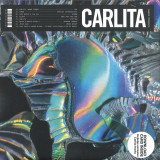
fabric Records has enlisted Turkish-Italian DJ and producer Carlita for the next instalment of its prestigious mix compilation series, ‘fabric presents’. Set for full release on April 11, fabric presents Carlita will showcase her meticulous curation, featuring two new original tracks.
The double vinyl sampler features eight full length tracks taken from Carlita’s mix. Her two exclusives ‘Raf’ and ‘Stop Now’ are cut to A1 and C1 respectively.
The two black vinyl plates are 140g and are packaged in black inners, inside a matt printed reverse board printed sleeve. The vinyl package accompanies the CD, digital download and streaming of fabric presents Carlita mixed compilation across all major platforms on 11th April 2025.
The announcement of Carlita’s mix arrives alongside the release of the first single, “Raf,” a collaboration with Toronto producer Andre Zimmer, out now via fabric Records. “Raf” is a high-energy fusion of classic house and rave influences, crafted with the dancefloor in mind. The track pairs infectious, soulful vocal elements with punchy synth stabs and rolling breakbeats, all anchored by a deep, groovy tech-house bassline. “Raf,” along with an additional original from Carlita, “Stop Now,” is nestled among storied house and techno juggernauts such as Butch, Alex Metric, and Paco Osuna, as well as rising underground producers Prunk, Toman, Alinka, and more.
Beyond the club and festival circuit, Carlita is a leading figure at the intersection of music and fashion. She’s been featured in British Vogue and on the cover of Vogue Italia, performed at exclusive events for Louis Vuitton, Versace, and Fendi, and curated performances featuring The Blessed Madonna and Heron Preston at her own multi-sensory Senza Fine parties. Most recently, she collaborated with Audemars Piguet to mark the release of her debut album, Sentimental.
Carlita (real name Carla Frayman) comes from a background of musical mastery, having played classical cello for the Royal Academy of Music in London in her earlier years (after learning to play piano at age 3). Since her earliest memories, Frayman has never stopped developing her musical talent, picking up more instruments, learning music theory, and after university, saving up enough money to pursue it full time. She hasn’t stopped chasing her dreams and is now playing high-profile DJ slots (check out her Cercle set at Cinecittà in Rome), and has quickly risen as a producer with her phenomenal debut album Sentimental on Ninja Tune last year, as well as remixes for Disclosure and RÜFÜS DU SOL.
Coming up, Carlita be performing at festivals and clubs in Puerto Rico, Switzerland, Germany, and many more. On April 12, celebrating her fabric presents release, Carlita will be taking over Room 2 at fabric alongside Jennifer Loveless, Tommy Gold, and Pedrose.
Fozbee & Cooz were the first artists we approached as Vinyl Fanatiks when it came to re-issuing fantastic music from the early 90’s. They were a big inspiration on us here at the label, with all their original releases sat in the racks here since the 90’s.
Two brothers our of Hertfordshire, they were the link between Jack Smooth and his first release – loaning him their Akai sampler so he could write his first track. They were also round the corner from Bukem, who wanted to work with the guys on music back then. But as the brothers lived at home with their parents and Bukem had a strict weed smoking policy when writing music, the project didn’t take off the ground as their mum would of gone mad!
Fast forward 32 years and we are honoured to be able to share with you the brothers first release under their monicker of Fozbee & Cooz. Two big rave classics that got a lot of pirate radio play back in the day too. And as usual, the original of this release commands a high price on Discogs, so grab a fully authorised copy from us at a fraction of the price!
The indominable Russell Haswell returns! He's a restlessly forward-thinking, multi-disciplinary artist, performer and curator who calls Diagonal Records his home. His past collaborators include Aphex Twin, Gescom, Florian Hecker and Merzbrow. "DeepTime" is Russell's latest LP for the label following on from 2023's 'Reality Therapy'. Whilst "Reality Therapy" was an introverted affair, "DeepTime" is brimming with confidence and aimed squarely at the dance floor.
Russell's club friendly turns are resolutelyprogressivist. Whilst being informed by the works of Claude Young and Jeff Mills, his music feels like it was made in another dimension altogether. Title track, "DeepTime", "Unconformity" and "Atropine" all prove the point. It's techno but it's much more besides.
Scheurneus EP is Vunks latest 12 inch vinyl release on his own legendary imprint Moustache Records. This release is a tribute to the underground scene, no hipster house only pure electro techno acid EBM sounds. This release is part of his 30 year anniversary as a DJ. Produced in his atomic basement Baan Studios downtown Rotterdam. A1 has a crazy funky 303 bassline, 606 hi-hats, 909 toms and more cowbell, vocoder voices and some italo-ish Legowelt-ish melody , this all blends together for this "You Sexy Bassline". When David played it in a B2B with Tom Trago, Tom said are you kidding me, is this your track? A2 "Sorry ain't enough" is a musical tribute to the legendary Emmanuel Top from Belgium. Electro acid and a building up deep track. Expect some extra cut off frequency and resonance. Already played on National Dutch Radio 3FM by the best and funniest radio DJ the Netherlands has to offer; Justin Verkijk. B1 provides a tribute to the EBM wave scene, originally made for a VA compilation that was never released. Now brought to you on Moustache Records because we don't want you to miss this! Expect TR909 hats, vocoders, modular Fenix 4 system and more modular. A hit from the legendary Paradisco Festival in Belgium. B2 is filled to the brim with Flangers, TR 606 Drums and a sharp bassline form the Roland SH101, Davids first and favorite synthesizer ever! He paid 37,50 euro for it back in the days SH101 :) This is a tribute to Robert Armani and Chicago house pumping, jacking and goes up, up, upper, upperst! A pure club banger.
180 G. BLACK VINYL WITH LINER NOTES IN CREOLE, FRENCH, ENGLISH
Originally released in 1979, "Spiritual Sound" lives up to its name, a soaring, triumphant album, six tracks of spirit magic from Guadeloupe.
Telluric, intense, terribly alive, the gwoka drums of Guadeloupe carry the identity of a painful and fervent island. Marked forever by the crime of slavery, Guadeloupe's créolité cherishes the ka drums and their natural environment: the low-pitched boula drum with male goatskin, the high-pitched soloist makè drum with female goatskin, the chacha, ti bwa, triangle, calabash and other percussion instruments that surround them, and the voices - the fiery, proud, timbred, urgent voices of the gwoka.
This album is also a legend for its voices: in his then dazzling youth, singer Lukuber Séjor was one of the first gwoka artists to largely feminize the chorus of répondè, who converse with his text delivered in a straight and powerful voice.
And everything here sets new standards. In 1979, Mizik Filamonik - Spiritual Sound proclaimed a spiritual patriotism of ferocious intensity. The album by Lukuber Séjor - whose spelling alone is a battle - sets out to give Guadeloupe the intangible weapons of self-respect and self-knowledge, through a singular practice of traditional music.
The genesis of gwoka music is less straightforward than one might imagine... The drums performed the servile task of accompanying the work of slaves in the fields and during the “corvées” imposed by the administration, before being freely practiced by the common people after the abolition of 1848. At the heart of the conviviality of the Guadeloupeans furthest from the cities - geographically and socially - the gwoka drums come out for carnival, funeral wakes and neighborhood celebrations, but also during strikes, fits of anger and armed vigils of the riots and revolts that have punctuated the island's history. For generations, governors of the colony and then the prefects of the overseas department of Guadeloupe have been viewing the gwoka as a potential for turbulence and a threat to public order.
But as the Beatlesmania, “chanson engagée” and rock revolutions unfolded in Europe, young people turned to the drums of mizik a vié nèg (“bad negro music”, in Creole), which Guadeloupeans had learned to despise by following the “assimilation” process advocated by the school system and most of the political class. At the end of the sixties, in a Guadeloupe mourning the deadly repression of the May 1967 social movement, they played traditional music, refusing to wrap it up in tourist prettiness and madras folk costumes. Instinctively, they played a rough and contemporary gwoka, led by the incendiary Guy Konkèt. This was the era of decisive 45 rpm records such as Robert Loyson's Kann a la richès, which brought to light the fieriest words of union rallies.
At his home in Sainte-Anne, Lukuber Séjor played with flautist Olivier Vamur and his brother Claude Vamur, who cobbled together a drum kit from tin crockery and became, a few years later, the most influential drummer in Kassav'.
These were the years of the Bumidom program, when young Guadeloupeans were encouraged to emigrate to mainland France. At the age of twenty, Lukuber Séjor embarked on the liner Irpinia, disembarking at Le Havre and taking the train to the Gare Saint-Lazare - the route taken by thousands of young West Indians who went on to study or looked for work, all the while trying to maintain a link with their homeland. In this case, it's at the Antony university residence, where Lukuber played the drum and participated in a thousand gwoka updates and aggiornamentos, while exile reinforced the need for a spiritual link with the native land.
In 1978, Guy Konkèt played at the Salle Wagram, a historic event for West Indian music. After serving as répondè - i.e. backing vocalist - on one of his home-recorded albums, Lukuber joined his live band. Little by little, he became one of the key artists on a circuit parallel to French show business. At a student party in Caen, he met a young woman from Martinique who, at the time, was more motivated by her ambitions as a visual artist than by her vocation as a musician. Her name was Jocelyne Béroard and, a few years before she plunged into the Kassav' adventure and became the greatest West Indian singer of her generation, she designed the cover of Lukuber Séjor's LP.
This ambition was obvious and imposed its will. A more or less regular band was formed, with Roger Raspail, Rudy Mompière and Éric Danquin on ka drums, Claude Vamur on ti bwa, Olivier Vamur and Françoise Lancréot on flutes and Annick Noël on keyboards. Lukuber Séjor is set on wanting to extend the gwoka palette to other instruments, as the jazz-rock revolution opens a thousand new doors. Annick Noël will play a wide range of timbres and textures on electric piano and synthesizer. Another novelty: the répondè are two men and two women, Roger Raspail, Olivier Vamur, Françoise Lancréot and Maryann Mathéus ...
Mizik Filamonik - Spiritual Sound is a self-production in which the singer and leader sank all his savings, allowing him no more than a single day in the studio. The first side is more of a musical manifesto, with the first two tracks, Éritage and Penn é plézi, being instrumentals. The third, Son, forcefully celebrates the need for Guadeloupeans to connect with the gwoka. In fact, Jocelyne Béroard's cover shows a tambouyé in the shadow of a cloudy sky, against which a radiant sun is rising and whose light will soon flood the entire landscape. The silhouette and face of this man strongly evoke the immense Vélo, master of the ka, rejected at the time on the fringes of society.
The second side of the LP is surprising. Formally, three tracks are explicitly linked like the three parts of a triptych. Primyé voyaj evokes the appalling tribulation of Africans deported as slaves to Guadeloupe; dézyèm voyaj speaks of the Bumidom program and the economic, political and social forces driving young Guadeloupeans towards the mirage of prosperity in France; twazyèm voyaj closes the cycle with the emigrants' return from Europe after years away from their island...
This gwoka, obsessed with the need to save Guadeloupe spiritually, appeals far beyond the politicized audience. Mizik Filamonik - Spiritual Sound instantly became a classic, although Lukuber Séjor never really made a career for himself as a musician.
After all, the album was released in 1980, with no promotional resources in France or Guadeloupe - and therefore no concerts. The thirty-two-year-old author, composer and performer made his own third trip back to Guadeloupe. He set up a small woodworking business, which he lost in Hurricane Hugo in 1989. His other activity, teaching in a medical-educational institute, became the core of his professional life. He continued to be an active campaigner - a campaigner for the Creole language, a campaigner for the reawakening of identity, a campaigner for special education, a campaigner for a thousand causes that he ignited with his generous and perceptive enthusiasm, such as the defense of breadfruit fries...
The echoes of his 1979 album have not died down. Of course, the use of Penn é plézi as the theme tune for Radio Guadeloupe's funeral notices from 1980 to 1992 kept him in the collective memory, but he continues to sing and compose sporadically, as with his all-female
vocal group Vwapoulouéka... Still convinced that music is a means of liberating the spirit, he continues the journey of a young man eager to deploy the power of Creole music and language.
Bertrand Dicale