I turned the page and will never forget what I then saw.
The fountain pen scratched against the paper, whistling like fur on an abandoned tire in the
middle of the night at the centre of the universe in the core of whatever it is I’m trying to believe.
I am a patient human and I live and breathe. I know this for sure.
I read about a whispering stillness of the Stadsnacht as my blood levels gradually even out again. Beneath the ink, the words take shape. This is a secret correspondence with the Book of Change – a dialogue not meant for eyes or ears, but for the soul. Are you still with me?
The Snake Rope tightens, its Coils Dive into the deep well of patience, where waiting is an art, a
dance with the unseen. The Scientists Say we should measure, predict, contain—but here, in
the shadow of the deepest of nights, the only truth is the Celebration of Ignorance. Love is the
force that binds as it untangles the invisible thread that refuses to sever. The next page quotes the mystical figure Daim: “Never Dissever Us.”
There, in the dawning light, the Dageraad reveals the Icequeen in her frigid throne, the Topiary Man standing guard in his sculpted silence. In this quiet landscape, I wait. I continue to wait, for I have good fortune on my very hands.
If You Won’t, I Will.
Can we exhibit the power to possess conformity? Can we redeem the benefits of crossing the water? Yes. The choice, the act of breaking through the barrier of convenience, is both a burden and a liberation.The words swirl, abstract and concrete, like action and inaction. The Book of Change is a paradox to puzzle over.
The evening cool rests its shoulders on my fluffy neck. I inhale as my pen lifts itself from the
paper once more, shedding ink as though it were tears of joy. I know that I have touched the
edge of something vast, something that moves beyond the grasp of reason into the heart of the
I Ching, the ever-turning wheel of change. This is the correct orientation. This is the vivid
imagery of clouds falling from the heavens and into our laps. This was never meant for your
ears. This was meant for you to feast on as the seasons bestow upon us
quête:2 man will move
Find Your Own Records recently launched with a sold out first release; Ceri's 'Life Holstee E.P.' which included a timeless Fred P Reshape. Fusing the sounds of Berlin, Detroit, Chicago and London, the release was supported by everyone from Midland, Move D, Ben UFO and Fumiya Tanaka, to Steve O'Sullivan.
The second release, the 'I Need You To Make Me Sweat' E.P. also draws inspiration from the classic sounds of Chicago and Detroit, and features none other than a remix from bona fide Dance Music Legend, Mr. G.
The title track 'Need You' is a Juno bassline driven, classic sounding 'proper' deep house track, raising in energy as it peaks, with vocal snippets and modulated analogue drums building throughout.
Mr. G has taken Ceri's title track, 'Need You', and twisted it into a harder, faster 'Jaded Dub', capturing a dark and driving energy, tantalising and adding to the drum grooves with his trademark swinging rides and industrial synths, adding his infamous MPC swing to the vocal snippets, and building the tension throughout, as the one and only G can.
The B side 'Sweat', draws inspiration from 80's and 90's house with a modern dark twist, mixing variating funky drum machine rhythms, classic house vocal samples and pulsing sub-bass to.
The first release was quickly repressed, but there will be no repress on 002, so grab it now before it sells out...
Early support comes from K-HAND, Ryan Elliot, Paranoid London and many more.
180 G. BLACK VINYL WITH LINER NOTES IN CREOLE, FRENCH, ENGLISH
Originally released in 1979, "Spiritual Sound" lives up to its name, a soaring, triumphant album, six tracks of spirit magic from Guadeloupe.
Telluric, intense, terribly alive, the gwoka drums of Guadeloupe carry the identity of a painful and fervent island. Marked forever by the crime of slavery, Guadeloupe's créolité cherishes the ka drums and their natural environment: the low-pitched boula drum with male goatskin, the high-pitched soloist makè drum with female goatskin, the chacha, ti bwa, triangle, calabash and other percussion instruments that surround them, and the voices - the fiery, proud, timbred, urgent voices of the gwoka.
This album is also a legend for its voices: in his then dazzling youth, singer Lukuber Séjor was one of the first gwoka artists to largely feminize the chorus of répondè, who converse with his text delivered in a straight and powerful voice.
And everything here sets new standards. In 1979, Mizik Filamonik - Spiritual Sound proclaimed a spiritual patriotism of ferocious intensity. The album by Lukuber Séjor - whose spelling alone is a battle - sets out to give Guadeloupe the intangible weapons of self-respect and self-knowledge, through a singular practice of traditional music.
The genesis of gwoka music is less straightforward than one might imagine... The drums performed the servile task of accompanying the work of slaves in the fields and during the “corvées” imposed by the administration, before being freely practiced by the common people after the abolition of 1848. At the heart of the conviviality of the Guadeloupeans furthest from the cities - geographically and socially - the gwoka drums come out for carnival, funeral wakes and neighborhood celebrations, but also during strikes, fits of anger and armed vigils of the riots and revolts that have punctuated the island's history. For generations, governors of the colony and then the prefects of the overseas department of Guadeloupe have been viewing the gwoka as a potential for turbulence and a threat to public order.
But as the Beatlesmania, “chanson engagée” and rock revolutions unfolded in Europe, young people turned to the drums of mizik a vié nèg (“bad negro music”, in Creole), which Guadeloupeans had learned to despise by following the “assimilation” process advocated by the school system and most of the political class. At the end of the sixties, in a Guadeloupe mourning the deadly repression of the May 1967 social movement, they played traditional music, refusing to wrap it up in tourist prettiness and madras folk costumes. Instinctively, they played a rough and contemporary gwoka, led by the incendiary Guy Konkèt. This was the era of decisive 45 rpm records such as Robert Loyson's Kann a la richès, which brought to light the fieriest words of union rallies.
At his home in Sainte-Anne, Lukuber Séjor played with flautist Olivier Vamur and his brother Claude Vamur, who cobbled together a drum kit from tin crockery and became, a few years later, the most influential drummer in Kassav'.
These were the years of the Bumidom program, when young Guadeloupeans were encouraged to emigrate to mainland France. At the age of twenty, Lukuber Séjor embarked on the liner Irpinia, disembarking at Le Havre and taking the train to the Gare Saint-Lazare - the route taken by thousands of young West Indians who went on to study or looked for work, all the while trying to maintain a link with their homeland. In this case, it's at the Antony university residence, where Lukuber played the drum and participated in a thousand gwoka updates and aggiornamentos, while exile reinforced the need for a spiritual link with the native land.
In 1978, Guy Konkèt played at the Salle Wagram, a historic event for West Indian music. After serving as répondè - i.e. backing vocalist - on one of his home-recorded albums, Lukuber joined his live band. Little by little, he became one of the key artists on a circuit parallel to French show business. At a student party in Caen, he met a young woman from Martinique who, at the time, was more motivated by her ambitions as a visual artist than by her vocation as a musician. Her name was Jocelyne Béroard and, a few years before she plunged into the Kassav' adventure and became the greatest West Indian singer of her generation, she designed the cover of Lukuber Séjor's LP.
This ambition was obvious and imposed its will. A more or less regular band was formed, with Roger Raspail, Rudy Mompière and Éric Danquin on ka drums, Claude Vamur on ti bwa, Olivier Vamur and Françoise Lancréot on flutes and Annick Noël on keyboards. Lukuber Séjor is set on wanting to extend the gwoka palette to other instruments, as the jazz-rock revolution opens a thousand new doors. Annick Noël will play a wide range of timbres and textures on electric piano and synthesizer. Another novelty: the répondè are two men and two women, Roger Raspail, Olivier Vamur, Françoise Lancréot and Maryann Mathéus ...
Mizik Filamonik - Spiritual Sound is a self-production in which the singer and leader sank all his savings, allowing him no more than a single day in the studio. The first side is more of a musical manifesto, with the first two tracks, Éritage and Penn é plézi, being instrumentals. The third, Son, forcefully celebrates the need for Guadeloupeans to connect with the gwoka. In fact, Jocelyne Béroard's cover shows a tambouyé in the shadow of a cloudy sky, against which a radiant sun is rising and whose light will soon flood the entire landscape. The silhouette and face of this man strongly evoke the immense Vélo, master of the ka, rejected at the time on the fringes of society.
The second side of the LP is surprising. Formally, three tracks are explicitly linked like the three parts of a triptych. Primyé voyaj evokes the appalling tribulation of Africans deported as slaves to Guadeloupe; dézyèm voyaj speaks of the Bumidom program and the economic, political and social forces driving young Guadeloupeans towards the mirage of prosperity in France; twazyèm voyaj closes the cycle with the emigrants' return from Europe after years away from their island...
This gwoka, obsessed with the need to save Guadeloupe spiritually, appeals far beyond the politicized audience. Mizik Filamonik - Spiritual Sound instantly became a classic, although Lukuber Séjor never really made a career for himself as a musician.
After all, the album was released in 1980, with no promotional resources in France or Guadeloupe - and therefore no concerts. The thirty-two-year-old author, composer and performer made his own third trip back to Guadeloupe. He set up a small woodworking business, which he lost in Hurricane Hugo in 1989. His other activity, teaching in a medical-educational institute, became the core of his professional life. He continued to be an active campaigner - a campaigner for the Creole language, a campaigner for the reawakening of identity, a campaigner for special education, a campaigner for a thousand causes that he ignited with his generous and perceptive enthusiasm, such as the defense of breadfruit fries...
The echoes of his 1979 album have not died down. Of course, the use of Penn é plézi as the theme tune for Radio Guadeloupe's funeral notices from 1980 to 1992 kept him in the collective memory, but he continues to sing and compose sporadically, as with his all-female
vocal group Vwapoulouéka... Still convinced that music is a means of liberating the spirit, he continues the journey of a young man eager to deploy the power of Creole music and language.
Bertrand Dicale
Red Pig Flower brings you her sensational debut album Practice Love, available on Sound Of Vast from 10th April. Her unique sound sits upon the apex of a three-sided pyramid. With Berlin, Tokyo and Seoul as the base, Red is a third culture kid, greater than the sum of her parts. The centre is filled with her incredible appreciation and knowledge of house and electronic music from every pin drop through history.
So taken with Red Pig Flower’s sound, Honey Dijon invited Red to her Southbank Centre show to play alongside her. Moxie loves her that much, that she invited Red to record a mix and to guest on her NTS show. Alan Fitzpatrick, and Just Her are amongst Red’s growing posse of followers.
Practice Love is a culmination of all of Red Pig Flower’s life experiences, brimming with her positive energy and an outlook on life of pure love. Red has collaborated with like-minded artists at every level: the music, the cover art and video all produced with talented friends, who get Red as the wonderful person she is and understand her vision. Her label partner and good friend, Knock in particular helped make Practice Love the incredible album it is. So intuitive is their musical symbiosis, they made 20 tracks and carefully curated and ordered nine of these, making an album of tracks that stand out on their own, yet flow perfectly as an album. Practice Love will make you feel joyous when you play it. By the end, you will feel like you know Red like a friend.
Practice Love kicks off with I don’t care, it makes you feel good: a dreamy, tribal mantra of a track that does exactly what it says on the tin. Next up is I Love To Dance. Red’s beautiful soft vocal is sweet yet poignant, leaving you in no doubt of her sincerity. Thirdly comes Feel Good Music. Are you getting a feel from the track names yet that this is an album of warmth and positivity? You can imagine this one at a Café Del Mar sunset, where those who get the spirituality of Ibiza come together, in the moment to appreciate the beauty of a sunset and understand that no matter how many you see, each is magical and unique.
The three tracks so far have taken you to twilight. The titular Practice Love takes you by the hand onto the dancefloor. There is a double meaning to ‘Practice Love’- The first is to make love your practice. The second is that you need to practice love to be able to become a practitioner of love. The video, shot by her friend Jelly, features Red Pig Flower in Brick Lane, London, wearing a little piggy mask and offering free hugs. The first passersby ignore her sign, but Red isn’t disheartened, spreading the right message, dancing with joy. Her optimism is rewarded, making peoples day better on a cold English afternoon.
Fifth track Sax and Drugs takes things a little sleazier, the beat is filthy and the synths are sexy. Your body starts to move to this one before your brain even realises. The incredible Declan McDermott joins on saxophone, the funkiest synths and Red’s sultry vocal washing your soul with Laurent Garnier inspired sunlight. On Thisiz House Music, again featuring Declan, Red takes you even further back. About Frankie Knuckles O’Clock, with a portal straight to 2025.
By now, you will agree with me that Practice Love flows so, so well. I Wanna Meet Somebody follows incredibly, continuing the feeling that if you close your eyes, you’re dancing with David Mancuso at the Loft. No Money completes this EP-within-an-album. Perfect vocal samples, valve synth riff and 808 drum patterns showing that producers as good as Red Pig Flower make it sound effortless. The best albums finish memorably and No Genre is one of those perfect finishers. Think Andrew Wetherall’s production on Screamadelica. The lights are up in the club, nobody wants to go home, arms in the air wanting more.
Red Pig Flower explains: Practice Love resonates deeply with me because house music has always been a sanctuary—a place for unity, joy, and self-expression. As a nomad and outsider, club culture and house music became my shelter. The cities I’ve lived in—Seoul, Tokyo, Berlin, and London and more—nurtured me and shaped who I am today. That’s why the cover, by the incredible Carlos Sulpizio features their skylines, and the album is multilingual, representing the diverse influences in my life.
Practice Love is like a meal that has been prepared lovingly. They always taste better. And there’s plenty more to come from Red Pig Flower. How was your appetizer?
- A1: Mohs - Baïne
- A2: Allez Kiki Fermentation - Service 3000H
- A3: Louis Fontaine - Come Dire .. (Feat. Melissa Lesnie)
- A4: Opek - Bajes
- A5: Bombataz - My Face On Your Tv
- B1: Divorce From New York - Flutes Echoes (Feat Arturo Garcia Martin)
- B2: Kau - Sting Like A Bee
- B3: Ncy Milky Band - High Speed Clouds (Instrumental)
- B4: Namas - Ops
- B5: The Natural Yogurt Band - Balloons
After a highly acclaimed first volume featuring pioneers of the new Euro-Jazz movement such as ECHT!, Lander & Adriaan, Triorität, Ishkero, La Récré amongst others, we are proud to present the second volume of Groove Dingueries, our compilation series aiming to shine a light on the new hybrid and constantly evolving sound of jazz and groove. This time, we’ve expanded research further into western Europe with new bands and solo acts such as Divorce From New York, Louis Fontaine, Bombataz, Namas, Opek and many others. This selection of outsider grooves infused with rock, soul, electronica, hip-hop, dub, library and world music will please any groove head looking for something fresh and new.
There's iconic. Then there's *iconic*.
A MASSIVE speaker-smashing release, decades overdue. It's been bootlegged - shamefully so, many times over the years - but finally we present the first ever officially licensed reissue of this truly special Afro-disco-not-disco LP from 1979. A favourite of Harvey, Antal, Young Marco and, er, every great DJ to ever play deep records ever, basically. It's not hard to see - or, indeed, *feel* why.
Gem after gem of relentless, irresistibly funky gold, it's an incredibly revelatory album with endlessly complex drum patterns and basslines to dive into, throughout. Truly, this is uniquely FIRE music, unlike anything else you've ever heard, based on Gwo ka music from the gorgeous islands of Guadeloupe and Martinique. A thrilling synthesis of primal, hypnotic drums - the most tribal of percussive elements high in the mix throughout - with the loping synth pyrotechnics of, amongst a whole host of other greats, Wally Badarou and bass power of disco funk don Sauveur Mallia (Arpadys, Spatial & Co.)
Originally released on the seminal French label Barclay, you'd be hard pressed to even find an original copy in nice condition anywhere, let alone for a reasonable price, so it's high time an officially licensed, remastered reissue came around. It's just the latest in a long line of Be With reissues where the music sounds like the - drop-dead dazzling - cover. This here is a true drum attack. BUY ON SIGHT!
Tumblack was a short-lived project, produced and arranged by electronic wizard Yves Hayat and it can certainly be regarded as one of the first examples of Zouk, mixing powerful disco-funk arrangements with Gwo ka, traditional music from Guadeloupe. Gwo ka is an Antillean Creole term for "big drum". You can say that again! It refers to both a family of hand drums and the music played with them, which is a major part of Guadeloupean folk music.Whilst the first side is credited to the exceptional Tumblack band, the flip is given over to "Tumblack & Friends". These weren't just any old friends. Oh no, they were the absolute cream of the French scene (think Arpadys, Voyage, Le Club, Giant, CCPP, Synthesis, Swing Family) such as Sauveur Mallia, Wally Badarou, Marc Chantereau on percussion, Slim Pezin on guitar and Jean-Paul Batailley and Pierre Alain-Dahan handling drum duties.
The urgent, frantic "Fracas" gets things moving straight away with a cavalcade of drums and percussive funk before giving way to the stratospheric "Invocation", one of the album's many, many highlights. It's effectively one long heavenly drum break, a really hard, raw, tribal drum workout without a whole lot else going on - and all the better for it! One to make you sweat, no question. Up next, "Jubilé" is announced with a bellowing accapella voice, chanting the titular name before the heaviest of kicks smashes out your system and lulls you into an absolute state of bliss for nearly 6 minutes. Whoooooosh! Rounding out the sensational A-Side, "Vaudou" is a scratchy, funky patterned drum workout which - yep, yet again - absolutely slays your neck muscles, making them snap and contract in extraordinary fashion. TURN IT UP!
Ushering in the B-Side, the brief, fidgety, African chant-funk of "Parlement" segues seamlessly, beautifully into "Waka", an overwhelmingly rich gem of percussive funk. You do not want this to end, once it hits its stride. For maximum heavenly drum pleasure, you'd need to go a long way than the moment "Waka" feels like it's fading out before it kick-drum-blend into the mighty "Caraïba (Intro)". It's just staggeringly good. It's a minute-long layered drum prelude to the gigantic track which follows. Indeed, "Caraïba" is arguably the best loved and most well-known cut off the LP. And with good reason...featuring that Mallia bass, warm Rhodes and clavs, synth magic, memorably alto sax lines and, of course, tribal chanting.
Another mighty super-ahead-of-its-time classic, the bouncing bass heavy synth funk of "Chunga Funk" deploys Mallia and Wally Badarou (on Mini Moog) exceptionally well. I mean, come on, that bassline is just ridiculous. Try not to move to this one. This extraordinary record closes out with the more traditional Gwo ka sounds of "Bateau La Passé", the tribal chorus making the hairs on the back of your neck stand up.
Tumblack really is a gorgeous late-70s disco-not-disco essential. It's an absolute MONSTER that will completely blow you away; and, yes, it's as compelling and trance-inducing as the cover. The audio for Tumblack has been carefully remastered by Be With regular Simon Francis, ensuring it sounds better than ever. Cicely Balston's expert skills have made sure nothing is lost in the cut whilst the records have been pressed to the highest possible standard at Record Industry in Holland. The cover of Tumblack is so iconic and we sought special permission from original artist Hélène Majera to recreate this at Be With HQ. It absolutely zings off the print and serves as the perfect finishing touch to this long overdue re-issue.
Over three years in the making, Needle Mythology Records is delighted to announce a super deluxe, expanded remastered reissue of The Lilac Time’s 1991 masterpiece, Astronauts. Released as a triple vinyl, triple CD or single vinyl, only 1000 copies of each format will be produced, there will be no further pressings. Both the 3LP and 3CD editions will come with an extensive 11,000 word oral history of Astronauts and liner notes by Needle Mythology co-founder and longtime Stephen Duffy fan, Pete Paphides.
All three albums including a 2024 remaster, a collection of works in progress entitled‘Softened By Rain The Making Of Astronauts’ and a live compilation ‘Any Road Up The Lilac Time Live 1990/91’ have been mastered for vinyl by Miles Showell at Abbey Roadand will be housed in a triple gatefold sleeve with a colour inner sleeve and new artwork for each disc, which has been especially created by designer Mike Storey. The main sleeve for Astronauts itself will replicate the original artwork but with the four distinctive “blobs” rendered in a red “foil” texture. In addition to these three disc sets, 1000 single vinyl remastered copies of Astronauts will also be made available, in a cherry red vinyl edition to match the outer sleeve.
With the shoegaze and baggy movements at their zenith, The Lilac Time’s fourth album was released at a moment when the left-field music zeitgeist was shaped by the nascent shoegaze, baggy and grunge movements. Whilst Astronauts conformed to none of those trends, neither was it the record Stephen had in his head when he finally finished working on it. We’ll never know how that record would have sounded, but it’s hard to imagine a better version of the album he did end up making. The songwriter who brought ‘A Taste of Honey’ and ‘Hats Off, Here Comes The Girl’ into the world envisaged the sort of choruses that would jump from the single speaker of your favourite transistor and lodge themselves into the collective memory bank.
But while he really was writing some of his most beautiful melodies, Astronauts is a family of songs that demands to be kept together in the sundazed cloud of inspiration that created it. It constitutes a partial retreat from the outwardfacing utopianism of its predecessors, choosing instead to dwell on the journey taken to get to this point. That this is an audibly different band to the pastoral expeditionaries of the group’s previous releases is almost entirely down to the departure of Nick Duffy and the arrival of Sagat Guirey. Suddenly, accordions, banjos and mandolins are out; jazz guitar is in. Sagat’s filigree work on the outro of ‘A Taste for Honey’ acts as a sublime parting shot to a lyric which acts as a wiser, wistful companion piece to Stephen’s 1985 solo hit ‘Kiss Me’, something tantamount to the camera retreating to reveal the years elapsed between the time depicted and the present day. The distance between the carefree youth of pop stardom and the first intimations of mortality can be measured between the first and second verses of the quietly devastating ‘Madresfield’; from the depiction of the deserted cricket pavilion obscured by fresh snowfall to the sudden shift in perspective from subject to protagonist: ‘No one ever told me/That killing time is harmful/For time cannot recover/What soon the ground will offer.’ For all of that, however, the resulting album didn’t correspond to the vision its creator had for it. At a loss as to what to do with it, Stephen surrendered Astronauts to Creation with no plans to promote or draw attention to it. The consciousness shift of which Stephen had hoped The Lilac Time might be a precursor hadn’t happened. Or, rather, it had – but it had happened elsewhere, in the Haçienda and Shoom and in Ibiza. Not on the hills of Herefordshire. In a nod to that sea change, Stephen handed over one song, ‘Dreaming’ to Hypnotone, who
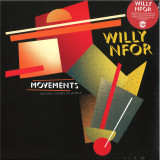
This compilation is more than a selection of songs from Willy Nfor’s solo career in Nigeria—it’s the story of a man’s determination to live his dreams. Known as Willy Ngeh Nfor, he was a founding member of the Mighty Flames. One morning, Willy and his bandmates packed their instruments, grabbed a few clothes, and headed from Cameroon to Nigeria. Crossing the border on foot, they made their way to Onitsha.
“We left Cameroon with no contacts in Nigeria—it was an adventure. We’d heard about the FESTAC Arts Festival and felt we had to be part of it. Our first band in Nigeria was Pentagon Funk Band, sponsored by the 5th Brigade in Port Harcourt. Later, we moved to Onitsha and signed with Right Time Stores, recording Sweet Love (RTLPS 011) as The Mighty Flames. The sessions were at Decca Studios in Lagos, with a 16-track analog system. It was intense—no room for mistakes. We rehearsed endlessly before recording each take.” (Vincent Ekedi, Drummer, Mighty Flames)
Willy’s journey was shaped by his resilience and talent. Losing his mother early and facing family struggles, music became his escape. Inspired by funk and jazz-rock greats like Bootsy Collins, Jaco Pastorius, and Stanley Clarke, he honed his skills on bass and composition, playing with local bands alongside musicians like Vincent Ekedi. Together, they refined their grooves, dreaming of brighter futures.
After his time in Nigeria, Willy moved to Paris, becoming a session bassist for legends such as Manu Dibango, Mory Kanté, Tony Allen, Akendengue, Ray Lema, Jean-Luc Ponty, and Kanté Manfila. Touring extensively, he lived the “Star Life” (Star Life, Cornerstone Records, Feel So Fine, 1981), playing funk grooves with giants in grand venues, fulfilling his dream of the spotlight.
(repress on black vinyl, originally released in 2019) Supported by many deejays worldwide, most notably Solomun. Moodfamily's favourite four-piece returns home after many journeys. Impatient as we are, we had to hear their stories. Skilfully combining influences, sounds and experiences from east and west, they translated their stories into a new EP oozing with drama, melancholy and determination. The EP describes itself as the soundtrack for an adventure to mysterious outskirts around the globe, starting with 'Whale Parade'.
This prelude takes you to a hidden land after wandering through forests for many months. Guitar, piano and percussion gently move in and carry you away. By the second track, 'All Day I Zama', a slow beat dictated by a banket of percussion evolves to a vigorous and groovy track with moaning vocals as the main theme. In title track 'Gold Town' you will settle yourself in a covered wagon, heading for dodgy settlements on a misty mountain range, accompanied by a grieving trumpet. As the wagon slows to a crawl, 'Ghajar' emerges; a downtempo emotion-filled song, where the piano and a scorching synth interchange melodies and tales.
DJ Normal 4 lands on Fantastic Planet with his highly anticipated solo release, Spore Clouds EP. This sonic journey channels the raw, hypnotic energy of ’90s underground Goa trance while weaving in fresh, modern textures.
More than just music, this release carries a purpose: proceeds will be donated to support the Georgian resistance movement in their fight against an emerging far-right authoritarian regime.
Join us. Experience the music. Support the cause.
Navigare Audio proudly presents the long awaited remix-bundle of Ness' classic LP "Flesh Of The Gods". Two years in the making we will start 2025 with a big cosmic bang!
A-side kicks off with a Hydrous remix that is staying true to the original in intensity and groove, but adds an extra layer of that unmistakeable eerie atmosphere that has become his signature.
A2 showcases why Dino Sabatini is such a revered artist within our community. Although subtle in it's movements, there's an undeniable depth and power to be found here - and although seemingly Ambient to some, expect to hear fragments of this piece in many DJ sessions in the upcoming year.
On to the B-side, where Argentinian native Vladw take on "Transilient". Soundtracking the first rays of the day, this is for the reflective hours, meditative, breezy, while keeping the moody atmosphere of the original.
B2 brings up the intensity with Kalumet's take on "Nobody Knows The Way". With a bass section that would've made Paps proud this is an uncompromising banger for a The Dome-session at 3am.
As a finale we've invited the highly talented Mikkel Rev from the Oslo-based Ute.-crew. Like us, Mikkel and Ute. are not ashamed of their love for true, deep Trance music. On the contrary, Mikkel's remix of "Like A Plucked Flower" oozes confidence in it's celebratory and life-affirming drive.
2025 Repress
Wide Yonder’ is a truly remarkable album, offering as much depth and soul as it’s predecessor, yet sounding ultimately fresh and different. Above all, the ten tracks show an artist that’s willing to take risks, find in- spiration in new places and move beyond the sound of his previous album. Trentemøller: ‘Of course I didn’t want to make the same record twice. So the album is for me a logic development from ’The Last Resort’’. Instead he just started to collect new ideas, without thinking too much about the direction the music would take him: ‘The only thing I knew was that I’d want the music to sound more organic and analog.’ Compared to the intimate electronic mood pieces of ‘The Last Resort’, the ten tracks on the new album indeed have a more strange, mystic and dramatic vibe, with a lot of dynamics, distorted, driving twang- guitars, real and electronic drums mixed with haunting synths. With ‚Into The Great Wide Yonder‘ Trentemøller is not only exploring new moody and atmospheric universes, but combines his sense for glorious soundscapes with a firm melodic and tonal touch. The original chord progressions and feel for melodies is fundamental to him, and that‘s also the reason why most of the instruments are played by Trentemøller himself on this album. ‚I like the possibility to be surprised that chords and melodies change into something new. The music that I like most lets the themes and sounds come back in different disguises‘. The Danish multi instrumentalist and producer shows an unexpected talent for finding vocalists that fit the mood of his songs. The first single of the album, the beautifully tender ‘Sycamore Feeling’, featuring Marie Fisker, is a typical highlight. In fact, all the vocal tracks are stunning. Trentemøller chose to collaborate with the English artist Fyfe Dangerfield from UK based Guillemots and Danish singers Solveig Sandnes and Josephine Philip from the debuting Danish indie girlduo Darkness Falls. They all manage to add their own sound and flavour to the album, while their voices blend perfectly with Trentemøller’s atmospheric songs. This is an album that keeps growing for a long time, as every track works its way stealthily under your skin. The sound of ‘Into The Great Wide Yonder’ might be one step ahead of his previous work, but we still easily recognize the hand of Trentemøller, in this inspired collection of songs and atmospheres. The sonic richness, sharp contrasts and daring musical colours are vintage Trentemøller. Into The Great Wide Yonder’ might demand more from the listener than ‘The Last Resort’, as it ended up being quite a dramatic album. This album is more noisy, there’s more happening.‘ But getting to know the tracks definitely is a rewarding experience, as the album will keep growing and growing for a long time to come and its safe to say that Anders Trentemøller has managed to create
For 'The Ones', Chicago House and Disco producer, Rahaan has pulled together a plethora of musicians and vocalists to create a smokestack of soul fuelled excellence on this ten track album. From the amazing vocals courtesy of Marcus J. Austin and Nancy Clayton on the opener, 'We Are The Ones', through the amazing instrumental City Rain Supreme and the vocals of Spike Rebel on the anthemic 'Forever', this album absolutely excels. The promise made on the original three track EP released on BBE Music in the Summer of 2023 is well and truly delivered on. Working with live musicians throughout the recording process has added layers of finesse and genuinely unfeigned authenticity in the overall sound of this album. Carnell Newbill's basslines and keys, Todd Swope's Afrobeat inspired guitar licks and the horns of Ohio Players legend Kenny Anderson all blend organically with the aforementioned vocalists to create an album of sublime music befitting the best traditions of the Chicago House canon. Rahaan Young is a DJ and producer who has been DJing since playing at parties in his native Chicago the 1980s. As a DJ he's enjoyed residencies at both The Spot and Buddha Lounge as well as entertaining and moving dance floors around the globe with DJ sets that show his music knowledge and exquisite taste. The Ones is mastered at the Grammy nominated Carvery Studios and will be released on vinyl and digital on BBE Music, adding to the catalogue of innovative and highly pertinent releases from artists, musicians and producers from across the world.
This 12" contains the first sounds from EDM Z album, which will complete Jodey's 'Electric Dance Music' series. Very limited strictly no repress handstamped piece of Braindance. In the realms of imagination and creativity, there exists a man whose life is as diverse and eclectic as the beats he now produces. Born in the picturesque landscapes of Cornwall in 1953, Jodey Kendrick's journey began with the wind-swept cliffs as his backdrop and the crashing waves as his symphony. As a young lad, Jodey was drawn to the world of cinema. Inspired by the likes of Bruce Lee and Jackie Chan, he found solace in the art of martial arts and action-packed storytelling. With determination in his heart and a fire in his eyes, Jodey ventured into the realm of acting, honing his skills on the stages of local theaters before making his mark in the bustling streets of Hong Kong. It was in the neon-lit alleys of Hong Kong that Jodey Kendrick found his true calling. Embracing the vibrant energy of the city, he immersed himself in the world of Hong Kong action films, earning acclaim for his daring stunts and charismatic performances. With each role, he etched his name deeper into the annals of cinematic history, becoming a beloved figure in the hearts of moviegoers across the globe. But as the years passed and the reels of film kept spinning, Jodey felt the stirrings of a new passion within him. Beyond the glitz and glamour of the silver screen, there lay a world of pulsating rhythms and electronic melodies, waiting to be explored. Intrigued by the allure of electronic music, Jodey embarked on a new chapter in his life, one that would see him swap his martial arts moves for the dancefloor beats of Jungle Tekno and Drum and Bass. In the bustling metropolis of Hong Kong, Jodey found himself amidst a thriving music scene, where the streets throbbed with the rhythms of the underground. Fuelled by his love for music and driven by a desire to create, he immersed himself in the world of music production, crafting beats that reverberated through the city's concrete jungle. Today, Jodey Kendrick stands as a testament to the power of reinvention and the boundless possibilities of passion. From the silver screen to the dancefloor, his journey has been one of constant evolution and exploration. With each beat he creates, he pays homage to the winding path that brought him here, a path that weaves together the worlds of cinema and music into a tapestry of creativity and inspiration.
Reclaim Your Cities next frequency-jammer comes in the form of a heavyweight split 4-tracker, courtesy of two true techno pioneering figures: Mike Parker and Steve Bicknell.
The continued influence of these two artists on both our early raving days and now as a team working on providing you the most exciting, boundary-pushing tech wares is second to none. As you'll experience from the four jams constitutive of this unparalleled mindtrip of an EP, 'In The Years Ahead' is the living evidence the steadfastness of Parker and Bicknell's vision remains absolutely untouched. Zeroed in on taking ravers on an entrancing ride across pulsating corridors of whirring machine funk, sizzling acid and shape-shifting waves of sound, both sides of this EP share the best lot of both producers' uniquely innovative approach to rhythm and production.
Parker's opening cut, 'Solar Limb' is a textbook example of his complex, and heavily layered sound-design. An unflinching swing keeping time, brutal kicks punching holes in your head like giant steel hammers, the track may evolve slowly, repeating its post-industrial mantra over and over again, its flame doesn't flicker one iota. Switching onto red-level dance floor menace, 'Badlands' pulls out the heavy artillery: an overkill bombardment of puncturing 909 drums, vortical winds blowing in the back like some solar storm of sorts, and this ebb-and-flow of FX-drenched synth ripples branded on your cortex like odd signs of cult belonging. Bicknell's takeover starts with the rugged and wild 'Chaotic World', whose title is definitely not usurped. Enter a blazing maelstrom of frantic synth assault knocked askew, intense bass tectonic movements and smashing arpeggios on the path of war. The track develops a massive momentum, swelling from primordial raw matter into weirdly arranged modular constructions, like that of Kubrick's monolith emerging with ominous presence. 'In The Years Ahead' serves up a much distinctively elegant, glossy type of textural experience, synths playing pong in a hall of mirrors, interlacing and distorting as the percussive line unfolds its linear train-like groove. It dashes across landscapes of hypermodern glass and concrete with unrelenting horsepower, from techno's early sanctuary right up onto tomorrow's temple of unmapped potentialities.
This much special release, so dear to our heart, comes clad in a beautiful piece of design, and will be pressed to 180g audiophile quality vinyl for an enhanced listening experience.
Forest Jams continues the journey into the great beyond with Mori Ra’s Mantra–an EP composed of four edits created for any inquisitive earthling and forest wanderer.
Mori Ra is a DJ based in Osaka, Japan his sets are a witches brew composed of balearic, cosmic, and electronic disco ingredients. He has released on other labels such as Rotating Souls, Macadam Mambo, Berceuse Heroique, MM Discos and more. In Mantra, Mori Ra acts as a mysterious wanderer who has stumbled upon the doors of our minds in the middle of the night. When we answer the door he is bearing gifts of creative glory and all we need to do is provide shelter in return. We invite him in so that he can rest, recharge, and continue his journey.
During his visit in our minds Mori Ra shares “Mantra” the secrets of the universe disguised as parables packaged neatly into four tracks. Catharsis begins the journey and immediately throws us into a sound that feels like we are driving a spaceship in Gran Turismo 37, the spaceship simulator. Now that we have successfully crossed the plane and have entered the digital unknown, Seinn O! becomes the story of communication. Seinn O! gave the smoke leaving my mouth color and the shamanistic chants placed me in an atmospheric state with the ability to cross over and communicate in the digital space. Then comes 孫行者 the Grandson Traveler, which embodies the story of the simulation. Imagine the sound of a bustling dystopian city in the matrix–neon signs, dancing billboards, talking vending machines, radioactive wildlife, and overgrown foliage leaking in from the jungle the city is carved into. Mori Ra seems to have melded all of those sounds together to create the soundtrack of the big city where everyone is lost. Finally, before leaving our minds Mori Ra offers the final parable, あの星 That Star. Which becomes the story of realization, the journey back home from the exploration of the mind. That Star brought me into a cave and I could see the opening at the end of it, all I had to do was walk towards it. However, I couldn’t walk. I could only galumph forward, while bouncing up and down to the beat. My arms slivered and guided my body forward as the vocals came in. As I moved forward the opening, the clearing, the destination remained the same distance away. The endless tunnel of the mind gave me a feeling of comfort because I did not want this journey to end.
The EP ends and we will never know who visited our minds that night, but we know we loved the journey. Mori Ra is the steward of our journey through consciousness, and the vessel is “Mantra”.
“Raggamuffin Soldier” was recorded at Channel One Recording Studio in 1983 with Soldgie as engineer and a rhythm track played by Jolly Stewart and Daniel “Axeman” Thompson. Growing up in the Waterhouse neighborhood of Kingston, Jolly Stewart obviously developed this singing style and gave us a killer early digital dancehall missile with pure conscious lyrics “Raggamuffin soldier, big ina your area...me no deal with badness, me nah deal inna war, me is a raggamuffin soldier...mi raggamuffin ina foreign, raggamuffin sit down pon di riddim...how you know the raggamuffin? Me no wear no gold chain, me no wear no gold ring...”. “Raggamuffin Soldier” was produced by Fitzroy Peterkin who also produced the digital lover tune "Angie".
The Waterhouse style is a particular style of singing that emerged in the late seventies and early eighties within the Jamaican reggae scene. The Waterhouse style is commonly described as a plaintive, groaning and fluctuating vocal style, often nasal and strident, characteristics that will give it a sound that is distinct from the rest of the reggae singers. The commonly recognized founders of the Waterhouse style are the singers Michael "Mykal" Rose, Junior Reid and Don Carlos. The name derives from the famous neighborhood of the same name in Kingston, the capital of Jamaica, the place where the three pioneers were born and emerged. The Waterhouse style influenced many dancehall reggae artists of the eightiesvsuch as Tenor Saw, Half Pint, Nitty Gritty, Anthony Red Rose, King Kong, Yami Bolo, Andrew Bees...
Vincent Stewart aka “Jolly Man” is a reggae singer from Kingston 11, born december 16 1960 at Hunts Bay Lane, 4 Miles, Jamaica. Jolly started singing at age 13, he was placed in an approve School for 3 years and at the age of 16 he was released.
He started his musical career in the late 70's with Ossie Thomas, Phllip Morgan and Tristan Palmer from Black Solidarity label. Jolly Stewart recorded his first song entitled "Money Pyaka" on the classic "Pretty Looks" riddim which was recorded for Oswald Thomas on Ganja Farm label and released in 1979. Tristan Palmer who has another tune "Disappointed Lover" on the same riddim backed by The Soul Syndicate made the link with Jolly Stewart because he liked his style of song writting.
Jolly Stewart wrote three songs for Black Solidarity label: "Collie Man", "Bad Minded" and "Symbol Of Justice". All three tracks were covered by Triston Palmer. As a song writter, Jolly Stewart is behind Yami Bolo's hit on Stalag riddim “When A Man Is In Love” released on Winston Riley's label Techniques.
Jolly Stewart then decided to move on with his singjay career. He ventured to Tuff Gong studio where he met two producers. One was Prince Jazzbo from Ujama label, and the other was John John who owned the Bun Fi Bun label. He recorded "Praise jah" for Ujama and "Poverty Rush" for Bun Fi Bun. Still not satisfied with how his career was heading, he moved on to Lannaman's Preparatory School. There he learned to play guitar from a man named Fred McMurray aka Faf and Donald Jackson. Later he learned to play the keyboards by watching other musicians.
In the late 80's and early 90's, Jolly Stewart recorded many songs for various labels such as “Do Me Like So” for Bunny Gemini's label “Bun Gem Records” in 1987, “Late Last Night” and “War” for producer Zelma Rust and his label Myotta Ruff.
He also recorded for Augustus Pablo on his label Rockers International just before he died in the late 90's but we never heard about this release so probably Addis Pablo have it on old master tapes in the Rockers International archives....only Jah knows!
As the tenth candle flickers atop the torta alla panna, Archeo Recordings play the Uno reverse card, breaking with tradition to give us a gift in celebration of its birthday: the first in a series of exquisite EPs on which the label's favourite contemporaries pay homage to past masters. Each re-polished gem is plucked either directly from the beatific back catalogue of the fine Florentine label or is at least Archeo-adjacent, perhaps a sign of future wonders to come. Like a musical version of Janus, who can be found at the heart of Bertoldo di Giovanni's frieze in the Medici villa, Archeo Recordings will continue to look forwards and backwards to provide sublime sounds for us all.
Pepe Maina officially joined the Archeo family in 2019 with the much-needed reissue of his 1979 masterpiece Scerizza (AR015), but his astounding music has been a constant companion to label head Manu for much longer. An inter-dimensional, multi-instrumental maverick, Maina weaves the frayed edges of prog rock, new age, organic jazz and global minimalism into a shimmering tapestry all of his own. The results are spread across fifty years and almost as many albums, largely self-released and always absolutely untarnished by commercial concerns.
Based in a small village in the hills of Brianza, just north of Milan, Maina translates the beauty of his surroundings into transformative tone poems, and the folkloric fusion of "The Infinite", originally released on his 2014 CD Tales From The Hill, is the perfect example of his practice. It opens with a recitation of Giacomo Leopardi's 1825s poem "L'Infinito" by famed Italian actor Vittorio Gassman. A leading figure in the romantic movement, Leopardi explores the idea of time and space within the natural world, and the peace that comes with an appreciation of the immensity of eternity. Manu, longtime digger and now a burgeoning producer, expands upon the original with tribal percussion, chirping electronics and a spheric bassline, folding Maina's elegant strings and gossamer pads into a new arrangement suited for a slow dance under the stars.
Unless you had a well-trained ear tuned to Italy's avant-jazz scene, chances are your first encounter with innovative flautist Roberto Aglieri came via the 2017 Archeo reissue of hisalmost untraceable LP Ragapadani (AR011). It's a true testament to Manu's digging credentials that he snatched this masterpiece out of the esoteric atmosphere and brought it attention it so richly deserved. A delicate union of digital synthesis and versatile flute - be it soft and silvery or
brilliant and clear - the 1987 album was a shapeshifting masterpiece, replaying scenes from Virgil, Verdi, Visconti and Pasolini with a neon glow. Quintessentially Italian, but uncanny and previously unimagined - Penthouse and Portico perhaps. Powered by a percolating prototechno sequence, cascading keys, hallucinogenic vocal snippets and a variety of tonal timbres from Roberto's reed, "Danza N. 1" long deserved the praise reserved for Jean-Luc Ponty's pinnacle, so many thanks to Manu for our collective introduction. The tall task of reinterpreting this particular paragon falls to Perugian polymath Daniele Tomassini AKA Feel Fly, whose peerless skills as both producer and musician have delighted DJs and dancers alike. Hot on the heels of his diverse and definitive remixes of Tony Esposito for AR027, Daniele delivers a radical rework of "Danza N. 1" perfect for both day rave sunshine and full moon party alike. Enhanced by snapping breaks and a rattling kick, the bassline gurgle emerges as a progressive powerhouse, laying the foundation for the trilling flute and circular keys to cast a psychedelic spell. As the slow-Goa revival picks up pace, this one is way ahead of the pack.
Archeo take us all the way back to the start of its story here - well almost. Though it bore the stamp AR001 (2015), this Radio Band reissue actually hit shelves months after Tony Esposito's "Je-Na' / Pagaia"; a false start perhaps but a true classic all the same. Radio Band were a group of DJs from Florence who all sailed the airways of Radio Fantasy in 1984 and whose one and only release was this super groovy slice of Italo-boogie. Following the example of Milanese DJs Band of Jocks but far surpassing their formulaic funk fizzle, Radio Band employed an intergalactic bassline, cosmic keys and that undeniably Italian style of rapping to deliver a sophisticated party-starter which even found its way to disco deity Ron Hardy. Back to the here and now, and if you've found yourself pumping an ecstatic fist to a supercharged Italian epic of late, chances are its from the mind of the mysterious Radiomarc. Operating on the ascendent Popcorn Groove imprint, this shadowy figure steers his country's lost classics into peaktime territories, finding a sweet spot between late Italo-disco, early Italo-house and contemporary cool. Pushing the tempo with a club-ready 4/4, setting the sequencer to stun and supplementing the original melodies with a series of synth riffs, the mystery producer send this one into orbit. Radio Band - Radio Rap - Radiomarc, the circle is complete.
Few have done more to develop cross-cultural musical exchange than Futuro Antico. A collaborative venture from musician, archeologist and ethnomusicologist Walter Maioli, keyboardist and tonal theoretician Riccardo Sinigaglia and multi-disciplinary artist and composer Gabin Dabiré, Futuro Antico formed in Milan in 1979, combining ancient international folkloric traditions with otherworldly electronics. The result is an arresting melange of Mediterranean, African and Asian instrumentation, mimicked by esoteric synth tones and hypnotic minimalism, which the group perfected on their acclaimed 1990 LP Dai Primitivi All'Elettronica. The meditative and transportive "Pan Tuning" belongs to their largely overlooked 2005 CD only release Intonazioni Archetipe, and has been amongst Manu's most loved tracks from the first moment he heard it. Who else is better placed to reshape this evocative opus into an immersive, transcendental dance floor journey than label favourites Mushrooms Project? The duo sows the original elements into a sprawling fifteen minute fusion of séance and science, at times propulsive with a ritualist rhythm of tuned percussion and crunching drum machine at others drifting off into ethereal ambience. Mushrooms Project continue to push the boundaries of the Afro-cosmic style, and this remix marks a new zenith.
Roberto Musci, born in Milan in 1956, studied guitar, music and electronic instruments. From 1974 to 1985 he traveled the world studying African, Indian, Arabic and Oriental music, recording ethnic music “in the field,” studying and collecting ethnic musical instruments from all over the world. His self-produced debut album, “The Loa of Music,” is a seminal work of staggering originality and extraordinary beauty in which field recordings, musique concrète, electronics, synthesis and instrumentation are interwoven, drawing on the countless musics from around the world that he has recorded. The subsequent “Water messages on desert sand,” composed with Giovanni Venosta, was nominated for a Grammy in the UK in 1987. In the 1980s and 1990s he broadcast ethnic and electronic-experimental music from Rai and Radio Popolare radio stations. He has also composed and played music for videos, commercials, dance, poetry, theater, composed soundtracks and accompanied silent films live. From 1980 to the present, he has played with many Italian and European musicians: Giovanni Venosta, Claudio Gabbiani, Walter Prati, Giorgio Magnanensi, Massimo Cavallaro, Massimo Mariani, Moni Ovadia, Roberto Zorzi, Chris Cutler, Jon Rose David Moss, Steve Piccolo, Elliott Sharp, Keith Tippett and the Third Ear Band.
The theme of travel, ethnicities and mysticism are a pivotal point in this new album of his as well, demonstrating once again how music needs absolutely no sharp lines of demarcation. The music is one.
It goes from the search for deep meanings in a time spent in a Hindu monastery (Ashram) listening to mantras and studying Buddhist philosophy (The Principle Of Things) to space explorations and human settlements on the Moon or Mars wondering how man will live and what he will bring to the new worlds imagining that Sufism, an Islamic mystical religion, will accompany him in the discovery of new worlds (Derviches On Mars). In Goodbye Monsters, harmony and peace are sought. Memories Of A Piano Player is a tribute to Keith Tippett, a great pianist (King Crimson , Centipede, Mujician) with whom he played in several concerts and with whom I spent evenings talking about music, food and Italian wine. Quantum State focuses on how quantum mechanics is creating a revolution in the way of thinking and dividing reality into infinite Parallel Worlds. Panthalassa is the vast ocean that surrounded Pangea and blends South American marimba music and traditional Chinese music. Burn The Shadows is a tribute to the fascinating Indonesian shadow theater, from the stories told and the atmosphere created during the long plays told in the sacred Indian texts of Ramayana or Mahabharata. Shadows are also more or less pleasant memories to which one is attached, and to burn them is still to move on with one's life.
Torajan Funeral Chant: The Toraja are a people living in Sulawesi (Indonesia) who have a special worship of the dead. Funerals are festivals that last several days, the corpses are protected by Tau-Tau (small dolls that watch over cemeteries), and over the years, they exhume the corpses of their relatives and keep them in their homes with them for a time to remember them.
The experimentation goes all the way to modern Artificial Intelligence that 'interrogated' to create something new by inserting conflicting inputs joins them together but nonsensically creating interesting insights; hence A.I. In Confusion. Pangea, named after the continent that contained all the land that emerged between 540 and 200 million years ago, in the Paleozoic and Mesozoic periods, imagined as inhabited by man without divisions created by borders, wars, religions or ethnic groups, is also a tribute to Steve Reich, one of the fathers and a great musician of minimal music. Prophecies, a reading of sacred texts and religious songs from evangelical sects in the United States filtered into granular synthesis with percussion music from South India, closes.
Darone Sassounian’s debut album, ‘Synthetic Instincts’ is a full length journey that will allow you to be familiar with Darone Sassounian’s unique ability of sound sculpting. It’s an album that may seem pleasant on the surface, but becomes thought provoking and more revealing the longer you listen. Grounded on reality, the album takes from the world’s political landscape, loss of life and native land, and the trajectory humanity is walking towards. However, there is a sense of hope lingering, for the future may hold brighter days. Transcending borders and limitations, ‘Synthetic Instincts’ is Darone Sassounian’s deepest and most spirited milestone to date. Forward motion with a touch of history meant to move you, whether it is physically, mentally, or emotionally.