Search:ceri
- 1
Find Your Own Records recently launched with a sold out first release; Ceri's 'Life Holstee E.P.' which included a timeless Fred P Reshape. Fusing the sounds of Berlin, Detroit, Chicago and London, the release was supported by everyone from Midland, Move D, Ben UFO and Fumiya Tanaka, to Steve O'Sullivan.
The second release, the 'I Need You To Make Me Sweat' E.P. also draws inspiration from the classic sounds of Chicago and Detroit, and features none other than a remix from bona fide Dance Music Legend, Mr. G.
The title track 'Need You' is a Juno bassline driven, classic sounding 'proper' deep house track, raising in energy as it peaks, with vocal snippets and modulated analogue drums building throughout.
Mr. G has taken Ceri's title track, 'Need You', and twisted it into a harder, faster 'Jaded Dub', capturing a dark and driving energy, tantalising and adding to the drum grooves with his trademark swinging rides and industrial synths, adding his infamous MPC swing to the vocal snippets, and building the tension throughout, as the one and only G can.
The B side 'Sweat', draws inspiration from 80's and 90's house with a modern dark twist, mixing variating funky drum machine rhythms, classic house vocal samples and pulsing sub-bass to.
The first release was quickly repressed, but there will be no repress on 002, so grab it now before it sells out...
Early support comes from K-HAND, Ryan Elliot, Paranoid London and many more.
Ceri's 'Don't You Wanna' Original has now been remixed, for this eagerly anticipated Vinyl Only Release, from Find Your Own Records.
Following in the footsteps of the likes of Mr. G and Fred P and D'Julz... Cici, Dee Diggs, Paul Rayner and Zombies in Miami all step up for remix duties, each putting their own unique stamp on the track.
Support from:
I. Jordan, Fred P, DJ Deep, Tristan De Cuhna, Skream, Chez Damier, Cormac, Paul Woolford aka Special Request, Josh Caffe, Jamie Principle, SecretSundaze and more...
Ceri and Alex Arnout launch their new collaboration alias 'CnA', for the eagerly anticipated third release on Ceri's Find Your Own Records label.
The A side 'Higher' is a happy house summer festival banger, inspired by getting high from the music, and the B side 'Show Me What You Got' is an eerie slice of breaksy techno, reminiscent of the early UR sound.
On the remix is Ukranian SE62, famed for his releases on labels like My Love Is Underground and Slapfunk. He reworks the original into a dubby summer laid back deep house minimal cut.
The first two releases sold out on vinyl, had plays on BBC Radio1, BBC 6Music, have rave reviews in dance music press, as well as being Mixmag's techno 'Tune Of The Month', and was also supported by some of the biggest and most respected selectors in the scene such as Ben UFO. Fred P, Mr G, Midland, George Fitzgerald, Paranoid London, Move D.
Mixmag News Piece
Early DJ Support:
Lakuti, Chloe Caillat, Jeremy Underground, DJ Deep, Cici, D’julz, Sarah Story
From London to Ibiza via Berlin, inspired by Chigago and Detroit, Ceri finds her truth in proper house music. ‘Can’t Pay My Bills’ EP provides a message of hope during uncertain times. Acknowledged as a “rising selector” by Crack Magazine, producer, label boss and record digger Ceri steps into 2024 with a brand-new EP ‘Can’t Pay My Bills” via her imprint “Find Your Own Records”.
“The title track is inspired by the current economic situation in the world, and also features a positive message that reflects the values and true origins of house music, reinforcing the belief that we can overcome our circumstances and improve our situation” - Ceri
The new four track EP drips with Chicago, New York and Detroit jackin’ house with garage influence, and a sprinkle of ripping UK breakbeat for good measure. The people’s producer D'Julz steps up, on remix duties, contributing not one but two remixes to the label’s ongoing message of artist authenticity and collaboration. The remixes will be vinyl only, and the originals will see a digital release later in the year.
“I have collected D'Julz music for many years, his label started around the same time I started DJing, and it was and still is, one of the few labels that I buy on sight. I know it will always be quality. Something I aspire to do with my label too.”– Ceri
As an artist led label 'Find Your Own Records’ has become a home for genuine house legends Mr G, Fred P, Alex Arnout, and has rightly gained support from Mixmag, Resident Advisor, BBC Radio 1, BB6Music and BBC1Xtra.
Support for the label so far comes from the likes of:
Midland, Ben UFO, Move D, K-HAND, Fumiya Tanaka, Fred P, Paranoid London, Steve O'Sullivan, Tristan Da Cunha, Ryan Elliot, Lakuti, DJ Deep, Kerri Chandler, Chloe Caillet, Fred P, Jeremy Underground, Cici, D’Julz, Chez Damier and more…
As a DJ Ceri has performed marathon sets at Fabric, Corsica Studios, Pikes Ibiza, Thisishaven, and recently made her debut at the legendary Panorama Bar/Berghain. Confidently sharing the booth with club favourites Ryan Elliot, Jeremy Underground, Paranoid London and Objekt it’s certain the next year of live shows will be ones to remember for the UK artist. Inspiring far beyond the dancefloor, Ceri also regularly steps up as a masterclass host / panelist on creativity, mental health, meditation and wellness with renowned platforms Beatport, ADE, RedBull, Point Blank and Native Instruments, earning her a distinctive reputation as a multifaceted artist and
thought leader.
Ceri – ‘Can’t Pay My Bils’ EP is out on Find Your Own Records. Vinyl end of Feb tbc. The remixes re vinyl only. And the originals will be released digitally in the summer.

The first fully electronic album by the italian DJ/producer becomes physical in a very special vinyl containing 7 tracks of the "WAXTAPE" selected by the artist himself Ceri, alias Stefano Ceri, is currently one of the most influential personalities in the Italian music scenario: an eclectic musician and producer that redefined and “refreshed” the sound of the most recent years through his artistic
sensibility and innovative spirit.
He collaborated with some of the biggest Italian music icons such as Mahmood, Alan Sorrenti, Marco Mengoni, Salmo, Coez, Calcutta, Franco126, Frah Quintale, Crookers, Joan Thiele and many others:
If working as a producer gave him the chance to define the sound of the new urban/pop environment, his solo project got him to explore
more personal and deeper aspects while searching for his own original dimension.
His 2022 new project is named “WAXTAPE”: it’s an album published with a “4 movements structure” where new tracks have been added
each “movement” release, reaching a total number of 29 tracks.
In the 33rpm vinyl version he selected 7 tracks which, according to his vision, represented best the deepest soul of "WAXTAPE". A real journey from light to dark, from intimacy to community.
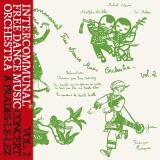
Concert at Prades-le-Lez marks the origins of the Intercommunal Free Dance Music Orchestra. In 1974, François Tusques and his companions (Michel Marre, Jo Maka, Adolf Winkler and Guem), in the spirit of Don Cherry or Chris McGregor, playfully dismantle all borders and all styles of creative music.
On this second volume, the Intercommunal builds unprecedented soundscapes around a song of revolt, a dance tune, or a burst of dissonance. The journey is unforgettable, no question about it. On repeat listening, it even becomes… lunar!
“The music that we make is primarily meant to be listened to live,” warned a leaflet from the Intercommunal Free Dance Music Orchestra. This is precisely why the (restored!) reissue of the two volumes of Concert at Prades-le-Lez, recorded on January 25 and 26, 1974 by François Tusques and his comrades, is such an important event.
In 1971, after recording a series of albums that would leave a lasting mark on French jazz (Free Jazz, of course, with Michel Portal, François Jeanneau, Bernard Vitet, Beb Guérin and Charles Saudrais, but also Le Nouveau Jazz with Barney Wilen, or the solo Piano Dazibao), François Tusques founded the Intercommunal—a grouping whose very name called for the fraternization of the various communities making up the country: Our music will help, we hope, to resolve the contradictions that exist between workers be longing to different communities, by breaking down various forms of national chauvinism, and more particularly the chauvinism of certain French people toward the cultures of Third World countries… Long live the friendship between the peoples of the whole world!
Among the great records made by the Intercommunal Free Dance Music Orchestra, the two volumes of Concert at Prades-le-Lez come first, before L’Inter Communal, Vol. 4, Le Musichien, and Après la marée noire (four titles already reissued by Souffle Continu). François Tusques and his companions (Michel Marre and Jo Maka on saxophones, Adolf Winkler on trombone, and Guem on percussion) performed on January 25 and 26, 1974 at the Moulin de Prades-le-Lez, a few kilometers from Montpellier. It was thus in the southern region of Occitanie that the first echoes of this musical vision of a borderless brotherhood were recorded.
“We’re not among the Colonels,” the Intercommunal reassures us right away, performing a stride piano tune carried by African winds that the audience cannot resist for long. The energy is already striking and it never lets up throughout these two recordings, from start to finish: jazz, blues, traditional music, minimalism, even funk… The musicians of the Intercommunal have heard a lot of great music and now delight in reinventing it by mixing it all together.
“We want the song form to take its place as a weapon in the struggle against capitalist exploitation and all those who oppress us morally and materially,” declared an Intercommunal leaflet, quoting Jean-Baptiste Clément, author of the lyrics to “Le Temps des cerises.” The struggle was therefore serious—but it did not prevent François Tusques and his group from waging it in a festive spirit: each piece on Concert at Prades-le- Lez sends out a call for love and fraternity. Fifty years later, the message remains as relevant as ever—and once again, it is François Tusques who makes it heard.
- On N'est Pas Chez Les Colonels
- Intercommunal Blues
- Mazir
- Kan-Ha-Diskan - We Shall Over Come
- African Rythm-N-Logy
2[23,95 €]
Concert at Prades-le-Lez marks the origins of the Intercommunal Free Dance Music Orchestra. In 1974, François Tusques and his companions (Michel Marre, Jo Maka, Adolf Winkler and Guem), in the spirit of Don Cherry or Chris McGregor, playfully dismantle all borders and all styles of creative music.
On this first volume, the Intercommunal takes its audience from New Orleans to Brittany and on to North Africa. The journey was bold, without a doubt—and its memory remains unforgettable.
“The music that we make is primarily meant to be listened to live,” warned a leaflet from the Intercommunal Free Dance Music Orchestra. This is precisely why the (restored!) reissue of the two volumes of Concert at Prades-le-Lez, recorded on January 25 and 26, 1974 by François Tusques and his comrades, is such an important event.
In 1971, after recording a series of albums that would leave a lasting mark on French jazz (Free Jazz, of course, with Michel Portal, François Jeanneau, Bernard Vitet, Beb Guérin and Charles Saudrais, but also Le Nouveau Jazz with Barney Wilen, or the solo Piano Dazibao), François Tusques founded the Intercommunal—a grouping whose very name called for the fraternization of the various communities making up the country: Our music will help, we hope, to resolve the contradictions that exist between workers be longing to different communities, by breaking down various forms of national chauvinism, and more particularly the chauvinism of certain French people toward the cultures of Third World countries… Long live the friendship between the peoples of the whole world!
Among the great records made by the Intercommunal Free Dance Music Orchestra, the two volumes of Concert at Prades-le-Lez come first, before L’Inter Communal, Vol. 4, Le Musichien, and Après la marée noire (four titles already reissued by Souffle Continu). François Tusques and his companions (Michel Marre and Jo Maka on saxophones, Adolf Winkler on trombone, and Guem on percussion) performed on January 25 and 26, 1974 at the Moulin de Prades-le-Lez, a few kilometers from Montpellier. It was thus in the southern region of Occitanie that the first echoes of this musical vision of a borderless brotherhood were recorded.
“We’re not among the Colonels,” the Intercommunal reassures us right away, performing a stride piano tune carried by African winds that the audience cannot resist for long. The energy is already striking and it never lets up throughout these two recordings, from start to finish: jazz, blues, traditional music, minimalism, even funk… The musicians of the Intercommunal have heard a lot of great music and now delight in reinventing it by mixing it all together.
“We want the song form to take its place as a weapon in the struggle against capitalist exploitation and all those who oppress us morally and materially,” declared an Intercommunal leaflet, quoting Jean-Baptiste Clément, author of the lyrics to “Le Temps des cerises.” The struggle was therefore serious—but it did not prevent François Tusques and his group from waging it in a festive spirit: each piece on Concert at Prades-le- Lez sends out a call for love and fraternity. Fifty years later, the message remains as relevant as ever—and once again, it is François Tusques who makes it heard.
200 Records marks its 50th release with a four-track EP showcasing both fresh faces and long-time contributors to the label. M.R.E. opens with a vibrant house cut, full of energy and warmth. Blauert follows with a deep, dub-tinged house track, subtle but with a steady, driving rhythm that keeps things moving. Havantepe contributes a deep and intricate Detroit-inspired techno track, rich in texture and unmistakably his own. Till Krüger rounds off the release with a timeless B2 track: —subtle, melodic, and unmistakably his in style.
Highly recommended by Paul Nazca, Tim French, Chad jackson, Brett Gould, Johan, Sinca, Spencer Brown, Steve parry, Ruede Hagelstein,
Karotte, Alexander maier, Greg Eversoul, Dibby Dougherty / Island Hill, Adi Shabat, Michel de Hey, Francesco Chiocci, Paul James Nolan,
Yas Cepeda, Urmet K, Satoshi Fumi, Steve Raschke, Siavash, Ranj Kaler, Nhar / Bernhard Siefert, Four Candles, Alex Neri, Dimitri Schnider / Definition,
Yves Eaux, Cerillio, Paco Osuna, Lonya, Richie Hawtin, Just Her, Stefano Lotti, Nick Stoynoff, Joseph Capriati, Luke Garcia, Mihai Popoviciu, Daniel Mehlhart, Joris Voorn, Jamie Jones, Greg Fenton, Audio Jack, Stefan Weise....to name a few!
- A1: György Ligeti - Musica Ricercata Ii (Mesto, Rigido E Cerimoniale)
- A2: Dmitri Shostakovich - Waltz 2 From Jazz Suite
- A3: Chris Isaak - Baby Did A Bad Bad Thing
- A4: The Victor Silvester Orchestra - When I Fall In Love
- B1: The Oscar Peterson Trio - I Got It Bad (And That Ain't Good)
- B2: Jocelyn Pook - Naval Officer
- B3: Jocelyn Pook - The Dream
- B4: Jocelyn Pook - Masked Ball
- C1: Jocelyn Pook And The Jocelyn Pook Ensemble With Manickam Yogewaran - Migrations
- C2: Roy Gerson - If I Had You
- C3: Peter Hughes Orchestra - Strangers In The Night
- D1: Brad Mehldau - Blame It On My Youth
- D2: Franz Liszt - Grey Clouds (Dominic Harlan Piano)
- D3: György Ligeti - Musica Ricercata Ii (Mesto, Rigido E Cerimoniale) Reprise (Dominic Harlan Piano)
Der 1999 veröffentlichte Soundtrack zu Eyes Wide Shut enthält eine einzigartige Trackliste mit Hits wie „Baby Did a Bad Bad Thing“ von Chris Isaak sowie Originalkompositionen von Jocelyn Pook, die den unheimlichen und spannungsgeladenen Ton des Films perfekt ergänzen. Ein herausragendes Stück, „Masked Ball“, wurde wegen seiner eindringlichen, atmosphärischen Qualitäten zur Ikone. Das Album wurde für einen Grammy Award in der Kategorie „Best Score Soundtrack for Visual Media“ nominiert, was die Anerkennung der Kritiker unterstreicht.
Limited translucent yellow vinyl LP
'Afro-cuban : that term which sets the world on fire, from rumba to boléro, mambo to cha-cha- cha, before salsa, that 70's spicy sauce, took over from the others. But to speak truly, since the mists of times (of slavery), both Africa and Cuba aim to vamp that umbilical cord. The most recent example, CubAfrica, a record born from the reunion of a master from Africa and this very living institution from Cuba, during a show around Albi (in the south of France) where they were both headlining in spring 1996. Manu Dibango's sax melted perfectly with the rural music of Eliadès Ochoa and his Cuarteto Patria, here's the beginning of an idea.
- A1: Les Marie Louise
- A2: Ces Gredins De Légumes
- A3: Le Rêve De La Maison Dans La Maison
- A4: Coteau Caché
- A5: La Paix Du Dimanche
- B1: Ce Que Le Chien Veut
- B2: A Qui N'a Rien
- B3: Le Jus D'une Cerise
- B4: Sur Les Chemin De Contrebande
- B5: Les Morsures D'escargo
Vol.2[17,94 €]
With the album Cousin Zaka Vol. 3, Blundetto is closing the series he began in 2019, ending it on a psychedelic note.
A voodoo spirit of harvests, Zaka is the guardian of agricultural activities and, by extension, a protector of nature.
It is under his protection that Max Guiguet delivers his wandering music and instrumental escapades — those in-between states he strives to capture in his notebooks, mood journals composed between each album and collaboration.
Rooted in the landscape and nourished by long observation, it allows itself to distort, stretch and blur the outlines of this peaceful scenery.
For this last volume of Cousin Zaka, the atmosphere is psychedelic, hippie, and free.
A freedom drawn as much from the poetry of Francis Picabia as from that of musicians Pierre Barouh, Moondog, and Eden Abhez — free spirits whose work informed the composition of this record. The idea is to take a path and let oneself be carried away, to drift as one would during a long walk in the forest.
Cousin Zaka, Vol. 3 is a wide, gentle experience, reminiscent of 1970s freedoms.
PART 1/2[17,86 €]
"Petrol", one of Manu Kenton's most iconic tracks, makes its highly anticipated return in a limited edition that will appeal to both collectors and techno enthusiasts. This special version features not only the original track, but also exclusive remixes that reinterpret the piece from different angles, offering a diverse and exciting sonic palette.
Manu Kenton, staying true to his creative genius, revisits his own track by adding an energetic and catchy vocal, bringing a fresh new dynamic to the already electrifying atmosphere of the original.
The Gregor Size remix is a true powerhouse: dynamic, industrial, and powerful, it transforms "Petrol" into a heavy, punchy piece, with dark textures and irresistible rhythms that leave a lasting impression.
Greg Denbosa, on the other hand, delivers a progressive techno remix, with a dynamic and repetitive beat that builds tension, creating a hypnotic experience perfectly suited for the dancefloor.
Finally, Bestien offers a nervous, straight, and punchy version, ideal for the peak moments of a night. His explosive remix ramps up the intensity on the dancefloors, with raw energy and power that demands attention.
Visually, this vinyl stands out with its "Yolk" effect, a unique blend of white and white with luminous accents, creating a striking and modern design that will enhance any collection.
Français
"Petrol", l'un des morceaux les plus emblématiques de Manu Kenton, fait son grand retour dans une édition limitée qui séduira aussi bien les collectionneurs que les passionnés de techno. Cette version spéciale inclut non seulement la version originale du titre, mais aussi des remixes inédits qui réinterprètent le morceau sous des angles différents, offrant ainsi une palette sonore variée et excitante.
Manu Kenton, fidèle à son génie créatif, revisite son propre morceau en y ajoutant un vocal énergique et entraînant, donnant une nouvelle dynamique à l'atmosphère déjà électrisante de l'original.
Le remix de Gregor Size est un véritable tour de force : très dynamique, industriel et puissant, il transforme "Petrol" en une œuvre lourde et percutante, avec des textures sombres et des rythmes irrésistibles qui marquent les esprits.
Greg Denbosa, quant à lui, propose un remix techno progressif, avec un beat dynamique et répétitif qui crée une tension croissante, offrant une expérience hypnotique et parfaitement calibrée pour les sets dansants.
Enfin, Bestien livre une version nerveuse, droite et percutante, idéale pour les moments intenses d'une soirée. Son remix explosif fait monter l’intensité sur les dancefloors, avec une énergie brute et une puissance qui ne laisse personne indifférent.
Visuellement, ce vinyle se distingue par un effet "Yolk", un mélange unique de blanc et de rouge lumineux, créant un visuel frappant et moderne qui enrichira toute collection.
- A1: Lanang Bojong Soang
- A2: Gadis Itu Sudah Sekarat
- A3: Cinta Ajo Kawir, Cinta Iteung
- A4: Paman Gembul Pria Toxic
- A5: Rona Merah Di Bawah Gerhana Jahanam
- A6: Lontong Tempe Cap Macan
- A7: Bolu Kukus Di Dalam Bui
- A8: Namaku Jelita
- A9: Laron Laron
- B1: Roda-Roda Rindu
- B2: Kisah Iteung Dan Burung-Burung Jahanam
- B3: Kumbang Tumbang
- B4: Memancing Dendam Di Lautan Hati Terdalam
- B5: Cerita Utara Jelita
- B6: Gema Dendam Berdendang
- B7: Memedi Bojong Soang (Reprise)
- B8: Seperti Dendam, Rindu Harus Dibayar Tuntas
- B9: Bangun, Bajingan!
The award-winning film Vengeance Is Mine, All Others Pay Cash (2021) is romantic drama set in a working-class neighbourhood of Indonesia’s West Java. Although the story was set in the 1980s, the film’s music director Dave Lumenta doesn’t really want to use music from that period. He doesn’t want to automatically go with dangdut, the musical genre, a mix of Malay, Indian and modern pop music, the music of choice for majority Indonesia’s working class. He simply doesn’t want the film to be stuck in the time setting and the social class. The scoring is richer, not only was it inspired by dangdut, but it was also inspired by rock as well. In order for his imagination to be free of that time and social context, he decides to make music that was based on the characters, otherwise known as leitmotif.
Lumenta is interested in vulnerability, because it is something that the audience can find in the main character Ajo Kawir, an impotent who is unable to have an erection. Another main character Iteung is someone who is very liberal in terms of her sexuality, but she also struggles with an issue as well, which is their issues, a traumatic past. The film successfully portrays the clash of these two characters. And from identifying these two characters, the composer creates a melody or leitmotif that represents each character. The use of analogue instruments is also consistent with the film’s spirit, which is also shot using analogue camera. Lumenta created the music using acoustic instruments, such as the recorder, along with other sounds from an analogue synthesizer.
The sound produced may not be perfect, just like the are grainy quality of an analogue film, due to limitation of the medium. But it is precisely due to that limitation that the eyes and ears are compelled to watch and listen actively; we must squint to catch something more perfect, or listen closely to filter out imperfections in the sound. Consuming art created with analogue tools requires a different method of listening, watching, and working process.
- A1: Pourquoi Tu Veux Que Je Parle Si Tu T’en Fous? 00 01:15
- A2: Se Goinfrer De Rage 00 02:09
- A3: Boule Et Bill 00 03:57
- A4: La Plus Grosse Angoisse 00 07:10
- A5: C’est Qui Ton Papa? 00 00:22
- B1: Les Cerisiers, Mon Cœur 00 03:00
- B2: Drôle D’odeur 00 01:07
- B3: Tes Nouilles Trop Cuites 00 03:08
- B4: Si J’avais Un Enfant Handicapé Mental 00 04:42
- B5: Schultz & Damien 00 02:57
In the wake of a profound loss, Marie Klock, a neo-chanson singer and multi-instrumentalist from Paris, presents a poignant tribute with her debut on Pingipung. On “Damien est vivant” Marie Klock pays homage to the poet Damien Schultz, who has recently passed. They were intertwined both in artistic collaboration and deep friendship.
Marie Klock creates a powerful ode to Damien Schultz's surreal, anarchic, witty and at times provocatively obscene French (English translations are included in the vinyl release). The poet's own voice resounds alongside Klock's, oscillating between spoken word and neo-folk vocals. Recorded in an intimate lo-fi setting with co- producer Julien Louvet, the 10 songs are far from a mournful requiem. They showcase idiosyncratic pop music brimming with humour and absurdity. “Damien est vivant” is a celebration of the unique bond they shared, in past and present. The melancholy sometimes takes on an almost whimsical quality, an allusion to the world as perceived through the lens of two kindred spirits.
Marie Klock has appeared as keyboardist on international stages with Sofia Portanet and collaborated with artists such as Jean-Louis Costes, Chilly Gonzales, Charlotte Brandi and Adrienne Pauly. Her self-titled solo LP (2020, Les Disques De La Face Cachée) was a cheeky outing of her synth-chanson act. She is currently working on a duo album with Anadol, to be released on Pingipung in autumn 2024.
“Damien est vivant” will be released on Good Friday 2024. Marie Klock will present the album in live ceremonies.
Retro house sounds from Italy on this release... tunes that still go down well with some of the big name festival dj's during their summer tour! A track that remained unpublished for 33 years until Devil Dee decided to make it public and bring his own voice to the spotlight joined by jazz-blues singer Joan Faulkner (former supporting voice of Boney M and Milli Vanilli, also known by her stage name 'Dee-Vah'). Devil Dee is Davide Mancori - a cinematograph with a flattering career as a club-dj from 80s-90s onwards - who lovingly produced this release which differs from most of the releases on Best Record by its housey vibe. 'And The Beat Goes On' was written in Germany in 1989 by Leonie Gane and Ryan Paris laying the crucial foundations for an evolutionary step of the italian disco music. A step forward for the 'Italo' movement considered obsolete and defunct. In fact, the track is also referring to the latest Italo-Disco which entirely covered the scene of the 1980s with furious activity, If the meeting between Devil Dee and the famous interpreter of 'Dolce Vita' - Mister Ryan Paris - creates the alchemy, the explosive mix is completed with the precious work of Marco Magrini. The arrangement by Pierluigi Cerin and the executive work of Claudio Casalini close the magic circle. Five friends and a great singer from Indiana to fill the dance floors all over Europe, while the images of the provocative and surreal video-clip capture the audience by splitting in two. There are those who do not want to see certain issues publicized and those who appreciate their cheekiness, such as Best Record which by publishing the vinyl printed at 180 grams celebrates the 40 years of activity.
Manchester's Avant-Jazzy-Funk outfit Swamp Children were enviably eclectic and Taste What's Rhythm is their mini masterpiece. Flitting gracefully through a feast of genres with consummate ease, the band were almost indefinable and, accordingly, nigh-on impossible to market. So whilst this cult EP, originally out in 1982 on Factory Benelux, remains in demand for those in the know, it has also glided under the radar of many otherwise clued-up heads for over 40 years. If you don't know, get to know...
The Taste Whats Rhythm EP was originally released in 1982 on Factory Benelux (an informal partnership between the legendary Manchester-based Factory Records and Belgium-based Les Disques du Crépuscule). With it's kaleidoscopic brightness, silky panache and superb execution, it remains one of the most startling documents of a remarkable time and place.
The EP opens with the oh-so-Balearic title track. "Taste Whats Rhythm" gently unfolds with a Spanish guitar, hazy, drifting vocals and sun-bleached Latin percussion. After this most sumptuous of intros, the tempo is raised, the rhythms grow in complexity as horns jostle amidst the restrained chaos quite wonderfully. And then it winds down again. Proper fluctuating rhythms and tempos throughout. I guess that was the point - taste the variety!
“You’ve Got Me Beat” is a *perfect* piece of post-punk pop-jazz. A mysterious, after dark jazz-dancer, the aching vocals serve as a touching, tender resignation to love. A guitar hook which seems to elegantly reference The Blackbyrds' "Rock Creek Park" and a flowing pulse from New York's No Wave scene. It still sounds so fresh all the years later.
Closing out this most perfect of EPs, the twisted synths and nimble rhythms of bass-heavy roller "Softly Saying Goodbye" combine to create a super-slinky gem; Brit-Funk of the highest order.
Swamp Children formed in Manchester in 1980, around core members Ann Quigley (vocals), Tony Quigley (bass, metalaphone, percussion), John Kirkham (electric & acoustic guitars, metalaphone, percussion), Ceri Evans (keyboards, bass, percussion, background vocals), Cliff Saffer (saxaphone, clarine) and Martin Moscrop (drums, percussion, trumpet). They initially practised at a rehearsal space shared with fellow post-punk funkers A Certain Ratio and Joy Division/New Order. Young and relatively inexperienced upon getting together, the ages of Swamp Children's members ranged from just 16 to 19. Talk about the brilliance of youth.
From the outset, Swamp Children shared DNA with A Certain Ratio. Martin Moscrop was a founder member of Ratio, while Ann provided artwork for them. Although the close association with ACR led some to assume that Swamp Children were simply a splinter group, the new band pursued a more overt latin and jazz tinged direction, at the same time adopting a post-punk attitude towards making music, influenced by the records they were listening to at the time: Miles Davis, Brazilian jazz fusion and heavy funk dancefloor sides.
The band made their live debut at Manchester's infamous Beach Club in May 1980. Thanks to a double-booking blunder another support band turned up and were turned away, having travelled all the way from Dublin for a string of British dates. The name of the unlucky band was U2...
With arrangements that emphasised Tony Quigley’s darkly-coloured basslines (and Ann Quigley’s impressionistic vocals as another instrument in the mix) Swamp Children possessed an easygoing grace and a bubbling energy which indicated that the band's true strength was as an ensemble. The band’s musical sophistication (a fusion of funk, jazz, and bossa nova) would prove to be a strong influence on later UK acts like Sade. Indeed, Swamp Children themselves later mutated into the more known and acclaimed latin jazz outfit Kalima.
Working directly with James Nice, custodian of Factory Benelux, means that the audio for this re-issue of the classic EP comes from the original tapes. Cut at 45 RPM and released in the house Be With disco sleeve, we’ve made sure this record is well up to the job of having a permanent place in every DJ’s bag. As far as we’re concerned, this is essential stuff.
Retro house sounds from Italy on this release... tunes that still go down well with some of the big name festival dj's during their summer tour! A track that remained unpublished for 33 years until Devil Dee decided to make it public and bring his own voice to the spotlight joined by jazz-blues singer Joan Faulkner, (former supporting voice of Boney M and Milli Vanilli, also known by her stage name 'Dee-Vah'). Devil Dee is Davide Mancori - a cinematograph with a flattering career as a club-dj from 80s-90s onwards - who lovingly produced this release which differs from most of the releases on Best Record by its housey vibe. 'And The Beat Goes On', was written in Germany in 1989 by Leonie Gane and Ryan Paris. Laying the crucial foundations for an evolutionary step of the italian disco music. A step forward for the 'Italo' movement which at the end of the 80s was been considered obsolete and defunct. In fact, the track is also referring to the latest Italo-Disco which entirely covered the scene of the 1980s with furious activity, If the meeting between Devil Dee and the famous interpreter of 'Dolce Vita' - Mister Ryan Paris - creates the alchemy, the explosive mix is completed with the precious work of Marco Magrini. The arrangement by Pierluigi Cerin and the executive work of Claudio Casalini close the magic circle. Five friends and a great singer from Indiana to fill the dance floors all over Europe, while the images of the provocative and surreal video-clip capture the audience by splitting in two. There are those who do not want to see certain issues publicized and those who appreciate their cheekiness, such as Best Record which by publishing the vinyl printed at 180 grams celebrates the 40 years of activity.
- A1: When War Comes
- A2: Independence Day
- A3: 7 Screaming Dizbusters
- A4: Od’d On Life Itself
- A5: Ii Duce
- A6: Bombs Over Germany
- A7: Before The Kiss (A Redcap) (A Redcap)
- A8: Three Sisters
- A9: Quicklime Girl (Mistress Of The Salmon Salt) (Mistress Of The Salmon Salt)
- A10: The Red & The Black
- A11: Dominance & Submission
- A12: Shadow Of California
- A13: Cities On Flame (With Rock & Roll) (With Rock & Roll)
- A14: Half Life Time
For fans of Blue Öyster Cult, Blue Coupe, and Classic Rock! Albert Bouchard is best known as one of the founding members of Blue Öyster Cult. The original band sold millions of albums for Columbia Records with such classic songs as “Don’t Fear the Reaper” and the #1 hit on the Billboard Mainstream Rock chart “Burnin’ For You”. As a songwriter, he wrote many BÖC songs including the very popular “Astronomy” (which was covered by Metallica on their 1998’s release Garage Inc) and the live staple “Cities on Flame with Rock and Roll”, which he also sang lead vocals. “Imaginos 2 – Bombs Over Germany (minus zero and counting)” sees Albert continuing the Trilogy of Imaginos, a concept album about an alien conspiracy that is brought to fruition during the late 19th and early 20th century through the actions of Imaginos, an agent of evil. The album weaves scripts and poems by the late Sandy Pearlman. It features guests Ross The Boss (Dictators), Joe Cerisano (Silver Condor, TSO), and reunites original Blue Öyster Cult members Eric Bloom, Donald “Buck Dharma” Roeser and Joe Bouchard, as well current BOC member Richie Castellano, who all contribute to this latest installment. The album also features reworks of classics like “Cities on Flame with Rock and Roll”, “The Red and the Black”, and “Dominance and Submission”. Due to the overwhelming response to Imaginos II, we are now releasing a Double LP gatefold version which includes an extended version of “Independence Day”, plus the bonus “When War Comes (Instrumental Mix)”.
- A1: The Wind Of Ages - When A Human Can Be A Human
- A2: Mamma Aiuto
- A3: Addio!
- A4: Bygone Days
- A5: A Picture In Sepia
- A6: Serbian March
- A7: Flying Boatmen
- A8: Doom - Trap Of Clouds
- A9: Porco E Bella
- A10: Fio - Seventeen
- A11: Women Of Piccolo
- A12: Friend
- A13: Partnership
- A14: Madness - Flight
- B1: To The Adriatic Sea
- B2: In Search Of The Distant Era
- B3: Love At The First Sight In The Wildness
- B4: At The End Of The Summer
- B5: Lost Spirit
- B6: Dog Fight
- B7: Porco E Bella - Ending
- B8: Le Temps Des Cerises
- B9: Sometimes Old Stories
... The Original Release of 'TJJA-10023' was on the 25th July, in 1992. Score by 'Joe Hisaishi', Album including 23 tracks. Theme song “The Time Of The Cherries” Ending song “Once In A While, Let’s Talk About The Old Days” / Vocal: Tokiko Kato. ... Committed to acoustic sound, this album was recorded by full orchestra of 70 people.
New album of Québecois performer Bernardino Femminielli after several releases on Mind Records or Desire Records. Produced by Dominic Vanchesteing (Marie Davidson, Jef Barbara, Chocolat, Bernardino Femminielli...). A synth-pop/chanson act in between Sebastien Tellier, Serge Gainsbourg and lust.
Bernardino Femminielli, a lucid and tempestuous entertainer, abandons his performance and his leather clothes to take on the role of a triple agent in a sentimental mise en abyme, far from the tumultuous moral, political and philosophical conflicts. By turns storyteller, voyeur and actor of this tragedy in six acts, it is his word against that of another.
The other is Brad Cerini.
Lulled by the variety of his Italy, this unaware student of Vannier, Lai and Musy projects Femminielli into the heart of the torments of a high school girl in love and betrayed.
The mouse slips out of the shadow of the palaces and embraces her fate with a gunshot. Iris embarks on a hellish journey, assumes her excesses of politeness and turns an unexpected encounter into a grandiose event.
An introspective and/or schizophrenic tale that polarises a toxic, vital desire, carried by a flowery music that frees the artist from her principles.
Femminielli plays "an assumed, sincere role, a more serious posture and a more serious tone, but also an emotional distance in the face of this painting of manners. I had to act for her and him.
Directed by Dominic Vanchesteing (Marie Davidson, Jef Barbara, Chocolat, Bernardino Femminielli...), Dans les yeux d'Iris is the first release of the Parisian label Corps Double.
► One half of duo Lumisokea and persistent sonic explorer ANDREA TAEGGI (Opal Tapes, SM-LL, Type, Präsens Editionen) debuts on OOH-sounds with a new solo album under-the-influence of mushrooms.
► Recorded at Willem-Twee synthesis studios in Holland, Mycorrhiza is a lucid excursion into a new form of 'ritual-computer-music' — gamelan from the future.
►Master + Cut by Helmut Erler, D&M Berlin. Limited Edition of 200, 12" black vinyl housed in gold cardboard sleeve with 'ad-hoc' fluo sticker.
Of course this is not the first album born under-the-influence of mushrooms, but apparentlyTaeggi doesn't take them here as he rather observes the cognitive and intelligent behavior of mycorrhizal fungal roots—one of the great mysteries inhabiting the forest soil, and from which a network of beneficial underground relationships with plants sprouts. Known as Mycelium, this fascinating wood-wide-web very much resembles the intricacy of the human neural system—transporting carbon, water and nutrients from one tree to another. A mutualistic symbiosis that Taeggi similarly establishes with the rather rare arsenal of sound machineries he had access to at Willem-Twee synthesis studios in Holland—a center for experimentation inspired by Berio and Maderna's Studio di Fonologia RAI in 1950s Milan.
In the process of tweaking and feeding electric impulses and sound signals into instruments of the likes of the iconic ARP 2500/2600 and a number of testing/measuring units from the 50/60s—originallynot conceived as musical instruments—Taeggi engages into an exchange of nutrients and information, while abruptly sabotaging un-welcome elements, hence accelerating the sound superhighway towards spectral psychedelic tension—a process he seems to be extremely in control of. Taking a step aside from his usual minimal approach to address more complex structures and augmented mind-sets, Mycorrhiza sounds at times like gamelan from the future: a lucid excursion into a form of "ritual-computer-music" with a conspicuous penchant for detail,alluding to a continuitybetween pseudo-cerimonial and laboratory-like computer music, steering clear from any reference to a specific creed or religion—imagine Stockhausen drinking the Amazonian sacred brew Ayahuasca..
The swarming micro-movements of "Cuttleburrs" multiply in a series of crescendos marked by sudden falls, saturated drums incursions and tense sonic clusters, introducing the more explicit gamelan percussive tones and compositional forms of "Kodama" and "Icaro". Recorded on the ARP 2500, "Mycorrhiza" uses white noise generators, resonant bass and spring reverb to conjure up a magical fungal diorama, which expands into the spooky shadows of skeletons and demons of "Phantasmagoria" and the spectral mystics of "Oculus Cordis"—the Eye of the Spirit — in which Taeggi grapples with the same sine-wave generators that Stockhausen used in his seminal "Studie I" and "Studie II".
Originally trained in classical piano through his mother and some of Indonesia's legendary classical music virtuosos, Fariz made his own historical moment when he became Indonesia's legendary Pop Icon of the eighties. With his unique talent as a multi instruments musician, Fariz wrote not less than 1,760 songs within his magnificent years between 1980-2000 and still leading the role as one of the most in demand and legendary Indonesian performers and producers ever noted by history. During his brilliant career, Fariz collaborated with the most famous names in the business, locally and internationally. This stunning compilation of incredible and hard to find tracks covers his early years from 1977 to 1982.
- Remastered from original sources in collaboration with the artist
- Strictly Limited Edition of 500 copies
- First reissue ever of collector's material
- 1