The phoenix symbolizes a new beginning. The fire burns off the last vestiges of the past as the bird spreads its wings and takes flight into the future. The Polyphonic Spree harness the flames of rebirth on their 2023 full-length offering, Salvage Enterprise. Led by frontman, founder, producer, multi-instrumentalist, and visionary Tim DeLaughter, the group embark on their next season. They're reverent of their history, yet they're also ready for an even brighter tomorrow. "Across all of the music I've done, lyrically there's a sense of desperation and a moment of convincing myself I'm going to make it through regardless of how the music dresses up," notes Tim. "On this one, I struggled with the amount of vulnerability I was experiencing and was willing to share both musically and lyrically, but ultimately decided to let it play out. Now that it's done, I'm happy with the dance between the two. It's a `rising-from-theashes' record." Salvage Enterprise beckons complete immersion. Opener "Galloping Seas (Section 44)" affixes softly strummed acoustic guitar to an orchestral hum as Tim urges, "Hold on through the galloping seas." "We're all galloping through rough waters," he says. "I tried to describe the process as well as I could and encourage people to keep their heads above the storm and the waves. Ride it out. It's going to be okay. It starts off very calm and introspective, and you can envision where it's going." Flute echoes over nimbly plucked guitar during "Shadows On The Hillside (Section 48)" as keys twinkle. A glorious harmony amplifies the nostalgia of "Hop Off The Fence (Section 49)." It concludes with "Morning Sun, I Built The Stairs (Section 52)." Optimism strains through his hopeful intonation, "I learned to fly, the more that I become a new reason, I want to try," uplifted by boisterous horns and cinematic strings. It crashes into an Ennio Morricone-style crescendo bolstered even higher by operatic vocals. "There is an arc of leaving the world behind, stripping your old self away, and becoming new again," he offers. "You're shedding off this old world, and you're heading into the future. It's an epic ending. You've made it. You're going to be alright." In the end, The Polyphonic Spree are the soundtrack to that light at the end of the tunne
Cerca:2 people
- A1: Star (Ricardo Villalobos Master)
- A2: Custard Last Stand / Amo1 Ambient Version (Ricardo Villalobos Master)
- B1: Make My Love Grow (Ricardo Villalobos Mix Down)
- B2: Black Apple Pink Apple (Ricardo Villalobos Remix)
- C1: Make My Love Grow (Ricardo Villalobos Make My Love Groove Remix)
- C2: Softlanding (Ricardo Villalobos Remix)
- D1: Dealer (Ricardo Villalobos Remix)
tom Ravenscroft at 6music amongst others. And now, in true AMO1 creative fashion they are presenting an off-shoot release of that album, one completely reimagined by the man, the myth: Ricardo Villalobos.
Much has been written and talked about when it comes to producer/DJ Ricardo Villalobos over the years.
The mercurial Chilean-German artist has consistently redefined the boundaries of techno and electronica over the past 30-years as a producer, whilst also traversing the world and expanding minds as a DJ who can equally delight as he does challenge.Like a great jazz drummer (he was a percussionist before discovering mixing records), Villalobos has not so much as broken “the rules” of structure as just created his own unique approach. One that is often surprising, ever open-minded, and clearly lead by whatever happens to be inspiring him at any given moment. Watching him work or hearing him play music always feels live and free. He’s an artist. And that is exactly how this (perhaps unlikely) collaborative album has come to light – but then this is Ricardo, so maybe we should all know by now that anything is possible.
Villalobos explains, “In my scientific search for some electroacoustic musical landscapes, the offer of remixing ‘Black Apple Pink Apple’ was just perfect for me… In general, the song writing is so very good and particular, with all the instruments played into a sequencer, so it was very inspiring to strip down these pop songs into my dubby extensions, taking only the drums, bass, and vocals of the song.” Expanding further, “After delivering the first remix, Mo and myself came up with the idea of reimagining the whole album in a new way, mixed simple with other ears and my inspirations, with a new and different point of view of what instruments are important to hold the song to bare itself.”
It says a lot, and somehow captures the essence of Ricardo’s approach to music (and life), that one remix soon evolved into a whole plethora of reimagined works, driven by a creative slipstream and a clear connection to the songs created by A Mountain of One.
Mo Morris provides more insight into his own connection with Villalobos, “I lived in Berlin back in 2002-04 and used to religiously go to dance to Rici at the after (after) hours parties: little, tiny events. And he just used to blow my mind, I hadn’t heard anything like it before (or since). Ultra-modern and forward thinking.”
Mo continues, “A good friend connected to Ibiza happenings introduced me to Ricardo as it transpired that he was a fan of our early material, so I sent him some demo’s when we were in the studio creating ‘Stars Planets Dust Me’ and he loved ‘Black Apple Pink Apple’. The relationship and collaboration grew from there really, and I hope that this release is still at the start of what we can all create together.”
Focussing in on the album at hand – ‘Ricardo Villalobos reimagines: Stars Planets Dust Me’ – we are treated to a concept listen that guides us from dreamy daytime Balearic pop – staying very true to the original songs – all the way through to completely original deep dubby techno excursions. And to Villalobos fans, it will perhaps surprise (and hopefully delight) how light a touch he has provided to the opening tracks, focussing more on enhancing the sonics, and allowing the originals to shine brighter through remastering and mixing down. It’s in these moments that we see Ricardo as a pure music fan, needing not overly change or alter what’s already been created, but simply doing what he can to maximise what’s already there.
What will certainly delight Ricardo fans are the four full ‘klub’ remixes provided of ‘Black Apple Pink Apple’, ‘Make My Love Grow’, ‘Softlanding’ and ‘Dealer’ that each boldly explore the outer regions of the dancefloor in a way that only Villalobos can.
Mo rounds off, “From an electronic and sonics standpoint he’s kind of out there on his own. It’s such a unique sound. Weatherall also had this, and Harvey has that unique flavour, and also people like Nils Frahm and Max Richter have this gift. It’s not an easy thing to produce. Ricardo has his own personal cosmic trademark.”
Indeed he does. Take a trip with him around the stars and planets and see for yourself.
- A1: The Paradigm Shift (2023 Remaster)
- A2: Fools (2023 Remaster)
- A3: Beethoven (2023 Remaster)
- B1: The Impossible Dream (2023 Remaster)
- B2: Parade (2023 Remaster)
- B3: Ain't It Strange (2023 Remaster)
- B4: All In The Golden Afternoon (2023 Remaster)
- C1: Oh Patti (2023 Remaster)
- C2: Ivory Tower (2023 Remaster)
- C3: Faith (2023 Remaster)
- C4: Iron John (2023 Remaster)
- C5: The One Thing (2023 Remaster)
- D1: Some People (2023 Remaster)
- D2: Euphoria (2023 Remaster)
- D3: Apollo (2023 Remaster)
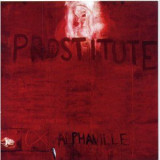
Ursprünglich 1994 veröffentlicht, ist Prostitute das vierte Album von Alphaville und war die erste Veröffentlichung seit fünf Jahren. Mit "einer großen Vielfalt an Stilen" enthält das Album elektronischen Jazz, New-Wave-Musik, Synthpop, Swing, Hip-Hop, klassische Balladen und Pink-Floyd-ähnliche elektronische Musik - es ist also eher ein theatralisches Album.
Die erste Singleauskopplung war "Fools", gefolgt von der zweiten Single aus dem Album, "The Impossible Dream". Das Album wird zum
ersten Mal auf Vinyl veröffentlicht. Die 2 CD Extended Version enthält mehrere Mixe und alternative Versionen.
- 2LP - remastered, Trifold-Hülle plus 24-seitiges Booklet,
- 2CD - mit der Original-CD und einer zusätzlichen Disc mit Tracks, die nur auf 12"-Vinyl erhältlich waren, und einer 5"-Maxi-CD mit Mixen, alternativen Versionen usw.
The phoenix symbolizes a new beginning. The fire burns off the last vestiges of the past as the bird spreads its wings and takes flight into the future. The Polyphonic Spree harness the flames of rebirth on their 2023 full-length offering, Salvage Enterprise. Led by frontman, founder, producer, multi-instrumentalist, and visionary Tim DeLaughter, the group embark on their next season. They're reverent of their history, yet they're also ready for an even brighter tomorrow. "Across all of the music I've done, lyrically there's a sense of desperation and a moment of convincing myself I'm going to make it through regardless of how the music dresses up," notes Tim. "On this one, I struggled with the amount of vulnerability I was experiencing and was willing to share both musically and lyrically, but ultimately decided to let it play out. Now that it's done, I'm happy with the dance between the two. It's a `rising-from-theashes' record." Salvage Enterprise beckons complete immersion. Opener "Galloping Seas (Section 44)" affixes softly strummed acoustic guitar to an orchestral hum as Tim urges, "Hold on through the galloping seas." "We're all galloping through rough waters," he says. "I tried to describe the process as well as I could and encourage people to keep their heads above the storm and the waves. Ride it out. It's going to be okay. It starts off very calm and introspective, and you can envision where it's going." Flute echoes over nimbly plucked guitar during "Shadows On The Hillside (Section 48)" as keys twinkle. A glorious harmony amplifies the nostalgia of "Hop Off The Fence (Section 49)." It concludes with "Morning Sun, I Built The Stairs (Section 52)." Optimism strains through his hopeful intonation, "I learned to fly, the more that I become a new reason, I want to try," uplifted by boisterous horns and cinematic strings. It crashes into an Ennio Morricone-style crescendo bolstered even higher by operatic vocals. "There is an arc of leaving the world behind, stripping your old self away, and becoming new again," he offers. "You're shedding off this old world, and you're heading into the future. It's an epic ending. You've made it. You're going to be alright." In the end, The Polyphonic Spree are the soundtrack to that light at the end of the tunne
A Flor de Piel, the new album from singer-songwriter and composer Maria Monica Gutierrez (aka Montañera), is a meditative journey of self-discovery across oceans, time, and the traditional confines of genre. Originally from Bogota, Colombia, Gutierrez began the album as a way to explore her identity after a difficult move to London left her feeling untethered in a strange new place. The result is an examination of the immigrant's experience through a rich sonic lens of ambient pop textures, inspired by sources as disparate as Colombian traditional music, traditional Senegalese music, and whalesong from the depths of the Atlantic. The album begins with the title track "A Flor de Piel," Gutierrez's indelible vocals floating above a vast expanse before being joined by deep, silky bass and the plucks of a koto-like stringed instrument. "The song was inspired by traditional Japanese music," Gutierrez explains, "It's about making my heart a little lighter; I know that inside of me I can be as light as mist in heat, I can be fragile as the song of a sparrow." That sentiment perfectly encapsulates much of what makes A Flor de Piel so special. The album comes with a message of healing for all people, without forgetting the centuries of struggle and hurt that form the bedrock of modern society. The track "Santa Mar," for instance, is inspired by the musical traditions of afro-pacific women in Colombia, and the crucial role that they play as peacebuilders in the region. Backed by a hypnotic beat, the song features contributions from marimba player Cankita, alongside Las Cantadoras de Yerba Buena, an all-female vocal group that utilizes traditional Afro-Colombian music to preserve their history and promote peace. Standout track "Como Una Rama" is a futuristic take on bullerengue, a traditional style of music and dance originally developed by Maroon communities on Colombia's Caribbean coast. Deeply affecting, the song combines Gutierrez's indomitable voice with electronics that recall Steve Reich's rhythmic minimalism. "Cruzar," the final track on the album, feels almost like a lullaby, with a meditative harmonic style and trance-like vocal melody. "The lyrics," Gutierrez explains, "are a personal reminder of what is important to me: healing, letting go, breathing, evaporating, forgetting, changing, crystallizing." Across the 40-odd minutes of A Flor de Piel, Gutierrez triumphs at recontextualizing traditional sounds and sentiments into a modern form using synth-based and electronic textures. It's a fitting representation for the personal struggles that the artist endured during her move to London. Rather than dwelling solely on the past Guitierrez uses A Flor de Piel to summon the strength of past generations, and forge a new path forward. As she describes it, "The album has accompanied me through inner journeys of finding myself in a new territory _ of redefining myself, of remembering who I am _ in a strange place." As we drift towards an increasingly frightening and uncertain future, perhaps Montañera's A Flor de Piel is exactly what we need: something to give us strength, to bring us peace, and to accompany our journey into a strange new place.
David Byrne is a modern renaissance man - and that’s not just a cliché. From the heady days as co-founder of the celebrated art new-wave group Talking Heads (1976-88) through his own constantly evolving and innovative solo music career, he has pursued his muse on many different artistic fronts. He’s been the driving force behind a body of work that has been both intellectually daring and commercially successful...and he shows no signs of slowing down decades later. This show, captured on November 28, 2001, came on the heels of his hit single, “Like Humans Do” and the release of the album Look Into The Eyeball, which was another typically eclectic musical stew reflecting a variety of styles and influences, from Philly soul to a D.C. Go-Go inspired groove and his first-ever Spanish composition, “Desconocido Soy.” Critics at the time called it his best work in years, and his performance on the Austin City Limits stage shows why. Joined by Austin’s own eclectic tango ensemble Tosca, Byrne takes us down many different musical roads in his ACL debut. Of course, besides the brilliant songwriter and performer that he is, he’s also an accomplished performance artist, photographer, web journalist, film writer / director, composer of motion picture soundtracks, and founder of his own world music label, Luaka Bop Records. He also has a collection of Grammys, Oscars and Golden Globes on his mantel. His music may be complex and poetic, but he makes no bones about his ultimate intent: “I want to move people to dance and cry at the same time. - Terry Lickona (Producer Austin City Limits)
First color pressing. This debut ACL performance on August 9, 2003, captures songs from Neko Case’s three seminal solo releases at the time, combining elements of country, gospel and punk for a very unique sound. That’s why pundits often find the music hard to classify. Which is a good thing. Her voice has been described as lush, torchy, melancholic - even scary (someone once wrote that “she sings like Patsy Cline’s ghost”). She certainly doesn’t sound like anything else on today’s hit parade. Neko began her career as a drummer in a punk band, but it wasn’t long before she started experimenting with songwriting and singing. She also continues to perform as a member of The New Pornographers, but her solo work is where her songwriting skills shine most. As she herself says, “I want to write songs that are timeless...maybe just something more like a novel than a short story.” After the show, Neko took the time to write the ACL staff to thank everybody for making her, her band and friends feel so welcome. “I feel very proud of how the show turned out...It’s so great to find out that something you admire so much is run by good people. Be proud! You kick ass!” You, too, Neko… – Terry Lickona (producer Austin City Limits)
The Blips self titled debut, 'The Blips', struck lightning when Little Steven's Underground Garage declared "Inside Out" The Coolest Song In The World in the spring of 2021. And here we are with The Blips, 'Again'. Back with more boogie, beast and beauty
This band swaggers like The Stones, Haggards like Merle, and snots like Mike Ness. 'Again' carries you on a not-too-long trip through a varied landscape of far out, well made and dusty rock songs that stick to your black boots and go with you when you go. While there are four different lead singers and writers throughout this album, it is apparent 'Again' is executed by a band, rather than disparate musicians playing along on a track in a cold studio. A band that sweats. The Blips haven't "grown" or "matured" with their "sophomore effort" --These ideas don't apply to the Blips. The band is wholly made up of veteran front men of some of the most revered bands of the Birmingham rock scene. Making records is what all of these guys do on the regular. Once upon a time, The Blips came together, rose above, braved the elements, forced the issue, carried the weight and dealt with the demons that require the making of a record. And now they have done it . . . 'Again'.
The debut album of soul singer, Maiiah is also the third full-length by Hamburg collective, Angels of Libra, following on from the success of their collaboration with Irish singer, Nathan Johnston.
Maiiah is a singer with roots in the Balkans but residing in Düsseldorf, the city of the legendary Unique Club and the label of the same name. Soul left its mark on her early on, and when she met Hamburg producer, musician and composer Dennis Rux (Hamburg Spinners/Yeah! Yeah! Yeah! Studios) during the pandemic, the two realized they shared a similar musical vision. Their common love of soul music and old rhythm & blues brought them together, and they started recording music together in Hamburg with the Angels of Libra. Lo and behold, their first single together "Obey" got into rotation at tastemaker station Radioeins and confirmed them as a winning team.
Following in the footsteps of many a classic soul tune, second single, "No No No (I'm So Broke)" is a social critique and commentary. In it Maiiah literally wears her heart on her sleeve, as she sings about the back- breaking job she was working at the time and the poor earnings as a hotel service employee.
But naturally life has more to offer than just work and so a large part of the songs on this record revolve around love. Maiiah gives her own spin to the classic "I'm A Good Woman", which the spirited singer has performed live many times. The story goes that the late DJ and Unique Records label owner Henry Storch sent Maiiah the original song by Barbara Lynn to comfort her after a heavy heartbreak. The song thus holds a very important place in Maiiah's heart, and it was released as the third advance single, recorded during her tour with Nathan Johnston at Bekegg Studios in Rastede, Lower Saxony.
With Dennis Rux at her side and the powerful arrangements of the Angels of Libra, Maiiah has found the right partners for her personal debut. On "Kava" & "Plenty of Life", Hamburg's jack-of-all-trades Carsten Meyer aka Erobique is featured as a guest on the keyboards, so here the rhythm section of the Hamburg Spinners comes together again. The love for old soul, rhythm & blues and the analog sound of the sixties is also fully expressed on this album. The longings and deep feelings in Maiiah's lyrics are carefully picked up musically, whether as a classic R&B song as in "Please Come Home" or in boogaloo party mode as in the Croatian-sung "Kava", the fourth single. "Plenty of Life" is a song for self-cheering and a call to open up to the beautiful sides of life despite all adversity. In "I wanna go", on the other hand, Maiiah longs for her Croatian homeland. The crowning finale of the album is the intense "Infinity" about life's phases and the recurring ups and downs as the essence of human existence.
The ingredients of Maiiah and the Angels of Libra's recipe are authentic lyrics, to the point arrangements, tight horns, rousing background vocals and the spirit of the golden age of soul music, as it was shaped by labels like Motown and Stax. Recorded in part with original equipment from the 50s. Producer Dennis Rux says, "We wanted to create a record that people would go dance to at the Komet" (a neighborhood club on St. Pauli in Hamburg, the band's second home). The joint album combines the Hamburg soul of the Angels of Libra with the passion of Maiiah, who can fully live out her temperament on the mic.
Dance Floor Rituals kick things off strong with the first release on the label by a producer that will be no stranger to people in the know.
DJ and producer, Jorge Gamarra, has been crafting his skills for the best part of a decade. You can quickly notice his dedication to interesting sounds and strong baselines whilst listening to DFR’s first release. 4 tracks tailored for dark dance floors and long after hours. Emotional tracks with spiritual feeling and built intuition. The perfect music and artist to kick things off for this new label.
This is not one to be missed. Be quick!
Born in Roma in 1959, Guiseppe “Peps” Cotumaccio arrived in South Africa when he was two years old. He was the mastermind behind the band “Sweet Reaction”, singing and playing keyboards.
In the early 80’s, the group used to back various artists including one of the South African top singer “Neville Nash”. Both artists were on the same record label: Music Team. Throughout his lengthy career, Peps has collaborated with Johnny Clegg, Ronnie Joyce, Sipho "Hotstix" Mabuse, P.J. Powers, Mark Alex, Neville Nash, and Mara Louw just to name a few.
The lead singer of the band, Dion Williamson, started performing in Johannesburg’s nightclubs and got quickly very successful, always in demand! People loved his gravel and sensual voice as he used to sing some of Joe Cocker’s popular songs. Unfortunately, during the Apartheid, the South African Government were not allowing black and white audiences, and the band split.
On this BIG5 Boogie#2, Enoch Ndlela produced 2 Modern Soul killer tracks.
Recorded in 1981, "Take it easy", where the music is evidently influenced by Willie Hutch (Easy does it - 1978) offers Dion a way to fully explain himself doing his own version of the tune. And what an explosive result!
On the same side of this 12”, our 2 Frenchies in Cape Town aka Simbad & Fred Spider enjoyed delivering us a fat broken beat version of the track, while the very “En Vogue” Aroop Roy from London turned it into a funky house summer hit.
Side B starts with a superb composition from the band: “African Sunrise” where Dion Williamson is on top, this tune is a bomb!
To finish this E.P, the well-known Kid Fonque from Johannesburg, who freshly moved to London working for the glorious house record label Defected, couldn’t wait to produce a super groove deep house refix. The result is a second essential dancefloor release from Voom Voom Records!
- A1: The Skatalites - Coconut Rock
- A2: Cedric "Im" Brooks & Sound Dimension - Mun-Dun-Go
- A3: Tommy Mccook & Richard Ace & Disco Height - Shockers Rock
- B1: The Soul Vendors - Ringo Rock
- B2: Jackie Mittoo & Ernest Ranglin - Jericho Skank
- B3: The New Establishment - The People Skanking
- B4: Karl Bryan & The Afrokats - Money Generator
- C1: Lester Sterling - Afrikaan Beat
- C2: Sound Dimension - Heavy Rock
- C3: Sugar Belly - In Cold Blood
- D1: Don Drummond - & The Skatalites Heavenless
- D2: The Soul Brothers - Bugaloo
- D3: Vin Gordon - Red Blood
- E1: Pablove Black - Push Pull
- E2: Jackie Mittoo & Brentford Rockers - Sidewalk Doctor
- E3: Liberation Group - Namibia
- F1: Brentford Road All Stars - Last Call
- F2: Soul Defenders - Still Calling
- F3: Karl Bryan & Count Ossie - Black Up
REPRESSED 2x12" now with bonus download code! Heavy, heavy tunes! Studio One instrumentals are the foundation of Reggae. These rhythm tracks became the basis for all Dancehall as countless artists and producers re-versioned these classic Studio One instrumentals.
REVIEWS: "Sheer volume of output from Studio One is astonishing, combined with the fact that the quality of the recordings never seem to diminish. These instrumentals touch on ska, rocksteady, dub, and begin to hint at the reggae sound of the late '70s. Each instrumental is perfect and has the feel that it could hardly be improved upon. Soul Jazz has once again put together a wonderfully rounded collection of music from Studio One" - All Music.
"I think if a nuclear family could have a soundtrack, ours would be the Soul Jazz comp Studio One: Scorcher. I wouldn't say it's the best record ever made, but if I heard it every single day for the rest of my life, I'd be 100% cool with it." DJ. & "Compilation of essential & rare Studio One instrumentals" - Hard Wax.
"Studio One Scorcher is the latest of these, collecting instrumental tracks spanning the years from the late 60's rocksteady vogue through the onset of dancehall and digital rhythms in the early 80's featuring The Skatalites, trombonist Don Drummond, Pablove Black and others." - Billboard.
'soft like steel’ is documenting a personal process; one of understanding, cleansing, re-learning and ultimate re-birth into a version of myself with renewed perceptions, ideas, and an openness to the new. LVRA represents an idealised version of myself - one that I feel like I can almost touch, but in reality is difficult to achieve. It follows my journey in understanding how my morality, principles and opinions have been shaped by the world and people around me - sometimes for the better, and sometimes for the worse. This on-going conversation with myself is a conversation that I hope other people have with themselves too; stepping through the mystical doors of perception, coming into a this unknown universe with me, is choosing the hard way - it is choosing to destroy the comforts of what is familiar, to seek new experiences that allow for greater empathy and understanding of the world and others. Only then do I believe the world can be a more accepting place for all kinds of individuality and differences, and I hope people find safety and acceptance in the music.
Renowned for his raw, blistering vocals and high-voltage guitar playing, the great Buddy Guy has remained a vital and current musician, moving blues forward without losing sight of its roots. He was a primary influence on blues-rock titans like Jimi Hendrix, Eric Clapton, Jeff Beck, and Stevie Ray Vaughan, as well as a pioneer of Chicago's fabled West Side sound, and a living link to that city's halcyon days of electric blues. This album presents him singing and playing some of his greatest hits backed by such outstanding figures as Junior Wells, Otis Rush, and Willie Dixon. "Buddy Guy was for me what Elvis was probably like for other people... My course was set, and he was my pilot." - Eric Clapton
I want to introduce this work ‘Halos of Perception’ to you in the way Lisa introduced me to it, through the sharing of experiences.
Lisa and I met for a walk near South Yarra station to talk about this work, when inclement weather made it too wet to visit the tunnels. Moving almost seamlessly from a world of leisurewear, infinite milk alternatives and blaring neons to stretches of green by the water that brimmed with sounds and life, we saw a few people climbing the Burnley bouldering wall, butterflies suspended in the hot wind and lots of plants I wish I knew the names of. Overhead the cars rumbled like a ceaseless animal as we talked about hidden ecosystems, imagined spaces and networks of care.
Stemming from a serendipitous encounter with an original Cave Clan member that led to many underground adventures, this work explores the worlds that exist outside of our perceptions. By the river, I leafed through a selection of tunnel photos Lisa had printed off at Officeworks, revealing alien textures, tunnels that stretch on into abysses of their own, underground flowing streams. Light is sparse and delicate, something reflected by the flickering and wavering in Lisa’s piano compositions.
As we walked, we noticed the ways in which infrastructure is often designed to keep people out—cut doors into fencing and clipped wires show an active and ongoing defiance of this. We spoke about how her Cave Clan friend used to go down to this painted room and read in solitude, using candles for light. The way sound exists underground, encased in these hollow cement tunnels, a painted room with its own deep hum. How people used to hold underground shows, how there were rules for safety (no exploring after rain, never alone) that was shared with each other. This warmth and absorption of other’s experiences is present in Lisa’s work—it’s immersive, like wading in water.
We paused on the walk to eat berries and talk about how The Caretaker creates transitory worlds with recorded sound, how this technology captures memory, and the exploratory pursuits of Pauline Oliveros’ Deep Listening Band. These citations of memory and deep listening inform Lisa’s use of analogue and classical instruments, playback artefacts and acoustic feedback in her own world-building. When speaking about ‘Halos of Perception’, she describes it as a fascination with timbre and acoustic artefacts.
Ideas of networks and enmeshment are felt deeply in Lisa’s compositions, motifs overlaid over each other evoking the image of many hands interlinking playfully, tenderly, softly. The way her compositions delve into refraction and echo makes me think about the tunnels and the way they splinter off into many possibilities. Manipulated textures reminiscent of the chalky, earthy, moss air that perfumes the tunnels’ subterranean air. Tactile details that gesture towards close attention, verging on obsession.
This work is also about imagining ecosystems of potential. Lisa shared with me that during this project, she has been reimagining subterranean networks in dreams, thinking about oral traditions, and the way water moves—from the sky to the earth, through the ground, connecting all these spheres. Realised in collaboration with hyperreal video artist Tristan Jalleh, Lisa’s dream landscape melds waterfalls, leaks, flower graffiti, and hidden messages lit up by imagined light sources with existing subterranean networks. There’s a real sense of wonder in this world she has built, how the city can reveal itself to you with some patience and care, how the city and its secrets can find its way into your dreams.
— Panda Wong
Color Vinyl[20,97 €]
In the decade or so that hard-working New York quartet Sunwatchers have operated, the group has steadily & subtly refined their sound - a brain-blasting mixture of jazz, psychedelia, krautrock, punk, noise, & Saharan blues - into something that is avant-leaning enough to appeal to the discerning jazz & experimental music fan & weird & wooly enough to get the true heads' toes tapping. "Music Is Victory Over Time" is the band's 5th album, and fourth for Chicago-based Trouble In Mind Records, seeing the long-running lineup of Peter Kerlin (bass guitar), Jim McHugh (guitars), Jason Robira (drums), and Jeff Tobias (alto saxophone and keyboards) in prime form. Album opener "World People" is a classic Sunwatchers number whose title expresses their Anarcho-Internationalist ideology (and the atypically multi-culti make up of their crowds), with an underlying melodic resonance to New Orleans funeral marches à la Albert Ayler _ a triumphant call to arms to all peoples. Live fave "Too Gary"'s gang vocal shout punctuates a motorik rager named for a phrase often uttered by a badass eight year old skateboarder McHugh knew with a speech impediment (it means "that's too scary"). "T.A.S.C." (or "Theme For Anarchist Sports Center") is inspired by Sonny Sharrock's maligned 80's output & sounds exactly like a wrathful, mutant version of a prime-time athletic show theme, replete with the requisite "sitcom ending." The sun- scorched "Foams" - a longform piece intended to depict natural stuff like tides, nightfall, and time slowly passing, ancient, peaceful and slightly gross all at once - practically jumps out of the speakers, its palpable intensity crackling in your eardrums. The title of "Tumulus" might reference an ancient burial mound, but the music itself might be the group's most high-tech song to date, complimented by an arpeggiating sequencer, three different forms of tape delay and an electric saxophone; ecstatic, fiery & deeply spiritual. "There Goes Ol' Ooze" is a smoky creeper that lets Tobias & Kerlin take a walk for a while, with respectful nods to the Stones and Steve Reich. "Song For The Gone" closes out the album, showcasing a sincerely tender moment for the gang, as an expression of love and resolve for dear friends who had recently, tragically died. Its cascading, bluesy melody attuning itself to our own collective unconscious grief. Having the distinct pleasure of being the first band to record in John Dwyer 's new LA-based recording studio Discount Mirrors, "Music Is Victory Over Time" boasts a beefed up sound. The band worked closely with in-house engineer Eric Bauer - facilitator, troubleshooter, sonic obsessive, a legendary freak and a DIY lifer. The band also had full access to the studio's epic armory of gear: amps, axes (it's Dwyer's Eddie Harris model electric sax), synths, a bass guitar once belonging to Klaus Flouride of the Dead Kennedys. Crucial for the sounds and the vibe. The album art was created by Josh MacPhee, the activist artist, author, archivist and founding member of both the radical artist collective Just Seeds and Interference Archive, a public collection of materials from social movements based in Brooklyn. MacPhee's participation in the project works as a statement of Sunwatchers' progressive utopian intentionality, and organically underscores their involvement in revolutionary projects within and without of their hometown. Listening to "Music Is Victory Over Time", Sunwatcher's rebellious spirit & unbridled enthusiasm remain fully intact, but the secret sauce is their infectious irreverence in the face of the horrors of this world. Much of our best cultural commentary is Trojan-horsed to the general public via humor & satire & the band has a knack for lacing the ridiculous with the radical. It's good to have them back. "Music Is Victory Over Time" is released worldwide digitally via most DSPs, on CD, black vinyl & a limited "Sunflare" blue/red splatter vinyl while supplies last.
Black Vinyl[20,97 €]
In the decade or so that hard-working New York quartet Sunwatchers have operated, the group has steadily & subtly refined their sound - a brain-blasting mixture of jazz, psychedelia, krautrock, punk, noise, & Saharan blues - into something that is avant-leaning enough to appeal to the discerning jazz & experimental music fan & weird & wooly enough to get the true heads' toes tapping. "Music Is Victory Over Time" is the band's 5th album, and fourth for Chicago-based Trouble In Mind Records, seeing the long-running lineup of Peter Kerlin (bass guitar), Jim McHugh (guitars), Jason Robira (drums), and Jeff Tobias (alto saxophone and keyboards) in prime form. Album opener "World People" is a classic Sunwatchers number whose title expresses their Anarcho-Internationalist ideology (and the atypically multi-culti make up of their crowds), with an underlying melodic resonance to New Orleans funeral marches à la Albert Ayler _ a triumphant call to arms to all peoples. Live fave "Too Gary"'s gang vocal shout punctuates a motorik rager named for a phrase often uttered by a badass eight year old skateboarder McHugh knew with a speech impediment (it means "that's too scary"). "T.A.S.C." (or "Theme For Anarchist Sports Center") is inspired by Sonny Sharrock's maligned 80's output & sounds exactly like a wrathful, mutant version of a prime-time athletic show theme, replete with the requisite "sitcom ending." The sun- scorched "Foams" - a longform piece intended to depict natural stuff like tides, nightfall, and time slowly passing, ancient, peaceful and slightly gross all at once - practically jumps out of the speakers, its palpable intensity crackling in your eardrums. The title of "Tumulus" might reference an ancient burial mound, but the music itself might be the group's most high-tech song to date, complimented by an arpeggiating sequencer, three different forms of tape delay and an electric saxophone; ecstatic, fiery & deeply spiritual. "There Goes Ol' Ooze" is a smoky creeper that lets Tobias & Kerlin take a walk for a while, with respectful nods to the Stones and Steve Reich. "Song For The Gone" closes out the album, showcasing a sincerely tender moment for the gang, as an expression of love and resolve for dear friends who had recently, tragically died. Its cascading, bluesy melody attuning itself to our own collective unconscious grief. Having the distinct pleasure of being the first band to record in John Dwyer 's new LA-based recording studio Discount Mirrors, "Music Is Victory Over Time" boasts a beefed up sound. The band worked closely with in-house engineer Eric Bauer - facilitator, troubleshooter, sonic obsessive, a legendary freak and a DIY lifer. The band also had full access to the studio's epic armory of gear: amps, axes (it's Dwyer's Eddie Harris model electric sax), synths, a bass guitar once belonging to Klaus Flouride of the Dead Kennedys. Crucial for the sounds and the vibe. The album art was created by Josh MacPhee, the activist artist, author, archivist and founding member of both the radical artist collective Just Seeds and Interference Archive, a public collection of materials from social movements based in Brooklyn. MacPhee's participation in the project works as a statement of Sunwatchers' progressive utopian intentionality, and organically underscores their involvement in revolutionary projects within and without of their hometown. Listening to "Music Is Victory Over Time", Sunwatcher's rebellious spirit & unbridled enthusiasm remain fully intact, but the secret sauce is their infectious irreverence in the face of the horrors of this world. Much of our best cultural commentary is Trojan-horsed to the general public via humor & satire & the band has a knack for lacing the ridiculous with the radical. It's good to have them back. "Music Is Victory Over Time" is released worldwide digitally via most DSPs, on CD, black vinyl & a limited "Sunflare" blue/red splatter vinyl while supplies last.
"Fast Rate" blends echoes of nostalgia with futuristic innovation, crafting a sonic landscape. In the relentless rush of life's high-speed journey, it invites introspection, courageously urging listeners to delve into the intricate web of contemporary life.
This EP is inspired by deep reflections on the meaning of life in a fast-paced world filled with thoughts and emotions. It symbolizes a futuristic journey, mirroring the human struggle to gain an external perspective in our busy lives. Random Alias prompts users to contemplate their existence, offering a musical experience that transcends mere dance rhythms.
The 5 tracker showcases a wide array of sounds, from aggressive tones to captivating and atmospheric elements unveiling a new face of the label that keeps exploring the interconnection between human and technology.
The A side roars with high bpm and furious rhythms."Keep me high" express the need of escaping ordinary life, seeking something that keeps us "high" and allows to escape and reset.
Following up "Fast Rate" spans a variety of influences, blending the allure of old-school Detroit electro with futuristic sounds achieved through bold experimentation and advanced wave modeling. This fusion results in a diverse and innovative sonic aesthetic, ranging from nostalgic '80s/'90s vibes to experimental dimensions where tones morph and evolve.
"Solo in Space" and "Restless" on the filp side deliver direct, pulsating sounds and rhythms, embracing an impactful electro-techno vision. These tracks merge both worlds, combining the energy and drive of electro with the power and tension typical of techno, resulting in a sonic journey that blurs genre boundaries.
Completing the collection is a digital bonus track, "Galactic Power," which serves as a soulful embodiment of the EP's essence. With its otherworldly alien-style pitched vocals,The track intricately crafts a cosmic palette of bright pulses and ethereal FM synthesis.
This release represents a bold and progressive vision of electro, confirming and solidifying the eclectic direction and the concept of inter genre flexibility. Music can be an ever-evolving form of art, blending elements that transport listeners to distant cosmic realms.
Time shapes people, people shape technology, technology shapes music, music shapes time.