Frontier's Edge is the new EP by the fiery, energetic and genre-defying group The Budos Band. After a two-decade run with the legendary Daptone Records, Frontier's Edge is the first new music from the group on the new label, Diamond West Records - run by The Budos' saxophonist Jared Tankel and guitarist Tom Brenneck. The Budos Band's departure from Daptone was on good terms; the split from their long-time home base was an organic result of the band's evolution. "It's just a natural growth," Brenneck says, admitting: "We're going further away from the sound of Daptone and into territory they probably wanted to stay away from." As a result, Frontier's Edge finds the group hungry, passionate and primed to charge into their next epoch newfound sense autonomy within the collective.
"We're a powerhouse in the studio; we can produce ourselves," Brenneck says proudly of a long process of self-containment. "I take the helm, but the band, they know what they want." As expected from The Budos Band, Frontier's Edge resists analysis; it represents the band as they are: a contained explosion.
You don't pick apart Frontier's Edge; you feel it all at once. "Somehow, we wrote six songs in two days," says The Budos' drummer, Brian Profilio. "Tom was able to take what we were doing and put it together in a cohesive manner." Whether this is your first rodeo with The Budos Band or you've been following them throughout their two-decade run, Frontier's Edge contains their musical universe - Afrobeat, Ethiopian music, proto-metal, any number of other streams - in microcosm.
Frontier's Edge is the new EP by the fiery, energetic and genre-defying group The Budos Band. After a two-decade run with the legendary Daptone Records, Frontier's Edge is the first new music from the group on the new label, Diamond West Records - run by The Budos' saxophonist Jared Tankel and guitarist Tom Brenneck. The Budos Band's departure from Daptone was on good terms; the split from their long-time home base was an organic result of the band's evolution. "It's just a natural growth," Brenneck says, admitting: "We're going further away from the sound of Daptone and into territory they probably wanted to stay away from." As a result, Frontier's Edge finds the group hungry, passionate and primed to charge into their next epoch newfound sense autonomy within the collective. "We're a powerhouse in the studio; we can produce ourselves," Brenneck says proudly of a long process of self-containment. "I take the helm, but the band, they know what they want." As expected from The Budos Band, Frontier's Edge resists analysis; it represents the band as they are: a contained explosion. You don't pick apart Frontier's Edge; you feel it all at once. "Somehow, we wrote six songs in two days," says The Budos' drummer, Brian Profilio. "Tom was able to take what we were doing and put it together in a cohesive manner." Whether this is your first rodeo with The Budos Band or you've been following them throughout their two-decade run, Frontier's Edge contains their musical universe - Afrobeat, Ethiopian music, proto-metal, any number of other streams - in microcosm.
out of Stock
Last delivered 3 years ago available to reorder, subject to availability
High Roller Records, black vinyl, ltd 200, cardboard cover with pms silver print, insert printed on uncoated paper, poster, A5 photo card, Mastered for vinyl by Patrick W. Engel at TEMPLE OF DISHARMONY . Cutting by SST Germany on Neumann machines for optimal quality on all levels.
High Roller Records, silver vinyl, ltd 300, cardboard cover with pms silver print, insert printed on uncoated paper, poster, A5 photo card, Mastered for vinyl by Patrick W. Engel at TEMPLE OF DISHARMONY . Cutting by SST Germany on Neumann machines for optimal quality on all levels...
Wildfire was a household name in Tropical Island music circles due to their excellent albums and performances throughout Trinidad, Tobago, the Caribbean & US Virgin Islands and French Guadeloupe. In 1962 they started off as ‘The Sparks’ (a well-respected Calypso outfit who released a bunch of successful singles) but with the release of their hit single ‘Come On Down’ from 1975, they exploded into Wildfire.
Wildfire had a very fruitful career and released four top full-length albums and a vast amount of singles before calling it quits. Led by bandleader Oliver Chapman (bass & guitar player, vocalist, arranger, producer and co-writer for the majority of the bands’ songs) and comprised out of high talented musicians, Wildfire was out there with the big boys in the niche they carved out for themselves.
On the album we are presenting you today (Time Is The Answer from 1980) you’ll find the perfect mix of funk, soul and disco, basically the popular sounds of the day, and all tracks are originals. The album is FUNKY and the production quality can rival with any of their peers and records produced/recorded in the US. The performance of Wildfire on this album is beyond excellent. This release was also the first time the group took control over production and getting their album out in the world. Also included is the hit single ‘Say A Little Prayer For The Children’ which is just one of those songs that will be stuck in your head forever.
Besides virtuoso Oliver Chapman: the talent that was featured on ‘Time Is The Answer’ is exceptional. Anstey Hamilton carries around a rich noticeable tenor voice. Arthur Byron who also did vocals on the album, has a beautiful rasping tone that can knock you out anytime he gets into his act. Fitzroy Isaac on keyboards and Donald Leid on drums are the guys that were responsible for keeping the groove tight. Clifford Wilson like Oliver had been with band since the start. He is calm in his approach, he played the bass guitar and sung background vocals, he also chipped in with Oliver whenever they wrote songs together. Finally we have Cyllan Charles, who was known as the Wildfire voice. Cyllan had been doing most of the lead vocals since he joined the group in 1972, he was the most experienced of all the members, and can really take you to higher heights anytime he gets into doing his thing both on stage and on wax.
“Time is the Answer" by Wildfire is a scarce and increasingly sought-after LP. Filled with hit-bound songs it comes as no surprise that the album has now become a much-wanted item due to its addictive and original-sounding nature. This is a must-have for any self-respecting record digger!
Bush Tetras have made punk music at the fringes for over four decades. Flashes of reggae, bursts of noise, guitars that rattle, shake and snake, born out of a gutter behind CBGBs. Over the years they have respawned time and time again, contorting their sound, tweaking the vision, remaining singular and indispensable. In the late 2010s the group-Pat Place, Cynthia Sley, and Dee Pop-reformed again, releasing an EP, Take the Fall, in 2018. It was their first offering of new music in over a decade. A few years later in, 2021, they released a career spanning box set called Rhythm and Paranoia. The New York Times called the box set an artifact that "proves for decades that Bush Tetras continued to evolve in surprising yet intuitive directions." Around the same time, the band began working on a full length record, writing sessions during the pandemic over Zoom. Right before the release of the box set, beloved drummer Dee Pop passed away. Determined to complete the record to honor his memory, the Tetras went into the studio to finish what they'd started, once the timing was right. They brought in a new drummer, Sonic Youth's Steve Shelley, who also served as producer. Enter They Live in My Head. The band's 3rd official LP (a misleading fact when viewed along - side a catalog as expansive as it is influential), They Live in My Head is a collection of songs that sometimes reflect on the past and sometimes reckon with our current reality. From "Ghosts of People," on which Pat Place's legendary guitar meanders through closed doors and portals, to the scorching "2020 Vision," a matter- of-fact call to arms to get on the streets and get something done, the album addresses new and old, in both abstract and specific terms. But whether they're looking forward or backward, Bush Tetras have always been a political band, a band that calls out all kinds of bullshit. And, in that sense, They Live in My Head is absolutely no exception.
Bush Tetras have made punk music at the fringes for over four decades. Flashes of reggae, bursts of noise, guitars that rattle, shake and snake, born out of a gutter behind CBGBs. Over the years they have respawned time and time again, contorting their sound, tweaking the vision, remaining singular and indispensable. In the late 2010s the group-Pat Place, Cynthia Sley, and Dee Pop-reformed again, releasing an EP, Take the Fall, in 2018. It was their first offering of new music in over a decade. A few years later in, 2021, they released a career spanning box set called Rhythm and Paranoia. The New York Times called the box set an artifact that "proves for decades that Bush Tetras continued to evolve in surprising yet intuitive directions." Around the same time, the band began working on a full length record, writing sessions during the pandemic over Zoom. Right before the release of the box set, beloved drummer Dee Pop passed away. Determined to complete the record to honor his memory, the Tetras went into the studio to finish what they'd started, once the timing was right. They brought in a new drummer, Sonic Youth's Steve Shelley, who also served as producer. Enter They Live in My Head. The band's 3rd official LP (a misleading fact when viewed along - side a catalog as expansive as it is influential), They Live in My Head is a collection of songs that sometimes reflect on the past and sometimes reckon with our current reality. From "Ghosts of People," on which Pat Place's legendary guitar meanders through closed doors and portals, to the scorching "2020 Vision," a matter- of-fact call to arms to get on the streets and get something done, the album addresses new and old, in both abstract and specific terms. But whether they're looking forward or backward, Bush Tetras have always been a political band, a band that calls out all kinds of bullshit. And, in that sense, They Live in My Head is absolutely no exception.
Frontier's Edge is the new EP by the fiery, energetic and genre-defying group The Budos Band. After a two-decade run with the legendary Daptone Records, Frontier's Edge is the first new music from the group on the new label, Diamond West Records - run by The Budos' saxophonist Jared Tankel and guitarist Tom Brenneck. The Budos Band's departure from Daptone was on good terms; the split from their long-time home base was an organic result of the band's evolution. "It's just a natural growth," Brenneck says, admitting: "We're going further away from the sound of Daptone and into territory they probably wanted to stay away from." As a result, Frontier's Edge finds the group hungry, passionate and primed to charge into their next epoch newfound sense autonomy within the collective. "We're a powerhouse in the studio; we can produce ourselves," Brenneck says proudly of a long process of self-containment. "I take the helm, but the band, they know what they want." As expected from The Budos Band, Frontier's Edge resists analysis; it represents the band as they are: a contained explosion. You don't pick apart Frontier's Edge; you feel it all at once. "Somehow, we wrote six songs in two days," says The Budos' drummer, Brian Profilio. "Tom was able to take what we were doing and put it together in a cohesive manner." Whether this is your first rodeo with The Budos Band or you've been following them throughout their two-decade run, Frontier's Edge contains their musical universe - Afrobeat, Ethiopian music, proto-metal, any number of other streams - in microcosm.
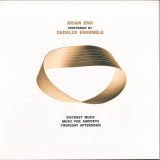
With »Discreet Music« (1975), »Music for Airports« (1978) and »Thursday Afternoon« (1985), Brian Eno invented a new music genre, Ambient Music, which he defined as »able to accommodate many levels of listening attention without enforcing one in particular; it must be as ignorable as it is interesting«. These versions performed and arranged by Dedalus Ensemble, according to the musicians and the critics who listened to it, goes beyond what we expect from it. A mental base that takes us far away. One of the only music without beginning or end in which we want to stay as long as possible.
The Dedalus Ensemble is a contemporary music ensemble based in Toulouse, founded in 1996 by Didier Aschour. Its repertoire includes works by classics of minimalism such as Christian Wolff, Phill Niblock, Frederic Rzewski, Tom Johnson, Moondog or Philip Glass.
out of Stock
Last delivered 3 years ago available to reorder, subject to availability
Laughter ist das dritte Studioalbum von Ian Dury and The Blockheads; es wurde 1980 veröffentlicht und war das letzte Studioalbum, das Dury für Stiff Records machte, und das letzte Studioalbum mit den Blockheads bis zum 1998 erschienenen "Mr. Love Pants", obwohl 1991 ein Livealbum "Warts 'n' Audience" produziert wurde.
Am 21. Juli 2023 wird "Laughter" zum ersten Mal auf transparentem, sonnengelbem Vinyl mit überarbeitetem Artwork wiederveröffentlicht.
S Transporter is Izaak S and Ryan Spencer, a pan-American duo of exact origins unknown. With roots spanning from Detroit to San Francisco, the project is somewhere around four years old, though no one remembers exactly when it started. The songs were initially demoed in Ryan's bedroom and promptly forgotten about in the chaotic whirl of both members’ efforts in other music projects, DJing, and party-throwing ventures until Ryan played them at his weekly, Monday Is The New Monday (co-founded with PGS' Ben & Zach). Immediately, the songs burst with new life into our ears, and we excitedly requested to hear more. In a tale every creative can relate to, Ryan simply didn't know if they were any good. We found them extraordinary.
What followed were several months of additional recording sessions in a collective effort to finalize the tracks, done at Ryan's apartment in Southwest Detroit, Izaak's in SF, and the Portage Garage in Hamtramck. Bay area DIY underground luminary Anya Ghiorzi joined the group and contributed her vocal talents to the songs, which began to exhibit a sound representative of the genre-collisions featured at MITNM– from krautrock and boogie to trance, acid, and house– in a way other PGS releases have hinted at, but have not fully expressed until now.
S Transporter is the name of the EP, the project, and all four songs. A maximalist sound with a minimalist presentation, naming the songs - so many years after their inception - would, perhaps, take away from the feeling that struck all three of us the first time we heard them on a club-grade sound system.
Izaak S and Anya Ghiorzi are San Francisco residents, musicians, and DJs in the Loveshadow dance collective.
Ryan Spencer is a Detroit resident, DJ, co-founder of Monday Is The New Monday, and is a member of Freakish Pleasures.
"S Transporter 1"
Uptempo, backspin-laden electro/acid with a winding 303 bassline that reveals itself slowly over the pulsing breakbeat backbone. Immersive, haunting and enchanting.
"S Transporter 2"
Downtempo electro. Slap bass. Heavy boogie. Sensual vocals reminiscent of early Chris N Cosey carry you through this industrial funk heater. Heavy synth lines and rhythmic grooving guitar that is club-ready for dance floors of all kinds.
"S Transporter 3"
A fast paced, percussion forward adventure with balaphone melodies and bending synth pads. Spoken words guide the journey, arriving at a movement inducing Juno ascension that dances into a calm end.
"S Transporter 4"
Encompassing the seemingly disjointed, individualistic styles of S Transporter 1-3, ‘4’ combines elements of the entire release into one final gesture. ‘4’ could be Byrne/Eno ("Regiment"), but it's something else - the product of decades of dance music history, distilled by two musicians & DJs into one song.
credits
releases July 19, 2019
PGS 010
S Transporter
"S Transporter"
EP
2015-2019
Written, Mixed and Produced by Izaak S & Ryan Spencer
Vocals by Anya
Bass on “2” by Lucas De Leon Turner
Percussion & additional production on "3" by Shigeto
Percussion on “3” by Julian Spradlin
Mastered by Josh Bonati at Bonati Mastering
Recorded at Izaak's apartment in San Francisco, Ryan's apartment in Southwest Detroit and the Portage Garage
Records Pressed at Archer Record Pressing, Detroit, MI
Design by Will
MMXVIX
out of Stock
Last delivered 3 years ago available to reorder, subject to availability
Die Apart Demos wurden zwischen 1980 und 1984 in verschiedenen Kellern und professionellen Studios in Chicago aufgenommen und dokumentieren 12 intime und reduzierte Skizzen, Demos und unveröffentlichte Tracks von Andre Gibson und der Universal Togetherness Band, als sie sich auf ihre Solokarrieren zubewegten. Von tief empfundenen Huldigungen an die Liebenden, die von einem seidigen Fender Rhodes verziert werden, bis hin zu Disco-Party-Startern über spirituelle Dankbarkeit - Andre Gibson lässt uns in sein Herz blicken und bringt am Ende alles zusammen. Die Universal Togetherness Band aus Chicago, verband in ihrem eklektischen Sound Funk-, Soul-, Disco-, Jazz-, Rock- und New-Wave-Einflüsse mit intelligenten und fantasievollen Texten. 1978 gegründet und geleitet von Andre Gibson, mit seinem Bruder Arnold Gibson (Schlagzeug, Bass), dem ehemaligen Colorvision-Mitglied Fred Misher (Bass, Hintergrundgesang) und Freds Bruder Leslie Misher (Leadgitarre), während Andre die Keyboards, das Vibraphon und den Leadgesang übernahm. Obwohl die Gruppe mehrere Jahre lang in den Clubs von Chicago auftrat und gelegentlich größere Auftritte absolvierte (vor allem als Vorgruppe von Peter Gabriel), hatte sie Mühe, ein größeres Publikum für ihre anspruchsvolle R&B-Melange zu finden. Zwischen 1979 und 1982 nahm die Band Dutzende von Sessions auf, die Gibsons weitreichende Vision als Komponist und Bandleader dokumentierten. Während Gibsons Zeit am Columbia College kamen Paul Hanover (Mundharmonika und Klavier) und Louis Sanford (Schlagzeug) zu den ursprünglichen vier Multiinstrumentalisten hinzu. Nachdem sich die ursprüngliche Besetzung der Universal Togetherness Band schließlich Mitte der 1980er auflöste, nahm Andre Gibson weiterhin mit einer Besetzung mit Frank Alexander (Schlagzeug), Allen Burroughs (Gitarre), Art Love (Bass) und Michael Young (Saxophon) auf. 2015 veröffentlichte Numero Group eine erste Zusammenstellung mit unveröffentlichten Aufnahmen mit dem schlichten Titel Universal Togetherness Band.
out of Stock
Last delivered 3 years ago available to reorder, subject to availability
Die Apart Demos wurden zwischen 1980 und 1984 in verschiedenen Kellern und professionellen Studios in Chicago aufgenommen und dokumentieren 12 intime und reduzierte Skizzen, Demos und unveröffentlichte Tracks von Andre Gibson und der Universal Togetherness Band, als sie sich auf ihre Solokarrieren zubewegten. Von tief empfundenen Huldigungen an die Liebenden, die von einem seidigen Fender Rhodes verziert werden, bis hin zu Disco-Party-Startern über spirituelle Dankbarkeit - Andre Gibson lässt uns in sein Herz blicken und bringt am Ende alles zusammen. Die Universal Togetherness Band aus Chicago, verband in ihrem eklektischen Sound Funk-, Soul-, Disco-, Jazz-, Rock- und New-Wave-Einflüsse mit intelligenten und fantasievollen Texten. 1978 gegründet und geleitet von Andre Gibson, mit seinem Bruder Arnold Gibson (Schlagzeug, Bass), dem ehemaligen Colorvision-Mitglied Fred Misher (Bass, Hintergrundgesang) und Freds Bruder Leslie Misher (Leadgitarre), während Andre die Keyboards, das Vibraphon und den Leadgesang übernahm. Obwohl die Gruppe mehrere Jahre lang in den Clubs von Chicago auftrat und gelegentlich größere Auftritte absolvierte (vor allem als Vorgruppe von Peter Gabriel), hatte sie Mühe, ein größeres Publikum für ihre anspruchsvolle R&B-Melange zu finden. Zwischen 1979 und 1982 nahm die Band Dutzende von Sessions auf, die Gibsons weitreichende Vision als Komponist und Bandleader dokumentierten. Während Gibsons Zeit am Columbia College kamen Paul Hanover (Mundharmonika und Klavier) und Louis Sanford (Schlagzeug) zu den ursprünglichen vier Multiinstrumentalisten hinzu. Nachdem sich die ursprüngliche Besetzung der Universal Togetherness Band schließlich Mitte der 1980er auflöste, nahm Andre Gibson weiterhin mit einer Besetzung mit Frank Alexander (Schlagzeug), Allen Burroughs (Gitarre), Art Love (Bass) und Michael Young (Saxophon) auf. 2015 veröffentlichte Numero Group eine erste Zusammenstellung mit unveröffentlichten Aufnahmen mit dem schlichten Titel Universal Togetherness Band.
Valentine Lover Red Vinyl. Die Apart Demos wurden zwischen 1980 und 1984 in verschiedenen Kellern und professionellen Studios in Chicago aufgenommen und dokumentieren 12 intime und reduzierte Skizzen, Demos und unveröffentlichte Tracks von Andre Gibson und der Universal Togetherness Band, als sie sich auf ihre Solokarrieren zubewegten. Von tief empfundenen Huldigungen an die Liebenden, die von einem seidigen Fender Rhodes verziert werden, bis hin zu Disco-Party-Startern über spirituelle Dankbarkeit - Andre Gibson lässt uns in sein Herz blicken und bringt am Ende alles zusammen. Die Universal Togetherness Band aus Chicago, verband in ihrem eklektischen Sound Funk-, Soul-, Disco-, Jazz-, Rock- und New-Wave-Einflüsse mit intelligenten und fantasievollen Texten. 1978 gegründet und geleitet von Andre Gibson, mit seinem Bruder Arnold Gibson (Schlagzeug, Bass), dem ehemaligen Colorvision-Mitglied Fred Misher (Bass, Hintergrundgesang) und Freds Bruder Leslie Misher (Leadgitarre), während Andre die Keyboards, das Vibraphon und den Leadgesang übernahm. Obwohl die Gruppe mehrere Jahre lang in den Clubs von Chicago auftrat und gelegentlich größere Auftritte absolvierte (vor allem als Vorgruppe von Peter Gabriel), hatte sie Mühe, ein größeres Publikum für ihre anspruchsvolle R&B-Melange zu finden. Zwischen 1979 und 1982 nahm die Band Dutzende von Sessions auf, die Gibsons weitreichende Vision als Komponist und Bandleader dokumentierten. Während Gibsons Zeit am Columbia College kamen Paul Hanover (Mundharmonika und Klavier) und Louis Sanford (Schlagzeug) zu den ursprünglichen vier Multiinstrumentalisten hinzu. Nachdem sich die ursprüngliche Besetzung der Universal Togetherness Band schließlich Mitte der 1980er auflöste, nahm Andre Gibson weiterhin mit einer Besetzung mit Frank Alexander (Schlagzeug), Allen Burroughs (Gitarre), Art Love (Bass) und Michael Young (Saxophon) auf. 2015 veröffentlichte Numero Group eine erste Zusammenstellung mit unveröffentlichten Aufnahmen mit dem schlichten Titel Universal Togetherness Band.
Hailing from the seaside communities surrounding Enoshima, a small island located 50 km southwest of Tokyo, Maya Ongaku is a ragtag collective of local musicians whose brand of earthy psychedelia transcends widely beyond the roots of their inner souls. The name derives not from any kind of ancient civilization, but rather a neologism defined as the imagined view outside one’s field of vision. The band—currently a trio of Tsutomu Sonoda, Ryota Takano, and Shoei Ikeda—finds sanctuary at the Ace General Store, a beachy vintage shop and salon-like space just hidden from sight from the bustling, touristy riverside Subana Street. Between discussions on music and art, curating the vinyl section and manning the register, and chatting up with locals young and old, the members find time to jam and record their spontaneous ideas in the studio tucked away in the back. It’s in this unlikely setting where Maya Ongaku finds its origins, the culmination of what Sonoda describes as 自然発生 (shizen hassei), meaning spontaneous generation, or the supposed production of living organisms from nonliving matter.
Approach to Anima, the group’s debut album released on Guruguru Brain, finds Maya Ongaku building a foundational groove while tapping into their innermost psyche. Sonoda’s malleable guitar and vocals, Takano’s sinuous bass lines, Ikeda’s floating woodwinds, and a sprinkling of delicate percussion—all coalesce into an aural experience that’s assertive yet abstract, calm but unsettling. The slow building, sax-laden “Approach” serves as an introduction to Maya Ongaku’s world, while the appropriately-named “Water Dream” floats its way toward the gentle finale of “Pillow Song.” It’s a concise distillation of their many interests and influences, from Neo-Dada and Fluxus, to where contemporary art intersects with the development of modern recording technology in the ‘60s and ‘70s.
As the title suggests, Approach to Anima is not intended to be a terminus; it’s merely the beginning of an exploration. The three childhood friends that comprise Maya Ongaku are always looking beyond the confines of the idyllic but rapidly gentrifying enclave of their beloved Enoshima. Feeding off of the energy that still radiates from the triumphant, decade-long journey of their label bosses’ band Kikagaku Moyo, who rose to global prominence from scrappy beginnings busking on the streets of Takadanobaba, they hope to go wherever inspiration takes them, to anywhere around the globe where their music can find a home.
Ultimately, Maya Ongaku’s uninhibited world-building will make it possible for us to see the unseen, expand the possibilities of the naked eye—all through the unbridled vibrancy of their music.
out of Stock
Last delivered 84 days ago available to reorder, subject to availability
Charlie Watts “Anthology” is an affectionate retrospective and a reflection of just how frequently Watts was able to exercise his jazz muscles between Rolling Stones commitments to create a bespoke discography of his own. Including 3 unreleased tracks.
The names of Charlie's jazz heroes fell from his lips like a superfan turning the pages of a personal scrapbook. Charlie Parker, Gerry Mulligan, Chico Hamilton, Dave Green, Stan Tracey, Peter King, Courtney Pine, Gail Thompson, Brian Lemon, Gerard Presencer, the Red Rodney group and collaborator Jim Keltner. He knew every player, every session, every album, every outfit they wore on the cover, and he spoke about them with a deep and genuine reverence. He may have been a globally loved hero in the biggest band in the word, but he swatted away any compliment or comparison with his musical favourites. He counted himself their admirer, never their equal.
The Anthology includes an extended essay by Paul Sexton which documents Charlie Watt’s jazz career and the essential albums covered in the collection.
From Elvis in Memphis retains the distinction of being the most cohesive, passionate, mature, and emotionally invested record Elvis Presley ever made. Named one of the 500 Greatest Albums of All Time by Rolling Stone, the white-soul landmark features backing by "The "Memphis Boys" and teems with rhythm-heavy country, gospel, R&B, and blues. Lauded for its natural, open sonics, the 1969 set now comes across with remarkable clarity, presence, and warmth courtesy of a premium restoration befitting a king.
Mastered from the original master tapes, pressed on MoFi SuperVinyl at RTI, and strictly limited to 10,000 numbered copies, Mobile Fidelity's UltraDisc One-Step 180g 45RPM 2LP box set of From Elvis in Memphis unearths the ravishing inner detail, sticky rhythms, and brilliant arrangements of Chips Moman's inspired production. In short, this unparalleled reissue unlocks the spirit and gestalt of the recording and takes you inside American Sound Studio. It also brings you up close and personal with Presley's singing – widely considered by many to represent the finest of his career – located dead-centre amidst the instrumental hurricane. Equally impressive are the contributions of the aforementioned Boys, and how their Southern-brewed playing – a balance of leisure with swiftness, grandiosity with concision, freedom with control – dovetails with Presley's vernacular.
The lavish packaging and gorgeous presentation of the UD1S From Elvis in Memphis pressing befit its extremely select status. Housed in a deluxe box, it features special foil-stamped jackets and faithful-to-the-original graphics that illuminate the splendor of the recording. No expense has been spared. Aurally and visually, this UD1S reissue exists as a curatorial artifact meant to be preserved, pored over, touched, and examined. It is made for discerning listeners that prize sound quality and production, and who desire to fully immerse themselves in the art – and everything involved with the album, from the images to the finishes.
Sharing much in common with the full, rich, orchestrated Stax Records sound, From Elvis in Memphis oozes with choice nuances and distinctive flourishes that on this ultra-hi-fi edition not only arise with previously unheard transparency and sharpness, but complement and serve the whole. Take the specific tonalities and blending of violas, cellos, and horns that communicate mood and serve as counterpoints. Or lively performances of the backing quintet, and how the piano and Hammond organ trace the lines of the melodies and Presley's lead. Listen to the uplifting support provided by the cadre of backing vocalists (more than a dozen credited), unrivalled in Presley's canon and a precursor to the approach he'd soon adopt in Las Vegas.
Of course, From Elvis in Memphis precedes the icon's transition into his glitzy jumpsuit phase – and follows his merciful move away from the hoary soundtrack work that consumed nearly a decade of his creative life and prompted a rebirth that began in 1968. As the bridge between eras, the record seizes on Presley's rejuvenated attitude and commitment to quality, facets that drip from the fervency with which he delivers every word. For the same reasons, and for the fact it traces back to Presley's original roots and hip-shaking guise, the album further remains a cornerstone of American music history.
Writing about the work's 40th anniversary for Rolling Stone, James Hunter correctly observed: "From Elvis in Memphis represented the full-on immersion in the Memphis idea of Elvis Presley, the American singer second only to Frank Sinatra for the ability to conjure a particular sonic universe with his merest vocal utterance. And from the album's first song, in which a bluesy Elvis espies a woman 'Wearin' That Loved On Look,' to its last, in which a more straight-up-pop Elvis regrets the injustices of life 'In the Ghetto,' his fully engaged, newly energized voice finds its most logical album setting in years."
Incredibly, Presley and company completed more than two dozen cuts for From Elvis in Memphis. One, "Suspicious Minds," turned into the vocalist's final chart-topping single and lingers as one of his most beloved rock n' roll numbers. Even though it never formally appeared on the record, the non-album song is included here as a bonus track and attains newfound depth, energy, and swagger. Coupled with the other dozen tracks – including the sultry "Power of My Love," balladic take of Dallas Frazier's "True Love Travels on a Gravel Road," and driving cover of Hank Snow's I'm Moving On" – it makes for the finest Elvis listening experience available.
De Brassers were one of the most notorious bands in the Belgian new wave/punk history. With their no nonsense attitude they scared the shit out of the local catholic community of Hamont. De Brassers were a local mixture of the Sex Pistols (in the lowest gear) and Joy Division (they always performed a cover version of Joy Division’s Shadowplay), combining a criticism of bureaucracy and politics with experiences of psychological and existential tensions. The doomed sound they produced tells a lot about the dark atmosphere of the late seventies and early eighties: the fear of atomic bombs, cold war pessimism, police violence against squatters, the first cases of AIDS, and the grim years of Reagan & Thatcher.
This compilation takes you back to that time. All tracks from their first 7″ "En Toen Was Er Niets Meer” & their self-titled 12″, plus rare & unreleased tracks taken from various live performances & the cassette “Levend”. If you’re in for a raw slice of Belgian history let de Brassers immerse you in a cold wave of punk.
Blue Lake is the musical moniker of American born, Copenhagen based multidisciplinary artist and musician Jason Dungan, who signs to the Tonal Union imprint for the release of his new longform album ‘Sun Arcs’. It follows 2022’s release ‘Stikling’, earning a nomination for ‘Album of the Year’ at the Danish Music Awards plus warm praise from The Hum blog and musicians and DJs alike including Jack Rollo (Time is Away/NTS) and Carla dal Forno. A self taught player, Dungan began freely experimenting with self-built multi-string instruments, preferring to build his own hybrid 48-string zither and working in the realms of left-field ambient music, off kilter folk and improvised acoustic minimalism.
The starting point of ‘Sun Arcs’ saw Jason travel for a week alone to Andersabo, a cabin set in the idyllic Swedish woods just outside of Unnaryd, known also as the music project, festival and residency space which has been run by Dungan since 2016, hosting artists like Sofie Birch, Johan Carøe and Ellen Arkbro. Whilst writing 1-2 pieces per day, a conscious decision was made to leave behind everyday distractions and shut out the outside world to instead focus on the natural passage of time as Dungan recalls: “My only sense of time came from these daily walks out in the woods with my dog, and an awareness of the sun’s path as it moved across the sky each day.”
The album’s immersive world unfolds with the opener ‘Dallas’, an ode to his home state and a musical synthesis of these two disparate spaces (Texas and Denmark), the touchstones of Dungan’s life. A folk-esque single acoustic builds to a flowing arrangement of clarinets, organ and cello drones coupled with percussion. ‘Green-Yellow Field’ chimes in as the first of two solo oriented zither recordings twinned with the dreamlike title track ‘Sun Arcs’, both densely rich as cascading and overlapping harmonic tones resound. ‘Bloom’ emerges with a krautrock psyche before an eruption of cello drones, slide guitar and free-ranging zither playing, ushering in the anticipation of spring. With half of the recordings conceived in Andersabo, Jason returned to Copenhagen to form the album's centre piece ‘Rain Cycle’ which features a tempered Roland drum machine alongside shifting zither improvisations. ‘Writing’ explores the shimmering harp-like qualities of sweeping playing figurations with Dungan mapping out adjusted tuning “zones” on the zither for unconventional but creatively liberating effects. ‘Fur’ captures the feeling of openness and the momentum of time, seeing Dungan perform waves of solo clarinet, often in one takes and embellished with textural drones, a zither solo, and layers of guitar. ‘Wavelength’ the album's closer is fondly inspired by the film works of Michael Snow and Don Cherry’s seminal live album ‘Blue Lake’ (1974), as it builds out from a drone-generated zither chord and features an alto recorder solo. Dungan found a deep connection to Cherry’s stripped back performance ethos, focusing on the core beauty of minimal instrumentation creating a genre-less meeting between folk and jazz. A dialogue is formed between the solo and the bandlike performances, interlinked in a geographical duality with all finding a sense of commonplace as musical sketches of visited landscapes. The bountiful instrumentation ebbs and flows as further layers emerge with Dungan constructing his material much like an artist would, recording and reviewing, adding and subtracting.
Musically it portrays a form of double life led by an American-identifying person living in Scandinavia, and a new found presence in Denmark, seeking out underdeveloped marshlands and barren stretches of beach adrift from other rhythms and distractions. Highlighting their individual and potent importance Dungan concludes: “Both places feel like “me”, I think on some level the music is always some kind of self-portrait.” ‘Sun Arcs’ depicts the intricate balance of nature’s cycles and the paths outlined by the seasons, from a winter dormancy to a warm sun drenched scene. The album scales new glorying heights and further defines Dungan’s musical narrative, inhabiting a unique space in left-field, improvised and experimental music, borning his most accomplished compositions to date. A singular and visionary expression, drawing on an array of instruments and sound worlds with a renewed sense of joy and discovery.
The album's rich tapestry was mixed by Jeff Zeigler (Laraaji, Mary Lattimore, Kurt Vile /Steve Gunn) and mastered by Stephan Mathieu (Kali Malone, KMRU, Félicia Atkinson).
out of Stock
Last delivered 3 years ago available to reorder, subject to availability
Richie Culver had been waiting his whole life to record I was born by the sea. His debut album immediately and messily inscribed the artist into the canon of outsider music and experimental electronics, serving both as an arresting statement of intent and a painful reckoning with the difficult path that lead up to it, stealing one last glance back at a place he always knew he had to escape. Between grim lamentations, faded memories and anxiety attacks, all told with searing honesty and disarming openness, I was born by the sea excavates a space for hope, finding Culver digging through Humberside silt to find a world weary optimism, the raw material from which his visual and sound art is shaped. For this collection of expansions and inversions, Culver invites a collection of kindred spirits, contemporary inspirations and old heroes to wade into the salt water of his formative years spent living for impromptu raves and afterparties, connecting vivid memories of his birth place of Withernsea to artists hailing from as nearby as Preston and Bridlington, further afield, from Manchester and London, Berlin and Paris, before returning back to Hull, to where it all began.
For some, responding to I was born by the sea means diving even deeper into the record’s furthest reaches. Space Afrika clear away the pummelling loops of noise from ‘It’s hard to get to know you,’ revealing a cool and cavernous expanse in its wake. Distant chatter, previously heard as though through thin, plasterboard walls, now echoes from outside the maddening claustrophobia of the original’s Sisyphean sonics, illuminated as a dense storm cloud suspended amidst a more open scene, washed clean by a lighter rain, allowing the tender heart of the track to beat clear. London producer MOBBS stretches out ‘Pigeon Flesh’ into an epic, 10-minute, cold-sweat spiral, strung-out tension wrung from disconnected phone tones twisted in unexpected directions, snatches of Culver’s voice turned inside-out and deep fried bass threatening to tip the track over into oblivion, the build-and-release of a nervous breakdown experienced in real time. In an act of subversive self-reflection, Morgane Polanski switches one kind of ennui for another in her adaption of ‘I was born by the sea,’ swapping the sea for the city, English seaside towns in January for summer evenings in Paris and flashing lighthouses and sparkling oil rigs for the Eiffel Tower and the traffic around L’Arc de Triomphe. Even Culver finds time to revisit ‘Dream About Yourself,’ a track taken from his EP Post Traumatic Fantasy, breathing new words into its glacial drift, the half-remembered testimony of a shut-in: Woke up in the evening / Pray for me / Don’t trust anyone / Pray for algorithm. Reframed in a more melancholy light, the track’s reverberant keys even more clearly evoke a mournful nostalgia, fresh pain felt in old wounds.
Others find a parallel universe in Culver’s visceral world building. Rainy Miller flips the script with a scorched, avant-drill rework of ‘Daytime TV’, threading puncturing hi-hats and queasy low-end surge through the track’s steady ambient cascade, invoking the irresistible Preston beat magic of Miller’s own essential debut album, Desquamation. Aho Ssan melts away the crystalline textures of ‘Love Like an Abscess’ with the ominous crackle of a nascent fire, building through swathes of organic Max/MSP squelch and brittle, nails-down-chalkboard scrape, swelling and metastasising the original to spill over Culver’s desperate hymn to corporeal desire, at once flesh and not. Teresa Winter transports us an hour up the coast from Withernsea to her native Bridlington, replacing the sea wall of synthesis on ‘Nervous Energy’ with muffled ASMR murk and fever dream whispers, transforming Culver’s unflinching observations into a haunting call-and-response, filling in the blanks with her own eerie utterances, a fleeting conversation with a ghost. In a touching victory lap, Fila Brazillia, eccentric stalwarts of beloved ‘90s trip hop imprint Pork Recordings, whose performances at Hull institution The Lamp convinced a young Culver of the necessity to make his mark on club culture, resurface for their first remix in 20 years. Steve Cobby and David McSherry lead a low-slung, heartfelt stroll back through a suite of tracks from I was born by the sea, tracing a full circle saunter from Culver’s origins to his current musical practice, the sounds of his present repurposed by the sound of his youth. In a gesture that reflects the emotional complexity of the project, Fila Brazillia find joy at the end of Culver’s troubled reflection, picking out an undeniable groove in the stasis of feeling trapped in your hometown. Underlining Hull’s vital musical legacy, from Baby Mammoth to Throbbing Gristle, Cobby and McSherry demonstrate that, though there are certainly storms, by the sea there is also sun and through the fog, if you listen, you can hear a singular sound, a sound now carried by Richie Culver.
Participant is a record label and creative studio run by William Markarian-Martin and Richie Culver
out of Stock
Last delivered 3 years ago available to reorder, subject to availability
Orpheu the Wizard has a magic touch at finding records that fall between the gaps in music - oddities, curios, the weird, the wonderful. But that's just half the trick. It takes a sensitive and selective ear to construct a coherent, accessible narrative from them. So you get DJs who can play for the crowd and "selectors" adept at mining the black gold. In Orpheu, you've got yourself someone who can do both. On a festival main stage, he can keep it weird enough for the heads. In an audiophile setting, he'll keep the flow.
These skill sets come into play on the fifth The Sound of Love International compilation. Jumping between genres, decades, continents, the truly rare, and many B-side cuts that passed you by. But never eclecticism for its own sake; this collection makes sense. Orpheu never loses sight of the listener - he's a friendly and knowledgeable guide to the cosmic outer reaches.
He opens his account with the warm, psychedelic electronics of Drawing Future Life, with ‘1969’. Tucked away on the B-side of an LP of ambient/trance hailing from Fukuoka, this is a very pretty piece of music on a truly rare piece of wax. Then, leapfrogging a couple of decades and timezones, we have Rutuu Poiss' "IHATSIN." Off-kilter, experimental sounds with an endearing melodic hook, followed up by the with lethargic ambient breakbeat of Digital Distortion's "Mellow Bug".
On the B-side, things start to get lively. French Audacity featuring Valerie's "That Fine One" is Gallic garage that has simultaneously got it hugely wrong and massively right. Owing as much to new wave as New York house, this is propulsive and quirky dance music at its finest. Next, we're on a ferry over the channel for DJ Spike and "Gaps In Space." Up-tempo electro with a fondness for sampled vocal cut-ups, like its predecessor.
lnterdance's "Kurz" (another B-side) is the perfect segway - house from 1990 with that sweet, slightly goofy naivete. Things move toward the gnarly with Bad Behaviour and "Living on Smoke," a lesser-known cut on the legendary Atmosphere records. The tempo edges upward on "Systematic Input" by Frequency, hectic hardcore techno that still retains a lightness of touch.
"Lushes" by Diffusion spins us off into space, filigree techno with an emotive trance edge. The chiming intro of "Blue to Be Happy" by MFA lulls us into a sense of false security before massively putting the boot in with a pounding kick drum, bassline, and arpeggiation. From there, it's a sharp left turn into the urban psychedelic dub of R.I.P's "E.O Pan" on cult label Digi Dub.
Sticking with UK sound system music but taking it down a notch, Orpheu closes proceedings with a leftfield reggae excursion from the master of the mixing desk, Mad Professor’s"Oh Hell".
It's a compilation as varied as the many moods and grooves of Love International itself - from sun-dappled olive groves to moments deep in the strobes. This is serious music for party freaks or party music for serious freaks. Tisno is calling.
out of Stock
Last delivered 59 days ago available to reorder, subject to availability
"Workin' all day, trying to forget about the old me." Like most of us, Martin Frawley is busy trying to work himself out. He lives alongside the long shadow of his late dad, musician and songwriter Maurice Frawley, a cultural icon of the Australian underground and collaborator of Paul Kelly, Tex Perkins and Mick Thomas. Most of Martin's 20s were spent writing and playing songs in locally beloved Melbourne band Twerps - a collection of pals who were on the forefront of the city's jangle pop renaissance. A few albums, US tours and band rotations under its belt, Twerps split up in 2018 and Martin turned his compass towards a solo project. His first album, Undone at 31 (2019), was a bit of a reckoning; a wild ride through the wreckage of both a band and longterm romantic break up. His new album The Wannabe is a personal, cheeky and, at times, self-depreiciating collection of songs unpacking the reality of finding his way as an adult without his dad around, and ultimately falling back in love with life, music and someone new. Martin and his band - friends Dan Luscombe (The Drones), Steph Hughes (Boomgates, Dick Diver), Nik Imfeld (Tyrannaman) and Dan Kelly - had heaps of fun recording The Wannabe in Melbourne. The title track is a particularly spicy take on an entertainment industry that seems to give more shits about marketing than music. The album is a bit of an emotional tour, from anger and derision, through to comedy, through to deep and honest love. It's positive with a lot of sadness. Not unlike Martin himself. As well as the guitar, Martin had some fun playing the piano on this record. The technical term is `multiinstrumentalist' but Martin's more of a musical explorer of sorts. No one is exactly sure how these things work - if Martin was born into music or if it was born into him, but it doesn't really matter. Music is what he loves. It's what he does. It's not about the industry or about success - not anymore. It's about the freedom of creating songs on his own terms, and trying to let go of the feeling he has something to prove: to his dad, to his critics, and to himself. And while he's not sure he'll ever fully shake that feeling, he's at least relaxing and having a bit of fun doing it. Like his dad, Martin has a reputation as a `musician's musician'. He hosts a pretty sporadic podcast Dive For Your Memory, where he has fast and loose chats with musicians while doing a deep dive into their musical inspirations and canon. He and his fiancé Lauren also make wine under the label El'More Wines, named after the farm and small town where his dad grew up. It's all come a bit full circle, really.
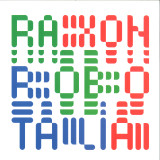
Next up is an overdue reunion with a familiar face. After his outstanding contribution to Cocoon Compilation S and his first solo EP on Cocoon Recordings, Raxon is back with a more than equally fascinating sound. The Egyptian-born and now Barcelona-based artist is back on it again, delivering two tracks that will take you on a journey through the depths of robotic soundscapes.
Intricate beats, hypnotic synthesizer melodies, deep bassline grooves, and distinctive EFX sounds create Raxon’s very special signature sound.
Straight drum programming paired with chirping percussions takes us away to embark on a travel through space and time while distinctive claps poke through a futuristic nebula of floating and shifting sequences. The twisted melody of “Robotalia” carries us to a parallel dimension of machine sound and if you listen closely, you can hear the robots’ screwing and sawing. Warping bleeps and mechanical effects complete the robotic feeling. Raxon’s understanding of structures and architectural abilities are reflected through the arrangement, slowly increasing to ecstasy.
“Kryptonite” scores with alien soundscapes. Stuttering vocals are the questions, while futuristic and dramatic chord stabs are the direct answer. A straight, radiant sound appears as an electronic trombone from outer space, offensively supporting the driving bassline. The symbiotic interplay between the euphoric synthesizer hook line and the relentless beat with pushing sharp hi-hats visualize powerful images in one's mind's eye. Suddenly the beat stagnates and results in a morphing break going head over heels developing a start-stop pitch effect that not only builds up tremendous tension but also bears an increased risk of melting your brain. We just love tape delay!
out of Stock
Last delivered 4 months ago available to reorder, subject to availability
Taken from Skinshape’s ‘Nostalgia’ album. For fans of Khruangbin, El Michels Affair, Tame Impala and Bonobo.
‘Turn Away’ is a song in two parts” explains Skinshape aka Will Dorey. “The front section is intended to be classic songwriter style, with a focus on the chord progression and lyrics. The second half perhaps represents a curious epiphany, a realisation of something profound”. As the plot develops, Dorey’s clandestine charisma creates an alchemic, and most gentlemanly, cleansing of the soul. From his director’s chair, Dorey expands that “following the theme of film music, ‘Dreams of Panama’ could be an exotic scene in the movie, featuring a slight Latin twist and an epic introduction with full choir”. The track also makes the most of an opportunity to use a solo female vocal as the main melody.
out of Stock
Last delivered 3 years ago available to reorder, subject to availability
Welcome to the modern Brazilian disco world of Processman and Cady. We know you're going to love it here.
DJ and producer Processman is from Salvador, Bahia. A passionate and talented musician, he has played in a number of bands in his city, which is famous for artists such as his heroes Gilberto Gil, Joao Gilberto and Jorge Amado.
Processman was introduced to Cady, a fellow Baiana and a very fine solo artist in her own right, by a mutual friend.
The connection was instant and they started making music that very day.
Fast forward to when Dicky Trisco was passing through Salvador after playing the magnificent Mareh festival in Bahia. Processman drove Dicky and a group of friends to local hot spot Pelourinho, and the first track he played in the car that night was 'Adupe'. Dicky was blown away by the track. The brilliant Brazilian percussion, the beautiful layered vocals, the spiritual, synth boogie-laden vibes and those delightful melodies. He was absolutely hooked. The second track Processman played was 'Sou Baiana' and a record deal was already a sure thing. They hadn't even made it to the bar yet.
A year later and the release is ready to let loose its magical, spiritual, boogie-laden vibes.
NYC Brazilian aficionado JKriv, the perfect choice for a remixer for this sound, has delivered an essential, cosmic disco dub of 'Adupe'.
While Dicky Trisco takes on 'Sou Baiana', stripping it down and pumping it up into a truly rocking dance floor bomb.
File it under Modern Brazilian Disco. A truly International sound.
LET'S VAMOS!
out of Stock
Last delivered 2 years ago available to reorder, subject to availability
Stoned Part II is Lewis Taylor's pure, perfect dance-pop album. His second self-released album and fourth album proper, it initially appeared on his own label Slow Reality in 2004. It's been licensed to Be With for this long-awaited double LP release, its first ever vinyl edition. Gravely misunderstood at the time by hardcore fans and the music press alike, it has aged quite magnificently. An experiment in the sounds of contemporary pop and dance music, Lewis's wonky take on funky pop would annihilate anything kicking around the charts, then or now. If only it were given half a chance.
Stoned Part II is brimming with Lewis's trademark soul, his singing as beautiful as ever, but the rhythms throughout are more upbeat, the overall sound a more smooth and slicker dance-funk presentation. Roughly half the tracks are absolutely essential, fascinating re-workings of tracks from the eternal Stoned Part 1, as Lewis explains: "When we were doing Stoned we were trying different approaches with everything so we ended up with more than one version of nearly all the songs which left us with more than an album's worth of material. There was a lot of really cool house tunes around at the time which we were both really into and that shaped the sound and production, some songs more directly than others." Amen to that.
The swoonsome, string-drenched opener "Madman" is quite the departure, a bleepy, bumping soulful disco-house record with a bassline to die for. Is there anything he can't do? It's followed by another huge dancefloor stomper, "Keep Right On" again riding another killer bassline over funky drums and featuring Lewis's dazzling vocals. There's no let-up with the sparkling "Reconsider" which sounds an awful lot like Daft Punk meets Nile Rodgers (prescient as ever, our Lewis). The wide-eyed French filtered house vibe is to the fore here, and how this wasn't picked up by someone like Kylie and taken wholesale to the top of the charts is something we'll never understand.
Opening the B-Side, "When Will I Ever Learn 2" really slaps, presenting a breezier, more upbeat funk take on the brilliant original and incorporating "From The Day We Met" from Stoned Part I. "Out Of My Head Is The Way I Feel" is absolutely fantastic and one of Lewis's very best songs. The vocals, self-harmonising and virtuoso playing are next level. To close out the side, "Carried Away" is a real standout, Lewis's gorgeous falsetto riding a quasi D&B groove to begin with before adorning a more classically funky 2-step rhythm. The marriage of undulating synths and guitars is stunning, giving way to Lewis indulging his goosebump-inducing Brian Wilson harmonies.
The funky, Rhythm King drum machine soul of "Stoned Part 2" refashions the original in the style of an unearthed Sly Stone classic, circa There's A Riot Going On. Yes, it's that good. On we then glide to "Positively Beautiful 2" which, if it's even possible, manages to be better than the original. The epic, orchestral opening truly captivates before Lewis truly gets down with kaleidoscopic dancefloor-slaying Philly soul-funk. It's surely tracks like this which help explain why he was soon to be tapped up by Dangermouse and Cee-Lo for the musical director role with Gnarls Barkley. "Throw Me A Line" closes out the side
"Shame 2" is a blissful, restrained version of the massive original, without the crazy psych-soul wig-out. Definitely more radio-friendly, that's for sure. The gorgeous mellow vibe continues with "Won't Fade Away", featuring more Beach Boys harmonies over a barely-there pulse (a version of which later pops up in an altered state on The Lost Album). The album bows out with - you guessed it - a psych-soul wig-out! "Keep On Keeping On", a real highlight, opens with looped sampled drums a la Massive Attack and Lewis's multi-layered self-harmonising again very much high in the mix. It amps up gradually to feature vocals dripping with tune and bite before screaming guitars and crashing drums really blast this whole set into the stratosphere.
Simon Francis’s vinyl mastering, approved by Lewis himself, presents the twelve tracks over a double LP so it sounds exactly as it should. The records have been cut by Cicely Balston at Air Studios and pressed at Record Industry. Allow Lewis Taylor to get you Stoned, Part II.
out of Stock
Last delivered 3 years ago available to reorder, subject to availability
Lost soul phenomenon Lewis Taylor's Numb finally arrives on double vinyl! One of UK soul’s most fascinating artists, most enigmatic figures and most under-appreciated talents, Andrew Lewis Taylor is a prodigious multi-instrumentalist and eclectic polymath. He enjoys a fiercely loyal following which, over the years, has included celebrity champions like Bowie, Elton and D'Angelo. Numb is Taylor's sixth album, initially released on his own label Slow Reality (an anagram of his name) and licensed to Be With for this long-awaited physical edition. It captures Taylor's wholly unique, intoxicating take on lush, late-night psychedelic soul music.
Lewis wrote and recorded these 10 brand new tracks after a 17 year break from making music, although the album came together over a two-year period. The years away have done nothing to dull Taylor's unique musical vision. He still astounds. The lyrical themes, however, have shifted. Understandably, more than a decade and a half of soul searching and unflinching self-examination cannot fail to influence this most honest of songwriters, and boy does it show. Numb marks a return to the darker, more mysterious side of his output: "Brian Wilson-channels-Smokey Robinson atmospheres", as Mojo put it recently.
After playing a rapturously received gig at the Bowery Ballroom in NYC in 2006, Lewis unceremoniously walked away from music and disappeared completely. An interview in 2016 shed light on some of the reasons for Taylor’s withdrawal from the business, but there was no hint of a return anytime soon. Then in June 2021, news emerged out of the blue that he was readying new music alongside Sabina Smyth with whom he had worked first time around.
On Numb, Lewis deftly balances stark, soul-bearing lyrics with moody mid-tempo pop-soul sheen. He deals candidly with depression, mental turmoil, even thoughts of suicide - clearly more personal than Taylor's earlier songs. The music is rich, warm and layered, with infectious melodies and hooks that stick with you. A true grower of an LP, it really does reward repeated listens. As Jim Irvin in Mojo reflected, "despite the depths these plumb, it's a curiously uplifting experience, unfurling like a concept album about life's challenges with an optimistic beauty at its heart."
Triumphant dubwise horns ring out yet, almost instantly, “Final Hour” takes on a dark, downbeat vibe. With lyrics that confront (and, seemingly, confound) death head-on, Lewis ensures the groove is still there, the beats still swing and your head still nods, strings glissade. Woven around delicate yet insistent piano and subtle strings over a killer bassline, the title track “Numb” is a good example of the lyrical themes throughout the album. As Taylor reflects, "So removed I feel no pain / And for all I know I could be having the time of my life" with a coda that feels very much in conversation with Brian Wilson's finest harmonies. "Feels So Good" is sophisticated 90s-sounding soul of the highest order. The music and vocals feel simultaneously optimistic and despondent. Downlifting. A neat trick, and one Lewis has been so adept at over the years. "Apathy" is a mini-epic, a symphonic-soul gem which builds and glides and, eventually, soars. “Worried Mind" is another slow-builder, creeping out the gate in a sketchy, discordant fashion before climbing to half-crescendo but never quite breaking free of its disorientating restraint.
The brighter "Please" presents a more hopeful mood, with the refrain "I still believe" ringing out as Lewis harmonises with himself. "Brave Heart" quietly struts from step one, as Lewis's falsetto swaggers over a downtempo backdrop with ace echoey drums, beautiful strings and serene electric guitar. Closing out Side C, "Is It Cool" answers its own (non-) question with a spellbinding five and a half minutes of swoonsome deep soul that oscillates between a restrained, barely-there backdrop and a lushly full musical accompaniment of acoustic and electric guitar and organ over bass and slick drums. The penultimate track "Nearer" is a magical, soul-stirring ballad in which Lewis sings of reaching a sweet salvation and achieving a peace of mind. If the hairs on the back of your neck aren't standing up by the midway point, you might need to check your pulse. Album closer and true tear-jerker "Being Broken" places Lewis's gorgeous voice high in the mix and the wordless falsetto and melodies invite you to ponder what Pet Sounds might sound like if it were refashioned as a dubby 21st Century electronic soul album. Astonishing.
Simon Francis’s vinyl mastering spreads out the ten tracks over a double LP so, as ever, nothing is compromised. And as usual, the records have been cut by Cicely Balston at Air Studios and pressed at Record Industry. Turn it up and let the Lewis Taylor sound envelop you.
out of Stock
Last delivered 3 years ago available to reorder, subject to availability
A tale of two Indians recorded in Cologne, Stockholm & Berlin.
Anurag Choudhary & Pawas Gupta are Non Solo.
Friends from more than two decades, these gentlemen decided to bring together their knowledge of music at Anurag's apartment in Stockholm back in 2008. Anurag’s life journey took him to Stockholm,
Sweden and Pawas’ culminated in Berlin, Germany; both cities a cultural and a musical powerhouse in their own right. Anurag, a professionally trained Flautist (bamboo Flute or “Bansuri”) in the traditional Hindustani Classical Music and Pawas, someone who has been exploring the realms of electronic music since 1997 as a DJ and releasing records under different monikers since 2007 decided to bring in their forces on a gloomy Stockholm afternoon.
You may ask, why Non Solo? Well, for obvious reasons!
In traditional Indian classical music you are trained as a soloist, mastering a single instrument and each instrumentalist has a deep understanding of the common syntax and rules of engagement that produce some brilliant duets. Both Anurag and Pawas have been pursuing their solo music careers and mastering their craft. However, ‘Non solo’ brought these two (soloists) together to collaborate on something that has not been done before in this way so two soloists coming together and forming NON SOLO.
It all started over a “Fika” which translates to “ a concept, a state of mind, an attitude and an important part of Swedish culture. Many Swedes consider that it is almost essential to make time for fika every day.
It means making time for friends and colleagues to share a cup of coffee (or tea) and a little something to eat” in Anurag’s favourite Cafe, not to forget his exquisite palette for Coffee. After a short brainstorming on how to create something new and fresh without it being too cliched and with the help of impeccably roasted coffee beans that were freshly brewed, the men decided to jam it out to see where this goes.
The first attempt resulted in the second track on the record “Svar” which means “note or tone” which was a one take track. Motivated and excited, they both decided to continue working on this project.
A few months later Anurag visited Pawas' previous Studio in Cologne to record, where Sarang, Tandav and Bhoop were born. Even though the creation had happened, they felt it wasn't the right time to put
it out there just yet. However, time flew by and after almost 14 years of waiting, the men came back to what they had created and decided it was now the time to release it.
The title track “Sarang” is inspired by raga Brindavani Sarang, where Anurag infuses the romantic and mystical flavour of this raga with his flute and Pawas brings his deep repertoire of electronic grooves and
atmospheric sounds to create an intelligent track that touches the listeners.
Svara is inspired by raga Hansadhwani (translated ‘svan song’ or ‘sound of swan’) is an endearing melange of Indian classical and house music.
Tandav is a high energy track based on a variation of Sarang raga. With Pawas’ in-depth knowledge of both Indian classical percussion and electronic music….. This track combines multiple rhythmic layers
manifesting in one exhilarating track that is filled with polyrhythmic cadence and interludes.
Bhoop is melancholy and nostalgia infused into one melodious offering inspired by raga Boopali laid over a bed of organic drums and bass.
The Feel:
Svara is falling in love, the feeling you get when you are walking after that first wonderful date, smile on your face and so much anticipation and joy in the heart for all that excitement that is about to come.
Sarang is being in love, when you start to experience all those emotions you didn’t know even existed inside your heart. It is a complete journey.
Bhoop has a tinge of melancholy, longing and missing each other , while Taandav is coming back together after a long time away from each other. Re-discovering each other and re-experiencing all those
emotions at an even deeper level and celebrating the togetherness, be it in friendship or relationship.
Non solo is first in its kind to bring the melodious/musical depth inspired by the raga traditions to the exhilarating rhythmic world of deep house and electronica.
Available now in your favourite digital store and on limited edition Vinyl with an exquisite typographic artwork by Shantanu Suman in collaboration with Masala Movement's Manoj Kurian!
out of Stock
Last delivered 3 years ago available to reorder, subject to availability
For MAN ON MAN, the duo of boyfriends Roddy Bottum (Imperial Teen, Faith No More) and Joey Holman (HOLMAN), 2021 was a monumental year. Without knowing exactly what they were making the year prior, the couple had recorded a batch of songs while traveling across the country to be with their ailing mothers during the pandemic, both of whom passed away in the span of just 6 months. The songs that came out during this time celebrated the love they have for each other while championing the queer scenes they surround themselves with. They are deeply intentional and their overall message is rooted in the Queer experience – songs about gay love, pride, acceptance, self-empowerment, and appropriation. The tracks would eventually appear on their self-
Jean-Philippe Altier’s first full-length excursion as Jpye, 2021’s Samba With You, was heralded a contemporary Balearic pop gem – a superbly summery, sun-kissed set full of atmospheric instrumentation, colourful synth sounds, strong songs and star turns from a wide variety of musical friends and guest performers.
Bleu Your Mind, his hotly anticipated follow-up, takes a similar sonic approach to its predecessor, with Altier being joined in the studio by friends old (vocalist e11e, keyboardist Michael T and fellow Twonk members Leonidas and Renato Tonini all reprise their roles from ‘Samba With You’) and new (Da Roc and Iamrobd) on a set that effortlessly mixes and matches elements of nu-disco, jazz-funk, laidback synth-pop, Italo-disco and Balearic beats.
Those who savoured ‘Samba With You’ will feel at home right away, as e11e sings softly and sweetly atop the gentle Latin infused shuffle, dusk-ready instrumentation and chiming vibraphone solos of ‘Freedom Ain’t Free’. French composer and keyboardist Da Roc make’s his first appearance on the following track, the duelling electric pianos and synths of sun-splashed instrumental Balearic pop gem ‘You Freak Out’, before e11e returns on the throbbing and suspenseful ‘Shiver’– a re-imagined and genuinely glassy-eyed cover of Marie Laure Sachs’ sleazy 1978 Italian disco jam of the same name. So, it continues, with Altier and his collaborators painting scintillating sonic pictures in kaleidoscopic colours.
Impeccable arrangements and pin-sharp instrumentation work in perfect harmony with seductive grooves that pack plenty of subtle swing. Even more impressively, ‘Bleu Your Mind’ is an album that genuinely rewards repeat listens, with each successive spin revealing more musical touches and cannily crafted melodic motifs. As a result, highlights come thick and fast throughout, from the delay-laden jazz-funk-goes-electrofunk fizz of ‘Xcuse My French’ (with Da Roc), and the humid afternoon heat of ‘Va Là-Bas’ – a gorgeous and immersive, sunset-ready affair produced alongside Renato and featuring dazzling kets from Michael T) – to the slow-motion Gallic/Italian reggae-pop of ‘Tutto OK’ (a nod to the tropical-tinged reggae sounds created in France during the 1980s), and the slap-bass sporting, smoothed-out (but low-down) grooves of Renato hook-up ‘Take Off’.
As ‘Bleu Your Mind’ progresses, the musical details become more refined, the grooves drowsier and the mood more horizontal. This subtle shift can be heard in Leonidas co-production ‘Lazyjack’ – all chiming lead lines, languid bass guitar, snappy drum machine beats and glistening guitar motifs – the vocoder-sporting stoner funk of ‘Spinnaker’, and the yearning brilliance of ‘Fingers Crossed’. The album’s most emotive and immersive moment by some distance, ‘Fingers Crossed’ sees Altier and collaborator Iamrobd (also a fellow Twonk member) tease out a slow-motion groove in combination with lilting Spanish guitar solos, ultra-dreamy chords, twinkling pianos and delay-laden drum machine hits. Bittersweet and brilliant, it’s a track guaranteed to send shivers down your spine. By the time it fades out, via a sustained piano chord, you’ll be sat or stood in wide-eyed, open-mouthed wonder.
out of Stock
Last delivered 23 months ago available to reorder, subject to availability
Based in Berlin Max Newton & Matalo! have delivered percussion heavy funk and gritty Nuyorican rhythms on both GAMM and Take Away Records.
Their new release on Omena LTD continues on the same path and adds deep house and breezy latin flavours.
U-Bahn at Midnight sets things off sounding like a classic MCDE house jam with ringing melodies and sharp horns.
Walkin' On uses that classic Freddie Hubbard sample we all love and makes it even more classy.
On the flip Pao de Acucar vs Vesuvius is a 110% feel-good and summery TUNE, and finally Brooklyn Survivor ends things on a jazzier note with its deliciously deep, Disco-House groove.
A mighty fine way to close the Omena LTD series.
out of Stock
Last delivered 30 days ago available to reorder, subject to availability
The formidable Rex The Dog returns with his first single for Kompakt in three years, “Change This Pain For Ecstasy”, a slow-burning disco-glitter stomp that’s charged with analog energy. Pushing his self-built modular hardware set-up to its limits, “Change This Pain For Ecstasy” is taut and thrilling, stripped-back and pulsating, with sweeping chords shimmering through a classic Moroder arpeggio, as a delirious voice sings out a psychedelic raver’s plaint for liberation, pleading for you to "take away my sorrow and this pain”. Deeply emotional, it’s also a masterwork in tension and release, dizzy with snare-rush peaks, and dark, humid valleys where Rex is bound to the patchbay.
On the flipside, Rex gives us “Moto”, which tickles your ear with cymatic phenomena, its gentle vibrations building, beautifully, into a monster-piece of stealth techno. Rex’s DIY synths work overtime as he chases patterns and phases through circuitry, wielding the tones until they erupt into a spray of pointillist pizzicato. The sounds here crackle and corrode, the textures so tantalizing, so sensual, you can almost grab hold of them with your hands. It’s great to have Rex The Dog back, making livewire, yet deeply human techno, alive and bursting with electricity.
Der formidable Rex The Dog kehrt mit seiner ersten Single für Kompakt seit drei Jahren zurück, “Change This Pain For Ecstasy”, ein mit analoger Energie aufgeladener, stürmischer Disco-Glitter-Stomper. Man kann förmlich spüren, wie Rex’ selbstgebautes modulares Hardware-Setup an seine Grenzen gerät. “Change This Pain For Ecstasy” ist eine Hymne an das Nachtleben, an die kathartische Qualität einer durchtanzten Nacht. Über schwungvolle Akkorde und ein hochenergetisches Moroder-Arpeggio bittet eine delirierende Stimme um Befreiung von allem Leid und Schmerz. Das ist zutiefst rührend und emotional – da es sich hier aber um ein Meisterwerk der Spannung und Entspannung handelt – schwingt sich der Track plötzlich auf in schwindelerregende Höhen der Euphorie.
Auf der anderen Seite gibt Rex uns “Moto”, das das Ohr mit zymatischen Phänomenen kitzelt, deren sanften Vibrationen sich zu einem Monster von Stealth-Technotrack aufbauen. Rex’ DIY-Synthesizer machen Überstunden, während er Muster und Phasen durch die Schaltkreise jagt bis sie in einen Sprühregen aus pointillistischem Pizzicato ausbrechen. Die Sounds hier knistern und korrodieren, die Texturen so verlockend, so sinnlich, dass man sie fast mit den Händen greifen kann.
Es ist großartig, Rex The Dog zurück zu haben, der hochverdrahteten und doch zutiefst menschlichen Techno macht, voller Leben und Elektrizität.
out of Stock
Last delivered 2 days ago available to reorder, subject to availability
The name NxxxxxS (pronounced "N-Five X-S”) sounds like it could be an equation, or a mystery. But to begin to unravel the identity of the French producer who just signed to Because Music and Mad Decent (the label founded by Diplo), you first have to look for clues on YouTube and Soundcloud, where so many underground artists have found a place to hone their craft. In the ten years preceding the release of his second album Short Term Agreement in 2023, NxxxxxS built up a solid reputation for himself in the international vaporwave, vaportrap & phonk scenes. This is no small feat considering he didn’t have any real knowledge of production or composition before deciding to take on these classic genres of “Internet music”.
The Paris native first gained exposure when he started making beats on YouTube, taking his inspiration from American rappers of the blog era - when artists, especially in hip hop, used digital technology to break away from traditional distribution models - like Mac Miller or Odd Future. Building on this initial success, NxxxxxS turned to Soundcloud, an essential platform for music enthusiasts, tastemakers or anyone on the lookout for the sounds of tomorrow.
Following in the footsteps of The Alchemist and other producers of the same ilk, NxxxxxS soon became one of the pioneers of vaporwave and vaportrap music. Featured prominently in modern productions, these styles originated on social media platforms such as Reddit or Tumbler in the 2010’s and are recognisable by their frequent use of commercial samples ranging from the 70’s to the 2000’s (taken from jingles, lounge, jazz or elevator music). Altered, chopped up and slowed down to around 60 to 70 BPM to match hip-hop standards, the music offered a critique or satire of capitalism, consumer society and any culture that grew out of it, most notably yuppies from the 80’s.
NxxxxxS put his own spin on the recipe by creating a new world filled with soaring melodies and countless references to movies and horror scenes, and eventually released his debut album Fujita Scale (a scale used to measure the damage inflicted by tornadoes) in 2014. The album reached a worldwide audience because of its composer’s story and of the secrecy around his French nationality, and even won over unexpected fanbases such as the highly closed off Chinese market. Fujita Scale landed on one of China's streaming platforms, making NxxxxxS an identifiable artist in Asia who went on to tour his album three times across the continent.
NxxxxxS kept the ball rolling, collaborating on a new series of more accessible projects, which aimed to be less niche in terms of the references or sub-genres they tapped into, so he could find a new audience. This led to his first hits, “Synthetic Corporation” - which would also become the name of his label - “Remember Last Summer” and “Formatted Excess”, as well as his most popular track to date, “Playa Shit”, with over 11M streams on Spotify. The upcoming album’s title, Short Term Agreement, is a playful reference to his unyielding desire for independence and productivity, and his eagerness to preserve the personal freedom he turned into strength.
Yet NxxxxxS is never one to refuse support, and he has now joined forces with Because Music & Mad Decent to further establish himself as a producer at the international level - alongside Diplo especially, who is a case in point - so that this understated and ever prolific artist can meet his ambitions of widening his audience and have his name known by all.
And so the tracks on Short Term Agreement serve as the foundation for NxxxxxS' new identity, featuring a rich and diverse array of sounds thanks to the numerous guests involved: London rapper Jeshi - a new British rap phenomenon also freshly signed to Because Music, French rappers 8ruki & Bitsu, Canadian Freddie Dredd and American underground talents Pollari . Avoiding the pitfalls of a compilation-like producer album, NxxxxxS has once again carved out his own style from the modern hip hop rule book.
In other words, NxxxxxS’ constant evolution has brought us this much closer to solving the mystery that is his name.
out of Stock
Last delivered 3 years ago available to reorder, subject to availability
In a world of endless, bottomless content, to find something that stands out from the crowd is a rare thing. But it’s something that 7ebra manage without breaking a sweat. Based in Malmö, twin sisters Inez and Ella Johansson deal in sparkling indie-rock that’s pretty without being soft, sweet without losing its edge and catchy without being cheap. With Inez on guitar and vocals and Ella on keys, organ and Mellotron, their minimal set-up makes a virtue of simplicity – with a sliver of guitar fuzz, and organ lines snaking around stark, striking vocals, augmented by shivering harmonies, they don’t need a lot to make music that’s colourful, kaleidoscopic, and effortlessly original.
7ebra debuted in 2022 with the double-single “I Have A Lot To Say”/ “If I Ask Her”, two helpings of psych-tinged, street-smart rock and roll, and the music scene around them wasn’t slow to notice. They opened for the Future Islands and the Dandy Warhols, were picked out by Apple Music’s Matt Wilkinson as a Hidden Gem of 2022 and were booked for prestigious showcases SXSW and Eurosonic. With a packed schedule of shows across Europe and the UK already planned for 2023, their world looks set to get a lot bigger – something that their debut album Bird Hour makes certain. The record is a warm, elegant introduction to the sound 7ebra have crafted. The songs are full of personality and character, but also retain a little bit of enigma, a sense of keeping something secret to themselves. To unwrap that elusiveness is a daunting task, but one the listener can’t resist leaping into.
Ella and Inez’s parents played in bands as they were growing up, so picking up music was a natural thing for them. The origins of 7ebra start with Inez whiling away the hours playing guitar in her bedroom. “I learned by playing covers by myself in my room”, she says. “Ella didn’t do that as much, but we sometimes played and sang together, country songs”. Eventually she would start writing her own. Ella wasn’t involved originally (“we did play together a few times”, she says, “and it just went to shit laughs. We fought a lot”), and Inez was originally reluctant: “I was a bit unsure whether I wanted to be in a band with my sister. Because you get clumped together all the time, when you’re twins”. But Ella was keen to join, and eventually persuaded Inez to let her join for a show. It went – so well that producer Tore Johansson (The Cardigans, Franz Ferdinand), saw it and asked if they’d like to record with him. That changed things, says Ella: “It made us think there might be something in this music”. As a duo, 7ebra were in flight. “In the end, it’s kind of a nice thing too being sisters in a band”, Inez says. “It doesn’t bother me anymore. It just made sense to play together”.
On the album that they eventually came up with, the talent that caught Johansson’s eye is immediately obvious. Opener “Secretly Bad” has a way of walking along your nerves, an eerie echo of a hymn in Inez’s vocal backed by a swirl of woozy blend of guitars and organ. That’s followed up by “I Like To Pretend”, an easily charming song that has a sleepy brightness about it, like morning sunlight breaking through a window. They take a couple of different genres for a whirl on Bird Hour – they’re tense and snappy on “If I Ask Her”, breezy and cocky on “Lighter Better”, and there’s even a couple of droplets of blues and folk in the mix, in the raw intensity of the emotions in the slower songs, the vulnerability and aching of songs like “Lean” and “Stripey Horsey”. The record has a way of sweeping you along in its mood and tones, fuelled in part by the band’s use of repetition, sometimes fast and fevered, sometimes crawling and hypnotic. The duo’s musical input blends perfectly, with Inez’s guitar and vocals forming the core, and Ella drawing in the detail with keys, organ, and harmonies, to really bring out the vivid nature of the songs. Indie rock that’s melodic and sweet, but with enough shadow mixed in to make it really compelling.
On Bird Hour, what strikes you first about 7ebra’s sound is how fully formed it is, how much they’ve carved out their own sonic territory, perfected by trial and error in the studio with Johansson. “Tore wanted us to try everything possible”, says Ella. “We had moments where things weren’t working. But that was necessary in order to find the good stuff”. 7ebra’s signature might be found in the deft way they deal with emotion – unafraid of being open, but a little too clever to make things too clear cut: “You can’t take yourself that seriously. It’s too emotional to take it seriously, to start hating yourself. But at the same time, it is quite serious”, says Ella. Another trademark is the simplicity – a 7ebra song has just enough to make it work, and nothing more. “I think it was important for me that our voices were at the centre of the songs”, says Inez, “that all the little melodies have their place, and don’t get overwhelmed. With lyrics, I sometimes come up with something, and just feel ‘there’s no need to add more to this’. Sometimes a line works by itself. You don’t have to add a bunch of lyrics”. Finally, the album’s themes are ones that will resonate with most people that have set foot on this planet. “I guess it’s about trying to understand yourself, in relation to others. Just life. ‘Why am I not good at this, why is this thing happening to me, why is this thing so hard, why am I so stupid?’”, laughs Ella.
7ebra haven’t been around for very long – but a handful of songs and their fizzing live shows have stirred up the biggest buzz in Scandinavian music in quite a while. Their debut album justifies it all. It showcases the magic they’re capable of conjuring up, and hints at even more to come in the future. But from where they are right now, they’ve made something very special. Bird Hour takes all that promise and turns it into something concrete, in the form of one of the year’s best rock debuts.
In a world of endless, bottomless content, to find something that stands out from the crowd is a rare thing. But it’s something that 7ebra manage without breaking a sweat. Based in Malmö, twin sisters Inez and Ella Johansson deal in sparkling indie-rock that’s pretty without being soft, sweet without losing its edge and catchy without being cheap. With Inez on guitar and vocals and Ella on keys, organ and Mellotron, their minimal set-up makes a virtue of simplicity – with a sliver of guitar fuzz, and organ lines snaking around stark, striking vocals, augmented by shivering harmonies, they don’t need a lot to make music that’s colourful, kaleidoscopic, and effortlessly original.
7ebra debuted in 2022 with the double-single “I Have A Lot To Say”/ “If I Ask Her”, two helpings of psych-tinged, street-smart rock and roll, and the music scene around them wasn’t slow to notice. They opened for the Future Islands and the Dandy Warhols, were picked out by Apple Music’s Matt Wilkinson as a Hidden Gem of 2022 and were booked for prestigious showcases SXSW and Eurosonic. With a packed schedule of shows across Europe and the UK already planned for 2023, their world looks set to get a lot bigger – something that their debut album Bird Hour makes certain. The record is a warm, elegant introduction to the sound 7ebra have crafted. The songs are full of personality and character, but also retain a little bit of enigma, a sense of keeping something secret to themselves. To unwrap that elusiveness is a daunting task, but one the listener can’t resist leaping into.
Ella and Inez’s parents played in bands as they were growing up, so picking up music was a natural thing for them. The origins of 7ebra start with Inez whiling away the hours playing guitar in her bedroom. “I learned by playing covers by myself in my room”, she says. “Ella didn’t do that as much, but we sometimes played and sang together, country songs”. Eventually she would start writing her own. Ella wasn’t involved originally (“we did play together a few times”, she says, “and it just went to shit laughs. We fought a lot”), and Inez was originally reluctant: “I was a bit unsure whether I wanted to be in a band with my sister. Because you get clumped together all the time, when you’re twins”. But Ella was keen to join, and eventually persuaded Inez to let her join for a show. It went – so well that producer Tore Johansson (The Cardigans, Franz Ferdinand), saw it and asked if they’d like to record with him. That changed things, says Ella: “It made us think there might be something in this music”. As a duo, 7ebra were in flight. “In the end, it’s kind of a nice thing too being sisters in a band”, Inez says. “It doesn’t bother me anymore. It just made sense to play together”.
On the album that they eventually came up with, the talent that caught Johansson’s eye is immediately obvious. Opener “Secretly Bad” has a way of walking along your nerves, an eerie echo of a hymn in Inez’s vocal backed by a swirl of woozy blend of guitars and organ. That’s followed up by “I Like To Pretend”, an easily charming song that has a sleepy brightness about it, like morning sunlight breaking through a window. They take a couple of different genres for a whirl on Bird Hour – they’re tense and snappy on “If I Ask Her”, breezy and cocky on “Lighter Better”, and there’s even a couple of droplets of blues and folk in the mix, in the raw intensity of the emotions in the slower songs, the vulnerability and aching of songs like “Lean” and “Stripey Horsey”. The record has a way of sweeping you along in its mood and tones, fuelled in part by the band’s use of repetition, sometimes fast and fevered, sometimes crawling and hypnotic. The duo’s musical input blends perfectly, with Inez’s guitar and vocals forming the core, and Ella drawing in the detail with keys, organ, and harmonies, to really bring out the vivid nature of the songs. Indie rock that’s melodic and sweet, but with enough shadow mixed in to make it really compelling.
On Bird Hour, what strikes you first about 7ebra’s sound is how fully formed it is, how much they’ve carved out their own sonic territory, perfected by trial and error in the studio with Johansson. “Tore wanted us to try everything possible”, says Ella. “We had moments where things weren’t working. But that was necessary in order to find the good stuff”. 7ebra’s signature might be found in the deft way they deal with emotion – unafraid of being open, but a little too clever to make things too clear cut: “You can’t take yourself that seriously. It’s too emotional to take it seriously, to start hating yourself. But at the same time, it is quite serious”, says Ella. Another trademark is the simplicity – a 7ebra song has just enough to make it work, and nothing more. “I think it was important for me that our voices were at the centre of the songs”, says Inez, “that all the little melodies have their place, and don’t get overwhelmed. With lyrics, I sometimes come up with something, and just feel ‘there’s no need to add more to this’. Sometimes a line works by itself. You don’t have to add a bunch of lyrics”. Finally, the album’s themes are ones that will resonate with most people that have set foot on this planet. “I guess it’s about trying to understand yourself, in relation to others. Just life. ‘Why am I not good at this, why is this thing happening to me, why is this thing so hard, why am I so stupid?’”, laughs Ella.
7ebra haven’t been around for very long – but a handful of songs and their fizzing live shows have stirred up the biggest buzz in Scandinavian music in quite a while. Their debut album justifies it all. It showcases the magic they’re capable of conjuring up, and hints at even more to come in the future. But from where they are right now, they’ve made something very special. Bird Hour takes all that promise and turns it into something concrete, in the form of one of the year’s best rock debuts.
On their sixth studio album "Wanderer", THE INTERSPHERE show with
enormous variety how far the search for innovative sounds can take a
band in the classic rock line-up
The figurehead for modern rock music pursues the approach to electronic
elements with bravura. THE INTERSPHERE 2023 stand for maximum musical
curiosity and a spirit of discovery that could not better depict the ambivalence of
our time. In the lyrics on "Wanderer", singer Christoph Hessler alternates between
personal introspection and a socio- politically alert power of observation - the
work of THE INTERSPHERE is also inconceivable without this perspective. THE
INTERSPHERE don't shy away from the big hook line or dramatic harmony arcs in
their border crossings to post rock, metal and pop. Thus, the quartet remains
internationally on par with acts like Biffy Clyro, Royal Blood and Thrice in every
respect.
How does one properly introduce an epochal record? Perhaps by unequivocally stating that it is the best-selling jazz album in history. Or by affirming that, every year, it sells tens of thousands of copies more than five decades after its original release. There's also the matter of its status as the most-referenced, and arguably, most important, jazz recording of all-time. And the Dream Team line-up of Miles Davis, Cannonball Adderley, John Coltrane, Bill Evans, Wynton Kelly, Paul Chambers, and Jimmy Cobb. Yes, Kind of Blue is utterly inimitable.
In its three-decade-plus history, Mobile Fidelity has never been prouder to have the honour of handling efforts as important as Davis' key recordings. It's why the our engineers took every available measure to transport listeners to the March and April 1959 sessions that parlayed modal jazz into mainstream language. The blueprint for melodic improvisation and vamping, Kind of Blue simplifies tonal organization and chordal progression into an eminently beautiful, introspective tapestry stitched with swinging poetry, mellifluous soloing, compositional lyricism, transcendental harmonies, and group interplay of the highest calibre.
While no one has ever completely identified the magic behind the record's allure – the otherworldly nature is part of its inherent charm – much of the success lies with the band members. Davis intentionally hand-picked these musicians to comprise this particular cast, with everyone from former foil Evans to blues maestro Kelly to percussive genius Cobb interacting and reacting with peerless skill.
An audiophile favourite from the day it was issued, Kind of Blue takes on nirvanic sonic proportions via Mobile Fidelity's reissue. The expressive warmth, imaging clarity, frequency extension, and window-on-the-world breadth afforded by this new edition places music lovers right in the studio with the sextet. Close your eyes and, no matter how many times you may have heard it before, your experience will parallel that of the players that recorded these gems. Everyone shares in the excitement of not knowing what will happen and, as the music begins to lie out in front of you, you'll feel as if you've been whisked away to a jazz holy land. Quintessential.
Foyer Red’s debut LP, Yarn the Hours Away, plays out as a collection of short stories, each with its environment and protagonist(s) meticulously crafted by the band, with lead singer, vocalist, and clarinetist Elana Riordan at the helm. Foyer Red’s debut EP, Zigzag Wombat, showcased their playfully chaotic arrangements, which bridge art-punk, math rock, and sweetly sung indie with a dash of the zoomies.
The band synthesizes their homespun take on magical realist indie rock that was centered on their EP with their varied musical influences; taking cues from the otherworldly melodies of Cate Le Bon, Yucky Duster’s jangle-filled crayon rock, and the organized chaos of Deerhoof’s iconic polyrhythms. The songs that makeup Yarn the Hours Away are fantastical, surrealist stories that hinge on contemporary, post-digital life.
The lead single “Etc” captures this dynamic perfectly. Anchored by Eric Jaso’s hypnotizing bass line, the song unfolds with off-kilter call-and-response vocals between Riordan and Kristina Moore, their stilted deliveries bouncing around the mix. The track is searching but discontent with the algorithmic and claustrophobic realities of daily life: singer/guitarist Mitch Myers throws the song for a loop singing, “gathering information / will set you free once you’ve reached / 37 percent / of the database.” While there’s paranoia and cynicism undergirding the lyrics, the song itself is a thrilling and playful listen.
The songs on Yarn the Hours Away are uniformly exciting and compelling; each track feels distinct and sometimes even in direct conflict. The peppy opener “Plumbers Unite!” belies its themes of gamification of our daily lives and delves into the science fiction and fantasy songwriting of Foyer Red’s debut EP. Centered around a relentless rhythm section, their dueling vocals never abate; Moore and Riordan’s honey-sweet but getting more frantic as the song progresses, while Myers’ erratic talk-singing culminates in one final frustrated scream. Juxtapose this with “Gorgeous,” a lovely song about Riordan and drummer Marco Ocampo’s relationship that sees the band slowing their pace into a blissful sway. Riordan coos and sighs over the track while recalling “Marco-isms”; botched colloquialisms that Ocampo uses.
“Gorgeous” shares little in common with “Pocket,” a loose lamentation on late capitalism that touches on time travel and human evolution. Moore and Riordan’s exclamations are chopped up and used as rhythm instruments, layered over the intricately frenetic guitars of Myers and Moore. Foyer Red thrives on these extremes and contradictions. Where their first release was self-recorded, this LP found them in Figure8 Studios with a deadline. “It was really liberating,” says Jaso. “We're all just kind of throwing in our own voices and challenging each other to make the songs better.”
Yarn the Hours Away comes from a lyric on the closer “Toy Wagon.” The song that first marked the time Moore and the rest of the band worked together, a promising spark of a thrilling collaboration to come. “It harkens back to all of us coming together and spending the hours together in music,” says Moore. “There are few moments where you get to relax and exhale,” adds Riordan. “It's what happened when the five of us got together and started writing. We just wrote all of these out there songs and we didn't see a reason to dial that back. Its natural form is in its chaos and layered craziness.”
First repress since its original release in May 1998
Celebrating twenty-five years since its release as rgirl2 – the label’s first LP – Rocket Girl is reissuing its seminal compilation A Tribute to Spacemen 3 on double vinyl with spot varnish sleeve in May 2023.
Widely acclaimed at the time of its release (garnering rave reviews in the UK, US, Canadian and European music weeklies and monthlies), the collection sounds as fresh and inventive as it did three decades ago. Launched at a time when tribute albums were prevalent, A Tribute to Spacemen 3 stands apart from other covers albums in that it not only redecorates S3’s songs in a bold new palette of colours, but also acts as a time capsule documenting a very specific wave of 90s US and UK bands that shared many sensibilities – ‘post-rock’ might be the catch-all genre, but their music also encompassed psych, slowcore, analogue electronica, dream pop and space rock to varying degrees – and many of whom (Mogwai, Low, Arab Strap, Bardo Pond) have gone on to reap major critical and commercial success, and are still thriving today. In 1998 the LP was a gateway for fans of Spacemen 3 to discover these relatively unknown experimental artists operating on small independent labels either side of the Atlantic – today it is a celebration of the timeless innovation and longevity of that scene.
As author Richard Milward states in Rocket Girl 20, the 2019 book illuminating the history of the label: ‘In no way is the LP a collection of imitators simply regurgitating Spacemen 3’s songs sound-for-sound – rather, the compilation celebrates the purity and bravery of Pierce’s and Kember’s song writing (themselves never averse to a transformative cover version) while showcasing the originality and diversity of those bands they have inspired.’ It is the simultaneous simplicity and otherworldliness of S3’s songs that make them perfect fodder for reinterpretation, the band’s ‘three chords good, two chords better, one chord best’ mantra providing a solid, tantalising foundation for these bands to experiment with freely. Throbbing and humming with equal parts euphoria and melancholia, over the course of the album’s 69 minutes the tracks slide from slithering stoner psych (Asteroid #4’s ‘Losing Touch With My Mind’) to hymnal delicacy (Amp’s ‘So Hot (Wash Away All of My Tears)’ and Mogwai’s crisp, glockenspiel-chiming ‘Honey’) to zero-gravity lounge jazz (Transient Waves’ closer, ‘Billy Whizz’). There are radical reworkings: the oozing fuzztone lava of Bardo Pond’s ‘Call the Doctor’, and not least Arab Strap’s startling take on S3 live mainstay ‘Revolution’, replete with aggressive, crunching drum machine and the lyrics delivered down the telephone in Aidan Moffatt’s laconic Falkirk drawl – ‘a change, a solution, a wee… a wee revolution’ – before its explosive climax.
out of Stock
Last delivered 3 years ago available to reorder, subject to availability
‘Where is Agartha? What is the specific region in which it lies? Along what road, through what civilizations, must one walk in order to reach it?.’ Saint-Yves d’Alveydre in 1886
Agartha, the debut full-length album by Japanese producer Wata Igarashi, is a mysterious, divine thing. Named for the mythical secret kingdom, understood as a complex maze of underground tunnels, perhaps designed by Martians who colonised the Earth tens of thousands of years ago, it’s a similarly mystical, perhaps even cosmic trip – but this time, exploring an inner, deeply personal cosmos. Beautifully detailed and bustling with rich incident, it takes Igarashi’s music to new places, which still retaining his unique sonic imprimatur; in this respect, it’s perfectly at home with Kompakt, a label that’s always encouraged artists to make the visionary music they need to create, to take risks and make sideways steps into uncharted territory.
An eloquent producer and DJ, Igarashi has been releasing techno for eleven years now, appearing on such imprints as The Bunker NY, Delsin, Midgar, and Time To Express; he has also self-released his productions via his WIP net label. Throughout, Igarashi has consistently explored his unique approach to techno and electronic music, one that’s eloquent and poised, even when it shifts into more psychedelic terrain; he’s a master at balancing the sensual and the functional, and he has an unerring ear for the right texture, the right tone, at the right time. He brings all of this into Agartha, his most thorough-going expression of self to date.
For Agartha, Igarashi had a strong concept he wanted to explore. Visualising specific scenes from an imaginary film based on the titular secret kingdom, he created soundtracks for those scenes, spending time during the pandemic in his studio, working away carefully at the ten tracks here. Given his background in creating music for television and advertisements, Igarashi is well-placed to explore the marriage of the sonic and the visual in such intimate ways, but freed from commercial concerns, he let his imagination run riot. He also drew on a rich palette of musical influences – techno is in there, of course, but you can also hear the smoky, improvised jazz of the likes of Miles Davis (to whom the album’s title is an indirect nod), and the minimalism and systems music of Steve Reich.
The latter is particularly pronounced on the gorgeous, beatless drift of “Floating Against Time”, where an arpeggiated sequence lingers, lovingly, around your ears for nine blissful minutes, coasting across swooning drones and waves of ambient noise. “Ceremony Of The Dead”, originally composed as part of a Sony 360 Reality Audio spatial sound concert, is a deep pass into systems composition, with various patterns overlaid and interlocking, before a wordless vocal rises from the depths, a gorgeous counterpoint to the swarming textures that gather across the track. On the other hand, tracks like “Burning” and “Subterranean Life” nudge toward Fourth World territory, painting deluxe dreamscapes of uncertain provenance; the title cut is an abstract drift-world, Igarashi painting an alien tableau dotted by shape-shifting creatures.
Agartha’s conceptual framework means that everything on the album sits perfectly together; listening to it in one sitting is a dizzying, lush experience. Its imaginings of inner landscapes recall, in some respects, the nautical, aqueous mythologies of the Drexciyan universe, though from different perspectives. But the result is Igarashi’s own creation, a deluxe, enchanting trip through the visionary Agartha of this unique producer’s cinematic mind’s-eye.
Wo liegt Agartha? In welcher spezifischen Region liegt es? Auf welchem Weg, durch welche Zivilisationen muss man gehen, um dorthin zu gelangen?'
Saint-Yves d'Alveydre im Jahr 1886
Agartha, das Debütalbum des japanischen Produzenten Wata Igarashi, ist ein geheimnisvolles, göttliches Ding. Benannt nach dem mythischen, geheimen Königreich, das als ein komplexes Labyrinth unterirdischer Tunnel verstanden wird, die vielleicht von Marsmenschen angelegt wurden, die vor Zehntausenden von Jahren die Erde kolonisierten, ist es eine ähnlich mystische, vielleicht sogar kosmische Reise - aber dieses Mal erforscht es einen inneren, zutiefst persönlichen Kosmos. Wunderschön detailliert und voller reichhaltiger Begebenheiten, führt es Igarashis Musik an neue Orte, die dennoch seine einzigartige klangliche Handschrift bewahren. In dieser Hinsicht hat es bei Kompakt ein perfektes Zuhause gefunden - einem Label, das Künstler immer ermutigt hat, jene visionäre Musik zu machen, Risiken einzugehen und seitwärts Schritte in unbekanntes Terrain zu tun.
Der eloquente Produzent und DJ Igarashi veröffentlicht seit elf Jahren Techno auf Labels wie The Bunker NY, Delsin, Figure und Time To Express; außerdem hat er einige Produktionen über sein Label WIP net selbst veröffentlicht. Dabei hat Igarashi stets seinen einzigartigen Ansatz für Techno und elektronische Musik verfolgt, der kontrolliert und ausgeglichen ist, selbst wenn er sich in psychedelisches Terrain begibt; er ist ein Meister der Balance zwischen dem Sinnlichen und dem Funktionalen und hat ein untrügliches Gespür für die richtige Textur, den richtigen Ton zur richtigen Zeit. All das bringt er in Agartha ein, dem bisher umfangreichsten Ausdruck seiner selbst.
Für Agartha hatte Igarashi ein starkes Konzept, das er erforschen wollte. Er stellte sich bestimmte Szenen eines imaginären Films vor, der auf dem titelgebenden geheimen Königreich basiert, und schuf Soundtracks für diese Szenen. Während der Pandemie verbrachte er Zeit in seinem Studio und arbeitete sorgfältig an den zehn Tracks. Mit seinem Hintergrund als Komponist von Fernseh- und Werbemusik ist Igarashi prädestiniert dafür, die Verbindung von Klang und Bild auf solch intime Weise zu erforschen, aber frei von kommerziellem Dünkel ließ er seiner Fantasie freien Lauf. Er schöpfte auch aus einer reichen Palette musikalischer Einflüsse - Techno ist natürlich dabei, aber man hört auch den rauchigen, improvisierten Jazz von Miles Davis (an den der Titel des Albums eine indirekte Anspielung ist) und den Minimalismus und die Systemmusik von Steve Reich.
Letzteres ist besonders ausgeprägt in dem wunderschönen, beatlosen "Floating Against Time", wo eine arpeggierte Sequenz neun Minuten lang liebevoll um die Ohren fliegt und über schwelende Drones und Wellen von Umgebungsgeräuschen gleitet. "Ceremony Of The Dead", ursprünglich als Teil eines Sony 360 Reality Audio-Raumklangkonzerts komponiert, ist ein tiefes Eintauchen in eine Systemkomposition, bei der sich verschiedene Muster überlagern und ineinander greifen, bevor sich ein wortloser Gesang aus der Tiefe erhebt, ein wunderschöner Kontrapunkt zu den wimmelnden Texturen, die sich über den Track legen. Andererseits bewegen sich Tracks wie "Burning" und "Subterranean Life" in Richtung der Vierten Welt und malen luxuriöse Traumlandschaften ungewisser Herkunft; der Titeltrack ist eine abstrakte Scheinwelt, in der Igarashi ein außerirdisches Tableau malt, das von formwandelnden Kreaturen übersät ist.
Der konzeptionelle Rahmen von Agartha ermöglicht, dass alles auf dem Album perfekt zusammenpasst; es in einem Zug durchzuhören ist eine schwindelerregende, opulente Erfahrung. Wata's Vorstellungen von inneren Landschaften erinnern in gewisser Hinsicht an die nautischen, wässrigen Mythologien des drexciyanischen Universums, wenn auch aus einer anderen Perspektiven betrachtet. Aber das Ergebnis ist Igarashis ureigene Schöpfung, ein luxuriöser, bezaubernder Trip durch das visionäre Agartha dieses einzigartigen Produzenten mit seinem cineastischen Blick.
out of Stock
Last delivered 12 months ago available to reorder, subject to availability