Originally released only on CD in 1995 and long out of print, Scraping Tokyo ’95 captures the raw, visceral energy of Belgian industrial legend Dive during a powerful live performance in Tokyo. This intense set features a selection of classic Dive tracks alongside three cover versions by Joy Division, Suicide and The Klinik—all reimagined in Dive’s signature minimalist and abrasive style.
Available for the first time on vinyl, this limited edition of 350 copies is pressed on white vinyl and comes packaged with an insert featuring archival photos and Japanese-style OBI strip.
With their musical roots deeply immersed in the fertile soil of Afro-American music, the Buttshakers have found a new direction for their nostalgia-heavy soul music. With Lessons In Love, their third album on Underdog Records, their early heartaches and furies have faded in favor of a more composed harmony – a sound enveloped in love and soaked in the blues. Guided by their singer Ciara Thompson, the Buttshakers have taken a more intimate path, whose compass, in the chaos of emotions and the modern world, points only in one direction: the light.
Seen from the sky, the view appears limitless. Accentuated by the sun, the ochre and sandy hues of the open road only reinforce this feeling of immensity. The sky stretches and the green stands out in striking contrast. In lighter tones, a road is drawn -- without bends or contours. This is the worn and weary road of soul music, which The Buttshakers explore on each album in new and unique ways. Soul music – a rare place to find a French band.
Vast, the musical direction could have taken them to lighter pastures. Yet the Buttshakers chose to evolve in a different way; to take a heavier load. Two paths – one sparked by social unrest, the other purely sentimental, Lessons In Love explores the deep roots of soul music, in the steps of Curtis Mayfield or Al Green. It is here that the heart and mind cross paths, merge, and become one. A weary road -- that brings together the agitation of a world where good intentions never rise above the level of digital outrage, and a faith in love which, however it manifests and expresses itself, remains the only truth that never loses its power.
Less rage and more compassion, it is through the haunting words and now tempered inflection of Ciara Thompson's voice, which opens to distinct emotions and perspectives, that the listener is guided. With its gaze fixed on the horizon, the acoustic guitar of Gotta Believe invites us on an intimate stroll through the open plains, while Dream On carries us away with a clavinet riff and a possessed saxophone; reconnecting the electric heat and neurosis of a city full of dreams. The senses are moved by the conjuring potion of the guitar which distills throughout Troubled Waters; the body is brought back into a visceral dance by the keys and brass section that are put to the test by Sure As Sin and its irrepressible rhythm. Passing through clouds of dust and sand has left a bluesy imprint on their groove: the miles travelled became hundreds, then thousands.
All of this leaves the listener bewitched by the halo of resilience that now surrounds Ciara's performance, as the ten tracks let the light fade. But certainly not hope in a better day. Like the sunflower that always lifts its head towards the sun’s rays, the Buttshakers continue to resource their sounds in the deep roots of soul music. Into the rich layers of African-American music of the 60s and 70s, The Buttshakers capture the spirit as much as the musical aesthetics of the epoch. A sound that reaches into the meanderings of the soul, bringing light to dark places and hope for all. A sound for the most parched of hearts, living in a damaged world, Lessons In Love confirms that even the tiniest beam of light can illuminate one’s path.
The begena is a large ten-stringed lyre which is part of the traditional Amharic heritage of Ethiopia. The Amharas, who have long formed the politically and culturally dominant people of Ethiopia, mainly inhabit the central and northern part of the country. In the majority, they follow the monophysite Orthodox Tewahido Church established in the early fourth century AD.
Music plays a very important part in the life of the church. Most of the liturgy is sung and, contrary to secular music, it is accompanied by percussion instruments only. The begena occupies a special place because it is the one melodic instrument exclusively dedicated to the spiritual repertory. Because of its mythical origin, it is highly respected. Tradition holds that the begena was given to king David by God, and brought to Ethiopia by Menelik I, together with the Ark of the Covenant. It has always been the instrument of kings and nobles. Played by pious men and women of letters, it never became widespread. But it never disappeared either, not even under the Derg regime (1974-1991) which had banned the instrument.
Among Amhara string instruments, the begena is the most carefully crafted, especially with regard to the ornately sculpted crossbar. Its ten gut strings are cleaned and twisted several times. The characteristic buzzing timbre equalled by no other Amhara instrument is due to the enzirotch, that is, small bits of leather placed between each string and the bridge. This plays an important part in the sound production by creating a brief contact between the string and the upper rim of the bridge, thus modifying the vibrating properties of the string. In this manner, the spectrum of the sound is considerably enhanced (up to over 10 kHz).
The begena is a very powerful instrument, it keeps the devil thirty steps away, and its presence in the home wards off malicious spirits. Priests and preachers recommend its presence, especially during Lent (Fassika Tsom) when the Orthodox Amharas ponder their sins and repent. Because of its spiritual import, the begena generates intense emotion. According to some musicians, playing the begena brings them into direct contact with God or the Virgin Mary. The religious role of the begena is underscored by the shape of the instrument, each part symbolises an important element of the faith. The crossbar for instance, which reaches across the entire width of the instrument, represents God who is above all things. The belly which "gives birth" to the sound represents the Virgin Mary, and the ten strings recall the Ten Commandments.
Recorded by Stéphanie Weisser in Addis Ababa, Ethiopia, March 2002-December 2005.
For their first album as Gilla Band (formerly Girl Band), the
foursome have redrawn their own paradigm. ‘Most Normal’ is like
little you’ve heard before, a kaleidoscopic spectrum of noise put in
service of broken pop songs, FX-strafed Avant-punk rollercoaster
rides and passages of futurist dancefloor nihilism.
Lockdown robbed Gilla Band of any opportunity to try the new
material out live, but the pandemic also incinerated any idea of a
deadline for the new album. They were free to tinker at leisure, to
rewrite and restructure and reinvent tracks they’d cut, to, as
drummer Adam Faulkner puts it, “pull things apart and be like,
‘Let’s try this. We could try out every wild idea.’”
The group also fell under the spell of modern hip-hop, “where
there’s really heavy-handed production and they’re messing with
the track the whole time,” says Fox. “That felt like a fun route to go
down, it was a definite influence.”
‘Most Normal’ opens with an absolute industrial-noise banger that
sounds like a manic house party throbbing through the walls of the
next room as a downed jetliner brings death from above. What
follows is unpredictable, leading the listener through a sonic house
of mirrors, where the unexpected awaits around every corner.
The common thread holding ‘Most Normal’’s ambitious Avant-pop
shapes together is frontman Dara Kiely. Throughout, he’s an antic,
antagonistic presence, barking wild, hilarious, unsettling spiels,
babbling about smearing fish with lubricant or dressing up in binliners or having to wear hand-me-down bootcut jeans (“It was a
big, shameful thing, growing up, not being able to afford the look I
wanted and having to wear all my brother’s old clothes,” says
Kiely).
‘Most Normal’, then, is a triumph, the bold work of a group who’ve
taken the time to evolve their ideas, to deconstruct and reconstruct
their music and rebuild it into something new, something
challenging and infinitely rewarding. It’s a headphone masterpiece.
It’s a majestic exploration of the infinite possibilities of noise. It’s a
bold riposte to your parochial beliefs on whatever a pop song can
or should be. It’s the best work these musicians have put to
(mangled) tape.
With his new album 'Cruise Control', Satin Jackets presents a perfect musical soundtrack for relaxed moments that take us away from the stresses of everyday life. The title of the album is meaningful: 'Cruise Control' stands for the feeling of switching on the autopilot, leaning back and enjoying the journey to the fullest - an atmosphere that the album unfolds.
The album is a collection of singles that have been released over the last few years and are all interwoven at their core. Because no matter where you listen to the songs, they work, images arise in your head and your feet rarely stay still. Satin Jackets remains true to himself with his album sound, as he repeatedly receives feedback from listeners who appreciate the positive mood in his songs and which always puts them in a good mood.
The songs are first created in the producer's head and then develop together with the features, who add their own touch. For Satin Jackets, 'the most important thing is this immediate feeling that it fits musically and atmospherically'. This can also come out of nowhere, as was the case with David Bay and Small Black, who got in touch with the producer and it was an instant fit.
'There are always those magical moments when a song comes out of nowhere. Once I had an idea for a chord sequence that I couldn't get out of my head, but somehow that certain something was still missing. I then spontaneously asked a bassist friend of mine if he would like to play something to it - ten minutes later we had a hook that carried the whole piece. It's these unexpected, spontaneous inspirations that make the process so exciting.'
'Cruise Control' is more than just another album from Satin Jackets. It is an invitation to enjoy the moment and surrender to the music - a soundtrack that creates a good mood and takes us on a relaxing journey. So just switch on the autopilot again, put on your headphones and let yourself go.
Ready for take off?
Satin Jackets präsentiert mit seinem neuen Album "Cruise Control" einen perfekten musikalischen Begleiter für entspannte Momente, die uns vom Alltagsstress befreien. Der Titel des Albums ist vielsagend: "Cruise Control" steht für das Gefühl, den Autopiloten einzuschalten, sich zurückzulehnen und die Reise in vollen Zügen zu genießen - eine Atmosphäre, die das Album entfaltet.
Das Album ist eine Sammlung der Singles, die über die letzten Jahre erschienen und im Kern alle miteinander verwoben sind. Denn egal, wo man die Songs hört, sie funktionieren, es entstehen Bilder im Kopf und die Füße bleiben selten still. Mit dem Albumsound bleibt Satin Jackets sich treu, denn immer wieder bekommt er die Rückmeldung von Hörer:innen, die die positive Stimmung in seinen Songs schätzen und die immer wieder für gute Laune sorgt.
So entstehen die Songs zuerst im Kopf des Produzenten und entwickeln sich im Anschluss gemeinsam mit den Features, die ihre eigene Note mit einbringen. Für Satin Jackets ist es "das Wichtigste dieses unmittelbare Gefühl, dass es musikalisch und atmosphärisch passt". Das kann auch aus dem Nichts kommen, so wie bei David Bay und Small Black, die sich bei dem Produzenten meldeten und es sofort passte.
"Es gibt immer wieder diese magischen Momente, in denen ein Song quasi aus dem Nichts entsteht. Einmal hatte ich eine Idee für eine Akkordfolge, die mir nicht aus dem Kopf ging, aber irgendwie fehlte noch das gewisse Etwas. Ich habe dann spontan einen befreundeten Bassisten gefragt, ob er etwas dazu spielen möchte - zehn Minuten später hatten wir einen Hook, der das ganze Stück getragen hat. Es sind diese unerwarteten, spontanen Eingebungen, die den Prozess so spannend machen."
"Cruise Control" ist mehr als nur ein weiteres Album von Satin Jackets. Es ist eine Einladung, den Moment zu genießen und sich der Musik hinzugeben - ein Soundtrack, der für gute Stimmung sorgt und uns auf eine entspannte Reise mitnimmt. Von daher einfach mal wieder den Autopiloten einschalten, , Kopfhörer aufsetzen und fallen lassen.
With a clutch of EPs under his belt spanning a wealth of pallets, Henzo narrows the focus on his debut studio album “The Poems We Write For Ourselves” - a culmination of persistent iterations over several years, distilling his sonic milieu into something that feels decidedly his own. The album proper is coupled with a debut live performance which reinterprets the tracks and splices them with omitted material from the time of writing - recorded in full in the intimate confines of Manchester’s growingly infamous Stage and Radio basement. Honing his craft in the shadows of Lancashire, Poems is an expansive reflection of the producer’s time spent away committing to the scope of an LP.
A thread of stratified sound design weaves throughout the record, but with a discerning dancefloor proclivity mostly prevalent. Cold opener “Noggin” riffs on noughties Raster-Noton a la Byetone rebuilt with fractal tear out DnB, with closer “Indulgence” following suit on a puckered plod of Dub Techno ambience. More club-focussed moments come in the form of “Rustica Slump” and “Blue Will...”, the former’s sickly sweet vocals resolved by the latter’s stoic UKG/Techno rudeness. “A Bouquet of Clumsy Words” channels mechanical shuffle with a stripped back 2/4 pulse whilst maintaining a firmly FWD>>energy alongside “Plant Your Roots In Me” on a similar vector - swapping out a straight kick pattern for a bludgeoning 808 assault on an early Hessle-indebted tip.
“Take Stock, Touch Grass” harks to golden era ClekClekBoom and Night Slugs with a bare bones kick and vocal motif, updating the formula with a tweaking lead line that places it firmly in the contemporary space. “Swell:Shrink” sings from the same sheet with a shrieking, space age wobble doing the heavy lifting, knocking the pace back to a shoulder-lean swagger on a slow fast conundrum Henzo has shown his flair for on previous releases.
The outliers to Henzo’s more known approach, “Worm Grunting” with Belfast’s Emby, an amalgamation of halfest time DnB and illest mannered Road Rap, plus “The Rest Is The Mess You Leave”, a starkly anti-retro Ghettotek endeavour, give grounds to the LP. Clearly rooted in the comfortable universe of the dancefloor, these tracks expand the producer’s realm into loftier heights as he graduates into long play land.
For his second output on his own label, the Swiss electronic composer Robin Félix, takes this time the listener to West-Africa ; that said, Incantation is lightyears away from “world music”, but closer to the first “Fourth World” LP Jon Hassell recorded with Brian Eno. Moreover, Robin has teamed up with fellow Swiss sculptor, Christian Pauchon, who makes “woodoorina”, inspired by “bolis”, some rather objects used by the Bamanas in Mali and neighbouring countries, that ethnologists view as “fascinating mediators between man and his environment” ; a topic that led the Mauritanian Abderrahmane Sissako and Damon Albarn to compose the opera, The Theft of the Boli. Right from the outset of Goat Skin, one realises that Robin has applied his idiosyncratic way of (mis)treating field-recordings, to dissect and re-model an array of woodoorina calls (sometimes close to drones) entwined to a rhythmic pulse, conjuring up a starry night under which a shaman, adresses his incantations to the spirits of Nature. Robin Félix being who he is, as soon as Corten, his form of quiet electronics show that he is no stranger to Throbbing Gristle or Cosey Fanni Tutti, the self-explanatory Ritual Smoke taking it a little further. The spellbinding organic basses of Rains and Cauris, fused to textures that remind the experiments of David Toop and the electroacoustics of Pierre Henry, lead the listener even deeper into a contemporary avatar of a spiritual journey. In tune with the “call and response” mode, ubiquitous in African music, Pangi brings the EP even closer to the beating heart of the continent, the interactions of the sculptor and the composer blending to such a point that one may wonder if they have exchanged roles. As a meeting point of disciplines and art forms which are not supposed to meet, Incantation is also a convincing demonstration of what the word “inspiration” means, the superb visuals included ; of course, it requires a lot of finesse and respect on all sides
*all original recordings from mid 90s Estonian released cassettes. Fascinating interpretations of the UK breakbeat and Jungle sounds recorded when the world felt like a much bigger place.
Since hearing the first breakbeats via the Finnish radio nightly shows introducing the burgeoning UK scene, Virko Veskoja, later head figure of Lu:k, was completely swept away by this new technological language that sounded like machines trying to initiate contact with people. The fluttering rhythm patterns, strings and vocal lines haunting the pathways of the infinite network. Like hip hop taken over by Skynet.
Reimagining it all in mid-90’s Estonia, a fresh and dirt-poor republic newly welcomed to the family of sovereign states on the outskirts of Eastern Europe, was challenging, to say the least. Finally, with the help of entry level music programs, custom-made soundcards and self-built computers by the other Lu:k-head Tõnis Valk, Lu:k took the first tentative steps in the history of Estonian jungle.
Eight Lu:k cuts have been compiled into a handy selection, a true sign of the times when uncertainty came with certain hope and optimism – new territories to chart, new frontiers to conquer. A time of innocence captured so sublimely in Lu:k’s music.
The compilation starts with menacing orchestration that sounds like the birth of a civilization, like in „2001: A Space Odyssey“, or the arrival of Godzilla, only to give way to sweeeet strings and the inimitable Minnie Riperton in “Lovin U”, combining all the essential elements of Lu:k in a track that has remained uncorroded by time since its inception in 1994.
The following “Demo 3” is its antithesis – fast and nervous, a harbinger of the darker days of neurofunk and techstep ahead. More in line with the social realities of the time, when something (or someone) could materialise out of thin air and attack you just as violently as those beats here.
“La:v” was Lu:k’s signature track throughout their brief career that went on only for a few years, 1994-1997. Lifted to heaven’s by Petula Clarks’s wonderful vocals, it perfectly captures the pure essence of creation. “I made it in my bedroom. Something like that just came out. Sorry”, says Virko apologetically.
From the themes of love we are led towards darker scenarios again with “Drunk-Drive”, a more vengeful cut reminiscent of early Ram Records’ nocturnal dangers, skylines shaped by basslines. Previously only available on the uber-rare “Raadiomaja valvelauas” CD compilation from 2005.
“In the Limelight” is lifted from their second album “Dreams in Drums” from 1996 (only released on cassette), and if it’s meant to address their new-found underground celebrity status in Estonia, there is surprisingly little elation here – the track rather consists of introspective strings and beats that sound almost melancholic.
Out of the remaining three tracks, “Proov2mix” and “Kadunud leitud” are the result of a treasure hunt amongst the old, obsolete harddrives – little nuggets that were condemned to obscurity until now. Between them, another vocal-led cut “010”, a non-album track only featured on two comps until now, is a strong reminder of Lu:k’s prodigious ability to handle vocal lines and morph them together with their own weaving synthetic melodies, strong pads and commanding beats.
Lu:k’s music has been largely unavailable for the better part of this century, with original tapes and CD’s changing hands for a small fortune. This vinyl release couldn’t come at a better time, bringing a seminal chapter of Estonian dance music’s mythical history to light again, both for the old-school acolytes and new converts.
180 G. BLACK VINYL WITH LINER NOTES IN CREOLE, FRENCH, ENGLISH
Originally released in 1979, "Spiritual Sound" lives up to its name, a soaring, triumphant album, six tracks of spirit magic from Guadeloupe.
Telluric, intense, terribly alive, the gwoka drums of Guadeloupe carry the identity of a painful and fervent island. Marked forever by the crime of slavery, Guadeloupe's créolité cherishes the ka drums and their natural environment: the low-pitched boula drum with male goatskin, the high-pitched soloist makè drum with female goatskin, the chacha, ti bwa, triangle, calabash and other percussion instruments that surround them, and the voices - the fiery, proud, timbred, urgent voices of the gwoka.
This album is also a legend for its voices: in his then dazzling youth, singer Lukuber Séjor was one of the first gwoka artists to largely feminize the chorus of répondè, who converse with his text delivered in a straight and powerful voice.
And everything here sets new standards. In 1979, Mizik Filamonik - Spiritual Sound proclaimed a spiritual patriotism of ferocious intensity. The album by Lukuber Séjor - whose spelling alone is a battle - sets out to give Guadeloupe the intangible weapons of self-respect and self-knowledge, through a singular practice of traditional music.
The genesis of gwoka music is less straightforward than one might imagine... The drums performed the servile task of accompanying the work of slaves in the fields and during the “corvées” imposed by the administration, before being freely practiced by the common people after the abolition of 1848. At the heart of the conviviality of the Guadeloupeans furthest from the cities - geographically and socially - the gwoka drums come out for carnival, funeral wakes and neighborhood celebrations, but also during strikes, fits of anger and armed vigils of the riots and revolts that have punctuated the island's history. For generations, governors of the colony and then the prefects of the overseas department of Guadeloupe have been viewing the gwoka as a potential for turbulence and a threat to public order.
But as the Beatlesmania, “chanson engagée” and rock revolutions unfolded in Europe, young people turned to the drums of mizik a vié nèg (“bad negro music”, in Creole), which Guadeloupeans had learned to despise by following the “assimilation” process advocated by the school system and most of the political class. At the end of the sixties, in a Guadeloupe mourning the deadly repression of the May 1967 social movement, they played traditional music, refusing to wrap it up in tourist prettiness and madras folk costumes. Instinctively, they played a rough and contemporary gwoka, led by the incendiary Guy Konkèt. This was the era of decisive 45 rpm records such as Robert Loyson's Kann a la richès, which brought to light the fieriest words of union rallies.
At his home in Sainte-Anne, Lukuber Séjor played with flautist Olivier Vamur and his brother Claude Vamur, who cobbled together a drum kit from tin crockery and became, a few years later, the most influential drummer in Kassav'.
These were the years of the Bumidom program, when young Guadeloupeans were encouraged to emigrate to mainland France. At the age of twenty, Lukuber Séjor embarked on the liner Irpinia, disembarking at Le Havre and taking the train to the Gare Saint-Lazare - the route taken by thousands of young West Indians who went on to study or looked for work, all the while trying to maintain a link with their homeland. In this case, it's at the Antony university residence, where Lukuber played the drum and participated in a thousand gwoka updates and aggiornamentos, while exile reinforced the need for a spiritual link with the native land.
In 1978, Guy Konkèt played at the Salle Wagram, a historic event for West Indian music. After serving as répondè - i.e. backing vocalist - on one of his home-recorded albums, Lukuber joined his live band. Little by little, he became one of the key artists on a circuit parallel to French show business. At a student party in Caen, he met a young woman from Martinique who, at the time, was more motivated by her ambitions as a visual artist than by her vocation as a musician. Her name was Jocelyne Béroard and, a few years before she plunged into the Kassav' adventure and became the greatest West Indian singer of her generation, she designed the cover of Lukuber Séjor's LP.
This ambition was obvious and imposed its will. A more or less regular band was formed, with Roger Raspail, Rudy Mompière and Éric Danquin on ka drums, Claude Vamur on ti bwa, Olivier Vamur and Françoise Lancréot on flutes and Annick Noël on keyboards. Lukuber Séjor is set on wanting to extend the gwoka palette to other instruments, as the jazz-rock revolution opens a thousand new doors. Annick Noël will play a wide range of timbres and textures on electric piano and synthesizer. Another novelty: the répondè are two men and two women, Roger Raspail, Olivier Vamur, Françoise Lancréot and Maryann Mathéus ...
Mizik Filamonik - Spiritual Sound is a self-production in which the singer and leader sank all his savings, allowing him no more than a single day in the studio. The first side is more of a musical manifesto, with the first two tracks, Éritage and Penn é plézi, being instrumentals. The third, Son, forcefully celebrates the need for Guadeloupeans to connect with the gwoka. In fact, Jocelyne Béroard's cover shows a tambouyé in the shadow of a cloudy sky, against which a radiant sun is rising and whose light will soon flood the entire landscape. The silhouette and face of this man strongly evoke the immense Vélo, master of the ka, rejected at the time on the fringes of society.
The second side of the LP is surprising. Formally, three tracks are explicitly linked like the three parts of a triptych. Primyé voyaj evokes the appalling tribulation of Africans deported as slaves to Guadeloupe; dézyèm voyaj speaks of the Bumidom program and the economic, political and social forces driving young Guadeloupeans towards the mirage of prosperity in France; twazyèm voyaj closes the cycle with the emigrants' return from Europe after years away from their island...
This gwoka, obsessed with the need to save Guadeloupe spiritually, appeals far beyond the politicized audience. Mizik Filamonik - Spiritual Sound instantly became a classic, although Lukuber Séjor never really made a career for himself as a musician.
After all, the album was released in 1980, with no promotional resources in France or Guadeloupe - and therefore no concerts. The thirty-two-year-old author, composer and performer made his own third trip back to Guadeloupe. He set up a small woodworking business, which he lost in Hurricane Hugo in 1989. His other activity, teaching in a medical-educational institute, became the core of his professional life. He continued to be an active campaigner - a campaigner for the Creole language, a campaigner for the reawakening of identity, a campaigner for special education, a campaigner for a thousand causes that he ignited with his generous and perceptive enthusiasm, such as the defense of breadfruit fries...
The echoes of his 1979 album have not died down. Of course, the use of Penn é plézi as the theme tune for Radio Guadeloupe's funeral notices from 1980 to 1992 kept him in the collective memory, but he continues to sing and compose sporadically, as with his all-female
vocal group Vwapoulouéka... Still convinced that music is a means of liberating the spirit, he continues the journey of a young man eager to deploy the power of Creole music and language.
Poni Hoax, a French band born in the early 2000s under the impulse of Laurent Bardainne, immediately emerged as the union of converging forces: on one side, the precision of a composer and instrumentalist breaking away from jazz conservatory traditions; on the other, the magnetic presence of Nicolas Ker, a terminal new wave crooner with a sepulchral voice. Surrounded by Arnaud Roulin on keyboards, Vincent Taeger on drums, and Nicolas Villebrun on guitar, they made an instant mark with Budapest—dark and haunting—followed by the unstoppable She’s on the Radio, crafting a unique identity that blended the venomous elegance of Roxy Music, the tension of New Order, and the fervor of Larry Levan. With Images of Sigrid, Poni Hoax achieved the miracle of an instant classic before continuing their journey with A State of War and Tropical Suite, sonic odysseys haunted by memory and distant horizons. On stage, it was either an apocalypse or a revelation—a Formula 1 driven by a gang of Gremlins, a blazing energy leaving only burning embers in its wake. The adventure came to a tragic end with the passing of Nicolas Ker in 2021, as the notes of Laurent Bardainne’s saxophone rose into the gray skies of Père-Lachaise, the final echo of a dazzling odyssey.In 2025, Poni Hoax celebrates its 20th anniversary with the release of Greatest Hits: Everything is Real.
Hard Times proudly welcomes a new release from an artist deeply connected to the label’s storied past. Alex Arnout presents BLACK LOGIC with their debut EP, ‘Pull Up’, a project born from passion, collaboration, and a return to House music's soulful roots
Hailing from West Yorkshire, Arnout spent his formative years on the Hard Times dancefloors, absorbing the beats and vibes that would later shape his own productions. His journey with the label reignited when he was invited to remix Michael Watford’s classic 'Love Change Over' and Steve Silk Hurley’s fresh hit 'All I Need'. Now, he returns with something truly special
“Black Logic was born out of the pandemic,” says Arnout. “I wanted to move away from drum machines and synths, getting back to sampling jazz and the deep house sounds of the ‘90s - taking inspiration from artists like Bugs in the Attic, Jazzanova, and Ernest Saint Laurent.
What began as a solo project soon evolved into a collective effort. Bassist and guitarist Alan Riggs, a former member of Delta 5, joined the sessions, bringing warmth and groove to the productions. Vocalists Tempo O’Neil, Anthony Beckford, Mariana Orsho, and Sophie Barker added their distinct voices, completing the vision.
The ‘Pull Up’ EP is the first of a debut double-header from Black Logic, delivering five stunning tracks that blend jazzy keys, deep grooves, and rich, soulful vocals. From the warm basslines to the celestial closing moments, this EP is a statement of intent - a wonderfully fresh, yet nostalgic take on deep house from a collective of masterful musicians.
Black Music has always been the main source of inspiration for contemporary music and for the IRMA records label, which turns 37
this year, it is a fundamental part of its musical vision.
In the 80s with the birth of the term Acid Jazz this international scene began to emerge that fished out the Soul Jazz Funk sounds of the
70s and which to this day is a scene alive and well that continuously generates new artists. IRMA records is recognized as one of the
labels that has published several of these artists since the 90s starting with Jestofunk, Bossa Nostra, Gazzara, Man Sueto and many
others.
With this compilation entitled ‘Mondo Groove’ it wanted to highlight the very varied Italian scene today that inevitably undergoes the influences of Dancefloor but also those of Afrobeat, Fusion and World Music.
On the cover one of the artists included in the selection: Alixia Mistral.
Inaugurating the New Year as he means to go on, German record producer and live act Monolink returns with his brand new single, Mesmerized. From the very first note, Mesmerized draws listeners into a world of contrasts. Deep longing is intertwined with stirring instrumentation, as Steffen Linck’s pensive lyrics glide over layers of pulsating percussion and moody synths, creating a track that’s equally suited for moonlit dancefloors and reflective moments. It’s a journey that balances vulnerability and groove, inviting listeners to get lost in its hypnotic embrace.
On the B-Side Monolink presents a beautiful acoustic reinterpretation of the track. He takes listeners on a thought-provoking sonic journey with this acoustic version. The hauntingly beautiful rendition strips away the electronic layers of the original to highlight the raw emotion in Monolink’s soulful vocals and acoustic instrumentation, breathing new life into the already poignant narrative.
A match made in heaven and hell, since forming in the cradle of Europe Athens, back in 2012, dark synth duo Selofan have paved their own perditious way, reinventing the modern Darkwave scene throughout the continent and worldwide with their prolific creativity and work ethic over the past decade. Through varied experimental synth-scapes conjured with keen ears for sound design, production, and theatrical aesthetics, Selofan rest not on the laurels of just creating highly danceable coldwave infused music, but with together with Joanna Pavlidou's haunting vocals, and Dimitris Pavlidis' throbbing bass guitar, and modular synth compositions, the pair conjure whole other worlds and narratives throughout each album and music video they create. Thus far the Selofan have released 5 studio albums, issued through their own legendary label they curate themselves: Fabrika Records. Through their Fabrika family, Selofan have championed such acts as Lebanon Hanover, and She Past Away, aiding these bands in becoming two of the most popular Darkwave acts worldwide. Drab Majesty even cameoed in a She Past Away video while being hosted by Selofan during one of the band's frequent stays in Athens, and Kaelan Mikla, a handpicked favorite of The Cure, were first championed by Selofan, through the release of the Icelandic Trio's self-titled debut in 2016. In the Spring of 2020, Selofan released the video for the hopelessly plaintive "There Must Be Somebody", the first single from their forthcoming sixth studio album Partners In Hell, the follow-up to 2018's widely popular Vitrioli LP. "There Must be Somebody" is a discordant composition, mimicking the startled song of birds after a disturbance in a wooded enclave on a mountainside, while a magick ritual unfolds. The album itself opens with "Grey Gardens", a menagerie of morose melodies setting a sombre tone for the rest of a bleak record whose sound design and dreamscapes evoke the best sounds of British and German post-punk of the 80s. "Almost Nothing" is a brooding bell-driven track with a dark and pirouetting melody that is the perfect soundtrack to a figurine twirling in a music box. The German language "Nichts" means No, and this song is both sinister and cinematic with sighing keys, shuddering drum machines, and German lyrics sung with sorrowful conviction. "Zusamen", is a word often asked if you are together, or separate, is a dark ballad whose shadowy keys weave a nightmarish delirium, evoking the soundscapes of a lullaby sung in a haunted dollhouse. "4am" is a restless rhythm, whose soft percussive melody tosses and turns alongside subtle bass and string accents overlaid with despondent vocals. "Happy Consumers" sounds like the swirling of a finger drawn upon the edge of crystalline glass, with vocals and drum machines coming emanating from an adjacent room with echoing acoustics, collectively evoking the sound like lingers when the somnambulist wakes from his dream. "Absolutely Absent" hums onward like a phantom train ride that is a one-way ticket to madness, and with the next track "Metalic Isolation" the locomotive beats gather more steam, propelled forward with anachronistic melody. The album closes with "Auf Dein Haut", which translates as on your skin, and the song is both tactile and tenebrous with sensuously dark synth textures amidst howling German vocals that take flight like witches during a sabbat. Partner's In Hell was mixed and produced by Serafim Tsotsonis, and mastered by Doruk Ozturkcan. Genre: Alternative / Post-Punk / Cold Wave
The story of So-Do is both familiar and completely unique. A classically trained multi-instrumentalist with a poet’s sensibility and a passion for folk music meets a worldly bar owner with a love for psychedelia, post-punk and dub in the small town neither could bring themselves to leave. Over two years, they play dozens of shows in independent live houses across Japan, cut and self-release three singles – two 7”s and a 12” – and leave behind just eight tracks, all of which are set to be reissued for the first time forty years on.
So-Do’s Studio Works ’83-’85 collects the full output of this iconoclastic post-punk phenomenon, whose sparse, syncopated arrangements were infused with a dubbed-out flair that owed more to Dennis Bovell’s productions of Orange Juice, the Jah Wobble basslines of Public Image Limited or Adrian Sherwood’s live dubs of Mark Stewart than even they knew at the time.
Because for lead songwriter Hideshi Akuta, music offered an escape from the existential malaise of small-town life, folding a melancholy nihilism into tracks like ‘Kakashi’ and ‘Hashiru’ (which translates as ‘run’), or taking aim at the inequalities and creeping apathies of the middle classes, as he does on ‘Get Away’ and ‘Nothing’.
And if Talking Heads had CBGBs, Sex Pistols had the Roxy, then So-Do had Buddha. Influenced by Buddha venue owner and amateur producer Atsuo Takeuchi, Akuta turned So-Do’s sound towards dub, crafting playful, ironic and funky compositions that crackle with live energy at the vanguard of Japan’s nascent independent music scene.“So-Do is hard to explain,” Takeuchi says. “It’s been a struggle for years to try to find the words for our music.” The answer perhaps, is just to listen.
Both familiar and completely unique, So-Do extend Time Capsule’s genre-defining exposition of Japan’s reggae-inspired music of the ‘70s and ‘80s, as collected on the label’s two critically acclaimed Tokyo Riddim compilations, and London-based live outfit Tokyo Riddim Band.
Embracing the rip-it-up-and-start-again ethos of the early ‘80s, So-Do burned bright for a short time and then burned out. Their legacy is about to be reignited. Expect it to catch alight once more.
All songs are written & composed by Hideshi Akuta
Produced by Atsuo Takeuchi
Artwork by Ben Arfur
Liner Notes by Anton Spice, Ayana Honma, Kay Suzuki
Curated by Kay Suzuki
Licensed from Atsuo Takeuchi (Oregano Cafe)
Tape Restoration and Mastered by Mike Hillier at Metropolis Studios, London, UK
Dear Friends, Shouldn’t we all take a moment to reect on ourselves from time to time, break away from habits, and venture down new paths? Simon Hinter, widely recognised as a house producer with releases on renowned labels such as Freerange, Quintessentials, and Kerri Chandler’s Madhouse Records, is now daring to explore something new with us, while embracing something old: Drum’n’Bass is his great old love, now rekindled with his Confusion EP.
Unsurprisingly, this comes with intense emotions, and the four tracks of the EP oscillate between profound euphoria and melancholia. You can sense both, the beginning and the end of a party night at the same time. These tracks, however, defy the current listening habits shaped by the need for instant grati¬cation. Instead, they are an ode to the loop. Here, the mind is invited to engage, to actively listen and perceptually complete the experience. We hope you enjoy this rollercoaster of emotions! Sincerly yours, Brombért P.S.: The physical release comes with handcrafted, screen-printed artwork by the fabulous graphic artist Zatina Kessl
After Dull Boy Johnny's previous release, a double EP with a tropical A-side and an erotic B-side, this time the three gentlemen are out on the dance floor. After all, the neighbours decided as much.
Unlike the recordings of their previous work that took place abroad, this time they stayed in a steamy attic room in Belgium, where guitarist and producer Jan built a studio. Unable to record at night because of neighbours who did not (yet) appreciate Dull Boy Johnny's music, they dove into Antwerp's nightlife.
The group's previous work took you on a cinematic journey where every musical nuance takes you to a specific setting. Be it an erotic seventies scene, a beach party in the Bahamas, or a blood-curdling chase in the Wild West, Dull Boy Johnny covers it all. Nard Houdmeyers, Rik De Bal and Jan found each other in a shared interest in film genres such as blaxploitation, neo-noir and spaghetti westerns. And therefore also the artists inherent to these genres such as Isaac Hayes, Curtis Mayfield and Ennio Morricone. Dull Boy Johnny's conceptual approach to music can be traced back to this passion for cinema.
For the new EP, however, they traded that cosy movie-watching for turbulent nightlife (the angry neighbours, you know). Besides, it was about time to get their inspiration in the flesh. Dull Boy Johnny immersed himself in the pulses, flashes and swell of downtown Antwerp. Thunder chasing crept under their skin and then into their guitars. In grandfatherly fashion, they then turned to composing, first with just bass, guitar and vocals. In that small lineup and with the sounds of the night still reverberating in their minds, the first pieces of the puzzle were laid out. After that, the sound was opened up and a solid rhythm boost was added. This defined the catchy, up-tempo nature of the upcoming EP that centres on themes of dancing, flirting and partying. Expect rousing riffs, catchy hooks and swinging rhythms. Details were meticulously laid out and bricked into the songs with delicate grouting. The fine polishing of the songs was done with patient finesse and a constant attitude to serve the song. With songs like Suspicion, She Can Groove and Dynamite, it is immediately clear that the gentlemen got their mustard from the club: action, party and spunk! All without losing their typical sensuality.
Despite the different working methods for the third EP, there are a lot of recurring elements that define Johnny's fresh sound. The essence? Catchy high vocals contrasted with a sensual baritone voice, carried by a groovy bass and rhythm section. Around it, the details that give the songs the right atmosphere swirl.
Dull Boy Johnny's music prefers to function as a soundtrack to your own imagination. As you listen, you are invited to wander through the various landscapes of their musical world, regularly giving a nod to the more lustful side of your brain. The songs have already been praised for their compelling melodies and irresistible energy.
With this release, Dull Boy Johnny proves their ability to create timeless music that both touches the soul and moves the body. So surrender to Dull Boy Johnny's punchy grooves and dance the night away. Long live the neighbours!
‘One of the finest jazz guitarists of her generation, Halvorson is possessed of a questing, restless spirit.’ – Jazzwise
‘With an album of string quartet music as strong as this one, she is worthy of as much renown in the classical field as she holds in the jazz community.’ – New York Times
‘One of America’s finest guitarists. Halvorson’s musicianship is open-minded, demanding and richly engaging.’ – Uncut
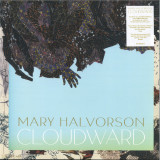
Nonesuch Records releases Cloudward by Brooklyn-based guitarist, composer, and MacArthur fellow Mary Halvorson on January 19. The album features eight new compositions by Halvorson, performed with her sextet Amaryllis, the improvisatory band that performed on her critically praised 2022 albums Amaryllis and Belladonna comprising Halvorson, Patricia Brennan (vibraphone), Nick Dunston (bass), Tomas Fujiwara (drums), Jacob Garchik (trombone), and Adam O’Farrill (trumpet). Labelmate Laurie Anderson also is featured on the album track ‘Incarnadine’. Halvorson and Amaryllis will tour internationally following the release of the new album, including January dates in Europe, as well as at the Big Ears Festival as part of Nonesuch’s 60th anniversary celebration.
Halvorson says, “All of the music on Amaryllis was written in 2020, during the thick of the pandemic, in one of the more bizarre time periods I’ve experienced in my life. While composing for Amaryllis, I expanded upon certain musical concepts I’d developed in my life up until that point—the ones that felt fruitful—and left others behind, hitting the reset button and attempting to build from scratch. Two years later, after the release of the first album, I was still writing music for Amaryllis.
“All the music on Cloudward was written in 2022, mostly in the fall and winter, when things started moving forward. Life felt like a creaky machine starting up again,” she continues. “Air travel, however chaotic, had resumed, and we were once again cloudward. Performances and tours and recordings were happening after a long hiatus and with a renewed sense of gratitude. This band, for me, was quite simply working, both musically and personally, and the main thing I felt while writing the music was optimism.”
The Guardian said Halvorson’s 2022 double release “shows how far this single-minded original has come, and affords a glimpse of how far she may go. Both sessions confirm how years of jaggedly lyrical solo and ensemble improvising and a quirkily subversive affection for mainstream music have now nurtured a composer of unpredictable but warmly expressive character… These are new landmarks in Halvorson’s already inimitable discography.” Pitchfork said, “Amaryllis and Belladonna are distinct statements; one could hear either album on its own without a sense that something is missing. But they are most powerful when taken together, like a landscape and its reflection in rippling water.”
Halvorson has released a series of critically acclaimed albums, from Dragon’s Head (2008), her trio debut featuring bassist John Hébert and drummer Ches Smith, expanding to a quintet with trumpeter Jonathan Finlayson and alto saxophonist Jon Irabagon on Saturn Sings (2010) and Bending Bridges (2012), a septet with tenor saxophonist Ingrid Laubrock and trombonist Jacob Garchik on Illusionary Sea (2014), and finally an octet with pedal steel guitarist Susan Alcorn on Away With You (2016). She also released the solo recording Meltframe (2015), and most recently debuted Code Girl (2018, 2020), a new ensemble featuring vocalist Amirtha Kidambi (singing Halvorson’s own lyrics), trumpeter Adam O’Farrill, saxophonist and vocalist María Grand, bassist Michael Formanek, and drummer Tomas Fujiwara.
One of New York City’s most in-demand guitarists, over the past decade Halvorson has worked with such diverse musicians as Tim Berne, Anthony Braxton, Taylor Ho Bynum, John Dieterich, Trevor Dunn, Bill Frisell, Ingrid Laubrock, Jason Moran, Joe Morris, Tom Rainey, Jessica Pavone, Tomeka Reid, Marc Ribot, and John Zorn. She is also part of several collaborative projects, most notably the longstanding trio Thumbscrew with Michael Formanek on bass and Tomas Fujiwara on drums.
DIG CURATED the infamous four of this EP in an omnivorous fashion, allowing vinyl wizard Louis the 4th to take us on a ride of stylistic adventure between old and new-school techno wickedry.
Olivia Mendez (the curator behind this EP) picked these gems according to the way she would build her sets; each track corresponding to a distinct part of a blazing journey. Each track being a different color on a powerful, vibrant palette, attesting to the versatility of an artist whose emblem is anonymity - remember Detroit? - and reinvention. The man behind the bandana doesn't shy away from paying homage to the old school while at times enveloping us into a computerized sound chaos - classy as it is.
This selection reveals a side of LTF that hasn't been shown before, catching the ears of a great number of peeps, who could easily find their match here.
"Dilatation" is a chugging techno zinger, with a groove that feels minimal yet keeps expanding through punctured breaks and urging synth enveloped into a sustained air- a kind of tool that mounts the energy to near combustible.
"Almost There" decompresses space into a light-weight, energy saver atmosphere, that fleshes out a brand-new compartment in LTF`s music wallet. Threaded through driving rides and a rhythmic zeal, it wobbles gently between sustain and release.
On the flip side, "Kurrikulum Vitae" flexes LTS mechanics, with rascal shifts in a groove that feels simultaneously ancient and totally new, amassing a depth of textures and tones towards a skanking peak.
"999" seals the deal with multilayered distortions enveloped into ghostly undertones and reverbing crunches, half-step of being a techno-artefact and a dazzling sound puzzle, made of a loopy melody edging towards poise.
'Cupar Grain Silo' is Sam Annand's first release on the Blackford Hill label. Its nine tracks blur the lines between ambient electronica and sonic history, as synthesised melodies and rhythms reverberate through the extreme acoustics of the disused Cupar Grain Silo in Scotland. Built in 1964 as a sugar store, the silo towers 60 metres above the surrounding Fife countryside. Its industrial life was short: in 1971 it was closed, and barring a short period as a grain store, remained empty for decades.
In 2014, Sam Annand was given access to the silo as part of the Resono project, set up to study a series of highly reverberant locations across Scotland. The ambitious industrial architecture of the Cupar Grain Silo has given the space a reverberation time of 36.5 seconds. This measurement describes the time a sound takes to decay or 'fade away' in a closed space. To put this in perspective, the Cupar Grain Silo reverb time is around three times longer than that in cathedrals like York Minster and St Paul's.
"The acoustics are immediately noticeable when climbing the ladder into the main chamber", Sam says. "The sound of your voice begins to circle around and above you, inviting you to shout, clap and bang objects to excite the space into revealing its intimidating architectural voice."
Sam began to experiment with musical compositions which responded to the unique acoustics of the silo space. He used impulse responses – a short, sharp sound like a gunshot – to record these acoustics, allowing him to experiment with the silo's reverb in his production. Sam's compositions were performed using a modular synth system, a Roland Juno-6 polyphonic synthesizer and a bowed ride cymbal.
"Chords can be constructed in time by hanging successive single notes in the air," Sam describes, "The flutter echoes from the immediate cylindrical walls can be used to create bursts of scattering spatial imagery and harmonic blooms, following short percussive moments."
Originally recorded on 21st May 2016, 'Cupar Grain Silo' is now released on 12" vinyl with an accompanying booklet of imagery and essays. The compositions are at once true to the unique architectural acoustics of the silo whilst also being playful and experimental with the creative possibilities it offered. Arpeggiated melodies ebb and fall across extended call-and-response shapes formed by the silo's reverb; modular drum patterns crackle like dying machinery; whilst bowed drones waver and wash over.
"We all love reverberation," reflects Prof. Peter Stollery, Professor of Composition and Electroacoustic Music at the University of Aberdeen, on the project. "As kids, we play in it – yelling in forests and caves, surreptitiously dropping objects in huge churches – mouths wide open at the lingering smears of sound which come back to us."
In 'Cupar Grain Silo', Sam Annand has harnessed the extraordinary acoustics of the disused silo to tap into this sense of joy and amazement that reverberation can bring.
Barcelona-based Italian record label DANCE CONMIGO introduces themselves with 4 exciting tracks ready to blow up the dance floors!
A1 Lukinsky takes us on a dreamy journey, something you can’t let drift away, getting lost in a nostalgic memory. A2 Elgo Blanco picks up the tempo slightly, giving this release the right kick to slide from day to night.
In B1 we find Flavio Folco’s inimitable touch, his live bass-line in a fresh energetic arrangement! While B2 is a collaboration of Daryl System & Mr Fantasy, bringing back a warm 80s vibe and sexy harmonizing that invites to dive into cosmic spaces, reaching out to other dimensions…
Compiled and produced with love by Chico Simon, hoping to support other DJs in fulfilling every dancer’s desires. Limited to 300 copies worldwide!
Spanish duo Los Suruba have done it all over the last 25 years, captivating dancers with their blend of House, Minimal, Electro, psychedelic, and deep vibes.
They have established their own network of record labels, with almost 250 releases, Nazca being the latest addition. They’ve also released music on labels like Crosstown Rebels, Diynamic, and Get Physical and have been remixed by international artists such as Solomun, Adriatique, Clarian, and Okain. They describe their music as "Memories of the Future," the motto of their brand Nazca.
As DJs, they’ve performed at the world’s best clubs and festivals, bringing their unique sound across the globe, holding residencies from Ibiza to London, and creating countless underground hits.
They are in top form once again with this latest journeying EP, where Los Suruba and their label Nazca return to vinyl releases, featuring two new remixers for this vinyl edition of the ‘+33 EP’.
Innovative opener 'Dial Banger' is a wonky house sound with wet claps and a gurgling bassline that gets ever more wild. It's a playful cut that teases and pleases in equal measure as the low-slung grooves, string stabs, and unhinged leads keep dancers locked.
'Elegancia La de Francia' is a more experimental house affair with eerie synth leads and freaky filtered vocals, making a dark and menacing atmosphere.
Warm melodies infuse the track with soul and make it perfect for the late-night hours.
First remixer Cristina Lazic launched her own label La Zic, earlier this year. It's a platform that looks to uplift and mentor exceptional female talents next to the Italian's own blend of minimal, deep and tech house sounds. Her fantastic take on 'Elegancia la de Francia' is stylish and stripped back with supple minimal drums and the muted synth sounds bubbling away over punchy kicks.
Romanian artist BRYZ has a refined minimal sound that has established him in the European scene over the last decade. He deals in intricate melodies, pulsating rhythms, and atmospheric textures on labels like Storytellers and Esente Records.
His version of 'Elegancia la de Francia' is silky and deft, with sustained pads locking you into a trance while gurgling bass and trippy melodic motifs add great detail to the rolling minimal house grooves.
Ashley Henry präsentiert mit diesem Album eine spirituelle Jazzreise, die Hingabe, kollektive Träume und den Kampf um Freiheit vereint. Mit gefeierten Künstlern wie Judi Jackson und Aja Monet ist diese Platte eine kraftvolle Hymne an unsere Zeit, die Nina Simones Erbe widerspiegelt und gleichzeitig Inspiration am Puls der Stadt London und im kollektiven Träumen findet. Gelobt von globalen Medien ist Ashley Henry mit seinem charakteristischen Klavierspiel und seinen beruhigenden Gesangsklängen auf dem besten Weg, einer der einflussreichsten Jazz-Acts in Europa zu werden.
Auf 'Who We Are' arbeitet Henry mit einer Vielzahl zeitgenössischer Künstler zusammen, darunter die Grammy-nominierte Dichterin und Texterin Aja Monet, der Grammy-nominierte Trompeter Theo Croker, die Sängerin Judi Jackson und der Londoner Hip-Hop-Künstler MAK. Henrys lebendige Ausdrucksformen der Jazzkultur wirken ebenso schön wie bedeutungsvoll. Henrys tief verwurzelte Einflüsse und seine visionäre Überzeugung machen ihn zu einem der aufregendsten, neuen Londoner Musiker. Seit er mit Christine & The Queens weltweit auf Tournee war und Loyle Carner in ganz Großbritannien unterstützte, hat Henry viel Lob von den Kritikern bekommen. Unter anderem von The Guardian, Evening Standard, Clash und Wonderland.
Das wunderbare Album erscheint auf Naïve als Gatefold 2LP-Set und CD!
Hardcover Book which includes a 208-page book documenting Louisville's rich Black Gospel music legacy and access to a comprehensive digital archive.
In the mid-20th century, Louisville gospel music was occasionally recorded when members of the local gospel community pressed 45rpm records and LPs, and released them through grassroots record labels such as Sensational Sounds, Grace, Blessed, and D.J.S. Over the years, a substantial body of work was produced in our city, but those recordings are in danger of being lost forever.
The Louisville Story Program has been working with dozens of people in the local gospel music community to locate, digitize, and preserve hundreds of these recordings and to develop a book that documents and honors the legacies of the people and communities that produced them.
For decades, the passion, hard work, and support of countless people across dozens of Black church communities in Louisville have nurtured and sustained a rich gospel music ecosystem. This music has served as a central part of people's religious practice and as an expression of Black pride, joy, affirmation, love, dignity, determination, and hope. This legacy continues to this day.
With support from The Owsley Brown II Family Foundation and Owsley Brown III Philanthropic Foundation, LSP has partnered with members of the gospel community and a local advisory group of local gospel historians and luminaries:
To locate, clean, and digitize gospel records of local artists released by small local labels
To accompany the local Black gospel music community in developing a 4 CD box set that includes a 200+ page hardcover book with first-person documentation of their rich history
To create an accompanying double LP featuring 26 of those songs
To create and maintain a public-facing digital archive of 1,000 songs and 1,000 photographs
To celebrate the final release with a large concert at the Brown Theatre (September 28, 2024)
We proudly present the first release under the Statica imprint “M2-9: Wings of a Butterfly”
STATICA001 comes in the form of a split ep from two extremely unique & talented artists.
With two dance floor ready, techno driven tracks full of unpredictability and excitement from the prolific Central Intelligence on the A side.
Followed by a B side of reflectionism within the 4/4. Two emotional, energetic tracks, from madrid based producer Victor Reyes.
A contrast of sound that showcases everything that Statica sets out to encompass…”Forces in Equilibrium”
Minkowski 2-9 (M2-9) is a planetary nebula that was discovered by Rudolph Minkowski in 1947. It is located about 2,100 light-years away from Earth. This bipolar nebula takes the peculiar form of twin lobes of material that emanate from a central star. Its form also resembles the wings of a butterfly.
Credits-:
A massive thank you to Central Intelligence & Victor Reyes for their Contributions. Distributed by Deejay.de. Mastering by Justin Drake. Design and Curation by Alix
Acquit Records are setting out on an ambitious one, presenting their latest foray into vinyl releasing with this incredible new LP from Arbilla. Both label and artist move incredibly low-key, but unearthing the info was worth it. Arbilla aka. Phil Robertson and his own adjacent imprint, Xistence Records, follows up prior greats such as the 'Movement' EP with this full-length, which takes after Detroit techno and catapults it to ever further cosmic reaches. Zooming out to the macro-point of galaxy filaments and Bootes Voids, we begin with the brukky opus '3500 Miles Away From Detroit' before seguing into the percussive workouts of 'Brighter Swallow' and 'Mecca'. A real sense of expanse is given off from the otherwise raw and up-close analogue sound; the cosmos is, of course, airtight.
RARE & PREV. UNRELEASED PSYCH-FUNK AND GARAGE ROCK !!!
Say hello to Down & Wired Vol. 7 as Perfect Toy Records unleashes yet another instalment in its long-running compilation series! Once more, the label provides a delectable selection of obscure funk and soul-influenced psychedelic and garage rock tracks to delight even hardcore collectors of both genres.
And make no mistake, there is plenty to discover among these eleven tracks. At the funkiest end of things, Function's Free Style morphs from West Coast psychedelia to country funk to swamp rock and back again in its sub-three minute length, Dandy King provide psychedelic funky-soul and The Whiz Kids take a heavy dose of funkiness with them into psych-rock territory – sample fiends watch out for the fat twenty-second drum break towards the end of the latter! Purer psychedelia can be found in the offering from Third Stone while Würzburg band Prisma provide all-out epic psych-rock carnage. And if rock carnage is your thing, you'll be feeling the dirty garage rock onslaught of The Comin' Generation and a previously unreleased cut by Synod - soon to be a 45 single on Perfect Toy. That just leaves The General Store, The Soul Society, The Vestells and another unreleased cut from The Villagers (from whom the label will be dropping more unreleased material soon!), to close the circle by adding a heavy dose of garage soul.
A worthy successor to the previous volumes, Down & Wired Vol. 7 is once again accompanied by an insert containing detailed information and photos of the bands and a download code is also included with every vinyl LP.
DJ support: Tim Sweeney, Make A Dance, Parris, Pleasure Voyage, Camillo Miranda
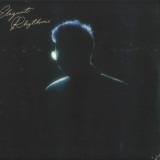
Back yard - Back yard is the first single from the new Teen Daze album, Elegant rhythms, and features singer-songwriter Andy Shauf on drums, and LA jazz staple, Sam Wilkes, on bass. This is a stark change in sound for Teen Daze, who’s last album Interior was an exploration of neon-lit House music. Back yard is a mellow groover, conjuring up images of Laurel Canyon in the 70s, yet still with its flourishes of contemporary sounds.
We’re out of phase again - We’re out of phase again is another vulnerable glimpse into the inner world of Teen Daze, and marks the release of his most personal album to date, Elegant rhythms. In contrast to the synthesized, digital world of his prior album, Interior, here we’ve been brought into a lush, organic arrangement, brought to you in large part to the stunning bass playing by Sam Wilkes. While the verses pulse forward, the chorus slows things down, and evokes the sophisti-pop sounds of The Blue Nile. This track is a stunning showcase of the world of Elegant rhythms.
Nothing’s gonna change my love - Teen Daze returns with his second single of the year, Nothing’s gonna change my love. The stark change in sound, as heard on previous single Back yard, is on display here again: a smouldering, 2 and a half minutes of slow jazz-pop, indebted to the great Sade, or perhaps the feeling of leaving downtown LA at 2 AM. Lyrically, we hear a story of a love, challenged by the unpredictable nature of our lives. This may be Teen Daze’s smoothest song to date.
Neighbourhood - Neighbourhood is the third single from the recently announced LP from Teen Daze, Elegant Rhythms. Along with Andy Shauf on the drums, and Sam Wilkes on the bass, Teen Daze gives us a languid tour of his quiet neighbourhood. The sun has set on the pleasant, tree-lined streets, and a stranger, more surreal environment presents itself. The song plods forward at an extremely comfortable pace, held down by the paradoxically loose-yet-tight rhythm section. Lyrically, we walk around the Neighbourhood at night, and while the chorus reveals a type of sobriety, the vibe of the song makes it easy to feel a little…effected.
Fade away - Fade away sets the tone for Elegant Rhythm’s side B: a deeply personal, though somewhat veiled, confession of loss. How does it feel to grieve something that was never really here? A smouldering, slowly progressing first half erupts in synthetic noise, and then fades into the ether with it’s repeating refrain, “I can feel you / feel you fade away / when there’s nothing / nothing left to say”.
Fall ahead - A sweet piano tune which serves as a quiet break in the record, intended to help the listener reflect and take a moment of pause before we reach the final two songs on the album.
HST underwater - The penultimate track on the record tells a story where the narrator finds themself in an alien, yet oddly familiar place. Arpeggios soaked in crystal blue water flow through the stereo field, while the narrator, vocoded and drenched in autotune, searches for meaning and purpose in a confusing world. This is one of Teen Daze’s most cinematic, emotional songs yet.
In the rain - It’s never really made explicitly clear on this record, but a lot of these songs find Teen Daze wrestling with life as a new father, and this song, the final on the album, expresses the fears of generational trauma. A touching, tender ode to his children, we hear Teen Daze at his most personal and vulnerable. The falling rain surrounds some absolutely breathtaking bass playing from Sam Wilkes, and Teen Daze’s signature ambient keyboard sounds.
It is on dark and sweaty dance floors that we get inspired, connect and leave our differences away to live in the present. With this compilation of music pressed in two parts and written by a set of artists from very diverse horizons, it is Polychrome’s perspective on the rave that we want to share. One where sound and light are the only points of reference, opening the space for liberating experiences.
Diffraction EP takes you through the full journey of waveforms traveling through our beloved clubs. Sparking the A-side, Hong Kong’s wonder producer and Mihn Club resident Xiaolin fires up with a progressive and flamboyant house cut, opening an ambitious dance. The tension is taken one notch deeper with Barcelona’s duo Iro Aka signature hypnotic and driving techno sound, dimming the lights for an introspective groove. On the B-side, Lyon’s Desire flirts with an electrifying psy-infused track where pounding beats and floating melodies dance in harmony and psychedelia. It is in a firework that Dublin’s prodigy Dylan Forbes closes out the EP, with an energetic progressive anthem that will light up the space
It is on dark and sweaty dance floors that we get inspired, connect and leave our differences away to live in the present. With this compilation of music pressed in two parts and written by a set of artists from very diverse horizons, it is Polychrome’s perspective on the rave that we want to share. One where sound and light are the only points of reference, opening the space for liberating experiences.
The dance floor is also a space of self-reflection. The A-side is catered by two artists from one of our favorite collectives, De Lichting. With “A Reflection”, RDS opens up and shares a beautifully crafted house gem, providing for a soft and introspective yet groovy “eyes closed” dance. Nathan Kofi takes on the A2 with his unique deep house sound, layering sweet and cinematic synth sounds over an Afro-induced drum sequencing, creating a warm sonic envelope. On the B-side, James Free mixes acid synthesis, roaring bass line, and breaks to create a progressive and subtly melodic dance floor track, one that leaves you positively triggered. With the final track of the record, Rotterdam’s Mata Disk offers a glowing light over polyrhythms and very electronic noises, offering this body of work a deserved radiating curtain close.
Rising Japanese duo SUDO debut on Drumcode with the inspired ‘Real World’ EP.
The brothers Isao and Takashi – the former based in Berlin, while the other holds forte in their hometown of Kansai, Japan – have been grafting away at their craft for many years, never compromising on quality, while eschewing trends. Instead, patiently creating and waiting for their opportunity.
The duo remembers their first vinyl purchase from back in the ‘90s – a white label they’d later find out to be Underworld’s legendary ‘Rez’. It’s from these incendiary roots that ‘Real World’ takes inspiration. A trio of tracks imbued with depth, subtly and impact.
The title track is a deep barrelling trancey composition and is trippy in nature, conjuring visions of the Underworld classic, while never losing a future-minded ethos. ‘Construction’ starts as a chunky slice of percussive techno, before a mesmerizing ambient interlude takes the track to another realm. ‘Mercury’ is a transcendental slice of tech-trance that’s timeless in every sense. Bliss.
There are few people across the globe, who will have not been touched by the work of Frankie Knuckles. Forever regarded as ‘The Godfather of House’ for his unrivalled contribution to the house music we know today; what started as an underground movement in Chicago has grown to international heights thanks to Frankie. His records earned him recognition on a global scale, allowing him to work with some of the globes biggest names including the likes of Diana Ross, Whitney Houston and Michael Jackson.
Frankie passed away in Chicago on 31st March 2014 leaving behind one of the greatest house music legacies spanning almost four decades. Now he is commemorated by long time writing and production partner Eric Kupper. Eric, himself a seasoned DJ producer and writer, has worked on over 116 Billboard #1 Dance Records and played a pivotal role in many of Frankie’s productions. Having both worked together for many years they established themselves as ‘Director’s Cut’ from 2011 and set about producing original releases and remixes based on the classic ‘Def Mix’ sound while sharing equal credits for their creations.
Together they re-produced and re-purposed classic cuts for modern dancefloors, with reworks including tracks from Marshall Jefferson, Ashford & Simpson, Artful & Ridney and The Sunburst Band, alongside Frankie Knuckles originals. These releases have now been brought together by Eric to feature on special album called ‘The Directors Cut Collection’ on SoSure Music.
For the third volume classic cuts such as Inaya Day & Robin S. - Right Now (A Director’s Cut Master) and Marko Militano - Good People (Director’s Cut Signature Mix) are nestled alongside equally absorbing Directors Cut mixes of Vintage Lounge Orchestra covering 'Dreams' and Art Department pres. Martina Topley Bird feat. Mark Lanegan & Warpaint covering 'Crystalised'.
The Director’s Cut Collection is a fitting tribute to commemorate the seventh anniversary of Frankie’s passing whilst giving Eric a platform to tell his side of the creative story. This album is to be released in collaboration with The Frankie Knuckles Foundation who work to continuing Frankie’s legacy well into the future.
Axel Boman - 5/5 - "It's all about love - not about emotions!!!!
Adam Beyer - 5/5 - "<3"
Space Dimension Controller - 5/5 - "Always"
Tensnake - 5/5 - "Classic Love It"
Jonny Rock - 5/5 - "Hot!!!"
Prins Thomas - 4/5 - "very nice! fresh take on an all-time classic"
Len Faki - 5/5 - "It's been a while listening to this masterpiece - and yes - it's timeless and I love the new touch on the new version. thanks Frankie!"
robdabank (Radio 1) - 5/5 - “One of my all time faves and great mixes here!”
The Berlin-based artist Simina Grigoriu debuts on DCLTD. The opener ' Declare Me' steps up the energy with searing intent, while never losing a sense of deep brooding atmosphere. One for the marathon Sunday afternoon sets. ‘Astral Waters’ bubbles away with tight drum work and a deep Motor City vibe. ‘Technology of Prayer’ mixes late-night techno soundscapes with driving rhythms. An essential tool for bridging moods during longer sessions. And finally ‘The Right Calibre’ positions tribal rhythms at the fore for a rolling cut that doesn’t take a backwards step from creating plenty of tension through the mid-section via a stirring break.
Nonna Fab is a core part of Sheffield’s progressive music scene, founding Apricot Ballroom, Footprints Jazz Club, Jazz On The Park Festival, and his band Fuji Speedway. He’s also part of the consortium behind Grub Records, a new record shop and wine bar opening this summer. As well as regularly playing as part of his duo with Apricot Ballroom, Nonna Fab’s back catalogue of releases explores house, boogie, jazz and broken beat. This release shows an organic curation of instruments, touching on live elements, jazz improvisation and dance-floor orientated rhythms. We Still Out Here began a few years ago as a nod to the iconic New York City sound of Dinosaur L and Francois K, and to serve as a message that there are still producers out here working on and inspired by that sound. This release also features remixes by Admin and Comb. Bristol-based collector and beatsmith Admin is known for his sampling finesse, self-releasing some killer 7s, edits on his Community Disc-O's label, and music on others including Boogie Café Records, Take Away, Better Listen, and Future Boogie. The second remix comes from Norwich-based artist and I Travel to You label manager Comb, one half of the duo Dangerous Goods and the producer behind the popular Comb Edits series.
'Matriarchy' is a rebirth for the celebrated, multi- faceted artist, as girli further explores her sound and takes the reins with full creative control, truly cementing her place as a cult figure and ambassador for the next gen of LGBTQIA+ music.
girli's passions have always migrated beyond music and she continues to use her platform to ignite conversations around feminism, sexuality, identity and mental health, opening up topics that most have always shied away from. Representation matters more so now than ever, and girli is ready to rewrite the rules.
Death Is Not The End together all three LP volumes of the critically acclaimed If I Had a Pair of Wings LP compilation series for a bundled edition.
"...all of the music on this compilation is the result of the forward-thinking artists and producers that realised the worth of local Jamaican artistry during a time when the island's leading political figures had not yet managed to throw off the colonial yolk. These are sounds with a certain innocence and the optimistic promise of better to come, with the influence of American pop ballads and doo-wop looming large, yet already pointing to the innovations of the future. Listen keenly and take in the sounds of the Jamaican music industry at its very beginnings, its singers and players drawing from the popular styles of the island's larger neighbour and already changing those styles into something their own." - David Katz
Lauren Laverne's comp of the week on BBC Radio 6 Music w/c 11th Jan.
Having plied his trade around the world for more than three decades, German guitarist, bandleader and musical explorer Jan Whitefield has always instilled in his craft a natural aesthetic of authenticity, a key component which has seen him amass a sizeable and varied catalogue of material which has remained timeless where some of his contemporaries have faded away.
In the early 90s, as various UK bands were signed up by sizeable labels and enjoyed even mainstream chart success in the Acid Jazz and rare groove boom, Jan and his brother Max formed the Poets Of Rhythm, self-releasing their own uncompromisingly hard-edged take on 70s street funk on the then completely unfashionable 7" single format, forerunning the Deep Funk scene by almost a decade. 30 years on, in spite of a legion of retro-focused bands having followed in their wake, few have yet to come close to matching the energy and spirit of those early Poets 45s.
Since then, Jan has applied himself to all manner of new incarnations and innovative side-projects, releasing further funk surveys as the Whitefield Brothers before leading his own band under the pseudonym Karl Hector, with releases on labels such as Stones Throw, Daptone, Ninja Tune, Mo'Wax, Strut and more. An avid music lover, explorer and record collector extraordinaire, Whitefield's music has effortlessly absorbed his expanding interests along the way, particularly drawing influence from Ethiopian Jazz and West African funk and highlife, as well as Kraut-rock and ambient via his Rodinia alter-ego.
More recently, Whitefield has begun to venture into the astral planes of what's now commonly referred to as 'spiritual jazz', and this is very much where we find him manifesting on 'The Infinity Of Nothingness'. A set of mature, delicate and meditative orchestrations, like much of Whitefield's best work the album is studiously true to its key influences - and in this instance the twin figureheads of Sun Ra and Pharoah Sanders are particularly preeminent - but also completely avoids falling into a trap of mere tribute or facsimile. With subtle yet diverse accents of Hip Hop, Library and the Avant Garde appearing wholly unobtrusively, the album is unified by a marked trance-like feel, beginning with the sparse, processional opener 'Nothingness' through to the 3 part 'Infinity Suite' of 'Time', 'Space' and 'Energy'.
As he did as a schoolboy with the Poets of Rhythm, with 'The Infinity Of Nothingness' Whitefield achieves that exceptionally rare feat of creating music that is not only worthy of sitting alongside that of his overarching influences, but will also stand up with it against the tests of time.
Glasgow based Seated Records return with more 1980s Scottish Post-Punk / New Wave material. In this 8-track mini compilation the label introduces the work of Stirling band 22 Beaches, offering a deep dive into music recorded between 1980-1984 - the majority of which has never seen the light of day!
22 Beaches formed in Stirling in the late 1970s as an evolution of the short lived group ‘Alone at Last’ - drummer Fred Parson’s and guitarist Stephen Hunter being the two who spanned the divide. Out of the six members of 22 Beaches, many were school friends, and the rest naturally fell together. The band toured extensively and played at a truly diverse set of venues across the UK: from a local swimming pool boiler room, to small nightclubs and university parties, to several fundraisers for the miners strike. Maybe most notably of all, drummer Fred Parsons described playing at what he calls “the Grangemouth International”, organised by local promoter Brian Guthrie and which featured an all-star lineup of 22 Beaches, The Exploited and the first incarnation of The Cocteau Twins. A coach was hired to ship the audience to Grangemouth from Stirling, the cost of which was included in the ticket. The gig then paused halfway through for a 'help yourself' buffet. Young promoters take heed. This is how it's done!
Over the course of the 80s the band released music on three different, and now sought after, various artists compilation cassettes. “What Day Is It?” and “Sadie When She Died” were released on a compilation of local Stirling artists 'The A.N.K.L.E File'. The track from which the current record takes its namesake - “Dust” - was initially released on a compilation-tape for the fanzine 'Another Spark'. And ‘‘Zoo” (also featured on this record) was first released on Glasgow label Pleasantly Surprised via compilation, 'An Hour Of Eloquent Sounds', where 22 Beaches rubbed shoulders with early music from Scottish names Primal Scream, Cocteau Twins, The Wake and Sunset Gun. Unfortunately, 22 Beaches never met the same level of commercial success as these others and decided to retire the project in 1984 - leaving their recordings and demos to gather dust (hehe)…until now!
This compilation, “Dust: recordings 1980-1984” follows the band's journey and the changes in their sound over the years. It moves from the raw, punk energy of early DIY recordings through to the A Certain Ratio style Balearica of their later pieces. The record's opener and title track “Dust” is perhaps the most shining example of the latter. Characterised by the plenitude of sonic space in the mix, “Dust” has an almost dub sensibility that is communicated through centrality of Parsons’ drums, McChord’s percussion, and Fildes’ Bass while the harmonising vocals of Sharkey and McGregor chant over the top to give the track its distinctive psychedelic edge. This is an atmosphere only exacerbated by the lofi quality of the recording which sits the vocals in the same aural realm as much 1960s psych-folk. On “Cartoon Boy”, the band strips things down further. A droning bass line persists through the tape fuzz and is accompanied by the sounds of a sole looping guitar chord sequence and McGregor and Sharkey’s vocals - respectively and carefully dancing around one another before harmonising in the most beautiful way. The result is a haunting and abstract Marine Girls style heartbreaker. ‘That Girl’ again delivers a dub adjacent rhythm section similar to that of “Dust”. However, on this instance crisp guitar chords, a distant, phased organ and blue-eyed soul vocal delivery, produce a track that could easily have been a lost Orange Juice recording from their sessions with Dennis Bovel. On “Somebody Got It Wrong” and “One Of Us” the band employ a more macro approach where a jangling guitar with an almost highlife-influenced tone, vocal ad-libs and syncopated percussion give the music a Talking Heads-esque swagger.
Taken together these tracks illustrate a clear trajectory in the band's sound, moving from from the high energy no-wave quality of early recordings towards a more dub influenced, and stripped-back sound - a sonic trajectory followed by so many bands of the time, not least those emerging from the diaspora of Manchester’s Factory Records.
On “Breathing’’ we hear the beginning of this transition, with the strong influence of the oddball NYC disco styles of Was (Not Was) and ZE records. All of this is meshed together with the residual punk rock energy of 1980s UK. This combination is employed to excellent effect with the addition of the distinctly Scottish (and what the band confirmed to me to be spontaneous) vocal delivery of: “Do you love me? Do you want me?” “Aye!” “Do you love me? Do you need me?” “Naw!”.
On the record’s closing tracks, “Zoo” and “Talent Show”, we hear early examples of the band’s work, playing with their rawest all-in-one-take live energy where Hunter’s spiralling guitar riffs and McGregor's distorted vocal exclamations lead the charge. The band recalls that these initial-forays did not always translate so well into multitrack recording and overdubbing: “the deconstruction took away some of the band's natural feel”. On “Talent Show” the record ends with Sharkey delivering an almost unintelligible spoken word section over the top of the track, making for one final, disorientating, almost manic slice of post-punk.
These tracks from 1980-1984 chart the progress of a unique contribution to the world of Scottish Post-Punk and New Wave, encapsulating not only the musical trajectory of 22 Beaches but also echoing the broader sonic landscape of 1980s UK, a testament to the adaptability and creativity of the UK’s underground music of the time.
*”Transcended Before Me” featuring Horace Andy takes us deep into the universe. Icey, blue, dreamy, hypnotic,
*The song features soul singer Horace Andy who sings from his heart about how “the things you love the best, never ever stay, you try to hold onto it, it slips away…” Emika’s repetitive “come, come, come” sonic hook guides us through and epic journey of transcendental woosh sounds,
*Beethoven-esque piano bass stabs, symphonic synth harmony, and in unforgettable marching beat and puts hip-hop, trip-hop and techno into a new dimension.