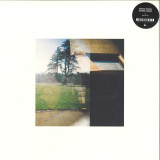
When we established Balmat in 2021, neither of us could have imagined that within two years, we’d be putting out an album by one of our musical heroes: Mike Paradinas, aka µ-Ziq. The British producer has been an inspiration to label co-founders Albert Salinas and Philip Sherburne since the 1990s. In fact, his album-length remix project The Auteurs Vs µ-Ziq was one of the very first pieces of electronic music that Philip bought, way back in 1994. To have the opportunity to release his music now feels like a real full-circle moment.
Paradinas, of course, needs no introduction. Under a slew of aliases, chief among them µ-Ziq, the British artist revolutionized leftfield electronic music in the 1990s—coincidentally, this year marks the 30th anniversary of his debut album, Tango N’ Vectif, for his friend and sometime collaborator Aphex Twin’s Rephlex label—and his label Planet Mu has built up a formidable catalog of visionary, forwardlooking records, mapping virtually every corner of the electronic spectrum. With 1977, he turns the clock backward in a sense, and not just with the album’s title: Rooted in classic ambient and electronic sounds, these 15 tracks evoke the anything-goes spirit of the early ’90s, before the tools and tropes had calcified into cut-and-dried styles.
There’s no shortage of familiar sounds on 1977. There are echoes of raves and chillout rooms and transmissions from the fringes of techno; there are detuned synths and glistening reverb tails and, above all, gauzy vox pads, the eerie glue that holds it all together. The title, he says, is meant to invoke a general sense of nostalgia, bookmarking a year in his boyhood when he became more selfaware. More than anything, 1977 sounds like µ-Ziq distilled: Stripped of his signature breakbeats and customary chaos, Paradinas’ first-ever strictly (well, mostly) ambient album presents the essence of his music in a whole new light.
Along the way Paradinas touches on dark-ambient drones (“Marmite”), horror-film themes (“Belt & Carpet”), jungle breaks (“Mesolithic Jungle”), and even house music (“Houzz 13”), which marks the first bona fide dance-floor moment on Balmat to date). Yet the album never—to our ears, anyway— feels expressly retro. Rather, Paradinas plucks timeless sounds out of the ether and gives them a gentle tap, spinning them into unexpected new orbits. At times, 1977 feels like an experience of extended déjà vu: When we first listened to it, we had the sense that we already knew this music. It was as though we had heard it years ago, perhaps on a battered cassette tape lent to us by a friend, and been searching for it ever since. We hope you feel the same.
Поиск:2 touch
Все
The Bass Junkie sound spans the old school beats and vibes of the Electro genre’s origins, to the borderline industrial. Phil is a battle hardened Bass Bot from the future armed with his trusty MPC.
The obsession with all things sci-fi continues with this 'Cruising The Bass Nebula' EP. Out this February on my Asking for Trouble label, this is testament to his non-stop love of the genre and keeps on evolving with this funky 10".
Phil Klein aka Bass Junkie has been part of the Bass furniture for decades. I first came across him at my local roller disco somewhere in the 80s where he would flex his early DJ skills. Phil was cutting and scratching on the decks way before anyone I knew.
His history is quite something. In the early 90s he contacted Dave Noller from Dynamix II in Florida and after sending demos (pre-Internet of course). He ended up going there to make some tunes under the name of Cybernet Systems.
Phil has had many monikers and worked with lots of people over the years. Model Citizens with Matt Whitehead, IBM, Gods of Technology and Kronos Device with Si Brown (Dexorcist) and myself both as The Brink and part of The Resonance Committee to name a few. 2021 saw the release of the album Sub Sonic Survivor on Bass Agenda. He's had releases on lots of labels over the years including Control Tower, Firewire, SMB, Ed DMX's Breakin records, Andrea Parker's Touchin Bass label, Billy Nasty's Electrix and his own Battle Trax label.
Throbullating throughout the galaxy since 1986!
- A1: The Time We Faced Doom (Skit)
- A2: Doomsday
- A3: Rhymes Like Dimes (Feat Dj Cucumber Slice)
- A4: The Finest (Feat Tommy Gunn)
- A5: Back In The Days (Skit)
- B1: Go With The Flow
- B2: Tick, Tick (Feat Mf Grimm)
- B3: Red & Gold (Feat King Ghidra)
- B4: The Hands Of Doom (Skit)
- B5: Who You Think I Am? (Feat X-Ray, Rodan, Megalon, Kd, King Ghidra & Kong)
- C1: Doom, Are You Awake? (Skit)
- C2: Hey!
- C3: Operation Greenbacks (Feat Megalon)
- C4: The Mic
- C5: The Mystery Of Doom (Skit)
- D1: Dead Bent
- D2: Gas Drawls
- D3: ? (Feat Kurious)
- D4: Hero Vs Villain (Epilogue - Feat E Mason)
Underneath his mysterious metal mask, MF DOOM hides the cachet underground legends are made of. After his first group KMD’s sophomore album Black Bastards was shelved by Elektra in 1994, and his blood brother Subroc — one half of the sibling rap duo — passed away, surviving frontman Zev Love X slowly mutated into the supervillain MC known as MF DOOM, and the rap world is better for it.
The 1999 release of Operation: Doomsday marked MF DOOM’s official debut, reintroducing a mysterious figure who would soon become one of underground rap’s greatest voices. Within its 19 tracks, Operation: Doomsday reveals the confluence of DOOM’s tragic past, personal interests and daring creativity. His clever rhymes and remarkable schemes stood out against the landscape, and every sound he touched — from cartoon theme songs, to ‘80s soul, to rap classics and more — got reinterpreted into something brand new and surreal.
Decades later, MF DOOM is still celebrated for all facets of his work and influence. In the face of tragedy, DOOM re-infiltrated the rap game on his own terms, and crafted an instant cult classic. Operation: Doomsday stands as a testament to the power of betting on yourself against all odds.
- A1: Lars La Ville Feat Gauvey-Kern - Twist (La Ville Extended Italo Remix)
- A2: Sauvage - Do You Want Me (Also Playable Mono Zyx Edit)
- A3: Diego - Walk In The Night (Flemming Dalum Remix)
- A4: Love Kills - Touch Me (Special Remix)
- B1: Stockholm Nihgtlife Feat Helly - Back Together Again He Day
- B2: Soulya Id - The Day You‘ll Get Somebody (Extended Mix)
- B3: Marc Fruttero & Alex Papale - What You Want (Anton Orlov Remix)
- B4: Valerie Dore - Get Closer (Luca Debonaire Extended Mix)
ZYX Italo Disco New Generation Vinyl Edition 6 presents 8 selected Italo Disco songs.
Look forward to songs by
Sauvage
Lars La Ville feat. Gauvey-Kern
Diego
Love Kills
Stockholm Nightlife feat. Helly
Soulya ID
Marc Fruttero & Alex Papale
Valerie Dore
Vinyl lovers, be invited to enjoy almost 50 minutes of iconic analog sound quality!
"Shut Him Down” was the third song written by Michael Leonhart & Elvis Costello during the 2020 quarantine. The first two, “Radio Is Everything” and "Newspaper Pane”—both of which were produced by Leonhart —appeared on Elvis’ 2020 solo album, Hey Clockface.
Michael and Elvis first met in 2007 at the Molde Festival in Norway, where Costello and the late Allen Toussaint shared a double bill with Steely Dan, with whom Leonhart has played since ’96. The two kept in touch over the ensuing years, including joining forces in 2015 for an Elvis Costello & The Imposters/Steely Dan tour. Early on in the quarantine, Leonhart sent Costello some instrumental music in need of lyrics. Costello states “Michael sent this music to me from New York at the perfect time.” After finishing the first two songs, Leonhart asked Costello to sing over an original heavy Afrobeat song he had been recording with his Michael Leonhart Orchestra during lockdown. Costello crafted lyrics that exist at the crossroads of political commentary and existential contemplation. Leonhart then asked NY rapper, JSWISS to write a verse building off Elvis’ lyrics and the drums grooves of Nick Movshon and Homer Steinweiss. Antibalas guitarist Luke O'Malley then came on board to write and record additional guitar parts.
Side A ends with a fiery bass clarinet solo from Chris Potter, while side B features an extended tenor sax solo from acclaimed saxophonist Joshua Redman.
"Shut Him Down" was first released in March 2022 on The Michael Leonhart Orchestra album, The Norymn Suites (Sunnyside Records) and now becomes available as a limited edition 7” b/w instrumental through Mighty Eye Records in partnership with Fat Beats.
A Rothko-esque color field set to music, The Window Is The Dream ventures even deeper into Horn's inner space than her stark, acclaimed debut Optimism, which earned her an 'artist to watch' tag from The Guardian upon its release last year. For her second record, Horn travelled to upstate New York to record with a few musical touchstones in mind: the electro-primitivism of the Silver Apples, austere rhythm kings This Heat and The Raincoats' time-bending Odyshape , however the resulting 10 songs are an entry into a world which is very much her own.
Everything eventually turns to dust. Everyone knows this, but few want to acknowledge that our time on this mortal coil is fleeting, preferring to remain in stasis, in hopes that "the end" will pass them by. Chicago trio FACS (guitarist Brian Case, bassist Alianna Kalaba & drummer Noah Leger) have been perfecting their brand of intense, cathartic post-punk over the course of four ever-evolving albums, beginning with 2017's "Negative Houses" thru 2021's landmark "Present Tense', which saw the trio dig deep into the gaping maw of a black hole & pulling back whatever debris they could grasp onto. Their newest "Still Life In Decay" comes as an addendum to the last album - a "post-event review" if you will. "Still Life In Decay" starts with a squall of white noise before collapsing into the band already locked into "Constellation"s lumbering groove, with Case's guitar a ghostly presence, appearing & disappearing in washes of gauzy feedback throughout the track. FACS have never been more locked in as a unit, and "Still Life In Decay" is a decidedly more focused effort. The apocalyptic chaos that defined their previous album "Present Tense" is waved away in favor of an examination of events with cumbrous clarity. FACS are a heavy band, but they don't necessarily FEEL like one (see side two's "Still Life", where Case's fluttering, melodic guitar lines are buoyed by the insistent, underlying pulse of the bass & drums). As a rhythm section, Kalaba & Leger dance & twist around each other like a double helix, forming the DNA of what makes FACS special. Collectively they approach rhythm from outside the groove as opposed to inside it, creating a lattice where Case weaves guitar lines like creeping vines, which makes the moments on "Still Life In Decay" where the band DOES lock in even more powerful. When the guitar punctures the lock-step swing of "When You Say", it hits like a hammer. Case utilizes his lyrics like a person suffering from anterograde amnesia; repeating phrases & holding onto old memories in a desperate attempt to avoid the slide into oblivion. Freeform poetic missives touching on themes of resignation, cynicism, class warfare, and a search for identity & meaning in a crumbling society; A primal desire to hold onto anything in a post-pandemic barrage of sensory overload. The album is a decidedly local affair; recorded once again at Chicago's famed Electrical Audio by renowned engineer Sanford Parker & mixed at his Hypercube Studio in Chicago's Ravenswood neighborhood & mastered by Matthew Barnhart at Chicago Mastering Service.
Let's get it straight: "This is" is THE album by Ghia. It catches the band at its peak and features 10 songs, including not only their impeccable hit, "What's Your Voodoo?" but a full arsenal of yet unheard, timeless, and soulful music without equal. The songs on the album, which were recorded between 1988 and 1991, could be considered forerunners of the downtempo genre, with one foot in the late 1980s street soul direction but sparkling with touches of synth pop and contemporary jazz-funk. Genre limitations aside, all that Ghia ever wanted to do was create music-good music-and you will hear this in the depth of the compositions.
The album starts with "Keep Your House In Disorder," which has yet again become another classic song from the band's catalog since it was featured as the B-side of the "What's Your Voodoo?" reissue. The song is about a relationship in which the woman has trouble adapting to her boyfriend's turn in life. He tells her to "keep your house in disorder," meaning don't take things too seriously, don't stand still, and you will do better to take the sideroads in life.
"This Is" continues with the downtempo numbers "Crystal Silence" and "Close to You." Both are deep, one-of-a-kind, and previously unissued street soul ballads. On these two tracks, you can still hear the band's roots in jazz-funk. Hence, as a follower of the band's output may have yet recognized, instrumentals of these two tracks can be found on their first LP, "Curaçao Blue." In fact, "Close to You" was one of the band's first compositions. Earlier recordings of the song exist with different singers and different vocals, but it wasn't perfect until Lisa laid down the final version and a choir was added. It's difficult for us to recall any late-80s soul tune as beautiful and intriguing as this one. The final section, which begins with "so much baby we can say," sounds ahead of its time, reminiscent of mid-90s contemporary R&B.
Next up is "Eskimo," an equally brilliant and soulful downtempo composition, but with more focus on synth sounds than the previous tracks. Once more, it showcases the creative lyricism of the song writers, Boberg and Simon, imagining a train ride during a rainy and cold night: "feeling like an Eskimo in an igloo in New York."
Eskimo leads to the aforementioned classic, "What's Your Voodoo?" Originally released in 1991 on the small Mikado label, it was reissued on our label in 2019. We already called this "one of the most wonderful and mystic slow motion synth pop tunes ever recorded"-and we still mean it! Let's face it: this was done before British bands like Massive Attack, Tricky, and Portishead laid the foundation of trip-hop. Dare we call Ghia's music "proto trip-hop"? As a special bonus, the digital version of the LP features a previously unreleased mix of the song, which includes added samples; this should clarify how close Ghia actually was to the sound of the mid-'90s.
"Angel On Your Shoulder" and "L O M E" are two more completely unissued and great tracks from the band's shelved works. Being a bit more uptempo than the rest of the album, they fall between contemporary soul/R&B and synthesized pop music. And of course, another downtempo hit needed to be featured on the album: "You Won't Sleep on My Pillow." It was the original A-side of their single release in 1991, and since then it has been featured on various compilations.
The album concludes with a really strong ballad entitled "I Haven't Got The Power." Here we hear only pianist and keyboardist Lutz Boberg with Lisa Ohm, without further instrumentation. Basically recorded in a live session, this showcases once more the talent and ingenuity within the Ghia project.
Whether you agree or not, "This is" may easily be considered one of the best German late 80s/early 90s soul pop and downtempo albums ever recorded. Cautiously, it may even be submitted as the missing link between mid/late 80s soul by bands such as Sade, and later trip-hop groups like Massive Attack. Let us celebrate Ghia and their music, which had been shelved for more than 30 years but has now finally been released on The Outer Edge.
WRWTFWW Records is overjoyed to announce Ar Ais Arís, the third album by Irish producer Gareth Quinn Redmond, following his amazing Satoshi Ashikawa-inspired Laistigh Den Ghleo released in 2019 and this year’s ambient-meets-Irish-traditional-music soundscape Umcheol. The 8-track LP comes as a limited edition of 500 copies worldwide with an artwork by Dublin artist Barry Gibbons and liner notes from Gareth Quinn Redmond himself. It is available in digital format as well.
Ar Ais Arís is Gareth Quinn Redmond’s fortuitous love affair with the art of tape loops - a practice he discovered while performing with Ross Chaney and Myles O’Reilly in late November 2020. Fascinated, he spent months experimenting with the technique: "By cracking open the shell of a cassette, cutting the tape and splicing the ends together, I created repeating sound loops of varying lengths. After reassembling and slotting the cassette into the Tascam Portastudio, I recorded and played back the sounds of the tape loop. These sounds were then manipulated using the pitch wheel to make subtle and warbly inflections to the recordings. This is achieved by speeding up or slowing down the playback speed of the tape, which offers dynamic contrasts in both mood and texture."
The result is 8 deliciously enchanting minimalistic tape loops creating a very rare kind of daydreaming environmental music full of accidental miracles and dusty soothing backdrops. It’s a very very very pleasant listening experience inspiring a feeling of enveloping warmth and gentle coziness, with an uncanny touch of spellbinding magic. Press play.
Gareth Quinn Redmond’s previous albums, Laistigh Den Ghleo, an ode to the work of Satoshi Ashikawa, and Umcheol, mixing ambient with traditional Irish music instruments, are still available on WRWTFWW Records - perfect occasion to complete the collection!
- A1: Caramel Chameleon - To Create Is To Live Twice
- A2: Perseus Traxx - Something More Than This
- B1: Rag - Zavondje 303
- B2: Raving Kid - Edgware Acid
- B3: Mutex - Road To Atlantis
- C1: Kreggo - Hearthpulse
- C2: Steifl - Omega Point
- C3: Korre - Black Over Blue
- D1: Pitto - Acid Rolo
- D2: Endfest - Shari Vari
- D3: Dwaalgast De Beer Uit Allekmaar - A Wave Goodbye
030303 Records taught us a lot about the many faces of acid throughout the 18 years of its existence. The label has specialised in all substyles of the genre, whether that's tracks inspired by early 80s proto acid, Chicago house, braindance or the eerie melancholy of Polygon Window. Good thing is, they haven't stopped getting better at it. Most 030 releases are now out of print and severely sought after and, with so many instant classics featured on it, this fifth compilation will be no exception. Caramel Chameleon kicks off with an epic cut, one that will appeal to fans of Roy of the Ravers. Perseus Traxx, Raving Kid and RAG aka Steven Brunsmann follow suit with acid on a deeper tip, with the latter adding a heavenly soulful touch to it. And how great it is to see American producer Korr? return to the label with a wonderfully spaced out introspective cut. Also standing out is Endfest's heavy electro/acid take on one of the most obscure mysteries ever to come out of Detroit: Shari Vari. Dwaalgast and De Beer Uit Allekmaar aka Cosmic Force deliver the last track before the lights go on - the aptly named A Wave Goodbye has a distinctive, bouncy westcoast-sound-of-Holland feel to it. An excellent compilation and a huge tip!
Platform 23 again explores to the dense voids, this time with a touch of the funk, with a reissue of Dutch experimentalists De Fabriek and two tracks from their "Music For" cassette series, this time calling all Hippies.
Featuring both original and reinterpretations from modern-day heads, Dunkeltier and Khidja, this double-pack is something of an oddity, showcasing the bands' expansive range, moving away from the noise, drone and industrial soundscape releases they had become known for and crafting here, free flowing, groovy longform jams.
Active since the late 70s to today, De Fabriek (The Factory) have never considered themselves a real band - being also a label too - with an evolving and irregular line up centred around Richard van Dellen, they present their music and output as a kind of work-union.
With literally four decades and dozens of releases across all formats, 1988's cassette release, 'Music For Hippies', has become something of a cult curio, with the long improvisational tracks, Lullabye and Coming Down eschewing the rougher, industrial experience for something completely different.
In opener Lullabye, we go full leftfield P-Funk meets Motorik undertones. An incessant beat is laid from the start and doesn't cease for over 10 minutes, while spoken vocals call closer to the Krautrock realms of Can and hark to Liebezeit's stylised grooving best.
Analog, echo washed, with touches of glam and wrapped in simple effects pedal work, the secrets are passed to Dresden / Berlin inhabitant Dunkeltier aka Sneaker DJ aka Thomas Smorek. His darker moniker, appearing on obscure edits for Macadam Mambo and the much-missed Bahnsteig 23, his 'Hey Robot' mix adds bass, percussion, strings and synth to remold Lullabye into a late night, red light, basement denzien. This is followed by an additional, bonus reimagining, creating an all-new time piece, an ear worm of the best kind with Tik Tok Goes The Clock.
The second slab presents in Come Down, a more resembling De Fabriek werk. Edited to fit, the darkness is entered as snapshot vocal quips, oscillations and synthesised mutations are laid over a lazy, relentless ostinato rhythm where cymbals crash on the bar. Inviting, calling, De Fabriek's aptly titled downer is in fact, a joyous journey.
To complete, label affiliates, Khidja take a break from finalising their debut album to unfold their 'Psychebabble Mix', a dozen plus minutes of warped, twisted, cassette machinations that suck the listener further along the trip. Added bass propels their edit suddenly to a new direction, a hook for mind and for the open willed, the body. De Fabriek's "coming down lullabye" arriving on vinyl for the first time, with a twist and shake, calling deeper to acceptance.
Denver producer and visual artist John T. Hastings aka RUMTUM returns to Bastard Jazz for his second album on the label, "Arcadian Daze". The album is a contemplative drive down a nostalgic highway, reflecting on a period of his late adolescence growing up in Ohio, spending time at Arcadia Beach on Lake Erie and discovering the likes DJ Shadow, Madlib, Fila Brazilla, early Four Tet, the original Ninja Tune roster and more. Revisiting these coming of age memories, John purchased an older MPC 2000XL and set out to musically capture the excitement of putting his first nascent loops together, inspired by this pivotal era of electronic music that has since birthed movements like such as Lo-Fi/Chillhop, Vaporwave, LA's mid-2000s Beat Scene / Low End Theory, etc.
The end result of "Arcadian Daze" is indeed filled with that nostalgic spirit paying homage to those aforementioned sounds, but also presents a forward thinking musical palate that's very much grounded in RUMTUM's sensibilities as a producer and time spent learning to program new & vintage outboard gear. The album moves away from the warm, dreamy sounds of last year's "Isles in Indigo" LP, and touches more into a mystical, pensive vibe with elements of darkness and light.
Cairo, late 2013. In a city in turmoil, where the curfew had just been lifted after a second coup d'état, where the walls were still covered in dreams and revolt, where even the clubs of the city-centre echoed with anti-Islamist and anti-army slogans, I was deeply touched by the voice of Abdullah Miniawy at the 100Copies music studio, a stone's throw from Tahrir Square. A singer, writer, poet, poetry-slammer and student from the El-Fayoum oasis, this spokesman for Egyptian youth was shaking up the music scene and social networks with his hypnotic voice and unique blend of electro, sufism and jazz music, both punk and psychedelic, secular and avant-garde. Three months later, Abdullah's first on-stage revelations took place at the La Voix est Libre festival in Cairo with the "Jimi Hendrix of oud", Mehdi Haddab, followed by his first meeting with composer and saxophonist Peter Corser at the D-CAF festival (Downtown Contemporary Art Festival), created in the aftermath of the revolution by leading figure in theater Ahmed El-Attar. After three years of administrative battles, while censorship was making a comeback in Egyptian artistic circles, Abdullah finally arrived in Paris where he recorded an initial version of Purple Feathers with Peter Corser, which was broadcast on Soundcloud.
In 2017, gripped from the very first seconds by these soaring vocal and instrumental performances, Erik Truffaz accepted our invitation to become involved with Peter's hypnotic loops and Abdullah's electric vocals, and was soon joined by the visceral strings of cellist Karsten Hochapfel. Five years later, Le Cri du Caire is still turning heads, and often moving audiences to tears. Both free and spiritual, sensitive and elusive, their music elevates the soul to giddy heights and flies towards what may well be one of the shortest paths from zero to infinity.
- A1: Nonpareil Of Favor
- A2: Wicked Wisdom
- A3: For Our Elegant Caste
- A4: Touched Something's Hollow
- B1: An Eluardian Instance
- B2: Gallery Piece
- B3: Women's Studies Victims
- B4: St. Exquisite's Confessions
- C1: Triphallus, To Punctuate!
- C2: And I've Seen A Bloody Shadow
- C3: Plastis Wafers
- D1: Death Is Not A Parallel Move
- D2: Beware Our Nubile Miscreants
- D3: Mingusings
- D4: Id Engager
The endlessly prolific and unpredictable Richard Youngs returns to Black Truffle with Modern Sorrow. As any Youngs fan knows, one of the great pleasures of following his career comes from not being able to predict what the next entry in his inexhaustible string of releases will bring: Unaccompanied voice? Country songs? Shakuhachi? Guitar pieces played with his feet? Shredding fuzz bass over the top of hyper-speed distorted drum machine beats? Continuing in the grand Youngs tradition of exploring new techniques, instrumentation and approaches while bringing to all of them his idiosyncratic touch, Modern Sorrow serves up two sides of twistedly elegiac, radically stark takes on contemporary pop production. The side-long title track is built from a piano sample, synthetic bass notes and organ swells, and an iterative blurt that seems to have wandered out of a 90s jungle track. Eventually joined by a shuffling drum machine, the track moves very slowly through a series of chords, each delayed long enough that its arrival comes as a major event. Over the top, Youngs’ heavily pitch-corrected voice is heard. The processing paints his signature wandering melodic improvisations with shades of contemporary R&B; at the same time, it cuts the natural swoops and glides of Youngs’ melodies into rapid microtonal trills, giving his voice a quavering, middle eastern feel. Unfolding languorously over more than 17 minutes, the piece’s final minutes make room for an extended drumless coda, returning to the stark palette of its opening moments. On the second side, the two parts of ‘Benevolence’ push this minimalism ever further, its first half consisting of nothing more than a remarkably slow drum machine hit, bass-heavy chords and pitch-corrected voice, here so heavily processed that it starts to resemble a shawn solo. In its second part, the harmonic foundation drops out from under the piece while two more voices join; at some moments the voices pause, leaving nothing more than isolated, metronomic drum hits. Though Youngs has explored the sound worlds associated with dance music and contemporary pop in previous work, here these elements are radically reduced, foregrounding a meditative bed of silence with a boldness equal to any more academically inclined contemporary composer. Embracing the accessible digital tools of contemporary music production just as at another moment he would pick up a kazoo, like much of Youngs’ work Modern Sorrow uses simple DIY tools to generous ends, producing formally radical music that remains both free from pretension and deeply moving.
Limitierte, farbige Schallplatte mit Radio / Live Broadcasts der englischen Hardock-Painkiller-Gruppe JUDAS PRIEST. Aufgenommen 1990. Die Band gilt seit den 70er Jahren als eine der einflussreichsten Rockgruppen weltweit. JUDAS PRIEST waren schon immer extravagant. Spieltechnisch anspruchsvolle zweistimmige Gitarrenharmonien mit anderen Techniken wie tiefergestimmten Gitarren oder Powerchords zu kombinieren sind Markenzeichen von Priest. Auch das äußere Erscheinungsbild der Band setzt Maßstäbe. Gekleidet in Lack, Leder und Nietenarmbänder gehören sie mit zu den Pionieren eines Styles, der sich schon früh in der Metal-Szene verankerte.