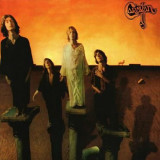
For their first album, Caravan was surprisingly strong. While steeped in the same British psychedelia that informed bands such as Love Children, Pink Floyd, and Tomorrow, Caravan relates a freedom of spirit and mischief along the lines of Giles, Giles & Fripp or Gong. The band's roots can be traced to a British blue-eyed soul combo called the Wilde Flowers. Among the luminaries to have passed through this Caravan precursor were Robert Wyatt, Kevin Ayers, and Hugh Hopper and Brian Hopper (pre-Soft Machine, naturally). The Caravan album never sold in serious numbers, and for much of 1968 and early 1969, the members were barely able to survive -- at one point they were literally living in tents. Suddenly, Caravan was an up-and-coming success on the college concert circuit, even making an appearance on British television's Top of the Pops. With national exposure and a growing audience, the group was at a make-or-break moment in their history. They rose to the occasion with their second Decca LP, In the Land of Grey and Pink, which showed off a keen melodic sense, a subtly droll wit, and a seductively smooth mix of hard rock, folk, classical, and jazz, intermingled with elements of Tolkien-esque fantasy.
Search:213
REPRESSED !!
Wolfsheim are a synthpop duo from Hamburg, Germany consisting of Markus Reinhardt (music) and Peter Heppner (lyrics and vocals). The band was founded in 1987 by Markus Reinhardt and Pompejo Ricciardi and was named after Meyer Wolfsheim, a fictional character from F. Scott Fitzgerald's novel 'The Great Gatsby'. Ricciardi soon left the band and was replaced by Peter Heppner, a childhood friend of Reinhardt's. Together they produced their first demo tape, Ken Manage', in 1988.
After making a second demo tape, Any But Pretty', in 1989, Wolfsheim applied at various labels until they caught the attention of independent record label Strange Ways Records. They are best known for their debut breakthrough single, "The Sparrows and the Nightingales', the first single to be released on Strange Ways in 1991. The band's musical style takes cues from the 1980s New Romantics, new wave, synthpop, and darkwave. The track's sombre synths were produced by Carlos Peron of Yello. Reinhardt says the lyric was inspired by 'The Great Gatsby', "in the 'onomatopoeic tension' between predator and security." Over six minutes, the narrator describes being lost, unsure of where his life is heading, using highly metaphorical language. On the flip is a brand new remix by German producer Ancient Methods, a pseudonym of Michael 'Trias' Wollenhaupt, who provides a driving, EBM-leaning, amphetamine-laced club ready cut.
All songs have been remastered for vinyl by George Horn at Fantasy Studios in Berkeley. Designer Eloise Leigh has updated the record's original design with two sparrows enclosed in a blood moon circle against a deep black purple backdrop. Each copy comes with a black and white photo postcard notes by Carlos Peron and the song's lyrics. This release comes in time to celebrate the single's 25th anniversary.
ADAM’S APPLES – hailed, rather appropriately, from Brunswick, New Jersey, and cut two singles for Brunswick Records in the late Sixties. “Don’t Take It Out On This World” was released in 1967 and despite positive reviews in Cash Box it failed to hit Stateside. But, almost a decade on, it was reborn in the UK where it dominated the Northern Soul scene in 1976. It was almost purpose-made for Wigan Casino where it echoed around the cavenous ballroom with its chugging beat and haunting harmonies. It is the perfect spine-tingling, All-Nighter sound that has never diminshed in popularity.
THE COOPERETTES – were a girl group from Philadelphia comprising of the four Cooper sisters. They signed a contract with Brunswick Records in 1966 and scored a local hit with their first single “Goodbye School”. Their second disc “Everything’s Wrong” was also a strong seller in Philly and, as is so often the case, their final 45 for Brunswick – the Northern Soul anthem – “Shing-A-Ling” failed Stateside. It was perfect for the adrenalin-fueled all-nighter scene and was adopted by The Torch in Stoke-on-Trent. It became so popular that Brunswick reissued the track in 1975 to fulfill UK demand!
- A1: Everybody's Comin
- A2: Cultural Exchange
- A3: Good Reviews
- A4: Remember Who You Are
- A5: My One Bad Habit
- A6: Summer Song
- A7: King For A Day
- A8: Blow Satchmo
- A9: The Real Ambassador
- B1: In The Lurch
- B2: One Moment Worth Years
- B3: They Say I Look Like God
- B4: Since Love Had Its Way
- B5: I Didn't Know Until You Told Me
- B6: Swing Bells; Blow Satchmo; Finale
A rare example of a 'jazz opera' The Real Ambassadors was an innovative concept when first released in 1962. Heading
an all-star cast, Louis Armstrong was at the peak of his popularity and still playing magnificent trumpet, while Dave
Brubeck was hailed as one of the most creative and successful musicians of the age. Enjoy this incredible LP, including
"Cultural Exchange", "Summer Song" and "Since Love Had Its Way"
LTD. NEON PINK & NEON GREEN VINYL
The Impossible Kid, released in 2016 on Rhymesayers Entertainment, marked Indie-rap mainstay Aesop Rock's first solo venture since 2012's Skelethon. Aesop continued finding new ways to improve on the skills that have made him one of the kings of indie hip-hop. His creative process now includes a newfound willingness to open up about his personal life, going deep on topics like depression, his sometimes rocky relationship with his family, and the turbulent handful of years that culminated in Aesop leaving his adopted home of San Francisco to live in a barn out in the woods, where he recorded the foundations of The Impossible Kid. There's also moments of levity though, as Aesop taps into the funny side of his persona that he suppressed during the period where being taken as a serious lyricist was more of a priority. Like Skelethon, Aesop exercised complete creative control over every aspect of the album, from the production (which he handled himself, with instrumental help from Philly's Grimace Foundation) to conceptualizing the cover art by his friend Alex Pardee.
After three years of waiting since her seminal Sister funk hit single "2 Kinds Of Men", Record Kicks finally presents "Stop Look Listen" the debut album from the new Oporto soul diva Marta Ren & The Groovelvets that will hit the streets 19 February 2016. Anticipated from the first single "I'm Not A Regular Woman", which is getting airwaves all over Europe (including BBC 6, Rai Radio 1, LeMouv / Radio France), produced and recorded on an Ampex eight-track tape machine by New Max from Portuguese funk combo Expensive Soul and mastered in NYC by Andy Vandette, "Stop Look Listen" is pure dynamite and follows the best tradition of the Soul Sisters of the 60s. Marta Ren, not surprisingly described as the new Marva Whitney, brilliantly supported by her super tight 8-piece rhythm & soul combo The Groovelvets, serves you 11 tracks of pure fire and takes-no-prisoners. From the floorshakin' opening track "Don't Look" to the mellow feel-good anthems "Smiling Faces", "So Long" and the afrotastic "Be Ma Fela", the Portuguese combo deliver a visceral deep funk album, proving that they're the new 'real deal'.
Marta Ren is not a newcomer as she has been around in the Portuguese scene since the mid 90s lending her deep and powerful voice, amongst others, to break-beat outfit The Bombazines, recording two albums and establishing her unique talent at clubs and festivals all around Portugal. But Marta's passion has always been for the deepest funk and rawest soul of the sixties, and now the time has come for her to show the world her immense talent. With a powerful voice that would make the founding soul sisters proud, Marta Ren is looking to rule the world and make herself a household name. Fans of Sharon Jones & the Dap-Kings get on it!
“For six years now I’ve been arranging and booking Ella
Fitzgerald’s concert and club dates, and wherever she goes, her
reception bears out an opinion that I have long held: People who
love good popular music are the same all over the world. Take, for
example, this record – “Mack The Knife”. It was recorded during a
concert at the Deutschlandhallen in Berlin which holds almost
12,000 people, and you can hear the same enthusiastic reaction,
the same eager applause, that mark similar recordings Ella has
made before live audiences in America. That concert – and this
album – have come to be regarded as something special because
of Ella’s version of Mack The Knife. It was the first time she’d sung
the song, and not knowing the lyric too well, she substituted her
own – for what may well have been an improvement on the
original.” - Norman Granz
Re-release of the record originally released on 2016-02-05!
Remastered and cut by Rashad Becker at D&M Berlin and presented in an exact replica sleeve of the original 1966 release by Stephen O'Malley.
sales information: Black Truffle is honoured to present the first vinyl reissue of the classic debut album from AMM, AMMMusic. Coinciding with the 50th anniversary of its recording in 1966, this reissue makes one of the cornerstones of the experimental music tradition available again in its original form, replete with Keith Rowe's beautiful pop art cover and the terse aphorisms by the group that served as its original liner notes. A testament to the interaction between the experimental avant-garde and the countercultural underground, the album was originally released on Elektra, recorded by Jac Holzman (the label's founder, responsible for signing The Doors, Love, and The Stooges) and produced by DNA, a group that included Pink Floyd's first manager Peter Jenner. (Pink Floyd paid tribute to AMM's influence on their improvisational sensibility with the track 'Flaming' on their debut album, named after the piece that occupies AMMMusic's first side, 'Later During a Flaming Riviera Sunset').
Formed in 1965 by three players from the emerging British jazz avant-garde - Keith Rowe and Lou Gare had played with the great progressive big band leader Mike Westbrook and Eddie Prévost played in a post-bop group with Gare - AMM quickly evolved from a free jazz group into something decidedly more difficult to categorise. By the time these recordings were made, two more members had joined the group: another Westbrook associate, Lawrence Sheaf, and the radical composer Cornelius Cardew. Then at work on his masterpiece of graphic notation Treatise, Cardew brought with him extensive experience of the post-serialist and Cageian currents in contemporary composition. Using a combination of conventional instruments and unconventional methods of sound production (most famously Keith Rowe's prepared tabletop guitar, but also prepared piano and transistor radio), the group performed improvised pieces often running for over two hours and ranging from extended periods of silence to terrifying cacophonies.
Evan Parker famously described the improvisational logic of AMM's music as 'laminal', in contrast to the 'atomistic' approach more common among the generation of British improvisers (Bailey, Rutherford, Stevens and co.) to which he himself belonged. AMM improvised in layers: layers of sound subtly rising and falling or abruptly starting and stopping without being propelled by the implied pulse of free jazz improvisation. Rather than a pulse, AMM's music began with the sound of the room in which it was played, the Cageian anarchy of silence. By embracing the non-synchronous simultaneity of layered sound, AMM was able to create a musical container into which nearly anything could be incorporated at any moment: on AMMMusic, long tones sit next to abrasive thuds, the howl of uncontrolled feedback accompanies Cardew's purposeful piano chords, radios beam in snatches of orchestral music (and, on the LP's second side, an extended fragment of 'Mockingbird').
AMM's clearest break with jazz-based improvisation concerned the idea of individuality. Where improvised music has tended to foster the development of idiosyncratic stylists who move freely from one group to another, AMM, initially through an engagement with eastern philosophy and mysticism and later though a politicized communitarianism, sought to develop a collective sonic identity in which individual contributions could barely be discerned. In the performances captured on AMMMusic
the use of numerous auxiliary instruments and devices, including radios played by three members of the group, contribute to the sensation that the music is composed as a single monolithic object with multiple facets, rather than as an interaction between five distinct voices.
- Francis Plagne
Los Afroins was the flagship salsa band of the obscure but beloved INS label from Colombia. Their 1975 LP "Goza La Salsa" is just as hard to find as their first record, and contains 10 bright and sassy salsa dura treasures that light up the dance floor with their incessant rhythms, syncopated trumpets and trombone and buoyant melodies. There are smoking covers of hits by Panama's Bush y sus Magníficos ('Salsa Al Pindin') and Bronx timbalero Orlando Marín and His Orchestra ('Está De Bala') as well as updated renditions of old Cuban chestnuts 'La Masacre' (written by Joseíto Fernández of 'Guantanamera' fame) and 'Matusa' (originally titled 'Macusa', composed by Francisco Repilado aka Compay Segundo).
The entire record makes for a very tasty and satisfying party platter filled with guaguancó, mozambique, pachanga, descarga and bolero that deserves to be more accessible and better known by today's fans of Colombian salsa who may have heard of The Latin Brothers or Sonora Carruseles, but have yet to discover the short-lived but highly sought after Los Afroins. "Goza La Salsa" is presented here in facsimile artwork and pressed on 180 gram vinyl.
“The aptly named Goza La Salsa (Enjoy Salsa) is the second album by Los Afroins, the flagship salsa band of the obscure but beloved INS label (Industria Nacional Del Sonido Ltda., Medellín, Colombia). The combo's repertoire focused mostly on cover versions hit tunes from New York, Cuba and Puerto Rico, both classic and contemporary, but for this record, their sophomore outing from 1975, their arrangements got tighter and there are more original compositions, which makes for a satisfying evolution in both style and content. Pianist Agustín "El Conde" Martínez, who would later work with Joe Arroyo and Juan Piña, led the group and did some arranging, with studio session production by INS artistic director Alfredo "Sabor" Linares. The vocals were handled by a pair of fresh-faced singers, Lucho Puerto Rico and Roy "Tayrona" Betancourt, who would later go on to fame in the 1980s, the former with his own Lucho Puerto Rico Y Su Conjunto Sonero and Conjunto Son Del Barrio (both in collaboration with Alfredo Linares), and the latter with Willie Salcedo, Reales Brass De Colombia, and Los Caribes. Additional arrangements were by Luis Felipe Basto of Los Black Stars and Luis E Mosquera, while the rest of the band was made up of INS related studio musicians. Goza La Salsa is just as hard to find as their first record and contains 10 bright and sassy salsa dura treasures that light up the dance floor with their incessant rhythms, syncopated trumpets and trombone and buoyant melodies. There are smoking covers of hits by Panama's Bush y sus Magníficos ('Salsa Al Pindin') and Bronx timbalero Orlando Marín and His Orchestra ('Está De Bala') as well as updated renditions of old Cuban chestnuts 'La Masacre' (written by Joseíto Fernández of 'Guantanamera' fame, and a hit for Cuarteto Caney) and 'Matusa' (originally titled 'Macusa', composed by Francisco Repilado aka Compay Segundo and made famous by Duo Los Compadres). This time around there are six excellent originals with the hottest pair being Lucho Puerto Rico's theme song 'Puerto Rico Power' and the percussion heavy final track, 'Alejada' sung and composed by Roy Betancourt. Just like the first album, the entire record makes for a very tasty and satisfying party platter filled with guaguancó, mozambique, pachanga, descarga and bolero that deserves to be more accessible and better known by today's fans of Colombian salsa who may have heard of The Latin Brothers or Sonora Carruseles, but have yet to discover the short-lived but highly sought after Los Afroins." Pablo E Yglesias DJ Bongohead of Peace & Rhythm
Mit ihrem sechsten Album kehren die Casady-Schwestern Bianca und Sierra zum bewährten Erfolgsrezept
ihrer früheren Releases zurück. Im Gegensatz zu den mehr psychedelisch-elektronischen Erkundungen der
beiden letzten Veröffentlichungen "Tales Of A Grass Widow" (2013) und "Grey Oceans" (2010), streift
"Heartache City" wieder durch staubig-poetische Gefühlswelten längst vergangener Tage. Ihren Anfang
nahmen die zehn Tracks von "Heartache City" wie gehabt im südfranzösischen Landgut der Casadys, wo
sich die beiden Geschwister ein lauschiges Studio eingerichtet haben. Dort sammelten sie Ideen und
schrieben Songs, die sie bei Gelegenheit mit minimalem Equipment, antiken Instrumenten und Vintage-
Spielzeug vertonten und ganz nostalgisch mit einem alten 4-Spurgerät aufnahmen, nur zu zweit, rein
akustisch und ohne digitalen Firlefanz. So entstanden relativ reduzierte Songs, die ihren Weg letztlich in
Argentinien in die Händen ihres Produzenten Nicolas Kalwillwith, und um eine Prise Buenos Aires
angereichert, ihren krönenden Abschluss fanden.
'Mantra Moderne' is a stunning, contemporary masterpiece that fuses Anatolian Psychedelia, Brazilian Tropicalia, 60’s European pop and American jazz. A must for fans of Khruangbin, Portishead, Arthur Verocai, Goat, Caetano Veloso, Tom Zé, Os Mutantes, Cortex and co.
The duo is formed of Kit Martin, who lives between London and France and plays all instruments on the album, and Merve Erdem, vocalist and multi-disciplinary artist from Istanbul, now based in London. This is their debut album.
The album explores universal themes such as love, loss, decay, language and ideology, mixing three different languages: English, Turkish and French. Written and recorded by the duo - Kit composed all the songs and Merve wrote the lyrics - in rural France during 2018, each song was completed within a 12-hour window, pawning contemplation for spontaneity.
Dubbed by Kit and Merve as ‘lo-fi-hi-fi’ in reference to the high-end tube equipment that helped it find its way to 8-track cassette tape. The style owes its sound to narrow tape width, valve distortion, spring reverb, the mixture of high end gear with lo-fi equipment as well as a disregard to the norms of hi-fi studio techniques. All instruments were analogue and no samples were used. The instruments that are used range from tablas to darbukas, balalaikas to ouds, MS20 synths to Farfisa organs and a lot of cuica. The mixing techniques were done on-the-fly, tracking immediately to tape: compression, EQ, delay and reverb; meaning mixing could not be revisited!
PROPER PIC SLEEVE REISSUE OF THIS EARLY LCD 12" FROM 2004. ‘Yeah’ was the follow up to LCD's breakout track "Losing My Edge," and was kind of a sleeper that has definitely stood the test of time and is worth a revisit. LCD records seem to speak to those kids sick of the scene, who want their 12" to retain interest longer than the next trend, but without sacrificing up to the minute relevance. An impossible feat, but listening to tracks like "Yeah (Crass Version)" will make you a believer. The song writing and composition are the foundations that the track is built on, with enough rock pretentiousness and sleazy analog to keep you interested. It takes a little more to keep our jaded ears interested these days, and this is might be it. "Yeah (Pretentious Version)" is a completely alternate version, offering a cleaner instrumental take on the track. Also includes the "Clap-a-Pella." Recommended.
Legs 11 collaborate with the infamous drag DJ duo Lisa & Lisa for a special, limited 10" vinyl release. They first met at a festival in a community garden, where they both performed, instantly bonding over a shared love for underground pop music and clubbing. While dancing the night away in a tiny, steamy community garden play house, the idea for a collaboration was conceived.
Lisa & Lisa joined Legs 11 for their concert at Oslo Pride in 2018, adding vocals, dancing and fabulousness. The combination of the Lisas' irresistible, rough glamour and Legs 11's catchy, club tinged synth pop brought so much joy, that the obvious next step was a studio collaboration along the lines of Eight Wonder/Pet Shop Boys. The choice of covering Bertine Zetlitz' Girl Like You was similarly obvious, being the only true Norwegian electro pop diva. Adding Edwyn Collins' similarly titled song, proved a perfect choice for a double A-side single.
- A1: Intro
- A2: Halloween Theme
- A3: Laurieas Theme
- A4: Prison Montage
- A5: Michael Kills
- A6: Michael Kills Again
- A7: The Shape Returns
- A8: The Bogeyman
- A9: The Shape Kills
- A10: Laurie Sees The Shape
- A11: Wrought Iron Fence
- A12: The Shape Hunts Allyson
- A13: Allyson Discovered
- B1: Say Something
- B2: Ray's Goodbye
- B3: The Shape Is Monumental
- B4: The Shape & Laurie Fight
- B5: The Grind
- B6: Trap The Shape
- B7: The Shape Burns
- B8: Halloween Triumphant
Blood Knife Coloured Vinyl[27,69 €]
When the new Halloween movie hits theaters in October 2018, it will have the distinction of being the first film in the series with creator John Carpenter's direct involvement since 1982's Halloween III: Season of the Witch. Carpenter serves on the new David Gordon Green-directed installment as an executive producer, a creative consultant, and, thrillingly, as a soundtrack composer, alongside his collaborators from his three recent solo albums, Cody Carpenter and Daniel Davies.
The new soundtrack pays homage to the classic Halloween score that Carpenter composed and recorded in 1978, when he forever changed the course of horror cinema and synthesizer music with his low-budget masterpiece. Several new versions of the iconic main theme serve as the pulse of Green's film, its familiar 5/4 refrain stabbing through the soundtrack like the Shape's knife. The rest of the soundtrack is just as enthralling, incorporating everything from atmospheric synth whooshes to eerie piano-driven pieces to skittering electronic percussion. While the new score was made with a few more resources than Carpenter's famously shoestring original, its musical spirit was preserved.
nyc producer marcos cabral, often releasing certain dj weapons from the labels as l.i.e.s, the triology tapes gave the birth to 3 tracks with punchy energetic machine-ism.
his polyrhythms(which makes us addicted,) and lo-fi hardware pulse always set some hooks to our mind
- which we found in boosted drum lines and sometimes industrial noises as a1 and b1.
set up with b2 which is also nicely balanced deep house tune, it is definitely capturing aesthetics of roughness and fineness as
whole ep.