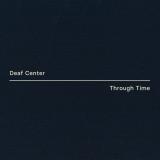
Deaf Center travel through quiet pathways and grand boulevards in their fourth studio album “Through Time”.
Since their last full-length LP, “Low Distance” (2019), the duo has gradually shifted towards a more long-form electroacoustic sound which perhaps makes for their most immersive listening experience so far. Otto A Totland’s piano travels in less frequent rhythms than before, yet is felt even more as a relief in the quieter moments that contrast with Erik K Skodvin’s deep atmospheric worlds. There’s a searching quality within the record which feels like slow movements on the way towards something meaningful, capturing a sense of both peace and awe.
The latter part of the album takes a different turn: fluctuating electronic rhythms over deep strings create an ecstatic yet haunting duality. It is the first time a guest musician appears on a Deaf Center record: British composer and musician Simon Goff joins with violin and viola in the finale, “Further”, a hypnotising piece submerged in layers of strings and drones.
The subject of time is an ambitious one, yet Deaf Center manage to balance the humble with the grand in great warmth as seconds become minutes, hours become days and time seemingly freezes as a still-life moment.
quête:25 hours a day
- 1
Deaf Center travel through quiet pathways and grand boulevards in their fourth studio album “Through Time”.
Since their last full-length LP, “Low Distance” (2019), the duo has gradually shifted towards a more long-form electroacoustic sound which perhaps makes for their most immersive listening experience so far. Otto A Totland’s piano travels in less frequent rhythms than before, yet is felt even more as a relief in the quieter moments that contrast with Erik K Skodvin’s deep atmospheric worlds. There’s a searching quality within the record which feels like slow movements on the way towards something meaningful, capturing a sense of both peace and awe.
The latter part of the album takes a different turn: fluctuating electronic rhythms over deep strings create an ecstatic yet haunting duality. It is the first time a guest musician appears on a Deaf Center record: British composer and musician Simon Goff joins with violin and viola in the finale, “Further”, a hypnotising piece submerged in layers of strings and drones.
The subject of time is an ambitious one, yet Deaf Center manage to balance the humble with the grand in great warmth as seconds become minutes, hours become days and time seemingly freezes as a still-life moment.
In the wake of their widely-acclaimed album Union, JUNO-nominated duo ÈBONY rematerialize on the dancefloor with the otherworldly Shades of Meridian EP, projecting a waking futurist dream haunted by echoes of Detroit techno, Chicago house, South African melodies, and the rich mythology of Ancient Toronto.
Opener "Break My Skin explores a hidden pocket of after-hours techno space-time with an ethereal vocal by James Baley, leading into the tense, disembodied jack of "Forever." Next, "Dull Side First" rides a spectral break through a sepulchral warehouse trip, "RIFT" invokes peak-time witchcraft, and closer "My Daylight" entrances even the most self-possessed sound-and-lighting guys to spam the smoke machine until reality itself is occluded.
And to those who say that working with JUNO-nominated artists proves that Turbo is just a cog in the CanCon cabal, we would like to familiarize you with the facts: Canadian Tire refused to carry our 2023 Bryan Adams remix LP and we have rejected five separate demos from Justin Trudeau's tech-house alias "Arabian Nights." It's called integrity - try looking it up sometime.
- A1: Allysha Joy & Finn Rees - Murmuring
- A2: Chip Wickham - Last Day On Earth
- A3: Amanda Whiting - The Other Side
- A4: Emanative - Space Is The Place
- B1: Edbl & Raelle - Enough
- B2: Matt Wilde & Miranda Joan - Like You
- B3: Blue Lab Beats - Item
- B4: Melodiesinfonie - Sa Ka Fête (Ft. Keza)
- B5: Matters Unknown - Dream Of The Contest (Ft. Megiapa)
- C1: Opek - Delight
- C2: E. Lundquist - Yellow
- C3: Isolde Lasoen - Things Left Unsaid
- C4: Sholto - Manzana
- C5: Momo. - Cavalo Marinho
- C6: Charif Megarbane - The Cartesian Joint
- D1: Yarni - Smile
- D2: Bamia
- D3: Teymori - Manu Vision
- D4: Divorce From New York - Merzouga (Ft. Arturo Martin)
- D5: Marla Kether - Morning Light (Ft. Naima Adams)
RE:WARM Records are very pleased to announce their next release 'Rituals', a new compilation series from the curator and DJ, Josh Mason-Quinn, aka Somewhere Soul.
For Volume 1 Josh takes us on a journey through the various shades of his ritualistic listening habits across twenty-four hours. From rising first thing in the morning, radiating positive energy throughout the day, retreating into the evening before finally releasing your inhibitions on the dancefloor.
The compilation spans four sides of vinyl and is presented in a double gatefold sleeve. The release will also be available on CD and digital formats.
The album is a celebration of new and emerging talent from the underground Jazz, Soul, World and House Music spheres, sitting neatly alongside artists already carving their way into the collective conscience of those who have been curious enough to dig deep.
The record is due for release on 25th July 2025 with the pre-order available 23rd April 2025 via the Warm Agency Bandcamp and selected record stores.
After over 50 events of Bristol's beloved Club Blanco, the city's anointed high priest of night, Chez de Milo, is crystallising his party's dimension-hopping hedonism into a label, calling on an extended family of esteemed producers and musicians to make it happen.
First up is Johnny Aux, aka Quinn Whalley (Paranoid London, Sworn Virgins, Decius), delivering two offerings accompanied by remixes from Jamie Paton and Chez de Milo himself.
Supersonic blends a hyperspace bassline with euphoric 90s synth elevation that delivers us to a blissful dance floor crescendo, where you've been dancing for hours—maybe days— when the sun appears over the horizon and pierces through the club's blacked-out windows. Chez de Milo's re-rub wraps you up vines of a living, breathing forest, where all your favourite flora and fauna summon you to the dappled light of a clearing, front left of the booth.
On The Train locks you into a rolling groove, and electro slaps and smacks. It feels covered in equal parts space dust and the dust of an old crate of records, where this forgotten banger has been buried deep for 25 years, waiting for the right hands to pull it out. Jamie Paton veers off down a stranger track, conducting a driving Italo beat with eerie soundscapes dissected by lasers and a brooding bassline.
- A1: Volume One (Original Mix) - Anjunabeats
- A2: Gravity (Original Mix) - Parker & Hanson
- A3: Northern Lights (Original Mix) - Smith & Pledger
- B1: Gravity (Original Mix) - P.o.s
- B2: Helsinki Scorchin' (Original Mix) - Super8 & Tab
- B3: Amsterdam (Original Mix) - Luminary
- C1: Black Is The Colour (Coco & Green Remix Edit) - Cara Dillon Vs. 2Devine
- C2: Elf (Original Mix Edit) - Bart Claessen
- C3: Chasing Love (Original Mix) - Maor Levi Feat. Ashley Tomberlin
- C4: Sun 2011 (Original Mix Edit) - Slusnik Luna
- C5: My Enemy (Rank 1 Remix Edit) - Super8 & Tab Feat. Julie Thompson
- D1: Downforce (Club Mix 2025 Vinyl Edit) - Nitrous Oxide
- D2: Sushi (Original Mix 2025 Vinyl Edit) - 7 Skies
- D3: Rebound (Original Mix Edit) - Arty & Mat Zo
- D4: Around The World (Original Mix Edit) - Arty
- D5: Easy (Original Mix Edit) - Mat Zo & Porter Robinson
- E1: In And Out Of Phase (Original Mix) - Andrew Bayer & Matt Lange Feat. Kerry Leva
- E2: Bloom (Original Mix) - Norin & Rad
- E3: Wayfarer (Original Mix Edit) - Audien
- F1: The Great Divide (Myon & Shane 54 Summer Of Love Mix Edit) - Velvetine
- F2: Big Ben (Original Mix Edit) - Ilan Bluestone
- F3: The Dark (Original Mix Edit) - Boom Jinx & Meredith Call
- F4: U (Original Mix) - Grum
- F5: Enceladus (Original Mix Edit) - Sunny Lax
- G5: All In (Original Mix) - Fatum, Genix, Jaytech & Judah
- G6: Lost (Original Mix) - Tinlicker Feat. Run Rivers
- H1: The Best Part (Original Mix) - Gardenstate & Anamē Feat. Bien
- H2: Midnight (Original Mix) - Andrew Bayer & Alison May
- H3: Sweet Feeling (Original Mix) - Amy Wiles & Leena Punks
- H4: Remission (Original Mix) - Kasablanca & Lane 8
- H5: Lifetime (Original Mix) - J Ribbon
- I1: Nobody Seems To Care (Original Mix) - 16Bl
- I2: Moth (Original Mix) - Jaytech & James Grant
- I3: A Sort Of Homecoming (Michael Cassette Extended Mix) - Paul Keeley
- J1: To The Six (Martin Roth Remix) - Boom Jinx & Andrew Bayer
- J2: Beautiful Life (Original Mix) - Martin Roth
- J3: Shadow's Movement (Original Mix) - Michael Cassette
- K1: Be Mine (Original Mix) - Lane 8
- K2: Got This Feeling (Original Mix) - Cubicolor
- K3: Wyv Auw Chu (Original Mix) - Tom Middleton
- L1: Mr Man (Original Mix) - Dusky
- L2: Personal Space (Original Mix) - Yotto
- L3: Deep In My Soul (Original Mix) - 16Bl
- M1: Night Blooming Jasmine (Rodriguez Jr. Remix) - Eli & Fur
- M2: Need You (Original Mix) - Luttrell
- M3: Tuesday Maybe (Original Mix) - Way Out West
- N1: Breathing (Original Mix) - Ben Böhmer, Nils Hoffmann & Malou
- N2: Come Together (Original Mix) - Nox Vahn & Marsh
- G1: Nightwalk (Original Mix 2025 Vinyl Edit) - Spencer Brown
- N3: Sleepwalker (Extended Mix) - Tinlicker
- G3: Only Road (Cosmic Gate Remix) - Gabriel & Dresden Feat. Sub Teal
- N4: Room 1.5 (Original Mix) - Joseph Ray
- O1: Nightwhisper (Original Mix) - Jody Wisternoff & James Grant
- O2: Sometimes It's Scary But It's Still Just You And Me (Original Mix) - Leaving Laurel
- O3: Externalizer (Original Mix) - Dosem
- O4: Never Really Get There (Original Mix) - Cri Feat. Jesse Mac Cormack
- O5: Proud (Original Mix) - Qrion
- P1: Overtones (Extended Mix) - Frost
- P2: Points Beyond (Original Mix) - Cubicolor
- P3: Muse (Original Mix) - Rezident Feat. Kate Morgan
- P4: Surge (Proff & Igor Garanin Remix) - Above & Beyond
- P5: Next To You (Original Mix) - Romain Garcia
- Q1: Tri-State (Original Mix 2025 Vinyl Edit) - Above & Beyond
- Q2: Careless Love (Original Mix) - Croquet Club
- Q3: 8 Hours, Still No Rain (Original Mix) - Hosini & Jones Meadow
- Q4: Lose Sight (Original Mix) - Andrew Bayer Feat. Ane Brun
- Q5: Before We Drown (Original Mix) - Boerd Feat. Stella Explorer
- R1: Strength From Inside (Original Mix) - Above & Beyond
- R2: Sleep Is Sacrament (Original Mix) - Cephas Azariah
- R3: Kyoto (京都) (Original Mix) - Mark Barrott
- R4: Happiness (Original Mix) - Omfeel
- R5: Silhouette (Original Mix) - Yotto
- S1: Razorfish (Above & Beyond's Progressive Mix 2025 Vinyl Edit) - Tranquility Base
- S2: Anphonic (Original Mix Edit) - Above & Beyond Vs. Kyau & Albert
- S3: Hello (Original Mix Edit) - Above & Beyond
- S4: There's Only You (Above & Beyond Club Mix) - Above & Beyond Feat. Zoë Johnston
- G2: Higher Love (Original Mix) - Seven Lions & Jason Ross Feat. Paul Meany
- G4: Lovingly (Original Mix) - Oliver Smith Feat. Amy J Pryce
- S5: Screwdriver (Original Mix Edit) - Above & Beyond
- T1: On A Good Day (Above & Beyond Club Mix Edit) - Above & Beyond Pres. Oceanlab
- T2: Sun & Moon (Original Mix) - Above & Beyond Feat. Richard Bedford
- T3: We're All We Need (Original Mix) - Above & Beyond Feat. Zoë Johnston
- T4: Northern Soul (Original Mix) - Above & Beyond Feat. Richard Bedford
- T5: Quicksand (Don't Go) (Original Mix) - Above & Beyond And Zoë Johnston
From its modest beginnings as a university project, Anjuna has grown to become one of the most influential forces in electronic music. What began as, and remains, a passion project has evolved into a global electronic music powerhouse. Led by Jono Grant, Paavo Siljamäki, Tony McGuinness (better known as Above & Beyond) and label exec James Grant - Anjuna now spans three distinctive imprints: Anjunabeats, Anjunadeep and Anjunachill. To mark the label’s 25th anniversary, Above & Beyond and James have carefully curated a selection of picks from its rich catalogue that includes countless genre defining releases to present the label’s most expansive vinyl offering to date.
Covering the full spectrum of that 25 year journey, the ten vinyl box chronicles 84 of the label’s most iconic releases across all three labels, including a vinyl dedicated to label founders Above & Beyond. Encased in a custom outer slipcase box with a debossed foil Anjuna25 logo. Accompanying the ten vinyl is a 48-page perfect-bound booklet printed on premium art paper and textured cover stock, featuring track-by-track insights from artists and Anjuna HQ staffers delving into the stories behind each record and their reflections on 25 years of music. The Anjuna25 anniversary box set is a beautifully presented tribute to 25 years of innovation, artistry and emotional connection.
- A1: Pharoah Jones
- A2: Ghost Gospel
- A3: Ill Feeling
- A4: Capital Punishment
- A5: Do Not Adjust
- A6: Cool Green Trees
- A7: Chill Scratch
- A8: Poisonous Fumes
- A9: Welcome Aboard The Starship
- B1: Keep On Runnin
- B2: Sounds Impossible
- B3: Painted Faces
- B4: The Knew Style
- B5: Chicken Wing Blues Sauce
- B6: Kool Breeze
- B7: Sexx Bullets
- B8: Soul Child
- B9: Take Off Runnin
- B10: Centurian
- B11: Bozack
- B12: Church
- B13: Splash One
- B14: Hank
- B15: 73 Goatee
"Chasing the funky symphonies that filled my head and my dreams..."
December 25th, 2023 - an Instagram post. Stimulator Jones shared half a dozen FIRE tracks from his beat tape archive. We were immediately drawn to the rough hewn boom bap.
"I'd release that", Rob commented.
Hours of material was shared and the result is this: Cool Green Trees (1999-2005). A collection of beats and loops Stimulator Jones created between the ages of 14-20 at home in his basement, bedroom and computer room in Roanoke, Virginia.
You will not believe the profound soulful genius contained within these naive schoolboy melodies.
December 25th, 1998 - 25 years ago to the day and his much-coveted Yamaha SU10 sampler was finally bestowed upon young Stimmy AKA Sam Lunsford: "I immediately hooked up a CD Walkman to the input jack and looped the beginning two bars of Grover Washington Jr.'s "Mercy Mercy Me". I don't know what exactly was so thrilling about hearing two measures of music repeating over and over but it was so infectious and hypnotizing and enthralling to me. I'll never forget that ecstatic rush of making my first loop - an uncontrollable, gleeful smile plastered all over my face." When you hear the pocket breakbeat symphonies featured here on Cool Green Trees, you'll feel the same sense of frisson.
In the wake of his Stones Throw breakthrough - Exotic Worlds & Master Treasures - Stimulator Jones was pegged by many as a 90s throwback artist. However, he literally IS a 90s artist. He's been recording music most of his life and he's now 40. He created the bulk of Cool Green Trees as a teenager. Everything before 2004 was recorded when Sam was still in school. He was in 8th grade when he made the 1999 tracks - he didn't even have his learner's permit. This album is a snapshot of a young man in a simpler time. Things were still mysterious back then and he was flying blind, relying on his ears and having to figure things out for himself: "I had no road map for becoming a beatmaker. I have been collecting music since I was a kid, I am a lifelong digger and seeker of cool and interesting sounds. I was there in the golden age of Hip Hop, and while I may have been a suburban white kid in Roanoke, Virginia, I was tuned in and I bought so many classic albums when they came out. I was attracted to Hip Hop because of the musical and poetic quality. I was hypnotized by the rhythms, partially because I was a drummer. I didn't brag about collecting my breakbeat records or making beats - it was something I did in isolation. It wasn't something I generally wanted to bring attention to and it didn't really score me any cool points. I certainly wasn't flexing on social media about it."
Hell, he can do that now!
Opener "Pharoah Jones" was inspired by Yesterday's New Quintet and Madlib's ability to capture that classic 70s sound whilst playing all the instruments. Sam created this one stoned afternoon by laying down a 2 bar loop and a shaker loop on his Yamaha SU700 sampler. He hung a microphone from the ceiling and played his Yamaha Stage Custom drum kit over the top before adding ender Rhodes and playing his dad's Selmer tenor sax through an Electro Harmonix Memory Man echo pedal. Yes! Up next, "Ghost Gospel" utilises a dope loop from a gospel record and adds some soul-funk drums overtop, whilst working that filter knob. Says Sam: "The loop reminded me of something Ghostface would rap over. The sample was in 3/4 waltz time but I flipped it for a 4/4 groove, a technique I picked up from RZA. "Ill Feeling" uses sped-up pieces from a dusty old funk record and putting them over a classic NOLA drum loop; gain chopping up a slow, bluesy 3/4 time signature and bending it to a 4/4 groove. Classy shit. "Capital Punishment" features drums tapped in live, inspired by MF Doom's Special Herbs series. "Do Not Adjust" consists loops found on a compilation of 70s French music at Happy's Flea Market, a classic Roanoke digging spot.
The sublime, evocative title track, "Cool Green Trees" was created when Sam was still living at home. He dumped samples off his SU10 into the family desktop and arranged them in a demo version of Pro Tools: "This track was sort of my ode to the DJ Shadow style of sample based production. Super spacey, slow, and moody. The heavily filtered drums were inspired by Alec Empire's 'Low on Ice' album. I later added some scratches and sounds from a Spider Man storybook record." "Chill Scratch" snags the final bit of a bossanova record and pairs it with a drum loop before adding experimental scratching run through an Electro Harmonix Memory Man echo pedal. "Poisonous Fumes" was made using a sampler, mixer and a turntable; a kind of mixtape beat collage with added scratches and sounds from various records. Using dialogue from superhero records was a nod to Madlib. "Welcome Aboard The Starship" is dark, downtempo trip-hop with a spooky bent. Sam paired a slow, hard drum loop with a guitar sample grabbed off a psychedelic rock record. To finish, he added various backwards sounds and weird atmospheric effects and a little scratching. Swoon.
Side B opens with "Keep On Runnin", made on a borrowed Roland SP202 sampler. Having always loved the sound of the Lo-Fi filter on those machines, reminiscent of the Emu SP1200, Sam always imagined Del or another of the Hieroglyphics crew rapping over this beat. You can certainly hear why. "Sounds Impossible" sees Sam experimenting with layering multiple kick samples at different volumes to create patterns similar to those heard by Showbiz and Lord Finesse during their God-level 1995 period. "Painted Faces" was made by chopping up a REDACTED record which he had gotten from Happy's Flea Market and paired it with a REDACTED drum loop. By the time Sam recorded "The Knew Style", he had acquired a shitty old 1960s portable turntable off eBay. It didn't function properly when he bought it but his brother opened it up, cleaned it out and got it working: "I remember he told me that there was a bunch of sand inside of it when he opened it up, as if its previous owner had taken it to the beach. I would take that turntable on my Happy's Flea Market digs so I could preview records...that's how I found this loop."
"Chicken Wing Blues Sauce" loops up a classic blues joint and pairs it with some REDACTED drums. A bit of filtering and arranging et voilà! "Kool Breeze", from 1999, is one of Sam's oldest surviving beats, as is "Sexx Bullets". The Roots sampled the same record, leaving Sam frustrated yet vindicated. "Soul Child" was an early SU10 creation, looping a dusty old Soul Children 45 and pairing it with 70s rock drum loops to great effect. "Take Off Runnin" was another loop found digging with a portable turntable. Paired with some boom bap drums it makes for a hypnotic head-nod groove. "Centurian" was intended to be a little beat interlude a la Pete Rock. The sample is from a sun-dappled soft-psych record and it's paired with a Robin Trower drum loop that just happens to fit perfectly. Sometimes you slap things together kind of haphazardly and magic happens. "Bozack" was the first beat Sam made using Pro Tools, his first foray into using chopped sounds instead of loops, an exciting new world. "Church" is beat interlude using a Phil Upchurch loop with the "Long Red" drums - a favourite break of Dilla et al. Sam was really on a tear in late 2004, probably because he was unemployed and phoneless and able to just make beats all day. He made "Splash One" on a borrowed Yamaha SU700 and again was experimenting with tapping the drums in live with his fingers, instead of using a loop or sequenced pattern. Channeling 9th Wonder, Sam used a water splash sound effect from a Batman record as a percussive element, hence the title (also a 13th Floor Elevators reference). The main loop is a backwards portion of one of his favourite Roy Ayers songs.
"Hank" is another fun little beat interlude thing, created on a borrowed Roland SP202 sampler with the fantastic Lo-Fi effect that resembled the Emu SP1200 at a fraction of the price. "73 goatee", from 99, is another of his oldest surviving beats, created in his bedroom with his Yamaha SU10 and his brother's Vestax MR-300 4-track recorder: "This one will always feel special. I can remember having a feeling all the way back then on the night that I created it that this was a solid beat with a catchy loop. There was something in the Fender Rhodes melody that resonated with me emotionally, and I had never heard a producer sample that portion before. I felt like I had found my own unique sound, my own unique loop. It came from an Ahmad Jamal '73. I actually even recorded myself rapping and scratching over this beat way back then, I still have that version in all its imperfect sloppy glory."
Sam explains just how much these tracks mean to him: "They all have immense historical and sentimental value and I'm proud of them. These beats come from an innocent, simple time when I was just figuring out how to craft these sounds. They're something very personal to me. They are the initial part of a journey that I really was taking *alone*. There was no YouTube. I couldn't Google shit. I didn't even know any other beatmakers, producers or DJs in my town that could teach me anything. It was always just me, alone, in a room with some equipment - chasing the funky symphonies that filled my head and my dreams. What I was doing wasn't cool. Most of my peers thought I was a weirdo and couldn't care less. Creating these sounds was an anti-social endeavour. In a sense, I felt like it was me against the world, and all I had to instruct and assist me were the recordings produced by my heroes - RZA, DJ Premier, Erick Sermon, Beatminerz, Showbiz, Diamond D, Beatnuts, Prince Paul, The Bomb Squad, Pete Rock, Q-Tip, E-Swift, Mista Lawnge, DJ Shadow, Cut Chemist, Peanut Butter Wolf, El-P and so many more...I dedicate this collection to them, and to my older brother Joe who has always been a musical and technical guiding light for me.
This was a time before every kid was a self-described producer and beatmaker, before everyone had a DAW, before Kanye and "chipmunk soul", before Red Bull beat battles, before there was any social media beyond chat rooms and AOL Instant Messenger, before Soundcloud, before SP-404 mania, before lo-fi beats to study to, before Splice, before targeted ads for MIDI chord packs, etc. In 99 when I told people that I had a sampler and made beats I was mostly met with bewildered confusion and indifference. Kids and adults alike would wonder why I got this weird machine for Christmas instead of something worthwhile like a Playstation or a mountain bike or even a guitar for that matter because at least that could be used to make "real music". Back then, sampling was still not widely respected as an art form - it was seen as lazy, talentless and unoriginal at best and outright criminal theft at worst. I had gotten respect for playing drums and guitar and things of that nature but this was a step in the wrong direction in the eyes of many."
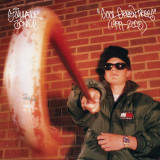
The cover photo is a picture of Sam standing on his back porch in the latter part of 1998, just before he got his first sampler. He was 13 years old, in 8th grade. His dad took the picture with his 35mm film camera: "I actually wanted to be pointing my dad's .22 pistol at the camera lens but he wouldn't let me. He gave me an old walking cane to use instead. The Tommy Hilfiger puffer jacket came from the lost and found at William Fleming High School where my mom worked as a secretary. I was thrilled when she brought it home because we never spent money on expensive name brand clothing like that - we were for the most part strictly a sale rack, bargain bin, thrift store, yard sale, flea market kind of family when it came to clothes. My watch is some cheap off-brand fake gold department store watch." Mastering for this vinyl edition was overseen by Be With regular Simon Francis and it was cut by the esteemed Cicely Balston at Abbey Road Studios to be pressed in the Netherlands by Record Industry.
YES! Originally released in 2000, Mark de Clive-Lowe's Six Degrees captures the early essence of what would later be known as broken beat, club-jazz and future soul; bridging the sounds of 70s jazz-fusion, jungle, hip-hop, house and Afro-Cuban rhythms. With fender rhodes, synths and an MPC2000 at the core of his production, de Clive-Lowe blended live musicianship with beat-driven sensibilities in a way that was ahead of its time.
Originally released in New Zealand via Kog Transmissions, the album found its way onto the global stage when Universal Jazz UK picked it up. Now, 25 years later, Be With is proud to present a special anniversary vinyl reissue, celebrating a landmark album that laid the foundation for an international career spanning continents, collaborations, and countless musical evolutions. Limited to just 400 copies for the world, these are gonna fly.
In 1998, a 23-year-old Mark de Clive-Lowe set off on a year-long journey that would shape his career and musical identity. Fuelled by an insatiable curiosity and a grant from New Zealand supporting emerging artists, he traveled across the globe — digging through record stores in San Francisco, immersing himself in the rhythms of Havana, collaborating in London’s underground studios and experiencing the jazz legacy of New York. Along the way, he crossed paths with pioneers, mentors and kindred spirits who would deeply influence his sound.
Six Degrees is the sonic diary of that transformative year — a musical world tour distilled into one groundbreaking album. It's both a snapshot of a pivotal moment in de Clive-Lowe’s life and a timeless statement of creative exploration.
The jazzy jungle vibes of "Roundtrip" opens proceedings, inspired by de Clive-Lowe's deep love of drum & bass. It kicks off with a rhythm pattern picked up in Havana, combined with Lonnie Liston Smith-style Rhodes textures and a rolling jungle breakbeat. Sublime. Up next, "La Zorra" is a moving tribute to the folkloric 6/8 rhythms he was surrounded by in Cuba. Afro-Cuban music had a huge impact on his sound and this track reflects those deep grooves brilliantly. Hip-hop has also been a major influence since de Clive-Lowe's teenage years and Manuel Bundy’s scratches bring an essential turntable element to "Melodious Funk", giving it that raw boom-bap edge.
Underground favourite "El Día Perfecto" came about by de Clive-Lowe wanting to write something as catchy as Incognito’s "Colibri", combined with his deep love for Lonnie Liston Smith. Effortless as it sounds, it pretty much wrote itself, seemingly. "Cosmic Echoes" is a nod to house music, but on the chiller side. Named after Lonnie Liston Smith’s band, with bouncy bass, a steady 4/4 groove and chopped tabla percussion, the mood this track conjures up is special. The deeply soulful "Day By Day" became the biggest track from the album, partly thanks to DJ Spinna’s remix and Café del Mar featuring it on their compilation. Cherie Mathieson’s vocals shine here. The lyric came to de Clive-Lowe while hanging out at Cause Célèbre in Auckland: “Day by day, side by side, hand in hand, no turning back.”
"Restless" is a jazz-funk jam built on a classic drum break, heavily influenced by Roy Ayers and the Mizell Brothers. Named in homage to Phil Asher’s Restless Soul moniker, his impact on de Clive-Lowe's journey can’t be overstated. Following on, "Mindscape" is a darker, rawer drum & bass track. The chopped-up drum break and moody synths channel everything he loved about the deeper, more atmospheric side of the genre. "Control" continues the jungle influence — this one’s all about the heavy grooves and deep bass, inspired by nights out listening to Jumping Jack Frost and Grooverider in packed basement clubs.
"Por La Mañana" is a musical snapshot of walking the Malecón in Havana in the morning sun. The city had such a profound impact on de Clive-Lowe and this track captures some of that energy and movement. Penultimate gem "Motherland" is a nod to his Japanese heritage. The melody draws from Japanese scales, shifting between moody introspection and uplifting harmony. Built on a chopped live drum break he recorded in Tokyo years earlier. We end with "El Día Perfecto (Reprise)", a stripped-down reprise featuring percussion, vocoder, Rhodes and synths — leaving the listener with a warm, uplifting final moment.
Speaking to Be With, de Clive Lowe explained just how much celebrating the 25-year anniversary of this album means to him: "Since then, I’ve released so much more music, but Six Degrees still resonates — it captures a really special moment in my life. A turning point, a fork in the road that ultimately changed everything. It’s amazing to reflect on where this journey has taken me, and I’m incredibly grateful for it. I still remember the night I finished "El Día Perfecto". I took a minidisc of it to my friend Cian’s DJ set at Galatos in Auckland. He plugged it in, and I watched the dancefloor move to something I’d just created hours earlier — it was a magical moment.
When Six Degrees was first released, the internet was still in its early days. There was no YouTube, no streaming, no instant global access to new sounds. The album was my way of bringing together all the music and places I had experienced over that year, blending them into something uniquely mine. It introduced me to listeners around the world and opened the doors to a career that would take me to more countries, collaborations and experiences than I ever imagined.
25 years later, I’m so grateful for everything this record set in motion. It’s a document of a moment in time, but it still feels alive — and I’m thrilled to share it again in this special anniversary edition."
Mastering for this 25 year vinyl edition was overseen by Be With regular Simon Francis and it was cut by the esteemed Cicely Balston at Abbey Road Studios to be pressed in the Netherlands by Record Industry. The original artwork has been lovingly brought back to life by de Clive-Lowe himself, with updated liner notes written specially for this landmark reissue.
- A1: Bionic Boogie Risky Changes (12'' Extended) 7 15
- A2: Don Ray Got To Have Loving (Full Length Version) 8 13
- A3: Gloria Gaynor Yo Vivire (Spanish Version) 7 42
- B1: Dennis Parker Like An Eagle (Original 12'' Mix) 8 33
- B2: Rinder & Lewis Lust (12” Version) 9 21
- B3: Cuba Gooding Disco Royale 6 15
- C1: The Michael Zager Band Love Express 7 03
- C2: Gepy & Gepy Body To Body (Original 12” Mix) 7 39
- C3: Jă Kki Sun ..Sun...sun (Walter Gibbons Original 12”) 9 18
- D1: Don Armando's Second Avenue Rhumba Band Deputy Of Love 8 06
- D2: Love De Luxe Here Comes That Sound 8 53
- D3: Barbara Pennington Twenty Four Hours A Day (12” Version) 9 23
The collection spans the decade-plus career of this remarkable band, whose goth-tinged, theatrical punk-pop sound earned them legions of devoted fans. It features their most beloved songs, including the hits 'I'm Not Okay (I Promise)', 'Helena' and 'The Ghost Of You' from 2004's 'Three Cheers For Sweet Revenge'; 'Welcome To The Black Parade', 'Famous Last Words' and 'Teenagers' from 2006's 'The Black Parade'; and 'Na Na Na (Na Na Na Na Na Na Na Na Na)' and 'Sing' from 2010's 'Danger Days: The True Lives of the Fabulous Killjoys', plus many others.
It also includes a previously unreleased song, 'Fake Your Death', one of the last songs the band worked on in the studio together, three songs from the infamous 'Attic Demos', as well as a long-form DVD with two hours of never-before-seen outtakes from MCR's official music videos.
'The title is fitting, because as sad as it was to say goodbye to the band, we look at this collection as a celebration of our best songs, and hope the memory of them continues to bring joy to you all as they have for us,' said band members Gerard Way, Mikey Way, Frank Iero and Ray Toro in a statement. 'We hope you take the journey with us into MCR's past, and enjoy the small taste of what might have been.'
Vinyl:
1. Fake Your Death
2. Honey, This Mirror Isn't Big Enough For The Two Of Us
3. Vampires Will Never Hurt You
4. Helena
5. You Know What They Do To Guys Like Us In Prison
6. I'm Not Okay (I Promise)
7. The Ghost Of You
8. Welcome To The Black Parade
9. Cancer
10. Mama
11. Teenagers
12. Famous Last Words
13. Na Na Na (Na Na Na Na Na Na Na Na Na)
14. SING
15. Planetary (GO!)
16. The Kids From Yesterday
17. Skylines And Turnstiles (Demo)
18. Knives/Sorrow (Demo)
19. Cubicles (Demo)
DVD:
20. I'm Not OK (I Promise) Version 1
21. I'm Not OK (I Promise) Version 2
22. Helena
23. The Ghost Of You
24. Welcome To The Black Parade
25. Famous Last Words
26. I Don't Love You
27. Teenagers
28, Blood (previously unreleased)
29. Na Na Na (Na Na Na Na Na Na Na Na Na) and Art
- 1: Desmond Dekker & The Aces – 007 (Shanty Town)
- 2: Lee "Scratch" Perry – I Am The Upsetter
- 3: Pat Kelly – Somebody's Baby
- 4: Delroy Wilson – Once Upon A Time
- 5: The Rulers – Wrong Emboyo
- 6: The Sensations – Right On Time
- 7: Austin Faithful – I'm In A Rocking Mood
- 8: The Maytals – 54-46 That's My Number
- 9: The Paragons – Memories By The Score
- 10: The Rulers – Copasetic
- 11: Derrick Morgan – Conquering Ruler
- 12: Stranger & Gladdy – Seeing Is Knowing (With Lyn Taitt & The Jets)
- 13: Val Bennett – Baby Baby (Aka 5-10-15 Hours)
- 14: The Uniques – People Get Ready Do Rock Steady
- 15: Val Bennett – The Russians Are Coming (Take Five)
- 16: Desmond Dekker & The Aces – A It Miek
- 17: Roy Shirley – Hold Them
- 18: The Kingstonians – Winey Winey
- 19: The Viceroys – Lip And Tongue (Alternate Version)
- 20: The Overtakers – Girl You Ruff
- 21: Lloyd & The Groovers – Do It To Me Baby
- 22: The Upsetters – Return Of Django (Feat. Val Bennett)
- 23: The Ethiopians – Train To Skaville
- 24: Desmond Dekker & The Aces – Intensified '68 (Music Like Dirt)
- 27: The Tennors – Ride Your Donkey
- 28: Derrick Morgan – Judge Dread In Court
- 25: The Uniques – My Conversation
- 26: Stranger & Gladdy – Over Again
The immediate successor to ska, the soulful, melodic sound of rock steady first developed during the long hot Jamaican summer of 1966 and reigned supreme thereafter for two glorious years before finally being superseded by the more energetic style of reggae.
Despite its relatively brief period as the island’s national sound, the rhythms of many of its biggest hits have continued to influence and inspire music-makers to the present day, resulting in renewed interest in the sub-genre among record buyers in recent years.
This superb 2xLP vinyl collection features 24 of the most popular recordings of the rock steady era, including the UK hits, ‘007’, ‘Train To Skaville’ and ‘It Miek’ and The Maytals’ anthemic dance-filler, ’54 46 That’s My Number’.
Pressed on high quality 140gm vinyl and presented in a stylishly designed sleeve, the album not only provides the ideal introduction to this hugely popular and influential sound, but is also a must for established fans of the Jamaican sub-genre, with many of the tracks appearing on vinyl for the first time in decades.
Gatefold Sleeve / 180g Vinyl
Returning to the well of Roger Doyle once again, his “Babel” project spans a decade of composition work before its’ initial release in 1999 as a 5CD set. Over 100 pieces and almost 50 collaborators it marks a journey through a virtual tower of Babel with each piece corresponding to a room within an imagined giant tower city. For the 25th Anniversary vinyl edition Doyle has revisited it- remastering it and providing its first vinyl edit - 80 minutes spread across two 180gm LP’s - rounding out the package with extended liner notes and a download code to the full 6 hours.
We’ve previously explored Roger’s Operating Theatre days and the idea for this project came in the early nineteen eighties while Doyle was heavily involved with the experimental theatre group. Working with emerging technologies and across a variety of genres he realised that he would be unlikely to achieve an overarching compositional style. Instead deciding to make a virtue out of the fact that he composed so schizophrenically, he wished to create a musical alphabet out of short abstract sounds with these sounds being analogous to phonemes in speech. With Blade Runner and sci-fi embedded in the zeitgeist of the times he came to the idea of the Tower of Babel as both a futuristic skyscraper and also an embodiment of language.
In the spring of 1990 Babel was finally begun and kept growing until it reached over 6 hours of music and was released in 1999.A large-scale musical structure making use of many technologies and music languages, with each piece of music being thought of as a 'room' or place within an enormous tower city. Each track in the main section corresponds to a virtual sonic architecture. The pieces are divided into two kinds: aural representations of actual spaces like The Dressing Room, The Stairwell and Mr. Brady's Room alongside internalised dream spaces like the Room Of Rhetoric, the Spirit Levels and the Mansard childhood memory room. Listeners can navigate their way differently through this virtual building at each hearing. As a supplement to the Babel Tower KBBL - the fictitious radio station – broadcasts a number of shows. Each has its own style and atmosphere. Collaborating with DJs, actors, writers and singers, KBBL is made to sound like a real radio station with ads, traffic reports and phone-ins.
Examples of the connections within the project can be found via the architecture were the saxophonist in the off-stage dressing room is rehearsing for her solo in the concert-hall (heard in Pagoda Charm) or the room off the stairwell, where the sounds of piano lessons and apartment life can be heard and the apartment where a muffled KBBL can be overheard At a molecular level The Iron Language Alphabet is a sound alphabet containing tiny fragments of sound representing letters or characters of an alien alphabet. This sound alphabet can be heard scattered through other pieces like The Room of Rhetoric, Pagoda Charm and in KBBL in Johnny’s Body at 002. Other molecular scatterings can be found in Cantilena where two songs sung by Operating Theatre’s Elena Lopez in KBBL are exploded and re-arranged to form new entities.
Doyle’s Babel celebrates language - a slight variation on the Biblical morality tale - and musical expression in all its variety.
Gruff Rhys is pleased to announce his new album "Sadness Sets Me Free" which will be released by Rough Trade Records on 26.01.2024. This incredibly will be the 25th album he has released in his 35 year career individually, collaboratively and as a member of various bands. "Sadness Sets Me Free" is also the follow up to 2021"s "Seeking new Gods", his first solo top ten record. The album will be available in a range of formats including a unique Dinked edition on "honeycomb neo-neapolitan" vinyl, an LP sleeve with "container doors" and a bonus 7" with exclusive audio for the first 1500 copies. A gatefold soft pack CD also includes a pull out poster. Lead-off single "Celestial Candyfloss" is a telling four minute glimpse of the forthcoming album, revealing the heady wonders and classic pop sounds within. Soaring strings carry the sweet melodies along, anchored by just enough necessary melancholy to add emotional ballast. The eye-popping video was created by long-time collaborator Mark James and compliments the scope and style of the song on a galactic scale. "Celestial Candyfloss" is, Gruff says, "an attempted pocket symphony about the cosmic lengths that people will travel in the pursuit of love and acceptance. Mark James has brought the Sadness Sets Me Free album cover to life & managed to place me watching TV interference in a shipping container that"s lost in space. For what is apparently the 25th album I"ve had a hand in writing I"ve reverted to a rich seam of inspiration relating to shedding some light on sadness and the general terror of cosmic loneliness." And so it was that Gruff and his band - Osian Gwynedd (piano), Huw V Williams (double bass) and former Flaming Lips drummer turned Super Furry Animals archivist Kliph Scurlock (drums) piled into a van driven by the late, legendary tour manager "Dr" Kiko Loiacono and raced from Dunkirk, where they had just played the final show of a tour of Spain and France, to the outskirts of Paris in the early hours of a March morning in 2022. There, in La Frette Studios, a recording facility installed in a 19th-century house, Gruff and his road-hardened group tracked "Sadness Sets Me Free" in just three days. Backing vocals were added along the way by Kate Stables from This Is The Kit along with additional strings and orchestration and it was mixed between Marseille and Cardiff. What finally emerged from these intense bouts of cross-continental activity was Gruff"s most accomplished and beautiful record to date. In a career that has taken him from the slate-mining towns of north-west Wales, down to the expat communities of Patagonia, up to the Mandan tribe of the Great Plains of North America and across to the Tuareg rock groups of the Saharan Desert, Gruff Rhys, one of Britain"s most beloved and successful singer-songwriters, has always been willing to follow an opportunity, wherever it may lead him. "At this point I quite like working with serendipity," he says. "Not in a cosmic way, but I try and leave things open to chance encounters and chance geography. As I"m around 25 albums in I"m always looking for ways to make a different-sounding record".
repressed !
To celebrate 25 years of the label, Tearin Vinyl’s debut release ‘Brok Out/London Talk’ has been repressed on krome (silver!) 180 gram vinyl. Originally crowdfunded on Kickstarter in 2019, meeting it target in less than 24 hours!
DJ Krome & Mr Time take you back to 1994 with two heavy hitters that were heavily rotated back in the day. This is Jungle Music as it should be heard, written by two of the genres finest purveyors. It’s now 2020 and the Jungle scene paved the way for Drum and Bass, which has since spawned numerous other genres which built the foundations that have supported many of todays EDM producers.
- A1: String Quartet No. 5 I
- A2: String Quartet No. 5 Ii
- A3: String Quartet No. 5 Iii
- A4: String Quartet No. 5 Iv
- A5: String Quartet No. 5 V
- B1: String Quartet No. 4 (Buczak) I
- B2: String Quartet No. 4 (Buczak) Ii
- B3: String Quartet No. 4 (Buczak) Iii
- C1: String Quartet No. 2 (Company) I
- C2: String Quartet No. 2 (Company) Ii
- C3: String Quartet No. 2 (Company) Iii
- C4: String Quartet No. 2 (Company) Iv
- D1: String Quartet No. 3 (Mishima) 1957 – Award Montage
- D2: String Quartet No. 3 (Mishima) November 25 – Ichigaya
- D3: String Quartet No. 3 (Mishima) 1934 – Grandmother And Kimitake
- D4: String Quartet No. 3 (Mishima) 1962 – Body Building
- D5: String Quartet No. 3 (Mishima) Blood Oath
- D6: String Quartet No. 3 (Mishima) Mishima/Closing
When Kronos plays a piece, they become fellow composers, true collaborators. Without them, we wouldn’t have the kind of string quartet playing that we find around us today. There are two kinds of string quartet playing: the ‘Before Kronos’ and the ‘After Kronos’.” – Philip Glass
‘Kronos Quartet has broken the boundaries of what string quartets can do.’ – New York Times
Nonesuch releases Kronos Quartet’s acclaimed album Kronos Quartet Performs Philip Glass on vinyl for the first time to coincide with Kronos Quartet: Five Decades, a year-long celebration marking the quartet’s 50th anniversary. Originally released in 1995, the album features David Harrington (violin), John Sherba, (violin), Hank Dutt (viola) and Joan Jeanrenaud (cello) performing Quartet No. 2 (Company) (1983), No. 3 (Mishima) (1985), No. 4 (Buczak) (1990), and No. 5 (1991), the first piece Glass wrote especially for Kronos. Recorded at Skywalker Sound in California, the album was produced by Judith Sherman, Kurt Munkacsi and Philip Glass. The cover art features Francesco Clemente’s painting The Four Corners (1985). At the time of the album’s release, the New York Times said, ‘It contains some of Glass's best music since Koyaanisqatsi. His ear for sumptuous string sonorities is undeniable,’ while the Washington Post called it ‘An ideal combination of composer and performers.’ It was a top 10 hit on Billboard’s Top Classical Albums, and spent 12 weeks on Billboard’s Classical chart.
In his original liner note, critic Mark Swed wrote, ‘Glass’ string quartets may contain his most intimate music. They are works through which a very public composer, perhaps the most important opera reformer of our age and a longstanding collaborator in large-scale music theater, holds up a mirror to himself and his way of composing. “In an odd way,” Glass explains, “string quartets have always functioned like that for composers. I don’t really know why, but it’s almost impossible to get away from it. It’s the way composers of the past have thought and that’s no less true for me. It’s almost as if we say we’re going to write a string quartet, we take a deep breath, and we wade in to try to write the most serious, significant piece that we can.” Glass says that as he sat down to write String Quartet No. 5, he had discovered that perhaps not taking a serious tone might be the most serious way to deal with it. “I was thinking that I had really gone beyond the need to write a serious string quartet and that I could write a quartet that is about musicality, which in a certain way is the most serious subject.”’
Glass’ first numbered quartet was written in 1966; however, he did not return to the string quartet medium until 1983, when he provided incidental music for a dramatization of Samuel Beckett’s prose poem, Company. During those 17 years, Glass had formed an ensemble and developed his style in a series of increasingly elaborate pieces for it. String Quartet No. 3 is also adapted to dramatic music, this time from his score to the 1985 Paul Schrader film, Mishima. It was with the music of Mishima that Kronos became associated with Glass, recording the string quartet sections of the soundtrack and subsequently working extensively with the composer on all five of his numbered quartets. Kronos also gave the first concert performances of Company and Mishima. String Quartet No. 4 was composed in remembrance of the artist Brian Buczak, who died of AIDS in 1988.
As Kronos’ anniversary season continues with further concerts around the world, Nonesuch will reissue Black Angels on vinyl on February 16. First released in 1990, the award-winning album includes George Crumb’s title piece, which inspired David Harrington to found the quartet. Called ‘an unusually elevated and searing Vietnam War protest’ by the New York Times, it sets a dark, powerful tone for this collection, which addresses the political/physical/spiritual consequences of war. Also featured are works by Charles Ives, István Márta, Thomas Tallis, and Dmitri Shostakovich. ‘Stylishly packaged, intelligently programmed, superbly recorded and brilliantly performed,’ proclaimed Gramophone. ‘In short, very much the sort of disc we’ve come to expect from the talented and imaginative Kronos Quartet.’ The Evening Standard included it among its ‘100 Definitive Classical Albums of the 20th Century’.
Born in Baltimore, Maryland, in 1937, Philip Glass is a graduate of the University of Chicago and the Juilliard School. By 1974, he had created a large collection of music for The Philip Glass Ensemble. The period culminated in the landmark opera, Einstein on the Beach. Since Einstein, Glass’s repertoire has grown to include music for opera, dance, theatre, orchestra, and film. His scores have received Academy Award nominations (including Kundun and The Hours, as well as Notes on a Scandal) and a Golden Globe (The Truman Show). Recent works include his memoir, Words Without Music, his first Piano Sonata, opera Circus Days and Nights, and Symphony No. 14. Glass received the Praemium Imperiale in 2012, the US National Medal of the Arts from President Barack Obama in 2016, and 41st Kennedy Center Honors in 2018.
Nonesuch’s relationship with Glass began in 1985, with the release of the score for Paul Schrader’s Mishima featuring Kronos Quartet. Over the years other Glass works on Nonesuch have included Einstein on the Beach (1993), Kronos Quartet Performs Philip Glass (1995), Music in Twelve Parts (1996), Glass Box (2008), as well as the soundtracks for Powaqqatsi (1988), Kundun (1997), Koyaanisqatsi (1998), and The Hours (2002), amongst others.
For 50 years, San Francisco’s Kronos Quartet – David Harrington (violin), John Sherba (violin), Hank Dutt (viola), and Paul Wiancko (cello) – has challenged and reimagined what a string quartet can be. Founded at a time when the form was largely centred on long-established, Western European traditions, Kronos has been at the forefront of revolutionizing the string quartet into a living art form that responds to the people and issues of our time. In the process, Kronos has become one of the most celebrated and influential groups of our era, performing thousands of concerts worldwide, releasing more than 70 recordings of extraordinary breadth and creativity, and collaborating with many of the world’s most accomplished composers and performers. Through its nonprofit organization, Kronos Performing Arts Association, Kronos has commissioned more than 1,000 works and arrangements for string quartet – including the Kronos Fifty for the Future library of free, educational repertoire. Kronos has received more than 40 awards, including three Grammy Awards and the Polar Music, Avery Fisher, and Edison Klassiek Oeuvre Prizes.
Kronos is prolific and wide-ranging on recordings. The ensemble’s expansive discography on Nonesuch includes three Grammy-winning albums: Terry Riley’s Sun Rings (2019), Landfall with Laurie Anderson (2018), and Alban Berg’s Lyric Suite featuring soprano Dawn Upshaw (2003); the 40th-anniversary boxed set Kronos Explorer Series; Nuevo (2002), a Grammy- and Latin Grammy–nominated celebration of Mexican culture; Pieces of Africa (1992), a showcase of African-born composers that simultaneously topped Billboard’s Classical and World Music charts; and Folk Songs (2017), Nonesuch’s 50th album with Kronos, which featured Sam Amidon, Olivia Chaney, Rhiannon Giddens, and Natalie Merchant singing traditional folk songs.
- A1: Instrumental Jam 10 28
- A2: Jam (Flashlight) 10 17
- B1: Days Of Wild/Thank You (Falettinme Be Mice Elf Again)/You Can Make It If You Try 14 09
- B2: The Jam 8 35
- C1: Also Sprach Zarathusa/Heaven Must Be Like This/Eric B For President/The Show/La Di Da Di/Bustin’ Loose/Asswhuppin’ In A Trunk 19 07
- D1: La Di Da Di (Reprise) 2 28
- D2: Interlude/Higher Love 5 09
- D3: Baby, I Love You (W/ Chaka Khan) 4 25
- D4: You Got The Love 6 37
Following a triumphant performance at New York City's Madison Square Garden on 26th September 1998, Prince and his New Power Soul Festival band and friends party into the wee hours at Tramps before an intimate club audience.
Iconic funk bassist Larry Graham and saxophonist Jerry Martini are also on board, and Chaka Kahn and rapper Doug E Fresh also join in on the fun. The entire after show was recorded by a local radio station and broadcast live across New York City, and it is this transmission that provides the recording featured on this double LP set, making this quite unique event available on vinyl for the first time.
The mystery continues to deepen, as you hear whispers beckoning you out to the sea...
After refining their dark and seductive vision of alternative/gothic metal to surreal, cinematic levels with three EPs and a full-length album, The Cause of Shipwreck, behind them, the Assen-based Blackbriar continue to set their sails towards the future in 2023, signing with Nuclear Blast Records and working towards their second full-length album, again accompanied by long-time collaborator Joost van den Broek.
Formed in 2012 by Zora Cock, René Boxem, Bart Winters, and Frank Akkerman, they crafted their first single in 2014 with “Ready to Kill,” but it was 2015’s second single “Until Eternity” that truly propelled them into the scene. A sweeping track with an equally compelling and beautiful video, it continues to draw many to the act with over 18.1 million views since its debut. Taking advantage of the growing buzz surrounding the band, they independently recorded and released their first EP, Fractured Fairytales, as well as acquiring a second guitarist in Robin Koezen. This EP layed down an impressive foundation for the band’s ethereal and breathtaking sound and brought about new opportunities for the act, including tour dates in The Netherlands, Germany, Belgium, France, Switzerland, Czech Republic, Hungary, and more, where the band played alongside Epica, Halestorm, In This Moment, Delain and MaYan. To keep moving ahead with full control of their creative ideals, the band successfully crowdfunded their follow-up EP, We’d Rather Burn, and brought it to life in October 2018. This EP would be the first time the band worked alongside esteemed producer Joost van den Broek to arrange and produce the effort, and this fruitful collaboration allowed Blackbriar’s whimsical and enigmatic sound to reach new sonic heights. Released the same day as their self-made video for “I’d Rather Burn,” this EP showcased a stronger sense of dreamy atmosphere and brought listeners beautifully grim tales of witches, banshees, and sea sirens. In the time following, keyboardist Ruben Wijga (ex-Re-Vamp) took a larger role within the band and began playing shows, after being involved in the songwriting process since Fractured Fairytales.
A busy 2019 followed, the band released a haunting single in May entitled “Snow White and Rose Red.” A duet with Ulli Perhonen, their take on the Grimm’s fairytale featured striking cinematic visuals to accompany the spellbinding track. Continuing to dig deeper into fairytale realms, Blackbriar closed the year with their third EP, Our Mortal Remains. Ever-sharpening their intoxicating blend of storytelling and breathtaking musicianship, the EP brought about new live exposures for the act as well. Small, sold out tours with Epica in 2019 and 2020, as well as a sold out opening for Delain’s Apocalypse & Chill release show in Utrecht followed, with more future plans then being put on hold due to COVID-19. Championing their continued independence, which included everything from songwriting, maintaining their web presence, overseeing merch, as well as shooting and producing their own videos and photos, Blackbriar reached out to their ever-growing and loyal fanbase for assistance to make their full-length album a reality in 2020. Fans fervently heeded the call, reaching the € 25,000 goal in under 24 hours and ending with a total of € 70,000 and achieving all five stretch goals. An impressive accomplishment for an independent act, which also showcases a strong internet presence with over 214,000 YouTube subscribers and 46.1 million channel views as well as 27.6 million Spotify streams and 150,000 monthly streamers on the platform.
ENG 'Behavioural Sink Delirium' is the new studio album from MADMADMAD. Powered by their wild live parties and rooted in the sounds of mutant disco, post-punk and experimental electronics, the London-based trio's third LP is due out July 21 via Bad Vibrations. Arriving following 2019's 'Proper Music' and 2020's 'More More More', 'Behavioural Sink Delirium' was recorded and produced by Eddie Stevens (Zero7, Moloko, Róisín Murphy) in his Fulham studio. "We locked ourselves away for ten days and recorded 30 hours of music, all played live in one room, and only edited to create arrangements", MADMADMAD recall. The result of those sessions is nine unhinged techno-dystopian freak-outs that mark the trio out as a truly singular group. 'Behavioural Sink Delirium' takes its name and inspiration from the 1968-70 'Universe 25' experiment by American ethologist John B. Calhoun, looking at the behavioural effects of population growth in a 'rodent utopia'. During the studies, a perfect space was built for a colony of 3,000 mice to thrive in, with constant food and water supplies, cosy apartments and no outside threats or predators. Starting with 4 females and 4 males, the population grew rapidly before capping at a number of 2,200. At this point, a living nightmare ensued, filled with antisocial and violent mice as the utopic conditions began to collapse. The mice formed violent cliques and social hierarchies, cannibalism started becoming common practice and the population started plummeting to eventual extinction. Calhoun coined this tipping-point the "behavioural sink" effect, and it's this state of societal breakdown that the trio tap into on the record. "You can easily see the link with our species in terms of overpopulation, but also with the Internet medium or 'metaverse' and its overproduction of data, causing tremendous societal, mental and environmental shifts. What was supposed to cater for most of our needs has also turned on us. Delirium kinda states the air of it all, and the folly of the music." Pressing Info: 180g red vinyl, standard sleeve, printed inner-sleeve, download card included!
Arkada records is excited to announce our 4th release - forthcoming split vinyl EP featuring the sounds of ADJ & Adrien d’Elzius.
We are very happy to present the first part of the EP with the unique sounds of one of the pioneering artists in the UK underground Electro scene, the label owner of Pyramid Transmissions - ADJ
ADJ originates from and is based in London. He has been playing Underground Electronic Music for over 35 years as a DJ, starting in the days of Early Electro and Hip Hop. He has also been producing and releasing music for 25 years, releasing over 200 tracks in this time on a plethora of labels including Touchin Bass,For Those That Knoe, Another Perspective, Ai, Outside, Cultivated Electronics,Yellow Machines, Crobot Muzik, Diffuse Reality, Netlabel ,Digital Distortions and more...has done remixes for Flint Kids, Scanone, LASynthesis, Carl Finlow, Fleck Esc, Arsonist Recorder , Paul Hierophant to name a few.
He has run the Pyramid Transmissions Record label with label partner Pathic for 20 years and also ran the Analogique record label for 5 years from 1995-2000 releasing Techno, Electro and Electronica as 3 Elements.
ADJ also performed his first LIVE set in a few years in March 2020 MUTABOR in Moscow.
As a DJ, he has played at many festivals including a BLOC residency, Glastonbury For BLOC, Bestival, Shambala, Infiltrate at WMC Miami. 2019 saw another tour of the US with Silicon Scally,Ben Milstein, EVAC, Ion Driver and 214. He also runs the Dodo Club and Frequency Resonate(with Errorbeauty) nights in London and Berlin aswell as playing in Lille, Kiev, Moscow, St Petersburg Berlin,Zagreb,Athens, Napoli, Brussels, Budapest, Vienna, Valencia, Sofia, Paris and many more..
Second part of our EP presents the futuristic glitched-out sounds of the one of a kind Belgium producer Adrien d’Elzius also known under his allies HosmOz.
Adrien d’Elzius was born in the gloomy south of Belgium spending his youth hanging around in a camping and listening to Hip Hop, he started his life in a mess of paradox. At 10, he learned to play drums under his punk’s brother regard, and experimented different kind of rock until 18. That’s where someone showed him a track of Aphex Twin, who blew his mind and made him believe he had finally found the music that suited him. From there, he compulsively spend hours playing around with his computer and slowly made himself a place in the very small community of underground music lover of Brussels under the nickname hosmOz after winning a contest. From his melodic and acidic drill’n’bass beginning, his sound slowed down and got darker, challenging himself to try to create something he couldn’t before. He recently re-released his Lp on Diffuse Reality that make it available on physical form and also his debut album on Burial Soil with remixes by Umwelt and Lloyd Stellar.
The masters of the release are kindly made by Thomas Dunstan. Artwork made by our amazing designer Lawrence Cli
"Meat. The story needs meat. (And blood ... coagulated blood (Gore)). The substance we are seeking here lies beyond the bare bones of fact, thewhen and the where (founded in 1988, Mülheim an der Ruhr) or personneland instruments (a trio since 2016, built around keyboards, saxophone, bass & drums). The story is more than the sum of its facts. Mysteries may very well lurk here or there along the way. What keeps the final two foundermembers going after all this time Do Morten Gass and Robin Rodenberg have skeletons locked in their closets How dearly we would we love to know the answer to that one, alas the most beautiful puzzles tend to remain unsolved.Including their debut Gore Motel' (1994), BOHREN & DER CLUB OF GORE have amassed an impressive eight longplayers. Four album titles allude to the night - their debut was followed by Midnight Radio' (1995), Sunset Mission' (2000), and Black Earth' (2002), whilst the most recent instalment carried the name Piano Nights' (2014). The nocturnal quartet was punctuated by Geisterfaust' (2005), Dolores' (2008) and a mini-album entitled Beileid' (2011), adding rather eerie overtones to the after hours ambience. The BOHREN & DER CLUB OF GORE legend has grown stronger both at home and abroad with every record they have released and every show they have played. Strange as it may seem, there is a uniform consistency to their reception. Whatever the band does, critiques are unfailingly positive, yet repetitious. References, links and associations recur almost word for word. Consider the arrival of Christoph Clöser in 1997, by way of illustration. When he joined the group, his saxophone replaced the departing Reiner Henseleit's guitar as one of the defining instruments in the band. This was arguably the sharpest break in their sound to this day and a significant marker in terms of the band's reverence for Dutch instrumentalists GORE (the clue is in the name), whose repetitive riffs paved the way for how the guitar would be deployed in a post-everything future. Nevertheless, this fissure in the BOHREN continuum has barely merits a mention in the greater scheme of things. Similarly conspicious by their absence in the BOHREN chronicles are the numerous instruments which they added to the mix - vibraphone, organ, tuba, bass trombone to name just a few. The introduction of choirs at least had a clear visual impact. Since Thorsten Benning left at the end of 2015, the band has continued as a trio, sharing shifts on the drums (although they have equipped themselves with mechanical brushes). A decrease in personnel was conversely accompanied by quantum leaps forward in the group's musical development - or more precisely, minor adjustments triggered major effects. Such changes may not get any easier to spot in the future, such is the intensity of internal imagery sparked by the music, a maelstrom of distractions so powerful that its promises are too sweet and too dangerous in equal measure. The music of BOHREN & DER CLUB OF GORE opens up remarkable rooms of association, from a warm burrow to a pristine secret lodge, from a
dusky woodland tavern to a smoky quayside dive. Individual and collective floods of images rush forth irresistibly. Loneliness is not at all problematic: empty multi-storey car parks, nighttime drives, remote bridges to nowhere. All in your mind. This is the temptation, a sweet, guilt-free addiction. It's all in your mind - and only there. These sinister crackling songs are invitations to secrete oneself in darkness. With track titles such as 'Maximum Black', 'Zombies Never Die' or 'Dandys Lungern Durch Die Nacht', the mind wanders inexorably into filmic spaces.
Echoing the masters of midnight cinema, stories evolve all by themselves. As the American Film Noir Foundation observed so smartly: 'the vivid co-mingling of lost innocence, doomed romanticism, hard-edged cynicism, desperate desire, and shadowy sexuality.' Their definition of Film Noir serves just as well as an appraisal of the group, 'Bohren For Beginners'.
Which says it all really, doesn't it A final word of warning! Sources close to the band describe the double CD
released in October 2016 as a gateway drug to the Bohren universe. Enter at your own risk, some have never found their way out again."(by Lars Brinkmann)
Available from Blank Forms for the first time since its original 1980 release on ALM-Uranoia, New Sense of Hearing documents a collaboration between Takehisa Kosugi and Akio Suzuki, two luminaries of Japanese experimental music in the lineage of Fluxus. Blank Forms's high-quality reissue of the sought-after, long out of print LP, is produced by musician-artist Aki Onda and mastered from the original tapes recorded on April 2, 1979, at Tokyo's Aeolian Hall. Described by Suzuki as the "culmination" of their sound,New Sense of Hearing features the two musicians improvising together in that empty Tokyo theater, Kosugi on vocals, violin, and radio transmitter and Suzuki on the Analapos, his namesake glass harmonica, spring cong, and kikkokikiriki, all apparatuses of his own invention. Suzuki and Kosugi first met at the city's Minami Gallery in 1976 on the occasion of "Sound Objects and Sound Tools," an exhibition of Suzuki's homemade instruments. Two years later, at the Festival d'Automne in Paris, Suzuki invited Kosugi to join him for a suite of performances as part of the exhibition "MA: Espace - Temps au Japon," organized by architect Arata Isozaki and composer-writer Toru Takemitsu. Suzuki and Kosugi performed together at the Musée des Arts Décoratifs, Paris, nearly fifty times, honing their approach to mutual improvisation, before traveling with the exhibition to Stockholm and New York_critic Tom Johnson wrote in the Village Voice that he had "seldom seen two performers so completely tuned in on the same types of sounds, the same performance attitude, the same philosophy, the same sense of what music ought to be."For New Sense of Hearing, the duo reunited in Japan and produced an extraordinary dispatch from their collaboration of arioso violin, echoing vocals and bangs, and metallic twangs. As Johnson observed in 1979, Kosugi and Suzuki are "in a very subtle artistic world where there can be no direct relationships. . . . Only coincidence." Takehisa Kosugi (1938-2018) was a composer, artist, and violinist from Tokyo. In 1960, Kosugi founded Group Ongaku, the country's first improvisational performance collective dedicated to Happenings, with Mieko Shiomi and Yasunao Tone. Four years later, Fluxus leader George Maciunas published Events, an eighteen-piece set of his text compositions. Between 1971 and '74, his band the Taj Mahal Travelers produced four live albums. In 1977, the Merce Cunningham Dance Company invited Kosugi to be their resident musician; from 1995 to 2011 he served as the company's musical director. The Whitney Museum of American Art presented "Takehisa Kosugi: Music Expanded," a two-day retrospective of Kosugi's work, in 2015. Akio Suzuki (b. 1941) was born in Pyongyang, North Korea, to Japanese parents. For the artist-musician's first Fluxus-style work Kaidan ni Mono wo Nageru (Throwing Things at the Stairs), 1963, Suzuki tossed a bucket of miscellaneous objects down a flight of stairs in Nagoya Station and listened to the sounds it produced. During the next decade, he would create original instruments including the Suzuki-type glass harmonica and the echo instrument Analapos. In 1976, Tokyo's Minami gallery hosted his first exhibition, "Akio Suzuki's World: Sound Objects and Sound Tools." For his 1988 performance piece Space in the Sun, Suzuki spent twenty-four hours listening to his surroundings on the meridian line which runs through Amino, Kyoto. Suzuki has performed and exhibited at many venues and music festivals, including Documenta 8 (Germany, 1987), the British Museum (2003), Musée Zadkine (France, 2004), Kunstmuseum Bonn (Germany, 2018), and the Museum of Contemporary Art Tokyo (2019).
- 1: Whatever (Live)
- 2: Wherever (Live)
- 3: Gravel (Live)
- 4: Willing To Fight (Live)
- 5: Shy (Live)
- 6: Joyful Girl (Live)
- 7: Hide And Seek (Live)
- 8: Napoleon (Live)
- 9: I'm No Heroine (Live)
- 10: Amazing Grace (Live)
- 11: Anticipate (Live)
- 12: Tiptoe (Live)
- 13: Sorry I Am (Live)
- 14: The Slant/The Diner (Live)
- 15: 32 Flavors (Live)
- 16: Out Of Range (Live)
- 1: Untouchable Face (Live)
- 2: Shameless (Live)
- 3: Distracted (Live)
- 4: Adam And Eve (Live)
- 5: Fire Door (Live)
- 6: Both Hands (Live)
- 7: Out Of Habit (Live)
- 8: Every State Line (Live)
- 9: Not So Soft (Live)
- 10: Travel Tips (Live)
- 11: Wrong With Me (Live)
- 12: In Or Out (Live)
- 13: We're All Gonna Blow (Live)
- 14: Letter To A John (Live)
- 15: Overlap (Live)
Living In Clip (25th Anniversary Edition) Newly remastered for vinyl + cd in deluxe packaging. This landmark double album by Ani DiFranco, features her trio from 1995-1996 with Andy Stochansky (drums) and Sara Lee (bass). Twenty-five years later the album is recognized as a point of entry that radically expanded DiFranco’s audience, and a historically important testament to the relationship between Ani as a live performer and the devoted community she created with her fans. If there was ever a record to help you pull through until the next time the Folksinger makes her way to your town, Living In Clip is the one. Affectionately named after the state of stage amps about to blow out, the record is constructed like a show complete with the onstage humor and antics we love. The culmination of years of studio work and constant touring, Living In Clip is a tour in itself: nearly two-dozen venues provide the atmosphere for over two hours of music complete with intermission and encore. Recorded straight from the soundboard on an 8 track ADAT, digital videotape and mixed by Ani and Andrew Gilchrist – Living In Clip is conceptually designed to preserve the authenticity and pulse of a live show. There are jazzy folkalicious renditions of "Letter to A John," "Fire Door," "Diner" and "Anticipate." Amusing and sweet snippets are interwoven throughout the songs and sometimes during them - "Out of Habit" harbors a little cinematic glimpse into Ani's first days in New York City. This dynamic collection also offers The Buffalo Philharmonic Orchestra playing on "Both Hands" and "Amazing Grace" at a hockey arena as well as a phenomenal version of "Shy," that was nominated for a Grammy for Best Rock Vocal Performance – Female (or whatever). Living In Clip is also considered one of Rolling Stone Magazine's essential albums of the 90's. Living In Clip includes a beautiful photo gallery that contains pictures of the sparkling faces, questionable attire and unique persons behind the road show.
- A1: Improvisation In Bayat-E Turk (Barg-E Sabz #34)
- A2: Improvisation In Shur (Golha-Ye Rangarang #182B)
- A3: Improvisation In Mahur (Yek Shakheh Gol #259)
- A4: Improvisation In Dashti (Golha-Ye Rangarang #430)
- A5: Improvisation In Shur (Barg-E Sabz #113)
- A6: Improvisation In Bayat-E Turk (Yek Shakheh Gol #259)
- A7: Improvisation In Mahur (Yek Shakheh Gol #146)
- A8: Improvisation In Afshari (Golha-Ye Rangarang #260)
- A9: Improvisation & Avaz In Isfahan (Golha-Ye Rangarang #254)
- B1: Improvisation In Bayat-E Zand (Yek Shakheh Gol #134)
- B2: Improvisation In Homayun (Barg-E Sabz #30)
- B3: Improvisation In Mahur (Barg-E Sabz #119)
- B4: Improvisation In Afshari (Yek Shakheh Gol #179)
- B5: Improvisation & Avaz In Bayat-E Zand (Golha-Yi Rangarang #290)
The second part in a collection of stunning Persian-tuned piano pieces, cut from Iranian national radio broadcasts made for the Golha programmes between 1956 & 1965.
Morteza Mahjubi (1900-1965) was a Iranian pianist & composer who developed a unique tuning system for the piano which enabled the instrument to be played in all the different modes and dastgahs of traditional Persian art music. Known as Piano-ye Sonnati, this technique allowed Mahjubi to express the unique ornamental and monophonic nature of Persian classical music on this western instrument - mimicking the tar, setar & santur and extracting sounds from the piano which are still unprecedented to this day.
An active performer and composer from a young age, Mahjubi made his most notable mark as key contributor and soloist for the Golha (Flowers of Persian Song and Poetry) radio programmes. These seminal broadcasts platformed an encyclopaedic wealth of traditional Persian classical music and poetry on Iranian national radio between 1956 until the revolution in 1979.
Presented here is a collection of Morteza Mahjubi's stunningly virtuosic improvised pieces broadcast on Golha between the programme's inception until Mahjubi's death in 1965 - mostly solo, though at times peppered with tombak, violin & some segments of poetry & song.
The vast collection of Golha radio programmes was put together thanks to the incredible work of Jane Lewisohn & the Golha Project as part of the British Library's Endangered Archives programme, comprising 1,578 radio programs consisting of approximately 847 hours of broadcasts.
i 09: Improvisation & Avaz in Isfahan (Golha-ye Rangarang #254) feat. Marzieh
feat. Abdolvahab Shahidi
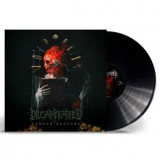
Across eight studio albums, DECAPITATED grew from the adolescent dream of teenagers from a small Central European town to one of the leaders of the metal genre. Each successive album further expands the band’s sound with genre-bending authenticity and integrity. As Metal Injection rightfully observed, “any self-respecting death metalhead knows the name well.”
DECAPITATED’s music is a weapon forged by four young men from a historic medieval-fortified town in Poland, which catapulted them to the top of a worldwide subculture. Like a rose in the devil’s garden, the DECAPITATED story builds triumph from tragedy. The gleeful grotesquery of extreme metal imagery and rifftastic bludgeoning beckons listeners to uncover broader truths.Upon the release of 2017’s Anticult, Metal Hammer declared DECAPITATED “a serious successor to the likes of Pantera and Lamb Of God – a band who can draw new legions into the metal world as its new champions.” Their diverse follow-up, 2022’s Cancer Culture, delivers on that promise.
Instantly recognizable devastation and deceptively sinister hooks abound. Freshly minted DECAPITATED anthems like “Last Supper,” “Hello Death,” “Just Cigarette,” “No Cure,” “Iconoclast,” and “Cancer Culture” shimmer with sonically sharp production and unrelenting bombast. There’s also a newly increased emphasis on melody, even venturing into darkly romantic territory. Wacław "Vogg" Kiełtyka (guitar), Rafał "Rasta" Piotrowski (vocals), Paweł Pasek (bass), and James Stewart (drums) are at the top of their game, delivering the goods at peak performance. Jinjer vocalist Tatiana Shmayluk and Machine Head frontman Robb Flynn make guest appearances.
Set on the descending plains of a mountain range amid a dense forest, Krosno boasts a 14th-century Gothic church, a Subcarpathian museum, and stunning artisan glassware. In this Polish town, teenage music student Wacław "Vogg" Kiełtyka discovered records from bands like Morbid Angel, Cannibal Corpse, Metallica, and Machine Head. The guitarist and his younger brother, drummer Witold “Vitek” Kiełtyka, cofounded DECAPITATED in 1996, inspired by a wide range of technical death, blackened thrash, and local heroes, like KAT and the world-renowned Vader. Death and black metal reigned supreme in the Polish scene of the 1990s, where Behemoth originated as well. In fact, a Vader song called “Decapitated Saints” inspired the band’s moniker.
The organic musical chemistry between the Kiełtykas was akin to the brotherly connectivity and vibe driving Pantera, Gojira, and the classic era of Sepultura. In 2006, Kerrang! praised the first three DECAPITATED albums - Winds of Creation (2000), Nihility (2002), and The Negation (2004) – as “superbly conceived and executed eruptions of technical brilliance and razor-sharp songwriting that turned these youthful Poles into one of the genre’s most widely respected bands.” That year’s Organic Hallucinosis further perfected Vogg’s penchant for blending extremity with catchy hooks.
The rule-breaking ferocity and invention of the first four albums reinvigorated death metal, as DECAPITATED inspired a new generation of bands who followed suit. Sadly, this era came to a shocking end in late 2007. While touring Russia, the band’s bus collided with a large truck near the border with Belarus. Both Vitak and then-singer Adrian “Covan” Kowanek sustained severe head injuries. Tragically, Vitak passed away in a Russian hospital a few days later. He was just 23.Vogg summoned the courage to continue, in honor of his brother and what they created, and returned with a new incarnation of DECAPITATED and the fiercely adventurous comeback album, Carnival is Forever (2011) featuring new vocalist Rafał "Rasta" Piotrowski. Blood Mantra (2014) introduced bassist, Paweł Pasek. Blabbermouth declared it “perhaps the most poised and gutsy” DECAPITATED album, adding “its courageous bends make it a turbulent but pleasurable ride.”
Cancer Culture sounds brilliant, modern, and tasty. “There is no place for any fake, plastic, bullshit drum machine or anything like that,” Vogg insists. “It’s all organic, pure, and clear, showing the true face of the band. Vogg and company entrusted the Cancer Culture mix to David Castillo at Sweden’s Fascination Street Studios / Studio Gröndahl (Sepultura, Carcass, Opeth, Katatonia), and legendary American producer Ted Jensen (Metallica, Slipknot, Pantera, Machine Head, Korn).
The devoted supporters who traveled to see DECAPITATED on international tours with the likes of Lamb Of God, Meshuggah, Soulfly, Fear Factory, and Suffocation over the years will recognize the ever-present pummeling backbone. Longtime fans and newcomers alike will connect to the variety of atmospheric depth throughout Cancer Culture’s ten boundlessly energetic and creative tracks.
“If you told me 25 years ago, in my neighborhood in the South of Poland, that I would be in Machine Head, sharing riffs with Robb Flynn,” Vogg marvels. “It’s simply incredible. It means that everything is possible in your life. That gives me the faith to believe that I can achieve even more in my career. The dreams we have when we are kids, things we can barely imagine, can happen.” Flynn contributes a hauntingly beautiful vocal to the Cancer Culture track “Iconoclast.” “Clean vocal singing is a really new thing in DECAPITATED,” Vogg notes. “It’s really unique and amazing.”
Driven by Vogg’s passion and integrity, the dual emphasis on creative invention and technical prowess maintains DECAPITATED’s stature as genre-leaders in 2022 and beyond. The band’s supporters continually demonstrate confidence and absolute certainty DECAPITATED will deliver.
Across eight studio albums, DECAPITATED grew from the adolescent dream of teenagers from a small Central European town to one of the leaders of the metal genre. Each successive album further expands the band’s sound with genre-bending authenticity and integrity. As Metal Injection rightfully observed, “any self-respecting death metalhead knows the name well.”
DECAPITATED’s music is a weapon forged by four young men from a historic medieval-fortified town in Poland, which catapulted them to the top of a worldwide subculture. Like a rose in the devil’s garden, the DECAPITATED story builds triumph from tragedy. The gleeful grotesquery of extreme metal imagery and rifftastic bludgeoning beckons listeners to uncover broader truths.Upon the release of 2017’s Anticult, Metal Hammer declared DECAPITATED “a serious successor to the likes of Pantera and Lamb Of God – a band who can draw new legions into the metal world as its new champions.” Their diverse follow-up, 2022’s Cancer Culture, delivers on that promise.
Instantly recognizable devastation and deceptively sinister hooks abound. Freshly minted DECAPITATED anthems like “Last Supper,” “Hello Death,” “Just Cigarette,” “No Cure,” “Iconoclast,” and “Cancer Culture” shimmer with sonically sharp production and unrelenting bombast. There’s also a newly increased emphasis on melody, even venturing into darkly romantic territory. Wacław "Vogg" Kiełtyka (guitar), Rafał "Rasta" Piotrowski (vocals), Paweł Pasek (bass), and James Stewart (drums) are at the top of their game, delivering the goods at peak performance. Jinjer vocalist Tatiana Shmayluk and Machine Head frontman Robb Flynn make guest appearances.
Set on the descending plains of a mountain range amid a dense forest, Krosno boasts a 14th-century Gothic church, a Subcarpathian museum, and stunning artisan glassware. In this Polish town, teenage music student Wacław "Vogg" Kiełtyka discovered records from bands like Morbid Angel, Cannibal Corpse, Metallica, and Machine Head. The guitarist and his younger brother, drummer Witold “Vitek” Kiełtyka, cofounded DECAPITATED in 1996, inspired by a wide range of technical death, blackened thrash, and local heroes, like KAT and the world-renowned Vader. Death and black metal reigned supreme in the Polish scene of the 1990s, where Behemoth originated as well. In fact, a Vader song called “Decapitated Saints” inspired the band’s moniker.
The organic musical chemistry between the Kiełtykas was akin to the brotherly connectivity and vibe driving Pantera, Gojira, and the classic era of Sepultura. In 2006, Kerrang! praised the first three DECAPITATED albums - Winds of Creation (2000), Nihility (2002), and The Negation (2004) – as “superbly conceived and executed eruptions of technical brilliance and razor-sharp songwriting that turned these youthful Poles into one of the genre’s most widely respected bands.” That year’s Organic Hallucinosis further perfected Vogg’s penchant for blending extremity with catchy hooks.
The rule-breaking ferocity and invention of the first four albums reinvigorated death metal, as DECAPITATED inspired a new generation of bands who followed suit. Sadly, this era came to a shocking end in late 2007. While touring Russia, the band’s bus collided with a large truck near the border with Belarus. Both Vitak and then-singer Adrian “Covan” Kowanek sustained severe head injuries. Tragically, Vitak passed away in a Russian hospital a few days later. He was just 23.Vogg summoned the courage to continue, in honor of his brother and what they created, and returned with a new incarnation of DECAPITATED and the fiercely adventurous comeback album, Carnival is Forever (2011) featuring new vocalist Rafał "Rasta" Piotrowski. Blood Mantra (2014) introduced bassist, Paweł Pasek. Blabbermouth declared it “perhaps the most poised and gutsy” DECAPITATED album, adding “its courageous bends make it a turbulent but pleasurable ride.”
Cancer Culture sounds brilliant, modern, and tasty. “There is no place for any fake, plastic, bullshit drum machine or anything like that,” Vogg insists. “It’s all organic, pure, and clear, showing the true face of the band. Vogg and company entrusted the Cancer Culture mix to David Castillo at Sweden’s Fascination Street Studios / Studio Gröndahl (Sepultura, Carcass, Opeth, Katatonia), and legendary American producer Ted Jensen (Metallica, Slipknot, Pantera, Machine Head, Korn).
The devoted supporters who traveled to see DECAPITATED on international tours with the likes of Lamb Of God, Meshuggah, Soulfly, Fear Factory, and Suffocation over the years will recognize the ever-present pummeling backbone. Longtime fans and newcomers alike will connect to the variety of atmospheric depth throughout Cancer Culture’s ten boundlessly energetic and creative tracks.
“If you told me 25 years ago, in my neighborhood in the South of Poland, that I would be in Machine Head, sharing riffs with Robb Flynn,” Vogg marvels. “It’s simply incredible. It means that everything is possible in your life. That gives me the faith to believe that I can achieve even more in my career. The dreams we have when we are kids, things we can barely imagine, can happen.” Flynn contributes a hauntingly beautiful vocal to the Cancer Culture track “Iconoclast.” “Clean vocal singing is a really new thing in DECAPITATED,” Vogg notes. “It’s really unique and amazing.”
Driven by Vogg’s passion and integrity, the dual emphasis on creative invention and technical prowess maintains DECAPITATED’s stature as genre-leaders in 2022 and beyond. The band’s supporters continually demonstrate confidence and absolute certainty DECAPITATED will deliver.
SUGARTOWN existed for a short period of time, but long enough for the country-soul voice of Gwen Stewart to make its mark - Two albums were released in Germany on the Marina label, and Sugartown performed live occasionally as guests of The Bathers.
The albums, 'Swimming In The Horsepool' and 'Slow Flows The River' were produced by Douglas MacIntyre and Paul McGeechan. McIntyre also wrote the bulk of the material specifcally with Gwen's voice in mind. Her vocal performance on the tracks featured on the PNFG album are sad and soulful, channeling the melancholia of Bobbie Gentry and Dusty in Memphis.The album title, 'Mount Florida', is named in honour of the location where the songs were written, with the exception of 'Valentine', which was written by Willie Nelson. The 12 songs on the album are down-tempo and resigned, Gwen's voice imbues a tenderness for the wee small hours.
GRAMMY® Award winning duo Twenty One Pilots released their new album, Scaled And Icy, earlier this year and it reached #3 in the UK Official Album Chart. They are now releasing the album on vinyl for the first time, set for release on 19th November. Scaled And Icy is Twenty One Pilots’ first studio album in three years and follows their RIAA Platinum certified LP, Trench.
Written and largely produced by Joseph in isolation over the course of the past year at his home studio, with Dun engineering the album’s drums from across the country, Scaled And Icy is the product of long-distance virtual sessions and finds the duo processing their upended routines along with the prevailing emotions of 2020 - anxiety, loneliness, boredom, and doubt. The duo had to forgo their normal studio sessions but reached a new of level of introspection in the process, adopting a more imaginative and bold approach to their songwriting. The result is a collection of songs that push forward through setbacks and focus on the possibilities worth remembering.
In 2020, Twenty One Pilots surprised fans with standalone singles “Level of Concern” and “Christmas Saves The Year.” “Christmas Saves The Year” arrived at the tail end of 2020 and debuted on Billboard’s “Alternative Airplay” chart becoming the first holiday-themed song to make the list since 2012.
Furthermore, Twenty One Pilots scored one final accolade in the final moments of 2020, officially breaking the GUINNESS WORLD RECORD™ for the longest music video with their history-making regenerative visual for “Level of Concern.” Besting the previous record holder, Pharrell and his 24-hour long video for “Happy,” Twenty One Pilots’ ‘Never-Ending Music Video’ for “Level of Concern” broadcasted for 177 days straight with a total run time of 4,264 hours, 10 mins, 25 seconds.
Twenty One Pilots’ 2018 LP Trench ushered in a new era for the duo from Ohio. A true global phenomenon having surpassed two billion streams worldwide, Trench is highlighted by the alternative hits “The Hype,” “Chlorine,” and “Jumpsuit.” “Jumpsuit” stands as the decade’s fastest rising song to reach #1 on Billboard’s “Alternative Songs” chart and earned the duo their fourth GRAMMY® nomination (Best Rock Song).
Sublime, unique, sexy and peculiar unreleased scores by electronic and jazz pioneer Ron Geesin, made for the sublime, unique, sexy and peculiar films by maverick director Stephen Dwoskin. There. we’ve said it. And if you have not heard of one or either of these two dudes it doesn’t really matter. Geesin made great music and worked with Pink Floyd. Dwoskin made odd films, most of them are in the BFI permanent collection. They are great and a bit strange.
These superb unreleased soundtracks come from a fascinating, progressive and important period in British film history. They represent an intriguing collaboration between the lively Ron Geesin from Scotland and the American Stephen Dwoskin, who both met in London.
Musically they are minimal, charismatic and quite groundbreaking. Here is the story…
HISTORY:
Steve Dwoskin arrived in London in 1964, aged 25, with several 16mm films in his trunk, shot in the cold-water flats of Greenwich Village. He had been on the fringe of the Factory scene, and some of his films starred Beverly Grant, ‘the queen of the underground’. But they had scarcely been seen, and they didn’t have soundtracks. For almost a year they stayed in the trunk, and stayed silent. Then he met Ron Geesin, somewhere around Portobello Road.
‘Slept last night, completely dressed after working over 12 hours on sound tracks at Ron’s,’ wrote Dwoskin in his diary for 29 July 1965. ‘My films are not anywhere near being anything. I need more energy, more concise and positive ideas and less inhibition. And of course space, money and people.’ Dwoskin, who taught and practised graphic design by day, had recently decided to stay in London beyond the term of the Fulbright scholarship that had brought him there.
Ron, living with Frankie in a basement flat in Elgin Crescent – they would marry the next year, with Dwoskin as best man – was about to leave the Original Downtown Syncopators, the trad jazz band he had joined aged seventeen-and-a-half, and was trying to go solo. On stage he would make vigorous use of piano and banjo; at home Frankie had bought him a new kind of instrument – a tape recorder. ‘Soon I had one tape recorder, two tape recorders, three tape recorders.’
Ron, wrote Dwoskin in his unpublished autobiography, ‘loved to record, and to cut and splice the quarter-inch recording tape to make new sounds. This triggered in me the idea of getting back to my films and finishing them’. Soon he was living in a dank basement in Denbigh Road, a few minutes’ walk from Elgin Crescent. Ron’s soundtracks for Dwoskin’ films, recorded in the Geesins’ flat, encompassed Ron’s very eclectic range of styles – madcap piano and fretted banjo as well as tape manipulation.
Aside from Ron’s soundtracks, some of which belong to films that no longer exist (including Pot Boiler), Frankie would act in one of the films that Dwoskin either lost or never finished during these years. He was disabled, having contracted polio as a child, and Ron and Frankie were both carers and collaborators; Ron had met him when he was struggling into his car.
There was no London equivalent to the underground film scene that Dwoskin had known in New York, and his films remained unseen until such a scene began to come into being, in the autumn of 1966. Some of them made their debut at the Mercury Theatre, near Notting Hill Gate, that September. Dwoskin wrote that Alone, starring Zelda Nelson (from Ron Rice’s Chumlum), and Chinese Checkers, with Beverly Grant and Dwoskin’s friend Joan Adler, went over best.
Soon both Dwoskin and Geesin became involved in the nascent London Film-Makers’ Co-op, which put on screenings in Better Books on Charing Cross Road – ‘if you can call them screenings,’ Ron recalls; ‘I’d call it fifteen blokes in various stages of disarray, peering through the smoke’. One or more of the films had been ‘striped’ with magnetic audiotape; with others ‘we had no means of direct syncing to the picture, so he started the film and I started the tape recorder’.
In the same autumn, Dwoskin moved into a flat almost opposite the Geesins on Elgin Crescent. More collaborations followed, including Naissant, on which Gavin Bryars, whom Geesin had met during a stint on the northern club circuit with novelty act Dr Crock and His Crackpots, played double bass.
Around the end of 1967 Geesin released his first solo LP, A Raise of Eyebrows, and Dwoskin won recognition the Fourth Experimental Film Competition, aka EXPRMNTL 4, an occasional film festival staged at Knokke-le-Zoute in Belgium. By now the films had optical soundtracks.
It was only after this that Dwoskin completed his first ‘British’ films, including Me Myself and I, with Barbara Gladstone, an American dancer who had appeared in Barbara Rubin’s Christmas on Earth, and with whom Dwoskin and Geesin had at one point devised a stage show, never produced. For Moment, a single-shot film, Geesin provided his most experimental score yet. At the time of its debut in 1970, Dwoskin and the Geesins were sharing a house in Ladbroke Grove.
By then, Ron was working with Pink Floyd, and soon afterwards he and Frankie moved out to the country, to be replaced by Bryars both in the house and as Dwoskin’s principal collaborator.
Until now these scores have remained part of the Geesin Archive and have never been issued.
« Hôtel Costes presents... » is a collection of exclusive music recorded or mixed at Studio HC, the hotel studio, and composed by Adrien de Maublanc guests. This unique studio with exceptional gears craft the sound of MidiMinuit.
The second opus, Round the clock, by Midiminuit, is a modern album where classical and jazz music meet modular synths.
MidiMinuit is a collaborative project between pianist Julien Quentin, bass player Yonatan Levi and electronic musicians Cesar Merveille & Adrien de Maublanc. Four experts in their respective fields are harmoniously combining their music creating a new entity.
Three days, twelve hours of music per day, from 12pm to 12am. This was the primary rule of the jam sessions, giving the band its name. This was the first time all four musicians came together. In those three days, there was no rehearsals. Every piece was improvised, recorded and it was moved on to the next track. Bringing those world-class musicians together had the potential to create something unique. And so… ROUND THE CLOCK was born!
Cesar Merveille is known for his collaborations with labels such as Cadenza and Visionquest, and has been a major player in the electronic scene for the past 15 years touring extensively as a DJ, and has now started his own imprint Roche Madame. He started early on collaborating with musicians from different backgrounds. Combining electronic music with acoustic instruments has been part of his defining style since the early days. His love for modular synthesisers brings a unique colour to the sound and groove of MidiMinuit.
Julien Quentin – Born in Paris, graduated from the Juilliard School in New York, pianist Julien Quentin performed in all major concert venues such as Carnegie Hall, the Berlin Philharmonie or the Concertgebouw in Amsterdam. Julien’s interest after 20 years of classical music on the road is opening up to projects ranging from improvisation to producing electronic music and could be heard live at Sonar Off and Amsterdam Dance Event, or in Berlin clubs where he is now based. His remarkable depth of musicianship and distinct clarity of sound coupled with flawless technique bring its distinctive classical influence to MidiMinuit.
Yonatan Levi – Born in Tel-Aviv, Israel, Yonatan Levi first started with classical guitar and switched to classical stand up bass studies from the Israeli Conservatory of Music in Tel Aviv. He then got a full scholarship at Berkley College of Music. He has been playing alongside some of Jazz greats like Avishai Cohen and Eddie Henderson. In the past few years, since moving to Berlin, Levi has ventured into the vast electronic music world, becoming an avid vinyl collector as well as collaborating with electronic music producers who are known for their cross-genre, multi disciplinary approaches. Bringing all that jazz to the band.
Adrien de Maublanc – Adrien is well known as a producer and sound engineer as one half of the Masomenos duo which is a productive partnership with graphic designer and DJ Joan Costes. They have a long collaboration with the Hôtel Costes music history. In fact, they have been in charge of the Costes presents serie, a minimal electronic oriented serie of albums by glacial, seuil and themselves. Since two years now, they have located their studio in the Hôtel Costes extension that have been on works, and named the place Studio HC. It is in this unique studio that MidiMinuit has been mixed. Maublanc is now part on his own several bands that like midiminuit will be released on Hotel Costes Presents label.
The War On Drugs announce their fourth full-length album, A Deeper Understanding, out August 25th on Atlantic Records. A Deeper Understanding is the band's first album since 2014's universally acclaimed Lost In The Dream, and their debut album with Atlantic. Following the Record Store Day release of the 11-minute Thinking of a Place,' The War On Drugs present the album's lead single, Holding On.'
For much of the three and a half year period since the release of Lost In The Dream, The War On Drugs' frontman, Adam Granduciel, led the charge for his Philadelphia-based sextet as he holed up in studios in New York and Los Angeles to write, record, edit, and tinker—but, above all, to busy himself in work. Teaming up with engineer Shawn Everett (Alabama Shakes, Weezer), Granduciel challenged the notion of what it means to create a fully realized piece of music in today's modern landscape. Calling on his bandmates - bassist Dave Hartley, keyboarding Robbie Bennett, drummer Charlie Hall and multi-instrumentalists Anthony LaMarca and Jon Natchez -- continuously throughout the process, the result is a band record' in the noblest sense, featuring collaboration, coordination, and confidence at every turn. Through those years of relocation, the revisiting and reexamining of endless hours of recordings, unbridled exploration and exuberance, Granduciel's gritty love of his craft succeeded in pushing the band to great heights.
Welcome to Nightlife. Johannes Klingebiel's debut on RSS Disco's Mireia Records. An atmospheric journey. Melancholic, yet euphoria-inducing. Johannes' five tracks cast their shadows into the darkness, mirroring patches of light that can be found if you wander out far enough. It's simultaneously the soundtrack of sweaty dancers losing their sense of time and place and the hopeful feeling of a new day during a drive into the first light in the hazy morning hours. Johannes is a studied drummer. He released music on labels like Mule Musiq, Ancient Future Now and Feines Tier. He's also one half of Alma & Mater and travels constantly with the bands C.A.R. and Vimes. Oh and he's a great DJ as well. He probably never sleeps. That's how he manages to capture the magic of Nightlife. The vinyl comes in a screen printed sleeve with hand stamped labels and is limited to 300 pieces. Vital Sales Points: - Nightlife EP is a very good record - You might know Johannes from earlier great releases on Mule Musiq, Ancient Future Now, Feines Tier - Johannes is a good boy - songs from this EP have been featured on the last four Laut & Luise podcasts (~25 000 plays each) with lots of interest for the tracks - people on ecstasy really like it - Johannes recently put out an edit of 'Born Slippy' which is being played a lot by Dixon, John Talabot, Ame, Axel Boman etc.
Not Waving takes 2017 by the scruff with his Populist EP, consolidating the myriad stripes of his acclaimed Animals album in four extended peaktime hammers forged for darkrooms, basements and warehouses alike.
If last year's LP saw you thru from day-into-night, or vice-versa, this one is aimed squarely at the gurny hours of abandon in between, with ferocious acid lines and jabbing drums stripped down and strapped up to prompt reckless behaviour on the 'floor.
Containing his first material written in the wake of Animals, the Populist EP is Alessio Natalizia a.k.a. Not Waving's strongest dancefloor statement since the one-sided Get Serious (2015) bullet.
It finds him taking the opportunity to make straight-up bangers, rather than 'songs', which were thoroughly tried and tested over successive tours of the USA and ountless shows in Europe too in
the last 9 months.
Too Many Freaks is an anthem in waiting, harnessing a barely-hinged sense of chaos between its careening synth lead, acid squabble and velvet-clad kicks, before the dry-rutting jag and plaintive vox of Vibe Killer takes a dog-grip like This Heat meeting Tuning Circuits.
Top marks go to the check-your-stylus intro for Control Myself on the B-side, which holds its fizzy line into a fetid crevice of what sounds Russell Haswell ramping with Powell, whereas the
crooked clampjaw groove of Ur Lucky Ur Still Alive pivots around a sample a lone raver at Atonal, Berlin 'who had no idea how she got there and what she did the night before'. A ruddy good night
all-round, then
Not Waving co-owns the Ecstatic label alongside Sam Willis. Not Waving is widely regarded a connoisseur of Italian new wave and post-punk music - he compiled the Mutazione (Italian
Electronic & New Wave Underground 1980-1988) set for Strut - and has issued a series of acclaimed, sought-after, playfully anachronistic twists on that sound since 2013.
- 1