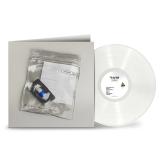
Want to know who “Poo-Sun” really was? Start here. A landmark masterpiece featuring the era-defining classic “Dancing Mist”.
Widely regarded as one of Japan’s greatest pianists, Masabumi Kikuchi was a towering figure whose unique musical vision and commanding presence helped shape the Japanese jazz scene from his professional debut in the late 1950s until his passing in 2015. Acclaimed both at home and abroad, his discography is filled with essential works, but POO-SUN, named after his longtime nickname, unquestionably stands among his finest achievements.
Driven by the powerful interplay of twin keyboards and twin drums, the album generates a groove that is both weighty and intensely dynamic. The center piece, “Dancing Mist”, can be seen as the culmination of the musical territory Kikuchi had reached during this period, a stunning statement of artistic maturity and vision. The album also features the ethereal beauty of “Yellow Carcass in the Blue” and the thrilling, edge-of-your-seat intensity of “Puzzle Ring”, making every track a highlight in its own right.
Sharp yet resilient, sophisticated yet visceral, POO-SUN is a masterwork that captures Kikuchi’s extraordinary talent at full force.
Mit "Consume" erweitern The Joy Hotel ihr musikalisches Universum.
Die für den SAY Award nominierte Glasgower Band The Joy Hotel veröffentlicht ihr zweites Album "Consume" (SO Recordings). Mit dem Nachfolger ihres von der Kritik gefeierten Debüts "Ceremony", das auf der Shortlist für den "Scottish Album of the Year Award 2025" stand, führt die Band ihren weitläufigen, cineastischen Sound in ungewöhnliche und dringliche Gefilde. Das Album setzt sich mit der endlosen Flut an Informationen, Ablenkungen und digitalem Konsum auseinander, die das moderne Leben prägen. Dabei werden Themen wie Liebeskummer, Nostalgie, Panikattacken, Ambitionen und das Ringen um Hoffnung in einer zunehmend gleichgültigen Welt behandelt. Musikalisch bewegen sich The Joy Hotel im Spannungsfeld zwischen Psychedelic Rock, Folk, Indie und cineastischem Alternative. Vielschichtige Harmonien, Call-and-Response-Gesang sowie eine stetig wachsende Palette an Gitarren, Keyboards und Rhythmus-Sektionen erzeugen einen Sound, der sich zugleich intim und gewaltig anfühlt.
oom 318 Productions and Laced Records are stepping into the fog to bring Akira Yamaoka’s score for the 2026 motion picture, Return to Silent Hill, to vinyl.
This 2LP features 29 specially remastered tracks carefully curated by series composer and executive producer, Akira Yamaoka, to capture the key themes of love, loss, guilt and obsession from Return to Silent Hill and the SILENT HILL 2 video game on which the film is based.
Yamaoka’s musical signature has been an integral part of the series since the first note of the original video game. His work for Return to Silent Hill marks his third time writing music for a motion picture set in the SILENT HILL universe, but this time he returns as the sole composer.
The score for the motion picture was guided by three guiding principles he’s developed while working on SILENT HILL scores – to “not decide music through emotions,” an aspiration to “blur the boundary between music and environmental sound, between reality and the inner world,” and finally, to “not reject beauty.”
“The horror of SILENT HILL is not merely unpleasant or violent. There is always something fragile, human, and irretrievably beautiful mixed within it. Refusing to deny that has remained unchanged since the beginning,” Yamaoka explains.
Working closely with director Christophe Gans, Yamaoka built the score piece by piece to extract the underlying sensibility of the world of SILENT HILL 2 and reconstruct it into music that can stand on its own as a film score. Series veterans will recognize iconic cues from the video games that have been reimagined in tracks such as “Chasing Laura” and “Brookhaven Hospital”.
“The goal was never to replay the game’s music as it was,” Yamaoka explains. “Instead, the challenge was to reinterpret it—to alter its meaning, its distance, and its placement—so it could breathe within the film’s sense of time, imagery, and the inner lives of the characters. It was not a quotation, but a reimagining.”
Whether you consider yourself a master of survival horror or this is your first time stepping into the fog of SILENT HILL, the Return to Silent Hill Original Motion Picture Soundtrack is a melting pot of distorted sounds and jagged textures unified by a single sensation: unstable, murky, and yet somehow beautiful.
For thirty years, Alden Tyrell has been at the forefront of electronic music. This analogue alchemist has concocted heady grooves that transmute genres: acid, disco, electro, house, italo and techno; no style left unturned. Under his Tyrell Corporation moniker, he returns to the Bordello with a sound forged for dancefloors. Midnight Machines is a warm embrace that melts electro‑disco with star‑gazing synthlines. “Midnight Machines Pt. 1” balances robust melodies and incising snares with soulful undercurrents and joyous breaks. Past energies are re‑channelled. Arpeggiators rumble as beats throb. Beneath it all, there is a greater consideration of the interplay of elements.
This focus pulsates through speaker cones on the needle‑drop of “Love in Decay.” Elated key changes and bright shifts are tempered by bittersweet moments, early‑morning light piercing fresh mists of grey. Tempos rise on the flip with “Midnight Machines Pt. 2.” Sci‑fi‑scored disco lifts ever higher as scaling notes untether themselves from the floor and soar above vibrant rhythms. Coy and alluring, the bright “Romance Obscura” closes the record. Cowbells and bending wavelengths open into an expansive, intoxicating melody where keys search the horizon as arms fold around celestial bodies.
BAILE & Nuage land on Shall Not Fade with their ‘Back 2 Earth’ EP
Four deeeep timeless tracks on this 12 inch. Sleek, progressive, acidy house & trancey ethereal breaks ‘Back 2 Earth’ is full of that headsy 90’s energy à la Underworld and Orbital…..we’ve been getting very lost in these ones!
Written remotely between Brooklyn, New York (BAILE) and Yerevan, Armenia (Nuage) both producers are more than a decade deep in their craft and it shows. They say “this all began with Nuage sending over a few short demos. BAILE took those pieces and constructed them into more fleshed out tracks, after which the two passed the songs back and forth slowly filling in the blanks.” …and that's the key here - no rush, no agenda just the realest takes expertly hewn.
Same Beat on the A1 is just that.. breakbeats, spoken word vocal chops and repetitive synth lines, but less is more. The percussion, bassline and programming do the work. Sometimes it's more about what you leave out than what you put in.
On ‘TSP’ you Nuage’s signature metallic synths. It’s a definite eyes closed/hands in the air weapon. Hypnotic flow building and ratcheting up the energy.
Flip over to title track’ Back 2 Earth’ and we get a trancey, garage and house blend. Sleek synths & arpeggios and minimal chops that seem to whisper ‘heaven…earth’.. BAILE utilized the Prophet Rev2 for pads and synths and a Moog Little Phatty and Minitaur for the bass but we want to know can a breakbeat soothe?
'Catch Yourself' closes out the EP.. More breaks and arpeggios but this time with an acid lead from the TB-03, grungy bass and warm gated synths underneath. Sample spotters you aren’t scoring any points here, the “I know that sample” vocal here come from Felicia Douglass (a frequent collaborator of BAILE’s who is in The Dirty Projectors and Ava Luna) and makes double the point that this EP is one of those ones that even on first listen you already know it. ‘Back 2 Earth’ has been on the SNF schedule for a minute so big up BAILE & Nuage for the patience but what that extra private time has meant, is that we can say with certainty that this EP keeps sounding better & better & better..
Turkey’s first stereo LP. A foundational recording of Anatolian psychedelia. Audio transferred from the original analog master tapes, mastered and lacquer cut by Frank Merritt at The Carvery, London, and pressed on 180g heavyweight black vinyl at Record Industry in the Netherlands.
Released by the legendary Yonca Müzik label in 1973 as Turkey’s first stereo LP, Türküz Türkü Çağırırız! now returns as the first official reissue. The album captures Mazhar Alanson and Fuat Güner at a pivotal moment before their later success with MFÖ, one of Turkish pop-rock’s most influential and enduring groups.
Mazhar and Fuat first met in 1966 through a shared love of The Beatles’ Rubber Soul. Inspired by the close vocal harmonies of The Beatles and Crosby, Stills & Nash, they initially believed this music could only work in English. Producer Ergin Bener encouraged them to develop their own musical language in Turkish.
Previously members of Kaygısızlar, the pioneering group that accompanied Barış Manço, Mazhar and Fuat explored a more intimate Turkish folk-rock sound on this album. Zafer Dilek’s arrangements bring his distinctive guitar and keyboard work to a recording in which acoustic guitars, organ and electric guitar touches frame Anatolian melodies. Country-rock influences and the English-language “Upside Down” add to its range.
The title roughly translates as “We are Turks, and we sing Turkish folk songs” — reflecting a search for a new, distinctly Turkish musical identity. The album draws on works by Âşık Veysel, a defining voice of Turkish folk poetry, and Yunus Emre, the great Anatolian Sufi poet.
“Adımız Miskindir Bizim” was sampled on Action Bronson’s “Easy Rider,” while Stones Throw producer Oh No sampled “Sür Efem Atını.”
In the beginning of the 1970’s, Guinea-Bissau was a country broken up into many ethnic groups and at the heart of a war for independence. By reviving traditional musical genres as Gumbé and singing in guinean Kriol, José Carlos Schwarz & Cobiana Djazz established an immediate affective bond with their audiences. Through its music and politically engaged spirit of the lyrics, the band played a significant role in shaping the social and political consciousness of the masses. As well as influencing local bands like Super Mama Djombo and giving back a deep sense of cultural identity to bissau-guineans.
The explosive birth of Cobiana Djazz brought about other kinds of detonation. Schwarz became involved in urban guerilla activities which resulted in several bombings in the centre of Bissau, leading to his imprisonment and torture. He remained in lockup for a total period of about 2 years, between 1972 and 1974.
The process of decolonisation, in the wake of the Portuguese revolution of 25 April 1974, led to the recognition, during the same year, of the sovereign nation of Guinea-Bissau.
Schwarz, a key figure in the fight for independence, played an important part in the transition to the democratic regime, profiting from his popularity as an artist. Soon, his criticism (underscoring opportunism and irresponsibility in high places) became a thorn in the side of the political elite. Uneasy with the disquieting effects of his work, government officials effectively separated the author from the masses by assigning him to the embassy in Havana.
José Carlos Schwarz met a tragic and untimely death at the age of 27, when his plane crashed on arrival at Cuba's José Martí International Airport, on May 271th 1977.
Hailed by african giants like Orchestra Baobab, Letta Mbulu or Miriam Makeba (with whom he recorded his first and only solo album), “Zé Carlos” and his poetry won a lasting position in the annals of Guinea-Bissau. However, this collection of songs remains relatively unknown outside the country and its diasporas.
We are proud to offer, in close collaboration with the Schwarz family, this first official reissue on vinyl. Remastered and pressed on heavyweight vinyl.
In the creative Bologna of the 1980s and 1990s, Kinki was the first gay (LGBTQ+) Club in Italy: a visionary space where House music exploded
and the night became a symbol of freedom, identity, and cultural revolution. Through the DJs and charismatic figures who shaped it’s future,
the documentary tells how this small club beneath the Two Towers forever changed the way music and clubbing were experienced.
The documentary, produced by RCO Europe and directed by Lorenzo Miglioli, is available on Amazon Prime and Google Play platforms throughout Europe, the UK, the US, Australia, and South Africa.
The soundtrack, curated by Luca Trevisi (LTJ Xperience), features a selection of 1990s and more recent tracks, ranging from Italo House to
Nu Disco. Most of the tracks are re-edited by LTJ himself.
A double vinyl album packaged in a gatefold sleeve, also containing a 16-page color booklet featuring images of the Kinki crowd.
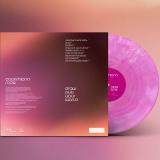
LP Limited Edition (500 copies) ‘Draw Out Your World” LP on Pink Marble Vinyl with signed postcard.
Caoilfhionn Rose's completely immersive fourth full-length offering - her first for Lost Map - is a powerful statement about new motherhood, strength and resilience through change and the importance of collaboration, community and placing trust in others. A softly unravelling collection of songs grown from dreamy improvisations and driving, beat-led folktronica. 'Draw Out Your World' arrives in the wake of Caoilfhionn having scored a #1 on the UK Official Independent Albums Chart, as a key contributor to Mancunian post-punk cult heroes The Durutti Column's critically-acclaimed 2026 release Renascent.
Raised in Manchester, Caoilfhionn developed a "deep, almost spiritual appreciation" of music in all its diversity. Drawing inspiration from nature, dreams, and personal experiences, she crafts songs that are both intimate and universal in their themes.
A performance at a local café caught the attention of Gondwana Records founder Matthew Halsall, who invited Caoilfhionn to work on her debut album 2018's Awaken. It became the first of three albums for the label; followed by 2021's Truly and 2024's Constellation. As a bandleader she headlined tours across the UK and Europe and has also supported artists such as Mammal Hands, The Breath, GoGo Penguin, Alabaster dePlume and Hania Rani.
Scattered ideas for what would become Caoilfhionn Rose's fourth album began accumulating long ago, in fits and starts and multiple iterations, with some tracks lying finished but unheard for years. Yet the record only truly began to take shape in the midst of a period of profound personal change. During a trip to Marrakesh, Morocco with her husband and long-time creative partner Rich Williams in January 2025, the pair spent evenings among the musicians and communities gathered beneath the night sky in Jemaa el-Fnaa. "The trip really reinvigorated us and led to lots of conversations about why we make music and why we love it," she remembers.
Several of Draw Out Your World's newest songs were born during Caoilfhionn's pregnancy with her first child. Although a deeply joyful time, she experienced severe sickness throughout, making music difficult (her voice changed so much during pregnancy that some vocals had to be re-recorded after her daughter arrived). In moments when she felt well enough, Caoilfhionn and Rich began shaping new ideas and songs from loops and fragments he had been creating, later bringing musicians together to record and remodel the compositions live in the studio. A combination of impulse and patience, individual expression and collective improvisation lies at the heart of Draw Out Your World. Four tracks emerged during two days of spontaneous invention in Copenhagen with multi-award-winning Danish electronic jazz duo Svaneborg Kardyb. Other, older pieces were patiently revisited and reworked with keyboardist John Ellis (a founding member of The Cinematic Orchestra). Caoilfhionn's ongoing collaborations with The Durutti Column have long informed her carefree approach to making music ("lots of improvising and experimenting… seeing what sticks"); here she pushes it further than ever. "It's been a lot about following my intuition and trusting in the process and musicians in the room," she says.
Started from a sweet little mini-hand-drum loop by Rich and finished with Awen Blandford's swooping cello lines, lullaby-like opener 'Reflecting The Light' was inspired by Caoilfhionn's pregnancy - "the feeling of my little girl growing inside me," as she puts it, and the almost supernatural feeling of connection to another person it brings. The much older 'Grow' - a song about how a person "keeps unfolding" through good times and bad - came close to appearing on Caoilfhionn's previous record Constellation in 2024 before finding renewed meaning and purpose here, reinvigorated by John Ellis's rolling Fender Rhodes. Set to finger-picked guitar and hazy electronics, the album's title track 'Draw Out Your World' drifts into view like a gentle parting of the clouds - a mellow but vivid reflection on dreams and realities and the pathways in between, with shades of Judee Sill and Linda Perhacs. By sharp contrast, 'Hidden Wars' - a song about trying to get away from spiralling negative thoughts - is set to a fiercely snaking groove inspired by Caoilfhionn's love of artists like Portishead and The Smile. The moodily languid and sparse 'Just To Be Alive' leans into Caoilfhionn's more electronic side, Nikolaj from Svaneborg Kardyb conjuring pure atmosphere on his swirling Juno synth, before 'To A Feeling' collides into a wild, wonky and raw jazz jam rising to Eleanor Colee's ripping saxophone solo. 'As I Find Myself Again' lands the album on a subtle ellipsis - its feeling of calm finality unsettled by the faintest flicker of a new melodic phrase at the end.
Gorizont Sobytiy (Event Horizon), the duo of veteran electronic musician Nocow and his wife, DJ Designer, mark the project's debut with an album worth of material of 'frogg-step' / Pankratov Step. It's safe to say this is an intriguing proposition for even those well-initiated into the world of the contemporary Russian underground. What is perhaps most immediately obvious across the 11 tracks is a clear appreciation for golden-era Rephlex records, as if the duo are reflecting on how the iconic label was perceived in the Eastern bloc at the time. There's a nostalgic touch tugging at the heart strings with the warm ambient tones of 'Bananoivy Twist' or even the ballroom-esque organ melodies of follow up 'Chacha', both swiftly followed by a switch back into frantic gabber style kicks that recur across the album.
To give a little more away in terms of a background story, Nocow and DJ Designer draw influence from a film called Winter Evening in Gagra, a somewhat distant feeling artefact of late-Soviet cinema about a tap dancing champion's late nights spent gallivanting across the glitz of Moscow's pop music scene in the 1980s. Maximalist in its sound design, Pankratov Step draws its name from actor-protagonist Pankratov, not quite an out-of-time soundtrack as such but at the least a wry nod to the former world in which the film takes place. The cascading, brittle synthesis of 'Cemetry's Boss' forms an icy cinematic fusion again with a gabber influence at play whilst a fierce acid line works alongside myriad glitch rhythms and repeating keys on 'Octopus Werk'. Influenced by the local humour and sentimentality surrounding the film, a melodrama with themes of lost art and a kind of old-world transcendence the young circus performer yearns for, the duo use it as a vessel to describe the projects sound - a coalescing of vintage Soviet soundtracks, early IDM, Jake Slazenger and Expert Knob Twiddlers album. 'Pankratov-Step' becoming their own fictional genre. The LP marks another avant-garde chapter in Nocow's long back catalogue, as well as a fully formed collaborative debut for the currently enigmatic DJ Designer. Pankratov Step is the second release on GOST ZVUK sub-label MEMONT, curated by Kuzma Palkin.
Good Morning Tapes are back with a new album of lushest New Age sound-bathing x emotionally gooey trip hop from Andro Gogibedashvili aka Saphileaum.
Saphileaum has spent the past decade in passage between notable houses of atmospheric sorcery - Mule Musiq, Not Not Fun, Slow Life, Constellation Tatsu - and of course Good Morning Tapes, who now host their 3rd meeting, »Heavenly Hills«. A definitive chapter in his ten year saga, it is flush with symphonic strings and sky born keys, breezily urged by percussion that straddles chill out and folk zones. That said there’s also a Balearic - or should that be Black Sea? - appeal to its title tune, that lingers in the glistening wake of »Your Grace«, to the shimmering breaks of a parting piece »Alarko (Cosmic Eagle)«, falling into the space between Boards of Canada’s cult-inspired hauntological nostalgia and Shackleton’s hallowed ethno-dub.
»The tracks in the album were written with the inspiration of the kingdom of Shambhala in the Himalayas. I’m deeply fascinated and touched by it. Even the album title, holds the idea of its Heavenly nature and the tracks are like individual, elemental parts of it. The album is not a journey into Shambhala, but rather a play and a dance with its energy, image and presence in my world. »Alarko (Cosmic Eagle)« is dedicated to my grandfather, Temur Tsiklauri, and I dedicate the whole album to my country Georgia, which I deeply love«.
Obscure disco gem from 1985. Singer Penny Mtya, like many others, journeyed from small-town South Africa to the bright lights of Johannesburg in search of fame. There her path collided with Muntu Semenya, the son of long-exiled stars Caiphus Semenya and Letta Mbulu, who had recently arrived from the US and was making his mark in SA as a producer and keyboardist. There demo secured a deal with the local office of WEA Records and they soon entered RPM Studios with co-producer Thokoza Memela to record three tracks.
‘Cassanova (Stop That Game)’ is a seven-minute Afrofunk workout reminiscent of Kiki Gyan or Sylvester, showcasing Penny’s sultry vocals and Semenya’s stabbing synths. On the flip side, ‘I Feel It’ is a chugging instrumental climaxing in a fuzzed-out solo from session guitarist Jethro Butow. Defying expectations again, the album closes with a Motown-worthy slow jam, ‘Memories’, a duet with Yandy Mgolombane featuring Mike Faure on sax.
Titled Penny’s Groove, the three-track EP received little promotion on its release and quickly disappeared into obscurity, with the label perhaps unsure of how to market the polished ‘international’ sound and diverse components. The tracks were never performed live and everyone involved in the studio project soon parted ways. Semenya and Mgolombane laid low while Penny returned disenchanted to her home in the Eastern Cape, where she remained active in music but never realised her dream of solo stardom.
Uncompromising Italian DJ/producer The Southern makes his vinyl debut on Mutual Rytm's sub-label, Spectra, with remixes from Alarico, Temudo and Sciahri. An EP marking an impressive label debut, Carmine Portarulo, aka The Southern, lands on Mutual Rytm’s sub- label Spectra with a powerful showcase of his much-loved sound. With the lead track featuring as one of label head SHDW's most requested IDs of the year so far, and packaged alongside outstanding remixes by close label associates Alarico, Temudo and Sciahri, the EP comes having established himself with a sound rooted in old school value and pure techno, favouring energy and authenticity over hype. The track’s backstory comes from the moment Carmine and his partner found out they were expecting a child and went for their first ultrasound appointment. Overwhelmed by the emotion of the moment and the beauty of what nature is capable of, he returned home and poured those feelings into the music. The result, ‘Ultrasound’, is an anthemic, punchy techno cut with euphoric energy rising up through the synths and its catchy lead melody. Joyful melodies sparkle amid vocal groans, adding a raw emotional pull as the warm, driving drums march on. Berlin-based artist Alarico is the first to remix on his return to the label, and his ‘Sad Mix’ has a more melancholic mood, with dark chords and tightly programmed drums that bring lo-key funk. Hayes Collective founder Temudo also returns and flips the vibe on his ‘Neuro Interpretation’ with a more psyched-out, twisted tune featuring trippy synths and booming drums for peak-time impact. Italo-Iranian Sublunar Records head Sciahri then drops his trance- inducing, hypotonic ‘Tunnel Vision Mix’, followed by two digital bonuses: ‘The Stripped Mix’, a bouncy workout with futuristic melodies, and Temudo’s ‘Neuro Interpretation 2’, which is raw, textured, and dark.
Growing up just across the water from Italy, Clint Spiteri and Madeleine Baldacchino absorbed the shimmer of Italo disco long before Deadisko took shape. Their analogue pop celebrates the past while embracing the future. “1987” melts an addictive piano house groove with clean rhythms, a sleek and smooth sound with just a hint of romance. Cat-like, “La Costa” stretches before finding its funk-filled footing. Synth stabs are ruffled, teasing rhythm patterns opening avenues for melodies to bend, curve and race. The flip is introduced with the pop opulence of “This World.” Blue undercurrents are bolstered by Sean Kamati’s emboldening vocals, his smouldering voice accompanied by daring keyboard play. Brassy tones are veiled in smoke for “Ssunrise Drive.” Mechanical reverb is offered a human touch, organic warmth breaking through to an incandescent shine. Echoes of Italy that pulsate with the rhythm of Malta.
Welcome to THE VAULT for 1985. A collection that digs deeper into the year’s musical landscape – uncovering singles that may not have always reached the highest chart positions but remain essential to the rich and diverse pop story of 1985. Some were overshadowed at the time, some were highlights from albums that had already sold huge amounts, some found greater success internationally – but all deserve their place in this continued celebration of 80s pop.
45 tracks across 3-LPs – pressed in gorgeous green vinyl – NOW Yearbook – The Vault: 1985.
LP1 opens with a trio of tracks from huge-selling albums:- Bruce Springsteen’s ‘My Hometown’, the sixth single in the UK from ‘Born in the U.S.A’ - one of the best-selling albums of the decade, followed by Bryan Ferry with the stunning ‘Windswept’ from ‘Boys And Girls’ and Sting’s ‘Love Is The Seventh Wave’, taken from his solo debut ‘The Dream Of The Blue Turtles’. Next up, Go West with a U.S single release ‘Eye To Eye’, Scritti Politti with ‘Perfect Way’ – their biggest hit in America, and ABC with ‘Be Near Me’. The first side closes with two established bands; Heaven 17 and Orchestral Manoeuvres In The Dark… Flip the LP over for Adam Ant with ‘Vive Le Rock’, Midge Ure, Blancmange and the second collaboration between Philip Oakey & Giorgio Moroder with ‘Good-Bye Bad Times’. The Style Council’s ‘Welcome To Milton Keynes’ leads to LP1’s closer’s from Simply Red and Fine Young Cannibals who followed their debut ‘Johnny Come Home’ with ‘Blue’.
LP2 opens with Cocteau Twins and the dream-pop atmospherics of ‘Aikea-Guinea’, ahead of The Jesus And Mary Chain with ‘Just Like Honey’, and The Dream Academy with ‘The Love Parade’.
Brilliant with their cover of James Brown’s ‘It’s A Man’s Man’s Man’s World’ and jazz-influenced pop from Matt Bianco are up next ahead of the sublime ‘Castles In The Air’ from The Colourfield and Elvis Costello & The Attractions, who released the 1979 track ‘Green Shirt’ to promote their ‘Best Of’ collection … and the side closes with The Clash’s ‘This Is England’ which would become their last originally released hit…whilst on the other side…celebrate the dancefloor, with a vibrant mix of Hi-NRG, soul, electro and club-influenced pop:- Opening with Sheryl Lee Ralph’s ‘In The Evening’ and Barbara Pennington’s equally superb ‘On A Crowded Street’, the hi-energy continues with Miquel Brown and Hazell Dean ahead of a US hit from Laura Branigan (‘Spanish Eddie’) and Divine’s cover of ‘Twistin’ The Night Away’. LP2 finishes with a massive U.S. dancefloor smash for Eddie Murphy with ‘Party All The Time’.
The final LP kicks off with a bunch of singles that achieved bigger hit status in the US than here and opens with Billy Joel’s ‘You’re Only Human (Second Wind)’, a track written exclusively for his ‘Greatest Hits – Volume I & II’ compilation, ahead of pop-rock from John Mellencamp plus an anthemic smash from Bon Jovi. Pat Benatar’s ‘Invincible’ features ahead of The Power Station’s third US Top 40 hit…whilst back in the UK Chris Rea enjoyed his biggest chart hit to date with ‘Stainsby Girls’ and the side is completed by Marillion with ‘Heart Of Lothian’ the third hit from their huge ‘Misplaced Childhood’ album… Flip to the final side for the stellar vocals on ‘Act Of War’, the huge collaboration between Elton John & Millie Jackson ahead of dancefloor smash ‘New Attitude’ from Patti Labelle and ‘Show Some Respect’ a U.S. single from Tina Turner. Sophisticated pop-R&B from Michael McDonald and Daryl Hall & John Oates come ahead of the collection’s closers- and two outstanding vocal performances: Chaka Khan’s ‘Through The Fire’ and the U.S. breakthrough hit from Whitney Houston with ‘You Give Good Love’ – signalling the arrival of one of the decade’s brightest new stars.
NOW Yearbook – The Vault: 1985 – A deeper dive into an unforgettable year in pop.
Originally released by Time Capsule in 2021 and long out of print, Stories From Another Time 1982-1988 returns in an upgraded edition following years of demand and rising collector prices on the secondhand market. Widely regarded as a modern cult classic, Mário Rui Silva’s visionary recordings blend acoustic folk, cinematic soul, spiritual jazz and saudade-filled Lusophone rhythm into a deeply timeless and universal work that transcends genre and geography.
This new edition features half-speed mastering cut at Metropolis alongside an expanded 4-page insert with a tribute essay and unseen photographs following Silva’s passing in 2024.
The roots of Angolan popular music explored in the meticulous guitar studies of Mário Rui Silva. For fans of Naná Vasconcelos, John Hassell’s Fourth World ambient, Eduardo Mateo’s psychedelic folk and Cameroonian electronic music visionary Francis Bebey.
Whether on mesmerising acoustic ballads or hypnotic groove-led tracks, the music of Angolan guitarist, researcher and intellectual Mário Rui Silva has a beguiling, melancholy quality, woven into the dynamics of his deft guitar playing.Rhythmically complex yet supremely effortless, the music collected here stems from three albums Mário released in Luanda in the 1980s that reflect his diverse range of influences, from traditional Angolan and West African rhythms to European jazz and classical instrumentation. It is united by a sense of low-key beauty, whether on the chugging opener ‘Kazum-zum-zum’, the jazz-funk keys of ‘Lembrança Dum Velho’, or the twinkling, late-night poly-rhythms of ‘Kizomba Kya Kisanji’.
Born in Luanda, Angola in 1953, Mário dedicated his life to Angolan popular music. His fifty-year career has seen him live between Angola and Europe, rub shoulders with Cameroonian musicians Francis Bebey and Ewanjé, record the seminal album Angola ’72 with fellow Angolan musician Bonga, and draw influence from Brazilian guitarist Baden Powell.
It was the teaching of Angolan legend and Ngola Ritmos co-founder Liceu Vieira Dias that Mário gained a technical, political and spiritual understanding of Angolan musical culture. In the hands of Liceu, the traditional Angolan semba and kazukuta rhythms of the 1940s and ‘50s helped create an emancipatory sense of national pride and collective agency that awakened its listeners to the racism and tyranny of colonial rule, underpinning the country’s push for independence in the process.
What might sound like the intonations of Brazilian influence are what Mário attributes to the “African rhythms taken by the slaves which gave rise to other musical cultures” around the globe. Instead, this music emerged from a collective instinct to assert a cosmopolitan Angolan identity free from the patronising falsehoods of Lusotropicalism.
“There was a need within me to contribute in doing new things,” Mário describes. “In the sense of solidifying the music of Angola that was the result of the meeting of two cultures, and wanting to value the Angolan part whenever possible.”A selection from Mário’s three 1980s albums, Sung’Ali (1982), Tunapenda Afrika (1985) and Koizas dum Outru Tempu (1988) have been compiled here as a 2xLP release by Time Capsule’s Sam Jacob and Kay Suzuki. Together, they provide a snapshot of one man’s journey to the core of his nation’s music, charged with the search for a culture uprooted by colonialism
Luke Una introduces a new series of original, dancefloor-focused productions on his É Soul Cultura imprint, in partnership with Mr Bongo. True to the label’s ethos, the series pushes sonic boundaries into deeper, more expansive territories, delivering forward-thinking music for discerning dancefloors. The first release brings together UK garage royalty Zed Bias and the underground talents of MJK, as we’re served up a double hit of hypnotic, futuristic techno and house.
Zed Bias is an artist that needs little introduction. The main moniker of Manchester’s Dave Jones, over the past 25+ years he’s cemented himself as a crucial figure in UK garage and dance music as a whole. He’s remixed hundreds of artists including Whitney Houston, The Streets and Azymuth, been nominated for a MOBO award and, through his more experimental take on 2 step garage, helped lay the foundations for the development of bass music into dubstep. For this new release he teams up with Ghanaian-British producer and DJ, MJK. Earmarked as ‘One To Watch’ by DJ Mag, and similarly championed by Mixmag, MJK’s sound draws from the worlds of bass, grime, house and beyond.
Opening track ‘Keep On Livin’’ sees Zed Bias and MJK coming together in the studio. Passed to Luke by his manager If Khan, it’s a sonic alchemy rooted in black heart soul music yet seen through a prism of bass futurism. A heads-down cut of driving techno, with nods to Detroit, and firm UK foundations, that is both bass-heavy and otherworldly. It’s a simple yet effective, entrancing combination of percussion, bass, and keys, peppered with old soul samples that lock you into a groove and never let go. A track built for dancefloors big or small.
On the flip, MJK steps up solo with ‘Late to Camberwell’, diving into deeper, late-night territory. Known for his three-deck DJ mixing style, MJK has a real understanding of how to layer elements to keep people moving. A swirling cosmic feel reverberates through ‘Late to Camberwell’. Drum hits, shakers and synth loops are weaved together in style, creating a dose of deep, immersive rolling house. In Luke’s own words, “I found it very exciting to hear a new artist create such a beautiful sound that reminded me of Detroit and Artwork's late ‘90s techno alias Grain. It’s stripped-back raw house music of the highest calibre”.
Big Crown freut sich, das zweite Album von Thee Marloes, ,Di Hotel Malibu", zu präsentieren. Es erweitert den Rahmen - ein selbstbewusster Schritt weg von den Grenzen, die ihren Sound einst klar definierten, hin zu etwas Durchlässigerem, Gesprächigerem und zutiefst Indonesischem. Zwei Jahre sind vergangen, seit ,Perak", das Debütalbum des Trios aus Surabaya bei Big Crown Records, ihren einzigartigen Sound vorstellte. Dieses neue Album bricht nicht mit dieser Tradition, sondern erweitert sie und zeigt, wie sehr sie als Band seit der Veröffentlichung ihres Debüts und all den damit verbundenen Erfahrungen gewachsen sind. Bestehend aus der Sängerin und Keyboarderin Natassya Sianturi, dem Gitarristen und Produzenten Sinatrya Dharaka und dem Schlagzeuger Tommy Satwick, haben Thee Marloes stets als Einheit gearbeitet, wobei ihre Songs von Satwick, haben Thee Marloes stets als Einheit gearbeitet, wobei ihre Songs von gemeinsamen Referenzpunkten und einem ausgeprägten Sinn für Groove geprägt sind.
Auf diesem Album erweitert sich diese gemeinsame Sprache. Die Arrangements bewegen sich über ein breiteres Spektrum, mit neuen instrumentalen Farben, unerwarteten rhythmischen Wendungen und einem lockereren Ansatz in Bezug auf die Struktur. Die Band beschreibt es als eine Reaktion auf die letzten zwei Jahre ihres Lebens: soziale Realitäten, Liebesleben in Der Album-Opener ,Under the Silver Moon" ist ein kühler Two-Stepper, der die bitteren und süßen Seiten von Fernbeziehungen vor einem luftigen musikalischen Hintergrund thematisiert. ,Six Years" ist eine Seite aus dem Leben der Sängerin Natassya Sianturi und ihrem Kampf, den Schritt zu wagen, einen bequemen und sicheren Tagesjob aufzugeben, um ihrem Traum von einem erfüllten Leben zu folgen.
LOS ANGELES—To celebrate the 40th anniversary of the celebrated Talking Heads and Jonathan Demme’s concert film Stop Making Sense, the set will be re-released as a 2LP and 2CD/Blu-ray set this summer.
Released last year, the sold-out Deluxe Edition of the soundtrack will return as a 2-LP black vinyl on Rhino and 2-LP crystal clear vinyl at retail. Both variants feature a 12-page booklet with liner notes from all four band members –Tina Weymouth, David Byrne, Chris Frantz, and Jerry Harrison—and band photos. The 2CD/Blu-ray version includes the entire 28-page booklet from last year’s Deluxe Edition and a Dolby Atmos mix of the complete concert, mixed by Jerry Harrison and E.T. Thorngren, who also mixed the original release. Both will be available on July 26. Pre-order now.
The band appeared together for a sold-out screening and Q&A last night at the Pantages Theater, the same theater at which Stop Making Sense was recorded. They were joined by Blondshell, who performed “Thank You For Sending Me an Angel.” Another special screening with the band will occur in Brooklyn at the King’s Theater on June 13, with the Q&A hosted by Questlove and The Linda Linda’s performing “Found a Job.” The two events cap off a banner year of celebrations for what many consider to be the best concert film of all time.
The inspiration for Stop Making Sense came when director Jonathan Demme saw Talking Heads perform during the band’s 1983 tour for Speaking in Tongues. Afterward, he approached them with the idea of making the show into a concert film. They agreed and worked together over the next few months to finalize the details. Ultimately, Demme filmed three shows at Hollywood’s Pantages Theater in December 1983 to create Stop Making Sense.
The concert film presents a retrospective of the band up to that point, with a performance that weaves together songs from all six of its studio albums. The show progresses methodically, opening with Byrne onstage performing “Psycho Killer” alone with a drum machine. After each song, he’s joined by a new band member until Weymouth, Frantz, and Harrison are all on stage with him. The group continues to grow throughout the concert as members of the stellar touring band are added: keyboardist Bernie Worrell, percussionist Steve Scales, guitarist Alex Weir, and backup singers Lynn Mabry and Ednah Holt.
The band performs 18 songs in Stop Making Sense, including its recent single at the time, “Burning Down The House.” That summer, the song was in heavy rotation on radio and MTV, helping the song become the band’s first top 10 hit in America. It was, however, a different song from Speaking in Tongues that was destined to deliver one of the film’s signature moments. Talking Heads would perform “Girlfriend Is Better” wearing the now iconic, oversized suit inspired by costumes worn in traditional Japanese theater. For good measure, a picture of David Byrne in the suit also graces the album cover.
Stop Making Sense focuses mainly on music by Talking Heads but does include a few songs recorded outside the band: “Genius Of Love” by Tom Tom Club, “What A Day That Was” and “Big Business” from Byrne’s 1981 album, The Catherine Wheel. Limited edition vinyl versions of both of these albums, along with Harrison’s The Red And The Black, were released for this year’s Record Store Day.
When it arrived in September 1984, Stop Making Sense was an artistic and commercial triumph. The film had people dancing in theatre aisles, and the soundtrack sold over two million copies. Just last year, the Library of Congress added Stop Making Sense to the National Film Registry in recognition of its cultural, historical, and aesthetic significance.
Weymouth praises Demme as a collaborator: “…Jonathan was a very enthusiastic, highly adaptive, and imaginative guy who was just as good a listener as he was a talker and collaborator. From the get-go you just got the impression he was as flexible as he was disciplined. Being team players, that boded well for a great relationship and a great film!”
Harrison says the film still holds up today: “To me, Stop Making Sense has remained relevant because the staging and lighting techniques could have been created in a much earlier time period. For example, Vari-Lights, lights with motors to re-aim them, had just come into vogue. Had we used them, there would have been a timestamp on the film, and it eventually would have felt dated...The absence of interviews, combined with the elegant and timeless lighting, created a film that can be watched over and over.”
Byrne says it’s interesting that this album was – for many people – an introduction to Talking Heads. “We had done a live album before this, but coupled with the film, and with the improved mixes and sound quality, this record reached a whole new audience. As often happens, the songs got an added energy when we performed them live and were inspired by having an audience. In many ways, these versions are more exciting than the studio recordings, so maybe that’s why a lot of folks discovered us via this record.”
Frantz recalls the sheer joy surrounding the entire Stop Making Sense experience. “I’m talking about real, conscious, transcendent joy… I’m talking about what the Southern gospel people call ‘getting happy,’ which means ‘to be filled with the Spirit.’ That is what happened to us onstage every night, and from my seat behind the drums, I recognized that this was happening to the audience too. Joy was visible in front of me and all around me every night.”
The Dead Mauriacs is the project of French artist Olivier Prieur, "Paravents et miroirs, une cérémonie" is a live soundtrack.
The Dead Mauriacs describe their music as "Exotica Concrete" - their music is composed of field recordings made on a daily basis, as well as a diverse collection of sounds, including piano, Indian harmonium, violin, ukulele, didgeridoo, pieces of wood, glass, paper, and metal plates. The album is a spectacular 40-minute sound collage, assembled by sampling Exotica music represented by musicians and arrangers such as Les Baxter and Arthur Lyman, who were active in the 1950s.
"Exotica is a musical genre or sub-genre that emerged in the 1950s in the United States with musicians and arrangers like Les Baxter or Arthur Lyman. It is an extraordinary music because it is false: bird calls imitate bird songs, you can hear the sound of the waves, it is a Western fantasy, particularly North American, of a world and an imagery that never existed. It is a music associated with mass tourism, mass entertainment, consumerism. Arthur Lyman recorded about 30 records in 10 years in Waikiki. With his band, they played and recorded under a geodesic aluminum dome. The dome belonged to the owner of the hotel he played for every night. They did this at night to avoid noise. It's music that is both profoundly naive and totally flawed. In this, it is seductive and intellectually interesting. It is music that could easily be criticized today, but it is an imaginary in itself, like the Italian film music of the 1960s and 1970s." (Excerpt from the calax's interview)
The Dead Mauriacs are not only involved in music, but also in a wide range of other creative endeavors, including video and painting. He also repsonsible for the artwork of this LP. The inside of the product is also accompanied by an 8-page interview with Mauriacs and compiled his amazing artworks.
The Dead Mauriacs
Paravents et miroirs : une cérémonie / Screens and mirrors: a ceremony
Side A
Courte dérive, une ouverture / Short drift, an opening
Le retour des insectes électriques / The return of the electric insects Les oiseaux étranges / The strange birds Tension, terreur factice / Tension, false terror
Dénouement malais / Malaysian ending
Rituels et vanités 1 / Rituals and vanities 1
Rituels et vanités 2 / Rituals and vanities 2
Italiens dʼHambourg / Italians in Hamburg
Side B
Secrets pour piano / Secrets for piano
La suite Monory, Padoue-Le Caire-Nassau / The Monory Suite, Padua-Cairo-Nassau Hommes à découper / Men to cut out Lassitude moite / Clammy weariness
Le soleil artificiel du pont croisière / The artificial sun on the cruise deck
Pirogues et palmiers, vus de la scène / Pirogues and palm trees, seen from the stage La traversée / The crossing Rideau / Rideau
Fields recordings : Semproniano and Siena, Italy, Figueira, Portugal, Charentes, France. An electrical wire with a frequency shifter gave birth to the insects. Real and fake piano. Everything made with a computer and a midi keyboard.
Music premiered at Hörbar, Hamburg, 28th of December 2017. Music (and video) Olivier Prieur.
Thanks to Thorsten Soltau and all people at Hörbar.
Hello to Felix Kubin & Marie-Pierre Bonniol, Julia & Jan Warnke. Kisses to Hélène.
The "TRACK TRAX EP" is the new vinyl of the "Computer Controlled Minds"
The yellow vinyl clearly indicates the direction – ACID!
As the name suggests, it will be a fast-paced race.
On the A side, our track days start with a driving track, it quickly becomes clear that this will not be a leisurely Sunday ride. It's going to be a tough race. When approaching the apex, it is always important to remain seated and open the tap slowly.
The second track is a confession of love to Kerb, he wants to be loved and touched. But this love also harbors great dangers. If you drive too hard over the limit, the Kerb will pay back mercilessly.
With B1, the DOWNSIDER brings ecstatic acid acceleration to the slopes. If the braking point is exceeded, it can fall massively to the ground. The experienced technoracer has everything under control and brings the necessary momentum to the next straight.
As the race goes on, the strength dwindles and a clean line becomes more and more difficult, but at the same time it is the key to the thrill. The struggle with body and machine becomes clear, every action makes the body burn. Giving up is out of the question, the race is only over with the chequered flag. But now off to the bar!
Last but not least on the B-side, two short bonus sounds for all mix DJs
The Computer Controlled Minds show their clear roots, ACID and hard RACE.
TCCM can be booked as a live act via insta: __NEXT_DOOR__. You will never forget the race!
Fresh his Keysound D&B opus Blue, Sully returns to Astrophonica with four pristine slabs of breakbeat science. "Flock" places the full strength melodic elements over the faraway amen echoes in a way that's not dissimilar to early Good Looking. "Helios" is a much colder flashback to the darker corners of jungle's formative dance; all breathy minor key chords and vapour trails of paranoia countered neatly by a precision dub vocal sample. "Crystal Cuts" recalibrates the focus to the drums by way of broad jazz chord strokes while "Hours/Miles & Still" concludes affairs on an emotional electronica tip where the breakbeats thanks to a beautifully arresting intro. Powerful.
We feel like Frank & Tony and Smallville have been on the same musical wave-length since forever. Our musical paths have crossed back and forth over the years and we have always shared a lot of the same values- steadily putting out quality music, that stands the test of time - growing consistently - never stop following our very own way - always not-following trends forever..
Frank & Tony is the collaborative guise of Scissor & Thread co-founders Francis Harris and Anthony Collins aka Grant. Both have long been staples of the underground with material under their own names and numerous other guises shaping the musical landscape of House Techno and beyond since the turn of the millennium. Both lived together in New York and as Frank & Tony the pair have delivered multiple albums and many EP’s on their own label, Tokyo’s Mule Musiq and Pacific Rhythm- now they are warmly welcomed onto the Smallville Records roster with their latest collection of works.
‘Ways Of Mine’ leads on the A-Side and showcases the pairs signature deep hypnotic house style via soft billowing pads cascading metallic chimes psychedelic spoken word and dreamy dubbed out keys floating atop a robust bouncy rhythm
section.To open the flip-side title-track ‘After All’ lays down a subtly blooming chord sequence shuffled drums and bumpy bass stabs at its core all subtly nuanced while the latter half introduces more dynamic rhythmic elements and intertwined melodic touches. ‘Dimension’ then concludes the release diving deeper with saturated ethereal pads and bubbling resonant arpeggio lines alongside heavily swung crisp drums jazzy keys and delayed vocal chants.
After All comes with a full cover artwork by Stefan Marx.
All tracks written & produced by Francis Harris & Anthony Collins
Mastering and Vinyl cut by Helmut Erler at Lathesville
A Lisbon classic by now, Paraiso (a label, a radio show, a party and now also a documentary) is back for its 19th release with a pairing who's no stranger to the label or the portuguese techno underground: lucky for us, head honcho Shcuro got back in the studio with techno legend in the making Vil to make Repercussions part 2 - and they invited iconic Spanish producer Annie Hall (Delsin, CPU) as a remixer. The record opens with a tour de force, the relentless yet perfectly in control, mutanting and experimental yet elegant and timeless 'Motorik'. In it, you can hear echoes of Detroit groove sense, but also a generous splash of dub sonics seamlessly merging into pure peak time, closed eyes, layers of ear-candy hypnotizing you type of stuff. Things strip back a little in 'Emergence Dub' - still immersive fast techno ammunition, but there is a playful, experimental and sometimes ravey spirit to it, with a wonky mutating key, vocal pads and cheeky percussion working together to create a stunning modern dance piece. Side B is inaugurated by 'Origins', a deep bow to dub traditions with delay-drenched stabs and a bouncy bassline for days. An energetic yet dreamy piece with spoken word samples that will have your heart melt, it perfectly mirrors the duo's influences in a beautiful closing original. Annie Hall steps in for the remix, taking A2 'Emergence Dub' into Breaks geographies, with a talking bassline fit for an electro banger, and the ever-present pads sending us off in zen mode after a delightful ride.
Alina Valentina ignores rule books. When it comes to making music, she bends genres to her own sound and vision. Acid, electro, synth wave, vocoders. All are melted to produce a bracing style that is floor focussed and strikingly individual. It is this distinctive perspective that The Hague based artist brings to Schrödinger’s Box for NPC Dream, eight tracks that map a journey that disregards genre limitations. The intent and mood are immediately set with the fierce “Air Slasher” plunging through the fog as kicks roll and beads of acid bulge. Raw electro is further coarsened by scything keys and vicious vocoder words in the title piece before the technoid mutations and pain-streaked “Echo of Ecco.” The ground is never stable, the direction and ideas darting and shifting to new sonic territory. Punishing and pure, “Mine Cart Madness” is EBM-encrusted cruelty. Tempos shift on the flip, the slow and cinematic atmosphere of “Pixel Swamp” feeding into the sinister and snarling snares of “Wishing Engine.” Paranoia and tension collide in the stabbing chiptune chords and spiking percussion of “Come Get Some”, acid barbs ballooning into a blistering barrage in this warped wrecking ball. “Light Warrior” is cut from the same raucous cloth. Knobs splinter against machined lyrics, sirens blare as kicks thump in this basement lurking beast.
NPC Dream is a relentless record. From the needle drop, Alina Valentina enforces her sound as she teases and taunts styles. Fiery and brimming with energy, this 12” encapsulates the sound of an exciting talent who carves their music with a truly unique ear.
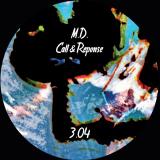
The new 12" release, "Call and Response", by the enigmatic artist MD, is a masterclass in the resurgence of retro techno, bridging the gap between the raw industrialism of early 90s Detroit and a modern, high-fidelity punch. The A-side is defined by its massive, anthemic vibes, built around a thundering TR-909 kick and a soaring, crystalline synth lead that feels both nostalgic and startlingly fresh. What truly sets this record apart, however, is its intricate counterpoint structure; rather than relying on simple loops, MD weaves multiple independent melodic lines together in a rhythmic dance of tension and release. The "call" begins as a jagged, percussive stab that is immediately answered by a "response" of lush, interlocking minor-key arpeggios, creating a sense of constant movement and architectural depth. It’s a track that demands attention on a massive sound system, proving that the classic techno blueprint can still be expanded into something grand and deeply intellectual.
Introducing Sum Of Its Parts: A new collaborative music project led by Alex Nut. Featuring remixes by Boddhi Satva.
London, UK — A new musical project titled Sum Of Its Parts brings together a dynamic collective of musicians under the direction of DJ, curator and Eglo Records mainstay Alex Nut, who steps into a central creative role as the project’s musical director and producer.
Sum Of Its Parts is built on a fluid, collaborative model, featuring a rotating cast of musicians drawn from some of the UK’s most exciting contemporary music circles. Including Sam Crowe (Lianne La Havas) on Keys, Junior Ali-Balogun (Sault/Cleo Sol) on percussion and Duane Atherley (Kokoroko) on Bass.
Debut EP, The Message, introduces the project’s expansive sonic identity across two original compositions. The title track, The Message, is a 10-minute spiritual jazz odyssey—deep, meditative and expressive. In contrast, Hello High – which previously appeared on the Eglo Records Vol. 3 compilation – delivers a soulful, jazz-inflected house energy with dancefloor sensibility. Extending the release further, the B-side features two amazing remixes by revered House producer Boddhi Satva, who reinterprets the project’s sound through his unique Ancestral Soul lens.
Jazz-fusion, disco-funk, Latin jazz and batucada rhythms get the Filipino treatment onAfter Midnight, the sublime second album from keyboardist Boy Katindig. Originally released in 1980, After Midnight draws heavy influence from soul and funk contemporaries in the US as well as Latin America, in particular the famed Brazilian percussionist Paulinho da Costa.
It’s a testament to his musical prowess that Katindig weaves effortlessly between styles and tempos. His reverence for Paulinho da Costa extends far, with covers of several songs from the latter’s 1979 Happy People album. This includes slow-burner ‘Déjà Vu’ written by Isaac Hayes originally for Dionne Warwick; on the Filipino instrumental version, local legends Jun Regalado and Roger Herrera (from Regalado’s ‘Pinoy Funk’ single) are reunited on drums and bass respectively.
But Katindig’s original compositions hold just as much weight and unique personality: title track ‘After Midnight’ opens with a sultry funk serenade reminiscent of The Isley Brothers, and quickly transforms into a catchy, blistering, saxophone chorus that brims with swagger. Hidden B-side gem ‘Got The Need’ is an uptempo tribute to batucada that would not be out of place in a jazzy house set, and boasts increasingly elaborate and psychedelic solos from Katindig on keys and Ben Concepcion on soprano sax.
Meanwhile, ‘Love Till the End of Time’ is a masterclass in instrumental disco funk, penned by the prolific Greg Phillanganes who at that same time was writing for many of the greats including Chaka Khan, George Benson, Stevie Wonder, The Jacksons and Cheryl Lynn.
This album is lovingly reissued by Sama Sama Records, a boutique label from DJ and collector Norsicaa, who ran the esteemed Soundway Records for 8 years and released the compilation Ayo Ke Disco in late 2024.
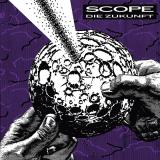
At the dawn of European techno, before the genre had fully taken shape, a small number of records hinted at what was to come—stripped-down, machine-driven and forward-looking. One of those records was “Die Zukunft” by Scope, a project formed by André Fischer (Recall IV) and Holger Wick (Konzept).
Originally released in 1989 on the now cult Suck Me Plasma label—founded by Talla 2XLC—"Die Zukunft” holds a special place in history as the label’s first release, marking a key moment in the transition from EBM and New Beat into early techno.
Scope’s sound captures this transitional phase with remarkable clarity. Built on minimal drum machine patterns, cold synthetic basslines and sparse melodic fragments, their music sits somewhere between late-80s electronic body music and the emerging techno aesthetic. Driven more by repetition and tension than by traditional song structures, the tracks create a hypnotic, forward-moving energy that reflects the experimental spirit of the time.
This reissue of “Die Zukunft”, limited to 500 copies on black vinyl and 200 copies on purple vinyl, brings together all original tracks from the first pressing alongside the iconic Cybotron Mix, offering a complete snapshot of Scope’s output at a pivotal moment in electronic music history.
Hopeful, defiant, effusive, and ecstatic, Radio!! Radio!! is the 20th album from Erasure, one of pop’s most beloved songwriting partnerships.
The record finds Andy Bell and Vince Clarke continuing to refine and deepen the pop edifice they’ve been building over the past 40 years with a set of 10 songs about love, loss and injustice that speaks, powerfully, to our empathy-starved times.
A uniquely personal album, it was shaped by a period of profound grief. When the duo got together to write the album, it was as much in the spirit of uplifting an old friend as it was work – you can hear this thread of warmth and mutual care throughout.
The album that transposes the dazzling hugeness of the duo’s best work onto avowedly more personal, more reflective songwriting. Bell acknowledges that it would be easier, perhaps, for he and Clarke to go on autopilot, 40 years into their career. But how would that pass as Erasure? “It’s a two-person brain, and everything that we’ve gone through comes into it,” he says. “We have a sense of responsibility. We couldn’t ever do something throwaway.”
Radio!! Radio!! is rooted in Erasure’s unique synth-pop palette with some key augmentation: when working on the sound of this album, Clarke was unusually drawn to piano, as well as acoustic guitar. The use of these instruments adds drama and depth to their sound whilst leaving room for the kind of glassy synth pop that Erasure made their name on.
Hoffnungsvoll, trotzig, überschwänglich und euphorisch: Radio!! Radio!! ist das 20. Album von Erasure, einem der beliebtesten Songwriting-Duos der Popmusik.
Auf dem Album entwickeln Andy Bell und Vince Clarke das musikalische Pop-Gebäude, an dem sie seit 40 Jahren arbeiten, konsequent weiter und verleihen ihm zusätzliche Tiefe. Die zehn Songs handeln von Liebe, Verlust und Ungerechtigkeit und treffen damit auf eindringliche Weise den Nerv unserer Zeit, in der es so oft an Empathie mangelt.
Es ist ein ausgesprochen persönliches Album, geprägt von einer Phase tiefer Trauer. Als sich das Duo zum Schreiben der neuen Songs traf, ging es dabei ebenso sehr darum, einen alten Freund wieder aufzurichten, wie um die gemeinsame Arbeit. Diese Wärme und gegenseitige Fürsorge ziehen sich hörbar wie ein roter Faden durch das gesamte Album.
Das Album überträgt die schillernde Größe der besten Arbeiten des Duos auf ein bewusst persönlicheres und nachdenklicheres Songwriting. Bell räumt ein, dass es für ihn und Clarke nach 40 Jahren Karriere vielleicht einfacher wäre, einfach auf Autopilot weiterzumachen. Aber wäre das noch Erasure? „Es ist wie ein gemeinsames Gehirn zweier Menschen, und alles, was wir erlebt haben, fließt darin ein“, sagt er. „Wir verspüren eine gewisse Verantwortung. Wir könnten niemals etwas Belangloses machen.
“Radio!! Radio!! ist fest in Erasures unverwechselbarer Synthie-Pop-Klangwelt verwurzelt, erweitert diese jedoch um einige entscheidende Elemente: Bei der Arbeit am Sound des Albums fühlte sich Clarke ungewöhnlich stark zum Klavier und auch zur Akustikgitarre hingezogen. Der Einsatz dieser Instrumente verleiht dem Sound zusätzliche Dramatik und Tiefe, lässt aber zugleich genügend Raum für jenen glasklaren Synthie-Pop, mit dem Erasure berühmt geworden sind.
Hopeful, defiant, effusive, and ecstatic, Radio!! Radio!! is the 20th album from Erasure, one of pop’s most beloved songwriting partnerships.
The record finds Andy Bell and Vince Clarke continuing to refine and deepen the pop edifice they’ve been building over the past 40 years with a set of 10 songs about love, loss and injustice that speaks, powerfully, to our empathy-starved times.
A uniquely personal album, it was shaped by a period of profound grief. When the duo got together to write the album, it was as much in the spirit of uplifting an old friend as it was work – you can hear this thread of warmth and mutual care throughout.
The album that transposes the dazzling hugeness of the duo’s best work onto avowedly more personal, more reflective songwriting. Bell acknowledges that it would be easier, perhaps, for he and Clarke to go on autopilot, 40 years into their career. But how would that pass as Erasure? “It’s a two-person brain, and everything that we’ve gone through comes into it,” he says. “We have a sense of responsibility. We couldn’t ever do something throwaway.”
Radio!! Radio!! is rooted in Erasure’s unique synth-pop palette with some key augmentation: when working on the sound of this album, Clarke was unusually drawn to piano, as well as acoustic guitar. The use of these instruments adds drama and depth to their sound whilst leaving room for the kind of glassy synth pop that Erasure made their name on.
Hoffnungsvoll, trotzig, überschwänglich und euphorisch: Radio!! Radio!! ist das 20. Album von Erasure, einem der beliebtesten Songwriting-Duos der Popmusik.
Auf dem Album entwickeln Andy Bell und Vince Clarke das musikalische Pop-Gebäude, an dem sie seit 40 Jahren arbeiten, konsequent weiter und verleihen ihm zusätzliche Tiefe. Die zehn Songs handeln von Liebe, Verlust und Ungerechtigkeit und treffen damit auf eindringliche Weise den Nerv unserer Zeit, in der es so oft an Empathie mangelt.
Es ist ein ausgesprochen persönliches Album, geprägt von einer Phase tiefer Trauer. Als sich das Duo zum Schreiben der neuen Songs traf, ging es dabei ebenso sehr darum, einen alten Freund wieder aufzurichten, wie um die gemeinsame Arbeit. Diese Wärme und gegenseitige Fürsorge ziehen sich hörbar wie ein roter Faden durch das gesamte Album.
Das Album überträgt die schillernde Größe der besten Arbeiten des Duos auf ein bewusst persönlicheres und nachdenklicheres Songwriting. Bell räumt ein, dass es für ihn und Clarke nach 40 Jahren Karriere vielleicht einfacher wäre, einfach auf Autopilot weiterzumachen. Aber wäre das noch Erasure? „Es ist wie ein gemeinsames Gehirn zweier Menschen, und alles, was wir erlebt haben, fließt darin ein“, sagt er. „Wir verspüren eine gewisse Verantwortung. Wir könnten niemals etwas Belangloses machen.
“Radio!! Radio!! ist fest in Erasures unverwechselbarer Synthie-Pop-Klangwelt verwurzelt, erweitert diese jedoch um einige entscheidende Elemente: Bei der Arbeit am Sound des Albums fühlte sich Clarke ungewöhnlich stark zum Klavier und auch zur Akustikgitarre hingezogen. Der Einsatz dieser Instrumente verleiht dem Sound zusätzliche Dramatik und Tiefe, lässt aber zugleich genügend Raum für jenen glasklaren Synthie-Pop, mit dem Erasure berühmt geworden sind.
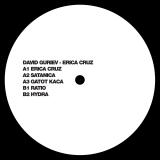
To get with down roots of the label you have to get down with its people. For one of these key roots, you have to hear and understand what David Guriev has to say with the audio message that’s getting translated to us as listeners. Being one of allies of the label and the non-stop behind the scenes inspiration, David has created a 5-track extended play named after one of his favorite female boxers named Erica Cruz. From the side of the cinematic importance, Erica has appeared momentarily in our lives, with a brief timing that the world has provided her. However she has never left the idea that has given the birth to this EP, and more or less has started the discussion of what it is to be or not to be like Shakespeare himself used to talk about after a good soul-searching session.
Basking in the glow of Lightsaber, the swashbuckling synthesizer synergy of Tending Tropic, Kay-Chi and Sharlese debuts. A cross-continent collaboration that bridges the Atlantic, this group joins forces through a shared passion for italo and wave with their sound set firmly on the floor. The title track is analogue brightness, drums drive a melody that dips and soars next to Sharlese’s uplifting lyrics. Energy levels are high from the needle drop. Cymbals crash for “Timeloop.” Vocoder words are softened by gently scaling chords before generous builds give way to sparking synthwork. Disco flourishes and bongos break to spiralling notes in the playful “Luminara.” Cosmic influences radiate through key shifts and understated toms in this celebration of the night sky. “Inertia” marches to a heavy-hitting beat. Industrially dipped, the percussion is fortified by a simmering melody that spills over into a bold body-throbbing close. Despite being oceans apart, this is a partnership light years ahead.
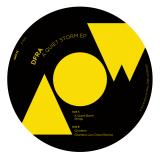
Berlin-based label Ascension on Wax continues its deep, jazz-inflected trajectory with the forthcoming release A Quiet Storm EP from DFRA, arriving June on 12" vinyl and digital formats (Cat No: AOW005). Available to buy and pre-order from May 15, the EP showcases DFRA's refined blend of soul, jazz, and classic house sensibilities, enriched further by a remix from Detroit's Jon Dixon.
Hailing from Colombia and now based in Buenos Aires, DFRA (Diego Ruiz) brings a deeply musical approach shaped by formal studies in composition and a lifelong immersion in hip-hop, gospel, soul, and disco. His productions balance two complementary sides, lush, jazz-rooted musicality and the raw, driving energy of Detroit and Chicago house. This duality is fully realised across A Quiet Storm EP, marking another step in his evolving sonic identity.
The title track, "Quiet Storm," opens the record with a deep, rolling groove elevated by exquisite saxophone work, setting an introspective yet dancefloor-ready tone. "Strings" follows with a dreamy atmosphere, rich piano textures, and a warm jazz undercurrent that highlights DFRA's compositional finesse. On "Charlene," soulful vocals intertwine with chord progressions reminiscent of early Motor City Drum Ensemble, delivering a nostalgic yet forward-looking house cut.
Completing the package, Jon Dixon reimagines "Charlene" through a distinctly Detroit lens. Stripping the track back and rebuilding it with deeper textures and signature keys, Dixon channels the spirit of Underground Resistance while pushing into more meditative territory, bridging jazz improvisation with machine-driven rhythm.
Founded in Berlin, Ascension on Wax continues to honour the legacy of jazz within house music, pairing contemporary producers with a strong visual identity and limited vinyl releases. With A Quiet Storm EP, the label reinforces its commitment to soulful, authentic club music rooted in the traditions of the 90s US scene while looking firmly ahead.
Little Beat More welcomes a new 7” from Conjunto Media Luna, a release that moves along the deep axis connecting Colombia and Mexico where cumbia mutates, and projects itself into new dimensions.
On the A-side, “Kumbia Tequendama” sees the group joined by rebajada pioneer Amantes del Futuro, a key figure in shaping the futuristic vision of cumbia across generations and geographies. Born between Mérida, Medellín, and the legendary Mambo Negro studios in Bogotá, the track reflects years of friendship and shared sonic research. Hypnotic accordion lines intertwine with dense low-end pressure, channeling an energy rooted in tradition but fully tuned to the present, built for dancefloors, sound systems, and the growing decentralized community of modern cumbia.
On the flip side, French producer La Dame reshapes “No es Moda”, originally featuring La Terrorista del Sabor, into a forward-leaning DnB and Future Bass reinterpretation. Faster, sharper, and more weightless, the remix opens a new perspective on the original while preserving its nocturnal spirit and emotional depth.
The artwork is signed by Bogotá’s own Mateo Rivano, whose unmistakable visual language has defined the aesthetic of some of the most visionary projects in contemporary cumbia.
Part of the wider sonic universe of Sociedad Internacional de la Kumbia, Conjunto Media Luna’s upcoming album, this 7” captures the group’s ongoing exploration of cumbia as a shared space, where distance disappears, traditions remain in motion, and new frequencies emerge from collective memory.
Made with Love by Little Beat More 2026
“We Dance We Think”
Some tracks don’t need fixing. They just need a bit more room. South African composer and keyboard wizard Don Laka has been quietly sitting in DJ bags for years, especially with people who like their synth music warm, slightly
mysterious, and impossible to date properly. Somewhere between jazz funk, township pulse and studio electronics, but really just its own thing.
Stages was an obvious candidate for extension. Prins Thomas what he does best here: opens the arrangement, lets the synth lines breathe, stretches the groove until it starts floating a little higher off the ground. Nothing forced, nothing added for
the sake of it. Just more of a very good thing. I Wanna Be Myself gets a gentle nudge from Gerd Janson. The idea was simple: keep the personality, and give DJs a version that lands naturally in a modern set without losing the original charm. It’s still the same track, just standing a bit straighter.
And because the source matters, the original version of “Stages” is here as well. Always good to remember where the magic started. Three versions, no drama. Just strong music that already knew what it was doing.
If – in some parallel universe (or perhaps a not-so-distant-future version of the one we’re already sentenced to living in) – the evil overloads of artificial intelligence were actually successful in their attempts to create convincingly enjoyable “original music,” more specifically tasked with wholly encapsulating my own personal tastes by data-chugging some cocktail of – oh, I don’t know – the posters on my wall, the records in my “most listened to” pile, the mixtapes I made for others, intensive physical scans of my auditory cortex, amygdala, hippocampus, heart strings, whatever else they have splayed out on their autopsy table with the intention of generating one all-encompassing “perfect band” based on the fruitful sum of their findings – that band, for me, would be (or would at least sound exactly like) the Tara Clerkin Trio. It is, quite simply, without exception, the music I wish to hear.
Formed in Bristol UK (where none of them are from yet all of whom are deeply engrained) in 2020, the Tara Clerkin Trio – as it somewhat democratically exists today, despite the singular authority implied by its name – consists of the titular Tara Clerkin, her partner Sunny Joe Paradisos, and Sunny’s brother, Patrick Benjamin. I’ll confess, I don’t know what their respective roles are within the operation and there’s only a very small part of me that cares to learn, as one of my favorite qualities in an objective listening experience is the mystery of who is playing what, which sounds are “authentic” versus synthesized, which chunks are performed “live” in a room together versus meticulously Frankenstein’ed from measure to measure, or how exactly the overall sound is so (seemingly) effortlessly achieved. Though, I suspect, if and when I do witness a live performance by this band at any point, my enjoyment of the music will not be lost in my better understanding of it.
With two extraordinary mini-albums – In Spring (2021) and On The Turning Ground (2023) – making a splash on London’s formidable World of Echo label in wake of their self-titled 2020 debut, this upcoming Somewhere Good LP is, in many ways, the band’s most realised work. In running their usual gauntlet of idiosyncratic (*an overused adjective for which here there is regrettably no sufficient alternative) approaches, Clerkin & co. colour in and outside of compositional lines over the course of 40+ celebratory minutes - never wallowing, despite inherently somber subject matters of self-defeat, disease, displacement, restlessness, gentrification - allowing their arrangements and improvisations ample space and time to situate, stretch out, breathe, cross-pollinate, and ultimately take deeper hold on the listener’s imagination – all while somehow sounding more like themselves than ever before.
Of course, there are traceable influences herein, if one felt that such comparisons were necessary to properly examine and enjoy this music (they aren’t)… Being the big dumb American from the small boring town that I am, cornfed on ‘90s alternative radio with the enchantingly exotic sounds of Maxinquaye and Mezzanine emanating from my chunky tube television, I can’t help but to make a blatantly obvious reference to a “Bristol sound”, ie the whole trip-hop trip, the pastoral crooning over the suggestive urban grime of cracked electro/piano treatments, the digitally-yet-primitively reconstructed James Bond soundtrack string-beats, etc.. But the Tara Clerkin Trio is so infinitely much more than that. There are elements of avant-pop, modern classical, kraut-folk, audio verité, dare I say indie rock (and not of the beer guzzling, masturbatory fuzz-flex variety but perhaps more like a Trish Keenan-fronted Faust, Adrian Sherwood at the mixing desk of If You’re Feeling Sinister, or – in expanding on our alternate reality – a world in which High Llamas cut a full-length for Warp Records with Andrew Weatherall on coffee duty).
The hazy, unmappable skyline-mirage of droning harmonium, upright bass, peculiarly accentuated wind instruments, acoustic guitar, hushed yet literally mighty keys combine to hypnotizing effect. The band may make underlying nods to jazz, sure, but it’s not appropriation, it’s that they have the actual chops to build it out. Beneath the janky samples and oddball percussive embellishment lies actually great drumming. Beyond the manipulated vocal witchery and woefully reflective plain-spoke moments are Tara’s subtly inspired melodies, sung with what might honestly be the glue to the whole crazy equation. A calming consistency throughout the otherwise unpredictably dynamic, boldly intuitive, uniquely British exploration of this (their own) universe in song. – Ryan Davis (Chicago, February 2026)
The debut of Miami's MIA arrives with 8 synthy, introspective, party tracks delivering her signature sound: intimate funk built for dancing or a night in. After many sold-out 7"s and a global following, MIA steps fully into orbit. In a gatefold sleeve, IN THE
Following the celebrated reissue of Classics Vol. 1, Metroplex unveils Model 500 - Classics Vol. 2, a powerful new collection of essential works from Juan Atkins--pioneer of Techno and architect of some of the most forward-thinking electronic music ever recorded. Bringing together key cuts, rare mixes, and long-sought favorites from across Atkins' groundbreaking output, this compilation highlights the full spectrum of his sonic universe: deep, rolling machine funk, shimmering electro-techno hybrids, and timeless futurist grooves that helped shape generations of electronic artists. Each track has been carefully remastered to enhance its original energy while preserving the raw spirit and space that define the Model 500 sound. From expansive, atmospheric journeys to soulful vocal transmissions and Detroit-powered rhythmic science, Classics Vol. 2 presents Juan Atkins at his most inspired--an essential document of a visionary whose influence continues to echo across dancefloors worldwide. Three decades on, these tracks have lost none of their immediacy, imagination, or futuristic pull. Restored for a new era, Classics Vol. 2 celebrates the legacy of Model 500 with pristine sound and renewed force. Pure Detroit heritage. Eternal future music.
Five years after their radiant debut Ufo Bar, Italian cinematic funksters Banda Maje are back with Costa Sud to take us deeper into their land of ‘Salifornia’—a Southern province of sun-drenched coastlines and decaying buildings where dreams of exotic escapism sprout and bloom.
Once again, behind the eight tracks in the album—and behind the wheel of the fiery red Alfasud on the cover—is composer and keyboardist Peppe Maiellano. He has meticulously tailored each piece to his virtuoso partners in crime: a 'family' of exuberant musicians spread between Salerno and Naples, all bound by deep-rooted ties to the region and a shared belief in the grit of independent artistry.
The Costa Sud (South Coast) imagined by Banda Maje is a shimmering ribbon of sun-baked asphalt stretched between the sea and the ancient pine forests of the Gulf of Salerno. It is a land of enchanting but wounded places, where the grace of Ancient Greek civilization sits in a restless silence alongside the scars of rampant building and neglect. “But if truth is beauty and beauty is truth,” Maiellano explains, inverting Keats’s famous line, “with the right eyes, you can find beauty and poetry even under a layer of moral and material filth."
Conceived and recorded entirely in the South, the album nevertheless looks beyond the horizon. While Neapolitan funk and golden-age Italian soundtracks remain the double helix of the band's DNA, this album welcomes new influences from across the ocean, weaving Italy, Brazil, Africa, and contemporary sounds into its unique vision of the 'global South.'
Side A is an immersion into Salifornian territory and its myths: from the carefree instrumental disco-funk of the title track, which sublimates local contradictions into enveloping cinematic atmospheres, to the mellow groove of “Baia”—a fusion of Neapolitan funk, afrobeat, and disco that pays homage to Salerno’s famous beach, squeezed between millennia-old sea rocks and mountains of shipping containers. The band’s heartfelt sense of belonging shines in their fresh soul-disco version of “Mo…” (a 1981 cult classic by Neapolitan legend Peppino di Capri) featuring Maiellano’s own vocals, while the reimagining of Tonico 70's “Jet Lag” celebrates a fraternal partnership with the Salerno-based rapper/producer, charting a musical itinerary that unites Brazil, the States, and Salifornia through evocative grooves, sharp synths, and Gianfranco Campagnoli’s exquisite trumpet.
On Side B, the sound becomes even more eclectic with the samba-funk warmth of “Samba Maje”, where Mediterranean melodies and lush vocal harmonies marry jazz-funk arrangements and disco-inflected Brazilian rhythms. The next track, “Africana”, is dedicated to a legendary dolce vita nightclub on the Amalfi Coast (and its founder Luca Milano); here, a rhythmic mantra incorporating tribal African elements blends with synths that evoke RAI television themes of the late 70s. The journey concludes under the sign of the silver screen: the disco-funk elegance of “Black Glamour Girl” (from the early-80s road-trip comedy In viaggio con papà), a tribute to the compositional genius of Piero Piccioni, and “Lovebossa”—an easy-listening homage to the "Cine Bossa" atmospheres that characterized so many Italian soundtracks of the 60s and 70s, finally carrying the listener ‘ncopp’ ‘e nuvole (above the clouds—which is basically Salifornian for "somewhere over the rainbow").