System Error proudly welcomes Alejo to FLOW. Co-founder and resident of the beloved Emile Club, Alejo has been a tireless advocate for Uruguay’s underground for decades. His 1984 EP arrives steeped in instinct and a deep connection to the floor.
Four tracks that follow a development in his sound, converging to tell a singular story. From snarling basslines to electro-leaning shuffles with razor-edged drive. Deep moods pierced by jacking, dancefloor-ready grooves – just how we like them.
Buscar:3 pi
What do you get if you put two synthesizer sorcerers in the same room? In the case of Skatebård and Lauer, the answer is Trollkraft. Between them, the Norwegian-German partnership have hundreds of releases, run record labels and have wowed crowds across the globe. In short, the two tracks of Trollkraft are the product of some serious electronic talent. Rich and textured drum layers give way to strings and a vibrating bass for the title piece. Twists and turns abound, elements of disco and house brush shoulders with indie and italo as the pair tear down genre divisions. A 90s heyday influence that runs through both offerings, with “One Night In Geilo” taking its cue from house rhythms and a two-stepping melody adopted from that emblematic decade. Reimagining rave in their own effervescent and playful style, these strobe and fog veterans serve up a fat slice of glow-stick elation. Strings weave high into the dawning sky, bongos and toms reveling next incandescent synthines with just a touch of trance thrown in to add spice to this heady and euphoric mix.
Two tracks from two true masters.
Exact replica picture sleeve seven-inch reissue of this hidden super-catchy punk/power pop 45 from the very short-lived punk group Trash. The music is raw, naive three-chord genius!
The group Trash were from Weybridge, Surrey and found little success at the time. They released just two singles to absolutely no fanfare at all in 1977 and 78 despite being signed to Polydor Records.
Trash's 'Priorities', the group's debut single is now available once again for the first time in nearly 50 years on Soul Jazz Records in a very limited edition one-off pressing of 300 copies.
4 track EP from Pain Struck Stanley Dumb, feat remixes from Radioactive Man & Paul Blackford.
The genesis of Pain Struck Stanley Dumb is as dignified as their sound. Picture this: 7am at an afterparty, and Doctor Luke Dumbstruck, commanding the decks. Neuro-dnb at its most raw, trousers around his ankle, and a single eyepatch completing the enigmatic tableau.
Amid this sonic debris, Christopher D Ashley found a kindred spirit - PSSD was born with a manifesto: to forge timeless electronics, drawing inspiration from Drexciya, Underground Resistance, Two Lone Swordsmen, and Juan Atkins.
Their latest release, "Breakfast At Brian's", marks a significant milestone: their debut on Radioactive Man's esteemed Asking For Trouble imprint. This record is a masterclass in stripped-back electro/techno production - a testament to the power of simplicity.
Monika Linges Quartet,Hipsters In The Zone,John ThomasandLifeforce,Maria Joao Quintet
The Aachen Jazz Files Compiled by Rainer Trüby & Miche
The Aachen Jazz Files
A collection of essential jazz from the NABEL record label (1980-1994), compiled by miche & Rainer Truby.
The Aachen Jazz Files celebrates the pioneering spirit of NABEL Records—one of Germany’s most underrated yet influential independent jazz labels. Founded in 1980 by Rainer Wiedensohler, NABEL became a home for innovative musicians blending classic acoustic jazz with fusion, Brazilian rhythms, and avant-garde flourishes.
This compilation collects some of the label’s finest moments, including the soulful and Latin-tinged brilliance of Monika Linges Quartet (whose album *Floating* was reissued last year by PANORAMA Records for RSD Black Friday), the cosmic jazz explorations of John Thomas & Lifeforce, the deep jazz-funk grooves of Hipsters In The Zone, and the stunning, expressive vocals of Maria João’s quintet.
Nestled in the far west of Germany, near the Dutch and Belgian borders, Aachen has long been a hidden gem for jazz lovers. Its vibrant scene, fueled by music schools and the legendary Malteserkeller jazz club, cultivated a unique sound that resonated far beyond its city limits. In fact, the city didn’t just birth a jazz movement—it also lays claim to opening Germany’s first discotheque in 1959.
From London to Tokyo, NABEL’s releases became secret weapons for jazz DJs seeking deep, danceable cuts. The label’s trademark blend of acoustic jazz, fusion, and Brazilian influences made its way onto turntables in underground clubs and festival stages worldwide.
Expect elegant samba jazz, spiritual grooves, and modal masterpieces that capture the essence of NABEL’s golden years. Monika Linges’ contributions shine with her rich harmonies and heartfelt compositions, while John Thomas & Lifeforce deliver a perfect storm of fiery instrumentation and deep soul. Maria João’s early recordings showcase her extraordinary vocal range, and Hipsters In The Zone bring a forward-thinking, acid jazz-infused perspective to the NABEL sound.
As co-compiler Rainer Truby puts it:
'NABEL Records always had this special ‘Aachen sound’—a jazz flavor that carried its own energy, somewhere between the cool sophistication of fusion and the warmth of Brazilian music. It’s a pleasure to finally bring together some of these classics in one essential collection.'
Compiled by miche & Rainer Truby.
PANORAMA Records is a London-based label dedicated to unearthing and reintroducing rare and essential music to new generations. With a focus on jazz, funk, and global grooves, the label has built a reputation for high-quality reissues that capture the spirit of the originals while providing fresh context for today’s listeners. Their past releases have garnered support from tastemakers like Gilles Peterson, Patrick Forge, and Mr Bongo DJs.
Gladio Operations launches its twelfth release, where the Spanish label returns to the various artists format.
Opening the pack is producer and Distrito 91 label owner Fabio Vinuesa. Under his newly created alias Protocolo Sysex, he gives us “NottheFuture,” a powerful track with raw bass lines — a benchmark for the dancefloor.
On the same side, we encounter Sinitsin. The Russian artist, who debuts on the label, leaves his mark with “Thinking Machine”. A track that reveals his enthusiasm for charismatic and effective melodies, very well sequenced throughout the track.
The B-side opens up by an acquaintance of the label, Jauzas the Shining. This time he is accompanied by Foreign Sequence, and together they have created “Enter the Body”. A track of dark aesthetics, served with dramatic vocals, very characteristic of the Frenchman who, of course, never disappoints. Another artist making his debut is Italian producer Teslasonic.
This fast-paced track titled “Chubby Bee” reveals a minimalist bass line, with subtle and delicate touches of the 303.
The EP is brought to a close by another Gladio acquaintance. Igors Vorobjovs returns with this track titled “For One”.
Orientated towards IDM sounds, the Latvian producer once again envelops us with a passage of deep and mysterious harmonies, which undoubtedly makes it a timeless piece.
Die ikonische Trance-Hymne „Lizard“ von Mauro Picotto jetzt wieder als farbige Vinyl erhältlich. Der Klassiker aus den späten 90ern begeistert mit seinen treibenden Beats, hypnotischen Synths und dem unverwechselbaren „Komodo“- Sound, der die Clubkultur einer ganzen Generation geprägt hat. Neben den Originalversionen gibt es zahlreiche Remixe, die den Sound noch klarer und intensiver zur Geltung bringen. Ideal für alle, die den Spirit der Trance-Ära neu entdecken oder bewahren möchten.
- A1: What Lies Beneath 3 Arp 5 02
- A2: What Lies Beneath 2 5 43
- A3: Forrest Gump 3 01
- A4: Spiderman 2 08
- A5: Chilling Adventures Of Sabrina 2 35
- A6: Mad Men S04 1 1 46
- B1: Mad Men S04 2 1 18
- B2: Stranger Things S02 E07 3 55
- B3: Stranger Things 2 3 55
- B4: Stranger Things 3 4 00
- B5: Reacher S01 E07 2 03
- B6: Reacher S01 E08 2 44
- B7: Irma Vep S01 E05 2 31
LIMITED VINYL COMES IN CARDBOARD SLEEVE WITH BOOKLET!
OSTRANENIE is a collection of digitally manipulated, impressionistic piano miniatures — each named after blockbuster films and TV series. Improvised late at night as a reaction against passive media consumption, these pieces function as both homage and critique, navigating the space between classical impressionism and contemporary digital manipulation. They don’t just deconstruct traditional piano expression; they interrogate the emotional stakes of sound in an era where immersion culture flattens meaning and algorithmic logic erodes agency.
The album’s title references the Russian formalist Viktor Shklovsky’s concept of “ostranenie” (ɐstrɐˈnjenjɪj, estrangement/defamiliarization), a term he introduced in the early 1920s to describe art’s role in resisting the indifference of habitual perception.
“And so, held accountable for nothing, life fades into nothingness. Automation eats away at things, at clothes, at furniture, at our wives, and at our fear of war.”
—Viktor Shklovsky, Theory of Prose (1925)
Shklovsky saw art as a way to break through the anesthetizing effects of routine, stripping away the layers of habit that dull our senses. By making the familiar strange, art reclaims perception from the mechanical and the automatic. His argument wasn’t just a theoretical exercise — it was a response to a world rapidly consumed by industrialization, war machines, and the alienation of a technologically dominated modern life. In this context, he positioned artistic technique as something autonomous, distinct from mere social criticism or psychological reflection. Art seeks to remove “...the crust that the world of things deposits on our senses, with routine’s unending murder of the real.” Ben Ehrenreich on Serena Vitale’s Making Strange (The Nation, 2013)
This tension—between revolutionary/artistic and industrial technologies—defined the 20th century, and it continues to resonate today. The mechanization and automation that fueled the First World War’s devastation, alongside the social and economic turbulence of the 1920s, became central to the era’s self-conception. But just as technology was a source of alienation, it was also positioned as an agent of radical change. As the shock of modernity disrupted the human condition, it also became the driving force behind an ideological utopia — one that ultimately deformed into political totalitarianism — a paradox that remains unresolved.
OSTRANENIE plays within this contradiction. The music shifts seamlessly between an uncanny black MIDI dismantling of traditional piano virtuosity and moments of raw, fragile intimacy. The result is a work that resists automatic anonymity while questioning what it means to create in an era where the technological mediation of sound — and experience itself — is unavoidable: Art in the age of its technological constructedness.
Hikari to Kage is the next chapter in the story of Wabi Sabi Audio Imprint, diving into the experimental and ambient realms of electronic music.
This beautiful album comes from the hands of Sarah Wreath, a German artist whose unique approach to sound exploration captured our hearts the moment we saw her live at Monument.
The album It's a narrative, an introspective journey that doesn't tell you what to feel but gently guides you toward your own perspective.
Three incredible remixes by DJ Hi-C, Pianeti Sintetici, and Jorge Fons bring their own vision of Sarah's music, each artist weaving their own story within Sarah's framework. Like Yin and Yang, light and shadow exist in balance, defining the beauty of the other-this is Hikari to Kage.
Repress.
An incredibly important but left behind album from 1994 originally on the Concrete label and now fully remastered & reissued. Three piece Opik, which consisted of Murray Clark, Chris Deverell and Robert Ellerby delivered some of the most bustling, pulsating, instrumental electronic music of the 90’s. Driven along by forceful emotional basslines coupled with melodic synths and the occasional epic vocal sample. Think LFO, think Orbital, think Leftfield, think Underworld and you are nearly there. Music truly ahead of its time.
The Rhythm Section – raves first super group - consisting of Ellis Dee, Rennie Pilgrim, Newton and Ritchie T. The group disbanded in 1993 after the rise of jungle as the guys didn’t want to go in that direction and felt their job was done in building the rave scene to what it was. But then in 1995 they had a request to reform and tour America as the rave culture was growing out there. So, they did reform, minus Ritchie T, and embark on a rather rave induced tour of the US with all the antics that you would expect from those guys!
They also wanted to make some new music for the tour and The Sequel album was born. Though written in 1995, they guys purposely kept the sound retro, calling upon their knowledge of the late 80s and early 90’s London warehouse scene.
Released originally as a limited edition double album which commands a high price on Discogs, this is the second part of the album – part one being the 180g blue vinyl release on Vinyl Fanatiks last year.
Vinyl only Limited 150 hand printed copies.
Simon Herody put together a live solo performance sequencing electronic devices on stage for him to jam over with acoustic instruments. He played a lot in hotels and lobbies. The music had to be present but not too intrusive. Subtle electronics to guide his saxophone and flute playing. The setup proved successful and inspired him to compose the works that would become 'Hard Lounge'.
'At the same time, I was working at a bar/record store in Neukölln called Motif. Everything changed when I discovered the album "Heisei No Oto - Japanese Left-field Pop From The CD Age." I remember this guy, Jamie, who would sometimes bring new releases to the shop. This album really changed things for me; I was constantly playing it and it inspired the creation of these works tremendously.
The composition process for "Hard Lounge" was pretty unclear. I never really made conscious choices; I wanted to escape the conflicts that come with picking the right chords. I aimed to create music that transports your imagination to a sort of retro 80s jazz lounge, where people feel comfortable and at ease just sitting and listening. I wanted to act like a music designer, giving people a chance to listen without demanding too much of their attention.'
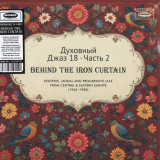
- A1: Leningrad Jazz Ensemble - Aria
- A2: Sh Jazz Quintet - Delilah
- A3: Josef Blaha Trio - Inter Mezzo Forte
- A4: Csaba Deseo Ensemble - Beyond The Csitári Mountains
- A5: Manfred Ludwig-Sextett - Skandinavia
- B1: Anatoly Vapirov - Mystery
- B2: Zbigniew Namyslowski - Piatawka
- B3: Andrzej Trzaskowski Quintet - Synopsis (Expression I)
- C1: Tomsits Quartet - Dhrupad
- C2: Nicolai Gromin Quartet - Corrida
- C3: Valery Kolesnikov, Vyacheslav Novikov, Vladimir Molotkov & Alexander Christidis - Rainbow
- D1: Tone Jansa - Goa
- D2: S+Hq - My Girl (And Other Things)
- D3: Pege Jazz Workshop - Hungarian Folk Song
One of the most politically charged terms of the 20th century, the Iron Curtain was a metaphor for political and cultural division. In a post-war telegram Winston Churchill referred to the fault line that ran through Europe between East and West as "an Iron Curtain is drawn down upon their front. We do not know what is going on behind".
In this two-part album, as far as jazz is concerned, we will showcase, describe and celebrate exactly what was 'going on behind'. We see that music is the power supreme, with the ability to transcend all barriers, be they physical, political or metaphorical.
Our liner notes illustrate the complex and contradictory history of Soviet jazz, and the tracks we've chosen cover the key period of the early 1960s to the 1980s. It was during these dark years of the Cold War that the Soviet Union and its satellite states produced a number of outstanding artists playing in a variety of styles. The impact of modernism, from hard bop and Latin to modal and cool jazz, had found its way through cracks in the curtain. The deeply-felt ancestral strains of traditional European folk music were combined with the exciting new and progressive sounds of the West, and a radical, intoxicating brew was created that no amount of guns, tanks or polonium tea could overcome.
We chronicle the triumph of jazz at a time of extreme geopolitical conflict. What went on behind the Iron Curtain in these countries was once mysterious and unknown to the West, but the perseverance of their artists provided sound and light amid the secretive, dark days of the communist-capitalist standoff. There was no end of life-affirming spiritual jazz behind the Iron Curtain.
"Whether it's by improvisation in the African-American jazz tradition, or by a village kobza player standing on top of a damn hill - he feels connected to the stars."
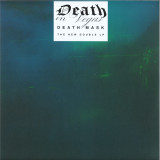
On June 6th, Death In Vegas return with new album ‘Death Mask’, where disintegration, overload and total sonic immersion tell a personal tale. With dirty circuitry and rough-hewn textures at the fore, this is gritty, unpolished techno; an audio outlier that’s full of personality, and a bold artistic statement. It’s closer in DNA to the grainy growl of sunn O))), or the searing intensity of Underground Resistance at their fiercest, and as far from generic influencer business as you could possibly get.
“I’ve been soaking in Ramleh’s ‘Hole In the Heart’, the machine funk of Terrence Dixon’s Population One, Jamal Moss’ psychedelic techno jams, the stunning minimalism of Mika Vanio’s Ø and Panasonic, the layered drones of LOOP, and drowning in the acid of TM 404”
Broader inspirations are weaved into the album’s fabric too; from his Thameside Metal Box studio and evocations of nautical ghosts, to lamentations for a broken world, to memories of a youthful Detroit pilgrimage, and the innocent fraternity of rave euphoria, there’s a lot going on, acting as a chronicle of moments, and locations.
Human Engineering LP started with a performance photograph, taken during the first stages of the global Coronavirus lockdown in a disused municipal building in Easthampton, Massachusetts. Taking the form of a proficient and emphatic high-jump, with a recording of its sound, and a spoken text, amplified through the strings of an abandoned piano occupying the same space. The resulting photographic and sound documents formed the basis of an audio correspondence between Rick Myers, Andy Votel and Sean Canty which was recorded and arranged between Easthampton Mass. and Manchester from 2018 to 2024.
The latest transmission on Samurai tunes into half-time intensity with a psychedelic edge courtesy of leading French practitioner Vardae. Applying techno hypnotism and cinematic atmospheres to his snaking beat constructions, the Lyon-based artist delivers a pitch-perfect exercise in mystical meditation that follows a natural path from the Ancestral Voices LP.
Since first emerging around 2017, Vardae has been determined to establish a sound unbound by genre restrictions. To date he's successfully moved between cult labels such as Non Series and Ooda while pivoting from linear 4/4 to crooked broken beat without disrupting his immersive, finely sculpted production style.
Alongside his releases, Vardae is also responsible for the ouroboros festival that takes place every year in central France. Last summer, after the dancefloor closed on the final night of the the event, fabled Dutch transcendental ambient group Son Of Chi made an acoustic concert around the campfire that cast a spell over everyone present. This experience formed the inspirational basis for Vardae's new EP, drawing on the instinctive power of insistent rhythm and the spiritual intrigue that lies behind subtly dissonant tones - shadows cast by refined, restrained synthesis flickering in the imagined light of the flames.
From the rattle of timbale on 'The Light Motion' to the laser-focused ripples that charge through 'Voices Of Dispossession', Vardae bends and shapes his drum work with exacting intention across this EP. Treading the line between 85 and 170BPM, he approaches fierce peaks in his tracks with an exacting patience, building to the arp-soaked climax of 'Flaming As A Cloud' and its ecstatic, melodic crescendo.
Proudly individual and drawing from the deepest of musical experiences, Vardae's latest statement promises similarly profound moments when these pieces come into contact with the right souls and the right sound in the right setting.
CS003, our next offering on wax, is home-grown. The Instruction EP features three original productions by label co-founder Niall Kelly complimented by a remix from the inimitable Carl Finlow. Niall’s debut EP showcases his prowess as producer harking to a pool of influences found in the sonic DNA of our hometown of Leeds, with added firepower provided by a legendary artist with close ties to the city.
Echoes of the rowdy bygone Mint Club ooze through the slappy tech house roller ’Section 1’ which opens the record. The chunky basslines retro synths and robotic vocoder connect the dots from Niall’s palette to the unmistakeable sound of Yorkshire Bleep on ‘Seven Wolves’. Carl’s treatment of ‘Section 1’ pivots into a darker, dystopian soundscape full of fizzing hi hats and dizzying synths that amalgamate into a dancefloor shaker that is unmistakably Finlow. The EP is rounded off by Groove Key, a track which serves up a special disorientating euphoria designed to be heard on large soundsystems and felt deep within your bones.
"Bassland Prophecy" was a collection of Southern California musicians, including Alex Xenophon (Deep Squared), Stuart Breidenstein (formerly of Skylab 2000), Alissa Kueker (vocals), and Maxx Vaxx (Euterpre, Butterfly Garden).
The act nourished and grew the emerging LA scene and was a renegade force in live electronic improvisation. Rather than composing full tracks, Breidenstein stated over email that they built musical "ingredients" on the fly, syncing DOS and hardware sequencers mid-performance. Their unpredictable sets, from illegal raves to makeshift desert parties, resulted in electrifying, unforgettable sonic trips.
Recalling 90s LA, Breidenstein said: “Before the internet, finding a rave was an adventure. You’d get a flyer with a phone number, call it the night of the event, then drive—sometimes 100 miles or more from a map point to the actual party. The scene was raw and underground, built by music obsessives hunting for the freshest sounds.”
Two standout tracks from 1996—“Nine / Deeper” and “Blue and Purple Starship of Trust”—perfectly represent their unique genre-bending concoctions. Against all odds, the recordings survived and have been given new life, remastered and reissued on Bristol-based *Sex Tapes From Mars*. To produce the wizardry, their setup included a Juno 106, Yamaha FB-01, a Roland S330 sampler, and a Sequential Circuits Pro-One mono synth with external MIDI, and some guitar effects pedals.
“Nine / Deeper,” born from one of their many spontaneous studio sessions, became eerily intertwined with recurring appearances of the number 9 and black cats. So much was the frequency of apophenia episodes that paranoia began to take over the artists. Recorded in a makeshift living room studio, the 14-minute excursion traverses genres and tempos, beginning quick and hypnotic, and climaxing chuggy and drenched in adlibbed acid lines, culminating in a surreal and legendary live performance in Hollywood. The piece captures the raw spontaneity of their sets, crafted with vintage gear, cassette tape recordings, and, as always, a DIY ethos. Breidenstein states, “While improvised sessions often failed, when it succeeded, it was definitely a kind of infectious magic the listener would recognize.”
“The Blue and Purple Starship of Trust” is a deeply personal piece, named after when Breidenstein saw a heavenly blue morning glory on a walk around his neighborhood, and emerged from heartbreak and the following deep depression entrenching his life at the time. Recorded in a single take onto cassette tape, blending piano, guitar, and heart-rending vocals into an emotional, dreamlike journey. The track starts with a lush, cascading synth sound, bolstered up by rolling, reverbing downtempo drums. Using Sequential Circuits Pro-One throughout, the rippling synths and off-key piano licks act like pipetted droplets of water, all elements bleeding into each other in some kind of hallucinogenic swelling, reflecting Breidenstein’s fading relationship. The guitar part is a nod to Bill Withers’ “Ain’t No Sunshine,” and Breidenstein recalls just “bawling as the guitar line was recorded.”
Created in a time of artistic struggle, living in an old school bus, surviving on instant noodles while hauling their gear from venue to venue, and scraping by on gig money, these recordings act as rare artifacts of a movement that thrived on passion and perseverance, standing as a poignant testament to resilience. Though they released a handful of tracks, ranging from deep house to ambient to techno, their true legacy lay in their high-energy, genre-blurring live shows, which are powerfully encapsulated within these recordings and leave a lasting impact on underground electronic music today.