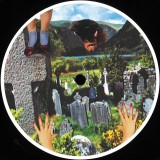
Caiphus Semenya, AKA Mr Letta Mbulu, is a South African legend, and Listen To The Wind, his iconic debut album, is simply a superb modern-soul/boogie album. It’s also incredibly rare, especially in good condition, so Be With is delighted to present this reissue.
Now a revered composer, musician, and arranger, Caiphus left apartheid South Africa in the 60s for self-imposed exile in Southern California together with his wife, Letta Mbulu. Settling in Los Angeles he started working with the likes of Hugh Masekela and Miriam Makeba and other exiled and semi-exiled South african artists, as well as, of course, his wife Letta.
Caiphus also found himself working with and composing for a broad range of jazz and pop artists, including Lou Rawls, Nina Simone and Cannonball Adderley. His facility with both jazz and African forms served him well. His LA stay was also the beginning of an ongoing collaboration with Quincy Jones, the fruits of which can be tasted in Caiphus’s African compositions for the scores to Roots and Spielberg’s adaptation of The Color Purple.
Given his decades of work behind the scenes, it’s no surprise that it took until 1982 for Caiphus to get around to putting out the first album of his own. But all that experience shows. Listen To The Wind is a deeply impressive synthesis of early 80s US production and instrumentation together with his traditional South African musical roots.
It’s stylistically diverse but the ingredients are never diluted. There are elements of boogie, soul, funk and jazz, all shot through with pan-African flavour, and moving effortlessly from uptempo floor fillers to more meditative, slower soulful tracks. Produced by Caiphus himself, he makes full use of a stellar line up of session musicians including Nathan East, Michael Stanton, Sonny Burke and Paulinho DaCosta. And of course, there are Letta’s show-stopping vocals. To our ears, Listen To The Wind is just one big party, and lord knows we need that more than ever right now.
Opener “Angelina” is one of Caiphus’s most beloved tracks at Be With HQ. It’s a breezy, feel-good SA boogie-funk classic. Harmonic and horn heavy, it sounds as fresh today as it would’ve done in the early 80s. If this one doesn’t make you move, you may need your pulse taking. The drum breakdown alone, a little over halfway through, is sensational.
It’s followed by the gentle reggae lilt of “Play With Fire”. A real melodic slo-mo delight, carried by the tropical vibes and, above all else, by the extraordinary performance of Caiphus himself and his backing singers.
Closing out side one, the spectacular “Umoya” is driven by triumphant horns and slick bass. With its proto-Graceland vibes, we reckon Paul Simon must’ve been listening. Hard. Caiphus trades verses with the unmistakable tones of Letta, and it sounds divine. Yes, it’s as good as anything on Letta’s canonical In The Music… The Village Never Ends. A wide-eyed wonder, made for unity and togetherness, it’s all infectious, smiling faces for nearly nine minutes. But never mind nine, we could party to this for ninety minutes and “Umoya” would leave us re-energised for ninety more.
Elegantly firing up side two is perhaps the album’s best known track. “Without You” is a heavenly slice of modern soul, an end-of-nighter to end them all. Smooth strutting, disco-fied funk with that unmistakably South African sound, it’s just sublime, with those lyrics that keep coming back to smiling faces and community, “without You the sun won’t shine”. Big with the likes of Rush Hour’s Antal, this is aural perfection.
“Ziph’inkomo” is a soul-soothing, swooning epic. Gently building throughout, its final few minutes are genuinely stirring as the backing vocals and instrumentation swell. Jaw-dropping. The irresistible groove of frantic, percussive workout “Gumba Boogie” closes out what must surely be one of the greatest artistic statements of the 1980s. If his friend Quincy wasn’t feverishly taking notes for Thriller, then you could’ve fooled us.
With Simon Francis handling the mastering of this Be With edition, you know it sounds as fantastic as ever. The cover art, as breezy as the music, has been faithfully restored. All that’s missing is you.
Cerca:4 minutes
A 38 minutes exorcism, dionysac sexyness fueled with romanticism, made of mechanical incantations mixed with spectral vocals of forgotten imaginary tribes, words from a physicist (Incomprehensible Image), and mystical breathings… To remind you that music is demanding your soul and body, fully.
A master irritator, disclosing this talent all the way, down to every chosen title, for the album itself and all of its components (would you put Milk in Water ?). As repetitive or minimalist music may already make some of you feel nervous, it seems more accurate to talk here about primitive music – notwithstanding a non violent anarchism. But those are only words and vain attempts to attach TLT to a region or a family. Neither the burden of classical European music legacy, which eventually lead to pop music, seemed to interfere with his wild mind, and if it is no surprising to hear Bach in German electronic music, there is here a clear statement that you are out of this sirupy prison…
For D.W. is a sorcerer. He’s been empirically learning the speaking of trance with years of touring and experimenting with all kinds of audience and venues, from clubs to museums, from Mongolia to Brazil, from his performances with his bands Kreidler or Toresch to solo ones, sustained by a steady limited set up, as the one used when he’s recording : one MPC, rudimentary synths, few effects and a mixer. No sound engineer on stage as only he knows his secret language… Raw dubmaking, leaning towards hip hop, indubitably underlining here a significant distanciation from his previous industrial inspirations. The bewitchment of this record is operating with no warning from the very first seconds until the last epiphany of Sales Pitch.
He is using his knowledge of techno, psychedelism (Inverted Sea), UK bass (Jumping Dead Leafs), only to bring you out of it. We all tend to be slaves, without even being conscious about it, and a balance must be existing between being a slave and showing off. Mr. Weinrich’s answer is unsettling because it is an utter call to this balance, in our world of black and white and political correctness. There is no morality in music… Don’t expect anything else than an unaccountable liberating immediate experience. Don’t expect any kind of music because you are already in the past or the future… From his recording technique mainly relying on one takes, his adoration of mistakes and jeopardy, to the core essence of repetitive music, it is all here about being in the present. No ears no glasses.
Faitiche presents a new album by Frank Bretschneider. abtasten_halten was made as part of the raster.labor installation first presented at CTM Festival in 2019. It is perhaps the most radical work in Bretschneider’s distinctive oeuvre: abtasten_halten is a self-generating composition for synthesizer modules whose sole sound source is the movement of two VU meter needles. The resulting percussive sounds coalesce into rhythmic combinations – all random, without repetition. The album resembles a meditation on infinite rhythmic variation. abtasten_halten is Frank Bretschneider’s first release on Faitiche.
One sound can give birth to thousands of tones through self-fertilization. Pierre Henry, 1982
Frank Bretschneider on abtasten_halten:
abtasten_halten (sample_hold) is a largely self-generating composition for a modular synthesizer system. Self-generating here means that as soon as a current flows, the various modules interact, but within limits set by the composer via the connections between the modules (patches): timing, tempo, timbres, dynamics. These conditions are kept variable to a certain extent or left to chance, so that the composition created is always similar but never the same. On the one hand, the use of random generators opens up possibilities that would not otherwise have been considered. On the other, it offers the fascination of the unfinished and the unique: totally unexpected musical events that you might hear only once.
abtasten_halten combines my preferences for percussive music in general and electronic music in particular. Largely avoiding repetitive structures, the piece is more like a free improvisation, quiet and diffuse, but also extremely dense, in ever-changing contrasts and transformations.
The tone generators are two modified VU meters whose needles, driven by trigger impulses, create a simple one-bar pattern by hitting against a metal spring that is connected to a piezo element (thanks to Gijs Gieskes / Gieskes.NL). The tempo is continuously varied over a period of about ten minutes by several mutually modulating LFOs, ranging from about 0.06 Hz up to the lower audio range of about 18Hz.
The percussive sounds thus obtained are then passed through low-pass filters with moderate resonance and random frequency modulation to additionally colour the sound. Further processing is then executed by an echo module whose tempo and repetitions are again determined by random parameters. Finally the audio signal is occasionally enriched with reverb to add more spaciousness to the sound.
The concept for the installation raster.labor was developed by Olaf Bender, Frank Bretschneider and David Letellier. Many thanks to raster - artistic platform.
On Frank Bretschneider:
Frank Bretschneider works as a musician, composer and video artist in Berlin, making mainly electronic work based on complex rhythmic structures and interlocking textures, whose many-layered sound is inspired by the experimental set-ups of modern physics, often supplemented by perfectly synchronized computer-generated visualizations. In 1986, he founded AG Geige, one of the most influential underground bands in East Germany. In 1996, he co-founded the label raster-noton and has since released many solo albums.
Westcoast Goddess first came to our attention at the end of 2018 following his debut release on Canadian label Heart To Heart, but his productions actually date right back to ’93 (under various different guises) when he first began making music with his trusty Roland DR550 and Kawai K1. With a fresh and distinctive sound, WG successfully fused soulful touches and late 80’s-era digital synths with raw, punchy grooves and a euphoric, ravey atmosphere. Since then, the Berlin-based producer has built a solid following amongst underground house heads with subsequent releases dropping on esteemed labels such as Omena, Slam City Jams and Let’s Play House.
Opening up the EP we have Step Inline (The Narcotic Soul), which is a piano driven, uplifting slice of house heaven. A simple repeating 2 bar chord pattern lays down the foundation for soaring strings, cascading chimes and seductive echoing vocal hook.
Next up we have The Devil In Mr Holmes (The Erotic Soul) which once again goes heavy on the piano stabs but this time developing the arrangement into something that feels more like an instrumental dub of a long lost Prelude release. Crystalline synth lines come and go, whilst electronic tom hits add pace and energy to the unrelenting house groove.
Flipping over we have the epic I Might Be Ok (The Faithful Soul) coming in at over 9 minutes and being all the better for it. A dirty Moog bassline leads the charge with beautiful synth lines layering up on top, creating a blissed-out vibe which can’t fail to lift your spirits.
Taken from their acclaimed self-titled debut album, ‘One Hand Tommy’ is its latest single and proves no matter how strange our world seems right now, it could always be stranger…
In a blitz session of blood curdling vocals, disarticulated fretwork and wickelly deranged lyricism, ‘One Hand Tommy’ sees The Imbeciles tell us the tale of: Tommy; a child trapped in a dystopian landscape of nuclear annihilation with only a giant killer snake for company.
‘One Hand Tommy’ is the latest exhilarating track to be released from The Imbeciles self-titled debut album - out now. Comprising 13 imploded songs which rarely last more than two minutes, the album was recorded on tape in eight deranged days on the Texan-Mexican border. Packed with stripped-down musical information and resonant with atmosphere, the album was hailed by CLASSIC ROCK as “Some kind of Apocalypse Now” (✭✭✭✭). The band also gained masses of support at radio from BBC 6 Music, Radio X, BBC Radio 1, amongst others. The delirious fun of ‘One Hand Tommy’ is just another reason to believe the hype...
And now it’s been remixed by DJ Tennis & Danny Daze, Mark Broom, Suzanne Kraft and Duncan Forbes.
The remixes have picked up a fantastic amount of support from a long list of names, including this lot – Radio 1’s Pete Tong, Red Axes, Jackie House, Len Faki, Gerd Janson, Laurent Garnier, Ben Sims and more!
Lina & Gwen Wayne have become notorious for their techno sets throughout Germany and Europe, maneuvering from insider to headliner depending on the premises. We are pleased to announce their first EP "Genug gelabert" will be released on 4th September 2020 via Hold Your Ground on 12" vinyl and digitally.
Worm & brutal, like falling face first onto the concrete floor on a warm summer night, is the first track "Palaber" by Lina & Gwen Wayne. For six minutes, the ground feels like the sky, lying feels like falling, dancing feels like breathing and beyond your immediate surrounding there is nothing. This is techno and for the moment these two producers from Hamburg and Berlin are your new horizon.
The two DJs started producing together in late 2019, with their no frills & dark, but fun style translating effortlessly into their own productions. "Genug gelabert" ist the title of their first EP, meaning Enough said, and we are gonna keep it at that. Come marvel at the beautiful brutalism. Incl. Remixes by Moog Conspiracy and Innacircle & Metatext.
Vital Sales Points:
DJ promo by Cutthenoize, German print & online by Audiolith Inhouse, UK/international online
The Story Itself
On the 12th of April 1961, Yuri Gagarin was launched into orbit for the first and - so they tell us - the last time. Upon returning to Earth, Yuri became a global hero, travelling the world to tell of his adventure.
Secretly, he was plagued by strange hallucinations and a persistent glow around his vision; a cornucopia of colour in a constant corona. In 1964 - following a silent coup by Leonid Brezhnev - Yuri was banned from embarking on further manned missions into space. At first fearing madness, the cosmonaut came to see these apparitions as a signal, an invitation, a welcoming beacon from a distant lighthouse blinking across the cosmic void.
On the 27th of March 1968, aided by trusted friends within the space program, Yuri Gagarin swapped places with another cosmonaut on a secret test flight and was once more blasted into outer space. Knocked unconscious by the extreme velocity of his experimental craft, Yuri awoke a mere 15 minutes later in view not of the rapidly shrinking Earth, but an entirely alien vista; he was elsewhere...
About Tony Neptune
Tony Neptune is a multi-media persona created by the Leeds-based artist and producer Sam Jefferies who, inspired by the narrative and musical legacies of early Detroit techno culture, aims to tell a complete story for the senses through a combination of image, sound and text. Asa member of the DimensionsDJ Directory three years running, some know Jefferies for his notorious DJ sets—whether he’s playing new wave or booty bass; as Tony Neptune or Yuri; solo or alongside Mark ‘Turbo’ Turner in another peak time marathon b2b, it doesn’t take long for crowds to catch on to his deep knowledge of all things riddled with Hi-Tech Funk and Soul. But this isn’t the only storm he’s cooking up: in his visual work, Jefferies uses oil paint to unveil the surreal and celestial adventures of the original cosmonaut and space pioneer, Yuri Gagarin, capturing every aspect of their dream-like surroundings with an eye devoted to detail and depth. This painting lies at the heart of his debut EP, Reflections on a Daring
A memorable name with an outstanding cover, Fuzzy Duck is a classic slice of underground London art rock and melodic psychedelia. Originally released on MAM in 1971, it’s truly a musical force of infectious riffs and fiery solos, sharp tempo changes, a tight rhythm section and heavy, Hammond-drenched grooves. With echoes of Spencer Davis Group, early Grand Funk and Vanilla Fudge, it comes on like a heavier Soft Machine or Caravan. No wonder Fuzzy Duck’s cult appeal has endured.
The album features Mick Hawksworth (Five Day Week Straw People, Andromeda) on bass, acoustic 12-string, electric cello and some of the vocal duties, and also Roy “Daze” Sharland (Crazy World of Arthur Brown, Spice) on organ and electric piano. Accompanying those two were Paul Francis on drums and percussion, and Grahame White on guitars and the rest of the vocals.
Originally released in an edition of 500, Fuzzy Duck became legendary all over the world through a holy trinity of scarcity, personnel and its sheer brilliance.
The album kicks off with a heavy, bass-fuelled, Hammond rocker titled “Time Will Be Your Doctor”. This is pure hard-edged blues rock, brilliantly played. Its drum break intro was sampled by DJ Premier for Gang Starr’s “Mostly Tha Voice” on 1994’s legendary Hard To Earn. And we can hear its personality all over Harvey and Thomas Bullock’s Map Of Africa.
Rollicking highlight “Mrs. Prout” follows. At nearly 7 minutes long, it incorporates more psych-leaning guitar and drawn-out keyboards à la Ray Manzarek with the band effortlessly switching from jazzy rhythm section to a progressive one. That magnificent instrumental jam that starts half-way and continues through to the end is a true wonder.
“Just Look Around You” is propulsive folk-rock with a soaring, proto power-pop chorus, backed by frenetic organ and heavy bass high in the rich, intoxicating mix. Back comes the heavy, strung-out psych to both close out side one with “Afternoon Out” and kick off side two with “More Than I Am”. Both tracks are improvisational winners that stylistically nod to the late sixties and “More Than I Am”’s guitar hook, catchy organ and memorable chorus would’ve surely made it a great single.
“Country Boy” quenches the thirst for rhythm and melody, only the lyrics and vibe are wonderfully creepy. The sudden cut of the groove and the drop into a more sinister tempo will make you stumble, before the band pick up speed and toss you back again into the opening jam, this time with a badass organ to ride you home. The final, fully fleshed out track is the majestic “In Our Time”, which oscillates between endless organ-driven boogie and heavenly, genuinely moving vocals. Just stunning.
Infamous instrumental cut “A Word from Big D” rounds out the album. Yes, that’s the band jamming with duck quack sound effects accompanying the music. “Ducking vocals” as the sleeve says. You know, just in case the whole “duck” theme had passed you by. It’s an appropriate closer for what sounds like an album that must have been *a lot* of fun to record. It’s definitely fun to listen to.
Mastered by Be With’s chief sound duck Simon Francis and cut with glee by the veteran Pete Norman, this reissue of Fuzzy Duck’s one-and-only LP sounds as mighty as it should. That unforgettable sleeve artwork has been carefully restored and the records pressed by the wonderful Record Industry in the Netherlands. Essential.
- A1: Crescendo
- A2: È L’ora Dell’azione
- A3: Le Zéphyr
- A4: Diagonale Du Vide
- A5: Sur Les Plages De La Vie
- B1: Les Choses Qu’on Ne Peut Dire À Personne
- B2: Étranges Nuages
- B3: Tombeau Pour David Bowie
- B4: L’enfant Sur La Banquette Arrière
- B5: Tribunes Au Couchant
- C1: 36 Minutes
- C2: Tour Des Lilas
- C3: Ultradevotion
- C4: Son Et Lumière
- D1: Musées Et Cimetières
- D2: Hologramme
- D3: Coeur Défense
- D4: Un Ami Viendra Ce Soir
- D5: Etude In Black
“Les choses qu’on ne peut dire à personne” is Bertrand Burgalat’s fifth studio album. The record features 19 titles that set the bar very high, speak about the world as it is, with strength and subtlety. Racy songwriting, supple rhythms, sumptuous harmonies, corrupting voices: the testimony of a goldsmith at the height of his art. A masterful record that looks like no one else.
Sublime, unique, sexy and peculiar unreleased scores by electronic and jazz pioneer Ron Geesin, made for the sublime, unique, sexy and peculiar films by maverick director Stephen Dwoskin. There. we’ve said it. And if you have not heard of one or either of these two dudes it doesn’t really matter. Geesin made great music and worked with Pink Floyd. Dwoskin made odd films, most of them are in the BFI permanent collection. They are great and a bit strange.
These superb unreleased soundtracks come from a fascinating, progressive and important period in British film history. They represent an intriguing collaboration between the lively Ron Geesin from Scotland and the American Stephen Dwoskin, who both met in London.
Musically they are minimal, charismatic and quite groundbreaking. Here is the story…
HISTORY:
Steve Dwoskin arrived in London in 1964, aged 25, with several 16mm films in his trunk, shot in the cold-water flats of Greenwich Village. He had been on the fringe of the Factory scene, and some of his films starred Beverly Grant, ‘the queen of the underground’. But they had scarcely been seen, and they didn’t have soundtracks. For almost a year they stayed in the trunk, and stayed silent. Then he met Ron Geesin, somewhere around Portobello Road.
‘Slept last night, completely dressed after working over 12 hours on sound tracks at Ron’s,’ wrote Dwoskin in his diary for 29 July 1965. ‘My films are not anywhere near being anything. I need more energy, more concise and positive ideas and less inhibition. And of course space, money and people.’ Dwoskin, who taught and practised graphic design by day, had recently decided to stay in London beyond the term of the Fulbright scholarship that had brought him there.
Ron, living with Frankie in a basement flat in Elgin Crescent – they would marry the next year, with Dwoskin as best man – was about to leave the Original Downtown Syncopators, the trad jazz band he had joined aged seventeen-and-a-half, and was trying to go solo. On stage he would make vigorous use of piano and banjo; at home Frankie had bought him a new kind of instrument – a tape recorder. ‘Soon I had one tape recorder, two tape recorders, three tape recorders.’
Ron, wrote Dwoskin in his unpublished autobiography, ‘loved to record, and to cut and splice the quarter-inch recording tape to make new sounds. This triggered in me the idea of getting back to my films and finishing them’. Soon he was living in a dank basement in Denbigh Road, a few minutes’ walk from Elgin Crescent. Ron’s soundtracks for Dwoskin’ films, recorded in the Geesins’ flat, encompassed Ron’s very eclectic range of styles – madcap piano and fretted banjo as well as tape manipulation.
Aside from Ron’s soundtracks, some of which belong to films that no longer exist (including Pot Boiler), Frankie would act in one of the films that Dwoskin either lost or never finished during these years. He was disabled, having contracted polio as a child, and Ron and Frankie were both carers and collaborators; Ron had met him when he was struggling into his car.
There was no London equivalent to the underground film scene that Dwoskin had known in New York, and his films remained unseen until such a scene began to come into being, in the autumn of 1966. Some of them made their debut at the Mercury Theatre, near Notting Hill Gate, that September. Dwoskin wrote that Alone, starring Zelda Nelson (from Ron Rice’s Chumlum), and Chinese Checkers, with Beverly Grant and Dwoskin’s friend Joan Adler, went over best.
Soon both Dwoskin and Geesin became involved in the nascent London Film-Makers’ Co-op, which put on screenings in Better Books on Charing Cross Road – ‘if you can call them screenings,’ Ron recalls; ‘I’d call it fifteen blokes in various stages of disarray, peering through the smoke’. One or more of the films had been ‘striped’ with magnetic audiotape; with others ‘we had no means of direct syncing to the picture, so he started the film and I started the tape recorder’.
In the same autumn, Dwoskin moved into a flat almost opposite the Geesins on Elgin Crescent. More collaborations followed, including Naissant, on which Gavin Bryars, whom Geesin had met during a stint on the northern club circuit with novelty act Dr Crock and His Crackpots, played double bass.
Around the end of 1967 Geesin released his first solo LP, A Raise of Eyebrows, and Dwoskin won recognition the Fourth Experimental Film Competition, aka EXPRMNTL 4, an occasional film festival staged at Knokke-le-Zoute in Belgium. By now the films had optical soundtracks.
It was only after this that Dwoskin completed his first ‘British’ films, including Me Myself and I, with Barbara Gladstone, an American dancer who had appeared in Barbara Rubin’s Christmas on Earth, and with whom Dwoskin and Geesin had at one point devised a stage show, never produced. For Moment, a single-shot film, Geesin provided his most experimental score yet. At the time of its debut in 1970, Dwoskin and the Geesins were sharing a house in Ladbroke Grove.
By then, Ron was working with Pink Floyd, and soon afterwards he and Frankie moved out to the country, to be replaced by Bryars both in the house and as Dwoskin’s principal collaborator.
Until now these scores have remained part of the Geesin Archive and have never been issued.
Sadly, soul diva Betty Wright left us recently, on May 10th of this year, only 66 years old.
We pay a tribute to Betty with this unique 12” release, featuring 2 of her greatest hits.
“Tonight is the night” (yes, the famous full 8 minutes live version!) appears on the “A” side of this 12”, while on the AA-side it features the 7 minutes long and easy mixable “Disco Purrfection Remix” of “Where Is The Love” by Canadian DJ DiscoCat, now however edited to perfection by Ben Liebrand at a steady 128 BPM.
”Tonight Is The Night” is taken from the (previously top10 Billboard-) album “Betty Wright Live”, which vinyl-edition will shortly be re-released with bonus tracks on the High Fashion Music label.
The Oystercatcher is the first collaborative LP from Cucina Povera (Maria Rossi) and ELS (Edward Simpson)
Recorded in London over two days, hours' worth of improvisations have been edited down to form these six tracks.
A fragile interplay is at work between Maria's drifting vocals and the ominous churn of Edward's modular synth. Each sonic element takes a turn at leading the way.
The opening track 'Mantle' is formed from sparse, monolithic electronics, woven gently with a thread of vocals. In the closing track 'Eon' Maria's voice shepherds spontaneous bursts of sounds, almost Rave-like if order were imposed, through 15 minutes of turmoil and resplendent until the end.
Maria's vocals make their own trails amongst the noise, bringing to mind the the exploratory language from Ursula K. Le Guin's album 'Music and Poetry from the Kesh', recalling the same understated mystery.
The overall effect of this collaboration is a completely unique creation albeit within a recognisable lineage of predecessors.
The artwork reflects the vision of these two artists, collaged together. Both images are from a trip to Helsinki. Edward's photograph of Tulips caught after dark are reviled by a flash. Maria's seemingly abstract drawing is a graphite rubbing taken from a granite slab of a pavement somewhere in Kallio. Together the two images represent two different methods for capturing a city's haptic landscape.
The album moves with a feeling of transience, which is no surprise given that the idea to collaborate was formed in Helsinki, realised in London and edited together in Rotterdam.
The Oystercatcher tells a fragile tale, one that spins out into the unknown. A cold union of voice and machine, still tentative and probing, learning to co-exist. A kind of fundamental shift whereby shared moments have been turned to sound.
The Oystercatcher is a bird that can freely travel between the earth, sea and sky. The motif is taken from a Tove Jansson short story. A dead bird washes ashore, two different versions of events are presented to how the bird came to die. The album feels like two different stories being presented on top of one another but ultimately coming to the same tragic conclusion.
Cucina Povera is Maria Rossi - Vocals
ELS is Edward Simpson - Synthesisers
Recorded in London across two days during the Summer of 2019
Mastered by Russell Haswell
The original, the inspirational, the bombastic, the never bettered, the one.
'Don't make me wait' is all of the above and so much more. Classic to the core. Huge earth shattering record right here.
OK, so the scoop, for the uninitiated is this - the Peech Boys were Larry Levan's group, we're talking early 80's NYC here, 1982 to be precise, around the height of the Paradise Garage as Larry was making the transition from superstar DJ to producer. He brought a sparse, dubbed out, narcotic late night feel to the overall sound of this record. This was a short-lived project, but the influence is still felt today, the Peech Boys DNA is inside the veins of modern dance music, as is Larry's. There is no underestimating what an impact this record had. 7+ minutes of electronic bliss, trailblazing stuff, and don't get us started on the dub. Do yourself a favour, BUY this classic if you don't own it already, you'll keep coming back to it time and time again. Guaranteed. This essential 12" is repressed here in it's original 1979 glory, an essential classic that has stood the test of time for the last 30+ years & is now available again, remastered & repressed for 2017 in conjunction with West End Records, NYC.
Visions Recordings present here two new jams from Alex Attias productions with a collaboration featuring long-time friends Mark De Clive-Lowe, Justin Chapman AKA Just One and Hajime Yoshizawa.The A side is a latin house bossa organic track with Justin on vocals and guitar over beautiful lush Rhodes and synths played by the incredible Japanese musician, Hajime Yoshizawa. The track is a 10 minutes’ journey into a jazzy soulful vocal jam. A summer vibe to warm us up before the sun comes back.on the B side, Mark de Clive-Lowe delivers keys and piano sounds on top of Alex ‘s funky and groovy mpc house beat for maximum impact on the dancefloor. Two strong tracks to have in your collection for those who love house music with soul and jazz.
Hey Existeers!
The new Pudel Produkte release has arrived!
This time, it’s more like a record for yellow press readers – due to the high celebrity density on the two tracks! First, there’s Richard Fearless. The guy has been on the “Mission Impossible” soundtrack and he was famous in New York and London as DEATH IN VEGAS. He composed the music on this record and recorded it together with the slackers of Circuit Diagram, which is why the project was aptly named DEATH CIRCUIT. That’s logical, that’s correct, excellent!
One track of theirs is called “Strom Dub”, and the full length of it has been pressed onto the A-Side of the record. It sounds like Synthesizer music usually sounds: Sexy and warm and cold. The tears of technology dripping onto your head for eight and a half minutes while the spirit of the 80s sneaks in through the back door.
Like the B-Side, this track is a grower, a slow creeper you’ll want to hear again and again. Ac-cording to science, this is just what the people need in these days of unhealthy acceleration. And yes, the B-Side: There’s the track “Teeparty am Waldbrand” which translates to “Tea Party at the Forest Fire”, and it features the fat-mouthed DAS BO and RALF KÖSTER. Trust us, it’s just as hard for native speakers to decipher what they’re saying, but we were assured there’s even a “political dimension” to the track, so I guess we’ll have to listen again. Soundwise it’s a beautifully clut-tered mess, a cold wave sprinkled with bizarre brittle that lures you out into nature.
Ah yes, Pudel Produkte – it’s still minority music from the planet of the apes for people that know where to go, and that is elsewhere than the others.
Coming next on the Brookside imprint is a double sided, colour vinyl 12” banger featuring two new versions of First Choice’s epic “Armed and Extremely Dangerous” reworked and dubbed out by none other than Hot Mix 5 & Chicago House legend Ralphi “The Raz” Rosario.
Ralphi returns to Brookside and updates the track with a brilliant reworking on the drums and vocals, while adding a soulful keyboard track to give it an updated feel. Flip it over to the B Side and we have a new version of “Love & Happiness” remixed from the original multi track tapes by NY DJ/Remixer Mike Maurro who takes the track to over 10 minutes with instrumental extensions and beefed up drums keeping it respectful to the original as always.
Produced by and dedicated to the late legendary Reid Whitelaw.
Two Past Inside the Present artists that have previously released works on the PITP label come together for this anonymous split ep. 19 minutes of lush, slow-moving ambient trails. With this record we want listeners to go in blind, without ego or expectation, with the sole focus on what truly matters: the music. The artists and titles will remain anonymous until the vinyl sells out and then we will reveal all.
the title track of nine-minute long “the evasion of the spiritual soldier” grooves laidback with jazzy rhythms and italo leaning melodies.
on the opposite,13 minutes long trip “flags of himalaya” opens with restful percussions that unhurriedly start to dance with soft string, piano and horn melodies.
Repress
First up is a reinvention from Coby Sey - the Lewisham, South London musician who's founded the Curl collective alongside Mica Levi and Brother May and collaborated with Babyfather, Klein and Tirzah, noted as one of the 50 best new artists of 2019 by the guardian. The tone and atmospherics of the original’s combination of synthesiser and woodwind are sliced into ghostly, mesmeric fragments and refitted in layers around loping, propulsive rhythms with something like UKG's steppiness - languid despite being uptempo, bright and almost gleeful despite the inescapable mournfulness of the source material.
Who’s The Technician? of Ireland's Wah Wah Wino label - turns in a remix that wrestles with the original over seven- and-a-half-minutes of relentlessly captivating deep digi-dancehall, less of a remix than a rebirth cycle, with the latent soul-splitting lament of Kolida Babo’s duduk copy-pasted onto a delirious mercurial lead rotating through hedonistic ecstasy and burnout, a snake-eating-its-own-tail of a version cracking open the third eye with a crowbar, plus a post- apocalyptic, ruthlessly space-invading dub that blasts the remix’s scale out to the starkest retreats of the universe in search of...
Josh Wink joins Ellum Audio for a stellar new single backed with a remix from DJ Seinfeld.
Josh Wink needs little introduction to fans, or even occasional listeners to dance music. The American DJ and producer has been one of the most enduring figures in the scene with a catalogue of music on labels like R&S, Strictly Rhythm, Nervous, Pokerflat, MNus and of course his own long standing Ovum Recordings imprint. As a DJ, he has travelled the globe since the mid-nineties, headlining festivals and clubs wherever he goes. What he has never done in his almost 30-year career is ever lose touch with the roots of underground dance music, something he demonstrates once again here with a standout new single for Maceo Plex’s label.
As Josh says, “Eric and I have known each other since the 90’s, when I would come to Dj in Houston Texas, and now so many years later, I’m excited to have my music released on his mighty Ellum imprint, including a great remix from Dj Sienfield”.
‘Feel’ is classic Josh Wink, near eight minutes of spacey, hypnotic dancefloor wonderment fuelled by syncopated percussion and arpeggiated bass which builds the tension before a spacious drop and meditative, spoken word vocal take the reins. Timeless and heartfelt this is a gem from the Philadelphia legend.
Remix duties fall to Sweden’s DJ Seinfeld, the lo-fi house pioneer and Young Ethics label boss who chops things up with a warped bassline, wonky FX and dancing synth lines to bring a brilliant alternative to the table.