Tape
Pauline Oliveros and Guy Klucevsek's "Sounding / Way" was originally released on cassette in 1986 and has been out of print ever since. This LP was cut by John Golden and pressed at RTI in order to achieve a quiet, dynamic pressing.
The Sounding / Way concept was simple. Each artist would write a piece for two accordions and then they would perform them together. Thus, side A contains Guy Klucevsek's Tremolo No. 6 performed by Guy Klucevsek and Pauline Oliveros. Side B contains Pauline's composition The Tuning Meditation, also performed by both Pauline and Guy.
This is the second release in an on-going effort between Important Records and the Pauline Oliveros Trust to maintain and promote the music, philosophy and legacy of Pauline Oliveros.
Guy Klucevsek is one of the world’s most versatile and highly-respected accordionists. He has performed and/or recorded with Laurie Anderson, Bang On a Can, Brave Combo, Anthony Braxton, Anthony Coleman, Dave Douglas, Bill Frisell, Rahim al Haj, Robin Holcomb, Kepa Junkera, the Kronos Quartet, Natalie Merchant, Present Music, Relâche, Zeitgeist, and John Zorn.
Pauline Oliveros, composer, performer and humanitarian is an important pioneer in American Music. Acclaimed internationally, for four decades she has explored sound - forging new ground for herself and others.
Through improvisation, electronic music, ritual, teaching and meditation she has created a body of work with such breadth of vision that it profoundly effects those who experience it, and eludes many who try to write about it. Oliveros has been honored with awards, grants and concerts internationally. Whether performing at the John F. Kennedy Center in Washington D.C., in an underground cavern, or in the studios of West German Radio, Oliveros' commitment to interaction with the moment is unchanged. She can make the sound of a sweeping siren into another instrument of the ensemble.
"On some level, music, sound consciousness and religion are all one, and she would seem to be very close to that level." John Rockwell
"Through Pauline Oliveros and Deep Listening, I now know what harmony is. It's about the pleasure of making music." John Cage
Buscar:4 pleasure
The second release on CWPT marks the label’s debut reissue, delving into the most propulsive corner of label-founder Palms Trax’s collection in order to deliver a rare and foundational record from Chicago house music history.
Recorded in 1987, Rog’e’s ‘Body Fidelity’ would have surely ticked all of Ron Hardy’s boxes and then jacked them right back out again. The alias of proto-house hero Reginald Rodgers collaborating with vocalist Tanya Stevens, ‘Body Fidelity’ is at once sensual, playful and commanding, the scent of freedom, sexuality and new musical horizons potent across each of the four distinct cuts.
The ‘Radio Mix’ offers the most upfront blend, a full-bodied mix that once filled the local Chicago airwaves with Stevens’ permissive and persuasive performance. Elsewhere, Rog’e breaks the track down to its core elements for alternate DJ sensibilities. His ‘Percussapella’ mix is a raw, rhythmic trip that erupts with acidic licks, whereas the ‘House Club’ mix is pure dancefloor pleasure sculpted in what would soon become the classic mold. Finally, analog freaks and the sleaze-adjacent will find the most allure in the instrumental ‘Bass-Ment’ mix.
While the world continues to be in a bizarre mixture of feelings and circumstances, we can thankfully still hark back to last fall when the sophomore LP from the elusive and innovative KAMM band, Cookie Policies gave us an opportunity to reflect on the past while fully looking toward the future.
The album presented a beautifully unique blend of listening-oriented music styles, combining the early roots of the four producers and their pre-DJ formative musical travels. It is now our great pleasure to introduce an EP set of specifically dance floor-focussed remixes that take the diverse textural arrangements and expansive sonic bliss of the LP and stretch it around some solid percussive membranes, sure to excite many DJs and dancers out there in the wild as things begin to reopen.
KAMM band members Dave Aju, Alland Byallo, Kenneth Scott, each chose one original album track to rework with a more propulsive feel and from Aju's psychedelic West Coast breaks rendition of the noir-esque "CCBPGC", to Byallo's high vibe leveled-up flight of "Bird Call", or Scott's bold section-by-section recreation of the sprawling "The Soft Glow Of Electric Sex" laser-designed for heads-down late night club sessions, the boys came through to say the least. The real A1 treat of this reinterpretation package however comes from unanimous artist choice and label favorite I:Cube, whose majestic take on "Shleem" sees the veteran producer and master remixer move the bubbling ambient piece into bumping and rich space-age deep house territory, equal parts angelically uplifting and pure 5am club-belter/mind-melter.
Thomas Dahyot. the voice of Madcaps, a feelgood French garage band
releases his debut solo LP as alter ego Pepper White.
Found in the ten songs of The Lonely Tunes Of Pepper White are Dahyot’s first
the loves in song - the casualness of JJ Cale, the smeared pop of 1969 Velvet
Underground, the profane gospel of Nat King Cole, the acoustic heartbreaks of
Ty Segall, the snap and crackle of a Barratt or Ayers.
These are wedded to the trademark signatures of his song writing: the astonishing breaks, the wonderful arrangements and the attention given to tempo.
And then there is the omnipresence of the piano whose keys he had fallen in
love with, “Lonely For Too Long”, the first song composed on the instrument
and its mellotron finale, gives some clues about the state of mind in which the
album was composed.
“Still In Love With You”, is sung on two octaves, as if Pepper was in duet with
himself. The bewitching “Home Alone” invokes the devilry of Screamin’ Jay
Hawkins, while “Rom Com” lays bare, with derision, the guilty pleasures linked
to televisual mawkishness. These are the elements, new and old, that make up
Pepper White’s music.
Volume 5: JAZZ N PALMS returns with another selection of some of the most iconic sunset, poolside sounds to be heard at Pikes Hotel (Ibiza), reworked, retouched and edited for your listening pleasure. A trusted taste, JAZZ N PALMS warms up the monthly exclusive Ronnie Scott's (London) jazz concerts held at Pikes, fusing jazz sartorially with Latin, funk, rock and international sounds to be enjoyed under the palms and the sun of the Mediterranean sea.
Tape
Pauline Oliveros' Tara's Room has long been a favorite in the Imprec office and it's a great honor to be able to release it on LP for the very first time. Tara's Room was cut by John Golden and pressed at RTI in order to achieve a quiet, dynamic pressing. Originally released on cassette in 1987 following the 1986 release of "Sounding / Way" with Guy Klucevsek which is also available on LP via Imprec.
"Both pieces are intended to aid the listener in times of spiritual change, but are just fine for 'everyday' use as well. Highly recommended." Charles S. Russell, Ear Magazine
This LP features two long sides of infinite depth and sensitivity. Oliveros performs these pieces using a Just Intonation accordion and her Expanded Instrument System in order to bend both time and pitch.
Pauline Oliveros, composer, performer and humanitarian is an important pioneer in American Music. Acclaimed internationally, for four decades she has explored sound - forging new ground for herself and others. Through improvisation, electronic music, ritual, teaching and meditation she has created a body of work with such breadth of vision that it profoundly effects those who experience it, and eludes many who try to write about it. Oliveros has been honored with awards, grants and concerts internationally. Whether performing at the John F. Kennedy Center in Washington D.C., in an underground cavern, or in the studios of West German Radio, Oliveros' commitment to interaction with the moment is unchanged. She can make the sound of a sweeping siren into another instrument of the ensemble.
"On some level, music, sound consciousness and religion are all one, and she would seem to be very close to that level." John Rockwell
"Through Pauline Oliveros and Deep Listening, I now know what harmony is. It's about the pleasure of making music." John Cage
- A1: Forced Values
- A2: Sick Pleasure
- A3: Destroy Capitalism
- A4: Who´ll Survive
- A5: You Cant Deny It
- A6: Respect The Earth
- A7: Bullying A Nation
- A8: Fried
- A9: Nazi Go Home
- A10: What You Say, What You Do
- B1: No School
- B2: Blow All Town Halls
- B3: Create Your Own Life
- B4: Svensson, Svensson
- B5: Leonid Was Red
- B6: Pray The Lord My Soul To Take
- B7: Blue Eyed Devils
- B8: Chaos
- B9: Hundred Dead Cops
- B10: Forced Value (Live)
Crystal Winds legendary sophisticated soul LP first released on the privately pressed Cash Ear label in 1982, it's mad to me these amazing tracks have never made it to 45 yet so time to put that right, the classiest of classy 70s soul sides for your Djing and listening pleasure, you all know how much I love floaty 70s joints, not sure it gets better than this.
The key figures behind Crystal Winds were Paul Coleman and M.C. (Morris) Brown, both alumni of the band Rasputin's Stash which had had two albums out in the mid-'70s which had done reasonably well for Atlantic subsidiary Cotillion and Chicago indie Gemigo, respectively.
Between them, keyboardist Coleman and saxophonist Brown wrote the vast bulk of the album (guitarist Martin Dumas co-wrote Lover's Holiday with Brown, and one J.Lagrone is added to the credits of So Sad and Signs of Winter's Time) and handled the male lead vocals, with the distaff element provided by Theresa Davis. Brown wrote the horn arrangements, the pair did the string arrangements, and legendary concertmaster Rich Tufo (associated with Curtis Mayfield and other Curtom acts including Linda Clifford) was also on hand for the album (credited with conducting and orchestrating both strings and horns). Guitarist Dumas had also been a member of Rasputin's Stash, as had drummer E.Frank Donaldson (who plays on two tracks).
2LP[36,56 €]
Turquoise and Black splatter vinyl[27,69 €]
Gold LP[25,63 €]
Black Vinyl[26,85 €]
Forest Green Vinyl[39,08 €]
Red / Blue Splatter Vinyl[29,37 €]
Black Vinyl[29,37 €]
Vinyl[35,92 €]
Clear Vinyl[28,53 €]
Clear Vinyl[30,21 €]
LP[30,21 €]
LP2[38,87 €]
Black Vinyl[29,37 €]
Creme White Vinyl[31,89 €]
Clear Green Vinyl[31,89 €]
Lavender Marble[30,63 €]
Yellow w/ red & black splatter[30,63 €]
Black VInyl[30,21 €]
Cassette[15,08 €]
Black Vinyl[33,19 €]
Tidewater Tri Color Vinyl[34,87 €]
Though most debuts are the culmination of a lifetime of influences
and experiences, few artists succeed in mapping their musical
journey quite as vividly as Baba Ali has on ‘Memory Device’.
Tracing his Nigerian heritage, an adolescence absorbing No Wave
and the hip-hop on NYC’s Hot 97, time immersed in the techno
scene in Berlin, and the experimental punk spirit of his current
base in London, ‘Memory Device’ is an enthralling introduction to a
musician who resolutely defies pigeonholing.
Written during lockdown and recorded with Al Doyle (LCD
Soundsystem, Hot Chip) in East London, ‘Memory Device’ is both
a dizzyingly inventive exploration of Baba’s complex musical DNA,
and a thought-provoking treatise on the collective angst of modern
existence; a dance record dealing in small ‘p’ politics that,
spiritually, has been three decades in the making.
It was after moving to London that he began writing new music as
a solo artist, with his debut EP, ‘Nomad’, released in 2017. Soon
after he met British guitarist Nik Balchin while they were working
together at a bar in Whitechapel. Nik brought with him an entirely
new set of references, ranging from LCD Soundsystem and the
Pixies to Suicide and Iggy Pop. The new collaboration resulted in
the February 2020 release, ‘This House’, an eclectic four-track
collection fusing funk, blues and soul and featuring production
from Jamie Hince of The Kills. In July the same year the duo
released an unofficial mixtape, ‘Rethinking Sensual Pleasure’,
which they wrote while locked down together at Baba’s parents’
house in New Jersey, having been temporarily stranded in the US
following their New York shows.
Today Baba describes this process of producing a longer body of
work as being akin to “ripping a Band-Aid off,” giving them the
confidence to begin writing their debut. Work on ‘Memory Device’
began shortly afterwards, culminating in the pair recording the
album between November 2020 and February 2021 with Al Doyle,
who was chosen for his vast experience operating at the
intersection between dance and rock music. There’s no question
that Baba is leading by example with ‘Memory Device’.
Black vinyl[22,65 €]
2LP[36,56 €]
Gold LP[25,63 €]
Black Vinyl[26,85 €]
Forest Green Vinyl[39,08 €]
Red / Blue Splatter Vinyl[29,37 €]
Black Vinyl[29,37 €]
Vinyl[35,92 €]
Clear Vinyl[28,53 €]
Clear Vinyl[30,21 €]
LP[30,21 €]
LP2[38,87 €]
Black Vinyl[29,37 €]
Creme White Vinyl[31,89 €]
Clear Green Vinyl[31,89 €]
Lavender Marble[30,63 €]
Yellow w/ red & black splatter[30,63 €]
Black VInyl[30,21 €]
Cassette[15,08 €]
Black Vinyl[33,19 €]
Tidewater Tri Color Vinyl[34,87 €]
Though most debuts are the culmination of a lifetime of influences
and experiences, few artists succeed in mapping their musical
journey quite as vividly as Baba Ali has on ‘Memory Device’.
Tracing his Nigerian heritage, an adolescence absorbing No Wave
and the hip-hop on NYC’s Hot 97, time immersed in the techno
scene in Berlin, and the experimental punk spirit of his current
base in London, ‘Memory Device’ is an enthralling introduction to a
musician who resolutely defies pigeonholing.
Written during lockdown and recorded with Al Doyle (LCD
Soundsystem, Hot Chip) in East London, ‘Memory Device’ is both
a dizzyingly inventive exploration of Baba’s complex musical DNA,
and a thought-provoking treatise on the collective angst of modern
existence; a dance record dealing in small ‘p’ politics that,
spiritually, has been three decades in the making.
It was after moving to London that he began writing new music as
a solo artist, with his debut EP, ‘Nomad’, released in 2017. Soon
after he met British guitarist Nik Balchin while they were working
together at a bar in Whitechapel. Nik brought with him an entirely
new set of references, ranging from LCD Soundsystem and the
Pixies to Suicide and Iggy Pop. The new collaboration resulted in
the February 2020 release, ‘This House’, an eclectic four-track
collection fusing funk, blues and soul and featuring production
from Jamie Hince of The Kills. In July the same year the duo
released an unofficial mixtape, ‘Rethinking Sensual Pleasure’,
which they wrote while locked down together at Baba’s parents’
house in New Jersey, having been temporarily stranded in the US
following their New York shows.
Today Baba describes this process of producing a longer body of
work as being akin to “ripping a Band-Aid off,” giving them the
confidence to begin writing their debut. Work on ‘Memory Device’
began shortly afterwards, culminating in the pair recording the
album between November 2020 and February 2021 with Al Doyle,
who was chosen for his vast experience operating at the
intersection between dance and rock music. There’s no question
that Baba is leading by example with ‘Memory Device’.
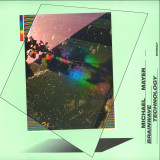
Michael Mayer’s latest EP, Brainwave Technology, comes at you purposeful, stealthy and sly. It’s a glorious left turn for the redoubtable producer, one that sees his typically lean and lithe productions buffed to a metallic, futurist sheen. There’s a gleam in the eyes of tracks like “Brainwave Technology” and “Alpha” that speaks of serious fun, of the intersection of the pleasure zone and the frontal lobe.
“Brainwave Technology” itself is informed by Mayer’s deep dive into the thorny terrain of artificial intelligence, transhumanism and posthumanism. Inspired by reading German philosopher Richard David Precht, Mayer found himself heading down the “proverbial rabbit hole,” as he describes it, “watching hours of YouTube material by self-proclaimed prophets of these ‘inevitable’ changes to come.” Never one to be taken in by the egotist’s dance, Mayer’s cynicism about the whole endeavour is tempered, a little, by the deeper questions that these figures gesture towards: “Is it really an evolutionary step that man and machine become one? Or is it rather a marketing plot by Silicon Valley billionaires?”
On “Brainwave Technology”, Mayer plays the charlatans at their own game, turning their logic against them by exposing the fruitiness of their ‘visions’. “I chose irony as my sword with which I chopped off some quotes from some of those batshit crazy prophets and self-promoters,” he explains of the drooling psychobabble he drops in the track’s lacuna. There’s a sense of humour here – how could you not laugh at these hungover egotists? – but there’s levity too, a sense that Mayer’s using sound to expose the contradictions and double-speak at the heart of these half-formed ideas. It’s a Burroughsian tactic, to slice into the heart of the voice to see what hidden truths surface.
It was Burroughs, too, who once said that “when you cut into the past, the future leaks out”; Brainwave Technology cuts into the logic of the futurologist to leak out the messiness of modern reality. On “Alpha” and “Gamma”, Mayer seems to conjure up the stark, ominous music that’d soundtrack a science fiction reinterpretation – or preinterpretation – of our modern malaise, all funereal wreaths of electronic noise and clatterboxing beats. As the EP resolves with “Device For The Young At Heart”, Mayer’s questions are piling up: “Do we want to become immortal and live on as a download? Do we really give up on Earth and put all our effort into colonising Mars?” There are no answers, of course, but plenty of imaginings-to-be. Brainwave Technology soundtracks both dystopian and utopian possibilities of what could come next.
New York City 4-piece deliver a modern blues rock masterclass on their feisty debut album.
“A timeless classic rock sound that revels in lean riffs and raw emotion.” – Afropunk
In an age where artistic merit is awarded to those who shout the loudest, Dakota Jones pride themselves on an unwavering ability to leave a lasting impression. Spearheaded by Tristan Carter-Jones fierce and unashamedly uncensored songwriting, the band’s fast-growing reputation as formidable live act has stamped Dakota Jones with the hell-hath-no-fury power of Chaka Khan, the wild spontaneity of Janis Joplin, and the honey-dripping sensuality of Marvin Gaye. Their debut album’s message of proud black heritage and triumphant queerness manifests itself in Carter-Jones’ ability to challenge norms of adulthood and femininity as she takes a deep dive into some of life’s most visceral emotions.
Tristan Carter-Jones: “I’m a black, queer woman expressing myself through love and music. Some folks still find that to be a transgressive act in and of itself. I work to fight that idea. I write a lot about my
Continued over…
sexuality and the ways in which I express it. Songs about sex and love bounce back and forth between songs about heartache, hangovers and self-medication, and the pleasure and pain of truly finding yourself. I don’t think we get to hear these things from a woman’s mouth as often as we should.”
Serving as an instant tone setter, the album opens with the line "Stretch marks from growing pains" with Carter-Jones lamenting the woes of adjusting to adulthood on lead single ‘Did It To Myself’ - her husky and commanding vocal instantly asserting its place in the spotlight. The atmosphere soon turns steamy on the flirtatious title track ‘Blacklight,’ whilst fantasising over a modern-day Bonnie & Clyde love affair the funk-laden ‘We Playin Bad Games’ packs a punch with its tale of free spirits entwined in a haze of late-night revelry.
Elsewhere, stories of caustic heartache twist the knife into wounded blues guitar riffs on ‘Like That’ and ‘Black Magic (That Power)’, in which Carter-Jones’s stoical voice never once faulters as she mourns the memories of a previous flame. Personal prayer ‘Lord Please’ recites empowered words of reassurance, and solidarity in the face of injustice erupts into a rallying cry for change on the classic sounding ‘Noise’ – written as a reaction to the 2016 US election. “I woke up after the election feeling pure panic and fear in my body,” remembers Tristan. “I wanted people in a place of privilege to stand up for what I was feeling, stand up for injustice, stand up for all of the things we need to change as a country. I wanted their rage, and I wanted their noise.”
Finally, the band’s tender tropes of togetherness eventually boil into gritty, guitar-slung balladry on hidden bonus track, ‘California,’ where, knees buckling under the weight of past trials and tribulations, Carter-Jones sets out on one final journey of self-discovery, hastily pulling out from reality and leaving only a dust cloud in her wake.
Production comes courtesy of the Grammy-winning John Wooler, ex Virgin Records A+R and founder of the Blues label Pointblank who has worked with everyone from John Lee Hooker and John Hammond to Isaac Hayes and Van Morrison. The album also features a wealth of hugely talented and accomplished musicians, including backing vocalist Kudisan Kai, former backing vocalist for the likes of Elton John, Chaka Khan, Anita Baker, Natalie Cole, Beck, Sting, Mary J. Blige and Jill Scott. Also present; Grammy winning keyboardist Jon Gilutin, who has spent years working with some of the industry’s most respected and iconic artists including Linda Ronstadt, James Taylor, Lady Gaga, Willie Nelson, Aretha Franklin, Diana Ross, Jackson Browne, Celine Dion, Bonnie Rait and Carole King. You’ll also hear the talents of acclaimed guitarist Michael Toles. Most well-known for being a part of the Stax Records group The Bar Kays, and for his contributions on famous records by Issac Hayes, Al Green, BB King, Johnny Taylor, Rufus Thomas, Albert King to name just a few.
Dakota Jones are a rising funk, soul and blues rock band from Brooklyn, New York City. Comprising of Tristan Carter-Jones (vocals), Scott Kramp (bass) Steve Ross (drums), and acclaimed musician Randy Jacobs (guitar) - former member of Was(Not Was) who has recorded for Seal, Bonnie Raitt, Tears for Fears, Elton John and many others. Though Carter-Jones and Ross first met in 1999 whilst at primary school, the band formed years later following a series of home jam sessions in 2016. The band’s collective alias originates from Carter-Jones’s middle name, ‘Dakota’. Dakota Jones have since released a string of acclaimed singles and EPs as well as received international attention for their track, ‘Have Mercy’ after it featured on Netflix’s 2019 film, Always Be My Maybe starring Ali Wong and Randall Park – and now after years of hard work and determination, the band are finally set to reveal their long awaited debut album. “We’d been regularly releasing EPs, waiting for our chance to come, and wondering what that would look like,” says Carter-Jones. “We didn’t realise until we started making this record that we needed to stop waiting for some break to come along, and just do it ourselves, independently.”
“Black Light really dives into a place of funk soul and everything that comes with it. There’s joy and dancing, sleek guitar licks and funky bass slaps. There’s pain and longing, and there’s the feeling of relief when you come out of that place and find your joy and purpose again. Black Light is my story.”
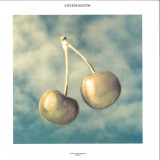
Music From Memory are excited to introduce another new group for 2021, this time presenting the self-titled debut album from Loveshadow.
Currently based in San Francisco, the duo of Anya and Izaak initially met whilst working in an Oakland cafe in 2016. The two Californians quickly bonded over a track by the ’80s disco band Aurra which was playing over the radio and almost immediately their separate journeys in music became interwoven. They soon began to write music and creating their own work would become a way for the pair to get closer to the sound they were searching for, as well as enabling them to discover the healing power of making and listening to music.
‘Loveshadow’ was recorded predominantly in the Bay Area between 2017-2020 as well as whilst traveling to NYC, Chicago and around Portland. Having released previously as the outfit ‘S Transporter’ alongside Detroit friend Ryan Spencer, Loveshadow is formed of Anya as singer and song writer alongside Izaak on synthesizers, bass and percussion. This eight track album is the duo’s first release; exploring emotive Pop and DIY Funk leanings it stands as a joyful homage to the music they bond over, as well as an ode to their own love and friendship.
The redoubtable renaissance man Barrie K Sharpe is back with a scorching vinyl 45 showing he’s lost none of his edge or ingenuity in producing a potent fusion of funk, soul jazz and beyond. This effusive cut sounds utterly unlike anybody else and is testament to his flamboyant superfly style cementing why he is considered to being one of the burgeoning spearheads in the Acid Jazz movement of yesteryear.
It’s interesting to note he hasn’t stood still either and has been extremely prolific releasing three exceptional albums under the banner of Rhythm Rhyme Revolution and this slow burning dance floor groove is the perfect distillation of his recent body of work.
‘BaDThingz’ falls between the sensual and the spiritual like all good dance music and the direct ‘come on’ lyrics becomes an injunction to move on the facts not just suppositions!
The groove is the epitome of seduction itself with a funkified blessedness as clear as a bell. A fantastic homily signalling the virtues of sexual chemistry whilst highlighting the modern era of cutting edge studio production to sonic perfection. The groove is simply total atomic explosiveness and DJ Tabu is someone you’d definitely want cooing in your ear!
Aided and abetted by multi instrumentalist Gareth Tasker and trumpeter Kenny Wellington it seems your man is riding his groove to glory - with a bit of added polish from Fritz Catlin. This is going to have untold longevity in any DJ’s trunk of funk. Grab it now for a shock of pure pleasure. (Emrys Baird – Blues & Soul)
For Indie Stores Only. Pressed on Sea Green vinyl, packaged in a deluxe tip-on jacket, and limited to 2,000 copies worldwide. The debut album by Joan Shelley pressed on vinyl for the first time. Originally released in 2012 and long-elusive to fans, Ginko is the starting point for Shelley, now revered for her songwriting, “dazzling poetic imagery” (The Guardian) and “radiant sense of calm” (NPR Music). Standout tracks “By The Ohio” and “Siren” show what is to come, while “Sure As Night” was her first collaboration with guitarist Nathan Salsburg
Thirteen turbocharged tracks indebted to the pleasures and pitfalls of their lives in the modern city of Sydney and to the the first and second waves of international extreme music freaks and loonies: pure fucking aggression. The Oily Boys have graced us with a beast of an album that swells between direct, gripping, tangible hardcore punk and near nauseating psychedelia and throb which at moments feels like either ritual trance or a nervous breakdown. Cro Memory Grin contains near equal measures of tension and release; an exercise in high catharsis. It’s rare that a punk record can give the listener anywhere near the same intoxicating feel of an “everything louder than everything else” live show, but that’s what Oily Boys have done. That lightning in a bottle feeling of excitement, chaotic energy, delirium, presence in a moment and frenzied flight into a mind state both frightening and ecstatic. The stone has been carved, the fire has been lit, and this is it... Cro. Memory. Grin. *** Best played LOUDEST ***
Lift-top box including the first 10 numbered records and objects, with a 60-page exhibition style book, plus a bonus 12” single and 2CDs of unheard Joy Division interviews. Strictly limited and numbered to 4000 units WW.
Use Hearing Protection: Factory Records 1978-1979 contains facsimile editions of the first 10 numbered Factory items: 4 vinyl records, 3 posters, a short film, Factory stationery and an egg-timer design. The early history of the label is traced in a 60 page book with text by James Nice, photos by Kevin Cummins and archival interviews with Tony Wilson, Rob Gretton, Joy Division and more.
All 3 original Factory posters are contained in the box as well as the first 4 records: The Factory Sample EP (Fac 2), including the Fac2 stickers, All Night Party by A Certain Ratio (Fac 5), Electricity by Orchestral Manoeuvres in the Dark (Fac 6) and classic album Unknown Pleasures by Joy Division (Fact 10).
Bonus items include a white label 12” single by The Tiller Boys (originally intended as FAC3 but ultimately not released), and a lengthy audio interview with Joy Division, Tony Wilson and Rob Gretton, conducted in August 1979 by journalist Mary Harron, never before heard and now restored across two CDs. Also newly restored, and seldom seen since 1979, is evocative 8mm short No City Fun (Fac 9), featuring music by Joy Division.
Joshua is the follow-up album to Olympic. While the second album, typically, often shows what critics call “maturity”, here Simon has released instead an album of adolescence. The musician opened up his own memory box to contemplate his childhood souvenirs, and dust them off of all nostalgia. At that time, he would VHS-record movies from TV and tape record soundtracks directly from the TV speaker, so he could listen to them in his bedroom. This is when he “discovered the power of music, the way it makes you enter another world, far from reality. I wanted to pay tribute to the era I shaped myself in – the ’80s and ’90s”. Tangerine Dream, Kraftwerk and Soft Machine. Logically, these are the sonic signatures that seem to haunt the album. The timeless pioneers of synthetic music constitute the sound references, without any established chronological timeline, that blend with the atmosphere of typically “French Touch” movie soundtracks – long before the term was even coined. “I use a musical palette that acts as a flashback to my favourite teenage movies: the synth sounds of Close Encounters of the Third Kind; the synth pads in Jean-Jacques Cousteau’s fascinating documentaries about the sea world; the melodies in the manner of François De Roubaix; the themes that evoke the soundtracks of late-night TV sessions (those by Verneuil, those with Belmondo, Depardieu, etc.); and the sci-fi ambiences like in Blade Runner.” In short, an aesthetic was decided on by Simon very early on: French analog synths instead of North American symphonic orchestras.
The name Joshua has two meanings for French 79: one is linked to the idea of nostalgia, the other to adventure. On the one hand, the computer in the 1983 movie Wargames, and on the other, the boat of French sailor Bernard Moitessier.
The track titled Joshua synthesizes the spirit of the album – an odyssey, a neverending crossing of the world in search of oneself, a spontaneous escape into the future, under the benevolent eye of the past. This epic invites everyone of us to a specific place in our imagination, which is also the source of an indescribable pleasure for French 79: a gust of wind, a sailboat ride, a skateboarding trick, the smell of freshly fallen snow, or the dull roar of an impatient audience.
The same aesthetic preferences are found in the videos that illustrate Joshua’s first tracks: for Hold On, the skateboarder chose to recall the cult ’90s skate videos that he would watch on repeat as a teenager, while Hometown hints at Close Encounters of the Third Kind. Although he now calls Marseille home, Simon continuously draws with passion from the anachronic contemporaneity of his childhood in the Eastern French region.
“I need escape to be able to create. A two or three-day sailing trip gives me enough inspiration to lock myself in the studio for a week when I’m back on dry land.” His boat takes him far away from everything, far from the Old Port where she moors, the rest of the time Simon would escape by walking the streets of his city or climbing the Alpine mountains.
Not only does the new version French 79 reveal a few biographical pieces of Simon henner's history, but it also inaugurates the first vocal track for the musician. One feels a guilty pleasure when hearing him take the lead on the first track, The Remedy. The electronic fugue that opens the album sets the tone: Simon has found the cure for his inner turmoil and wants us to discover our own treatment too. Hold On is a sonic explosion that celebrates the feeling of freedom - what's more of a teenage dream than this feeling - and it eventually command one to feel the same way too. Echoing Olympic, the electronic argonaut invites his muse again, singer Sarah Rebecca. On By Your Side and Touch The Stars, the native of Ocean Springs, Mississippi, now based in Paris, hoisted the mainsail of dream pop. First, though a dialogue that surfaced their unfailing attachment to the bonds of friendship, then through the light hearted atmosphere that leaves us with no choice but to believe in our own dreams and do anything possible to fulfill them. The quest for peace in the midst of the daily din is heard in both Code Zero and the title track Joshua, two majestic journeys in search of hedonism, combined with introspection.
**LONG OVERDUE REPRESS - CLEAR VINYL 300 COPIES ONLY** “With Ela’s music I feel emotional, engaged… I can’t help but feel she’s always looking for a sense of belonging and it
seems to inform all the music that she makes. Glasgow must have more of that belonging feeling than most
cities because she’s spent the most time here, an exotic bird in a rainy city she maybe finds a lttle bit of comfort in. It’s
a pleasure to have her here, in this awful time to be living in Britain, her illuminations feel important and hopeful. A
stubborn light; someone making great timeless music out of the humdrum of the everyday.” - Stephen Pastel
Movies For Ears is a retrospective collection of works by Polish-born, Glasgow-based artist Ela Orleans which
navigates almost two decades of songwriting in the heart of the global pop underground. This remastered collection casts
an ear over what Orleans might call the ‘pop sensibility’ within her back catalogue. Released previously on a number of
small DIY labels, Orleans’ music coincided with the explosion of auto-didactic musicians finding their voice in the age of
the blogosphere, artists emboldened by the democratisation of music-making afforded by the internet. From the outset,
Orleans’ childhood studying formal music mixed with cut-up techniques, sampling, sound-art and experimentation to
create a distinctive signature cloaked in an innate melancholy and playfulness. Fully remastered by James Plotkin,
featuring extensive sleeve-notes and rare photos from Orleans’ archive, Movies For Ears presents an appraisal of the
musician’s work, painting a portrait of an artist with an uncanny ability to evoke emotions and ghosts of memories in the
listener.
Each song pulls sunshine from its surroundings, moments of pleasure plucked from eulogies. The Season employs a
hypnotic loop with Orleans’s prophetic voice heralding the season we’re doomed to repeat. In fact the singer is often cast
as the changing protagonist in her songs: on Walkingman, a hazy ballad heavy with ennui, the narrator is laden with the
world’s weight, forever pacing a groundhog day world blank, a pissed-off actor in a Kafka-esque melodrama. On Light At
Dawn we’re in a seedy kitsch bar-room go-go scene, a ghostly rock’roll romance with shimmering percussion, poledancing
in a Lynchian half-dream. Movies For Ears’ moods straddle memory and fantasy: scratchily invoking halfremembered
exotica, the flickering shadows of europhile cinemas screens, a delicately woven world anchored in Orleans
existential meditations on longing, intimacy, solitude and the search for love. These rich textures in every song don’t
overpower some crystalised moments of emotion however: on In Spring Orleans sings simply “I have been happy two
weeks together,” summarizing that feeling of elation when emerging from a depression, a long winter. It’s a moment that
perfectly illustrates the lightness of touch and clarity in the singer’s voice.
The power of the loop and Orleans’ weaving songwriting that breaks its spell is illustrated perfectly by I Know. Over an
aching chord progression, the vocal takes flight into bittersweet loneliness, Pachelbel’s Canon played at a wedding where
only one person shows up. The repeated refrain “I know, I know” ascends to the heavens as the chords descend to the
dumps and the listener is left in the middle, happy but not knowing why, maybe a little changed, two weeks together. On
Movies For Ears, Ela Orleans lets us into a secret: the rare moments of joy to be found in the joins of the loop, the spaces
between things, the spring after the winter are the moments that last after the day has faded.