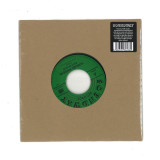
»A Magnetic Road to Hell« is Robert Millis and Bardo Todol’s first release as a duo. Recorded transcontinentally throughout 2021 and 2022 they traded sounds and ideas between Cordoba, Argentina and Seattle, USA with a stop in Mexico along the way: screamings, rivers, kids, radios, mellotron, records, 78rpm shellac, wax cylinders, field recordings, birds, electronics, guitars, percussion, haze, static, a destroyed Indian piano, talkative violins, talkative people from the 1920s, talkative black and white dreams, tin cans from the streets, Argentinian children's tales about cows being teachers, and more. You’re riding on an unspooling reel of tape, through sounds real and imagined, the tape flapping dangerously, shredding; we are all of us magnetized, attracting together, pushing apart, unwinding onto the floor, stumbling along the road to hell.
Robert Millis and Bardo Todol have each released music on many different labels: Sublime Frequencies, Dinzu Artefacts, The Helen Scardale Agency, Discrepant, Abduction Records, Dust-to-Digital, Fire Breathing Turtle, Sub Pop, and Ikuisuus.
Cerca:4 to the bar
An incredible 45 of Latin disco – recorded in Peru during the late 70s by funk pioneers Black Sugar, and right up there with the best from New York and LA of that era! It’s taken over four decades 'Baila' to become a winner spin at international events in the soul and disco scenes, a sought-after collector's item and, above all, the dancefloor hit that should have always been. First time reissue. Black Sugar is a Peruvian band, considered a pioneer group in Latin America in mixing funk influences with rock and Latin rhythms. In 1976, following their gig at Coliseo Amauta in Lima, opening the night for the legendary Spanish band Barrabás, they started to show a growing interest in disco music, resulting in some line up changes with members leaving the project due to their lack of interest in the new sound and new ones joining in. Word is that Sono Radio, home to a bunch of local Tamla MoTown releases for the Peruvian market, thought that Black Sugar's prestige, and their credibility in the new orientation towards disco sound, would benefit from seeing their new single pressed with the labels of the famous record company from Detroit. And so it was. Under certain lights and shadows, ‘Baila’ was finally released in Peru only in 1978, sporting the same look as the releases of the likes of Marvin Gaye, Diana Ross, Commodores or Thelma Houston. A clever marketing ploy that however failed in boosting the sales of the single…Only a few original copies have survived to this day, of either the first and the second edition from 1979 released on the US label Libra, and reached the collectors market. It’s now, over four decades later, when the interest on this recording has gone stronger and ‘Baila’ is getting regular spins at international soul/disco scene events, having become a very sought-after collectors item and, on top of that, the dance floor anthem that should have always been. The stunning piano arrangements of the intro, the outstanding brass sections —faithfully copied from the disco recordings coming from the States—, a very catchy chorus… ‘Baila’ has all the necessary ingredients to become an addictive invitation to join the dance floor. On the B side, a cover version of Barry White’s hit ‘Sha La La (Means I Love You)’ —as appeared on the original issue of this record— shows what the interest of the band was at the time. First time reissue. TRACKLIST Side A Baila Side B Sha La La (Means I Love You)
In 2023 Deutsche Grammophon celebrates a wonderful milestone: its 125th birthday. To mark the occasion the Yellow Label makes a selection of LPs available on vinyl for the first time ever. Including legendary recordings by Daniil Trifonov, Hélène Grimaud, Hilary Hahn, Jan Lisiecki and many others. Perahia's grandiose recording of Bach's French Suites is a true feast for music lovers and connoisseurs. Never has Bach sounded so natural and casual as in the hands of Perahia. The New York-born, multiple Grammy and Echo Klassik award winner has felt a close connection with Bach for decades. At the age of 15, a performance of the St. Matthew Passion made such an impression on him that it sparked a remarkable passion for the master of baroque music. Thanks to Perahia's intensive study of Bach's works, one can enjoy the enormous emotional range of the French suites from the very first minute: From bittersweet melancholy to exultant joy, Bach's masterpiece covers an incomparably rich spectrum of emotions. Due to Perahia's brilliant interpretation, this recording will certainly join the ranks of the most legendary contemporary piano recordings.
Tricatel is proud to release for the first time on vinyl the reissue of this album released in 2001. It is a single vinyl with a printed sub-sleeve containing vintage studio photos.
Inspired by Barthes, who wrote that the resistance would probably be one day in the affirmation of happiness, I wanted to write a happy record, so happy that it would be a provocation.
So I wanted to sing about love in the naive and poetic language that Portuguese is for me. It is the language of secrecy and modesty, of sensuality and eroticism.
So we recorded Azul in the offices/studios of Tricatel in four days. With the Recyclers (Steve Arguëlles, Benoit Delbecq, Christophe Minck), we created these versions on the spot and on ADAT tape for a budget of thirty thousand francs. It is, until now, my album which travelled the most, and which found the most aficionados.
This reissue for the first time on vinyl, almost 23 years later, fills me with joy.
OUTER HEAVEN return with their crushing new album, Infinite Psychic Depths! The album, an exploration into the darkest depths of extreme music, showcases OUTER HEAVEN's muscle, as the band churns out some of 2023's most visceral and frenetic slabs of twisted Death Metal. Taking advantage of guitarists Jonathan Kunz’s and Zak Carter’s penchant for technical prowess and rhythmic galloping with melodic catchiness, OUTER HEAVEN bridges the worlds of dark n’ dank despair and upbeat hookiness. Austin Haines' vocal delivery is as unchained as ever, barking and growling through interwoven stories of societal collapse, hallucinogens, mutations, and more, connecting Infinite Psychic Depths to their acclaimed debut, Realms of Eternal Decay. Methodological riffing swirls around muscular half-time clobbering in both “Soul Remnants” and “Unspeakable Aura". “Pillars of Dust” and “Liquified Mind” take the listener on a journey from the furthest reaches of the Earth’s exosphere to the sweat and spilled beer of a dive bar moshpit. “Fragmented Suspension” gives a backhand to the genre tunnel vision with a tendinitis-inducing palm muted shuffle that’s part Norwegian black metal iciness and part classic ‘80s L.A. hardcore skate punk. Recorded by Ryan Reed and mixed and mastered by Greg Wilkinson at Earhammer Studios, Infinite Psychic Depths throws a few tricks and guest appearances into the mix with bass playing by Derrick Vella from Tomb Mold, as well as vocal contributions from Pig Destroyer’s JR Hayes, Morbid Angel’s Steve Tucker and Alex Jones from Undeath. The new album also features a special appearance by Dave Suzuki (Churchburn, ex-Vital Remains) doing a trade-off solo on “Rotting Stone/D.M.T.”
Founded in 1971, Matumbi was among the earliest and best British reggae bands. They did, however, also record under different guises, including 4th Street Orchestra. In their acclaimed Rough Guide to Reggae, Steve Barrow and Peter Dalton rate this album (and its counterpart Ah Who She? Go Deh!) as 'the best showcases for Matumbi's talents'. This release marks the first LP reissue of this genuine UK roots monument since 1976.
Original member Dennis “Blackbeard” Bovell (of LKJ and Dub Band fame) knew the local sound system scene like the back of his hand, and most tracks on Leggo! Ah-Fi-We-Dis were initially cut as exclusive 'specials' for his own Jah Sufferer sound system and for fellow soundmen. Hardly anyone hearing these tunes at reggae parties would have guessed they didn't originate in Kingston but were recorded in London. And neither did many who bought the records when they were released a few years later. That's hardly surprising, as the material Bovell & Co churned out could easily compete with the toughest output of their Jamaican counterparts. The solid interpretation of Junior Delgado's "Tichion" and a scorching, melodica-led version of Ras Michael's "None-Ah-Jah-Children" are the most familiar tunes here. And a militant update of Max Steiner's "Theme From A Summer Place" displays good fun as well as guts. But the band's outstanding originals will give many '70s Jamaican classics a good run for their money.
- 1: Still Ill
- 2: Ask
- 3: There Is A Light That Never Goes Out
- 4: How Soon Is Now?
- 5: This Charming Man
- 6: Girl Afraid
- 7: Panic
- 8: Bigmouth Strikes Again
- 9: Girlfriend In A Coma
- 10: The Boy With The Thorn In His Side
- 11: Barbarism Begins At Home
- 12: What Difference Does It Make?
- 13: Please, Please, Please Let Me Get What I Want
- 14: Shoplifters Of The World Unite
- 15: The Queen Is Dead
"The Queen Is Not Dead" ist kein "durchschnittliches" SPIRITUAL FRONT Album, aber welche Veröffentlichung der Suicide Pop Band aus Italien ist das schon? Das achte Studioalbum der Römer ist vielmehr "eine Hommage an die legendären, wundervollen Hymnen von Morrissey und Johnny Marr", wie Simone Salvatori schreibt. Der Bandgründer und Frontmann von SPIRITUAL FRONT bezeichnet THE SMITHS als eine der wichtigsten musikalischen Inspirationen für jedes Mitglied der Band. Die Italiener nahmen das Album mit dem erklärten Ziel auf, eine respektvolle Hommage zu erschaffen, ohne dass dabei ein Klon entstehen sollte. Bei den fünfzehn Coversongs, die für viele Musikfreunde heilig sind, blieben die Römer den Originalaufnahmen zwar treu, sie führen die Songs jedoch näher an die Klangwelt von SPIRITUAL FRONT heran - beispielsweise indem sie klassische Instrumente hinzufügen. Zu Salvatori und seinen Bandkollegen, dem Gitarristen Francesco Conte und Andrea Freda am Schlagzeug, gesellen sich der Bassist Daniele Raggi, ein Streichsextett und ein Bläser sowie eine Fülle von Beiträgen befreundeter Musiker: Darunter befinden sich die Sängerin Durga McBroom (PINK FLOYD, BLUE PEARL), Riccardo Galati, Filippo Marcheggiani (BANCO DEL MUTUO SOCCORSO), Michal Stepien (MGLA), Jairo Zavala (CALEXICO), King Dude, Traci Danielle (MY LIFE WITH THE THRILL KILL KULT), Riccardo Spilli (IL BALLETTO DI BRONZO) und Sasha Boole (ME AND THAT MAN). SPIRITUAL FRONT wurden 1999 als Soloprojekt von Salvatori gegründet und haben seitdem zahlreiche Alben, Singles, EPs und Kollaborationen veröffentlicht. Die Italiener beschreiben ihren Sound als "eingängige Balladen für herzzerreißende nihilistische Jugendliche". Textlich beschäftigen sich SPIRITUAL FRONT mit Themen wie der Suche nach einer eigenen Identität, Sexualität, harte Realitäten und wütende Trennungen, die oft von triefendem Sarkasmus, Nihilismus sowie einem beißenden Sinn für Humor eingefärbt sind. Darüber hinaus haben die Italiener mit namhaften Künstlern wie LYDIA LUNCH, ORDO ROSARIUS EQUILIBRIO und vielen anderen zusammengearbeitet sowie an den Soundtracks der Fernsehserie "Las Vegas", des Kinofilms "Saw 2" und an weiteren Independent-Filmen, Theaterproduktionen und modernem Ballett mitgewirkt. SPIRITUAL FRONT zollen THE SMITHS, die für die Italiener zufällig den Soundtrack ihres Lebens komponiert haben mit "The Queen Is Not Dead" ihren aufrichtigen Tribut.
Guyana folk music reinterpreted and infused with Afroroots and culture, reissued on vinyl for the first time.
A year after their debut album ‘Ojinga’s Own’, the Yoruba Singers from Guyana released the singles ‘Black Pepper’ and ‘Basa Bongo’. These two songs were recorded in Barbados and released on the Green Shrimp label and became extremely popular throughout the Caribbean
and South America. The music also became an integral part of the very beginnings of what was later to become the Champeta Criolla sound in the Caribbean coast of Colombia.
- A1: Can't Touch Us Now
- A2: Good Times
- A3: Mr. Apples
- A4: I Believe
- B1: Grandslam
- B2: Blackbird
- B3: You Are My Everything
- B4: Another Version Of Me
- C1: Mumbo Jumbo
- C2: Herbert
- C3: Don't Leave The Past Behind You
- C4: (Don't Let Them) Catch You Crying
- D1: Pam The Hawk
- D2: Given The Opportunity
- D3: Soul Denying
- D4: Whistle In The Dark
Can't Touch Us Now ist das elfte und jüngste Studioalbum der britischen Ska-Pop-Legenden Madness.
Ursprünglich im Oktober 2016 veröffentlicht, markiert es die Rückkehr von Gründungsmitglied Mark Bedford und ist das letzte ihrer Alben, auf dem die gesamte Originalbesetzung vertreten ist. Das Album kam bei Fans und Kritikern gleichermaßen gut an und beinhaltete die Klassiker-Single "Mr Apples", die ein fester Bestandteil des Live-Sets der Band geworden ist. Für diese spezielle Neuauflage wurde das Album auf schwerem Doppelvinyl gepresst, in einer Gatefold-Verpackung präsentiert und enthält brandneue exklusive Liner Notes mit Interviews mit den Bandmitgliedern Suggs, Mike Barson, Chrissyboy Foreman und Lee Thompson.
Hitler Bad, Vandals Good ist das bahnbrechende Album von The Vandals auf dem Punkrock-Label Nitro Records. Die kalifornische Band veröffentlichte 1998 ihr bisher kommerziell erfolgreichstes Album, das die Single My Girlfriend’s Dead”, die Fan-Favoriten Idea for a Movie” und People That Are Going To Hell” sowie eine Coverversion von So Long, Farewell” enthält. Zum 25-jährigen Jubiläum ab dem 21.07 als limitierte blaue 1LP verfügbar.
Penguin Cafe kündigen heute ihr fünftes Studioalbum Rain Before Seven... an, das am 7.Juli 2023 bei Erased Tapes erscheinen wird.
Eine zuversichtliche Grundstimmung durchzieht das fünfte Studioalbum von Penguin Cafe, Rain Before Seven…, wobei es sich keinesfalls um jenen extrem selbstbewussten, fast schon prahlerischen Optimismus handelt, sondern eher um so eine auf bescheidene Art hoffnungsvolle Grundhaltung, die man den Menschen auf der Insel ja häufiger nachsagt. Auch wenn alle Anzeichen das Gegenteil behaupten, spürt man hier sofort diese Gewissheit, dass sich alles doch noch irgendwie zum Guten wenden wird. Vermutlich zumindest.
Der Titel des Albums geht auf eine alte Bauernregel zurück, wobei die gereimte Vorhersage – „… fine before eleven“: ab 11 Uhr also wieder alles klar – auf ein baldiges gutes Ende hindeutet, vollkommen unabhängig davon, was die Wissenschaft sagt: „Ich habe diesen Spruch in einem Buch entdeckt. Davor hatte ich ihn noch nie gehört“, erzählt Arthur Jeffes, der Kopf von Penguin Cafe. „Er hat so einen dezent optimistischen Beigeschmack, und das gefällt mir sehr. Man verwendet ihn heutzutage kaum noch, aber der Reim beschreibt tatsächlich Wetterphänomene in England, die vom Atlantik aus über die Insel ziehen.“
Angefangen beim leinwandgroßen und schwärmerischen Eröffnungstitel „Welcome to London“, der mit einem Augenzwinkern auf Morricone anspielt, bis hin zum „Goldfinch Yodel“, jenem „Maibaum-Banger“ (um es mit Arthurs Worten zu sagen), mit dem das neue Album ausklingt, zieht sich ein angenehmes Gefühl von Leichtigkeit und Lebensmut durch den Longplayer, unterfüttert mit der Ausgelassenheit exotischer Rhythmen. Alles wirkt spielerisch und verspielt, und selbst der Titel ist eine Anspielung – auf A Matter of Life… aus dem Jahr 2011, der letzten Veröffentlichung, deren Titel in eine Ellipse mündete Jenes Debütalbum von Penguin Cafe diente einst als Bindeglied und Brücke – zwischen dem legendären Penguin Cafe Orchestra, das einst Arthurs Vater Simon Jeffes leitete, und dem gefeierten Nachfolger, als dessen Mastermind seither Arthur verantwortlich zeichnet.
„Ich glaube, das wirklich Neue an seinem Ansatz bestand darin, spannende und schräge Ideen zu nehmen – und dann seltsame Dinge damit anzustellen“, meint Arthur, „dabei aber konstant im Blick zu haben, dass es hinterher auch schön klingt und emotional ansprechend bleibt.“ Dieses Ethos lebt weiter in der Musik von Penguin Cafe: „Dazu haben wir uns entschlossen, als ich daran anknüpfte, schließlich spielen wir die Sachen meines Vaters und machen dazu auch neue Musik, die im selben Klanguniversum angesiedelt ist. Das bedeutet, dass ich gewissermaßen moralisch dazu verpflichtet bin, den ursprünglichen roten Faden im Auge zu behalten – und dafür zu sorgen, dass wir nicht plötzlich in Richtung Thrash-Metal abbiegen.“
Dennoch waren die rhythmischen Elemente, die zum Teil sogar an elektronische Sounds erinnern, noch nie so präsent und tonangebend wie auf Rain Before Seven…, was durchaus auch dem Co-Produzenten Robert Raths geschuldet ist. „Find Your Feet“ etwa hat ein Beat-Fundament, das weit über einen bloßen Pulsschlag hinausgeht. Abgemischt von Tom Chichester-Clark, blitzt an Stellen wie diesen etwas auf, das Arthur selbst als „fast schon elektronischen Vibe“ bezeichnet, um dann ganz aufgeregt zu ergänzen: „Es geht vor allem auch einfach ums Spaßhaben, was auf den letzten drei Alben nicht so zu hören war.” Extrem ausgelassen klingt auch „In Re Budd“, das dem verstorbenen Ambient-Urgestein Harold Budd gewidmet ist. Arthur erfuhr von dessen Tod an jenem Tag, als er diesen feierlichen Ohrwurm komponierte, dessen Synkopen deutlich komplexer sind, als sie auf den ersten Blick wirken. Auf einem präparierten Klavier gespielt, wobei die Filzstücke dem Track zusätzlichen Bounce verleihen, setzt Jeffes hier auf einen Afro Cuban Cafe-Vibe – was wunderbar zum widerspenstigen Geist des verstorbenen Budd passt.
Und schließlich wäre da noch das bereits erwähnte „Welcome to London“, das seinen Titel erhielt, als sich die Welt gerade wieder zu öffnen begann und die Menschen auch wieder Fernreisen antreten durften. Jeffes, der somit nach langer Zeit endlich wieder einen Fuß auf britischen Boden setzen konnte, war sofort beeindruckt von filmischen Soundtrack-Qualitäten (à la John Barry) dieses Stücks, als er mit dem Taxi von Heathrow nach West-London fuhr und zur Musik die opulente, in Dämmerungslicht getauchte Metropolenkulisse auf sich wirken ließ. Hier kann man deutlich die eingangs erwähnte Zuversicht raushören – und dazu vielleicht auch einen Hauch von bissiger Ironie: „Robert Raths hat der Sache noch eine Nuance hinzugefügt, die ich interessant finde, weil doch so viele Londoner ursprünglich gar nicht aus London stammen. Man schlägt also in London als Zugezogener auf, man weiß noch nicht, zu welchem Lager man sich zugehörig fühlen soll, und dann wird man auf der Straße überfallen und ausgeraubt – und in dem Licht betrachtet, hat dieses ‘Welcome to London’ doch einen eher sarkastischen Beigeschmack.“
Wenn es ein einziges Wort gibt, um Saint Agnes zu beschreiben, dann ist es " Hingabe". Die vierköpfige Band aus dem Vereinigten Königreich steht für ehrliche Texte, raue Gesangsdarbietungen (von Frontfrau Kitty A. Austen) und wutentbrannte Musik, die denjenigen eine Stimme geben soll, die eher am Rande als in der Mitte stehen. Mehr Gang als Band, wollen Saint Agnes (römische Märtyrerin, Schutzpatronin für eine Reihe von Dingen, darunter auch Mädchen) diejenigen ermutigen, die geschlagen und verletzt wurden, sich aber weigern, sich niederzulegen, und das ist ein roter Faden, der sich durch "Bloodsuckers" zieht - das zweite Studioalbum von SA und ihr erstes für Spinefarm. Anfangend mit dem Titeltrack, ist dies ein genreübergreifendes Werk, das Elemente aus Metal, Punk, Industrial und Grunge aufnimmt, ohne an einen bestimmten Stil gebunden zu sein; die 11 Tracks kommen direkt von der Quelle, größtenteils selbst produziert und abgemischt (NIN-Kollaborateur Sean Bevan leiht seine Mixing-Fähigkeiten der zukünftigen Single / Video, 'Follow You'), und dieser in sich geschlossene Ansatz sorgt für ein zusätzliches emotionales Gewicht, mit Kerrang!-Coverstar Mimi Barks, die das Chaos auf dem kurzen, scharfen Schock, der 'Body Bag' ist, weiter anheizt.
- A1: German Trained Unit 1
- A2: Neoliberal Madness Offering I
- A3: Riyl Roma
- A4: Neoliberal Madness Offering Ii
- B1: German Trained Unit 2
- B2: New Bulgaria
- B3: German Trained Unit 3
- C1: Armchair Evader
- C2: Neoliberal Madness Offering Iii
- C3: German Trained Unit 4
- D1: Double Arm
- D2: Neoliberal Madness Offering Iv
- D3: Abhaengen
Repress!
Exceptional debut album of Military Space Music and / or Fluxus Techno rave drills from the inimitable, acronymic duo for Diagonal. RIYL Belgian Techno, SuperCollider, Powell, Lorenzo Senni,
the bleep test At long last N.M.O. execute their crazed debut album for Diagonal, distilling the playful calisthenics of their laptop and drum kit live show in a totally unique manner that somehow deconstructs and alliterates tracky acid techno with avant no-wave rock, computer music and the kind of snare-
driven tattoos coming out of Portugal's Príncipe label. Best just call it Military Space Music - Cleft as two corresponding but individual sides entitled Nordic Mediterranean Organisation
& Numerous Miscommunications Occur, it finds the Romantic Viking duo ratcheting the psychotomimetic intensity of their previous tape and trio of 12"s for Anòmia, The Death of Rave
and Where To Now according to their central mantra of As Strict As Possible, resulting in 5 alarming, powerful dancefloor raids intersected by infuriating locked grooves, or Neoliberal
Madness Offering #1-4, plus a series of barking trained Unit drills.
The razor sharp and raucous results don't sit comfortably in any pre-ordained category, preferring to scythe their own route thru the time-flattened field of contemporary music by employing
the fundamentals of physical pressure and precise psychoacoustic frequencies in a disciplined pursuit of new, syncretic sensations that toy with rave convention and serve to demystify notions of aerobic mysticism.
Nose to tail, they spell out their ideas with playfully pedantic attention to detail, whether physically making you get up to nudge the needle from its pervasive locked groove, putting you thru your
paces in their German Trained Unit challenges, or simply driving you to delirium in the album's full blown dance tracks.
Cut almost a side-a-piece for optimal intensity, those five dance cuts veer from the clashing sharp and wet, tight-but-distended dichotomies of RIYL Roma to the ploughing pneu-beta bass drum
and giddy top end tickle of New Bulgaria on the Nordic Mediterranean Organisation plate, to take
in the scuffling, compartmented swerve and teeth-chattering acid of Armchair Evader and what
- A1: Introduçào
- A2: From The Foundation - Ft Dub Judah
- A3: City Walls - Ft Ras Addis
- A4: More Jah Songs - Ft Tena Stelin
- B1: Moses - Ft Ras B
- B2: Strictly Ital - Ft Ras Addis
- B3: Babylon Ambush
- B4: There's A Love - Ft Christine Miller
- C1: Respek I-Spek - Ft Levi Roots
- C2: Touch I Heart - Ft Afrikan Simba
- C3: Rua Joào Vieira 106
- C4: Sangue Brasileiro (Brazilian Blood)
- C5: Nyah Keith
- D1: Transformai - Ft Ras Bernardo & Jeru Banto
- D2: Zulu Dawn
- D3: Hail Jah - Ft Ras Addis
- D4: Foundational Dub
When Transform-I was released in 2009, Bristol’s Dubkasm were unmistakably prominent on the reggae scene but it is this LP - their tenth release - that put them on the map and cemented their status as outernational roots innovators and one of the most creative outfits in reggae. By 2006, Jah Shaka had been rinsing their percussive vocoder smash ‘Zulu Dawn’ (track 15) at the end of every dance for close to three years. Dubplates from the LP became firm favourites on some of the greatest soundsystems in the world, including Aba Shanti-I, Iration Steppas, and Channel One.
DJ Stryda and producer Digistep’s reputation grew still further when the pair managed to get an extremely rare vocal from the legendary Dub Judah, who at the time had not voiced a tune for many years. The resulting 7”, ‘From the Foundation’ (track 2) was the first tune to be released from Transform-I, an album which took the music world by storm with its singular blend of a deep, conscious roots reggae sound with instrumentation that drew on Digistep’s Brazilian heritage.
As the great DJ and journalist Steve Barker said in his rave Wire magazine review of the initial release, ‘Like many innovations heard for the first time, you wonder why this has not been done before’. Indeed, the LP’s blend of percussion instruments like zabumba, cavaquinho, and cuica with an absolutely stellar cast of vocalists including Tenastelin, Christine Miller, and Ras B, with a pre-Reggae Reggae Sauce fame Levi Roots recording from his living room, became timeless the moment it was released. Barker praised the album for being ‘more orthodox than expected’, by which I think he meant that the album is a completely authentic roots record, rather than an attempt to mix musical flavours to conceal a lack of ideas. Instead, ideas flew back and forth across the Atlantic, as basic tracks were laid in the Dubkasm Studio (then in Brazil, now in England) and overdubs and vocals were recorded in London, Nottingham, Bristol and Norway, with the final mixes being done at the Daddy Roots studio in Bristol. The combination is seamless both because Digistep grew up with Brazilian music, courtesy of his father, and because Dubkasm have lived and breathed reggae since their formation in 1994 – just go and listen to early releases like ‘Chemical Reaction Dub’ (1996) or ‘Hornsman Trod’ (2003) and you’ll hear heavyweight productions with a Rasta ethos immersed in U.K. soundsystem culture.
Since the album’s release, Dubkasm have gone from strength to strength and collaborated with a dazzling array of artists. Transform-I was remixed by some of Bristol’s best electronica producers in 2010, and 2013’s 12” ‘Victory’ became a huge soundsystem hit around the world, before being voiced by two of the greatest singers of all time, Luciano and Turbulence, and being remixed the following year by one of the world’s finest dubstep producers, Mala (who in 2016 released his own project fusing Latin music with electronic bass – the excellent Mala in Cuba).
The first project of its kind, beautifully reissued in its original format by Dubquake (the outfit behind France’s incredible OBF Soundsystem), Transform-I is the LP that launched Dubkasm on their current trajectory and has truly lived up to its name.
Repress!
Funkiwala Records presents the third in the series of "Lokkhi Terra meets"albums, with the London fusionistas creating another unique sound-clash, this time with ex-Fela Kuti keyboardist and legendary UK Afro-beat ambassador Dele Sosimi, and members of his critically acclaimed Afro-beat Orchestra.
This particular collaboration has been bubbling away for a few years now, teasing audience expectations with a handful of sold out shows each year in between both bands busy schedules.
Featuring the two pianos of Kishon Khan and Dele Sosimi – Cuban percussionists/vocalists Geraldo De Armas (Yoruba Andabo), Oreste Noda (Ariwo), Javier Camilo (Ibrahim Ferrer) - a horn section led by Justin Thurgur (Bellowhead) featuring Yelfris Valdes (Sierra Maestra) and Graeme Flowers (Kyle Eastwood) to name a few – this is an All-star cast.
Kishon Khan's Lokkhi Terra have over a number of years now been quietly establishing themselves as one of London's more unusual heavyweight outfits, described as "Stunning Headliners… A majestic multi-cultural blend of sounds… effortlessly builds bridges between rolling Indian raga rhythms, Afro-Cuban grooves, Acid Jazz/funk and free flowing improvisation" (Timeout London). Included amongst the band members are London's top Cuban musicians, adding their infectious rich musical history to the city's melting pot.
When the band wanted to explore Cuban links with another of their favourite traditions, Afrobeat, who better to bring in then one of the Afrobeat originators – maestro Dele Sosimi – "Sosimi creates some of the most bewitching grooves in modern African music" E Jazz News.
Bringing together two Yoruba speaking musics - with different accents, from different sides of the Atlantic - Havana meets Lagos in London – A Cuban-Afrobeat-Experience. CUBAFROBEAT.
All About Jazz 4star review
A younger version of London's Grand Union Orchestra, founded by world-jazz pioneer Tony Haynes in 1982, Lokkhi Terra was put together by keyboard player Kishon Khan in 2005. Both ensembles have made a specialism of jazz / South Asian fusion, with Lokkhi Terra also giving as much attention to music from Cuba, where Bangladeshi-born, London-based Khan lived for a while in the early 2000s.
Cubafrobeat, as the title foretells, is a blend of Cuban dance music and Nigerian / Yoruban Afrobeat—a fusion rendered seamless by the synergies existing between Afro-Cuban and Yoruban music, language and mythology. The album is Lokkhi Terra's third and partners the band with the keyboard player and vocalist Dele Sosimi .
A young-going-on-child-prodigy member of Fela Kuti's Egypt 80, Sosimi went on to become musical director of Femi Kuti's Positive Force, before relocating to London and setting up Dele Sosimi's Afrobeat Orchestra, the finest Afrobeat band outside Nigeria, bar none, now with a string of consistently engaging albums under its belt. Cubafrobeat features Sosimi as lead vocalist on all four tracks, and on Fender Rhodes on two of them. His singing plays a prominent role in the Afrobeat Orchestra, but, such is the whirlwind impact of the band in full instrumental flight, that Sosimi is often thought of first and foremost for his keyboard and arranging talents. That may change by the time 2018 is over. Cubafrobeat is the third album in as many months to feature Sosimi as guest vocalist, spotlighting the gravitas, air of mystery, intimacy and ferocity his voice can bring to an occasion.
The first of these albums was the genre-bending spiritual-jazz band Emanative's Earth (Jazzman). One of the stand-out tracks, "Ìyáàmi," features Sosimi making obeisance to the titular Mother Goddesses of the Yoruba spirit worlds. His raw and intense invocations carry the track for nine mesmerising minutes. Otherwordly is not the half of it. Next up was dub / reggae / jazz band Soothsayers' Tradition (Wah Wah 45s), which featured Sosimi as lead vocalist on the compelling "Sleepwalking (Black Man's Cry)." Earth and Tradition are both outstanding albums and have previously been reviewed here.
Cubafrobeat is a total stonking blinder, too. It is an effectively nuanced affair, opening with the fiery "Afro Sambroso" and closing with the relatively reflective "Rumbafro." Sosimi's vocals light up the music, as do the several solos from trumpeters Graeme Flowers and Yelfris Valdes Espinosa and trombonist Justin Thurgur (a member of both Lokkhi Terra and the Afrobeat Orchestra). Sosimi and Kishon Khan's intertwining Fender Rhodes solos on "Cubafro" are also a delight, as is the drum and percussion section throughout.
The sound of summer, for sure, Cubafrobeat has enough depth and variety to make it something for all seasons.
Songlines 4star review
Lokkhi Terra are one of London's most authentic groups. They are a Latin-flavoured collective whose keyboard player and bandleader Kishon Khan segues from percussive montunos to complex Bengali rhythms and back, with jazz chops sparking funky and outward-looking fusions. Their collaboration with Dele Sosimi, Britain's foremost Afrobeat ambassador, has been bubbling for a while; here four tracks at ten minutes see musical conversations that never lose their sense of flow. An extensive line-up of stellar players, including trumpeter Yelfris Valdés, conguero Oreste Noda and trombonist Justin Thurgur, highlights the genre-crossing potential of world traditions. Opener 'Afro Sambroso' showcases batá drums from Gerardo de Armas Sarria before the track links Cuban grooves with Afrobeat. 'Timbafro' crackles and sways via Khan's organ, Sosimi's vocals and Oscar Martinez's timbales. 'Cubafro' features dazzling interplay between Khan, Sosimi and Javier Camillo's Spanish-language vocals. 'Rumbafro' is all rumba choruses, Yoruba vocals and Afrobeat horns. Rooted in their sources, but with musical threads intertwining, separating and reconfiguring – with grooves at a premium – this is a fusion lover's dream
Indonesian City Sound: Panbers’ Psychedelic Rock and Funk 1971-1974
The Pandjaitan Brothers or Panbers came from the North Sumatra minority Christian group, the Bataks, whose ancestry traces back to an island at the center of Lake Toba. As a minority group within Indonesia's Muslim-dominated society, this ethnic minority has produced top military generals, celebrity lawyers, and a legion of pop and rock superstars.
Suffice to say, some of the biggest names in the country's pop history were Bataks. Panbers fit the bill perfectly.
The band's strong Christianity belief looms heavily in the music they produce. The prominent use of the Hammond organ in their early materials is evocative of church music the band members have been around in their whole life. Bandleader Benny Pandjaitan's fills his characteristic wail with existential dread, with many utterances of the word "mengapa" (why).
Guilt is another central theme Pandjaitan repeatedly comes back to in his lyrics. But they balance it with joy, on songs such as "Come on You Dance" "Let's Dance Together" or "Haai" (a play on the word high), where references to recreational substances are plentiful.
Although they modeled themselves after the era's rock bands Beatles and fellow countrymen Koes Plus, Panbers had a unique aversion to the electric guitar. In "Jakarta City Sound," a fiery three-note guitar solo is laid so far down in the mix that they are barely audible. In "Haai" they modify the guitar to sound like a jungle instrument playing traditional North Sumatran music. In "Rock and the Sea," arguably their most well-known song globally, they decided to ditch electric guitar altogether and replace it with a sitar.
In the absence of an electric guitar, Panbers had to rely on Doan's inventive bass playing and Asido's drum works to do the heavy lifting - and boy, do they deliver (Their 1971 debut "Volume 1" saw plenty of drum breaks). In this compilation, listeners will hear recordings from Panbers' fertile four-year period - a time that produced in some of the grooviest and hardest-sounding psychedelic music in Indonesia's rock history.
For those uninitiated on the glory Panbers, consider this compilation an introduction to some of earliest and heaviest rock sound to come out of Indonesia.
Shapes of Rhythm is proud to present the self-titled debut LP of Turkish psychedelic pop from MLDVA & Çınar Timur. This record is a celebration of the classic music and culture typically of the 70s and 80s, but which also leans into western jazz funk and soul jazz moments. If you're into the Turkish music legends of the 70s and 80s such as Barış Manço and more recently Altın Gün or Derya Yıldırım & Grup Şimşek, you've come to the right place.
MLDVA were formed in Krakow, Poland in 2013 as a DJ and production outfit. Under the influence of Greek and Turkish folk and psych-rock music they began to transform into a band, taking up instruments including the Saz which is one of the most recognisable trademarks of the Turkish sound. Two years later in 2015 they invited Turkish instrumentalist Çınar Timur to join them and this completes the line up on their debut. This electric album is packed with excellently-recorded expansive tracks which are full of energy, psychedelic deep grooves, hard-hitting breakbeats and everything else you'd expect with classic Turkish sounds.
The instrumental double-header of Neşat Erkaş' Zülüf Dökülmüş Yüze, moving into the time-honoured traditional Kozan Dağıis the perfect opening track. The introduction is an overture of sorts with two minutes of Çınar Timur's pondering guitar. This tees up the record perfectly before heading into a break-beat driven workout with the band matching Çınar's evocative and energetic riffing. The result is a tight sound and a heavy groove that sets the tone for what's to come.
With the band unveiled, Sarı Çizmeli Mehmet Ağa, written by Barış Manço (a legend in Turkish popular music), hits a relaxed, deeper and more psychedelic groove, dominated by Wojciech Długosz's dreamy Rhodes piano, set against choppy wah-wah guitar licks that characterize that classic electric Turkish pop sound. We're introduced to Ulaş Çıbuk's vocals for the first time, telling the historic tale of a charitable village lord Mehmet Ağa from 19c Anatolia known for his generosity. He shared his fortune with people inneed and as a result, died penniless. This track also features the unique sound of Çınar's Mictrotonal electric guitar.
Bir Adım Öte is MLDVA & Çınar Timur's magnificent mellow moment, marking the halfway point in their debut. The group shows that it's not all about the frenetic in a nod to western Soul-Jazz constructs. They showcase restraint, emotion and that joy in repetition of a wonderful guitar refrain. Not content with holding this down, Wojciech Długosz's Rhodes solo steps into a world that's US-influenced Soul jazzand is a lesson in reduction and feeling. Çınar Timur then takes a solo turn, keeping it western-influenced with an on the spot improvisation. When the three minutes of solos are over, we're brought back out of thedream and towards the East again.
Adımız Miskindir Bizim kicks off like a hip hop/funk crossover tune, until the chord changes muscle in, to remind you where you are in the world. As with other tracks on the debut, the tune is marked by recurring motifs, this time from Çınar's microtonal electric guitar. We've more solo Rhodes action, thist ime busier and more urgent. The lyrics–originally written by Yunus Emre – criticizevalues such as holding grudges that destroy ideas of love, friendship and peace among people which causes hostility. Adımız Miskindir Bizim concludes with an uplifting vocal vamp which switches it up unlike any of thetracks on the LP.
In Fesupanallah– made most popular by Erkin Koray – Ulaş Çıbuk sings about the simple subject ofbeing patient with never ending problems in life, and trying to find a solution for them. This cut takes a rhythmical side-step to the rest of the album. The kick drum maps out a solid four-four, but the vocals and guitar lines move around it to impose Fesupanallah as being the record's most traditionally Turkish-sounding cut.
The album's closing track Ölüm Allah'ın Emri (another Manço classic) was recorded live in the band's more familiar surroundings of Krakow's Cheder Cafe during 2020's Jewish Culture Festival. The lyrics tell the tale of someone who has accepted death but cannot accept the separation that comes with it. We open with a dreamy, psychedelic mood before progressing into a heavy-riffing rock feeling with probing synths. Ulaş delivers his vocals over the top of a stripped back, shuffling groove. As the track progresses towards a frenetic conclusion, drummer Szymon Piotrowski cuts loose, combining with Grzegorz Dąbek's synth lines.
MLDVA & Çınar Timur's debut LP is not the sound of a band starting out. Taking time to hone their craft and let influences across the global spectrum of music mature, this is the result of years of jamming, gigging and collaborating. Now, after prestigious festival appearances and their place on Saz Power – an essential modern Turkish music compilation – they're making a lasting contribution to a rich, time-honored culture. MLDVA & Çınar Timur releases Friday 30 June 2023 on limited edition vinyl LP and digital download/streaming services on Shapes of Rhythm. Global distribution by Kudos Records.
Jamie Jones and Lee Foss’ Hot Creations welcomes a loaded new EP as Andre Salmon, Michael Joseph and Lexlay collaborate across four tracks for their ‘Momii’ EP.
Home to stand-out collaborations such as Todd Terry and Riva Starr’s recent ‘This Is The Sound’ through to classics such as Jamie Jones and The Martinez Brothers’ ‘Bappi’, Hot Creations has always been a platform and label pairing unique and exciting artist combinations with impressive results.
Closing July, the label now invites a stacked selection of artists for a big collaborative release as label signee Andre Salmon returns for his second release on the imprint and combines with Orlando’s Michael Joseph and Barcelona’s Lexlay, also featuring Figio, Francis Davila and Cami Jones.
The three main featured artists take the helm on the title track ‘Momii’ for a skippy and slick lead effort, while Salmon and Joseph link with Milan’s Figio’s for the snaking, percussion-driven ‘Aquarium’. Next, the three lead names unite once more and combine rumbling low-ends and lively hats on the bubbling ‘Left Hand’, before Salmon and Joseph once again link with fresh talent as Francis Davila joins the party, working warping synths and rolling drums around the alluring vocals of Cami Jones.
In 1983 there came a sound from the depths of the Brazilian rainforest that was primal, ground-breaking, and completely ahead of its time. The roaring of amplifiers and the beating of drums was the sound of Max and Iggor Cavalera creating their debut cult-classics 'MORBID VISIONS' and 'BESTIAL DEVASTATION', and now it seems that after many years, the Cavalera brothers will be returning to their raw upstarts with a full re-recording of these beloved yet obscure albums.
When 'MORBID VISIONS' and 'BESTIAL DEVASTATION" were first spawned it was done in ramshackle conditions in Belo Horizonte, where the duo grew up. Max and Iggor were 14 and 13 years old during the original recording, and they had all the tenacity and energy of a pack of wild dogs. Only, their sound was not quite refined at that time, their adolescence bled through on those early records. It is well known that Max's guitars were completely out of tune on those sessions, and Iggor's drums often swung around tempos crazily. There's an air of youth and passion that could only be achieved by two teenagers that wanted to shock the world. Four decades later and it is plain to see that they certainly did gather the world's attention.
Despite the production being rough around the edges and the band still carving out their direction, there was a noticeable level of craftsmanship to the song structures and a clear indication that given their desire to thrash like maniacs, these kids from Brazil were going to tear the place up night after night. These albums still hold a dark, mystic and at times eerie quality to them that many have come to love over the years. For some, the music does not have to be delivered with perfect technical precision, the spastic live delivery is something to be cherished, and even with their guitars out of tune, they played like the gates of hell were opening. The crossroads of a shamanistic spiritual summoning at a back-alley metal show in downtown Belo Horizonte.
It is a task of heavy magnitude to try and cross the gap between the accomplished artists that they are today to the scrappy boys that they were when they first wrote these songs, but the duo have executed the performances flawlessly. The perfect bridge between the unbridled energy of the original sessions and the high-quality sound of a 21st century production. It is truly astounding to hear Max once again growl like a monster during "Troops Of Doom" and riff at insane speeds through "War" and "Crucifixion". Iggor's barbaric drumming on "Anti-Christ" is like the galloping hooves of a death-rider. Accompanied by bassist Igor Amadeus Cavalera (HEALING MAGIC, GO AHEAD AND DIE) and lead guitarist Daniel Gonzales (POSSESSED, GRUESOME) the quartet is a force to be reckoned with.
How this re-recording attained such a familiar tenacity is almost a mystery, like some spell that brought these albums back from the grave. Within the first few beats you can hear that the Cavalera’s have lost no momentum, attacking the songs at maximum speed and ferocity. In fact, it seems that the brothers have only empowered their connection through music over the decades. You can feel the spark that those two create, a dynamic sound rich with subtleties and ear-grabbing hooks. As Iggor counts in each song with his drumsticks, and Max's guitar feedbacks loudly as he approaches the microphone, there is palpable apprehension. It is apparent that when these two icons get together to play, they are going to electrify the room with their presence.
Few have had the incredible careers that Max and Iggor have achieved through their music. Even fewer had faith in the young boys that wrote 'MORBID VISIONS' and "BESTIAL DEVASTATION' all those years ago. Yet here they still stand ripping through their earliest works with decades of experience under their belts. For them, it is a breath of fresh air to finally give these songs the desired production that they deserve. They both feel that the fans also deserve a fresh look at these albums, a chance to appreciate them in a completely new light.
From start to finish 'MORBID VISIONS" and "BESTIAL DEVASTATION" are a torrential whirlwind of riffs, beats, and screams. A blast from the past that is sure to take every last listener back to the raucous live shows of the eighties.
Mysterious clouds form above an old cathedral, the summoning of dark magic is upon us, and the troops of doom march forth to announce the arrival of 'CAVALERA'!