Death and the Maiden’s Uneven Ground draws back the velvet curtain on the trio’s crepuscular dreamworld with nine songs of their distinctive shadowy slow-motion fusion of underground electronic dance music and post-punk guitars washed through with psychic unease. The trio’s name is taken from that of a nineteenth century engraving by Edvard Munch: an artwork steeped in mythology, exploring the dark boundaries between love and death, strength and frailty, beauty and decay. Their three albums to date each reinforce the symbolism of the name, and Uneven Ground’s title could apply as much to their own journey in the years since Wisteria, their previous album, as to the times in which we live. Bassist and vocalist Lucinda King is the bedrock, guide and storyteller. Guitarist Hope Robertson weaves swooping, soaring motifs and sometimes deconstructed layers of noise to build analogue atmosphere for these alternate worlds. Danny Brady’s beats mix old-school drum machines with electronic tones and distortion, while his synth arrangements blend elements of psy-trance and acid house with more amniotic ambient and industrial textures. While Uneven Ground may be the most overtly “pop”-sounding album in their catalogue, it also ratchets up the ominous atmosphere, noise and experimentation. Once again King’s evocative lyrics appear as cryptic stories, built from events, memories, dreams, moments, warnings, regrets; where questions raised are left unanswered, and possibilities remain open.
Buscar:50 cent
The Petersons’ were a vocal trio from Waycross, GA, their performing name came from their founder, lead vocalist and drummer Kenneth Peterson, along with Keyboard player Salem Chatman and vocalist/bassist Johnny Members. The trio regularly performed shows along America’s East Coast, and it was while working in Philadelphia during early 1973 that the group answered an advertisement in Billboard Magazine quote “Masters Turned Down? We Are Looking for New Acts to Sign, Contact Omega Sound Productions, Philadelphia, PA”.
Omega Sound was a fledgling independent Recording Company formed by Frank Fioravanti a budding songwriter and former Encyclopedia Britannica Salesman for the initial purpose of find some extra work for the musicians of The Philadelphia Orchestra who were looking to earn some side money. As a result of answering the Billboard advertisement ‘The Petersons’ found themselves booked into Frank Virtue’s recording studio to record two Fioravanti and the late Alan Felder penned songs, the up-tempo “What’s It Gonna Be” backed by the melodic “Just What I’ve Been Looking For” Mel Omega (1833). With the release failing to make much noise, The Petersons returned to their native Georgia where they continuing to perform and record but under the group name of ‘Toll Darkness’. Fast forward circa 30 years and a couple of copies of this obscure Mel Omega 45 was introduced into the UK by Soul Bowl’s John Anderson where they gained belated recognition initially at the Soul Essence Weekenders through resident DJ Steve Guarnori with “Just What I’ve Been Looking For” being his chosen side. These initial copies had a paper sticker on them crediting the Artist as ‘Toll Darkness’ but the subsequent find of further copies with no sticker coverings, revealed the real artist to be ‘The Petersons’, intriguing? The reason behind the differing artist names is reputedly assumed to be that Ken Peterson took some copies of the Mel Omega 45 back to Georgia and pasted the ‘Toll Darkness’ group name stickers over the Petersons label credits to enable him to sell them at shows with his other ‘Toll Darkness’ 45 “Party/Love Makes Me Do Foolish Things on Alpha Records. The up-tempo backing track of The Peterson’s “What’s It Gonna Be” was a Frank Virtue arrangement that he had great faith in, hence it’s usage on plethora of other Philly artists recordings, i.e. Fred Mark, Liza Mae, Michael Christian, Cody Michaels etc over different record labels, Melomega, Concept, Fox Century Plaza and Merben.
Frank Fioravanti also founded the Sound Gems label which brought us the timeless classic “Your My Main Squeeze” recorded on the New Beford, MA group ‘Crystal Motion’. Omega Sound’s most notable achievement would be William DeVaughn’s 1974 hit “Be Thankful For What You Got”.
- A1: Count Ossie And The Rasta Family - Africa We Want Fe Go (1 27)
- A2: Johnny Clarke - None Shall Escape The Judgement (3 37)
- A3: Laurel Aitken - Haile Selassie (3 14)
- A4: Count Ossie And The Mystic Revelation Of Rastafari - Tales Of Mozambique
- A5: Ras Michael And The Sons Of Negus - Booma Yeah (5 39)
- B1: Mutabaruka - Say (1 13)
- B2: Bongo Herman And Jah Lloyd - African Drums (3 32)
- B3: Ashanti Roy - Hail The Words Of Jah (3 49)
- B4: Count Ossie And The Mystic Revelation Of Rastafari - Sam's Intro (3 36)
- B5: Bongo Herman, Les And Bunny - Salaam (3 05)
- C1: Winston And Ansell - Zion I (3 44)
- C2: Techniques All Stars - Zion I Version (3 21)
- C3: Lord Lebby And The Jamaican Calypsonians - Ethiopia (2 59)
- C4: Count Ossie& Leslie Butler - Soul Drums (2 47)
- C5: The Heaven Singers - Rasta Dreadlocks (3 02)
- C6: Rod Taylor - His Imperial Majesty (3 12)
- D1: Q Q. - Betta Must Come (3.48)
- D2: Earth & Stone - Jah Will Cut You Down (3 22)
- D3: Count Ossie& The Mystic Revelation Of Rastafari - Narration (9 03)
- D4: Ronald Downer And Count Ossie - A Jujuwa (3 34)
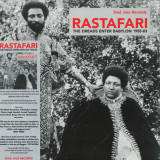
Soul Jazz Records’ are releasing their classic release ‘Rastafari – The Dreads Enter Babylon 1955-83’ in a new one-off pressing limited edition blue coloured double vinyl edition. The album includes new tracks and is fully remastered from the original edition.
Spanning nearly 30 years of revolutionary music and featuring the music of Count Ossie, Johnny Clarke, The Mystic Revelation of Rastafari, Bongo Herman, Earth & Stone and many more, this is an in-depth look at some of the heaviest and righteous music ever made!
Soul Jazz Records' Rastafari: The Dreads Enter Babylon charts the many links between reggae music and Rastafarianism. The album comes complete with full gatefold and bespoke inner sleeves, containing stunning exclusive photography and extensive sleevenotes.
Rastafarianism had its roots at the start of the 20th century and became widespread in Jamaica following the visit of Haile Selassie, the King of Ethiopia, to Kingston in 1966. By the 1970s Rastafarianism become practically synonymous with reggae, as many roots reggae artists became known throughout the world, notably spearheaded by the success of Bob Marley and The Wailers.
As ‘roots reggae’ artists in the 1970s continued to spread the word of Jah (God) in their music, Rastafari reggae became the ultimate rebel sound throughout the world.
"One of the best bands to come out of NYC since who gives a shit." -CVLT Nation. When you enter White Hills' lair in Brooklyn, the duo's insatiable desire for music and art is immediately palpable. Crates of vinyl from floor to ceiling line the long hallway. Guitars appear at every angle, one lying across a sofa in obvious mid-play with others in cases tucked beside amplifiers into every conceivable corner. Synthesizers and cables cover the purple satin bed while gouache paintings in various stages of progress strewn the floor. Album covers, movie posters, books, paintings, prints and souvenirs of subversive culture occupy the remaining wall space. A sanctuary of adoration, creation and imagination, it's also the nerve center of their record label Heads on Fire Industries and the site where the final mixes of their latest album Beyond This Fiction took shape. For nearly two decades, White Hills have been blowing minds with their sonic alchemy: a unique mix of neo-psychedelia, art rock, and post-punk- at once original and recognizable. Their cult reputation emblazoned in celluloid following their performance in Jim Jarmusch's sultry vampire romance Only Lovers Left Alive, the duo has toured vigorously since their inception. With a vast catalogue that astounds and a relentless punk ethos, time seems to energize the duo, making them increasingly daring and prolific. "Music creates a bliss beyond sex and drugs," professes one-woman rhythm section Ego Sensation. "We'll never stop making music. It's the highest high to be had in life." Founding member Dave W, whose signature other-worldly guitar sorcery defines the White Hills sound, grabs his Les Paul to record a melody lingering in his head from last night's dream before it escapes. Outside, the sound of passing sirens, honking horns and bits of conversation remind you that you're in the middle of New York, a city so flush with rock legacy and artistic innovation it would take lifetimes to drink it all in. A voice from outside shouts, "This shit is going for 3! These people got to be out of their fucking minds!" Dave shakes his head and laughs, "There's no place I'd rather be." Committed to a vocation marked by extremes, doubt, struggle and moments of ecstasy, Dave and Ego continue this torrid affair with music bearing their latest fruit Beyond This Fiction. Inspired by the ideas of Joseph Campbell, the writer/philosopher known for the book The Power of Myth, the album explores the idea of "riding between opposites"- forging one's own path unrestrained by the dualistic constraints of society. It's a cry to all the seers among us- call us outsiders or rebels- who feel smothered by convention and see nonconformity as the gateway into divine mystery. Recorded with Martin Bisi, known for his iconic NYC sound developed through his work with no-wave titans Sonic Youth, Swans and Lydia Lunch, Beyond This Fiction sees Dave W (guitar/vocals/synths) and Ego Sensation (drums/bass/vocals) orchestrating their distinct guitar heavy meditations into songs with a stronger focus on vocals than previous albums. Opener "Throw It Up In The Air" and closer "Beyond This Fiction" both have a lush quality that flirts with shoegaze. "Killing Crimson", a song that takes inspiration from Killing Joke and King Crimson, has a driving beat and a catchy hook that begs for a sing-a-long. "The Awakening" plunges into the meditative ambient abyss the band is well known for, featuring the unique voice of frequent collaborator poet Dan McGuire to deliver the meaning behind Beyond This Fiction. The album harnesses the seductive accessibility of 2015's Walks For Motorists while evoking the tempestuous soul of the band's seminal 2011 H-p1. Notorious shapeshifters, White Hills make Beyond This Fiction a familiar surprise. Back in the lair, Dave draws eyes on his hands in preparation for the day's video shoot. Ego reaches in the closet pulling out the red velvet jacket she wears on the cover of Beyond This Fiction where she stands in a NYC alley holding a glowing orb. "That's the portal- the gateway into the mystery. The music will take you there.".
This one’s for the steppers!
Gene Harris, the American jazz pianist, appearing on over 50 albums in his career, including on labels Blue Note & Concord Jazz, known for his warm sound and known for his warm sound and blues and gospel infused style that is known as soul jazz.
Originally released in 1974 on the classic soul jazz album Astral Signal, Losalamitoslatinfunklovesong gained a second wave of popularity when it was played as part of the London centric, Rare Groove scene in the late 80’s.
Remastered and lovingly reissued on the increasingly ‘buy or cry’ Selector Series label, this seminal laid back stepper is available for the first time In over 45 years!
- It Only Takes 2
- Dream With You
- Call It What You Like
- Workin
- Are You Gonna Find It
- I’ll Be There
- Believe In Your Reasons
- Sinus Node
- Nothing Like This
- Sunlight
Thandii (aka Jessica Berry, Graham Godfrey) first made waves with their debut album A Beat To Make It Better in 2023. The album gained somewhat cult critical acclaim long after it’s release, with listeners luxuriating in the unusual sound collaged from offcuts of Soul, Lo-fi Hiphop & Psych. Thandii’s world comes bolstered by collaborations with esteemed artists such as Michael Kiwanuka, Inflo, SAULT, Joy Crookes, Jordan Rakei, and Little Simz. The duo’s sophomore offering comes in the form of two companion albums Dream With You & Come As You. The two albums make up a single conceptual statement celebrating dissonance, contradiction, polarity and opposition.
The pair believe that binary thinking has a lot to answer for in today’s world and is often used to divide us as a people. ‘We wanted to explore what it felt like to hold disparate notions in both hands whilst making the music. Starting with the title tracks, we explored the idea of unashamedly being your authentic self in every moment - this is admirable for those that can live their life in an uncompromising way. In contrast to that idea, we explored those moments where we perhaps wished we were more than our reality - a dreamed up, imagined self’. It’s no surprise that duality is central to what Thandii is all about with the pair co-writing, co-recording & co-producing from their seaside studio HaloHalo in Margate, Kent.
The albums each have a distinct flavour of their own. Dream With You is built on cassette-tape-driven lofi beats, art-pop melodies and soulful piano breaks. Whilst Come As You explores more experimental song-form that wouldn’t seem out of place on Tender Buttons - Broadcast or Dots And Loops - Stereolab. Jessica’s voice is the transcendent, ethereal form that shapeshifts between the realms of the two statements; dancing playfully through falsetto harmonies, confessional spoken word, detuned alter egos and haunting choirs.
Thandii (aka Jessica Berry, Graham Godfrey) first made waves with their debut album A Beat To Make It Better in 2023. The album gained somewhat cult critical acclaim long after its release, with listeners luxuriating in the unusual sound collaged from offcuts of Soul, Lo-fi Hiphop & Psych. Thandii’s world comes bolstered by collaborations with esteemed artists such as Michael Kiwanuka, Inflo, SAULT, Joy Crookes, Jordan Rakei, and Little Simz. The duo’s sophomore offering comes in the form of two companion albums Dream With You & Come As You. The two albums make up a single conceptual statement celebrating dissonance, contradiction, polarity and opposition.
The pair believe that binary thinking has a lot to answer for in today’s world and is often used to divide us as a people. ‘We wanted to explore what it felt like to hold disparate notions in both hands whilst making the music. Starting with the title tracks, we explored the idea of unashamedly being your authentic self in every moment - this is admirable for those that can live their life in an uncompromising way. In contrast to that idea, we explored those moments where we perhaps wished we were more than our reality - a dreamed up, imagined self’. It’s no surprise that duality is central to what Thandii is all about with the pair co-writing, co-recording & co-producing from their seaside studio HaloHalo in Margate, Kent.
The albums each have a distinct flavour of their own. Dream With You is built on cassette-tape-driven lofi beats, art-pop melodies and soulful piano breaks. Whilst Come As You explores more experimental song-form that wouldn’t seem out of place on Tender Buttons - Broadcast or Dots And Loops - Stereolab. Jessica’s voice is the transcendent, ethereal form that shapeshifts between the realms of the two statements; dancing playfully through falsetto harmonies, confessional spoken word, detuned alter egos and haunting choirs. Key collaborators on the albums include bass player Jonathan Harvey and pianist Steve Pringle, both members of Margate’s burgeoning Arts scene. Thandii escaped London nearly a decade ago, their sights set on creating a means for prolific expression, without the distractions that the city can bring. The albums find them in an exploratory stage, throwing paint at the canvas with joyful abandon, gifting themselves permission for uncensored expression. The LPs muse on relationships - romantic, platonic & familial - community, self-worth, self love, healing and boundaries, at times from differing perspectives. This contrast of opinion makes for rich listening throughout a vast emotional landscape
On August 16, Toronto-based musician and producer David Psutka aka ACT! (fka Egyptrixx / Anamai / Ceramic TL) will release his latest project ‘Face to Face, Day by Day’ for his own Halocline Trance imprint.
This is is Psutka’s third album proper as ACT! following the release of the “sonic mixtape” ‘Universalist’ in 2018 and the augmented reality soundtrack ‘Grey Matter AR’ in 2021; a series of Snapchat filters created by artist Karen Vanderborght and soundtracked by ACT! which explored the poetic and existential potential of AR and social media.
“Aesthetic accidents in the periphery of the ‘work’ can be the message. In 2018, at an Egyptrixx concert at Bagni Misteriosi de Teatro Franco Parenti - a gorgeous, sprawling outdoor pool theatre in Milan - I had a clarifying moment. Gigs around then had mostly been in pummelling, dark music venues, so I wasn't prepared for this expansive space (and the thoughtful work of the organisers who had layered sheets of plastic film on the pool to parallel eco-materialist themes from a previous album). It was the midday soundcheck that struck me most - brittle digital sounds from the set echoed off the colonial Milanese facades and ricocheted down the Via Carlo Botta, pinging off buildings in the distance and clashing with the noise of traffic, tourists and whatever else. It was a strange, collisionist moment, and a reminder that my essential approach to music is, above all, a preoccupation with the materiality of sound.
Everything on Face to Face, Day by Day began as an improvisation. Openness to accidents and the emotional complexity that comes from centering them in composition has become important to my work, and helps the music go beyond the possibility of what is playable, imaginable. I also wanted to channel adventurous solo pop records of the 1970’s and 80’s, like Yasuaki Shimizu, Jon + Vangelis and Stevie Wonder. These came from an interesting era in commercial music as studio production techniques became increasingly formalised as compositional devices, like AMS RMX16 percussion sounds and early digital stereo effects.
Like many musicians, I’ve been travelling and performing less since the pandemic and as a result, have wanted studio sessions to feel more collaborative and improvisational. There were great writing and recording sessions for this album. Vox, synth, sax and guitar jams - much of what ended up on the record isn’t edited much, if at all. I jammed a sm57 into Colin Fisher’s sax bell and created feedback loops using various preamps and distortion units. The clunky sounds were sampled and used as percussion elements. I also had a great synth jam session with Jeremy Greenspan at Barton Building Studio in Hamilton, which was recorded by filmmaker Liz Adler.
I’ve had a few months to sit with this album and see clear throughlines connecting it to previous projects. There are aspects of the experiential and structuralist sound design ideas from the EGYPTRIXX records; and also some arrangement tricks borrowed from ANAMAI - specifically, the use of interruptionist sound events. Perhaps most of all, it feels connected to the Ceramic TL + Ipek Gorgun record ‘Perfect Lung’ and its splattered take on musical complexity. “ (David Psutka)
In addition to ACT!, Psutka has released music with numerous projects including Anamai, Egyptrixx and Ceramic TL, he has collaborated widely with artists such as Junior Boys, Ipek Gorgun, and Kuedo as well as Jessy Lanza (2016) and an official remix for Massive Attack’s ‘Hymn of the Big Wheel (2012). The contributions on this album, from Robin Dann and Ben Gunning, reflect the deeply collaborative nature of the Halocline Trance label and the Toronto creative scene more broadly.
Many of Psutka’s releases have received critical acclaim from media outlets such as Pitchfork, Exclaim, The Quietus and Resident Advisor. As a live performer, he has toured extensively including performing at Sonar Festival, Roskilde, Mutek, MOMA PS1 Warm-UP and CTM Festival. He’s also presented sound installations at various institutions such as Galeria Civica Commune di Modena, and Art Gallery of Ontario (AGO).
In 2015, Psutka launched Halocline Trance as a home for his various sound projects, events and collaborations. Now a creative collective and label, it has grown to include a diverse array of artists including Casey MQ, Xuan Ye, Myst Milano, Colin Fisher and others. The label is described as “genre-agnostic” and conceptually open, supporting work across a wide spectrum of creative fields including soundtrack recording, AR design and traditional artist albums. Their impeccable roster also includes, theorist/improviser Eldritch Priest, and AR/VR artist Karen Vanderborght. In recent years, Halocline Trance has established itself as a platform that facilitates many of Canada’s most exciting creative music projects. Many of the releases have received critical acclaim from outlets including Pitchfork, Exclaim, Bandcamp and Resident Advisor.
Das Bristoler Jazz-Kollektiv Ishmael Ensemble verdeutlicht mit "Visions Of Light", dem Nachfolger ihres gefeierten Debüts "A State Of Flow" (2019, "Album Of The Month" Mojo, The Guardian), wie zwischenmenschliche Beziehungen unter den Musikern atemberaubend ehrgeizige und emotional eindrucksvolle Kompositionen entstehen lassen können. Unter Leitung des Saxofonisten Pete Cunningham hat sich das Ensemble als explosive neue Kraft im UK Jazz profiliert, deren cineastischen Tracks Dub und elektronisches Feingefühl aus der vitalen Bristoler Szene kombinieren. Cunninghams Aufstieg als gefragter Produzent führte zu Remixen für Techno-Legende Carl Craig und das legendäre Blue Note-Label.
- A1: Brownswood Rockers / Golden Shovel (Somebody Else’s Idea)
- A2: Dancin' Your Own Time
- A3: Limebike Getaway
- A4: General Rubbish Vs The Sportswear Mystics
- A5: Tottenham
- B1: Crow Foot Hustling
- B2: Numbers Click
- B3: Circles Going Round The Sun
- B4: Golden Shovel 2 (Somebody Else's Idea)
- C1: Jazz
- C2: Halfway Somewhere
- C3: Of Peace
- C4: Move As One
- C5: In The Brakes
- D1: 57Th Min / Power And Glory
- D2: Kingsland Road
- D3: Cabin Fever Dub
- D4: Euston Warehouse
- D5: Pleasure, Joy & Happiness
Blue 2LP[34,87 €]
Almost three decades on from their last release, Acid Jazz forefathers Galliano are back with news of their new LP ‘Halfway Somewhere’ which is being released on Gilles Peterson’s Brownswood Recordings on 30 August.
Born out of London’s underground clubs and warehouse parties of the mid to late eighties, with the debut single on the Acid Jazz label in 1988, Galliano came out of a culture that spanned music, dance, fashion, art, design, and the written word.
When they arrived as the first act on Gilles Peterson’s Talkin’ Loud label in 1990 with ‘Welcome to the Story’ (produced by Chris Bangs who invented the term Acid Jazz) dressed in Gabicci sweaters, beads and skullcaps they captured a scene built on re-invention. “We were all playing around with what we could get our hands on whether that was a seventies book on Jamaican style or old Last Poets and Watts Prophets records,” says Gallagher. “We’d been recycling things for a few years but suddenly everything had coalesced and you’ve got an amalgam that seemed quite solid.”
For their first album since 1997, Rob Gallagher and his partner, vocalist Valerie Etienne, are joined by Galliano stalwarts Ernie McKone on bass, Crispin Taylor on drums, and Ski Oakenfull on keys (with guests including saxophonist Jason Yarde and percussionist Crispin ‘Spry’ Robinson).
Where the old Galliano recycled records they heard at clubs, today they are responding to the kaleidoscopic global jazz scene - from Total Refreshment Centre in London to International Anthem in Chicago. More than forty years since they came together, Galliano are still only ‘Halfway Somewhere’, but listening to the album they are obviously having fun getting there. “I think the stars have to be aligned when you redo things,” says Gallagher. “Coming at it from this door is very different to the door we came into back then. But once it's existing it is something. But I’m still not sure what that something is.”
The very first Buchla synthesiser performance by revolutionary composer Suzanne Ciani finally makes its fifty year journey from its switch-on New York art gallery to its long deserved and discerning global phonographic audience.
With this previously unheard vinyl pressing, Finders Keepers Records are proud to present an archival project of ‘art music’ that not only redefines musical history but lays genuine claim to the overused buzzwords such as pioneering, maverick, experimental, groundbreaking and esoteric, while questioning social politics and the evolution of music technology as we have come to understand it. To describe Italian-American composer Suzanne Ciani’s resurrected Buchla concert records as genuine gamechangers would be a gross understatement. These records represent a musical revolution, an artistic revelation, a scientific benchmark and a trophy in the cabinet of counterculture creativity. This sonic installation album, alongside her recently liberated WBAI/Phill Niblock 1975 sessions (FKR082), are triumphant yardsticks in the synthesiser space race and the untold story of the first woman on the proverbial musical moon. While pondering the early accolades attached to these golden era New York recordings it’s daunting to learn that these records were in fact not even records at all.
What exists on this disc now was a manifesto and a one-time gateway to a new world, which somehow was only partially pushed ajar. Captured here is a genuine live act exploring new territories with a fully performable music instrument. If the unfamiliar, modernistic, melodic pulses, tones and harmonics found on these 1970’s artistic gallery collaborations/ live presentations (then soon to be followed by academic grant applications and educational demonstrations) had been placed in a phonographic context alongside the widely marketed work of Morton Subotnick, Walter Carlos or Tomita, then the name Suzanne Ciani and her infectious influence would have already radically changed the shape, sound and gender of our record.
With the light of Buchla and Ciani’s initial flame Finders Keepers continues the journey through the vaults of this increasingly celebrated music legacy, illuminating these ‘non-records’ that evaded the limelight for almost half a century. You can’t write history when you are too busy making it. With fresh ink in the bottomless well, let’s start at the beginning. Again
- A1: Sekiro, The One-Armed Wolf
- A2: Rebellion
- A3: Emma The Physician
- A4: Ashina Reservoir
- A5: Divine Heir Of The Dragon's Heritag
- A6: Knife's Edge
- B1: Ashina's Crisis
- B2: Sculptor Of The Dilapidated Temple
- B3: Ashina Outskirts
- B4: A Shinobi's War
- B5: Strength And Discipline
- B6: Serpent Valley
- C1: Great Serpent
- C2: Gyoubu Oniwa
- C3: Hirata Estate, Dragonspring River
- C4: Approaching Forces
- C5: Up In Flames
- C6: The Phantom Lady Butterfly
- C7: Ashina Castle
- D1: The Ashina Clan
- D2: Genichiro Ashina
- D3: Sunken Valley
- D4: Snake Eyes
- D5: Guardian Ape
- E1: Altered Form
- E2: Folding Screen Monkeys
- E3: Children Of Rejuvenation
- E4: Mibu Village
- E5: Thirsting Horde
- E6: Apparitions
- E7: Corrupted Monk
- F1: Incursion
- F2: Lone Shadow
- F3: Gentle Blade
- F4: Isshin Ashina
- F5: Great Shinobi
- F6: Fountainhead Palace
- F7: Okami Lineage
- G1: Great Colored Carp
- G2: Old Dragons Of The Tree
- G3: Divine Dragon
- G4: Overrun
- G5: The Red Guard
- G6: Demon Of Hatred
- H1: Conspiracy
- H2: The Owl
- H3: Sword Saint
- H4: Hend Of A Vicious Struggle
- D6: Senpou Temple, Mt. Kongo
- D7: Seekers
The clans of Activision, FromSoftware, and Laced Records have come together to release the majestic music of Sekiro: Shadows Die Twice on deluxe quadruple vinyl.
Set in a fictionalised 16th Century Japan, players take on the role of the shinobi Wolf in trying to protect the young Divine Heir Kuro from the remnants of the Ashina clan. Progression requires a mastery of stealth combat and extreme precision while battling some of From’s most iconic boss encounters to date. No one forgets the first time they bested Genichiro atop Ashina Castle...
The vinyl sets feature 50 tracks by lead composer Yuka Kitamura (Bloodborne, Dark Souls III) and co-composer Noriyuki "α" Asakura (Tenchu series.) The dramatic score features traditional Japanese instruments, orchestral and choral elements, and outlandish, mysterious sounds that transport listeners to a war-ravaged Japan during an alternative history Sengoku period.
- Throw It Up In The Air
- Clear As Day
- Killing Crimson
- Fiend
- Closer
- The Awakening
- Beyond This Fiction
CLOUDY SEA BLUE VINYL[28,53 €]
"One of the best bands to come out of NYC since who gives a shit." -CVLT Nation. When you enter White Hills' lair in Brooklyn, the duo's insatiable desire for music and art is immediately palpable. Crates of vinyl from floor to ceiling line the long hallway. Guitars appear at every angle, one lying across a sofa in obvious mid-play with others in cases tucked beside amplifiers into every conceivable corner. Synthesizers and cables cover the purple satin bed while gouache paintings in various stages of progress strewn the floor. Album covers, movie posters, books, paintings, prints and souvenirs of subversive culture occupy the remaining wall space. A sanctuary of adoration, creation and imagination, it's also the nerve center of their record label Heads on Fire Industries and the site where the final mixes of their latest album Beyond This Fiction took shape. For nearly two decades, White Hills have been blowing minds with their sonic alchemy: a unique mix of neo-psychedelia, art rock, and post-punk- at once original and recognizable. Their cult reputation emblazoned in celluloid following their performance in Jim Jarmusch's sultry vampire romance Only Lovers Left Alive, the duo has toured vigorously since their inception. With a vast catalogue that astounds and a relentless punk ethos, time seems to energize the duo, making them increasingly daring and prolific. "Music creates a bliss beyond sex and drugs," professes one-woman rhythm section Ego Sensation. "We'll never stop making music. It's the highest high to be had in life." Founding member Dave W, whose signature other-worldly guitar sorcery defines the White Hills sound, grabs his Les Paul to record a melody lingering in his head from last night's dream before it escapes. Outside, the sound of passing sirens, honking horns and bits of conversation remind you that you're in the middle of New York, a city so flush with rock legacy and artistic innovation it would take lifetimes to drink it all in. A voice from outside shouts, "This shit is going for 3! These people got to be out of their fucking minds!" Dave shakes his head and laughs, "There's no place I'd rather be." Committed to a vocation marked by extremes, doubt, struggle and moments of ecstasy, Dave and Ego continue this torrid affair with music bearing their latest fruit Beyond This Fiction. Inspired by the ideas of Joseph Campbell, the writer/philosopher known for the book The Power of Myth, the album explores the idea of "riding between opposites"- forging one's own path unrestrained by the dualistic constraints of society. It's a cry to all the seers among us- call us outsiders or rebels- who feel smothered by convention and see nonconformity as the gateway into divine mystery. Recorded with Martin Bisi, known for his iconic NYC sound developed through his work with no-wave titans Sonic Youth, Swans and Lydia Lunch, Beyond This Fiction sees Dave W (guitar/vocals/synths) and Ego Sensation (drums/bass/vocals) orchestrating their distinct guitar heavy meditations into songs with a stronger focus on vocals than previous albums. Opener "Throw It Up In The Air" and closer "Beyond This Fiction" both have a lush quality that flirts with shoegaze. "Killing Crimson", a song that takes inspiration from Killing Joke and King Crimson, has a driving beat and a catchy hook that begs for a sing-a-long. "The Awakening" plunges into the meditative ambient abyss the band is well known for, featuring the unique voice of frequent collaborator poet Dan McGuire to deliver the meaning behind Beyond This Fiction. The album harnesses the seductive accessibility of 2015's Walks For Motorists while evoking the tempestuous soul of the band's seminal 2011 H-p1. Notorious shapeshifters, White Hills make Beyond This Fiction a familiar surprise. Back in the lair, Dave draws eyes on his hands in preparation for the day's video shoot. Ego reaches in the closet pulling out the red velvet jacket she wears on the cover of Beyond This Fiction where she stands in a NYC alley holding a glowing orb. "That's the portal- the gateway into the mystery. The music will take you there.".
It’s abundantly clear from the first bars of their 5th studio album Through Other Reflection, that this is, and could only ever be, The Soundcarriers. From the enchanting vocal duets of folk-bidden Chanteuses Leonore Wheatley and Dorian Conway; to the precise bass lines of Paul Isherwood and the limber, jazz-cool, Hal Blaine-esque drums of his his co-songwriter Adam Cann; from the fairy-like flutes, 60s-garage guitars and organ sounds pilfered from the archives of exotica - listening to the Soundcarriers resembles a rediscovery of all the most prized, esoteric corners of the 1960s, all bundled up, warped and refracted through the quartet’s astutely modern cultural lens. Channelling Tropicalia, Middle Eastern psychedelic Jazz/Funk, The French Library sounds of Nino Nardini, and a whole host of lavish obscurites beside, Through Other Reflection delivers another sonic adventure from one of the most unique and distinctive voices of British Psychedelia. After an 8 year wait for their album 4 - 2022’s Wilds - it thankfully didn’t take so long for the follow-up this time round. In many ways, this feels like a companion to Wilds; recording again at their Nottingham warehouse studio, Through Other Reflection retains that same organic glow, all the passions and imperfections of a tightly clipped unit jamming out these living, breathing pop-art nuggets as if straight onto the acetate.”We wanted to keep an air of spontaneity with this album and not get too bogged with the recording process”, explains Cann, “It was more a case of getting the songs as tightly written and arranged as possible first so we could get them down quickly in the studio. It always takes longer than you think” Less packed with strident pop hooks as its predecessor however, the music of Through… has been given extra licence to breathe, stretch out, and wander more uncharted terrains. While gleaming psych-pop of tracks like ‘The City Was’, or ‘Already Over’ confidently carry on from where they left off, from the album’s 2nd track ‘Always’, the trip becomes a little less predictable. Starting out as a smoky Procol Harum-meets-French-Psych organ ballad, the music drifts, as if of its own accord into an eerie, garage trance that lingers, cycles, and hypnotises, growing ever stranger, reaching ever-further away from its point of conception. And almost every track on Through Other Reflections holds that outer-body moment, where the band fix themselves on a limber, lysergic groove, lose all grip on time and reality, and melt themselves away into a liquid state of blind euphoria. There are sequences on this record that feel more like rituals than songs, built upon a single hypnotic rhythm which, like the centre of a vortex, pulling everything under its beatific command. Take the finale to ‘What We Found’ for instance, sounding like a ghostly march across the psychedelic moors, or ‘Feel The Way’, where a single athletic drum-loop rises and rises, growing ever more urgent and suspenseful underneath its frantic harpsichords and rasping flutes. Full of such rich stylisms as these, The Soundcarriers showcase themselves as abstract storytellers par excellence by virtue of their textures and arrangements alone. Resembling Romantic composer Maurice Ravel, but if he had just a four-piece rock band at his disposal, Through Other Reflects is rich with detail; there’s shakers, rattles, clarinets, booming drums; there’s synthesiser swarms, chiming xylophones, vintage organs and experimental Cluster & Eno-esque ambiences. Within all this nuance the music flows like some undisclosed narrative swathed in a magnetic secrecy. “It almost comes across like a story in some ways”, says Cann of the album, “the music is quite sectional with elements of exotica and cinematic type layers, it's a good balance of grooves, tunes and weirdness”. No more is this “epic cinematic feel” heard more proudly than on short instrumental ‘Sonya’s Lament” - its innate, hauntological atmospheres befitting a Peter Strickland soundtrack, or the classics of Lex Baxter, the so-called ‘Founder of Exotica’ himself. On the other hand, providing a greasier undercurrent to all these bucolic sounds is a leaning towards a more “direct” lyricism referencing more “external concerns. Laying down the first tracks for the album in the wintry gloom of pre-lockdown 2020, and drawing inspiration from time spent in Berlin, Through Other Reflections returns to some of the post-apocalyptic futurism explored in 2014’s Entropicalia - a loose concept album inspired by J.G Ballard’s The Drowned World. “The songs explore a disillusionment with the way things are going particularly after 40 years of neoliberalism”, says Cann, “They follow that folk-song tradition of wanting to escape to an imagined time, but here it’s more urban than pastoral. The first couple of ideas I came up with when doing some music in Berlin and had some time to wander aimlessly. And think the atmosphere seeped in, particularly on The City Was and Already Over. He continues, “One aspect of the title, ‘Through Other Reflections’ is about synthesis and layers of influence. How things can be filtered through other things and change the perspective. This is something you get in cities as well.” Though, as with everything The Soundcarriers make, “It can mean anything. It also just sounds kind of cool.”
Tuk Smith is the kind of rock'n'roll ambassador you didn't think existed anymore. Punk maverick from rural Georgia, Biters frontman, producer and solo artist, he's seen the best and worst of a music industry in constant flux. By turns it's left him critically acclaimed, poised for stadiums, dropped, burned out, back in the game and beloved by those for whom rock is still everything. Now based in Nashville, and with his own label Gypsy Rose Records, he creates from a more real place than most. The result is Rogue To Redemption, Tuk's second album with solo project The Restless Hearts. The sonic lovechild of Thin Lizzy, 90s power pop and melody-driven punk, it shows an artistic peak born from adversity. The sound of a man bottling a lifetime of experiences, stories and characters from working class America. Produced by Tuk and mixed by Chris Dugan (Green Day, Iggy Pop, U2), Rogue To Redemption was written over the last three years but recorded down to the wire - right up to the summer of 2024. Joined by long-term Restless Hearts compadres, drummer Nigel Dupree and bassist Matthew 'Ponyboy' Curtis, he cut the bulk of it at home. So if any of this resonates with you - if you crave rock'n'roll with substance, an edge, 21st century eyes and an old soul's heart - you've come to the right place.
Gregory T.S. Walker’s Minstrels & Minimoogs was self-published by a young, nomadic composer and virtuoso in 1988 to accompany an immersive multimedia performance at the University of Colorado Boulder’s Fiske Planetarium. Created with this outer, and other, world setting in mind, the four tracks find Walker stretching toward an ancient-to-future vision where Egyptian myths and Hieronymus Bosch-ian tableaus are rendered in a screaming three dimensional circuitry of electronic drums, synth guitars, and, of course, Minimoog. Given the musical terrains and outmoded topics traversed, and that this entirely DIY effort was originally released as a micro one-sided 12” edition, Minstrels & Minimoogs is as perplexing and euphoric a document lost-to-time as it is now found.
Born in 1961 into an intensely musical family spanning four generations, Gregory’s mother Helen Walker-Hill was a noted musicologist specializing in the rediscovery and work of historical Black female composers, while his father, George Walker, was the first African American composer to win the Pulitzer Prize for music. Both parents studied with the famed (and famously strict) Nadia Boulanger in Paris in the 1950s, and held to lofty aesthetic standards in their home life. Walker began studying the violin as a child, but when a burgeoning interest in the electric guitar and rock music as a teen manifested, it was largely verboten in the household. The rule was that the music played in the home was to be acoustic and classical. Although the elder Walkers eventually relented and allowed Gregory’s guitar to be plugged in for a brief interval on the weekends, the remaining days he settled for strumming it sans amplification.
Gregory, conditioned and eager for a life in music but looking to get out from under the influence and yoke of his famous composer father, ultimately chose to study computer music at the University of California at San Diego, where he earned a Master of Arts. This was followed by another MA in electronic music composition at that hotbed of West Coast experimental music, Mills College. Intermedia and multimedia in the arts was the rage in the 1980s, and Mills was one of the centers for it; audacious spectacle meeting visionary performance, such as one of the realizations for Anthony Braxton’s music for multiple orchestras a young Gregory performed in with his violin.
After a series of solo synthesizer concerts around California, Gregory followed a girlfriend on a mid-country move to Boulder, Colorado. After picking up yet another composition degree at University of Colorado Boulder, his life as a composer really started, writing a piece for extended technique for guitar, a passacaglia for vocoder and orchestra, as well as Minstrels & Minimoogs.
Envisioned as a multimedia performance such as the kind he’d experienced at Mills (which was all but unknown in Boulder at the time), Gregory roped in a number of college going or aged friends of varying skill levels and musical sympathies to accompany him with distorted sax or oblique spoken interludes. Confronted with a lack of finances, but driven to get his ideas captured in a complete musical package, the album was recorded in his brother’s apartment. If not every player assembled was on Gregory’s virtuosic level, so be it; it was more about capturing the spirit of his intentions and embracing the serendipity of mistakes.
An inspired attempt at world building, Minstrels & Minimoogs draws on the deep well of musical knowledge Gregory gathered from his parents and teachers, but all the while subverting that historical basis by incorporating mutant strains of prog and pop music. The work accumulated is not unlike the playful 1980s work of Gregorio Paniagua, where medieval estampies and rondeaus are wrenched into an anachronistic present where Hildegard Von Bingen and Kate Bush are contemporaries. Ars nova, new art, a 20th century minimalist jester and troubadour.
A one sided LP was the cheapest option Gregory found to have Minstrels & Minimoogs memorialized on vinyl, so somewhere between 50 to 100 copies were pressed. There was no distribution, outside of copies that were handed out to friends or sold at the performances at the planetarium. Gregory T.S. Walker’s cosmic-futuristic forays into oblique pop and baroque subversion could forever reside perfectly in both the domed simulacrum of our universe for which it was composed, in the formats it is being reintoduced now, and our own biblical firmament. For in the words of Gregory, straight from the original liner notes: “God Is A Minimoog”
Gregory T.S. Walker’s Minstrels & Minimoogs arrives again August 23, 2024 on vinyl and digitally as part of uncommon¢ (“uncommon sense”), an open-ended, serialized endeavor from Freedom to Spend that provides new meaning for rarefied recordings from music's outermost fringe.
Coke Bottle Green vinyl. Who were the first punks? Do The Damned have more of a shout than The Sex Pistols? The Stooges or Ramones? Gregg Deal, the acclaimed visual and performance artist behind his new project Dead Pioneers, is making a claim that Indigenous Americans were the first real punks. Deal suggests that the overarching theme of the album is "an introduction to the band itself". Created with a DIY disposition and the "love of a scene that saves lives", they reel off a roll call of marginalised groups and protected characteristics: "Indigenous rights, Black rights, Brown rights, Asian rights, Gay rights, Trans rights, Workers rights and beyond_". This is central to their identity and focus, saying that "with a North American Indigenous person as the vocalist, being unapologetically upfront on the social, political and cultural side of things doesn't seem necessary, but paramount to the overall tone of the band." This self-titled debut, coming in at a lithe 22 minutes with only one of the twelve tracks exceeding three minutes, is almost over before it begins, but covers a huge amount of ground in that time. Blistering opener 'Tired' sets out their stall; as with the whole album, it is passionate, but never preaching. Capitalised 'Political Music' can be hard to land without coming across as hectoring or earnest, but Deal's literary, humorous lyrics effortlessly cut through complex issues of marginalisation and colonialism.