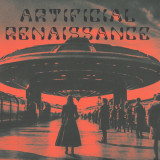
Welcome to the era of “Artificial Renaissance”. Humanity and technology stand at a crucial and fundamental intersection. Echoing past cultural revolutions in a modern, technologically advanced world, everything is set to be redefined—our lives, our thoughts, and the way we move forward.
Dutch EBM/synth duo Staatseinde returns with “Artificial Renaissance”, an electrifying new mini-album. Fusing the urgency of classic EBM with the boldness of futuristic synth-punk, the band crafts an interstellar sonic journey fueled by pulsating rhythms and dystopian narratives.
The album blends space punk, italo-disco and electro into a dark, cinematic exploration of rebellion, euphoria, and dystopia. “Space Scream” launches with a cosmic punk battle cry, while “Tanzverbot” pulses with defiant energy against restriction. “Suicide Tuesday” captures post-club emptiness with shimmering 80s nostalgia, and “The Trip” unravels themes of environmental doom. “Freight” propels an italo-disco-infused space odyssey tackling exploitation, while “Une Mémoire Sans Fin” dives into AI’s eerie hold on human emotions. The fast-paced “Mutant Whispers” transforms the dancefloor into a space of fluid identity and resistance, closing with “The Mansion”, a hypnotic synth-driven descent into surreal miscommunication.
With “Artificial Renaissance”, Staatseinde ventures into unexplored sonic territory, expanding the boundaries of their lyrics, balancing artificial futuristic aesthetics with raw human emotions. As the lines between past and future blur, their pulsating music reminds us: the new age is already here.
Buscar:80 s revolution
- Disease
- Another Dick In The System
- Pulling My Heart Out From Under Me
- When God Can't Wait
- Shut Up Baby, I Love You
- Strength
- White Trash
- You Lie
- Nothing
- Love Is Dead
- Let It Ride
- You Lie (Corn Fed Mix)
Die amerikanische Rockband Skid Row eroberte in den späten 80er Jahren die Musikszene und wurde zu einer führenden Kraft im Hard Rock- und Heavy Metal-Genre. Bekannt für ihre unbändige Energie, ihre melodischen Hooks und ihre unerbittliche Härte, feierten Skid Row mit Hits wie "18 and Life", "Youth Gone Wild" oder "I Remember You" weltweite Erfolge. Die Band wurde zum Synonym für den rebellischen Geist der späten 80er und frühen 90er Jahre, verkaufte weltweit Millionen von Alben und festigte ihren Platz in der Rockgeschichte. Im Jahr 2022 meldeten sich Skid Row mit ihrem mit Spannung erwarteten neuen Studioalbum "The Gang's All Here" zurück, das von Kritikern und Fans gleichermaßen als kraftvolles Revival ihres klassischen Sounds gefeiert wurde.
"Revolutions Per Minute", erstmals erschienen im Jahr 2006, stellt einen entscheidenden Moment in der Karriere der Band dar, da Skid Row aus ihrer Komfortzone heraustraten und neue Ideen und Einfl üsse in die Band einbrachten. Das Album präsentiert den sich weiterentwickelnden Stil der Band, der ihre charakteristische Härte mit einem moderneren, aƽressiveren Sound kombiniert. Die komplett remasterte Neuaufl age bietet den Fans die Möglichkeit, dieses klassische Album neu zu entdecken und seine nachhaltige Wirkung zu schätzen.
- A1: Obibini Takyi - Aburokyiri Abrabo
- A2: Lee Dodou - Mampong Dwa
- A3: King Solomon (Nii Mantse) - Dzen Ye Kokloo
- B1: Okyerema Asante - Ateaa
- B2: George Darko - Medo Menuanom (Lp Version)
- B3: Osei Banahene - Woanwaremea
- C1: Osei-Osarfo Kantaka - Mansa (Special)
- C2: King Solomon (Nii Mantse) - Dzoohee
- C3: Classique Vibes - Sankofa
- D1: Osei Banahene - Odo Nye Me Sa
- D2: Obibini Takyi - Ohia Sei Abrantie
- D3: Padmore Oware - Menkowu
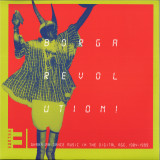
Kalita is excited to present the third volume in their groundbreaking ‘Borga Revolution!’ compilation series, exploring the revolutionary phenomenon of ‘Burger Highlife.’ This unique style fused West African melodies with synthesizers, disco, and boogie, a sound that took Ghanaian airwaves by storm in the 1980s and beyond. With previous volumes receiving strong support by tastemakers such as Gilles Peterson, Antal, Tom Ravenscroft, and Hunee, Volume 3 takes a deeper dive than ever before into the world of Ghanaian digital dance music. This volume features rare, sought-after tracks from artists including Obibini Takyi, Osei Banahene, and Okyerema Asante, as well as Burger Highlife trailblazers George Darko and Lee Dodou. Borga Revolution! Volume 3 offers a curated mix of standout anthems and rediscovered gems, many of which are otherwise nearly impossible to find, making this collection a must-have for fans and collectors alike.
The 1970s and 80s saw Ghanaian musicians begin to incorporate Western sounds like funk and disco into their music, reflecting the changing global musical landscape. However, the country's political instability and economic hardships, marked by military regimes and curfews, forced many artists to leave Ghana in search of better opportunities abroad. In Europe and the U.S., these musicians fused their traditional highlife roots with emerging digital sounds, using cutting-edge technology like the DX7 synthesizer and drum machines to create the genre now known as Burger Highlife. With ‘Borga Revolution!’ Kalita offers a vivid exposition of this musical transformation, using rare interviews, archival photos, and detailed liner notes to bring to life the pioneering spirit of both well-known icons and unsung innovators of Burger Highlife, one of West Africa’s most exciting musical movements.
The Ibex Band, with Giovanni Rico and Selam Woldemariam at the creative helm, provided the musical backbone for legends like Aster Aweke, Girma Beyene, Tilahun Gessesse, Mulatu Astatke, and Mahmoud Ahmed, including the iconic album Ere Mela Mela, shaping modern Ethiopian music as we know it today. This 1976 album (Ge’ez Year 1968) played a pivotal role in that legacy and has now resurfaced to set the record straight.
There’s a tendency to talk about the seventies as a golden age of Ethiopian music. There are good reasons for that, and just as good reasons against it. However, the notion of a golden past privileges the role of Western explorers and suggests that the pinnacle of Ethiopia’s musical culture is something only a foreigner can appreciate and unearth. It downplays the complexities of Ethiopia’s culture and history, creating an artificial divide between then and now. And it underestimates the constantly evolving sound that has followed.
The legendary musical outfit The Ibex Band, later metamorphosed into The Roha Band, has played a central role in defining the sound of many of the greatest stars on the music scene of Ethiopia from the mid-seventies onwards–but their golden output has never really waned. The story of the origins of the band that provided the musical backbone for greats such as Aster Aweke, Girma Beyene, Tilahun Gessesse, backing the solo career of group member Mahmoud Ahmed as well as backing Mulatu Astatke and many others has yet to be properly told.
Two misconceptions plague the image of Ethiopian music, one is that the music is pure because it is, by some notion, unexploited, the other is that it is all traditional. To begin with, a combination of political changes between the late sixties and the mid-nineties created an environment where only the most dedicated and skilled musicians struggled on and pursued a musical career against fierce odds. The whole Ibex Band, with Giovanni Rico and Selam “Selamino” Seyoum Woldermarian at the creative helm, are arguably the origo of the vibrant scene in the mid-seventies, and the said pair are foremost responsible for not only navigating the band through troubled times, but also modernizing the 6/8 chickchicka rhythm to a contemporary form. Giovanni laid the rhythmic foundation with heavy looped basslines that reinvented traditional melodies as dance music, and with Selamino’s innovative guitar work they influenced scores of musicians from Abegaz Kibrework Shiota to Henock Temesgen. Even Giovanni’s Fender bass and Selamino’s Gibson guitar inspired younger musicians in their choice of instruments. Not only in choice of instruments but also in sound–even as the digital revolution hit Ethiopian music, a lot of popular music still took its cue from the masters from Ibex and Roha.
Ibex emerged out of the ashes of the sixties group the Soul Echos band, adding Giovanni and Selamino to their ranks and taking their cues from a slew of influences, such as Motown and The Beatles, fused with traditional music. A tighter-knit unit than most bands at the time – Ibex has remained six to seven members throughout their whole career, compared to many bands that were as large as fifteen or sixteen men strong when Ibex set out. Their playing has been viciously focused, economical yet heavy. Just a year before the recording sessions of the album in your hands, Giovanni and Selamino made a contribution to the popular musical lexicon of Ethiopia that was simply defining the popular sound: their arrangement and recording of bandmate Mahmoud Ahmed’s solo effort and real commercial breakthrough tune and eponymous album, Ere Mela Mela, from 1975.
Selamino has never limited himself to being an adroit lead guitarist, but has always been a scholar of history, and as such he has probably contributed as much to modern Ethiopian music with his guitar playing and compositions as with a deepened understanding of modern or contemporary – Zemenawi – Ethiopian music. Selamino’s contributions serve as a metaphor for those of the whole band, at one and the same time creating and defining a new, danceable and updated sound anchored in Giovanni’s bass, whilst also elevating the broader scene through their support for others on the scene and on top of that, increasing the understanding of the music.
There is an understandable desire to romanticize the musical heyday Ibex and Roha were at the forefront of, because so much of the output is sorrowfully hard to come by. Ibex creativity was nothing short of ridiculously fierce compared to many of their Western contemporaries. Based on their sheer recorded output alone they could have usurped the title “hardest working in show business” from James Brown, recording more than 250 albums or 2500 songs in the seventies and eighties. Some only surface as cassettes today, others were never given full LP release, and some are simply impossible to find today. In the light of that, it’s nothing short of a miracle that the recording Stereo Instrumental Music from 1976 (Ge’ez Year 1968) has resurfaced. Unearthed in perfect condition on a chrome cassette, this is musical history comes alive–to set the future straight. Stereo Instrumental Music was recorded in collaboration with Karl-Gustav Lundgren, a Swedish national working for the Radio Voice of the Gospel. It took two sessions at the Ras Hotel ballroom in Addis Ababa. The Ibex Band was the first band in Ethiopia to employ a four-track recorder for their recording (the first available in the country, lent by Karl-Gustav). Later the same week, Giovanni and Selamino realized that, lengthwise, the recorded material fell short of what they wished for, so they recorded four more tracks in one more session on a single-track recorder. The Ras Hotel and Ghion Hotel, where the Ibex Band held musical residencies were to Ethiopia in general and Addis Ababa in particular what Motown was to the USA and Detroit a few years earlier – a hotbed of musical creativity and showmanship.
The most astonishing thing about Ethiopian music of the last half century is how tradition and modernity are intertwined. Because of this feature, it’s kind of hard to tell when there ever was or when we are in a “golden age”. So much of music from the past has been criminally neglected, but because of the hardships in the past, it would be an oversimplification to say that said past was a golden age. Probably, the golden age is what we are approaching, because for the first time both the past and future are accessible, and the monumental contributions from before can lay a firm foundation for a thriving music scene today. The Ibex Band stands firmly in the past, present and the future. That, if anything, is golden.
The detailed history of Stereo Instrumental Music is in many ways unique. To begin with, it couldn’t have been recorded earlier (there were no four-track recorders available) and it really couldn’t have been recorded afterwards either, at least not in the years directly following, because of the toll the musical scene took from the unfavorable political climate that followed when the nascent Derg regime and rival groups tried to assert themselves, the musical equipment lent from The Voice of Gospel Radio simply disappeared from Ethiopia when the radio station folded in 1977. Karl-Gustav Lundgren,
the Swedish foreign national who assisted during the recording, worked with the Ethiopian Evangelical Church Mekane Yesus at the time, recalls how they only had about fifteen minutes to get the microphones in place for the recording as to not alert neither the management at Ras Hotel nor the authorities and most importantly, to complete the recording before the curfew came into effect at midnight. In leaping to the opportunity to use previously unavailable equipment to push their sound forward and improvising to meet the logistical challenges, the Ibex Band displayed the very avant-gardism and adaptability that explains their longevity as a band through the years. The recording of Stereo Instrumental Music is from a given time in history, but it sounds as beyond time.
Much of the energy that burst out of the scene that Stereo Instrumental Music came out of dissipated or got sidetracked during the societal changes Ethiopia went through in the 1970s and 80s. Whilst leaders might have professed to be revolutionary, the work ethic of the Ibex Band can truly be described as that. They never called it quits, but adapted, toured extensively abroad in Africa, Europe, and the Middle East, and found ways to work even in the face of the curfew that curtailed a lot of musical life. They even played major arenas in the nineteen eighties, despite said curfew and restrictions. The whole extent of their legacy has never been told, but their music speaks louder than words, so therefore… tune in to the Ibex Band’s Stereo Instrumental Music.
- A1: Porto Feliz (Mozar Terra)
- A2: Janeiro (Ion Muniz)
- A3: Serena (Steve Sacks
- B1: A Chegada (Dom Salvador)
- B2: Para Ana (Ricardo Dos Santos)
- B3: Pra Nova (Aloisio Aguiar)
- B4: Constelação (Alfredo Cardim)
- C1: Ascensão (Mozar Terra)
- C2: Clodes (Alfredo Nascimento)
- C3: Naquela Base (Guilherme Vergueiro)
- D1: Atlantico (Ricardo Dos Santos)
Gatefold 2LP
Far Out Recordings proudly presents a landmark discovery in Brazilian jazz: the long lost album by drumming pioneer Edison Machado. Recorded in New York City in early 1978 but never released, Edison Machado & Boa Nova captures a pivotal figure in Brazilian music history at the height of his artistic powers.
Combining North and South American jazz traditions with Machado's revolutionary samba innovations, Edison Machado & Boa Nova represents a triumph against the odds. After facing persecution under Brazil's military dictatorship and being forced to sell his drum kit in 1976, Machado found renewed creative purpose in New York with the Boa Nova ensemble. The resulting album captures the essence of his genius - sophisticated yet wild, controlled yet daring, leading an ensemble of some of the best jazz, samba and bossa nova players of the day.
At just fifteen years old, Machado revolutionized Brazilian music through an accident that would change everything - when his snare drum broke during a performance, he began playing samba rhythms on the cymbal. This innovation, known as "samba no prato" (samba on the cymbals), brought new layers of dynamism to samba and proved instrumental in the development of bossa nova alongside contemporaries like Antonio Carlos Jobim and João Gilberto.
A complex and passionate figure, Machado was notorious for his militant perfectionism and "attacking" style of drumming. Having spent some years of his youth in the Brazilian army, musicians often remarked that he played as if he were at war. But his innovative style, while exhibiting complete control and sophistication, somehow so often danced right on the edge of chaos and wild abandon.
After making his name in Rio's legendary Beco das Garrafas (Bottles Alley) in the 1950s and early '60s, Machado went on to form Bossa Três - the world's first instrumental bossa nova group. His influence spread internationally through collaborations with Stan Getz, Sergio Mendes, Antônio Carlos Jobim, Milton Nascimento, and Chet Baker, while his 1964 album Edison Machado É Samba Novo stands as a masterpiece of Brazilian jazz.
At 80 minutes in length, Edison Machado & Boa Nova, the lost 1978 New York sessions, is a singular achievement in Brazilian jazz. The format itself is a rarity in the canon. It’s packed full of exceptional technical precision and creative vitality, with sophisticated arrangements and masterful improvisation from its exceptional sextet of Brazilian and US musicians: Paulinho Trompete (flugelhorn/trumpet), Ion Muniz (tenor saxophone), Steve Sacks (baritone saxophone), Mozar Terra (piano), and Ricardo dos Santos (double bass).
The album features unheard compositions by Brazilian masters Dom Salvador (Salvador Trio, Harry Belafonte, Edu Lobo), Guilherme Vergueiro (Raul De Souza, Leon Ware, Joyce), Aloisio Aguiar (Arthur Verocai, Airto) amidst the plethora of captivating original material by the members of the Boa Nova ensemble.
- A1: Montego Bay - Everything (Paradise Mix) 04 59
- A2: Atelier - Got To Live Together (Club Mix) 06 06
- A3: Golem - Music Sensations 04 56
- B1: The True Underground Sound Of Rome Feat. Stefano Di Carlo - Gladiators 05 26
- B2: Eagle Parade - I Believe 04 26
- C1: Dj Le Roi - Bocachica (Detroit Version) 05 28
- C2: Green Baize - Synthetic Rhythm 01 41
- C3: M.c.j. Feat. Sima - Sexitivity (Deep Mix) 05 30
- D1: Kwanzaa Posse Feat. Funk Master Sweat - Wicked Funk (Afro Ambient Mix) 06 31
- D2: Progetto Tribale - The Bird Of Paradise 06 29
- D3: Mbg - The Quite 06 59
Vol 1[28,99 €]
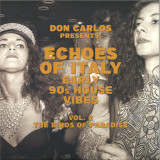
Googling “paradise house”, the first results to pop up are an endless list of European b&b’s with whitewashed lime façades, all of them promising “…an unmatched travel experience a few steps from the sea”. Next, a little further down, are the institutional websites of a few select semi-luxury retirement homes (no photos shown, but lots of stock images of smiling nurses with reassuring looks). To find the “paradise house” we’re after, we have to scroll even further down. Much further down.
It feels like yesterday, and at the same time it seems like a million years ago. The Eighties had just ended, and it was still unclear what to expect from the Nineties. Mobile phones that were not the size of a briefcase and did not cost as much as a car? A frightening economic crisis? The guitar-rock revival?! Certainly, the best place to observe that moment of transition was the dancefloor. Truly epochal transformations were happening there. From America, within a short distance one from the other, two revolutionary new musical styles had arrived: the first one sounded a bit like an “on a budget” version of the best Seventies disco-music – Philly sound made with a set of piano-bar keyboards! – the other was even more sparse, futuristic and extraterrestrial. It was a music with a quite distinct “physical” component, which at the same time, to be fully grasped, seemed to call for the knotty theories of certain French post-modern philosophers: Gilles Deleuze, Félix Guattari, Paul Virilio... Both those genres – we would learn shortly after – were born in the black communities of Chicago and Detroit, although listening to those vinyl 12” (often wrapped in generic white covers, and with little indication in the label) you could not easily guess whether behind them there was a black boy from somewhere in the Usa, or a girl from Berlin, or a pale kid from a Cornish coastal town.
Quickly, similar sounds began to show up from all corners of Europe. A thousand variations of the same intuition: leaner, less lean, happier, slightly less intoxicated, more broken, slower, faster, much faster... Boom! From the dancefloors – the London ones at least, whose chronicles we eagerly read every month in the pages of The Face and i-D – came tales of a new generation of clubbers who had completely stopped “dressing up” to go dancing; of hot tempered hooligans bursting into tears and hugging everyone under the strobe lights as the notes of Strings of Life rose up through the fumes of dry ice (certain “smiling” pills were also involved, sure). At this point, however, we must move on to Switzerland.
In Switzerland, in the quiet and diligent town of Lugano, between the 1980s and 1990s there was a club called “Morandi”. Its hot night was on Wednesdays, when the audience also came from Milan, Como, Varese and Zurich. Legend goes that, one night, none less than Prince and Sheila E were spotted hiding among the sofas, on a day-off of the Italian dates of the Nude Tour… The Wednesday resident and superstar was an Italian dj with an exotic name: Don Carlos. The soundtrack he devised was a mixture of Chicago, Detroit, the most progressive R&B and certain forgotten classics of old disco music: practically, what the Paradise Garage in New York might have sounded like had it not closed in 1987. In between, Don Carlos also managed to squeeze in some tracks he had worked on in his studio on Lago Maggiore. One in particular: a track that was rather slow compared to the BPM in fashion at the time, but which was a perfect bridge between house and R&B. The title was Alone: Don Carlos would explain years later that it had to be intended both in the English meaning of “by itself” and like the Italian word meaning “halo”. That wasn’t the only double entendre about the song, anyway. Its own very deep nature was, indeed, double. On the one hand, Alone was built around an angelic keyboard pattern and a romantic piano riff that took you straight to heaven; on the other, it showcased enough electronic squelches (plus a sax part that sounded like it had been dissolved by acid rain) to pigeonhole the tune into the “junk modernity” section, aka the hallmark of all the most innovative sounds of the time: music that sounded like it was hand-crafted from the scraps of glittering overground pop.
No one knows who was the first to call it “paradise house”, nor when it happened. Alternative definitions on the same topic one happened to hear included “ambient house”, “dream house”, “Mediterranean progressive”… but of course none were as good (and alluring) as “paradise house”. What is certain is that such inclination for sounds that were in equal measure angelic and neurotic, romantic and unaffective, quickly became the trademark of the second generation of Italian house. Music that seemed shyly equidistant from all the rhythmic and electronic revolutions that had happened up to that moment (“Music perfectly adept at going nowhere slowly” as noted by English journalist Craig McLean in a legendary field report for Blah Blah Blah magazine). Music that to a inattentive ear might have sounded as anonymous as a snapshot of a random group of passers-by at 10AM in the centre of any major city, but perfectly described the (slow) awakening in the real world after the universal love binge of the so-called Second Summer of Love.
For a brief but unforgettable season, in Italy “paradise house” was the official soundtrack of interminable weekends spent inside the car, darting from one club to another, cutting the peninsula from North to centre, from East to West coast in pursuit of the latest after-hours disco, trading kilometres per hour with beats per minute: practically, a new New Year’s Eve every Friday and Saturday night. This too was no small transformation, as well as a shock for an adult Italy that was encountering for the first time – thanks to its sons and daughters – the wild side of industrial modernity. The clubbers of the so-called “fuoriorario” scene were the balls gone mad in the pinball machine most feared by newspapers, magazines and TV pundits. What they did each and every weekend, apart from going crazy to the sound of the current white labels, was linking distant geographical points and non-places (thank you Marc Augé!) – old dance halls, farmhouses and business centres – transformed for one night into house music heaven. As Marco D’Eramo wrote in his 1995 essay on Chicago, Il maiale e il grattacielo: “Four-wheeled capitalism distorts our age-old image of the city, it allows the suburbs to be connected to each other, whereas before they were connected only by the centre (…) It makes possible a metropolitan area without a metropolis, without a city centre, without downtown. The periphery is no longer a periphery of any centre, but is self-centred”.
“Paradise house” perfectly understood all of this and turned it into a sort of cyber-blues that didn’t even need words, and unexpectedly brought back a drop of melancholic (post?)-humanity within a world that by then – as we would wholly realise in the decades to come – was fully inhuman and heartless. A world where we were all alone, and surrounded by a sinister yellowish halo, like a neon at the end of its life cycle. But, for one night at least, happy."
Blue Vinyl[17,61 €]
We are thrilled to announce another underground gem on our label. This time, it's Collage's incredible 4-track EP "Mit den Puppen tanzen" (Dancing With The Puppets). Originally released in 1984 on the small FMusic label, the 12" EP is a true highlight in German Electro and NDW history, becoming a sought-after item among collectors. It features intense lyrics by singer Katrin A. Kunze, with music composed by Markus Kammann and Jürgen Grah.
Kammann and Grah, both originally from Solingen - a small city near Wuppertal - had previously collaborated on the new wave project Schwarze Bewegung with a different singer. Their self-titled LP was released in 1982 on Bacillus/Bellaphon. During this period, the electro sound pioneered by Kraftwerk evolved into electro-funk, sparked by the release of Afrika Bambaataa's groundbreaking track "Planet Rock", which achieved global acclaim. The iconic Roland TR-808 drum machine, masterfully employed by Arthur Baker's production team, revolutionized dance music with further hits like "Looking for the Perfect Beat" and collaborations with Planet Patrol. Markus Kammann cites these tracks, along with black music as a whole, as key influences on his work. In contrast, much of the electronic music emerging from Germany at the time rather leaned towards the styles of artists like Klaus Schulze and Tangerine Dream. Kammann's influences are evident in Collage's EP, which incorporates elements of early electronic hip-hop, such as the scratching sounds in the title track (created with tape rather than turntables) and short rap segments in "Niemals zurück".
By this time, Kammann and Grah had acquired their own Roland 808 as well as a JUNO-60 keyboard. Grah, originally a drummer, played keyboards and vibraphone, while Kammann, primarily a guitarist, also played bass. All the lyrics on the EP were written and performed by Kathrin A. Kunze, who hailed from Cuxhaven, a northern German city. She moved to Wuppertal around 1983 to study literature, and the group Collage was born.
Through Uwe Bauer, drummer of Fehlfarben, and their manager Horst Lüdge (of Profil), Collage connected with Werner Lambertz, a legendary sound technician from Düsseldorf. Lambertz's state-of-the-art studio featured custom-built sequencers capable of triggering the JUNO-60, as well as expensive equipment like a vocoder. Over the course of a week, the group completed all four tracks.
The EP's hard yet playful electro beats were complemented by Kunze's distinctive performance and introspective lyrics, which lent the songs a uniquely German and wavy touch. Her subtle songwriting conveyed a sense of paranoia and sorrow, as seen in lines like "Ich glaub mir selber nicht. Wer hält denn schon, was er verspricht?" ("I don't believe myself. Who stays true to their word, anyway?").
Unfortunately, the EP was never properly promoted and was distributed solely through the independent market via EFA. Despite this, Collage continued working on new material and pre-recorded an album that garnered label's attention. Polydor expressed interest but proposed using the compositions for a solo project with singer Inga Humpe (of Neonbabies), who was already signed to their roster. This would have required replacing Kunze as the vocalist, an idea the group firmly rejected. As a result, the album was never released. In 1987, Kammann, Grah, and Kunze launched another project called Cold End, which released another brilliant and highly sought-after 12" single, Metropolitan Jungle, originally issued on Tam Tam and recently re-released.
The first-ever reissue of "Mit den Puppen tanzen" is limited to only 400 copies - 200 on classic black vinyl and 200 on blue transparent vinyl. The cover art remains true to the original 12" release, designed by the aforementioned Uwe Bauer (aka Bimbo Art). This reissue is a must-have for DJs and collectors alike
After a 5 years break, there are finally all new songs from ECHO WEST. On their 9th album they present 10 analog Minimal Wave / Electro tracks (incl. one bonustrack) in the style of early minimal electro heroes. During the creation of these songs, analog equipment was used consciously, in order to do justice to the spirit and feeling of their EBM idols THE KLINIK, VOMITO NEGRO and especially DAF.
A homage to the revolutionary “analog 80s” and a departure or breakout after the long Corona-forced break and the endless weeks in isolation. 10 songs to dance to and enjoy a new freedom.
Black Vinyl[16,77 €]
We are thrilled to announce another underground gem on our label. This time, it's Collage's incredible 4-track EP "Mit den Puppen tanzen" (Dancing With The Puppets). Originally released in 1984 on the small FMusic label, the 12" EP is a true highlight in German Electro and NDW history, becoming a sought-after item among collectors. It features intense lyrics by singer Katrin A. Kunze, with music composed by Markus Kammann and Jürgen Grah.
Kammann and Grah, both originally from Solingen - a small city near Wuppertal - had previously collaborated on the new wave project Schwarze Bewegung with a different singer. Their self-titled LP was released in 1982 on Bacillus/Bellaphon. During this period, the electro sound pioneered by Kraftwerk evolved into electro-funk, sparked by the release of Afrika Bambaataa's groundbreaking track "Planet Rock", which achieved global acclaim. The iconic Roland TR-808 drum machine, masterfully employed by Arthur Baker's production team, revolutionized dance music with further hits like "Looking for the Perfect Beat" and collaborations with Planet Patrol. Markus Kammann cites these tracks, along with black music as a whole, as key influences on his work. In contrast, much of the electronic music emerging from Germany at the time rather leaned towards the styles of artists like Klaus Schulze and Tangerine Dream. Kammann's influences are evident in Collage's EP, which incorporates elements of early electronic hip-hop, such as the scratching sounds in the title track (created with tape rather than turntables) and short rap segments in "Niemals zurück".
By this time, Kammann and Grah had acquired their own Roland 808 as well as a JUNO-60 keyboard. Grah, originally a drummer, played keyboards and vibraphone, while Kammann, primarily a guitarist, also played bass. All the lyrics on the EP were written and performed by Kathrin A. Kunze, who hailed from Cuxhaven, a northern German city. She moved to Wuppertal around 1983 to study literature, and the group Collage was born.
Through Uwe Bauer, drummer of Fehlfarben, and their manager Horst Lüdge (of Profil), Collage connected with Werner Lambertz, a legendary sound technician from Düsseldorf. Lambertz's state-of-the-art studio featured custom-built sequencers capable of triggering the JUNO-60, as well as expensive equipment like a vocoder. Over the course of a week, the group completed all four tracks.
The EP's hard yet playful electro beats were complemented by Kunze's distinctive performance and introspective lyrics, which lent the songs a uniquely German and wavy touch. Her subtle songwriting conveyed a sense of paranoia and sorrow, as seen in lines like "Ich glaub mir selber nicht. Wer hält denn schon, was er verspricht?" ("I don't believe myself. Who stays true to their word, anyway?").
Unfortunately, the EP was never properly promoted and was distributed solely through the independent market via EFA. Despite this, Collage continued working on new material and pre-recorded an album that garnered label's attention. Polydor expressed interest but proposed using the compositions for a solo project with singer Inga Humpe (of Neonbabies), who was already signed to their roster. This would have required replacing Kunze as the vocalist, an idea the group firmly rejected. As a result, the album was never released. In 1987, Kammann, Grah, and Kunze launched another project called Cold End, which released another brilliant and highly sought-after 12" single, Metropolitan Jungle, originally issued on Tam Tam and recently re-released.
The first-ever reissue of "Mit den Puppen tanzen" is limited to only 400 copies - 200 on classic black vinyl and 200 on blue transparent vinyl. The cover art remains true to the original 12" release, designed by the aforementioned Uwe Bauer (aka Bimbo Art). This reissue is a must-have for DJs and collectors alike
- A1: Ship Of Fools
- A2: Way Down Now
- A3: Put The Message In The Box
- A4: Is It Like Today?
- B1: She's The One
- B2: All Come True
- B3: Sweet Soul Dream
- B4: Thank You World
- C1: Sunshine
- C2: Is It Too Late?
- C3: What Does It Mean Now?
- C4: When The Rainbow Comes
- D1: Everybody's Falling In Love
- D2: God On My Side
- D3: Best Place I've Ever Been (Bonus Track)
- D4: Private Revolution
- D5: Always
Als Karl Wallinger Mitte der 80er die Waterboys verliess, um World Party zu gründen, brauchte es einen einzigen Song, um die Fans davon zu überzeugen, dass dies kein Nebenprojekt war. Dieser Song, "Ship Of Fools", ist zusammen mit "Is It Like Today?", "Way Down Now", "Put The Message In The Box" und "She's The One" auf dieser ersten weltweiten Veröffentlichung des 17 Songs umfassenden Greatest Hits-Pakets "Best In Show" auf Yellow & Red Double Vinyl im Gatefold zu finden, das sich aus den besten Songs aus den Alben "Private Revolution", "Goodbye Jumbo", "Bang!", "Egyptology", "Dumbing Up" und "Arkeology" zusammensetzt.
PS: Eine gleichnamige 13-Track-Best-Of-CD erschien 2007 ausschliesslich in Australien & USA. Das Vinyl ist eine Erstveröffentlichung und enthält den zusätzlichen Bonustrack "Best Place I've Ever Been".
- 1: We Are The Boys
- 2: Time Bomb
- 3: Voice Of A Generation
- 4: Bleed
- 5: I Don't Need You
- 6: T .O.?
- 7: Propaganda
- 8: Criminal Damage
- 9: Vicious
- 10: Voice Of A Generation (Total Noise Version)
- 11: Warriors
- 12: Nation On Fire
- 13: Your Revolution
- 14: Scream
- 15: 4.Q
- 16: Escape
- 17: Moscow
- 18: Closedown
- 19: Nation On Fire (Carry On Oi! Version)
- 20: Youth (Carry On Oi! Version)
Raw, violent, and catchy, Blitz’s 1982 debut album sounded like a shot of pure rock and roll through the violence of the English working class. Made up of two punks and two skinheads, with a lot to say about violence and football, Blitz appealed to all kinds of lowlifes, who finally had a voice for their generation. This new version of the long out-of-print classic includes three bonus tracks (two from the ‘Carry On Oi!’ comp and one from the ‘Total Noise’ comp).
- Tout Tremblant De Fièvre (1969, Single "Tout Tremblant De Fièvre")
- Fac,On De Parler (1971, Album "Acte Ii")
- Annie, Christine Ou Patricia (1972, Single "Il Faut Rêver")
- A Bas Tous Les Privilèges (1973, Compilation "La Révolution Française")
- Les Indiens Du Dernier Matin (1974, Album "Acte Iii")
- Mon Premier Hold-Up (1975,Album "N°1 Usa Hits Of The 60'S")
- Disco Circus (François K Edit) (1978, 12" Single)
- Bains Douches (1980, Album "De Sang Froid")
- J't'ai Vu Dans Le Canoe' (1983, Single "Solange")
- Pourquoi Tu M'la^ches Pas? (1985, Single "Trop Sentimental")
As soon as Martin Circus was born in 1969, the band laid foundations for the French "Pop Musique" genre, deliberately turning its back on both French yéyés and rock'n'roll to better embrace psychedelia and the French language. In 1971, they were a pioneering, innovative group moving as fast as a speeding train, building upon everything they found on the way. However, faced with band members changing often, management issues and music evolution, Martin Circus ended up trying to fit in every style: soul, R&B, glam rock, disco, new wave, 80s mainstream music. To follow their journey is to listen to the world shifting along music charts. Behind the scenes, since the very first days of the band, one man had been pulling all the strings. Manager and artistic director Gérard Hugé used to work for both the band and the label - this has never been good news. What he cared about the most was getting records out, no matter who played on them. In the mid-70s, he registered the Martin Circus name, granting himself full power over the band. Deciding that it no longer had either a lyricist or a composer, he made the remaining musicians embark on a series of American 60s hits adaptations. As a result, they made tons of money : "Marylène" was a huge hit and gave them a new impulse. The Martins adopted a new look by wearing shiny Courrèges-style suits and platform boots, and on stage they performed dance moves choreographed by the eccentric Amadeo. They completely fit into the disco craze which was about to take over. Still, their music blended doo-wop and rockabilly with glam rock and funk music. They eventually hit disco with a soundtrack in the mannerof French disco groups such as Space and Voyage. Effortlessly, they released the epic 14- minute "Disco Circus", a track which was to become a real underground gem. DJ and remixer François Kevorkian then released it on the American Prelude label in a self-edited version, shortened to 7 minutes while retaining all the dazzling passages of the original track. It came to be a hit in the clubs of New York and Chicago, making a lasting impression on everyone who heard it. It got sampled on at least 40 tracks over the following decades and featured in dozens of bootlegs and prestigious compilations - by Laurent Garnier, Carl Craig, Juan Atkins, Joey Negro, The Beatnuts, The Rapture, and by Danny Krivit in the DJ culture film Maestro. As the 80s arrived, Martin Circus once again changed the way they looked and their style. Inspired by Devo and their cold dance music, by Buggles' synthpop and Plastic Bertand's postpunk. Throughout their career full of ups and downs, Martin Circus nonetheless managed to keep up with one stable element: contrary to what they seemed, the musicians never took the easy way out. Their playing and arrangements were consistently flawless and polished, they relentlessly dedicated themselves to playing quality music and this can only compel admiration. As Coco Chanel once said, "Fashion goes out of fashion, style never does."
Two underground artists with many years in the scene behind them in Darwin Chamber and DJ Spun come together for the second in their Episode series on Rong Music.
Once again they dig into the sounds of their formative years while also looking to the future as they blend dub, trance and techno into lithe new forms. 'The Revolution' is a mid-tempo and atmospheric roller with hypnotic vocals, while 'The Playa' is a deft bit of electronic minimalism with a deep space feel and ticking 808 sounds. Things get more loose with the warped synths and dusty tech beats of 'Dysfunction' while 'Acid Tounge' closes with trippy designs, a skeletal rhythm and a sense of late-night melodic and afterparty mischief.
- A1: Progetto Tribale - The Sweep
- A2: Onirico - Echo Giomini
- A3: Open Spaces - Artist In Wonderland
- B1: Alex Neri – The Wizard (Hot Funky Version)
- B2: M C.j. Feat. Sima - To Yourself Be Free - Instrumental Mix Energy Prod
- B3: Mato Grosso - Titanic Expande
- C1: Dreamatic - I Can Feel It (Part 1)
- C2: Carol Bailey - Understand Me Free Your Mind (Dream Piano Remix)
- C3: The True Underground Sound Of Rome - Secret Doctrine
- D1: Don Carlos - Boy
- D2: Lazy Bird – Jazzy Doll (Odyssey Dub)
Vol 2[28,99 €]
Volume 1 of this expertly curated project of 90s Italian House - put together by Don Carlos.
If Paradise was half as nice… by Fabio De Luca.
Googling “paradise house”, the first results to pop up are an endless list of European b&b’s with whitewashed lime façades, all of them promising “…an unmatched travel experience a few steps from the sea”. Next, a little further down, are the institutional websites of a few select semi-luxury retirement homes (no photos shown, but lots of stock images of smiling nurses with reassuring looks). To find the “paradise house” we’re after, we have to scroll even further down. Much further down.
It feels like yesterday, and at the same time it seems like a million years ago. The Eighties had just ended, and it was still unclear what to expect from the Nineties. Mobile phones that were not the size of a briefcase and did not cost as much as a car? A frightening economic crisis? The guitar-rock revival?! Certainly, the best place to observe that moment of transition was the dancefloor. Truly epochal transformations were happening there. From America, within a short distance one from the other, two revolutionary new musical styles had arrived: the first one sounded a bit like an “on a budget” version of the best Seventies disco-music – Philly sound made with a set of piano-bar keyboards! – the other was even more sparse, futuristic and extraterrestrial. It was a music with a quite distinct “physical” component, which at the same time, to be fully grasped, seemed to call for the knotty theories of certain French post-modern philosophers: Gilles Deleuze, Félix Guattari, Paul Virilio... Both those genres – we would learn shortly after – were born in the black communities of Chicago and Detroit, although listening to those vinyl 12” (often wrapped in generic white covers, and with little indication in the label) you could not easily guess whether behind them there was a black boy from somewhere in the Usa, or a girl from Berlin, or a pale kid from a Cornish coastal town.
Quickly, similar sounds began to show up from all corners of Europe. A thousand variations of the same intuition: leaner, less lean, happier, slightly less intoxicated, more broken, slower, faster, much faster... Boom! From the dancefloors – the London ones at least, whose chronicles we eagerly read every month in the pages of The Face and i-D – came tales of a new generation of clubbers who had completely stopped “dressing up” to go dancing; of hot tempered hooligans bursting into tears and hugging everyone under the strobe lights as the notes of Strings of Life rose up through the fumes of dry ice (certain “smiling” pills were also involved, sure). At this point, however, we must move on to Switzerland.
In Switzerland, in the quiet and diligent town of Lugano, between the 1980s and 1990s there was a club called “Morandi”. Its hot night was on Wednesdays, when the audience also came from Milan, Como, Varese and Zurich. Legend goes that, one night, none less than Prince and Sheila E were spotted hiding among the sofas, on a day-off of the Italian dates of the Nude Tour… The Wednesday resident and superstar was an Italian dj with an exotic name: Don Carlos. The soundtrack he devised was a mixture of Chicago, Detroit, the most progressive R&B and certain forgotten classics of old disco music: practically, what the Paradise Garage in New York might have sounded like had it not closed in 1987. In between, Don Carlos also managed to squeeze in some tracks he had worked on in his studio on Lago Maggiore. One in particular: a track that was rather slow compared to the BPM in fashion at the time, but which was a perfect bridge between house and R&B. The title was Alone: Don Carlos would explain years later that it had to be intended both in the English meaning of “by itself” and like the Italian word meaning “halo”. That wasn’t the only double entendre about the song, anyway. Its own very deep nature was, indeed, double. On the one hand, Alone was built around an angelic keyboard pattern and a romantic piano riff that took you straight to heaven; on the other, it showcased enough electronic squelches (plus a sax part that sounded like it had been dissolved by acid rain) to pigeonhole the tune into the “junk modernity” section, aka the hallmark of all the most innovative sounds of the time: music that sounded like it was hand-crafted from the scraps of glittering overground pop.
No one knows who was the first to call it “paradise house”, nor when it happened. Alternative definitions on the same topic one happened to hear included “ambient house”, “dream house”, “Mediterranean progressive”… but of course none were as good (and alluring) as “paradise house”. What is certain is that such inclination for sounds that were in equal measure angelic and neurotic, romantic and unaffective, quickly became the trademark of the second generation of Italian house. Music that seemed shyly equidistant from all the rhythmic and electronic revolutions that had happened up to that moment (“Music perfectly adept at going nowhere slowly” as noted by English journalist Craig McLean in a legendary field report for Blah Blah Blah magazine). Music that to a inattentive ear might have sounded as anonymous as a snapshot of a random group of passers-by at 10AM in the centre of any major city, but perfectly described the (slow) awakening in the real world after the universal love binge of the so-called Second Summer of Love.
For a brief but unforgettable season, in Italy “paradise house” was the official soundtrack of interminable weekends spent inside the car, darting from one club to another, cutting the peninsula from North to centre, from East to West coast in pursuit of the latest after-hours disco, trading kilometres per hour with beats per minute: practically, a new New Year’s Eve every Friday and Saturday night. This too was no small transformation, as well as a shock for an adult Italy that was encountering for the first time – thanks to its sons and daughters – the wild side of industrial modernity. The clubbers of the so-called “fuoriorario” scene were the balls gone mad in the pinball machine most feared by newspapers, magazines and TV pundits. What they did each and every weekend, apart from going crazy to the sound of the current white labels, was linking distant geographical points and non-places (thank you Marc Augé!) – old dance halls, farmhouses and business centres – transformed for one night into house music heaven. As Marco D’Eramo wrote in his 1995 essay on Chicago, Il maiale e il grattacielo: “Four-wheeled capitalism distorts our age-old image of the city, it allows the suburbs to be connected to each other, whereas before they were connected only by the centre (…) It makes possible a metropolitan area without a metropolis, without a city centre, without downtown. The periphery is no longer a periphery of any centre, but is self-centred”.
“Paradise house” perfectly understood all of this and turned it into a sort of cyber-blues that didn’t even need words, and unexpectedly brought back a drop of melancholic (post?)-humanity within a world that by then – as we would wholly realise in the decades to come – was fully inhuman and heartless. A world where we were all alone, and surrounded by a sinister yellowish halo, like a neon at the end of its life cycle. But, for one night at least, happy.
- Look Back In Anger (John Peel Session 20.08.80)
- Picture Of Dorian Gray (John Peel Session 20.08.80)
- Le Grande Illusion (John Peel Session 20.08.80)
- Silly Girl (John Peel Session 20.08.80)
- Paradise Is For The Blessed (Andy Kershaw Bbc Session 27.02.86)
- My Conscience Tells Me No (Andy Kershaw Bbc Session 27.02.86)
- Salvador Dali's Garden Party (Andy Kershaw Bbc Session 27.02.86)
- I Still Believe In Magic (Andy Kershaw Bbc Session 27.02.86)
- Goodnight Mister Spaceman (Wmbr Session 02.04.92)
- How Does It Feel To Be Loved (Wmbr Session 02.04.92)
- I Get Frightened Too (Wmbr Session 02.04.92)
- Time Goes Slowly When You're Drowning (Wmbr Session 02.04.92)
- Gypsy Woman (Wmbr Session 02.04.92)
- She's A Virgin And A Whore (Wmbr Session 02.04.92)
- Why Can't I Touch It (Wmbr Session 02.04.92)
- All My Dreams Are Dead (Wmbr Session 02.04.92)
- Wandering Minds (Wmbr Session 02.04.92)
- Three Wishes (Wmbr Session 02.04.92)
Diese neue (!) Compilation vereint klassische Radiosessions der TVPs, den Meistern des DIY-Post-Punk und Indie-Pop. Die Doppel-LP enthält zwei BBC-Sessions aus den 80er Jahren, die bei John Peel und Andy Kershaw aufgenommen und ausgestrahlt wurden, sowie ein sehr rares WMBR-Set von 1992 mit Coversongs von Buzzcocks, Raincoats und Daniel Johnston sowie bisher unveröffentlichten Songs (und als digitaler Bonus die WFMU-Session von 1993). "Catchy hooks and schoolboy wit are in abundant supply." Pitchfork Die großartigen DIY-Fähigkeiten der Television Personalities und ihr liebenswertes, klappriges Auftreten haben sie auf so manchen subversiven Trip geführt, sowohl auf Platte als auch bei Live-Auftritten. Aber es war das Radio, das sie zum ersten Mal der Welt vorstellte, in einem Wirbelsturm wiederholter Airplays. John Peel ließ Außenstehende überall in TVPs alternative Welt eintauchen. Und auf dem Höhepunkt des Punk parodierten sie bereits die neue Revolution, ihre Single ,Part Time Punks" wurde zu einem Peel-Hit, und die Nachfrage nach weiteren Songs führte schließlich zu einer Session im Jahr 1980. In den 80er Jahren war Daniel Treacy so zu einem begnadeten Geschichtenerzähler gereift, der die moderne Welt aus seinen eigenen, verschwommenen Blickwinkel beschrieb. Seine Songs waren liebenswert, sofort identifizierbar und witzig, klare, scharfe Beobachtungen von oft magischer Tiefe. Treacy wurde zu einer Inspiration und unverzichtbaren Alternative des üblichen (auf der Insel nicht soo schlechten) Radioprogrammes, eines Mediums, das die TVPs zum Ende der 80er Jahre so gut wie aufgegeben hatte. "Tune In, Turn On, Drop Out" fängt den Weg dieses Pilgers ins Pop-Nirvana ein, ein psychedelisches Wunderland, das von dunklen und grüblerischen Momenten gezeichnet ist. Gehört wie durch ein knisterndes, Vintage-Transistorradio, welches vielleicht sogar unter dem Kopfkissen versteckt ist, so dass diese Skizzierungen der Gesellschaft ganz nah und intim Daniel Treacy's Psyche zeigen. Limitierte Doppel-LP, klassisch schwarzes Vinyl, Linernotes, gratis DLC mit Bonustracks!
"This is the time that we, who have benefitted from the Last Poets shouldbe able to say, 'it's the Last Poets. It's them we should be honouring, because we did not honour them for so many years_"
KRS One wasn't just addressing the hip hop fraternity when he uttered
those words by way of introducing the video for Invocation - a poem
written thirty years ago, around the time of the Last Poets' last significant comeback. He was speaking to everyone who's been affected by the word, sound and power issuing from the most revolutionary poetry ever witnessed, and that the Last Poets had introduced to the world outside of Harlem at the dawn of the seventies.
In 2018 the two remaining Last Poets, Abiodun Oyewole and Umar Bin
Hassan, embarked on another memorable return with an album -
Understand What Black Is - that earned favourable comparison with theirseminal works of the past, whilst showcasing their undimmed passion andlyrical brilliance in an entirely new setting - that of reggae music. Trackslike Rain Of Terror ("America is a terrorist") and How Many Bullets demonstrated that they'd lost none of their fire or anger, and their essential raison d'etre remained the same.
"The Last Poets' mission was to pull the people out of the rubble o f their lives," wrote their biographer Kim Green. "They knew, deep down that poetry could save the people - that if black people could see and hear themselves and their struggles through the spoken word, they would be moved to change."
Several years later and the follow-up is now with us. The project started when Tony Allen, the Nigerian master drummer whose unique polyrhythms had driven much of Fela Kuti's best work, dropped by Prince Fatty's Brighton studio and laid down a selection of drum patterns to die for. That was back in 2019, but then the pandemic struck. Once it had passed, the label booked a studio in Brooklyn, where the two Poets voiced four tracks apiece and breathed fresh energy, fire and outrage into some of the most enduring landmarks of their career. Abiodun, who was one of the original Last Poets who'd gathered in East Harlem's Mount Morris Park to celebrate Malcolm X's birthday in May 1968, chose four poems that first appeared on the group's 1970 debut album, called simply The Last Poets. He'd written When The Revolution Comes aged twenty, whilst living in Jamaica, Queens. "We were getting ready for a revolution," he told Green. "There wasn't any question about whether there was going to be one or not. The truth was many of us still saw ourselves as "niggers" and slaves. This was a mindset that had to change if there was ever to be Black Power." He and writer Amiri Baraka were deep in conversation one day when Baraka became distracted by a pretty girl walking by. "You're a gash man," Abiodun told him. The poem inspired by that incident, Gash Man, is revisited on the new album, and exposes the heartless nature of sexual acts shorn of intimacy or affection. "Instead of the vagina being the entrance to heaven," he says, "it too often becomes a gash, an injury, a wound_" Two Little Boys meanwhile, was inspired after seeing two young boys aged around 11 or 12 "stuffing chicken and cornbread down their tasteless mouths, trying to revive shrinking lungs and a wasted mind." They'd walked into Sylvia's soul food restaurant in Harlem, ordered big meals, then bolted them down and run out the door. No one chased after them, knowing that they probably hadn't eaten in days. Fifty years later and children are still going hungry in major cities across America and elsewhere. Abiodun's poem hasn't lost any relevance at all, and neither has New York, New York, The Big Apple. "Although this was written in 1968, New York hasn't changed a bit," he admits, except "today, people just mistake her sickness for fashion." Umar is originally from Akron, Ohio, but had arrived in Harlem in early 1969 after seeing Abiodun and the other Last Poets at a Black Arts Festival in Cleveland. That's where he first witnessed what Amiri Baraka once called "the rhythmic animation of word, poem, image as word- music" - a creative force that redefined the concept of performance poetry and stripped it bare until it became a howl of rage, hurt and anger, saved from destruction by mockery and love for humanity. When Umar's father, who was a musician, was jailed for armed robbery he took to the streets from an early age where he shined shoes and raised whatever money he could to help feed his eight brothers and sisters. By the time he saw the Last Poets he'd joined the Black United Front and was ready to join the struggle. Once in Harlem, Abiodun asked him what he'd learnt in the few weeks since he'd got there. "Niggers are scared of revolution," Umar replied. "Write it down" urged Abiodun. That poem still gives off searing heat more than fifty years later. In Umar's own words, "it became a prayer, a call to arms, a spiritual pond to bathe and cleanse in because niggers are not just vile and disgusting and shiftless. Niggers are human beings lost in someone else's system of values and morals." And there you have it. It's not just race or religion that hold us back, but an economic system that keeps millions in poverty and living in fear - a system born from political choice and that's now become so entrenched, so bloated on its own success that it's put mankind in mortal danger. It was many black people's acceptance of the status quo that inspired Just Because, which like Niggers Are Scared Of Revolution, was included on that seminal first album. Along with their revolutionary rhetoric, it was the Last Poets' use of the "n word" that proved so shocking, but it would be wrong to suggest that they reclaimed it, since it never belonged to black people in the first place. There's never any hiding place when it comes to the Last Poets. They use words like weapons, and that force all who listen to decide who they are and where they stand. Umar's two remaining tracks find him revisiting poems first unleashed on the Poets' second album This Is Madness! Abiodun had left for North Carolina by then where he became more deeply enmeshed in revolutionary activities and spent almost four years in jail for armed robbery after attempting to seize funds related to the Klu Klux Klan. Meanwhile, the 21 year old Umar was squatting in Brooklyn and had developed close ties with the Dar-ul Islam Movement. A longing for purity and time-honoured spiritual values underpins Related to What, whilst This Is Madness is a call for freedom "by any means necessary," and that paints a feverish landscape peopled by prominent black leaders but that quickly descends into chaos. "All my dreams have been turned into psychedelic nightmares," he wails, over a groove now powered by Tony Allen's ferocious drumming. Those sessions lasted just two days, and we can only imagine the atmosphere in that room as the hip hop godfathers exchanged the conga drums of Harlem for the explosive sounds of authentic Afrobeat. Once they'd finished, the recordings and momentum returned to Prince Fatty's studio, since relocated from Brighton to SE London. This was stage three of the project, and who better to fill out the rhythm tracks than two key musicians from Seun Anikulapo Kuti's band Egypt 80? Enter guitarist Akinola Adio Oyebola and bassist Kunle Justice, who upon hearing Allen's trademark grooves exclaimed, "oh, the Father_ we are home!" Such joy and enthusiasm resulted in the perfect fusion of Nigerian Afrobeat and revolutionary poetry, but the vision for the album wasn't yet complete. He wanted to create a new kind of soundscape - one that reunited the Poets with the progressive jazz movement they'd once shared with musicians like Sun Ra and Pharoah Sanders. It was at that point they recruited exciting jazz talents based in the UK like Joe Armon Jones from Mercury Prize winners Ezra Collective, also widely acclaimed producer/remixer and keyboard player Kaidi Tatham, who's been likened to Herbie Hancock, and British jazz legend Courtney Pine, whose genius on the saxophone and influence on the UK's now vibrant jazz scene is beyond question. The instrumental tracks on Africanism are in many ways as revelatory and exciting as the Last Poets' own. It's important to remember that the kaleidoscope of styles and influences we're presented with here aren't the result of sampling but were played "live" by musicians responding to sounds made by other musicians. That's where the magic comes from, aided by Prince Fatty's peerless mixing which allows us to hear everything with such clarity. Music fans today have grown accustomed to listening to all kinds of different genres. Their tastes have never been so broad or all- encompassing, and so the music on this new Last Poets' album is as groundbreaking as their lyrics, and perfectly suited to the era that we're now living in. John Masouri
Tommy Boy reissues exclusive limited edition pressing of Afrika Bambatta & Soulsonic Force's "Planet Rock” Considered one of founding fathers of rap, Afrika Bambaataa has long been considered a revolutionary, both within the music business and beyond. Raised in the South Bronx, Afrika Bambaataa made his name as a DJ, rapper and songwriter, eventually becoming the foremost DJ, event organizer and promoter of the large block parties that rocked the neighbourhood during the mid-to-late 70's. Leading into the 80's, Bambaataa had found acclaim for releasing countless genre-defining tracks, infusing Hip Hop and Electronic elements into a sound that would influence other artists for years to come. With the groundbreaking release of Soulsonic Force assisted, "Planet Rock," in 1982, Afrika Bambaataa forever cemented his place in the history books as one of the most revered and innovative artists of his time. Since its release, "Planet Rock" has gone on to be recognized as one of the earliest Hip Hop hits and remains one of the genres most pioneering recordings. A long-time favourite amongst break-dancers, DJ's and music lovers alike, "Planet Rock" was ranked by Rolling Stone magazine at #240 on its list of the 500 Greatest Songs of All Time and has received Gold certification by the RIAA. Originally released in 1986 as a collection of previous singles, this highly sought after record has long since been out of production, until now. Ranked at #84 by Slant Magazine on their "Best Albums of the 1980s" list and was also included in the book, "1001 Albums You Must Hear Before You Die".
- A1: Munich (Feat Alice Silvestrini)
- A2: Polaroid De Une Promenade (Feat Fabrizio Massara)
- A3: Darling (Feat Anita Dada & Fabrizio Massara)
- A4: The Right Words (Feat Fred Ventura)
- A5: Crystal (Feat Alice Silvestrini & Andy)
- A6: You Are So Beautiful (Feat Killme Alice & La Tosa)
- B1: Summer On A Solitary Beach (Feat Johnson Righeira)
- B2: Italopop (Feat Anna Soares & Eugene)
- B3: My Love In Tokyo (Feat Terrienne - French Version)
- B4: Betty Blue (Feat Alice Silvestrini & Margo)
- B5: Everybody Say Oh Oh (Feat Chiara Camillieri)
After the surprising debut with ‘Monochromatic’, Milano 84 - the musical project of Fabio Di Ranno and Fabio Fraschini - returns with a new album that brings the formula into even sharper focus. Synth pop, new wave, Italo disco acquire a contemporary dimension and an international flavour.
‘Ultradisco’ brings together eleven tracks, some in English, others in Italian. They are velvet dancefloor songs, emotional and romantic, elegantly distant from the obvious. Milan 84's fellow travellers include, among others: Johnson Righeira, here in the futurist reinterpretation of a Franco Battiato classic (Summer on a solitary beach); Anita Dadà – a well-known avant-garde artist - is with Fabrizio Massara (Baustelle) in the languid and intense ‘Darling’; Andy (Bluvertigo) and Alice Silvestrini (Laison) illuminate the prismatic ‘Crystal’; Anna Soares - a revolutionary performer - and Eugene - electro songwriter - colour ‘Italopop’, a manifesto made up of décollage quotations; Fred Ventura ignites the engines of the new wave to come with ‘The right words’. And he is also artistic supervisor of this unmissable album for all lovers of the 80s, the decade that never ended.
Clear Vinyl[26,26 €]
Der Afrobeat-Virtuose Seun Kuti bereitet sich darauf vor, sein neuestes musikalisches Meisterwerk, das von Lenny Kravitz produziert wurde und auf dem Damian Marley und Sampa The Great zu hören sind, auf die Welt loszulassen. Sein Album “Heavier Yet (Lays The Crownless Head)“ erscheint sechs Jahre nach dem Grammy-nominierten Album "Black Times" und einen entscheidenden Moment in Seun Kutis glanzvoller Karriere und zeigt seine Entwicklung als Künstler und Aktivist. Produziert von dem legendären Musiker Lenny Kravitz und Fela Kutis ursprünglichem Tontechniker Sodi Marciszewer (künstlerischer Produzent), verspricht „Heavier Yet (Lays The Crownless Head)“ ein Klangerlebnis wie kein anderes. Mit der Expertise von Kravitz und Sodi und dem unvergleichlichen Talent von Seun Kuti bleibt das Album den Wurzeln des Afrobeat treu und definiert gleichzeitig die Grenzen der zeitgenössischen Musik neu. Die sechs elektrisierenden Songs auf „Heavier Yet (Lays The Crownless Head)“ verkörpern den Geist des Widerstands, der Resilienz und der Revolution. Jeder Song handelt davon, sich Herausforderungen zu stellen und für Veränderungen zu kämpfen. So wie die Einzelsingles „Dey“ feat. Reggae-Ikone Damian Marley, beschrieben als "ein Song über das Umarmen und Verfechten dessen, was wir sind, ungeachtet dessen" und „Emi Aluta“ "ein Song über den Kampf (Aluta bedeutet Kampf), der eine Hommage an alle großen Revolutionäre ist", mit dem sambischen Sänger, Rapper und Songwriter Sampa The Great, einem der besten und innovativsten Lyriker unserer Zeit. Der Song „T.O.P.“ handelt davon, "wie die Gesellschaft Geld und Erfolg mehr schätzt als Menschen". Seun Kuti möchte dies ändern, indem er Empathie fördert und die Verbindung zur Natur wiederherstellt. In einem anderen Song, „Love & Revolution'“, drückt er seine Liebe zu seiner Frau aus und glaubt, dass wahre Liebe die Menschen dazu inspirieren kann, die Welt zu einem besseren Ort zu machen. "Dieses Projekt war für mich etwas ganz Besonderes, von dem Moment an, als ich es konzipierte und mit Lenny Kravitz sprach, der mir so viel brüderliche Liebe und Respekt entgegenbrachte", sagt Seun. "Er hat mich in sein Haus eingeladen. Ich habe seine Tochter Zoe kennengelernt und er hat uns mit Feuereifer geführt. Seit wir vor drei Jahren über das Album gesprochen haben, war er als ausführender Produzent dieses Projekts immer an unserer Seite und hat uns sehr unterstützt". "Ich möchte mich bei Craig Ross und Sodi, dem Produzenten dieses Projekts, bedanken. Wir hatten eine großartige Zeit. Es war das erste Mal für mich, dass ich mit Sodi im Studio war und ich war wirklich beeindruckt von seiner Arbeit und seinen väterlichen Ratschlägen und seiner Hingabe". Jeder Song auf dem Album ist ein Beweis für Seun Kutis unerschütterliches Engagement, Musik als Werkzeug für sozialen Wandel und Empowerment einzusetzen. Mit seinen kraftvollen Texten und ansteckenden Grooves führt er das Erbe seines Vaters, des legendären Fela Kuti, fort und bahnt sich gleichzeitig seinen eigenen Weg in der Welt der Musik.
Seun Kuti ist ein nigerianischer Musiker, Sänger und Songwriter, der für seine fesselnden Auftritte und seine gesellschaftskritische Musik bekannt ist. Er ist der jüngste Sohn des Afro-Beat-Pioniers Fela Kuti. Seun hat die meiste Zeit seines Lebens damit verbracht, das politische und musikalische Erbe seines Vaters zu bewahren und zu erweitern, und zwar als Leiter der ehemaligen Band seines Vaters, Egypt 80. Als aufstrebender Saxophonist und Schlagzeuger trat er in die formellen Reihen der Band ein, bevor er 12 Jahre alt war. Als Fela 1997 starb, übernahm Seun Kuti auf Wunsch seines Vaters die Leitung von Egypt 80, die er seither innehat. Im Laufe seiner Karriere hat Seun Kuti 4 Alben mit Egypt 80 veröffentlicht: `Many Things' (2008), `From Africa with Fury: Rise for Knitting Factory Records" (2011), koproduziert von Brian Eno und John Reynolds, "A Long Way Beginning" (2014) und das für einen Grammy nominierte "Black Times" (2018), das ein Feature von Carlos Santana enthält. Außerdem haben sie zahlreiche EPs veröffentlicht. Seun hat vor einem begeisterten Publikum auf der ganzen Welt gespielt und mit vielen großen Künstlern zusammengearbeitet. Im Jahr 2022 schloss er sich für die EP "African Dreams" mit dem Roots-Frontmann und MC-Extraordinarius Black Thought zusammen. Im Jahr 2023 arbeitete Seun an Janelle Monaes "The Age of Pleasure" (Grammy-Nominierung für das Album des Jahres) mit den beiden Singles "Float" und "Knows Better" mit, tat sich mit Talib Kweli und MadLib für deren Album "Liberation 2" bei dem Song "Nat Turner" mit Cassper Nyovest zusammen und veröffentlichte eine neue Version der Single "Bad Man Lighter" mit Black Thought und Vic Mensa.
Black Vinyl[23,95 €]
Der Afrobeat-Virtuose Seun Kuti bereitet sich darauf vor, sein neuestes musikalisches Meisterwerk, das von Lenny Kravitz produziert wurde und auf dem Damian Marley und Sampa The Great zu hören sind, auf die Welt loszulassen. Sein Album “Heavier Yet (Lays The Crownless Head)“ erscheint sechs Jahre nach dem Grammy-nominierten Album "Black Times" und einen entscheidenden Moment in Seun Kutis glanzvoller Karriere und zeigt seine Entwicklung als Künstler und Aktivist. Produziert von dem legendären Musiker Lenny Kravitz und Fela Kutis ursprünglichem Tontechniker Sodi Marciszewer (künstlerischer Produzent), verspricht „Heavier Yet (Lays The Crownless Head)“ ein Klangerlebnis wie kein anderes. Mit der Expertise von Kravitz und Sodi und dem unvergleichlichen Talent von Seun Kuti bleibt das Album den Wurzeln des Afrobeat treu und definiert gleichzeitig die Grenzen der zeitgenössischen Musik neu. Die sechs elektrisierenden Songs auf „Heavier Yet (Lays The Crownless Head)“ verkörpern den Geist des Widerstands, der Resilienz und der Revolution. Jeder Song handelt davon, sich Herausforderungen zu stellen und für Veränderungen zu kämpfen. So wie die Einzelsingles „Dey“ feat. Reggae-Ikone Damian Marley, beschrieben als "ein Song über das Umarmen und Verfechten dessen, was wir sind, ungeachtet dessen" und „Emi Aluta“ "ein Song über den Kampf (Aluta bedeutet Kampf), der eine Hommage an alle großen Revolutionäre ist", mit dem sambischen Sänger, Rapper und Songwriter Sampa The Great, einem der besten und innovativsten Lyriker unserer Zeit. Der Song „T.O.P.“ handelt davon, "wie die Gesellschaft Geld und Erfolg mehr schätzt als Menschen". Seun Kuti möchte dies ändern, indem er Empathie fördert und die Verbindung zur Natur wiederherstellt. In einem anderen Song, „Love & Revolution'“, drückt er seine Liebe zu seiner Frau aus und glaubt, dass wahre Liebe die Menschen dazu inspirieren kann, die Welt zu einem besseren Ort zu machen. "Dieses Projekt war für mich etwas ganz Besonderes, von dem Moment an, als ich es konzipierte und mit Lenny Kravitz sprach, der mir so viel brüderliche Liebe und Respekt entgegenbrachte", sagt Seun. "Er hat mich in sein Haus eingeladen. Ich habe seine Tochter Zoe kennengelernt und er hat uns mit Feuereifer geführt. Seit wir vor drei Jahren über das Album gesprochen haben, war er als ausführender Produzent dieses Projekts immer an unserer Seite und hat uns sehr unterstützt". "Ich möchte mich bei Craig Ross und Sodi, dem Produzenten dieses Projekts, bedanken. Wir hatten eine großartige Zeit. Es war das erste Mal für mich, dass ich mit Sodi im Studio war und ich war wirklich beeindruckt von seiner Arbeit und seinen väterlichen Ratschlägen und seiner Hingabe". Jeder Song auf dem Album ist ein Beweis für Seun Kutis unerschütterliches Engagement, Musik als Werkzeug für sozialen Wandel und Empowerment einzusetzen. Mit seinen kraftvollen Texten und ansteckenden Grooves führt er das Erbe seines Vaters, des legendären Fela Kuti, fort und bahnt sich gleichzeitig seinen eigenen Weg in der Welt der Musik.
Seun Kuti ist ein nigerianischer Musiker, Sänger und Songwriter, der für seine fesselnden Auftritte und seine gesellschaftskritische Musik bekannt ist. Er ist der jüngste Sohn des Afro-Beat-Pioniers Fela Kuti. Seun hat die meiste Zeit seines Lebens damit verbracht, das politische und musikalische Erbe seines Vaters zu bewahren und zu erweitern, und zwar als Leiter der ehemaligen Band seines Vaters, Egypt 80. Als aufstrebender Saxophonist und Schlagzeuger trat er in die formellen Reihen der Band ein, bevor er 12 Jahre alt war. Als Fela 1997 starb, übernahm Seun Kuti auf Wunsch seines Vaters die Leitung von Egypt 80, die er seither innehat. Im Laufe seiner Karriere hat Seun Kuti 4 Alben mit Egypt 80 veröffentlicht: `Many Things' (2008), `From Africa with Fury: Rise for Knitting Factory Records" (2011), koproduziert von Brian Eno und John Reynolds, "A Long Way Beginning" (2014) und das für einen Grammy nominierte "Black Times" (2018), das ein Feature von Carlos Santana enthält. Außerdem haben sie zahlreiche EPs veröffentlicht. Seun hat vor einem begeisterten Publikum auf der ganzen Welt gespielt und mit vielen großen Künstlern zusammengearbeitet. Im Jahr 2022 schloss er sich für die EP "African Dreams" mit dem Roots-Frontmann und MC-Extraordinarius Black Thought zusammen. Im Jahr 2023 arbeitete Seun an Janelle Monaes "The Age of Pleasure" (Grammy-Nominierung für das Album des Jahres) mit den beiden Singles "Float" und "Knows Better" mit, tat sich mit Talib Kweli und MadLib für deren Album "Liberation 2" bei dem Song "Nat Turner" mit Cassper Nyovest zusammen und veröffentlichte eine neue Version der Single "Bad Man Lighter" mit Black Thought und Vic Mensa.
Produced by Lenny Kravitz (Executive) and Fela Kuti’s original engineer Sodi Marciszewer (Artistic). Worldwide tour in 2024 / 2025 (North America, Europe, Australia). New album from 2018 Grammy nominated album “Black Times”. Seun Kuti set to release highly anticipated album ‘Heavier Yet (Lays The Crownless Head)’ featuring guests Damian Marley and Sampa The Great on October 4th. Afrobeat virtuoso Seun Kuti is gearing up to unleash his latest musical masterpiece upon the world with the upcoming release of his album that will be set to make waves globally via Milan independent label Record Kicks. Coming 6 years after the Grammy nominated album ‘Black times’, this album marks a pivotal moment in Seun Kuti's illustrious career, showcasing his evolution as an artist and activist. Executive produced by legendary musician Lenny Kravitz and Fela Kuti’s original engineer Sodi Marciszewer (artistic producer), ‘Heavier Yet (Lays The Crownless Head)’ promises to deliver a sonic experience like no other. With both Kravitz's and Sodi’s expertise together with Seun Kuti's unmatched talent, the album is poised to redefine the boundaries of contemporary music while staying true to the roots of afrobeat. Featuring a tracklist of six electrifying songs, each track on ‘Heavier Yet (Lays The Crownless Head)’ embodies the spirit of resistance, resilience, and revolution. Each song talks about standing up against challenges and fighting for change. Like the standalone singles ‘Dey’ feat reggae icon Damian Marley, described as “a song about embracing and championing who we are, regardless” and ‘Emi Aluta’, “a song about struggle (Aluta means struggle) that pays homage to all the great revolutionaries”, that features Zambian singer, rapper and songwriter, Sampa The Great, one of best and most innovative lyricists of our time. The song ‘T.O.P.’ is about “how society values money and success more than people”. Seun Kuti wants to change this by promoting empathy and reconnecting with nature. In another song, ‘Love & Revolution,’ he expresses his love for his wife and believes that true love can inspire people to make the world a better place. “This project has been very special to me from the moment I conceived it, speaking to Lenny Kravitz, who has shown me such a brotherly love and respect” Seun says. “He has brought me to his home. I met his daughter Zoe and he has guided us with fierceness. Since we spoke about the album, three years ago, as the executive producer of this project, he has always been by our side and very supportive”. “I want to thank Craig Ross and Sodi, the producer of this project. We had a great time. It was the first time for me in the studio with Sodi and I was really impressed by his work and his fatherly advice and dedication”. Each song on the album is a testament to Seun Kuti's unwavering commitment to using music as a tool for social change and empowerment. Through his powerful lyrics and infectious grooves, he continues to carry on the legacy of his father, the legendary Fela Kuti, while carving out his own path in the world of music. As a musician and pan-African activist, Seun has been involved in a number of campaigns in recent years, including #EndSARS – a social movement against police brutality in Nigeria. Significantly, he’s revived the Movement of the People (M.O.P.), the political party his father set up in 1979, which was quashed by the military government not long after Fela’s failed presidential bid. Fans can expect an album that not only entertains but also inspires and ignites a spirit of activism and liberation. Seun Kuti is a Nigerian musician, singer, and songwriter renowned for his captivating performances and socially conscious music. He is the youngest son of Afro beat pioneer Fela Kuti. Seun has spent most of his life preserving and extending his father's political and musical legacy as the leader of his father's former band Egypt 80. As a developing saxophonist and percussionist, he entered the formal ranks of the band before he was 12. In 1997 when Fela passed, in fulfilment of his father's wishes, Seun assumed the mantle as head of Egypt 80 and he has run it ever since. During his career, Seun Kuti released 4 albums with Egypt 80: ‘Many Things’ (2008), ‘From Africa with Fury: Rise for Knitting Factory Records’ (2011), coproduced by Brian Eno and John Reynolds, ‘A Long Way Beginning’ (2014) and the Grammy nominated ‘Black Times’ (2018) that included a feature from Carlos Santana. They also released numerous EPs. Seun has played for enthusiastically receptive audiences globally and collaborated with many great artists. In 2022, he joined forces with Roots frontman and MC extraordinaire Black Thought in the EP ‘African Dreams’. In 2023, Seun collaborated on Janelle Monae's ‘The Age of Pleasure’ (Grammy nominee for Album Of The Year) with the two singles 'Float' and 'Knows Better', teamed up with Talib Kweli and MadLib for their album ‘Liberation 2’ on the song ‘Nat Turner’ featuring Cassper Nyovest and released a new version of the single ‘Bad Man Lighter’ with Black Thought, featuring Vic Mensa
This 45rpm by Nicola Conte anticipates the Schema Records 2-LP reissue of his 2011 album "Love & Revolution", a diverse and modern jazz album that has never been released on vinyl until now. It includes two of the most significant tracks and the main ingredients of the entire work: the soul of "Do You Feel Like I Feel" and the Latin-jazz of "Ghana". Both tracks are further embellished by Magnus Lindgren's arrangements and, in particular, by the voice of Gregory Porter, here still at the begining of his career and therefore recognised by Nicola Conte himself as a rising star of the contemporary vocal jazz scene.
The impact, influence, and importance of Run-D.M.C.'s self-titled debut – the album that invented hardcore hip-hop and bridged rap, rock, and funk in then-unparalleled ways – cannot be measured. The first full-length record released by Profile Records, the 1984 set permanently changed the sound of music, broadcast streetwise wisdom to every corner of the country, and made the notion of a one-man band a distinct reality. Bolstered by an incendiary blend of staccato deliveries, stark beats, aggressive exchanges, evocative hooks, and socially conscious messages, Run-D.M.C. still hits listeners in the jaw with the same intensity it did nearly 40 years ago when it could be heard booming from ghetto blasters carried around city blocks nationwide.
Sourced from the original master tapes, pressed on MoFi SuperVinyl, and strictly limited to 3,000 numbered copies, Mobile Fidelity's 180g SuperVinyl 33RPM LP is the definitive-sounding version of the groundbreaking work cited by Rolling Stone as the 378th Greatest Album of All Time. This reissue also represents the first time this gold-certified effort has been presented in audiophile quality. Benefitting from the ultra-low noise floor, superb groove definition, and dead-quiet surfaces of SuperVinyl, Run-D.M.C. now plays with a clarity, immediacy, punchiness, and directness worthy of the artistry, urgency, and intellect of the trio's material.
The brilliance of Russell Simmons and Larry Smith's production comes into view as if the music is being broadcast on a giant system in a small club — only more focused, lively, and unlimited. Free of dynamic constraints and fatiguing harshness, this LP invites you to turn up the volume and experience the raw, rough, invigorating songs that changed the look, sound, and feel of hip-hop overnight. Think the trio’s sparse framework of drum machines, tag-team rhymes, keyboard accents, and turntable scratches is stuck in the mid-80s? Spin MoFi’s SuperVinyl LP and gain new appreciation for the music, messages, and production on display on Run-D.M.C.
Recorded in the wake of two successful and pioneering singles, both included on the album, Run-D.M.C. effectively took a sheet of coarse-grit sandpaper to the polish, sheen, and linear presentation of all the hip-hop that preceded it. Stripped to bare-bones foundations, the songs grab your attention and shake you by the collar with a combination of industrial-leaning rhythms, staggered deliveries, dance drama, and hard, minimalist percussion. Then there are the lyrics.
The LP broadcasts a smart mix of boots-on-the-ground reports, uplifting advice, and then-nascent b-boy culture. In one fell swoop, its narratives and music rendered the scene’s proclivity toward glamor and softness passé. Run-D.M.C.’s tough, cool-minded fashion sense showed the trio walked its talk and gave fans — particularly those living in long-ignored urban areas — heroes which with they could identify. Kangol hats, black jeans, leather jackets, Adidas sneaks, and gold chains were the new currency.
In every regard, Run-D.M.C. signifies the birth of modern hip-hop. Never more obviously than on the groundbreaking “Rock Box,” where rap and rock were first fused. As the first hip-hop video to receive regular rotation on MTV, the track eviscerated racial and social boundaries, awakened musicians and listeners to new possibilities, and redefined both popular music and, ultimately, popular culture. As the Roots’ Questlove has stated, it “ knocked down many obstacles, enabling hip-hop to become the new gospel."
Such teaching includes the real-world scripture of “Hard Times,” utopian hopefulness of “Wake Up,” and observational truths of “It’s Like That.” Released as the group’s debut single well before its eponymous album, the latter tune established themes and outlooks Run-D.M.C. would embrace during its career. Namely, the keen awareness of various prejudices, economic ills, and disruptive violence as well as the knowledge that education, self-motivation, and hard work were the ways to escape disadvantages and disillusionment.
Inspired and inspirational, the song reflects the spirit and shrewdness that courses throughout Run-D.M.C. That includes a detailed account of the trio’s not-so secret weapon (“Jam-Master Jay”), purpose statement (“Hollis Crew (Krush-Groove 2)”), and a revolutionary hybrid autobiographical narrative-dis track (“Sucker M.C.’s (Krush-Groove 1)”) widely regarded as one of the best hip-hop songs ever created. The same can be said for every moment on Run-D.M.C.
MoFi SuperVinyl
Developed by NEOTECH and RTI, MoFi SuperVinyl is the most exacting-to-specification vinyl compound ever devised. Analog lovers have never seen (or heard) anything like it. Extraordinarily expensive and extremely painstaking to produce, the special proprietary compound addresses two specific areas of improvement: noise floor reduction and enhanced groove definition. The vinyl composition features a new carbonless dye (hold the disc up to the light and see) and produces the world's quietest surfaces. This high-definition formula also allows for the creation of cleaner grooves that are virtually indistinguishable from the original lacquer. MoFi SuperVinyl provides the closest approximation of what the label's engineers hear in the mastering lab.
Alternative were a Scottish anarcho-punk band of the early 80s that often drew comparison to Crass for their black attires, logos, firm political beliefs, as well as having their own open house, “The Pad”, where like-minded radicals would join and discuss ideas surrounding pacifism and anti-nuclear armament. The ‘In Nomine Patri’ EP is dark, furious, and articulate.
Penny continues; “Largely through their fierce commitment to ‘changing the world’, Alternative were often referred to as the Scottish Crass. Knowing that talking the talk could only be a half of it, Alternative resolutely walked the walk. Based in Dunfermline, they set up The Pad, an autonomy centre where, over tea and buns, revolutionary visions of peace and love could fester and grow. Theirs was a studied and often poetic form of anarchy which concentrated on people not power. Their interest was not in themselves, but in others. They knew all too well that the only way forward was to do it yourself, and that’s precisely what they did, a’plenty. After all these years, give ‘em your ears.”
The next release in the Mr Bongo Cuban Classics series, is one of Juan Pablo Torres' most-known and loved albums, the iconic Super Son from 1977. A wonderful record of tripped-out rumbas, psych-Afro-Latin funk and quirky orchestrated tracks with a big band horn section courtesy of Torres’ band, Algo Nuevo.
As well as being the director of Algo Nuevo and Cuban all-star ensemble Estrellas De Areito, the trombonist, bandleader, arranger and producer also released a wealth of albums under his own name predominately on the state-owned imprint Areito/EGREM.
Post-revolution, there was a contrast in Cuba’s musical world. State censorship was at play, but professional musicians were on the government payroll which gave them an artistic freedom. Experimentation emanated in the ‘70s and ‘80s and Super Son is a prime example of that. ‘Y Que Bien' kicks off the album taking you down a tripped-out, cosmic rabbithole, psych guitars and skat vocals opening up into a joyful funk groove laced with jazzy Afro-Cuban horns stabs. Tracks such as 'Pastel En Descarga' seem to come out of nowhere and are completely unique. Fuzzed-up guitar lines and percussion lay the groundwork, with those jubilant horns adding to the energy of this forever building track.
Elsewhere, there’s the ‘70s TV theme-tune feeling of 'Con Aji Guaguao', a playful funk number that boils and bubbles with blistering trombone playing by Torres. Or ‘Son A Propulsión' and ‘Son Riendo’, two more brilliant examples of psychedelic funk, wrapped up in a blanket of Afro-Cuban rhythms. The former sweeping you up in rushes of wind as trumpets, trombones and distorted guitars trade off, the latter, an intergalactic fiesta of tradition and exploration.
Super Son is up there as one of the funkiest Cuban records around, a playful fusion of ideas from a producer, player and group on fine form and, for us, one of our favourite gems to come out of Cuba in this period. A sheer masterpiece.
San Francisco psych-pop legend announces new album, “La Fleur” out June 7th, 2024. Between outside musical projects, pushing past 50 years old and becoming a father for the first time, San Francisco psych-pop legend Kelley Stoltz has spent the past two years steadily writing and recording his 18th album, “La Fleur”. The dazzling 12 song collection will be released in June by Agitated in Europe/UK and Dandy Boy Records in the USA. “La Fleur'' finds Stoltz once again playing nearly all of the instruments on the album- though a new friendship with pop guru Jason Falkner has led to Falkner appearing on two songs, “Hide In A Song” and “Make Believer” respectively. There’s the requisite 60’s meets 80’s pop rock confections that Stoltz favors with a new focus on out front vocals and perhaps a bit shinier production. Pandemic era blues, politics and fatherhood are lyrical touchstones throughout. The album’s first single “Reni’s Car” is the jangle rock lead single based on an actual event of Kelley riding around Manchester in the Stone Roses drummer's car. The accompanying music video was shot (partially) on location. “About Time” marries Twin Peaks synths to Fleetwood Mac and Avalon era Roxy Music in a cautionary tale to Stoltz's young daughter. “Human Events” puts revolutionary prose to a Moody Blues strum that floats off into Osees territory …and do I hear a nod to Gershwin in there? During the 2010’s Kelley played live as a sideman with Rodriguez and Echo & the Bunnymen, as the 2020’s dawned he was invited to support Pavement on their big reunion tour. He’s also been heard playing drums live with Robyn Hitchcock as well as adding sitar to Hitchcock's last two albums. In 2022, Stoltz was championed with a live appearance on Marc Riley’s BBC6 show. As producer, he has recorded the new album by Brigid Dawson formerly of the Ohsees. In my ears, Stoltz rarely does any wrong, and these comparisons are only just that little fruit to get you curious- he is still one of a kind. An under the radar hero to a few, and still after all these great songs, deserving of more. Climb on the bandwagon - as ever it’s quite pleasing here. - GEORGE CLOUD San Francisco, CA 2024
DJ Support: Danny Howard, Annie Mac, Mistajam, Pete Tong, Charlie Hedges, Kraak & Smaak, Maxinne, Todd Terry, Alex Preston, Full Intention, GW Harrison, DJ Rae, Rudimental, Alaia & Gallo, Illyus & Barrientos, Johan S, David Penn, Sam Divine, Riva Starr, Claptone, Nice7, Dario D’Attis, Mousse T, S-Man, Huxley, KC Lights, Friend Within, Dombresky, Gorgon City, Chris Lake, Format:B, Pirupa, TCTS, Alan Fitzpatrick, Low Steppa, Mat.Joe, Raumakustik, Eskuche
Leading the charge with the next Toolroom Trax vinyl series is Mark Knight’s remix on a euphoric dance anthem from Dave Spoon (aka Shadowchild) & Nick Reach Up who update Elaine Mai & MuRli's track 'Ready'. An underground House work-out that's been tried & tested on the dancefloor throughout 2023 and inspired by the euphoric House sound of the 90's, Mark’s mix makes use of the original's hypnotic vocal, combined with driving bass and big euphoric synths. House heavy-weight CASSIMM lands back on our Trax vinyl series with another essential club cut 'Wanna Feel Something'. The Italian, London based hit machine rose to new heights in 2023 with a Beatport House #1 'LOVE DESIRE' on Claptone's Golden Recordings, and chart-topping releases on Toolroom, Spinnin', Myth Of NYX and more. Full of fun, funk and house goodness, CASSIMM yet again delivers another irresistible party starter! Label favourite, Crusy steps up on remix duties for this next offering and a milestone 300th release for the label with an updated mix of Superchumbo & Victoria Wilson James’ ‘The Revolution’. An influential anthem from 2001 'The Revolution' spent over two decades in clubland since icon Danny Tenaglia originally broke the record at the infamous WMC Miami, later going on to recieve support from global superstars such as Pete Tong, X-Press 2, Roger Sanchez and more. Crusy’s signature drums, percussion and grooves drive through
that Latin influenced energy throughout. Last but definitely not least, James Hurr and Electro pioneer Arthur Baker team up with their unique blend of underground house and 80's hip-hop in new club controller, 'Powder In The Nose'. This collaboration marks a triumphant return for James Hurr on Trax who has previously released successful club cuts on the label, and an exciting debut for Arthur Baker, an artist who needs no introduction. The Boston-born producer is widely recognized as one of the pioneers of the Electro genre, with a career spanning over four decades. Baker's unique sound, which fuses elements of hip-hop, funk, and electronic music, has made him a household name and a highly sought-after collaborator. Together, Hurr and Baker are a powerhouse duo, with their combined expertise and passion for dance music 'Powder In The Nose' is nothing short of spectacular.
ountless radio plays on Radio 1 from Danny Howard, Sarah Storie, Pete Tong Other notable radio plays – Kiss FM, Toolroom Radio, Sirius XM, Data Transmission Radio, Radio 1 Dance Anthems, Radio 1 Party Anthems, Rinse FM, Select Radio, Tomorrowland Radio
- Yellow Magic Orchestra - Seoul Music
- Sandii - Zoot Kook
- You An’ Me Orgasmus Orchestra - Sakisaka To Momonai No Gokigen Ikaga One Two Three
- Yukihiro Takahashi - Drip Dry Eyes
- Jun Togawa - Suki-Suki-Daisuki
- Miharu Koshi - Parallelisme
- Haruomi Hosono & Yukihiro Takahashi - Bikkuri Party No Theme
- Apogee & Perigee - Sakasa Kenjin Eagas
- Haruomi Hosono - Yumemiru Yakusoku
- Hajime Tachibana - Rock
- Ryuichi Sakamoto - Riot In Lagos
- Jun Togawa - Radarman
- Haruomi Hosono - Platonic
- Super Eccentric Theater - Beat The Rap
- Yellow Magic Orchestra -Rap Phenomena
- Ryuichi Sakamoto - Lexington Queen
- Sheena - Chanel No #5 No On The Rock
- Testpattern - Beach Girl
- Yukihiro Takahashi - Flashback
- Tamao Koike - Automne Dans Un Miroir
- Interior - Ascending
Recording technology was completely revolutionized in the 80s by the multitrack recorder, with the popularity of 24-channel SSL consoles sweeping the world. Japanese pop music created during this wave of digital improvement is now recognized worldwide as ""City Pop."" Techno Pop was another offshoot born of the same revolution. Precise, computer-controlled beats produced by groups like Yellow Magic Orchestra (YMO) introduced a different type of sound to the masses. By now, these works have been brought into the international limelight and continue to be a major influence on today's music.
At the center of Tokyo’s Techno Pop scene was ALFA/YEN Records. The label left behind an impressive body of work, but much of it wasn't made widely available... until now! This new, definitive compilation focuses on the music archives of the YEN Records catalog, available for the first time exclusively at Light in the Attic. This is a true celebration of Japan's Techno Pop scene of the 80s, reissued with the intent that future generations, internationally, will be able to discover, enjoy, and appreciate ALFA/YEN and its significant contributions to the sonic landscape of the 80s and beyond.
Step into a time machine and groove back to the electrifying era of the mid-80s, where undiscovered US tracks found their sonic sanctuary on Morgan Kahn’s groundbreaking Street Wave record label. The reverberations of this musical revolution rippled from the gritty streets of NYC, transcending borders to captivate the entire globe. Picture it: 808s pulsating, synthesisers painting the airwaves with vibrant hues of rhythm and nostalgia. In the heyday of the eighties, rap wasn’t just a genre – it was a movement, a cultural force with a message that resonated through the beats and break moves. The lyrical poets of the time wove tales of real-life struggles and triumphs, creating a tapestry of sound that still echoes with relevance today.
Fast forward to the present, and the spirit of the 80s lives on in a classic track that encapsulates the magic of that unforgettable era. The torchbearers of timeless tunes, High Fashion Music, recognised the gem that was waiting to be polished. Enter Ben Liebrand, a musical maestro tasked with breathing new life into this iconic piece. Liebrand, has conjured three versions of this classic anthem. First up, the Nu-Disco funk-boogie rub, a groove so infectious it’ll have you hitting the dance floor in a heartbeat. Then, there’s the percussive-led Funk Mix – a rhythm-driven journey that takes the original to new heights. And for the pièce de résistance, the outrageously good nu vintage Electro Mix, a sonic masterpiece that bridges the gap between the past and the present with unmatched finesse.
Join us on this sonic voyage, fast forward into the future, as we celebrate the resurgence of an 80s cult classic, transformed by the wizardry of Ben Liebrand.
Alex Andrikopolous AKA Lex (Athens) released his brilliant debut album Waving in 2022 on Leng and he now returns with an EP combining fine remixes of tracks from Waving alongside two new previously unheard cuts.
The remixes are undeniably special. Fittingly, the EP begins with the first of these, a sensationally sun-soaked revision of one of Andrikopolous’s most Balearic moments – previous single ‘Punta Allen’ – by former Nuphonic fusionists and FAR label founders Faze Action. The Lee brothers’ take is one of those sunset-friendly workouts that wraps glistening guitar licks, steel pan style motifs, Lex’s gorgeous lead lines, hazy electric piano solos and life-affirming keyboard riffs around rolling nu-disco beats and a new rubbery bassline courtesy of Robin Lee himself. It has the feel of a pool-side anthem in the making.
Just as potent is the typically quirky and hard-to-pigeonhole revision of ‘Prezend’ by Manchester maverick Ruf Dug. Here he offers up a genuinely revolutionary rework, re-imaging the track as a sparse-but-colourful fusion of vintage acid house bass, saucer-eyed piano riffs, dubbed-out synth sounds, jacking lo-fi drum machine beats and squelchy TB-303 tweaks. While fresh and undeniably contemporary, the remix has an alluringly nostalgic, retro-futurist vibe.
Clustered around these two top-notch revisions is a pair of previously unreleased Lex originals. He joins forces with regular collaborator Locke once more on ‘Libre De Amor’, an infectious chunk of, low-slung dub disco marked out by weighty bass, jammed-out electric piano motifs, spacey pads, intergalactic effects and mazy synth solos. Dotted with additional percussion hits and echoing female vocal snippets, it’s one of the pair’s most potent dancefloor workouts of recent times.
To round off a rock-solid EP, the Athens-based veteran blurs the boundaries between stripped-back, late-80s house nostalgia and nu-disco. ‘Super Awake’ boasts cowbell-sporting Chicago house beats and acid house inspired bass, on to which he’s layered all manner of colourful synth sounds, jangly piano stabs and spacey electronics. Throw in some typically immersive chords and progressively more psychedelic TB-303 motifs, and you have a genuinely triumphant conclusion to a formidably floor-focused EP.
Escape Music are pleased to announce the release date for long awaited Turkish Delight studio album titled “Volume 1" with 500 limited edition double Vinyl “Side A+B Snowy White colour and side C+D Skull Gold colour” all will be numbered 1-500! ‘Turkish Delights Volume One’ celebrates the absolute joy that Escape Music co-owner Khalil Turk has for the kind of music he loves so much and has spent the last thirty and then some years championing. Indeed, his enthusiasm for a new band or a new song today is no different from when I first met him in the mid ‘80’s. I lost count of the number of phone calls he made to me when I was working for ‘Kerrang!’ magazine, where he would excitedly tell me ‘Dave, you just have to listen to this! It’s brilliant! You’ll love it!’ before playing me something over the phone – new and often obscure - he had picked up on his international record buying trips. Nine and a half times out of ten he’d be right!! Khalil’s quality control has been such that the record label he co-founded with fellow melodic rock enthusiast Barrie Kirtley in 1995 remains reliably and solidly in place all these years later. Escape continues to deliver monthly doses of quality hard rock, melodic rock and AOR to a very devoted following. Khalil had first entered the music business in the early ‘90’s, effectively as a talent scout for the German owned Long Island label. However, after the company folded, Turk felt that, rather than look at opportunities with other labels, he had the enthusiasm and now had rather more knowledge of the inner workings of the music business to put something together himself alongside the equally enthusiastic and astute Kirtley. We’ve seen hundreds of solid album releases from a huge variety of acts (including AXE, Steve Walsh (Kansas), John Elefante (Kansas), Lonerider, Shadowman, Alliance, Pinnacle Point, Mass, Heartland, Grand Illusion, Overland, Last Autumn’s Dream, Punky Meadows, ColdSpell, Chris Ousey, Ozone and Touch, to name just a few) as well as reissues (from Aviator, Sugarcreek, Jon Butcher Axis, Franke And The Knockouts, FM, Tantrum and Surrender, Zon, Hanover Fist etc) ever since. So here we are, over twenty-five years since that first Escape Music album appeared hot off the presses (Heartland’s ‘III’ album in November 1995, if you’re asking) and this collection of songs, personally chosen by Khalil, reiterates that pure joy he still possesses for the music he is utterly immersed by. With material from the pens of Steve Overland (FM), Chris Ousey (Heartland), Steve Morris (Export/Ian Gillan/Heartland), Mick Devine (Seven), Steve Newman (Newman/Compass) and Tommy Denander (Radioactive) there’s also a list of musicians culled from Khalil’s contact book that, quite frankly, is VERY impressive. Just a few names appearing on ‘Turkish Delights’ to throw at you include Ronnie Platt (Kansas), Billy Greer (Streets/Kansas), Billy Sheehan (Talas/David Lee Roth/Mr Big), Gary Pihl (Sammy Hagar/Boston/Alliance), Gene Black (Device), Jeff Pilson (Dokken), Jeff Scott Soto, Chris Childs (Thunder), Mike Slamer (City Boy/ Streets/Seventh Keys/ Steelhouse Lane) Joel Hoekstra (Whitesnake/Joel Hoekstra’s 13), Mark Mangold (American Tears/Touch/ Drive, She Said), Mark Stanway (Magnum), Mat Sinner (Sinner), Marco Mendoza (Thin Lizzy/Whitesnake/Journey), Ricky Phillips (The Babys/Bad English/Styx), Robin Beck, Robin Mc Auley (Grand Prix/MSG), James Christian (House Of Lords) Steve Overland (FM), Jerome Mazza (Pinnacle Point/solo), Terry Brock (Strangeways) and Vince DiCola (‘Transformers’/Thread/Storming Heaven). This is a cast of thousands. Well, it at least appears that way! It’s a very interesting package and, as Khalil would surely say, you’ll love it! - Dave Reynolds / August 2022. Produced by Khalil Turk for Turkish Delight Productions / Mixed and Mastered by Stephen DeAcutis at Sound Spa Studio, New Jersey, USA / *Mixed by Andy Zukerman / *Mastered by Fredrik Folkare / **Mixed and Mastered by Brian J Anthony (Vinyl Only) - Artwork Design by Hugh Syme (Rush/Bad English/Elton John) - Turkish Delights: The Musicians are: Ronnie Platt: Lead vocals (Kansas) / Billy Greer: Lead vocals (Kansas/Seventh Keys/Streets) / Jeff Scott Soto: Lead and backing vocals (Talisman/Yngwie Malmsteen/Trans-Siberian Orchestra) / Robin McAuley: Lead and backing vocals (Michael Schenker Group/Grand Prix/solo artist) / Chris Ousey: Lead vocals and Backing vocals (Heartland/Ousey-Mann/Virginia Wolf/Ozone)/ Jerome Mazza: vocals (Pinnacle Point/Steve Walsh) / James Christian: Lead and backing vocals (House Of Lords)Terry Brock: Lead vocals (Strangeways/Kansas) / Lee Small: Lead and backing vocals (Phenomena/Lionheart/Shy) / Mick Devine: Lead and Backing vocals (Devine Intervention/7/solo artist) / Ronnie Romero: Lead and backing vocals (Rainbow/Michael Schenker Group) / Tony Harnell: Lead vocals and backing vocals (TNT/Westworld/Starbreaker/Morning Wood) / Steve Overland: Lead and backing vocals (Lonerider/FM/Shadowman/solo artist) / Robin Beck: Backing vocals (solo artist) / Matt Sinner: Bass (Primal Fear/Sinner) / Joel Hoekstra: Guitars (Whitesnake/Trans-Siberian Orchestra/13) / Mike Slamer: Guitars (City Boy/Streets/Seventh Key/Steelhouse Lane) / Jeff Pilson: Bass (Foreigner/Dokken) / Gary Pihl: Guitars (Sammy Hagar/Boston) / Steve Morris: Guitars and Keyboards (Heartland/Lonerider/Ian Gillan Band/Shadowman) / Gene Black: Lead Guitars (Tina Turner/Rod Stewart/Device) / Billy Sheehan: Bass (Mr Big/The Flood/Talas) / Tracy Ferrie: Bass (Stryper/Boston) / Ricky Phillips: Bass (Baby’s/Styx/Bad English) / Rocky Newton: Bass (Michael Schenker Group/Lionheart) / Josh Devine: Drums (One Direction/Levara/Devine Intervention) / Takeaki Itoh: Bass (Pinnacle Point) / Jim Kirkpatrick: Slide guitar (FM/The Flood/Bernie Marsden Band) / Chris Childs: Bass (Thunder/Lonerider) / Steve Mann: Keyboards (Michael Schenker Group/Lionheart/Ousey/Mann) / Vince DiCola: Keyboards (Rocky4/Staying Alive/Transformers/Storming Heaven/Thread) / Mark Mangold: Keyboards (Touch/American Tears/Drive She Said) / Alessandro Del Vecchio: Keyboards (Revolution Saints/Edge Of Forever/Hardline) / Stevie D: Lead guitar / Marco Mendoza: Bass (Whitesnake/Thin Lizzy/Journey) / Jimmy Nicholas: B3 (Faith Hill/Kenny Loggins/Van Zant/Jim Peterik/Juice Newton) / Tommy Denander: Guitars and keyboards (Radioactive/Steve Walsh/Robert Hart)) / Brain J Anthony: Bass (Steve Walsh/Lonerider/Robert Heart/Robbie LeBlanc) / Brian Tichy: Drums (Whitesnake/Dead Daisies/ Foreigner) / Mark Stanway: Keyboards (Magnum/Grand Slam) / Robin Beck: Backing vocals (solo artist) / Nikolo Kotzev: Lead guitars (Brazen Abbot/Robin Gibb) / Fredrik Folkare: Guitars (Unleashed/Heartwind) / Mikael Rosengren: Keyboards (Heartwind) / Steve Newman: Guitars/keys/backing vocals (Newman/Compass) / Eric Ragno: Keyboards (Baby’s/Joe LynnTurner) / Fredrik Bergh: Keyboards (Talk Of Town/BloodBound) - CD Track listing: Intro; Live Again; Crazy Days; Bad Enough; Never Will Forget; Harder They Fall; Get Out Of Here; Believe; Hangman Blues; State Of Mind; Belly Of The Beast*; Holy Water; Sweet Serenity; Take It Away; Bad To Good. Vinyl Track listing: Intro; Live Again; Crazy Days; Bad Enough; Never Will Forget; Harder They Fall; Get Out Of Here; Believe; Hangman Blues; State Of Mind; Belly Of The Beast*; Holy Water; Sweet Serenity; Take It Away; Bad To Good; The Year 2000; Frozen Rose
When the grunge explosion of the early `90s elevated Seattle's flannel-clad misfits out of the divey clubs of downtown and into the mainstream, a new generation of restless artists filled the void left in the Pacific Northwest's underground music scene. The under-21 crowd making music in the wake of Nevermind seemed even less enamored with the slick production values, classic rock nods, and testosterone-fueled moshing culture that came with the Zeitgeist, favoring their own kind of Revolution Summer-style pivot away from the popular sounds of the era towards a more emotionally nuanced, melodic, and inclusive style of punk. The Puget Sound trio Lync perfectly captured the spirit of that era, blending the passionate chaos of the DC and San Diego scenes with the rough-hewn DIY pop sensibilities of Olympia's thriving indie community into one unified sound. Though they were only a band for two years, they helped define the next era of the Northwest underground, inspiring countless other artists and instigating the creation of beloved records from the region. After being out of print for over a decade, the band's sole LP These Are Not Fall Colors has been remastered and expanded into a 2xLP with the inclusion of "Can't Tie Yet"_a compilation track from the album's recording session_into a deluxe edition available courtesy of Suicide Squeeze Records. Originally released on K Records in the summer of '94 just a few months before the band called it quits, These Are Not Fall Colors is a boisterous collection of scrappy basement-show anthems played on duct-taped-together gear. Led by the off-kilter melodies of late singer/guitarist Sam Jayne and hammered into place by the driving bass of James Bertram and drum battery of David Schneider, the album's eleven songs channel that undefinable sound of the early `90s before descriptors like "post-hardcore" and "emo" became pejorative terms. Sure, you get a sense of the more sophisticated mid-tempo punk approach on songs like "B" and "Silverspoon Glasses," and maybe catch wind of wistful songwriting on "Pennies to Save" and "Cue Cards," but Lync seemed to cull their ideas from whatever bits of inspiration they could find in the gray gloom and geographic isolation of western Washington, absorbing it all and churning it together into a style uniquely their own. Despite Lync's short existence, modest aspirations, and DIY approach, their work had a ripple effect. Jayne would go on to make music under the moniker of Love As Laughter. Built to Spill's Doug Martsch was so enamored by the album that he enlisted Bertram and Schneider to serve as his rhythm section on the There's Nothing Wrong with Love tour. These Are Not Fall Colors engineer Phil Ek would go on to help record and produce records by Fleet Foxes, Band of Horses, and The Shins. Early bassist Isaac Brock and These Are Not Fall Colors album art contributor Jeremiah Green would go on to form Modest Mouse. Bertram and Green would also go on to form the revered indie rock group Red Stars Theory. At times it feels like you could pick any major Northwest indie rock group from the `90s and `00s and trace their DNA back to Lync. The deluxe edition of These Are Not Fall Colors comes pressed on 180g vinyl and packaged in a gatefold cover with printed inner sleeves and expanded artwork by Jesse LeDoux. The 2xLP also features an 18x24 poster with extensive liner notes by Brian Cook. Altogether, this new version of These Are Not Fall Colors not only brings this celebrated classic back into analog libraries of old fans, it also provides new context and appreciation for Lync's ongoing impact on both a local and international level.
Italian hard techno DJ-producer MAIKE DEPAS announces EP "Rave the Planet" (out 29 February) ahead of MAIKE DEPAS 2.0 audio-visual makeover
"Depas strikes a fine balance between raw energy and subtle melodic hooks." (DMY)
"Throughout the pounding track Midnight Ride, the Italian beatsmith expertly blends lush synths with intricate rhythmic components and gritty bass." (EDM com)
"Depas' approach to techno is a veritable melting pot of influences, blending sounds from the 80s and 90s with contemporary symphonic and cinematic elements." (Magnetic Mag)
Upon the return from the dark and dreamy regions of his previous EP "Euphoria", Milanese hard techno DJ-producer MAIKE DEPAS (Michelangelo De Pasquale) announces new EP "Rave the Planet", out 29 February via The Innovation Studio, ahead of MAIKE DEPAS 2.0 audio-visual makeover. Sending tremors through the electronic underground scene, Depas joins Kobosil and In Verruf in carrying the torch of uncompromising Berlin techno while keeping his feet firmly planted in the melodic 1990s trance of Push, Jam & Spoon, and Cygnus X.
Introducing his new heavy-duty fusion of face-melting techno and trance carrying "Go Hard or Go Home" warning sign, Depas makes the crowd grind their teeth with a behemoth of an opener "Heartbreaker" only to fill the dancefloor with dread on the shiver-inducing "Vortex", a power move designed to set the scene for the title track"s fervent rave sermon delivered in a cyborg voice by Depas, followed by the erotic undertones of throbbing closer "Float Together" including the blistering remix by the Italian DJ Amstra.
"Rave the planet / Stay together / In techno we trust / Rave the planet" - MAIKE DEPAS, Rave the Planet
At its core, "Rave the Planet" is Depas" personal paean to the true spirit of the original rave culture as represented by Lukas Havlik"s (Ludenworks) Luis Royo-esque artwork of a pulsating cybernetic planet of complex, interconnected nerve fibres wrapped around the Depas globe logo. “As a raver, you feel this sense of unity with community and it"s similar to a religion we"ve had for thousands and thousands of years,” Depas compares. “We are the planet, we are the culture, so both are the reflection of ourselves in the wider world.” For Depas, the concept of solidarity runs deep within techno culture. Coming right from the heart, Depas is driven by the opportunity to bring people together for one thing and one thing only: “Just for the love of techno and to celebrate the music in a club.”
"As a raver, you feel this sense of unity with a community similar to a religion we"ve had for thousands and thousands of years." - MAIKE DEPAS
"Rave the Planet" is released in conjunction with MAIKE DEPAS 2.0, a tectonic audio-visual shift that entails a wide array of digital content as varied as DJ sets live streamed from Berlin"s Teufelsberg and other dystopian locations around Europe as well as enhanced PR-photos featuring cyberpunk-inspired outfits designed by Demobaza, a cyberpunk-inspired casual couture brand best known for their sustainable Dune X Demobaza collection. Over the course of upcoming metamorphosis from a flesh-and-blood individual into a mysterious CGI character, Depas is another step closer to revolutionising the dance music scene through the metaverse.
- A1: The Look Of Destiny - Crêpesuzette (1982)
- A2: The Speechless Man - Physique Du Rôle (1983)
- A3: The Doll - Polarphoto (1982)
- A4: Make Up - Démodé (1980)
- A5: All The Fancies - Weltanschauung (1984)
- A6: My Only Fight - Ici On Va Faire (1985)
- B1: La Porta - Rosadelleceneri (1985)
- B2: Darkest Before Dawn - Vapore 36 (1987)
- B3: Domani - Anonimia (1989)
- B4: Io Trasformo - Agorà (1989)
- B5: Raving Mad - Autosuggestion (1988)
- B6: Sogni - Quartz (1987)
- B7: Attonito - Maniumane (1989)
“The Missing Boys” is a film born from the need to tell the story of the emergence and affirmation of a forgotten music scene, like much of the youth movement that spread in metropolitan areas as well as in the provinces more than forty years ago, dealing with the same critical issues of everywhere. It’s a story of mostly unknown bands, who from Sardinia, especially from Cagliari and Sassari, interrupt the blissful isolation of an island, only apparently distant from that revolution that ignited wherever there was a stage and a power socket. The birth of a path that began with punk and quickly transformed into a magmatic picture where research, experimentation, sound subversions and slivers of darkness, shape a multifaceted and unique scene in balance between affinities and divergences with its whole surroundings. The examined period between 1979 and 1989 marks a seminal decade, a ten years time-frame linked to an indelible generational transition, like an imaginary journey “from the ants to the clouds”, an invisible thread suspended between those kids and their great dream. This album contains music from a vibrant and uncompromising season, just like all that cannot be recognized as industrial product and maintains an independent spirit. (Davide Catinari)
Wade "Jimmy" Dyce was an original member of Cultural Roots. He was a vocalist and played a key role in shaping the sound of the group. Cultural Roots emerged as a four-part harmony group for producer Donovan Germain in the late 1970s, releasing « Revolutionary Sounds » and « Mr Bossman » which counts among ‘Jah Shaka's favourite tunes’. Then they released « Hell A Go Pop », one of the Greensleeves label’s lesser-known classics.
In the early 80's, Wade Dyce produced alone three songs at Chris Stanley's famous Music Mountain studio. Wade Dayce surrounds himself with the best musicians of the time, namely the Revolutionaries, but does not remember the exact formation apart from Sly Dunbar on drums and Bongo Herman on percussion. « Humble », « Money Mare » and « Hide & Seek » are three forgotten songs that can be described as killer roots from the middle of the 80s and which you can (re)discover again through this reissue on the original Moving On label. For this release, Jamwax worked with Parade Studio for this original and unique Disco 45 cover graphic creation.
Today, Wade, now sixty-seven years old, is living in Salem, Massachusetts, where he graduated in 2010 as a mental-health specialist. Long live to the Cultural Roots !
- To The New World!!
- Rebirth! The Straw Hat Pirates
- Jinbei Strait
- Surgeon Of Death
- Master’s Scornful Laughter
- Enemies Appear
- Spirit Of Guru
- The Weak Power Strengthens!
- A Man’s Battle
- I Think Of The Past
- Go Go! The Straw Hat Pirates!!
- Country Of Love, Passion & Toys, Dressrosa
- Frenzy! Colosseum
- Donquixote Doflamingo
- Trafalgar Law
- Admiral "Fujitora
- Violet’s Dance Of Passion
- Love Cannot Be Stopped
- Fight In The Colosseum
- Fierce Battle In The Colosseum
- Revolutionary Army’s Chief Of Staff, Sabo
- Gear Fourth
- Ballad Of Sadness
- Approaching! Birdcage Encirclement
- Garuchu~!!
- The Mink Tribe’s Battle
- The Samurai And Mink Tribe’s Bond
- Dressrosa’s Hidden Secrets
- Brook ~Healing Violin~
- Eyecatch ~New World Version~
- To The Origin Of Ace! – Main Title ~ Teachings Of Rayleigh
- Things We Desired
- World Vs Luffy: Final Battle
- Destroyer Of The World! World
- Loneliness, Solitude
- Gathering Of The Straw Hat Pirates! Towards Battle
- Releasing The Trap
- Straw Hat Pirates Vs Mad Treasure
- Luffy, To Victory
- Escape From Bonbori-Sama
- Next Time Preview ~We Go! Version~
- Doflamingo ~Overwhelming Force~
- The Thousand Year Island, Zou
Best OF[52,31 €]
Rediscover the original New World soundtrack for the first time on vinyl! Over 80 minutes to relive the adventures of Dressrosa, Punk Hazard, etc.... Fully Licensed.
Luffy, a mischievous boy, dreams of becoming the king of the pirates by finding the "One Piece", a fabulous and mysterious treasure. But, inadvertently, Luffy one day swallowed a "magical devil fruit" that turned him into a rubber man. Since then, he is able to contort his elastic body in all directions, but he has lost the ability to swim, the height for a pirate! Over the course of ever more incredible adventures and chance encounters, Luffy will gradually compose his crew and multiply friendships with the peoples he discovers, while facing formidable enemies.
Kohei Tanaka worked on the composition and arrangement of this album.
A limited edition of 300 copies of this 1985 masterpiece, remastered and presented in a renewed artwork. Berlin School synth sequences, American minimalism vibes, new age and oriental influences, guitar-synthesizers, genius arrangements... A masterpiece exploring the emerging MIDI technology of the time. A transportive selection of calming ambient soundscapes punctuated by glassy synth work and meditative drum patterns.
Acclaimed by many, Steve Roach himself said: »I heard Traces on vinyl back in the early 80s. It is still one of my top 10 albums. There is just an elegant, efficient, and emotional quality about it that just holds up like it was created today. A truly timeless piece of beauty.«
Recalling the »Traces« times, Wøllo explained: »I quit all the bands I played in. I wanted to work on my own using the modern electronic studio as an instrument, like a painter with his oil canvasses. I wanted to make a music that had expansive synthesizer textures and sequencer patterns, layered together with expressive melodic electric guitars. Working with depth, time and space. In those years in the early eighties the studio technology was new and revolutionary, and I wanted to explore all the new possibilities. To be able to control the infinite variations of electronic sound, using an endless palette for creative expression«.
Finally, a YouTube comment about the record that we enjoyed: »This sounds like vaporwave before vaporwave had anything to be nostalgic over«.
ONE LEVEL is delighted to announce its latest release, the captivating 'Big Tal's Elements' EP by French DJ/Producer, ALEQS NOTAL.
Following the resounding success of One Level's debut release, the awe-inspiring Afro-futurism of Hagan's 'Forward Focus' EP - a production that ignited a dynamic and fruitful chapter for the London-based artist - the label has been meticulously crafting its return. One Level prides itself on championing quality over quantity, and this ethos is beautifully demonstrated in its second release...
Aleqs Notal, the former scratch champion and consistently evolving producer, joins the label family with a collection of four remarkable tracks. Despite his years of experience, Aleqs admits that he's still in the process of refining his own sound and with 'Big Tal's Elements’, a nickname affectionately bestowed by longtime friend and fellow artist Manaré, his four carefully curated house joints encapsulate a wealth of influences, all beautifully combining to create a modern and innovative soundtrack.
Following his early years of turntable virtuosity, and having embarked on a new creative chapter in the studio, it was 2014 and as a founding member of the innovative ClekClekBoom collective - a group of young French talents who spearheaded a groundbreaking movement that reshaped the Parisian electronic landscape - that saw Notal continue to cultivate his own sound, one rooted in the sounds of Detroit and Chicago. He became a respected DJ on the cities’ club circuit, and has gone on to to feature his music on esteemed labels including Phonogramme, Salon Recordings, Release Sustain and Patrice Scott's Sistrum Recordings.
The EP opens with 'Untwisted Delight', a homage to the timeless sound of the Motor City. A bass-driven DJ tool, pulsating with the resonance of the 808, evoking echoes of Pittman, and igniting a powerful dancefloor energy.
‘Save Ya’ is an ode to determination and self-preservation. A track with its roots deeply embedded in the dancefloor and featuring an archive sound-bank vocal alongside glorious hi-hats, it is a firm favourite of Notals. “I think its from my scratch background. I always work with the hi-hats. For me, when I hear the hats its as though I hear somebody singing." Fully road-tested at Fabric London, Save Ya is now set to rescue many a night.
'Come Get It' channels the spirit of early Chicago house. A fusion of spirited 606 and 808 drum patterns, coupled with the enchanting allure of resounding hi-hats, it offers a heartfelt homage to the revolutionary sounds that defined an era and continue to influence so much of today’s music.
Concluding the EP is 'Hymn Of Passion', a track inspired by Ron Trent's Future Vision imprint. Drawing on a diverse palette of Nigerian percussive elements and samples garnered from past projects, Aleqs weaves a sonic mosaic. Crafted in a single jam session, the track elegantly melds a rhythmic finesse with resonant congas, intertwining with the emotive Rhodes piano, to craft an unforgettable finale.
With a diverse array of influences seamlessly interwoven, Aleqs Notal’s ‘Big Tal's Elements’ EP is a journey through sound that fully captivates the listener.