Aguirre Records News

Shūdan Sokai - Live At 八王子 Alone

First time reissue of JP free jazz rarity, pre-Seikatsu Kōjyō Iinkai group.

The single album self-released by the quartet Shūdan Sokai in 1977 is one of the most vital documents of mid-seventies Japanese free jazz, documenting Tokyo’s free scene at the precise moment when it began to shift to a handful of tiny venues on the western fringes of the city. In Free Jazz in Japan, Teruto Soejima identifies the extant venue Aketa no Mise in Nishi-Ogikubo as the pioneer of this decamping from the centre: a cramped basement beneath a rice shop, seating just 20 people. Musician-run, operated on a shoestring, these spaces offered a vital site for community, creativity, and a small measure of financial independence — “even though it was in a basement, in spirit it was a loft.”

Among the most active of the new venues was Alone in Hachiōji, nearly an hour from Shinjuku, in a district shaped by universities, lower rents, and a thriving counterculture. Originally opened in 1973 as a jazu kissa, Alone was unusually spacious and equipped with a stage, grand piano, and drum kit. Around 1974, Junji Mori and Yasuhiro Sakakibara began working there, booking free jazz players on weekends and establishing the venue as a crucial hub. Mori recalls early appearances by figures including Kazutoki Umezu, Toshinori Kondo, and others who would define the scene.

In early 1976, Umezu and pianist Yoriyuki Harada — recently returned from New York’s loft jazz environment, where they had played with musicians such as David Murray and William Parker — formed Shūdan Sokai with Mori and drummer Takashi Kikuchi. The name, meaning “mass evacuation,” pointed to their self-chosen exile in Hachiōji. With Alone as their home base, the quartet developed a music characterized by an infectious sense of enjoyment and a willingness to integrate free jazz with elements of song structure. Harada switched between piano and bass; the group experimented with rap-like vocal pieces, jabbering nursery rhymes over bass rhythms.

They returned to Alone on December 24 to record Sono zen’ya (Eve), releasing it on their own Des Chonboo Records, partially funded by advertisements from local businesses printed on the rear cover. The closing “Ballad for Seshiru,” dedicated to Harada’s newborn son, unfolds over a delicate piano melody that moves into emphatic chords as intertwining alto lines rise and spiral.

Alone closed in September 1977, and Shūdan Sokai soon dissolved, later morphing into the expanded Seikatsu Kōjyō Iinkai Orchestra. What remains is a recording rooted in a specific place and moment: a fiercely independent scene sustained by small rooms, close listening, and collective commitment.

vorbestellen10.04.2026

erscheint voraussichtlich am 10.04.2026

28,15

Last In: vor 2026 Jahren
Marion Brown - Awofofora

First time reissue of JP / US free jazz rarity.

The 1970s were Marion Brown’s most searching decade, a period during which he sought to move beyond the free jazz of the previous era and find more personal approaches to structuring improvisation and composition. After leaving New York for Europe in 1967, Brown began reshaping his music into what he described as “a more deliberate kind of music that had more structure to it,” pacing it so that moods and modes could develop over time. Albums such as In Sommerhausen, Afternoon of a Georgia Faun, Geechee Recollections, and Sweet Earth Flying trace this evolution: rhythmic structures moved to the foreground, harmony receded, and composition became a matter of orchestrating interlocking rhythmic parts as one would polyphonic lines.

Released in 1976, Awofofora is an overlooked but crucial entry in that sequence. At the time, its use of funk and reggae beats, electric guitars, and grooves drawn from contemporary Black popular music led some to misread it as a jazz-rock detour. In retrospect, it is entirely consistent with Brown’s methodology. As he admired in the Art Ensemble of Chicago, the stimulus comes from within the community. Here Brown filters Afro-Caribbean rhythms and funk through his own sensibility, abstracting their structural qualities rather than adopting surface style.

“La Placita,” making its first recorded appearance, layers distinct rhythmic phrases in a manner reminiscent of African drum ensembles, over which Brown and trumpeter Ambrose Jackson spin extended improvisations. The standard “Flamingo” is reshaped through diasporic rhythm and lyrical soloing, while “Pepi’s Tempo” and “Mangoes” harness crisp funk and reggae grooves to generate what Brown called a “manifestation of community” through collective improvisation. Even the overdubbed solo feature “And Then They Danced” reflects his structural thinking, ingeniously re-voicing a duet composition for two alto saxophones performed by one player.

This was the only recording by a short-lived band that briefly polarized audiences during festival appearances in 1976. Yet Brown consistently sought unity across change: different sounds, same principles — rhythm as structure, melody as architecture, collective improvisation, and above all, the primacy of tone. Awofofora stands not as a departure, but as a vivid synthesis of the elements he had been refining since the late 1960s, its grooves and golden alto lines conveying a sound drawn, in his words, “from life and from the world of experience.”

vorbestellen10.04.2026

erscheint voraussichtlich am 10.04.2026

28,15

Last In: vor 2026 Jahren
David Edren, H. Takahashi - Flow

The union of Antwerp synthesist David Edren and Tokyo minimalist Hiroki Takahashi is a fit so natural as to feel preordained. Both traffic in subtle shades of contemplative electronics, marked by patience, space, and poetic restraint. And both have rich histories of curation and collaboration – Edren in the duo Spirit & Form alongside Bent Von Bent, and Takahashi as proprietor of the Kankyō record shop, as well as one fourth of cosmic ambient quartet UNKNOWN ME. Mutual fans of one another’s work, they began sharing stems in the latter half of 2020, which slowly blossomed into a collection of multi-hued compositions inspired by notions of connectivity and impermanence, translated for east and west: Flow | 流れ.

Opener “Dusk Decorum | 黄昏 礼節” maps the mood of what’s to come, elegantly pirouetting and percolating through an expanding vista of looming stars and half-light horizons. Takahashi describes Edren’s arrangements as evoking “a strange feel, something we haven't heard much of before.” The sensation is one of “in-betweenness,” a restless current whispering beneath the beauty, like seasons seen in time-lapse footage: flickering but infinite, transience turned permanent. Takahashi’s signature sculpture garden tones plot spiral patterns over which Edren cascades dazzling pointillist synthesizer coloration. The pieces veer between delicate and dilated, micro and macro, their aperture forever softly in flux.

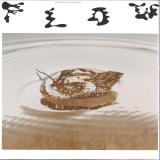
From the oscillating orchestral lullaby of “Stalactime | 鍾乳石時計” to the sweeping, sparkling dream sequence closer, “Shift Register | シフトレジスタ,” the album achieves the elusive goal of being more than the sum of its parts. This is music of rare air, elevated and amorphous, shimmering just out of reach. Though Edren and Takahashi have yet to cohabitate the same room in person (a fact that should be rectified soon by an astute festival booker), their palettes and poise are perfectly paired, twin fragilities woven into seven radiant and regenerative vibrational states. The cover design of a beatific, beaded leaf rippling on the surface of a hidden pond aptly captures the record’s muted majesty. Takahashi’s quiet pride is justified: “We are very happy with this time-consuming and carefully crafted work.”

Auf Lager

Bei uns am Lager und sofort versandfertig

24,16
Natural Information Society - Perseverance Flow

Announcing Perseverance Flow, the latest album from acclaimed Chicago-based ensemble Natural Information Society (NIS), release date 2024-10-24. After a trilogy of double LPs by expanded manifestations of the band that began in 2018 with Mandatory Reality & continued through Since Time Is Gravity (a Pitchfork Best Jazz & Experimental Album of the Year selection & Mojo’s #1 Underground Album of 2023), NIS returns to its core formation of Lisa Alvarado on harmonium, Mikel Patrick Avery on drums, Jason Stein on bass clarinet, & composer/multi-instrumentalist Joshua Abrams on guimbri for one continuous 37 minute composition across a single LP. As the rocket boosters on spaceship earth sputter closer to burnout, lower your stylus into a soundfield that grows stronger the deeper you travel into it; a dose of the medicine many of us look to music to deliver awaits you inside.

One of the deep contemplations of this natural information (thanks Bill Callahan) is the wide range of source materials Abrams draws from over the band’s more than 15 year history: Ideas from minimalism, modal jazz & traditional musics are regularly reimagined in these compositions. The 2021 double LP descension (Out of Our Constrictions), with guest soloist Evan Parker, reflected aspects of Abrams’ love of party music, Chicago house, & John Coltrane. *But even veteran travelers with the NIS best brace themselves for the Perseverance Flow.

Speaking to the history & the inspirations behind the album, Abrams offers: “We played the piece for a year in concert before the recording. At Electrical (Audio Studios, Chicago) we went in at 11 & were done in time to pick our kids up from school.” Abrams continues: "In a reference world, I imagine Perseverance Flow like a live extended realization of a Jaylib lost instrumental as remixed by Kevin Shields. Or vice versa. I also think it has sympathies to some of the more rhythmically intricate dance musics out of Chicago & Lisbon.”

The core NIS ensemble heard on Perseverance Flow always address Abrams’ writing with the discipline of orchestra musicians & the creativity of improvisers. But this time around, instead of inviting living legend status musicians Evan or William Parker or Ari Brown as honored guests to solo freely over the composed materials, Abrams’ invited guest collaborator was the medium of the recording studio itself. Situated at the board with engineer Greg Norman, Abrams pushed post production techniques found only sporadically on earlier NIS records deep into the heart of the music, distorting & reshaping instruments to subtly &, at times, aggressively mutate timbre & texture, color & time.

Refracting the band’s signature mesmerizing chains of overlapping rhythmic patterns through the sonic funhouse of dub makes Perseverance Flow the most formally experimental NIS album to date. Now a soundworld fully unique to itself is listening to itself, consoling & humoring itself, & consoling & humoring you. A destruction myth & a creation myth of a soundworld together at once —”energetically nutritious” (October 2025 Issue 500 The Wire) supernatural information society.

“Perseverance Flow is skipping rope in slo-mo. A dance of co-operation to rally guts & humors & keep marching through pouring tears” (Abrams).

nicht am Lager

Bestelle jetzt und wir bestellen den Artikel für dich beim Lieferanten.

25,42

Last In: vor 58 Tagen
Isaiah Collier, William Hooker, William Parker - The Ancients LP 2x12"

The debut recording by The Ancients, the intergenerational coalition of Isaiah Collier, William Hooker, & William Parker formed by parker to play concerts in conjunction with the milford graves mind body deal exhibition at the institute of contemporary art los angeles & now a working group. across x2LPs of side-length long-form improvised sets recorded at 2220 arts & archives in LA & the chapel in San Francisco, The Ancients bring the free jazz trio languages first explored by the Cecil Taylor Unit & Ornette Coleman’s -Golden Circle- band (expanded upon in later eras by Sam Rivers' Trio & Parker’s collective trios with Charles Gayle/Graves & Peter Brötzmann/Hamid Drake) into their own unique & scintillating realms of expression.

As we tumble further into the throes of history’s tides, people of hope & creativity rely on the works of our great artists to lift our spirits & focus our resolve. -ascension- was recorded less than a year after the passage of the civil rights act & four months after the assassination of Malcolm X. -journey in satchidananda- was recorded the month reagan was re-elected governor of California. M’boom made its debut recording weeks after the watergate scandal broke & a couple months after the wounded knee occupation ended. The music of the ancients builds on these great musical legacies. it resounds with the pride of survival & the joys of making & sharing music. It delivers to us hope & balm. something real in you, real in history, & real in the music is shared, right on time.

When Eremite records commenced operations during the 1990s free jazz resurgence, heavyweight freedom-seeking tenor saxophonists such as Fred Anderson, Peter Brötzmann, Charles Gayle, Kidd Jordan, & David S. Ware were at the height of their powers. Isaiah Collier’s tenor playing in the ancients is bracing testimony that the wellspring lives on. to hear the young chicago firebrand blowing freely with veteran improvisers in an entirely open-form group music is a revelatory study of his vast talent, personal voice, & the intensity of his expression —as well as a bold complement to his composition-based albums as a bandleader (including -the almighty-, a new york times' best albums of 2024 selection).

I've admired drummer William hooker since first encountering his music in a hartford ct city park, early ‘90s (on a double bill with Jerry González & Fort Apache Band). From the man himself right off the bandstand i bought his even-then rare 1st recording, the 1976 self-released x2LP opus -is eternal life- (reissued 2019 by superior viaduct). An imposing force on his instrument & an intrepid DIY cat, Hooker’s been exuberantly swinging in&out of free time for 50+ years. informed by the innovations of Sunny Murray & Tony Williams yet entirely himself, there is no other term for it than “pure hooker.” at age 78, with the ancients & everywhere else, THE HOOK is in peak form.

With a discography approaching 600 entries & 50+ years working across the musical maps, including in the history-defining bands of Don Cherry, Cecil Taylor, Bill Dixon, Peter Brötzmann, in his own wondrous ensembles from small group to orchestra to opera, a bastion of compassionate leadership & a poetic champion of his musical community, in tireless service to what he rather egolessly refers to as “the tone world”, multi-instrumentalist, improviser & composer william parker is a living hero of the grassroots & the black mystery musics, not to mention one of the great bassists in the history of jazz. To quote George Clinton, conquering the stumbling blocks comes easier when the conqueror is in tune with the infinite.

Live to 2-track concert recordings by Bryce Gonzales, Highland Dynamics. Mastered by Joe Lizzi, Queens, NY.

nicht am Lager

Bestelle jetzt und wir bestellen den Artikel für dich beim Lieferanten.

30,21

Last In: vor 35 Tagen
CD3 - Rules For Living

Cd3

Rules For Living

12inchZORN111
Aguirre Records
13.06.2025

Listening to CD3, I'm reminded of how the Vincent Over The Sink record '22 Coloured Bull Terriers' made me feel all those years ago. There's a free ranging quality to it.

It feels calmly capable of doing whatever it wants. It feels mysterious and self-generating, almost aloof to the humans who made it. I adored that record; it cascaded into so many epiphanies.

I don't want to implicate Cooper and David's music in any fleeting desire towards currency, but listening to this CD3 record over the last few weeks has felt weirdly, thematically correct. There's an echo-ey kind of referentiality to it. Not to particular styles of music, but to the recently elapsed histories those styles of music evoke. It's something that Th Blisks kind of gestures towards, but which this project seems to own entirely.

It's a kind of melted reconfiguration of popular (occasionally popular-on-the-fringes) styles. These familiar sounds are reconfigured and muddied. Hindsight frames the sources in an almost primordial light, to the extent that they feel like folk art.

Glyphted and Franzbranntwein sound like pop songs stripped to their bones and distorted, as if the styles they vaguely recall are as old as time. It's a stunningly weird effect. Songs like The Duchess and Farmhand exacerbate this impression. The record comes to feel yearningly ahistorical. But in a way that feels pertinent?

It might just be where my head is at, but the implacable nature of the record feels important to me, somehow. It's something far, far north of post-modern but... ancient too. - Shaun Prescott

vorbestellen13.06.2025

erscheint voraussichtlich am 13.06.2025

22,65

Last In: vor 2026 Jahren
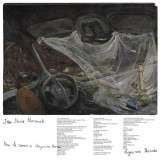
Jean-Marie Mercimek - Dans Le Camion De Marguerite Duras

The road is a wrinkled timeline. Uncanny flatness conceals unfolding textures, transparent layers and open tabs. The truck cuts the landscape, tracing the road with a line of mad logic that composites time, space, thought. On “Le Camion de Marguerite Duras,” French duo Jean-Marie Mercimek have returned with a road movie for the blind. Composed and recorded by Marion Molle and Ronan Riou over six years across France and Belgium, this unlikely distillation of microtonal MIDI composition, French B.O., and post-punk chansons brazenly expands the duos’ penchant for lowkey narrative spectacle.

Across “Le Camion,” sounds form a theatrical screen. Our ears are the curtains drawn wide and listening with a look that pans across the shot. No title cards, they cut straight to action. The truck is a camera, zooming and framing the tracks as scenes. Songwriting and sound design blur in a tangle of delicate economy. The balance of mutant music-boxes and dewy miniatures recalls otherworldly hits from Gareth Williams’ Flaming Tunes, Residents, and catchier corners of the Lovely Music catalog. Strange, sure, but this flick is never quite a cartoon. Molle and Riou’s vocals dilate into a cast of very human characters. Voices sing borrowed texts like untrained actors (playing themselves, in fact) stepping into the frame once before disappearing forever. And when they’re gone, you miss them. But here in the truck, it all comes back again under the cyclic spell of repose in perpetual motion. Turn up the radio and appuyez sur le champignon. - Turner Williams Jr.

vorbestellen13.06.2025

erscheint voraussichtlich am 13.06.2025

22,65

Last In: vor 2026 Jahren
Jef Mertens - Orchid Alto

Belgian musician and filmmaker Jef Mertens has been an active force in the experimental music and film scene for nearly two decades. Known for his documentaries on artists like Sonic Youth and Borbetomagus, as well as his work with the now-defunct Dadaist Tapes label, Mertens continues to push the boundaries of sound exploration. His previous solo works include NO MATHEMATICS, released on KRAAK/Feeding Tube Records.

With Orchid Alto, Mertens dedicates himself to the taishogoto, a Japanese stringed instrument that became a new focal point in his sonic explorations. Initially drawn to its unique tonal qualities, he approached the instrument with an open-ended curiosity, using it as a means to reshape his musical language. The transition to taishogoto marked a shift away from guitar-based compositions, offering a fresh perspective on texture and resonance. Through these explorations, Orchid Alto serves as a blueprint for new sonic possibilities.

A bold and immersive sonic journey, Orchid Alto merges traditional resonance with modern experimentalism, further shaping Mertens' artistic voice—one influenced by artists like Michael Flowers, Turner Williams Jr., and Bill Nace.

vorbestellen25.04.2025

erscheint voraussichtlich am 25.04.2025

25,42

Last In: vor 2026 Jahren
Akira Sakata / Giotis Damianidis - Adyton

Japanese free jazz legend Akira Sakata and Greek avant-garde guitarist Giotis Damianidis present Adyton, their first-ever duo recording. Having collaborated since 2018, the two musicians have developed an intuitive and electrifying musical dialogue, culminating in this live performance at Haekem, Brussels—the final concert of a two-week tour with Entasis in September 2023.

Sakata, who turned 80 on February 21st, 2024, delivers his signature fiery alto saxophone, evocative clarinet, expressive voice, and resonant bells, while Damianidis expands the sonic spectrum with textural guitar and effects, weaving a dynamic interplay between structure and chaos.

Titled after the "Adyton"—the innermost, most sacred part of an ancient temple—this album invites listeners into a raw, unfiltered space of musical exploration, where spontaneous energy and deep-rooted tradition converge. A testament to Sakata’s lifelong commitment to improvisation and Damianidis’ boundary-pushing approach to guitar, Adyton is a powerful, transcendental journey into the unknown.

vorbestellen25.04.2025

erscheint voraussichtlich am 25.04.2025

25,42

Last In: vor 2026 Jahren
Werner Durand, Amelia Cuni & Uli Hohmann - Clearing LP

In addition to the unique musical proposals and the large body of work that they have developed separately, Amelia Cuni and Werner Durand have been performing together as a duo as well as in collaborations (Tonaliens, Born of Six) for more than 20 years. Fusing her Indian Raga singing in the Dhrupad style with his minimalist and experimental approach, they have expanded the reach of their soundworlds as well as proposed new paths for contemporary music.In this occasion, Uli Hohmann joins them in a range of hand drums from the Middle East and North Africa, plus a dulcimer-sounding hammered guitar. Durand's various self-made wind instruments, soprano sax, and blown kalimba shine along with Cuni's astounding vocals, which are sometimes sung through a mirliton (a medieval type of kazoo). Clearing is the trio's first published recording.

Seconds of Thirst, recorded in one session at Uli´s studio in Bavaria in early 2014, is truly a conjuring where distinctive balances come to gather. A deep drone unfolds patiently in a hypnotic manner, comprised by Werner's characteristic PVC clarinets, a hammered guitar played by Hohmann, and subtle electronic tones. Above all, Amelia's singing voice, filtered through the mirliton, drifts buzzing along the gradually shifting harmonic waves, meandering through serpentine melodic lines and microtonality.

In the middle pieces, vocals turn into an ethereal multi-layered chorus, an exotic and astonishing instrument pulsing delicate and vaporously, like a gliding silk sail without a mast to bind it. Misty ambiances linger on as the soft atmosphere disperses the weight of undelivered syllables. Just intonation aligns the pan-ney's winds with vocal navigation. Foe to scattering, hurry, and affectation, Clearing's pace has lifted a fog translucent enough to reveal treetops calmly appearing, efficiently condensing damp into definite drops that fall drumming, forecasting what's yonder.

With a condensing sound going from Buddhist morning chants down to Indian festive traditional music, the title track, which closes the album, is the most vibrant of all, permeating a bit of commotion through buzzing drones and galloping percussion. Without disorder, yet without measure. Clearing is therefore this shuttle into the distance, this space that weaves, unites, and tenses the different cords that we are made up of.

When the clouds advance silently, gray, until they become dark in a few minutes, it means that the monsoon is coming. It reaches us without apparent noise, but then resounds in its images, leaving behind lightness, freshness, clarity, and a tremendous luminosity that comes from so far away: from the Himalayas, from so ancient, from Sanskrit, from a sound where the darkness and the divine, where the concrete and the landscape, where the rock and the humidity leave a mark that brings together and ties a sky loaded with new clouds.

nicht am Lager

Bestelle jetzt und wir bestellen den Artikel für dich beim Lieferanten.

24,16

Last In: vor 15 Monaten
Noah Howard - Patterns

Noah Howard

Patterns

12inchZORN91
Aguirre Records
06.12.2024

Classic free jazz album reissued for the first time since the 70s. Old-style gatefold sleeve LP, with liner notes by Ed Hazell.

Noah Howard, an alto saxophonist and composer, was known for weaving intricate and innovative musical patterns, often likening his work to "sound paintings." His 1971 album Patterns, the first LP he self-produced on his Altsax label, stands as a testament to his experimental and spiritual approach to music. In interviews, Howard frequently used visual terms like "patterns" and "shapes" to describe his compositions, emphasizing the importance of melody and structure even in highly improvisational settings. For Howard, patterns and melodies were essential to guiding listeners through his explorations without alienating them, maintaining a balance between innovation and accessibility. Howard's quest for an original sound was deeply influenced by jazz greats like Charlie Parker, Ornette Coleman, and Jackie McLean. While he admired these legends, Howard avoided imitation, striving instead to develop his own distinct voice. His sound was unmistakably his own, and he felt a deep obligation to carry the jazz tradition forward through personal expression, not by mimicking others. His music was also rooted in spirituality, a legacy he traced to his upbringing in the Black Baptist Church. He believed jazz had always contained a spiritual essence, from Louis Armstrong to John Coltrane, and his work aimed to channel this cosmic, spiritual energy.

Patterns was recorded in the Netherlands during Howard's second stint in Europe, where he found a more open, less racially charged environment compared to the U.S. For the album, Howard collaborated with Dutch musicians such as Misha Mengelberg (piano), Han Bennink (drums), and Earl Freeman (bass). Despite the challenges faced by guitarist Jaap Schoonhoven, who felt out of place in the session, the album came together as a powerful mix of blues, jazz, and classical elements.

The music on Patterns is a high-energy fusion of American free jazz and Dutch improvisation. Howard's saxophone work alternates between leading with passionate, lyrical lines and blending into the collective improvisation. The album’s dynamic interplay, particularly between Mengelberg’s dissonant piano clusters and Bennink’s thunderous drumming, creates a vivid "sound painting" full of contrasting forms and colors. Patterns remains one of Howard’s most unique and celebrated recordings, showcasing his visionary approach to jazz.

vorbestellen06.12.2024

erscheint voraussichtlich am 06.12.2024

26,68

Last In: vor 2026 Jahren
Nature’s Consort - Nature’s Consort

Obscure & outstanding free jazz album reissued for the first time since it’s original release in 1969. Old-style gatefold sleeve LP, with liner notes by Ed Hazell.

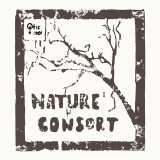
In the late 1960s, young jazz musician Bobby Naughton, a keyboardist and vibraphonist, faced significant challenges as he sought to record his first album. With major record labels and jazz clubs catering only to big names, Naughton and other creative musicians of his generation found themselves sidelined by the mainstream music industry. They turned to self-reliance and self-production, becoming part of a movement of independent musicians. Naughton’s debut album, Nature’s Consort, was a DIY effort in every sense—recorded on home equipment and featuring a hand-printed woodblock cover. The album was distributed independently at concerts and by mail, receiving little attention initially, but over the years it gained a reputation as a rare, sought-after artifact of the period.

Though recorded during an outdoor concert in Connecticut, Nature's Consort reflected the "loft jazz" scene in New York City. This avant-garde jazz movement centered around musicians who lived and played in loft spaces in lower Manhattan. Naughton commuted from his home in Southbury, Connecticut, to play with his bandmates Mark Whitecage, Mario Pavone, and Laurence Cook in New York's lofts. These musicians regularly performed at venues like Studio We, a key gathering spot for free-form jazz, where musicians could experiment and develop their sound, often with no audience present.

Naughton’s journey into jazz was a winding one. Originally from Boston, he played rockabilly and blues-rock before transitioning into free jazz. Inspired by avant-garde artists like Carla Bley and Paul Bley, Naughton sought to explore new forms of music that went beyond traditional jazz structures. His bandmates, Mark Whitecage and Mario Pavone, were both deeply affected by the death of John Coltrane in 1967, which prompted them to quit their day jobs, attend Coltrane’s funeral, and move to New York to pursue jazz full-time.

Nature’s Consort was a collective project, with band members sharing equally in any profits. However, Naughton was the driving force behind the group’s creative direction. He composed much of the original material and selected pieces by Ornette Coleman and Carla Bley for the band’s repertoire. Jazz critic Nat Hentoff praised the album for its “high-risk improvisation” and the musicians' ability to anticipate each other’s moves. Though Nature’s Consort received little press at the time, it has since been recognized as a significant early document of the loft jazz era, representing Naughton’s disciplined, improvisational approach to music.

vorbestellen06.12.2024

erscheint voraussichtlich am 06.12.2024

26,68

Last In: vor 2026 Jahren
Souled American - Notes Campfire

There are cult bands and then there's Souled American. In 1988, the Illinois group arguably invented "alternative country" with the album Fe. While the alt-country sound is widely recognized as Southern roots rock with an indie-punk sensibility largely defined by Uncle Tupelo's No Depression released two years later — Souled American's early music feels as if it was formed in a vacuum, inspired by the timestretching space of reggae. But over the course of the following decade, Souled American's music grew increasingly slow, insular and esoteric. Although Fe, Flubber and Around the Horn are inarguably more accessible, upbeat and even sometimes fun, if you've never heard this music before, it actually makes sense to start at the end.

Their last two albums Frozen and Notes Campfire will now be re-issued in limited, 30th Anniversary Editions with a fresh abundance of stories, technical information, musician credits, and cartoons that detail the unexpected origins surrounding these two early classics of “ambient Americana.” These records sound at once both old and new with brilliant melodies and profound performances stacked in unusual patterns like soft-hued bricks.

vorbestellen11.10.2024

erscheint voraussichtlich am 11.10.2024

23,95

Last In: vor 2026 Jahren
Souled American - Frozen

Souled American

Frozen

12inchZORN114
Aguirre Records
11.10.2024

There are cult bands and then there's Souled American. In 1988, the Illinois group arguably invented "alternative country" with the album Fe. While the alt-country sound is widely recognized as Southern roots rock with an indie-punk sensibility largely defined by Uncle Tupelo's No Depression released two years later — Souled American's early music feels as if it was formed in a vacuum, inspired by the timestretching space of reggae. But over the course of the following decade, Souled American's music grew increasingly slow, insular and esoteric. Although Fe, Flubber and Around the Horn are inarguably more accessible, upbeat and even sometimes fun, if you've never heard this music before, it actually makes sense to start at the end.

Their last two albums Frozen and Notes Campfire will now be re-issued in limited, 30th Anniversary Editions with a fresh abundance of stories, technical information, musician credits, and cartoons that detail the unexpected origins surrounding these two early classics of “ambient Americana.” These records sound at once both old and new with brilliant melodies and profound performances stacked in unusual patterns like soft-hued bricks.

vorbestellen11.10.2024

erscheint voraussichtlich am 11.10.2024

23,95

Last In: vor 2026 Jahren
Another Dancer - I Try To Be Another Dancer LP

Brussels is a highway where rainbow-fuelled melancholia kids race its track, mountain and road bikes. Endless summers cherish the collective chosen chaos of the city; every corner displays wild micro-natures, buzzing insects, and rare weeds fourishing organically; tape hiss and AM radio compression are the soundtrack of everyday life. And hear! Originated in the Brussels DIY, indie rock and noise scene, a new kid on the block appears: Another Dancer.

They deal in utopian music - of the open, welcoming and whatsoeverish kind. It’s fresh, snotty, neurotic art-rock deeply rooted in 80s/90s DIY aesthetics. The songs on their debut album balance gently between forgotten pop hits and broken sound experiments. In their world, any shitload of weird, random, and badly synchronized sounds unveil broken-hearted pop mastery. In the Another Dancer universe, radios are stuck to WFMU and Soulseek is a self-conscious AI producing 80ies psychedelic FM-rock.

Brussels-based Another Dancer is outdated, wild at heart and elegantly shy. Their full album I Try to Be Another Dancer is out September 10th on Bruit Direct Disques and Aguirre.

"Flashes of the shambolic post-punk of Good Sad Happy Bad and the goofy, fraternal synth-pop of the blog-era gem Teenagers can be seen, often simultaneously, across the new single from the Brussels-based band Another Dancer. Vocals are layered on top of each other to a conversational near-cacophony, like you’ve been placed at the center of a Dry Cleaning show where everyone is, improbably, in a good mood. Sunny synth sweeps jostle next to bent, jangly guitar lines for a song that finds a special kind of vibrance in its mess. — Jordan Darville”

vorbestellen13.09.2024

erscheint voraussichtlich am 13.09.2024

22,65

Last In: vor 2026 Jahren
Timelash - A Morphology Of Wonders LP 2x12"

Timelash is the evolution of Embassador Dulgoon’s cryptozoological sci-fi opus ‘Hydrorion Remnants’ converging with Corum’s surreal sonic mapping as ‘Beguiling Isles’. The combined cinematic vision jettisons listeners through a psychedelic wormhole far beyond the usual perception of known audio latitude.

Aguirre Records has gone all out to inject this tribal dino DNA double slab of wax presented as twelve expansive and mesmerizing tracks of historical mutations linking early communication developments with speculative astrobiological impressions heard as mysterious & riveting melodies that wash over dizzying percussive styles and suspenseful ambience.

A variety of unexampled sounds take shape throughout as tectonic tablature, reptilian choral movements, bubbling bioluminescence, tube calls, orogenic bells, crustacean chatter, lost continent scales, high plains drifting riffs, and primordial soup lapping splashes revealing to listeners a living mural that is ’A Morphology of Wonders'.

The conjuring of cratonic creature harmonics resonate wildly from this interdimensional duet, emerging as Neopangaea music of now

nicht am Lager

Bestelle jetzt und wir bestellen den Artikel für dich beim Lieferanten.

25,71

Last In: vor 20 Monaten
Brannten Schnüre - Aprilnacht LP

Originally released on tape by SicSic in 2014, Aprilnacht commemorates a decade of music from Brannten Schnüre and marked the spring in a tetralogy of albums about the four seasons when it came out. Back then the Würzburg-based project consisted solely of Christian Schoppik, who later welcomed Katie Rich to take over the vocals. He used to perform as Agnes Beil, but dropped the name when, while making this album realized his music was becoming "much gentler and more fragile". Aprilnacht already captured the particular musical ideas that Schoppik would thoroughly keep exploring, delving deeper and deeper into the use and manipulation of samplers from sources so diverging as to wander between the five continents to post-war German family television and cult cinema. Heir of the ritualistic intensity of Coil, of the intricate sampler assemblies of Ghédalia Tazartès', and of the dusty, dismal old ballads from around the world, Brannten Schnüre manages to make these paths cross in a territory that is as inherent as it is uncanny; sieged by the past and intimate as a hearth. An organic approach to folk, ambient, and sound collage, where ethereal yet thoroughly textured pieces coalesce in enthralling, delicate, and innermost musical rituals.

The album cover paintings reveal the temper: dreary old towns where shadows come to dim the slow passage of crepuscular colors, a soft area of reanimation where wind and light come close and foresee the night of spring. Aprilnacht was inspired by the stories of German philosopher and writer Friedrich Alfred Schmid Noerr, whose work exhaustively examines the conflict between paganism and Christianity, safeguarding myth in a way that Schoppik describes as boldly modern, humorous and unpredictable in its variations of the Germanic folklore motifs. "I wanted to do the same with the music," he states, and the music here could as well be suitable for a night when household deities welcome wandering will-o'-the-wisps, water nymphs, and gyrovagues to discuss Perchta's leadership of The Wild Hunt, but this album is not a folk tale, it's not an elegy to worlds already gone, hidden in years; it's an intersection of routes that open mysteriously before our ears like a congregation of vapors. Aprilnacht is a gathering of voices; "There are too many children, and none of them keeps quiet," reads the last verse of «Requiem für eine Ringelnatter.»

Sensuality drips over the music to celebrate both the voluptuousness and tragic quality of nature; "It's raining on me, urine from your flowers," Schoppik sings in «Urin deiner Blüten» and later on, faced with a snake's erotic features, as if he wanted to be embraced by it: "Your quick, sharp tongue and your warm venom; that's what the pond is missing." Orality is where this profusion of contents thrives. When the voices get closer and condense, the words reveal the saliva employed to pronounce them; we feel the mouth and the tongue, but when breath envelops them in sorrow and softens their edges, they sound distant, diffused in the atmosphere, letting go of the body that held them. These two vocal facets oscillate permanently and interact naturally with the fertile assembly of samplers and instruments that develop throughout the album, which condense and disperse impersonating each other, interweaving to search for a specific syntax. Tangled whisperings of enigmatic phrases, timid voices that stick out to check the scene but hide away quickly, shivering trance chants and monastic ambiances, distant screams and clamors in between chaos and warfare swirl until bursting into subtle songs where even Mother Mary comes forth softly. Soothed by foggy atmospheres and crackling punctuations, these voices shape a vulnerable crowd, an occasion of fragility. Along this swarm of songs thrown into thin air, accordions sound like heavy-breathing lungs; clarinets sigh like curtains shaking; violin solos wander around like bees; Gjallarhorns cries distend like fleeing cattle; glockenspiels evoke remote music boxes and inherited toys; backward emanations emerge like slender waves retreating. On the banks of stretching loops and ember textures is where the songs slowly nest, collecting the words to find their tone.

A poem by Jorge Teillier says, "To talk with the dead you have to choose words that they recognize as easily as their hands recognized the fur of their dogs in the dark. To talk with the dead you have to know how to wait: they are fearful like the first steps of a child. But if we are patient one day they will answer us with a flame that suddenly revives in the fireplace." This may be Brannten Schnüre's main purpose: To find the voice to speak to those of whom we were a vision. Not in mourning, but acknowledging the obscure and volatile nature of spring's regenerative force, searching for the treasure of balance, as evidenced in the lyrics of «Requiem für ein Schwalbennest,» "Its nest was destroyed so many times before it was finished, and despite that, the shallow builds as if it is infatuated." The same idea is here in the words of Schmid Noerr, who made poetry an act of resistance to the horror of Nazism; "Since having seen the ability of a brilliant spirit to die, with a calm mouth that everyone saw, health is true again and we affirm it, even if rivers of blood flow." And as we call for the dusk's kindness, waiting to return home and eat with our kin by the stove, our ears become used to the games of the night. We feel like we're rowing on wetlands, while the "moon musick" keeps us vigilant against the slightest movement of water or sweet moan because eeriness here is imperative for survival. Do not succumb to the insipid howl of death, for nothing may last but mutability. You see, the rock has moved a little during the night; the rest is just wind fleeing from the void.

nicht am Lager

Bestelle jetzt und wir bestellen den Artikel für dich beim Lieferanten.

24,16

Last In: vor 21 Monaten
Amalie Dahl's Dafnie - Står Op Med Solen LP

‘Står op med solen’ (Rising with the sun) is the second album by Amalie Dahl’s Dafnie. With this album, the band continues the exploration of their collective sound. We hear influences from both old school free jazz, and contemporary Scandinavian jazz like Fire! Orchestra and Christian Wallumrød Ensemble, as well as clear connection to the Trondheim milieu, where the group was founded in 2020.

The energetic and expressive band explores their more subtle side with this record. ‘Står op med solen’ is an album longing for humans to be one with nature. The music comments on the world’s ultra-capitalistic power structures of today. The band navigates like one organism through parts of organic free jazz, strict structures and composed cells.

They start out where their first record ended, in the familiar free jazz sound with riffs and melodies, and take us safely on their onward journey. Amalie Dahl’s Dafnie brings together five well-known names from the Norwegian jazz scene, also known from other projects like Kongle Trio, Bliss Quintet, I like to sleep, Veslemøy Narvesen, Galumphing Duo, Treen and Trondheim Jazz Orchestra, among others.

The band has already been touring in Scandinavia, Poland and Germany during the past 3 years, and is well known for their playful and close chemistry. Their first record ‘Dafnie’ (Sonic Transmissions Records, 2022) received excellent reviews in The Wire, The Quietus among others. To celebrate the new album Amalie Dahl’s Dafnie will do 11 concerts in Europe between April 22nd and May 5th.

vorbestellen03.05.2024

erscheint voraussichtlich am 03.05.2024

26,47

Last In: vor 2026 Jahren
KOU - KOU LP

Kou

KOU LP

12inchZORN104
Aguirre Records
17.11.2023

KOU is the new project by Apolline Schöser (half of Nina Harker) & Thomas Coquelet.

Apolline & Thomas have been performing since 2022 under the KOU guise with 24 electronic harmoniums. Producing dense layers of tones & overtones. On their debut album KOU steers in another direction. The harmonium appears occasionally, but more prominent are delicate guitar pluckings, distant vocal effects, synths, flutes, piano strokes, a touch of musical magic and Apolline’s jazz not jazz vocals.

As soon as the needle drops it’s clear we are jump-cutting straight to the other side of the mirror. Cats purr, a woman sings as if asleep, drum machines stutter and warp and Alvin Lucier is not 'sitting in a room that is not different to the one you are not in now’. If you’re already confused, join the club. But, it’s the good kind of confused, a bewildering experience akin to the first time hearing the Faust Tapes or watching Inland Empire. Wait though, as pigeons coo and the tape machine clunk-clicks a gorgeous weirdo version of Roger's and Hart’s Blue Moon emerges to let you know this isn’t just dada splurge, there’s a genius pop sensibility at work here too. Side two takes us further into the murk with mournful detuned brass, stoned Joan La Barbara-esque vocalese and a droning Farfisa hymn, before ending with another too-tempting snatch of DIY pop. Some of the references are recognisable. All kinds of 70s/80s European art prog - think early Battiato, Pierot Lunaire’s Gudrun, Lucia Bosè and Gregorio Paniagua's Io Pomodoro etc etc. There’s a strong whiff of 90s us goof-off surrealism too- Bongwater, Siltbreeze, Royal Trux’s Twin infinitives, the damaged folkier side of Alastair Galbraith, Half-Japanese, early Beck even all feel relevant.

Like an oddball group of friends you might meet by chance and end up weirding-out with for days, the minds behind this deliciously odd music allow you to stay for a while in their strange subcultural world. You might not want to live here forever but a short trip, while it lasts, rewires your brain for the better.

vorbestellen17.11.2023

erscheint voraussichtlich am 17.11.2023

22,65

Last In: vor 2026 Jahren
Ordeal - Vätterns Pärla LP

As an important agent of Gothenburg’s underground scene, Dan Johansson has been a member of several experimental harsh noise projects such as Sewer Election, and lo-fi indie folk bands like Enhet För Fri Musik and Amateur Hour. Ordeal is his latest solo output, and might as well be ashes stuck in the blast furnace's edges of his last longing career. Not by means of summing up genres or as a culmination of his musical development, but as a profound music piece weaved in his own household.

With not much more than a synthesizer, Vätterns Pärla is built by trembling, dissonant drones stained in feedback and reverberation, thickly textured by the no-fi quality of the recording, depicting a menacing atmosphere congested with heavy fumes. In Johansson's words, Ordeal "takes inspiration from the early 80’s albums of Maurizio Bianchi, filtered through a Gothenburgian no-fi bleakness. It’s an album for inner voyage, childhood memories, and places that now lost purpose and meaning”.

There's certainly intimacy and nostalgia, yet a claustrophobic, hypnotic ambiance wraps it all up in a contained and narrow space. Emphasis is put on texture rather than on detail, on color rather than on progression, on suspense rather than on conclusion. Tension varies stiffly, sometimes a drone layer dismantles and the mood seems to filter, but ragged edges are never polished. We can feel the walls and the air, which although tarnished, can be breathed in somehow. It's as if waking up in a dark room and having to recognize it with our ears and tact, testing its dimensions and its surface. The stillness in the chamber is like the stillness between gasps of storms.

Without visible stars, an enclosed share of night sky hides a heavy load of industrial debris underwater. These remnants are maybe the pearl regarding the album's title. It all can seem like a dream, a grim mechanical soundscape deafened by hefty, yet sporadic winds. Soil strives to make something grow, but sprouting is kept suspended, held by a dismal presentiment. Long shadows on the ground prove that darkness is about to befall. And as these shadows stretch, almost about to break up in a loud strike, the noise turns white.

vorbestellen10.11.2023

erscheint voraussichtlich am 10.11.2023

24,16

Last In: vor 2026 Jahren
Vicente Atria - Orlando Furioso LP

“Orlando Furioso is a haunting, one-of-a-kind statement, from an important new voice in improvised music.” - Steve Lehman

“…imagining instruments that haven’t been invented yet: space harps, cosmic gamelan, Venusian banjo. It’s the purest distillation of Atria’s musical language, simultaneously grounded and unearthly.” - Stewart Smith for The Wire (November 2022)

“Making liberal use of microtonal harmony and hypnotic, ostinato rhythms – as well as the occasional stylistic smash-cut, reminiscent of John Zorn – Orlando Furioso announced itself on Wednesday as a punchy, creative force on the New York scene. (…) Atria’s rhythms had a welcoming, social propulsion, and the microtonality of his writing for keyboard proposed an individual – even insular – language.” - Seth Colter Walls for The New York Times.

Early European composers felt that their work reflected in its structure the divine nature of the material world. Via tuning, form, and contrapuntal alchemy, these musicians sought to illuminate and edify the complex and perfect order of existence. The music recorded here also reflects the contours of an ordered world, but it is no place any of us has ever visited. By assembling far-flung building blocks from the detritus of a 21st-century musical vocabulary, Orlando Furioso brings the listener into a bizarre new cosmos. The result is deeply expressive music that speaks not with the voice of a narrator or memoirist, but with that of a cartographer.

Like a science-fiction Dante, the listener is taken on a tour of many diverse and colorful provinces of an alien world. Though each composition references its own set of real-world musical locales (from the Andes to Indonesia to Italy to New Orleans), they are bound by stylistic consistency into a coherent, continuous geography. Permeating this world is an uncompromising commitment to microtonal harmony, rhythmic intensity, and an ability to deploy the esoteric (Nicola Vicentino's notorious 31-tone temperament) and the head-smackingly obvious (a surprise djent breakdown) with equal conviction. Though Vicente's compositions are steering the ship, serious recognition is due to all the players on the record for their ability to meet these demands.

Our omnivorous musical diets offer real abundance. They enrich our craft by providing access to limitless approaches from which to choose - more masters to study, traditions to absorb, and techniques to hone than is possible in multiple lifetimes. They can also inflict heavy and often contradictory burdens of influence. When every corner of the map has been charted, it becomes difficult to find a new direction in which to travel. One solution I hope to see more often is the one pursued on this record: breaking down distinct musical worlds into component parts and reassembling them into a language. When completed with precision and with no stone left unturned, the seams between the pieces vanish and the listener is deposited somewhere beautiful and strange, left to assign their sensations meanings of their own. - Mat Muntz

Orlando Furioso is led by Vicente and features David Acevedo, David Leon, Andrew Boudreau, Alec Goldfarb, Daniel Hass, Simón Willson, and Niña Tormenta. Orlando Furioso celebrated its release at Roulette Intermedium in Brooklyn, NY, as a part of Wet Ink Ensemble's 24th Season opening concert, a performance which The New York Times heralded as "virtuosic", "punchy, creative" and "even revelatory."

Winner of the Deutscher Jazz Preis: Best International Debut Album 2023

vorbestellen01.09.2023

erscheint voraussichtlich am 01.09.2023

25,17

Last In: vor 2026 Jahren
Natural Information Society - Since Time Is Gravity LP 2x12"

The next chapter of the Natural Information Society is here. Since Time Is Gravity, credited to Natural Information Society Community Ensemble with Ari Brown, presents a newly expanded manifestation of acclaimed composer & multi-instrumentalist Joshua Abrams nearly 15 year, 7 albums &-counting flagship ensemble. Joining the core NIS of Abrams (guimbri & bass), Lisa Alvarado (harmonium) Mikel Patrick Avery (drums) & Jason Stein (bass clarinet) are Hamid Drake (percussion), Josh Berman & Ben Lamar Gay (cornets), Nick Mazzarella & Mai Sugimoto (alto saxophones & flute), Kara Bershad (harp) & Chicago living legend of the tenor saxophone Ari Brown. Recorded live to tape at Electrical Audio & The Graham Foundation, cover painting Vibratory Cartography: Nepantla, by Lisa Alvarado. 2xLP on Eremite USA, 2xLP & CD on Aguirre/Eremite Europe. Out 14-04.

Since first developing Natural Information Society in 2010, Joshua Abrams has been gradually expanding the group’s conceptual underpinnings, its musical references & the sheer number of the group’s members. Its music is, in a sense, an expansive form of minimalism, based in repeated & overlaid rhythmic patterns, ostinatos & modality. Its roots, its scale & its meaning become clearer in time. If time is gravity, it also allows us to carry more. Having begun as fundamentally a rhythm section with Abrams’ guimbri at its core, the version here can stretch to a tentet, including six horns.

Abrams has been expanding his minimalism gradually, but he has long understood a key to minimalism’s potential: the breadth of its roots in the late 1950s & early 1960s, ranging from the dissatisfaction of young European-stream composers with the limitations of serialism to the simultaneous dissatisfaction of jazz musicians with the dense harmonic vocabulary of bop & hard bop. The former began exploring rhythmic complexity & narrow tonal palates in place of harmonic abstraction (Steve Reich’s Drumming, Philip Glass’ Music with Changing Parts; perhaps above all Terry Riley’s In C & his late ‘60s all-night organ & loop concerts); the later reduced dense chord changes to scales (signally with Miles Davis' Kind of Blue, but rapidly expanding with John Coltrane’s vast project). In the 1950s the LP record opened the world with documentation of Asian & African musics, key influences on both minimalists & jazz musicians. If John Coltrane’s soprano saxophone suggested the keening shehnai of Bismillah Khan, the instrument was rapidly taken up by two key minimalists, LaMonte Young & Riley, similarly appreciative of its flexible intonation, the same thing that kept it out of big bands.

If the guimbri, the North African hide-covered lute that Abrams plays with NIS, involves a rich tradition of hypnotic healing music associated with the Gnawa people, Abrams’ music also touches on other musics as well — other depths, memories & healings, different drones, rhythms & modes. As the group expands on Since Time Is Gravity, he has made certain jazz traditions in the same stream more explicit as well. If there is a mystical & elastic quality involved in the experience of time, both in direction & duration, you will catch it here. The parts for the choir of winds expand on the roles of Abrams’ guimbri, Mikel Patrick Avery & Hamid Drake’s percussion & Lisa Alvarado’s harmonium: at times, the winds are almost looping in the tentet version, each hitting a repeating note in turn, at once drone & distinct inflection on temporal sequence. The brilliance of the work resides in Abrams’ compositions, the NIS’ intuitive execution & in Ari Brown’s singular embodiment of the great tenor saxophone tradition, including the oracular genius of Eddie “Lockjaw” Davis, & Yusef Lateef. The three pieces by the expanded NIS featuring Brown —the opening “Moontide Chorus” & “Is” & the ultimate “Gravity”— have an immediate impact, & togther might be considered a kind of concerto for tenor saxophone. Here Brown presses almost indistinguishably from composed melody to improvised speech, getting so close to language that he might have a text. Everything here is a sign. Note the tap of the Rhythm Ace that links “Moontide Chorus” to “Is”, the attentive heart always present, even when signed by a machine. There’s a link here to the methodologies & meanings of dub music & the linear & vertical collage of beats, textures & tongues: treated with reverence, a sample of a beat-box can be as soulful, as hypnotic, as a mbira or a tamboura. If those pieces with Brown are heard as a suspended concerto, the three embrace & enfold the other works, like the sepals of a flower. That placement will also touch on the mysteries of our perception of time.

Particularly in “Is”, but elsewhere as well, a phenomenon of transcendence arises in which time appears to be tripartite, at once moving backwards & forwards & standing still. This is an act of technical brilliance certainly, but also an illumination of music’s ability to represent temporal consciousness through polymetrics. This particular listener has only heard it before in a few places, including the horn shouts & bowed basses of Coltrane’s Africa, in moments of Charles Mingus’ The Black Saint & the Sinner Lady, in certain pieces where tapes were literally running backwards, & earlier still in Dizzy Gillespie’s Cubana Be, Cubana Bop, in which the composer George Russell & conguero Chano Pozo found a music that spoke at once in the voices of Stravinsky’s Rite of Spring & the vestigial rites, rhythms & songs of the Yoruba language & Santeria religion of inland Cuba.

In Joshua Abrams’ compositions & the realization of them by the NIS, in the time of one’s close listening & memory thereof, distinctions between the “natural” & the “social”, the “quotidian” & the “transcendent” are erased, suspended or perhaps irrelevant. Consider two of the ensemble pieces, one named for nature, the other social science. In “Murmuration” the repeated wind figures of flute & alto saxophone combine with the interlocking patterns of harp, guimbri & frame drum (tar) to create a perfect moving stillness, not an imitation but a witness to the miracle of the starlings’ astonishing collective art, a surfeit of beauty that might be the ultimate defense tactic.

“Stigmergy” takes its name & concept from the Occupy movement’s Heather Marsh, who proposes a social system based on a cooperative rather than competitive models, one in which ideas are freely contributed & developed as ideas rather than an individual’s property. In its form, Abrams’ “Stigmergy” is the closes thing to traditional jazz, a series of accompanied solos by each of the wind players. However, the composed accompaniment is a radically collectivist notion: a repeated rhythmic figure, call it ostinato or riff, in which the different winds each play only a note or two of the figure, a concept both more collectivist & individualistic in its conception than any typical unison figure. It suggests another of the underlying recognitions that propel the Natural Information Society, the group as social organism, the teleology of hypnotic anarchy, all parts in place, functioning systematically, evolving & expressing itself, its nature & society, as a transformative organism.

George Lewis has described music as “a space for reflection on the human condition”. This suggests that, rather than a “distraction”, at least some music might serve as a distraction from distraction. It’s a focus, a clarity, a awareness, an external invitation to interiority, as if music itself is a model for form & contemplation, an organism contemplating for us or as us. If that is a possibility, & I am sure I have heard such musics, than this music is among them. How many of our rhythms, melodies & harmonies (cultural, historical, biological, psychic) might such music carry, translate & transform in the particulate ecstasy of our own murmuration? (Stuart Broomer, April 2022)

nicht am Lager

Bestelle jetzt und wir bestellen den Artikel für dich beim Lieferanten.

33,15

Last In: vor 2 Jahren
Black Artist Group - In Paris, Aries 1973

Repress!

Outstanding free jazz session recorded in 1973 in Paris by Chicago outfit BAG.

It was Lester Bowie, trumpeter with the Art Ensemble of Chicago, who suggested that the Black Artists' Group (BAG) should head for Paris. In 1972 several members of BAG took his advice and flew to France for an extended stay. The following year a concert featuring saxophonist Oliver Lake, trumpeters Baikida Carroll and Floyd LeFlore, drummer Charles Bobo Shaw and trombonist Joseph Bowie (Lester's younger brother) was recorded and subsequently issued as In Paris, Aries 1973, a strictly limited edition LP on the group's own label.

Since the formation of Black Artists' Group in 1968, the home of this multidisciplinary arts collective had been St Louis, Missouri, the city where the Bowie brothers had grown up. It was there that Lester Bowie had started to investigate the expanding horizons of jazz before moving, in 1966, to Chicago where he joined the recently established Association for the Advancement of Creative Musicians (AACM). His close friend Oliver Lake visited Bowie, attended AACM concerts and meetings and was inspired not only by their artistic vision and integrity but also by their efficient organisation. In Chicago musicians were making things happen for themselves, taking control of their own destinies and giving shape to their lives as creative artists.

In June 1969, the Art Ensemble of Chicago had taken their music to France. During the preceding decade Paris had established a reputation for audiences that were unusually well-informed and open-minded, receptive to the uncompromising music of black American innovators such as Cecil Taylor, Ornette Coleman, Albert Ayler and Sun Ra. The city that had nurtured not only Cubism and Surrealism, but also Jean-Luc Godard and contemporary cinema's Nouvelle Vague was well prepared for the sonic collage forms and stylistic dislocations of the Art Ensemble. During that same month violinist Leroy Jenkins, trumpeter Leo Smith and saxophonist Anthony Braxton also arrived in Paris, three further emissaries from the AACM.

The adventure of collective improvisation resonated with the Parisian zeitgeist. Enthusiastic audiences attended their concerts and coverage in the media. In Paris, Aries 1973 offers an isolated and fascinating glimpse into that phase of the group's existence. The album is dedicated to the memory of Kada Kayan, a bassist who had hoped to make the trip from St Louis to France but, tragically, had grown ill and died. His absence adds special poignancy to the sound of the bass when it appears on this recording, played by Baikida Carroll. Listeners keen to hear Kayan himself in the company of Lake, Bowie, Shaw, LeFlore and Carroll should seek out Red, Black and Green by the 10-piece Solidarity Unit, Inc. That album, recorded on 18th September 1970 and dedicated to Jimi Hendrix, who died on that day, features an earlier version of Shaw's composition 'Something to Play On.'

In Paris, Aries 1973 reveals BAG's musical affinities with the Art Ensemble of Chicago. Both groups preserved an independently minded approach to the notion of free jazz and a carefully filtered awareness of pan-African musical practices, while their creative interest in space, mobile structure, chance occurrences and simultaneity also suggests parallels with the concerns of leading experimental composers working at that time. These performances in Paris of Shaw's 'Something to Play On' and Lake's 'Re-Cre-A-Tion,' plus two collective compositions/improvisations, display the dedication to structural fluency and sensitivity to coloration that accompanied BAG's unorthodox group dynamics and their unconventional instrumental combinations. In this case the musicians embrace congas, log drums, marimbas, woodblocks, cowbells and gongs. This is not a showcase for solos, but a shape-shifting and multi-centred statement of togetherness, quest and discovery. Removed from BAG's original multidisciplinary context the music still exudes an exhilarating spirit of collaborative exploration and shared excitement.

nicht am Lager

Bestelle jetzt und wir bestellen den Artikel für dich beim Lieferanten.

24,75

Last In: vor 7 Jahren
Le Diable Degoutant - Fleur De Chagrin

Pauline Marx, formerly of the fantastic duo La Fureur de Vouivre, seems like a being from another time and place; namely, an escaped marauder lurking in the forests of a Bruegel painting and integrating the surreal flora and fauna of a Boschian creation into the scenery and lore of deep Brittany. Her invented mythology is loaded with murky rituals and contorted mantras, backed by the surprising sounds and textures of terrains so earthly and so unreal.

The Devil at the Crossroads

Where do you think you come from? Where do you think you're going? Lasciate ogni speranza, voi ch’entrate: you, with the noodle to the four winds, who pass the threshold of this disc, you better leave all hope there, and glide in the poisonous footstep of the devil your guide.

Where do you think you come from? The mountain is no longer just the mountain; after your passage, it will no longer even be a mountain. Like the whole landscape, it will have been eaten, sauced by invisible leeches. Your nostalgia for the ground and your thirst to find the source will have only discovered a forest of vain words and foul water. Where do you think you're going? At the crossroads, the world is consumed in the previous future. Only the devil will know how to make you overcome the disgust of traditions, and only the love for the devil will give you enough vim to reach your goal: a village, perhaps, but which belongs to no one, a haven to your excessiveness .

The dark tradition to which this game of ternary trampling belongs, like the rhythm of a heart in tune with the inverted world, has no country and no assigned time. Rather a topology of Eve awakened after a thousand-year sleep, an idiosyncratic and possessed reading of our common humus, made up of stories composted in the limbo of the past, of songs captured in extremis vitae and rebus in the privatized antechambers of death.

What does she tell us about? Of our automobile and in love roamings, of the porosity of the membranes that separate beings and things, of the constant inversion of signs. The seventeen stages of this short journey, where intertwine the throbbing of objects, blown horns and rubbed horsehair, form the map of a country never to be found, ours, where only the voice of an old child and the disgusting devil's poisonous charm can guide us.

vorbestellen10.02.2023

erscheint voraussichtlich am 10.02.2023

24,16

Last In: vor 2026 Jahren
Enhet Fdr Fri Musik - Inom Dig, Inom Mig

Swedish outsider anti-folk: Embedded in the ever exciting Swedish underground scene Enhet För Fri Musik continues the quest for innovation numerous legendary Swedish bands started during the 70s, Pärson Sound, Trad Gras Och Stenar, Arbete Och Fritid. Taking the ideas of communal music craft and experimentation, on this album the group comes to a unique combination of Jandek-like atonal guitar, organ, tape effects, field recordings, saxophone and Sofie Herner's amazing loner voice running over it.

vorbestellen10.02.2023

erscheint voraussichtlich am 10.02.2023

21,98

Last In: vor 2026 Jahren
Jeff Parker - Mondays At The Enfield Tennis Academy 2x12"

Mondays at The Enfield Tennis Academy, x2 LPs of long-form, lyrical, groove-based free improv by acclaimed guitarist & composer Jeff Parker's ETA IVtet. Recorded live at ETA (referencing David Foster Wallace), a bar in LA’s Highland Park neighborhood with just enough space in the back for Parker, drummer Jay Bellerose, bassist Anna Butterss, & alto saxophonist Josh Johnson to convene in extraordinarily depth-full & exploratory music making. Gleaned for the stoniest side-length cuts from 10+ hours of vivid two-track recordings made between 2019 & 2021 by Bryce Gonzales, Mondays at The Enfield Tennis Academy is a darkly glowing séance of an album, brimming over with the hypnotic, the melodic, & patience & grace in its own beautiful strangeness. Room-tone, electric fields, environment, ceiling echo, live recording, Mondays, Los Angeles. Jeff Parker's first double album & first live album, Mondays at The Enfield Tennis Academy belongs in the lineage of such canonical live double albums recorded on the West Coast as Lee Morgan’s Live at the Lighthouse, Miles Davis' In Person Friday & Saturday Night at the Blackhawk, San Francisco & Black Beauty, & John Coltrane's Live in Seattle.

While the IVtet sometimes plays standards &, including on this recording, original compositions, it is as previously stated largely a free improv group —just not in the genre meaning of the term. The music is more free composition than free improvisation, more blending than discordant. It’s tensile, yet spacious & relaxed. Clearly all four musicians have spent significant time in the planetary system known as jazz, but relationships to other musics, across many scenes & eras —dub & Dilla, primary source psychedelia, ambient & drone— suffuse the proceedings. Listening to playbacks Parker remarked, humorously & not, “we sound like the Byrds” (to certain ears, the Clarence White-era Byrds, who really stretched it).

A fundamental of all great ensembles, whether basketball teams or bands, is the ability of each member to move fluidly & fluently in & out of lead & supportive roles. Building on the communicative pathways they’ve established in Parker’s -The New Breed- project, Parker & Johnson maintain a constant dialogue of lead & support. Their sampled & looped phrases move continuously thru the music, layered & alive, adding depth & texture & pattern, evoking birds in formation, sea creatures drifting below the photic zone. Or, the two musicians simulate those processes by entwining their terse, clear-lined playing in real-time. The stop/start flow of Bellerose, too, simulates the sampler, recalling drum parts in Parker’s beat-driven projects. Mostly Bellerose's animated phraseologies deliver the inimitable instantaneous feel of live creative drumming. The range of tonal colors he conjures from his extremely vintage battery of drums & shakers —as distinctive a sonic signature as we have in contemporary acoustic drumming— bring almost folkloric qualities to the aesthetic currency of the IVtet's language. A wonderful revelation in this band is the playing of Anna Butterss. The strength, judiciousness & humility with which she navigates the bass position both ground & lift upward the egalitarian group sound. As the IVtet's grooves flow & clip, loop & repeat, the ensemble elements reconfigure, a terrarium of musical cultivation growing under controlled variables, a tight experiment of harmony & intuition, deep focus & freedom.

For all its varied sonic personality, Mondays at The Enfield Tennis Academy scans immediately & unmistakably as music coming from Jeff Parker‘s unique sound world. Generous in spirit, trenchant & disciplined in execution, Parker’s music has an earned respect for itself & for its place in history that transmutes through the musical event into the listener. Many moods & shapes of heart & mind will find utility & hope in a music that combines the autonomy & the community we collectively long to see take hold in our world, in substance & in staying power.

On the personal tip, this was always my favorite gig to hit, a lifeline of the eremite records Santa Barbara years. Mondays southbound on the 101, driving away from tasks & screens & illness, an hour later ordering a double tequila neat at the bar with the band three feet away, knowing i was in good hands, knowing it would be back around on another Monday. To encounter life at scales beyond the human body is the collective dance of music & the beholding of its beauty, together. – Michael Ehlers & Zac Brenner

nicht am Lager

Bestelle jetzt und wir bestellen den Artikel für dich beim Lieferanten.

28,53

Last In: vor 7 Monaten
France - Occitanie

France

Occitanie

12inchZORN44
Aguirre Records
07.10.2022

France is the trio of Jeremie Sauvage on electric bass, Mathieu Tilly on drums and Yann Gourdon on amplified hurdy-gurdy. They play one note / one rhythm producing energetic performances reminiscent of the early collaborations between Faust and Tony Conrad. Creativly recycled influences result in intense shows with pounding overtones and repetitive pulsing rhythms. Loud straight and trance-inducing.

The pertinency of the recordings only slowly appear On Occitanie" in the mass of sound, the rhythmic repetition and the elongated drones. The hurdy-gurdy forces you deeper, highlighting points of microtonal flux, cracking open the single note, the nodding rhythm, to imply the presence of every note, every sound, inside it. The insensible evolution, lurks in a corner of noise and finally imposes itself slowly on careful listening.

The band members of France perform in various other projects: Tanz Mein Herz, Toad and Jérico, all are member of the collective La Novià, an organisation based in Haute-Loire which brings together professional musicians and is a place for reflection and experimentation around traditional and / or experimental music.

In 2009, France was invited to play in Pau, a city far south-west of France, next to spain, by the people running Pagans Musica, a like-minded traditionnal-oriented group of people, also bent on educational issues concerning the local music and dialect: Occitan and on fusioning traditional musics and rock related sounds and instruments. They had set up a show for France and their band Artus and originaly wanted to have Acid Mother's Temple join the bill. The japanese band had done versions of songs coming from their village (eg. "La Nòvia") but weren't touring near France so instead they invited Duo Ancelin Rouzier as the third act, a band both Artus and France were also very fond of.

Pagans had everything set-up for the concert to be recorded and as France had plenty of time for sound-check, they went on to record the Pau" album in the afternoon, taking a thirty seconds pause in the middle of the session so as to mark both sides of the vinyl. The Occitanie Lp is the recording of the live set later that night, with no cut and a longer, more savage performance.

vorbestellen07.10.2022

erscheint voraussichtlich am 07.10.2022

22,48

Last In: vor 2026 Jahren
Otomo Yoshihide's New Jazz Orchestra - Out To Lunch 2x12"

Eric Dolphy's final studio album is hailed as one of the finest examples of mid-'60s post bop. Its reputation is purely one of backwards significance. Dolphy, having recorded the album in February 1964, was in Europe less than six weeks later and his all-too-brief life ended less than two months after that. Though likely he never held a copy in his hands or heard any critical opinion of it, it marked his last flurry of original compositions and is considered his apex. It is fascinating to consider whether he would had moved past or away from the album in 1965, had he lived.

Though Dolphy should not be considered an avant-garde musician by the term's most common definitions, most interpretations of Out To Lunch have been done by players working squarely in that area. So it is with this album, the most ambitious in its recreation of the five-tune disc (with one original added to the final "Straight Up and Down, extending the piece to almost thirty minutes). All five compositions from the original quintet LP are revisited in the same order, the record sleeve even duplicates the old album jacket, down to the typeface and black-and-blue color scheme, although a photo taken by Daidō Moriyama inside Tokyo's massive (and massively busy) Shinjuku railway station replaces the Dolphy's album's enigmatic "Will Be Back" sign, whose clock hands indicated no conventional time of expected return.

Otomo Yoshihide first came to international prominence in the 1990s as the leader of the experimental rock group Ground Zero, and has since worked in a variety of contexts, ranging from free improvisation to noise, jazz, avant-garde and contemporary classical. The always surprising and sometimes confounding turntablist, sound artist, onkyo improviser and now avant jazzer heading up a 15-piece aggregation of Japanese and European experimentalists. Who better to grapple with Dolphy's legacy -- so idiosyncratic in its day and yet so influential to creative improvisers who followed -- than a musician with his own singular take on how sounds can be organized in the jazz realm over 40 years later and half a world away? In other words don't expect the conventional from Otomo any more than you would from Dolphy himself. That's not to say that recognizable themes ("Hat and Beard," "Out to Lunch," "Straight Up and Down") don't appear, or that individual players -- including Alfred Harth on bass clarinet bursting into the mix and leaping across the instrument's tonal range in a way that recalls the master himself -- don't carry forward echoes from the past in the spirit of a sincere and heartfelt homage.

However, a good deal of the time all bets are off; in addition to the usual brass, reeds, bass, and drums (and of course a bit of vibraphone, here played by Takara Kumiko in far less prominent role than that of Bobby Hutcherson) are such sonic paraphernalia as sine waves, contact mike, no-input mixing board, and, of course, "computer." (Otomo himself plays skronky electric guitar.) From composition to composition and even during episodes within compositions, the band takes radically different approaches. There are blasts of free jazz energy not too far removed from the Peter Brötzmann Tentet, an impression reinforced by the presence of spluttering wildman Mats Gustafsson on baritone sax. Not surprisingly and often in contrast with the Dolphy original, the music is dense and filled to overflowing with sounds -- sometimes due to fundamental reworkings in structure rather than just the larger size of the ensemble. The middle section of "Something Sweet, Something Tender" somewhat belies the original's title with elongated howls and cries from the horns over slo-mo bass, drums, and electronic noise poised somewhere between dirge and drone, and the sudden explosion of punk-ish rock energy in the following "Gazzelloni" is a startling contrast.

At times, the feeling is that of listening to the original Out To Lunch while a séance is going on to contact Dolphy's ghost, with supernatural sounds swirling around the stereo. The effect is disconcerting, as is the post-apocalyptic cloud hanging over the arrangements, but it makes the effort more than an unnecessary tribute album. Instead, Dolphy is transported into the 21st Century and allowed to romp through modern developments in music. An inspiring concept and an album that will stretch the boundaries of anyone who comes into contact with it.

nicht am Lager

Bestelle jetzt und wir bestellen den Artikel für dich beim Lieferanten.

30,21

Last In: vor 3 Jahren
After Dinner - Paradise Of Replica

After Dinner’s Paradise of Replica is a concise nugget of tomfoolery that occupies a whimsical no man’s land between art pop, Japanese folk music and full-assed Art Zoydian avant proggery. Gentle, arcane and covertly sweeping, it typifies that friendly strain of experimentalism that Eastern music seems so predisposed towards and which curious minds find such great delight in.

Assembled by the enigmatic chanteuse and composer known simply as Haco, After Dinner was less a band and more of a loose art collective that utilized a plurality of different musical disciplines stapled together through free improvisation sessions. And some of this does come through on Paradise of Replica—the record is a scrapbook of bells, strings and koto humming under Haco’s ethereal vocals, and the effect, while perfectly tuneful, does come off more as a musical project than a conventional album.

But Paradise of Replica is far from an impenetrable scholastic endeavor—in fact, there’s something of an Elephant 6-like quality in its ability to warp conventions while still coming off more or less like pop music. Counter to the ramshackle hostility of much improvised music, After Dinner’s choices are melodious and feel deliberately sequenced. Even crescendos don’t tend to rise above a murmur, and there are even apparent hooks on tracks like “A Walnut” and “Ironclad Mermaid.”

Ultimately, there’s not much to be said about Paradise of Replica that can elucidate more than actually hearing it will be able to. Proggy, playful and lush, it’s a brief glimpse into something in the vicinity of genius, and just outside the realm of commercial music. It’s a quietly bold project that shows a softer side of the avant-garde, and makes a perfect companion to Stereolab and Magma at once.

vorbestellen02.09.2022

erscheint voraussichtlich am 02.09.2022

25,00

Last In: vor 2026 Jahren
Blod - Knutna Nävar

Blod

Knutna Nävar

12inchZORN090LP
Aguirre Records
11.07.2022

Swedish progg is not to be confused with "prog" as in progressive rock music. When we are talking about progg, we are referring to the Swedish music movement influenced by the political climate of the late 60's, to some extent the hippie movement and in many cases also Swedish folk music. Music highly driven by a political agenda. Blod's Knutna Nävar, originally released in an edition of 150 copies on Förlag För Fri Musik in 2018 and later a small cassette run, is pretty much a lost progg classic from the 70's. This is not a case of copying a certain sound though, far from it, neither are ideas really rehashed nor does the album feel nostalgic in that sense. Rather it feels like if someone has read about the progg movement and all the records but never actually heard it, yet decided to do an album and somehow managed to succeed big time. Further developing the sound palette and ambience initiated with parts of the Leendet Från Helvetet recording, the music feels slightly louder and more in your face. It's like it's more of everything. The melodies are immediate and it's quite impossible to resist the brash catchiness of it all. Albeit mentioning progg music and its importance for this recording, the actual musical side of Knutna Nävar has in reality more in common with soundtrack/library music and Swedish composers like the late Björn Isfält when you attempt to break it down. The crude DIY approach and anything-goes mentality just adds an extra dimension to it all and ultimately places the music somewhere else. There's a rather blunt use of samples throughout the record (sources probably best to leave out, though you don't have to be a Einstein to figure these out), but then again this is made by the same guy that gave the world the ABBA album. Those samples has managed to become an integral part of the music through the few years that has passed and though well familiar with the records those snippets are now to me genuinely Blod and nothing else. It seems like everyone has their own favourite but Knutna Nävar is the Blod album I have returned to the most. It has that extra something that sets it apart and if I would have to pick up a few records that sums up why Gothenburg has been a pretty damn awesome place to be in the last 10 years or so, this would definitely be one of the top picks.

vorbestellen11.07.2022

erscheint voraussichtlich am 11.07.2022

19,54

Last In: vor 2026 Jahren
Kot Kot - I pni

Kot Kot

I pni

12inchZORN087LP
Aguirre Records
11.07.2022

In the old attic, among dust and dimness, I once found an old children's magazine, that opened itself on a photograph of three melancholic girls eating soup. A distant voice, quietly singing ravels of poems from the 19th century, all gone and forgotten long ago, is accompanied by monotonous loops, played on toy keyboards, or are they maybe a rustling and hissing of twigs on the roof? repeating gusts of wind, slightly moving curtains over a flaking window frame? the pace of moonlight on the carpet? Do you also hear a horn, every now and then sounding from a frayed and yellowed picture of a castle on flower dotted wallpaper? Kot Kot’s "i pni" ("and stumps") LP brings another glimpse into Lena Filatova’s sound gathering & recording process and her unique sensibilities. Feeling as though born from some kind of advent calendar hiding forgotten sounds, neglected moments and haunting sentiments, waiting there for those inclined to have a look. Lena is curiously opening doors individually and in new unisons to arrive at sound collages & compositions born from both accident and design (see the 5/4 odd time signature in „Ottepel“). Vocals that are fragile yet often laced with a feeling of determination and emotive persuasion. Lyrics pulled from old children’s books, juxtaposed with often dark and foreboding loops and samples that dance asynchronously around each other beneath Lena’s voice & piano/toy keyboards. Often recognising and embracing the magic in imperfection and choosing to keep early takes & improvisations, capturing and treasuring what others might have failed to recognise and hold dear. Lena is always demonstrating an innate ability to sew all of these things together in such a way as to cast a spell on the listener from inside a zoetrope of curiously collected & curated frames. „i pni“ is a big and serious poetic work about the most hidden, almost lost and perished, but forever wandering between sleep and waking in an eternal hauntological dream of an old attic.

vorbestellen11.07.2022

erscheint voraussichtlich am 11.07.2022

31,89

Last In: vor 2026 Jahren
Ignatz - I Live In A Utopia 2x12"

This sprawling collection by Belgian loner blues savant Bram Devens aka Ignatz encapsulates the mystery, murk, and melancholy of his uncanny craft at its most windswept and wayward. Originally issued via Goaty Tapes in September of 2015, this long-anticipated vinyl edition expands the saga with an additional 17 minutes of archival material. Deven’s palette remains constant throughout: feathery fingerpicking, modal loops, and intuitive six-string navigations interspersed with candlelit passages of mournful voice, alternately whispered, mumbled, moaned. His is an aesthetic of embers and resin, cracked masks and distant lights, of what’s left behind and what lingers on.

I Live In A Utopia was recorded following a relocation from his longtime base of Brussels to Landen, with a second child due soon: “I remember the weather being nice and having just bought a hammock.” The change of scenery seeded a promise of slower days and lighter times – no utopia perhaps, but a sense of faint hope glowing on the horizon. The songs slide between loose acoustic spirituals and smoky basement ragas, late afternoon haze and midnight moons, a seesawing restlessness reflected in the titles (“I Have Found True Love,” “Time Does Not Bring Relief,” “We Used To Smoke Inside”). The fidelity is grainy but vivid, refracted by tape warp and Flemish dust.

As always, Deven’s playing is deceptively elegant, raw but precise, attuned to resonance, radiance, and negative space. Echoes of Fahey and Jandek reverberate in certain moments but ultimately the world Ignatz maps is one incomparably his own. A landscape both doomed and dawning, weary but undefeated, tracing outlines of lengthening shadows. “I walk in the sunshine,” he sings, uneasily. This is music of a rare inner wilderness, poised at cryptic crossroads, devoted to its ghosts. I Live In A Utopia stands as an apex work by one of the underground’s most veiled and visionary talents.

Double album in gatefold sleeve with artwork by Zully Adler. In co-production with House Rules & released in an edition of 500.

vorbestellen06.05.2022

erscheint voraussichtlich am 06.05.2022

27,94

Last In: vor 2026 Jahren
Seikatsu Kojyo Iinkai - Seikatsu Kojyo Iinkai

Ferocious JP / US free jazz bomb. A rare meeting between the NYC free jazz scene and the Japanese free music scene. Old-style Gatefold LP, with rare photographs & liner notes by Alan Cummings.

Following hot on the heels of the first, mid-sixties generation of Japanese free jazz players like Kaoru Abe, Masayuki Takayanagi, Yōsuke Yamashita, Motoharu Yoshizawa, etc., an exciting second wave of younger players began to emerge in the seventies. Two of its leading members were the saxophonist Kazutoki Umezu and multi-instrumentalist Yoriyuki Harada. Both were post-war babies and immigrants to the city, Umezu from Sendai in the north and Harada from Shimane in the west. They first met as students in the clarinet department at the Kunitachi College of Music, a well-known conservatory in western Tokyo. Harada was already securing sideman gigs on bass with professional jazz groups and was active in student politics, making good use of his connections to set up jazz concerts on campus. It was around this time that the two began to play together in an improvised duo, with Umezu on clarinet and bass clarinet and Harada on piano. They also experimented with graphic scores and prepared piano.

These experiments eventually led to the creation of a trio, with a high-school student called Tetsuya Morimura on drums, that they decided to name Seikatsu Kōjyō Iinkai (Lifestyle Improvement Committee) in joking reference to the Marxist discourse of the student radicals of the time. Around 1973, Umezu and Harada decided to call it a day and go their separate ways. Umezu began playing with the Toshinori Kondo Unit and Harada with the Tadashi Yoshida Quintet. In 1974 Harada formed his own trio and began to play at jazz coffeehouses across Japan.

Then, in September 1974 Umezu travelled alone to New York, where he set about building connections with the loft jazz scene in the city. It was a fortuitous moment to arrive in New York. Rents were cheap in the Lower East Side, possibilities for squatting existed, so many musicians and artists had moved to the area. Umezu soon became known on the scene as Kappo and he started to make connections with some of the young musicians like David Murray, Arthur Blythe, and Oliver Lake. He recalls making the rounds of the lofts every evening, checking out the performances, and getting the chance to sit in with many groups including Juma Sultan’s Aboriginal Music Society and trumpeter Ted Daniel’s orchestra.

Things were going so well that Umezu wrote to Harada and invited him to come to New York. He accepted and arrived in the city in July 1975. Harada and Umezu took the opportunity to resume their artistic collaboration. Their first concert together in over two years took place on July 20th at another loft, Sunrise Studios at 122 2nd Avenue. Umezu remembers Sunrise as an unusually sunny loft with the rarest of things, a grand piano. He invited along Ahmed Abdullah, a trumpeter he had got to know while playing with Ted Daniel. Abdullah led his own group and was a long-term Sun Ra sideman. William Parker, one of the key figures in the loft jazz scene of the period, was on bass. Abdullah also brought along Rashid Sinan on drums. Sinan drummed in Abdullah’s units throughout the seventies, but he had also played on Frank Lowe’s immortal Black Beings album and collaborated with Arthur Doyle, playing on Doyle’s Alabama Feeling album. By all accounts the evening was a huge success, with speed and dynamism of Harada’s piano playing gaining him lots of support.

Since they had managed to save some money from their day jobs, Umezu and Harada decided to set up a recording session with the same line-up on August 11 at Studio We, where there was a well-equipped studio on the third floor. Umezu recalls the session as follows, Of course, we recorded our performances in one take, with zero retakes as far as I remember. On all the tracks we recorded, we moved as one unit, sharp and fast. That was the nature of Lifestyle Improvement Committee, New York Branch.

Umezu and Harada would later become known for the elements of parody and entertainment that they brought to their music, a freewheeling blend of pastiche, humour and on-stage performativity that paralleled the approaches of the Art Ensemble, Sun Ra, and Holland’s ICP. But here, on their first recordings, the humour element is not yet present. Instead, there is a febrile sense of joy in creation and connection. On the Umezu-penned “Kim”, for example, Harada opens the piece with a speedy exploration of the full-range of the keyboard, hitting hard on the bass keys to create a rhythmic bed out of which patterns begin to emerge. Umezu enters at a much slower pace, longer held notes that at first float weightlessly over the urgency of the piano before they begin in splinter and accelerate. When Parker and Sinan kick in, it’s a rollicking tempo with Parker plucking deep and hard and the left-handed Sinan skittering hard across the topside of his kit. Abdullah kicks in a glorious solo twelve minutes in, bright and breathy at once. The piece slows and grows more spacious towards the end, giving Parker a chance to showcase some arco work that shades beautifully into the air against Abdullah’s trumpet.

vorbestellen06.05.2022

erscheint voraussichtlich am 06.05.2022

25,17

Last In: vor 2026 Jahren
Takayanagi Masayuki New Direction for the Art - La Grima

Famed free jazz concert registration of an early New Direction for the Art performance. Recorded in 1971. Old-style Gatefold LP, with rare photographs & extensive liner notes by Alan Cummings.

The performance by Takayanagi Masayuki New Direction for the Art at the Gen’yasai festival on August 14, 1971 was an intense, bruising collision between the radical, anti-establishment politics of the period in Japan and the febrile avant-garde music that had begun to emerge a few years before. The ferocious performance that you can hear here was received with outright hostility by the audience, who responded first with catcalls and later with showers of debris that were hurled at the performers. Takayanagi though described the group’s performance to jazz magazine Swing Journal as a success, “an authentic and realistic depiction of the situation”.

In 1962, Takayanagi, bassist Kanai Hideto and painter Kageyama Isamu went on to form an AACM-style musicians’ collective called the New Century Music Research Institute. Every Friday, members gathered at Gin-Paris, a chanson bar in the fashionable Ginza district of Tokyo, to push the outer limits of jazz creativity.

But the pivotal moment for his music was the creation a new trio version of his New Directions group in August 1969, with the free bassist Yoshizawa Motoharu and a young drummer Toyozumi (Sabu) Yoshisaburō. Experiments eventually led to the creation of two basic frameworks for improvisation that Takayagi referred to as Mass Projection and Gradually Projection.

“La Grima” (tears), the piece that was played at the Gen’yasai festival, is a mass projection and listening to it, you can get a clear sense of what Takayanagi was aiming at. Mass projection involves a dense, speedy and chaotic colouring in of space that destroys the listener’s perception of time, and thus of musical development.

The ferocity of the performance of “La Grima” at the Gen’yasai Festival in Sanrizuka on August 14, 1971 was consciously grounded by Takayanagi in a particular historical moment, ripe with conflict and violence. A month after the festival, on September 16, three policemen would die during struggles at the site. This was the context that the three-day Gen’yasai Festival existed within. The line-up reflected the radical politics of the movement, with leading free jazz musicians like Takayanagi, Abe Kaoru, and Takagi Mototeru appearing alongside radical ur-punkers Zuno Keisatsu, heavy electric blues bands like Blues Creation, and Haino Keiji’s scream-jazz unit Lost Aaraaff.

New Direction for the Arts trio topped the bill on the opening day, playing an aggressive, uncompromising “mass projection” set of polyphonic improvisation. Alongside drummer Hiroshi Yamazaki and saxophonist Kenji Mori, Takayanagi soloed hard and continuously for forty minutes. This was performance as precisely calibrated metaphor: three musicians responding to the demands of the moment with instinctive force and fury, untethered by rules, leaderless yet not rudderless (the direction part of the group’s name was no accident). The piece was entitled La Grima – tears - and the fusion between the palpable anger of the performance and hopeless sadness of its title were also perfectly apt for the situation. This was a fight that the state was always going to win. Yet, by all accounts, the band’s set went down like a fart at a funeral. The band were showered with catcalls and debris throughout, and by chants of “go home” when the music finally came to an end.

However, looking back at the event in the year-end issue of Japan’s leading jazz magazine, Swing Journal, Takayanagi was surprisingly upbeat: New Directions brought a solid political consciousness to our performance and succeeded in an authentic and realistic depiction of the situation. But journalism revealed its superficiality in its inability to penetrate the core of the music. I don’t know much about anyone else, but we at least left behind a competent record.

It’s a fascinating statement in many ways. Perhaps on one-hand it can be read as stubborn, solipsistic and self-justifying, yet in conjunction with his statement in 1971 there are points that guide us towards an understanding of just what Takayanagi intended with his performance at the festival. As Kitazato Yoshiyuki has argued, it becomes an almost religious act, directed at the earth deities of the land. A union of anger, sorrow and malevolence that can be placed nowhere effective, all it can do is find expression and channeling. The forcible land seizures at Narita, the eviction of farmers from land that had been in families for generations, the destruction of communities: none of this can be prevented, not least by an artistic action. All that can be done is an attempt to mark the land itself, to soak it with the combined force of emotions and the volume of the performances, to bury something there that cannot be drowned out, even by the coming roar of jet engines.

vorbestellen06.05.2022

erscheint voraussichtlich am 06.05.2022

25,17

Last In: vor 2026 Jahren
Randall McClellan - Healing Music Of Rana Vol. 3
 
2
auch erhältlich

Vol.1[25,84 €]


Exceptional recordings by this New age maestro. Only recently re-discovered by his friend JD emmanuel & the band Sun Araw. Originally released on cassette in 1983 and now for the first time vailable on 180g Vinyl. For fans of Joanna Brouk, JD Emmanuel and Pauline-Anna Strom.

Randall McClellan was a founding member of the electronic music studio at the Eastman School of Music in 1967 where he later received a Ph.D. in Composition, Theory and Musicology. A growing interest in North Indian music and vocal technique prompted him to develop his personal compositional practice into an active platform for inducing altered states of mind. He constructed his concerts to be spaces for harmonization of mind and body through a musical practice informed by his esoteric studies of ancient mystery schools and sacred geometry, believing these to be primarily teachings on intentional resonance.

These performances were given between 1977 and 1983 in semi-darkened spaces that allowed listeners to relax on carpeting while being enveloped by sound. Each improvisation lasts from twenty-five to forty-five minutes. An entire performance is up to three hours and is designed to provide an environment of meditative sound. They gained in popularity and were soon attended by larger audiences. His final live performance took place at New York City's Alternative Museum in October, 1983.

The “Music of Rana” Enviromental Series uses synthesizers, drone box, tamboura, voice and tape delay to create an environment of continuously evolving multi-layered melody. Described as subtle, graceful and of other worlds. The name RANA, meaning “Sunbreath”, has its origin in ancient philosophical concepts that recognized vibration as the fundamental creative force and central principle of the many esoteric mystery schools of the ancient world. It is now evident that the use of music for its ability to alter mind states and for its effectiveness as a therapeutic aid was music’s original purpose and an important concept of these mystery schools. In the broadest sense, the practice of music for its healing ability may well stand as our oldest continuous musical tradition.

This album is the first volume in the series, previously issued as a cassette in 1983, and part of the cassette box set published by Sun Ark in 2013. This music is based on principles outlined in Randall’s book, The Healing Forces of Music: History, Theory and Practice. These compositions are selected for their meditational and healing abilities. EQ settings of treble and bass levels determine the music's effect upon you. Please explore until the most comfortable settings are found.

FACT MAG: "These deeply meditative pieces are an expert take on how subtleties and concentrated listening go hand-in-hand. There is inherent beauty here, but it’s the deeper aspects that make the biggest impact."

nicht am Lager

Bestelle jetzt und wir bestellen den Artikel für dich beim Lieferanten.

21,30

Last In: vor 4 Jahren
Randall McClellan - Healing Music Of Rana Vol. 1 2x12"

Exceptional recordings by this New age maestro. Only recently re-discovered by his friend JD emmanuel & the band Sun Araw. Originally released on cassette in 1983 and now for the first time vailable on 180g Vinyl. For fans of Joanna Brouk, JD Emmanuel and Pauline-Anna Strom.

Randall McClellan was a founding member of the electronic music studio at the Eastman School of Music in 1967 where he later received a Ph.D. in Composition, Theory and Musicology. A growing interest in North Indian music and vocal technique prompted him to develop his personal compositional practice into an active platform for inducing altered states of mind. He constructed his concerts to be spaces for harmonization of mind and body through a musical practice informed by his esoteric studies of ancient mystery schools and sacred geometry, believing these to be primarily teachings on intentional resonance.

These performances were given between 1977 and 1983 in semi-darkened spaces that allowed listeners to relax on carpeting while being enveloped by sound. Each improvisation lasts from twenty-five to forty-five minutes. An entire performance is up to three hours and is designed to provide an environment of meditative sound. They gained in popularity and were soon attended by larger audiences. His final live performance took place at New York City's Alternative Museum in October, 1983.

The “Music of Rana” Enviromental Series uses synthesizers, drone box, tamboura, voice and tape delay to create an environment of continuously evolving multi-layered melody. Described as subtle, graceful and of other worlds. The name RANA, meaning “Sunbreath”, has its origin in ancient philosophical concepts that recognized vibration as the fundamental creative force and central principle of the many esoteric mystery schools of the ancient world. It is now evident that the use of music for its ability to alter mind states and for its effectiveness as a therapeutic aid was music’s original purpose and an important concept of these mystery schools. In the broadest sense, the practice of music for its healing ability may well stand as our oldest continuous musical tradition.

This album is the first volume in the series, previously issued as a cassette in 1983, and part of the cassette box set published by Sun Ark in 2013. This music is based on principles outlined in Randall’s book, The Healing Forces of Music: History, Theory and Practice. These compositions are selected for their meditational and healing abilities. EQ settings of treble and bass levels determine the music's effect upon you. Please explore until the most comfortable settings are found.

FACT MAG: "These deeply meditative pieces are an expert take on how subtleties and concentrated listening go hand-in-hand. There is inherent beauty here, but it’s the deeper aspects that make the biggest impact."

nicht am Lager

Bestelle jetzt und wir bestellen den Artikel für dich beim Lieferanten.

25,84

Last In: vor 3 Jahren
Natural Information Society with Evan Parker - Descension (Out of Our Constrictions) 2x12"

Rich in musical associations yet utterly singular in its voice, joyous with an inner tranquility, the music of Natural Information Society is unlike any other being made today. Their sixth album in eleven years for eremite records, descension (Out of Our Constrictions) is the first to be recorded live, featuring a set from London’s Cafe OTO with veteran English free-improv great Evan Parker, & the first to feature just one extended composition. The 75-minute performance, inspired by the galvanizing presence of Parker, is a sustained bacchanalia of collective ecstasy. You could call it their party album.

This was the second time Parker played with NIS. Joshua Abrams: “Both times we played compositions with Evan in mind. I don’t tell Evan anything. He’s a free agent.”

The music is focused & malleable, energized & even-keeled, drawing on concepts of ensemble playing common to musics from many locations & eras without any one specific aesthetic realization completely defining it.

“The rhythms that Mikel plays are not an exact reference to Chicago house, but that’s in there,” Abrams says. “I like to take a cyclic view of music history, can we take that four-on-the-floor, & consider how it connects to swing-era music? Can we articulate a through line? I dee-jayed for years in Chicago & lessons I learned from playing records for dancing inform how I think about the group’s music. The listener can make connections to aspects of soul music, electronic music, minimalism, traditional folk musics, & other musics of the diaspora as well. It’s about these aspects coming together. I don’t need to mimic something, I need to embody it to get to the spirit, to get to the living thing.”

For jazz fans, the sound of Parker’s soprano & Jason Stein’s bass clarinet might evoke Coltrane & Dolphy, even though they didn’t necessarily set out to do that & they play with complete individuality. Abrams sees a bridge to the historical precedent, too. “Since we first met in the 1990s, one of the things that Evan and I connected on was Coltrane’s music,” he says. “I hoped that we would tap into that sound world intuitively. In this case, I think that level of evocation adds another layer of depth, versus a layer of reference.”

Indeed, this is a performance in which the connections among the ensemble & the creative tension between improvisation and composition build into a complex mesh of associations & interactions. While the band confines itself to the territory mapped out by Abrams’ composition, they are remarkably attentive & responsive, making adjustments to Parker’s improvisations. When Parker’s intricate patterns of notes interweave with the band, the parts reinforce one another & the music rockets upward. Sometimes, Parker’s lines are cradled by the group’s gentle pulse & an unearthly lyrical balance is struck.

Drummer Mikel Patrick Avery is locked-in, playing with hellacious long-form discipline, feel & responsiveness. Jason Stein’s animated, vocalized bass clarinet weaves in & out with Lisa Alvarado’s harmonium to state the piece’s thematic material; the pulsing tremolo on the harmonium brings a Spacemen 3 vibe to the party. Abrams ties together melody & rhythm on guimbri, a presence that leads without seeming to. Like his bandmates, he shifts modes of playing frequently, improvising & then returning to the composed structure.

“As specific as the composition is, the goal is to internalize it & mix it up,” Abrams says. “The idea is to get so comfortable that we can make spontaneous changes, find new routes of activity, stasis & byways every gig. It’s like a web we’re spinning. If someone makes a move, we all aim to be aware of it, make room for it. Experiencing & listening is what it’s about, & Evan supercharges that.”

& “supercharged” is the word for this album. With Parker further opening up their music, descension (Out of Our Constrictions) is the sound of Natural Information Society growing both more disciplined and freer, one of the great bands of its time on a deep run.

Aguirre edition: Mastered by Helge Sten, Audio Virus, Oslo. Lacquers by Dubplates & Mastering. Liner Notes by Theaster Gates. LPs pressed on premium audiophile-quality vinyl at Pallas Records. US 2xLP edition available thru Eremite records.

nicht am Lager

Bestelle jetzt und wir bestellen den Artikel für dich beim Lieferanten.

31,89

Last In: vor 4 Jahren
Artikel pro Seite:
N/ABPM
Vinyl