Nach dem überwältigenden Erfolg seiner globalen Smash-Single "Ordinary", die auf Platz 1 der Global Charts landete, Platz 3 der Deutschen Single Charts erreichte und bislang über 650 Millionen Streams generierte, ist Alex Warren bereit, die Musikwelt erneut im Sturm zu erobern: Für den 18.07.24 kündigt er nun sein mit Spannung erwartetes Debütalbum "You'll Be Alright, Kid" an!
Neben den Titeln des ersten Album Parts, wie z.B. die Standout Tracks "Carry You Home" und "Before You Leave Me", enthält das neue Werk die Erfolgssingle "Ordinary" sowie seine neueste Single "Bloodline" mit Jelly Roll - und natürlich viele weitere brandneue Songs!
Cerca:alex kid
ALEX ATTIAS presents his new single featuring GEORGIA ANNE MULDROW on vocals and KID K playing soulful jazz keys . The track is simple and groovy , warm and soulful, exactly what Alex is into right now . Alex is very happy to have Georgia Anne Muldrow singing on an uptempo track and Kid K playing Rhodes , analog keys and moog bass. Theres also Cicco the percussion man laying great congas and percussions as well as Arthur Donnot young musician on sax giving the track a live jazz dimension.The B side is a dub instrumental to get the musical vibe of this track made with love . Another great release for Visions Recordings in 2019. Watch out for more goodies in the near future .
Foundations Records brings you their hotly anticipated third release from Sonar's Ghost on Rinse Out EP - a bold four-tracker of breakbeat jungle, atmospheric jungle and jungle-tekno.
Sonar's Ghost
Starting out DJing in the peak hardcore era of 1992, Dominic Stanton rose as a post-hip-hop and ragga kid, cutting his teeth at free parties across the Shires. Drawn into the new directions of hardcore and jungle, he earned early gigs at the legendary Sanctuary, Milton Keynes, performing as Dom-unique.
Learning the art of beat-chopping on the Amiga 500, Dom landed his first release on Reinforced Records in 1995 and continued releasing into the 2000s as Static Imprints and Sonar Circle. Inspired by Dego and the evolving trajectory of 4hero, Dom began moving into more unexplored territory, producing eclectic, soulful beats under the name Domu.
After a brief hiatus, Sonar's Ghost was born - an outlet to explore the years Sonar Circle missed, from 1991 to 1995. Creating alternate journeys through that era, Sonar's Ghost reimagines the original sound palette using original sources, new blends of beats, and a lifetime of musical influence. For Dom, Sonar's Ghost is his happy place.
The Foundations release blends the eras and directions Dom loves most - from '93 bouncy darkside through to '03 drum funk - with authentic drums and samples integral to the vibe.
Here's the support on radio:
- Makossa (Radio FM4 Vienna)
- Distant Planet (Infrared FM)
- Sun People (Sub FM)
- Alex Ruder (KEXP Seattle)
- Haus of Beats (Txapa Irratia)
- Tom Ravenscroft (Rinse FM)
- Jon1st (Subtle Radio)
- Martha (NTS / BBC R1)
- Harper (Czworka Polskie Radio)
- Gremlinz (89.5FM Toronto)
- N-Type (Rinse FM)
- Michelle (NTS)
- Mathieu Schreyer (KCRW, LA)
- Darkerthanwax (The Lot Radio)
- Bevin Campbell (PBSFM Aus)
- Errol Anderson (NTS)
- Ian (94.9 CHRW)
- OPR8 (Sub FM)
- Tramma (Noods)
- Carlos Contreras (Tilos Radio Budapest)
- Jay Scarlett (BR Puls Munich)
- DJ Tuco (91.90FM Prague)
- Ed2000 (Cashmere / The Face)
- Vinyl Junkie (Eruption Radio)
- Klaus Fiehe (1WDR)
- Benji B (BBC 1Xtra)
- A1: Hurts And Noises
- A2: Wake Up
- A3: I Don't Wanna Be A Rich
- A4: Terrorist Bad Heart
- A5: Provocate
- A6: Lucifer Sam (Pink Floyd)
- B1: Happy!?
- B2: So Lazy
- B3: I Feel Down
- B4: Stupido
- B5: Guilty
- B6: Caroline Says (Loo Reed)
UILTY RAZORS, BONA FIDE PUNKS.
Writings on the topic that go off in all directions, mind-numbing lectures given by academics, and testimonies, most of them heavily doctored, from those who “lived through that era”: so many people today fantasize about the early days of punk in our country… This blessed moment when no one had yet thought of flaunting a ridiculous green mohawk, taking Sid Vicious as a hero, or – even worse – making the so-called alternative scene both festive and boorish. There was no such thing in 1976 or 1977, when it wasn’t easy to get hold of the first 45s by the Pistols or the Clash. Few people were aware of what was happening on the fringes of the fringes at the time. Malcolm McLaren was virtually unknown, and having short hair made you seem strange. Who knew then that rock music, which had taken a very bad turn since the early 1970s, would once again become an essential element of liberation? That, thanks to short and fast songs, it would once again rediscover that primitive, social side that was so hated by older generations? Who knew that, besides a few loners who read the music press (it was even better if they read it in English) and frequented the right record stores? Many of these formed bands, because it was impossible to do otherwise. We quickly went from listening to the Velvet Underground to trying to play the Stooges’ intros. It’s a somewhat collective story, even though there weren’t many people to start it.
The Guilty Razors were among those who took part in this initial upheaval in Paris. They were far from being the worst. They had something special and even released a single that was well above the national average. They also had enough songs to fill an album, the one you’re holding. In everyone’s opinion, they were definitely not among the punk impostors that followed in their wake. They were, at least, genuine and credible.
Guilty Razors, Parisian punk band (1975-1978). To understand something about their somewhat linear but very energetic sound, we might need to talk about the context in which it was born and, more broadly, recall the boredom (a theme that would become capital in punk songs) coupled with the desire to blow everything off, which were the basis for the formation of bands playing a rejuvenated rock music ; about the passion for a few records by the Kinks or the early Who, by the Stooges, by the Velvet mostly, which set you apart from the crowd.
And of course, we should remember this new wave, which was promoted by a few articles in the specialized press and some cutting-edge record stores, coming from New York or London, whose small but powerful influence could be felt in Paris and in a handful of isolated places in the provinces, lulled to sleep by so many appalling things, from Tangerine Dream to President Giscard d’Estaing...
In 1975-76, French music was, as almost always, in a sorry state ; it was still dominated by Johnny Hallyday and Sylvie Vartan. Local rock music was also rather bleak, apart from Bijou and Little Bob who tried to revive this small scene with poorly sound-engineered gigs played to almost no one.
In the working class suburbs at the time, it was mainly hard rock music played to 11 that helped people forget about their gruelling shifts at the factory. Here and there, on the outskirts of major cities, you still could find a few rockers with sideburns wearing black armbands since the death of Gene Vincent, but it wasn’t a proper mass movement, just a source of real danger to anyone they came across who wasn't like them. In August 1976, a festival unlike any other took place in Mont-de-Marsan – the First European Punk Festival as the poster said – with almost as many people on stage as in the audience. Yet, on that day, a quasi historical event happened, when, under the blazing afternoon sun, a band of unknowns called The Damned made an unprecedented noise in the arena, reminiscent of the chaotic Stooges in their early adolescence. They were the first genuine punk band to perform in our country: from then on, anything was possible, almost anything seemed permissible.
It makes sense that the four+1 members of Guilty Razors, who initially amplified acoustic guitars with crappy tape recorder microphones, would adopt punk music (pronounced paink in French) naturally and instinctively, since it combines liberating noise with speed of execution and – crucially – a very healthy sense of rebellion (the protesters of May 1968 proclaimed, and it was even a slogan, that they weren’t against old people, but against what had made them grow old. In the mid-1970s, it seemed normal and obvious that old people should now ALSO be targeted!!!).
At the time, the desire to fight back, and break down authority and apathy, was either red or black, often taking the form of leafleting, tumultuous general assemblies in the schoolyard, and massive or shabby demonstrations, most of the time overflowing with an exciting vitality that sometimes turned into fights with the riot police. Indeed, soon after the end of the Vietnam War and following Pinochet’s coup in Chile, all over France, Trotskyist and anarcho-libertarian fervour was firmly entrenched among parts of the educated youth population, who were equally rebellious and troublemakers whenever they had the chance. It should also be noted that when the single "Anarchy in the UK" was first heard, even though not many of us had access to it, both the title and its explosive sound immediately resonated with some of those troublemakers crying out for ANARCHY!!! Meanwhile, the left-wing majority still equated punks with reckless young neo-Nazis. Of course, the widely circulated photos in the mainstream press of Siouxsie Sioux with her swastikas didn’t necessarily help to win over the theorists of the Great Revolution. It took Joe Strummer to introduce The Clash as an anti-racist, anti-fascist and anti-ignorance band for the rejection of old-school revolutionaries to fade a little.
The Lycée Jean-Baptiste Say at Porte d’Auteuil, despite being located in the very posh and very exclusive 16th arrondissement of Paris, didn’t escape these "committed" upheavals, which doubled as the perfect outlet for the less timid members of this generation.
“Back then, politics were fun,” says Tristam Nada, who studied there and went on to become Guilty Razors’ frontman. “Jean-Baptiste was the leftist high-school in the neighbourhood. When the far right guys from the GUD came down there, the Communist League guys from elsewhere helped us fight them off.”
Anything that could challenge authority was fair game and of course, strikes for just about any reason would lead to increasingly frequent truancy (with a definitive farewell to education that would soon follow). Tristam Nada spent his 10th and 11th unfinished grades with José Perez, who had come from Spain, where his father, a janitor, had been sentenced to death by Franco. “José steered my tastes towards solid acts such as The Who. Like most teenagers, I had previously absorbed just about everything that came my way, from Yes to Led Zeppelin to Genesis. I was exploring… And then one day, he told me that he and his brother Carlos wanted to start a rock band.” The Perez brothers already played guitar. “Of course, they were Spanish!”, jokes their singer. “Then, somewhat reluctantly, José took up the bass and we were soon joined by Jano – who called himself Jano Homicid – who took up the rhythm guitar.” Several drummers would later join this core of not easily intimidated young guys who didn’t let adversity get the better of them.
The first rehearsals of the newly named Guilty Razors took place in the bedroom of a Perez aunt. There, the three rookies tried to cover a few standards, songs that often were an integral part of their lives. During a first, short gig, in front of a bewildered audience of tough old-school rockers, they launched into a clunky version of the Velvet Underground's “Heroin”. Challenge or recklessness? A bit of both, probably… And then, step by step, their limited repertoire expanded as they decided to write their own songs, sung in a not always very accurate or academic English, but who cared about proper grammar or the right vocabulary, since what truly mattered was to make the words sound as good as possible while playing very, very fast music? And spitting out those words in a language that left no doubt as to what it conveyed mattered as well.
Trying their hand a the kind of rock music disliked by most of the neighbourhood, making noise, being fiercely provocative: they still belonged to a tiny clique who, at this very moment, had chosen to impose this difference. And there were very few places in France or elsewhere, where one could witness the first stirrings of something that wasn’t a trend yet, let alone a movement.
In the provinces, in late 1976 or early 1977, there couldn’t be more than thirty record stores that were a bit more discerning than average, where you could hear this new kind of short-haired rock music called “punk”. The old clientele, who previously had no problem coming in to buy the latest McCartney or Aerosmith LP, now felt a little less comfortable there…
In Paris, these enlightened places were quite rare and often located nex to what would become the Forum des Halles, a big shopping mall. Between three aging sex workers, a couple of second-hand clothes shops, sellers of hippie paraphernalia and small fashion designers, the good word was loudly spread in two pioneering places – propagators of what was still only a new underground movement. Historically, the first one was the Open Market, a kind of poorly, but tastefully stocked cave. Speakers blasted out the sound of sixties garage bands from the Nuggets compilation (a crucial reference for José Perez) or the badly dressed English kids of Eddie and the Hot Rods. This black-painted den was opened a few years earlier by Marc Zermati, a character who wasn’t always in a sunny disposition, but always quite radical in his (good) choices and his opinions. He founded the independent label Skydog and was one of the promoters of the Mont-de-Marsan punk festivals. Not far from there was Harry Cover, another store more in tune with the new New York scene, which was amply covered in the house fanzine, Rock News (even though it was in it that the photos of the Sex Pistols were first published in France).
It was a favorite hang-out of the Perez brothers and Tristam Nada, as the latter explained. “It’s at Harry Cover’s that we first heard the Pistols and Clash’s 45s, and after that, we decided to start writing our first songs. If they could do it, so could we!”
The sonic shocks that were “Anarchy in the UK”, “White Riot” or the Buzzcocks’s EP, “Spiral Scratch” – which Guilty Razors' sound is reminiscent of – were soon to be amplified by an unparalleled visual shock. In April 1977, right after the release of their first LP, The Clash performed at the Palais des Glaces in Paris, during a punk night organised by Marc Zermati. For many who were there, it was the gig of a lifetime…
Of course, Guilty Razors and Tristam were in the audience: “That concert was fabulous… We Parisian punks were almost all dressed in black and white, with white shirts, skinny leather ties, bikers jackets or light jackets, etc. The Clash, on the other hand, wore colourful clothes. Well, the next day, at the Gibus, you’d spot everyone who had been at this concert, but they weren’t wearing anything black, they were all wearing colours.”
It makes sense to mention the Gibus club, as Guilty Razors often played there (sometimes in front of a hostile audience). It was also the only place in Paris that regularly scheduled new Parisian or Anglo-Saxon acts, such as Generation X, Siouxsie and the Banshees, the Slits, and Johnny Thunders who would become a kind of messed-up mascot for the venue. A little later, in 1978, the Rose Bonbon – formerly the Nashville – also attracted nightly owls in search of electric thrills… In 1977, the iconic but not necessarily excellent Asphalt Jungle often played at the Gibus, sometimes sharing the bill with Metal Urbain, the only band whose aura would later transcend the French borders (“I saw them as the French Sex Pistols,” said Geoff Travis, head of their British label Rough Trade). Already established in this small scene, Metal Urbain helped the young and restless Guilty Razors who had just arrived. Guitarist for Metal Urbain Hermann Schwartz remembers it: “They were younger than us, we were a bit like their mentors even if it’s too strong a word… At least they were credible. We thought they were good, and they had good songs which reminded of the Buzzcocks that I liked a lot. But at some point, they started hanging out with the Hells Angels. That’s when we stopped following them.”
The break-up was mutual, since, Guilty Razors, for their part, were shocked when they saw a fringe element of the audience at Metal Urbain concerts who repeatedly shouted “Sieg Heil” and gave Nazi salutes. These provocations, even still minor (the bulk of the skinhead crowd would later make their presence felt during concerts), weren’t really to the liking of the Perez brothers, whose anti-fascist convictions were firmly rooted. Some things are non-negotiable.
A few months earlier (in July 1978), Guilty Razors had nevertheless opened very successfully for Metal Urbain at the Bus Palladium, a more traditonally old-school rock night-club. But, as was sometimes the case back then, the night turned into a mass brawl when suburban rockers came to “beat up punks”.
Back then, Parisian nights weren’t always sweet and serene.
So, after opening as best as they could for The Jam (their sound having been ruined by the PA system), our local heroes were – once again – met outside by a horde of greasers out to get them. “Thankfully,” says Tristam, “we were with our roadies, motorless bikers who acted as a protective barrier. We were chased in the neighbouring streets and the whole thing ended in front of a bar, with the owner coming out with a rifle…”
Although Tristam and the Perez brothers narrowly escaped various, potentially bloody, incidents, they weren’t completely innocent of wrongdoing either. They still find amusing their mugging of two strangers in the street for example (“We were broke and we simply wanted to buy tickets for the Heartbreakers concert that night,” says Tristam). It so happened that their victims were two key figures in the rock business at the time: radio presenter Alain Manneval and music publisher Philippe Constantin. They filed a complaint and sought monetary compensation, but somehow the band’s manager, the skilful but very controversial Alexis, managed to get the complaint withdrawn and Guilty Razors ended up signing with Constantin with a substantial advance.
They also signed with Polydor and the label released in 1978 their only three-track 45, featuring “I Don't Wanna be A Rich”, “Hurts and Noises” and “Provocate” (songs that exuded perpetual rebellion and an unquenchable desire for “class” confrontation). It was a very good record, but due to a lack of promotion (radio stations didn’t play French artists singing in English), it didn’t sell very well. Only 800 copies were allegedly sold and the rest of the stock was pulped… Initially, the three tracks were to be included on a LP that never came to be, since they were dropped by Polydor (“Let’s say we sometimes caused a ruckus in their offices!” laughs Tristam.) In order to perfect the long-awaited LP, the band recorded demos of other tracks. There was a cover of Pink Floyd's “Lucifer Sam” from the Syd Barrett era – proof of an enduring love for the sixties’ greats –, “Wake Up” a hangover tale and “Bad Heart” about the Baader-Meinhof gang, whose actions had a profound impact on the era and on a generation seeking extreme dissent... On the album you’re now discovering, you can also hear five previously unreleased tracks recorded a bit later during an extended and freezing stay in Madrid, in a makeshift studio with the invaluable help of a drummer also acting as sound engineer. He was both an enthusiastic old hippie and a proper whizz at sound engineering. Here too, certain influences from the fifties and sixties (Link Wray, the Troggs) are more than obvious in the band’s music.
Shortly after a final stormy and rather barbaric (on the audience’s side) “Punk night” at the Olympia in June 1978, Tristam left the band ; his bandmates continued without him for a short while.
But like most pioneering punk bands of the era, Guilty Razors eventually split up for good after three years (besides once in Spain, they’d only played in Paris). The reason for ceasing business activities were more or less the same for everyone: there were no venues outside one’s small circuit to play this kind of rock music, which was still frightening, unknown, or of little interest to most people. The chances of recording an LP were virtually null, since major labels were only signing unoriginal but reassuring sub-Téléphone clones, and the smaller ones were only interested in progressive rock or French chanson for youth clubs. And what about self-production? No one in our small safety-pinned world had thought about it yet. There wasn’t enough money to embark on that sort of venture anyway.
So yes, the early days of punk in France were truly No Future!

A fresh take on the 2020 gem from Alex Attias featuring Georgia Anne Muldrow and Kid K. This latest release brings three dynamic remixes from the mighty Kaidi Tatham, Stephane Attias, and El Mustang, each crafted for distinct moments on the dance floor.
Kaidi Tatham delivers a vibrant boogie-infused rework bursting with soulful energy. A joyful, groove-heavy ride that’s already a favorite here at Visions.
Stephane Attias steps in with a deep house interpretation, dubbed out and laced with hypnotic vocal touches and slick keys courtesy of Sean McCabe. El Mustang (Alex Attias himself) ventures into darker territory with a stripped-back broken beat version, perfect for those late-night sessions when the mood shifts and the rhythm deepens.
DJ Support: Black Legend, David Penn, Mark Knight, Ronnie Herel, Dr Packer, RAE, Claptone, Curtis Jay, Oliver Heldens, TCTS, ESSEL, Ladies On Mars, Sam Feldt, DJ Spen, ManyFew, Sister Bliss & more.
Fool’s Paradise’s latest Sampler sees 4 big releases from Mark Knight, Mark Dedross, Sam Karlson, Alex Preston, Mo’Funk, Secret Weapons (AU), Kid Massive and Rubber People.
- A1: The Shapeshifters - Lola's Theme (Tripolism Remix)
- A2: Flight Facilities & Drama - Dancing On My Own
- B1: Ben Westbeech Ft. Rahh & Dames Brown - Do Me Right (Crackazat Remix)
- B2: Close Counters - I Want You
- C1: Infinity Ink X Alan Dixon - Infinity
- C2: Lovebirds - Wrap Me Up
- D1: Harry Romero, Jose Nunez, Alex Alicea & Shawnee Taylor - I Wanna Thank You
- D2: The Reflex - Weekend
- E1: Dave Lee Ft. Shawn Christopher & Black Widow - People Of All Nationz
- E2: Kiddy Smile - Spank
- F1: Melvo Baptiste Ft. Annette Bowen - Did You Pray Today (Dave Lee Redemption Mix)
- F2: Bellaire X Aaron K. Gray - Never Stop Dancing (Kelly G. Shelter Dub)
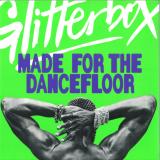
‘Made For The Dancefloor’ is Glitterbox’s first vinyl compilation since 2021’s ‘Where Love Lives’ release. Spread over three 12” with four tracks per record, ‘Made For The Dancefloor’ compiles some of the biggest and most loved releases on the Glitterbox label this year. Including the huge Tripolism remix of The Shapeshiters classic ‘Lola’s Theme’, Crackazat’s upbeat take on Ben Westbeech, big main room cuts from Harry Romero, Kiddy Smile, Dave Lee and lots more.
- A1: Jerome Isma-Ae - "Wahrnehmung
- A2: Qrion – „Klingt Gut“
- A3: Markus Homm – „Can't Live Without You“
- B1: Dino Lenny & Nuiton - "Beste Zukunft
- B2: Alexex Kennon - "Back To You" (Feat. Lunar June)
- B3: Grigor & Serve Cold - "Man Spürt Es
- C1: Einmusik & Ash Nova - "I've Been Changing
- C2: D-Nox & Stereo Underground - "Shooting Stars
- C3: Paul Roux - "Kids
- D1: Trilucid & Brett Gould - "The Purpose
- D2: Spada - "Geräuchert
- D3: Aikon & Saint Code - "Feel
The Unique series returns, showcasing 12 brand new and original tracks from some of the world’s most exciting producers. With tracks from Jerome Isma-Ae, Dino Lenny & Nuiton, Einmusik, Ash Nova, Qrion, Trilucid & Brett Gould, Markus Homm, D-Nox & Stereo Underground, Spada, Alex Kennon feat. Lunar June, AIKON & SAINT CODE, Grigoré & Serve Cold and Paul Roux.
- A1: Emerge / Fischerspooner
- A2: Seventeen / Ladytron
- A3: Strict Machine/ Goldfrapp
- A4: Girls On Pills / The Droyds
- A5: Hooked On Radiation (Pet Shop Boys Orange Alert Mix) / Atomizer
- B1: Fuck The Pain Away / Peaches
- B2: Do I Look Like A Slut? (Original Version) / Avenue D
- B3: Galang / M.i.a
- B4: Kernkraft 400 (Dj Gius Mix) (Radio Edit) / Zombie Nation
- B5: Poney Pt. 1. (Edit) / Vitalic
- B6: The Game Is Not Over / T. Raumschmiere Feat. Miss Kittin
- C1: Over And Over (Naum Gabo Remix) / Hot Chip (7.05)
- C2: Banquet (Phones Disco Remix) / Bloc Party (5.25)
- C3: E Talking (Nite Version) / Soulwax (6.08)
- C4: ?Zdarlight» / Digitalism (5.44)
- D1: Daft Punk Is Playing At My House (Edit) / Lcd Soundsystem (3.23)
- D2: Hustler / Simian Mobile Disco (3.43)
- D3: We Share Our Mother's Health / The Knife (4.09)
- D4: Missy Queen's Gonna Die / Tok Tok Vs. Soffy O (4.13)
- D5: What Was Her Name (Radio Edit) / Dave Clarke Featuring Chicks On Speed (4.44)
- D6: I Am The Fly / Adam Sky And Crossover (4.59)
- E1: We Are Your Friends / Justice Vs. Simian
- E2: Take Me Out (Daft Punk Remix) / Franz Ferdinand
- E3: Slow (Chemical Brothers Remix Edit) / Kylie Minogue
- F2: Warm Leatherette / The Normal
- F3: Empire State Human / The Human League
- F4: Tryouts For The Human Race / Sparks
- F5: Telephone Operator / Pete Shelley
- F6: Nag Nag Nag / Cabaret Voltaire
- E4: Let's Make Love And Listen To Death From Above / Css
- E5: Solta O Frango / Bonde De Rolê
- E6: Club Action / Yo Majesty
- F1: Numbers / Kraftwerk
‘When The 2000s Clashed: Machine Music For A New Millenium’ is the story of how, 25 years ago, a new form of electronic music – known as electroclash - reignited a tired clubland and gave the indie scene and mainstream pop a shot in the arm in the process. Over this 3LP highlights set, carefully curated from the 5CD box of the same name (also released, 3rd October) the collection showcases the back-to-basics electronic beats that heralded in a new generation of exciting and innovative new artists - Hot Chip, Peaches, LCD Soundystem, and Ladytron, to name a handful. It also shows how the sound and attitude of electroclash plugged into the decade’s cutting-edge indie bands, (Franz Ferdinand, Bloc Party), and became intrinsic to the way chart pop would sound in the first decade of the 2000s (Kylie, Goldfrapp).
The collection also shows how the scene’s underground DIY ethos evolved and inspired the next generation of electronic buccaneers (Simian Mobile Disco, Justice Vs. Simian). ‘When The 2000s Clashed’ brings together a dazzling, diverse selection of artists, producers and remixers from right across the 2000s zeitgeist – from The Chemical Brothers and Daft Punk, from M.I.A. to Soulwax and many points in-between. For good measure, there’s also one side of LP3 given over to the original post punk and electronic sounds (including Kraftwerk, The Human League and Cabaret Voltaire) who’d played such a big influence on the electroclash sound. ‘
When The 2000s Clashed’ was compiled and sequenced for Demon / Edsel by Jonny Slut, founder of London’s electroclash citadel Nag Nag Nag. Established in 2002, in a small Soho venue called Ghetto, ‘Nag’ quickly became THE hottest club, first in London and then in the whole world. A glorious mess and hedonists’ hotspot, a night at ‘Nag Nag Nag’ (if you could get in!) saw the capital’s club kids, students and creatives rub up alongside names from the fashion and music worlds - Björk, Pet Shop Boys, Kate Moss, Boy George, Alexander McQueen, and Pam Hogg were among the regulars. Madonna visited, so did John Peel, Yoko Ono asked to perform and did, Throbbing Gristle’s Chris and Cosey DJ’d, so did Marc Almond, and Too Many DJ’s.
Justin Timberlake was refused entry (too many bodyguards)… even Cilla Black was spotted getting down! Jonny shares these reminisces – and many more - in the collection’s sleevenotes. Named after the 1979 Cabaret Voltaire classic, ‘Nag, Nag, Nag’ became the first place to hear the seemingly endless flow of thrilling new tunes coming from every direction during that decade of dance. Many of them are included on this collection.
DJ support comes from Roger Sanchez, Bob Sinclar, Claptone, Purple Disco Machine, Audiojack, David Penn, Sam Divine, Laurent Garnier, Chloe Caillet, Nicole Moudaber, Carlita, Groove Armada, Barry Can’t Swim, Bakermat, Danny Howard, Gorgon City and more!
Toolroom’s next Sampler showcases 4 big releases from Jesus Fernandez, Alex Preston, CASSIMM and Jewel Kid.
- A1: Cigarettes In The Theatre
- A2: Come Back Home
- A3: Do You Want It All?
- A4: This Is The Life
- A5: Something Good Can Work
- B1: I Can Talk
- B2: Undercover Martyn
- B3: What You Know
- B4: Eat That Up, It's Good For You
- B5: You Are Not Stubborn
- C1: Something Good Can Work (The Twelves Remix)
- C2: Costume Party
- C3: Something Good Can Work (Ted & Francis Remix)
- C4: What You Know (Cassian Remix)
- D1: Kids
- D2: I Can Talk (Moulinex Remix)
- D3: Come Back Home (Myd Remix)
- D4: Something Good Can Work (Original Demo)
- D5: I Can Talk (French Horn Rebellion Remix)
Black Vinyl[24,79 €]
Mit "Tourist History" veröffentlicht die britisch-irische Indieband Two Door Cinema Club eines der einflussreichsten Debütalben der 2010er Jahre in einer besonderen 15th Anniversary Edition. Das Album, das 2010 erschien, gewann den Choice Music Prize als Irish Album of the Year und markierte den Start einer Weltkarriere, die von Festival-Headliner-Shows bis zu über 1 Milliarde Streams von "What You Know" führte.
Zur Feier des Jubiläums erscheint Tourist History in drei liebevoll gestalteten Formaten - inklusive bisher unveröffentlichter Remixe und Raritäten.
Seit dem Garageprojekt in Bangor haben Alex Trimble, Sam Halliday und Kevin Baird eine beeindruckende Karriere hingelegt - mit Top-10-Alben wie Beacon, Gameshow, False Alarm und Keep On Smiling und ausverkauften Touren weltweit. Diese Jubiläumsausgabe ist ein Muss für Indie-Fans und Sammler - ein Meilenstein moderner Gitarrenmusik.
- A1: Sabrina Carpenter - Espresso (2 56)
- A2: Noah Kahan - Stick Season (3 01)
- A3: Myles Smith - Stargazing (2 51)
- A4: Billie Eilish - Birds Of A Feather (3 30)
- A5: Olivia Rodrigo - Vampire (3 42)
- A6: Lady Gaga & Bruno Mars - Die With A Smile (4 08)
- B1: Gracie Abrams - Close To You (3 46)
- B2: Troye Sivan - One Of Your Girls (3 00)
- B3: Madison Beer - Make You Mine (3 43)
- B4: Conan Gray - Never Ending Song (2 36)
- B5: Shawn Mendes - When You're Gone (2 54)
- B6: Mimi Webb - House On Fire (2 20)
- C1: Benson Boone - Beautiful Things (3 01)
- C2: Teddy Swims - Lose Control (3 31)
- C3: Post Malone & Morgan Wallen - I Had Some Help (2 59)
- C4: Dasha - Austin (Boots Stop Workin') (2 51)
- C5: Sza - Kill Bill (2 36)
- C6: Raye - Escapism (Feat 070 Shake) (4 34)
- D1: Sam Fender - Seventeen Going Under (3 56)
- D2: Tom Grennan - Higher (3 22)
- D3: The Kid Laroi & Justin Bieber - Stay (2 21)
- D4: Pinkpantheress - Boy's A Liar (2 14)
- D5: Doja Cat - Woman (2 55)
- D6: Lizzo - About Damn Time (3 12)
- E2: Dua Lipa - Houdini (3 08)
- E3: Tate Mcrae - Greedy (2 13)
- E4: Tyla - Water (3 21)
- E5: Miley Cyrus - Flowers (3 17)
- E6: Lana Del Rey - Say Yes To Heaven (3 04)
- F1: Karol G - Si Antes Te Hubiera Conocido (3 14)
- F2: Sam Smith & Kim Petras - Unholy (2 40)
- F3: David Guetta & Bebe Rexha - I'm Good (Blue) (2 57)
- F4: Nathan Dawe X Joel Corry X Ella Henderson - 0800 Heaven (2 38)
- F5: Becky Hill & Sonny Fodera - Never Be Alone (3 09)
- F6: Dermot Kennedy - Kiss Me (3 48)
- F7: Alex Warren - Carry You Home (2 48)
- D7: Lil Nas X - Thats What I Want (2 25)
- E1: Ariana Grande - Yes, &? (3 35)
"The past few years has seen an explosion in pop music, with new artists breaking with unforgettable songs and (re)establishing pop, with influences from different genres and places, at the top of the charts.
NOW Music are very proud to present NOW That’s What I Call Pop! – 38 massive pop anthems - including 8 UK #1s – and with all tracks featured on a stunning 3-LP vinyl pressed in a different colour for each disc: Bright Yellow, Hot Pink and Baby Blue, releasing 23rd May 2025."
‘Belgium is too small for pianist Alex Koo’ – De Tijd
‘Stunningly original’ – Downbeat Jazz Magazine
‘Fabulous technique, sounding downright genius at times.’ – London Jazz News
‘When listening, Keith Jarrett’s name came to mind several times. Not because Koo’s playing is similar to that of the American master, but because it is of the same exceptionally high level.’ – Trouw
‘Koo’s compositions and playing are absolutely world class.’ – Written in Music
The son of a Belgian missionary sent to Japan in the seventies and a Japanese peace activist, pianist and composer Alex Koo refuses to be boxed into any traditional category. As the renowned German Jazzthetik magazine put it, "Alex Koo defies categorization."
With ten uniquely personal tracks, Blame It on My Chromosomes is more than a musical statement; it is a form of self-therapy. "The only way not to spiral into depression as a jazz musician nowadays is to vent and lose yourself in the music," Koo shares. "Music needs a purpose beyond self-promotion. For me, it's about accepting who I am and letting go of anything else."
Featuring celebrated trumpeter Ambrose Akinmusire on two tracks, Blame It on My Chromosomes highlights Koo's fearless versatility. One of these tracks, "Jonass," is dedicated to Koo's childhood friend who tragically passed away, adding a deeply personal layer to the album. "When we were kids, we would skate and do stupid things with shopping carts, inspired by Jackass," Koo recalls. "That's why we called Jonas 'Jonass'-he had the biggest smile you could imagine, his laugh was contagious, yet he also was the most reckless one among us."
Koo, praised as "stunningly original" (Downbeat Jazz Magazine), is known for creating music that transcends genre boundaries, blending jazz, indie, contemporary classical and film music with innovative freedom. A native of rural West-Flanders, Belgium, he began his musical journey as a classical piano prodigy at the age of five. In his teens, he developed a passion for jazz and improvisation, earning praise from jazz legends such as Kurt Elling, Kenny Werner, and Brad Mehldau. Koo has even been described as "of the same rare high level as Keith Jarrett" (Trouw). His 2019 album, Appleblueseagreen, featuring Mark Turner and Ralph Alessi, was included in Downbeat's Best Albums of the Year.
Alongside Koo, Blame It on My Chromosomes features his longstanding trio, whose fearless interplay brings the album's narrative to life. The trio, with Koo on piano, Dré Pallemaerts on drums, and Lennart Heyndels on bass, represents the very best of the Belgian jazz scene. Their intuitive chemistry and artistry are the driving force behind the album's emotive power, with special guest Ambrose Akinmusire adding a transcendent layer on two standout tracks.
Repress!
Landing next from toolroom is a 4-track vinyl sampler of some of our biggest recent releases including a label debut from Liverpool based DJ & producer Essel with her single ‘love vibration’, Dutch DJ & production powerhouse Guz who teams up with Italian production duo havoc & lawn for ‘come back’, fellow Italian DJ & producer Qubiko who delivers brand new single, ‘confused’ and UK duo wh0 and Brighton based Kideko for their new collab ‘soul searcher’. Four killer cuts that you will not want to miss!
Countless radio plays on radio 1 from Danny Howard, Sarah Storie,
Pete tong Other notable radio plays – kiss FM, toolroom radio, Sirius XM, data transmission radio, radio 1 dance anthems, radio 1 party anthems, Rinse FM, select radio, Tomorrowland radio
Dj Support From Danny Howard, Annie Mac, Mistajam, Pete Tong, Charlie Hedges, Kraak & Smaak, Maxinne, Todd Terry, Alex Preston, Full Intention, Gw Harrison, Dj Rae, Rudimental, Alaia & Gallo, Illyus & Barrientos, Johan S, David Penn, Sam Divine, Riva Starr, Claptone, Nice7, Dario D’attis, Mousse T, S-Man, Huxley, Kc Lights, Friend Within, Dombresky, Gorgon City, Chris Lake, Format:B, Pirupa, Tcts, Alan Fitzpatrick, Low Steppa, Mat.Joe, Raumakustik, Eskuche
- A1: Kölsch - Grey
- A2: Mr Scruff - Get A Move On!
- A3: Nufrequency Feat Ben Onono - Fallen Hero (Motor City D
- A4: Fritz Kalkbrenner - Facing The Sun
- B1: Fakear Feat Deva Premal - La Lune Rousse
- B2: Scott Grooves Feat Parliament & Funkadelic - Mothership Re-Connetion (Daft Punk Rmx)
- B3: Isolee - Brazil Com (Freaks Reinterpretation)
- B4: Laurent Garnier - Wake Up
- C1: Bob Sinclar - The Ghetto
- C2: Tom & Joy - Queixume (Masters At Work Mix Edit)
- C3: Zaabriskie - Higher
- C4: General Elektriks - Raid The Radio
- C5: Alex Gopher - The Child (Radio Edit)
- D1: José Padilla - Bossa Rosa
- D2: Yuksek & Bertrand Burgalat - Icare
- D3: The Xx - On Hold (Jamie Xx Remix)
- D4: The Hacker - Classic Revisited Part
- E1: Dj Gregory - Tourment D'amour
- E2: St Germain - Alabama Blues (Todd Edwards Vocal Radio Ed
- E3: Sandy B - Make The World Go Round (Deep Dish Radio Edit
- E4: Purple Disco Machine - Walls
- E5: Avicii - Sweet Dreams
- F1: Zero 7 Feat Mozez - This World
- F2: Bicep - Glue
- G3: Superfunk | Feat Ron Carroll - Lucky Star
- G4: Mr Oizo - Flat Beat
- G5: Vitalic - Poison Lips
- H1: Thievery Corporation - It Takes A Thief
- H2: Ame - Rej
- H3: Claptone Feat Jaw - No Eyes
- H4: Marie Davidson - Work It (Soulwax Remix)
- I1: Bonobo - Terrapin
- I2: Dj Cam - Birds Also Sing For Anamaria
- I3: Kid Loco - A Grand Love Theme
- I4: Robin S - Show Me Love
- I5: Swayzak - Make Up Your Mind
- J1: The Mighty Bop - Feeling Good
- J2: Quantic - Time Is The Enemy
- J3: Thylacine - Piany Pianino
- J4: Scan X - Alpha
- J5: The Prodigy - Firestarter
- F3: Moderat - A New Error
- F4: Kerri Chandler - Get Up
- G1: Fkj & Masego - Tadow
- G2: Gotan Project - Diferente
Having firmly re-established his underground roots, through a series of killer EPs on his newly birthed imprint, 49North - the Spooky and Animated legend now turns his attention to solo album number 1 - his first ever, as Duncan Forbes.
Laying its first foundations some 5 years ago now - ‘Return Of The Strobelight Kid’ has been stealthily taking shape and developing organically ever since. And as a result, the 8 tracks which now make up the final running order, feel very much a direct reflection of all that was experienced during that time; as someone who - whilst having well and truly bought the t-shirt several times over by now - nevertheless finds themselves back on the starting grid, having to do it all over again from scratch.
But embarking on new adventures from way back on square one - is something Duncan’s no stranger to; and on this album, he invites us to join him on this journey of his, and experience all the ups, downs, twists and turns that come with such intrepid territory.
TASTEMAKER/DJ SUPPORT: Axel Boman, Steve Bug, Baikal, Ame, Len Faki, Red Axes, Agoria, DJ Sabo, Anja Schneider, Alex.Do, Oliver Huntemann, AFFKT, Smash TV, The Revenge, Joshua James, Nicole Moudaber, Tim Sweeney, John Osborn, Powel, Alexi Delano, Davide Squillace, Kasper Borke, Iron Curtis, Optimo, Musumeci, Klose One + more.
Next up on Toolroom’s 4-track vinyl sampler series is a tasty collab from label founder, Mark Knight and dance music royalty, Armand van Helden, a fresh new edit of a revered club weapon from Julio Navas, Gustavo Bravetti and David Amo, Kiss FM regular, majestic and Sydney-native Alex Preston.
Up first label boss, Mark Knight enlists Grammy nominated Armand van Helden for their debut collaboration, 'The Music Began To Play'. Kicking off with a hard-hitting house groove and electrified bassline that drives the record, before dropping into the track's golden moment and sampling the 1979 classic disco cut 'I Don't Need No Music' by T.J.M; a gem of a record that encapsulates both Mark and Armand’s love for classic cuts.
Next up, a record that became a cult hit of the underground and one that defines the true sound of Toolroom's heritage, Julio Navas, Gustavo Bravetti and David Amo’s 'Raw'. Refreshed for 2022, we see one of France's hottest exports, Tony Romera, deliver a high energy, club focused remix of 'Raw', bringing the classic club record back to dancefloors and sound systems across the globe!
Up next is another heater from Majestic, who debuts on Toolroom with ‘Annie’. Recapping one of the hottest summers on record, Majestic embodies the Balearic, Ibizan heat, sampling Kid Creole & the Coconuts 1982 hit, 'Annie I’m Not Your Daddy', turning a slice of calypso / disco, into a club ready record for the dancefloor. From the brass melody to the hooky guitar riff, majestic lays down his signature style with a Groove Armada-esque vibe throughout.
Rounding things off is label favourite, Alex Preston with his unique blend of 4 to the floor dance music and live funk guitar riffs that have swept through clubs, moving feet, and bringing those feel-good vibes. Ticking all the right boxes on this one, 'Hunching' kicks off with its infectious groove and bassline, throwing in some lush strings, guitar flits and an 80's inspired saxophone break that adds some serious flavour to the record.
Repress
The Undefined Tales saga continues. This time with seekers bossman Alex Picone; the man who doesn't need an introduction with his impressive trackrecord, a true legend in the scene. On the other hand we've got from Paris residing Charonne boys; these new kids on the block are quickly making name for themselves with releases on Partisan, Imprints & LMML. And last but not least Cobert; a diamond in the rough, with quality releases on amazing stories.
- 1: Intro
- 2: Song 1
- 3: Same Kids
- 4: Dead Dog
- 5: Keeper
- 6: Uh-Huh
- 7: Operator
- 8: Simple Life
- 9: Ugly Things
- 10: The Kill
- 11: Crumbs
- 12: Homecoming
- 13: Outro
Following a trilogy of introductory EPs, a buzzed-about tour with Alvvays, and a mountain of global acclaim since they first emerged in 2022, the Stockholm-based trio teamed up with Alex Farrar (Wednesday, Snail Mail) for their first-ever full-length record. A sun-drenched prism of Girl Scout’s guitar-driven indie rock, Brink refracts with a new glow from each song to the next. Towering anthems intersecting with hushed tenderness. Nostalgia with momentary living. Doubt with joy. Forever a band of dualities, Brink is no exception for Girl Scout. Comprised of 13 tracks caught between apocalyptic anxiety and wistful escapism, the album captures the all-too-familiar crossroads of feeling stuck, yearning for change, and standing on the edge of something unknown.
- Mighty Idy #1
- Bad Attitude
- Baby Boom
- Out Of Our Tree
- From Home
- Shirt Loop (Not Recorded For Sire Lp)
- Boy From Nowhere (Not Recorded For Sire Lp)
- When I Get Off (Not Recorded For Sire Lp)/Destroyer
- He's Waitin' (Not Recorded For Sire Lp)
- Do Not Enter
- I Don't Know When To Stop (Not Recorded For Sire Lp)
- Mighty Idy #2
*13 ripping songs totalling 33 minutes from the original 20-song 65 minute master reel tapes, recorded in early February 1978 for producers Flo & Eddie, the night before DMZ (the raw-assed pre-Lyres outfit that never made it!) spent 3 days trapped by a blizzard recording their Sire album. **4 page insert with info, pics and Rick Coraccio's ultra-detailed journal on how it all went down! ***LP includes DOWNLOAD CODE Kapital Ink zine: "In the annals of R&R history, as far as local American rock'n'roll scenes go, Boston is hardly ever looked upon in the same shining light as, say, NY, Detroit, San Francisco or even Austin or Seattle. Unlike those other towns, there's never even been a definitive book about the scene. Maybe it's because Boston is a perennial hard-luck place (just witness the Red Sox) with a serious New York inferiority complex hanging over its head. Boston is ignored by the industry at large, despite the fact that the city has spawned countless heavyweights in both a commercial (Aerosmith, Boston, the Cars) and aesthetic (Modern Lovers, Real Kids, Mission Of Burma) (Crypt editor note: and DMZ!! and LYRES!!) sense. Boston was the first US city to directly reflect the influence of the Velvet Underground, as epitomized by the Modern Lovers, who've proven to be almost as influential in their own right. Fast forward to the days of hardcore, and Boston was one of the pre-eminent strongholds of shave-head mania, shoring up its rep as an angry, intolerant New England outpost. Naturally the town has produced more than its share of local legends: Willie Alexander (who actually was in the Velvet Underground, albeit when the band was on its Lou Reed-less last legs); Jonathan Richman (geekus supremus no small thing considering the subsequent indie hordes, to whom he's a savior); and most of all, the great Real Kids, (Crypt editor note: and DMZ!! and LYRES!!) who could've been the equivalent of the MC5, Stooges or Flamin' Groovies in the annals of American rock if it hadn't been for a series of bad breaks but let's not get into that because it'll only reinforce Boston's eternal self-pitying plight. The fact is, the scene in Boston was more or less built by a string of bands who are so organically-interconnected that it seems like an act of God."
- Somewhere, Nowhere
- Angles Mortz
- False Prophet
- Fluoride Stare
- The Void
- Ascension
- Just A Kid
- Host
- Landslide
- Renaissance
- 7: Am
- Blue In Grey
2026 Repress
Flickering in ultraviolet, there is an elusive place where blue pill meets red, ups become downs, and day merges with night. Those liminal spaces where anything is possible is where you’ll find Nightbus and their hypnotic debut album Passenger. Doom, uncertainty, and opportunity lurk in the shadowy corners of their murky existence with stops at disassociation, co-dependency, and addiction before reaching its final destination - a glimmer of hope.
The in-between of Nightbus’ own Gotham lies where Manchester’s city pulse meets Stockport’s outer realm. An audio-visual entity formed among a musical family of friends, freaks, and foes in messy mills and after hours on dancefloors alike, their sound bleeds from tension where collective creative forces are bound together and collide with the fallout of being torn apart. Before even playing a show, their So Young released single ‘Mirrors’ – a knowing nod of respect to some well-known gloomy Northerners - may have made old school indie heads shimmy at shows in Salford’s The White Hotel but also signalled the duo’s knack for offering listeners a Bandersnatch approach to hitchhiking their own personal Nightbus in whatever direction they choose to take. “Everyone can have their moment with our songs; the music is our response to who we are as young people, living in the city full of this energy right now,” they say.
Whilst reverb hefty melodies and dread-filled loops embody isolation from writing at each of their home studio set-ups, magic happens in the ether across 90s trip-hop, indie sleaze and electronica; Jake’s production layers Olive’s pop sentimentality with drums and samples whilst tales of a cast of faceless characters place Olive as puppet master; her severed self’s perspective manipulating their stringed limbs at arm’s length to see how their stories play out when scenes reflecting her own lie close to the bone. “It’s a bit fucked; like having this out of body experience with a made-up movie running through my head,” she says. “As I write I can see they’re all from a similar world, but they allow me to explore different feelings without giving away part of myself.”
Recorded at The Nave in Leeds with producer-engineer Alex Greaves (Heavy Lungs, Working Men’s Club), surprise and danger lies in every crevice. Brooding whispers turn to chants on 6-minute opus ‘Host.’ Improvised when performed live, its immersive shift in tempo leads to hefty dub courtesy of Jake’s pedals. Even then, you won’t know shit’s hit the fan until its mid-point reveal when ominous bass blasts a thunderous soundtrack as its protagonist defiantly walks away after committing the perfect crime. “It makes you wait, and more songs should have sirens,” Olive grins.
Leaning deeper into alter-egos via the video game-psychological horror of a Silent Hill dystopia, the band’s Fight Club moment ‘Angles Mortz’ turns its literal translation of death angles on its head as it reflects upon kink and internalised shame reincarnated as pride. Elsewhere the ice cool ‘Landslide’ is a Requiem for a Dream about the addiction of being in a band; ‘The Void’ explores co-dependency and estranged relationships; and carefully selected samples revive house track ‘Just A Kid’ from the band’s early incarnation. Passenger’s every direction is to face challenges head on. “That is what’s so great about horror; you can see through predictable patterns so when the unexpected occurs it's more realistic and uncomfortable… I want to own the dark stuff!”
As for Passenger’s first single, the pulsating ‘Ascension’ is a spiralling deep dive into death, suicide, and legacy around who or what we leave behind. A noughties club banger by way of NYC beats - ergonomically designed for those who like to stay out a little too often and too late - it throbs like a house party’s partition wall as the literal levelling up undergoes a neon transformation; blue glitching to pink, diffusing the white construct of the Nightbus Matrix. “It really does feel like the end of something and was purposely written that way,” they say, “the ascension is like a firework going off!”
With wheels in motion, Nightbus has become a movement surpassing sonic realms. Between shows from Porto to Brighton taking in The Great Escape, Rotterdam’s Left Of The Dial and Paris’ Supersonic; DJing; remixing; guesting (BDRMM’s Microtonic album); and even enlisting talented like-minds to craft a 3-part queer coming-of-age music video series which ties in with a new ‘hyperpop’ phase in the evolution of their popular Nightbus Soundsystem club night, heads are now being turned from sports brands to high-end fashion designers. “There are things we can’t reveal just yet,” tells Olive, “but we’re excited about the direction this beast we’ve created is heading.” As the album philosophises and asks one ultimate question; what does it truly mean to be ‘Passenger’? Nightbus may not claim to offer a definitive answer, but it might make you feel a bit better about those demons.
- Intro
- Sarah (Frau, Auch In Ner Band) Feat. Alex Pascow
- Gestern Emergenza
- What Afd Thinks We Do
- Unser Lehrer Dr. Specht
- Pizza Napoletana
- Steppenwolf
- Unsere Kneipe
- Dagmar Wöhrl
- Was Ist Eigentlich Dein Scheiß Problem?!
- Das Schöne Leben
- Ich Vs. Mich Vs. Euch
- Nachbarn
- Schäm Dich!
- Zwischen Thermomix & Webergrill Feat. Hc Baxxter
"Die große Palmöllüge". Alles steht hier im Zeichen der Verschwörungstheorie. Geht Palmöl nun klar oder ist die Abholzung des Regenwaldes am Ende etwa eine Riesensauerei - die Welt teilt sich in zwei Lager. Fridays for Future, regionale Kleinbauern und Orang Utans scheinen sich einig: geht eher nicht so klar. Hier halten wiederum ausgewiesene Klima-Experten dagegen, z.B. Jan Leyk (bekannt aus "Berlin Tag & Nacht"). Der sagt nämlich, dass die "bekackte Tofuwurst dafür sorgt, dass verschissen nochmal die Regenwälder abgeholzt werden". Palmöl, Facepalm - whatever_ Was hat das jetzt alles mit dem neuen Album des linksgrünversifften Punk-Quartetts Akne Kid Joe am Hut? Die sind Team Orang Utan und FFF, soviel erstmal dazu. Aber steht denn wirklich alles im Zeichen der Verschwörungstheorie? Wer aufgrund des Album-Titels nun eine Konzept-LP gegen nutella und co. vermutet, muss leider enttäuscht werden. Wie schon auf Karate Kid Joe wird sich hier auch wild echauffiert, die Palette ist nun aber deutlich breiter. Zentrale Themen sind - klar, Verschwörungstheorie - aber auch linke Klassiker wie Vaterlandsverrat, Saufen und Beamtenbeleidigung. Mitunter wird es auf der neuen Scheibe aber auch richtig deep, z.B. mit einer 1,5 minütigen Nacherzählung eines Beziehungsendes im Italien Urlaub. Oder der Frage was nun besser ist - "Free Hugs" oder "Love Yourself" T-Shirts.
- A1: Main Title
- A2: Fite Nite
- A3: Bumpy Ride
- A4: Dan Ducks Out
- A5: Bonsai Tree
- A6: Decorate The Gym
- A7: Miyagi Rattles Bones
- B1: Miyagi Intercedes
- B2: On To Miyagi's
- B3: The Pact
- B4: Troubled Lovers
- B5: Japanese Sander
- B6: Paint The Fence
- B7: Daniel Sees The Bird
- C1: Fish And Train
- C2: Training Hard
- C3: The Kiss
- C4: Japanese Hand Clap
- C5: No Mercy
- C6: Daniel's Moment Of Truth
- D1: Fish And Train (Alternate Ending)
- D2: Miyagi Rattles Bones (Alternate Ending)
- D3: Fascination
- D4: Japanese Hand Clap (Opening With Overlay)
- D7: Daniel's Moment Of Truth (Alternate Take)
- D5: Japanese Hand Clap (Alternate Opening)
- D6: No Mercy (Opening With Overlay)
In celebration of the 40th Anniversary of the blockbuster summer film of 1984, SPACELAB9, in conjunction with Columbia Pictures, proudly presents The KARATE KID: 40th Anniversary Original Motion Picture Score Double LP!
Released for the first time ever on vinyl, the collection features the full 20 track score album by legendary composer Bill Conti, plus 7 bonus tracks.
Double LP package features beautiful original cover artwork created exclusively for this album by renowned artist Astor Alexander, plus stills from the original landmark 1984 film and a brief note from composer Bill Conti.
- A1: Kid Loco - She's My Lover
- A2: Alex Gopher - The Child
- A3: Zero 7 Feat Sophie Barker - In The Waiting Line
- A4: Etienne De Crécy - Tempovision
- A5: Bonobo - Terrapin
- B1: Guts - Ghetto In Paradise
- B2: Quantic - Time Is The Enemy
- B3: Gotan Project Feat Cristina Vilallonga - Epoca
- B4: Jazzanova - Bohemian Sunset
- B5: Fakear - Morning In Japan
"Trip Hop Vintage Sounds" is a 2023 compilation album by Wagram Music that features various tracks from artists such as Kid Loco, Zero 7, and Etienne De Crécy. It is a collection of downtempo, atmospheric music that blends hip-hop beats with other genres like dub, soul, and jazz, characteristic of the trip-hop sound that originated in the UK in the 1990s.
- A1: Woke Uo In Love
- A2: Keep Running
- A3: Higher
- A4: Wait For Me
- A5: I Feel
- B1: Good Time
- B2: Kids Of The Sun
- B3: Stereo
- B4: How You Feel
- B5: Drifting Away
- A1: Robert & Robert (Mother Remix By Play Paul)
- A2: London Airport (Remix Xavier Jamaux)
- A3: Dans La Poussière Du Soleil / Un Amour De Soleil (Remix Kid Loco)
- A4: L’amour D’aimer (Remix Marc Collin – Nouvelle Vague)
- A5: L’aventure C’est L’aventure (Remix Alex Revox Jr)
- B1: Child Under A Leaf (Remix Vicarious Bliss)
- B2: Saint-Tropez (Remix Jazzy By Alex Revox Jr)
- B3: Retour De Lourdes (Remix Dj Cam)
- B4: Concerto Pour La Fin D’un Amour (Remix Play Paul)
- B5: Plus Fort Que Nous (L’amour Est) {Remix Philippe Cohen Solal (Gotan Project)
- B6: Young Freedom (Remix The Breathin’ Canyon)
Thierry Wolf und Frédéric Lai (Sohn des Komponisten) wählten rund zehn DJs aus, darunter bekannte Vertreter der French Touch-Szene, die für Sammlungen wie Hôtel Costes bekannt sind. Diese Künstler wurden mit der Aufgabe betraut, die Werke von Francis Lai neu zu interpretieren. Die DJs, die oft weniger bekannte Stücke auswählten, überraschen mit persönlichen Entscheidungen. So wählte Play Paul (Bruder von Guy-Manuel von Daft Punk) „Robert & Robert“, da es das letzte Stück war, das er mit seinem Vater hörte. Auch Philippe Cohen Solal von Gotan Project wählte „L’Amour est bien plus fort que nous“ als Epigraph auf dem Grabstein seiner Eltern.
Dieses Projekt verbindet musikalisches Erbe, Emotion und Innovation. Durch die Remixe erhält die Musik von Francis Lai eine frische Perspektive, während gleichzeitig seinem Pioniergeist gehuldigt wird.
- Somewhere, Nowhere
- Angles Mortz
- False Prophet
- Fluoride Stare
- The Void
- Ascension
- Just A Kid
- Host
- Landslide
- Renaissance
- 7: Am
- Blue In Grey
A Dark, Cinematic Soundtrack for Urban Life! UK duo Nightbus release their debut album Passenger, blending trip-hop, indie sleaze, and electronica into a hypnotic exploration of identity, addiction, and emotional tension. Produced by Alex Greaves (Working Men"s Club), the album features standout tracks like the pulsating "Ascension", the dub-heavy "Host", and the haunting "Angles Mortz". With roots in Manchester"s underground scene, Nightbus combine immersive soundscapes with introspective lyrics, crafting a sonic world that"s both unsettling and deeply relatable. Passengeris more than an album - it"s a multi-sensory experience, extending into club nights, fashion, and visual storytelling.
- 1: Flying High Again (Feat. Cody Jinks)
- 2: Night Train
- 3: Ace Of Spades
- 4: Nobody's Fool (Feat. Tom Keifer)
- 5: Round & Round
- 6: Look What The Cat Dragged In
- 7: Wild Side
- 8: Youth Gone Wild
- 9: You've Got Another Thing Coming
- 10: Gettin' Better
Alex Williams revisits his favorite ‘80s Hard Rock songs and gives them some Outlaw Country grit on his third studio album, Space Brain. Inspired by the classic Skid Row, Cinderella, and Mötley Crüe CDs he discovered in his dad’s collection as a kid. What began as a nostalgic conversation during an acoustic session in Illinois quickly turned into a full-fledged passion project. With support from his label and the creative guidance of longtime friend and producer Ben Fowler, Alex spent months reworking his favorite songs from the decade — peeling back the distortion to uncover the lyrics and emotion at the heart of the originals. Backed by a talented crew of musicians, Space Brain captures the spirit of the '80s with a fresh perspective and a deep respect for the music that shaped his youth.
- A1: Mr. Stoner– The Finkelstein Shit Kid
- A2: Cheech & Chong– Up In Smoke
- A3: War– Low Rider
- A4: Pedro & Man– 1St Gear, 2Nd Gear
- A5: Cheech & Chong– Framed
- Producer – Leiber & Stoller
- A6: Search Boys– Searchin
- Producer – Leiber & Stoller
- A7: Man (40) And The Ajax Lady– The Ajax Lady
- A8: Yesca– Strawberry's
- Producer – Danny Kortchmar, Waddy Wachtel
- B1: Yesca– Here Comes The Mounties To The Rescue
- Producer – Danny Kortchmar, Waddy Wachtel
- B2: Pedro (131) And Sgt. Stedenko– Sometimes When You Gotta Go, You Can't
- B3: Yesca– Lost Due To Incompetence (Theme For A Big Green Van)
- Producer – Danny Kortchmar, Waddy Wachtel
- B4: Pedro & Man, Officer Clyde, Sgt. Stedenko– Lard Ass
- B5: Cheech & Chong– Rock Fight
- Producer – Danny Kortchmar, Waddy Wachtel
- B6: Pedro & Man And Jade East– I Didn't Know Your Name Was Alex
- B7: Alice Bowie– Earache My Eye
- B8: Cheech & Chong– Up In Smoke Reprise
- Boardwalk Royalty
- The Hopefuls
- Change Of Heart
- Suburban Siddhartha
- Dead Right
- Room On Your Shoulder Ft. Mt. Joy
- The Diary Of Living Ft. Bruno Major
- Lightweight
- This Thing Of Ours
- Good Kid Bad Decisions
Adam Melchor, Singer-Songwriter aus Los Angeles, brilliert auf seinem dritten Studioalbum "The Diary Of Living" sowohl als beruhigender Folk-Sänger, als auch als Weber wundervoller Klangteppiche. Melchor schrieb Songs mit Künstlern wie Ashe, Alexander 23, Briston Maroney, ELIO und The Chainsmokers und tourte zusammen mit Noah Kahan, Rodrigo y Gabriela, Jeremy Zucker und Mt. Joy, letzterer tritt neben Bruno Major als Featuregast auf dem Album auf.
B.o.B präsentiert: The Adventures of Bobby Ray ist das Debütalbum von B.o.B, das ursprünglich am 27. April 2010 veröffentlicht wurde. Die Produktion für das Album erstreckte sich von 2008 bis 2010 und wurde von einem talentierten Team übernommen, darunter B.o.B selbst, Crada, Dr. Luke, The Smeezingtons, Jim Jonsin, Lil' C, Alex da Kid, Polow da Don und DJ Frank E. Diese erstmalige Vinyl-Veröffentlichung als 2-LP enthält nicht nur die mit RIAA Diamant ausgezeichnete Single Airplanes mit Haley Williams von Paramore, sondern auch Gastbeiträge von Bruno Mars in Nothing On You und Janelle Monae in Ghost In The Machine.
"Irrepressible, off-the-wall and utterly unique - the late 70s/early 80s Latin jazz-funk and leftfield electronic boogie of Japanese composer and pianist Izumi ‘Mimi’ Kobayashi collected for the first time.
A star in Japan, she moved to Europe to record global hits with Depeche Mode and Swing Out Sister, toured the world with the Reggae Philharmonic Orchestra and made beats with Attica Blues’ Tony Nwachukwu. Now based in London, Mimi currently fronts Tokyo Riddim Band - the intergenerational live Japanese Reggae outfit born from Time Capsule’s acclaimed 2023 compilation of the same name - playing live shows and releasing a trio of recordings.
Choice Cuts 1978-1983 collects eight recordings from four of Mimi’s first five albums – Sea Flight (1978) recorded with her group Flying Mimi Band, and Coconuts High (1981), Nuts Nuts Nuts (1982) and Tropicana (1983) under her own name.
The compilation opens with a syncopated electro-funk cover of Sergio Mendes’ ‘Mas Que Nada’ (Tropicana) and the crisp and stripped back techno-pop of ‘Coffee Rumba’ (Nuts Nuts Nuts) with a keyboard bass line that would have made Stevie Wonder weep.
Alongside the off-beat synth jam ‘Quiet Explosion’ (Nuts Nuts Nuts) and piano samba of ‘Espresso’ (Tropicana), there’s two low slung soul-jazz numbers, ‘Naze’ and ‘Angel Sky’, from Sea Flight (1978) that recall the collaborations between Herbie Hancock and Kimiko Kasai. But it is around the two tracks from Mimi’s 1981 album Coconuts High that this compilation revolves (and from whose cover shoot it borrows).
Released on legendary guitarist Takanaka’s Kitty Records label, Coconuts High was recorded in LA with a jazz fusion backing band, including Alex Acuña, Abraham Laborial, Harvey Mason and the Tower of Power horns. A riot of playful Latin-tinged jazz, funk and fusion with the off-beat spirit of Kid Creole & and the Coconuts, the album became a cult hit. Here it’s the sultry, Minnie Riperton-esque ‘Crazy Love’, with its addictive groove and bittersweet melodies that makes the cut, alongside the steel drum-infused carnivalesque bounce of ‘Palm St’.
Choice Cuts 1978-1983 will introduce the idiosyncratic energy and playful verve of this under-the-radar pioneer to a wider audience for the first time. Welcome to the world of Izumi ‘Mimi’ Kobayashi."
Ground-breaking afro-rock and jazz with Memphis soul roots on this lost 1972 gem. Lovingly restored and reissued by Matsuli Music
'Black Soul' from 1972 is the third and last known album by The Anchors, a soul group originally formed in Johannesburg's Alexandra township in 1968. Their first two albums, 'Soul Upstairs' from 1969 and 'Everything' from 1971, were issued on Teal's City Special label alongside other prominent South African soul groups of the era like The Beaters, The Movers and The Flaming Souls.
On 'Black Soul', The Anchors undergo a notable shift, moving away from their early Memphis soul influences towards a pioneering African-driven sound. These changes laid the foundations for an emerging afro-fusion scene in the years to come from groups like Batsumi, The Drive and Harari.
'Black Soul' features a who's who of intergenerational musicians from great South African bands over the decades. In addition to Zacks Nkosi, the renowned bandleader of the Jazz Maniacs and long-time member of the African Swingsters in the 1940s and 50s, this album includes kwela star Little Kid Lex Hendricks, known for his Columbia recordings of the late 1950s; as well as Zack's son Jabu Nkosi who would go on to play with The Drive, Roots and Sakhile; and Banza Kgasoane later a member of The Beaters, Harari and then Mango Groove.
Now remastered for its first release since the original 1972 pressing, this lost gem offers a revealing glimpse into the evolution of South African music during a transformative era.
Zacks Nkosi (Sax), Patrick Jabu Nkosi (Organ and Flute), Anderson Nkosi (Lead Guitar), Given Sabela (Bass Guitar), Kid Lex Hendrix (Sax), Banza Kgasoane (Trumpet), Peter Morake (Drums), Hamilton Nzimande (Musical Director).
Original LP issued in South Africa on GRC’s CBS label (LAB 4037) in 1972.
Produced for reissue by Chris Albertyn and Matt Temple at Matsuli Music, and Siemon Allen at Flatinternational.
Original vinyl sourced from the Flatinternational Archive.
Artwork restoration and design by Siemon Allen.
Audio restoration, mastering and lacquers by Frank Merritt at The Carvery.
Manufactured at Pallas, Germany.
- A1: Progetto Tribale - The Sweep
- A2: Onirico - Echo Giomini
- A3: Open Spaces - Artist In Wonderland
- B1: Alex Neri – The Wizard (Hot Funky Version)
- B2: M C.j. Feat. Sima - To Yourself Be Free - Instrumental Mix Energy Prod
- B3: Mato Grosso - Titanic Expande
- C1: Dreamatic - I Can Feel It (Part 1)
- C2: Carol Bailey - Understand Me Free Your Mind (Dream Piano Remix)
- C3: The True Underground Sound Of Rome - Secret Doctrine
- D1: Don Carlos - Boy
- D2: Lazy Bird – Jazzy Doll (Odyssey Dub)
Vol 2[28,99 €]
Volume 1 of this expertly curated project of 90s Italian House - put together by Don Carlos.
If Paradise was half as nice… by Fabio De Luca.
Googling “paradise house”, the first results to pop up are an endless list of European b&b’s with whitewashed lime façades, all of them promising “…an unmatched travel experience a few steps from the sea”. Next, a little further down, are the institutional websites of a few select semi-luxury retirement homes (no photos shown, but lots of stock images of smiling nurses with reassuring looks). To find the “paradise house” we’re after, we have to scroll even further down. Much further down.
It feels like yesterday, and at the same time it seems like a million years ago. The Eighties had just ended, and it was still unclear what to expect from the Nineties. Mobile phones that were not the size of a briefcase and did not cost as much as a car? A frightening economic crisis? The guitar-rock revival?! Certainly, the best place to observe that moment of transition was the dancefloor. Truly epochal transformations were happening there. From America, within a short distance one from the other, two revolutionary new musical styles had arrived: the first one sounded a bit like an “on a budget” version of the best Seventies disco-music – Philly sound made with a set of piano-bar keyboards! – the other was even more sparse, futuristic and extraterrestrial. It was a music with a quite distinct “physical” component, which at the same time, to be fully grasped, seemed to call for the knotty theories of certain French post-modern philosophers: Gilles Deleuze, Félix Guattari, Paul Virilio... Both those genres – we would learn shortly after – were born in the black communities of Chicago and Detroit, although listening to those vinyl 12” (often wrapped in generic white covers, and with little indication in the label) you could not easily guess whether behind them there was a black boy from somewhere in the Usa, or a girl from Berlin, or a pale kid from a Cornish coastal town.
Quickly, similar sounds began to show up from all corners of Europe. A thousand variations of the same intuition: leaner, less lean, happier, slightly less intoxicated, more broken, slower, faster, much faster... Boom! From the dancefloors – the London ones at least, whose chronicles we eagerly read every month in the pages of The Face and i-D – came tales of a new generation of clubbers who had completely stopped “dressing up” to go dancing; of hot tempered hooligans bursting into tears and hugging everyone under the strobe lights as the notes of Strings of Life rose up through the fumes of dry ice (certain “smiling” pills were also involved, sure). At this point, however, we must move on to Switzerland.
In Switzerland, in the quiet and diligent town of Lugano, between the 1980s and 1990s there was a club called “Morandi”. Its hot night was on Wednesdays, when the audience also came from Milan, Como, Varese and Zurich. Legend goes that, one night, none less than Prince and Sheila E were spotted hiding among the sofas, on a day-off of the Italian dates of the Nude Tour… The Wednesday resident and superstar was an Italian dj with an exotic name: Don Carlos. The soundtrack he devised was a mixture of Chicago, Detroit, the most progressive R&B and certain forgotten classics of old disco music: practically, what the Paradise Garage in New York might have sounded like had it not closed in 1987. In between, Don Carlos also managed to squeeze in some tracks he had worked on in his studio on Lago Maggiore. One in particular: a track that was rather slow compared to the BPM in fashion at the time, but which was a perfect bridge between house and R&B. The title was Alone: Don Carlos would explain years later that it had to be intended both in the English meaning of “by itself” and like the Italian word meaning “halo”. That wasn’t the only double entendre about the song, anyway. Its own very deep nature was, indeed, double. On the one hand, Alone was built around an angelic keyboard pattern and a romantic piano riff that took you straight to heaven; on the other, it showcased enough electronic squelches (plus a sax part that sounded like it had been dissolved by acid rain) to pigeonhole the tune into the “junk modernity” section, aka the hallmark of all the most innovative sounds of the time: music that sounded like it was hand-crafted from the scraps of glittering overground pop.
No one knows who was the first to call it “paradise house”, nor when it happened. Alternative definitions on the same topic one happened to hear included “ambient house”, “dream house”, “Mediterranean progressive”… but of course none were as good (and alluring) as “paradise house”. What is certain is that such inclination for sounds that were in equal measure angelic and neurotic, romantic and unaffective, quickly became the trademark of the second generation of Italian house. Music that seemed shyly equidistant from all the rhythmic and electronic revolutions that had happened up to that moment (“Music perfectly adept at going nowhere slowly” as noted by English journalist Craig McLean in a legendary field report for Blah Blah Blah magazine). Music that to a inattentive ear might have sounded as anonymous as a snapshot of a random group of passers-by at 10AM in the centre of any major city, but perfectly described the (slow) awakening in the real world after the universal love binge of the so-called Second Summer of Love.
For a brief but unforgettable season, in Italy “paradise house” was the official soundtrack of interminable weekends spent inside the car, darting from one club to another, cutting the peninsula from North to centre, from East to West coast in pursuit of the latest after-hours disco, trading kilometres per hour with beats per minute: practically, a new New Year’s Eve every Friday and Saturday night. This too was no small transformation, as well as a shock for an adult Italy that was encountering for the first time – thanks to its sons and daughters – the wild side of industrial modernity. The clubbers of the so-called “fuoriorario” scene were the balls gone mad in the pinball machine most feared by newspapers, magazines and TV pundits. What they did each and every weekend, apart from going crazy to the sound of the current white labels, was linking distant geographical points and non-places (thank you Marc Augé!) – old dance halls, farmhouses and business centres – transformed for one night into house music heaven. As Marco D’Eramo wrote in his 1995 essay on Chicago, Il maiale e il grattacielo: “Four-wheeled capitalism distorts our age-old image of the city, it allows the suburbs to be connected to each other, whereas before they were connected only by the centre (…) It makes possible a metropolitan area without a metropolis, without a city centre, without downtown. The periphery is no longer a periphery of any centre, but is self-centred”.
“Paradise house” perfectly understood all of this and turned it into a sort of cyber-blues that didn’t even need words, and unexpectedly brought back a drop of melancholic (post?)-humanity within a world that by then – as we would wholly realise in the decades to come – was fully inhuman and heartless. A world where we were all alone, and surrounded by a sinister yellowish halo, like a neon at the end of its life cycle. But, for one night at least, happy.
Blackest Ever Black presents Sleep Heavy, the debut album of broken-hearted, downtempo R&B/street-soul and supremely atmospheric, introspective electronics from Jabu: a trio comprised of vocalist/lyricists Alex Rendall and Jasmine Butt, and producer Amos Childs.The group was born out of Bristol's Young Echo collective: an ecosystem unto itself which has birthed and nurtured a number of other notable soundsystem-rooted projects and artists to date including Kahn & Neek, Sam Kidel, Ishan Sound, Ossia, Asda, chester giles (the title Sleep Heavy comes from a giles poem) and Killing Sound (Childs with Kidel and Vessel).
- 1: Alan Vega, Bobby Gillespie, Andy Mackay - Blood On The Moon (Mekon Rebuild)
- 2: Renegade Soundwave - A.d.i.d.a.s
- 3: Bobby Gillespie - I Put A Spell On You
- 4: Robert Ames & Ben Corrigan - Chrome Ocean (Mekon Mix)
- 5: Rema-Rema - Rema-Rema (Mekon Mix)
- 6: Leslie Winer - When I Was Walt Whitman (Mekon Remix)
- 7: Hbar - Hendy
- 8: Mekon & Schooly D - Saturday Night (Hit By A Rock - Fucked Up Mix)
- 9: Mona Mur - Tied (Mekon Vs Hit By A Rock Mix)
- 10: Jiz - I Am The Moon
- 11: Zos Kia & Isabelle De Jour - May Day
John Gosling (aka Mekon) the English big beat/industrial musician and electronica producer, is set to launch his new label Hua Hua (pronounced wah wah) with an 11-track compilation album this July. A quick scan at some of the featured artists showcases a line up of legends - eighties rap sensation Schooly D sitting alongside Primal Scream mainstay Bobby Gillespie and John’s recently departed punk hero Alan Vega - even Roxy Music’s saxophonist and founder member Andy Mackay makes an appearance. And while John’s electronic alter ego Mekon is always on hand to remix and arrange, he’s far from the only producer behind the proverbial wheel.
“It’s stuff I had lying around and now I am finding ways to get it out of my system,” he says. “It’s all been brought to the world with brilliant new artwork by Isabelle de Jour, who also features on various tracks.”
Gosling is well known as a member of both Psychic TV and Coil (for the album Transparent). Gosling founded the groups Zos Kia with John Balance and Bass-o-Matic with William Orbit before recording as Mekon. He has also remixed under the name Sugar J. And that’s before we get to the fact that he has soundtracked some of the most forward-thinking fashion shows in the world - crafting the soundscapes for Alexander McQueen shows since the show Dante in 1996. Firstly working hand in hand with the late great Lee “Alexander” McQueen, then with his successor Sarah Burton. In the mid-to-late-nineties he was a core member of the group Agent Provocateur along with Matthew Ashman (originally of Bow Wow Wow), Dan Peppe, Danny Saber (of Black Grape) and Cleo Torez. He has also worked with artists such as Roxanne Shanté ('Yes Yes Y'All'), Marc Almond ('Delirious'), and Afrika Bambaataa. His third album “Something Came Up” featured artwork by Alexander McQueen.
John is as passionate about Suicide and Alan Vega and what he describes as “the new stuff”. Besides, he says, “that’s how people listen to music now. I think kids – my kids anyway – listen right across the board. People don’t see genres anymore. So it’s my definition of good music.” It’s safe to say that this is very much Volume 1. “Yes, it doesn’t cover everything and Volume 2 will be completely different.”
On his third album as Etelin, Alex Cobb explores the intricacies of separation and belonging using field recordings and electronics, reconfiguring the dividing line between what is artificial and natural in the process. Maintaining a sense of playful reverence and lurking melancholy in its glitchy pastoralism, Patio User Manual hums with a meticulous and singular energy. From the loops and static pulses of "The Chemistry of Cobalt" to the tension and release of "Electrical Sailing," the listener is pulled into a sound world at once ambivalent and radiant, reaching its denouement in the lovely melody that closes the final track, "Picnic at Gas Station Park". Although the album might bring to mind the nuanced and imaginative ambient music published by labels such as Mille Plateaux, Sonig, and Silent Records in the 1990s, it is, in the end, a world of its own and very much of today. The patio as a stage for alienated life, pyrrhic in its isolation, deceptive in its promise of distinction. Orientation as disorientation, often unseen inside the frame but felt in the bones. What is out there, anyway, other than the thing we fear the most?
"Another day of weird weather and screens. What type of perfume did Philip Johnson wear when he designed Glass House? Is it actually possible to flee to the country when you’ve internalized a lifetime of intellectualized urban living? When you buy a DIY patio kit, you get instructions for how best to embed concrete or brick or flagstone into the natural world. The patio will make you enjoy your environment more. It will become yours. You can stand on it and think “this is Mine.” The structuralists talked about the importance of fixed camera position, but didn’t properly interrogate it because to do so would be impossible. It’s hard to believe that it really wasn’t long ago that computer music seemed exciting, novel, even radical. We’re now thoroughly estranged from eating what’s in season. Walking around the woods in southern Ohio in spring, I thought about the curious imperative of the patio, how my kids get excited about picking oyster mushrooms, the dynamics of switched capacitor filters, and how adequacy is tethered to doubt." - AC, May 2024
February 2014 saw the band release their 'Back To Bagarmossen' EP on London/Stockholm indie label PNKSLM Recordings. The 10' vinyl received huge praise both internationally and at home, even picking up mainstream TV coverage on Sweden's TV4. Following the EP, Les Big Byrd are now preparing to unleash their debut full length release, 'They Worshipped Cats', on Anton Newcombe's A Records ,Anton has co written & plays 2 tracks on the album . They are supporting the Brian Jonestown Massacre on their European tour . When Anton recently visited Stockholm with his band The Brian Jonestown Massacre, the guys accidentally ran into each other at a local record shop, and started talking about music. Anton invited the band down to his studio in Berlin to record and jam for a few days and it was there that a big part of "They Worshipped Cats" was conceived and recorded. Les Big Byrd was formed in Stockholm by Joakim Åhlund and Frans Johansson a couple of years ago. They each eventually joined different rock bands that brought them out of Sweden and into a different world. Frans' band Fireside, got signed by Rick Rubin to his label Def American and Jocke had a taste of international success with 60's-influenced garage-pop outfit Caesars, as well as his other, more electronically flavored project Teddybears. They decided that they still - in spite of everything - had their love for music intact, and the dream in common to get the perfect band together and give it one more shot. They recruited Jocke's former bandmate, drummer Nino Keller and keyboardist Konie and started jamming and rehearsing. Joakim had been running a recording studio in Stockholm, writing and producing for Swedish and international artists, including Robyn and Håkan Hellström, and had also directed music videos for prominent Swedish exports such as Bob Hund, Refused, Broder Daniel and The International Noise Conspiracy. Keyboardist Konie also runs a studio in Stockholm, where he's been recording a number of film scores as well as many of Swedens most interesting black metal acts.
Indian born, UK artist Michael Diamond, co-founder of Vasuki Sound label and club night, announces new EP Placid Wakefulness, featuring single ‘Reverse Entropy’. available on all platforms 5th December via Vasuki Sound.
A uniquely multifaceted talent, Michael Diamond’s unforgettable ‘jazzed electronic’ sound is informed by a spectrum of influences, not least by intersection of the scientific and practical worlds of electronic music. From the music scholarship he won to read Medicine at Oxford where he quickly discovered new ways in which the two worlds can co-exist, his days were spent immersed in academic studies of music perception and cognition, while his nights were spent alongside the likes of Ben UFO, Batu & Ross From Friends, playing at one of UK’s most long-established nights ‘Simple’. A chance encounter there also led him to connect with musical collaborator Alex Wilson – the BBC Young Jazz Musician of the Year semi-finalist and then musical director of Oxford’s Jazz Orchestra – who appears frequently across Diamond’s compositions and on Placid Wakefulness.
No stranger to a concept piece, Diamond’s previous project, the highly personal and critically acclaimed exploration of culture and identity, Third Culture (album of the month/year acknowledgments from Stamp The Wax, Juno and Phonica Records, also earning him a DJ Mag ‘One To Watch’, a Youth Music Awards ‘Rising Star’ nomination and a Gilles Peterson’s ‘Future Bubbler’ accolade) explored the experience of being a ‘third culture kid’ born in Kerala, India and growing up in the UK with a sense of fractured identity.
On Placid Wakefulness, Diamond honours his academic research working alongside world-renowned musicologist Professor Eric Clarke. Specifically how music may affect our sleepfulness and wakefulness, how instinctively we are soothed by some sounds and energised by others - ‘what it is about dance music that makes people go hard all night long?’ and ‘what is it about ambient music that makes people feel the opposite way - to lull them into this sense of calmness or rest?’, mindful of the unconscious ways his findings were already manifesting in his work as an artist. And while his research provides a framework for some of the ideas within the piece, Placid Wakefulness can be viewed as more of an unintentional byproduct, or case-in-point of his findings, rather than a piece consciously constructed in their image.
Across Placid Wakefulness’s four tracks we find the artist unpacking a range of sonic ideas on this theme, from ambient calm to club-adjacent rhythms. The EP opens with hypnotic lullaby of ‘A Way of Listening’ complete with transcendent flutes provided by Alex Wilson, cello by George Lloyd-Own and a mellow groove. On the more energised ‘Reverse Entropy’, rhythmic ambiguity moves to rhythmic disambiguation with a four-to-the-floor beat as the track progresses, releasing tension and inviting an urge to dance as a jazz sax moment transmutes into glorious techno percussiveness.
On ‘Turning and Turning’ the bpm shifts down a gear, a sonic dreamstate where tough textural rhythms create a kind of liminal state tension. Closing out the EP we return to a sense of restfulness with the EP’s title track, where a gorgeous picked guitar loop interplays with vibrating ambient pads and a slow and steady beat. The Placid Wakefulness EP is a captivating testament to Diamond’s singular artistic talent and the fascinating interplay of neuroscience and how we experience and enjoy music.