Search:the revolutionaries

Styles
All
Sly & The Revolutionaries feat. Jah Thomas - Black Ash Dub

Drum and bass reggae legends, Sly Dunbar and Robbie Shakespear, are the featured strongholds of The Revolutionaries, a conglomeration of many of reggae's finest studio musicians, brought together to create some of the best dub of the late 70's.

"Black Ash Dub" is a wonderful example of the group at its peak. Sly's drumming prowess is at its best on this lp, complete with his famous crash cymbals on the 4th beat in 4/4 time versus the 1st beat. His skills are legendary due in large part to the bass playing of Robbie. His grooves are intense, yet very supple, and perfectly augment Sly's grooves.

Each track is a tribute to a drug; the 2 major club hits are "Marijuana" and "Cocaine".

All cut at the legendary Channel One recording studio in Kingston and mixed by the genius touches of dub masters Scientist and Prince Jammy.

Originally released in 1980 on the mighty Trojan Records, "Black Ash Dub" is today widely heralded as one of the finest dub collections of the era and considered an essential addition to the collections of all serious fans of the genre.

PRODUCED BY: Jah Thomas RECORDED AT: Channel One MIXED BY: Prince Jammy, Scientist MUSICIANS BASS: Robbie, "Flabba" DRUMS: Sly Dunbar, "Santa" RHYTHM GUITAR: Bo Pee, Bingy Bunny HORNS: Bobby Ellis, Deadly Headley PIANO: Gladdy ORGAN: Ansel Collins PERCUSSION: Sticky, Skully

In Stock

On Stock and ready to ship

24,16
The Revolutionaries - Dutch Man Dub LP
  • A1: Night Dub
  • A2: Riding In Fine Style
  • A3: Man In The Street
  • A4: Est Rock
  • A5: Dutch Man
  • A6: Africa Is A Must
  • A7: Pretty Dub
  • A8: Dip Rock
  • A9: King Spring
  • A10: Burning Mike
out of Stock

Order now and we will order the item for you at our supplier.

23,32

Last In: 35 days ago
Errol Brown & The Revolutionaries - Dub Expression

Recorded and mixed at Duke Reid's storied Treasure Isle studio by Duke's nephew, young engineer Errol Brown, Dub Expression collects dubbed up treatments of seminal rockers rhythms crafted for Marcia Griffiths, John Holt, Dennis Brown and more.

Propelled by the drums of Lowell "Sly" Dunbar, the appropriately named Revolutionaries (with their tough and radical sound) were the ideal group to reflect a turbulent period in Jamaican politics. While the band's personnel remained fluid – depending on which players were available and frequently overlapping with other seminal sessions bands such as Joe Gibbs' The Professionals and Bunny "Striker" Lee's The Aggrovators – The Revolutionaries were most known as Channel One's house band in the mid to late '70s.

The decision to top-bill The Revolutionaries, rather than feature an individual artist as was customary at the time, was made by Kingston's most celebrated female producer, Sonia Pottinger who shrewdly determined that The Revolutionaries' name alone would be a can't miss selling point. One only needs to spend a minute with Dub Expression to hear why.

Originally released in 1978 on Pottinger's High Note label, Dub Expression represents the essence of dub in its purest form. An absolute classic. Liner notes by JR Gonne.

pre-order now22.08.2025

expected to be published on 22.08.2025

26,47
Dennis Brown / The Revolutionaries / Ranking Joe - Slave Driver / Slave Driver Catch A Fire / Driver Rub A Dub
out of Stock

Order now and we will order the item for you at our supplier.

18,28

Last In: 17 months ago
Sly And The Revolutionaries - Black Ash Dub

- 180 GRAM AUDIOPHILE VINYL
- FIRST PRESSING OF 750 NUMBERED COPIES ON
ORANGE VINYL

Fronted by ace drummer Sly Dunbar and his venerable sideman, bassist Robbie Shakespeare, The Revolutionaries were a conglomeration of many of reggae's finest studio musicians. At the time of recording Black Ash Dub, the group were in their prime, boasting a stellar line-up that included the fanes Riddim Twins
alongside such luminaries as Ansel Collins on organ, Bingy Bunny on guitar, Gladstone Anderson on piano.

The LP provides ample evidence of their talents, harnessed by leading producer Jah Thomas, with revered dub masters, Prince Jammy and Scientist, mixing the
killer selection.

Originally released in 1980 and featuring 2 major club hits in Marijuana' and Cocaine', Black Ash Dub is today widely heralded as one of the finest dub collections of the era and considered an essential addition to the collections of all serious fans of the genre.

Available in a limited first pressing on 'Trojan' orange vinyl!

out of Stock

Order now and we will order the item for you at our supplier.

23,49

Last In: 4 years ago
Errol Brown & The Revolutionaries - Dub Expression

Dub like it used to be from the High Note and Gay Feet labels.

A selection of rocking rhythms from The Revolutionaries masterminded by Jamaica's finest female record producer, Mrs Sonia Pottinger, and mixed by Duke Reid's nephew, Errol Brown, chief engineer at the legendary Treasure Isle studio.

out of Stock

Order now and we will order the item for you at our supplier.

23,49

Last In: 3 years ago
Gigi - Illuminated Audio (2x12")

180g Heavy double vinyl LP with liner notes by Tyran Grillo. Limited Japanese Obi for the first pressing. Original artwork by Russell Mills and photography by Jean-Baptiste Mondino.

The third Time Capsule is a body of dub reinterpretations by celebrated producer Bill Laswell of Ethiopian singer Gigi. Curated by Tokyo record collector, music researcher and seasoned reissue supervisor Ken Hidaka, it is the first time Illuminated Audio is pressed to vinyl after its CD release in 2003.

Ejigayehu Shibabaw was born in 1974 in Chagni, northwestern Ethiopia and by pursuing a career as a singer, went against her father’s strict, traditional gender roles. As Gigi, she embraced the same musical freedom she had strived for in her personal life, incorporating the Ethiopian church, funk, hip-hop, West and South African music into her work. She first settled in Nairobi, then Addis Ababa, where she quickly established herself as one of the city’s leading singers. A move to San Francisco in 1998 led to a long and fruitful creative partnership with bassist and producer Bill Laswell.

Around the same time, Chris Blackwell had stepped away from Island Records to start the art house film company and label Palm Pictures. He took an interest in Gigi and together with Laswell, pulled together an all-star cast of musicians for her self-titled US debut album, including Herbie Hancock, Pharoah Sanders and Wayne Shorter. It won international critical acclaim, not just for its musicianship but for making Gigi a “defining voice for the Ethiopian expatriate community”, as journalist Tyran Grillo praises in his Time Capsule liner notes. From the nation-defining 1896 victory over Italian invaders to the quiet revolutionaries who wear simple shemma garments, Grillo believes the themes in Gigi make it “a shower of sunlight on her homeland for those ignorant of its struggles.”

After its success, Blackwell encouraged them to go back into the studio to rethink the album and Illuminated Audio was born. “Anyone can make a voice sound worldly”, Grillo remarks, “but rare are those who can make one sound inner-worldly.” Gigi was clear with Laswell to give her vocals a minor role “because it’s already been done.” Instead her Amharic verse is fleeting, exhaling through the textures like ghostly fragments; soaring yet muted. Yet the album is still titled under her name, an assertion by Laswell of her central role in the album’s creation. Not only was it a fully endorsed project by Gigi, but she would be present throughout its development, giving feedback on half-finished ideas as Laswell played them back in the studio. “It works perfectly”, she reflected after the album’s release. “We wanted to capture the whole spirit of each track, and Bill’s remixes create a different music language that really puts you in a pleasant place”.

This new vocabulary takes its lead from a technical approach that Laswell had been perfecting during a furtive creative period at the turn of the millennium. Much like his ambient interpretations of Miles Davis (Panthalassa, 1998), Bob Marley (Dreams of Freedom, 1997), and Carlos Santana (Divine Light, 2001), Laswell approached Illuminated Audio by returning to the original multitrack masters. Gigi wasn’t just reworked, but recomposed into an expansive lattice of instruments, submerged in a watery ambience of dub and trance undercurrents.

Sonically, this new language that Gigi refers to, is manifested by the original album’s more understated parts being pushed to the fore. Explaining his contrasting methods, Laswell saw Gigi as being “put together in a way that fits”. Contrastingly, in Illuminated Audio, “a lot of things that I featured in the remix weren’t as audible in the original.” Instrumentation laying near-dormant, deep in the mix, are brought to the fore: the acid rock guitar and Wayne Shorter’s saxophone on ‘Tew Ante Sew’, Graham Haynes’ flugelhorn on ‘Nafekeñ’, Laswell’s bass on ‘Kahn’, the melodica in Mengedegna or the floating synths and talking drums in ‘Gud Fella’.

Brought to his attention by mentor DJ Nori, Hidaka describes Illuminated Audio as a “masterful sonic exploration into ethereal ambience and dub” and made sure this reissue also contained a full remaster to give its “deep musicality” much better dynamics and density in the overall sound. Hidaka admits that Laswell's music “is sometimes so out-there, it is often misunderstood” and, indeed, to dub album non-believers this might seem like a prolific producer imposing himself on another artist’s work; eternally developing rearrangements that never quite get to its destination. But that’s missing its true power and triumph. This is more than the reissue of a remix, but “a wholly unique musical entity”, as Hidaka describes. Illuminated Audio refers to the illuminated manuscripts that comprise the major part of Ethiopian art and its new compositions stand in proud solitude as a rare body of reworks that both informs and enhances their originals.

pre-order now18.05.2026

expected to be published on 18.05.2026

18,07
Benjammin & The 18th Parallel - Warmonger

The four horsemen are the rhythm section of The 18th Parallel riding down the plains to the sound of an heavyweight stepper inspired by the late 70s playing of the Revolutionaries at Channel One. Slow, refined and powerful, the interaction of the drums, bass and organ leaves room to an otherworldly horns chant calling everyone to dance and sing along. Probably one of Fruits Records heaviest release ever!

The first 7“ of this series features Spanish based UK singer Benjammin known for his superb work with Roberto Sánchez. He chants down all ‘Warmongers’. His singing style reminiscent of BurningSpear’s greatest days sends shivers down your spine! Dub by Roberto Sánchez on the flip.

In Stock

On Stock and ready to ship

12,40
Wade Dyce - Humble

Wade Dyce

Humble

12inchJAMWAXMAXI29
Jamwax
01.02.2024

Wade "Jimmy" Dyce was an original member of Cultural Roots. He was a vocalist and played a key role in shaping the sound of the group. Cultural Roots emerged as a four-part harmony group for producer Donovan Germain in the late 1970s, releasing « Revolutionary Sounds » and « Mr Bossman » which counts among ‘Jah Shaka's favourite tunes’. Then they released « Hell A Go Pop », one of the Greensleeves label’s lesser-known classics.

In the early 80's, Wade Dyce produced alone three songs at Chris Stanley's famous Music Mountain studio. Wade Dayce surrounds himself with the best musicians of the time, namely the Revolutionaries, but does not remember the exact formation apart from Sly Dunbar on drums and Bongo Herman on percussion. « Humble », « Money Mare » and « Hide & Seek » are three forgotten songs that can be described as killer roots from the middle of the 80s and which you can (re)discover again through this reissue on the original Moving On label. For this release, Jamwax worked with Parade Studio for this original and unique Disco 45 cover graphic creation.

Today, Wade, now sixty-seven years old, is living in Salem, Massachusetts, where he graduated in 2010 as a mental-health specialist. Long live to the Cultural Roots !

In Stock

On Stock and ready to ship

13,24
Guilty Razors - Complete Recordings 1977 - 1978

UILTY RAZORS, BONA FIDE PUNKS.


Writings on the topic that go off in all directions, mind-numbing lectures given by academics, and testimonies, most of them heavily doctored, from those who “lived through that era”: so many people today fantasize about the early days of punk in our country… This blessed moment when no one had yet thought of flaunting a ridiculous green mohawk, taking Sid Vicious as a hero, or – even worse – making the so-called alternative scene both festive and boorish. There was no such thing in 1976 or 1977, when it wasn’t easy to get hold of the first 45s by the Pistols or the Clash. Few people were aware of what was happening on the fringes of the fringes at the time. Malcolm McLaren was virtually unknown, and having short hair made you seem strange. Who knew then that rock music, which had taken a very bad turn since the early 1970s, would once again become an essential element of liberation? That, thanks to short and fast songs, it would once again rediscover that primitive, social side that was so hated by older generations? Who knew that, besides a few loners who read the music press (it was even better if they read it in English) and frequented the right record stores? Many of these formed bands, because it was impossible to do otherwise. We quickly went from listening to the Velvet Underground to trying to play the Stooges’ intros. It’s a somewhat collective story, even though there weren’t many people to start it.
The Guilty Razors were among those who took part in this initial upheaval in Paris. They were far from being the worst. They had something special and even released a single that was well above the national average. They also had enough songs to fill an album, the one you’re holding. In everyone’s opinion, they were definitely not among the punk impostors that followed in their wake. They were, at least, genuine and credible.

Guilty Razors, Parisian punk band (1975-1978). To understand something about their somewhat linear but very energetic sound, we might need to talk about the context in which it was born and, more broadly, recall the boredom (a theme that would become capital in punk songs) coupled with the desire to blow everything off, which were the basis for the formation of bands playing a rejuvenated rock music ; about the passion for a few records by the Kinks or the early Who, by the Stooges, by the Velvet mostly, which set you apart from the crowd.
And of course, we should remember this new wave, which was promoted by a few articles in the specialized press and some cutting-edge record stores, coming from New York or London, whose small but powerful influence could be felt in Paris and in a handful of isolated places in the provinces, lulled to sleep by so many appalling things, from Tangerine Dream to President Giscard d’Estaing...
In 1975-76, French music was, as almost always, in a sorry state ; it was still dominated by Johnny Hallyday and Sylvie Vartan. Local rock music was also rather bleak, apart from Bijou and Little Bob who tried to revive this small scene with poorly sound-engineered gigs played to almost no one.
In the working class suburbs at the time, it was mainly hard rock music played to 11 that helped people forget about their gruelling shifts at the factory. Here and there, on the outskirts of major cities, you still could find a few rockers with sideburns wearing black armbands since the death of Gene Vincent, but it wasn’t a proper mass movement, just a source of real danger to anyone they came across who wasn't like them. In August 1976, a festival unlike any other took place in Mont-de-Marsan – the First European Punk Festival as the poster said – with almost as many people on stage as in the audience. Yet, on that day, a quasi historical event happened, when, under the blazing afternoon sun, a band of unknowns called The Damned made an unprecedented noise in the arena, reminiscent of the chaotic Stooges in their early adolescence. They were the first genuine punk band to perform in our country: from then on, anything was possible, almost anything seemed permissible.

It makes sense that the four+1 members of Guilty Razors, who initially amplified acoustic guitars with crappy tape recorder microphones, would adopt punk music (pronounced paink in French) naturally and instinctively, since it combines liberating noise with speed of execution and – crucially – a very healthy sense of rebellion (the protesters of May 1968 proclaimed, and it was even a slogan, that they weren’t against old people, but against what had made them grow old. In the mid-1970s, it seemed normal and obvious that old people should now ALSO be targeted!!!).
At the time, the desire to fight back, and break down authority and apathy, was either red or black, often taking the form of leafleting, tumultuous general assemblies in the schoolyard, and massive or shabby demonstrations, most of the time overflowing with an exciting vitality that sometimes turned into fights with the riot police. Indeed, soon after the end of the Vietnam War and following Pinochet’s coup in Chile, all over France, Trotskyist and anarcho-libertarian fervour was firmly entrenched among parts of the educated youth population, who were equally rebellious and troublemakers whenever they had the chance. It should also be noted that when the single "Anarchy in the UK" was first heard, even though not many of us had access to it, both the title and its explosive sound immediately resonated with some of those troublemakers crying out for ANARCHY!!! Meanwhile, the left-wing majority still equated punks with reckless young neo-Nazis. Of course, the widely circulated photos in the mainstream press of Siouxsie Sioux with her swastikas didn’t necessarily help to win over the theorists of the Great Revolution. It took Joe Strummer to introduce The Clash as an anti-racist, anti-fascist and anti-ignorance band for the rejection of old-school revolutionaries to fade a little.

The Lycée Jean-Baptiste Say at Porte d’Auteuil, despite being located in the very posh and very exclusive 16th arrondissement of Paris, didn’t escape these "committed" upheavals, which doubled as the perfect outlet for the less timid members of this generation.
“Back then, politics were fun,” says Tristam Nada, who studied there and went on to become Guilty Razors’ frontman. “Jean-Baptiste was the leftist high-school in the neighbourhood. When the far right guys from the GUD came down there, the Communist League guys from elsewhere helped us fight them off.”
Anything that could challenge authority was fair game and of course, strikes for just about any reason would lead to increasingly frequent truancy (with a definitive farewell to education that would soon follow). Tristam Nada spent his 10th and 11th unfinished grades with José Perez, who had come from Spain, where his father, a janitor, had been sentenced to death by Franco. “José steered my tastes towards solid acts such as The Who. Like most teenagers, I had previously absorbed just about everything that came my way, from Yes to Led Zeppelin to Genesis. I was exploring… And then one day, he told me that he and his brother Carlos wanted to start a rock band.” The Perez brothers already played guitar. “Of course, they were Spanish!”, jokes their singer. “Then, somewhat reluctantly, José took up the bass and we were soon joined by Jano – who called himself Jano Homicid – who took up the rhythm guitar.” Several drummers would later join this core of not easily intimidated young guys who didn’t let adversity get the better of them.

The first rehearsals of the newly named Guilty Razors took place in the bedroom of a Perez aunt. There, the three rookies tried to cover a few standards, songs that often were an integral part of their lives. During a first, short gig, in front of a bewildered audience of tough old-school rockers, they launched into a clunky version of the Velvet Underground's “Heroin”. Challenge or recklessness? A bit of both, probably… And then, step by step, their limited repertoire expanded as they decided to write their own songs, sung in a not always very accurate or academic English, but who cared about proper grammar or the right vocabulary, since what truly mattered was to make the words sound as good as possible while playing very, very fast music? And spitting out those words in a language that left no doubt as to what it conveyed mattered as well.
Trying their hand a the kind of rock music disliked by most of the neighbourhood, making noise, being fiercely provocative: they still belonged to a tiny clique who, at this very moment, had chosen to impose this difference. And there were very few places in France or elsewhere, where one could witness the first stirrings of something that wasn’t a trend yet, let alone a movement.

In the provinces, in late 1976 or early 1977, there couldn’t be more than thirty record stores that were a bit more discerning than average, where you could hear this new kind of short-haired rock music called “punk”. The old clientele, who previously had no problem coming in to buy the latest McCartney or Aerosmith LP, now felt a little less comfortable there…
In Paris, these enlightened places were quite rare and often located nex to what would become the Forum des Halles, a big shopping mall. Between three aging sex workers, a couple of second-hand clothes shops, sellers of hippie paraphernalia and small fashion designers, the good word was loudly spread in two pioneering places – propagators of what was still only a new underground movement. Historically, the first one was the Open Market, a kind of poorly, but tastefully stocked cave. Speakers blasted out the sound of sixties garage bands from the Nuggets compilation (a crucial reference for José Perez) or the badly dressed English kids of Eddie and the Hot Rods. This black-painted den was opened a few years earlier by Marc Zermati, a character who wasn’t always in a sunny disposition, but always quite radical in his (good) choices and his opinions. He founded the independent label Skydog and was one of the promoters of the Mont-de-Marsan punk festivals. Not far from there was Harry Cover, another store more in tune with the new New York scene, which was amply covered in the house fanzine, Rock News (even though it was in it that the photos of the Sex Pistols were first published in France).
It was a favorite hang-out of the Perez brothers and Tristam Nada, as the latter explained. “It’s at Harry Cover’s that we first heard the Pistols and Clash’s 45s, and after that, we decided to start writing our first songs. If they could do it, so could we!”
The sonic shocks that were “Anarchy in the UK”, “White Riot” or the Buzzcocks’s EP, “Spiral Scratch” – which Guilty Razors' sound is reminiscent of – were soon to be amplified by an unparalleled visual shock. In April 1977, right after the release of their first LP, The Clash performed at the Palais des Glaces in Paris, during a punk night organised by Marc Zermati. For many who were there, it was the gig of a lifetime…
Of course, Guilty Razors and Tristam were in the audience: “That concert was fabulous… We Parisian punks were almost all dressed in black and white, with white shirts, skinny leather ties, bikers jackets or light jackets, etc. The Clash, on the other hand, wore colourful clothes. Well, the next day, at the Gibus, you’d spot everyone who had been at this concert, but they weren’t wearing anything black, they were all wearing colours.”

It makes sense to mention the Gibus club, as Guilty Razors often played there (sometimes in front of a hostile audience). It was also the only place in Paris that regularly scheduled new Parisian or Anglo-Saxon acts, such as Generation X, Siouxsie and the Banshees, the Slits, and Johnny Thunders who would become a kind of messed-up mascot for the venue. A little later, in 1978, the Rose Bonbon – formerly the Nashville – also attracted nightly owls in search of electric thrills… In 1977, the iconic but not necessarily excellent Asphalt Jungle often played at the Gibus, sometimes sharing the bill with Metal Urbain, the only band whose aura would later transcend the French borders (“I saw them as the French Sex Pistols,” said Geoff Travis, head of their British label Rough Trade). Already established in this small scene, Metal Urbain helped the young and restless Guilty Razors who had just arrived. Guitarist for Metal Urbain Hermann Schwartz remembers it: “They were younger than us, we were a bit like their mentors even if it’s too strong a word… At least they were credible. We thought they were good, and they had good songs which reminded of the Buzzcocks that I liked a lot. But at some point, they started hanging out with the Hells Angels. That’s when we stopped following them.”

The break-up was mutual, since, Guilty Razors, for their part, were shocked when they saw a fringe element of the audience at Metal Urbain concerts who repeatedly shouted “Sieg Heil” and gave Nazi salutes. These provocations, even still minor (the bulk of the skinhead crowd would later make their presence felt during concerts), weren’t really to the liking of the Perez brothers, whose anti-fascist convictions were firmly rooted. Some things are non-negotiable.
A few months earlier (in July 1978), Guilty Razors had nevertheless opened very successfully for Metal Urbain at the Bus Palladium, a more traditonally old-school rock night-club. But, as was sometimes the case back then, the night turned into a mass brawl when suburban rockers came to “beat up punks”.

Back then, Parisian nights weren’t always sweet and serene.

So, after opening as best as they could for The Jam (their sound having been ruined by the PA system), our local heroes were – once again – met outside by a horde of greasers out to get them. “Thankfully,” says Tristam, “we were with our roadies, motorless bikers who acted as a protective barrier. We were chased in the neighbouring streets and the whole thing ended in front of a bar, with the owner coming out with a rifle…”
Although Tristam and the Perez brothers narrowly escaped various, potentially bloody, incidents, they weren’t completely innocent of wrongdoing either. They still find amusing their mugging of two strangers in the street for example (“We were broke and we simply wanted to buy tickets for the Heartbreakers concert that night,” says Tristam). It so happened that their victims were two key figures in the rock business at the time: radio presenter Alain Manneval and music publisher Philippe Constantin. They filed a complaint and sought monetary compensation, but somehow the band’s manager, the skilful but very controversial Alexis, managed to get the complaint withdrawn and Guilty Razors ended up signing with Constantin with a substantial advance.

They also signed with Polydor and the label released in 1978 their only three-track 45, featuring “I Don't Wanna be A Rich”, “Hurts and Noises” and “Provocate” (songs that exuded perpetual rebellion and an unquenchable desire for “class” confrontation). It was a very good record, but due to a lack of promotion (radio stations didn’t play French artists singing in English), it didn’t sell very well. Only 800 copies were allegedly sold and the rest of the stock was pulped… Initially, the three tracks were to be included on a LP that never came to be, since they were dropped by Polydor (“Let’s say we sometimes caused a ruckus in their offices!” laughs Tristam.) In order to perfect the long-awaited LP, the band recorded demos of other tracks. There was a cover of Pink Floyd's “Lucifer Sam” from the Syd Barrett era – proof of an enduring love for the sixties’ greats –, “Wake Up” a hangover tale and “Bad Heart” about the Baader-Meinhof gang, whose actions had a profound impact on the era and on a generation seeking extreme dissent... On the album you’re now discovering, you can also hear five previously unreleased tracks recorded a bit later during an extended and freezing stay in Madrid, in a makeshift studio with the invaluable help of a drummer also acting as sound engineer. He was both an enthusiastic old hippie and a proper whizz at sound engineering. Here too, certain influences from the fifties and sixties (Link Wray, the Troggs) are more than obvious in the band’s music.

Shortly after a final stormy and rather barbaric (on the audience’s side) “Punk night” at the Olympia in June 1978, Tristam left the band ; his bandmates continued without him for a short while.

But like most pioneering punk bands of the era, Guilty Razors eventually split up for good after three years (besides once in Spain, they’d only played in Paris). The reason for ceasing business activities were more or less the same for everyone: there were no venues outside one’s small circuit to play this kind of rock music, which was still frightening, unknown, or of little interest to most people. The chances of recording an LP were virtually null, since major labels were only signing unoriginal but reassuring sub-Téléphone clones, and the smaller ones were only interested in progressive rock or French chanson for youth clubs. And what about self-production? No one in our small safety-pinned world had thought about it yet. There wasn’t enough money to embark on that sort of venture anyway.

So yes, the early days of punk in France were truly No Future!

out of Stock

Order now and we will order the item for you at our supplier.

21,43

Last In: 35 days ago
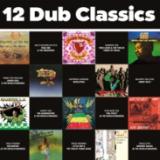
Various - 12 DUB Classics LP
  • 1: Jah's Children In Style
  • 2: Harmony Dub
  • 3: Penny For Your Dub
  • 4: Happiness (Version)
  • 5: Majority Rule Dub
  • 6: Garvey Dub
  • 7: Star Wars Dub
  • 8: Disco Fashion
  • 9: Dread Morning
  • 10: Public Eyes
  • 11: Mafia Dub
  • 12: Hunting Man Dub

Featuring legendary artists and studio collectives including The Revolutionaries, The Aggrovators, Niney & The Observers, Twelve Tribes of Israel, Ken Boothe, Gregory Isaacs, Jimmy Riley and Phil Pratt , this release delivers deep basslines, spacious mixes and timeless rhythms.

Released in time for April, the album naturally aligns with long-established countercultural tradition , while remaining a serious, archival document of roots reggae and dub at its most atmospheric and powerful. An essential vinyl dub released on 180-gram incl. sleeve notes for reggae collectors, sound-system enthusiasts and vinyl buyers alike.

pre-order now27.03.2026

expected to be published on 27.03.2026

23,49
NINEY THE OBSERVER - Soul Syndicate Dub Classics LP

Reggae music in many ways reminds us of America’s Motown records. The music comes out of its stable fast and furious we tend to know the songs, the artists, the
studio but who? are the players. The unsung heroes that in many cases, cut most of our favourite tracks One such band this applies to in the Reggae field is the Soul Syndicate Band.

Each Jamaican record producer would have their favourite set of musicians they would use, availability permitting. Although several musicians crossed over into different named bands. For example, a set of players working with Producer Bunny 'Striker' Lee would go under the guise of The Aggrovators. The same group working with Producer Joe Gibbs would work under the name The Professionals. Soul Syndicate were the band of choice for Producer Niney the Observer, who used them for his own recordings and when you put that aside the other artists Niney produced, Dennis Brown, Max Romeo, Michael Rose, I Roy, The Ethiopians, Barry Brown, Gregory Issacs and Freddie McGregor.  To name a few and not necessary all, you begin to see the amount of material this set of musicians played on.

Built around the rhythm section of Calton 'Santa' Davis and George 'Fully' Fullwood, drums and bass respectfully. They were usually accompanied by Earl 'Chinna' Smith, Tony Chin on guitars, Keith Sterling, Gladstone 'Gladdy' Anderstone, Bernard 'Touter' Harvey, organ/keyboards and Noel 'Skully' Simms, percussion. Niney's tracks tended to be rhythm heavy and thus Sound System favourites.But when brass was needed/called for ,this was provided by the likes of Tommy McCook, Bobby Ellis, Felix ' Deadley Headley' Bennett. Niney not having a studio of his own at the time used most of Kingston's studios, again availability and money providing. But most of these cuts
selected for this release were cut at Channel 1 and a few exceptions at Randy's Studio 17 and at Joe Gibbs studio at Burns Avenue.

Niney also worked closely with King Tubby on his dub plates, so tracks after the recording sessions were taken to King Tubbys for reconstruction and sometimes
re-voicing over an existing rhythm. These were then used as version sides to the vocal cuts, but most importantly used to nice up the dances, being played out on King Tubbys Hometown Hi-Fi Sound System. We have pulled together a selection of such dub plate specials cut by the Soul Syndicate band for this release. Dub sides that emphasise how well the band worked together, and with Niney at the reigns and the added bonus of some Tubby magic sprinkled on top. Please see our Niney the Observer at King Tubbys 1973-1975 (JRO11) for further examples of this work.

We at Jamaican Recordings hope we are not alone in saluting the musicians, that played such a big part in producing many of our favourite Reggae Sounds. Having released titles by The Revolutionaries (JR003), The Aggrovators (JR005), Sly and Robbie (JR006), we are now pleased to release a selection of rare Dub cuts by another one of Jamaica's finest, the Soul Syndicate band to our catalogue...

Respect Jah Floyd.

out of Stock

Order now and we will order the item for you at our supplier.

13,40

Last In: 84 days ago
Lloydie Slim - The Lion Dub Wise LP
  • A1: Silver Rock
  • A2: Satta Satta
  • A3: Big M Jamming
  • A4: Wipe Your Tears
  • A5: Unity Rock
  • A6: Johnny Clarke - I'll Never Fall In Love
  • B1: Baldhead Ransom
  • B2: Virgo Special
  • B3: Walking Stick
  • B4: Down False Leader
  • B5: Head Of A Devil
  • B6: The Best Version

Another excellent find here, an unreleased dub/instrumental album compiled by Lloydie Slim at the end of the 70s, featuring exclusive dubwise & instrumental cuts to many of his rhythms from earlier in the decade. As a bonus we've added 2 more tracks to the original 10 track album tape - the vocal & dub cuts to Johnny Clarke's "I'll Never Fall in Love Again", one of Slim's personal favorites of his productions. This single was originally released in 1975 in JA on his Don One label, and again in New York a few years later on his namesake Ivanhoe the Conqueror label. This album is a great listen which reminds us of the classic Channel 1 Revolutionaries instrumentals of the mid/late 70s.

pre-order now26.01.2026

expected to be published on 26.01.2026

22,27
Various - Reggae Dub – Classics from the Reggae Dub Generation
  • A1: King Tubby - Country Gal Dub
  • A2: The Wailers - Soul Rebel Dub
  • A3: Wayne Smith - Under Mi Sleng Ten
  • A4: The Upsetters - Curly Dub
  • A5: Augustus Pablo - Cassava Piece
  • A6: Horace Andy, Sly & Robbie - Skylarking Dub
  • A7: The Abyssinians - Satta Amassa Gana Dub
  • B1: Augustus Pablo - King Tubby Meets Rockers Uptown
  • B2: Lee Perry & The Upsetters - Bird In Hand
  • B3: Eek-A-Mouse - Wa-Do-Dem
  • B4: U-Roy, The Mighty Diamonds, Sly & Robbie, The Revolutionaries - Crashie Sweep
  • B5: Wailing Souls - Firehouse Rock
  • B6: Jacob Miller - Baby I Love You So
  • B7: Linval Thompson - Starlight
out of Stock

Order now and we will order the item for you at our supplier.

15,34

Last In: 5 years ago
Roots Radics Meet Mighty Revolutionaries - Outernational Riddim LP
  • A1: Jah Golden Throne Dub (3:13)
  • A2: Strictly Rodigan Style (2:51)
  • A3: Straight To Black Echoes Head (3:07)
  • A4: Tribute To Moa Ambassa (2:53)
  • A5: Danny Allen Style (3:22)
  • B1: Tribute To Penny Reel (4:08)
  • B2: Sir Covin Meets Sir Ansil (3:56)
  • B3: Straight To Thatchers Head (2:53)
  • B4: Raasclaat Dub (3:32)
  • B5: Tribute To King Shaka (3:44)

Two titanic forces in reggae history — Roots Radics and The Mighty Revolutionaires — unite for a powerful dubwise journey on Outernational Riddim. This long-anticipated collaboration blends heavyweight rhythms, militant drum patterns, and deep, atmospheric dubs that channel the essence of Jamaican roots music with a forward-thinking production style.
The Roots Radics, known for backing icons like Gregory Isaacs, Barrington Levy, and Israel Vibration, bring their unmistakable heavyweight style to this session. Meanwhile, The Revolutionaires, studio legends behind countless Channel One classics, lace the tracks with their tight arrangements and classic rockers grooves.
Produced and mixed in true dubwise tradition, Outernational Riddim delivers:
Authentic Studio Vibes – Mixed on analog boards with vintage effects and tape echo for that raw, immersive sound.

pre-order now31.10.2025

expected to be published on 31.10.2025

25,84
Items per Page:
N/ABPM
Vinyl