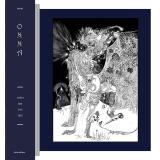
The Citadel Speaks marks the first recorded statement of ElektrAV as a curatorial imprint.
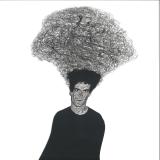
Rooted in Pamplona’s Citadel —and more specifically within the Arms Hall— this release brings together Alberta Balsam, Boris Divider, Bendiak, Komatssu and µ-Ziq, artists whose practices have resonated within the festival’s ecosystem through a shared sensitivity to space, experimentation and sound as cultural expression. Their contributions are not conceived as documentation of an event, but as part of an ongoing cultural dialogue.
The Citadel is not presented here as a venue, but as an active entity: a space that absorbs, transforms and emits sound. Each contribution responds to that condition, forming a collective statement shaped by place, time and intention.
This first volume initiates a living archive.
What follows is not a catalogue of releases, but a body of work.
Поиск:artis boris
Все
A song about Colostomy - from the opening bars you might think so. but it gets worse. 'X rated' stuff.
the label say 'Djoko is no stranger to Voyage Direct. Having first appeared on the label way back in 2012, he's returned numerous times since, becoming an integral member of the imprint's growing family of artists. Elsewhere, he's delivered material on Tuskegee, Mobilee and Leftroom, amongst others, developing an approach that takes inspiration from numerous styles of house and techno. However, little he's previously released can match the raw, eyebrow-raising lust and sexually charged funk of Dirty Talk'.
Driven forward by Djoko's sleazy, whispered spoken word vocal, the original version combines the rubbery, bass-heavy rhythms of classic, Dance Mania-style ghetto house, the delay-laden guitar flashes of vintage NYC proto-house, and the kind of darting, funk-fuelled keys - provided by fellow Dutch producer Kid Sublime - that recall the glory days of '80s electrofunk. Djoko provides an alternate version in the shape of the thrusting, stripped-back Club Dub', with his breathy Accapella' rounding off the A-side.
On the flip, two Voyage Direct stalwarts take it in turns to rework the track. First up is label boss Tom Trago, who builds on Djoko's elastic percussion with some dense new drum hits of his own. These are combined with spacey synths and sharp string stabs, giving Dirty Talk' a more classic techno/house fusion flavour. In contrast, Werner uses the opportunity to turn in a triple-X-rated interpretation full of bounding, Chicago-influenced beats, intergalactic pads, sleazy acid lines, and sweaty, surging drum fills. It's a fittingly breathless remix.'
The Wire: his most satisfying collection to date Resident Advisor: return to minimalist roots on a noise rock-influenced new live record Support from: Barnt, Ben UFO, Vladimir Ivkovic, Boris, OPTIMO 180 gr. colored vinyl pressing incl. art poster and sleeve - limited edition of 50 copies available via distribution Philipp Gorbachev is back at it with a new conceptual album. KGC Radio is all about returning to music-making roots - choices are raw, minimalist and different from the sonic industry environment. The flow is kept simple but deadly, using only the bare essentials to blow up the rave and festival scenes: analog synths, drum machines, a mic, and some sick percussion. The whole album was recorded in one take, like some kinda secret radio wave you stumble on in the middle of the night. Catch it, and you're diving headfirst into a maze of vibes and meanings you ain't seen coming. On the visual side, KGC Radio is a collab with Zhanna Maliti, this dope Moscow-based artist and photographer. Her one-of-a-kind style and imagery are a perfect match for the music, bringing the whole vibe to life. Sounds Like: Underground Resistance, Daniel Maloso, NIN, Broken English Club Mastering by: Beau Thomas
One of the most prolific electro artists of his generation, Boris Bunnik aka Versalife, returns to TRUST with an exceptional soundtrack for the algorithmic hellscape we live in. As neofeudalist power structures solidify around us, Versalife's tracks remain in constant flux. Subtle tonal shifts and undulating synth currents create tension and beauty while crisp machine beats provide the clockwork rhythm for humanity's march into the singularity.
Freude am Tanzen is back for a very special occasion. In 2022, three Various Artists EPs will bereleased, celebrating the 24th anniversary of the label from Thuringia. Whilst occasions like this would normally be celebrated on the quarter century, this release makes sense not only on the mathematical level. 3 compilations with 4 tracks provide the half of 24.
The release however also makes sense in terms of history. Freude am Tanzen is showcasing a broad range of electronic music, never neglecting their history but also looking into the future.
Chapter 001, as the first of three, comes with four deep house tracks.
The A-Side comes with a focus on broken beats and versatile arrangements. Module One delivers a dreamy ride containing a stunning vocal sample. Rising Sun has provided a superb collection of samples that have emerged into a track, that’ll light up moods everywhere its played.
On the flip side in contrast, Chuck Boris has contributed the catchy house roller „Put A Mask On Your Face“. Soela rounds of the first edition off with a very emotional yet forward thinking production, making it a gem your record bag should not miss.
This is the 3rd release on Zimp Recordings, an independent techno label based in Scotland.
Edinburgh based DJ and producer Filthy Rich, label boss at Zimp Recordings, is a deliciously slippery artist with an engorged techno sack who’s always at the ready to spurt his computer generated juicy tit bits all over your proverbial techno flaps.
There’s five techno bangers on this EP that definitely do not disappoint. Kraken, a sullen and atmospheric deep underwater masterpiece, Stinky Funk, does exactly what it says on the tin, a wonky banger. Next up, an oven ready techno commentary on Brexshite from Boris himself with Wiff Waff. 2 tonne bass on the flip side pierces your brain with electro noise which Randolph Glahs remixes with his signature industrial hammer to break your mind open on the final track! It’s no coincidence this titan of techno has landed just in time for the clubs reopening!
Onna Last Live 1983 includes the final performance by the original line-up of Onna, the psych-rock project of revered Japanese manga artist, Keizo Miyanishi. Onna’s legend has largely rested, until now, on one self-released and self-titled seven-inch from 1983. Reissued by Holy Mountain in 2009, its rediscovery, along with several archival live and studio sets that leaked out across the 2000s, signalled to a wider audience the power of Miyanishi’s strikingly hypnotic songwriting. With Onna Last Live 1983, though, we hear the group’s perfect line-up performing at its peak.
While Miyanishi was the core member and conceptualist of Onna, the other members of the group would also go on to make significant contributions to the Japanese underground. Guitarist Michio Kurihara would eventually be known for his membership of YBO2, Ghost and White Heaven, and collaborations with the likes of Boris and Damon & Naomi. Drummer Ken Matsutani formed Marble Sheep & The Run-Down Sun’s Children and The Mickey Guitar Band, while also running the Captain Trip label. Joined by the late bass player Yasui Yutaka, to whom the album is dedicated, this quartet only performed live in 1983; the live set here was recorded at Silver Elephant.
It’s a different line-up to the Onna duo that’s documented on their single. After Miyanishi and fellow manga artist Mafuyu Hiroki recorded that material, Miyanishi decided he wanted to start playing gigs; Hiroki left, and Kurihara, Matsutani and Yutaka joined soon after. This line-up allowed Miyanishi to significantly expand Onna’s powers, leading to a sound that Kurihara once described to Ptolemaic Terrascope magazine as “repetitive and heavy, yet quite orthodox.”
The songs here are simple yet deeply effective in their repetitive power, generally revolving around two or three simply strummed chords for guitar. Bass and drums repeatedly lock into mantra-like grooves as Kurihara’s guitar scales the walls, with Miyanishi’s consumptive moans and sighs sent torquing through FX. The cumulative effect of the seven songs here is very heavy indeed; if the prologue “Always…” drifts beautifully through five minutes of placid, beseeching melancholy, the epilogue, “Never Seen A Light Like This”, spirals out into sixteen minutes of glazed-over psych-rock, completely monomaniacal and thrilling in its slow-motion tumult.
Throughout, you can hear Miyanishi and co. reaching for something ineffable, something beyond and between the notes. It’s a phenomenal performance; it’s also no surprise that the group disintegrated after this show, given its intensity. Matsutani and Yutaka left after the Silver Elephant show, with Miyanishi and Kurihara continuing through the first half of 1984 firstly as a duo, and then a trio with new drummer Yoshiki Ueonyama. Kurihara left soon after. But Onna Last Live 1983 is proof plenty of the powers of the original Onna quartet, sending their Rallizes/Velvets dream-mantras off into darkened, stormy skies.
- A1: Assia (Feat. Pat Kalla)
- A2: Ben Bene La (Feat. Lass)
- A3: Women Can Do (Feat. Ayuune Sule)
- B1: Mbaal Mu Teer (Feat. Lass)
- B2: Water No Get Enemy (Feat. Pat Kalla)
- B3: Tu Mens Devant Moi (Feat. Rama Traore)
- B4: Faut Pas (Dub 2000)
- C1: Fighting Slowly (Feat. Ayuune Sule)
- C2: Faut Pas Dire Des Choses Comme Ça (Feat. Pat Kalla)
- C3: Lymye-A (Feat. David Walters, Pat Kalla & Lass)
- D1: Manu Écoute Ça (Feat. Pat Kalla)
- D2: Ku La Foon (Feat. Lass)
- D3: François Va Te Laver (Feat. Pat Kalla)
- D4: Tenor Jam For Manu (Feat. Boris Pokora)
2026 Repress Favorite Recordings proudly presents Voiciii, the 3rd and new album by Voilaaa, an immersive dip into its Afro-Disco universe spread across 14 tracks. Needless to say you’ll find in this new LP all the ingredients that made him famous: strong dancefloor-friendly festive bangers, irresistible funky arrangements and an undeniable sense of humor and irony.
Bruno “Patchworks” Hovart, behind Voilaaa, is as often surrounded by amazing vocal featurings from previous LP’s regulars (Pat Kalla, Lass) but also new voices you may already have heard on its recent EPs (David Walters, Rama Traore, Ayuune Suule), as well as the saxophonist Boris Pokora. The LP is also an occasion to pay tributes to major artists of the African sound, such as Fela Kuti (on “Water No Get Enemy”), or Manu Dibango (“Manu Écoute Ça” and “Tenor Jam For Manu”).
Since the release of Voilaaa’s previous LP’s Des Promesses and On Te L’Avait Dit and their massive international support, the Voilaaa Soundsystem did travel through the world to deliver its message of infectious joy and groove, from Equator to Thailand, from Kazakhstan to the infamous French “Fête de l’Huma”. Now you know: Voilaaa is everywhere and Voiciii (“here it is”) their new album.
- A1: Les Masques - Il Faut Tenir (1969)
- A2: Isabelle Aubret - Casa Forte (1971)
- A3: Christianne Legrand - Hlm Et Ciné Roman (1972)
- A4: Jean Constantin - Pas Tant D'chichi Ponpon (1972)
- A5: Billy Nencioli & Baden Powell - Si Rien Ne Va (1969)
- B1-: Marpessa Dawn - Le Petit Cuica (1963)
- B2: Jean-Pierre Sabar - Vai Vai (1974)
- B3: Sophia Loren - De Jour En Jour (1963)
- B4: Isabelle - Jusqu’à La Tombée Du Jour (1969)
- B5: Sylvia Fels - Corto Maltesse (1974)
- C1: Frank Gérard - Comme Une Samba (1972)
- C2: Ann Sorel - La Poupée Des Favellas (1971)
- C3: Charles Level - Un Enfant Café Au Lait (1971)
- C4: Andrea Parisy - Les Mains Qui Font Du Bien (1970)
- C5: Audrey Arno - Quand Jean-Paul Rentrera (1969)
- C6: Aldo Frank - T’as Vu Ce Printemps (1970)
- D1: Christianne Legrand - Cent Mille Poissons Dans Ton Filet (1972)
- D2: Clarinha - Lemenja (1970)
- D3: Hit Parade Des Enfants - Aquarela (1976)
- D4: Jean-Pierre Lang - Tendresse (1965)
- D5: Magalie Noël - Une Énorme Samba (1970)
- D6: Françoise Legrand - La Lune
Ever since the late 1950s bossa-nova revolution, Brazil’s influence on French music has been undeniable. Pierre Barouh, Georges Moustaki and a vast array of lesser known artists, all made the Musica Popular Brasileira (MPB) an axis of promotion at the service of a cool and metaphysical, modern and mixed Brazilian lifestyle. Some were seduced by the poetic languors of the bossa, some were looking for fun, and others just loved the American hybridization of jazz-bossa, jazz-samba.
What is bossa nova? One of its creators, Joao Gilberto said: "Its style, cadence, everything is samba. At the very start, we didn't call it bossa nova, we sang a little samba made up of a single note - Samba de uma nota so .... The discussion around the origins of bossa nova is therefore useless”. It is nevertheless useful to remember that these magnificent Brazilian songs, which the guitarist describes as samba, were shifted and balanced around improbable chords. "I like things that lean, the in-betweens that limp with grace," said Pierre Barrouh, quoting Jean Cocteau.
With emotion, arrangements for violin and supple guitar licks, bossa nova rapidly changed. A transformation that can be heard in the Tchic, tchic, French Bossa Nova 1963-1974 compilation, the result of a cultural reappropriation, which traveled through the United States and supplemented itself in France.
A musical revolution that has remained significant, bossa nova was born in Rio. From 1956 to 1961, Brazil lived through its golden years. In five years, the country had invented its modernist style. Elected president in 1956, Juscelino Kubitschek de Oliveira, an elegant man with a broad forehead, brandished a promising slogan: "Fifty years of progress in five years". He quickly got to work. Not worried about increasing debt, he launched the project for a new federal capital, Brasilia, designed by the communist architect Oscar Niemeyer. Volkswagen opened state-of-the-art factories and created the “fusquinha”, the Beetle. In Rio, the Vespa made its first appearance. The Arpoador Surf Club crew run into the “girl” from Ipanema, Helô Pinheiro - the tanned garota ("chick"), between a flower and mermaid, who at 17 walked by the Veloso bar, where the fiery author and composer, Tom Jobim and Vinicius de Moraes, were getting drunk on whiskey. From then on, bossa symbolized cool.
In 1958, Joao Gilberto recorded Chega de Saudade, which the directors of Philips denied, calling it "music for fagots". The marketing director, who believed in it, secretly pressed 3000 78-inch vinyls and distributed them at schools around Rio, creating a tidal wave.
American jazzmen then took over. In particular, trumpeter Dizzy Gillespie and guitarist Charlie Byrd. In November 1962, the Brazilian Ministry of Foreign Affairs funded a "Bossa-Nova" concert at Carnegie Hall in New York, inviting the genre’s pioneers. Unprepared, the show soon turned to disaster. But the troupe was invited to the White House by Jackie Kennedy. The first lady loved "the new beat" and in particular Maria Ninguem, a song by Carlos Lyra, later covered by Brigitte Bardot.
In Brazil, the 1964 military coup quickly ended this euphoria. The destructive atmosphere that ensued pushed many Brazilian musicians to leave, if not to exile. Thus, Tom Jobim, Sergio Mendes and Joao Gilberto arrived to the United States. In New York, Joao Gilberto met saxophonist Stan Getz. At the time, he was married to the Bahianese Astrud Weinert Gilberto, who had a German father. She had never sung before, but she knew how to speak English. Getz therefore asked her to replace her husband on The Girl From Ipanema. The Getz/Gilberto record with Tom Jobim on piano, was released in March 1964. Phil Ramone, the "pope of pop" was in charge of sound.
Bossa nova arrived in Paris through the classic “guitar-voice” channel (Pierre Barouh, Baden Powell, Moustaki…) But France loved jazz and Paris had already welcomed its American contributors. All these good people were to pass through Saint-Germain-des-Prés. The cabaret l'Escale became the Mecca of Latin American sound where one could find Pierre Barrouh and his friends, such as the Camara Trio, samba-jazz aces, whose only record was published by the Saravah label. With a band strangely called Les Masques (a band that included Nicole Croisille and Pierre Vassiliu, among others), the Camara Trio recorded an interesting Brazilian Sound, including the track Il faut tenir which is present on this tasty compilation of rarities.
Other enlightened musicians can also be found on the compilation, such as Jean-Pierre Sabar (songwriter for Hardy, Auffray, Leforestier ...) and the French pop rock organist Balthazar. In 1975, Sabar recorded Aurinkoinen Musiikkimatka on a Finnish label, which featured the crazy Vai, Vai, included on this record. We are now following the footsteps of Brazilian electronic musicians such as Sergio Mendes, Eumir Deodato or Marcos Valle who created funk and disco sounds on their keyboards and synthesizers. A style that influenced Véronique Sanson when she wrote Jusqu’à la Tombée de la nuit in 1969 for Isabelle de Funès, the niece of Louis and a great friend of Michel Berger - Sanson did end up singing this track on her 1992 Sans Regret record.
The pinnacle of exoticism and travel, Sylvia Fels’ Corto Maltese includes bongos, sea mist and ocean sounds. The title was taken from Jacky Chalard’s concept album written in 1974, Je suis vivant, mais j’ai peur (I am alive, but I am scared), based on Gilbert Deflez’s science fiction novel.
However, bossa nova extended the scope of popularity. "In the 1970s, I was a fan of Sergio Mendes, Getz / Gilberto. I fell in love with this music that I knew because I had been an orchestral singer, " explained Isabelle Aubret, who in 1971 delivered a composite record of covers by the very funky Jorge Ben, Orfeu Negro, Tom Jobim, Vinicius de Morais and Jean Ferrat. "I recorded this album for Meys Records in Paris, far from Brazil, with wonderful musicians, François Raubert, Roland Vincent, Alain Goraguer...". The latter wrote the arrangements for Casa Forte, a very percussive title borrowed from Edu Lobo, one of the initiators of the bossa who spent time in California. "Jazz and bossa came together and produced very rhythmic music. I love singing, it allows me to dream, to have fun, to feel a high on stage, and these songs brought me joy, made me swing, my singing felt like a dance.”
The world tours of French singers and their desire for the tropics, often brought them to Rio with its hills, forests, caipirinhas and tanned bodies. There are surprises though, like this Iemenja (Iemenja is the goddess of the sea in the Afro-Brazilian candomblé religion). Not unlike the composer and musician Jean-Pierre Lang, based in Sao Paulo, Claire Chevalier taught Brazil to Brazil. In 1970, the singer and painter published a 45-inch vinyl, Mon mari et mes amants (My husband and my lovers), under the improbable pseudonym of Clarinha (little Claire). She was then living in Rio, with her husband, Joël Leibovitz, who founded a band called Azimuth, and who owned a record label specialized in "sambas enredos" songs for samba school parades.
For its B side, she asked Pierre Perret to come up with lyrics for a song composed by Carlos Imperial: "Oh goddess of the sea, o goddess Iemenja, I bring a white rose to adorn your long hair ..." . "Perret came to see us, and we had fun, remembers Joël Leibovitz. We wrote Lemenja for fun, we recorded it at the Havaí studio, behind the Central do Brasil the central station. Erlon Chaves, the arranger who worked with Elis Regina, joined us" adding his share of Afro-Brazilian percussions and funky brass to the mix.
There is a common misunderstanding in Franco-Brazilian history: that bossa, admittedly hedonistic, is perceived as funny, even though the poets who wrote the texts are often philosophizing on the human condition. Its French interpreters pull it towards a carnival inspired universe, far removed from its fundamental essence. Thus, Jean Constantin covered the famous Samba da minha terra, an ode to the art of samba written by the classic Bahian composer Dorival Caymmi, renaming it with the enticing title of Pas tant de tchi tchi pompon: "On your pier there is no tchi tchi / when you arch your back, you know everything is alright ”(lyrics by Gérard Calvi). This expedited bossa aims for the absurd, but retains a certain elegance.
Indeed, Jean Constantin was not an idiot, the rather large man had a huge mustache and liked fantasy, (Les pantoufles à papa, Le pacha, inspired by cha-cha-cha-cha, salsa and jazz) but he was also the lyricist of Mon manège à moi interpreted by Edith Piaf, the composer of Mon Truc en plume by Zizi Jeanmaire and the soundtrack of François Truffaut’s 400 Blows. Le Poulpe, published in 1970, from which this bossa is extract, was arranged by Jean-Claude Vannier, an accomplice of Serge Gainsbourg’s Melody Nelson. In short: "There is enough of samba / By looking at the parasol / Because my poor cabeza / Is going to die in the sun".
Even the American actress Marpessa Down, who was at the heart of the bossa nova revolution with her role as Euridyce in Marcel Camus’ film Orfeu Negro, winner of the 1959 Cannes Palme d'or, fed the clichée with Je voudrais parler au petit cuica - "Tell me how you manage to always make people want to dance / It's true, I must admit that I cannot resist your magic" - in consequence, once can hear the cuica, a little drum inherited from the Bantu.
But bossa nova had many angles. Societal, of course, pushing actresses who were symbols of women's liberation like Brigitte Bardot, Jeanne Moreau, or Sophia Loren to engage in the exercise of accelerated bossa. In February of 1963, Sophia Loren made a record in French in Rome, Je ne t'aime plus, featuring the song De jour en jour, a bossa written by two Italians, Armando Trovajoli and Tino Fornai, which was released a little later by Barclay. Bossa accompanied the 1960s, a decade of moral liberation. Ann Sorel, who interpreted La Poupée des favellas, caused a sensation with L’amour à plusieurs, a provocative song written by Frédéric Bottom and Jean-Claude Vannier. As for the actress Andrea Parisy, she displayed her bourgeois cheekiness in Marcel Carné's Les Tricheurs before interpreting Les mains qui font du bien. And Magalie Noël, the friend of Boris Vian, who sung Johnny fais-moi mal, was hired to sing Une énorme Samba, composed by Alain Goraguer (arranger to Gainsbourg, Bobby Lapointe and Jean Ferrat) with lyrics by Frédéric Botton.
But in the end, of what wood is bossa nova made of? The answer is given by Christianne Legrand, daughter of Raymond the conductor, and sister to Michel the composer: "With me, with jà" - jà means "immediately" in Portuguese. In 1972, the singer, an expert in vocal jazz and a member of the Double Six, published Le Brésil de Christianne Legrand. Two songs included on the Tchic Tchic compilation that demonstrate how bossa, jazz, funk, rock, etc. work like a swiss army knife: the music is used to denounce broken systems, or miracles, HLM et ciné roman, Cent mille poissons dans ton filet, two songs from the O Cafona soundtrack, a successful telenovela broadcast, at the time in black and white, on TV Globo. The first was adapted in French by the fighter and friend of the Legrand tribe, Agnès Varda. The second is content with a play on words, jostling them into a summer fun.
Véronique Mortaigne
DJ Support: Nic Fanciulli, Joe T Vannelli, Danny Tenaglia, Richie Hawtin, Nick Curly, Shiba San, Adam Beyer, Marco Bailey, Boris, Jamie Jones, Markus Schulz, Tom Novy, John Digweed, James Zabiela, Tiesto, Claude VonStroke, Roger Sanchez, Blond:ish, Adriatique, Paul van Dyk, Joris Voorn, Deer Jade, Vintage Culture & Paco Osuna
Few labels can claim true legendary status in dance music - where trends fade as quickly as they emerge and icons are made and broken overnight. Yoshitoshi stands as one of those rare exceptions.
The label makes its return with a statement of intent: a definitive new remix package of Alcatraz’s era-defining “Giv Me Luv”, a dancefloor classic that hasn’t seen fresh interpretations in over a decade. While the original has remained a staple for those who know, it’s now primed for a new generation of club enthusiasts.
“Giv Me Luv” represents everything Yoshitoshi has been standing for: raw energy, unforgettable hooks, and that indefinable magic that makes a track timeless. Bringing it back with new remixes after all these years demanded artists who could match its legacy.
Enter Sébastien Léger, the French maestro whose thirty-year journey has seen him perform everywhere from Coachella to the Great Pyramids of Giza. His interpretation delivers the sophisticated, hypnotic drive that has made him one of electronic music’s most respected tastemakers and the founder of the acclaimed Lost Miracle imprint.
Alongside him, progressive titan Jerome Isma-Ae, whose unique fusion of trance, techno and house has dominated Beatport charts and earned him breakthrough recognition from Armin van Buuren, unleashes his signature sharp, breathtaking power on the classic.
The vinyl also includes the original mix on the B-side, completing a package that marks Yoshitoshi’s triumphant return to form.
Tooflie's shadowy crate-diggers return for their sixth expedition, this time unearthingmelodic relics from the sands and stone of the SWANA region. The A-side opens with acharismatic locally-well-known Boris Timur from Azerbaijan, reshaping his half-crimechanson half folk music into a slinky, percussion-driven anthem that sways betweenmysticism and dancefloor intent. A2 dives deeper into the vaults: a cryptic cut built onearly hip-hop and electro intonations, stitched together from dusty Middle Easterngroove samples, looping like a mirage between past and future.
Turn to the B-side and the spotlight falls on a modern folk icon turned global cult heroOmar Souleyman. The first interpretation is a peak-time techno weapon, packed withfrenetic energy and built for ecstatic release. The closing track shifts gears in a slower,contemplative breakbeat journey that delves more deeply into the dabke tradition,stretching its spiraling melodies and communal pulse into a pre-dawn dreamstate.Once again, Tooflie fuses archival echoes and electronic invention into a spellbindingvinyl-only dispatch for dancers and diggers alike.
- A1: Rlgn & Sasha Kustov - Pillars
- A2: Iskrit - Moskva
- A3: Turbosh - French Trax 7000
- A4: Magnum Opus - Li (Prod By Nacaratt)
- B1: Лучший Друг - God Of Sexual Desire
- B2: Dj Yesyes - Run
- B3: Boris Redwall - Project 2000
- C1: Lipelis - Double Mcgem Deluxe
- C2: Maksimovna - Dobryi Trek
- C3: Kito Jempere - Karagod
- D1: Dominique Mara - Pepupape
- D2: Qarti - Pure
- D3: Mo?Se? - Alaska
Part 2[18,95 €]
As a label, we are specialists in musical diversity. With our newest installment of the annual System 108 compilation we present you two parts of hand picked creative output by our friends, residents and dearest guests. Curated by the artist Ira Bespalova, the concept of both parts is simple and deep: the good, the calm, the kind is part 1 and all anti-heroes, filthy electro-armored jams is part 2. All together - another twist of the planet, another beat of our big heart, that became shelter and home home for a whole new tribe. It pumps, it creates, unites and warms up, kicks it real hard, no matter how tough it is. Part 1 is densely populated by our new kids on the block! Isktrit, TURBOSH, BORIS REDWALL, DJ Yesyes, Dominique Mara have been releasing singles, EP's and album during 2023 and became an integral part of the collective. Here you will also find good old friends Maksimovna, Lipelis, Kito Jempere. Very special Siberian inspired trippy workout by RLGN and Sasha Kustov, Luchshiy Drug. And a super special guest appearance starring Magnus Opus and mo?se?. The running order is curated as a narrative, as an album that takes you on a journey. But separately, it all works as singles, DJ tracks and tools. Welcome to Nine Years Of Love!
The thirteenth release on the Gladio Operations label bears the signature of the great Spanish producer Boris Divider. This artist needs no introduction, as he is considered one of the pioneering producers of the electro scene in Spain, and active since the 2000s, releasing mainly on his label Drivecom.
After betting in recent years on more experimental and hypnotic sounds close to IDM, Boris returns to the pulse of the rhythms more rooted to the dancefloor with this EP titled “In Fragments”. Undoubtedly, this work brings us back to the artist’s classic sound, which is reflected in “Content Location”, a track that envelops us with arpeggios and firm and forceful bass lines and well-developed masterful vocoders. The second cut we find is “In Fragments”, track that gives title to the EP and that lowers the pulsations to a softer and more emotional state.
The B-side opens with “Dynamic Algorithm”, where we get back to our dancing posture and enter dark territories, ready to explore a dynamic of sequences brimming with intrigue and suspense. We continue with “Fragmented”, where the Spanish artist delves into a journey of ambient sounds, with certain tensions in some passages. The EP closes with “Memories of Us”, where we discern his classic sound with subtle arpeggios and delicate sequences that flow in harmony with gloomy
- A1: Gala - Freed From Desire
- A2: Ace Of Base - All That She Wants
- A3: Double You - Please Don't Go (Radio Mix)
- A4: Ann Lee - X Times
- A5: Danzel - Pump It Up
- A6: Dr Alban - Sing Hallelujah!
- B1: Cascada - Everytime We Touch (Radio Edit)
- B2: Mad'house - Like A Prayer (Main Mix)
- B3: Whigfield - Saturday Night
- B4: Db Boulevard - Point Of View (Radio Edit)
- B5: Edward Maya & Vika Jigulina - Stereo Love (Radio Mix)
- B6: O-Zone - Dragostea Din Tei
- C1: Haddaway - What Is Love (X'' Mix)
- C2: Snap! - Rhythm Is A Dancer (X'' Edit)
- C3: Robin S - Show Me Love
- C4: Ice Mc - Think About The Way
- C5: Daddy Dj - Daddy Dj (Chico & Tonio Radio Edit)
- D1: Corona - The Rhythm Of The Night
- D2: N-Trance - Set You Free (Pop Mix)
- D3: Cappella - U Got X Let The Music (Radio Version)
- D4: Paradisio - Bailando (Radio Version)
- D5: Robert Miles - Children
EURODANCE IS BACK! From clubs to radio stations, the Eurodance sound is everywhere, driven by artists like David Guetta, Upsilone, Gabry Ponte, Boris Way, and Ofenbach. TO MARK THE OCCASION, REDISCOVER THE GREATEST EURODANCE HITS OF THE 90S AND 2000S ON DOUBLE VINYL AND DOUBLE CD!
Introducing Gabriel Seher and Boris Kraft aka Draaht on Logistic records. In the dynamicrealm of live electronic improvisation, Draaht emerges as a captivating duo, seamlesslyblending sonic landscapes that fuse instant composition with the pulsating beats of Techno.Logistic gets back to his Techno roots with 2303 from Draaht, Techno music all the way inthe line of artists the label has worked with such as Robert Hood or Tobias. This 3 track EPTechno has a strong and powerful analog sound production. A killer vibe for the dance floor.
Recently appearing alongside Ibrahim Maalouf on the show “Improbox” (TSF Jazz), or as the opening act for Vulfpeck at Jazz à Vienne 2024, Sampling is Beautiful Trio is made up of: Zajazza on turntables and samplers (produced for Gaël Faye, HomeboySandman...), Yacha Berdah on trumpet and bass (Grand Corps Malade, Ibrahim Maalouf...), Japhet Boristhène on drums (Saïan Supa Crew, Chassol, Shibuuya).
Sampling Is Beautiful is: “A trio, a collective, a vibe, a freedom, ...”
These are the words of the artist Kaynixe in the introduction to this record.
Each “captured” sample is highlighted, cherished, reversed, modified… and finally used as a melodic or rhythmic basis to construct a new piece. With a certain black magic or piracy, this first album is a photograph of the Trio's musical moment, filled with homages to sampled composers, nods to Jazz and film music.
Yacha, Japhet and Zajazza, surrounded by many talented artists, share here this colorful musical picture of samples and each person's journey.
- A1: Pride
- A2: Bloom
- A3: My Love
- A4: Nearness Of You
- A5: Upstate
- B1: Wither
- B2: Passerby
- B3: Exit Wounds
- B4: It Could Be Simple
Rising indie soul artist Sevens announces the release of his highly anticipated debut album, Sincerely, Sevens, on February 21, 2025. At just 24 years old, Sevens emerges as a compelling voice in the contemporary soul scene, blending indie soul, neo-soul, and jazz into a collection of sincere, heartfelt songs.
With a distinct baritone voice and a gift for storytelling, Sevens explores themes of love, growth, and introspection throughout the 9-track record. His philosophy is simple: less is more. Crafted over a span of three years, much of the album was created in Sevens' bedroom, showcasing his skills not only as a songwriter and vocalist but also as a multi-instrumentalist and producer.
Sincerely, Sevens captures the artist in his purest form—a deeply personal work that touches the soul. From sparse, intimate arrangements to warm, groove-infused instrumentation, the record embraces vulnerability while exuding timeless charm.
The album features contributions from trusted collaborators: Boris Van Overschee (co-producer / Delv!s, Portland) Willem Ardui (additional production / Blackwave.) and David Poltrock (additional keys)
Tobie Speleman expertly handled the final mix, ensuring every note resonated with clarity and purpose.
Reflecting on the album, Sevens shares: “I wanted to feel more with less. I wanted to evoke, I wanted to touch. Parts of me I’ve never gone. It is honest, it is true. It is me.”
With Sincerely, Sevens, the young artist solidifies his position as one to watch—an emerging voice with both depth and authenticity.
FERMA third vinyl release lands just before the close of the year and it is a special one. Petros Spatharos leads with a set of bangers distilling perfectly the sound of the label. Athens-based artist is widely known for his dark, immersive industrial sound, so yeah expect nothing less.
Side A starts with ”Datura”, layering heavy drums with dark reeses and syncopations – solid stuff. ”Xorkia” is an eyes-down track which will keep you in the zone with stellar percussion and atmosphere. ”Vultures” closes the first side with higher energy levels and more distinct breakbeat elements.
On Side B, Randstad remixes ”Datura” and pumps up the tempo to create a mind-bending industrial electro track with aggressive synths. Boris Barksdale wrap-ups the physical release by remixing ”Xorkia” and changing the core to techno and reworking percussion to create an industrial heavy-hitter track.
On their third full-length album, 'The Signal', the Compact Disk Dummies keep a few interesting balls in the air. They play with the opinions and expectations of the outside world, while also confronting their own desires and doubts. This is aptly depicted on the cover with a table, a bell, two brothers and an impatient crowd: who is waiting for whom? The album is as diverse as its cover is surprising. In a mix of styles and influences ranging from retro house to funk, Lennert and Janus Coorevits demonstrate their versatility. Following their scintillating performances at Rock Werchter and Pukkelpop, and the success of the radio hits 'There's No Sex Without You' and 'fomo', 'The Signal' marks the start of a new era for the Dummies.
Lennert notes, "Pfff, I would think about everything indefinitely. And I'm not the only one, I notice. Stuck in a kind of limbo, a state of uncertainty, surrounded by signals, but still feeling a certain fear of following the signal."
On 'The Signal', 'fomo' dissects human desire, reaching for the unattainable. 'Where We Go (Calypso)' is like the shipwreck no one wants. And in the title track, the female lead character finds herself in a toxic relationship, the signs of which are obvious, at least to the outside world. While the content of 'The Signal' revolves around doubt, contemplation and acting or not acting, the musical interpretation is in direct opposition to that. The Compact Disk Dummies do not doubt; they hold their heads up and their chests out. With certainty, they mix everything that excites them musically into the blender, without grinding the identity of the Dummies themselves; actually enriching it instead. The retro house of 'Solàr' (a song about Louis the Fourteenth? Why not) flows into the rampant funk of 'Ballet Dancer' before expanding into 'Underwater'. In every track, you sense the long road the Coorevits brothers have travelled since their breakthrough - and their then angular electro-punk. This third album is Lennert and Janus' most sophisticated work in the expanding universe of the Compact Disk Dummies.
In addition to being a mix of styles, 'The Signal' is also a mix of collaborations. There is the French touch of mixer Michael Declerck and mastering engineer Alex Gopher. There is the Dutch input of Wieger Hoogendorp (Goldband) and Jens Van Der Meij (Froukje). Beautiful string sections are provided by Wietse Meys and Reinhard Vanbergen, bass licks by Boris Van Overschee and backing vocals by Isolde Lasoen and Judith Okon, among others. Producer Jasper Maekelberg always kept an eye on things. And again, for the third album in a row, after 'Mess With Us' (2013) and 'Neon Fever Dream' (2020), artist Athos Burez also provided the artwork for 'The Signal'.
But however international the music sounds, however great the contributions from other top artists, 'The Signal' remains largely the work of the Dummies, with Lennert as vocalist, lyricist and multi-instrumentalist, and Janus as engineer, producer and all-around tech wizard. The album was not made in New York, Tokyo or Berlin, but in Desselgem. Studio 87, the Coorevits family's garage converted into a studio, remains Ali Baba's cave for the Compact Disk Dummies. In their studio crammed with synths, percussion and guitars, Lennert and Janus could not ignore the signal: time to smash it!