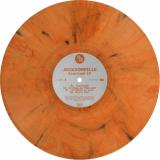
180g Heavy double vinyl LP with liner notes by Tyran Grillo. Limited Japanese Obi for the first pressing. Original artwork by Russell Mills and photography by Jean-Baptiste Mondino.
The third Time Capsule is a body of dub reinterpretations by celebrated producer Bill Laswell of Ethiopian singer Gigi. Curated by Tokyo record collector, music researcher and seasoned reissue supervisor Ken Hidaka, it is the first time Illuminated Audio is pressed to vinyl after its CD release in 2003.
Ejigayehu Shibabaw was born in 1974 in Chagni, northwestern Ethiopia and by pursuing a career as a singer, went against her father’s strict, traditional gender roles. As Gigi, she embraced the same musical freedom she had strived for in her personal life, incorporating the Ethiopian church, funk, hip-hop, West and South African music into her work. She first settled in Nairobi, then Addis Ababa, where she quickly established herself as one of the city’s leading singers. A move to San Francisco in 1998 led to a long and fruitful creative partnership with bassist and producer Bill Laswell.
Around the same time, Chris Blackwell had stepped away from Island Records to start the art house film company and label Palm Pictures. He took an interest in Gigi and together with Laswell, pulled together an all-star cast of musicians for her self-titled US debut album, including Herbie Hancock, Pharoah Sanders and Wayne Shorter. It won international critical acclaim, not just for its musicianship but for making Gigi a “defining voice for the Ethiopian expatriate community”, as journalist Tyran Grillo praises in his Time Capsule liner notes. From the nation-defining 1896 victory over Italian invaders to the quiet revolutionaries who wear simple shemma garments, Grillo believes the themes in Gigi make it “a shower of sunlight on her homeland for those ignorant of its struggles.”
After its success, Blackwell encouraged them to go back into the studio to rethink the album and Illuminated Audio was born. “Anyone can make a voice sound worldly”, Grillo remarks, “but rare are those who can make one sound inner-worldly.” Gigi was clear with Laswell to give her vocals a minor role “because it’s already been done.” Instead her Amharic verse is fleeting, exhaling through the textures like ghostly fragments; soaring yet muted. Yet the album is still titled under her name, an assertion by Laswell of her central role in the album’s creation. Not only was it a fully endorsed project by Gigi, but she would be present throughout its development, giving feedback on half-finished ideas as Laswell played them back in the studio. “It works perfectly”, she reflected after the album’s release. “We wanted to capture the whole spirit of each track, and Bill’s remixes create a different music language that really puts you in a pleasant place”.
This new vocabulary takes its lead from a technical approach that Laswell had been perfecting during a furtive creative period at the turn of the millennium. Much like his ambient interpretations of Miles Davis (Panthalassa, 1998), Bob Marley (Dreams of Freedom, 1997), and Carlos Santana (Divine Light, 2001), Laswell approached Illuminated Audio by returning to the original multitrack masters. Gigi wasn’t just reworked, but recomposed into an expansive lattice of instruments, submerged in a watery ambience of dub and trance undercurrents.
Sonically, this new language that Gigi refers to, is manifested by the original album’s more understated parts being pushed to the fore. Explaining his contrasting methods, Laswell saw Gigi as being “put together in a way that fits”. Contrastingly, in Illuminated Audio, “a lot of things that I featured in the remix weren’t as audible in the original.” Instrumentation laying near-dormant, deep in the mix, are brought to the fore: the acid rock guitar and Wayne Shorter’s saxophone on ‘Tew Ante Sew’, Graham Haynes’ flugelhorn on ‘Nafekeñ’, Laswell’s bass on ‘Kahn’, the melodica in Mengedegna or the floating synths and talking drums in ‘Gud Fella’.
Brought to his attention by mentor DJ Nori, Hidaka describes Illuminated Audio as a “masterful sonic exploration into ethereal ambience and dub” and made sure this reissue also contained a full remaster to give its “deep musicality” much better dynamics and density in the overall sound. Hidaka admits that Laswell's music “is sometimes so out-there, it is often misunderstood” and, indeed, to dub album non-believers this might seem like a prolific producer imposing himself on another artist’s work; eternally developing rearrangements that never quite get to its destination. But that’s missing its true power and triumph. This is more than the reissue of a remix, but “a wholly unique musical entity”, as Hidaka describes. Illuminated Audio refers to the illuminated manuscripts that comprise the major part of Ethiopian art and its new compositions stand in proud solitude as a rare body of reworks that both informs and enhances their originals.
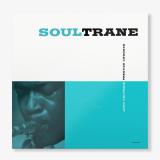
Original Jazz Classics celebrates John Coltrane’s centennial with this release of his 1958 album Soultrane. Recorded at Van Gelder Studios in New Jersey, the album contains 5 cuts from the quartet featuring Coltrane alongside Red Garland (piano), Paul Chambers (bass) and Art Taylor (drums). This new edition of the album is released on 180-gram vinyl pressed at RTI with all-analog mastering from the original tapes at Cohearent Audio and a Stoughton Tip-On Jacket.
Looking back on her career in the early 90s, Stevie Nicks described the first track of Rock a Little as “the most exciting song that I had ever heard.” This coming from a superstar who was already closely affiliated with several bajillion-selling Fleetwood Mac albums — to say nothing of her own benchmark solo debut. Her remarks attest to the enthusiasm and effort she invested in her third record, a 1985 work that quickly furthered Nicks’ profile and cemented itself as a piece of 80s pop lore.
Mastered at MoFi’s California studio, pressed at Fidelity Record Pressing in California, strictly limited to 4,000 numbered copies, and housed in a Stoughton gatefold jacket, Mobile Fidelity’s 180g 45RPM 2LP set presents Rock a Little in audiophile sound for its 40th anniversary. Helmed by a cadre of producers and engineers, and recorded for a reported one million dollars, the platinum-certified album teems with a head-spinning array of colors, tones, dreamscapes, and accents. This reference-grade reissue marks the first time they are all brought to light and conveyed with proper balance, dimensionality, and positioning.
Though Rock a Little doubtlessly has period characteristics of a mid-80s LP, Nicks and company spare no expense when it comes to distinguishing the music with expansive sonics distinguished with lush melodies, high-tech percussion, echoing vocals, sampled keyboards, and layers of sophisticated accents. The degrees of spaciousness, headroom, and dynamics are nothing less than inspiring, while the newly enhanced detail, texture, and clarity make the songs sing like never before. As for Nicks’ voice? Wait ’til you experience the transparency and depth.
Those advantages extend, of course, to the aforementioned “I Can’t Wait,” a statement-making opener shot through with modulating synthesizers, splashy drums, metallic guitars, and serious drama. Holed up in a massive studio, Nicks required just one take to nail her part, which she called “magic and simply not able to beat.” The singer-songwriter also distilled the reverberating emotional essence of the Top 20 tune, stating “when I hear it on the radio, this incredible feeling comes over me, like something really incredible is about to happen.”
The same can be said for nearly all of Rock a Little. Crafted by the likes of Songwriters Hall of Fame multi-instrumentalist/producer Rick Nowels, Heartbreakers organist Benmont Tench, bassist Bob Glaub, jack-of-all-trades Greg Phillinganes, and session-pro guitarists Waddy Watchel, Les Dudek, and Danny Kortchmar — along with another two dozen or so participants — the record spills with diverse ideas, shapes, and moods. Everything is in the right place, as evidenced by the swirling glide and sensual undertow of the slightly funky title track to the snapping rhythmic pace and big hooks of “Imperial Hotel,” one of Nicks’ standout moments.
“What was it she wanted?” Nicks queries on “No Spoken Word,” continuing a theme of contemplation that runs through the narratives. Nicks never lands on a definite answer, but hearing her explore loneliness, love, and the secrets we keep to ourselves proves continuously rewarding. Take her passionate performance on a cover of Chas Sanford’s “Talk to Me,” a Top 5 smash furthered by tasteful saxophone lines and understated folk elements. Immersive yourself in the grand sonic corridors of “If I Were You,” laden with Nicks’ signature mysticism.
Moreover, surrender to the gravitas of the closing “Has Anyone Ever Written Anything for You,” a piano ballad composed about the death of Joe Walsh’s three-year-old daughter. As Nicks asserts earlier on the album, she sings for things money can’t buy.
So, rock a little, yes, but dare to feel even more.
Gap Mangione's monumentally influential Diana In The Autumn Wind. AKA BEWITH200LP. And, without question, Be With's White Whale.
They said it could never be done. And with good reason.
We've spent the past 12 years trying to license this legendary 1968 recording from Gap and, after much work, it's finally here. Remarkably, this is the first ever vinyl reissue of Gap Mangione's Diana In The Autumn Wind, produced with the full and extensive participation of Gap. An exceedingly rare album, it's been coveted by funk, soul, jazz and hip-hop sample fiends for decades.
It's unarguably *the* most sought after album for J Dilla / Madlib sample collectors. It has also been brilliantly sampled by A Tribe Called Quest, Large Professor, Ghostface Killah, Kendrick Lamar and Talib Kweli.
But this record is so much more than a sample-spotters curio. It's solid gold throughout. Bursting with killer funky-jazz grooves and tracks adorned with warm electric piano, the release is notable for featuring some extremely significant players at the very outset of their careers; Tony Levin, at 21, whose superb playing on both acoustic and electric bass was the harmonic mainstay of the trio and Steve Gadd, at 23, one of the greatest drummers of his generation.
With acceptable copies of this holy grail changing hands for $400, to call this reissue "much-needed" underplays just how vital it is. Gap's story is told in his words alongside rare photos across a sumptuously designed 2-page insert and, to augment this deluxe edition further, its all wrapped up in a beautiful, no-expense-spared luxury tip-on sleeve, as per the original hens-teeth release. And, while we're talking packaging, just take a look at that cover - a work of art in and of itself.
The tracks are short but complex, with that extraordinary rhythm section backing the beautiful piano, organ and electric piano work of Gap. It's like the best ever library funk breaks record you never heard - but all your favourite golden age rap producers were all over it, long ago. It's a stunning blend of the vibrant, driving music of the Gap Mangione Trio coupled with the sensitive composition and superb orchestration of Gap's legendary brother, Chuck Mangione, who helmed an amalgam of seemingly disparate elements – rock, big band jazz, solo improvisation and "classical" music - into a spectacularly cohesive whole that has aged wonderfully well. As Gap himself notes in the liners, "with this group I was able to explore and add new and exciting elements from rock, Brazilian and then-current pop music."
Opener "Boy With Toys" triumphantly swaggers out the gate, all big band horns, flutes and dextrous organ work. The synthesis of everything going on is nothing short of stunning. When one wise YouTube commentator called this tune "old school superhero music", Gap agreed. Rap luminaries did, too, amongst them Talib Kweli, who rapped over DJ Scratch's chopped up intro for "Shock Body" on his Quality album back in 2002.
You've barely recovered from that incredibly affecting opener when you get hit over the head with the exquisite title-track. And now you see how two of the greatest beats of all time emerged from one single track produced nearly 50 years earlier. Unforgettably utilised by Dilla for Slum Village's heartbreakingly good "Fall In Love" and then Madlib for his "Official" beat for Dilla to rap over, on the Jaylib record. Regardless of the records it went on to spawn, this is just a staggering tune in its own right. Be beguiled by the flutes and the flutter tonguing, the counter-melody from the trombones, the soprano sax solo. All of it. Simply beautiful.
The questing organ and horn workout "Long Hair Soulful" deserves a lot more attention, overshadowed somewhat by the opening two monsters but no less fantastic. It swings, it grooves and Gadd and Levin truly cook. Up next, Gap's wonderfully percussive, mellifluously piano-heavy cover of "Yesterday" by some fellas called The Beatles. It's a subtly arresting gem. "The XIth Commandment" is damn fine, with thick, gorgeous electric piano and snappy drum work underpinning chaotic soundtracky horns. To close out the side, "St. Thomas" showcases the "fourth" member of the Gap Mangione Trio, conga drummer Dhui Mandingo. Having performed with the Trio since 1965, Dhui‘s African-based and jazz-latin-influenced style amazed listeners and its way to hear why.
Opening the B-Side, standard "You're Nobody Till Somebody Loves You" breezes along in the late-night jazz club fashion before things get super deep with the outstanding and - up to now - un-sampled "Pond With Swans". It's simply heavenly, and how its moody, melancholic intro has yet to be pilfered is anybody's guess. It oscillates between gentle, sombre movements and bombastic grooves, equally hypnotic and joyous. The rendition of "You Are My Sunshine" is yet another showcase for Gap's virtuoso playing and Gadd's mastery of the pocket. Indeed Gadd's drumming on "Free Again" is nothing short of neck-SNAPPING! Ghostface took it for not one but two "Iron's Theme" tracks across his seminal Supreme Clientele. It's got that Galt MacDermot "Coffee Cold" feel. Suuuuuper cool. The frantic "Dream On Little Dreamer" hurtles along and must've surely had the whole room absolutely swinging from the chandeliers back in Rochester in the late 60s. The album closes with the magnificent Graduate Medley, featuring memorable renditions of "Scarborough Fair", "The Sounds of Silence" and "Mrs. Robinson". The warm electric piano lines of the former were sampled by The Ummah (Dilla again!) for Tribe's "Pad & Pen" from their reappraised final album, The Love Movement, as well as by Large Professor on his much-loved "The LP (For My People)".
Under the watchful eye - and extremely attentive ears - of Gap Mangione himself, the audio for Diana In The Autumn Wind has been carefully remastered by Be With regular Simon Francis, with a few much needed tweaks here and there, according to the artist's wishes. At the prestigious Abbey Road Studios, Cicely Balston's expert skills have made sure nothing is lost in the cut whilst the records have been pressed to the highest possible standard at the always stellar Record Industry in Holland. The artwork restoration has taken place here at Be With HQ and has that drop-dead gorgeous cover artwork popping like new. Buy on sight!
“The group has no niche, it doesn’t fit in anywhere,” explains Necessaries drummer Jesse Chamberlain in a 1980 Melody Maker interview. “We just state the facts about life in America, like The Clash did about England, but we’re not so heavy about it.” The Necessaries rose from the ashes of Harry Toledo & The Rockets, a little-known New York art-rock band playing gigs at Max’s Kansas City during glam’s metamorphosis into punk. —From the liner notes by Michael IQ Jones The Necessaries came together in 1978 and in the too-brief lifespan of the band counted among their members, Ed Tomney (Rage To Live, Luka Bloom), Jesse Chamberlain (Red Crayola), Ernie Brooks (Modern Lovers), Arthur Russell (The Flying Hearts), Randy Gun (Love Of Life Orchestra). First championed by John Cale on the strength of Tomney’s songs, Cale produced their first single for Spy Records (under the I.R.S. umbrella) which was released in 1979. With the forward momentum brought about by the single, the band set about tracking demos intended for Warner Bros., but The Necessaries ultimately would sign to Seymour Stein’s Sire Records. These rough demo basic tracks lacked overdubs, mixes and any finishing touches that would have made them viable for commercial release, but due to tour commitments, the band had to put the sessions on hold to hit the road. While on tour, the band was shocked to discover that Sire had issued the unfinished tracks as their debut album Big Sky (issued in 1981). The band had Big Sky withdrawn and replaced with Event Horizon (issued in 1982) which included half the original tracks from Big Sky and continued to record throughout 1982 aiming for a follow-up. It was not to be and their final studio sessions remained unissued until now. Completely Necessary (Anthology 1978–1982) is the first authorized collection of recordings by The Necessaries and includes 37 tracks, 28 of which are previously unissued. Completely Necessary represents the most accurate musical history of the band laid out across three albums. Disc one is the band-approved first album Event Horizon, followed by Pilots Facing North, a disc collecting studio recordings spanning 1978–1981 and disc three finally sees the release of their final sessions, Songs From The Blue Colony. Album notes by Michael IQ Jones trace the history of the band for this compilation produced by The Necessaries’ Ed Tomney and Cheryl Pawelski (Omnivore Recordings). The audio has been restored and mastered by Michael Graves at Osiris Studio, and both the 3-LP and 2-CD sets feature previously unseen photos across the package. Finally, an essential missing piece of the late ’70s/early ’80s New York scene that was just slightly ahead of the college alt-rock soon to come, is finally available to rediscover—this time it’s authorized and absolutely necessary. BUY! HERE’S WHY! • The first authorized and comprehensive anthology by The Necessaries. • Mid-’70s/early ’80s New York rock/punk/art scene band included members: Ed Tomney, Ernier Brooks, Arthur Russell, Jesse Chamberlain, and Randy Gun. • 37 tracks, 28 previously unissued. • Liner notes by Michael IQ Jones, plus unseen photos.
Opsin- the new collaborative alias of longtime friends and producers Keydell and Kincaid - announce their debut LP on wax, Through The Wall, from London-based record label Hypnic Jerks.
Artist Info:
Opsin is the debut project between artists Keydell (Liam Keydell Myers-Cook) and Kincaid (Joe Arthur). The Pair have previously released on the following labels: Well Street Records, Banoffee Pies, Redstone Press & Bliss Print.
Both have extensive work in sound design and collaborated on the soundtrack for Mithridate at London Fashion Week 2024. Kincaid also produced the soundtrack for Alexander Whitley's Anti-Body Ballet.
Release Info:
The album is named after the birthplace of its creation. Sharing files between bedroom walls during COVID-19. Keydell's meticulous Ableton-based resampling of found audio and modular synth racks, and Kincaid's Reaktor-driven synthesis in Logic.
Draws on a wide spectrum of electronic influences the album infuses elements of rave, techno, industrial and ambient sounds, whilst never quite landing in any specific genre.
Second release from London label Hypnic Jerks on 4 sides of 180 gram vinyl, in a gatefold sleeve designed by Jacob Wise and mastered by Rashad Becker.
A followup from their first release - Toumba's debut physical release 'Rosefinch', which saw later releases from Hessle Audio and Nervous Horizon.
The writer Max Sebald often pondered over the nature of human memory, specifically, how our thoughts and desires - and their results - overlap and mutate over time. In A Place in the Country, he writes of the significance of what see as “similarities, overlaps and coincidences”. Are they the “delusions” of the self and senses, or manifestations of “an order underlying the chaos of human relationships, ... which lies beyond our comprehension”?
Song of the Night Mists, the new album by post-classical composer Stefan Wesołowski, often feels it draws on Sebald’s premise.
On a simpler plane, the one where the market dictates the neatly ordered information we consume, Song of the Night Mists can be described thus: recorded in the main by Stefan Wesołowski in Gdańsk, both in his studio and in Saint Nicholas' Basilica, the album incorporates acoustic instruments - piano, violin, double bass - and classic synthesizers such as the Roland Jupiter-8, the Soviet Polivoks. A Roland Space Echo RE-150 tape delay was also pressed into service as an instrument. We also hear the basillica’s organ and field recordings from the Tatra Mountains. Other musicians were Maja Miro, who played the flute parts on ‘Glacial Troughs’ and brother Piotr Wesołowski, who played the organ on ‘Wilhelm Tombeau’. Sound engineer was Marcin Nenko, who was also on hand to record the basilica organ parts. The album was mixed in New York by Al Carlson (Oneohtrix Point Never, Jessica Pratt, Zola Jesus, Lady Gaga, and Liturgy) and Rafael Anton Irisarri handled the mastering.
Ostensibly, Song of the Night Mists is the last in a trilogy, following on from albums Liebestod (2013) and Rite of the End (2017). All three deal with existential matters such as love, death, decay and “an ultimate end”; apocalyptic and Promethean in spirit, and betraying very human conceits. The Sebaldian nature of the new record starts to make itself felt when Wesołowski talks of how he used sampling. One element is unexpected, that of sampling himself: “I go back to dozens of my own unused sketches and recordings, treating them as raw material to cut, slow down, reverse, and transform in every possible way.” Memory as sound, to be reemployed by the listener through their own imaginings.
Another set of samples made by Wesołowski plays another role. These are field recordings, originally created for an audio illustration of the formation of the Tatra Mountains, and used in a film by sound designer Michał Fojcik. Wesołowski: “You can hear cracking ice, streams, footsteps in the snow and the wind, and a real avalanche, recorded from the inside.” The “Tatra connection” on the album is also found in samples referencing composer Karol Szymanowski. The album’s title alludes to a poem about the mountains by Polish poet, Kazimierz Przerwa-Tetmajer.
Wesołowski’s Tatra recordings are “about a world without humans - about the fact that the world existed, was beautiful, and had meaning long before people arrived, and for the vast majority of its history, it was a place without us.” Wesołowski, using one iteration of the natural world, plays out in sound Sebald’s idea of another order, underlying the chaos of human relationships lying beyond human comprehension.
These feelings play themselves out on the five album tracks. Sonorous and rich, they illustrate tectonic shifts we have no control over. Wesołowski hints that the overall sound is a “meditation on the metaphysics of the non-human set against the spirituality that human presence has brought into it.” In that light, the opening number, ‘Core’, with its slow build, and crackling and straining sound effects, create an effect of the earth groaning into life in a creation myth. Once the piano part raps out a simple melody and modulated tonguing trumpet samples add to the overall atmosphere, the listener can certainly find a cue in the “spiritual”, or “human” side of the story. Human versus nature: from the strains and harmonic muscle stretches of the second number, ‘Glacial Troughs’, through to the powerful and filmic ‘Stalagmite’ and heart-on-sleeve romance expressed in closer, ‘Wilhelm Tombeau’, we listeners are cast as Friedrich’s wanderer, looking out over a landscape that will appear only if we engage with it.
Formations of melody appear incrementally, almost appearing by chance - like hidden footings in the rock shelves to give us something to grasp onto. Rhythms are used sparsely: the prolonged percussive taps on ‘Glacial Troughs’ are an anomaly and maybe there to give pace to the album to come; essentially to keep the listener strapped in. Elsewhere, percussion is used as an aid to mood, the two thudding, timpani-style passages on ‘Peak’ there to offset the short, beautiful, kosmische passage that splits them.
Elements of the borderline religious spirit that drove German electronic music in the late 1960s and 1970s also find a place on Song of the Night Mists. The swells and recessions of the organ find their emotional climax on ‘Wilhelm Tombeau’, a track which summons up echoes of the “mountain magic” vistas created by Popol Vuh or Tangerine Dream, especially with the slightly atonal wobble of the Mellotron that counters it.
This is a dramatic album, but it does feel a strangely short, or curtailed listen on ending, evoking the feeling one gets when waking from a dream, and, for all its incipient grandeur, a track like ‘Stalagmite’, for instance, ends on a minor note. Wesołowski admits that Song of the Night Mists is born of the all too human process of temptation, doubt and recalibration - Sebaldian overlaps and coincidences forming something that must live another life, away from its creator. In Wesołowski’s words, the album is “a newborn foal must stand up and walk right after birth.” Now it is yours to ponder.
No Holds Barred holds the honour of being the first ever tune I signed after hearing it at a Future Retro London event. When I booked FFF to play at the 3rd event at Peckham Audio in July 2022, I had recently released his tracks "Bad Vibes" & "Bookworms" on FR004 (a split EP with Dwarde) & on the night, when he played No Holds Barred, I distinctly remember walking off from whoever I was talking to, through the crowd & straight to the DJ booth to see what the tune was and then reload it because I needed to hear it again from the top.
I was emailing him afterwards to try & get an update on what was happening with the tune, he told me it was unsigned & here we are with FR028, with a quality remix from FX of Demonic Possession (one of my favourite darkside hardcore producers) on the b-side.
Big up to both FFF & FX for their co-operation in making this release happen, look out for more darkside hardcore on Future Retro London in the future. ????
We’re teaming up with ELUCID and Fat Possum for a limited edition of 300 copies of a Rush Hour black ice coloured edition.
E L U C I D, one half of the illustrious duo Armand Hammer, is here with the full-length follow-up to 'I Told Bessie'. Further experiments in the sonic, expanding on the 'live' side of music paired with the embracing of chaos. Something you haven't heard, or not so for a very long time. E L U C I D is here to reveal the bleakness of reality.
''There is never time in the future in which we will work out our salvation. The challenge is in the moment; the time is always now.''
James Baldwin
A raw, crackling urgency runs through rapper-producer ELUCID’s new album REVELATOR like an underground power line. There is no space here for sepia-toned reminiscences or indulgent self-mythologizing. Intellectual rabbit holes have been filled in with concrete and rebar ; there is nowhere to hide and no off ramp from the audio Autobahn that ELUCID has fashioned—a renegade Robert Moses with gold fronts, bulldozing the homes of the powerful and the complicit. REVELATOR brims with the energy of now, with a refusal to look away. Carpe diem in a murder one mask.
Born in Jamaica, Queens, ELUCID has been on the cutting edge of New York’s underground scene since the mid-2000s. From the beginning, he has defied both convention and expectation. He ran with Okayplayer darlings Tanya Morgan, but his own music eschewed their throwback charm for glitchy noise experiments and bass-swamped culture jamming. His 2016 debut studio project Save Yourself (re-released in a deluxe edition last year) announced him in earnest. But in recent years, his Armand Hammer releases with partner-in-crime billy woods have received significant attention and acclaim. Serving as a followup to his last solo album—2022’s comparatively balmy I Told Bessie—ELUCID hoped to “re-distinguish” himself with REVELATOR, setting himself apart amidst the increasing attention around the music he and his friends are making together.
For ELUCID, this meant setting bold new challenges for himself. One of these was diving further into live instrumentation than ever before—”getting my Quincy Jones on,” as he puts it. The testing ground for this approach was Armand Hammer’s most recent project, 2023’s We Buy Diabetic Test Strips’ Möbius strip soundscapes, warmed with instrumental flourishes and skin-shedding beat progressions. With REVELATOR, though, ELUCID strove to create an atmosphere of chaos, embracing experimental electronics and atonal sample bursts. He worked on much of the album with co-producer Jon Nellen, who comes from a background in avant-garde and Indian classical music. “I wanted to get as freaky as I could at this moment. I wanted people to hear things, maybe for the first time, or in a way they haven’t for a long while,” the rapper explains.
ELUCID arrived at the studio with a collection of noise sources: non-referential samples, glitches and noises. Together he, Nellen, and others created forms out of them and, as ELUCID recalls, “just started playing drums with it.” Their fried, distorted sound was directly inspired by Miles Davis at his most uncompromising—specifically, the tone-clustering funk track “Rated X” from his 1974 double LP Get Up With It. At times, the pairing of rap with avant-fusion sounds also brings Emergency! from The Tony Williams Lifetime to mind, perhaps in an alternate timeline where the late drummer was listening to Ice Cube’s AmeriKKKa’s Most Wanted.
“The World is Dog,” REVELATOR’s lead single, functions as the album’s aesthetic thesis statement. Like the Davis track, the textures are punishing, the tonality is in free-fall, and the driving breakbeat of a groove cuts in and out unceremoniously. Avant-jazz bassist Luke Stewart, who appears throughout the record, holds the whole thing together just long enough for ELUCID to tightwalk over the beat. This tension is exactly where REVELATOR sets itself apart; in a time of drumless loops, and safe soul samples, this is a high-wire act with no safety net. Similarly, the song announces the themes of the album within just a few phrases, evoking the way societies accept and adjust to new levels of debasement and brutality while suffocating under the weight of history: “Can’t clock the kill, all a mystery/Forced past will eating everyone eventually/The world is dog.”
Many of the songs on REVELATOR grapple obliquely with dissolution and disenfranchisement in America and across the world—the grim realities of our domestic sociopolitical climate and our involvement in foreign conflicts. “Much of my artistic and political sensibility comes from the Black arts movement here in New York,” ELUCID explains. “Recognizing the interconnected global struggles against oppression, artists and thinkers created works and actions in solidarity with freedom movements in South Africa and Palestine.” ELUCID cites intellectuals like Amiri Baraka, Kwame Nkrumah, Audre Lorde, Sonia Sanchez, and Nikki Giovanni among his heroes. (One track on the album is specifically inspired by Lorde’s work, “SKP,” citing the scholar’s paper “Uses of the Erotic: The Erotic As Power.”) Songs like REVELATOR’s insistent closer “ZIGZAGZIG,” find ELUCID applying up-to-the-minute messaging, making explicit reference to the conflict in Gaza: “Feed a war machine…from river to sea, in lieu of peace.”
Despite ELUCID’s preference for cacophonous system overload here, the rapper also provides moments of respite. Recorded at The Alchemist’s Los Angeles studio, the laid-back, wheezing “INSTANT TRANSFER” is a collaboration with billy woods, which crystallizes their shared sense of creative determination. “With much momentum behind us and even more on the horizon, I knew a purpose, and that every step was ordered to that purpose,” ELUCID said of the experience. Meanwhile, the jittery “HUSHPUPPIES” is a playful anomaly on the track list, providing a snapshot of ELUCID watching his grandparents in the kitchen while preparing for Friday night fish fry dinners.
“Love still rules over on this side,” ELUCID says. ”I’m raising a family. We are making meaning and finding joy in the midst of all the fucked up-ness of everything around us because the alternative is cowardice and slow death. We remain rooted. We celebrate our people and our wins. Struggle is necessary.”
“IKEBANA” is one of ELUCID’s strongest statements of purpose on the record, blending the record’s heaviest themes with its most hopeful sentiments. supported by a shoutalong refrain and an urgent prog-funk groove. Breaking away from images of dissolution and crumbling societal systems that populate REVELATOR, ELUCID notes that the only way to navigate life’s bleakest landscapes is to cling to love and believe in those around you—to look forward toward something better that may or may not be possible. For the rapper, one of the album’s most trenchant lines comes during a centerpiece of a beat drop: “Being alive/I must look up.”
“The lyric ‘being alive I must look up’ is important especially in the context of this album. Much of the album imagery is harsh and reflects the actual doom some of us experience. But still I/we exist,” ELUCID explains.
Every artist is, in one way or another, the product of their time, bound by life’s leaden gravity to operate within the space of that which is already known. But there are some who are able to shake free of these ties, to shape the culture as it unfolds, to make the present their own.
Revelation, as a concept, points to the scales falling from people’s eyes—something that has been hiding in plain sight becoming clear. “The revelator relates to things that have been talked about, things that have been forecasted,” ELUCID adds. “And now they’re really here, and everyone sees it. And there’s no escaping.” REVELATOR plays out with the unmitigated power of those storms, laying waste to any genre conventions in pursuit of a certain physicality. Here, ELUCID develops a wholly distinctive musical language to explore our fractured modernity.
REVELATOR's packaging was designed by longtime Armand Hammer / Backwoodz art director, Alexander Richter.
Kicking off 2024, Modern Life Is War introduces the Tribulation Worksongs sessions as a single 12"EP/Digital album. This release consolidates all three 7"EPs along with "End Times Dub," a dub version of "Feels Like End Times," creatively reimagined by Urian Hackney (Rough Francis, Iggy Pop, The Armed, etc). The packaging for this release features a collaborative visual effort from Jeffrey Eaton, Thomas Hooper, and J. Bannon. Tribulation Worksongs was recorded by Luke Tweedy at Flat Black Studios, mixed by Kurt Ballou at God City Studios, and mastered by Brad Boatright at Audiosiege. Originally released as a series of three 7"EPs between 2018 and 2021, the lyrics and credits for each song were typed by vocalist/lyricist Jeff Eaton on his 1950s Royal "Quiet De Luxe" typewriter during the initial presentation. These typewritten elements were later hand-stamped on the front and back covers of the EP by artist J. Bannon, resulting in each cover being entirely unique. Additionally, the labels on the vinyl were hand-stamped before final assembly by the team at Deathwish, which will see physical release on March 22nd.
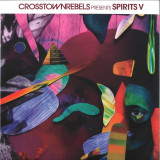
The release of Crosstown Rebels’ SPIRITS compilation is always a bastion moment for the label. The first edition came to prominence in 2017 and we’ve been graced with an annual compilation ever since, showcasing a consistent habit to champion established artists and breakthrough ones alike. Now, Crosstown Rebels’ lauded SPIRITS series will see the light of day once more in June, with the release of SPIRITS V.
NYC-native Layla Benitez leads proceedings with Fides, a progressive-leaning, introspective number that retains an inherent danceability throughout. It kicks off the compilation with a driving energy, one that’s perfectly matched by Trabajar - the Crosstown Rebels debut of recent Hot Creations inductee Mr.Diamond.
A techy-inspired cut, punchy four-four drum patterns create a distinctive late-night feel, as UK-talent Denney soon arrives with Kill The Soundboy. Showcasing the groove-laced house sound with which he’s become best known, the near seven-minute piece is sure to light up many a club setting this year, paving the way for Talk To Me. It’s a collaborative venture between Munich-based artist ASK:ME and El Muerto, with Soulfoot featuring on vocals. Retaining a vintage Detroit style, the fast-paced tempo creates a natural excitement before Romanian-born mainstay GruuvElement’s gifts us the minimal-toned Boom Room.
Building with tribal-like percussion and salsa-inspired instrumentals, it’s a playful excursion into dance music’s outer realms, paving the way for young Peruvian producer Chinonegro with My Moment. Whether it be the pluck of a guitar string or a jazzy trumpet solo, there’s an inherent authenticity to the six-minute piece, as a mid-track breakdown gives way to whispering hats and a rhythmic underlying backbone.
The penultimate offering comes from French-born, London-based regular Maglia, who serves up the enchanting Rayiys. The chirping of birds resides atop an ever-changing bassline, leaving us open and ready for the VA’s closing saga: Thanks Moon, by Spain’s I AM JAS. A heady combination of beautiful lyrical contributions combines with softly moving electronic elements, to leave us in a state of calm, inward reflection. Rounding off proceedings on a note of quietude, it reminds us of the final moments in clubland, transporting our psyche to sunrise, fond memories and everything in between.
Over a period of nineteen years, Damian Lazarus’ Crosstown Rebels has evolved into a world-renowned institution, garnering global audiences thanks to a consistent schedule of quality releases. In years since it’s earliest beginnings, the likes of Maceo Plex, Art Department, Seth Troxler, Ali Love, Mathew Jonson, Pier Bucci, Acid Pauli, Dennis Kurtel, Francesca Lombardo, Glimpse, Aphrohead, Fur Coat and a plethora of other figureheads have all found their home on the label.
The roster is international, showcasing how Crosstown has shaped a truly global scene. Releases are born in different continents by artists who hail from different countries, resulting in a sound that resonates worldwide. Perhaps most pivotal to the label’s success is its musical output: no part is governed by boundary or genre. It’s underpinned by a truly eclectic sound, one that reflects the diversity of Damian’s love for music itself. An album from drum and bass icon DJ Krust here, a maiden LP from Audiojack there… traversing genres has been Damian’s forte for decades - and Crosstown epitomises that as a result.
Korean artist and musician Jin Won Lee (이진원), otherwise known as Gazaebal, began his career in New York. Working as a sound engineer, alongside such illustrious artists as the Wu-Tang Clan and Janet Jackson, led him to develop a keen ear for dexterous audio design, melodic flair and catchy rhythm. But his true interest lay in uncovering the unique textures and synthetic qualities of electronic music. From the late 1990s to the early 2000s, Gazaebal focused on developing himself as a producer, synergising a uniquely potent take on club music, releasing three albums and appearing on numerous collaborations.
An established figure in the realm of contemporary art, Jin Won Lee is well-known for his hybrid, highly technological practice. In 2008, together with Jang Jaeho, he formed The Tacit Group, a collective for computer-coded art. Presenting works that manipulate audio and visuals in real-time through programming, the group has performed at the FAMS Choice selection, Lincoln Center in New York, at the Seoul branch of the Museum of Contemporary Art and the Sejong Center for the Performing Arts, among many others. As a solo practitioner, he initiated in 2023, a project that examines sound as abstracted vibration. brings together Jin Won Lee’s decades long investigations into sonic experimentation and the physicality of noise.
Outside the avant-garde, Gazaebal has enjoyed mainstream success, collaborating with Big Hit Productions founder and BTS songwriter Mr. "Hitman" Bang on remixes and arrangements for K-POP albums. They also formed the two-man group Banana Girl, with Gazaebal focusing on composition while Bang handled vocals, achieving a big hit with their 2000s track ‘Butt.’
Another crucial figure in Gazaebal’s life is his wife Nine who operates as his agent and business partner. Initially released in 1999 on Nine’s independent imprint dmstrax, the titular track ‘Talk’ first appeared on techno@kr, a compilation CD of Korean electronica. Together, they co-founded G Records, which was partly absorbed into Bighit Entertainment in 2005. Appearing as the inaugural record on Bighit, the original version of 'And So On' – featuring Bang’s vocal production – was not available for re-release due to licensing difficulties. But thankfully the multitrack was well preserved. Utilising these components, Nawon Ha (AKA Korean-but-Amsterdam-based artist Naone) re-imagines the song for Betonska Records.
A combination of un- and self-released material, Talk is an album that firmly belongs to the millennium while sounding utterly outside of space and time. A cosmic trance trip that draws on rock’s steely drive, wiggy acid basslines and warbling dub, the record is presented as a mix-friendly mini-album, with the 6 tracks ideally tailored to DJ-level quality and loudness. As much suited to the psychedelic rave scene of yesteryear as they are to present-day dancefloors, Gazaebal’s productions are defined by his idiosyncrasies. Melding the sheen of tight production and pop sensibilities with a flagrant DIY spirit, his music assuages the high-commercialism of the 2000s, resulting in a style that’s as definitely punchy as it is precise
In 2023 we began our hugely successful 80s 12” series on CD – a year-by-year journey through the greatest 12” singles from the decade, and in 2024 we presented a selection of tracks from 1980-1982 as the first volume in our collectible vinyl boxset series, followed by Volume Two celebrating 1983-1984 in 2025.
This year, Now Music is proud to announce the third instalment in this essential collection, NOW Presents…12" 80s: Volume Three: 1985-1986, as a stunning 5-LP boxset. A limited edition and numbered set with each of the 5-LPs pressed on a different colour vinyl – red, yellow, blue, hot pink and lime green – to be released on July 17th, 2026, and for many of these tracks this marks the first time back on vinyl since their original 12” release!
Opening with one of the decade’s most powerful rock anthems, Queen’s ‘One Vision’ appears in its Extended Version, ahead of Eurythmics’ euphoric ‘There Must Be An Angel (Playing With My Heart)’ in the Special Dance Mix and Dead Or Alive’s irresistible ‘You Spin Me Round (Like A Record)’. Side A closes with Frankie Goes To Hollywood and the epic ‘Welcome To The Pleasuredome (An Alternative To Reality)’. Flip the LP over for more iconic 12” versions from 1985, beginning with Tears For Fears and the UK Extended Version of ‘Shout’, alongside Go West’s ‘We Close Our Eyes (The Total Overhang Mix)’, the massive soundtrack hit ‘Don’t You (Forget About Me)’ from Simple Minds and Arcadia’s sophisticated ‘Election Day (Consensus Mix)’.
LP2 opens with four defining tracks that perfectly capture the electronic and cinematic sound of the mid-80s. Paul Hardcastle’s groundbreaking hit ‘19 (The Destruction Mix)’ leads into two instrumental classics: Harold Faltermeyer’s ‘Axel F’ and Jan Hammer’s ‘Miami Vice Theme’, both featured in their Extended Versions, before Propaganda’s peerless ‘Duel (Bitter-Sweet)’ closes the side. Side B showcases some of the era’s biggest dancefloor favourites, from Mel & Kim’s ‘Showing Out (Get Fresh At The Weekend)’ and Gwen Guthrie’s enduring club anthem ‘Ain’t Nothin’ Goin’ On But The Rent’, to Aretha Franklin’s ‘Who’s Zoomin’ Who?’ in its Dance Mix and the soul-pop brilliance of Loose Ends’ ‘Hangin’ On A String (Extended Dance Mix)’.
LP3 brings together some of the decade’s most beloved pop and rock crossover hits. Side A opens with the powerhouse pairing of Philip Bailey and Phil Collins on ‘Easy Lover (Extended Dance Remix)’, followed by Bonnie Tyler’s dramatic ‘Holding Out For A Hero (Club Mix)’ and Pat Benatar’s classic ‘Love Is A Battlefield (Extended Version)’. Stephen Duffy’s infectious ‘Kiss Me (Mixe Plural)’ precedes The Human League’s U.S. #1 ‘Human (Extended Version)’. Over on Side B, Duran Duran lead with the ‘Extended Mix’ of ‘Notorious’ before a run of timeless dance-pop including Sly Fox’s ‘Let’s Go All The Way’, Jellybean’s ‘Sidewalk Talk’ and Maria Vidal’s ‘Body Rock’, culminating with Ashford & Simpson’s club classic ear-worm ‘Solid (Special Club Mix)’.
LP4 opens with huge examples of sophisticated synth-pop and dance-floor innovation from 1986. Pet Shop Boys’ era-defining ‘West End Girls (Dance Mix)’ is joined by New Order’s influential ‘Bizarre Love Triangle (Extended Dance Mix)’. Up next, Red Box’s pure-pop of ‘For America (Bazooka Mix)’ and Nick Kamen’s breakthrough hit ‘Each Time You Break My Heart (Extended Version)’. The reverse side celebrates some of the biggest floor-fillers of 1986 – all in their 12” Versions, beginning with The Communards with Sarah Jane Morris and their unforgettable #1 version of ‘Don’t Leave Me This Way’, alongside Bronski Beat’s ‘Hit That Perfect Beat’, Bananarama’s global smash ‘Venus’ and Five Star’s ‘Can’t Wait Another Minute’ in its ‘M&M New York Remix’ form.
The final LP opens with a side packed with some of the most enduring dance-pop and of the era. Whitney Houston’s ‘How Will I Know (Dance Remix)’ is followed by Steve Winwood’s uplifting ‘Remix’ of his massive hit ‘Higher Love’, the celebrated ‘Shep Pettibone Remix’ of Level 42’s ‘Lessons In Love’ and Bryan Ferry’s elegant and atmospheric ‘Slave To Love (12" Remix)’, whilst over on the final side some of the years’ most distinctive and innovative sounds are showcased: Big Audio Dynamite’s genre-blending ‘E=MC2 (12 Inch Remix)’ and Furniture’s cult classic ‘Brilliant Mind (12" Mix)’ feature alongside Talk Talk’s majestic ‘Extended Mix’ of ‘Life’s What You Make It’, and to close this superb collection, the full ‘Extended Version’ of Spandau Ballet’s powerful ‘Through The Barricades’ provides a fitting finale, bringing together 42 essential 12” versions from 1985 and 1986 across five superb LPs.
out of Stock
Last delivered 50 days ago available to reorder, subject to availability
Precious Little Diamond is a song by Dutch funk band Fox the Fox, originally released in 1984. The single peaked at # 5 in Germany and the US and became a hit in France, UK, Italy, Belgium and the Netherlands too.
George Michael was a huge fan of the song and introduced the band to CBS Records in 1984. Dieter Bohlen from Modern Talking has been cited with this song as the inspiration for using falsetto choruses in his songs.
In 2013, the song was sampled in The Weeknd's song "Wanderlust". The Weeknd sampled the melody, the original chorus and a part of the original lyrics.
This 12-inch includes the Shep Pettibone remix and Ben Liebrand remix. The audio is remastered at Artone Studios and the limited edition of 500 copies on transparent vinyl are cut on 45RPM.
out of Stock
Last delivered 38 days ago available to reorder, subject to availability
Die ehemaligen King-Crimson-Mitglieder Adrian Belew und Tony Levin haben sich mit dem Gitarrenvirtuosen Steve Vai und dem explosiven Tool-Schlagzeuger Danny Carey zusammengetan, um BEAT zu kreieren - eine kreative Neuinterpretation der drei kultigen King-Crimson-Alben der 80er Jahre: "Discipline", "Beat" und "Three of a Perfect Pair". Im Jahr 2024 spielte das Ensem-ble 65 (!) Shows in Nordamerika, bevor es 2025 mit einer ausgedehnten Tournee durch Mexiko und Südamerika weiterging. Nun wird in Zusammenarbeit mit InsideOutMusic/Sony Music das audiovisuelle Paket "Live" veröffentlicht, in dessen Mittelpunkt eine ausverkaufte Show in Los Angeles steht.Die von Bob Clearmountain abgemischte Show ist in drei verschiedenen Formaten erhältlich: als Special Edition 2CD+Blu-ray-Digipak, als Limited Deluxe 3LP-Triple-Gatefold und digital. Zusätzlich wird eine limitierte Deluxe 3CD+Blu-ray Artbook Edition erhältlich sein, die umfangreiche Fotos und eine zusätzliche 12-Track-CD mit dem Titel "Live in North America" enthält. Die Blu-ray enthält die komplette Show in Los Angeles in 5.1 Surround Sound und Stereo sowie Bonus-Interviews mit der Band.
out of Stock
Last delivered 3 months ago available to reorder, subject to availability
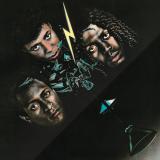
WRWTFWW Records unleashes the first ever release of legendary post-disco, funk, soul and electronic UK trio Imagination's cult album Night Dubbing in (well deserved) double LP format. The limited edition full-length comes with pristine audiophile treatment and luxurious packaging : a 45rpm and Half Speed Mastered DLP housed in heavyweight silver cardboard sleeve.
Imagination's singular 1983 album Night Dubbing is a refined deconstruction of black British soul and club pop, filtered through the deep studio and mixing techniques of dub music. Elegant, restrained, and, in its very own subtle way, radical, the record reshapes choice selections from the group's stellar catalogue into an immersive and out-of-this-world listening experience.
The special mixes on Night Dubbing are built on time and space. Basslines elongate and dissolve. Vocals appear, vanish, and reappear like ghosts. Drums fall away into vast silences, while echoes, tape edits, and precise engineering manoeuvres smoothly slide across the stereo field, revealing themselves like magic over repeated listens. Far from simple extensions or 12" versions, Night Dubbing treats the studio itself as an instrument, opening new dimensions of sound.
Often cited as a foundational record in the genesis of the house genre, the album also features the historic Larry Levan remix of "Changes", a Paradise Garage anthem that helped shape the direction of club music for decades to come.
More than 40 years on, Night Dubbing remains a seminal work. Its influence continues to echo through contemporary dance music, offering a blueprint for how pop could be transformed into something darker, stranger, more physical - a timeless sound that drifts effortlessly from the dancefloor into space.
Important note : it sounds amazing played on 33rpm too !
out of Stock
Last delivered 3 months ago available to reorder, subject to availability
To get with down roots of the label you have to get down with its people. For one of these key roots, you have to hear and understand what David Guriev has to say with the audio message that’s getting translated to us as listeners. Being one of allies of the label and the non-stop behind the scenes inspiration, David has created a 5-track extended play named after one of his favorite female boxers named Erica Cruz. From the side of the cinematic importance, Erica has appeared momentarily in our lives, with a brief timing that the world has provided her. However she has never left the idea that has given the birth to this EP, and more or less has started the discussion of what it is to be or not to be like Shakespeare himself used to talk about after a good soul-searching session.
Nightcode EP finds UK deep-house craftsman Jacksonville in full control, lacing warm chords, swinging drums and basslines built for red-lit basements. Across “Nightcode”, “Ecstasy in Starlight”, “Octobers in Love” and “Blind Spot”, he fuses classic Detroit/UK house textures with his own emotional, story-telling touch—timeless deep house for DJs who play past sunrise.
Feedbacks:
Laurent Garnier : Octobers in Love <3 <3 <3
Nick Holder : dope
Gina Breeze (Classic / Get Up / Homoelectric) : Feeling the deepness! Look forward to playing.
Nightmares On Wax (Warp Records) : Ecstasy in starl;ight and Blind spot are my jams !
Josh Wink (Ovum) : Deep, old old school flavored with new school production.
Alexkid (Rawax / FUSE / NG Trax) : Lovely
Lauren Lo Sung (LOLiFE records, e1even records) : Octobers in love is nice!
Dj Hutch (Ambers / Rinse FM) : grooves
Louise Chen (NTS) : This is so so sooo good! Can't wait to play on the radio!
Rob Pearson (Evasive Records / Sine 102.6fm) : Nightcode is the standout for me, will play tonight on Evasive
Eviltron / Paul Donton (Bombis / Triangle) : Blind Spot and Ecstasy in Starlight are the ones on the
D'Julz (Bass Culture) : feeling night code and blind spot . merci!
Junior Sanchez (Strictly Rhythm / Cube Recordings) : Really Cool EP!
DJ Three : this is all very high quality house that feels very much a
nd_baumecker (Ostgut Ton) : Nightcode and Octobers In Love for me. Quality as usual.
Sasha (Last Night On Earth) : Downloading for Sasha
William Kiss (Rekids) : very nice!
Monty Luke (Rekids / Black Catalogue) : thx for this...
Mystic Bill (Classic / Trax / Relief) : Will try some of these out, thanks!
Carista : beautiful
Crackazat (Freerange / Local Talk) : Sick sick sick
Jhobei (Bizarre Trax / FUSE / Felon 5) : Nice smooth deep
Khadija (Rek'd / Rafiki Collective) : Danke
Ben Sims : Now downloading - will check asap!
DJ Bone (FURTHER) : Very nice tunes here, thanks
Bake (All Caps/Rinse FM) : thank you!
Dj Deep (Deeply Rooted) : very nice tracks!
Oliver $ (Classic Music Company / Play It Down) : nice one!
Tripmastaz (Plant 74) : Nightcode is tight
Harvey Sutherland (MCDE / PPU / Voltaire Records) : couple of nice tunes here!
Anthony Collins (Frank & Tony / Scissor & Thread) : super nice deep tunes
Marcel Dettmann : thx
Voigtmann (Subsequent) : Ecstacy in Starlight is the one!
Gerd (4Lux / Clone) : dope house trax from the phonogramme crew once again!
Groove Armada : Great EP - Love Nightcode, Ocotber is love so good too±
Harri (Sub Club) : nice, will play and support
Jorkes (Freeride Millenium) : ecstasy in starlight..yes yes yes yes
DJ Minx (Women On Wax Recordings) : Every one of these...top tier! I'm on 'em!
DJ Rocca (Nang Records, Mantra Vibes) : Great EP. Nightcode is great, super bassline indeed
Jacques Renault : Ectasy In Starlight for me here!
Geir Aspenes (G-Ha (Sunkissed)) : Thank u
Mark Farina : dig it
Âme (Innervisions) : thanks
Djebali ( ( djebali ) / INFUSE / Freak n Chic) : Love it ! thanks for sharing. Blind Spot is my fav
Jaye Ward (Dalston Super Store / Netil Radio) : wicked release!! night code is a belter!!! thx
Iron Curtis (Mule Musiq, Morris Audio) : thank you!
out of Stock
Last delivered 10 days ago available to reorder, subject to availability
Step Ball Chain’s unconventional prototype band trickpony is the 11th release on the ever evolving imprint. An assortment of sensual cyber jams collaged together by the trio over timezones, birthed in Perth, Australia by Mike Midnight and Roza Terenzi; old friends joined by Helsinki’s visionary songstress Maria Korkeila. A trinity of alchemy blossomed into an audio rendition of exquisite corpse, layers of each entity glistening through amongst a united cosmos; trip hop atmospherics and downtempo drippings. The five track EP reveals a metamorphosis of nostalgia, a foot in the ever present and daydreams of future. A subconscious deep dive into lustful pop, guided by spine tingling vocal fantasies; textural hallucination, harmonic odes to the golden era underground and a flirtation with drum and bass, tribal percussive freakouts and dream tinged lyrics of desire. Pillow talk is a timeless exhibit of esoteric treasures, a portal to a private world of modern enchantment that reveals itself in new ways each listen, music for lovers created by a supergroup of innovators to be digested, shared and cherished.
out of Stock
Last delivered 4 months ago available to reorder, subject to availability
Una interpretación de Soinuarenbidea II debería partir de esta premisa: todo es posible, nada es aleatorio, y en sí mismo es un imposible de aleatoriedades. El escenario planteado explora la idea de realidad aumentada desde una percepción sonora, ambiental y colectiva. La obra transita hacia adelante y hacia atrás recreando experiencias extintas de porvenir incierto, tratando de facilitar un fin pacificador. Cada pieza sonora se crea, se despliega, se repliega y se destruye, en una torsión permanente de toda la realidad que hace posible cada fragmento musical, cada identidad acústica, cada espacio sonoro. Lo onírico, la ficción, y el viaje están continuamente presentes, y es en el transitar de cada fragmento donde se produce el diálogo de la exposición musical. Los elementos de esta ficción se recrean continuamente, en un continuum donde se entrelazan y se van contorsionando a medida que crecen o decrecen con cada fragmento de síntesis concreta. Los temas explícitamente musicales son el magma que conduce a dar voluptuosidad al disco, siendo la piel un contexto o límite que en sí mismo fluctúa indefinidamente en texturas y configuraciones posibles. Y la urdimbre del silencio es la síntesis que está continuamente presente y que trata de cohesionar los fragmentos en continua colisión expresiva. Las grabaciones de campo proporcionan el material sonoro concreto, y como un fractal sonoro cada una de ellas ofrece diferentes grados de interpretación que a su vez conduce a nuevos fragmentos y nuevas creaciones. Así que se puede pensar que esta es una síntesis de una posible realidad, pero interpretable en infinidad de maneras. Un movimiento y una estaticidad implícitas que generan estructuras y dinámicas acústicas. Lo que se escucha no es real, pero en sí mismo forma parte de la realidad, creando un escenario expectante. Lo cinematográfico, plástico y teatral, danzante y dinámico cobra importancia en este juego, porque se trata de contar una historia, una experiencia recreada desde los puntos de vista del arte visual. Es a su vez hilo conductor y entretenimiento, discurso político y puro divertimento. Es desde este espacio de convivencia artística que tiene sentido la totalidad y justifica el formato sonoro planteado. La contradicción de la obra es patente en el formato, y es a su vez el planteamiento de una accidentalidad en el devenir vital. Contenedor de Ruido recoge todas estas contradicciones y las manifiesta en la obra Soinuarenbidea II. Es una historia sonora, es un cuento acústico. Es un fragmento de vitalidad en imágenes audibles. Es una invitación a la reflexión, a la crítica, al disfrute, a la meditación, a la celebración. Y sobre todo es esperanzadora apreciación de la realidad como algo maleable que confeccionamos colectivamente, que requiere de una paciente observación y la participación colectiva global, en un mundo finito pleno de diversidades y del que ignoramos prácticamente todo, al que deberíamos volver con respeto y devoción.
Soinuarenbidea II-ren interpretazio batek premisa honetatik abiatu beharko luke: dena da posible, ezer ez da ausazkoa, eta, berez, ausazkotasun ezinezko bat da. Planteatutako agertokiak errealitate areagotuaren ideia aztertzen du, soinu-, ingurumen- eta talde-pertzepzio batetik abiatuta. Lanak aurrera eta atzera egiten du, etorkizun zalantzagarriko esperientzia desagertuak birsortuz eta helburu baketsua lortzen saiatuz. Soinu-pieza bakoitza sortu, hedatu, tolestu eta suntsitu egiten da, musika-zati bakoitza, identitate akustiko bakoitza eta soinu-espazio bakoitza ahalbidetzen dituen errealitate osoaren etengabeko bihurdura batean. Onirikoa, fikzioa eta bidaia etengabe daude presente, eta pasarte bakoitzaren joan-etorrian gertatzen da musika-erakusketaren elkarrizketa. Fikzio honen elementuak etengabe birsortzen dira, continuum batean, non sintesi zati zehatz bakoitzarekin hazi edo txikitu ahala elkar lotzen eta bihurritzen diren. Esplizituki musikalak diren gaiak diskoari atsegintasuna ematera eramaten duen magma dira, azala testuingurua edo muga izanik, testura eta konfigurazio posibleetan mugarik gabe aldatzen dena. Eta isiltasunaren irazkia etengabe presente dagoen sintesia da, zatiak etengabeko adierazpen-talkan kohesionatzen saiatzen dena. Landa-grabazioek soinu-material zehatza ematen dute, eta soinu-fraktal batek bezala, horietako bakoitzak interpretazio-maila desberdinak eskaintzen ditu, eta horrek, aldi berean, zati eta sorkuntza berrietara eramaten du. Beraz, pentsa daiteke errealitate posible baten sintesia dela, baina hamaika modutan interpreta daitekeena. Egitura eta dinamika akustikoak sortzen dituzten mugimendu eta estatikotasun inplizitu bat. Entzuten dena ez da erreala, baina, berez, errealitatearen parte da, eta agertoki espektakularra sortzen du. Zinematografikoak, plastikoak eta antzerkikoak, dantzariak eta dinamikoak garrantzia hartzen dute joko honetan, ikusizko artearen ikuspegitik birsortutako istorio bat, esperientzia bat, kontatzea baita helburua. Aldi berean, hari gidaria eta entretenimendua da, diskurtso politikoa eta dibertimendu hutsa. Elkarbizitzarako espazio artistiko honetatik osotasunak zentzua du eta planteatutako soinu-formatua justifikatzen du. Obraren kontraesana nabarmena da formatuan, eta, aldi berean, bizi-bilakaeran istripu-tasa bat planteatzea da. Zarata-edukiontziak kontraesan horiek guztiak jasotzen ditu eta Soinuarenbidea II obran adierazten ditu. Soinu istorio bat da, ipuin akustiko bat. Bizitasun zati bat da, irudi entzungarrietan. Hausnarketarako, kritikarako, gozamenerako, meditaziorako eta ospakizunerako gonbidapena da. Eta, batez ere, itxaropentsua da errealitatea modu kolektiboan egiten dugun gauza xaflakor gisa hautematea, behaketa pazientea eta partaidetza kolektibo globala eskatzen dituena, dibertsitatez betetako mundu mugatu batean, ia guztia kontuan hartzen ez duguna, eta errespetuz eta debozioz itzuli beharko genukeena.
An interpretation of Soinuarenbidea II should start from this premise: everything is possible, nothing is random, and in itself is an impossible randomness. The proposed scenario explores the idea of augmented reality from a sonic, environmental, and collective perception. The work moves back and forth, recreating extinct experiences of an uncertain future, seeking to facilitate a peaceful end. Each sound piece is created, unfolds, retreats, and is destroyed, in a permanent twisting of all reality that makes each musical fragment, each acoustic identity, each sonic space possible. The dreamlike, the fictional, and the journey are continually present, and it is in the transit of each fragment that the dialogue of the musical exposition takes place. The elements of this fiction are continually recreated, in a continuum where they intertwine and contort as they grow or diminish with each fragment of concrete synthesis. The explicitly musical themes are the magma that leads to the work's voluptuousness, the skin being a context or boundary that in itself fluctuates indefinitely in possible textures and configurations. And the warp of silence is the synthesis that is continually present and seeks to unite the fragments in a continuous expressive collision. The field recordings provide the concrete sound material, and like a sonic fractal, each one offers different degrees of interpretation that in turn lead to new fragments and new creations. So one can think of this as a synthesis of a possible reality, but interpretable in an infinite number of ways. An implicit movement and staticity that generate acoustic structures and dynamics. What is heard is not real, but in itself is part of reality, creating an expectant scenario. The cinematic, plastic and theatrical, dance and dynamic aspects take on importance in this game, because it is about telling a story, an experience recreated from the perspective of visual art. It is at once a common thread and entertainment, political discourse and pure entertainment. It is from this space of artistic coexistence that the whole makes sense and justifies the proposed sound format. The contradiction of the work is evident in its format, and it is, in turn, the presentation of an accidentality in the course of life. Noise Container gathers all these contradictions and manifests them in the work Soinuarenbidea II. It is a sound story, an acoustic tale. It is a fragment of vitality in audible images. It is an invitation to reflection, to critique, to enjoyment, to meditation, to celebration. And above all, it is a hopeful appreciation of reality as something malleable that we collectively craft, requiring patient observation and global collective participation, in a finite world full of diversity and of which we know practically nothing, to which we should return with respect and devotion.
Paisajes sonoros, diseño sonoro, drones y música grabada, realizada y arreglada para Contenedor de Ruido por David Aranaz. Coro: Basandere Ahotsak. Producido y mezclado por David Aranaz. Mástering: Estanis Elorza. Fotografía: David Aranaz. Texto: David Aranaz. Traducción: Saioa Aranaz Oreja. Trabajo y Diseño artístico: Cristina Martinez. Edición: Contenedor de Ruido Producciones y Sarbide Music. Distribución: Contenedor de Ruido.
Contenedor de Ruido agradece el apoyo en la realización de Soinuarenbidea II al coro Basandere Ahotsak y en especial a Eva Orbara Goicoa.
Soinuarenbidea II está dedicado al pueblo palestino.
Paisajes y objetos Sonoros, samplers y otras músicas transformadas para Soinuarenbidea II
Burlada: Paseos sonoros matinales por Merindad de Sangüesa, Calle Mayor, Capuchinas, Parque Uranga y varias iglesias y plazas. Pasajes del cotidiano: basura de papel, cristal y plástico.
Pamplona: Cementerio de San José. CEIP Sanduzelai /// Quinto Real: Fábrica de Armas, Puerto de Urkiaga y alrededores. Suite del silencio, bosques en movimiento /// Fábrica de armas de Orbaiceta: regatas, biosques, paseo sonoro hasta regata /// Belate: Puerto de Belate y alrededores. Vacas en pradera junto a las turberas /// Bardenas Reales: Suite de guitarra y Suite del silencio, estepa desértica /// Austria: Tranvías de Graz y Viena. Muchedumbre del metro de Viena.
Voces cinematográficas de: Matanza en Texas, Robocop, Espíritu Sagrado, Solo los Amantes Sobreviven, Voces de Gaza, Yojimbo, Terciopelo Azul, Los 7 Magníficos.
La pista A2 está dedicada a la memoria de David Lynch.
La pista B4 está dedicada a Eva Orbara Goicoa.
Pista A4: Contiene interpretaciones de piano de Three Piano Pieces Op.11 de Arnold Schoenberg.
Pista A5: Es una interpretación expandida con síntesis FM del Concerto Op. 24 - Etwas lebhaft - de Anton Webern.
Pista A7: Contiene la canción Besarkatu ninduzun (Letra de Josune López y música de Josu Elberdin) en interpretación de Basandere Ahotsak en la iglesia de Burutain bajo la tormenta.
Pista B2: Contiene la canción Recuerdos de la Alhambra (Fernando Tárrega) en interpretación torsionada de David Aranaz Sarasa.
Pista B14: Contiene la canción Agur María (Letra y Música de Estíbaliz Robles “Estitxu” y arreglo exclusivo de Alfonso Ortiz para Basandere Ahotsak) en interpretación de Basandere Ahotsak.
Equipamiento para Soinuarenbidea II.
Micros de condensador SE7, configuración XY y ORTF; Micros de cinta ORTIZ LUTHIER configuración XY y Blumlein; Grabadoras MARANTZ y ZOOM; Sintetizadores y samplers Elektron MONOMACHINE SPS-1, MACHINEDRUM SFX6 y MODEL:SAMPLES. Dave Smith MOPHO. Torso Electronics S-4. Sintetizador Modular 333 DIY; Guitarra clásica ALHAMBRA 6P; Esculturas Sonoras tipo Baschet, cristal y metales; Mesa Soundcraft FX16ii; Interface de Audio RME Babyface Pro FS; DAW Logic Pro; Procesamiento de modelado analógico con Acústica Audio, Waves, Softube, Brainworx, Sonible, Analog Obsesion, Tokio Dawn. Metering de Logic y RME DigiCheck . Amplificación Hafler PRO2400. Monitorización BW DM602 S3. Mezcla digital; Mastering híbrido.
Brooklyn-born David Forman was steeped in soul music and Brill Building songcraft in the early 1970s while earning his living as a Hollywood set builder. He developed a soul singing style through his friendship with Aaron Neville, with whom he used to sing and jam on his apartment rooftop. He met Jack Nitzsche through his work on the 1972 film Greaser’s Palace (for which Nitzsche created the soundtrack) and later asked Nitzsche to produce this album. Forman’s original record deal with Davis was shepherded by the critic Stephen Holden of Rolling Stone and later the New York Times, and later by Paul Nelson, also of Rolling Stone.Fun fact about Forman: He was an assistant to Phillip Petit on his daring tight rope walk between the twin towers in 1974. And Forman later became a jingle writer and wrote and sang the famous Tums theme song (“Tum tum-tum-tum, TUUUUMS."This release features remastered audio, a plethora of archival photos, and a 24-page booklet with a 5500-word essay from noted journalist and producer Joe Hagan, a staff writer at Vanity Fair and producer of the 2022 compilation 'Earl's Closet' for Light In The Attic. Hagan is also fully committed to promoting the release through his network of key media gatekeepers, as well as his personal connections with legendary musicians, writers, and other cultural tastemakers.
Shogun Audio is extremely proud to present GLXY's second album, 'Form, Focus'. Unequivocally the most refined body of work to date from the ever-evolving drum & bass duo, this LP showcases GLXY at their irresistible best.
A decade on from the release of their debut single 'Small Talk/Trinity', GLXY have cemented themselves as one of liquid drum and bass’ most respected and prolific acts. With twelve EPs, a debut album in 2020, and collaborations with the likes of Alix Perez, Halogenix, Lenzman, Unglued, and Catching Cairo under their belt, 'Form, Focus' represents the next definitive milestone in an already heavyweight catalogue.
From beginning to end, the record distils everything that makes GLXY so special. Abundant with luscious sound design, soulful vocal features, and an unmistakable sense of groove and musicality. Featuring Charli Brix, DRS, Duskee, Eljé, Jords, Salo, and Verbz, the tracks flow seamlessly between deep, introspective liquid cuts and vibrant, club-ready rollers, painting a full picture of their artistry while pushing their sound into fresh, exciting spaces.
More than just a continuation, 'Form, Focus' feels like a statement: a decade of honing their craft distilled into a singular vision. It’s an album that reaffirms GLXY’s position at the cutting edge of the genre, while at the same time carving out their own unmistakable lane within it.
Winner of the Gold Medal at the 2024 Jazz Audio Disc Awards, a jazz critic magazine!
This best-of album features selections from three of Alessandro Galati's most talked-about albums!
Alessandro Galati, a master of Italian jazz who has released numerous albums on Terashima Records, released his standards collection "Plays Standards" series
at the end of 2024, following "European Walkabout," a collection of European traditional music, and "Portrait in Black and White," a collection of Jobim's classic
bossa nova works. All three albums (23 tracks) of Galati's standards collection, released at the end of 2024, are now being released simultaneously! The album
won the Gold Medal at the 2024 Jazz Audio Disc Awards, a jazz critic magazine magazine, and caused a stir. This long-awaited best-of album, featuring selected
tracks from the three albums, is finally being released on limited-edition vinyl. Enjoy this collection of gentle, warm, and beautiful standards, woven with a touch
that evokes the warmth of human skin and refined phrasing.
Alessandro Galati - piano
Ares Tavolazzi - bass
Bernardo Guerra - drums
The duality of "man" is a subject that has been explored in art for centuries, from writings of the Bible to Descartes, all the way up to filmmakers like Lynch, Cronenberg, & Carpenter. Who is your "true self" & what do they want? With their sixth studio album "Wish Defense" (again for longtime home Trouble In Mind Records), Chicago trio FACS take a good, long look in the mirror to face themselves. The return of original member Jonathan Van Herik - who stepped away from the group just before their debut album "Negative Houses" was released in 2018 - replacing longtime bassist Alianna Kalaba brings renewed vigor & a marked angularity from the band's more recent output. The songs still hit hard, but the approach is sideways - the roles have changed since Van Herik's original tenure & his previous time with Case & powerhouse drummer Noah Leger in Disappears; now on bass, Van Herik was originally the group's guitar player and features on the debut, while current guitarist Brian Case played bass. This role reversal has helped the band's dynamic, offering up a different musical perspective than before, now revisiting the trio's long-going collaboration with some distance and time. Case notes that the lyrics on "Wish Defense" revolve around doppelgängers or "doubles", tackling the idea of facing yourself and observing your ideas and motivations. Look no further than the album's title track; "Enter the mirror / Double walker / An intimate / Wish defense / Is it real? / You beside me / The detail / Terrifying / Abject self / Your grief / A public / Performance". Case lays out the entire album's theme in one stanza; Are your actions & emotions your true self? Or are they a performative aspect of that "other" person you put forward? Case says that ultimately the sentiment is "_don't let the bastards get you down, there's something beyond this moment, like hope - but not in the naive belief that ultimately people are good". "Wish Defense"s artwork is also a subtle reference to "Negative Houses"' art, returning to that album's black & white starkness & minimalism. The album's checkerboards everywhere are offset reflections of themselves, mirrored with the album's lyrics printed front & center on the cover. Everything is out in the open. A final note; "Wish Defense" is the last album engineered by Steve Albini. Two days were recorded at Electrical Audio in early May of 2024 before Steve's untimely passing, with renowned engineer & friend Sanford Parker stepping in to finish the session 24 hours later, tracking the last bits of vocals and overdubs. Longtime collaborator John Congleton mixed the album as Albini would have; in Electrical Audio's A room, off the tape, using Albini's notes about the session.
"An immersive & fantastic experience that exists, fittingly, deep within its own musical bubble" - CLASSIC ROCK From its inception, TesseracT's 2024 Radar performance was about pushing boundaries - expanding the dimensions of what a TesseracT show could be. In their own words "The 90 minutes, or so, on stage, were proceeded by 2 full years of talks. Wild creative chats about ideas & an ever increasingly ridiculous level of ambition from both Joe at Radar & Mos in TesseracT. Venue changes, schedule changes, album touring, none of these impeded the momentum once the ball was rolling". The performance soars even higher with the addition of Choir Noir, led by the indomitable Kat Marsh, whose imprint was vital in shaping the vocals on 2023's landmark 'War Of Being'. The setlist of 'RADAR O.S.T.' is a ferocious journey through career- defining anthems including 'War Of Being', 'Legion', 'Nocturne' & 'Natural Disaster'. This 2LP edition of 'RADAR O.S.T.' is presented on Special Edition Transparent Orange vinyl in a gatefold sleeve with audio remastered at half-speed at Abbey Road Studios.
FINALLY! The very first commercial release of two legendary remixes of Arthur Russell's "In The Light Of The Miracle". Both are widely regarded as transcendent masterpieces and very much befitting of the title “holy grails”.
These long-beloved mixes are the types you'd wish would last for eternity. With almost 30 minutes of music here, we very nearly get our desires granted. At last, these jaw-dropping mixes are widely available to every Arthur fan in the world. This is musical perfection.
The deep Loft classic "In The Light Of The Miracle" remained unreleased during Arthur's lifetime, finally discovered when Phillip Glass included the original version on Another Thought on Point Music in 1993. As Steve Knutson told us, when Another Thought was being put together, the plan was to release a companion album of remixes that was overseen by Steve D'Aquisto but the project only got as far as these two remixes of "In The Light Of The Miracle".
Some dodgy scans of some centre label designs suggest that Point Music might’ve been planning to release these on a 12" but it didn’t happen. The story goes that Gilles Peterson heard the remixes on a visit to the Point Music offices and wanted to release them on Talkin’ Loud. We’re not sure how many white label copies made it out into the wild, but again, these remixes didn’t make it to a proper release.
These remixes both extend and undeniably enhance the original, elevating it to new heights. The 13 minute remix on the A-side is by Danny Krivit & Tony Smith with editing duties performed by Tony Morgan. As ever with Arthur, the music is almost impossible to describe: is it Disco? Garage House? Avant Garde? None of these tags do full justice to its sheer majesty. You best just listen. Stretching out the original with some unbelievably great percussive elements, until we're in a deeply spiritual, otherworldly realm, it's just too beautiful for words. As many have claimed, it's the prototype for EVERYTHING.
The "Ponytail Club Mix (Part 1 & 2)", produced by Tony Morgan in the mid-90s, is in a more up-tempo style, with vocals higher in the mix, the BPM upped to 120 and the addition of a housey 4/4 kick drum. A 14 minute epic, you could say this is a more straight ahead "club-friendly" mix (but can things ever be that straightforward with Arthur?!) It also has some really interesting vocal parts not used in the other versions, including some vocals from guest poet Allen Ginsberg.
These remixes are part of the same original project that also produced the Another Thought album so it seems only right that they have a sleeve that matches. Thanks again to Janette Beckman for letting us use another of her photos of Arthur and the rest of the design follows what Margery Greenspan, Tina Lauffer and Michael Klotz did for Another Thought back in 1994.
Simon Francis remastered the original audio for both tracks and Cicely Balston's precise cut for Alchemy at AIR Studios ensures this 12" well and truly slaps. The immaculate Record Industry pressing will ensure this incredibly sought-after treasure finds a home in many more collections, this and every year.
out of Stock
Last delivered 12 months ago available to reorder, subject to availability
Off The Record (faitiche 39), the new album by French collagist Roméo Poirier, is an amusing romp through the discarded history of recording studios. It contains fourteen miniatures based on accidental recordings of studio talk, revealing things that were never meant for the public: we hear instructions from studio staff, scraps of talk between musicians, or just microphones being adjusted, as well as false notes, false starts: everyone stops. Start again: 1, 2, 3, 4!
Poirier’s approach recalls Accumulation, an artform practiced by Arman, Jean Tinguely and Daniel Spoerri that involved piling up everyday items into assemblages. The objects themselves often remained unaltered, the artistic gesture consisting in the careful curating of a distinctive selection. Poirier’s audio collages explore similar terrain. The fourteen pieces on Off the Record combine more than a thousand found sounds from studio archives into complex miniatures. The audio content of these outtakes is twisted, stretched, cut, reassembled, slowed down and accelerated. Voices cut into a microgroove, from a very old recording, intertwine with digital voices gleaned from YouTube. All of them in dialogue, engaging the listener with the impression of being part of a new music group.
Poirier uses the mundane routine of setting up before the actual recording gets underway to tell a universal story about working in a recording studio. And he manages something few achieve, transforming specialist knowledge into a narrative whose beauty goes far beyond its immediate subject. It speaks to everyone, because the story is told in a musical language that is open and accessible, evoking magical images reminiscent of Oz – a world consisting less of events than of camp hallucinations, captured in grainy black-and-white photographs. En passant, Poirier shows us how the notion of material accumulation can produce great art.
Written and produced by Roméo Poirier, mastered by Stephan Mathieu, photos by Roméo Poirier, graphic design by Tim Tetzner.
out of Stock
Last delivered 12 months ago available to reorder, subject to availability
2025 marks 20 years of Tectonic, the pioneering dubstep and electronic label founded in 2005 by Bristol’s underground originator, DJ Pinch.
The Tectonic Sound compilation lays down the gauntlet for the future direction of the imprint. Split across 6 x 4-track 12”s, the compilation comprises many producers making their Tectonic debut, including Re:ni, Beatrice M., Yushh, Flora Yin-Wong, and Sicaria, alongside stalwarts like Om Unit, RSD, Peverelist and Kahn & Neek. It’s an exhilarating 24-track journey through experimental, bass-heavy electronic music, with almost all tracks created by the artists specifically with Tectonic's sound in mind - at the intersection where dubstep and techno meet.
“More so than just the sound, the music is in tune with the real ethos of the early dubstep scene,” - Label boss Pinch says: “People talk about 'heads in a scene - but it's led by hearts really. I've always tried to follow my heart when it comes to music and all the music here is from people I trust that do something worth communicating with the world. I love to watch and help artists grow just as much as I'm excited to release tracks from bigger names who are still passionate about what they do and have developed the powers and control to be able to output that effectively. It feels like Tectonic has been a part of so many communities over the years now, and that there is something that binds all the releases together, something that speaks for itself in a way that goes beyond words, something that's instinctive and immediate.”
Across Tectonic’s 150-strong catalogue there are seminal releases by 2562, Scientist, and Mumdance & Logos, side by side with appearances from Flying Lotus, Shed, Adrian Sherwood, Riko Dan and Photek. The label holds some of the earliest dubstep incantations of Skream, Digital Mystikz, and Joker as well as Pinch’s own productions. The evolution of the Tectonic sound branches into audio explorations encompassing sub-heavy techno and grimey soundscapes alongside leftfield electronica and future-facing beats. The common thread that binds is Pinch’s devotion to pushing underground music ahead of its time, always built to rattle a soundsystem
out of Stock
Last delivered 13 months ago available to reorder, subject to availability
2025 marks 20 years of Tectonic, the pioneering dubstep and electronic label founded in 2005 by Bristol’s underground originator, DJ Pinch.
The Tectonic Sound compilation lays down the gauntlet for the future direction of the imprint. Split across 6 x 4-track 12”s, the compilation comprises many producers making their Tectonic debut, including Re:ni, Beatrice M., Yushh, Flora Yin-Wong, and Sicaria, alongside stalwarts like Om Unit, RSD, Peverelist and Kahn & Neek. It’s an exhilarating 24-track journey through experimental, bass-heavy electronic music, with almost all tracks created by the artists specifically with Tectonic's sound in mind - at the intersection where dubstep and techno meet.
“More so than just the sound, the music is in tune with the real ethos of the early dubstep scene,” - Label boss Pinch says: “People talk about 'heads in a scene - but it's led by hearts really. I've always tried to follow my heart when it comes to music and all the music here is from people I trust that do something worth communicating with the world. I love to watch and help artists grow just as much as I'm excited to release tracks from bigger names who are still passionate about what they do and have developed the powers and control to be able to output that effectively. It feels like Tectonic has been a part of so many communities over the years now, and that there is something that binds all the releases together, something that speaks for itself in a way that goes beyond words, something that's instinctive and immediate.”
Across Tectonic’s 150-strong catalogue there are seminal releases by 2562, Scientist, and Mumdance & Logos, side by side with appearances from Flying Lotus, Shed, Adrian Sherwood, Riko Dan and Photek. The label holds some of the earliest dubstep incantations of Skream, Digital Mystikz, and Joker as well as Pinch’s own productions. The evolution of the Tectonic sound branches into audio explorations encompassing sub-heavy techno and grimey soundscapes alongside leftfield electronica and future-facing beats. The common thread that binds is Pinch’s devotion to pushing underground music ahead of its time, always built to rattle a soundsystem
out of Stock
Last delivered 12 months ago available to reorder, subject to availability
Zum 40. Jubiläum von Modern Talking überrascht Sänger Thomas Anders mit einem ganz speziellen Album-Projekt: Eine Hommage an Modern Talking!
Zum 40. Jubiläum von Modern Talking überrascht der Sänger mit Neuaufnahmen der ersten sechs Modern-Talking-Alben und ist somit der erste deutsche Künstler überhaupt, der sein komplettes Frühwerk neu interpretiert! Seit 2003 geht das erfolgreichste Duo der deutschen Popgeschichte bekanntlich getrennte Wege, doch die Modern Talking Songs, zu denen man bis heute in aller Welt tanzt, bleiben nach wie vor weltweit unsterblich.
Die Neuaufnahmen der ersten Modern-Talking-Alben sind mit seiner unverwechselbaren Stimme eine Hommage an das einzigartige Erfolgsduo und an die glorreiche, vermeintlich bunte und sorgenfreie Zeit Mitte der Achtzigerjahre. Die einst vom pulsierenden Italo-Disco-Sound inspirierten Songs sind alle auf Anhieb zu erkennen, klingen jetzt aber dank modernerer Drums und Synths zeitgemäßer. Zusätzlich erscheint das 6-Album-Paket erstmals im Dolby-Atmos Sound, also 3D-Audio. Auf jedem Album überrascht Thomas Anders außerdem mit zwei bislang unveröffentlichten Songs, etwa “Don’t Fly Too High“ oder “Hold Me Tight In The Night“ auf dem ersten Album. Versierte Studiomusiker haben alle Stücke zusammen mit Thomas Anders unter der Ägide von Christian Geller komplett neu eingespielt, begleitet wird Anders dabei übrigens von denselben Chorsängerinnen und Sängern, die schon damals auf den Originalaufnahmen zu hören waren. Bei der Produktion wurden Spuren aus der Originalproduktion so detailgetreu wie möglich neu produziert und den neuen Versionen hinzugemischt.
Die sechs Alben – “The 1st Album“, “Let's Talk About Love“, “Ready For Romance“, “In The Middle Of Nowhere“, “Romantic Warriors“ und “In The Garden Of Venus“, auf denen alle großen Modern-Talking-Hits der 80er vertreten sind – erscheinen ab März 2025 in regelmäßigen Abständen bis Ende des Jahres beim Label Stars by Edel. Zum 40. Jubiläum von Modern Talking kommt es jetzt also einmal ganz Anders ...
out of Stock
Last delivered 13 months ago available to reorder, subject to availability
Included are all 9 tracks from the two titles that have been highly acclaimed and talked about overseas.
This is an analog vinyl record pressed in Japan by Memory-Tech, the developer of high-quality CDs and UHQCDs, on 180g heavy vinyl.
Analog vinyl featuring all 9 cover and original songs from the 2024 album “Beyond The Window ~Mado no Mukou ni~” and the 2021 album “Another Answer”
by Kanae Izutsu, a singer who boasts strong popularity among music fans and audiophiles.
The two titles, which were ranked No. 1 on the domestic distribution site rankings and also ranked high on overseas distribution and streaming sites, were cut
by Katsutoshi Kitamura (MIXER'S LAB), one of the best cutting engineers, and by Memory-Tech, the company that developed UHQCD, a high-quality sound
quality CD. The 180g weight vinyl is made by analog pressing, which is also concerned about the sound quality. Please enjoy Izutsu's unique worldview, which
has both strength and fragility, and is clothed in lingering sound and space, on the analog disc as well.
After a collage tape collab with Bardo Todol back in 2022 (SUC52, Magnetic Road to Hell) Robert Millis finally gets his Discrepant debut proper, a much overdue entryin our random catalogue of lost musical oddities.
The not so self explanatory title Interior Music explores Millis obsession with hidden sounds and its anomalies. An hermetic rearrangement of emptiness could be another more big headed title. But I leave the man to talk about his thing:
‘’The phrase interior music occurred to me a few years ago as a way to describe some recent work. It’s about the resonances inside of hollow wooden chambers (and hollow heads) like gramophones and talking machines, music boxes, instruments, metal containers, and resonant rooms. It’s about exploring tiny audio fragments—single notes, vinyl and shellac surface noise, recording mishaps and anomalies—and arranging them into something meaningful. It is about my own interior mishaps and anomalies and attempts to arrange THEM into something meaningful. It also references “interior design” with the placement of sounds in specific locations, layers or in juxtapositions.
Inspirations include Steve Roden’s lowercase work, Toshiya Tsunoda’s field recordings, Eliane Radique’s slowly shifting ambiances, and the musique concrete of Pierre Schaeffer, as well as the dhrupad and kayal traditions of Indian classical music—especially Kesarbai Kerkar and the Dagar family who have a sublime way of stretching out individual notes and exploring their endless permutations, combinations and connotations.’’
Robert Millis is a sound artist known for his work with Climax Golden Twins, the Helen Scarsdale Agency, the soundtrack to cult horror film Session 9, the Victrola Favorites book and cassette series, and many releases on Sublime Frequencies including Indian Talking Machine, Paris to Calcutta: Men and Music on the Desert Road, compilations of the earliest music recorded in Korea, Japan and Myanmar, and the documentaries This World is Unreal Like a Snake in a Rope and Phi Ta Khon: Ghosts of Isan. Somehow he is a Fulbright scholar (to India 2012-13) and the recipient of a Guggenheim Fellowship (2020). He has or currently does play with AFCGT, Idol Ko Si, and/or Telescoping.
out of Stock
Last delivered 16 months ago available to reorder, subject to availability
Toy Tonics Music Berlin presents "Para Mytho Disco". The 2nd "Kapote" album of label founder and creative director Mathias Modica.
Keyboarder, DJ, producer, music nerd, graphic designer, multi-instrumentalist, sub-culture impressario and artist (formerly known as Munk of Gomma records.)
Kapote & Toy Tonics
In the last years Kapote was in the spotlight mainly for building the Toy Tonics label with his friends. Developing a platform for new positive quality dance music with a human touch. Toy Tonics is the opposite of the dark, druggy Techno and Trance sounds of the last years.
The warm inclusive music of Toy Tonics represents a new vibe that a young generation of diverse, stylish and culturally intersted generation of dancers loves now. Kapote's Toy Tonics became the key label for that vibe. (In 2024 Toy Tonics made 150 Toy Tonics events in 18 countries. With more than 150.000 people dancing. 90 millions streams on their music.)
Toy Tonics is more than a music label: It's a audio - visual universe. A community, almost a movement.
Based on a new positive attitude and aesthetic diversity. Mixing musicianship with DJ culture, analogue music with electronic, ideas from the past with sounds from now. To create something new. Connecting dance music with graphic design, art and underground fashion.
Kapote and his gang release vinyl, posters, shirts, art fanzines and make exhibitions and partys.
Toy Tonics started in Berlin as a underground niche project. But now became the key label of the new house, wild style disco and organic dance music scene.
Probably one of Berlin's biggest electronic music phenomena along with Keinemusik and Live from Earth.
It went fast: 2020 Kapote's crew started to make small parties in Berlin's off spaces. The "Toy Tonics Jams". The parties became "talk of the town", and Berlin clubs like Griesmühle and Panorama Bar invited the crew. Then international clubs and festival called. Toy Tonics were invited to SONAR (playing the mainstage with Kaytranada and DJ Tennis), KALA festival, Montreux Jazz festival.
Now TT has a residency at Panorama Bar Berlin and sold out events in Europe leading clubs like Phonox in London, Rex Club in Paris, Tunnel in Milan.
Toy Tonics now is the reference brand of a new generation of music loving dancers. Similar to Gomma records, Kapote's former label (2003 - 2015) that was one of the key labels of the "indie dance" scene of the Y2K years (along with DFA and Output Records).
Kapote created a multi-cultural movement with graphic designers, photographers, illustrators from the Berlin scene.
They publish the Toy Tonics Pocket Poster magazine, posters and design shirts. They organize the Toy Tonics Pop Up Galleries mixing music and art. In underground venues in Berlin and in new gallery spaces and museums around Europe.
Toy Tonics has been invited by Palais de Tokio museum in Paris, Triennale Museum Berlin, Design week Milano to create events.
The new Kapote album
The 12 tracks have a very own style. Based on dance music, but going much further. "Para Mytho Disco' is a futuristic mix of sounds. It's far away from the dark monotone techno and trance music from Kapote's hometown Berlin. Instead, he creates warm friendly atmospheres full of sonic colours and little musical surprises.
Kapote's knowlege of music history and his backround as a jazz piano student and son of classic music composer is clearly inside this music. Before turning into a DJ and electronic music producer he has been playing in bands since he was 13 years old.
The album is full of emotional chord progressions played by Kapote on various keyboards. Sometimes reminding music from the past, without being retro at all. The basslines and melodies are inspired by jazz fusion from the 1970ies. And he programmed syncopated grooves that come from afro-american dance music. There are influences from Japanese electronic music (Yellow Magic Orchestra), from 1980s Synthwave and from 1990s electronica (like Squarepusher and Luke Vibert).
Kapote plays keys, bass, flutes and percussions, he plays synth solos and sings on a few tracks. The complexity of the arrangements makes this music never boring. Lot of melodies and solos that catch the listener. Colourful soundscapes that make you want to listen or dance to this album more, and discover details also after you heard it several times.
Kapote background
Before starting Toy Tonics, Kapote used to run a label called Gomma. He produced four albums under the name Munk and music for other artists.
He produced music with Peaches, Franz Ferdinand founder Nick McCarthy, with New York street art legend The Rammellzee, Italian actress Asia Argento, the first three albums of WhoMadeWho and worked with LCD Soundsystem (listen to "Kick out the chairs", the Munk song with James Murphy )
In those "Gomma days" Kapote aka Munk was also one of the main DJs for VICE magazine parties and made music for art projects and fashion brands (Margiela, Prada, Colette).
In 2015 he stopped Munk and Gomma and started Toy Tonics. He found young producers and helped to develop their sound (Coeo, Cody Currie, Gee Lane, Barbara Boeing, Sam Ruffillo). Later he founded the sublabel Kryptox to release music by Berlin based bands that make new forms of jazz or neo classical sounds.
Under the name Kapote Mathias didnt release much:
Only his Kapote debut album "What it is" (2019) and an EP called "Electric Slide" (2022) and a collabo EP with Italian producer Sam Ruffillo ("Robot Salsa").
An although his Munk and Kapote music was an underground phenomena his music has always been a favourite of many great people from the scene.
Supported by DJs like Harvey, Chromeo, Moodymann, Jennifer Cardini, Gerd Janson, MYD, Andrew Weatherall to Blessed Madonna, Justice and Laurent Garnier… to name just a few.
out of Stock
Last delivered 14 months ago available to reorder, subject to availability
“We all grew up playing heavy music. For me personally, listening to artists like Swans, Godflesh, Neurosis and Kiss It Goodbye in my 20s was cathartic in a lot of ways. Identifying with people that have a similar world perspective, who are channeling their angst and frustration into the creative outlet of art and music — that was important.”
Josh Graham isn’t just talking about his decades-long career in heavy music, which has included A Storm of Light, Battle of Mice, and many years as the one-man visual department for Neurosis. He’s also talking about the formation of Guiltless, his new band with bassist Sacha Dunable (Intronaut), drummer Billy Graves (Generation of Vipers) and guitarist Dan Hawkins (A Storm of Light).
Guiltless released their debut EP, Thorns, via Neurot Recordings in early 2024. Crushing and cheerless, it seemed to welcome the apocalypse looming on our collective horizon. “The EP had a pretty narrow focus starting from my ideas,” Graham explains. “With this record, my main goal was to really collaborate with Sacha and Dan and Billy because those guys are great songwriters. The new album is meant to open up the sonic palette and explore more territory.”
That new album is Teeth to Sky, the band’s first full-length. Even more pulverizing and focused than its predecessor, the album’s collaborative songwriting approach was paired with an adjustment to the lyrical content.
You can hear it on “One Is Two,” which channels a tightly controlled Meshuggah churn through the more visceral lo-fi approach of Kiss It Goodbye or Swedish noise rock legends Breach. On “In Starless Reign,” Guiltless blend dissonant black metal and thundering doom while Graham invokes humanity’s inability to see the forest through the trees. Then there’s the bruising title track, which combines the gnarled sensibilities of The Jesus Lizard, Cherubs and Barn Owl into a rumination on Mother Nature’s revenge.
Teeth To Sky was recorded remotely by the members of Guiltless—except for the drums, which were recorded by Travis Kammeyer (Generation of Vipers) at Fahrenheit Studios in Johnson City, Tennessee. The album was mixed by Kurt Ballou at God City in Salem, Massachusetts, and mastered by Brad Boatright at Audiosiege in Portland, Oregon.
Cali Lanauze makes label debut on Crosstown Rebels with his ‘Borderline’ EP.
The three-tracker, landing on 14th February 2025, features a first-time collaboration with Cari Golden alongside two solo cuts.
Hailing from the vibrant shores of San Juan, Puerto Rico, Cali Lanauze has spent over a decade carving out his space in the global electronic scene. A trailblazer since his teens, Cali’s rich, eclectic grooves reflect both his Caribbean roots and his deep connection to underground music. Now, with his debut on Damian Lazarus’ Crosstown Rebels, he follows an impressive outing via sister label Rebellion with his ‘Borderline’ EP, cementing his position as one of his nation’s finest electronic exports.
The title track sees Cali team up with LA-based singer/songwriter Cari Golden, whose credits include collaborations with Groove Armada, Camelphat, Anja Schneider, Audiofly, and more. Having debuted on Crosstown Rebels with Fur Coat on ‘You and I’, Cari’s second appearance sees her soulful, evocative vocals intertwine effortlessly with Cali’s melancholic yet uplifting production. On the flip, Cali showcases his solo prowess. ‘Temple of Confessions’ takes listeners on a hypnotic journey with trippy grooves inspired by the otherworldly energy of Hï Ibiza’s Club Room, while ‘Talk To My People’ delivers a heady mix capturing the essence of his dynamic artistry.
Cali’s journey from a young producer in Puerto Rico has welcomed releases on labels like Flying Circus, Visionquest, and My Favorite Robot, garnering support from legends such as Carl Cox, Radio Slave, and DJ Sneak. Curating groundbreaking events in Puerto Rico, gracing iconic venues like Hï Ibiza and Brooklyn Mirage, and heading up his own label, Opulenc, Launauze has created a platform for his innovations and genre-spanning productions.
out of Stock
Last delivered 5 months ago available to reorder, subject to availability
Limited Indies “white split vinyl variant while supplies last. RIYL: Unwound, MBV, The Jesus Lizard, SUUNS, Preoccupations, METZ, Les Rallizes Denudes, The Dead C, Echo & The Bunnymen, Liars, This Heat, PIL. Sixth studio album from the Chicago trio. Features newly-rejoined original member Jonathan Van Herik. Recorded at Electrical Audio May 6 & 7, 2024 - final album recorded by Steve Albini. The duality of “man” is a subject that has been explored in art for centuries, from writings of the Bible to Descartes, all the way up to filmmakers like Lynch, Cronenberg, & Carpenter. Who is your “true self” & what do they want? With their sixth studio album “Wish Defense” (again for longtime home Trouble In Mind Records), Chicago trio FACS take a good, long look in the mirror to face themselves. The return of original member Jonathan Van Herik - who stepped away from the group just before their debut album “Negative Houses” was released in 2018 - replacing longtime bassist Alianna Kalaba brings renewed vigor & a marked angularity from the band’s more recent output. The songs still hit hard, but the approach is sideways - the roles have changed since Van Herik’s original tenure & his previous time with Case & powerhouse drummer Noah Leger in Disappears; now on bass, Van Herik was originally the group’s guitar player and features on the debut, while current guitarist Brian Case played bass. This role reversal has helped the band’s dynamic, offering up a different musical perspective than before, now revisiting the trio’s long-going collaboration with some distance and time. Case notes that the lyrics on “Wish Defense” revolve around doppelgängers or "doubles”, tackling the idea of facing yourself and observing your ideas and motivations. Look no further than the album’s title track; “Enter the mirror / Double walker / An intimate / Wish defense / Is it real? / You beside me / The detail / Terrifying / Abject self / Your grief / A public / Performance”. Case lays out the entire album’s theme in one stanza; Are your actions & emotions your true self? Or are they a performative aspect of that “other” person you put forward? Case says that ultimately the sentiment is “...don’t let the bastards get you down, there’s something beyond this moment, like hope - but not in the naive belief that ultimately people are good”. “Wish Defense”s artwork is also a subtle reference to “Negative Houses”’ art, returning to that album’s black & white starkness & minimalism. The album’s checkerboards everywhere are offset reflections of themselves, mirrored with the album’s lyrics printed front & center on the cover. Everything is out in the open. A final note; “Wish Defense” is the last album engineered by Steve Albini. Two days were recorded at Electrical Audio in early May of 2024 before Steve’s untimely passing, with renowned engineer & friend Sanford Parker stepping in to finish the session 24 hours later, tracking the last bits of vocals and overdubs. Longtime collaborator John Congleton mixed the album as Albini would have; in Electrical Audio’s A room, off the tape, using Albini’s notes about the session.
Limited Indies “white split vinyl variant while supplies last. RIYL: Unwound, MBV, The Jesus Lizard, SUUNS, Preoccupations, METZ, Les Rallizes Denudes, The Dead C, Echo & The Bunnymen, Liars, This Heat, PIL. Sixth studio album from the Chicago trio. Features newly-rejoined original member Jonathan Van Herik. Recorded at Electrical Audio May 6 & 7, 2024 - final album recorded by Steve Albini. The duality of “man” is a subject that has been explored in art for centuries, from writings of the Bible to Descartes, all the way up to filmmakers like Lynch, Cronenberg, & Carpenter. Who is your “true self” & what do they want? With their sixth studio album “Wish Defense” (again for longtime home Trouble In Mind Records), Chicago trio FACS take a good, long look in the mirror to face themselves. The return of original member Jonathan Van Herik - who stepped away from the group just before their debut album “Negative Houses” was released in 2018 - replacing longtime bassist Alianna Kalaba brings renewed vigor & a marked angularity from the band’s more recent output. The songs still hit hard, but the approach is sideways - the roles have changed since Van Herik’s original tenure & his previous time with Case & powerhouse drummer Noah Leger in Disappears; now on bass, Van Herik was originally the group’s guitar player and features on the debut, while current guitarist Brian Case played bass. This role reversal has helped the band’s dynamic, offering up a different musical perspective than before, now revisiting the trio’s long-going collaboration with some distance and time. Case notes that the lyrics on “Wish Defense” revolve around doppelgängers or "doubles”, tackling the idea of facing yourself and observing your ideas and motivations. Look no further than the album’s title track; “Enter the mirror / Double walker / An intimate / Wish defense / Is it real? / You beside me / The detail / Terrifying / Abject self / Your grief / A public / Performance”. Case lays out the entire album’s theme in one stanza; Are your actions & emotions your true self? Or are they a performative aspect of that “other” person you put forward? Case says that ultimately the sentiment is “...don’t let the bastards get you down, there’s something beyond this moment, like hope - but not in the naive belief that ultimately people are good”. “Wish Defense”s artwork is also a subtle reference to “Negative Houses”’ art, returning to that album’s black & white starkness & minimalism. The album’s checkerboards everywhere are offset reflections of themselves, mirrored with the album’s lyrics printed front & center on the cover. Everything is out in the open. A final note; “Wish Defense” is the last album engineered by Steve Albini. Two days were recorded at Electrical Audio in early May of 2024 before Steve’s untimely passing, with renowned engineer & friend Sanford Parker stepping in to finish the session 24 hours later, tracking the last bits of vocals and overdubs. Longtime collaborator John Congleton mixed the album as Albini would have; in Electrical Audio’s A room, off the tape, using Albini’s notes about the session.
Limited Indies “white split vinyl variant while supplies last. RIYL: Unwound, MBV, The Jesus Lizard, SUUNS, Preoccupations, METZ, Les Rallizes Denudes, The Dead C, Echo & The Bunnymen, Liars, This Heat, PIL. Sixth studio album from the Chicago trio. Features newly-rejoined original member Jonathan Van Herik. Recorded at Electrical Audio May 6 & 7, 2024 - final album recorded by Steve Albini. The duality of “man” is a subject that has been explored in art for centuries, from writings of the Bible to Descartes, all the way up to filmmakers like Lynch, Cronenberg, & Carpenter. Who is your “true self” & what do they want? With their sixth studio album “Wish Defense” (again for longtime home Trouble In Mind Records), Chicago trio FACS take a good, long look in the mirror to face themselves. The return of original member Jonathan Van Herik - who stepped away from the group just before their debut album “Negative Houses” was released in 2018 - replacing longtime bassist Alianna Kalaba brings renewed vigor & a marked angularity from the band’s more recent output. The songs still hit hard, but the approach is sideways - the roles have changed since Van Herik’s original tenure & his previous time with Case & powerhouse drummer Noah Leger in Disappears; now on bass, Van Herik was originally the group’s guitar player and features on the debut, while current guitarist Brian Case played bass. This role reversal has helped the band’s dynamic, offering up a different musical perspective than before, now revisiting the trio’s long-going collaboration with some distance and time. Case notes that the lyrics on “Wish Defense” revolve around doppelgängers or "doubles”, tackling the idea of facing yourself and observing your ideas and motivations. Look no further than the album’s title track; “Enter the mirror / Double walker / An intimate / Wish defense / Is it real? / You beside me / The detail / Terrifying / Abject self / Your grief / A public / Performance”. Case lays out the entire album’s theme in one stanza; Are your actions & emotions your true self? Or are they a performative aspect of that “other” person you put forward? Case says that ultimately the sentiment is “...don’t let the bastards get you down, there’s something beyond this moment, like hope - but not in the naive belief that ultimately people are good”. “Wish Defense”s artwork is also a subtle reference to “Negative Houses”’ art, returning to that album’s black & white starkness & minimalism. The album’s checkerboards everywhere are offset reflections of themselves, mirrored with the album’s lyrics printed front & center on the cover. Everything is out in the open. A final note; “Wish Defense” is the last album engineered by Steve Albini. Two days were recorded at Electrical Audio in early May of 2024 before Steve’s untimely passing, with renowned engineer & friend Sanford Parker stepping in to finish the session 24 hours later, tracking the last bits of vocals and overdubs. Longtime collaborator John Congleton mixed the album as Albini would have; in Electrical Audio’s A room, off the tape, using Albini’s notes about the session.
The duality of "man" is a subject that has been explored in art for centuries, from writings of the Bible to Descartes, all the way up to filmmakers like Lynch, Cronenberg, & Carpenter. Who is your "true self" & what do they want? With their sixth studio album "Wish Defense" (again for longtime home Trouble In Mind Records), Chicago trio FACS take a good, long look in the mirror to face themselves. The return of original member Jonathan Van Herik - who stepped away from the group just before their debut album "Negative Houses" was released in 2018 - replacing longtime bassist Alianna Kalaba brings renewed vigor & a marked angularity from the band's more recent output. The songs still hit hard, but the approach is sideways - the roles have changed since Van Herik's original tenure & his previous time with Case & powerhouse drummer Noah Leger in Disappears; now on bass, Van Herik was originally the group's guitar player and features on the debut, while current guitarist Brian Case played bass. This role reversal has helped the band's dynamic, offering up a different musical perspective than before, now revisiting the trio's long-going collaboration with some distance and time. Case notes that the lyrics on "Wish Defense" revolve around doppelgängers or "doubles", tackling the idea of facing yourself and observing your ideas and motivations. Look no further than the album's title track; "Enter the mirror / Double walker / An intimate / Wish defense / Is it real? / You beside me / The detail / Terrifying / Abject self / Your grief / A public / Performance". Case lays out the entire album's theme in one stanza; Are your actions & emotions your true self? Or are they a performative aspect of that "other" person you put forward? Case says that ultimately the sentiment is "_don't let the bastards get you down, there's something beyond this moment, like hope - but not in the naive belief that ultimately people are good". "Wish Defense"s artwork is also a subtle reference to "Negative Houses"' art, returning to that album's black & white starkness & minimalism. The album's checkerboards everywhere are offset reflections of themselves, mirrored with the album's lyrics printed front & center on the cover. Everything is out in the open. A final note; "Wish Defense" is the last album engineered by Steve Albini. Two days were recorded at Electrical Audio in early May of 2024 before Steve's untimely passing, with renowned engineer & friend Sanford Parker stepping in to finish the session 24 hours later, tracking the last bits of vocals and overdubs. Longtime collaborator John Congleton mixed the album as Albini would have; in Electrical Audio's A room, off the tape, using Albini's notes about the session.
The duality of "man" is a subject that has been explored in art for centuries, from writings of the Bible to Descartes, all the way up to filmmakers like Lynch, Cronenberg, & Carpenter. Who is your "true self" & what do they want? With their sixth studio album "Wish Defense" (again for longtime home Trouble In Mind Records), Chicago trio FACS take a good, long look in the mirror to face themselves. The return of original member Jonathan Van Herik - who stepped away from the group just before their debut album "Negative Houses" was released in 2018 - replacing longtime bassist Alianna Kalaba brings renewed vigor & a marked angularity from the band's more recent output. The songs still hit hard, but the approach is sideways - the roles have changed since Van Herik's original tenure & his previous time with Case & powerhouse drummer Noah Leger in Disappears; now on bass, Van Herik was originally the group's guitar player and features on the debut, while current guitarist Brian Case played bass. This role reversal has helped the band's dynamic, offering up a different musical perspective than before, now revisiting the trio's long-going collaboration with some distance and time. Case notes that the lyrics on "Wish Defense" revolve around doppelgängers or "doubles", tackling the idea of facing yourself and observing your ideas and motivations. Look no further than the album's title track; "Enter the mirror / Double walker / An intimate / Wish defense / Is it real? / You beside me / The detail / Terrifying / Abject self / Your grief / A public / Performance". Case lays out the entire album's theme in one stanza; Are your actions & emotions your true self? Or are they a performative aspect of that "other" person you put forward? Case says that ultimately the sentiment is "_don't let the bastards get you down, there's something beyond this moment, like hope - but not in the naive belief that ultimately people are good". "Wish Defense"s artwork is also a subtle reference to "Negative Houses"' art, returning to that album's black & white starkness & minimalism. The album's checkerboards everywhere are offset reflections of themselves, mirrored with the album's lyrics printed front & center on the cover. Everything is out in the open. A final note; "Wish Defense" is the last album engineered by Steve Albini. Two days were recorded at Electrical Audio in early May of 2024 before Steve's untimely passing, with renowned engineer & friend Sanford Parker stepping in to finish the session 24 hours later, tracking the last bits of vocals and overdubs. Longtime collaborator John Congleton mixed the album as Albini would have; in Electrical Audio's A room, off the tape, using Albini's notes about the session.