Recorded in St. James Norlands church in London in November 1968 and first released in the following year, this work stands as the first solo bass album in the history of Jazz and improvised music. Born in 1934 in San Francisco, Barre Phillips is one the most influential bassists of his generation. In his long career Phillips has played and recorded with almost everyone in the world of Jazz and beyond, a long list of forward thinking music icons including Don Ellis, Bobby Hutcherson, Dave Holland, Archie Shepp, Marion Brown, John Surman, Paul Bley, Evan Parker just to name a few! Originally recorded as part of a 3 hours session this solo tour-de force expresses the true essence of a genius. A multifaceted, kaleidoscopic journey through a myriad of melodic, rhythmic, fretted and bowed lines. In other words: a true master class and a seminal statement from one of the greatest figures in creative music!
"...Not just an improviser of the highest order; but a true sound sculptor capable of drawing from his instrument such a vast array of shapes and colours that his creation is almost a form of visual art for the ears." Jazzwise
Поиск:barre phillips
Все
- 1
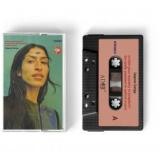
Nicaraguan-American artist Dagmar Zuniga makes music that feels both intimate and expansive: songs drift like disrupted signals, carried by harmony, tape hiss, and a strong sense of touch. Her debut solo album in filth your mystery is kingdom / far smile peasant in yellow music — written and recorded in New York, Norway, and Athens, Georgia over a period of five years on her longtime companion, the Tascam 424 — was uploaded to Bandcamp and YouTube in January 2025, quickly garnering over two hundred thousand views and the attention of artists such as Mount Eerie, who invited her to tour with them that summer. This year, what was once a jewel of tapped-in algorithms and message boards will meet the world at large, with in filth arriving digitally on March 4, and physically on April 10, via AD 93.
in filth is an atmospheric, devotional collage where one voice multiplies into a chorus of selves, sometimes delicate, sometimes severe; an effect created by Zuniga’s masterful layering of texture and complex harmonies. Synths glitter out like spears of sunlight from beneath clouds of moody, time-distorted guitars, and songs spin about themselves like tightly-wound music boxes, making use of a kind of hypnotic repetition, before melting apart into their components or slipping into the following track.
Zuniga began recording to tape as a teenager, drawn to the physicality of the medium — how a tape recording is fragile, mutable, and alive. Though her ethereal sound may draw easy comparisons to other female pioneers of psychedelic folk, she is influenced just as much by the darker sounds of Syd Barrett and The Fall. Like Barrett, Zuniga is a painter, and she is interested not only in recording music but in creating a full, self-contained artistic universe: she creates her own artwork, merchandise, music videos, and bootleg tapes of new and unfinished music that she exclusively sells at live shows (“If something is not material, it does not exist,” she insists). Her world has not gone unvisited, garnering her a monthly show on NTS Radio ‘World of Pain’, as well as a forthcoming appearance at Rewire Festival in April 2026.
Though Zuniga’s work explores themes of solitude and suffering, the suffering in her songs is not borrowed or displayed; it is held, then opened outward through empathy — an exacting practice of attention that insists on shared ground. Solitude, in her work, is not withdrawal but a starting point for connection. Likewise, over time, her recording process has become increasingly communal, with in filth featuring musicians Hayes Hoey, Austyn Wohlers (Tomato Flower), and Zach Phillips (Fievel Is Glauque). Newer recordings widen the circle even more. For Zuniga, collaboration is a way to “find a place between worlds,” echoing Badiou’s idea of love as a vision refracted through the prism of difference. Meaning emerges there — in the space between voices, between artist and listener. “I hope my music helps people work through difficult experiences,” she says. “The same way it helps me.”
- A1: Conflagration
- A2: Malachite
- A3: Nuts
- B1: 6'S And 7'S
- B2: B
- B3: Afore The Morrow
The core membership of free jazz act The Trio ensured its output was captivating, comprised as it was of double-bassist Barre Phillips, who had played with Archie Shepp, Chris McGregor, and Gong; saxophonist John Surman, who had played with John McLaughlin, Lester Bowie, and Alexis Korner; and drummer Stu Martin, who had played with Count Basie, Donald Byrd and Herbie Hancock. On the gripping sophomore set Conflagration, guest players include Chick Corea and trumpeter Harry Beckett, ensuring their take on abstract jazz contains melody as well as jarring exchanges. Another great Trio free jazz set!
- A1: Get A Load Of That Walk - Randy Van Horne & The Tigers
- A2: Lonesome Road - Jackie Jocko & The Barrett Singers
- A3: Rock Mr. Banjo - Bobby Schmidt & Sein Sextett
- A4: Medianoche Y Madison - Los T.n.t. (Tim, Nelly & Tony)
- A5: Leave My Heart - Mary Del & Archie Bleyer Orchestra
- A6: Neptune Part 1 - Sammy Benskin & The Spacemen
- A7: Oriental Rock - Georgie Manis
- B1: The Swingin' Shepherd Blues - Kirk Stuart & The Honeydreamers
- B2: Out Of The Picture - Mike Phillips & The Vocalaires
- B3: Papa Luigi - Billy Hope & The Badmen
- B4: Yucca Bean - The Four Friends
- B5: Git To Dat - Babs Gonzales
- B6: Just Leave Me My Guitar - The Vagabonds
- B7: Kiss Kiss Kiss - Dorita & Jack Costanzo Orchestra
- B8: Mambo Polka - Cousin Fuzzy & His Cousins & Milkmaids (Bonus Track)
Rock & Roll, Rhythm & Blues, Mambos, Cha Chas, Exotisches, unglaublich Seltsames! Zusammengestellt wurden diese raren Stücke von Professor Bop, der vielen eigentlich als Radiomoderator bekannt ist. In mühsamer Kleinstarbeit wurden längst vergessene Geheimnisse der Musikgeschichte geborgen und liebevoll zusammengestellt.
"Down At The Ugly Men's Lounge" ist eine skurrile Zusammenstellung dieser Raritäten und soll dem Zuhörer eine Tür in die Vergangenheit öffnen, zum Hören und Tanzen anregen.
Rising from the ashes of the recently defunct Shiva Burlesque, the trio of Grant Lee Philips, Paul Kimble and Joey Peters went on to record four studio albums.
This premiere created a mellow and political charged album that beautifully fuses many genres into a mellow Americana release, showcasing Grant Lee Phillips evocative voice and paved the way for what was to come. Warm yet angsty, it wields melancholy like a double- barreled shotgun whose bullet rockets through the soul.
This newly remastered version is pressed on 180g coloured vinyl and is presented in a gatefold sleeve
Solaire, Siegfried Kessler, that is the least we can say! Aged 4: learns piano. Aged 6: his first concert. After this: studies classical music like everyone else... until the jazz of Jack Diéval and Stan Kenton turned everything upside down. So it was goodbye to Bach...
...And hello to Dexter Gordon, Joe Henderson, Ted Curson and Archie Shepp (who he would accompany over a long period). In 1969, with Yochk’o Seffer, Didier Levallet and Jean-My Truong, he formed a group which would mark history and create a sensation: Perception. If French free jazz exists, its thanks to Kessler (and company).
The following year, the pianist recorded his first album: Live at the Gill’s Club. On this one-night concert date can also be heard Barre Phillips and Steve McCall. But it was in 1971 that Kessler would record his greatest album; still in a trio setting, but this time with bassist Gus Nemeth and percussionist Stu Martin: Solaire. Five tracks of extraordinary music, moving back and forth between modal jazz and contemporary music.
Let’s begin at the end, with the title track Solaire, on which Kessler plays a melody on flute and piano which resists all onslaughts. It sends out powerful waves, Kessler’s jazz, bubbling like hot oil (Persécution, Drum), shaking modal jazz to its roots (De l’Orient à Orion) or upsetting the memory of a cantata (Bach Hcab). The piano is an instrument which can provide a tendency towards, demonstrative technique; with Kessler, it is something else: a joyful persecution!
4 Cuts Placed In "A First Quarter", the companion piece to Solos, is the sonic result of a collaboration with artist Lawrence Weiner. As Landry remembers, “I was working for Keith Sonnier at Castelli Gallery and met Lawrence. He asked ‘can you make a video for me?’ So we did "To and Fro..." At some point he was working on "A First Quarter" (1973) and wanted me to do the music. I said ‘I already have the music.’ He said ‘what do you mean?’ I had recorded several pieces with Kurt Munkcasi and walked around the set playing the music on a boom box.”
The set features one solo each by Landry and contrabassist Rusty Gilder, a duo for the tenor saxophones of Landry and Richard Peck, and an ensemble piece for Landry, Peck, Gilder, trumpeter Robert Prado, and drummer David Lee, Jr. Starting the record off is “Requiem for Some,” inspired by Gil Evans’ long, placid tones. The anchor is Lee’s dry cymbal attack and fancy footwork, dancing around overlapping and recombining horns, chords held just shy of splintering. “4th Register” is a grainy delayed solo tenor piece, presaging “Kitchen Solos” from Fifteen Saxophones by several years. “Piece for So” was, according to Landry, “a chance to give Rusty a solo”. Mostly known as an ensemble bassist, Gilder bounced between Lafayette, Charlotte, and New York, leaving a slim recorded legacy. Here, he stretches out for twelve minutes and change – with keen upper register detail and meaty up-tempo walk, he could have been mentioned in the same breath as players like Dave Holland and Barre Phillips. The closing “Duo Vivace” finds Landry and Peck sparring on tenors, the latter holding a melodic line while Landry leans into explosive glossolalia, until both become birds in flight.
Grant-Lee Phillips' new album, All That You Can Dream, is a turbulent and
highly musical rumination that finds the veteran singer-songwriter
addressing the strange fragility of life
The collection of songs bears the markings of his prolific output, a melodic
prowess and an ear for lyric in everyday conversation. Comparable to the works
Low or Duster, Phillips offers a salve to a wounded world, struggling to regain
equilibrium. This is Grant- Lee Phillips at his most reflective, wrestling with the
most pertinent of questions. Focusing on life in quarantine ("A Sudden Place,"
"Cruel Trick") and the ever-shifting political landscape ("Rats in a Barrel," "Cut to
the Ending"), this collection shows that Phillips remains one of the finest singersongwriters of our time.
Could the missing link between Eric Dolphy and Albert Ayler be the Michel Portal of 1970? After having worked alongside François Tusques defending a free jazz “made in France”, we find him here, heading up an international quintet of which each member is on fire: John Surman, Barre Phillips, Stu Martin and Jean-Pierre Drouet. The quintet had full leeway to break out the free-form in long ambient tracks to compose this Alors!!! which leaves listeners with just one word to say: More!
Do we still need to present Michel Portal?... Clarinetist destined for the classical and contemporary world after his passage in the Paris Conservatory, he decided to try his hand at jazz, with an incendiary flamboyance! After his first experience with André Hodeir and Pierre Michelot, he would break all the codes with François Tusques (Free Jazz, in 1965) before starting the emblematic Michel Portal Unit. It is the Portal of those years that Alors!!! offers us the chance to listen to again.
“There are periods of insolence”, the musician declared and the year 1970 was one all on its own. Heading up an impetuous international troupe, a quintet consisting of John Surman (saxophones, bass clarinet), Barre Phillips (double-bass), Stu Martin (drums) and Jean-Pierre Drouet (percussion), Portal moves from alto sax to clarinet in the compositions shared with his partners.
From the off, the group sparks an explosion with the sound of “OO Bam Ba Deep” battered by the horns and percussion. Next up is the fabulous free jazz of “Yes, Oh Yes, You Wonderous Sun Kissed Maiden!” and the fantastic disjointed march of “Ça Boom?” which shakes up the musicians every which way. The quintet imagined that listeners would need to catch their breath, and thoughtfully added: “Billie the Kid” and “Undercurrent”, marvelous moments of ambient mystery.
Audacious from beginning to end, including the sleeve – the bird-man and his quintet brain designed by Avoine, –, the album is a fabulous object, to which the label Futura gave wings at the time. And as it is being reissued today there is just one word to use: the French translation of the title, So!!!
Originally released onPrivilege, a sub-label of Polydor, this soundtrack by free jazz saxophonist Marion Brown is almost impossible to find in its original pressing. Nowmore than fifty years later it is finally reissued, to the delight of free jazz enthusiasts and film music collectors.
By 1967, Brown, then aged 36, already had a very successful career in the United States, appearing on John Coltrane’s ‘Ascension’, Archie Shepp’s ‘Fire Music’, performing with Sun Ra and Pharoah Sanders and recorded several records under his name for renowned avant-gade jazz label ESP Disk.
That year, he however decided to move to Europe where he met with German saxophonist and vibraphonist Gunter Hamphel. Accompanied by Steve Mc-Call (drums and percussions), Barre Phillips (double bass), Alain Corneau (Cowbells) and Ambrose Jackson (trumpet), they recorded in 1969 in the legendary Parisian studio Davout, the soundtrack of the movie by Marcel Camus entitled
“Le temps fou”.
This film, which starred Nino Ferrer, was released in 1970 under the title “Un été sauvage” and unfortunately it did not make history in cinema. Fallen into oblivion, only his two original soundtracks (there is also a 7’’ with titles composed by Richard de Bordeaux and Daniel Beretta) are spreading the word.
- 1