Blackest Ever Black presents Sleep Heavy, the debut album of broken-hearted, downtempo R&B/street-soul and supremely atmospheric, introspective electronics from Jabu: a trio comprised of vocalist/lyricists Alex Rendall and Jasmine Butt, and producer Amos Childs.The group was born out of Bristol's Young Echo collective: an ecosystem unto itself which has birthed and nurtured a number of other notable soundsystem-rooted projects and artists to date including Kahn & Neek, Sam Kidel, Ishan Sound, Ossia, Asda, chester giles (the title Sleep Heavy comes from a giles poem) and Killing Sound (Childs with Kidel and Vessel).
A compilation of new and recent music, either previously unreleased or until now unavailable on vinyl, by Bridget Hayden, Carla dal Forno, Lightning In A Twilight Hour, Scythe, Jam Money, Ian Martin, Unchained, The Fulmars, Hypnotic Sleep and Brainman.
out of Stock
Last delivered 6 years ago available to reorder, subject to availability
Heavy-weather, beyond-good-and-evil soundsystem poetics, channelling raw and rootical techno, Isolationist abstraction, and dub at its most turbulent and raw-nerved and space-time-warping. New worlds ahead... Equal parts tuff, tail-thrashing dancehall pressure - see 'Hell Dub' - and art-of-darkness ambience and introspection, culminating in the slow-burning, third-eye-opening 23-minute dreamweapon, 'Vertigo'. Part of the Young Echo crew, Ossia embodies the best tradition of Bristol underground music in that he doesn't pay much mind to tradition, just does his own thing. Yes, Devil's Dance shares DNA with those sullen masterpieces we will always associate with the city, from blunted 90s street-soul/hip-hop to sub-loaded dubstep - but like his forebears Ossia is ultimately a mongrel breed, drawing from his own, very contemporary and idiosyncratic well of influences: grime, jazz, steppers, dub, post-punk and industrial abrasion, concrète minimalism... Devil's Dance could easily be not just a forbidding, but a suffocating proposition. But even at its most angst-ridden it feels lithe and aerodynamic, its darker impulses both intensified, and offset, by a pure soundboy's delight in detail and colour and higher dancefloor mechanics. The music pulses with energy, a fever to communicate...and Raki Singh (violin), Jasmine (vocals) and Ollie Moore (saxophone) add vivid flesh-tone to the punishing, plasmic electronics. The record was mixed at an infamous, subterranean Bristolian recording studio, using an arsenal of spring and plate reverbs, modded pedals, tape-delays and compressors: systems of black magic crucial to the album's intense presence and physicality and carefully modulated dread. In the end what we are witnessing, and experiencing vicariously, is a purging, an exorcism: find the devil, dance with the devil... and then chase, chase, chase him out of the earth
Black Rain returns with Computer Soul: the final part of a sequence of Blackest Ever Black releases that began with 2011's Now I'm Just A Number: Soundtracks 1994-95, and a first glimpse of the project's richly imagined future. For this outing Stuart Argabright (Ike Yard, Dominatrix, Death Comet Crew) is joined by BR founder member Shinichi Shimokawa as well as more recent recruit Soren Roi and Zanias (vocalist on 2015's Dark Pool) - making for the most most group-oriented iteration of Black Rain since its earliest days. Sonically too, there is a sense of evolution but also of coming full circle: the cyberpunk techno of Argabright's celebrated William Gibson soundtracks (compiled on Now I'm Just A Number) and extrapolations of Dark Pool's neuromantic yearning cut with glimpses of the thrash and industrial rock energies that animated Black Rain's incendiary live shows - and sought-after tapes for Kombinat and TPOS - in the early 90s. More than ever, Black Rain is propelled by a powerful science fiction impulse, whether responding to the themes and characters of Gibson's Sprawl or the Blade Runner universe (particularly K.W. Jeter's spin-off/continuation novels which extended its mythology, and timeline, further). It's not news that many of these works' most powerful predictions and prophesies have come to pass - the replicants are already living among us - so Computer Soul projects further into several possible unforeseen futures, its events 'set' in the second half of the current century, fifty or so years after those of Dark Pool. The hyperpopulated metropolises of Dark Pool are no more; the apartments are empty, haunted by ghosts of AC current, devices and machines running lonely without their owners...a melancholy internet of things. Where has everyone got to Gone but perhaps not gone. Oblivion beckons - always does - but on the other side of that, something else... another time, another place, a river....and a new way of living.
Jac Berrocal, David Fenech and Vincent Epplay return with Ice Exposure, their second album for Blackest Ever Black. A sequel and companion piece of sorts to 2015's Antigravity, its title couldn't be more apt: sonically it is both colder, and more exposed - in the sense of rawer, more volatile, more vulnerable - than its predecessor, capturing the combustible energy and barely suppressed violence of the trio's celebrated live performances with aspects of noir jazz, musique concrète, no wave art-rock, sound poetry and spectral electronics all interpenetrating in unpredictable and exhilarating ways. While there are moments of great sensitivity and even a cautious romanticism, the prevailing mood is one of anxiety, paranoia, and mounting psychodrama: close your eyes and Ice Exposure feels like a dissociative Hörspiel broadcasting from the seedy backstreets of your own troubled mind. Before he picks up an instrument or opens his mouth, Berrocal's unique and compelling presence can be felt: a combination of studied, glacial cool and anarchic, in-the-moment intensity that has served him well over a long and storied career. It was honed during his time as a theatre and film actor, and in the 70s Paris improv scene, it powered his influential Catalogue group in the 1970s, numerous seminal, sui generis solo sides, and far-sighted collaborations with the likes of Nurse With Wound, Lol Coxhill, Pascal Comelade and James Chance which have seen him come to be valorised by two generations of avant-garde agitators and eccentrics. Now in his eighth decade, it comes with an added gravitas, perhaps, but no less energy or vitality. On Ice Exposure, his lyrical, instantly recognisable trumpet playing is a key feature - see especially the ghostly, dubwise take on Ornette's 'Lonely Woman', the dissolute exotica of 'Salta Girls', and the sublime echo-chamber soliloquy 'Opportunity'. But more often it's his voice that commands centre-stage, whether casually discharging surreal poetic monologues or moaning in animal despair - a vocal tour de force that transcends language and culminates in the Dionysian frenzy of 'Why', Berrocal's half-spoken, half-howled exclamations jostling with David Fenech's slashes of dissonant guitar, over Badalamenti-ish, panther-stalk drums. Fenech's origins are in the mail-art scene of the early '90s, when he led the Peu Importe collective in Grenoble, and since then, in addition to his own recordings he has worked as a software developer at IRCAM and played with Jad Fair, Rhys Chatham and many others. Together with Vincent Epplay he is responsible for Ice Exposure's inspired arrangements and vivid, vertiginous sound design. Epplay is a visual artist and composer with particular interest in aleatory composition, concrete, and the reappropriation of vintage sound and film material. He and Fenech fashion a remarkable mise-en-scene for Berrocal to inhabit, one that embraces cutting-edge electronics while also paying homage to the best traditions of outlaw jazz and libidinous rock'n'roll ('Soundcheck' invokes the brutish spirit of Berrocal's hero Vince 'Rock N Roll Station' Taylor). On 'Blanche de Blanc', Berrocal's voice is framed by a groaning, ghoulish orchestra of industrial drones, while 'Equivoque' evokes the most humid and hostile Fourth World landscapes and 'Panic In Surabaya' lives up to its name, a hectic, pulse-quickening concrète collage that leaves you gasping for air. This is a searching and singular trio operating at the absolute peak of their powers, with an interplay that transcends studio and stage and occurs at an almost telepathic level. Ice Exposure is a triumph of that group mind, an underworld dérive as life-affirming as it is unnerving and psychologically precarious.
Bremen finds two luminaries of the Swedish punk underground, Jonas Tiljander (Brainbombs) and Lanchy Orre (Totalitär, Brainbombs, Teenage Graves, etc), coming together to explore the dark side of kraut and progressive rock, early electronic and drone music, whilst also invoking the fathomlessly bleak interior landscapes conjured by Nico/Cale on The Marble Index and Desertshore.
'Following a trio of sprawling, planet-gargling double-LPs, 2013's self-titled LP on Skrammel, and Second Launch (2015) and Eclipsed (2017) on Blackest Ever Black, Bremen - J. Tiljander and Lanchy, previously best known for their contributions to Brainbombs' long rapsheet of genius-and- brutality, but latterly exponents of a rarefied cosmic melancholy - return with Enter Silence, their most concise, and powerful, album to date. Once again the Uppsala multi-instrumentalists combine elements of trogged-out psychedelic rock with a deadly serious Arctic minimalism and weeping modal improvisations that owe more to the outer limits of jazz and burnt-out free music from Japan. It's connoisseur's space music, grown-up and grievously honed; outwardly inclined towards the epic but studded with details that reward attention and introspection. There's always been a strong undercurrent of sadness animating Bremen's work, and that existential burden is present and correct on Enter Silence, culminating in the all-out cosmic anguish of 'Palladium'. Even 'The Middle Section', whose ragged chords are nothing if not the sound of optimism and defiance, sounds like it's navigating some kind of unsayable trauma. But this band has always allowed plenty of room for bonehead slash-and-burn as well: see here especially the Stoogeian/39 Clocks-ish rock'n'roll of 'Aimless Cruising' and the pulpy quasi-cinematic tension of 'Sinister', or the brilliant 'Too Cold For Your Eyes', a blast of voidal motorik that sounds like a cranked-up Clean. It's a cold, cold world out there'
Sleep-deprived, breakbeat-driven vignettes of unclear authorship, from somewhere west of Lake Lagoda, near the Russia-Finland border.Sekundenschlaf has significant points of correspondence with contemporary European electronic music, as well as the golden age of (early) jungle and ambient techno. But its response to tradition, and to the zeitgeist, is idiosyncratic to say the least - with an atmosphere and psychogeography rooted in the tranquility and majesty of Western Russian nature, and the anxiety and distress of the country's post-Soviet working class. Pastoral calm meets dissonance and unease. The music has a loose, improvised feel, but its arrangements are intricate, its melodies iridescent: cascading arpeggios that stir a sense of optimism and renewal, sighing string-pads that evoke the deepest melancholy. Rhythms simultaneously hyped-up and burned-out, collapsing in on themselves as they race to destinations unknown. All bound together with field recordings of eavesdropped conversations, blurred into abstraction, a droning subliminal menace.Trust me, you'll be fine
Air Lows is the debut solo album by Silvia Kastel. The Italian artist has been a fixture of the underground since her precocious teens, clocking up many miles in Control Unit with Ninni Morgia ('It's like Catherine Deneuve dumped two cases of post-Repulsion psychiatric notes over Pere Ubu's Dub Housing, lit the fuse and, ahem, stood well back" - Julian Cope), including collaborations with the likes of Smegma, Factrix, Gary Smith, Aki Onda and Gate (Michael Morley of The Dead C). Both solo and in her work with others, Kastel has explored the outer limits and inner workings of no wave, industrial, dub, extreme electronics, free rock and improvisation. Air Lows is both her fullest and most refined offering to date, a work of vivid, isolationist electronics which draws deeply on her past experience but assuredly breaks new ground. Prompted by a late-flowering interest in techno and club music, Kastel sought to create something which combines a steady rhythmic pulse with the otherworldly sonorities of musique concrete, and avant-garde synth sounds inspired by Japanese minimalism and techno-pop (Haruomi Hosono's Philharmony being a particular favourite). The formal artifice of muzak / elevator music, the intros and outros of generic popular songs, the extreme light-heavy contrasts of jungle, the creative sampling of hardcore, and the very 'human' synths in the jazz of Herbie Hancock's Sextant and Sun Ra: all were touchstones for Air Lows' conception and composition, and all strains of music addressing - or complicating - the relationship between the human and the technological. By extension, visual inspirations also proved important: anime, and the avant-garde fashion of Rei Kawakubo. What does that shirt or dress sound like Though used sparingly, Kastel's voice remains her key instrument, whether subject to dissociative digital manipulations as on 'Bruell', delivering matter-of-fact spoken monologues, or providing splashes of pure tonal colour. Recorded between her expansive Italy studio and a more compact, ersatz set-up in Berlin, Air Lows gradually takes on some of the character of the German capital: you can hear the wide streets and uninhabited spaces, the seepage of never-ending nightlife, the loneliness. Air Lows is The Wizard of Oz in reverse: the glorious technicolour J-pop deconstructions of its first half leading inexorably to the icy noir of 'Spiderwebs' and 'Concrete Void'. These later tracks are reminiscent of 2015's magnificent 39 12', Kastel in the role of numbed, nihilistic chanteuse stalking dank, murky tunnels of reverb and sub-bass. But in fact there is contradiction and emotional ambiguity to Air Lows from the outset, and throughout - a sense of both infinite space and acute claustrophobia; energy and inertia; fluency and restraint.
A new piece by Australian artist Tarquin Manek, devised in collaboration with poet Martina Quake of Canvey Island, UK and recorded at M.E.S.S. (Melbourne Electronic Sound Studio), utilising EMS VCS3, Oberheim OB-Xa and ARP 2600 in combination with cheap, contemporary consumer electronics. It is, to all intents and purposes, a short, cautionary story about love. It is also a folk-tale, a science fiction, a suicide note. Unusually for a long-form spoken word piece, it is immediate in its impact, and lasting in its effect. Our narrator is damaged and unreliable: Quake's voice, digitally processed into a flat, AI affectlessness, conveys this all too well. Is this the vernacular poetry of the Uncanny Valley, or is it just that loss makes robots - numb and listless not-quite-humans - of us all Locks revels in the space between the spontaneous and the programmed (what is a poem if not a programme). It's part Tales Of The Unexpected, part Susan Howe, part Ruth Rendell, part HAL (or Holly). Manek's music is widescreen but understated...a becalmed landscape populated by distant drones, just-out-of-focus field recordings, and phased, minimalistic, Rhodes-style keys. A sort of sombre, lunar jazz. Space-age bachelor pad music, maybe, for a bachelor at the edge of space and the end of his tether. Just as Quake's words are cumulative in their tragedy, so the music grows more agitated and turbulent, at certain points harking back to the smoked-out psycho-acoustics of Manek's 2015 Blackest Ever Black LP, Tarquin Magnet, and his work in F ingers with Samuel Karmel and Carla dal Forno.
Raime's second album, Tooth, arrives June 10, 2016 on 2xLP, CD and digital formats. The widescreen melancholia of their 2012 debut, Quarter Turns Over A Living Line, gives way to an urgent and focussed futurism, in the shape of eight fiercely uptempo, minimal, meticulously crafted electro-acoustic rhythm tracks. The DNA of dub-techno, garage/grime and post-hardcore rock music spliced into sleek and predatory new forms.
No let-up, no hesitation. Needlepoint guitar, deftly junglist drum programming, brooding synths and lethal sub-bass drive the engine. The production is immaculate, high definition. No hiss, no obscuring drones or extraneous noise: the music of Tooth is wide-open and exposed. The seeds of its supple dancehall biomechanics can be found in the self-titled 2013 EP by Raime side-project Moin, an ahead-of-its-time synthesis of art-rock and soundsystem sensibilities, but Tooth pushes the template further, binding the disparate elements together so tightly that they become indistinguishable from one another.
If Quarter Turns was an album that confronted total loss and self-destruction, even longed for it, then Tooth is the sound of resistance and counter-attack: cunning, quick, resolute, calling upon stealth as much as brute-force. At a time when so many pay lip service to experimentation without ever fully committing themselves or their work to it, Raime return from three years of deep, dedicated studio research with a bold and original new music: staunch, rude, and way out in front.
out of Stock
Last delivered 6 years ago available to reorder, subject to availability
Visibility Is A Trap is the new EP by Dalhous, comprised of four originals together with a masterfully understated Regis remix of 'He Was Human And Belonged With Humans'. The EP heralds the arrival of the Edinburgh-based project's sophomore album, Will To Be Well, due out on Blackest Ever Black in early Summer 2014. Dalhous first announced its existence in 2012 with the Mitchell Heisman 10', and last year released its debut full-length: An Ambassador For Laing. Both Visibility Is A Trap and the upcoming Will To Be Well LP reflect writer-producer Marc Dall's continued interest in the language and imagery of self-help, R.D. Laing and the anti-psychiatry movement. Though recorded after Will To Be Well, the tracks on Visibility Is A Trap at first appear to have more in common with the blue ethereal drift of Ambassador. While 'Information Is Forever' and 'A Change Of Attitude' are firmly in the ambient mode, 'Active Discovering' fizzes with arpeggiated energy, and a battery of percussion disrupts the calm surface of 'Sight Of Hirta'. Something is up. All is not as it seems. The Regis remix of Ambassador highlight 'He Was A Human And Belonged With Humans' finds Karl O'Connor in unusually pensive mood. In fact this near-beatless, dubwise version is unlike anything he has put his name to before. Discarding the rhythmic skeleton of Dalhous's original, he gives their weeping saxophone more space to roam and resonate, adding off-beat, sleep-deprived keys, murmured vocal fragments and swells of sub-bass pressure. It could be construed as a love letter to his former home in West Berlin; certainly it evokes and effortlessly updates the drugsick grandeur of later Neubauten or Low side 2.
This 12" heralds Desire's vinyl reissue of Ike Yard's self-titled album in Autumn. Originally released on Factory America in 1982, Ike Yard was a product of the New York no wave scene, but also stood very much apart from it, then as now. Propulsive, paranoid, aggressive electro minimalism, with as much attention paid to the mixing board and effects processors as to vocals, guitar and synth. At once starker and more fully-formed than virtually all other contemporaneous post-punk music. Desire's 2012 edition represents the first ever vinyl reissue of this classic, prophetic album.
out of Stock
Last delivered 13 years ago available to reorder, subject to availability
Ulterior Motives launch their main label with a single from DJ Persuasion, featuring a Liftin’ Spirits remix from Ant Miles. The label, which is helmed by DJ and producer Noah Tucker, began life in 2021 with an anonymous edit of a much-loved underground hip hop gem. Two further 12”s in the white label series followed along similar lines, joining the dots between jungle, footwork and r’n’b in UM style. Since then, they have also launched their cassette series with a Metrist mix covering golden era tech step and d’n’b.
DJ Persuasion is principally known for A History Of Hardcore, a series of ten mixes covering ’88-’98 which appeared across a number of platforms between 2015 and 2020. Certain entries in the series appeared on cassette via The Trilogy Tapes, Blackest Ever Black (Id Mud) and Tape Echo. Persuasion also hosted the NTS Demon Poetry show (now the Drum Poetry show) for some years, and contributed In Focus sessions covering the work of Dillinja and LTJ Bukem, alongside Dev:Null.
Jameela EP covers four contrasting, but also concentric areas of the hardcore continuum, featuring a remix from Liftin’ Spirits aka Ant Miles of Origin Unknown. The title track rolls out at bleeding edge jungle hardcore tempo, taking in a mixture of familiar and unfamiliar references. Liftin’ Spirits contributes a standout remix which reframes Jameela as a drum’n’bass epic, opening with a panoramic intro and a quaking bass drop, then building to soaring strings. Robin Gets Revenge is an audial intervention into one of the last remaining unsolved mysteries in acid house, and a stomping 89’-’90 style jammer to boot. The B2 finds Jameela in a slower guise, offering something for after the club and the warm up.
Limited copies of this John T. Gast (Apron, Planet Mu, Blackest Ever Black etc) project from 2017 - originally released on a hyper limited CDR. Now on vinyl for the first time featuring all the original tracks
Special stuff from this shadow dwelling soul. Really killer.
More than a decade after the release of ´Land Lines', the mythical Humboldt County, California based duo of Brian Pyle and Merrick McKinlay reappears seemingly out of nowhere with 'Atheistsaregods'. With past releases on such cult-like labels as Root Strata, Weird Forest, Blackest Rainbow or Digitalis, Starving Weirdos were an indelible part of a sprawling and loose network of artists in Northern America whose DIY work ethic and extreme activity revolved around shoestring-budget constant touring, numerous limited editions on CDR, tape and vinyl and a relentless drive to push the boundaries of genre.
Out of that cauldron, Starving Weirdos stood out as one of the most persistent and visionary acts, developing a mind altering body of work that went from warm soundscapes through droney digressions, freeform improvisation and raucous noise summoned from a myriad of instrumentation and low budget processing - vocals, keyboards, violin, flute, percussion and an assortment of less identifiable sound sources. 10 years on their legacy remains a timeless and wildly under-appreciated one, but hopefully this new album will shine a light on their idiosyncratic approach. As time itself was never a constraint. This is music suspended outside of it.
Right from the start with the echoing percussion, dissonant keys and processed vocals of 'Haiku Nagasaki', 'Atheistsaregods' draws a continuous flux of psychedelic elevation that goes from the gloomy electronic motifs not unlike the early Cluster vibes of 'Invocation' into the dank percussive maze of the appropriately titled 'Barulho do Samba'. The self titled track induces a sense of post-apocalyptic vertigo via hallucinatory scraps of voice, suspended synth tones and reverberating field recordings, connecting into the droney mystics of 'Dudukahar (Reed Prayer)'. Coming full circle, 'For Vinny' brings back the echoing percussion amidst hypnotic cello lines until it drifts off into the unknown. With the same palpable sense of urgency, Starving Weirdos feel as vital as ever. And even if we didn't realize it we were in need of them. Welcome back.
Onrijn Records invites Ian Martin for a 6 track mini-album. He is mostly known for his music on Blackest Ever Black, Pinkman and Bunker. This record releases a rich palette of hybrid electronic music. From new wave, house and electro to neo cocadisco. And is most of all a search for melody, suspense and melancholy. The track “GOD Theme” was the soundtrack of the film GOD by director Edwin Brienen (2016). Ian Martin’s “Heartbeats” is a true emotional rollercoaster!
Constructive is pleased to announce, 'Utopia or Oblivion', a new compilation featuring ten artists inspired by the pioneering work of R. Buckminster Fuller, with each track inspired and in response to Fuller's work specifically Utopia or Oblivion', first published in 1963.
From the irregular glitch pop scintillation of 'How Would I Be? What Would I Do' by German artist & founding member of To Rococo Rot, Robert Lippok, to the heartfelt ambient and seraphic voices of 'Afterimage' by Japanese artist Tujiko Noriko (Editions Mego, PAN, Room40), through to the tensile, eruptive, dub-contoured emittances of 'Tensegrity Rhythms' by Peruvian experimental composer Ale Hop (Karlrecords).
Elsewhere, there are appearances from the Bafta-nominated composer Adam Janota Bjowski (Saint Maud OST), musician & Constructive co-founder Adrian Corker, London-based experimentalist No Home, Italian artist & NTS Radio resident Silvia Kastel (Blackest Ever Black, Palto Flats, Youth), British sound artist David Prior, and a unique collaboration between the British DIY experimental musician Richard Skelton & Corey Fuller, a descendant of R. Buckminster Fuller.
out of Stock
Last delivered 4 months ago available to reorder, subject to availability
Russell Haswell and Florian Hecker have both a long history with Mego/Editions Mego. Individual releases have peppered the Mego catalogue since Haswell’s Live Salvage 1997->2000 cd release (MEGO 012) in 2001 and the debut Hecker release IT ISO161975 (MEGO 014) in 1998.
The individual exploration of sonic phenomena by these two practitioners has resulted in both being highly regarded for their uncompromising approach to sound as matter. Russell Haswell and Florian Hecker came together as a collaborative duo with the now-legendary record Blackest Ever Black, somewhat inexplicably, on the classical imprint of Warner Brothers.
In 2025, Hecker and Haswell return with a new album featuring the two-channel edit produced initially for their UPIC DIFFUSION SESSION #23, performed as a live diffusion across 8-channels at the X100 Festival, Berlin, 2023, celebrating the 100th anniversary of Xenakis' birth.
This record furthers the duo's exploration of Xenakis's UPIC system as the sole instrument. The UPIC is a computer music system that generates sound from visual input. The original intention of the system developed by Xenakis was to make a utopian tool for producing new sounds accessible to all, independent of formal training. One can locate footage of Xenakis and a group of children making drawings for the system in the 70's.
The duo set off experimenting with a diverse array of hand-drawn images to feed the UPIC system including news photographs of disasters and atrocities, "food porn" through to depictions of the natural world and microscopic images of molecular structures (including 'the blackest ever black'). The resulting eccentric audio from these images is claimed by the artists to heighten synaesthesia and is as mysterious as it is baffling.
Throughout UPIC DIFFUSION SESSION #23 frequency clusters move and morph in the most unusual manner, shifting and stretching into shapes that hint at some kind of magical process. What starts out deceptively simple soon unravels into a large array of sonic mayhem. Symbolic jet planes are shredded by a swarm of insects, a metal bowl howls into the void, a tiny tin toy crawls into a thicket with the resolute aura of a black hole. A burning geyser of laser forms liquid shrapnel. This is sound as an alchemical process, a constant chimerical flow into the netherworld and is the net result of the decades long radical investigations by the two artists involved. UPIC DIFFUSION SESSION #23 is a direct, rich and rewarding listen for those willing to invest time into the outer limits.
out of Stock
Last delivered 13 months ago available to reorder, subject to availability
Tina Records presents Cargo Cult, six tracks from the Musci archives created using an extensive collection of traditional instruments combined with synthesisers and electronics, with remixes provided by Cut Hands and Nokuit.
Italian ethnomusicologist Roberto Musci, active since the mid 80s, has experienced a resurgence in interest since the 2016 Music From Memory compilation 'Tower of Silence', receiving endorsements from disparate influential figures. His music featured in a playlist Ryuichi Sakamoto curated for his favourite Japanese restaurant in New York, as well as in a 2019 Yung Lean playlist for The Opioid Crisis Lookbook.
Cut Hands is the alias of William Bennett, most well known as the originator of the Power Electronics genre with his project Whitehouse. Inspired by Haitian Vodou, under the Cut Hands moniker, Bennett has been exploring rhythm and percussive instrumentation since 2007 with releases on Blackest Ever Black and Downwards.
A film composer by day, Nokuit has developed a distinctive cosmology over a mutating series of releases on underground labels such as wannamarchi.club and NKT. He has performed internationally, including at Cafe OTO as part of a lineup curated by Flora Yin-Wong.
out of Stock
Last delivered 22 months ago available to reorder, subject to availability
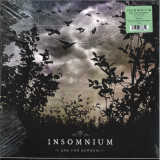
Nur wenige Bands vereinen Düsternis, Melodie und Musikalität so sehr wie die Finnen INSOMNIUM. Und das mit großem Erfolg: Ihr letztes Meisterwerk "Anno 1696" (erschienen Anfang 2023) eroberte die internationalen Albumcharts, darunter Platz 1 in Finnland und Platz 5 in Deutschland. Century Media Records bringt nun zwei Alben auf Vinyl zurück, die mehrere Jahre lang vergriffen waren: Bereits 2011 hatte das Album "One For Sorrow" dem stetig wachsenden Erfolg der Band einen weiteren Schub gegeben und sie in die Top10 der finnischen Albumcharts katapultiert. Ihr 2016er Album "Winter's Gate" ist ein Konzeptalbum, das aus einem einzigen epischen 40-minütigen Song besteht. Das Album basiert auf der Kurzgeschichte "Winter's Gate" des Sängers und Bassisten Niilo Sevänen, die in seinem Heimatland mit Preisen und Nominierungen ausgezeichnet wurde. Das Album ging in Finnland sofort auf Platz 1. Beide Alben sind jetzt in 180g farbigem Vinyl erhältlich.
out of Stock
Last delivered 2 years ago available to reorder, subject to availability
Firnis DC lands on Perko’s FELT imprint with Firnis der Civilisation, an eponymous collection of 9 tracks that transmit the enigmatic meditations of its author; discordant trudges of twilight romanticism from pastures far beyond.
The uncommon threads that bind FELT intersect neatly at Firnis DC. Their previous outings as тпсб, for Blackest Ever Black, Climate of Fear and AD93, and a pair of The News Cycle releases, were cult hits of uncanny ambient techno and jungle volleys interpreted through lenses of outsider electronics. A snug fit, in other words, for Perko’s unpredictable stable.
On Firnis der Civilisation, we find things paired back further than before. Its 9 tracks play out like beatless symphonies of wayward folk music who’s basement transmissions have been intercepted from the ether; a stirring limbo of grotty emotions that inspire and conflict in equal measure. Tracks offer brief portals into zones of sampladelic oddities, haunted vocals and scatty euphoria that is collectively driven by an (un)willingness to straddle familiar pastures. By the time you reach its finale gut-punch of Dreifach Fiktierung’s twitching breakcore and Innozenz Jahr funk rollage, you are offered a light at the end of a rather odd tunnel that you never quite understood how you got there in the first place.
out of Stock
Last delivered 22 months ago available to reorder, subject to availability
Miles Davis' boundlessly influential On the Corner was so far ahead of its time upon release in 1972, the jazz cognoscenti rejected its groundbreaking concoction as middling in nature. Yet time has a way of righting wrongs and shifting views by adding needed context and perspective to visionary ideas, music, and approaches — the likes of which fill Davis' boldest and most controversial — undertaking. Designed to bring the focus back on the groove and bottom-end frequencies, the funk-loaded On the Corner revolutionized jazz. It also set new standards for record production, presaging remixing and electronica by more than a decade. And the work has never sounded more thrilling thanks to this very special pressing.
Sourced from the original master tapes and pressed on MoFi SuperVinyl, Mobile Fidelity's numbered-edition 180g 33RPM SuperVinyl LP of On the Corner exposes the internal mechanisms, free-associated playing, and then-unmatched studio techniques in vivid fashion. The low end, crucial to every composition here, is both heard and felt, with locked-in bass lines and low-range percussion conveyed as taut, solid, and visceral passages. You can discern the multiple layers of rhythm Davis employed on complex tracks such as "Black Satin," as On the Corner stands as his first effort to use overdubbing and multiple tape machines. As a pioneer, Davis likely would’ve loved MoFi’s groundbreaking SuperVinyl profile that features the lowest-possible analogue noise floor as well as pristine transparency, dead-quiet surfaces, and superb groove definition.
New degrees of spaciousness and airiness — equally important to the musique concrete arrangements — give the impression Davis and Co.'s creations float in space. Instruments are portrayed in three-dimensional manners, rhythmic loops retain tonal purity, and horn solos skitter across an extra-wide soundstage that takes listeners into Columbia's Studio E. Mobile Fidelity's SuperVinyl LP captures Teo Macero's innovative production — and the trumpeter's cutting-edge aural collages — in definitive fashion.
Heavily inspired by Sly and the Family Stone, On the Corner portrays street vibes and remains Davis' Blackest-sounding record. The conscious attempt to connect with youthful audiences tapped into rock and funk is evident not only on the colorful cartoon cover art depicting hot-pants and zoot-suit revelers, but in the music's emphasis of recurring drum and bass grooves. Distinct from Davis' earlier fusion experiments, the record's long-misunderstood set dials back improvisation in favor of beats, loops, and atmospherics that generate trance-like effects. While Davis utilizes his band for core duties — Chick Corea and Herbie Hancock prominently figure — he also relies on an all-star cast of side-men for concentrated soloing and additional support.
With rhythm providing the basic foundation, other notes fall into place, with their positioning steered by Macero and Davis' editing-room techniques. Looking to the manipulation-based work of Karlheinze Stockhausen and teaming with Stockhausen disciple Paul Buckmaster, Davis re-imagines what grooves constituted and could accomplish throughout On the Corner. The shapes of the songs become completely transformed as they progress. Faint melodies, spacey chords, chunky riffs, wah-wah fills, and repeated motifs bounce in and out of a sonic funhouse that wouldn't be out of place at a Harlem block party.
Exotic, intrepid, and filled with Davis' "jungle sound," On the Corner remains daringly hip more than four decades later.
A Colourful Storm begins 2024 with a luxurious suite of daydreaming introspection courtesy of Unchained, the longstanding solo project of Nathaniel Davis who was last seen on vinyl in the final Blackest Ever Black release. Recorded at home between 2020 and 2023, Gabbeh is the latest expression of Davis's guitar-based instrumental musings and represents a stylistic evolution of his self-released noise tapes and CD-Rs into romantic, bossa nova-influenced melody-making. He wrote the tracks sporadically, with minimal instrumentation and intervention. Electric guitar, bass improvisations and rhythms from an old drum machine are layered and given new life, the space between them softly breathing with minutiae of the everyday: the buzz of cicadas, the passing of cars, the whistling of passersby. The psychogeography of Grenoble, Davis' home since 2018, played a conscious role in the weaving of Gabbeh's fabric: "I think certain songs reflect, in ways, Grenoble's natural surroundings. 'Drac' is named after the river that flows from the mountains down to the city… 'Dru' is the name of a well-known peak near Chamonix". Opener 'Largo' sets the mood, its primitive samba rhythm concealed by a cloud of saudade. The bebop sensibility follows suit, the tension between its angular picks and percussive shuffle a wondrous balancing act, while the intoxicating sway of 'Rambler' is perhaps the most poignant expression of longing and loss we've heard in recent years. Highly recommended for fans of Durutti Column, Maurice Feebank, Toninho Horta.
#40 ON ROLLING STONE'S 500 GREATEST ALBUMS OF ALL TIME: ANTICIPATES LATE 1960S TURBULENCE VIA PROPHETIC SONGS AND DARK THEMES
1/4" / 15 IPS analogue master to DSD 256 to analogue console to lathe
Any discussion about the finest psychedelic rock record ever recorded is incomplete if it doesn't grant consideration to Love's Forever Changes. Ranked by Rolling Stone as the 40th greatest album ever made, and named by Mojo the second-greatest psychedelic set in history, the effort is an internationally recognized seminal work of art. Transcending language and convention, its magnitude and magnificence need to be heard again and again. For here is an effort whose mind-boggling acoustic complexities and kaleidoscopic nuances are tailored for high-fidelity playback.
Nearly unlimited headroom, vast instrumental separation, transparent clarity, artifact-free atmospherics, and faithful balances appear out of jet-black backgrounds. Turn it up as loud as you want; the sole limitation will be your system's potential.
Commercially ignored upon release in November 1967, Forever Changes confronts the alienation, paranoia, violence, and strife that would soon plague the countercultural movement and send the Summer of Love into a tailspin. Apart from its lyrical themes and prescient malaise, the record's enduring nature equally owes to intertwined arrangements sewn together with Latin guitar-picked lines, finessed folk harmonies, mariachi-inspired horn charts, and subdued strings.
The seemingly opposing combination – ominous, dark reflections situated amidst lush, light melodic beds – affords Forever Changes a distinguished tension of claustrophobia and openness, dourness and ecstasy, ugliness and elegance enjoyed by no other record in the rock canon. Much of the contrast owes to leader Arthur Lee's mental state and pertinent observations. Lee, whose suppressed romanticism often surfaces even amidst the blackest shadows and most cynical moments, believed he would soon die, and hence channeled everything from lasting hopes to acid-addled decay to the chilling testimony of a Vietnam veteran in his narratives.
Alternatively sad and beautiful, the album-opening and flamenco-inspired "Alone Again Or" establishes the mood for what follows. Vocals overlap and soar; tempos rise and fall; surrealism trades places with reality.Forever Changes thrives both because of and in spite of a surfeit of labyrinthine chords and difficult notes that never repeat. Its ambitious construction almost forced the already fractured band to cede responsibilities to session musicians, which appear on two tracks. The quintet's resolve to not only complete the album, but to do so with such poignancy and curiosity, further enhances Forever Changes' standing.
No wonder that, in the twilight of his troubled career, Lee performed the record in its entirely during concerts met with overwhelming critical acclaim. It was, and will always be, a personal manifesto of timeless relevance and appeal.
‘Demos/sketches/interludes from the hinterland between records. Drum machines and single take vocal sketches tied together with downtime synth experiments and recordings of local disappearing areas.’ True as it is, Jabu’s strap-line is a somewhat understated take on what also proved to be a transformative experience for them. The follow-up record to their 2020 sophomore LP ‘Sweet Company’ (and the ensuing ‘Versions’), ‘Boiling Wells’ weaves a smudged, group -mind spell. Originally released earlier this year without fanfare as a digital-only release, it now receives the proper release attention it deserves, issued in a neatly packaged vinyl edition of 300 copies. Dreamlike, woozy, raw and in dub, the album documents a blossoming process, and encapsulates a fragment in time - holed up in the country, soaking up the atmosphere in collective isolation, creatively embracing the limitations of a small recording set-up, and finding a new way to work as a band. “My mum had gone away so we’d decided to take the mixing desk and a couple of drum machines out to her house and set it up in the front room. We did it a couple of times to get the bulk of the tunes on 'Boiling Wells' done, one in summer and one boozy one around Christmas. I think we all immediately enjoyed working that way, sat around all together, more of an immediate thing. Jas started to play a lot more guitar, her and Al would write lyrics on the fly or be programming a drum beat in or something. We were all switching around and getting ideas down really quickly, not worrying too much if they were good or not. The music was limited by the stuff we had there, I didn’t bring a big desk so we only had six channels or so, and everything was basically just recorded in as a stereo take so we were more or less stuck with it after we’d laid it down - which was nice too. I don’t think we would’ve changed them anyway; it was the sound of the room and of us doing it together in the moment that was really important.” There has always been a collaborative heart to Jabu, though its nature has shifted and morphed over time. In their earliest incarnation, in after-school jams, Alex Rendall would rap over Amos Childs’ beats, but by the time they began releasing music in 2012, Al had found his singing voice – a sweet, soulful counterpoint to Amos’ increasingly dub-wise, experimental backing. Both are founder members of Bristol’s Young Echo, a collective of friends and musicians first operating loosely together on radio shows, artistic collaborations and events, and later on, running a record label. As expansive as their original remit was, Young Echo has steadily evolved since featuring in The Wire’s 2013 cover feature on Bristol’s new school of post-dubstep bass music. Of late, Seb (aka Vessel) has been working with violinist Rakhi Singh on string arrangements for Jabu, and the upcoming residency at Bermondsey’s MOT will showcase relative newcomers Birthmark and Intel Mercenary alongside the regular crew. Jabu’s debut album proper, ‘Sleep Heavy’, arrived in 2017 courtesy of Blackest Ever Black. A sublime, focused meditation on grief and loss written largely by Amos and Al, it marked the debut of Jasmine Butt (aka Guest), adding a further layer of vocal texture to their palette. ‘Sweet Company’, their first album written as a trio (released via their own do you have peace? label), drifted into lighter, more ethereal introspection. Featuring guest appearances by Sunun and Daniela Dyson, remixes by Equiknoxx’s Time Cow and Young Echo ‘s Ossia teased out the inherent pop and dub sensibilities respectively. Recent times have also seen remixes by kindred spirits Seekers International and Jay Glass Dubs, and a collaboration with the renowned T.S. Eliot Prize-winning dub Poet and musician Roger Robinson on a pair of plaintive, aching 7” singles. Jabu’s broad raft of inspirations can be experienced first -hand on their monthly NTS Radio show ‘Music 4 Lovers’, co -hosted by long-time friend and soul afficionado Andy Payback. A celebration of the endless tapestry of interrelated musical connections, it runs parallel to Jabu’s own reinterpretation of their influences. For ‘Boiling Wells’, Amos remembers a diet of “A.R. Kane, Cocteau Twins, DJ Screw, Southern/Memphis rap mixtapes, early 90’s jungle, Karen Dalton, Sybille Baier, Vashti Bunyan, Svitlana Nianio, a lot of soul, Armand Hammer & Alchemist, Grouper, Bobby Caldwell. Jazz was a constant, Japanese, Polish, Latin, American…”. And from those diverse strands, something new and singular has formed, to line up alongside them. ‘Boiling Wells (Demos ‘19-’22)’ is released by UK newcomer Six of Swords in a limited vinyl edition of 300 copies, pressed on black vinyl housed in full colour 270 gsm matt varnish sleeve and black paper inner, with full download coupon
NME - 4/5 - “Sigur Rós are at their blackest and most sinister, sounding not so much reborn as in the ferocious throes of an almighty exorcism.”
Line of Best Fit - 9/10 - “Neither the drums, guitars or synths are ever understated, lo-fi or polite – throughout, they’re devastating, taking control of the band’s poppier sensibilities and lighting vicious fires beneath them.”
Kveikur is the seventh album by Sigur Rós, originally released on XL Recordings in June 2013. Completely out of print worldwide, the album will now be re-released on the band’s own label, Krunk.
Described by the band as “more aggressive” than any of their previous work, Kveikur – which means ‘fuse’ or ‘candle wick’ in the band’s native Icelandic – is heavier, both thematically and sonically. All of the lyrics are sung in Icelandic rather than the wordless “Vonlenska” (Hopelandic) as on ( ), providing a more grounded experience.
Mysterious Dutch outfit Doxa Sinistra have been operating on the fringes of the industrial-experimental and sound collage tape scenes since the very early 1980s. Their output has long been coveted by fans of DIY and left-field music since their earliest transmissions, and this featured 1983 recording 'The Other Stranger' might well be one of their most known. A truly strange offering, the track is a cascading acidic and minimal stripped piece, bathed in disparate resonant sample sources that could possibly have been recorded straight from the TV set. Nobody really knows what it all means, but it doesn't matter as the end result is an engaging mesmerising hypnagogic masterpiece of sampling and rhythmic free sound. A true classic from the outer reaches of electronic music.
Midnight Drive label owner Brian Not Brian featured 'The Other Stranger' on his now infamous 'Holywell Session' cassette tape for the sadly missed Blackest Ever Black ever label in 2014, and the track was also a highlight of Boards Of Canada's cult 'Societas X Tape' for NTS in 2019. This special 7" vinyl only edition also features the more stripped back rhythm track version entitled 'Strange' on the b-side that is a slightly longer mix with a different arrangement and no samples, letting the minimalist acid and drum machine workout unfurl at its own steady woozy pace. This is the first time both versions have been remastered and have appeared together as a single and it is presented here with the blessing and involvement of Doxa Sinistra.
out of Stock
Last delivered 20 months ago available to reorder, subject to availability
NoCorner and Stone King proudly presents the first official collaboration between Ossia and Andy Mac. Both are fresh off a series of high-profile releases and projects - Ossia with recent releases on Berceuse Heroique and Blackest Ever Black, and Andy with his new Deep Street label and the 2nd Diving Bird 12 that just came through on Idle Hands.
Featuring three tracks written & recorded between 2015 and 2017, the record sees Andy & Ossia's mutual love for Jamaican and African rhythms, dusty records and a tape-saturated approach to guide a fresh, dubwise production process involving a battered old Roland Sampler and Ossia's infamous half-broken analogue Trident Mixing desk.
A Side Soup Riddim serves itself up as a hybrid slab of dancehall, dub and perhaps even the looser stylings of house - a fresh twist with an eternally-universal emphasis on space, and the movement within it. On the flip, Cado leans even further into negative space, allowing a gorgeous piece of samplism to drive the rhythm all the way to its conclusion in the blink of an eye, with the soft insistence of the percussion playing with the listener's sense of time. This feeling intensifies in the final track, Linguine Loop. A shapeshifting low-frequency hum underpins a hypnotic melodic loop that develops, delays and distorts into a dizzying crescendo of feedback and noise. The final minutes serve as a final reflection on what came before as the melody slowly re-filters into the mix as a ghostly, half-there form of itself, drawing the reductive conclusion to this EP, a triple version excursion of far-away sounds.
Edition of 300, six times (at least) hand-stamped, in kraft sleeve.
Mastered and cut by Lewis at Stardelta.
Originally premiered in its earliest state at Tate Britain by William Bennett and Mary DeBlois in 2010, the SIXTEEN WAYS OUT magnum opus reflects over a decade's work of compositional refinement and elaborate studio expansion, and is the first Cut Hands release since 2014's highly-acclaimed FESTIVAL OF THE DEAD on the Blackest Ever Black label. The end result is a mystical showcase of musical esoterica, its seventeen tracks fusing the most arcane elements of subliminal extralinguistics, avant-garde transformational hypnosis, and dark self-help secrets. You will never hear anything quite like it. Available on 180gm vinyl and CD. CD version includes beautiful 12page booklet with expanded texts.
out of Stock
Last delivered 3 years ago available to reorder, subject to availability
New Nordic jazz duo Svaneborg Kardyb sign to Gondwana Records and announce NPR Tiny Desk session and captivating third album Over Tage
Svaneborg Kardyb are Nikolaj Svaneborg - Wurlitzer, Juno, piano and Jonas Kardyb - drums, percussion a multi award winning duo from Denmark, where they won two "grammys" at the Danish Music Awards Jazz 2019: New artist of the year and Composer of the year. ?Drawing on Danish folk music and Scandinavian jazz influences, including Nils Frahm, Esbjörn Svennson and Jan Johansson's landmark recording Jazz På Svenska, their music is an exquisite and joyful melding of beautiful melodies, delicate minimalism, catchy grooves, subtle electronica vibes, Nordic atmospheres and organic interplay, all underwritten by the sheer joy of playing together. "We started in the earliest of mornings over the blackest of coffee, sometimes even without talking, just music.
Immediately we felt a connection between our personal style of playing and the compositions emerged like out of nowhere. The vibe from these early sessions is still the backbone of our little band".
Svaneborg Kardyb hail from Aalborg, in Jutland, in the north of Denmark where they first met in 2013 and discussed the possibility of creating a duo over late night talks. Six years went by as they both explored other projects before they eventually realised the idea of making music together. Like their new label mates, Vega Trails, Svaneborg Kardyb are a duo, a format that gives them a lot of space to occupy - or leave blank. "We enjoy the simplicity and focus it gives to the interplay. We come from very different musical backgrounds; Nikolaj from Scandinavian jazz, and Jonas from Roots, blues and folk, so the music is a sum of our personal contributions and doesn't thrive to be anything else than that. It's quite unique for us to have this shared musical tongue and friendship".
Their music is intentionally simple at first glance, but evolves and unfolds through listening over time, with plenty of room for exploration, reflection and improvisation. Their aim is to create music that is as honest and intimate as possible "with melodies and rhythms so strong that we are left as only the messengers". And their fast-developing music chemistry allowed them to give little thought to what their musical influences were. Giving their music a captivating charm. "We explored whatever sounds and musical structures our duality gave birth to and through long jam-sessions we found small seeds of ideas that turned into tunes. Danish traditional songs, community singing and hymns are a big inspiration too. Both the tonal language, the lyrical melodies and the way generations can gather around the music, is something that is close to our hearts".
Over Tage (over roofs) is their third album, following Knob (2019) and Haven (2020) and marks their debut for Gondwana Records a label noted for working with artists such as Mammal Hands, Portico Quartet and GoGo Penguin whose music, like that of Svaneborg Kardyb delights in exploring the fertile spaces between genres. For the duo it is their most serious and thoughtful record to date. "It may be our strongest and most honest record so far. Doubts and uncertainty were kind of the foundation for the sounds of the album but there is also hope and lots of uplifting moments and we're very pleased with how it came out." And it is that mixture of elevation and thoughtfulness, honesty and intimacy that makes the music of Svaneborg Kardyb so special and Over Tage such a joy to listen to. The world awaits.
out of Stock
Last delivered 3 years ago available to reorder, subject to availability
Downwards’ deep bonds with NYC catalyse the debut LP by Jim Siegel’s Vivid Oblivion, a reveberating post-industrial salvo produced by adopted Brooklynite Karl O’Connor (Regis), and co-mixed by Anthony Child (Surgeon) and Simon Shreeve, who also mastered it. It’s a super deep, highly atmospheric beast somewhere between Valentina Magaletti’s most expressive percussion work, Bark Psychosis, and classic, moody 4AD, which is coincidentally referenced via the artwork, made by Chris Bigg - legendary graphic designer and longtime assistant to Vaughan Oliver.
Invoking the density, vertiginous scale, and dark grimy nooks of NYC, ‘The Graphic Cabinet’ was realised by Jim Siegel - hardcore legend and occasional/regular drummer with everyone from Raspberry Bulbs to Damo Suzuki and Boredoms, made in close collaboration with Karl O’Connor aka Regis during 2021.
Stemming from intently deep listening sessions immersed in LPs by Viennese aktionist Hermann Nitsch and the myriad eras of Killing Joke, while also absorbing the atmospheres of classic Tarkovsky flicks, the album began life as gonzo field recordings of Siegel smashing the f*ck out of his drum kit, zither, scrap metal and gongs in an array of abandoned warehouse spaces. The recordings formed the basis of Karl’s compound productions, which add depth charge bass and sonorous metallic atmospheres to the mix, along with birdsong and gibbon hoots, plus guitar textures by Nick Forté (Raspberry Bulbs, Rorschach) for a dread-lusting jag deep in the belly of the Big Apple.
With a palpable tang of rust and blood in the air and grime under the fingernails, the seven tracks evoke a resoundingly brutalist portrait of space and place. Siegel’s nervy percussive discipline is framed in alternating barometric and light settings from cut to cut, variously snaking from the poltergeist clang and haunted resonance of ‘Converging and Dissolving’ to slamming motorik thrum in ‘Oblivion’ via imaginative descent into cyberpunk simulacra of the city as jungle-at-night in ‘Remnant Corridor’, replete with animalistic atmospheres that recall Organum.
While the raw attack and devilish swerve of the rhythms are utterly fundamental to the record, Karl’s atmospheric content and the animist mixing magick of Anthony Child and Simon Shreeve most potently give flesh to its bones. Patently evident on the stepping pulse and searching zither that keens into detuned orchestration on ‘Immediate Possession’, the zoned-out klang of ‘Stand Aside’ or in the flooded warehouse chaos of ‘Test For Traps’. The attention to spatial, textural and proprioceptive detail is tightened throughout, peaking with ‘Bargemaster’, a dense slab of tension that sounds like Jon Mueller’s Silo recordings fed through The Caretaker’s fogged machinery.
It’s one of the most impressive records on Downwards for a long while, bound to gnaw and spark the nerves of experimental rock and post-industrial’s greats, anything from The New Blockaders to Faust, Flying Saucer Attack and into iconic Blackest Ever Black releases in the modern era.
out of Stock
Last delivered 3 years ago available to reorder, subject to availability
For Record Store Day 2022 Morcheeba have recruited Orbital, Gui Boratto, Kutiman and Voyou to remix four tracks from their latest album 'Blackest Blue' which was released in May 2021.
This is the second of a series of 12" remixes being released especially for RSD, the first 'Blazed Away - The Remixes' sold out in 2019. This year 'Blackest Blue - The Remixes' includes British giants of electronic music Orbital switching up the signature Morcheeba 'chill' vibe of 'Namaste' to an electronic drum and bass dancefloor stomper whilst producer Gui Boratto's remix of 'Sounds Of Blue' is a progressive Electronica/Chill House masterclass!
Morcheeba’s global reach is impressive, taking them to every corner of the world . Their signature chilled electronic/organic sound has been border-hopping ever since the London-based band emerged as a household name with a discography spanning three decades.
With at least 12 gold and platinum discs & over 350M all time streams, Morcheeba continue to create their own unique sound, a laid-back mix of fusion, funk, and blues with the sweet, fluid vocals of Skye Edwards.
out of Stock
Last delivered 4 years ago available to reorder, subject to availability
2 x 180 gr heavy weight vinyl in deluxe matte-finish Gatefold cover + Download Card) Flowers From The Ashes is the latest multi-artist project to bear the acclaimed Stroboscopic Artefacts imprimatur. Silvia Kastel, Andrea Belfi, Marco Shuttle, Ninos Du Brasil, Alessandro Adriani, Chevel, Lucy, Lory D, Caterina Barbieri & Neel Flowers From The Ashes is the latest multi-artist project to bear the acclaimed Stroboscopic Artefacts imprimatur. There is a sensibility of decadence and corroded grandeur etched within its four album sides, reminding us that historically 'decadent' times have nonetheless resulted in some of the boldest acts of individual and collective creativity. Like the 'floral' theme that has remained a consistent feature of S.A.'s graphic presentation, the music here equally presents fragility and intensity in a way that really drives home this visual metaphor for good, while still holding out the promise that similar creations will be seeded in the near future.Though many of the artists involved have set of residence outside of their native Italy, all contribute here to make a captivating portrait of a shared spirit and cultural memory. The album opens with 'Errori,' deceptively fragile sonic ornaments crafted and suspended in space by Blackest Ever Black artist Silvia Kastel. This is followed closely by the mellifluous, warming glow of percussionist Andrea Belfi's 'Spitting & Skytouching,' and then by the resolute electric bass patterns and luminous fog of 'Lux et Sonus,' from Eeri label head Marco Shuttle. Hospital Productions alumnus Ninos du Brasil open the B-side with a similarly dense, amorphous construction built from tribalistic chants and rhythmic patterns, to be followed by Mannequin label boss Alessandro Adriani's 'You Will Not Be There For The End,' showcasing his distinctive take on the 'paranoiac breakdance' aesthetic of classic EBM. S.A. veteran Chevel rounds out the first record in the program by interlacing several percolating synth lines together into a richly conversational piece.The journey continues with 'Starving The Mind,' an undulating mini-epic from S.A. founder Lucy that is animated by his signature balance of seductiveness and concentration. The bright, biting acid synth tones of 'PRV-HH3-X', by Lory D, then takes a sharp right turn into an invisible metropolis ruled by reflective high fashion and hidden intrigue. The imposing architecture of 'Virgo Rebellion,' designed by modular synth futurist Caterina Barbieri, acts as an excellent companion piece, and sets up the closing '4G' from Spazio Disponibile co-founder Neel - a crepuscular serenade that accurately sums up much of the foregoing activity.
out of Stock
Last delivered 4 years ago available to reorder, subject to availability
Line-up
Chra / Christina Nemec: electronics, field recordings, effects
Christian Schachinger: guitar, effects
Editions Mego recording artist Chra/Christina Nemec and Christian Schachinger spark off abstract electronic/guitar noise-layers in reminiscence of Italian avantgarde composer Giacinto Scelsi.
As a trio together with Peter Rehberg - SHAMPOO BOY - they have previously released two albums on Blackest Ever Black.
Paradiso Infernal was recorded and processed by Christina Nemec and Christian Schachinger at TROST Waldviertel Studios 2020–2021. Mastering by Martin Siewert. Artwork by Susi Klocker.
Pioneers of the British music scene, ‘Blackest Blue’ will be the band's 10th studio album in a discography that spans three decades. 2020 saw Morcheeba unable to tour or perform live, which gave Skye Edwards & Ross Godfrey “time to write songs and really get to hone them,” as Godfrey puts it. “There weren’t so many pressures so we could really take our time getting the songs right,” adds Edwards.
The result of this time is a refined 10 track album that fuses previous incarnations and sound of the band - such as downbeat, chill, electro-pop & soul - into one cohesive record that dives deep into the soul of the band’s genre-mashing musical heritage. As usual, the band didn’t approach the album with any pre-conceptions, and instead created an organic journey that represents everything great about Morcheeba.
Edwards’ lyrics are primarily focused on positivity and overcoming personal adversity that lies within. ‘Sounds Of Blue’, is a stunning cut that puts Skye Edward's sultry vocals to the forefront, floating high above an ethereal backdrop.
The album includes features with Duke Garwood (known for his work with Mark Lanegan, amongst others) and Brad Barr (The Slip, The Barr Brothers). “
Morcheeba’s global reach is impressive, taking them to every corner of the world . Their signature chilled electronic/organic sound has been border-hopping ever since the London-based band emerged as a household name. The past year has been one of introspection for the duo, as they take stock of their renewed global fan base and look forward to being able to play the new album live in the not too distant future. “This was the first time since I was a teenager that I’d spent a year off the road and I enjoyed the tranquility, although I missed playing my guitar in far off lands,” says Godfrey.
Dalhous end the 5-year silence with the long awaited follow up to 2016's House Number 44, presenting the second volume of The Composite Moods Collection. "Point Blank Range" reinterprets the established narrative with an inverse look at the proceedings. Taking the “point of view of the disease", the perspective is now turned inside out, revealing an alternate account from the eyes of the photographed subject of House Number 44. If Vol.1 was a documented presentation of another person's condition, Vol.2 takes the listener behind the facade.
From the outset, the album offers a narratively uncooperative stance, weaving together layers of anxiety and painful specificity that often overtly manifests the psychotic protagonist's stormy interior state. A clearly subjective assault, which is made evident right from opening track 'Transceivers' through to the imploding nature of 'Intramuscular Administration’, to the vulnerable, psychedelic mania of 'Open As A Glade Unfolding'. Continuing to work within the framework of a soundtrack-like structure, Dalhous ramps things up to provide the aural equivalent of sound and picture, manifesting an almost quasi-visual experience.
The entire record can be listened to as a continuous piece, each track seamlessly linked together as though part of an interconnecting nervous system. Where House Number 44 offered airy, widescreen soundscapes of detached detail, Point Blank Range presents an altogether different form. Creating airtight vacuums of agitated twitching feeling, tracks are pulled to the forefront of the stereo field, continually mutating their densely painted neurochemical hallucinations with a breadth of sound previously unheard on previous releases.
Listeners will be able to decipher nods to long standing soundtrack influences from composers such as Fabio Frizzi, with his use of strikingly bold and haunting melodies, to Tangerine Dream’s distinctively foggy atmospheres of The Keep. There are moments that evoke the nihilistic drones of Brian Gascoigne’s soundtrack to Phase IV, and the more horrific passages of metal clanging ambience from the likes of Chu Ishikawa with his scores for Shinya Tsukamoto.
After their former record label Blackest Ever Black disbanded, Dalhous found themselves out on a limb. It took 5 years to find a new home with Denovali. Given the unusually extended period between records, Dalhous had the time to dive deeper into the material, rendering a level of experimentation previously unavailable to them. Over 4 hours of material was created, a total of 1TB of data. Countless revisions to the track listing ensued with some of the unused material being reutilised in the making of the final chapter in the trilogy to form a direct companion piece.
‘Pacific Kiss’ is the fourth album from Australian musician David West’s underground pop band, Rat Columns. It was engineered by Griffin Harrison and DW in New York City and Perth, and mixed by Mikey Young in Victoria. ‘Pacific Kiss’ sees Rat Columns plunging headfirst into an azure sea of power pop, rock’n’roll and indie. The tones are bright and optimistic, though fans of confusion and gloom will still find solace in the album’s darker moments, of which there are a few. Rat Columns emerged from San Francisco via Perth, Western Australia in the late 2000’s with the mope ’n’ jangle of their first self-titled cassette release, from which several tracks were drawn for their first vinyl release, a four-song 7” on the San Francisco based indie label, Smartguy Records. From that moment, DW and a constantly evolving troupe of friends and co-conspirators have forged a persistent trail of albums and EP’s on a number of interesting small labels such as RIP Society, Upset The Rhythm, Blackest Ever Black, Syncro-System, Adagio 830 and now the London-based Tough Love Records, who have also released many of David’s eponymous pop records. DW has also found time to play in a number of other interesting outfits, such as Rank/Xerox, Lace Curtain, Liberation, Scythe, Total Control and Burning Sensation over the years. ‘Pacific Kiss’ was primarily recorded in a dingy but comfortable practice space in East Williamsburg, Brooklyn. The core of the record is DW, bassist Max Schneider-Schumacher, drummer Dylan Stjepovic and keyboard wiz Joey Fishman. Additional fairy dust was sprinkled by Amber Gempton and Raven Mahon (vocals), Jef Brown (saxophone) and Mikey Young, who found time to contribute some off the wall guitar solos during the mixing process. ‘Pacific Kiss’ is a record for those astral voyages into the spheres conducted from bedrooms, kitchens, grassy fields and open car windows.
‘Pacific Kiss’ is the fourth album from Australian musician David West’s underground pop band, Rat Columns. It was engineered by Griffin Harrison and DW in New York City and Perth, and mixed by Mikey Young in Victoria. ‘Pacific Kiss’ sees Rat Columns plunging headfirst into an azure sea of power pop, rock’n’roll and indie. The tones are bright and optimistic, though fans of confusion and gloom will still find solace in the album’s darker moments, of which there are a few. Rat Columns emerged from San Francisco via Perth, Western Australia in the late 2000’s with the mope ’n’ jangle of their first self-titled cassette release, from which several tracks were drawn for their first vinyl release, a four-song 7” on the San Francisco based indie label, Smartguy Records. From that moment, DW and a constantly evolving troupe of friends and co-conspirators have forged a persistent trail of albums and EP’s on a number of interesting small labels such as RIP Society, Upset The Rhythm, Blackest Ever Black, Syncro-System, Adagio 830 and now the London-based Tough Love Records, who have also released many of David’s eponymous pop records. DW has also found time to play in a number of other interesting outfits, such as Rank/Xerox, Lace Curtain, Liberation, Scythe, Total Control and Burning Sensation over the years. ‘Pacific Kiss’ was primarily recorded in a dingy but comfortable practice space in East Williamsburg, Brooklyn. The core of the record is DW, bassist Max Schneider-Schumacher, drummer Dylan Stjepovic and keyboard wiz Joey Fishman. Additional fairy dust was sprinkled by Amber Gempton and Raven Mahon (vocals), Jef Brown (saxophone) and Mikey Young, who found time to contribute some off the wall guitar solos during the mixing process. ‘Pacific Kiss’ is a record for those astral voyages into the spheres conducted from bedrooms, kitchens, grassy fields and open car windows.
There is definitely something "afro" inspired about this latest EP from Puma & The Dolphin, certainly in comparison to pretty much everything else I've ever heard from him, which includes a great EP on Canadian imprint Chambre Noir and some stellar inclusions on every one of Dj soFa's highly respected "Elsewhere" compilations.
I'm told that while immersed in domestic life during lockdown in Sofia, Bulgaria, the music evolved to take in what was happening at home and saw the inclusion of toy instruments, his own drum playing, the voices of his children playing and even the family parrots whistling and squawking in the background. These random ambient insertions when seen in the context of the hypnotic and percussive rhythms and timbres throughout are oddly reminiscent of the late, great Francis Bebey who, although culturally and physically a million miles removed, was also known for recording much of his work at home and who also featured the voices of his children playing.
In fact, it is as much the music's playfulness and simplicity that give the pieces their distinctive character, at times echoing the repetition and mesmerism of Raymond Scott's "Soothing Sounds For Baby" series. Yet, childrens' music this is not. There is a mysticism and depth on one hand and a willingness to experiment on the other that reminds me of pioneering experimentalist K. Leimer's early Eno-inspired tape outings as well (see "Supermarket" for example).
I asked Puma & The Dolphin's Nikko Names if he could share the story behind how these six tracks came together. He had this to say:
"This collection of pieces were created during a monotone period of my life which I have overlaid with colour: a time in which I surrender to the beauty of home life - watching my kids play, feeding the birds - entwining these sounds of my surroundings amongst the rhythmic layers of these pieces. Playing the drums to remind us of the next circle dance for four. There is something mystic to travel only in your head; a shamanic trip inside the body with no concepts and answers."
"Good stuff ... digging Am Am Am and Supermarket in particular" JD Twitch Optimo Music / Blackest Ever Black / Strut / On-U Sound
This record is about absence. Absence of change, of better days, of delights and pleasures that are still to be invented. Longing for better times, missing something that hasn’t happened yet but needs to come, being nostalgic of the future like a cold empty bed longs for warm bodies. Cause the present is resisting, holding on to the comfortable violence of the status quo, closing the castle’s gates ; trying to keep its land, its power and its crown. We can already feel the breeze of the unknown, the urge of better times slowly unfolding, the flames getting stronger.But we’re not there yet. The road will be long and exhausting. I feel like I have been waiting for you in this cold empty bed for a hundred years already and I can’t wait to set it on fire.
Known for his dilapidated vocal electronica and releases on Jealous God, Blackest Ever Black and L.I.E.S.,
December returns to Veyl with ‘A Hundred Years Without You’,
out of Stock
Last delivered 19 months ago available to reorder, subject to availability