The first release to document the solo cello work of musician and composer Lucy Railton, the 40-minute composition Blue Veil recorded at Église du Saint-Esprit in Paris invites listeners into the realm of precision-tuned states of resonance: states made manifest through Railton's careful traversal of her cello's most subtle acoustic characteristics as they harmonically interlock with mind's embodied modalities of attention and imagination. Blue Veil arises out of, is sustained in and finally dissolves back into Railton's momentary presence with her intimate connection to the cello, a way of hearing that allows for a deeper engagement with harmonic resonance, one that opens a space for immediate encounters of mind and sound. Railton's exploratory practice of harmonic perception emerges from a focus on the physical qualities of intervallic and chordal sounds, their textural qualities, degrees of friction, and inner pulsations. Composing in the moment guided by resonances within the cello's body, her own, and their shared vibrational space, Railton moves through Blue Veil by giving sounds what they ask for: sounds of pure texture manifesting as a move through temporal transparency, sounds of rough texture marking regions of dimensionally dense space. Railton's creative and highly refined use of just intonation harmony deforms sound's inner movements in ways that suggest a mode of listening that actively supplies imagery of sounds implied or completely absent rather than merely savouring those fully present. This active mode of "listening-with", playfully and semi-metaphorically referred to by Railton as "sing-along music", allows listening to reflexively participate in the music's movement as it gradually passes through richly saturated domains of harmonic imagination. And just as the precision-tuned tones of Blue Veil lose their individuality when fusing multifaceted uniformity, listening's structures of reference and recognition dissolve into nameless waves of intensity, continuously unfolding themselves upon and merging with the listener. Blue Veil is the result of a deep exploration of the inner worlds of tuning, an undertaking in turn informed by and emerging out of Railton's realisations of the music of Catherine Lamb and Ellen Arkbro, her collaborative work with Kali Malone and Stephen O'Malley as well as her interpretive practice in performing the work of Maryanne Amacher, Morton Feldman and others.
Buscar:blue veil
Blue Veil, AKA Danny Clancy, serves up four mesmerising productions for his Dichotomy label's fifth release.
Having already showcased stunning releases from Mary Yalex and Ahu, Blue Veil continues to shape the sound and aesthetics of this burgeoning label with the 'Dreaming In Colour' EP.
Choral pads breeze over an uncluttered rhythm on the stunning 'I Can't Go On. I'll Go On', whilst 'Small Prophecies' drifts over forlorn piano chords and an almost tropical rhythm pattern.
A brooding and dusty breakbeat heralds 'Another Day', switching up the EPs tempo for a slower jam, but still bathed in blankets of soulful tones, whilst 'I Don't Want to Die in Dalston' is another emotive composition filled with deft musical refrains and big, panoramic melodies.
Heady, astute, deep techno and ambient from Blue Veil, a new musical project from Danny Clancy. Blue Veil's debut EP reveals gorgeously textured techno on tracks like 'wherethetimegoes' and 'Citizen Score', as well as crafting some tender ambient passages on cuts like 'Night Czar' and 'A Kind Of Adventure'.
The EP will be released on Dichotomy Records, a new imprint, dedicated to refined electronic music. The label's ambition is to allow artists to explore dichotomies through their work, as they span sonic landscapes from pure ambient to techno, and other abstract dance sounds in-between. There will be a strong attention to the visual presentation of the label, with all artwork and photography also created by label boss Danny Clancy.
With the next release lined up from Ahu, and more to follow from there, the agenda for Dichotomy Records looks hugely promising indeed.
- A1: Opening Announcements From Hugh Cherry
- A2: Blue Suede Shoes (Carl Perkins)
- A3: This Ole House (Statler Brothers)
- A4: Announcements And Johnny Cash Intro From Hugh Cherry
- A5: Folsom Prison Blues
- A6: Busted
- A7: Dark As A Dungeon
- A8: I Stil Miss Someone
- B1: Cocaine Blues
- B2: 25 Minutes To Go
- B3: I'm Here To Get My Baby Out Of Jail
- B4: Orange Blossom Special
- B5: The Long Black Veil
- C1: Send A Picture Of Mother
- C2: The Wall
- C3: Dirty Old Egg-Sucking Dog
- C4: Flushed From The Bathroom Of Your Heart
- C5: Joe Bean
- C6: Jackson
- C7: I Got A Woman (With June Carter)
- D1: The Legend Of John Henry's Hammer
- D2: June's Poem
- D3: Green, Green Grass Of Home
- D4: Greystone Chapel
- D5: Closing Theme And Announcements
- 1: Going Out
- 2: Confession
- 3: Drip Drop
- 4: Under The Covers
- 5: Nighttime
- 6: On The Ward
- 7: Blue Skies
- 8: I Go Back
- 9: Off The Beaten Track
- 10: Alone With You
- 11: Gave You Up
- 12: Staying In
‘Confession' is an album of quiet upheaval. An album about closeness that arrives late and unexpectedly. About stability rubbing up against desire. About the way friendship can suddenly tilt into something charged — and how that charge unsettles everything around it. Where earlier work often observed from a distance, Confession turns inward. The voice is closer, warmer, less shielded. “This wasn’t the album I intended to make,” says Carla dal Forno. “I originally wanted something veiled and abstract, but I realised I couldn’t hide behind abstraction — the songs only worked when I leaned into emotional truth.”
This is dal Forno’s fourth LP, written and recorded over several years in a small country town, in a studio housed inside a partially abandoned hospital. Long corridors, humming lights, emptied rooms — a place built for care and waiting, now quiet enough for thoughts to echo. That stillness shapes the record: intimate, watchful, unadorned. “I live in a small country town that offers a stillness my life didn’t previously have,” she explains. “In that quiet, feelings I might’ve ignored in a busy city grew loud.” Dal Forno sings plainly and conversationally, with an emotional precision that sharpens the everyday into something quietly unsettling.
The album moves through paired states: going out and staying in, wanting and withholding, devotion and distraction. Domestic calm set against private unrest. A long-held relationship offers safety and routine, while a newer connection opens emotional fault lines — longing, jealousy, fantasy, self-exposure. “At the heart of the album is a friendship that became emotionally charged in an unexpected way,” dal Forno says. “That shift brought daydreaming, jealousy, tenderness, confusion, self-awareness — and eventually acceptance.”
The drama here is internal, incremental, lived. Musically, Confession feels lighter on its feet than its subject matter suggests. Melodic basslines anchor the songs while guitars, harmonies, and gently off-kilter rhythms move around them. There’s a looseness, even a playfulness — “like the sensation of tension lifting once you finally admit something to yourself,” as dal Forno puts it. The album traces a subtle arc: attraction blooming where it shouldn’t; obsession quietly taking hold; fantasy overtaking reality; clarity arriving slowly, sometimes painfully. Visually and emotionally, Confession returns to modest spaces: backyards, beds, night streets, overgrown paths. “The record exists in that contrast,” dal Forno reflects. “Peaceful surroundings, unsettled interior.”
Like all of dal Forno’s work, Confession resists clean conclusions. It doesn’t moralise desire or romanticise restraint. Instead, it lingers in the in-between — where love is stable but not total, where yearning teaches as much as it hurts, where solitude becomes a form of care. Plain-spoken but emotionally complex. Rooted and restless. Held together by bass, breath, routine, weather. An album about admitting what you feel —and living with what that admission changes.
Saxophonist, producer and composer Brian Allen Simon explores darker hues, transposing waking and altered states under his studio veil Anenon. On the deeply evocative new album 'Dream Temperature', he shifts electronic processing to the foreground, introducing digitized wind instruments and unworldly atmospherics, not heard since his innovating mid-late 2010s output.
A longtime Los Angeles resident, born and raised, Brian Allen Simon has expressively operated under the moniker Anenon, releasing the highly revered 'Petrol' (2016), 'Tongue' (2018) and the viscerally beautiful 'Moons Melt Milk Light' (2023), in a line of unwavering musical dialogues. While the penultimate album was a deliberate, reductive, entirely acoustic detour that was born out of a want to unplug, 'Dream Temperature' sees Brian primed with a newly discovered wind synthesizer as his central compositional tool, alongside acoustic piano and tenor saxophone. The entirety of the album's electronics are triggered by Brian's lungs, generating otherworldly synths modulated by expressive breath control, channelled through the laptop as the core processing chamber for added textural components and field recordings.
A free floating and heavy emotional resonance marks 'Dream Temperature' from beginning to end, invoking the feeling of waking up, still heavy from a night of half-remembered dreams, and continuing one's day in this state. Simon maps out the album's spatial voice early on the statement title track, a deep, yet compact cut, generated from digital saxophone rasps that whistle by in close proximity, along with haze filled textures and sub bass. There is a sonic oscillation of urban grit and pastoral drift throughout as tracks pass by like introspective thoughts, fueling both a tense and ethereal quality that underpins the album. Interluding solo and part-solo piano improvisations 'Last Sun 1' and '2' are positioned adjacent to the buffering digital soundscapes. Their softer, still processed timbres pierce the melancholic exterior, offering a contrasting tenderness that could echo the grace of Ry?ichi Sakamoto, the spiritualist rigor of ECM's Keith Jarrett and a touch akin to Aphex Twin's piano miniatures. 'Nulle Part 1+2' signals the first appearance of an acoustic wind instrument, as tenor saxophone flourishes are juxtaposed against noisy drones, all shouting at the void, with notes resurfacing like lost digital data.
The album was recorded at home during either sunset or nocturnal hours between September of 2024 and October of 2025, a period in which Brian found himself craving more lengthy and intimate studio time as he searched for more pronounced textural qualities amidst his new sonic ambitions. 'When The Light Appears, Boy' shows further evidence of this deeper universe, revealing a grittier edge as the album's essential blueprint is sonically inked. A sprawling expanse of wind synths rhythmically encircle the listener before a dreamy, ghostly ambience blankets 'Toyama'. The sound is evocative of the productions of post dubstep era luminaries such as Burial or the productions of HTRK's Nigel Yang. More isolating and enveloping than the previous all acoustic record, this is music both disorienting and yet warmly inviting all at once. A sonic diarist at heart, personal field recordings were also taken from Sardinia, Japan, Big Sur and LA which intersect at unexpected moments throughout the album's 31-minute play time.
'Dream Temperature' is a vital coalescence of both Simon's electronic and acoustic practices with repositioned electronics akin to earlier works, both haunting and elegant, yet still profoundly personal. Simon continuously resonates as an experimental outlier treading an enthralling, non-linear musical path. This music resolutely glows with an unknowing aura, like an untapped energy source waiting to be discharged.
Ltd edition sky blue vinyl, inc download.
Up In Her Room are delighted to bring you the latest offering from US psych heads White Shape, in conjunction with US label Little Cloud Records!
Hailing from Rockford Illinois, White Shape are a reverb-soaked experimental heavy psychedelic rock band that are able to create sublime ethereal soundscapes. Previous releases include the widely renowned 2019’s ‘Perfect Dark’ where the band deliver a heady and physical ride of tidal proportions. Whether you want cerebral psychedelic, body moving rhythm, or hard-hitting riffs White Shape caters to your every need. The record is an anthem to their collective vision, spreading out to showcase the various talents and specialties of each band member.
With the departure of two of the founding members through covid, Josh Weidman and Alyssa Hall set the sails once again to the wind and from the tumult of those incomparable times, they brought into existence their latest album, “Through the Lupine”. It is decidedly White Shape, with its brooding atmospheres, Hall’s iconic vocals that float and expand until they fill every physical space, and the classic narrative architecture that invites you to enter the music and with it create your own inner worlds. You can hear these in every track, and particularly in “Draped Urns.”
But as it has been said, no one came through those times unscathed, untouched. Within the quintessential White Shape sound there is something else, something new. It can be heard in the previously releases 1st single from the album “Knives Down”; a shift in the barometric pressure, a sea change both profound and subtle. It’s a defiance, a refusal to go quietly into that good night, but with undercurrents of something else, something not yet found in the band’s prior work. Is it optimism? Hope? Or simply the resignation to create for the sake of creating.
The true value of Through the Lupine is that it provides the listener with the space to craft their own interpretation. For the White Shape fan, there is everything you love and want. There’s just more, and it’s different, evolved. For the initiate, there is the beginning. The introduction to the next understanding of what it means to experience music. Long live White Shape!
- A1: Subp Yao - Wrong Path
- A2: Subp Yao - Drift
- A3: Subp Yao - Like Me
- A4: Subp Yao - And Then
- A5: Subp Yao - Talk
- A6: Subp Yao - Broken
- B1: Subp Yao - You Can Do
- B2: Subp Yao & Luna - Styx
- B3: Subp Yao - Directions
- B4: Subp Yao - For Ya
- B5: Subp Yao - Gone
- B6: Subp Yao - Never
- C1: Fiesta Soundsystem - Delphic Scent
- C2: Fiesta Soundsystem - Weavewrithe
- C3: Fiesta Soundsystem - First Flourish (Then Die)
- D1: Fiesta Soundsystem - Residuae Ls
- D2: Fiesta Soundsystem - Veil
- D3: Fiesta Soundsystem - Diaphphanousdiaphophresis
- E1: Fiesta Soundsystem - E13 (X)Elf-Out
- E2: Fiesta Soundsystem - Ir Cursive Crud Bible
- E3: Fiesta Soundsystem - Glistensoftt
- F1: Fiesta Soundsystem - 2Nd (X)-Elfout
- F2: Fiesta Soundsystem - Messy Tesselation
- F3: Fiesta Soundsystem - 3Rd Aspect
- H2: Whylie - The Stars
- H3: Whylie - And Everything Else
- I1: Traka - Yosai (Commodo Remix)
- I2: Traka Feat Killa P - Start Taking Note (Muqata'a Remix)
- J1: Granul - Deformity (Jtamul Remix)
- J2: Granul - Interconnected (Iskeletor Remix)
- G1: Whylie - All My Hopes
- G2: Whylie - In The Sky
- G3: Whylie Feat Softblade - We Follow
- H1: Whylie - Against Them
DJ support: Tim Sweeney, Make A Dance, Parris, Pleasure Voyage, Camillo Miranda
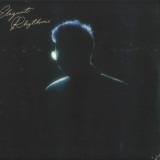
Back yard - Back yard is the first single from the new Teen Daze album, Elegant rhythms, and features singer-songwriter Andy Shauf on drums, and LA jazz staple, Sam Wilkes, on bass. This is a stark change in sound for Teen Daze, who’s last album Interior was an exploration of neon-lit House music. Back yard is a mellow groover, conjuring up images of Laurel Canyon in the 70s, yet still with its flourishes of contemporary sounds.
We’re out of phase again - We’re out of phase again is another vulnerable glimpse into the inner world of Teen Daze, and marks the release of his most personal album to date, Elegant rhythms. In contrast to the synthesized, digital world of his prior album, Interior, here we’ve been brought into a lush, organic arrangement, brought to you in large part to the stunning bass playing by Sam Wilkes. While the verses pulse forward, the chorus slows things down, and evokes the sophisti-pop sounds of The Blue Nile. This track is a stunning showcase of the world of Elegant rhythms.
Nothing’s gonna change my love - Teen Daze returns with his second single of the year, Nothing’s gonna change my love. The stark change in sound, as heard on previous single Back yard, is on display here again: a smouldering, 2 and a half minutes of slow jazz-pop, indebted to the great Sade, or perhaps the feeling of leaving downtown LA at 2 AM. Lyrically, we hear a story of a love, challenged by the unpredictable nature of our lives. This may be Teen Daze’s smoothest song to date.
Neighbourhood - Neighbourhood is the third single from the recently announced LP from Teen Daze, Elegant Rhythms. Along with Andy Shauf on the drums, and Sam Wilkes on the bass, Teen Daze gives us a languid tour of his quiet neighbourhood. The sun has set on the pleasant, tree-lined streets, and a stranger, more surreal environment presents itself. The song plods forward at an extremely comfortable pace, held down by the paradoxically loose-yet-tight rhythm section. Lyrically, we walk around the Neighbourhood at night, and while the chorus reveals a type of sobriety, the vibe of the song makes it easy to feel a little…effected.
Fade away - Fade away sets the tone for Elegant Rhythm’s side B: a deeply personal, though somewhat veiled, confession of loss. How does it feel to grieve something that was never really here? A smouldering, slowly progressing first half erupts in synthetic noise, and then fades into the ether with it’s repeating refrain, “I can feel you / feel you fade away / when there’s nothing / nothing left to say”.
Fall ahead - A sweet piano tune which serves as a quiet break in the record, intended to help the listener reflect and take a moment of pause before we reach the final two songs on the album.
HST underwater - The penultimate track on the record tells a story where the narrator finds themself in an alien, yet oddly familiar place. Arpeggios soaked in crystal blue water flow through the stereo field, while the narrator, vocoded and drenched in autotune, searches for meaning and purpose in a confusing world. This is one of Teen Daze’s most cinematic, emotional songs yet.
In the rain - It’s never really made explicitly clear on this record, but a lot of these songs find Teen Daze wrestling with life as a new father, and this song, the final on the album, expresses the fears of generational trauma. A touching, tender ode to his children, we hear Teen Daze at his most personal and vulnerable. The falling rain surrounds some absolutely breathtaking bass playing from Sam Wilkes, and Teen Daze’s signature ambient keyboard sounds.
Radio Support: Ruf Dug (Soup To Nuts on NTS)
- A1: Ali Ou Hayani
- A2: Ana Sahraoui
- A3: Nihayat Hob
- A4: Angham Chaabia
- A5: Dikrayat
- A6: Alach Yayouni
- B1: Layali Fass
- B2: Lobna
- B3: Tanger L'été
- B4: Taksim Abdou
- B5: Hanan
- B6: Interlude
Abdou El Omari was born in 1945 in Tafraout, south of Agadir -- a village suspended between the pink granite peaks of the Anti-Atlas and the waves of the Atlantic. A landscape already musical in itself. He grew up in the dry mountain light, surrounded by the rhythms of nature and Berber's culture. Very little is known about the man -- a veil of mystery still surrounds his life, only deepening the fascination. In the 1970s, as Morocco was transforming, Abdou El Omari shaped a sound of his own -- a visionary blend of spiritual jazz, psychedelic funk, Moroccan traditions, and early electronic experimentation. Today, his work is resurfacing, rediscovered by a new generation of listeners in search of lost horizons. This record stands among its rarest and most precious fragments. At twenty-two, he founded his first group, Les Fugitifs, which gained him local fame. Soon after, he released records and cassettes on labels such as Cléopâtre, Hassania, Boussiphone, Hilali, and his own, Al Awtar, while performing on RTM (national radio and television). He also composed for artists like Naima Samih, Laila Ghofran, and Aicha El Waad. In 1976, through the label Gam, he released his only vinyl album, Nuits d'été -- a record that would become cult decades later, reissued in 2017 by Radio Martiko. In the 1980s, his music grew quieter, more secret. He tried to recover his old tapes from the studios he had recorded in, but gradually withdrew from the scene and returned to hairdressing. A pioneer of musical fusion, he opened paths that would remain unexplored for years. He passed away in 2010, never witnessing the rediscovery of his music by diggers, bloggers, and collectors online. One day, his close friend and poet Aziz Essamadi, rescued a cardboard box from the trash -- a box containing Abdou El Omari's personal archives. It was later entrusted to Casablanca based collector Ahmed Khalil, founder of the label Dikraphone. Inside were treasures preserved by chance: demos, rehearsals, private recordings, unseen photographs -- and a stunning, almost forgotten cassette. Here, El Omari sounds bolder than ever, exploring territories where pop, cosmic disco, electric blues, and Moroccan tradition merge without boundaries. Armed with his ARP Odyssey synthesizer, hypnotic grooves, and the celestial layers of his Farfisa, he expanded the dialogue between deep roots and electronic exploration. This album is the continuation of a vision -- a music of the Moroccan future: rooted, but reaching for the unknown. Colorful, magnetic and timeless, here is music for dancing as much as for dreaming.
Pacific Northwester Drew Sullivan is the man behind the Slow Dancing Society and on his latest album, he interrogates nostalgia with clearer eyes while sculpting analogue glow, treated guitar and patient ambience into scenes that breathe. Tracks drift like headlights through snow - hums, howls, bass rumbles, rain-veiled keys all feature, each motion subtle, deliberate and devastating. The record's power lies in restraint: chord changes feel meteorological, melodies arrive as messages, then vanish. It's ambient music with a spine, grief without spectacle. By the time 'Blue Suburban Skies' lifts into Twin Peaks-levels of ache, Sullivan has rebuilt a world you want to hide away in forever.
Dayseeker wurden in Südkalifornien gegründet und haben sich von Post-Hardcore-Urgesteinen zu einer der emotionalsten und stilistisch beweglichsten Bands der heutigen Heavy-Musik entwickelt. Ihre Songs verarbeiten nicht nur Trauer, Herzschmerz und Traumata - sie verwandeln sie in etwas Magnetisches, Kraftvolles und letztlich Ermächtigendes.
Die Band, bestehend aus Sänger Rory Rodriguez, Gitarrist Gino Sgambelluri, Bassist Ramone Valerio (seit 2017) und Schlagzeuger Zac Mayfield (seit 2022), stellt emotionale Wahrheit über Trends und verbindet authentische Leidenschaft, klangliche Innovation mit lyrischer Verletzlichkeit.
Die tiefe Resonanz, die die Musik der Band bei anderen Außenseitern auf der ganzen Welt hervorruft, zeigt sich in ihren über 600 Millionen Streams. Und sie ist bei jeder Show spürbar, von ausverkauften Headline-Terminen bis hin zu Touren mit Pierce The Veil, Bad Omens oder Ice Nine Kills.
Dieses Gefühl der kreativen Träumerei pulsiert durch Dayseekers sechstes Album, Creature in the Black Night. Produziert von Daniel Braunstein (Spiritbox, Silent Planet) und gemischt von Zakk Cervini (Blink-182, Bring Me The Horizon, Lorna Shore), ist das Album Dayseekers bisher eindringlichstes und ambitioniertetes Album - gewaltig, cineastisch und durchzogen von einer dunklen, emotionalen und sexy Strömung.
Fans, die einen traurigen Abstieg in die Depression erwarten, werden überrascht sein - "Creature in the Black Night" hat schärfere Kanten, härtere Riffs und einen neu entdeckten Sinn für Klarheit. Dayseeker haben sich nicht nur weiterentwickelt. Sie haben einen gewaltigen Schritt auf eine neue Ebene gemacht.
- A1: Pale Moonlight
- A2: Creature In The Black Night
- A3: Crawl Back To My Coffin
- A4: Shapeshift
- A5: Soulburn
- A6: Bloodlust
- B1: Cemetery Blues
- B2: Nocturnal Remedy
- B3: The Living Dead
- B4: Meet The Reaper
- B5: Forgotten Ghost
Black Vinyl[24,79 €]
Dayseeker wurden in Südkalifornien gegründet und haben sich von Post-Hardcore-Urgesteinen zu einer der emotionalsten und stilistisch beweglichsten Bands der heutigen Heavy-Musik entwickelt. Ihre Songs verarbeiten nicht nur Trauer, Herzschmerz und Traumata - sie verwandeln sie in etwas Magnetisches, Kraftvolles und letztlich Ermächtigendes.
Die Band, bestehend aus Sänger Rory Rodriguez, Gitarrist Gino Sgambelluri, Bassist Ramone Valerio (seit 2017) und Schlagzeuger Zac Mayfield (seit 2022), stellt emotionale Wahrheit über Trends und verbindet authentische Leidenschaft, klangliche Innovation mit lyrischer Verletzlichkeit.
Die tiefe Resonanz, die die Musik der Band bei anderen Außenseitern auf der ganzen Welt hervorruft, zeigt sich in ihren über 600 Millionen Streams. Und sie ist bei jeder Show spürbar, von ausverkauften Headline-Terminen bis hin zu Touren mit Pierce The Veil, Bad Omens oder Ice Nine Kills.
Dieses Gefühl der kreativen Träumerei pulsiert durch Dayseekers sechstes Album, Creature in the Black Night. Produziert von Daniel Braunstein (Spiritbox, Silent Planet) und gemischt von Zakk Cervini (Blink-182, Bring Me The Horizon, Lorna Shore), ist das Album Dayseekers bisher eindringlichstes und ambitioniertetes Album - gewaltig, cineastisch und durchzogen von einer dunklen, emotionalen und sexy Strömung.
Fans, die einen traurigen Abstieg in die Depression erwarten, werden überrascht sein - "Creature in the Black Night" hat schärfere Kanten, härtere Riffs und einen neu entdeckten Sinn für Klarheit. Dayseeker haben sich nicht nur weiterentwickelt. Sie haben einen gewaltigen Schritt auf eine neue Ebene gemacht.
- A1: Pale Moonlight
- A2: Creature In The Black Night
- A3: Crawl Back To My Coffin
- A4: Shapeshift
- A5: Soulburn
- A6: Bloodlust
- B1: Cemetery Blues
- B2: Nocturnal Remedy
- B3: The Living Dead
- B4: Meet The Reaper
- B5: Forgotten Ghost
Dayseeker wurden in Südkalifornien gegründet und haben sich von Post-Hardcore-Urgesteinen zu einer der emotionalsten und stilistisch beweglichsten Bands der heutigen Heavy-Musik entwickelt. Ihre Songs verarbeiten nicht nur Trauer, Herzschmerz und Traumata - sie verwandeln sie in etwas Magnetisches, Kraftvolles und letztlich Ermächtigendes.
Die Band, bestehend aus Sänger Rory Rodriguez, Gitarrist Gino Sgambelluri, Bassist Ramone Valerio (seit 2017) und Schlagzeuger Zac Mayfield (seit 2022), stellt emotionale Wahrheit über Trends und verbindet authentische Leidenschaft, klangliche Innovation mit lyrischer Verletzlichkeit.
Die tiefe Resonanz, die die Musik der Band bei anderen Außenseitern auf der ganzen Welt hervorruft, zeigt sich in ihren über 600 Millionen Streams. Und sie ist bei jeder Show spürbar, von ausverkauften Headline-Terminen bis hin zu Touren mit Pierce The Veil, Bad Omens oder Ice Nine Kills.
Dieses Gefühl der kreativen Träumerei pulsiert durch Dayseekers sechstes Album, Creature in the Black Night. Produziert von Daniel Braunstein (Spiritbox, Silent Planet) und gemischt von Zakk Cervini (Blink-182, Bring Me The Horizon, Lorna Shore), ist das Album Dayseekers bisher eindringlichstes und ambitioniertetes Album - gewaltig, cineastisch und durchzogen von einer dunklen, emotionalen und sexy Strömung.
Fans, die einen traurigen Abstieg in die Depression erwarten, werden überrascht sein - "Creature in the Black Night" hat schärfere Kanten, härtere Riffs und einen neu entdeckten Sinn für Klarheit. Dayseeker haben sich nicht nur weiterentwickelt. Sie haben einen gewaltigen Schritt auf eine neue Ebene gemacht.
- A1: Taking The Veil
- A2: Laughter And Forgetting
- A3: Before The Bullfight
- A4: Gone To Earth
- B1: Wave
- B2: River Man
- B3: Silver Moon
- C1: The Healing Place
- C2: Answered Prayers
- C3: Where The Railroad Meets The Sea
- C4: The Wooden Cross
- C5: Silver Moon Over Sleeping Steeples
- D1: Camp Fire Coyote Country
- D2: A Bird Of Prey Vanishes Into A Bright Blue Cloudless Sky
- D3: Home
- D4: Sunlight Seen Through Towering Trees
- D5: Upon This Earth
Gone to Earth ist das dritte Soloalbum von David Sylvian, ursprünglich erschienen am 1. September 1986. Das Doppelalbum folgte auf Brilliant Trees und erreichte Platz 24 der UK Album Charts.
Die zwei LPs bieten einen besonderen Kontrast: Eine Seite mit experimentellen Rock-Songs und Gesang, die andere rein instrumental und ambient. Gastmusiker sind u. a. Robert Fripp (Co-Autor von drei Songs) und Bill Nelson (Co-Autor von einem Song).
Diese Neuauflage erscheint als Corona White, Brown Opaque Black Vinyl und basiert auf dem neuesten Remaster.
- Hangover Game
- Knockin
- You Have Bought Yourself A Boat
- Tlc Cagematch
- Rudolph
- Toon Town
- Dan Marino
- Under Control
- Suv
- Catholic Priest
- Live Jack
- Someone Get The Grill Out Of
- You Are Every Girl To Me
- Tastes Just Like It Costs
- Long Black Veil (Feat. Styrofoam
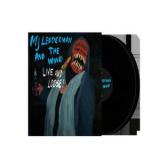
MJ Lenderman writes songs that are amorphous and elastic, rising to fill the venue they"re in, generous to accommodate the number of players on stage, less concerned with replicating the studio version than they are with meeting the crowd where they"re at. On And the Wind (Live and Loose!), the Asheville-based Lenderman handles most of the playing, but with The Wind, it"s a multi-headed beast. This live album is culled from sold-out summer 2023 shows on a brief headline run during what some might call a wild-*ss couple of months. It captures a near-euphoric moment in time - dizzying and exhausting and, most of all, having some real true-blue f**king fun with your best friends. It"s 90s college rock meets Americana hootenanny, an electrifying piece of the MJ Lenderman lore that needs to be experienced live with a light beer in-hand - but in the interim, And the Wind (Live and Loose!) does its best to commit the scene to tape.
Ruth Radelet - Milk and Bon and Nora Kelly Band
Lost Records - Bloom and Rage - Original Game Sountrack LP 2x12"
- A1: Nora Kelly Band - See You In Hell
- A2: Ruth Radelet - Dreamers
- A3: Ruth Radelet - The Wild Unknown
- A4: Milk & Bone - Liminal Spaces
- B1: Milk & Bone - Velvet Cove
- B2: Milk & Bone - Moonlight
- B3: Milk & Bone - Riot
- B4: Milk & Bone - The Abyss
- B5: Ruth Radelet - A Place Like Home
- C1: Ruth Radelet - Without A Trace
- C2: Milk & Bone - Insomnia
- C3: Ruth Radelet - The Veil
- C4: Nora Kelly Band - See You In Hell (Acoustic Version)
- D1: Nora Kelly Band - See You In Hell (Instrumental Version)
- D2: Ruth Radelet - Dreamers (Instrumental Version)
- D3: Ruth Radelet - The Wild Unknown (Instrumental Version)
- D4: Ruth Radelet - Without A Trace (Instrumental Version)
- D5: Ruth Radelet - The Veil (Instrumental Version)
2025 Repress
Kid Katana Records teamed up once again with DON’T NOD to release Lost Records: Bloom & Rage OST on vinyl.
This album accompanies the adventure of four teenage girls between 1995 and 2022, in the seemingly sleepy little town of Velvet Cove, Michigan.
With their growing friendship embodied by their punk band, music plays a key role in both the story and gameplay. In terms of music, this 18-track OST features different genres: dream pop, ambient, and punk, featuring an incredible lineup of artists and several songs with vocals: Ruth Radelet – former Chromatics front singer, Milk & Bone – acclaimed Canadian electropop duo, Nora Kelly Band – fresh Canadian alt-country / punk band.
This roster defines a dreamy and ethereal soundscape resonating with the 90s nostalgia and the Super 8 aesthetics of the game.
The physical edition is a 2LP designed in close relationship with the game studio:
- 2 colored vinyls: transparent pink & blue, matching the cover art.
- gatefold art: featuring exclusive in-game graphics
- teenage punk poster: nod to the game’s rebellious spirit & characters
- liner notes: giving insights from the game’s creative team and featured artists
- A1: Whylie - All My Hopes
- A2: Whylie - In The Sky
- A3: Whylie Feat Softblade - We Follow
- B1: Whylie - Against Them
- B2: Whylie - The Stars
- B3: Whylie - And Everything Else
- C1: Fiesta Soundsystem - Delphic Scent
- C2: Fiesta Soundsystem - Weavewrithe
- C3: Fiesta Soundsystem - First Flourish (Then Die)
- D1: Fiesta Soundsystem - Residuae Ls
- D2: Fiesta Soundsystem - Veil
- D3: Fiesta Soundsystem - Diaphphanousdiaphophresis
- E1: Fiesta Soundsystem - E13 (X)Elf-Out
- E2: Fiesta Soundsystem - Ir Cursive Crud Bible
- E3: Fiesta Soundsystem - Glistensoftt
- F1: Fiesta Soundsystem - 2Nd (X)-Elfout
- F2: Fiesta Soundsystem - Messy Tesselation
- F3: Fiesta Soundsystem - 3Rd Aspect
- G1: Granul - Aksayan
- G2: Granul - Syncopated
- G3: Granul - Improper
- G4: Granul - Creative Block
- G5: Granul - 3Ajayeb
- H1: Granul - New Proper
- H4: Granul - Break C5
- H2: Granul - Checksum
- H3: Granul & Grup Ses - 6 Milyon
- The Sweet Fragrance
- Boning Hall
- Life Consumed
- Meat Stall
- Entrails Emancipation
- Privilege Of Pain
- Darkness Awaits
- Sanguis In Oris
- Mass Murder
- Agony Prevails
- Messy Fesh
- Ribcage Blues
- The Black Veil
Extirpated from the crepitating bowels of the surging Death / Grind scene of the early nineties and became cult with their frst platter of splatter released in 1991 by Wimp Records (LP) & Adipocere Records (CD), PUTRID OFFAL slowly dissolved in formaldehyde by the middle of the decade ..
But that is not dead what sleeps and the thing got alive again 25 years after its inception offering a brand new vision of its art with the release of the proper PUTRID OFFAL debut, Mature Necropsy in 2015 soon followed by countless Europe tours and festivals appearances like their 2017 gig at world famous HELLFEST captured alive for a DVD release as a bonus of second full-length, Sicknesses Obsessions in 2020 again followed by a slaughter campaign on all of Europe soiled grounds.
Now that their historical label KAOTOXIN / XENOKORP is left for dead, PUTRID OFFAL come back deadlier than ever and hungry for touring and gigging like a zombie for fesh ready to turn the crowd to pieces with their most brutal, to the point and mature album to date, Obliterated Life.
While 1995's Washing Machine LP moniker was a thinly-veiled jab at the corporate aesthetic ("no, you cannot turn Sonic Youth into a household appliance brand", the band even considered changing its name to Washing Machine but settled on the album title instead), their major label relationship was indeed a curious buzzpoint of talk on the street after their intake to DGC in 1990. It wouldn't be fair to say that this state of existence propelled the band to reinforce its independent mindset by releasing a series of opaque-looking, French-language-dipping, highbrow-looking releases on their own that focused on the more abstract improv/compositional side of the band; in all truths they had been heavily steeped in self-releasing spillover material prior to that. But after a pressure pot of the early 90's indoctrination into a new operational mode for the band and its visibility, and the forces around it attempting to shape their direction, it seemed like a good time to create a strong show of radical concept.
The Anagrama EP became the first in a series of the SYR label's Perspective Musicales releases seemingly cementing Sonic Youth's connectivity to an increasing public awareness in experimental composers of the 20th century (French or otherwise). The irony was that many of those original avant composers being rediscovered by the indie audience (Partch, Neuhaus, Reich, Messaien) often found themselves on major labels anyway! So, perhaps this reverse approach was a necessary concept/comment given the music biz climate of the 90's. Regardless of how apples and oranges fell in Xenakian probability/theory, it was clear that both Sonic Youth's stature in progressive music, aided by now unlimited taperoll time thanks to a home base studio downtown established after their Lollapalooza stint, gave the band plenty of trailblazing time for their self examination of untraveled avenues.
"Anagrama" unfolds into nine minutes of delicate textures, starting with thick drone segueing into moments reminiscent of the post-crescendo flutter/comedown of "Marquee Moon's" trail-out; Thurston, Lee and Kim's guitars all circling round each other taking delicate pokes and stabs before drifting into some post-rock rhythmic moves tapered with delicate percussive guidance from Steve Shelley. "Improvisation Ajoutée" reaches further out into dissolve with whirring oscillations, guitars hissing and clanking radiator-style in a short blast format that continues into "Tremens" and a spooked-out landscape of gelatinous notes snaking up slowly. The sparseness of attack is colorful, textures emit and linger, silent spots shine, all flanked by tasteful drumming that provides the thread to all the abstraction. Shelley's approach here is interestingly sideways to any kind of usual rock action, it's tempered, mutant and metronomic simultaneously. The finale track "Mieux: De Corrosion" is a real pedal-palatte showcase. Here, Plutonian guitar wash flanges upwards to buoy a myriad of colorful eruptions of amp-spuzz, chopped up tone blasts and general confusion. Out of the blue, some metallic one-note choogle kicks in and threatens to explode into some Judas Priestly motion, before it all sputters into aural glass showers, clang, and finally a ferocious wave of more flange hiss that crashes down on a dime.
This initial foray into SY's Perspectives Musicales series continued onward with releases featuring other co-conspirators, peaking with the ambitious 2CD Goodbye 20th Century that finally connects the band into full-on interpretations of other composers' pieces (as well as displaying their own new ones). The whole series is not so much an outlet for another "side" of the band, but a run that went hand in hand building new approaches of songcraft onto their own, more overground direction which included Jim O'Rourke (who hopped on during SYR3), adding additional density to A Thousand Leaves and other LPs of his era. Fans of the '86 Spinhead Sessions as well as the recently-exhumed later jams of In/Out/In will take in the sounds of SYR1 with glee.
Gavin Vanaelst runs the space Aboli Bibelot in Antwerp where exhibitions and musical performances can happen side to side with dealings in centuries-old furniture and unique pieces of folk art or volkskunst. Gavin makes music under the aliases DJ Charme, Kassett and So Sorry. This is the first album under his birth name. Takeaway Loops cycles back to the days when Gavin was working as a courier for .
is a food delivery company. Their couriers - ehm, brand ambassadors, as the company prefers to call them - dressed in bright orange, they race their bikes around the city. They deliver meals and groceries for all sorts. Thanks to them, the privileged can stay tucked in their private spaces. Interaction between the two groups - the privileged and the brand ambassadors - is mostly kept to the bare minimum. And sparse communications are often driven by annoyances - “my Coke is warm because you kept it too close to the French Fries.” And on the streets the general public dis-approaches the brand ambassadors with pity. We tell our peers: “That’s not a good job,” and “stay away from the Sharing Economy.” Because, you know, in our capitalistic dollhouse we all stand our grounds and play our parts wholeheartedly.
During his shifts for , Gavin recorded location sounds on his phone at fast food restaurants while waiting on the orders he had to pick up and deliver. Later in his home studio Gavin added piano and electronics to this source material. The result: a gloomy soundtrack for a shadow world. Seven songs in evening blue with a bright orange glare.
A few years ago, our favorite Belgian publishing house Het Balanseer released Seizoenarbeid by Heike Geissler (available in English trough Semiotext(e)). Geissler writes about her job at Amazon in Leipzig. Because her writing and freelance work did not pay the bills any longer, she was forced towards this underprivileged shadow-world of unwanted jobs. Seizoenarbeid shed a light on freedom in an unfree world. A monument of ‘we are all in this, but not together’. Takeaway Loops gives us a similar peak in a world that is at the same time so visible, but then also very veiled for many. A world that we prefer to use, yet that most of us prefer not to see - a world that we don’t like to enter.
Last year at Harbourland subway station in Kobe i was mesmerized by its sound design, created by Hiroshi Yoshimura. For each part of the subway station he composed a short phrase. While walking trough the station, a full composition grows in your head. The looping melodies guide you trough a microworld. Trough a blue world of commuters, of the homeless, of the lonely, of the fast paced, of the tourist. Gavin creates a similar effect with Takeaway Loops. The tonality somehow corresponds to Yoshimura’s work. Yet instead of being guided trough a building, we are now taken to the after dark. You feel the concrete evening heat of the city. You hear the rain. Stiff fingers during cold winters’ nights. You are alone on the bike, cruising. Your maps app telling you where to go. You just left the fake leather bench of the well-lit pastiche interior of a fast food restaurant.
Next order, number ECN44! Please wait outside, sir?
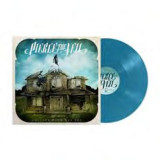
Pierce The Veil haben ihr ganzes musikalisches Können in die Waagschale geworfen und mit „Collide
With The Sky“ ein Top-20-Album in den US Billboard 200 veröffentlicht. Das dritte Album der Band
ist eine akustische Entdeckungsreise, die den einzigartigen Gesangsstil des Sängers Vic Fuentes, feurige
Gitarrenlinien und aufsteigende Melodien miteinander verbindet. Das Album wurde in den USA mit Gold
und in Großbritannien mit Silber ausgezeichnet und enthält den viralen Hit „King For A Day“. Erstmals
gepresst auf einer neuen Opaque Navy Blue Farbe, die nur außerhalb Nordamerikas erhältlich ist.
U.S. Cinematic outfit Whatitdo Archive Group returns to explore the worlds of Mid-Century Exotica and Library Music with "Palace Of A Thousand Sounds," out on May 5th.
From the instrumental cinematic-soul outfit behind 2021's critically acclaimed The Black Stone Affair comes Whatitdo Archive Group's most recent foray into the realms of the esoteric and arcane, and their most adventurous album to date: Palace Of A Thousand Sounds, available May 5th, 2023 on Record Kicks on limited edition LP, CD and digital platforms.
After The Black Stone Affair enthralled record collectors by traversing the cinematic landscape of an imagined 1970s Spaghetti Western, Palace Of A Thousand Sounds finds Whatitdo Archive Group entrenched deeper in the worlds of mid-century exotica and library music—from the Tropicalia-steeped Amazon to the minor key tonalities of the far-out Near East.
When the dust finally settled from their debut album, composer and tireless sound scientist Alexander Korostinsky set out to discover the band's new direction, with the ultimate goal to breathe new life into the mid-century era sound with the compass of modernity as his guide.
From its conception in 2021, Palace has sought to carry on a legacy set in motion by the likes of Martin Denny, Les Baxter and Juan García Esquivel. Korostinsky, guitarist Mark Sexton, and drummer Aaron Chiazza recorded the album in marathon sessions from Korostinsky's Studio "A," in Reno, Nevada—a mysterious sonic laboratory where the year 1970 has yet to happen, and vintage analog equipment interfaces with modern musical perspectives and experimental recording techniques to produce era-defining sounds.
Not content to appeal to the sensibilities of armchair anthropologists, Palace Of A Thousand Sounds finds the band interrogating the genre itself while making studious tributes to the real places and times it draws from. It's in this tension between here and there, fantasy and reality, that Whatitdo Archive Group find their groove.
Drawing from a century of pop and folk sounds from around the world the way only 21st-century crate-diggers can, Palace is rooted in an undercurrent of heavy funk that is decidedly here and now. Whatitdo Archive Group showcase the breadth of their influences with disarming confidence, equally at home behind sweeping harp, loungey vibraphone or Turkish bağlama saz. A lush seventeen-piece orchestra commanded by award-winning composer Louis King (Janelle Monáe, Monophonics) completes the instrumental mélange, enticing listeners to imagine a borderless planet unified by melody and rhythm.
The album is unafraid to explore the strange and uncomfortable in pursuit of an authentic musical identity, subverting expectations in pursuit of forwarding the genre while paying homage to its past. Fans will appreciate the architectural complexity of the record accessible only through multiple listens—each visit to the palace yielding new details to marvel at, curiosities to ponder, grand mysteries to explore.
Once the needle drops, W.A.G carefully guides you from room to room, sound to sound within the walls of the album's sonic palace. Listening becomes an aural journey providing glimpses into different worlds both real and imagined; you are everywhere and nowhere all at once—a guest in the grand halls and hanging gardens of time and sound.
Steeped in obscurity, a cult following of crate-diggers and musical oddity collectors has been brewing over the mysterious releases of the Whatitdo Archive Group. Surfacing in 2009 from the high deserts of Reno, NV USA, this three-piece recording collective(Alexander Korostinsky, Mark Sexton and Aaron Chiazza) focuses solely on curating, performing and preserving esoteric soundtrack, library and deep-groove collections. As an onlooker, it's hard to tell whether the music they are procuring is actually archival, music of their own creation, or both. Their debut LP The Black Stone Affair, the formerly lost soundtrack music of a once-shelved Italian cinematic masterpiece, was released in 2021 and received praise from the likes of Wall Street Journal, Mojo Magazine, Uncut, Shindig, Blues & Soul Magazine, BBC 6, FIP Radio (FR), KCRW (US), JazzFM (UK) and more. Two years later, the Whatitdo Archive Group is back. Get ready for an exotic adventure with their sophomore full-length effort: Palace of a Thousand Sounds.
THE 1968 ALBUM ON WHICH JOHNNY CASH BECAME A LEGEND: AT FOLSOM PRISON AMONG THE MOST IMPORTANT AND POTENT STATEMENTS OF THE 20TH CENTURY
Johnny Cash already knew his way around Folsom Prison when he and his band stepped inside the institution’s forbidding walls on the morning of January 13, 1968 to record At Folsom Prison. He’d played there two years prior. But this time was different.
Cash took the stage that day for two shows amid a darkening sociopolitical atmosphere and a raging war in Vietnam, as well as the knowledge his career and health hung on by a thread. The Arkansas native shared many of the long odds and abject failures of the inmates for which he performed. The songs he chose, and the conviction with which he delivered them, say as much. The point at which Cash transformed from a country star into a legendary artist, and a bold statement about the American prison state and its commitment to rehabilitation, the triple-platinum At Folsom Prison remains one the most important, potent, and fabled records of the 20th century.
You can hear it echo off the walls of the room; pulse through the itchiness of the Tennessee Three’s acoustic-based boom-chick rhythms; crackle in the announcements conveyed over the intercom; ring in the comedy of the off-cuff remarks and pair of novelty tunes; sense it in palpable energy that wells up within Cash and his audience. And you can experience it like never before via Cash’s knockout singing. The bedrock foundation of all his music, the singer’s baritone resonates with profound degrees of depth, pliability, and passion that underscore how much this appearance meant to him — and the extent he was living the narratives.
Indeed, every song on At Folsom Prison serves a purpose and speaks to the conditions — mental, emotional, physical, geographical, legal, social — the inmates confronted on a daily basis. Beginning with the explicit messages of the opening “Folsom Prison Blues,” Cash makes it clear he understands and shares many of their plights. Not for nothing did the myth of Cash having done hard time persist for decades once this record hit the streets. That’s how real it is, and how dedicated Cash remains to conveying every note with the same truth he invests in the impromptu comments he makes between and amid songs.
Listen to the sorrow, regret, pity, and loneliness of Merle Travis’ “Dark as the Dungeon,” Cash pulling syllables til they threaten to break and inhabiting the mood of bleak phrases such as “pleasures are few” and “the sun never shines.” Witness the isolation, dejection, and sadness punctuating the walking-blues “I Still Miss Someone,” matched in gravity by a solemn reading of “The Long Black Veil” — a traditional dirge that involves murder, cheating, and deception. Cash cuts even deeper on a heartbreaking solo rendition of “Send a Picture of Mother” and plainspoken version of Harlan Howard’s “The Wall,” detailing a suicide disguised as jailbreak through cliched-jaw deliveries that softly curse the impossible situation.
In chronicling temptations, mistakes, mortality, punishment, and life “inside” — for better or worse, the stories of the disenfranchised, forgotten, written-off, and unrepentant — At Folsom Prison also has a blast playing the outlaw role. Cash captures wild-eyed craziness and out-of-control mayhem on a revved-up take of “Cocaine Blues,” taking extra satisfaction in its dastardly tales by way of voice that shifts into character for the sheriff and judge. The gallows humor and racing drama of “25 Minutes to Go”; quicksilver accents and resigned acceptance of “I Got Stripes”; train-whistle blare and twangy locomotion of “Folsom Prison Blues” — all fight the law only to see the law win.
Cash remains deeply committed at every moment, and inseparably connected with the tortured souls removed from the goings-on of the outside world. No wonder all but two songs here stem from the day’s first performance that saw Cash, Luther Perkins, Marshall Grant, and company give everything. As does the Man in Black’s soon-to-be-wife, June Carter. The couple’s fiery duet on “Jackson” scorches; their combination of surrender and fortitude “Give My Love to Rose” puts us in the dying protagonist’s shoes.
And with the closing “Greystone Chapel,” famously penned by convict Glen Sherley, who watched it all happen under the watchful eye of guards, Cash separates the corporeal from the spiritual, relaying lessons about salvation and survival. Heady themes to which he’d return for the remainder of his illustrious career.
“Omni – meaning all-encompassing – is an apt title for celebrating over a decade of music on Blue Hour Music. Marking the musical diversity and longevity of Blue Hour’s imprint, the Omni V/A series brings together a wide range of artists from the full electronic music spectrum, plunging into a pool of techno, trance, breaks and everything in between.“
*** Sides C-D are vinyl exclusive until Autumn 2024 when Part 2 will be announced ***
- 1: Cold Blue Steel And Sweet Fire
- 2: Like Veils Said Lorraine
- 3: Medley: Bony Moronie/Summertime Blues/You Never Can Tell - With James Taylor
- 4: You Turn Me On I’m A Radio - With Neil Young & The Stray Gators
- 5: See You Sometime (Early Version With Bass & Drums)
- 1: This Flight Tonight
- 2: Electricity
- 3: Lesson In Survival
- 4: Blue
- 5: Banquet
- 6: Intro To For The Roses
- 7: For The Roses
- 1: Intro To Judgement Of The Moon And Stars (Ludwig’s Tune)
- 2: Judgement Of The Moon And Stars (Ludwig’s Tune)
- 3: Blonde In The Bleachers (Alternate Guitar Mix)
- 4: Barangrill (Guitar/Vocal Mix)
- 5: Sunrise Raga
- 6: Twisted (Early Alternate Version)
- 1: Piano Suite
- A. Down To You
- B. Court And Spark
- C. Car On A Hill
- D. Down To You
- 2: Help Me
- 3: Trouble Child (Early Alternate Take)
- 4: Car On A Hill (Early Alternate Take)
- 5: Bonderia
- 1: Introduction
- 2: Free Man In Paris – With Tom Scott & The L.a. Express
- 3: The Same Situation – With Tom Scott & The L.a. Express
- 4: Just Like This Train – With Tom Scott & The L.a. Express
- 6: Jericho
- 7: Woman Of Heart And Mind
- 1: In France They Kiss On Main Street
- 2: Edith And The Kingpin
- 3: Don’t Interrupt The Sorrow
- 4: Harry’s House
- 1: The Jungle Line (Guitar/Alternate Vocal)
- 2: Shades Of Scarlet Conquering (Alternate Version)
- 3: The Boho Dance (Alternate Version)
- 4: Dreamland (Early Alternate Band Version)
- 1: Raised On Robbery – With Neil Young & The Santa Monica Flyers
- 2: People’s Parties (Early Alternate Take)
Joni Mitchell Archives, Vol. 3: The Asylum Years (1972-1975) is the latest entry in Rhino’s ongoing, GRAMMY-winning series exploring the vast untapped archives of rare Joni Mitchell recordings — a project guided inti-mately by Mitchell’s own vision and personal touch. Joni Mitchell Archives, Vol. 3: The Asylum Years (1972-1975) will be available as a 4 LP with an accompanying book featuring photos and a conversation about this period between Joni Mitchell and longtime friend Cameron Crowe.
The collection begins with an early cut of “Cold Blue Steel And Sweet Fire,” one of two songs (along with “For The Roses”) test-driven during a visit to a Graham Nash David Crosby recording session at Wally Heider’s in Hol-lywood.
From there, listeners are treated to early demos and alternate versions from sessions from For The Roses, Court & Spark, and The Hissing Of Summer Lawns; historic live show recordings, including the entirety of Mitch-ell’s triumphant 1972 return to Carnegie Hall and a definitive gig with her Court And Spark backing band Tom Scott & the L.A. Express; and tracks from sessions cut alongside James Taylor, Graham Nash, and Neil Young.
q 5. Sunrise Raga [3:41]
Veils Of Transformation 1972 - 1980 is a collection of the earliest works of Gregory Kramer, one of the 20th century masters of textural electronic music. This collection is available on CD and cassette with liner notes from Gregory Kramer and Kaitlyn Aurelia Smith, who first brought this fascinating work to the attention of Important Records.
“Greg is one of the pioneers of electronic music and these pieces are unique opportunities to discover how intricate and dynamic early synthesizers are.” Kaitlyn Aurelia Smith
Kramer developed a musical language focused on continuous transformation of timbre, yielding a continuity of attention. This musical language, formed of timbral change, is a compelling aesthetic in its own right and a source of meditative experience. The four works on this album share a deep sense of order derived not from organizing pitches or rhythms, but from the evolution of timbre itself.
Gregory Kramer (b. 1952) is a pioneering electronic composer, inventor, researcher, teacher and author. In 1975 he co-founded Electronic Musicmobile, a synthesizer ensemble later renamed Electronic Musicmobile, a series of synthesizer concerts in New York from which he formed the Electronic Art Ensemble, a highly regarded all electronic quartet. His work extended to developing synthesizers and related equipment. Kramer also co-founded the not-for-profit arts organization Harvestworks in New York City. He is recognized as the founding figure of the intensely cross-disciplinary field of data sonification. Since 1980, Kramer teaches Buddhist meditation.
The four compositions collected here each represent Kramer’s unique approaches:
The structure of Meditations on 32 Parts of the Body (1978) is derived from the means of its production. Recording 5 people chanting an ancient meditation text, then layering to gradually achieve more than one million voices. The layering was all done using analogue tape recorders. The decomposition of the sound reflects the anomalies of tape machines out of sync, and the build up of artifacts from the audio tape itself, such as uneven response curves and tape hiss, are all engaged as musical materials.
Role (1972) was generated using one complex patch on a large hybrid Buchla 200/100 system. Emerging from a zeitgeist that valued pure synthesis as a combined artistic and technological research. At the time this piece was realized its as exceedingly difficult to produce electronic sounds that were internally complex.
Blue Wave (1980) is built on Kramer’s timbral development technique Veils Of Transformation which allows for disparate timbres to be woven into a continuously developing sound.
Monologue (1977) is a virtuosic performance of a massive patch on a Buchla/Electron Farm hybrid electronic instrument. Built into the patch is a pathway for continuous transformation of voice and voltage-controlled synthesizer. The blunt, raw and sometimes harsh sounds of this piece reflect an attitude prominent among composers that music can, or even should, be difficult, contrary to what’s already been done and, by all means, new.
Pünktlich zum 30. Bandjubiläum erschien "A Secret To Hide", das achte Album der deutschen Konstante im Prog-Metal/Prog-Rock. Nach der Veröffentlichung des erfolgreichen Vorgängers "Spiral Of Fear" im Jahr 2016 und der gemeinsamen Tour mit Psychotic Waltz war die Band schnell wieder zurück im Arbeitsmodus.
Herausgekommen ist ein musikalisch facettenreiches Werk, das immer wieder Ausbrüche aus den Genre-Grenzen wagt. Es ist harte melodische Rockmusik, die mal mehr "Rock" ist und auch mal deutlicher in Richtung "Metal" geht. Die Band prägt ihren eigenen Stil, nimmt sich die Freiheit, ihre Songs detailreich auszuarbeiten. Dabei zeigen Poverty's No Crime ein konsequentes Gespür für eingängige Melodien und sie wissen ihre Fähigkeiten an den Instrumenten immer in den Dienst des Songs zu stellen. "A Secret To Hide" beeindruckt durch viele Details, präzise ausgearbeitete Instrumentalpassagen und schlüssige, knackige Hooklines. Das Album erscheint nun in Limitierter Neuauflage als Doppel LP in blau transparenter Farbe.
Blue Vinyl
Leipzig-based musician, engineer, and producer Friedrich Brückner has, despite his youthfulness, been a decisive figure in the Leipzig music scene for literal decades, being involved, in one way or another, in many, if not most notable releases coming out of the city. Having received a classical musical education, Brückner most recently figured as part of the German-American band White Wine, playing the bassoon and bass, but has also, as either musician, producer or sound designer, toured internationally with the likes of Yoko Ono, Get Well Soon, Modeselektor, or Dear Reader.
For a few years now, Brückner has been working on his solo debut, which now comes in the form of his remarkable »Polyism«, out on Altin Village & Mine. On it, Brückner puts his considerable musical chops to use, in the service of a rollercoaster of an album that truly eschews categorization, being, as its title suggests, a work of being multiform. While the sound takes wide ranging cues from jazz, new age, dub, electronics to post punk, Brückner’s compositions never feel accidental in the slightest. Instead they share a distinctive sense of dramaturgy, a pronounced attention to sonic texture, and a sense of purpose both within the individual pieces as well as in the context of the album as a whole. The result is an LP that is astonishingly coherent, considering the multitude of means it employs.
On »Polyism«, Brückner also enlists a veritable all-star cast of guest performances, ranging from his parents Isabell and Bernd Brückner, both professional musicians, on saxophone, clarinet, and flute, Martin Wenk (Calexico) on trumpet, to Hendrik Otremba (Messer) and Brückner’s four-year-old daughter Rosa both on vocals, to name but a few. Each lend their own notes to »Polyism«, a work of what it means to live, that is, to be many. Truly exceptional stuff!
Unavailable on vinyl for decades, 'Who's That Knocking?', Hazel and
Alice's debut, initially released in 1965, was remastered in 2021 by its
original producer Peter K Siegel, and has been reissued with its original
artwork and liner notes
With this trailblazing record, Hazel and Alice shattered the glass ceiling of maledominated bluegrass, which had typically relegated women to minor musical
roles at best. Hazel and Alice's hard-edged, soulful harmonies were firmly rooted
in the older music traditions of the rural South. Their steadfast devotion to their
powerful, driving style inspired generations of women in bluegrass, country
music, and even punk. They are accompanied on this album by Chubby Wise,
arguably the architect of bluegrass fiddling; David Grisman, whose mandolin
improvisations changed the landscape of acoustic music; and Lamar Grier, who
played banjo as a member of Bill Monroe's Blue Grass Boys in the 1960s.
Tracks: Walkin' In My Sleep / Can't You Hear Me Calling / Darling Nellie Across
the Sea / Difficult Run / Coal Miner's Blues / Gabriel's Call / Just Another Broken
Heart / Take Me Back to Tulsa / Who's That Knocking? / Cowboy Jim / Long
Black Veil / Lee Highway Blues / Lover's Return / Gonna Lay Down My Old Guitar /
I Hear a Sweet Voice Calling
Delia Derbyshire's work at the BBC's Radiophonic Workshop in the 60's was recognised initially for her realisation of the now iconic Doctor Who Theme which was written for the show by Ron Grainer. More recently though, she has been celebrated for her own compositions and experiments at what was then the cutting edge of electronic music. The AA side, Blue Veils and Golden Sands, was written for a TV documentary in 1967, a composition in which she used her own voice and a handy green BBC lampshade: "I analysed the sound into all of its partials and frequencies, and took the 12 strongest, and reconstructed the sound on the workshop's famous 12 oscillators to give a whooshing sound. So the camels rode off into the sunset with my voice in their hooves and a green lampshade on their backs."
On the A side is The Delian Mode, which was used as incidental music during The Sky At Night in 1969, finding critical acclaim in Gramophone Magazine's review of the album BBC RADIOPHONIC MUSIC (often known as The Pink Album), in September of the same year: "… Blue Veils and Delian Mode are probably the finest music here. It may be no accident that the latter is reminiscent of the beginning of Xenakis's OrientOccident for Delia Derbyshire follows the analytical approach of the more sustained electronic compositions. If her best pieces seem the most imaginative here—and they are—it is because she more fully explores the implications of her material."
- A1: Nothing To Declare
- A2: Totally Spies (Feat Lafawndah)
- A3: Nightflame (Feat Orion Sun)
- A4: Anthology
- A5: Discipline
- A6: Blessgrips
- A7: Easy Jet
- A8: Candace Parker (Feat Muqata'a)
- B1: No More Kings
- B2: Capitol (Feat Alli Logout)
- B3: Sixteen
- B4: Spirit Airlines
- B5: Crown
- B6: More Victories (Feat M Tellez)
- B7: Seven
- B8: Lead Level 15 (Feat Ase Manual)
The LP version is limited to 1000 copies, pressed on blue vinyl, in a high grade spot-varnished gatefold sleeve.
700 Bliss is the forward-thinking duo of DJ Haram and Moor Mother. Their first full length for Hyperdub is an album of noise rap that ties together the raw edges of club music and hip hop with punk energy, jazz, house-party catharsis, percussion-heavy analogue sound design, and cheeky skits, ranging from experimental rap tracks with rolling hi hats and lyrical bravado, to poetry set to noise and sound collage.
Moor Mother and DJ Haram started collaborating in 2014 and eventually formed 700 Bliss, a blistering live act in Philly's DIY scene, releasing their 2018 debut, Spa 700 on Halcyon Veil / Don Giovanni Records. Since that time, both artists have grown global followings. Moor Mother is a prolific solo artist and collaborator, writer, and member of Black Quantum Futurism while Haram has been curating and creating radio shows, DJing, and producing (including an EP for Hyperdub in 2019).
‘Nothing To Declare’ is a smart, danceable revelation, a chiseled soundscape of dive bombing bass, piercing bleeps, crunchy distortion, and wavering synth lines. Welcoming in a variety of voices from their extended, cross-genre scene, 700 Bliss also bring along a cast of collaborators, including vocalists Orion Sun, Lawfandah, Ase Manual, and Ali Logout (from the band Special Interest), plus Palestinian producer Muqata'a, and writer M Téllez who delivers a surreal sci fi monologue over a pounding kick drum on ‘More Victories’.
‘Nothing To Declare’ is a deeply layered rewriting of hip hop and electronic music that gives more with each listen. You won't hear another rap album like it in 2022.
Drawing the night in around his private, unnerving vigil, Ellis Swan returns to Quindi Records with an album of cracked beauty and haunted balladry. The Chicago-based singer-songwriter debuted on the label last year with a collaborative project called Dead Bandit, a vividly produced instrumental set in thrall to the badlands and a laconic, languid Americana.
Under his own name, Swan records intimate, poetic songs in a stark fashion, so fragile they might disintegrate in between your fingers were you to pick them up. He draws the microphone close to pick up every whisper and drags the music through layer upon layer of tape fuzz, leaving room for atmospheric impressions which loom out of the walls like the ghosts of past misdeeds. These pieces play on the natural distortion and delirium which occurs at the farthest end of the night - the hour before dawn might hope to break the veil of darkness.
Swan's is a hauntological sound, but like the late Israeli rockabilly icon Charlie Megira his process strikes a spooked tone past revivalism and out of time or place. The only anchor which places Swan anywhere is the subtle presence of Katherine Swan providing lyrics to '3am' and lyrics and backing vocals to 'It Could Be Worse'.
The impression cast is of one man and his guitar, but there are other textures tucked into the music - the muffled murmur of a drum machine or a low frequency organ hum, some desolate piano, other treated percussive impulses which might well have been the work of incidental sprites while the four-track was rolling.
There are fuller cuts like 'Evening Sun' and the title track '3am' which play with structural dynamics and creep out of the shadows a touch, while passages of plaintive, instrumental unease such as the hypnotic, mantra-like 'Chinatown' protract the space between songs. 'Swing' lolls between moments of bottomless silence and a discernible, rickety funk, and 'Puppeteers Tears' teases out a buried drama. But primarily, it's the light touch of 'Horses Bones' and tin can tenderness of 'She's My Sweet Summer Storm' which spell out the spellbinding character of 3am; a singular creation fusing the best qualities of folk, blues and Americana with a fearlessly experimental sound palette.
- A1: Tenison Stephens - Don&Apos;T Rip Me Off!
- A2: Leontine Dupree - Standing On His Word
- A3: Frankie Staton - Love One Another (Feat Speckled Rainbow)
- A4: Joe Washington &Amp; Wash - Blueberry Hill
- B1: Reno &Amp; The Chosen 3 - Soul Bagg
- B2: Don Patterson Trio - Paddy Wagon
- B3: Bill Cole - Bring It On Back To Me
- B4: Unknown Organist - Untitled
- B5: Roy Long - Mercy Mercy Mercy
- C1: Mckinley Edmonds - Hard Times
- C2: Marva Josie - I&Apos;M Satisfied
- C3: Shirley Wahls - Tell The Truth
- C4: The Echomen - Talk Is Cheap
- C5: Unknown - Damn You Sheriff Black
- D1: Rick Bowen - Snake In The Grass
- D2: 101 Gold Street Band - You Came A Long Way From St Louis
- D3: Bobbi Lane - Black And White
- D4: Dave Stockwell - I Can&Apos;T Get Enough
- D5: Delores Eiler - He Won&Apos;T Love You
** SISTER FUNK, SOUL-JAZZ and BLUE-EYED-SOUL - OBSCURE RARE GROOVES ALL THE WAY THRU! **
- the double vinyl LP comes with a full album download code
- deluxe double-gatefold LP with detailed liner notes & unseen photographs
- ALL songs appear on LP & digital for the very first-time
- sales notes by Joel Ricci (aka Lucky Brown)
When Tramp Records was founded, there really were very few ways in which the music lover could discover new music besides the traditional methods of digging, good luck, and inheritance. First there were torrent sites such as Napster and Limewire where generous collectors might digitize and upload portions of their accessions, and sometimes you could find entire radio show broadcasts of live vinyl curation made by real Disc Jockeys out there, a lot of the Deep Funk I heard for the first time in around 1999 I found this way via Disc Jockeys on radio shows from the UK, tunes were faded and mixed together and of course veiled with that unmistakable Mp3 'whoosh'. And unless you have been living as an off-grid hermit for the past 20 years, you know the rest of the story.
But though our world has changed, and even though everyone from our grandparents to our 5-year old nieces are curating their own internet playlists, I submit that the role of DJ has become even more vital, not less. We as a culture have always relied on our Disc Jockeys to introduce us to sounds that speak to their souls, to control the vibe and most importantly put forth the narrative that speaks to society as a whole. DJs are our tribal storytellers, and the music they bring us are the stories. And when a DJ like Tobias Kirmayer is telling us that story clearly and with conviction, it speaks to our souls as well.
"Countdown to...SOUL" is a compilation series that, much like Tramp Records' other critically-acclaimed comps such as Movements, Feeling Nice, and the Praise Poems Series' examines a unique facet of the Golden Era of Soul, Funk, Jazz and R&B. Perhaps, in this case the dawning of the Soul era, "proto-soul", "primitive soul", or even "pre-soul" if you will. When they were recorded, many of these tunes were still firmly ensconced in the Black Radical Jazz tradition, but there was a change in the air, something happening in the coming years that would revolutionize popular music forever. In fact, Soul had already taken over the world by the time many of these tunes were released on 45, but for various reasons, the artists and their music occupied the fringes of the idiom and therefore remained obscure. Countdown to...SOUL chronicles that beginning, that buildup, those heady moments before the lid blew off and American Black music would explode across the planet, while scouring the outskirts and tide pools for specimens that were emanating in their own respective neighborhoods and communities, so often overlooked by the American pop music machine.
Side A features barrier-breaking pioneer Frankie Staton and her message of "Love One Another" to the world that is as fresh and vital today as it was when it first came out in the late seventies. In that spirit, Tenison Stevens' appeal "Don't Rip Me Off" reminds us to treat each other as brothers and sisters.
Side B meets us at the altar of the formidable Hammond Organ with an Unknown and uncredited Organist found languishing on a one-of-a-kind unreleased acetate and moving on to explore the nexus of Soul, Bebop, and R&B with Don Patterson's "Paddy Wagon".
Side C satisfies our hunger for the blaring horn sections, big beat drums, wailing Hammonds, pleading vocals and gritty guitars of authentic Soul music (both brown and blue-eyed) with Marva Josie, Shirley Wahls and The Echomen, among others, but then takes a hard left turn into undoubtedly uncharted territory with the hybrid folk/country/soul story of Sherrif Black and poor Sally who, though she is tragically met with a terrible fate, thanks to the careful and conscientious mastering of our German engineers, the song itself remains alive and is a genuine addition to the canon.
For the remaining side, I'm gonna just let you discover this music on its own terms, as you won't find these tunes anywhere else, not on Napster, not even on Limewire, or anywhere else. I want to personally thank you for putting your trust in the DJ and for continuing to listen, study, appreciate, and share the work and mission of Tramp Records.
-Joel Ricci (May 2022)
- A1: Nothing To Declare
- A2: Totally Spies (Feat Lafawndah)
- A3: Nightflame (Feat Orion Sun)
- A4: Anthology
- A5: Discipline
- A6: Blessgrips
- A7: Easy Jet
- A8: Candace Parker (Feat Muqata'a)
- B1: No More Kings
- B2: Capitol (Feat Alli Logout)
- B3: Sixteen
- B4: Spirit Airlines
- B5: Crown
- B6: More Victories (Feat M Tellez)
- B7: Seven
- B8: Lead Level 15 (Feat Ase Manual)
The LP version is limited to 1000 copies, pressed on blue vinyl, in a high grade spot-varnished gatefold sleeve.
700 Bliss is the forward-thinking duo of DJ Haram and Moor Mother. Their first full length for Hyperdub is an album of noise rap that ties together the raw edges of club music and hip hop with punk energy, jazz, house-party catharsis, percussion-heavy analogue sound design, and cheeky skits, ranging from experimental rap tracks with rolling hi hats and lyrical bravado, to poetry set to noise and sound collage.
Moor Mother and DJ Haram started collaborating in 2014 and eventually formed 700 Bliss, a blistering live act in Philly's DIY scene, releasing their 2018 debut, Spa 700 on Halcyon Veil / Don Giovanni Records. Since that time, both artists have grown global followings. Moor Mother is a prolific solo artist and collaborator, writer, and member of Black Quantum Futurism while Haram has been curating and creating radio shows, DJing, and producing (including an EP for Hyperdub in 2019).
‘Nothing To Declare’ is a smart, danceable revelation, a chiseled soundscape of dive bombing bass, piercing bleeps, crunchy distortion, and wavering synth lines. Welcoming in a variety of voices from their extended, cross-genre scene, 700 Bliss also bring along a cast of collaborators, including vocalists Orion Sun, Lawfandah, Ase Manual, and Ali Logout (from the band Special Interest), plus Palestinian producer Muqata'a, and writer M Téllez who delivers a surreal sci fi monologue over a pounding kick drum on ‘More Victories’.
‘Nothing To Declare’ is a deeply layered rewriting of hip hop and electronic music that gives more with each listen. You won't hear another rap album like it in 2022.
Arguably among top ten best metal albums of 2015, no one member in Veil of Maya’s roster is overshadowed in this new direction. This time around, the entire band’s talent is showcased more evenly than in previous albums. Graduating from six string baritones to sevens and upping the ante with recently acquired vocalist Lukas Magyar, Veil of Maya’s Matriarch delivers a little less flash while still holding on to the thrashy-ness that fans have grown to love.
Though Magyar’s high screams, low growls, and clear vibrato are brought to the table on a glorious china plate encased in a catchy melody sandwich, the introduction of the first clean vocals since the band’s inception isn’t the most notable change from previous vocalist Brandon Butler, who left the band during Matriarch’s inception due to “creative differences.”
While Veil of Maya has always included little easter eggs in their track titles, such as the Game of Thrones headnod “Winter Is Coming Soon” from their 2012 album Eclipse, Martiarch goes further by being their first album to follow a female inspired theme. Guitarist Marc Okubo fit the album’s concept around strong female characters from different fictional genres. Limited vinyl version available on purple and baby blue vinyl with black splatter
This sprawling collection by Belgian loner blues savant Bram Devens aka Ignatz encapsulates the mystery, murk, and melancholy of his uncanny craft at its most windswept and wayward. Originally issued via Goaty Tapes in September of 2015, this long-anticipated vinyl edition expands the saga with an additional 17 minutes of archival material. Deven’s palette remains constant throughout: feathery fingerpicking, modal loops, and intuitive six-string navigations interspersed with candlelit passages of mournful voice, alternately whispered, mumbled, moaned. His is an aesthetic of embers and resin, cracked masks and distant lights, of what’s left behind and what lingers on.
I Live In A Utopia was recorded following a relocation from his longtime base of Brussels to Landen, with a second child due soon: “I remember the weather being nice and having just bought a hammock.” The change of scenery seeded a promise of slower days and lighter times – no utopia perhaps, but a sense of faint hope glowing on the horizon. The songs slide between loose acoustic spirituals and smoky basement ragas, late afternoon haze and midnight moons, a seesawing restlessness reflected in the titles (“I Have Found True Love,” “Time Does Not Bring Relief,” “We Used To Smoke Inside”). The fidelity is grainy but vivid, refracted by tape warp and Flemish dust.
As always, Deven’s playing is deceptively elegant, raw but precise, attuned to resonance, radiance, and negative space. Echoes of Fahey and Jandek reverberate in certain moments but ultimately the world Ignatz maps is one incomparably his own. A landscape both doomed and dawning, weary but undefeated, tracing outlines of lengthening shadows. “I walk in the sunshine,” he sings, uneasily. This is music of a rare inner wilderness, poised at cryptic crossroads, devoted to its ghosts. I Live In A Utopia stands as an apex work by one of the underground’s most veiled and visionary talents.
Double album in gatefold sleeve with artwork by Zully Adler. In co-production with House Rules & released in an edition of 500.
- A1: Cocaine Blues (Live)
- A2: Long Black Veil (Live)
- A3: Going To Memphis (Live)
- A4: The Ballad Of Ira Hayes (Live)
- A5: Rock Island Line (Live)
- B1: Guess Things Happen That Way (Live)
- B2: One Too Many Mornings (Live)
- B3: Don't Think Twice, It's All Right (Live)
- B4: Give My Love To Rose (Live)
- B5: Green, Green Grass Of Home (Live)
- B6: Old Apache Squaw (Live)
- B7: Lorena (Live)
- C1: Forty Shades Of Green (Live)
- C2: Bad News (Live)
- C3: Jackson (Live)
- C4: Tall Lover Man (Live)
- C5: June Carter Medley (Live)
- D1: Long Legged Guitar Pickin' Man (Live)
- D2: Ring Of Fire (Live)
- D3: Big River (Live)
- D4: Don't Take Your Guns To Town (Live)
- D5: I Walk The Line (Live)
Bear's Sonic Journals: Johnny Cash, At the Carousel Ballroom, April 24, 1968 — Johnny Cash
If one always looks at the sky, he will end up with wings, a wise French man once declared. Halifax, Nova Scotia based musician Jeremy Costello had wings, long before he looked up. Wings of imagination. Brandishing in his head, transforming deep-rooted emotions into poetry and sound. Since 2012 the Canadian self-releases music as Special Costello, a moniker under which he records solo or with local friends like Saxophone player Nick Dourado or guitarist Dave Burns. His lyrics are sincerely woven poetic enunciations that balance between introspective emotions and existential philosophical demands. Lyrics from a spirit that is in love without an object, unconditional, mirroring his very own subconscious inner being. The music reflects his tempers in many colours. Glimpses of Synth-Pop, psychedelic rock nuances, traces of new romantic utopia, infantile Casio minimalism, Shoegaze haze, drama wave: Special Costello blends many styles, uniting all in his very own musing grandeur of pop music.
After an array of digital releases, Berlin based label Marmo Music now publishes the Special Costello touch for the first time physically fabricated on vinyl. Seven songs featuring the longing voice of Jeremy Costello, sometimes in correlation with spoken words and dialogues by noted artists, poets, and scientists. All creations have been recorded by himself between Spring 2017 and winter 2020, using the extrasomatic help of instruments and machines like Farfisa Combo Compact transistor organ, Roland JX3P polyphonic analog synthesizer, Roland D50 linear synthesizer, Roland Rhythm Composer TR-08, Arturia Microbrute monophonic analog synthesizer or a Gibson Thunderbird IV bass guitar. In communication with his sensitive inner blues, they created an atmospheric voyage into the heart of Special Costello, that fulfils Arthur Russel’s sapient declaration: being sad is not a crime! Seven musical paintings full of intimate, vibrant feelings and existential thoughts, veiled in an antidepressant neo new romantic glam. An epic tune like “The Next Day”, in which Costello’s singing links with thought-provoking spoken word samples, sounds like Robert Ashley is meeting Hans-Joachim Roedelius in a psychic séance with Brian Ferry. In comparison, a song like “If Not Depression, Then What?” grooves with a pulsating wave bass figure and an overall gently floating electronic majesty, while Costello’s voice takes deep listeners to an unknown higher ground. On the other hand, a composition like “Unsetting” offers a nonchalant graceful funk drift with reverberant hand claps, minimal guitar strains and a chromatic synth pop grace. Above all the music Costello’s voice cries, screams, whispers, and weeps with a compelling introspective elegancy, that invites to associate intensely with the nonpareil Special Costello touch.
Written, composed, and recorded by Jeremy Costello between 2016 to 2020 in Halifax, Scotch Village and Toronto (Canada).
Instruments used by the artist: Farfisa Combo Compact transistor organ, Roland JX3P Programmable Preset Polyphonic Synthesizer, Roland D50 linear synthesizer, Yamaha DX7 Frequency Modulation/Programmable Algorithm Synthesizer and TX7 FM Expander, Roland Computer Controlled Rhythm Composer TR-08, Arturia Microbrute Analog Synthesizer, Gibson Thunderbird IV bass guitar, MicroKorg Synthesizer/Vocoder, Electro Harmonix Small Stone Phaser, Memory Boy Analog Delay, Alesis Quadraverb, and finally, their voice was recorded using Shure Beta57A and AKG D 330 BT dynamic microphones.