- 1: Suburban Bedroom (A Pretty Young Girl Swallows A Bottle Of Pills For Reasons That Would Have Seemed Stupid In Retrospect, Had She Lived.)
- 2: Downtown High-Rise Loft (A Drunken Executive Staggers Around His Apartment All Evening, Until - In An Uncharacteristic Moment Of Impulsive Melodra...)
- 3: High School Library, Gymnasium And Cafeteria (A Fat Nerd Finally Brings His Guns To School.)
- 4: Studio Apartment Bathroom (A Lonely Old Widow Slits Her Wrists In The Bathtub.)
Поиск:brian m clark
Все
- 1
2024 Reissue
Transparent grünes Vinyl! Wieder lieferbar! Zum ersten Mal überhaupt seit der digital-only Veröffentlichung 2011 erscheint nun der erste "Minecraft"-Soundtrack in physischer Form. Die Vinylversion enthält zwölf Tracks! "Minecraft - Volume Alpha" ist das Werk des deutschen Komponisten und Musikers Daniel Rosenfeld. Unter seinem Künstlernamen C418 erschuf Rosenfeld den weitreichenden Soundtrack und das lebendige Sounddesign, das das auf Voxel aufgebaute Universum von "Minecraft" zum Leben erweckte. Fans und Kritiker waren durch die Bank weg begeistert von seinen beatlosen, ausgewogenen Electro-Stücken. Die bekannte Gaming Seite "Kotaku" führte den Soundtrack unter der "Best Game Music" 2011 und nannte die Musik "beeindruckend beruhigend", während The Guardian die zerbrechlichen Stücke Rosenfelds aus Klavier und minimalistischem Ambient mit den legendären Künstlern ERIK SATIE und BRIAN ENO. In einem Interview destillierte Polygon "Volume Alpha" auf seine Essenz hinuntern: "Der Soundtrack ist nicht gebunden an die Retro-Ästhetik der Minecraft Graphik. Der Soundtrack setzt sich über sie hinweg. Das Album ist ein Versuch, die kombinierte Game/Music Erfahrung in etwas Himmlisches zu übersetzen."
2024 Reissue
Transparent grünes Vinyl! Wieder lieferbar! Zum ersten Mal überhaupt seit der digital-only Veröffentlichung 2011 erscheint nun der erste "Minecraft"-Soundtrack in physischer Form. Die Vinylversion enthält zwölf Tracks! "Minecraft - Volume Alpha" ist das Werk des deutschen Komponisten und Musikers Daniel Rosenfeld. Unter seinem Künstlernamen C418 erschuf Rosenfeld den weitreichenden Soundtrack und das lebendige Sounddesign, das das auf Voxel aufgebaute Universum von "Minecraft" zum Leben erweckte. Fans und Kritiker waren durch die Bank weg begeistert von seinen beatlosen, ausgewogenen Electro-Stücken. Die bekannte Gaming Seite "Kotaku" führte den Soundtrack unter der "Best Game Music" 2011 und nannte die Musik "beeindruckend beruhigend", während The Guardian die zerbrechlichen Stücke Rosenfelds aus Klavier und minimalistischem Ambient mit den legendären Künstlern ERIK SATIE und BRIAN ENO. In einem Interview destillierte Polygon "Volume Alpha" auf seine Essenz hinuntern: "Der Soundtrack ist nicht gebunden an die Retro-Ästhetik der Minecraft Graphik. Der Soundtrack setzt sich über sie hinweg. Das Album ist ein Versuch, die kombinierte Game/Music Erfahrung in etwas Himmlisches zu übersetzen."
Mister Bear Records follows up Vick Lavender & Justin Dillard's acclaimed BEYOND LP with a heavyweight double-vinyl remix package. Legends and innovators reimagine the originals for the floor: Jimpster brings deep rolling warmth on Time and Time Again, Sean McCabe adds soulful polish to Experimental, and Kai Alcé injects Detroit-rooted swing into The Midnight Hour. Lavender himself drops a boogie-infused mix of Sunset BLVD, while Coflo, Shaka, and Eric D. Clark delivers unique, floor-ready takes on Grace and Get Here. From deep to soulful, boogie to jazz-inflected grooves, BEYOND - The Remixes extends the album's life with a diverse and powerful set of reworks.
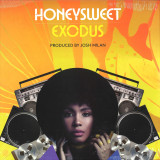
Josh Milan has been recording music professionally for over 30 years.He's played every role from artist to engineer in the studio.This project, Honeysweet, focuses on his production and musicianship.Utilizing only one musician on sax, Josh plays every instrument and sings every note on this project. His songs are packed with soulful dance floor grooves inspired by iconic, soulful groups like Brian Auger, Cymande, Pleasure, Africano, Santana and others.
"I wanted to do music that made me and my family feel good when I was growing up. It's the kind of music that families dance to at gatherings with a record player and no DJ”, says Josh. “Intros, Accents, Breakdowns, Bridges, and endings were all part of the music.” This music will transport Josh's audience to a place of musical freedom. This is music with, seemingly, no rules.
Josh Milan describes each track on the Honeysweet EP “Exodus” in his own words :
"Last Night Changed It All featuring Lawrence Clark on sax is the kind of groove that keeps its dance floor value while holding up the banner of true musicianship. This song was written after hearing a DJ set,where the DJ didn’t seem to be concern about staying within a musical box. He played all sorts of music in one set. I knew then that I’d branch out musically when recording.Rhodes, picked bass guitar, rhythm guitar and drum kit is all that's needed on this one.”
"Exodus the manipulation of major and minor chords in this groove make it complex and interesting. The listener is lead by the organ solo featured here. The song is a mental escape. A mental exodus complete with bongo section.”"Being Free is a message that captures the point of this entire project. Musical freedom and expression is where this project gets its
fuel. Horns, are included on this production. A true expression of soulful music. Being free should be all the time I'm your mind all the time.”
“Cranberries and Cream is my tribute to funk grooves as they were featured on records in 70’s. I’m a fan of that sound and I like to play by own funk grooves when I’m alone. This is one of the tracks on the ep I prefer to rock.”
“And So She Waits has eerie sounding pads in the background. They linger throughout the track. Popping in and out, as though they’re waiting for something. You will hear the change in mood once she is no longer waiting. The groove returns to it’s original state. Only she is no longer waiting, he is.”
“Crazy is me bringing the funk to dirty house music. Complete with house piano in the mix. The chords are unsettling. They are, in fact,Crazy. I though adding a horn arrangement to a house track like this would sound interesting and different.”Honeysweet “Exodus” out at all digital outlets and double pack vinyl set.
- A1: High Room
- A2: Faith In Oil
- A3: Melting Mirror
- B1: King Of The Lobby
- B2: Burn The Roses
- B3: Words In The Rind
- C1: Coal
- C2: Manhattan Project
- C3: Orange Grove
- D1: Divine Distraction
- D2: Shadowboxing
- D3: Tapping On The Glass
Elegante Popmusik. Gewaltige Hooks. Voller Streichersound. Das L.A. Musikerkollektiv Storefront Church um den Phoebe Bridgers-Schlagzeuger Lukas Frank nahm sein 2024er Album ""Ink & Oil"", das erstmals flächendeckend erhältlich wird, mit einem kompletten Live-Orchester auf. Textlich bewegt sich Lukas auf der Schattenseite der Straße. Musikalisch ist er der Hammer. Erinnerungen an Scott Walker, Nick Cave, Brian Wilson und den frühen John Grant werden wach. Die Mitglieder treten - ähnlich Broken Social Scene oder Black Country, New Road - in wechselnder Besetzung auf, darunter Laetitia Sadier, Phoebe Bridgers, Zachary Cole Smith (DIIV), George Clarke (Deafheaven), Circuit Des Yeux, Lauren Auder, Cassidy Turbin (Beck), Sam Wilkes und ein Dutzend weitere. Storefront Church steuerten den Song ""The Gift"" zur Netflix-Serie ""The Queen’s Gambit"" bei und nahmen den Roxy Music-Klassiker ""More Than This"" als melancholische Gothic-Version auf.
Originally conceived as a compilation of outtakes and live recordings from The Shadow Ring's 1995 stateside tour, Wax-Work Echoes takes its name from the first line of "Put the Music in Its Coffin," the title track of the group's breakthrough release. Lambkin abandons the bitsand- bobs approach, advancing the Shadow Ring concept with entirely original material that builds on the unit's self-mythologizing lyrics, celebrates the clicking of horse hooves, ponders on the sociability of rats and mice, and warns of the dangers of poultry. The first Shadow Ring album to officially include Tim Goss in the main lineup, Wax- Work Echoes reveals the group in its final and lasting form, awash in the outer bounds of atmospheric exploration, with Lambkin's familiar wry and morbid lyricism and the stripped-down angularity of amateurishly detuned guitars fully intact. While Klaus Canterbury and Tony Clark seem all but forgotten, and the shrugged off S. Fritz is listed on the liner notes as performing only "when required," Lambkin did solicit contributions from outside the inner circle. A bit of "Mambo Twist," lifted from a tape of unreleased Vitamin B12 material sent to Lambkin by Alasdair Willis, found its way into "V.E.R.M.I.N.," while an extended epistle contribution from Richard Youngs (and, technically, Brian Lavelle) would be employed in the second half of "Catching Sight/Of Passing Things." Released on CD in 1996 for Bruce Russell's newly minted Corpus Hermeticum, Wax-Work Echoes was recorded concurrently with intense rehearsal periods, in anticipation of the forthcoming "Rose Watson Tour," and was supported by a celebratory fanzine media blitz. The album seemingly absorbs the frenetic excess of the band's transatlantic travels; Wax-Work Echoes channels the trio's wilder instincts into an unresolved catharsis, not yet free of frustration or restlessness. Out of print for almost three decades and available here for the first time ever on long-playing disc, Wax-Work Echoes is a classic from the outer eddies of The Shadow Ring's sound, a must-have for any aficionado's collection: "A window slides, glass slips from frame / And canvas carcass breathes again." Throughout their legendary, decade-long run, the Shadow Ring were an enigmatic force on the international musical sub-underground. Before their disbandment in 2002, this shambolic rock outfit, formed by a group of rowdy teenagers in southeast England, left behind a mighty run of eight LPs, a handful of 7"s, and a spate of raucous live shows and cryptic zine appearances on both sides of the Atlantic, all which have bolstered their enduring word-of-mouth mystique. Beginning in 2023 with the first-ever vinyl pressing of the self-released pre-Shadow Ring tape The Cat & Bells Club (1992), Blank Forms Editions has been conducting a systematic retrospective of the storied group. Wax-Work Echoes and Hold Onto I.D. are the latest releases in a multiyear reissue effort that includes several LPs, a comprehensive CD box set, and a nearly five-hundred-page book.
- A1: Key 1 05
- A2: Door 1 51
- A3: Subwoofer Lullaby 3 28
- A4: Death 0 41
- A5: Living Mice 2 57
- A6: Moog City 2 40
- A7: Haggstrom 3 24
- A8: Minecraft 4 14
- A9: Oxygène 1 05
- A10: Équinoxe 1 54
- A11: Mice On Venus 4 41
- A12: Dry Hands 1 08
- A13: Wet Hands 1 30
- B1: Clark 3 11
- B2: Chris 1 27
- B3: Thirteen 2 56
- B4: Excuse 2 04
- B5: Sweden 3 35
- B6: Cat 3 06
- B7: Dog 2 25
- B8: Danny 4 14
- B9: Beginning 1 42
- B10: Droopy Likes Ricochet 1 36
- B11: Droopy Likes Your Face 2 07
- A1: Ki
- A2: Alpha
- A3: Blind Spots
- A4: Mutation
- A5: Biome Fest
- A6: Aria Math
- A7: Taswell
- B1: Beginning 2
- B2: Moog City 2
- B3: The End
- B4: Kyoto
- B5: Chirp
- B6: Mellohi
- B7: Stal
- B8: Eleven
- B9: Far
- B10: Intro
Alpha - Green Color Tape[14,08 €]
Green Sonic Opaque w/ White Ink Cassette & Red Opaque w/ White Ink Cassette. Minecraft is a dreamscape, a limitless world where anything is possible. Minecraft is a tool, a means of bringing the imagination to life. Minecraft is a community, a platform on which inventive minds of all ages can share their creations and ideas. Minecraft, of course, is also a game, the most popular and best-selling video game of all time. Created in 2009 by Swedish programmer Markus "Notch" Persson, this cultural phenomenon speaks volumes of our current zeitgeist's love for virtual spaces, but its unprecedented success couldn't be pinned on one factor alone. Countless layers of thoughtful artistry flow through Minecraft's singular experience, not the least of which is its transportive soundtrack by C418, the project of German composer and musician Daniel Rosenfeld. Minecraft Volume Alpha, the first installment of a two-part OST, helped breathe life into the game's voxel-based universe. Upon release, fans and critics were universally enamored with C418's beatless, nuanced electronic pieces. Popular gaming site Kotaku named it among The Best Game Music of 2011, calling the music "remarkably soothing." The Guardian compared Rosenfeld's delicate piano and sparse ambient motifs to legendary artists Erik Satie and Brian Eno. Polygon distilled Volume Alpha to its essence: "It's not bound by the retro aesthetic of Minecraft's graphics. It transcends them. The album is an attempt to uplift the combined game/music experience into the sublime."
- A1: Key 1 05
- A2: Door 1 51
- A3: Subwoofer Lullaby 3 28
- A4: Death 0 41
- A5: Living Mice 2 57
- A6: Moog City 2 40
- A7: Haggstrom 3 24
- A8: Minecraft 4 14
- A9: Oxygène 1 05
- A10: Équinoxe 1 54
- A11: Mice On Venus 4 41
- A12: Dry Hands 1 08
- A13: Wet Hands 1 30
- B1: Clark 3 11
- B2: Chris 1 27
- B3: Thirteen 2 56
- B4: Excuse 2 04
- B5: Sweden 3 35
- B6: Cat 3 06
- B7: Dog 2 25
- B8: Danny 4 14
- B9: Beginning 1 42
- B10: Droopy Likes Ricochet 1 36
- B11: Droopy Likes Your Face 2 07
Alpha + Beta - Color Tapes[22,27 €]
Green Sonic Opaque w/ White Ink Cassette. Limited to 150 copies.
Minecraft is a dreamscape, a limitless world where anything is possible. Minecraft is a tool, a means of bringing the imagination to life. Minecraft is a community, a platform on which inventive minds of all ages can share their creations and ideas. Minecraft, of course, is also a game, the most popular and best-selling video game of all time. Created in 2009 by Swedish programmer Markus "Notch" Persson, this cultural phenomenon speaks volumes of our current zeitgeist's love for virtual spaces, but its unprecedented success couldn't be pinned on one factor alone. Countless layers of thoughtful artistry flow through Minecraft's singular experience, not the least of which is its transportive soundtrack by C418, the project of German composer and musician Daniel Rosenfeld. Minecraft Volume Alpha, the first installment of a two-part OST, helped breathe life into the game's voxel-based universe. Upon release, fans and critics were universally enamored with C418's beatless, nuanced electronic pieces. Popular gaming site Kotaku named it among The Best Game Music of 2011, calling the music "remarkably soothing." The Guardian compared Rosenfeld's delicate piano and sparse ambient motifs to legendary artists Erik Satie and Brian Eno. Polygon distilled Volume Alpha to its essence: "It's not bound by the retro aesthetic of Minecraft's graphics. It transcends them. The album is an attempt to uplift the combined game/music experience into the sublime."
Born in Aldershot on 11 September 1947, Catley's family moved to the Tile Cross area of Birmingham when he was young. He went on to attend the nearby Central Grammar School for Boys (Birmingham) and left to start an apprenticeship at the GPO before deciding on a musical career shortly after meeting similarly minded individuals at college. Whilst at college he joined several bands, such as The Smokestacks (Jeff Clark-guitar, Ron Savage-guitar, Derek Danks-bass & Brian Worrell-drums, Life and Clearwater). His first professional band was when he joined local outfit The Capitol Systems. The initial line-up was Bob Catley (vocals) Paul Sargent (guitar) Paul Whitehouse (bass), Dave Bailey (keyboards) and Bob Moore (drums). Shortly afterward they changed their name to Paradox, inspired by a science-fiction novel. A one-off deal was arranged with Mercury after Paradox had come to the attention of Francis Rossi and Rick Parfitt. The tracks were "Ever Since I Can Remember", backed with "Goodbye Mary". In addition, they recorded "Mary Colinto" and "Somebody Save Me". All of these songs were written by Dave Morgan. Paradox played festivals in the Netherlands and Italy before splitting up upon their return to the UK in 1970. Formed in 1972, Magnum throughout the next 16 years consisted mainly of Bob Catley on vocals and Tony Clarkin on guitar. Magnum began as the house band at Birmingham's famous Rum Runner night club (later the home of Duran Duran). They began to develop their own style by playing Clarkin's songs at a residency at The Railway Inn, in Birmingham's Curzon Street, in 1976. Joining Clarkin and Catley were drummer Kex Gorin and bassist Dave Morgan (later a member of ELO). Their most notable success during these early years was the Jeff Glixman produced Chase The Dragon (1982) which reached No. 17 in the UK, and included several songs that would be mainstays of the band's live set, notably ‘Soldier of the Line’, ‘Sacred Hour’ and ‘The Spirit’. Their breakthrough album came in 1985 with On a Storyteller's Night which featured the single ‘Just Like an Arrow’. This success continued in the following years with the Roger Taylor (Queen) produced Vigilante in 1986, the top 5 album Wings of Heaven in 1988, and the Keith Olsen produced Goodnight L.A. reaching No. 9 in the UK album charts in 1990. Subsequently, Clarkin decided to maintain a tighter control, and after their initial mainstream success, the band lost their major label backing and returned to a more personal level of production. This finally found the band splitting and the formation of Hard Rain in 1995, which saw Clarkin pursue a more Pop orientated direction with a band that included Sue McCloskey on lead vocals. This new direction didn’t sit well with Catley, and after a headline performance at The Gods in the late 90s, a conversation with Bruce Mee of Now & Then Records saw Catley agree with a decision which eventually led to his debut solo album, ‘The Tower’. This release was completely written by Gary Hughes of Ten, with the writing completely decided to be in the vein of classic Magnum. The album itself was recorded by various members of Ten, including the amazing Vinny Burns (Dare) on guitar. On release, the many positive reviews concluded that the release of ‘The Tower’ had succeeded beyond its wildest imagination…..and Bob Catley’s solo career had been launched with amazing success!! With a lyrical intricacy and majestic pomp, songs like ‘Far Away, ‘Fear of the Dark, ‘Madrigal’ and ‘Deep Winter’ take you back to that glorious period of Magnum between ‘Chase The Dragon’ and ‘Wings Of Heaven’ whilst hard melodic rockers such as ‘Scream’, ‘Dreams’ and title track ‘The Tower’ show just what Magnum would have sounded like if they’d gone a little bit harder. Another absolutely brilliant album that totally deserves to be filed alongside those mid-period Magnum classics.
- A1: The Pusher Feat. Chris Robinson 7:07
- A2: Crossroads Feat. Gary Clark Jr 5:34
- A3: Hoochie Coochie Man Feat. Billy F. Gibbons 6:41
- B1: Oh Well Feat. Billy F. Gibbons 4:32
- B2: Key To The Highway Feat. Dorothy 5:09
- B3: Awful Dream Feat. Iggy Pop 5:31
- C1: Born Under A Bad Sign Feat. Paul Rodgers 5:00
- C2: Papa Was A Rolling Stone Feat. Demi Lovato 7:52
- C3: Killing Floor Feat. Brian Johnson 4:18
- D1: Living For The City Feat. Tash Neal 6:51
- D2: Stormy Monday Feat. Beth Hart 7:57
- D3: Metal Chestnut 3:01
Das Blues-Debüt des legendären Gitarristen und Songwriters enthält Gastauftritte von Brian Johnson (AC/DC), Chris Stapleton, Beth Hart, Iggy Pop, Paul Rodgers, Gary Clark Jr, Billy F. Gibbons (ZZ Top), Chris Robinson (The Black Crowes), Demi Lovato, Dorothy, und Tash Neal am Gesang. "Orgy of the Damned" ist eine Hommage an den Blues - eine Sammlung von zwölf dynamischen Songs, die Blues-Klassiker mit einem reduzierten, instinktiven Ansatz neu belebt. Die erste Single "Killing Floor" - mit Brian Johnson von AC/DC am Gesang und Steven Tyler von Aerosmith an der Mundharmonika - ist eine elektrisierende, raue und ungezügelte Version von Howlin' Wolfs Chicago-Blues-Standard aus dem Jahr 1964.
2024 Reissue
Transparent grünes Vinyl! Wieder lieferbar! Zum ersten Mal überhaupt seit der digital-only Veröffentlichung 2011 erscheint nun der erste "Minecraft"-Soundtrack in physischer Form. Die Vinylversion enthält zwölf Tracks! "Minecraft - Volume Alpha" ist das Werk des deutschen Komponisten und Musikers Daniel Rosenfeld. Unter seinem Künstlernamen C418 erschuf Rosenfeld den weitreichenden Soundtrack und das lebendige Sounddesign, das das auf Voxel aufgebaute Universum von "Minecraft" zum Leben erweckte. Fans und Kritiker waren durch die Bank weg begeistert von seinen beatlosen, ausgewogenen Electro-Stücken. Die bekannte Gaming Seite "Kotaku" führte den Soundtrack unter der "Best Game Music" 2011 und nannte die Musik "beeindruckend beruhigend", während The Guardian die zerbrechlichen Stücke Rosenfelds aus Klavier und minimalistischem Ambient mit den legendären Künstlern ERIK SATIE und BRIAN ENO. In einem Interview destillierte Polygon "Volume Alpha" auf seine Essenz hinuntern: "Der Soundtrack ist nicht gebunden an die Retro-Ästhetik der Minecraft Graphik. Der Soundtrack setzt sich über sie hinweg. Das Album ist ein Versuch, die kombinierte Game/Music Erfahrung in etwas Himmlisches zu übersetzen."
As one of the most characteristic sounding groups in Europe today, PERRY DEAR & THE DEARSTALKERS display their very distinctive sound that has made them one of the most in demand groups on the Big Beat scene. Influences range from JET HARRIS, THE DAVE CLARK FIVE, BRIAN POOLE AND THE TREMELOES to Billy Childish
Die Autofenster sind heruntergelassen, die Luft ist warm, und die Möglichkeiten sind grenzenlos. Auf Cut Worms, dem neuen, selbstbetitelten Album des aus Brooklyn stammenden Max Clarke, setzt der Singer-Songwriter und Musiker seine Erkundung dessen fort, was er "Pop-Essentialismus" nennt. Indem er die goldenen Hits vergangener Tage für einen zeitlosen Doppel-A-Seiten-Sound ausgräbt, betrachtet er uralte Fragen durch eine moderne Linse. Hier lässt er das legendäre Studio und die gefragten Produzenten hinter sich und arbeitet mit einer Reihe von begabten Freunden und Kollaborateuren zusammen, um seinen eigenen Ansatz zu finden. Das Ergebnis ist eine kompakte Sammlung von Tagtraum-Hymnen, die zwischen den hoffnungsvollen Anfängen des Sommers und dem flüchtigen Ende der Saison angesiedelt sind. Anstatt das gesamte Album in einem Stück in einem Studio aufzunehmen, variierte Clarke seine Methoden. Drei der Songs wurden von Anfang bis Ende in seinem gemeinsamen Proberaum aufgenommen. "Don't Fade Out" und Living Inside" wurden in Brooklyn von Brian und Michael D'Addario von den Lemon Twigs aufgenommen, die bei diesen beiden Stücken auch Klavier bzw. Bass spielten. Weitere grundlegende Aufnahmen wurden von Rick Spataro (von der Indie-Folk-Band Florist) in seinem Studio Onlyness Analog im Hudson Valley gemacht, mit Beiträgen der langjährigen Live-Band Cut Worms - Keyboarder John Andrews, Bassist Keven Louis Lareau und Schlagzeuger Noah Bond (der bei allen drei Sessions mitwirkte). Die neun Songs sind von einem jugendlichen Geist durchdrungen. Die mit Nelken geschmückte Schulball-Serenade "I'll Never Make It", die sternenklare Verliebtheit von "Is it Magic?", das erste Herbstlaub auf der Busfahrt zur Schule in "Living Inside" - sie alle beschwören einen Ort der Wärme und Sicherheit. Erklärungen wie "Don't Fade Out", "Let's Go Out On The Town" und "Use Your Love" stellen hohe Anforderungen an das Leben, um es zu verändern, bitten aber gleichzeitig darum, das zu bewahren, was uns als Menschen ausmacht. Clarke ringt mit einem Paradoxon: Die Freuden der Erfahrung können nicht ohne den Verlust der Unschuld gewonnen werden.
Repress!
‘Shapes,’ the third album from London-based multi-instrumentalist, Robohands, fuses elements of jazz, krautrock, hip hop and ambient music. For fans of Khruangbin, Yusef Dayes, CAN, Coltrane and 70s library music moods.
Shapes is the solo project of London based composer, instrumentalist and producer Andy Baxter. His debut LP Green was released on Village Live Records in 2018 and was received with much love and acclaim in the UK Jazz, hip hop and surrounding scenes.
His follow up full-length, 'Dusk’, dropped in 2019, combining soul, funk, Latin & experimental moods. It featured vocalists & musicians from around the world including legendary New York French horn player, John Clark, who has worked with Isaac Hayes, Gil Evans Orchestra, McCoy Tyner, Jaco Pastorius, Ornette Coleman and many more greats.
'Shapes' is inspired by 1970s library music and their legendary composers including Piero Umiliani, David Axelrod, Brian Bennett and co. The album builds on these influences and incorporates modern motifs, contemporary jazz/hip hop drumming styles with a nod to 1990s Mo Wax artists such as DJ Shadow. The theme for the record is future/nostalgia, mixing vintage & modern instruments and production techniques.
Much of ‘Shapes’ was recorded with JB Pilon at Buffalo Studios in Limehouse, London. Due to the COVID restrictions that changed everything in 2020, the remaining parts were recorded in Andy’s flat using a collection of old mixing desk preamps and instruments.
For the heads – ‘Shapes’ features an array of vintage snares, including a 1960's Ludwig Pioneer and a mono, overhead ribbon mic on the drum kit provided extra old school points! The kick drum was re-amped through a huge vintage bass amplifier on a couple of tracks to give it some real character: “My favourite guitar sound achieved on this LP project is a Sontronics Sigma ribbon microphone in front of a WEM Dominator amp, which you can hear on the track 'Odysea'. The bass sound for all the tracks is a 1973 Fender Precision into an old Altec valve preamp, the one used on most Motown recordings."
- A1: Logic System - Unit
- A2: Kraftwerk - Computerwelt (2009 Remastered
- B1: Whodini - Magic's Wand
- B2: Rocker's Revenger - Walking On Sunshine (Feat Donnie Calvin
- C1: Klein & Mbo - Dirty Talk (European Connection
- D1: Liaisons Dangereuses - Los Niños Del Parque
- D2: Yello - Bostich
- E1: The The - Giant
- F1: The Residents - Kaw-Liga
- G1: Clan Of Xymox - Stranger
- G2: A Split - Second - Flesh
- H1: Severed Heads - Dead Eyes Opened
- H2: The Weathermen - Poison!
- I1: New Order - Blue Monday
- J1: Anne Clark - Our Darkness
- J2: 16 Bit - Where Are You?
- K1: Phuture - We Are Phuture
- K2: Model 500 - No Ufo's (Vocal
- L1: Frankie Knuckles Feat Jamie Principle - Your Love
- L2: Quest - Mind Games (Street Mix
- M1: Jasper Van't Hof - Pili Pili
- N1: Guem Et Zaka Percussion - Le Serpent
- N2: Hugh Masekela - Don't Go Lose It Baby
- O1: Sly & Robbie - Make 'Em Move
- Q1: The Ecstasy Club - Jesus Loves The Acid
- R1: Foremost Poets - Reason To Be Dismal?
- S1: Lhasa - The Attic
- S2: A Guy Called Gerald - Voodoo Ray
- T1: M/A/R/R/S - Pump Up The Volume - Usa 12" Mix
- T2: Bobby Konders - Nervous Acid
- U1: Meat Beat Manifesto - Helter Skelter
- V1: Raze - Break 4 Love
- W1: Sueño Latino With Manuel Goettsching Performing E2-E4 - Sueño Latino (Paradise Version
- X1: Off - Electrica Salsa
- O2: Brian Eno - David Byrne - Help Me Somebody
- P1: Primal Scream - Loaded (Andy Weatherall Mix
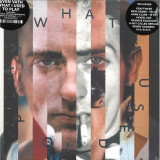
For this uniquely personal retrospective spread over twelve vinyl discs, Sven Väth takes us back to the early days of his DJ career. On What I Used To Play we meet great pioneers of electronic music, gifted percussionists, obscure wave bands, and innovative producers of a bygone 'new electronic' era. Rough beats and irresistible grooves from the identification stage of house, techno, and acid remind us not just how far electronic music has evolved over the past four decades, but how great it was to dance to EBM, techno, and house for the very first time.
If there is one protagonist of the electronic music scene who has remained curious, innovative and at the very cutting edge of music for over four decades, it's Sven Väth. His multi-layered artist albums and Sound of the Season mix compilations have been defining the genre for over two decades, and even today, he is constantly on the lookout for the next top tune to add to the highlights of his next set. At least, that's the case when he's not producing them himself as an artist or remixer. "Actually, it's always been part of my DNA to think ahead," and nothing had been further from his mind than looking back at his past, but when in spring of 2020 the international DJ circuit had to be scaled down to virtually zero, the 'restless traveler' suddenly had time. Time to stop and reflect on "how it actually was back then, at the very beginning of my career..."
"It was a great trip and with every track, beautiful memories came flooding back".
In the London apartment, he had just moved into, Sven has set up a "little music room", where he cocooned himself for several days, "to look way back for the first time and review my musical journey through the eighties, so to speak."
The interim result was six thematically oriented playlists with a grand total of 120 tracks from 'early 80s' to 'Balearic late 80s', together with excursions into afrobeat, European new wave, and EBM sounds and a few epochal techno/house tracks from the USA in between. From these 'Best of Sven Väth's favorites', the project What I Used To Play crystallized. Sven remembers how the Cocoon team reacted to his proposal: "They found the idea of making a compilation out of it MEGA from the beginning and everyone said 'Sven, go for it', but then, of course, the work really started, namely, to clear the rights and to get clean sounding masters of the up to 40-year-old tracks. There was also disappointment, of course. We couldn't clear certain titles because the rights holders in the USA had fallen out with each other or simply disappeared from the scene. In short, it wasn't easy, but now I can safely say we got the most important tracks."
Finally, after two years of research, curation, design, and administrative fine-tuning, the "little retrospective" from 1981 to 1990 is available. The exquisitely packaged, and three-kilo heavy box set is not only physically impressive, WIUTP is also the definitive record of Sven Väth's musical development. On each of the twenty-four sides of vinyl, you can trace track by track, what influenced him during which phase, and how he took off as a DJ from his parents' Queen's Pub straight into the spotlight at Dorian Gray. There and at Vogue (later OMEN), Sven became the style-defining player in the DJ booth that he still is today.
1981 - 1990: Future Sounds of Now
In the early eighties, the crowd in clubs like Vogue and Dorian Gray danced to what nowadays we call 'dance classics' - mainly disco, funk, soul, and chart pop. It was up to a new generation of DJs, including Sven Väth, the youngest protagonist in the Rhine-Main area at the time, to create their own club-ready music mix. Good new tracks and potential floor-fillers were rarities that had to be sought out and found, in order to prove oneself worthy.
Without MP3s, internet streaming, or other digital download possibilities, music didn't just gravitate to the DJ, instead, it had to be tracked down. In well-stocked record stores in Frankfurt and Wiesbaden or even in Amsterdam, London, or New York, Sven and friends sourced the material for countless magical nights. On WIUTP we can follow Sven's very personal journey through this wild, innovative era in which synth-pop, funk, hip-hop, and disco were successively replaced as 'club music' by house, techno, acid, and breakbeat. By the end of the decade, it was clear to see that these once exotic 'fringe' phenomena would soon become 'mass' phenomena.
Early 80s
Dirty Talk by the Italian-American duo Klein & M.B.O. represents the most innovative phase of the Italo-disco genre in the early eighties like no other track. Mario Boncaldo (I) and Tony Carrasco relied entirely on the original synthetic drum and percussion sounds of the Roland TR-808, coupled with the raunchy vocals of Rossana Casale and guitar accents of Davide Piatto. Of course, other tracks from this period were also influential in style, most notably Unit by Logic System, which worked as the perfect soundtrack to the laser lighting system at the legendary Dorian Gray club. With stomping beats and robotic rap interludes, Bostich by Yello also belongs on Sven's eternal playlist - after all, it caught the attention of Afrikaa Bambaataa, who invited the Swiss duo to perform at the Roxy in New York in 1983.
EBM Wave - Mid 80s
From today's point of view, the almost ten-minute-long, downtempo track Giant by Matt Johnson's band project The The, would probably not be considered an obvious club classic. However, a closer (re)listen reveals the rhythmic intricacies of the percussion overdubs by JG Thirlwell (aka Foetus) on Johnson's composition, and it becomes clear why this exceptional piece of music is one of Sven's absolute favorites. Other classics from this phase include Kaw-Liga by the mysterious The Residents, the hypnotic-synthetic Our Darkness by Anne Clark (and David Harrow), and last but not least, the somber, monotonous anthem Where Are You? by 16Bit, one of Sven Väth's projects together with Michael Münzing, Luca Anzilotti from 1986.
US House - Late 80s
You certainly can't talk about Chicago house without mentioning Frankie Knuckles. The resident DJ at the Warehouse not only gave the name to an entire genre, but also produced epochal floor fillers on the Trax label like the timeless Your Love, sung (and moaned) by Jamie Principle. Acid house protagonists Phuture also hail from Chicago, and on We Are Phuture (also released on Trax) we hear the chirping acid sounds of the legendary Roland TB-303 in full effect. Another featured classic is No UFO's by Detroit's Model 500 aka Juan Atkins, who is rightly considered the 'Godfather of Techno' even if the genre-defining track from 1985 still breathes with the spirit of hip-hop and electro from the first breakdance era.
Afrobeat
Le Serpent, by Algerian-born Abdelmadjid Guemguem, is a track that sounds completely different from everything else on WIUTP. Made in 1978, it's a monumental, rousing groove created without bass or synths, just with five congas! Even though Guem sadly passed away in 2021, his immortal, acoustic beats are understood all over the world and will continue to enrich many thousands of DJ sets for years to come. Another classic that not only Sven appreciates beyond measure is Hugh Masekela's Don't Go Lose it, Baby. In addition to being one of the most important jazz pioneers, the trumpeter and freedom fighter from Johannesburg was very experimental, integrating electronic sounds into his music in later years, in a similar vein to Miles Davis and Herbie Hancock. Dutch jazz pianist Jasper van't Hof's afrobeat project Pili Pili has also aged well. The trance-like, almost sixteen-minute-long track of the same name, manages to fill a whole side on the seventh of twelve vinyl discs in the WIUTP box.
UK-US-Euro - Late 80s
Time for a change of scene, in the truest sense of the word, and from a musical perspective, this section is like landing on another planet. First up is Andrew Weatherall's classic remix of Primal Scream's Loaded, featuring the iconic Peter Fonda sample (lifted from the 1966 biker film Wild Angels) that came to personify the mood triggered by the British Second Summer of Love in the late eighties: "We wanna be free to do what we wanna do, and we wanna get loaded...". This period also saw the emergence of M/A/R/R/S whose only single, 1987's Pump Up The Volume, became a club classic with support from DJ legend CJ Mackintosh. In this most eclectic of sections, we also encounter New York house and reggae producer Bobby Konders and his seminal Nervous Acid.
Balearic - Late 80s
Those who know him, know that Sven had already lost his heart to the 'magic island' of Ibiza as a teenager, so with that in mind, the WIUTP project couldn't end without a Balearic chapter. Inspired by Manuel Göttsching's E2-E4, the immortal, eponymously titled Sueño Latino belongs in there without question. Equally popular on the island was, and still is Break 4 Love by Raze, which thinking about it, would also fit perfectly into the house chapter. Last, but not least, there's an overdue reunion with Sven Väth himself, in his role as frontman of the successful Frankfurt trio OFF. Together with Michael Münzing and Luca Anzilotti (later of Snap!) this 'Organization For Fun' created the off-the-wall club hit Electric Salsa in 1986 which incidentally turned into an international chart smash, putting Sven in the enviable position of having to decide between pop stardom and a DJ career. Well, we all know how that decision turned out and the rest, as they say, is history. A not insignificant part of his story is What I Used To Play. Enjoy!
From their new millennium rise to MTV superstardom through pop-punk’s modern resurgence that has introduced their iconic, multi-platinum sound to new audiences around the world, SIMPLE PLAN have been an indelible part of pop culture for more than two decades because they’ve never lost sight of what got them there in the first place: their fans.It’s this same sense of mutual respect that’s fully on display on “The Antidote,” the first single from their sixth studio album, HARDER THAN IT LOOKS., their first new music since 2016’s Taking One For The Team, and the most authentically Simple Plan album since 2004’s Still Not Getting Any. Free agents for the first time in their storied career, the band kept their circle tight during the recording process, enlisting longtime songwriting partners like We The Kings’ Travis Clark and producers Brian Howes and Jason Van Poederooyen (who worked on the band’s 2011’s album Get Your Heart On!) and Zakk Cervini (blink-182, Good Charlotte). From the skyscraping choruses of “Congratulations” and “Ruin My Life” (ft. Sum 41’s Deryck Whibley) to the unflinching poignancy of the album-closing “Two,” which instantly ranks alongside “Perfect” and “Untitled (How Could This Happen To Me?)” as one of the band’s best closers ever, HARDER THAN IT LOOKS certainly respects Simple Plan’s storied career – and the same spirit that helped the band sell 10 million albums worldwide – without being overtly reverent. The album-opening “Wake Me Up (When This Nightmare’s Over)” is a cathartic rush of familiarity and freshness – not to mention a bit lyrically prescient, as the COVID-19 pandemic hit shortly after the band wrapped the album. (“We certainly didn’t set out to write a pandemic album,” Bouvier says with a laugh. “It’s funny how some of the songs might seem like that, though.”) There are even spiritual successors to early material, like the glass-half-full skate-punk-leaning “Best Day Of My Life,” quite a 180 for a band who put a song called “The Worst Day Ever” on their genre-defining, Platinum-selling 2002 debut No Pads, No Helmets...Just Balls. But you won’t find an ounce of fat on the 10-song album, no obvious plays to recapture the radio waves they claimed in the early aughts with smash hits like “I’d Do Anything,” “I’m Just A Kid” and “Addicted.”
- 1: The Beach Boys - Surfin‘ Safari
- 2: Ray Peterson - Corinna, Corinna
- 3: Brenda Lee - Break It To Me Gently
- 4: The Shadows - Apache
- 5: Claudine Clark - Party Lights
- 6: Maurice Williams & The Zodiacs - Stay (Just A Little Bit Longer)
- 7: The Isley Brothers - Twist And Shout
- 8: The Tokens - The Lion Sleeps Tonight
- 9: Sam Cooke - Having A Party
- 10: Johnny Tillotson - Poetry In Motion
- 11: Cliff Richard - The Young Ones
- 12: Connie Francis - Everybody‘s Somebody‘s Fool
- 13: Ray Charles - Hit The Road Jack
- 14: Chris Montez - Let‘s Dance
- 15: Del Shannon - Runaway
- 16: The Marcels - Blue Moon
- 17: Brian Hyland - Sealed With A Kiss
- 18: Wanda Jackson - Stupid Cupid
60s Jukebox Hits Vol. 2 , das sind 18 Original Hits von Original Interpreten aus den legendären 80er Jahren. Für alle Vinyl Fans ist diese Serie eine tolle Gelegenheit sich eine Sammlung der großen Hits der 60er Jahre anzulegen Inkl. den beliebtesten Jukebox Hits von The Beach Boys, Brenda Lee, The Isley Brothers, Sam Cooke, Cliff Richard, Ray Charles uvm.
40-plus years since its original release, the pop-punk-new wave inventions of Anthony
Moore’s ‘Flying Doesn’t Help’ are freshly remastered, blasting the sparkling, angular
sounds into today with perfect vitality.
After spending the early years of the 1970s making experimental music first as a solo
artist, then with Slapp Happy and Henry Cow, 1976’s ‘OUT’ sessions had reinvigorated
Anthony’s youthful love of the naive pop melodies of pop radio, the undeniable excitement
of songs. While ‘OUT’ ultimately went unreleased at the time, the iconoclasm clouding the
late ’70s air was addictive and transformative for Anthony. England seemed to be roiled
as violently as it had been in counter-cultural days a decade earlier; the UK pop charts
breathlessly reflected the changing spectrum with equal parts aging hippie and prog
delicacies alongside new ascendant sounds: rough-hewn pub and punk rock, plus dub
reggae and disco and ska and Stiff and Krautrock. This proved to be an ideal environment
for Anthony to make records by exploring, as he puts it, the “deep connection between
minimalism, repetition, working with tape and celluloid and forming the modules of a
three-minute pop song.”
Caught up in a no-holds-barred era, Anthony was more than happy to play the out-of-hishead madman, raving through outrageous exchanges with the press, while ‘Judy Get
Down’ received Single Of The Week honours from the NME (with review penned by Brian
Eno). Represented by Blackhill Enterprises, Anthony did production work throughout
1978-1979, on Kevin Ayers’ ‘Rainbow Takeaway’, Manfred Mann’s Earth Band’s ‘Angel
Station’ and the first This Heat album, meanwhile cutting his own songs on a dead time
deal at Workhouse Studio with engineer / producer Laurie Latham. Through the wee
hours of countless nights, the two pieced together ‘Flying Doesn’t Help’, with a little help
from friends (an inspired bunch, including Bob Shilling, Charles Hayward, Chris Slade,
Robert Vogel, Festus, Matt Irving, Sam Harley, Bernie Clark, Edwin Cross and Martine
Moore on the telephone).
Building upon the axis of pop and experimental impulses that distinguished ‘OUT’, and
informed further by the raw sensibilities exploding everywhere, ‘Flying Doesn’t Help’
blasts out of the speakers with its own unique blend of sophistication and aggression,
Anthony’s keyboard flashes between arpeggiations and outright stabs among the noise of
slicing guitars, funk basslines and the reverbed blare of the drumkit. Opening with
Anthony’s greatest hit, ‘Judy Get Down’, and containing a noise-laden remake of the
Slapp Happy/Henry Cow number, ‘War’, among other delightful sweet-and-salty
confections, ‘Flying Doesn’t Help’ never stops moving, fuelled with raw outrage and dark
satirical intent, churning with the energy of next-gen types like Tubeway Army and DEVO,
while shimmering with the elegance of the still-challenging old guard types, like Cale and
Bowie.
Clearly, ‘Flying Doesn’t Help’ was steeped in the time, and the original release reflected a
deep mistrust of the corporation mindset. Information was a dubious concept, and
connections to any recognizable organization were seen as untrustworthy, so facts like
musician credits were left out of the package, and even Anthony’s name was altered (he
was credited as A. More on the album and Tony More on a single release). The label
name QUANGO was conceptual as well, standing for ‘Quasi Autonomous NonGovernmental Organization’; each record was sealed with red tape that the listener was
required to cut through in order to get to the music. Rather than recreate the conditions of
the original release of ‘Flying Doesn’t Help’, this reissue instead embraces the changed
environment of the current time and place: instead of no credits, now they are complete,
with Anthony’s full name restored and even the artwork subtly ‘relocated’ to reflect a new
set of relationships. All of which brings the forward-looking sounds of ‘Flying Doesn’t Help’
into the more independent-minded 21st Century syntax where it belongs.
- A1: Gary Clark & John Carney - Setting Sail 2021
- A2: Rosie Carney - Perfect Perfect
- A3: Jay Wadley - Just Leave, Please
- A4: Andy Shauf - Break My Silence
- A5: Chong The Nomad - Forward
- A6: Skye Edwards - All Frequencies Low
- A7: Jay Wadley - Worst Fears
- A8: Setting Sail (Nerina Pallot Version)
- B1: Gary Clark - Fire
- B2: Brian Byrne - Flirting On A Train
- B3: John Byrne & John Carney - Meet Cute
- B4: Gary Clark - Bedrooms
- B5: Nerina Pallot, Gary Clark & John Carney - Lockdown Dublin
- B6: Gary Clark - Michael
- B7: Gary Clark & Gregor Philp - Christmas
- B8: Gary Clark & Gregor Philp - Home Again
- B9: John Carney, Gary Clark & Gregor Philp - Moonstone
- B10: Setting Sail (Andermo Version)
A co-production of Amazon Studios and the New York Times, based on the weekly same-titled weekly column in The Times. This anthology series explores love in all of its complicated and beautiful forms, as well as its effects on the human connection. Each episode brings a different story to life that has been inspired by the newspaper’s popular Modern Love column. The second season premiered in August, 2021 and stars Kit Harington, Jack Reynor and Minnie Driver.
The score of Modern Love Season 2 features both score music and original songs heard throughout the season’s eight half-hour episodes. The music was written by Jay Wadley in cooperation with Gary Clark and feature vocal tracks featuring Rosie Carney, Nerina Pallot, John Byrne and Adermo. In addition, the score feature never-before-released songs written and performed by Andy Shauf, Chong The Nomad, Morcheeba’s Skye Edwards and Gregor Philp.
- A1: Soul Bossa Nova
- A2: Boogie Bossa Nova (Aka Boogie Stop Shuffle) (Aka Boogie Stop Shuffle)
- A3: Desafinado
- A4: Manha De Carnaval (Morning Of The Carnival) (Morning Of The Carnival)
- A5: Se E Tarde, Me Perdoa (Forgive Me If I'm Late) (Forgive Me If I'm Late)
- A6: A Taste Of Honey
- B1: On The Street Where You Live
- B2: Samba De Uma Nota So (One Note Samba) (One Note Samba)
- B3: Lalo Bossa Nova
- B4: Serenata
- B5: Chega De Saudade (No More Blues) (No More Blues)
- B6: Shag Nasty
180g Coloured Vinyl Series Contains New Specially Prepared Liner Notes By Penguin Guide To Jazz Writer Brian Morton And By Paris’
Prestigious Jazz Magazine. Quincy Jones Big Band Bossa Nova + 2 Bonus Tracks (Yellow Vinyl) “Almost every track here is a small classic that you’re bound to have heard somewhere, without realising what it was. “Manha de Carnaval”, Luiz Bonf‘s peerless melody, is another that surfaces constantly in movies and behind commercials. Likewise, Jobim’s “One Note Samba”, which varies the metre and changes the pace most effectively. Jones recognised that he had something that could change the metre and flavour of almost any piece. “On the Street Where You Live” loses its slightly plonking sentimentality and turns into a celebration of community. “A Taste of Honey” acquires a new and exotic quality.” Penguin Guide to Jazz “There are few albums more enchanting than this one, which finds the perfect balance, among other things, to make everything swing, and to make us dance better. And you’ll be amazed to hear the voices of Roland Kirk, Paul Gonsalves, Jim Hall and Clark Terry. Yes, all of them are here.” Jazz Magazine Personnel: featuring Clark Terry (trumpet) Phil Woods (alto sax), Paul Gonsalves (tenor sax), Rahsaan Roland Kirk (Stritch, alto sax), Lalo Schifrin (piano), Jim Hall (guitar), Chris White (bass), Rudy Collins (drums), Jos Paula, Carlos “Bala” G
mez, Jack Del R o (percussion), Quincy Jones (conductor). Recorded in New York, August 13 & September 4-12, 1962. *BONUS TRACKS: Quincy Jones and His Orchestra. Similar personnel as Big Band Bossa Nova, also including Rahsaan Roland Kirk (flute, tenor sax, Stritch). New York, June 15, 1962. Original session produced by Quincy Jones. Originally issued in 1962 on the Mercury single 72012
b a2 | Boogie Bossa Nova Aka Boogie Stop Shuffle
7" Black Vinyl limited to 1000 copies.
Teenagehood, brotherhood and a genuine love for alternative music has united THE GOA EXPRESS from the off. Hailing from the industrial town of Burnley and adopted by the Manchester culture carriers, their teenage years can be viewed as something of a hedonistic pilgrimage into the underbelly of suburban rock and roll- their first gig having been 3 songs blasted out their mates garage, the next on top of a local vintage shop where the floor nearly caved in: “when there’s fuck all, you make do with what you got”. The intensity of this friendship has resulted in the occasional bust up along the way, yet it only adds to the burning chemistry that the band offer on record and on stage. Together, brothers James Douglas Clarke (Guitar + Vocals) and Joe Clarke (Keys), along with Joey Stein (Lead Guitar), Naham Muzaffar (Bass) and Sam Launder (Drums) all contribute to a fuzzy wall of diverse sound, becoming harder to pin down with their constantly evolving, psych-umbrella’d, rock and roll. What sets THE GOA EXPRESS apart from other musicians who sit comfortably within scenes is that their identity as a band has been growing organically long before the 5 of them decided to pick up instruments and teach themselves art of killing time. Their genuine joy in the everyday; their attitude and antics seem to hark back to the glory days of the NME- if they talk about a night out, you want to be there because these lads ooze charm and wreak havoc. This purist, old school approach to creating music through unified experiences and stimulated good times is married with the plain fact that they are very much young people of this generation, and while they see its flaws its hyperreality, its sheep-like tendencies, they still understand the importance in the immediacy of pop music: of a banging riff, or a glorious chorus and how effective this can truly be, and they want everyone along for the ride. With influences ranging from Spacemen 3 and The Brian Jonestown Massacre to French existentialism, from Beat Literature to long hours working at the Bookies to the journey into the sunrise on the night bus home, it is their ability to be all these things at once which makes THE GOA EXPRESS a guitar band for the 21st Century. Nothing is ever a compromise because they are so unapologetically themselves in everything they do- proud Northerners with a DIY foundation that aren’t afraid to look into the often dim future and see themselves shining brightly in it, unforgiving and unpretentious. So far, the band have released 3 singles with great success. The first: ‘Be My Friend’, produced by Ross Orton right next Sheffield’s famous ‘City Sauna’ brothel, presents itself to us as a cheeky, snarling pop song, holding undertones of raw cynicism laden with psychedelic sunshine. Ross Orton’s studio was also right next door to where the band recorded their last single ‘The Day’ with Nathan Saoudi of Fat White Family at ‘Champ Zone.’ Both these producers have been able to give these instant pop classics a grittier feel, capturing the essence of the unfettered lifestyle the band were living at the time that they were able to capture themselves in the music video for ‘Be My Friend’. After signing with Ra-Ra Rok, (WU-LU/Bingo Fury) the band released anthemic summer hit ‘Second Time’, that went straight to the 6 music B-List before quickly heading up to the A-List 2 for 2 weeks. This was followed by the release of its B-Side ‘Overpass’ that almost immediately caught the eyes and ears of BBC Radio 1’s Jack Saunders, who had the band on his ‘Next Wave’ Segment. Closing the year that saw them play to 1000 strong crowds at festivals like Latitude & End of the Road, the band headlined their biggest headline show to date at Manchester’s Gorilla. Its fair to say that this really is only the beginning.
Originally from Limerick, O’Brien’s work captures the everyday and the inbetween in a way that transcends any genre label. Writing from her own observations, O’Brien’s influences can be found in the realism of Mark E. Smith of The Fall, Patti Smith and The Slits, and the works of literary icons such Frank O’Hara, W.B. Yeats, Joan Didion and Albert Camus. Releases to date have drawn admiration from British and American outlets and radio stations as diverse as The FADER, Stereogum, The Guardian, Loud And Quiet, The Quietus, BBC Radio 1 and BBC Radio 6 Music, and more.
Speaking about the new single, O’Brien explains: “‘Most Modern Painting’ is about the creation and maintenance of ‘the self’ - the most epic task we are faced with in our lives. I wanted to work with structure in an unconventional way, linking the movements together using various voices from the narrative. The lyrics are voiced through a dialogue between the conscious and unconscious, through dream recall, memory, the individual and the ego.”
The accompanying music video for ‘Most Modern Painting’ was shot in a film-like manner on 16mm. Directed by Saskia Dixie, the movements are intrinsically linked to the lyrics; the choreography incorporates physical theatre, dance and elements of daily gestures and habits.
The chorus line on ‘Most Modern Painting’ birthed the title for the EP ‘Drowning In Blessings’ - “The more I said it, the more it meant. It’s an image which I find really cathartic; seeing the weight or build up of things as possibilities and opportunities instead of bearing their burdens. I approached the set of songs on the EP like a short album so the body of work feels full and tells a substantial story. Tracks allude and refer to one another and provide clues and hints to the future and to the past. It’s not only about language and music - it’s about energy, spaces, leaving room for other people to get in.”
A multifaceted artist, O’Brien’s writing has also been published by the esteemed London Magazine whose alumni include T.S. Eliot, Sylvia Plath and William Burroughs. Her unique fusion of spoken lyrics and art rock has piqued the attention of luminaries of both fields, seeing her perform with John Cooper Clarke and The Brian Jonestown Massacre at sold out theatres across the U.K. Playing live with her band and collaborators; Julian Hanson (guitar) and Oscar Robertson (drums), Sinead O’Brien’s transfixing performances are placing her at the forefront of a resurgent wave of independent British and Irish talent.
Brian Leeds a.k.a. Huerco S' West Mineral label present a groggy Midwestern ambient doozy with Chat, the first collaborative release by Pontiac Streator and Ulla Straus
Pontiac Streator previously appeared as a guest on the first West Mineral LTD release, Pendant's Make Me Know You Sweet, while Ulla Straus is perhaps best known for her part on the cultishly adored bblisss compilation tape which introduced Huerco S.'s Pendant alias to the world at large.
Their first album together is a bedroom-crafted confection where drowsy blues and raga smudge with lounging exotica themes in a blunted style to properly heavy-lidded effect.
Chat was recorded on July 5th in Pilsen, Chicago on Ulla's bed after a long week spent dancing with friends, staying up all night typing in chatrooms, and hate-watching Fox news. The results channel that experience into four lop-sided creations that feel satisfyingly burned out and immersive, like the murmur of zonked chat between close friends.
In four parts; Chat One thru Chat Four, the record unfurls with a muggy mid-fi tension between its illusive fidelities, kindling a smoky atmosphere that colours listening spaces with seductive smells
and a muggy, keening tension that recalls the minutes before sundown
This balmy feel of the surreal comes out in a sylvan patina of sweetened cicadas and curling pads urged along by a stream of wooden drums, variously recalling Spencer Clark on some kind of
Aguirre soundtrack mission in the tropics, a heatsick Rainforest Spiritual Enslavement piece, or, in the dream-pop drift of the last part, like Leven Signs smudged by Muslimgauze.
Coolly serving to expand West Mineral LTD's remit after that spellbinding Pendant album and a 12" of ectoplasmic dubs from uon, the flux of arid/fluid textures and para-dimensional fidelities in
Chat feels somehow calming yet fraught with a somnambulant appeal that's dangerously easy to
In the last ten years Jon has carved out a niche as a recording artist and live performer supporting such acts as Damien Rice, Brian May, Seal and Dionne Warwick whom he supported at the Albert Hall. His songs and distinctive voice can be heard across films and TV both here and in America. In the UK he has appeared on the iconic Later With Jools Holland TV show and as part of the BBC’s coverage of Glastonbury. When not working on his own material Jon has written songs for Petula Clarke, Engelbert Humperdinck and Record producer Guy Chambers. “…meanwhile” is Jon’s new album, packed with radio friendly hits (CD format released 21/05)
Comprising producer-engineer Joel Krozer ((Clark (Warp), Smerz (XL Recordings), When Saints Go Machine (Escho)) and Brian Della Valle (singer-songwriter of Of The Valley) the Copenhagen based duo got together when Joel heard Brian recording in the studio below his. Their encounter led to a series of late-night recording sessions, together with collaborator Søren Holme, that quickly became the cornerstone of their partnership and the formation of Fluqx. Monolith is the exceptional debut album of Fluqx and offers state of the art production and highly creative Electronica tracks with that special something. The sound of Fluqx is distinct - a merging of deeply warped synthesizers, swirling textures and Brian’s affecting vocals. There is a versatile range of sounds and atmospheres across these twelve tracks - from the delicate arpeggios of ‘Carvings’ and ‘Ephemeral Objects’, to the massive drum sounds and cutting synth leads of ‘Monolith’ and ‘Hanami’. Della Valle’s warm falsetto navigates through this dynamic landscape with ease and hooks the listener in on tracks like ‘Feather’ and ‘Staring At The Sun’, whilst providing space to breathe on tracks like ‘Here‘ and ‘Golden Hour‘. Elsewhere, ambient, droney textures are at the forefront on ‘Mojave Booth’ and ‘Diamond Dust’, maintaining the dreamy, otherworldly nature of the Fluqx sound
- A1: Brian Bennett - Canvas
- A2: Wil Malone - Death Line
- A3: Syd Dale - Huckleberry Fine
- A4: The Harry Roche Constellation - Spiral
- B1: The Ivor & Basil Kirchin Band - Jungle Fire Dance
- B2: The Laurie Johnson Orchestra - The New Avengers Theme
- B3: James Clarke & Sounds - Folk Song
- B4: The Reg Tilsley Orchestra - Strike Rich
- B5: The Barry Gray Orchestra - Joe 90
- C1: Keith Mansfield - Soul Thing
- C2: Ccs - Whole Lotta Love
- C3: Syd Dale - Artful Dodger
- C4: John Gregory & His Orchestra - Jaguar
- D1: Nick Ingman - Down Home
- D2: Barbara Moore - Steam Heat
- D3: Alan Parker - Angels
- D4: Alan Moorhouse - Face Up
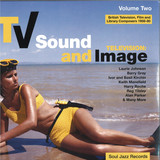
The 36 track 2CD album comes with 50-page book featuring text, biographies and photography. It also comes in a limited run two volume double-vinyl super-loud super-heavy gatefold sleeve editions. Compiled by Stuart Baker (Soul Jazz Records) and sleevenotes biographies by Jonny Trunk (Trunk Records).
TV Sound and Image features British composers who worked in television, film and music libraries the second half of the 20th century.
Aside from John Barry, whose work on the James Bond films made him a household name, or Tony Hatch and Laurie Johnson, the majority of composers featured here - Simon Park, Keith Mansfield, Reg Tilsley, Syd Dale, Keith Papworth – remain relatively unknown. And yet ironically they have created some of the most recognisable songs in British popular culture, their music widely disseminated on television.
A quick role call of these would include Neil Richardson (who composed the theme tune to Mastermind) and Barry Stoller (who wrote Match of the Day). The Simon Park Orchestra’s Eye Level, theme song to the BBC series Van der Valk, reached number one in 1973. CCS’s cover of Led Zeppelin’s Whole Lotta Love was the theme tune to Top of the Pops. And so on.
This album is not however a stroll through the TV memories of the mind, but an exploration of the serious contribution that these creative musicians have on the landscape of popular music in Britain.
Here then is a guide to the amazing music of many of the composers (both well-known and obscure) responsible for some of the most widely known music ever to come out of Britain in the second-half of the 20th century.
Reviews:
Quietus
Der Spiegel: "spannende Klänge ... die oft funky und immer lässig klingen"
"thrilling sounds.... often funky and always chilled"
New Zealand Herald: ***** "Every track is a killer... This is more than just music to mooch too."
Irish Times: **** "downright funky"
Volkskrant: "Ze leverden spanning op maat, die onbekende makers van fenomenale Britse film en tv-muziek. Door de cd TV Sound and Image opnieuw in de aandacht"
Evening Standard: "deeply funky"
Uncut Magazine "excellent 36 track set ... welcome additions to your collection"
Q Magazine: ****
Dynamic composer Neil Cowley is set to release 'Spacebound Tapes' a four track EP featuring remixes of his Trio's 'Spacebound Apes' album ("A miss- this-at-your-peril release" Drowned In Sound 9/10) by Rival Consoles, Throwing Snow, Christian Löffler and Vessels
'Spacebound Apes' was written by Cowley for his trio and long-time bandmates drummer Evan Jenkins and bassist Rex Horan, with contributions from Brian Eno collaborator Leo Abrahams on guitars and FX. A bold exercise in atmosphere and emotion, the album was woven together with some of the most breathtaking, impassioned music that Neil has created. Originally inspired by Arthur C Clarke's 1956 sci-fi book 'The City and the Stars' the album was recorded at Cooper Hall, a studio and cinema set deep in the Somerset countryside with Stanley Kubrick's '2001 A Space Odyssey' running on permanent rotation.
The sci-fi aesthetic is firmly grasped by the four remixers, echoing the theme in their own reinterpretations. The reimagined tracks retain the inventiveness of the originals while exploring progressive but considerate paths. In his version of 'Weightless', Erased Tapes signed Rival Consoles feeds off of the electronic songwriter's critically lauded humanised techno, while rising German musician Christian Löffler brings new dimensions of space and scale to 'Death To Amygdala'. Houndstooth's Throwing Snow delights in deconstructing 'Duty To The Last' with pulsing energy and Vessels' take on 'Echo Nebula' applies machinic facets to the delicate sounds of the original.
- 1