"Welcome to the first of the Masters Series, a cache of limited releases for people who understand that some things, no matter how hard you try, just can't be tamed. (Read: these are scratchier/rougher recordings that are cleaned up as best we can get them - if that's going to not work for you, don't order!)
Already championed by the likes of Michael Robinson (Dig Deeper, NY) and just entering the collective consciousness of the R&B scene worldwide, this release is a double-sided dancefloor destroyer. Both sides rip with tremendous energy.
Those who know will recognize the name Carl Holmes from well established winners like ""Soul Dance No. 3"" and ""Unchain My Heart"". Here he is with an unreleased song called ""Love With A Feeling"", featuring a raucous drum break with his soulful vocals throughout. Not that the tune needs a pedigree, but things like that never hurt.
On the flip is an unknown funky Soul R&B bomb ""Some Of These Days"". This female led tune is perfect for either a Northern Soul or R&B party.
The story behind The Masters Series
In our hunt for unreleased soul, we occasionally find some incredible gems that are just a bit too beaten to restore to the ears of the general public. Rather than return them to the dusty basements from whence they came, we press them in small batches to share with those who love to share."
quête:carl homes
- 1
- A1: Montego Bay - Everything (Paradise Mix) 04 59
- A2: Atelier - Got To Live Together (Club Mix) 06 06
- A3: Golem - Music Sensations 04 56
- B1: The True Underground Sound Of Rome Feat. Stefano Di Carlo - Gladiators 05 26
- B2: Eagle Parade - I Believe 04 26
- C1: Dj Le Roi - Bocachica (Detroit Version) 05 28
- C2: Green Baize - Synthetic Rhythm 01 41
- C3: M.c.j. Feat. Sima - Sexitivity (Deep Mix) 05 30
- D1: Kwanzaa Posse Feat. Funk Master Sweat - Wicked Funk (Afro Ambient Mix) 06 31
- D2: Progetto Tribale - The Bird Of Paradise 06 29
- D3: Mbg - The Quite 06 59
Vol 1[28,99 €]
Googling “paradise house”, the first results to pop up are an endless list of European b&b’s with whitewashed lime façades, all of them promising “…an unmatched travel experience a few steps from the sea”. Next, a little further down, are the institutional websites of a few select semi-luxury retirement homes (no photos shown, but lots of stock images of smiling nurses with reassuring looks). To find the “paradise house” we’re after, we have to scroll even further down. Much further down.
It feels like yesterday, and at the same time it seems like a million years ago. The Eighties had just ended, and it was still unclear what to expect from the Nineties. Mobile phones that were not the size of a briefcase and did not cost as much as a car? A frightening economic crisis? The guitar-rock revival?! Certainly, the best place to observe that moment of transition was the dancefloor. Truly epochal transformations were happening there. From America, within a short distance one from the other, two revolutionary new musical styles had arrived: the first one sounded a bit like an “on a budget” version of the best Seventies disco-music – Philly sound made with a set of piano-bar keyboards! – the other was even more sparse, futuristic and extraterrestrial. It was a music with a quite distinct “physical” component, which at the same time, to be fully grasped, seemed to call for the knotty theories of certain French post-modern philosophers: Gilles Deleuze, Félix Guattari, Paul Virilio... Both those genres – we would learn shortly after – were born in the black communities of Chicago and Detroit, although listening to those vinyl 12” (often wrapped in generic white covers, and with little indication in the label) you could not easily guess whether behind them there was a black boy from somewhere in the Usa, or a girl from Berlin, or a pale kid from a Cornish coastal town.
Quickly, similar sounds began to show up from all corners of Europe. A thousand variations of the same intuition: leaner, less lean, happier, slightly less intoxicated, more broken, slower, faster, much faster... Boom! From the dancefloors – the London ones at least, whose chronicles we eagerly read every month in the pages of The Face and i-D – came tales of a new generation of clubbers who had completely stopped “dressing up” to go dancing; of hot tempered hooligans bursting into tears and hugging everyone under the strobe lights as the notes of Strings of Life rose up through the fumes of dry ice (certain “smiling” pills were also involved, sure). At this point, however, we must move on to Switzerland.
In Switzerland, in the quiet and diligent town of Lugano, between the 1980s and 1990s there was a club called “Morandi”. Its hot night was on Wednesdays, when the audience also came from Milan, Como, Varese and Zurich. Legend goes that, one night, none less than Prince and Sheila E were spotted hiding among the sofas, on a day-off of the Italian dates of the Nude Tour… The Wednesday resident and superstar was an Italian dj with an exotic name: Don Carlos. The soundtrack he devised was a mixture of Chicago, Detroit, the most progressive R&B and certain forgotten classics of old disco music: practically, what the Paradise Garage in New York might have sounded like had it not closed in 1987. In between, Don Carlos also managed to squeeze in some tracks he had worked on in his studio on Lago Maggiore. One in particular: a track that was rather slow compared to the BPM in fashion at the time, but which was a perfect bridge between house and R&B. The title was Alone: Don Carlos would explain years later that it had to be intended both in the English meaning of “by itself” and like the Italian word meaning “halo”. That wasn’t the only double entendre about the song, anyway. Its own very deep nature was, indeed, double. On the one hand, Alone was built around an angelic keyboard pattern and a romantic piano riff that took you straight to heaven; on the other, it showcased enough electronic squelches (plus a sax part that sounded like it had been dissolved by acid rain) to pigeonhole the tune into the “junk modernity” section, aka the hallmark of all the most innovative sounds of the time: music that sounded like it was hand-crafted from the scraps of glittering overground pop.
No one knows who was the first to call it “paradise house”, nor when it happened. Alternative definitions on the same topic one happened to hear included “ambient house”, “dream house”, “Mediterranean progressive”… but of course none were as good (and alluring) as “paradise house”. What is certain is that such inclination for sounds that were in equal measure angelic and neurotic, romantic and unaffective, quickly became the trademark of the second generation of Italian house. Music that seemed shyly equidistant from all the rhythmic and electronic revolutions that had happened up to that moment (“Music perfectly adept at going nowhere slowly” as noted by English journalist Craig McLean in a legendary field report for Blah Blah Blah magazine). Music that to a inattentive ear might have sounded as anonymous as a snapshot of a random group of passers-by at 10AM in the centre of any major city, but perfectly described the (slow) awakening in the real world after the universal love binge of the so-called Second Summer of Love.
For a brief but unforgettable season, in Italy “paradise house” was the official soundtrack of interminable weekends spent inside the car, darting from one club to another, cutting the peninsula from North to centre, from East to West coast in pursuit of the latest after-hours disco, trading kilometres per hour with beats per minute: practically, a new New Year’s Eve every Friday and Saturday night. This too was no small transformation, as well as a shock for an adult Italy that was encountering for the first time – thanks to its sons and daughters – the wild side of industrial modernity. The clubbers of the so-called “fuoriorario” scene were the balls gone mad in the pinball machine most feared by newspapers, magazines and TV pundits. What they did each and every weekend, apart from going crazy to the sound of the current white labels, was linking distant geographical points and non-places (thank you Marc Augé!) – old dance halls, farmhouses and business centres – transformed for one night into house music heaven. As Marco D’Eramo wrote in his 1995 essay on Chicago, Il maiale e il grattacielo: “Four-wheeled capitalism distorts our age-old image of the city, it allows the suburbs to be connected to each other, whereas before they were connected only by the centre (…) It makes possible a metropolitan area without a metropolis, without a city centre, without downtown. The periphery is no longer a periphery of any centre, but is self-centred”.
“Paradise house” perfectly understood all of this and turned it into a sort of cyber-blues that didn’t even need words, and unexpectedly brought back a drop of melancholic (post?)-humanity within a world that by then – as we would wholly realise in the decades to come – was fully inhuman and heartless. A world where we were all alone, and surrounded by a sinister yellowish halo, like a neon at the end of its life cycle. But, for one night at least, happy."
Opaque Pink Version
Bubble Bath for Giants is an ode, a Tribute, a reverence for Oceans, for the Mighty Magnificent Power of Fairies, to the energy that we are all everything, whole, well, but in different sized and shaped vessels at times . . . It is a Celebration of Gentleness and of incredible Force, and Charge . . . These, I sea as the same. The Yang Springs from the Yin and together they ever reflect, dance, and express themselves . . .
Many Bells, Bowls, Ceramics, Chimes, Cymbals, Drums (Bass, Sakara, Surdo, Tom, and many more,) Gongs (Chao, Cup, Indonesian, Sun, and Symphonic,) Keyboards (Metal, Synthesizer, and Wooden,) Percussion, Plant Leaf Bundles and Fronds (Bamboo, Eucalyptus, and Palm,) Ratlles, Shakers, Voice, Whistles, and Sound Design by Carlos Niño.
Featuring:
Luis Pérez Ixoneztli, Bernard Xolotl, Aaron Shaw, Surya Botofasina, Nate Mercereau, Laraaji, Darius Jones, Sheila Govindarajan, Idris Ackamoor, Deantoni Parks, André 3000, Marshall Allen, Sam Gendel, Sibusile Xaba, Mia Doi Todd, Anisia Uzeyman, Saul Williams, Jojo Abot, Jowee Omicil, Aztlan Unearthed
///
Cover Photo by Carlos, from in the Maui Waters
Art Direction, Design and Original Art by Nep Sidhu
Layout Production by Jonny O'Hara
Recorded by Carlos Niño in Topanga, California, and by some of the Artists named above, from their Homes . . .
Mastered by David Allen
///
- A1: Harmony Cats - Harmony Cats' Theme
- A2: Luiza Maura - Sorriso Vermelho
- A3: Gretchen - Ela Tem Raça, Charme, Talento E Gostosura
- A4: Coisa Quente - Edmundo (In The Mood)
- B1: Zé Carlos - Venha (Remix)
- B2: Robson Jorge & Lincoln Olivetti – Suspira
- B3: Os Carbonos - Pássaro Selvagem
- B4: San Rodrigues – Fofa
- C1: Marcos Valle - Parabéns (Dança Do Daniel)
- C2: Lafayette - Sol De Verão
- C3: Roberto Cesar - Fevereiro (O Bamba)
- D1: Arlete - Quero Ser Sua Mulher
- D2: Waldirene - Queima Como Fogo
- D3: Luiza Maura - Deixa Girar
- D4: Jorge Ben - Rio Babilônia
- D5: Carlos Bivar – Elo
13 years in the making, Mr Bongo proudly presents a new compilation of beloved Brazilian disco and boogie finds from the legendary London disco connoisseurs, Horse Meat Disco. A labour of love, it showcases a tantalising cross-section of disco, funk, boogie, samba and MPB, from past to present. Unearthing tracks from the seemingly endless gold mine of Brazilian gems, the compilation features legends such as Jorge Ben, Gretchen, Marcos Valle and Robson Jorge & Lincoln Olivetti, alongside unsung heroes including Zé Carlos and Carlos Bivar.
Over 20 years ago, the Horse Meat Disco crew (James Hillard, Severino Panzetta, Jim Stanton and Luke Howard) began their weekly residency at Eagle London back in 2003. That same year, Luke made his first visit to Brazil, beginning a musical love affair that is still going strong.
“I had always wanted to go to Brazil since I was a kid, and when I finally had the opportunity to go with Princess Julia, I was just blown away. I’ve visited Rio every year since 2003, and in that time, I’ve learned Portuguese and tried to discover as much as I can about Brazilian music and popular culture. I learned to dance samba with the Paraiso School of Samba in London and paraded three times at Rio Carnival. Brazilian music was a brand-new world for me to explore and get excited about—a whole universe of genius musicians, singers, and styles.”
9 years later, Mr Bongo invited Luke down to their Brighton HQ for a listening session of some of his favourite Brazilian boogie and disco 7" finds. A compilation was green-lit, but multiple licensing delays and the release of other HMD compilations meant that it lay dormant for years.
Fast forward to 2024, and with the help of esteemed, Rio-based record collector Tee Cardaci, along with suggestions from HMD’s James Hillard, the dream of an HMD Brazilian compilation finally materialised. It’s a carefully curated collection that includes the electronic-boogie/italo-disco-esque 1984 groover 'Venha (Remix)' by the singer Źe Carlos, two cuts by Luiza Maura taken from her sought-after Deixa Girar 7", and Gretchen's sultry 'Ela Tem Raça, Charme, Talento E Gostosura' written by Jorge Ben.
At its core, this compilation captures the excitement and sense of discovery that won over Horse Meat Disco’s heart more than 20 years ago. A vibrant mix of feel-good flavours, it homes in on a sun-soaked strand of disco and boogie that has been enriched with the spirit of a nation where music serves as a central pillar of life.
- A1: Progetto Tribale - The Sweep
- A2: Onirico - Echo Giomini
- A3: Open Spaces - Artist In Wonderland
- B1: Alex Neri – The Wizard (Hot Funky Version)
- B2: M C.j. Feat. Sima - To Yourself Be Free - Instrumental Mix Energy Prod
- B3: Mato Grosso - Titanic Expande
- C1: Dreamatic - I Can Feel It (Part 1)
- C2: Carol Bailey - Understand Me Free Your Mind (Dream Piano Remix)
- C3: The True Underground Sound Of Rome - Secret Doctrine
- D1: Don Carlos - Boy
- D2: Lazy Bird – Jazzy Doll (Odyssey Dub)
Vol 2[28,99 €]
Volume 1 of this expertly curated project of 90s Italian House - put together by Don Carlos.
If Paradise was half as nice… by Fabio De Luca.
Googling “paradise house”, the first results to pop up are an endless list of European b&b’s with whitewashed lime façades, all of them promising “…an unmatched travel experience a few steps from the sea”. Next, a little further down, are the institutional websites of a few select semi-luxury retirement homes (no photos shown, but lots of stock images of smiling nurses with reassuring looks). To find the “paradise house” we’re after, we have to scroll even further down. Much further down.
It feels like yesterday, and at the same time it seems like a million years ago. The Eighties had just ended, and it was still unclear what to expect from the Nineties. Mobile phones that were not the size of a briefcase and did not cost as much as a car? A frightening economic crisis? The guitar-rock revival?! Certainly, the best place to observe that moment of transition was the dancefloor. Truly epochal transformations were happening there. From America, within a short distance one from the other, two revolutionary new musical styles had arrived: the first one sounded a bit like an “on a budget” version of the best Seventies disco-music – Philly sound made with a set of piano-bar keyboards! – the other was even more sparse, futuristic and extraterrestrial. It was a music with a quite distinct “physical” component, which at the same time, to be fully grasped, seemed to call for the knotty theories of certain French post-modern philosophers: Gilles Deleuze, Félix Guattari, Paul Virilio... Both those genres – we would learn shortly after – were born in the black communities of Chicago and Detroit, although listening to those vinyl 12” (often wrapped in generic white covers, and with little indication in the label) you could not easily guess whether behind them there was a black boy from somewhere in the Usa, or a girl from Berlin, or a pale kid from a Cornish coastal town.
Quickly, similar sounds began to show up from all corners of Europe. A thousand variations of the same intuition: leaner, less lean, happier, slightly less intoxicated, more broken, slower, faster, much faster... Boom! From the dancefloors – the London ones at least, whose chronicles we eagerly read every month in the pages of The Face and i-D – came tales of a new generation of clubbers who had completely stopped “dressing up” to go dancing; of hot tempered hooligans bursting into tears and hugging everyone under the strobe lights as the notes of Strings of Life rose up through the fumes of dry ice (certain “smiling” pills were also involved, sure). At this point, however, we must move on to Switzerland.
In Switzerland, in the quiet and diligent town of Lugano, between the 1980s and 1990s there was a club called “Morandi”. Its hot night was on Wednesdays, when the audience also came from Milan, Como, Varese and Zurich. Legend goes that, one night, none less than Prince and Sheila E were spotted hiding among the sofas, on a day-off of the Italian dates of the Nude Tour… The Wednesday resident and superstar was an Italian dj with an exotic name: Don Carlos. The soundtrack he devised was a mixture of Chicago, Detroit, the most progressive R&B and certain forgotten classics of old disco music: practically, what the Paradise Garage in New York might have sounded like had it not closed in 1987. In between, Don Carlos also managed to squeeze in some tracks he had worked on in his studio on Lago Maggiore. One in particular: a track that was rather slow compared to the BPM in fashion at the time, but which was a perfect bridge between house and R&B. The title was Alone: Don Carlos would explain years later that it had to be intended both in the English meaning of “by itself” and like the Italian word meaning “halo”. That wasn’t the only double entendre about the song, anyway. Its own very deep nature was, indeed, double. On the one hand, Alone was built around an angelic keyboard pattern and a romantic piano riff that took you straight to heaven; on the other, it showcased enough electronic squelches (plus a sax part that sounded like it had been dissolved by acid rain) to pigeonhole the tune into the “junk modernity” section, aka the hallmark of all the most innovative sounds of the time: music that sounded like it was hand-crafted from the scraps of glittering overground pop.
No one knows who was the first to call it “paradise house”, nor when it happened. Alternative definitions on the same topic one happened to hear included “ambient house”, “dream house”, “Mediterranean progressive”… but of course none were as good (and alluring) as “paradise house”. What is certain is that such inclination for sounds that were in equal measure angelic and neurotic, romantic and unaffective, quickly became the trademark of the second generation of Italian house. Music that seemed shyly equidistant from all the rhythmic and electronic revolutions that had happened up to that moment (“Music perfectly adept at going nowhere slowly” as noted by English journalist Craig McLean in a legendary field report for Blah Blah Blah magazine). Music that to a inattentive ear might have sounded as anonymous as a snapshot of a random group of passers-by at 10AM in the centre of any major city, but perfectly described the (slow) awakening in the real world after the universal love binge of the so-called Second Summer of Love.
For a brief but unforgettable season, in Italy “paradise house” was the official soundtrack of interminable weekends spent inside the car, darting from one club to another, cutting the peninsula from North to centre, from East to West coast in pursuit of the latest after-hours disco, trading kilometres per hour with beats per minute: practically, a new New Year’s Eve every Friday and Saturday night. This too was no small transformation, as well as a shock for an adult Italy that was encountering for the first time – thanks to its sons and daughters – the wild side of industrial modernity. The clubbers of the so-called “fuoriorario” scene were the balls gone mad in the pinball machine most feared by newspapers, magazines and TV pundits. What they did each and every weekend, apart from going crazy to the sound of the current white labels, was linking distant geographical points and non-places (thank you Marc Augé!) – old dance halls, farmhouses and business centres – transformed for one night into house music heaven. As Marco D’Eramo wrote in his 1995 essay on Chicago, Il maiale e il grattacielo: “Four-wheeled capitalism distorts our age-old image of the city, it allows the suburbs to be connected to each other, whereas before they were connected only by the centre (…) It makes possible a metropolitan area without a metropolis, without a city centre, without downtown. The periphery is no longer a periphery of any centre, but is self-centred”.
“Paradise house” perfectly understood all of this and turned it into a sort of cyber-blues that didn’t even need words, and unexpectedly brought back a drop of melancholic (post?)-humanity within a world that by then – as we would wholly realise in the decades to come – was fully inhuman and heartless. A world where we were all alone, and surrounded by a sinister yellowish halo, like a neon at the end of its life cycle. But, for one night at least, happy.
Born in Los Angeles in the early 1990s via a residency of week after week jam sessions at a dive club called Raji’s—then relocating to New Orleans—the band’s trajectory lasted about a decade and ended when Hurricane Katrina demolished their homes and the band members scattered. Key members included Vicki Peterson (Bangles), Susan Cowsill (The Cowsills), Peter Holsapple (The dBs, R.E.M.), and many more—including the only member who has been with them from the beginning, Mark Walton (Giant Sand, The Dream Syndicate). However, there were also several singer/songwriters (Carlo Nuccio, Gary Eaton, Ray Ganucheau) without an impressive pedigree that shine as brightly as their slightly more famous bandmates. The best possible comparison that we can make is that the Continental Drifters had a similar vibe to the classic roots combo Delaney & Bonnie & Friends—more of a “collective’ than a band—in which there were several distinctly original lead singers, blistering sidemen instrumentalists and an inspiring blend of both original and seminal cover songs with a southern fried blue-eyed soul approach that couldn’t be beat.
2024 Repress
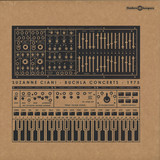
Finders Keepers invite you to witness the incredible first ever Buchla synthesiser concerts/demonstrations providing a distinctive feminine alternative to The Silver Apples Of The Moon if they had ever been presented in phonographic form. This is history in the remaking.
This spring Finders Keepers Records are proud to release an archival project that not only redefines musical history but boasts genuine claim to the overused buzzwords such as pioneering, maverick, experimental, groundbreaking and esoteric, while questioning social politics and the evolution of music technology as we've come to understand it. To describe this records as a game-changer is an understatement. This record represents a musical revolution, a scientific benchmark and a trophy in the cabinet of counter culture creativity. This record is a triumphant yardstick in the synthesiser space race and the untold story of the first woman on the proverbial moon. While pondering the early accolades of this record it's daunting to learn that this record was in fact not a record at all... It was a manifesto and a gateway to a new world, that somehow never quite opened. If the unfamiliar, modernistic, melodic, pulses, tones and harmonics found on this 1975 live presentation/grant application/educational demonstration had been placed in a phonographic context alongside the promoted work of Morton Subotnick, Walter Carlos or Tomita then the name Suzanne Ciani and her influence would have already radically changed the shape, sound and gender of our record collections. Hopefully there is still chance.
In short, Suzanne was a self-imposed twenty-year-old employee of the Buchla modular synthesiser company, San Francisco's neck and neck contender to New York's Moog. Buchla was run by a community of festival freaks and academic acid eaters whose roots in new age lifestyles and the reinvention of art and music replaced the business acumen enjoyed by its likeminded East Coasters. In the eyes of the consumer the creative refusal to adopt rudimentary facets like a piano keyboard controller rendered the Buchla synthesiser the more obscure stubborn sister of the synth marathon, steering these incredible units away from the mainstream into the homes and studios of free music aficionados, art house composers and die-hard revolutionaries. Championed and semi-showcased by composer Morton Subotnick on his albums The Bull and Silver Apples Of The Moon, Buchla's versatility began to open the minds of a new generation, but the high-end design features and no-compromise modus operandi was often confused with incompatibility and, in the pulsating shadow of Moog's marketing, the revolution would not be televised nor patronised. Suzanne Ciani, as one of the very few female composers on the frontline (and also providing the back line) did not lose faith.
These concerts' are the epitome of rare music technology historic documents, performed by a real musician whose skills and academic education in classical composition already outweighed her male synthesiser contemporaries of twice her age. At the very start of her fragile career these recordings are nothing short of sacrificial ode to her mentor and machine, sonic pickets of the revolution and love letters to an absolutely genuine vision of and 'alternative' musical future. In denouncing her own precocious polymathmatic past in a bid to persuade the world to sing from a new hymn sheet, Suzanne Ciani created a bi-product of never before heard music that would render the pigeon holes ambient' and futuristic' utterly inadequate. Providing nothing short of an entirely different feminine take on the experimental records' of Morton Subotnick and proving to a small, judgmental audience and jury the true versatility of one of the most radical and idiosyncratic musical instruments of the 20th century. These recordings have not been heard since then.
The importance of these genuinely lost pieces of electronic musics puzzle almost eclipses the glaring detail of Suzanne's gender as a distinct minority in an almost exclusively male dominated, faceless, coldly scientific landscape. Those familiar with Suzanne's work, a vast vault of previously unpublished non-records', will already know how the creative politics in her art of being' simultaneously reshaped the worlds of synth design, advertising and film composition before anyone had even dropped a stylus in her groove. Needless to say this record, finally commanding the archival format of choice, courtesy of the Ciani and Finders Keepers longstanding unison, was not the last first' with which this hugely important composer would gift society, and the future of a wide range of exciting evolving creative disciplines.
You have found a holy grail of electronic music and a female musical pioneer who was too proactive to take the trophies. With the light of Buchla and Ciani's initial flame Finders Keepers continues to take a torch through the vaults of this lesser-celebrated music legacy shining a beam on these non-records' that evaded the limelight for almost half a century. You can't write history when you are too busy making it. With fresh ink in the bottomless well, let's start at the beginning. Again. You, are invited!
Damian Lazarus invites Kristin Velvet to Crosstown Rebels for ‘Wasp Nest/Get Down’, featuring and remixed by house icon Fred P. Delivering her first material on the iconic label, the Arms & Legs boss serves up two diverse productions, including a collaboration with Fred P, with the New York favourite also providing two slick interpretations of his own.
Rising to prominence over the past decade as an artist backed by a wealth of support from BBC Radio 1, Australian-born DJ/producer and label boss Kristin Velvet has garnered consistent support from The Blessed Madonna to Fat Boy Slim and Carl Cox, seamlessly blending her roots with influences from her adopted homes across the globe, including London, Tokyo and most
recently, Berlin and Ibiza. Collaborating with Felix Da Housecat while releasing material via Josh Wink’s Ovum Recordings, Cassy’s Kwench and Hot Since 82’s Knee Deep In Sound, plus her own Arms & Legs which she co-manages with Daniel Steinberg, she continues a busy 2024 with a visit to Damian Lazarus’ Crosstown Rebels for the very first time with her two-track EP ‘Wasp Nest / Get Down’ - featuring a collaboration with house pioneer Fred P who also serves up two trademark, deep dives.
Warping and twisting, armed with robust drums and ever-evolving synths, ‘Wasp Nest’ is a trippy excursion through an amalgamation of textures, delivering a driving production with twists and turns at every moment, while the slick ‘Get Down pairs crisp percussion and smooth grooves with Fred P’s iconic vocal for a classy house outing. Delivering his own takes on the production, Fred P’s first reshape is a delightful dive through dubby pads and hazy chords before serving up a cosmic excursion across his ‘Deepness’ reshape to close things in style.
These songs came to be a record accidentally and unintentionally. They were written sporadically over a tumultuous two years riddled with more valleys than mountaintops. We considered it a victory when we could actually make ourselves get together to write, even if we struggled to produce anything of any quality. Creativity was tough amidst half-hearted business relationships, being dropped from our label, inconsistent touring, and filing personal bankruptcy. It took a toll on everything: our confidence, our outlook, our health, our happiness. In late 2015, our friend Brandi Carlile invited us to Seattle to play a couple of shows in her hometown. It was there that we explained all that had transpired with our career, how we were barely staying afloat. It was also there that she told us she would be producing our next record. Once we saw that this fantasy could actually become a reality, the frantic search for enough songs to make an album began. To our surprise, we had many things to say, and though some were difficult to write and slow to reveal themselves, we pushed onward. The songs here carry a common thread of what remained when we felt like we’d lost everything. It was in the hardest times that we saw the core of where our music and our souls originate. We still had our homes, our family, our friends, and our fans. This is not a record about rising from the ashes. Rather, it is a deep look into ourselves in an attempt to put out the flames. These songs are our catharsis; an effort to forgive, an effort to heal, an effort to look back into the darkness with newfound light and undeterred fearlessness, an effort to redeem ourselves. The damage was done, but our hearts remained.
- 1