Restock soon...
GEFAHR! The funky twins from Citizen Funk came for a visit to celebrate with us the third and final installment of our successful white-labelled 12-inch series!
With their first full EP on Big Bait Records, Citizen Funk aka Peter Clamat and Scherbe are serving two fresh, different and by any means necessary interpretations of contemporary Deep House Music.
Suche:citizen funk
- 1
Eastside Edits is back with their 1st release in 2026 with two upbeat 60’s Motown/Soul edits from Greece’s production duo Senior Citizens (DJ S & DJ Chairman)
Side A) “The Best Things In Life” turns a classic 60’s Motown anthem into an upbeat & funky, drumheavy weapon for the dancefloor. A must have for any DJ or collector!
Side B) “Ticket For An Aeroplane” brings more of that 60’s soul nostalgia with a perfect pairing to the A side. Upbeat and funky, with a memorable chorus that needed an edit to bring this into your crates!
In 1969, Albina in the US underwent a pivotal transformation which saw the arrival of Black residents displaced by the Vanport floods. While a local Black economy thrived to start with, the neighbourhood eventually got neglected due to disinvestment by the city's elites but citizens didn't take it lying down and some of them formed Shades Of Brown, a group that emerged at the Albina Arts Center which was a haven for artists during civil unrest. With members from various musical acts, they found unity under leader Thara Memory who instilled discipline and required them to read and write music before performing. This EP, which is the group's sole record, embodies their camaraderie and the community's struggle against neglect across six raw-as-you-like funk cuts laden with emotion and narrative.
- 01: Johnny April - She Had A Pikanese (Feat. Mat Matthews Quartet)
- 02: Lu Elliott - Common Sense
- 03: Lloyd Fatman - No Big Thing (Pt.1&Amp;2)
- 04: Billy J - Teacher Teach Me
- 05: Wayne Johnson - Scram Gravy Ain&Apos;T Wavy (Feat. Brigade)
- 06: 4 Dimensions - Hipper Snapper
- 07: The Villagers - Funky Broadway
- 08: The Rippers - Honesty
- 09: Exceptional Citizens Band - Proud Mary
- 10: Gus Brendel - Sax On The Rocks
- 11: The Hornets - Seven Days To Tahiti
- 12: Bret Breitinger - Jive Samba
- 13: Downtown Trio - Summertime
- 14: Onyx - Break It Loose (Pt.1)
- 15: The Shake And Bake Band - Shake And Bake (Pt.1&Amp;2)
- 16: Lou Jackson - Outside Looking In
- 17: Energy Crisis - Tough Times Blues
- 18: Soul Unlimited - Do It
- 19: Soul Unlimited - Darkside Of Town
** INITIAL 400 LPs CONTAIN A BONUS 7" SINGLE **
MOVEMENTS Vol.12 – A bag full of rare rhythm & blues, mod-jazz, and mid 70s funk.
Side A starts with rhythm & blues from the 1960s. Most of the tracks were pulled from hopelessly obscure 7" singles. The only names of which some of you might be familiar with are most likely Mat Mathews and Lu Elliott. However, both original 45 RPM singles are pretty hard to find these days, especially in playable condition.
Side B is all about deepfunk this time. "Hipper Snapper " is a prime example of that genre. Some say its groove is reminiscent of Charles Wright's "Express Yourself. Agreed! The Villagers are responsible for the first 'aha' moment. Their (previously unreleased!) version of "Funky Broadway" would have certainly astounded even Dyke & The Blazers. Representing Germany on this volume: The Rippers, also called the "Offenburg Beatles"! Back in the USA, John Fogerty has probably never heard of this heavy school-funk cover of "Proud Mary". Drum breaks galore!
Side C begins with another German contribution. Saxophonist Gus Brendel delivers a mod-jazz belter of the highest order as do The Hornets. Definitely sure-shots for any dance floors! High time for 'aha' moment #2. Many bands have tried their hands on a cover version of the Nat Adderley jazz classic, incl. vibraphone player Bret Breitinger! The perfect choice to finish this side is Downtown Trio's smooth and groovy cover of Gershwin's "Summertime ".
Side D is reserved for proper 1970s funk. ONYX's "Break It Loose " has become a certified Rare Groove classic. Here you can enjoy it for the first time with the blessing of the band! Glenn Doughty and his Baltimore Colts Shake and Bake Band of the 70's is the first musical group consisting of former NFL All-Pro players that Tramp Records has partnered with in its history! Watch out, "Shake and Bake " will be re-released on a good old 45 RPM single, too!
Those of you who have been enjoying the detective work of the people behind the label over the past 21 years know that the Movements series can be easily considered as the flagship compilation series on Tramp. So, after having listened to the entire selection of this brand new volume we sincerely hope that we will have achieved our aim to surprise, delight, and enlighten you once again!
Key selling points:
- initial 400 LPs contain a bonus 7" of a SUPERRARE funk 45
- incl. full album download code
- deluxe double-gatefold LP with detailed liner notes & unseen photographs
- ALL but three songs appear on CD, LP & digital for the very first-time
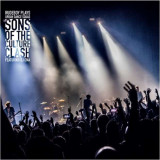
Rapper Rudeboy and DJ DNA play the work of the legendary crossover band Urban Dance Squad. The group quickly broke through with their unique mix of funk, soul, jazz, punk, rock and hip hop. Their influence extended to bands like Rage Against the Machine, while
they were like-minded peers of The Beastie Boys and Red Hot Chili Peppers.
Worldwide tours, an impressive live reputation, and recognition in the United States, including invitations from David Bowie and U2 as support, have characterized their career.
Repress
Dry mix only single LP edition, reverb mix of 2LP edition excluded.
Issued in 1975, this is the articulation of Zambia’s Zamrock ethos. Its' musicians were anti-colonial freedom fighters, it envelops Zambian folk music traditions, and it rocks - hard. Amanaz were serious, and they made a serious stab at an album. They titled their album Africa, according to original band member Keith Kabwe, “because of how it was shared and how its inhabitants were butchered and enslaved, its resources stolen... all the atrocities slave drivers committed. “ Thus, their “Kale,” a blues sung in Nyanja, that traced the continent’s arc from slavery to Zambia’s independence closes the album. Kabwe and rhythm guitarist John Kanyepa have a winsome softness to their vocals, which sit politely aside the feral growl of drummer Watson Baldwin Lungu, bassist Jerry Mausala and bandleader/lead guitarist Isaac Mpofu. Africa’s vibe ranges from anxious (“Amanaz”) to escapist (“Easy Street”) to straight-up pissed-off. On the “History of Man,” his voice whiskey-burned, his distorted guitar buzzing like swarming hornets, Mpofu indicts his species. There’s a darkness to Africa not found on any other Zamrock records, and a melancholy drifts throughout, specifically on Mpofu’s more restrained “Khala My Friend,” which stands as an effective, bleak situation for the Zambian everyman, the average citizen of a struggling, new nation, who might have had relatives in conflict-torn countries on the horizon, who might have been struggling to find his next meal, who might have seen a bleaker future than his president promised. Then there’s the clear Velvet Underground-influence on the nostalgic “Sunday Morning,” which, as Kabwe recalls, was the first song written for the album, back in 1968, when Velvet Undergound and Nico was a new release - and the underground funk of “Making The Scene.” The album also tackles traditional Zambian music and early-‘60s rock – punctuated, of course by Kanyepa’s wah-wah and Mpofu’s fuzz guitars. But every time Amanaz get too deep, too violent, they come back with an accessible song and woo their listener back to the groove. “Green Apple” is a civil song, featuring Kanyepa’s sighing guitar.
Amanaz were serious, and they made a serious stab at an album. They titled their album Africa, according to original band member Keith Kabwe, “because of how it was shared and how its inhabitants were butchered and enslaved, its resources stolen… all the atrocities slave drivers committed. “ Thus, their “Kale,” a blues sung in Nyanja, that traced the continent’s arc from slavery to Zambia’s independence closes the album. Kabwe and rhythm guitarist John Kanyepa have a winsome softness to their vocals, which sit politely aside the feral growl of drummer Watson Baldwin Lungu, bassist Jerry Mausala and bandleader/lead guitarist Isaac Mpofu. Africa’s vibe ranges from anxious (“Amanaz”) to escapist (“Easy Street”) to straight-up pissed-off. On the “History of Man,” his voice whiskeyburned, his distorted guitar buzzing like swarming hornets, Mpofu indicts his species.
There’s a darkness to Africa not found on any other Zamrock records, and a melancholy drifts throughout, specifically on Mpofu’s more restrained “Khala My Friend,” which stands as an effective, bleak situation for the Zambian everyman, the average citizen of a struggling, new nation, who might have had relatives in conflict-torn countries on the horizon, who might have been struggling to find his next meal, who might have seen a bleaker future than his president promised. Then there’s the clear Velvet Underground-influence on the nostalgic “Sunday Morning,” which, as Kabwe
recalls, was the first song written for the album, back in 1968, when Velvet Undergound and Nico was a new release - and the underground funk of “Making The Scene.” The album also tackles traditional Zambian music and early-‘60s rock – punctuated, of course by Kanyepa’s wah-wah and Mpofu’s fuzz guitars. But every time Amanaz get too deep, too violent, they come back with an accessible song and woo their listener back to the groove. “Green Apple” is a civil song, featuring Kanyepa’s sighing guitar. It is a perfectly arranged album, from the dichotomy of Mpofu’s and Kanyepa’s lead and rhythm guitars, to the vocal harmonies, to the rhythm section’s sense of space and time, which allows Africa’s funk to build. Inexplicably, Africa was given two separate mixes and two separate presses: one version is dry, with the vocals and drums mixed loud, the other slathered in reverb, with the vocals and drums disappearing into the mix, and with the guitar solos mixed much louder. We’ve presented them both here as they each have their appeal: it’s up to the listener to pick the one he or she prefers. This is a highpoint of the Zamrock scene and we hope that this can be seen as its definitive reissue.
Old school electro from Phil klein (Aka Bass Junkie) and Matt Whitehead (Perc Traxx, Don't)... Under their comon name Model Citizens. Totally Classic and well done insane driver ! B-side brings also the good electro oldschool feeling. And to finish the EP, get a good funky electro bass sound ! Maxxximum pleasure ! Superb EP bringing a fat soundproduction.
BLASTER !
An expanded view of Tomek's (Model Citizens, 2You's) 1983 no wave
punk funk celebration of the Fairlight CMI, recorded in the home of
Stones producer Jimmy Miller
The Bass Junkie sound spans the old school beats and vibes of the Electro genre’s origins, to the borderline industrial. Phil is a battle hardened Bass Bot from the future armed with his trusty MPC.
The obsession with all things sci-fi continues with this 'Cruising The Bass Nebula' EP. Out this February on my Asking for Trouble label, this is testament to his non-stop love of the genre and keeps on evolving with this funky 10".
Phil Klein aka Bass Junkie has been part of the Bass furniture for decades. I first came across him at my local roller disco somewhere in the 80s where he would flex his early DJ skills. Phil was cutting and scratching on the decks way before anyone I knew.
His history is quite something. In the early 90s he contacted Dave Noller from Dynamix II in Florida and after sending demos (pre-Internet of course). He ended up going there to make some tunes under the name of Cybernet Systems.
Phil has had many monikers and worked with lots of people over the years. Model Citizens with Matt Whitehead, IBM, Gods of Technology and Kronos Device with Si Brown (Dexorcist) and myself both as The Brink and part of The Resonance Committee to name a few. 2021 saw the release of the album Sub Sonic Survivor on Bass Agenda. He's had releases on lots of labels over the years including Control Tower, Firewire, SMB, Ed DMX's Breakin records, Andrea Parker's Touchin Bass label, Billy Nasty's Electrix and his own Battle Trax label.
Throbullating throughout the galaxy since 1986!
Unlearn is the long awaited fourth album of DJ and producer 2econd Class Citizen. It marks the artist's return back to the newly relaunched label Equinox Records. Their previous collaborations achieved high acclaim for their genre bending fusion of hip hop, electronica and folk music.
The new album is an exploration of an artist journeying beyond their conventional confines. It is a musical adventure peppered with vintage samples concerning the perception of reality and our struggles with conforming to a broken society.
Unlearn is the most musically accomplished work of 2econd Class Citizen to date. As one would expect the drum programming, scratching and production is on point. Several tracks feature soothingly melodic and energetic passages of jazz saxophone from Leroy Horns and electric guitar riffs provided by long term collaborator Paul Drury.
2econd Class Citizen, real name Aaron Thomason, resides in Brighton, UK. He is also a painter and visual artist fascinated with abstraction and the chaos of mixing colours. His musical approach on the new LP draws many parallels to this creative process. An original painting from the artist forms the albums striking cover.
Equinox Records is run by DJ Scientist in Germany. The Unlearn project marks the 51st release and provides the perfect launch vehicle for the dormant label to rise again. The vinyl release of Unlearn as well as the single Be Together signify the first stops in a release plan which will please fans of the label.
FEEDBACK:
"Woah! It's sounds rad! Really heavy and cinematic!"
Kid Koala
"A dark and deep dive into a world of dense and diced samples and moody muted melodies. Would sit well next to Shadow's freakier forays into fractured funk. Or Format's last psychy LP, for sure."
DJ Moneyshot of The Allergies
"I love it. The new treatments with the additional instruments sound great, especially the horns. Glad to see that Equinox is back in action. Dope cover art."
Dday One
"It sounds like 2econd Class Citizen has been at a mountaintop retreat studying and meditating and came back with some superpowers."
Buddy Peace
A.B. Crentsil is a heavyweight of Highlife music and the main vocalist of Sweet Talks, one of the most popular Ghanaian bands of the 1970’s. In 1992, musician Charles Amoah and producer Richie Osei Kuffour offered him the opportunity to explore a new popular sound: Bürger Highlife. Little did he know these studio sessions would give birth to the biggest song of his career.
Charles Amoah, who had released his Sweet Vibrations LP in 1984 to great acclaim, extensively toured in Europe with bands such as Black Earth and Saraba, was eager to bring a new sound to Crentsil, an artist he had admired for years. Throughout the 1980’s, Highlife had been changing pretty radically, following the same evolution as Congolese Soukous, Caribbean Zouk and most popular black music
genres of that era: Heavy use of drum machines, synths and digital technology was conveniently replacing big bands and expensive
analog studios and equipments. Mostly recorded, produced or mixed in Germany, this new breed of electric Highlife dubbed ‘Bürger Highlife’ could be defined as a fusion of Disco, Jazz, Funk and Pop with the popular Highlife beats, rhythms and lyrics.
According to A.B. Crentsil, the name was a reference to the ever present American cultural influence on Ghanaian musicians. Charles
Amoah has his own take: “I initially called this particular kind of Highlife ‘Ethno Pop’. Bürger is the German word for citizen, and that’s how Ghanaian musicians living and working in Germany were calling each other”.
The music for both “Obi Baa Wiase'' and “Sika Be Ba” was entirely composed and played by Charles Amoah, using minimal equipment: a
DX7 synth, a Korg M1, a Yamaha RX5 drum machine, and an Akai 1000 sampler. A.B. Crentsil provided the lyrics for both tunes on the spot. Obi Ba Wiase’s message is one of gratitude and faith: it says we should appreciate our life way more and follow the example of people who have a lot less but still praise God all day.
Charles remembers fondly Crentsil’s larger than life personality: "A.B. slept a lot, he really loved sleeping. His lack of punctuality was easily dismissed by his wonderful sense of humour and it wasn't uncommon to find musicians rolling with laughter on the studio floor."
Charles also remembers vividly the "Obi Baa Wiase" session: he could feel the magic in the air while working on the soon to be hit, and
knew something special was happening. A.B. asked for a break in the middle of the session, which Charles adamantly refused until the song was finished and the magic fully captured.
Success was not immediate, and Charles was first a little concerned by the lack of buzz following the immediate release of the Gyae Me
Life Ma Me album. But a few months down the line, the situation took a new turn. "Obi Baa Wiase" was making its way into radio playlists,
weddings and festive celebrations. It was covered by local bands, and soon most of Ghana and its European and American diasporas were hooked. It became A.B. Crentsil’s most requested song at live events for the following decades.
As producer Richie Moore wrote on the album back cover : "A perfect integration of two musical geniuses, the result of which are the
scintillating tracks of music on this record… so all you party fans go onto the floor and dance the body music"
Kapingbdi came together in Liberia, West Africa, during the late 1970’s and had their own unique style. This six to seven-piece band played original compositions in a vibrant mix of African Rhythms, Soul, Spiritual Jazz, Funk and Rock. Led by Kojo Samuels on sax, flute and vocals “Born in The Night” presents the essential tracks from their rare studio LPs produced between 1978-1981. The work has been carefully edited and remastered in 2019 for vinyl LP and a 6-Page Digipack CD, which includes two additional recordings. Kapingbdi toured through Europe and the U.S. and were the only Afro funk band to ever come out of Liberia.
Kapingbdi hail from Liberia, West Africa and have their own imitable style. They effortlessly combine traditional African music in a modern mix of Jazz, Funk, Soul and Rock. The band is a fusion of the old and the new.
The word "Kapingbdi" is taken from the Sierra Leone language Mende and means "born in the night". Kojo Samuels was given the name by his Latin teacher whilst attending high school in Freetown, They often meet and debate at night in the city and soon after Kojo is called Kapingbdi. The name serves as a description of his origin. Born In Lagos, Nigeria in 1943. The son of slave children. His mother from Nigeria and father from Sierra Leone who moved the family to Liberia, during the 1950’s.
Kojo has played music for as long as he can remember. He starts with the harmonica and later becomes a drummer and percussionist in his first band at school. During his art studies 1965-1972, he tours Germany and works as an art teacher in the USA. His band Kapingbdi is reorganized five times and consists of up to seven musicians. In a VW-Bulli he drives the group from concert to concert and if the drummer fails, he jumps in himself. Between 1978 and 1981 three Kapingbdi LPs are produced for the independent label Trikont, recorded in Hamburg and Munich. During this creative period, the band plays at festivals in Africa and Europe. In 1984, the band tours the United States and shortly after, they came to an end.
At their best, Kapingbdi would rouse the audience with original compositions like "Human Rights", justice for all, especially for South Africans, and "You Go Go You Go Come". The officials and employees in the government departments have no time for the common man, for any questions such as job search, scholarship or similar, he receives the answer "go, come back tomorrow" and the same thing the following day. Or "Now Is The Time For Cry For Love." Now it is time to scream for love and finally, time for humanity and justice. Despite immense difficulties, the musicians consciously live and work in Africa and are at home in Liberia.
On April 12, 1980, ordinary soldiers and non-commissioned officers organize a coup against the government. This is an attempt to put an end to a policy of exploitation of the Liberian people. Whilst efforts to eradicate poverty, lawlessness and illiteracy are obvious throughout the country, Liberia is still Americanized to a high degree. This is evident, as the radio programs of that time almost exclusively played American disco music. Under these conditions, the people seek a reconnection to their folk music, and Kapingbdi were aware of this. Kojo tried many times to come together with traditional Liberian musicians. This passion takes him north of the country. Meeting and playing with the old hornblowers and playing music on traditional instruments, such as the elephant tusk.
Kapingbdi make high quality tape copies of their own vinyl LPs and patiently try to displace all unauthorized tapes from the domestic "market". Nevertheless, it is hard to make a living through music in Liberia. Kapingbdi, is now celebrated. The radio plays are in abundance, but royalties are not forthcoming. Their musical link is the feeling of Afrobeat and Highlife, which is found in each of the many Kapingbdi pieces. They embody Jazz, which is understood to be the most refined example of black music outside of Africa. In Liberia, Jazz is virtually impossible to hear. Bright shining names such as John Coltrane, Charlie Parker or Miles Davis were widely unknown. Thus, the Black Jazz, including its Back-To-Africa movement of the 60’s and 70‘s, passes by without leaving a trace in Africa itself.
Kojo's claim at the time, was to make African music with the depth, sensitivity and the freedom of the technical level of Jazz. This makes Kapingbdi the torchbeares. The underpaid prophets in small Liberia. It is the passion with which the founder of the band continues to work on their music for years. Tirelessly, stimulating and encouraging his fellow musicians. This is ultimately responsible for the success of Kapingbdi in Liberia itself. The local audience seems to listen to the band in fascinated astonishment. One wonders about the ability to develop as demonstrated by Kapingbdi on the basis of their music. It is African and unusually jazzy, danceable and better than the American disco music heard on the radio.
Rather than chase the money and the job opportunities in Europe, Kapingbdi are firmly rooted in Africa. The musicians live in Monrovia, the capital of Liberia, at the Kabingbdi workshop, located in the Congotown area on the eastern edge of the sprawling city. Kojo works here as a sculptor, painter, batik artist and musician. The sales revenue that his activities generate, gives him the opportunity to support the development of African Jazz music. The highest percentage of funds are from Germany and Kojo’s work ethic is “to work on your own thing“. The stance taken aims to support the welfare of Liberians and Africans. The other musicians of the group live in a second house that is nearby.
For the sake of consistency, Kapingbdi is a full-time band. However, the revenue, from all of the sources, could not keep them afloat. Equally, as important to the group are Kojos's knowledge of traditional African music and his sculpting skills. His knowledge is shared with others at the afternoon workshops. It is here that they discuss new lyrics, engage in political debate and the self-imposed task of improving conditions in Africa. At times the debate became heated, especially during rehearsals. This was regarded as good and integrative, sowing the seeds of innitiative to keep the band together.
From 1980 to 1985 Kojo also opened and ran the club "Panjebota", located on the grounds of the U.S. Consulate in Monrovia. Almost every evening Kapingbdi perform the song "Wrong Curfew Walk", whose lyrics lament the killing of citizens during the curfew imposed by the Liberian government. When the head of state Samuel Doe hears the song, he behaves agressively and forces Kojo to close the "Panjebota". Kojo had already moved on. Soonafter he meets Fela Kuti at the Africa-Festival and plays concerts in Germany with Cecil Taylor's workshop band.
Kapingbdi is for thinking, dreaming, dancing. What they sing about is what they have experienced. Kojo Samuels is 76 years old today and still follows his vocation as a critical musician, artist and activist.
Ekkehart Fleischhammer / Sonorama 2019 (with the help of original press sheets and the memories of Kojo Samuels)
Released in 2020, Rheinzand’s self-titled debut LP heralded an authentic vibe of retro-futuristic disco-pop, distinguishing themselves in the current climate of dance music. The album was met with acclaim, picked by Piccadilly Records as their nr. 1 album of the year.
Since, the material on that album have proven fertile ground for practitioners in the art of the remix. On this EP, we release a selection of those efforts.
On the first slot, we have Running Back label owner and longstanding DJ heavyweight Gerd Janson polishing off his house music fluency with a gleaming take on ‘Blind’. The swerving vocals of Charlotte Caluwaerts’ reverberate through space ray arpeggiators and burnished drum gates. Belgian compatriot Blitzzega, the neon-drenched moniker of composer Bjorn Eriksson, features with a dizzyingly switched-on version of ‘Mi Mundo’, sporting gnawing synths and hijacked funk licks.
Next, dub-pop wizards Peaking Lights serve up a heady brew of plugged-up melodies braided around Reinhard and Charlotte’s shuffling vocals. This remix blends the magenta glow of synthwave with the deep grooves of maybe late Theo Parrish.
We round off the EP with a treat form Dennis ‘Citizen’ Kane, the iconic dance music figure who emerged in mid-90s NYC downtown scene. A veteran DJ and disco-head, Kane applies a luminous hand to Rheinzand’s ’14 Again’, deepening the vibe of kittenish mystery through carefully layered work of phasing drones, wandering synths, and mushrooming rhythm section (think T-Connection).
A singular group of ?experts? issues a notice of extraordinary urgency in the vicinity of various atmospheric phenomena, which are partially localized and, above all, of high intensity. Yet the sun shines with strength over the Neapolitan favela. ?Allerta Meteo? is the first album of sparkling sonics by The Funkin? Machine Collective and the newest release of Periodica Records? Pegaso Series, comprising a cross-section of jazz and funk sounds, with bright colors that are good for any season, whether rain or shine. The voice of Andres Balbucea - the binding soul of the opera - is supported by the unmistakable flow of Speaker Cenzou during the vibrant ''L'ora d'o Groove'', accompanied by the performances of Roberto Porzio on the synthesizers, Alessio Pignorio and Riccardo Betteghella on the guitars, Vincenzo Lamagna bass guitar, Andrea De Fazio drums, Paolo Bianconcini on percussions, and the extraordinary participation of Pietro Santangelo in the cinematic ''Django'' and Jeroen Verberne on Trombone in ''Rafiki''. An authentic wave of warm notes destined to overwhelm the most observant listener, the first hour followers and all the citizens.
The first EP from Nottingham’s like-minded music collective, Plates.
Originally established as a record shop and now a record cutting studio and music community, this EP showcases sounds close to its core and original supporters.
A1 is a track salvaged from a box of long-lost cassette tapes dating back to the mid-90s, bursting with raw and uplifting grooves, a soundtrack to moody city nights in Nottingham. Facehugger a long-time friend and supporter of Plates, alongside musical partner, Mark Warden aka DeviantRIP brings a tearing live analogue jam mashed together on a Roland 202, 808, 909 and JD800 - ave it!
A2 offers a completely different take on the typical ‘jungle’ style. Citizen Griot, an already prolific local beatmaker, better known for his hip-hop grooves and collaborations with local rappers, brings moody and enchanting jazz club vibes over subtle but constantly moving breakbeats.
B1 is the first ever ‘finished’ track from Plates founder, DJ Squid who has spent the last 10 years focusing on DJing and wasting precious time. This tune dedicates his love for early 90s jungle, and hardcore with the roots of soul, rare groove, weird library music and the simplicity of hand-picked samples, an MPC 2000XL and a dust-covered Mackie mixing desk.
B2 brings you back down to earth in a smoky spaced-out back room courtesy of long-time crate digger and local hero Mr Wilson. Head-nodding beats cushioned by a soothing bassline and hypnotic chords that surround you and carry you away to another dimension that is neither new or funky.
This record is dedicated in memory of Rita, Philpotts, Pete Woosh, Adam XTC and Harry McCormick.
- A1: Phantoms Of Dreamland (Lh Mix)
- A2: Men In Green (Neue Grafik Rework)
- A3: End Of An Era (Felicia Atkinson Fennel And Moon Mix)
- B1: Our Man In (D.k. Remix)
- B2: Rainwater Fjit (Jimmy Edgar Remix)
- B3: Phil 5 (Lucrecia Dalt Remix)
- B4: Ball Of Fire (Object Blue Version)
- C1: Maid Of The Mist (Nick Höppner Remix)
- C2: Spookie Boogie (Luca Durán Remix)
- D1: El Teb (Mehmet Aslan Remix)
- D2: Are You Psychic (Parco Palaz Remix Pt I)
- D3: Are You Psychic (Parco Palaz Remix Pt Ii)
- D4: Maid Of The Mist (Oso Leone Rework)
Born in Croydon, UK in 1960 and working in Switzerland for decades, Michal Turtle has led a storied career as a composer, arranger, technician and producer, consistently aligned with some
of the most exciting bands and projects within the realms of pop and experimental music. A figure as masterful in the realm of expansive ambient recordings as advertising jingles, it’s only in recent
years that Michal’s solo productions have gained acclaim and a cult following that continues to grow ever wider.
Turtle made a long-awaited return earlier in 2020 with the extended ‘On a Canvas Lived a Baby’, a one-sided twelve of new material released on Planisphere Editorial. Now, the Basel based label
invites a diverse and international cross-section of electronic musicians to reinterpret the artist’s back-catalogue, each delivering a thoughtful remix driven by the same sense of curiosity,
exploration and genre-blurring that Turtle himself helped pioneer. Each track on the remixes collection was originally recorded between 1980 and 1985, in between Turtle’s regular tours with established bands. Opening the collection, Laurel Halo adopts her LH alias for a textural and tripping revisit to ‘Phantoms of Dreamland’, transporting the haunting original to a hyper-detailed alternate dimension. Zoning back in, Neue Grafik finds typically eclectic form with ‘Men in Green’, turning the dials and blending ideas as if tuning between the emerging musical scenes that defined Turtle’s early-eighties life in Camden, London. In stark contrast, avant-garde polymath Felicia
Atkinson designs a ‘Fennel and Moon’ version, weaving between earthy field recordings and an aching piano line, conjuring an almost ritualistic atmosphere, far from the city. Radical musical turns continue to define the collection as son of Detroit, Jimmy Edgar takes
‘Rainwater Fijit’ down a dark, damp tunnel, expanding on the pitter patter of Turtle’s more outlandish studio experiments, blending vocal experiments with fresh funk. Colombian experimentalist Lucrecia Dalt pulls further bizarre shapes from a patchwork of samples, a heaving,
gasping industrial shuffle, before French producer D.K. returns a stronger rhythm, both building on Turtle’s lovingly naive tributes to the legacy of sample culture and his trusty ARP2600.
Ostgut Ton mainstay and Panorama Bar resident Nick Höppner proceeds to sensitively rewire ‘Maid Of The Mist’ into a blossoming, introspective celebration of melody and ambience, an
almost weightless experience that lends itself well as a breather before Luca Duran’s analogue, acid-tinged take on Spookie Boogie takes Turtle’s esoteric touches back into the direction of the
funk and italo records at the heart of his initial inspiration.
The Remixes final chapter continues to expand in distinct and wide-reaching sonic directions. London’s Object Blue seems to slow time itself across her sublime interpretation of ‘Ball Of Fire’.
Initially Turtle’s tribute to Howard Hawks 1941 film classic and the legacy of old Hollywood, worlds further collide into rolling, weightless bliss.
Fellow Swiss citizen Mehmet Aslan stirs an enchanting, percussive mystery that unfolds with great
pleasure on El Teb, while Parco Palaz conjures not one but two radically different remixes of ‘Are
You Psychic?’, demonstrating both their imaginative nous, as well as the depth of Turtle’s legacy.
Finally, an irresistible vocal contribution from Oso Leone adds even further colour and joy to ‘Maid
of The Mist’, sending off this ambitious collection on a transformative, dream-pop high.
With further details set to be revealed, there is an ongoing development focused around the
accompanying art and visuals. The Peruvian born and now Amsterdam based graphic designer
Jonathan Castro leads the art direction, along with visual artist Chris Harnan. Both artists look to
explore the intersection between sound, imagery and its reorientation, exhibited through the
musical contributors and visual translation.
“I am happy and honoured to have been the spark for this remarkable compilation.
The magnificent work done by this collection of very special people speaks for itself, so listen and
be transported. It has been half a lifetime since my original tracks were written, and I am gratified
to know that they are somehow still relevant enough to be reworked and reinvented.”
TCB aka Chris Beißwenger, our boy on Jah bless road, goes a little something like: 1977, born cross-eyed, parents like Boney M; 1984, suburbia USA, DSNY, still cross-eyed; 1988, 98.7 Kiss FM New York on the school bus radio; 1989, Frankfurt Am Main, hyperactive, outsider, got lazered; 1991, drums and piano in cheesy school band; 1993, kicked out of Omen, kicked out of school band; 1994, kicked out of Omen again, got his own band; 1995, kicked out of band, finally in at Omen, The Box, Wild Pitch Club; 1996, got first car, Fasttracker, EMU ESI-32; 1999, no more car, no more Omen, Robert Johnson instead; 2002, first release, High Tide; 2003, Ableton 0.1 Beta, less MIDI, more gefrickel; 2004, exchange High Tide for CB Funk, kicked out of Cocoon; 2005, a silly move to Düsseldorf, Burkina Faso, more synthesizers; 2006, again silly in Düsseldorf, Brontosaurus, disco-house, love; 2007, Cologne and Frankfurt, back to piano, more love, still no car; 2008, with love to Frankfurt, Arto Mwambe on the road, storyteller; 2009, Mwambe still on the road, bored of work; 2010, Live At Robert Johnson, four-day week (thank God), four bike accidents; 2011, Europe, bored of piano, invention of The Citizen’s Band; 2012, modular cookery, thoughts of moving; 2013, Burkinian's death, Delphi's rise, almost made it, 2014, broke out of seven-year cycle too complicate
Bergsonist is the moniker of Moroccon born and NYC based Selwa Abd. 'Solyaris' follows the self-released '' and a prolific slew of releases for labels such as Styles upon Styles, Borft, and Angoisse amongst others. For Selwa her uncompromising & otherworldly, hypno technoid creations aim to capture a given moment in time, contextualising her often direct, hugely affective, & unpolished approach to production.
Selwa describes 'Solyaris' as 'an ode to the present broken education system that allowed me to sustain my dreams in NewYork', explaining, 'As an immigrant from Morrocco, I felt always fearful of the future, pressured to succeed at school. The only way I was able to channel all that anxiety was through music'.
There's a undeniable physicality to Bergsonist's work, and the idea of expunging anxiousness into her music is felt from the oft as 'Solyaris' strides into vision with it's quickening roaring pulse and scrambled explorative electronic probes. This sense of anxiety eases as layers of rhythm build - heads begin to turn down and lush minimalist swathes eventually envelope bodies in calm unity, Anxiety diverted.
'Conflict in Yeman' opens with a gambit of off-kilter percussive experiments & electronics, conveying a sense of determined urgency. Things grow more & more intricate & immediate as we progress - layers of disruption weave around a reoccurring 140BPM shuffle, anchoring Selwa's constant explorative concrete diversions.
'Former Alien who has been naturalized by a U.S Citizen' brings things down a notch - skittering drums linger below a truly haunting whispered melody, occasionally broken down by collapsed rewinds and thunderously raw in the red beat grit - to dizzying effect. Whereas previously 'Solyaris' had taken its cues from Drexciyan Detroit Electro 'Former Alien...' stands closer to a Fantastic Damage era EL-P instrumental rather than anything aimed at the floor.
The EP rolls out with 'Fidel Gastro', a structured & focused piece of Machine Funk & end of days drop cues, conjuring an effective mix of both euphoria & imminent dread.
Bergsonist cuts a unique figure for electronic music in 2018 as someone explicitly exploring the relationship between head & body music. Although undeniably more than oft aimed at the dancefloor, Selwa's work also holds an equal respect and understanding of the head & heart. From her politically loaded Track titles, to her ideologically aligned guise of 'Bergsonist', to most significantly - her music's ability to elicit a spectrum of finely tuned emotional responses within the confines of each track
- 1