Berlin-based, Dutch-born Steffi possesses near-boundless prowess. As a DJ, she’s proved her effortless mastery of disco, house, electro, and techno; as helm of labels Klakson and Dolly, she’s long maintained her status as tastemaker; as a producer, she has graced us with three solo LPs and numerous 12”s. Dark Entries is now honored to unveil the debut of her project Crushed Soul, a moniker she had used only once in 2013 for an Ostgut Ton compilation track. The mutual esteem of Steffi and DE has been previously fruitful, with Steffi providing a remix for Cute Heels’ 2016 EP on DE, but this is their first full-length collaboration.
The Family of Waves EP represents both familiar and novel pastures for Steffi. While her love of electro and classic Detroit techno have been oft-evident, here we witness the darker shades of new wave and industrial creep to the forefront. This turn for the twisted feels not just natural, but predestined, an inevitable succumbing to morbid forces. But Steffi also views Family as “a playful association...a mix of my past and new modern waves". There is a kernel of whimsy, even joy, lurking within the record’s temporal jumblings. The A-side opens with “Gravitational Field”, which juxtaposes its gnarled bassline with unearthly percussives and a recurrent resonant gong. The wild sonic palette speaks Steffi’s singular voice. “Scalar Property” continues the paranoid propulsion with an unhealthy dose of what can only be described as Metroid-funk, its staccato bass jabs interlaced with ghastly vocal pads. The B-side contains a diptych of slower tracks that juggle reference points both retro and futurist. In “Family of Waves”, a churning EBM-esque bassline battles acerbic yelps. On this track, the collision of past and present is most pronounced, as if A Split Second were covering Mike Parker. “Diffusion of Heat” closes the EP with what feels like a perfect synthesis of Steffi’s musical passions: funky, warbling chord stabs; intricate rhythmic diversions; the ecstasy of repetition. Here, disco, new wave, and techno marry harmoniously, if only to inform us of the disharmony of our present.
All songs have been mastered for vinyl by George Horn at Fantasy Studios. The sleeve and accompanying postcard were designed by Eloise Leigh using video art stills by Goldenliustra.
Cerca:crushed soul
- 1
When Ostgut Ton released it's first compilation - Fünf' in 2011 to mark the 5 year anniversary of the label, it was a huge undertaking featuring 23 artists on 7 pieces of vinyl in a boxed set. The sound approach to include field recordings made inside the Berghain building in all recordings was ambitious but suited the signature production aesthetics of the Ostgut Ton artists perfectly. After the success of - Fünf' a new compilation on Ostgut Ton had to take a different approach.
Emotive sweetness from the one they call Gratts, coming correct via those ever-reliable purveyors of all things house, WOLF Music. Two dream-state gems from the Belgian-born, Australia-based DJ and producer, complete with a signature, deep and delectable remix from one of Dublin’s finest exports Glenn Davis.
On the A, ‘Pretty Lights’ is a bittersweet saunter beachside, sun setting in the distance, bass striding beside as keys dance across the horizon. A melancholic narrative over a blissful groove, Brandon Markell Holmes’ heavenly vocals add an undeniable elegance to proceedings, combined with Leïto’s deft touch on the keys. Subtle house music with soul from a producer that’s been toiling away for nearly 25 years.
Flip it to find ‘Polaroids’, a late-night trip across the underground with Tee Amara leading the way. Her sublime vocals are laid over a bumping, piano-laden beat, bit-crushed synths and all. A track that keeps that distinct soulful thread, yet laces it with a club-ready dose of the good stuff.
Glenn Davis then rounds off the package laying down a remix of ‘Polaroids’ that hits in all the right spots. A deeper journey, that sees Davis reworking the drums, dousing it in ethereal pads and dreamy synthwork, elevating Amara’s vocals to stratospheric heights. One for the dancers and romancers.
- 1: Carrion Crawler
- 2: Contraption / Soul Desert
- 3: Robber Barons
- 4: Chem-Farmer
- 5: Opposition
- 6: The Dream
- 7: Wrong Idea
- 8: Crushed Grass
- 9: Crack In Your Eye
- 10: Heavy Doctor
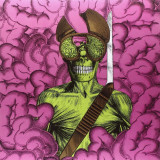
What's the first thing you think of when someone mentions Thee Oh Sees? Probably their riot-sparking live show, right? Visions of a guitar-chewing, melody-maiming John Dwyer careening across your cranium, rounded out by a wild-eyed wrecking crew that drives every last hook home like it's a nail in the coffin of what you thought it meant to make 21st-century rock 'n' roll? Yeah, that sounds about right. But it misses a more important point-how impossible Thee Oh Sees have been to pin down since Dwyer launched the project in the late '90s as a solo break from such sorely missed underground bands as Pink and Brown and Coachwhips. (While Dwyer still records songs on his own, Thee Oh Sees is now a five-piece featuring keyboardist / singer Brigid Dawson, guitarist Petey Dammit, drummer Mike Shoun and multi-instrumentalist / singer Lars Finberg.) That restlessness extends to everything from the towering, thirteen-minute title track of 2010's Warm Smile LP to the mercurial moods of 2008's The Master's Bedroom Is Worth Spending a Night In. Now, Thee Oh Sees chase the home-brewed symphonies of Castlemania with the scrappy, high-wire hooks of Carrion Crawler / The Dream. Originally envisioned as two EPs, it was cut live to tape in less than a week at Chris Woodhouse's Sacramento studio in June, reflecting the battering-ram bent of the band's live show better than any bootleg ever could. "As I'm sure most would agree," explains Dwyer, "Castlemania was more of a vocal tirade. This one's meant to pummel and throb." That it does, whether one blasts the slow, speaker-bruising build of "The Dream," the sunburnt organs and dovetailing guitars of "Crack in Your Eye" or the interstellar instrumental "Chem-Farmer," a perfect example of what happens when one takes a well-oiled machine-a gang of rabid road warriors, really-and adds a second, groove-locked drum set to the mix. To listen is to realize that Dwyer's music is as manic as the underground comic inclinations of his artwork; colorful and confusing in a way that's more than welcome. It's downright refreshing, like a slap in the face at 5:00 in the morning. Or, as Dwyer puts it, "You have to leave a mark somehow."
Scopeotaku’s latest is a continuation of themes he explored in System Failure. Mutating into darker dimensions, influenced by recent world events. reality error is steeped in strangled synths, tape hiss and distorted echoes. Featuring crushed low-tech rhythms and recordings inspired by science fiction B-movies. Scopeotaku seizes the means of production with full on DiY approach. Setting out to soundtrack a dystopian society that has lost touch with the soul of humanity. A world where corporate greed and disruptive extremist views amplified by echo chambers soaked in misinformation drown the voices of reason and compassion. Within this murky swamp however lies a glimmer of light and hope for us all to not accept the future but to shape it.
50 DiY tapes with download code included.
Recorded in Glasgow
- A1: Housebroken
- A2: Baby Babee
- A3: Best Thing
- A4: Holy Water
- A5: There She Was
- A6: Cremation
- A7: Glad It's Night
- A8 64: Malibu
- A9: Stay With Free
- A10: Mojave Desert Romance
- A11: Otto
- A12: Hellz Bellz
- A13: Pain Is The Name Of Your Game
- A14: A Bird In Hand
- B1: Popping Trunk
- B2: Cosmic Unconsciousness
- B3: Supreme Cremee
- B4: Blangg
- B5: Where I'm Coming From
- B6: Soo Sweet
- B7: Believe (In Me)
- B8: Traffic Lights
- B9: Dreamin
- B10: The Whole Thing
- B11 75: Eldorado
- B12: Lite's Out
- B13: Hunger Strike
- B14: Somewhere Over There
- B15: Left Hanging
- B16: The Repo Code
Following in the steps of last year's mysterious "Beyond the Garage" 12 inch, L.I.E.S. throws another curveball with a 30 track continuous LP from veteran West Coast producers, Vinny+Charlie. Each side running 20 minutes, this can best be described as a smoked out, haze filled afterparty beat tape on wax. Obscure samples, dusty sp-12 crushed beats, head nodding loops, sweet low rider soul..chopped, sped up, slowed down and ready to wreck your system. Limited edition white label housed in a lp jacket with custom art by LA artist SOB STORY. 300 copies worldwide.
Swan Song
The vinyl LP at the heart of this éthiopiques 31 tracks 2 to 11 was one of the very last vinyl records ever released in Ethiopia. But above all it represents, we felt, the absolute masterpiece of the Ethiopian Groove – the Swan Song of Swinging Addis. The album leaves a clear idea for posterity of the level of sophistication and mastery that modern Ethiopian music had achieved, before being crushed under the Stalino-military heel of the Derg – as the bloody revolution that was unfolding came to be called.
Ethiopia1976.
The Revolution that broke out in February 1974 rolled on in a ruthless march. The whole of Ethiopian society was utterly stunned. The bouquets of flowers handed joyfully to the first tanks of the coup d'état were to wilt very rapidly. From September 1976 to February 1978, 18 months of Red Terror (the name given by the junta itself) spilled blood throughout the country. This fratricidal conflict took its heaviest toll among students and youth. The shift from feudalism to a cruel and primitive Stalinism left the country's citizens deeply traumatised, and snuffed out any pretence of activism, whatever the sector of society. This ice age was to last for seventeen long years.
ሙሉቀን፡መለሰ Mulukèn Mellèssè Muluqän Mälläsä
It was three tracks by Muluken that served as the opener for éthiopiques-1 more than 25 years ago. Seven more tracks appeared on éthiopiques-3 and 13, all accompanied by The Equators, which was soon to become the Dahlak Band.
The first track, Hédètch alu, also the very first piece that Muluken ever recorded, left audiences both unsettled and amazed. Reflecting the singer's extremely young age (he was just 17 at the time), this angelic voice mystified many, who thought they were in fact listening to a feminine voice. He was not yet 22 when he released his last vinyl record in 1976 with Kaifa Records (KF 39LP), one of the very last to be issued in Ethiopia, before the cassette tape became the dominant medium for music distribution – and before the new revolutionary regime put a stop to all independent musical life, via an unspeakable barrage of prohibitions and other persecutions.
Mulu qèn, literally, “A well filled day”. This tender maternal intention wasn't enough to ward off the cruelty of fate. His mother's premature death drove Muluken to leave his native Godjam, in northeast Ethiopia, to live with an uncle in Addis Ababa. Born Muluken Tamer, he took his uncle's last name – Mèllèssè.
The spelling Muluken appeared in his administrative records. Transcription of Amharic to the Latin alphabet, both in Ethiopia and for scholars, gives rise to controversies and quibbles that can never be neatly settled. French allows for a closer approximation of the original pronunciation, thanks to its battery of accent marks, confusing as they may be to anglophones.
Between rather accommodating administrative record-keepers and the various versions that pop up in interviews given by the artist, Muluken's year of birth oscillates between 1953 and 1955…
1954? One thing is certain: the artist's talent made itself known very early indeed, because he got his start in 1966-67, at the age of 13 or 14. Photos from the period attest to his extreme youth. It's a strange sort of initiation for a very young teenager to become a sensation in the heart of Addis's nightlife at the time, Woubé Bèrèha – the Wilds of Woubé. And what's more, in the club of the Queen of the Night, the Godjamé Assègèdètch Alamrèw herself, the very same that was portrayed by Sebhat Guèbrè-Egziabhér in his novel-memoir Les Nuits d’Addis Abeba2… The legendary female club owner who is remembered to this day by the capital's ageing boomers.
Muluken first tried his hand at the drums, before he grabbed the microphone. He emigrated briefly to the Zula Club, across the street from the old Addis Post Office, one of the ground-breaking bars of the burgeoning musical scene, before joining the Second Police Band in 1968, for around three years. He spent a few months with the short-lived Blue Nile Band founded by saxophonist Besrat Tammènè. As the musical scene grew increasingly successful, and pulled slowly but decisively away from its institutional ties, Muluken released his first 45rpm single in February 1972 (Amha Records AE 440). It was included in two LP Ethiopian Hit Parade compilation albums in September of the same year. All in all, Muluken released eight two-track 45s and the same number of original cassette tapes between February 1972 and 1984, the year that he departed for permanent exile in the USA. After converting to Pentecostalism in 1980, Muluken gradually abandoned all secular musical activity. In 1985, at the end of a concert in Philadelphia, he decided to quit concerts and recording for good. Mèlakè Gèbré, the historic bass player from the Walias band who was playing with him that night, recalls that everything appeared so irredeemably diabolical in Muluken's eyes, that it was to be the end of his contribution to Ethiopian Groove.
The end of the story, the beginning of a legend.
Dahlak Band, forgotten by History
Aside from his personal history and vocal talents, it must be remembered that Muluken Mèllèssè was one of the biggest names in the musical innovations that marked the end of the imperial period. These éthiopiques aim to convince those who are just discovering this hidden gem... As for Ethiopians themselves, they are to this day captivated by this singular and atypical figure in the Abyssinian pop landscape – even though he withdrew from public life some 40 years ago. Incorrigible devotees of poetic twists, of more or less hidden meanings, Ethiopians appreciate above all the care Muluken took in choosing his lyrics and the writers who penned them, such as Feqerte Haylou, Alemtsehay Wodajo and, here, Shewalul Mengistu (1944-1977). Love songs, written by women, a far cry from the conventional drivel that pleases sappy sentimentalists.
Muluken is equally acclaimed for his perfectionism when it came to music, the opposite of the overly casual approach that is all too common. He remained a faithful partner of musicians who came from a lineage that borrowed from several inventive and pioneering bands (Venus, Equators, Dahlak). Amongst them were certain artists who began their musical lives with Nersès Nalbandian at the Haile Sellassie Theatre and who come of age in around 1973 – at just the wrong time, you might say. Among them were the pillars Shimèlis Bèyènè (trumpet), Dawit Yifru (keyboards) and Tilayé Gèbrè (sax & flute). Most notably Tilayé Gèbrè, certainly one of the most important musicians, composers and arrangers of his generation, of the end of the imperial era, and of the early years of the Derg.
It was only in 1981 that a miraculous opportunity arose for Tilayé to escape the Stalinist paradise of the dictator Menguistou Haylè-Maryam. Once again it was Amha Eshèté (1946-2021) who provided a solution. The spirited and courageous producer, who had been in exile in Washington since 1975, succeeded, thanks to his incredible perseverence, in bringing the Walias Band to the USA. It was, in fact an extended Walias Band comprising ten musicians3, six of whom chose to slip away after a few concerts and the recording of an LP (The Best of Walias, WRS 100). Tilayé Gèbrè was one of these. He has been living in the USA ever since. There he joined the then-nascent Ethiopian diaspora, which lived largely unto itself, and was making only very modest headway in the American musical market. It seems unfair that Tilayé Gèbrè and the Dahlak Band were not able to benefit earlier from the public recognition that they do deserve.
A similar draining away of the top-rate talents would lead to the reorganization of the major groups of the “Derg Time”. The remaining artists spread themselves around between Ibex Band (renamed Roha Band), Ethio Star Band and a remodeled Walias Band. That spelled the end of the Dahlak Band.
With this record, produced by the essential Ali Abdella Kaifa a.k.a. Ali Tango, we can appreciate everything that the Derg not only destroyed, but also prevented from flourishing. This gem of Ethiopian-style afrobeat came out in 1976 (and, by way of a parenthesis, before the FESTAC 1977 in Lagos, which was attended by an impressive delegation of Ethiopian musicians — although Fela was already personna non grata in his own country). Despite everything that might distinguish this ethio-groove from Fela’s music – no colonial axe to grind, no question of political confrontation with the authorities, no claims to negritude or Africanism for the Ethiopian musicians, and less extrovertion! –, this LP fits beautifully into the saga of intense and electrified soul of the new “African” groove that Fela and Manu Dibango embodied so well from that point onwards.
In restoring this record to its place in the afrobeat epic, it can be seen that, if nothing else, the timeline bestows a legitimate pedigree and a historical primacy to works that had no international impact when they were originally released.
Warning! Masterpiece!
Released by Hegoa Records and Night School Records.
Greatest Heads is the fourth album by the radical Basque- Berlinesque group Al Karpenter. A deconstruction of structured “rock” music, here Al Karpenter re-imagine “the band” to explore the intersection between Free music, afro-beat, the avant garde and gonzo rock.
If Theodore Adorno wrote “To Write Poetry after Auschwitz is Barbaric” in 1949, Al Karpenter attempts to answer the difficult question today; what kind of music can be done in the face of a genocide? Álvaro Matilla, Marta Sainz, Enrique Zaccagnini & Mattin’s response to the planet’s slipping into a vortex of hate is to create a music ecstatic, a music of protest bursting with multiple musical languages and glossaries, full of overlapping histories and thrilling tensions.
Greatest Heads posits a plurality of musics both in opposition and intertwined: Al Karpenter play rock instruments pulled apart in the studio in post-production. Distorted rhythm chunks bit-crushed and dissipated, segments of freedom oppressed by waves of sound invading from every direction. The interplay between the chief instrumentalists and renowned, storied sound artist Mattin creates something akin to ESP freedom-seekers Cro Magnon playing in Miles Davis’ early 70s groups, The Los Angeles Free Music Society tightening up into a clenched fist of plunderphonics and runaway percussion.
We Are All Karpenters opens Greatest Heads with the most straight-forward song refrain of the record accompanied by a band that soon crash into eruption, imagining Sun City Girls in full free rock mode.
The modulating synth sound soon sucks the band into its wake to create a spine-chilling climax of distorted sound, made fully orgasmic with mastering engineer Rashad Becker’s attention to detail. On Izugarrizko Buruak (Greatest Heads), Matilla intones in Basque over a mangled distorto-beat. A Brand New Astraphobia creates a black space for a heavily processed guitar to blow up before falling to earth at night, a gentle figure serenading the coming end.
On Side B, the band begins by being masticated by a brutal phaser, squelching and stretching the music into new territories. The overt message of Stop The Genocide! is besieged by violence before Worm City aggressively samples the ghosts of soul music, mixing in noise bursts, prepared piano and swiping, abstracted sound. Epic closer Perfect Love feels like a beat poetry performance on a burnt world, still grasping for community, for home, for some sort of human love. A Mad love, then; an angry love fuelled by solidarity and collaboration.
The band’s cascading layers of references and polyglottal musics attempt to create the perfect lover, alive with rage and disorientating ecstasy: Al Karpenter.
"Catch me in the corner not speakin'/Crushed out heavenly/ U.G. rock the sweet daddy long fox minks/Chicken and broccoli, Wally's look stink"
Ghostface Killah released his debut solo album 25 years ago on October 29, 1996. Produced by fellow Wu-Tang Clan member RZA, Ironman found inspiration in sources ranging from blaxploitation films to classic soul and charted a whole new direction for hip-hop in the process. The album features classic bangers like Daytona 500 featuring Raekwon and Cappadonna to soulful emotionally moving cuts like All That I Got Is You with Mary J Blige. To commemorate the 25 year anniversary Get On Down is proud to present Ironman in a 2xLP set available on both ‘Blue & Cream’ and ‘Chicken & Broccoli’ half-n-half colored vinyl, each version housed in a deluxe gatefold jacket, packed inside a ‘shoebox’-style 2nd outer jacket embossed with the year 1996.
You Only Live 2wice is the third studio album from Freddie Gibbs. Following a tumultuous time in Gibbs’ personal life, the album focuses on Freddie overcoming his obstacles and rising from the ashes anew, as reflected in the album art depicting the resurrection of Jesus. At 8 tracks, the album has no features, instead using the space to let Gibbs bear his soul. The album includes the chilling violin-laced single, “Crushed Glass,” as well as standout hits, “20 Karat Jesus,” &”Amnesia.” Executive produced by Ben “Lambo” Lambert & Gibbs himself, the album sees production from BADBADNOTGOOD, Kaytranada, Speakerbomb, Dupri, Jay Nari, Teddy Walton, Blair Norf & more. Back in print for the first time since its initial release and pressed on Opaque Red vinyl.
"As Bill Orcutt’s most mature and exhilarating LP to date, Music for Four Guitars was a slab of undeniable Apollonian beauty. Its approachability and obvious novelty landed it not only on the year- end lists of every key-pushing codger in the underground in 2022, but also on NPR in the form of the Bill Orcutt Guitar Quartet, an ensemble assembled to perform this music and featuring Wendy Eisenberg, Ava Mendoza, and Shane Parish in addition to Orcutt. But while their Tiny Desk Concert gave a whiff of the quartet’s easy intimacy, the sterile confines of the virtual recital medium still left a puzzle unsolved: how might these brutally mannered bricks of minimalist counterpoint sound on a stage in front of actual breathing bodies?" "This was the question foremost in my mind when I first saw the quartet in San Francisco a few months before this double live LP was recorded. I was already familiar with the prowess of Eisenberg and Mendoza, two of the most technically intimidating shredders to blast out of the noise/improv underground, and knew Parish as the mastermind behind the epic translation of Orcutt's quartet recordings into a fully notated score. I was ready to be 'blown away'—and I most assuredly was. The quartet navigated Orcutt's jaggedly spiraling right angles into the shining core of the compositions with joyous ease, faithful to the originals in nearly every way (though their tempos were slightly ramped up, Blakey style, to communicate their breathless rush). The renditions were flawless, stellar and inspiring. I had expected nothing less." "Which leads us to this album, Four Guitars Live, recorded in November of 2023 at Le Guess Who? festival during the quartet’s first European tour. The true essence of this set is not simply in its faithfulness to the source compositions, but in the group's easy familiarity (no doubt the result of weeks on the road) and the generosity of their improvisations, both collective and solo. Orcutt, clearly cognizant of both the caliber of his collaborators and the singularity of their voices, has given everyone room to stretch out, and all have delivered some of their most moving passages to date." "One of this record's great thrills for me is imagining a listener, perhaps unfamiliar with the outer limits of contemporary guitar improvisation (or the Tzadik catalog), slammed into catatonia by Mendoza's liquefying lines on Out of the corner of the eye, then revived and healed by the languid, breathy lines of Parish's unaccompanied, spaced-out breakdown of the track's main theme, finally only to be crushed by Eisenberg’s staggering extended solo on Only at dusk (somehow channeling both Eugene Chadbourne and Buck Dharma)." "There's another peak, which begins at the end of side B, in Orcutt's own languid solo, encapsulating the flowing focus of his recent solo LPs, and serving as an introduction to the next side's ensemble tour de force, the psychic heart of the album, On the horizon: its melodic core passing first to Orcutt, launching into a sublime solo turn by Eisenberg, a duo of Parish and Mendoza, before parachuting back into the ensemble for a smashup rendition of Barely visible and Glimpsed while driving (renamed Barely driving) knitted together with an softly bubbling ensemble improvisation. The transfer is orchestrated yet seamless, its tonal form undeniable even in the presence of obvious dissonance." "The breadth of Four Guitars Live gives lie to the false notion that agile, polytonal improv is necessarily without soul, is necessarily inaccessible. Rather, Four Guitars posits a human avant-garde music that the most conservative will recognize as virtuosic and revel in its classic intervals, boiling counterpoint, and precisely- layered facets. Even the rockers in your life might dig it, so why not pass it on?"—Tom Carter
Heute kündigt die mitreißende Pfeiferin Molly Lewis ihr Debütalbum „On The Lips“ an, das am 16. Februar über Jagjaguwar erscheint. Im vergangenen Jahr hat Molly an der Seite von Mark Ronson und Andrew Wyatt eine der emotionalsten Szenen des Hollywood-Hits „Barbie“ vertont, Modehäusern wie Chanel, Gucci und Hermes ihr einzigartiges Talent geliehen und Weyes Blood auf Tour unterstützt. Auf ihrem kommenden Debütalbum lädt sie ein ins Café Molly, eine Lounge-Bar, wie es sie nicht mehr gibt. Das Licht ist gedämpft, die Martinis sind eiskalt, die Bänke sind aus Samt, und die Bühne ist bereit für das elektrisierende Talent der Pfeiferin Molly Lewis. Nach dem exotischen Stil der „The Forgotten Edge“ EP und der an Tropicalia angelehnten „Mirage“ EP wollte sie den Sound des Café Molly für ihr Debütalbum „On The Lips“ einfangen, eine verträumte Hommage an klassische Stimmungsmusik, die neblige Visionen von Hollywood-Jazzclubs, italienischen Kinosoundtracks und anhaltenden Umarmungen zwischen Liebenden heraufbeschwört. Ziehen Sie sich also einen Stuhl heran, bestellen Sie Ihren Lieblingsdrink und machen Sie sich bereit, sich zu verlieben. „On The Lips“ wurde mit dem Produzenten Thomas Brenneck (Menahan Street Band, Charles Bradley, Amy Winehouse) in den Diamond West Studios in Pasadena aufgenommen. Während der Sessions wurde Molly auf den 10 Tracks des Albums von einer Reihe gefeierter Musiker unterstützt, darunter Nick Hakim, der für den Latin Grammy nominierte brasilianische Gitarrist Rogê, Leland Whitty und Chester Hansen von Badbadnotgood, die Chicano-Soul-Gruppe Thee Sacred Souls auf dem melancholischen "Crushed Velvet", der experimentelle Jazz-Pianist Marco Benevento und Leon Michels von El Michels Affair. Das Album enthält zwei Coverversionen: Dave Berrys Pop-Standard "The Crying Game" aus den 1960er Jahren und Jeanettes "Porque Te Vas" von 1974. Gleichzeitig mit der heutigen Ankündigung wird die Single "Lounge Lizard" mit Musikvideo veröffentlicht, inspiriert von Julie Londons Erscheinung im Film The Girl Can't Help It von 1956.
- 1: Hello
- 2: A Love From Outer Space
- 3: Crack Up
- 4: Timewind
- 5: What's All This Then?
- 6: Snow Joke
- 7: Off Into Space
- 8: And I Say
- 9: Yeti
- 10: Conundrum
- 11: Honeysuckleswallow
- 12: Long Body
- 13: In A Circle
- 14: Fast Ka
- 15: Miles Apart
- 16: Pop
- 17: Mars
- 18: Spook
- 19: Sugarwings
- 20: Back Home
- 21: Down
- 22: Supervixens
- 23: Insect Love
- 24: Sorry
- 25: Catch My Drift
- 26: Challenge
A.R. Kive collates the three most astonishing works from that most miraculous of duos - A.R. Kane - comprising the ‘Up Home’ EP from 1988 that signified the band’s dawning realisation of their own powers and possibilities, their legendary debut LP ‘sixty nine’ (1988) and its kaleidoscopic, prophetic double-LP follow up ‘i’ (1989).
In founder-member Rudy Tambala’s new remastering, the music on these pivotal transmissions from the birth of dream pop, have been reinvigorated and re-infused with a new power, a new depth and intimacy, a new height and immensity. Vivid, timeless and yet always timely whenever they’re recalled, these records still force any listener to realise that despite the habits of retrospective myth-making and the
safe neutering effects of ‘genre’, thirty years have in no way dimmed how resistant and dissident to critical habits of categorisation A.R. Kane always were. Never quite ‘avant-pop’ or ‘shoegaze’ or ‘post-rock’ or any of those sobriquets designed to file and categorise, A.R. Kive is a reminder that those genres had to be coined, had to be invented precisely to contain the astonishing sound of A.R. Kane, because
previous formulations couldn’t come close to their sui generis sound and suggestiveness. This is music that pointed towards futures which a whole generation of artists and sonic explorers would map out. Now beautifully repackaged, remastered and fleshed out with extensive sleeve notes and accompanying materials, ‘A.R. Kive’ reveals that 35 years on it’s still a struggle to defuse the revolutionary and inspirational possibility of A.R. Kane’s music.
A.R. Kane were formed in 1986 by Rudy Tambala and Alex Ayuli, two second-generation immigrants who grew up together in Stratford, East London. From the off the pair were outsiders in the culturally mixed (cockney/Irish/West Indian/Asian) milieu of the East End, with Alex and Rudy’s folks first generation immigrants from Nigeria and Malawi, respectively. The two of them quickly developed and fostered an innate and near-telepathic mutual understanding forged in musical, literary and artistic exploration. Like a lot of second-generation immigrants, they were ferocious autodidacts in all kinds of areas, especially around music and literature. Diving deep into the music of afro-futurist luminaries such as Sun Ra, Miles Davis, Lee Perry and
Hendrix, as well as devouring the explorations of lysergic noise and feedback from contemporaries like Sonic Youth and Butthole Surfers, they also thoroughly immersed themselves in the alternate literary realities of sci-fi and ancient history (the fascination with the arcane that gave the band their name), all to feed their voracious cultural thirsts and intellectual curiosity.
It was seeing the Cocteau Twins performing on Channel 4 show the Tube that spurred A.R. Kane into being - “They had no drummer. They used tapes and technology and Liz Fraser looked completely otherworldly with those big eyes. And the noise coming out of Robin’s guitar! That was the ‘Fuck! We could do that! We could express ourselves like that!’ moment”, recalls Tambala - and through a mix of
confidence, chutzpah, ad hoc almost-mythical live shows and sheer innocent will the duo debuted with the astonishing ‘When You’re Sad’ single for One Little Indian in 1986. Immediately dubbed a ‘black Jesus & Mary Chain’ by a press unsure of WHERE to put a black band clearly immersed in feedback and noise, what was immediately apparent for listeners was just how much more was going on here - a
tapping of dub’s stealth and guile, a resonant umbilicus back to fusion and jazz, the music less a conjuration of past highs than a re-summoning of lost spirits.
The run of singles and EPs that followed picked up increasingly rapt reviews in the press, but it was the ‘Up Home EP’ released in 1988 on their new home, Rough Trade that really suggested something immense was about to break. Simon Reynolds noted the EP was: Their most concentrated slab of iridescent awesomeness and a true pinnacle of an era that abounded with astounding landmarks of guitar-reinvention, A.R. Kane at their most elixir-like.
If anything, the remastered ‘Up Home’ that forms the first part of ‘A.R. Kive’ is even more dazzling, even more startling than it was when it first emerged, and listening now you again wonder not just about how many bands christened ‘shoegaze’ tried to emulate it, but how all of them fell so far short of its lambent, pellucid wonder. This remains intrinsically experimental music but with none of the frowning orthodoxy those words imply. A.R. Kane, thanks to that second generation auto-didacticism were always supremely aware about the interstices of music and magic, but at the same time gloriously free in the way they explored that connection within their own sound, fascinated always with the creation of ‘perfect mistakes’ and the possibilities inherent in informed play.
‘sixty nine’ the group’s debut LP that emerged in 1988 had
critics and listeners struggling to fit language around A.R. Kane’s sound. As a title it was telling - the year of ‘Bitches Brew’, the year of ‘In A Silent Way’, the erotic möbius between two lovers - and as originally coined by the band themselves, ‘dream pop’ (before it became a free-floating signifier of vague import) was entirely apposite for the music A.R. Kane were making. Crafted in a dark small basement studio in which Tambala recalls the duo had “complete freedom - We wanted to go as far out as we could, and in doing so we discovered the point where it stops being music”. There was an irresistibly dreamy, somnambulant, sensual and almost surreal flow to ‘sixty nine’s sound, but also real darkness/dankness, the ruptures of the primordial and the reverberations of the subconscious, within the grooves of remarkable songs like ‘Dizzy’ and ‘Crazy Blue’. Alex’s plangent vocals floated and surged amidst exquisite peals of refracted feedback but crucially there was BASS here, lugubrious and funky and full of dread, sonic pleasure and sonic disturbance crushed together to make music with a center so deep it felt subcutaneous, music constructed from both the accidental and the deliberate, generous enough to dance with both serendipity and chaos. ‘sixty nine’ remains - especially in this remastered iteration - ravishing, revolutionary.
The final part of this ‘A.R. Kive’ contains 1989’s astonishing double-LP ‘i’ which followed up on ‘sixty nine’s promise and saw the duo fully unleash their experimental pop sensibilities over 26 tracks, plunging the A.R. Kane sound into a dazzlingly kaleidoscopic vision of pop experiment and play. Suffused with new digital technologies and combining searingly sweet and danceable pop with perhaps the duo’s strangest and boundary-pushing compositions, the album did exactly what a great double-set should do - indulge the artists sprawling pursuit of their own imaginations but always with a concision and an ear for those moments where pop both transcends and toys with the listeners expectations. Jason Ankeny has noted that “In retrospect, ‘i’ now seems like a crystal ball prophesying virtually every major musical development of the 1990s; from the shimmering techno of ‘A Love from Outer Space’ to the liquid dub of ‘What’s All This Then?’, from the alien drone-pop of ‘Conundrum’ to the sinister shoegazer miasma of ‘Supervixens’ — it’s all here, an underground road map for countless bands to follow.” Perhaps the most overwhelmingly all-encompassing transmission from A.R. Kane, ‘i’ bookended a three year period in which the duo had made some of the most prophetic and revelatory music of the entire decade.
After ‘i’ the duo’s output became more sporadic with Tambala and Ayuli moving in different directions both geographically and musically, with only 1994’s ‘New Clear Child’ a crystalline re-fraction of future and past echoes of jazz, folk and soul, before the duo went their separate ways. Since then, A.R. Kane’s music has endured, not thanks to the usual sepia’d false memories that seem to maintain interest in so much of the musical past, but because those who hear A.R. Kane music and are changed irrevocably, have to share that universe which A.R. Kane opened up, with anyone else who will listen. Far more than other lauded documents of the late 80s it still sounds astonishingly fresh, astonishingly livid and vivid and necessary and NOW.
It"s 2023, and even the turn of century seems a long time ago now - but oddly, Purling Hiss"s guitar-band ethos feels ever more timeless. The Hiss aren"t just a simple part of the tradition going back 50-odd years Their DNA, pulsing in waves of punk and classic radio rock, grunge and slacker, is ineffably, re-singably music - but their signature crushed guitar harmonics, fused with deep soulfulness, meld into something that cuts us with fresh heartbreak, an eternal recurrence that seems to be happening right now today, as it pours off the turntable and runs down the street. Drag On Girard, the first Purling Hiss album in six years, cruises through these states of mind and places in time. As before, but with new twists, Mike Polizze and his gang let loose with the chaos and noise implied by their name, applying high-end splatter and slow-rolling low end to eight vehicles, running the gamut from gleaming pop gems to head-cleaning epic jams before they"re done. One of the unique qualities of Drag On Girard is a specific lead-rhythm arrangement of the guitars, emitting the expected formidable roar while setting a certain type of rhythmic strut for the band. The two guitars style also trips power-pop impulses in the tunes, with sung-along harmony vocals that evoke classic collective magic and burnish the tunes one by one. Once this vibe"s established, side two turns around and stretches out with the molten flow of Purling Hiss at their very most epic; couched within loose improvisatory structures, the title track and "Shining Gilded Boulevard" play further with the yin/yang of nostalgia and truth as they trade places looking meditatively back to them old days and all their harshness and beauty.
Not a great deal is known about this talented artist having released only 4 albums in a recording career that started in 1993. Raised in a musical family by piano playing parents he began learning the instrument at an early age, later concentrating on the saxophone, but became a multi-instrumentalist by the time was signed to Verve Records, playing most forms of keyboards, synths, vibes, as well as sax and flute. He moved to Florida, from his native New York, shortly after graduating from studying music at university in New Jersey, and played in local rock bands whilst developing his love for jazz, and was working on a demo to try and get a record deal.
Disaster struck when he was involved in a serious boating accident in which both hands were badly crushed and he was unable to play an instrument for many months, during which time he developed a skill for singing and composing. Turning adversity into opportunity is the best way to describe the outcome.
So why is a soul label interested in releasing some of his material? Both tracks selected, "One" and "Sweeter", are released on vinyl for the first time and come from his third album, "Lights On", released on his own label Eaak Records following a break of 7 years which was devoted to raising his children. The sounds are undeniably late night make-out music, lush, sophisticated and sensuous.
The majority of plaudits for his work previously came from the world of contemporary jazz and, dare I say it, smooth jazz, and was largely ignored by the soul magazines and radio stations. His captivating falsetto vocal style, reflects his influences by Curtis Mayfield, Smokey Robinson and Marvin Gaye. All his material is self-penned and the albums were co-produced with drummer Guy Eckstine. There is an underlying 70’s feel to the contemporary arrangements and his work is clearly deserving of greater recognition.
Steve Hobbs (Solar Radio, Totally Wired Radio)soul
The fourth installment of MdCL’s Midnight Snacks series features remixes of snacks from vol 1 & 2, reimagined by Foursixone (Germany), Sound of Fractures (UK), Laroye (France) and Coflo (USA) – instrumental dancefloor pressure for the broken beat and soulful house heads. Curated by the Mashibeats community – community-sourced remixes and community-A&R’d – the EP kicks off with Foursixone’s broken beat reimagining of ‘Crush Velvet’: file alongside BITA and 2000Black. Sound of Fractures blends jungle bass-line pressure with a 2-step bounce on ‘Blue Hour’. On the flipside we dive into house with Laroye’s alternate mix of ‘Crush Velvet’ – a future nu-jazz house classic, and wrap up with the gospel organs and deep 4/4 grooves courtesy frequent Osunlade collaborator, Coflo.
- A1: Revue Noire
- A2: Swinging In The Rain
- A3: La Pegre
- A4: The End Of A Love Affair (Billy In The Sky) (Billy In The Sky)
- A5: Drum Rain
- A6: Les Annees Folles
- A7: Swing Swing
- B1: The Drummer
- B10: Soul Computer
- B2: Black Musette
- B3: Tambours Battants
- B4: Negro Digital
- B5: La Nuit Mene Une Existence Obscure
- B6: Be Bop Vaudoo
- B7: The Dancer
- B8: Harlem Jungle
- B9: Tant Qu'il Y Aura Des Etoiles
For the first time Nicolas Repac's album Swing-Swing, originally out in 2004, is released on vinyl LP!
He has a reputation as a musician's musician, a talented Jack-of-all-Trades as much at ease playing the guitar alongside his old accomplice, French songwriter Arthur H, as he is when tinkering with all kinds of machines by instinct, and creating made-to-measure contexts for instrumentalists like Michel Portal. Everyone knew he had a secret garden, the song' world of a composer and performer who was difficult to categorize, a world not only lyrical but also dark and full of tender melancholy, not to mention easily surrealist (his first record of songs, La vile', which was released on the Indigo label in 1997, has a sequel in preparation in the form of a new opus, Lovni'.) But, once again,
Nicolas Repac had a surprise in store, because he has turned up where no one was expecting him: Swing Swing is a record as magnificent as it is difficult to place, with electro ramblings around jazz (its subjects and virtues, its spirit and memory), wanderings that are playful, light, fluid in gesture and crammed with ideas, discoveries and intuition, they are at once naive and instinctive (Repac is an erudite amateur, the Ferdinand Cheval of the already-established world of electronic music), and extremely elaborate in their crushed samples, hallucinatory, rhythmic whirls and sensual, dreamlike atmospheres.
"Catch me in the corner not speakin'/Crushed out heavenly/ U.G. rock the sweet daddy long fox minks/Chicken and broccoli, Wally's look stink"
Ghostface Killah released his debut solo album 25 years ago on October 29, 1996. Produced by fellow Wu-Tang Clan member RZA, Ironman found inspiration in sources ranging from blaxploitation films to classic soul and charted a whole new direction for hip-hop in the process. The album features classic bangers like Daytona 500 featuring Raekwon and Cappadonna to soulful emotionally moving cuts like All That I Got Is You with Mary J Blige. To commemorate the 25 year anniversary Get On Down is proud to present Ironman in a 2xLP set available on both ‘Blue & Cream’ and ‘Chicken & Broccoli’ half-n-half colored vinyl, each version housed in a deluxe gatefold jacket, packed inside a ‘shoebox’-style 2nd outer jacket embossed with the year 1996.
Native from south of France, Ogmah is a DJ/Producer of industrial and noisy techno, embellished with hardcore influences. Founder of the label Askorn Records, his music is raw, hard hitting and harsh, and his mixing style is fast, hard and precise.
A1) This first track deserves a powerful broken beat rhythm, combined with some aggressive noises & FX and a stormy atmosphere. Sounds like an unchained monster in a disaffected metallurgic factory.
A2) Pure violence into this hard hitting 4x4 industrial track. Collapse of the business techno. Heavy hammering kick with some organic noises, perfect soundtrack for a sacrifice.
B1) Keepsakes brings his famous crazy groovy drums patterns in this one! Boxing kick, scary atmosphere & disturbing synth, perfect for dancing until you die in a gloomy & wet Berlin cellar.
B2) Noisy as hell remix with a crazy sound design by Exome! Dark & violent, this track is a fucking tank that will crush your soul and chase you in your scariest nightmares...
B3) This last remix by Alessandro Nero will make you broke into a furious gallop! Metallic noises with a recognizable modular style, this track will make you remember some good old schoolish hardcorish vibes.
VEYL is pleased to welcome Harlem to the label for a new seven track album titled ‘Bait’. The Stockholm-based duo of Martin Thomasson and Johan Skugge bring a vast history of production behind them, operating since the early aughts and known for their work in dub and minimal techno. ‚Bait’ ventures into new territory for the project, delivering infectious strains of body music, new beat, industrial and beyond coupled with soul-stirring vocals which quickly dig beneath the skin. The release is about everyday manipulation, soft power and persuasion. We exist in a world in which corporate management techniques are deployed in our everyday lives, nudging each other for short-term gain, slowly hallowing out any lasting trust while ultimately all being crushed by a hyper-capitalist system. From the opening synths of the title track to the ominous ending notes of ‘Night Vision’, we also uncover funky grooves and diabolical floor shakers which remind us of something from the past but exist perfectly in this corrupted new world. As is customary, the striking cover art was photographed by Tomaso Lisca, and it’s a fitting piece for the record, depicting a tantalizing well-oiled machine, all while something menacing lurks under the hood.
- A1: There Is No End
- A2: Rich Black (Feat Koreatown Oddity)
- A3: Coonta Kinte (Feat Zelooperz)
- A4: One Inna Million (Feat Lava La Rue)
- B1: Stumbling Down (Feat Sampa The Great)
- B2: Crushed Grapes (Feat Lord Jah-Monte Ogbon)
- B3: Gang On Holiday (Em I Go We?)
- C1: Mau Mau (Feat Nah Eeto)
- C2: Tres Magnifique (Feat Tsunami)
- C3: Hurt Your Soul (Feat Nate Bone)
- D1: Cosmosis (Feat Okri & Skepta)
- D2: My Own (Feat Marlowe)
The wisdom of Tony Allen's words was as deep as his grooves, and these two sentences, which announce the dozen songs that follow, truly capture the spirit of There is No End. Tony’s motivating concept and desire was to work with younger artists, and especially the new generation of rappers, and give them voice in a time of global turmoil when music has never been more important – not necessarily as a "weapon" for the future in the manner of Fela's violently political songs, but also as medicine to heal a fractured world today.
For all those who knew him, he was a deeply spiritual man whose life's mission was not just to create a new musical language, but to pass it on to subsequent generations. In thinking back on the incredible process of creating this album without Tony physically present to guide him, producer Vincent Taeger remarked that his friend and mentor "was a teacher without speaking... a drummer and a guardian, with a great artistic vision and that vision filled the songs even after he had left us." Ben Okri, like everyone else involved in this valedictory album, had a very similar experience, declaring in awe that "this man could have lived another 150 years and kept creating new worlds. He had become the master shaman of his art. He knew himself and his mind. He wanted the album to be open to the energies of a new generation... but like a great mathematician or scientist who found a code of for a new world, with just a few beats, he created this extraordinary canvas." Featured artists include Skepta, Sampa The Great, Lava La Rue, Danny Brown, Damon Albarn and many others
- A1: Intro
- A2: God Forgiven Souls
- A3: Apocalypse
- A4: If I Fall Under
- A5: Trouble
- A6: The Way I Feel About You
- A7: Turn Into The Fire
- A8: I've Been Dreaming Of
- A9: Goodbye From Mother Earth
- A10: Crushed In
- A11: Call Me When You Need Me
- A12: Glorious
- A13: Interlude
- A14: Baby
- B1: You Work Too Hard
- B2: Strange Times
- B3: Life Is On The Lawn
- B4: Mystere
- B5: Let Me Be Your Hero
- B6: How Far???
- B7: I Just Want To Love Her
- B8: Gotta Work Harder
- B9: Feelin' Good
- B10: It's No Wonder
- B11: Stay Home With Me
- 1