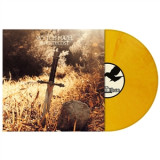
LIMITED EDITION PICTURE DISC EDITION OF PAUL DRAPER'S NEW
ALBUM CULT LEADER TACTICS .Meaty art-rock, austere orchestral
interludes & driving future pop - Classic Rock 8/10 Cult Leader Tactics is
sleek & smart, full of melody, humour and flair - Record Collector 4*
Former Mansun frontman, Paul Draper, returned in early 2022 with a
collection of his finest songwriting since the bands' imperial phase
Cult Leader Tactics', is a self-help manual on how to become a complete cult in
the music industry & is his first solo album since 2017's much- lauded Spooky
Action'. Cult Leader Tactics' offers a satirical analysis of the self- help manual
genre. A guide on how you can get to the top of your chosen profession, or ahead
in life & in affairs of the heart, by acting in a Machiavellian manner, employing
dirty tricks or Cult Leader Tactics' to achieve your life goals. After experiencing
these types of human behaviours & themes, the album arrives at the conclusion
that the only true answer in life is love. Paul plays most of the instruments on the
album, including lead vocals, guitar & various Moogs & synthesisers. An album
produced with long-time collaborator & acclaimed producer Paul P-Dub' Walton
(Massive Attack, The Cure, Bjork) at Loft Studios, it also includes guest
appearances from Porcupine Tree's Steven Wilson & Gam of the band Sweat' as
well as featuring a 288-person C.L.T. Lockdown Choir. Cult Leader Tactics' offers
a selection of Paul's most focused & ambitious work so far, a brilliantly dark
commentary on an industry he is all too aware of. Kscope are proud to present a
limited Picture Disc edition of Cult Leader Tactics'.
Cerca:cult leader
PAUL DRAPER RETURNS WITH HIS NEW ALBUM, 'CULT LEADER
TACTICS'
Former Mansun frontman, Paul Draper, returns with a collection of his
fnest songwriting since the bands' imperial phase
'Cult Leader Tactics' is a self-help manual on how to become a complete cult in
the music industry & is his frst solo album since 2017's much- lauded 'Spooky
Action'.
'Cult Leader Tactics' offers a satirical analysis of the self-help manual genre. A
guide on how you can get to the top of your chosen profession, or ahead in life &
in affairs of the heart, by acting in a Machiavellian manner, employing dirty tricks
or 'Cult Leader Tactics' to achieve your life goals. After experiencing these types
of human behaviours & themes, the album arrives at the conclusion that the only
true answer in life is love.
Paul plays most of the instruments on the album, including lead vocals, guitar &
various Moogs & synthesisers. An album produced with long-time collaborator &
acclaimed producer Paul 'P-Dub' Walton (Massive Attack, The Cure, Bjork) at Loft
Studios, it also includes guest appearances from Porcupine Tree's Steven Wilson
& Gam of the band 'Sweat' as well as featuring a 288- person C.L.T. Lockdown
Choir.
'Cult Leader Tactics' offers a selection of Paul's most focused & ambitious work
so far, a brilliantly dark commentary on an industry he is all too aware of.
Digipack edition with 16-page bookletOn tour across the UK from 27th February
to 23rd March 2022.'Cult Leader Tactics' will be available via Kscope.
Vibe Ride is the sixth release of Adam Rudolph's Hu Vibrational project and marks his 60th release as a leader or co-leader. Comes with insert and download code.
“With every record, the goal is to explore new creative territory,” explains Rudolph. Vibe Ride continues a deeper exploration of a trance-like groove and a conceptual framework known as Sonic Mandala. This album marks the most complete realization of that idea, partly due to the group's experience touring beforehand. That time on the road helped to refine ideas and strengthen musical chemistry. The recording process unfolded organically—likely due to the long-standing collaboration within ensembles like Go: Organic Orchestra and Moving Pictures, where the musicians have developed a deep familiarity with the shared musical language.
Sonic Mandala refers to a musical approach distinct from traditional linear structures of theme and development. Found in cultures across the globe, it may represent one of the oldest forms of musical expression—predating written history by tens of thousands of years. Today, it is most vividly preserved in the music of the Ituri Forest peoples (Aka, Baka, Ba Benzele, Mbuti), whose sound traditions revolve in cyclical, orbit-like patterns. Vibe Ride seeks to bring that ancient sense of circularity into a contemporary—and perhaps even futuristic—context.
The ensemble of Vibe Ride—Alexis Marcelo, Jerome Harris, Harris Eisenstadt, Neel Murgai, Tim Kieper, and Tripp Dudley—brings exceptional creativity and skill to the project. While grounded in the sonic languages of today, their performance channels an ancient vibrational lineage, connecting with ancestral sound makers who were attuned to the rhythms of the sun, moon, stars, and seasons. Human beings have always been deeply responsive to natural cycles.
Like a mandala, where the circle reveals itself as a spiral—always returning, but never to the exact same point—the Sonic Mandala musical experience spirals through motion. Refined signal patterns emerge through overtone-rich instrumentation. The groove becomes a threshold, shifting the listener from passive observation into active, even transcendent, participation. With open ears and an open mind, the sound spirals inward—toward a primal center—and outward into the cosmos. When this elevated state is shared among participants, it creates what mystics describe as resonance.
Vibe Ride thrives on the distinctive sonic voices of its players, interwoven with care and nuance into the compositions. Hu Vibrational merges elements of world music, electronica, and improvised jazz into something both funky and spiritual, intense and soothing.
Using signature techniques of organic orchestration, layered arrangement, and electronic processing, the compositions are sculpted from percussion, electronics, and ethereal textures. Rhythmic foundations drawn from diverse traditions serve not as endpoints, but as building blocks. As the saying goes, “Orchestration is the key.” In shaping the sound, the aim was to discover fresh ways of balancing structure and sonic color. As Don Cherry once said: “The swing is in the sound.”
The audiophile LP was carefully recorded, mixed, and mastered by James Dellatacoma—longtime engineer for both Bill Laswell and Rudolph—at Laswell’s Orange Studio.
“This crew artfully blends together to create a seamless tapestry of rhythm… the end results are mesmerizing. Hu Vibrational is all about communing with the groove spirits and creating worlds where earthy rhythms and other-worldly sounds are one.”
— Dan Bilawsky, All Music Guide
“You can be sure that when Adam Rudolph and an ensemble of breathtaking drummers get together mystical and wonderful things will happen.”
— Raul da Gama,
“A stunning effort, enjoyable and grows with repeated listening.”
— Stefan Wood, Freejazzcollective
- A1: Specimen - Kiss Kiss Bang Bang (12" Version)
- A2: The Sisters Of Mercy - Alice
- A3: Virgin Prunes - Pagan Lovesong (Vibeakimbo)
- A4: Sexbeat - Sexbeat
- A5: The Birthday Party - Release The Bats
- B1: Alien Sex Fiend - Ignore The Machine
- B2: Killing Joke - Follow The Leaders
- B3: The Cramps - Human Fly
- B4: The Cure - Let's Go To Bed
- B5: Siouxsie & The Banshees - Slowdive
- C1: The Cult - Resurrection Joe (Long Version)
- C2: Christian Death - Deathwish
- C3: Theatre Of Hate - The Hop
- C4: Soft Cell - Soul Inside
- C5: Wasted Youth - I Wish I Was A Girl
- D1: Flesh For Lulu - Roman Candle (12" Version)
- D2: Xmal Deutschland - Incubus Succubus Ii
- D3: Play Dead - Propaganda
- D4: Gene Loves Jezebel - Punch Drunk
- D5: The Meteors - My Daddy Is A Vampire
Jamwax is proud to announce the reissue of Justin Hinds' rare and evocative track Marcus Tradition, a powerful song that resonates deeply with the roots of Jamaican music and honors the enduring legacy of Marcus Garvey.
Marcus Tradition is a heavyweight roots reggae masterpiece that embodies the spirit and teachings of Marcus Garvey, the Jamaicanborn leader who founded the Universal Negro Improvement Association (UNIA) and championed the 'Back to Africa' movement. The song’s down-tempo riddim and distinctive whistle create a captivating atmosphere, while the lyrics emphasize the importance of tradition and heritage: "You're the offspring of this nation, and this is a tradition. Marcus Garvey was born in Jamaica and that's a tradition."
Justin Hinds, a pioneering figure in Jamaican music, is celebrated for his impactful contributions to the ska and roots reggae genres. As the lead vocalist of Justin Hinds & The Dominoes, he achieved monumental success with classics such as Carry Go Bring Come, cementing his legacy in Jamaican music history.
This reissue of Marcus Tradition reaffirms Jamwax's dedication to preserving and sharing the richness of Jamaican musical heritage. By bringing this exceptional track back into the spotlight, Jamwax not only honors the profound artistry of Justin Hinds but also celebrates the timeless cultural legacy of Marcus Garvey, a tradition that continues to inspire and unite generations.
Originally released in 1987
Licensed courtesy of Claudette Pottinger & Correl Hewitt
Ever more secure in her chosen path, Nídia radiates gloriously in all moods for the dancefloor in this, her album number 3. Consistent with her fiery nature and mixed roots in Guinea-Bissau and Cape Verde, »95 MINDJERES« is framed by the decisive role of women freedom fighters in PAIGC's struggle for the independence of Guinea-Bissau from Portuguese colonial domination during the 1960s and 1970s. Among others, the names of Teodora Gomes and Titina Silá shine brightly as leaders of a group of 95 women, providing them with military training and political awareness.
The album starts righteously with a question-themed banger; ambiguous in its sense of curiosity, even mischief, or perhaps it is a passionate commentary on the hard atavic realities of the world. It sets the tone for the wonderfully bouncy »Deep«, pads gently pulling at the legs, longing for action.
All of Nídia’s work has been basically concerned with pushing forward, instant piece by instant piece, a particular, some would say peculiar, view of what culture is, what role it plays in social life. She exercises her experimental inclination within the groove, interweaving percussion sequences and melodies in a very lean way - track durations are generally within range of what many would call "sketches" but the music just says what needs to be said. Beats are never artificially extended for the dancefloor, there's not a hint of that culture in »95 MINDJERES«. Closest would be "cp", an actual drum tool. Ideas are in motion now. And they fly out during the following »Mindjeres«, marked by gentle stabs as if counting the steps skyward. Unexpected turns near the end make final songs "abcd" and "Paradise" accentuate a longing sensation.
Stuff is ready, bodies alert, mind is sharp with warmth and fellowship, detoxed, we can now hear the overall tone of the album, a clear view on self nurture, freedom and responsibility. We believe it is sustained by Nídia’s progressive interpretations and approaches to promote harmony in never-ending family entanglements, reconcile notions of ancestry and uproot, and try out means to resist and fight. In praise of Love.
- A1: Gwaing Reverie
- A2: Lucelle Sista Of The Soil
- A3: Mantis Praise
- A4: Amaseh Amen
- A5: For Peter & Ruth
- A6: Terug Blik
- A7: Threnody For The Khoisan
- A8: Ambient Khoi
- B1: Mcinci Song I
- B2: Morenga
- B3: Evidence Of Things Unseen
- B4: Lockdown Duet Milano-Cape Town
- B5: Roesdorp Requiem
- B6: The Ascension Of Milford Graves
Garth Erasmus is an artist and musician based in Cape Town, South Africa. 'Threnody for the KhoiSan' is his first album under his own name. Since 1985 his artistic interests have broadened to include music-making, designing and making his own instruments based on indigenous KhoiSan knowledge. From 1999 to 2012 he was a member of the South African First Nation activist group Khoi Khonnexion. In the past couple of years Garth Erasmus has also been a pivotal part of various international performance pieces and exhibition projects which brought him regularly to Europe. Most of these activities were developed and performed in collaboration with the Hamburg based band Kante and his band Khoi Khonnexion. In April 2024 Garth Erasmus will be part of the group exhibtion 'Oscillations' at Akademie der Künste, Berlin.
His works in music are predominantly characterized by a restless quest for alternative forms of expression and materials including self build instruments, field recordings or various electronic music devices.
In this context the music on 'Threnody for the KhoiSan' takes on a primal and metaphorical meaning. Rather than a formal, physical initiation, this process is more spiritually inclined, yet it is a spirituality which is consistently put into action.. “Ever since I was an art student I have experimented with alternative materials to release me from the Western education values I received. When I started to make these instruments in the 1980s, my intention was to create art objects but when I discovered the sound they made, it unlocked a door that transported me deeper in my quest in the realization that I was on the right path.
In fact all instruments which appear on 'Threnody for the KhoiSan' are products of a process of discovery starting from square one. All this is based and founded on the beauty of simplicity and minimalism as symbolized by the single string Khoisan musical bow and arrow as trance musical instrument. In this sense it soon became manisfest for Garth Erasmus to combine the bow instruments with various electronic instruments. Besides developing his own unique language in music he also shared an expressed interested in experimental sound aesthecis, Avantgarde composition and Free Jazz. However, his non - academic approach towards sound and music was always fueled by the desire for a reconnection to the land and to the idegenious knowledge of the KhoiSan, whose struggle for First Nation status continues.
Song for Morenga
This song is dedicated to a guerilla leader, named Jacob Morenga, who was the leader of the nama/herero anti-german uprisings that occured between 1904 and 1907.
Amaseh Amen
This is a classic mouthbow piece that conjures the spiritual nature of Khoisan cultural praxis.
Gwaing Reverie
It was composed as a personal gift to the other members of newly formed electro-acoustic trio „Gwaing". „Gwaing" is an ancient Khoisan place name, meaning the mouth of the river.
Mcinci Song
A typical meditation on the traditional Mcinci flute. This flute was originally played by shepherds and was made of reed.
The Ascension of Milford Graves
This piece attends to capture the risen spirit of the legendary African American drummer Milford Graves. It was composed soon after his death in 2021.
Song for The Sisters of the Soil
A live improvisation dedicated to Lucelle and Melissa (The Sisters of the Soil) on the occasion of visiting them at their residence, known as „Oppieyaart" on the Cape Flats. On 10 September 2022 there is an online event with them at Kunsthaus Hamburg.
É Soul Cultura captain, originator of Manchester’s legendary Electric Chair and definitive people’s champion, Luke Una taps into a lifetime’s worth of musical discovery for the second volume in our Mr Bongo Edits series. A cosmic coming together that sees two of Luke’s secret weapons, re-edited and re-contextualised by the man himself to provide optimal dancefloor euphoria.
A stalwart of the underground for nearly 40 years, Luke has become an appointed leader of the late night disenfranchised, with an unquestionable ability to pick records that make minds tick. Not least through his two É Soul Cultura compilations released on Mr Bongo over the past two years.
A taste that traverses genres as much as it does emotions and decades, who better to give an insight into the tracks he has chosen to edit, than the man himself. “I've been an avid collector of afro-beat house, techno and underground black heart disco since before the basement soul days of Electric Chair 30 years ago. Both these bombs were very much holy grail finds, plucked from the last four decades of digging in random crates of dusty vinyl all over the world.”
First up, Thandi Zulu & The Young Five’s interpretation of Pure Energy’s early ‘80s disco power play – ‘Love Game’. With a distinctive South African synth bass and killer keys combo, Luke explains the original has this “bonkers alchemy of heavy machine soul, uptempo rawness and a majestic disco evangelism”, making it ripe for a re-edit.
On the B side, Lionel Pillay’s Jazz dancer ‘Plum’. “The original was a relentless 18-minute raw jam”, Luke states, “which despite its late ‘70s South African origin kinda reminded me of a 1986 Chicago piano House record”.
“These edits strip the tracks back and rebuild them, giving them more sonic weight with that looped up drum jacking militancy from the days of Chicago, combined with a boosted sense of transcendental, psychedelic, cosmic disco. They have always had such an explosive reaction on so many dancefloors including the heavier electronic club, so it felt only right to reshare them”.
- A1: Pegasus Meteor Fist (Pegasus Fantasy ~ Blue Forever) 04 44
- A2: Sanctuary, Precepts Of Death 03 26
- A3: Galaxian Wars 03 54
- A4: Burning Cosmo 04 09
- A5: Oath To One's Guardian Star 05 47
- B1: The Saints Of Athena 04 31
- B2: Revenger Phoenix 04 27
- B3: The Challenge Of The Black Saints 03 59
- B4: Sad Brothers 04 38
- B5: Into An Era Of Legend 04 56
First vinyl issue of the Saint Seiya Anime's cult Soundtrack. Limited Edition.
Seiya is an orphan who, as a young boy, was selected by the Kido Foundation to bring legendary bronze armour back to Japan. He succeeds, along with 10 other orphans. Forced by the foundation to take part in a "show", the knights embark on a tournament before the prize, the golden armour, is stolen. Little by little, they realise that their problems stem from the Sanctuary in Greece, home to the 12 most powerful knights, the Golden Knights, and their leader, the Great Pope. His target is the young Saori Kido, heiress to the foundation and reincarnation of Athena.
The series was a huge success and spawned an extensive franchise, with TV series, films and video games. This album features the best music and songs from the anime, composed and arranged by Seiji Yokoyama (GATCHAMAN).
When Cicadas appear in the area they cause a huge uproar. It’s hard to escape the distinctive noise these critters make, reaching up to 120 decibels. The hypnotic, trance-inducing sound disappears with the insects. A few months after Cykada's explosive debut, the world was hit by turbulence and from Cykada there was silence - fortunately only seemingly, because the next cycle began underground, in the privacy of the studio. It was there that the cicadas matured, waiting for a metamorphosis.
The year 2019 was very successful for Cykada, with a brilliantly received debut album, concerts at numerous festivals in the UK and Europe such as Glastonbury, Wilderness, London Jazz Festival, BAM Festival, La Defense Jazz Festival or Love Supreme Festival, along with constantly composing and preparing material for the second album. As the musicians entered the studio, the coronavirus pandemic was already in full swing across the globe. It was clear then that the world would never be the same. With increasing restrictions Cykada went underground, waiting for changes to surface again. Unfortunately the expected change that was happening seemed only for the worse - Brexit and its socio-economic consequences, worldwide disinformation, accelerating climate catastrophe and Russian invasion of Ukraine. The collapse of the old world order is the perfect moment for metamorphosis and with this message Cykada steps out again into broad daylight, matured and carrying a message with their long-awaited second album “Metamorphosis”.
The meaning behind the title is multifaceted. It refers both to changes taking place in our society and changes to our world as nature defends itself from human stupidity and greed. It is also a reference to the personal and musical development of the band members in that difficult period. It all became a foundation to bravely attempt to make new beginnings.
The metamorphosis is also clear in the musical aspect of Cykada. Their debut album was already difficult to shoehorn into specific genres with their sound that balanced jazz, electronics and elements of global music styles. With the second album their eclectic style has evolved into something distinct and innovative, combining folk/jazz song form and improvisation with heavier sounds inspired by sound system culture and rock. The band grew into a septet thanks to multi-instrumentalist Rob Milne, expanding the horn section to 3 instruments and galvanising its sound. But the biggest change that happened compared to the first album is the singing of Cykada leader Jamie Benzies in singles “So Divided” and “The Crack in the Bricks”. Both songs carry an important message, showing us that the changes in the world are already happening and that only we can make it head in the right direction. This unique sonic mix along with the message unleashes a powerful energy that the musicians want to send to and infect every listener.
represssed !
Monstrous mid-tempo Disco groovings on this one, giving the Avergae White Band a run for their money.... Doc Severinsen, the renowned Jazz hornsman dropping some tight ass Funk on this rare as hens teeth Epic white label promo. This is a fully legit reissue borne out of an Above Board / Sony music collaboration, repressed from the official sources. The original 1976 promo 12" had the same track on both sides as promos often did back then so we've decided to include a special version on the flip, a lovingly tweaked re-edit from the cult leader himself - DJ Harvey. Harv's edit has been around for a minute, but this version backing the OG 76 Disco mix makes this 12" a bonafide 'must grab' for all Disco enthusiasts! Do not snooze. This one's a winner!
We are proud to present the Mr Bongo pressing of Guilherme Coutinho E O Grupo Stalo's self-titled mythical album. Blending lo-fi, Brazilian tropicalia, jazz, funk and MPB with a unique aroma, this record is pure perfection.
It was originally released in 1978 on Erla - Estudio Rauland, an obscure record label from Belém in Brazil, that only released 7” singles, with this album being one of two exceptions. During the 1970s, Belém had a thriving nightclub scene, but it is thousands of miles away from the music industry hubs of Rio de Janeiro and São Paulo, making this record insanely difficult to find, even in Brazil. Added to the scarcity factor is the magical nature of the recording, which has naturally resulted in a hefty price tag to match. Original copies have become a prized, collector’s item.
The elusive Brazilian band leader and keyboard player, Guilherme Coutinho is a true cult artist. He passed away in 1983, at the age of just 41, and during his career he only seems to have appeared on a handful of marvellous records, which makes them all the more special. This album feels individualistic and distinctive from other albums of the day. Listening back to vocalist Elinho’s (aka Hélio Rubens de Oliveira) delivery, it sounds not too dissimilar to some of Belle & Sebastian’s songs. ‘Guilherme Coutinho E O Grupo Stalo’ is rich in charm, quirky and playful. It feels cinematic, soothing and benefits from being heard in its entirety. A proper album experience.
- A1: You're A Girl For One Man Only
- A2: Brand New Life (Feat Mumu Fresh)
- A3: Come Live With Me (Interlude)
- A4: Livin' & Lovin' In My Own Way (Feat Pete Rock)
- B1: Running Game (Intro)
- B2: Running Game
- B3: Moving Target
- B4: Dust (Feat Meshell N'degeocello)
- B5: The Windmills Of Your Mind (Feat 9Th Wonder)
- B6: If It's Magic
Brandee Younger will release her second album on Impulse! Records, ‘Brand New Life’. Younger is quite often noted for standing on the shoulders of the very women who ushered in the harp as a clear and distinct voice in jazz: Dorothy Ashby. This record is an amalgamation of original pieces from Brandee and select reinterpretations of Ashby’s work. Brandee Younger represents a generation of contemporary improvisational musicians who came of age in an era when hip hop commanded a strong presence in American popular culture and emerged as leaders of a new school. In ‘Brand New Life’, she brings progressive explorations of harmony, rhythm, and melody infused with styles from hip hop, rock and pop music.
- A1: Dreams (Feat Xênia França&Zé Leônidas)
- A2: Kismeti (Feat Matthias Schriefl)
- A3: Asase (Feat Eric Owusu)
- A4: Sábado (Feat Zé Leônidas)
- A5: Carrossel (Feat Zé Leônidas)
- B1: Caio & Eric (Feat Eduardo Camargo)
- B2: Ndiyakhangela (Feat Bongani Givethanks &Amp; Mpho Nkuzo)
- B3: Agôra (Feat Matthias Schriefl)
- B4: Oblique Sunshine (Feat Rebekka Ziegler)
Global pointing Brazilian jazz trio releases their new album Agôra, that sparkles with electric funk and Herbie-esque eclecticism. It features a myriad of guest vocalists and musicians including Brazilians Xênia França and Zé Leônidas, Jembaa Groove's Ghanaian singer Eric Owusu and South African artists Bongani Givethanks & Mpho Nkuzo
Re-wiring the concept of 'fusion' for 2023, Agôra is Brazilian trio Caixa Cubo's resurgent new record with the title referring to 'now', based upon the intuitive and fluid nature of the trio's method, and this inspired recording. With shoots to black music culture, from Brazil to Brooklyn, Ghana and South Africa, Agôra is the group's ninth album yet is their first where they've invited guests, mainly singers, onto each track and follows their last, Angela from 2020, released on Heavenly Records, which won a BBC 6 Music Album of the Year (Huey Morgan's selection) granting them much deserved international recognition.
The core musical elements of Caixa Cubo are Henrique Gomide (keys), João Fideles (drums) and Noa Stroeter (bass), all from São Paulo, Brazil and where they met as teenagers and would continue their friendship and musical bond at the Royal Conservatory in The Hague, Netherlands. Now all in their mid thirties, João and Noa live back in the city where it all started but Henrique has settled in Cologne, Germany where the recording of Agôra took place, over the course of 3 days, at the home cum studio of Chris 'Dusty' Doepke, their friend and owner of the label they signed to, Jazz & Milk.
In line with all their creations where flow and energy provide the magic, allowing what the moment provides, the album shines not only for its virtuosity but for its minimalism, the depth of space, and for the first time, the ability to figure in and outside of the jazz fold, as the trio decided, for the first time, to bring in singers and add a new aesthetic to their sound.
"Agôra is a wake-up call to reality, a reminder that the infinite possibilities of technological progress should not disconnect us from the earth, from eye-to-eye relationships, and from moments lived in person" the band are keen to point out. "And that we must not be consumed by greed, for all we truly possess.... is the NOW."
Turning hope and metaphor into music, the debut single Sábado, an electrified future- jazz-fizz reflects perfectly the spontaneity that permeated the entire recording of the album. "When we got to the studio, we had no idea what we were going to record. We started playing a groove, kind of inspired by Gilberto Gil's 80s albums, and our drummer João started singing this funny song 'Sábado Barrigudão' (Big Belly Saturday) alongside the bass groove and that was that". Inspired by their city of birth, São Paulo, it features long time collaborator and vocalist Zé Leônidas, with cuicas, tamborim, agogo and shakers providing the most obvious Brazilian affect from the album.
Dreams is the band's first foray into R'n'B melding the group's simple and sporadic instrumentation of drums, keys and bass into a Jill Scott inspired song that could have been born in Brooklyn yet sung by Brazilian singer and Grammy nominated Xênia França and Zé Leônidas in both English and Portuguese. Xênia recently performed online for hip-to-it website Colors and it's her latest collaboration with Caixa Cubo, having first met in 2009 for a series of live performances.
South African artists Bongani Givethanks & Mpho Nkuzo come to the record with a wholly different approach on Ndiyakhangela, providing spoken word and vocal refrains on top of an Afro-Brazilian percussion jam with a delivery and verse in Xhosa, Zula and Ndebele. Asase is the album opener and features vocals of Eric Owusu who is part of highlife pioneer Pat Thomas's live band and most recently, co-leader of Jembaa Groove, an Afro-soul band from Berlin. It's a synth wig out with djembe grooves and offers a brand new take on Afro-soul-jazz.
Other contributions come from Cologne based jazz singer Rebekka Ziegler (Oblique Sunshine), São Paulo based guitarist Eduardo Camargo (Caio & Eric) and trumpet player Matthias Schriefl on Kismeti, a gorgeous and rolling number that ebbs and flows, exemplifying the group's effortless ability to craft a sound energised by a belief in one-self and the idea of having faith without the need to look at each other for verification.
As drummer and percussionist João Fideles perfectly surmised upon arriving for the recording session, "What drums do you have? Whatever you have, I'll use it". Agôra is testament to nearly 20 years of camaraderie, friendship and most importantly, trust.
- A1: Craftsman
- A2: Searchin (Ft. Kuf Knotz)
- A3: That Good Old Tomorrow
- A4: Come With Me (Ft. Victoria Bigelow)
- A5: Home
- A6: Freaky Circus (Ft. Napoleon Da Legend & Mr. Lif)
- B1: Forbidden Cabinet
- B2: Just Rock On (Ft. Mattic, Ill Conscious, David Bars, & Kuf Knotz)
- B3: Let Them Know (Ft. Voice Monet & Lojii)
- B4: Shaman In Your Arms (Ft. Jennifer Charles)
- B5: No More Magical (Ft. Mick Jenkins)
- B6: The Final Note
Wax Tailor announces the release of his new album "Fishing For Accidents" on February 10th, 2023, accompanied by a new international tour.
"The starting point of this record is a quote from the film director Orson Welles, which evokes the notion of accident in the creative process. I always thought that accidents were an integral part of creation and the job of a film or music director is also to know how to capture them in order to make the accident an artistic intention. I decided not to follow a well established concept but this more instinctive guideline and to go fishing for accidents".
In this new opus, Wax Tailor explores with his sampler a world of vinyls and cinematographic references, brandishing as a flag a stamped musical culture and multiplying references to the 7th art in a music written in 33 rpm and 24 images seconds. After the dark "The Shadow Of Their Suns" released in 2021, Wax Tailor takes us with "Fishing For Accidents", on a brighter and more colorful side without ever betraying his universe and his convictions.
A multi-recidivist talent scout, he gathers around him a prestigious cast ranging from hip hop (Mick Jenkins, Mr. Lif, Kuf Knotz, Lojii, Napoleon Da Legend, Ill Conscious, Voice Monet, David Bars, Mattic) to the indie rock scene (Jennifer Charles, singer of the legendary band Elysian Fields and Victoria Bigelow).
With one eye on the past and the other on the horizon, Wax Tailor instills the incandescence of an organic sound and distills his art of sound anachronism in a wide gap between nostalgia and modernity that has made him one of the leaders of the international electro hip hop scene for over 20 years.
green vinyl / full colour sleeve / incl dl. code
Klute, a.k.a. Tom Withers is no stranger to the LP format, Whatever It Takes is his 9th solo album. It was recorded over a period of 18 months in his own PBJ Studio, located in Suffolk.
Whatever It Takes contains Klute's signature blend of Drum & Bass, Hardcore, Jungle, House, Techno, Electro & Ambient stitched together with Klute' typical disregard for the rules of each genre.
Split into two halves, the album begins in high gear with 8 tracks of Drum & Bass. A rich pallet of D&B styles delicately layered with hidden depths and melancholic harmony. The album then shifts into Klute's own brand of House Techno & Electro, fully revealing his vivid tapestry of musical influences. The end result is highly original, individual and unique. Nobody sounds like Klute.
Klute on the album: "...with so much going on in the world and all the noise created by a growing instant culture I felt compelled to retreat into my own imagination and write individual chapters in melody and rhythm as a form of distraction and personal remedy. Early on in the process I made a conscious decision to make a wholly solo and instrumental record - the first time since my debut album CASUAL BODIES in 1998".
"There's something powerful in the mystique and imagination of music, closing your eyes and letting your mind and body loose to create its own visions. I feel that there is a lot of "surface" music around at the moment that physically dictates what you are supposed to feel. The music I love the most, the music that stays with me the longest is always the stuff that enters my subconscious state."
"Whatever It Takes" is an album for the long haul, to stand the test of time. Take your time, switch off your phone and listen and keep coming back for more.
Facts on Klute: Over the past 25 years Klute has established himself as a leader not just in the world of Drum & Bass but the entire Electronic music spectrum, counting a diverse range of luminaries amongst his fans, including the likes of Goldie, Laurent Garnier, Sasha, Mary Ann Hobbs, Doc Scott, Lee Burridge, Zane Lowe, Nastia, Andrew Weatherall, BT, and the sadly passed Marcus Intalex, David Bowie and late great John Peel.
Klute continues to tour the world as both an in demand DJ and drummer and singer in his hardcore band The Stupids.
Repress 2025
The King of K-Pop Returns!
To those unfamiliar, G-Dragon is regarded by many as the Godfather of K-Pop. Rising to fame in the mid-00’s with his group, Big Bang, that later went on to become one of the world’s biggest selling boy groups. He quickly stood out with his unique and intricate songwriting as the leader of the group. A talented songwriter and trendsetter within the youth culture and fashion space, G-Dragon has received a bevy of awards, nominations for his music and fashion sense from the World Music Awards, to Hypebeast’s 100 list, to Forbes’ 30 Under 30 list, it’s apparent that G-Dragon has cemented his place in cultural relevance.
After serving his mandatory South Korean military service and a brief hiatus from music, the global superstar, G-Dragon has returned! He announced that he signed with indie-powerhouse, EMPIRE, and released his first comeback single on October 31, 2024 with POWER to immediate global fanfare and buzz, with the music video garnering over 44 MILLION views in a month and over 115 MILLION global streams. He soon followed that up with an electrifying performance at the 2024 MAMA Awards show in Osaka coupled with the release of his new single, Home Sweet Home which has garnered 100 MILLION global streams since release.
2025 will see the release of his first full length album since 2017 entitled Übermensch along with global tour dates. The album is expected to make a huge impact globally and further cement his place in music history!
- Oslo Helsinki Berliini Kokkola
- Hapentuhlaaja
- Entä Jos En Pärjääkään
- Luiden Päällä Vihaa
- Mitä Sitten Teen?
- Itken Jos Mua Huvittaa
- Sadan Vuoden Yksinäisyys
- Rotankolo
- Kuolema Lähestyy
- Styroksi
Representing a more analog sound than before, Itken jos mua huvittaa was recorded in Gothenburg in the autumn of 2025. The album was produced by Gustav Ejstes, known as the leader of the band Dungen, and engineered by Mattias Glavå, renowned for producing Håkan Hellström's albums. Counting among the most popular bands in Finland, Maustetytöt also enjoy international cult fame and have toured extensively across Europe over the past two years, performing headline shows in England, Germany, France, Italy, Spain, Switzerland, the Netherlands, Greece, the Czech Republic, Poland, and throughout Scandinavia.
nagoyaka na kaze / 和やかな風 (quiet wind): a collection of forward-thinking electronic experiments sourced from central Japan - co-curated by Nagoya artist abentis for Facta & K-LONE’s Wisdom Teeth imprint.
The project profiles a close-knit community of music makers operating in and around the Japanese city of Nagoya: one of the country’s most populous and industrial cities, but one all too often overlooked in terms of its cultural significance.
Curated in close collaboration with local scene organiser Yuya Abe - aka abentis - the record seeks to capture the creative energy of a community of artists making hard-to-define, future-facing electronic music away from the clamour of the bigger cities. “In Nagoya, there’s a strong culture of supporting artists. Even if you pursue music in your own way, as long as it’s good, you’re encouraged to keep doing what you want”, explains abentis. “Within that environment, my generation has been able to freely bring in elements we like from all kinds of genres, combine them in our own way, and express ourselves individually. If you go to Tokyo or Osaka, that kind of freedom isn’t something you can take for granted.” Spiritually, Nagoya fits the mould of cultural hotbeds like Bristol, Detroit or Melbourne, showing that some of the most innovative creative communities form away from the glare of the capital cities. Like Detroit, Nagoya is principally known for being a major auto manufacturing hub, famous for being the home of Toyota Motors - but behind the scenes, it is quietly harbouring one of Japan’s most vibrant and forward-thinking electronic music scenes. “In a good way, Nagoya is a bit removed from the cutting edge, so you find people making all kinds of music”, explains Karnage. “If you’re making music, you feel like part of the crew, and people of different ages mix together without much hierarchy.” The city’s music scene is characterised by a freedom to mix genres and an open-door approach to creatives of all disciplines. The artists featured come from a diverse set of backgrounds, ranging from hip-hop to noise music, but have found a common collective identity in their omnivorous approach to genre. As such, the record moves fluidly between shimmering ambient and new age (Am Shhara, DHYAN, daiki hayakawa), psychedelic minimal house (Methodd, abentis), abstract, low-slung downtempo (baptisma, Nasty Soupman) and spaceage steppas (Karnage). “I’d say the way ambient, new age and that kind of sound design are blending nicely with dance music feels somewhat new”, says baptisma, the crew’s eldest member and de-facto scene leader. Responsible for bringing artists like Basic Channel, Mala and Jan Jelinek to the city, baptisma has been crucial in establishing underground electronic music in Nagoya since the 90s, and now helps cultivate the next generation of local talent. “Artists and DJs are seamlessly mixing ambient and new age with techno, house and bass music. I think that’s a really interesting development.” nagoyaka na kaze has its roots in a one-off event held in October 2024 as part of the 10 Years of Wisdom Teeth Japan tour. Curated by abentis in collaboration with Facta & K-LONE, the showcase featured live sets from eight artists based in and around Nagoya at one of the city’s key dance music hubs, Club JB’s. Each of the artists features again here, on record, presenting an original commission produced especially for the project. The record’s art direction was led by Yudai Osawa - in-house designer for Kankyō Records, the much-loved Tokyo record shop run by H. Takahashi - and features original photos by Hayato Watanabe.
One of the leading Japanese alternative rock band, GEZAN’s leader, MahitoThePeople’s director debut film, i ai was released in March 2024, and it is an atypical coming-of-age film decorated with tinge of red.
The film takes place in Akashi and Kobe, Hyogo prefecture. This film’s main characters are Ko (Kentaro Tomita), a rookie member of a band and a brother-like figure of his, Hee (Mirai Moriyama) who Ko idolizes and the story of this movie is based on their struggles with life and death. The story is also based on Mahito's real-life experiences and while reality and fiction are duplicated, the boundary between them slowly melts away. The film co-stars Honami Satoh, Kazuki Horike, Mitsuru Fukikoshi, Eita Nagayama, Kyoko Koizumi, K-BOMB, Ichi Omiya and many other unique personalities. It should also be noted that the transparent images filmed by photographer, Masafumi Sanai gives the film, a special emotional quality.
The film is not bound by any film theory but it poses a theme common to GEZAN's recent works and Mahito's writing activities: How can we live in a crumbling society while interacting with others? We can never live alone but living with others is also never easy. How can we overcome this time of extreme division of the world?
What left quite a strong impression in this film that not only Mahito personally directed but also wrote the script and composed the soundtrack as well was the main theme song, entitled “i ai”. This new piece of GEZAN is an extension of the work that this band has continued doing over the last few years. This 12" single, contains the song, “i ai” and it will be the first time released on vinyl.
Led by soft guitar arpeggios, the song gradually builds to a fever pitch, condensing the mood of the film which encompasses both tranquillity and intensity. The chorus of ineffable, multiple voices united together sounds like a lament that has spilled out of society or a cry of joy. GEZAN's collaboration with the 15-member chorus group, Million Wish Collective has been in development of late and the cultivated sensibilities through their activities are put to use in this song.
The song can also be considered a slow, relaxed dance track that lasts 9 minutes and 8 seconds. It has something in common with organic dance tracks from South America and other regions, and it is significant that GLOCAL RECORDS which represents glocal music from around the world in Japan are releasing it as a DJ-friendly 12-inch single.
The B-side features a remix by COMPUMA who is also closely associated with GEZAN. The song starts with an African styled percussion, with a thumb piano in the middle of the song and then returns to that memorable chorus. This song feels like a 18 minutes and 18 seconds long short movie like suite, with some dizzying changes from the beginning to the end. It is remix filled with enormous drama!
The cutting and mastering of this 12” was done by TOREI who is also active as a DJ and the artwork was created by jvnpey, a visual artist and graphic designer based in Tokyo. Their loving work also makes this 12" very special.
When I asked AI to find a synonym for the word, “division,” it displayed in succession, a series of words: “integration,” “consolidation,” “unification,” “unity”, and “reconciliation". All of these phrases are somewhat whitewashed and embarrassing but the mirage-like chorus echoing in the song, “i ai” seems to be trying to find a new word, that is a synonym for the word, "division. In this film, “i ai”, the message, “Let's live together after the end roll” was thrown out but included in this 12-inch, the message, “Let's live together after the music stops”, emerges.
Freedom, Rhythm and Sound showcases the stunning graphic works of independently published jazz record cover designs in the 1960s, 70s, 80s and beyond, from radical jazz musicians such as Sun Ra, John Coltrane, Pharoah Sanders, The Art Ensemble of Chicago and others. This second Freedom, Rhythm and Sound book is a new ‘chapter’, featuring hundreds more unique, rare and beautiful jazz record cover designs.
This book documents the continued development in jazz as African-American artists set out on new journeys to enlightenment, heading out into Europe at the end of the 1960s. The artwork of these (often self-produced) record cover designs during this era reflected their radical agenda, spiritual awareness and singular search for musical and personal freedoms. From raw, DIY aesthetics to lyrical and poetic illustrations, sometimes containing futuristic worlds and ancient landscapes, the designs are always bold, strikingly graphic, and most importantly capture the spirit of the music, giving them a unique beauty. The book also includes sections on African-American poets and writers, Civil Rights and Black Power Movement leaders (Martin Luther King, Malcolm X) and early musical pioneers (Yusef Lateef, Max Roach, Art Blakey and others), all of which helped influence and shape the world of radical and spiritual jazz from the 1960s and onwards to its rebirth today. Since the 1980s, Gilles Peterson has been a pivotal figure in the club scene, renowned for his genre-defying approach to music with jazz at its core. As one of the UK’s most iconic DJs, he has spent over 40 years shaping music trends as a radio presenter, club DJ, producer, and festival curator.
He hosts a flagship show on BBC Radio 6 Music and, in 2016, launched Worldwide FM. He is founder of the Worldwide Festival in the South of France and We Out Here festival in the UK. He runs the label Brownswood Recordings, dedicated to discovering and promoting new talent and bringing fresh voices to the global stage. Stuart Baker founded Soul Jazz Records in 1992. For more than 30 years the record company has released over 500 records covering a genre-defying array of non-mainstream musical worlds – Jazz, Reggae, Punk, Latin, Brazilian, Disco, African, Gospel, Acid House and more.
In 2017, part of Stuart Baker’s jazz record collection (much of which appears in Freedom, Rhythm and Sound) was featured and displayed as part of the Soul of a Nation: Art in the Age of Black Power exhibition at Tate Modern in London, and subsequently at The Broad in Los Angeles (2019) and Brooklyn Museum (2019). Soul Jazz Books launched in 2007, a similarly diverse and critically acclaimed publishing house with graphic art, culture and photography titles that include ‘Voguing and The House Ballroom Scene of New York’, ‘Dancehall – The Rise of Jamaican Dancehall Culture’, ‘Yo! The Early Days of Hip-Hop’, ‘Freedom, Rhythm and Sound – Revolutionary Jazz Cover Art 1965-83’, ‘Punk 45 – The Singles Cover Art of Punk 1976-80’ and others. Reviews of the first Freedom, Rhythm and Sound: “A remarkable book” The New Yorker “If there can be such a thing as a revolutionary coffee table book, Freedom Rhythm & Sound is it―a chance to wallow in the Afrocentric visual language of the non-mainstream black jazz vinyl of this extraordinary fertile and creative period.” Eye “Like the uncompromising music they represent, all the covers broadcast a sense of bold, brazen ideology” Pitchfork “A definitive account of a complex passage of cultural upheaval.” The Independent “For decades, no one was sure how to refer to this extraordinary music.
Calling it ‘fire music’ does justice to its incandescent spirit, still burning from the pages of a book that preserves the memory of a special time.” The Guardian “These sleeves are the original independent legacy to America’s premier art form – Jazz. In terms of African-American cultural expression they are part of a long line of thought that was charged in the 1960s by John Coltrane, Martin Luther King, Ornette Coleman, Malcolm X and others” The Wire “A hefty compendium of radical jazz cover art” Mojo
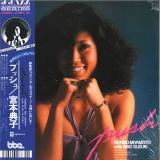
BBE Music is proud to present the latest J Jazz Masterclass Series reissue, 1978 soul/jazz tour de force album ’Push’ by Noriko Miyamoto. For the first time, this critically acclaimed series that delves deep into the history of Japanese Jazz will be releasing an album by a Japanese female singer, Noriko Miyamoto produced by one of the legendary figures in Japanese Jazz, Isao Suzuki. The release of her incredible debut album, ‘Push’, coincided with a surge in popularity for local female jazz singers such Kimiko Kasai, Yasuko Agawa, etc. that crossed over into the pop market. It was originally released by the now-defunct label, Yupiteru Records in 1978. Since then, it has been reissued a few times in Japan but recently, along with a surge of worldwide interest in old Japanese music, ‘Push’ has been gaining a cult status among foreign music heads, with the price for an original pressing skyrocketing in the second hand record market. This reissue of ‘Push’ will be the first time ever that this album will be officially released worldwide. Long before R&B music went onto enjoy mainstream success in Japan, a soul music and disco loving lady, Noriko Miyamoto who started her music career working as a dancer at the legendary Tokyo disco, ‘Mugen’, was inspired by Tina Turner’s performance there and decided to became a soul singer. It was at a time in the early 1970s when there were only a handful of female songstresses who sang soulfully in Japan. In 1977, Miyamoto was scouted by Isao Suzuki to join his band, Soul Family and subsequently, with their backing, he produced Push, an album that kickstarted her career. It is an album that exquisitely combines her jazzy and soulful vocals with Suzuki’s acoustic bass and precocious playing from his youthful and vibrant group at the time. Along with Sadao Watanabe, Terumasa Hino, Masabumi Kikuchi and George Otsuka, bassist, cellist, multi-instrumentalist, composer, arranger, producer and band leader, Isao Suzuki was considered to be one of the most influential figures in Japanese jazz history. Beloved by many in the Japanese jazz scene as “Oma-san”- Suzuki was renowned for developing young talent.
Repress 2025
The King of K-Pop Returns!
To those unfamiliar, G-Dragon is regarded by many as the Godfather of K-Pop. Rising to fame in the mid-00’s with his group, Big Bang, that later went on to become one of the world’s biggest selling boy groups. He quickly stood out with his unique and intricate songwriting as the leader of the group. A talented songwriter and trendsetter within the youth culture and fashion space, G-Dragon has received a bevy of awards, nominations for his music and fashion sense from the World Music Awards, to Hypebeast’s 100 list, to Forbes’ 30 Under 30 list, it’s apparent that G-Dragon has cemented his place in cultural relevance.
After serving his mandatory South Korean military service and a brief hiatus from music, the global superstar, G-Dragon has returned! He announced that he signed with indie-powerhouse, EMPIRE, and released his first comeback single on October 31, 2024 with POWER to immediate global fanfare and buzz, with the music video garnering over 44 MILLION views in a month and over 115 MILLION global streams. He soon followed that up with an electrifying performance at the 2024 MAMA Awards show in Osaka coupled with the release of his new single, Home Sweet Home which has garnered 100 MILLION global streams since release.
2025 will see the release of his first full length album since 2017 entitled Übermensch along with global tour dates. The album is expected to make a huge impact globally and further cement his place in music history!
- A1: That Musician Thats Dead
- A2: Preference Is A Good Friend, Mind
- A3: No One Can Sing That Well
- B1: Last Herald
- B2: Mo**Real
- B3: Things Keep Happening
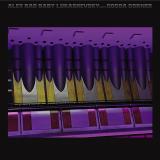
OOOOH! by Alex Bad Baby Lukashevsky with Cocoa Corner (2025)
Celebrated veteran of Toronto’s music scene, known for his boundary-pushing approach to folk and avant-garde music, twists rock music into strange and brilliant new shapes with the help of young jazz players, U.S. Girls, and his own immensely talented son.
OOOOH! is hard on the outside and soft on the inside. Made in the spirit of unity,
humanity, and poetry — disobediently renouncing the glory of personal triumph for the
generosity of an honest experiment. On the last track of the album you’ll hear “Or do you only ever never want to make a single enemy? / That’s not freedom or humility / It’s nothing, honestly.” Oooh, that's a bad baby!
A celebrated Toronto songwriter and performer, Alex Lukashevsky has always been disobedient. Which simply means, nothing is off the table when he’s looking for his
poetic voice; when trying to find the realest I of the teller. As he sings on the lead track “that musician that’s dead” The musician is radical/ it’s the world that’s demented/ listening with their eyes, the music looks dented/ they’re over-represented.
OOOOH! was recorded in January 2024 at Sound Department in Toronto, engineered by Patrick Lefler (ROY), mixed by Grammy-nominated producer Matt Smith. All the songs were tracked live off the floor in two days, with one extra day for recording vocals, to keep the recording fully alive and breathing. As leader of Deep Dark United, as a solo performer, and a sideman in Brodie Wests’ Eucalyptus and Luka Kuplowsky’s Ryokan Band, Alex has been an outsized influence on the Toronto music scene that spawned acts like Broken Social Scene and Owen Pallett. (Pallett, who has toured with Lukashevsky, went so far as to record an entire album’s worth of Alex’s songs, backed
by a full orchestra.)
Lukashevsky has approached each of his albums and projects as something completely new, using only the musical boundaries he creates with each song. Even when he
has recorded songs with nothing but his voice and his own acoustic guitar accompaniment, the results are never “stripped down” or “back to basics,”
Gong! How do you get to heaven / have fun! have fun!
It’s cool to approach music as a game of “spot the influence”; Burt Bacharach-meets-Black Flag; Lana Del Rey-meets-LCD Soundsystem etc. Glorified mash-ups are promising because of their conversational nature. But they can turn us into hyperboreans; blowing cold air beyond ourselves while doing what we can to remain warm. To devise a game or a narrative is to have a winner and a loser, but we all know that just as you win/ so you lose. And does anything really change? Alex Lukashevsky and Cocoa Corner are more at ease drawing blind contours or playing an old game like consequences. They let things add up without knowing particularly how. Cognition is recognition.
Lukashevsky, in addition to writing all the songs, plays guitar and sings on OOOOH!, doing both in ways that are soulful and spikey at the same time. Joining him on guitar and vocals is his oldest child, Charlie Lukashevsky, who, at 23, is already a talented performer and songwriter in his own right. Cocoa Corner also includes Aidan McConnell, an in-demand drummer and composer, Jack Johnston, a jazz bassist and Barry Harris acolyte, and percussionist Evan Cartwright (The Weather Station, U.S. Girls, Cola, Tasseomancy), who plays steel pan and marching drum.
Working with his son and with other younger musicians is central to the album’s
unpredictable aesthetic. It reinvigorated the sound in unexpected ways. Lukashevsky says, “I had to reconsider my own instincts. I had to deal with being 99 years old.”
In addition to these performers, the album includes a tasty contribution from Meg
Remy, the visionary musician and producer who is the leader of the critically acclaimed
project U.S. Girls. Remy duets with Lukashevsky on the imagistic and sprawling album
closer “things keep happening.”
About that album title: OOOOH! is taken straight from “that musician that’s dead” an
arch and unhinged comment on the exertion required to navigate a lifetime of music making.
Lukashevsky’s delivery of that one emotive word is a kind of cultural posture, but also a
hundred percent primitive expression. The impact is never less than visceral. His vocal
delivery ranges through rich baritone blues to keening falsettos to a kind of sprechstimme that periodically steps out from the music to grab the listener’s shirt. He
doesn’t sound too nice, but he is sincere. When life gives you lemons lament.
For OOOOH! his first official full-length album since 2012’s Too Late Blues, (a collection of knotty-yet-effervescent tunes built upon the enchantingly serpentine harmonies of Lukashevsky and his vocal collaborators, Felicity Williams (Bahamas, Bernice) and Daniela Gesundheit (Snowblink, HYDRA)), Alex has once again broken apart and rebuilt his own approach to music. Or rather (because that sounds too over-determined), he
has allowed his music to build itself into strange new shapes that only fleetingly and
coincidentally, but happily, resemble anything that might be called rock and roll. There is some editorializing within the song’s lyrics— Lukashevsky even cheekily contributes to the “spot the influence” game with the line “Muddy Waters, Rite of Spring!” a funny preemptive strike against anyone already reaching for some variation of avant-blues to describe what the song is up to here. In fact there are many names checked on this record (literally and in spirit); they are the lily pads that trace the path of this expression! Palestrina, Peter Pears and Benjamin Brittain, Andrés Segovia, Stravinsky, Lotte Lenya, Alice Coltrane, Skip James, Chuck Berry, D’Gary, Betty Carter, Mukhtiyar Ali, Chuck D, Yoko Ono, Hailu Mergia, David Bowie, Jane Siberry. rhythm is a skeleton mansion / haunted by melody / feckless prodigy / the world is under a spell / cast by some demon angel / Practice day and night / Try as hard as hell / no one can sing that well Musicians are often worried by the way in which they are prepared to fail rather
than how they would like to succeed; it’s such a deep concern that it tempers their creativity and shackles their process. Current cultural proclivities, tend to comfort a certain kind of artistic failure and abnegate another kind. How many testimonials, full of heartfelt care and investment, have you heard for Taylor Swift, and yet a craftsman like Chris Weisman is often dismissed easily as though he’s doing something anti-social. what’s throwing itself in my ears and my eyes / arrogant devil ad hominem christ.
The music you will hear on this recording veers off in multiple directions at once,
and features a rock and roll spirit with a divergent heart. This is no sclerotic clomp of the Average Rock Song, but in fact a flood of humanity in all its darkness and moodiness and unpredictability. If most performers make songs that are like sports cars or pickup trucks to drive around, Lukashevsky has built something more akin to a rowboat in a tree: it’s weird and beautiful.
- A1: Malavoi - Te Traigo Guajira
- A2: Los Caraibes - Donde
- A3: Tropicana - Amor En Chachacha
- A4: Ryco Jazz - Wachi Wara
- A5: Eugene Balthazar - Dap Pignan
- A6: Roger Jaffort - Oye Mi Consejo
- A7: Les Kings - Oriza
- B1: Les Supers Jaguars - Tatalibaba
- B2: Super Combo De Pointe A Pitre - Serrana
- B3: L'ensemble Abricot - Se Quedo Boogaloo
- B4: Henri Guedon - Bilonga
- B5: Les Aiglons - Pensando En Ti
- B6: Los Martiniquenos - Caterate
In Guadeloupe, many people think that jazz and ka music are like a ring and a finger. To some extent, the same could be said about so called Latin music and the music played in the French West Indies.
Both aesthetics were born in the Caribbean and bear so many connections that they can easily be considered cousins. In constant dialogue, there are lots of examples of their fruitful alliance and have been for a while. The English country dance that used to be practiced in European lounges came to be called kadrille in Martinique and contradanza in Cuba. They both featured additional percussion instruments inherited from the transatlantic deportation. Drawing from shared feelings about the same traumatized identity – later to be creolized – it would be hard not to assume that they were meant to inspire each other. The golden age of the orchestras that graced the Pigalle nights during the interwar period further proves the point. As soon as the 1930s, Havana-born Don Barreto naturally mixed danzón and biguine music in a combo based at Melody's Bar. In the following decade, Félix Valvert, a conductor who was born and raised in Basse-Terre in Guadelupe, also worked wonders in Montparnasse with La Coupole, which was an orchestra made up of eclectic musicians. Afro- Caribbean performers of various origins were often hired on rhythm and brass sections in jazz bands, which used to enliven the typical French balls of the capital. In the 1930s and onwards, Rico’s Creole Band was one of them.
Martinican violinist-clarinettist Ernest Léardée, who would become the king of biguine music as well as the main figure of French Uncle Ben's TV commercials (a dark stigma of post-colonial stereotypes), had musicians from the whole Caribbean sphere play at his Bal Blomet – and they all enchanted "ces Zazous-là" (according the words of Léardée's biguine-calypso piece). In les Antilles (French for French West Indies), music history started to speed up in the 1950s, when trade expanded and radio stations grew bigger. The Guadelupean and Martiniquais youth tuned in their old galena radio sets to South American and Caribbean music. As for the women traders, les pacotilleuses, they bought and sold goods across different islands (the "passing of items through various hands" was thought to be most pleasurable) and brought back countless sounds in their luggage. Such was the case of Madame Balthazar, who once returned from Puerto Rico with the first 45rpm and 33rpm to ever enter Martinique.
Out of this adventure was created the famous Martinican label La Maison des Merengues, a music business she opened and undertook with her husband and which proved to be a major landmark. At the end of the 1950s, in Puerto Rico, Marius Cultier competed in the Piano International Contest playing a version of Monk's Round 'Midnight. He won the first prize and this distinction foreshadowed everything that was to come. Cultier, the heretic Monk of jazz, was quickly praised for writing superb melodies, always tinged with a twist that conferred a unique sound to his music. It didn't take long for the gifted self-taught musician to get to play with Los Cubanos, making a name for himself thanks to his impressive maestria on merengues.
The rest is history. Besides, in the late 1950s, Frantz Charles-Denis, born into the upper middle class in Saint-Pierre and better known by his first name Francisco, went back home after working at La Cabane Cubaine – a club located rue Fontaine where he had caught the Latin fever. Francisco's music was therefore heavily marked by his Cuban cousins' influence, which gave the combos he led a specific style and also led to renewal. Things were swinging hard in La Savane, located in the main square in Fort-de-France. He set up the Shango club close by and tested out the biguine lélé there, a new music formula spiced up with Latin rhythms. Soon afterwards, fate had him fly to Puerto Rico and Venezuela.
As for percussionist Henri Guédon (percussions were only a part of his many talents), he was born in Fort-de-France in May 22nd 1944, the day marking the celebration of the abolition of slavery. As an old man, he could remember that in " his father's Teppaz, a lot of hectic 6/8 music was constantly playing...". In the opening lines of his Lettre à Dizzy, a small illustrated collection of writings published by Del Arco, he highlighted the huge impact that cubop had on him as a teenage boy, around 1960. He eventually turned out to be the lider maximo in La Contesta, a big band steeped in Latin jazz. He was also the one who originated the word zouk to describe music which brought the sound of the New York barrio to Paris. It was the culmination of a journey that started in Sainte-Marie: "a mythical place for bélé, the equivalent of Cuban guaguancó". In the early 1960s, the tertiary economy developed to the detriment of agriculture. Yet rural life was where roots music emerged in Martinique and in Guadeloupe.
Record companies played a major part in the process of Latin versions sweeping across the islands – before reaching everywhere else. Producer Célini, boss of the great Aux Ondes label, and Marcel Mavounzy, both the head of Émeraude records - a firm which was founded in 1953 - as well as the brother of famous saxophonist Robert Mavounzy, were big names to bear in mind. Although there were many of them - all of whom are featured on this record - Henri Debs was definitely the major figure in the recording adventure. He proved to be so influential that he even got compared to Berry Gordy. In the mid 1950s, when he acquired his first Teppaz, he worked on his first compositions: a bolero and a chachacha. Then, he became the one man who made people discover Caribbean music, from calypso to merengue. He was among the first ones to rush out to San Juan, Puerto Rico, to buy records and distribute them through a store run by one of his brothers in Fort-de-France. He had members of the Fania All Star come and perform there, which he was madly proud about. He was also the first one to pay attention to Haitian music, such as compas direct and various other rhythms which would soon flood the market. As a result, many of the combos hitting his legendary studio would end up boosted by widespread "Afro-Latin" rhythms. However, he never denied his identity: gwo ka drums were given a major role, although they were instruments which had long been banned from the "official" music spheres. The present selection bears witness to such a creative swarming. Here are fourteen tracks of untimely yet unprecedented cross-fertilization: all types of music rooted in the Creole archipelago have found their way, whatsoever, to the tracklisting. Whether originating from the city or being more rural, they all go back to what Edouard Glissant, in an interview about the place of West Indian music in the Afro-American scope, called "the trace of singing, the one which got erased by slavery." "It is so in jazz, but also in reggae, calypso, biguine, salsa... This trace also manifests through the drums, whether Guadelupean, Dominican, Jamaican or Cuban... None of them being quite the same. They all point to the idea of a trace, seeking it out and connecting to each other through it. This is the hallmark of the African diaspora: its ability to create something new, in relation to itself, out of a trace. It may be the memory of a rhythm, the crafting of a drum, a means of expression which doesn't resort to an old language but to the modalities of it." The opening track features one of the emblematic orchestras of this aesthetic identity, criscrossing many music types from the archipelago. The 1974 Ray Barretto guajira – Ray Barretto was a major New York drummer influenced by Charlie Parker and Chano Pozzo – is magnificently performed by Malavoi, a legendary Fayolais group (i.e from Fort-de-France). Additionally, the compilation ends on a piece by Los Martiniqueños de Francisco. It symbolically closes the circle as it is a genuine potomitan of Martinique culture which also functions as a tireless campaigner for Afro-Caribbean music. Practicing the danmyé rounds (a kind of capoeiria) to the rhythm of the bèlè drum, it delivers a terrific Caterete, a kind of champeta of Afro- Colombian obedience which was originally composed by Colombian Fabián Ramón Veloz Fernández for the group Wgenda Kenya. The icing on the cake is Brazilian Marku Ribas, who found refuge in Martinique in the early 1970s, bringing his singing to the last trance-inducing track. These two "versions" convey the whole tone of a selection composed of rarities and classics of the tropicalized genre, swarming with tonic accents and convoluted rhythms. It is the sort of cocktail that the West Indians never failed to spice up with their own ingredients. For instance, the Los Caraïbes cover of Dónde, a famous Cuban theme composed by producer Ernesto Duarte Brito, has a typical violin and features renowned Martinique singer Joby Valente and his piquant voice.
The track used to be – or so we think – their only existing 45rpm. The meaningful Amor en chachachá by L'Ensemble Tropicana, a band which included Haitian musicians among whom was composer and leader Michel Desgrotte, also recalls how Latin music was pervasive in the tropics in the mid-1960s. They were the ones keeping people dancing at Le Cocoteraie in Guadelupe and La Bananeraie in Martinique. Around the same time, another "foreign" band, Congolese Freddy Mars N'Kounkou's Ryco Jazz, achieved some success on both islands by covering Latin jazz classics – such as their adaptation of Wachi Wara, a "soul sauce" by Dizzy Gillespie and Chano Pozo whose interweaving of strings and percussions can have anyone hit the dancefloor. How can you resist Dap Pinian indeed, a powerful guaguancó by Eugene Balthazar, performed by the Tropicana Orchestra and published by the Martinique-founded La Maison des Merengues? It also acts as a symbol of the maelstrom at work. Going by the name Paco et L'orchestre Cachunga, Roger Jaffory used to play guaguancó too: his Fania-inspired Oye mi consejo is one example of his style. Baila!!!!! Dancing was also one of the Kings' focus points. Oriza is a Puerto Rican bomba and a "classic" originally composed by Nuevayorquino trumpeter Ernie Agosto, which reserves major space for brasses, giving it a special sheen.
Emerging from the New York barrios crucible was also La Perfecta, a Martinique group originating from Trinidad, whose name directly references the totemic Eddie Palmieri figure as well as his own band, also called La Perfecta. Here they borrow Toumbadora from Colombian producer and composer Efraín Lancheros and interpret it by emphasizing percussions, which set fire to the track even more than the wind instruments. The same goes for Martinique's Super Jaguars, who use Tatalibaba – a composition by Cuban guitarist Florencio "Picolo" Santana which was made famous by Celia Cruz & La Sonora Matencera – as a pretext for sending their cadences into a frenzy. In a more typically salsa vein, the Super Combo, a famous Guadelupean orchestra from Pointe-Noire that was formed around the Desplan family and had Roger Plonquitte and Elie Bianay on board, adapt Serana, a theme by Roberto Angleró Pepín, a Puerto Rican composer, singer and musician also known for his song Soy Boricua. Here again, their vision comes close to surpassing the original. In the 1970s, L'Ensemble Abricot provided a handful of tracks of different syles, hence reaching the pinnacle of the art of achieving variety and giving pleasure. They played boleros, biguines, compas direct, guaguancó and even a good old boogaloo - the type they wanted to keep close to their hearts for ever, "pour toujours", as they sang along together in one of their songs. Léon Bertide's Martinican ensemble excelled at the boogaloo which had been composed by Puerto Rican saxophonist Hector Santos for the legendary El Gran Combo.
Three years later, in 1972, Henri Guédon, with the help of Paul Rosine on the vibraphone, tackled the Bilongo made famous by Eddie Palmieri. Such a classic!!!!! And so were the Aiglons, the band from Guadelupe: choosing to execute Pensando en tí, a composition by Dominican Aniceto Batista, on a cooler tempo than the original, they noticeably used a wonderfully (un)tuned keyboard in place of the accordion. On the high-value collectible single – the first one released by Les Aiglons under the Duli Disc label – there is a sticker classifying the track under the generic name "Afro". Now that is what we call a symbol. Jacques Denis
Riding high on a prolific wave of output, Kloke returns to Mindgames with Lucidity — an album that confirms his position at the forefront of modern jungle.
Andy Donnelly has been actively releasing a broad swathe of electronic music since the late 00s, but it's his sharpened focus on jungle and drum & bass over the past 10 years that has cemented his reputation. As well as working closely with fellow scene leaders like Tim Reaper, the Australian artist has hit a flow state with his productions where the quality and quantity seems limitless. Since Mindgames started as a Samurai Music sub-label, Kloke has been a core part of the imprint's identity. Having already dropped the Mindgame 8 EP earlier this year, Donnelly is back with a full-length salvo of advanced jungle heavy on the technicalities and even heavier on the vibes.
Lucidity makes its mark from the very first blast of breakbeat science that opens up the title track. From that point on Donnelly works at full tilt, edging gritty textures into his sampling and capturing classic jungle's melancholic mystery through an expansive palette of re-pitched hooks. This is carefully crafted soundsystem music in thrall to the tradition of jungle, but at no point does it sound tired or throwback. One key element is the dynamic intensity of Donnelly's arrangements, shifting gears with devastating poise whether darting through the starry-eyed arps and deft breaks of 'Mobius Strip' or chopping around the jagged angles and noirish licks of 'Goose Cuts'.
Donnelly folds many moods into his jungle tapestries. 'Paradiso' conjures a smoky, haunting atmosphere while 'Nightfall' leads on techy darkside stabs before unfurling shadowy jazz licks that flicker like ghosts through the dense forest of drums. At all times, the commitment to mind-bending configurations of compound breaks drives the album forwards. No two beats roll the same as Donnelly indulges his precise and profound instinct for next-level edits and heavyweight production.
Gritty, raw and true to the roots of the culture, Kloke stands tall on Lucidity. It's the kind of detailed, deep and deadly album that shows jungle at its absolute best — a sound that still feels like the future in the right hands.
When unknown virtuoso guitarist Tosin Abasi released his debut solo album under the moniker ANIMALS AS LEADERS in 2009, few would have predicted the band's meteoric rise over the next two years. Although Abasi earned acclaim as the lead guitarist in the Washington, D.C.-based metalcore act Reflux, it was still a long-shot that an instrumental album of progressive metal with jazz, electronic and ambient flourishes would develop anything more than a cult following. With "Weightless," the group's sophomore effort, ANIMALS AS LEADERS is revered worldwide as a trailblazing pioneer of modern heavy music. The group's genre-defying compositions have earned extensive praise; Steve Vai called the band "the future of creative, heavy virtuoso guitar playing," and MetalSucks recently ranked Abasi #2 on their list of modern metal's top guitarists. Whereas the group's self-titled debut was a collaboration between Abasi and Periphery's Misha Mansoor, "Weightless" features the recording debut of ANIMALS AS LEADERS, the true band; Abasi (guitars), Javier Reyes (guitars) and Navene Koperweis (drums). After nearly two years of touring together, the trio wrote and recorded "Weightless" together in mid-2011, with Koperweis producing and Reyes mixing. The group debuted a new track, "Isolated Incidents," during their inaugural headlining tour that summer, which included sellout shows from coast-to-coast.
- A1: Pray For Me Part 1 (Dub Version) Ft Neone The Wonderer
- A2: Battle Isn’t Over (D’n’b Version) Ft Horseman
- A3: Woman (Dancehall Version) Ft Skillful Kxng
- A4: So Mi Stay (Amapiano Version)
- A5: Carry Me (Uk Garage Version) Ft Seun Kuti
- B1: Reach My Soul (Bassline Version)
- B2: Breeze (Dub Version)
- B3: Find Your Flame (Jungle Version)
- B4: Slow Breath (Afro-Fusion Version) Ft Mamani Keïta
Nubiyan Twist present NT Soundsystem - Dubplate Inferno, a new 9 track album reimagining tracks from their critically acclaimed album ‘Find Your Flame’, transforming them into bass-heavy, dub-infused dancefloor killers. Produced by band leader Tom Excell alongside singer Aziza Jaye, the remixes channel the raw energy of the band’s live performances, blending their signature fusion of jazz, afrobeat, soul, and reggae with the gritty, immersive sound of traditional UK soundsystem culture.
The album features some extra guests on vocals, legendary MC Horseman appears on a drum & bass version of ‘Battle Isn’t Over’ whilst newcomer SkillFul Kxng from Kingston, Jamaica, breathes some Dancehall fire on ‘Woman’, adding to contributions from the original record including Seun Kuti, Mamani Keita & NEONE the Wonderer.
This project is a celebration of collective musical innovation, paying homage to the UK’s rich soundsystem heritage while pushing boundaries with their genre-defying style.
Nubiyan Twist have built up a name as one of the forerunners of the UK Jazz scene, fusing together global grooves, soul and jazz; intertwined with electronic elements, horn-led melodies and spontaneous improvisation.
The influence of soundsystem culture has been ever present in their music, from dub sessions the band used to attend in Leeds to jungle raves of East Anglia in the 2000’s. Band Leader Tom Excell has a history of DJing and producing dance music, including with reggae side-project Chief Rockas, working with reggae giants such as Super Cat, Luciano & Turbulence.
Nubiyan Twist’s lead singer Aziza Jaye was born of Jamaican heritage and has grown up around soundsystem culture, boasting an incredibly versatile vocal style and large catalog of work alongside a plethora of producers, including recent work with Mungo’s Hi-Fi.
Over the past near-decade, Lancashire's medieval metal phenomenon WYTCH HAZEL have been honing an uncommonly wholesome, rustic and devotional brand of timewarped hard rock that's all their own, with 2016's Prelude and 2018's II: Sojourn summoning to mind fevered images of Robin Hood and his Merry Men grooving to Jethro Tull and Thin Lizzy. Yet within moments of pressing play on their third LP, III: Pentecost, the musty mystical minstrelsy takes a back seat in favour of a rich, sumptuous, anthemic late-night drivetime vibe, passionately embracing the most high-end smash-hit classic rock and metal circa its late 1970s heyday. "I thought I put a lot into the second album, but this album has been an absolute obsession," stresses the band leader, Colin Hendra. "Every aspect had to be as good as possible. We've gone back and forth, Ed was tinkering with it for months on end. There's quadruple tracking going on with the rhythm parts, then we've doubled, tripled and quadrupled all our lead parts to get that richness and fullness of sound, all meticulously planned with pages and pages of organisational notes. It wasn't just `get in the studio and see how it goes!'" he laughs. "One day I did 14 hours of vocal recording. All vocals are double-tracked, I can't express how much hard work that is. The last album feels like a breeze compared to what we've done with this - and I don't plan on ramping it down!" Musically there are gorgeous self-professed touches of Black Sabbath, Blue Öyster Cult, AC/DC and early Scorpions_"With the soloing I was trying to go for Michael Schenker" beams Colin_while the scampering headbanger I Will Not initially took a nod from Angel Witch, who Hendra was helping out on second guitar back in 2015 when the track was composed, before studio treatment made it sound "a lot more Wytch Hazelly". But perhaps the most lateral comparison is to a band from the opposite spiritual realm, with Archangel an explicit homage to Swedish faux-Satanic devil cult Ghost. "I find them fascinating, Ghost; musically great, the songwriting is spot-on," enthuses the frontman. "We share an intrinsic connection, with Bad Omen honcho Will Palmer being the person who discovered us both. "Music is created for all, it's a common grace for everyone," he affirms, "which is why the music that shows the glory of God the most, in my opinion, is not music created by Christians. It's Black Sabbath!"
The Ibex Band, with Giovanni Rico and Selam Woldemariam at the creative helm, provided the musical backbone for legends like Aster Aweke, Girma Beyene, Tilahun Gessesse, Mulatu Astatke, and Mahmoud Ahmed, including the iconic album Ere Mela Mela, shaping modern Ethiopian music as we know it today. This 1976 album (Ge’ez Year 1968) played a pivotal role in that legacy and has now resurfaced to set the record straight.
There’s a tendency to talk about the seventies as a golden age of Ethiopian music. There are good reasons for that, and just as good reasons against it. However, the notion of a golden past privileges the role of Western explorers and suggests that the pinnacle of Ethiopia’s musical culture is something only a foreigner can appreciate and unearth. It downplays the complexities of Ethiopia’s culture and history, creating an artificial divide between then and now. And it underestimates the constantly evolving sound that has followed.
The legendary musical outfit The Ibex Band, later metamorphosed into The Roha Band, has played a central role in defining the sound of many of the greatest stars on the music scene of Ethiopia from the mid-seventies onwards–but their golden output has never really waned. The story of the origins of the band that provided the musical backbone for greats such as Aster Aweke, Girma Beyene, Tilahun Gessesse, backing the solo career of group member Mahmoud Ahmed as well as backing Mulatu Astatke and many others has yet to be properly told.
Two misconceptions plague the image of Ethiopian music, one is that the music is pure because it is, by some notion, unexploited, the other is that it is all traditional. To begin with, a combination of political changes between the late sixties and the mid-nineties created an environment where only the most dedicated and skilled musicians struggled on and pursued a musical career against fierce odds. The whole Ibex Band, with Giovanni Rico and Selam “Selamino” Seyoum Woldermarian at the creative helm, are arguably the origo of the vibrant scene in the mid-seventies, and the said pair are foremost responsible for not only navigating the band through troubled times, but also modernizing the 6/8 chickchicka rhythm to a contemporary form. Giovanni laid the rhythmic foundation with heavy looped basslines that reinvented traditional melodies as dance music, and with Selamino’s innovative guitar work they influenced scores of musicians from Abegaz Kibrework Shiota to Henock Temesgen. Even Giovanni’s Fender bass and Selamino’s Gibson guitar inspired younger musicians in their choice of instruments. Not only in choice of instruments but also in sound–even as the digital revolution hit Ethiopian music, a lot of popular music still took its cue from the masters from Ibex and Roha.
Ibex emerged out of the ashes of the sixties group the Soul Echos band, adding Giovanni and Selamino to their ranks and taking their cues from a slew of influences, such as Motown and The Beatles, fused with traditional music. A tighter-knit unit than most bands at the time – Ibex has remained six to seven members throughout their whole career, compared to many bands that were as large as fifteen or sixteen men strong when Ibex set out. Their playing has been viciously focused, economical yet heavy. Just a year before the recording sessions of the album in your hands, Giovanni and Selamino made a contribution to the popular musical lexicon of Ethiopia that was simply defining the popular sound: their arrangement and recording of bandmate Mahmoud Ahmed’s solo effort and real commercial breakthrough tune and eponymous album, Ere Mela Mela, from 1975.
Selamino has never limited himself to being an adroit lead guitarist, but has always been a scholar of history, and as such he has probably contributed as much to modern Ethiopian music with his guitar playing and compositions as with a deepened understanding of modern or contemporary – Zemenawi – Ethiopian music. Selamino’s contributions serve as a metaphor for those of the whole band, at one and the same time creating and defining a new, danceable and updated sound anchored in Giovanni’s bass, whilst also elevating the broader scene through their support for others on the scene and on top of that, increasing the understanding of the music.
There is an understandable desire to romanticize the musical heyday Ibex and Roha were at the forefront of, because so much of the output is sorrowfully hard to come by. Ibex creativity was nothing short of ridiculously fierce compared to many of their Western contemporaries. Based on their sheer recorded output alone they could have usurped the title “hardest working in show business” from James Brown, recording more than 250 albums or 2500 songs in the seventies and eighties. Some only surface as cassettes today, others were never given full LP release, and some are simply impossible to find today. In the light of that, it’s nothing short of a miracle that the recording Stereo Instrumental Music from 1976 (Ge’ez Year 1968) has resurfaced. Unearthed in perfect condition on a chrome cassette, this is musical history comes alive–to set the future straight. Stereo Instrumental Music was recorded in collaboration with Karl-Gustav Lundgren, a Swedish national working for the Radio Voice of the Gospel. It took two sessions at the Ras Hotel ballroom in Addis Ababa. The Ibex Band was the first band in Ethiopia to employ a four-track recorder for their recording (the first available in the country, lent by Karl-Gustav). Later the same week, Giovanni and Selamino realized that, lengthwise, the recorded material fell short of what they wished for, so they recorded four more tracks in one more session on a single-track recorder. The Ras Hotel and Ghion Hotel, where the Ibex Band held musical residencies were to Ethiopia in general and Addis Ababa in particular what Motown was to the USA and Detroit a few years earlier – a hotbed of musical creativity and showmanship.
The most astonishing thing about Ethiopian music of the last half century is how tradition and modernity are intertwined. Because of this feature, it’s kind of hard to tell when there ever was or when we are in a “golden age”. So much of music from the past has been criminally neglected, but because of the hardships in the past, it would be an oversimplification to say that said past was a golden age. Probably, the golden age is what we are approaching, because for the first time both the past and future are accessible, and the monumental contributions from before can lay a firm foundation for a thriving music scene today. The Ibex Band stands firmly in the past, present and the future. That, if anything, is golden.
The detailed history of Stereo Instrumental Music is in many ways unique. To begin with, it couldn’t have been recorded earlier (there were no four-track recorders available) and it really couldn’t have been recorded afterwards either, at least not in the years directly following, because of the toll the musical scene took from the unfavorable political climate that followed when the nascent Derg regime and rival groups tried to assert themselves, the musical equipment lent from The Voice of Gospel Radio simply disappeared from Ethiopia when the radio station folded in 1977. Karl-Gustav Lundgren,
the Swedish foreign national who assisted during the recording, worked with the Ethiopian Evangelical Church Mekane Yesus at the time, recalls how they only had about fifteen minutes to get the microphones in place for the recording as to not alert neither the management at Ras Hotel nor the authorities and most importantly, to complete the recording before the curfew came into effect at midnight. In leaping to the opportunity to use previously unavailable equipment to push their sound forward and improvising to meet the logistical challenges, the Ibex Band displayed the very avant-gardism and adaptability that explains their longevity as a band through the years. The recording of Stereo Instrumental Music is from a given time in history, but it sounds as beyond time.
Much of the energy that burst out of the scene that Stereo Instrumental Music came out of dissipated or got sidetracked during the societal changes Ethiopia went through in the 1970s and 80s. Whilst leaders might have professed to be revolutionary, the work ethic of the Ibex Band can truly be described as that. They never called it quits, but adapted, toured extensively abroad in Africa, Europe, and the Middle East, and found ways to work even in the face of the curfew that curtailed a lot of musical life. They even played major arenas in the nineteen eighties, despite said curfew and restrictions. The whole extent of their legacy has never been told, but their music speaks louder than words, so therefore… tune in to the Ibex Band’s Stereo Instrumental Music.
- Futurama
- Drug Music
- The C.i.a. Is Trying To Kill Me
- If You Got Love
- There Is No Future Ft. Necro
- Uncle Howie
- Rock Stars
- Say Goodbye To Yesterday
- Black Helicopters
- Strange Universe Ft. Mf Doom
- Cult Leader
- It’s Us
- Suicide Bomb Ft. The Beatnuts, Al Tariq, Marley Metal & Sunshine
- Where You Wanna Go
- We Are The Future
- The C.i.a. Is Still Trying To Kill Me Ft. The Deftones & Fear Factory
Repress as neon green vinyl!
Non Phixion drops a re-realse n of the group’s classic debut “The Future Is Now.” Available exclusively through Fat Beats. “Utilizing beats that would do Dr. Octagon-era Dan “The Automator” proud and rhyming schemes that bring to mind early Wu-Tang Clan or mid-’90s Gang Starr, Non Phixion exposes the sound of true underground hip-hop. This is music that reflects the sound and attitude of countless rappers selling their albums out of the back of their cars or in booths on the street, cutting together dirty and disjointed sounds with a confidence and quality that is unique to this particular genre. This would all be for nothing if it wasn’t for the excellent raps from Ill Bill, Goretex, and Sabac Red, a trio of rappers who have a Tribe Called Quest-like chemistry. Their clever lyrics, respectable skills, and rough voices make this an intense and dark landmark in alternative rap.”
- 1: Ketchaoua
- 2: Pan African Festival
- 3: Brotherhood
- 4: Speak With Your Echo (And Call This Dialogue)
After appearing with Archie Shepp at the landmark Pan-African Cultural festival in Algiers in 1969, African-American trumpeter-cornetist Clifford Thornton recorded a set of his own compositions in Paris later that year. The result was Ketchaoua, an important political and spiritual as well as musical statement that reflected the inspiration that he took from Islam. Indeed, the title of the album refers to the awe-inspiring mosque in Algiers.
Clifford Thornton’s superb band comprised his compatriots, saxophonists Archie Shepp and Arthur Jones, drummer Sunny Murray, trombonist Grachan Moncur III, pianist Dave Burrell, and bassist Earl Freeman, as well as French bassist Beb Guérin. Together they brought energy and ingenuity to the leader’s compositions, which were characterized by vivid atmospheres, exploratory, mysterious sounds and haunting themes. And the song titles conveyed an important social and cultural message. Pieces such as ‘Brotherhood’ pointed to the sense of unity and kinship that African-American artists felt with the citizens they encountered on their journey to North Africa and Europe.
This newly remastered deluxe edition of Ketchaoua provides an opportunity to hear one of the major entries in Clifford Thornton’s relatively small yet nonetheless highly impressive discography. It is an album that marks him out as a figure in the avant- garde movement of the late 60s and early 70s who deserves far wider recognition.
Label and collaborative musical collective, +33JOY announce their debut release, this first one from Bopperson & Bikbaye.
Born out of a meeting at New York’s annual Winter Jazz Festival, back in 2020, this 4 track EP entitled ‘The Wellness Project’ is a very personal project.
Neil Bopperson is a DJ, musician and producer originally from Yorkshire. Having travelled the world working as a DJ and chef, he landed in London for a while where he remixed afrobeat legend Dele Sosimi for Wah Wah 45s. Now residing in Paris, France, a sharer and carer of music in every aspect, he chooses not to follow trends but instead follow his heart, with variety being an essential part of his musical DNA.
Based in Los Angeles, Bikbaye Inejnema works as a cultural activist, writer, teacher, counselor and spoken word artist. He has a bachelor’s degree in Sociology boasting over ten years experience in social work. He works as a A.T.O.D. (alcohol, tobacco & other drugs) prevention specialist for Homeless Healthcare in L.A. He is also the Executive Director of The Conscious Youth Global Network (CYGN)
Bikbaye strives to utilize art to equip the youth with the skills to become positive, productive citizens. Focusing on diverse topics ranging from leadership development to financial literacy to health and nutrition, Bikbaye gives youth the tools they need to create empowered and enlightened content.
As Bikbaye says, “The goal is to flood the airwaves, the media, everywhere with enlightened art.”
This first release on +33JOY comes in the form of a collaborative project, with music coming predominantly from Neil, with a little help from some additional players - Sam Crowe; keys (Lianne La Havas, Little Simz & Native Dancer) and the saxophone of Nick Briggs; (Joel Culpepper, Poté & The Last Skeptik). All words and vocals are from Bikbaye.
After a chance meeting in NYC, where Bikbaye was hosting talks at The Winter Jazz Festival, speaking mainly about mental health and wellness in the music industry. His words really resonated with Neil, they connected and this EP is the outcome.
Sitting somewhere in the alternative hip hop world, music is used as a vessel for Bikbaye’s words to ring out. Upon being presented with Bikbaye’s recordings, Neil composed music and collected sound design accordingly.
Starting out the set is the stripped back ‘Wellness Is A Practice’, as the opener to proceedings the vocals take forefront and the message is clear. Found sound, an old crunchy keyboard and some guitar pulses keep the poem afloat.
‘Who Are You?’ raises important questions, directed at other artists and music industry professionals. Flute, choirs and spacy drums come together for an eerie and dubbed out moment.
Third track ‘Consumption’ conveys perhaps the most important memo on the release. Sam Crowe’s grand piano floats beautifully over the reading, really highlighting Bikbaye’s statements.
Finally, and with a more hopeful feel, ‘Changes’ was the last addition to the recording sessions. A sketch Neil had been sitting on for a while, DJ Bobafatt added some cuts and Nick Brigg’s sax solo opens this track out to a goosebumps inducing ending. The most upbeat of the four tracks serves as a perfect prelude to the club-ready remixes that will follow this release.
Black vinyl 180g made only in 100 numbered copies.
This record is different. It is different from what might be expected of Jan Emil Mlynarski by those who know him, from sold-out shows and platinum albums of his bands – Jazz Band Młynarski – Masecki and Warsaw Dance Combo, as an old-timer, curator and reenactor of pre-World War II Warsaw's plush dancehalls and backyards folklore. Quite likely they may not recognize him until the last song, when he removes his shaman mask and bows down: Yeah, that's really me, folks, your good ol' Jan Emil, the entertainer. They might not have even known that he ever played drums because in his flagship bands, clad in a white tux in the former or in a Peaky Blinder hat in the latter, he sings and plays mandolin banjo. In fact, Młynarski has been a drummer for a lot longer than a singer. He stands clear of the jazz mainstream but is active on the progressive scene. A record he contributed to, trumpeter Tomasz Dąbrowski's 2022 release The Individual Beings, was recognized by Downbeat magazine as "excellent" and awarded the highest rating of five stars.
However, this is the first instrumental record to bear his name. As an album by a drummer, it stands out from other records, especially as it features drums as the principal content rather than the performance by a band with a drummer as the leader. It's all about drums, there is neither an articulate melody – because the melodies that are there are only micro-linesencased in ostinato modules – nor is harmony as an intentional chord progression – because whatever harmony-wise there is, is rather a product of the counterpoint of overlapping voices. All sounds other than the drums make only a riverbed through which runs a raging stream of rhythms. And indeed, this record took off just with this stream. At first all the drums were recorded live onto an analog tape, all at once, without overdubs or editing. After that, synthesizer riffs were added, and the record was ultimately assembled on tape without the use of computers or complex postproduction, which sets it apart from most releases today.
Młynarski the drummer acknowledges that he follows the trail beaten by Art Blakey, Max Roach, Roy Haynes, and Billy Higgins, but he walks it in his own strides. He treats the jazz drumming with specific reversed engineering by decompiling the jazz drum kit originally compiled by the pioneer jazz drummers from an array of instruments that had made their way from a jungle to New Orleans, first to Congo Square and then to street brass bands.
This takes him back to the jungle, his drums don't sound like jazz drums, the snare is rare, and the hi-hat and ride aren't there at all. Instead, there are drums and bells from Nigeria, Ghana, Burkina Faso, and Côte d'Ivoire. He doesn't sound like a jazz drummer either, but like a gang of drummers, each playing their own rhythm, and it's hard to believe that all this is the work of one man.
Not only his drumware comes from the jungle, but also the software – his approach to rhythm and time. Its essence is polyrhythm and ostinato. The polyrhythmic matters were unveiled to Młynarski and Piotr Zabrodzki, his creative partner in many projects and co-composer/producer of this album, by the legendary eccentric veteran-drummer Władysław Jagiełło, who introduced them, aged thirteen, to his concept and practice of "17 Latino rhythms at once". Ostinato, an obstinate repetition of a phrase or rhythm, "arrests" time, turning its linear course into cyclical in-place rotations. This is specific not only to African music but also to cultural music of other regions and differs from Western artistic music in that it does not "run" to fulfil an aesthetic intention but "stays" to provide the framework for recurrent routines of communal proceedings.
So, this record is different. And, if you are different too, this is the record for you.
Esteemed US musician Mike Viola is bringing his new album Rock Of Boston to our shores with a handful of shows in November, forming a special pick-up band with members of The Zutons and The La’s for the tour. Mike Viola is a producer, musician, songwriter and singer best known for his work with Panic! at the Disco, Andrew Bird, Dawes, Ryan Adams and Jenny Lewis. However his solo career stands on its own, starting with a number of acclaimed records as the leader of New York based cult favourite Candy Butchers and 8 critically adored solo records. His original music has been featured on soundtracks for movies such as That Thing You Do!, Walk Hard: The Dewey Cox Story and Get Him to the Greek. Rock Of Boston was recorded over the winter of 2023 on 8 track ½” tape at Barebones, Viola’s home studio in Los Angeles. Once again joined by his friends Jake Sinclair (Weezer, Sia, Panic! at the Disco) on bass and Brendon Urie (Panic! At The Disco) on drums. For UK shows Mike has roped in Sean Payne (The Zutons) and Jay Lewis (The La's, Cast) to join Jake Sinclair and himself on the road. Viola says, “I’m always writing songs, or pieces of songs, or riffs. My writing process changes every song, so I never get trapped in a method. I let the song lead me. While I was on a world tour playing guitar for Panic at The Disco, I wrote the bulk of this record on the bus between soundcheck and showtime. On the days off, I’d find a recording studio wherever we were and I’d book studio time to sneak away to lay down a few ideas. When the tour finished, Jake and Brendon came home to LA and we never stopped playing music together. We just switched from touring with Panic! to recording Rock Of Boston pretty seamlessly without a break. Maybe that’s why the riffs seem bigger on this record, we had spent all those months in hockey arenas around the world playing big music.”
"Sympathy Pain is an unusual animal, as their collective backgrounds come from hardcore, drone, and experimental pop in Salt Lake City, Utah. Sympathy Pain began as Skyler Hitchcox’s gloomy drone project which was later joined by Casey Hansen (of Cult Leader) to explore and expand the sullen space that the project initially carved out. Sympathy Pain is rounded out by Chaz Prymek (Lake Mary) and Nora Price. The deep connections to Salt Lake City’s underground well of experimental music have deep entanglements. Sympathy Pain has emerged from those entanglements with a clear eyed thesis, transmuting the often oppressive cultural climate of Utah through a personal veil of heavy sorrow.
Swan Dive is the product of years of excavating that space into a cavern, yielding their self-described “emo)))” (a nod to the preeminent doom/drone band Sunn) while still holding onto the submerged soundscapes that began as the core of the project. The album is expansive — a winding ride that travels from minimalism, to claustrophobic ambient, to triumphant passages that all underscore its forlorn undercurrent.
Originally released in January of 2024 as a CD by The Ghost is Clear and cassette by Diabolical Records, Swan Dive finally finds a new life on vinyl - reissued by the Cincinnati, OH record label Whited Sepulchre Records.
Tracked with Wes Johnson at Archive Recordings in SLC, UT and mixed/mastered by longtime friend and co-conspirator Ben Young, the album features a haunting guest spot by Madeline Johnston of Midwife on “Heaven + Hell” to close out the album."
Noisy (Rockin') Hardcore / Punk outfit VAUTOURS is now closing its EP Trilogy with their most mature, hybrid and tortured work to date : "LIVE FOREVER".
Adding distorted "pop" ingredients in their crude and strange Noise recipe, VAUTOURS gathers late 90's / early 2000's Noise Rock, Crust / Hardcore, Post-Rock and "metallic" Punk influences, blending Unwound and McLusky, Cult Leader and Young Widows into something hyper-versatile, silly-serious... And radically unique.
Plunge into this crude yet sparkling, bittersweet love letter now.
Cause you won't Live Forever (but you'll get what you want).
HAIL THE QUEEN, LIVE FOREVER !
Chicagos einzigartig erschütternde und technisch grausame Chaos-Einheit Immortal Bird ist zurück mit ihrem mit Spannung erwarteten dritten Album. Auf dem 2019er Album "Thrive on Neglect" manövrierte sich die Band durch ein Amalgam von Klängen, das sich zu einer verzerrten und kantigen Darbietung von vielschichtigen Ängsten entwickelte und nun als Sprungbrett für die weitere Entwicklung auf dem neuen Album "Sin Querencia" dient.
Immortal Bird vereinen Elemente aus Death und Black Metal, Hardcore-Tumult, eine Dosis Noise Rock aus ihrer Stadt und eine kompositorische Komplexität, die an Grenzgänger wie Gorguts und Ulcerate erinnert.
- Nachfolgealbum zu 'Thrive On Neglect' von 2019
- US-Tournee für Ende 2024 und bis 2025 geplant
- Ausgewählt, um für Emperor in Chicago 2023 zu eröffnen
- FFO: Pig Destroyer, Cattle Decapitation, Krallice, Oathbreaker, Converge, Full Of Hell, Cretin, Tombs, Cult Leader
Chicagos einzigartig erschütternde und technisch grausame Chaos-Einheit Immortal Bird ist zurück mit ihrem mit Spannung erwarteten dritten Album. Auf dem 2019er Album "Thrive on Neglect" manövrierte sich die Band durch ein Amalgam von Klängen, das sich zu einer verzerrten und kantigen Darbietung von vielschichtigen Ängsten entwickelte und nun als Sprungbrett für die weitere Entwicklung auf dem neuen Album "Sin Querencia" dient.
Immortal Bird vereinen Elemente aus Death und Black Metal, Hardcore-Tumult, eine Dosis Noise Rock aus ihrer Stadt und eine kompositorische Komplexität, die an Grenzgänger wie Gorguts und Ulcerate erinnert.
- Nachfolgealbum zu 'Thrive On Neglect' von 2019
- US-Tournee für Ende 2024 und bis 2025 geplant
- Ausgewählt, um für Emperor in Chicago 2023 zu eröffnen
- FFO: Pig Destroyer, Cattle Decapitation, Krallice, Oathbreaker, Converge, Full Of Hell, Cretin, Tombs, Cult Leader