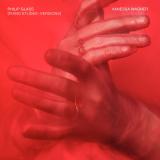
Few have dared to record all twenty of Philip Glass’s piano Etudes in their entirety. Even fewer have attempted to remix them. Vanessa Wagner’s 2025 album, Philip Glass: The Complete Piano Etudes, crowns a longstanding passion for Glass’s compositions. While it focuses less on the dialogue between composer and producer that she cultivated with Murcof on Study Of The Invisible, Inland, and Statea, Glass’s music resonates deeply within the world of contemporary electronic music. This EP, part of InFiné’s “Versions” series, passes the baton to a new generation of composer/producers who radically reinterpret these unique piano pieces: Aho Ssan, Carmen Villain, Cucina Povera & Tauceti.
Vanessa Wagner’s album of Philip Glass’s Piano Etudes received unanimous critical and public acclaim, both in France and internationally. This success earned the pianist a nomination for the 2026 Victoires de la Musique Classique. Following numerous sold-out concerts across France, Vanessa Wagner is currently continuing her tour around the world. She will also serve as curator of the Folle Journée de Nantes in 2027 and 2028.
Rubbermaidxxx is a recent music performance project by the Irish artist Anna McCarthy, rather than simply the title of one autonomous artwork. Rubbermaidxxx is a character or unstable identity, an emancipatory underdog with a heart for daredevilry. The project sits naturally within McCarthy’s larger practice, which moves between drawing, assemblage, happenings and collective actions.
Clad in a black balaclava and fetish climbing wear, she abseils from buildings before entering the stage. For the first performance in New York City, she was invited by Kyp Malone of TV on the Radio to perform at his club Francis Kite Club in Alphabet City, NYC and since has continued to make a name for herself hanging off façades, singing, dancing and mopping the floor together with her performance collaborators Miss Philip a.k.a. Philip Errico and Michael Tapper at Pianos NYC, Kottbusser Tor and Genezarethkirche Berlin or the Villa Stuck Museum in Munich.
The album was produced in Munich and New York in 2025 in collaboration with her brother Nick McCarthy (Franz Ferdinand) and Anton Kaun (Rumpeln). What started as a quick improv turned into a high-energy 4-hour session of the siblings playing manic ball with beats, bass, guitars and vocals resulting in what laid the basis to this album. In the weeks following, Anna McCarthy, who is known for her cut-up production style, reminiscent of albums such as White Noise or Flying Lotus, continued to develop the vocals, performance and music by mixing in an amalgam of field recordings with her narrative spoken word, including sounds of protests, dollar stores or ice-cream trucks, as well as collaborating with the noise artist Rumpeln for the last two tracks of the album.
McCarthy is also known as the lyricist and singer of What Are People For? (debut 2022 on Alien Transistor) with its dystopic dance music candy-cane shows and equally humorously critical tongue-in-cheek bangers such as Bring back the Dirt, Drones or Partytime. Anna McCarthy's spoken word, social urgency and enthusiasm to experiment across mediums is comparable to other contemporaries such as Moor Mother, Miho Hatori, Gonjasufi, Tricky, or Cibo Matto.
The name itself is telling. Rubbermaidxxx evokes elasticity, artificiality, domestic labour and the commercial world of cleaning and garbage. It suggests a body capable of stretching, absorbing filth and cleaning up after society – only to revolt against the role it has been assigned.
Rubbermaidxxx is a master of deception, juggling fact and fiction as a reflection of our times – a diamond thief, a protester, or even responsible for the Louvre heist? This album invites the listener and viewer in, playfully dismantling hierarchies and power structures as she goes through a hopeful amalgam of dance, protest & love songs.
Marbles is the legendary 1970 proto punk / dance classic from John McLaughlin’s US debut album 'De?otion', recorded at the time in which he played on Miles Davis' Bitches Brew and taped the Record Plant session with Jimi Hendrix.
Marbles didn't just deliver jazz rock's most danceable 4/4 beat, played by Band of Gypsies / Electric Flag drummer Buddy Miles. It is also centered with a once-in-ageneration bass line performed by Billy Rich. Larry Young's otherworldly Hammond textures predate a lot of what synthesizers were about to do much later, and the blowtorch energy emanating from John McLaughlin's cranked amp went beyond what most would had dared during the defining era of heavy rock guitar. An apex achievement at the intersection of jazz rock, guitar rock and dance music without parallel, before or since.
Background: John McLaughlin arrived in New York in 1969 to join Tony Williams' new group Lifetime which also featured Larry Young and eventually Jack Bruce (of Cream). On the second day in town he found himself in the studio with Miles Davis, recording 'In a Silent Way.' His playing would also take center stage in Bitches Brew, Jack Johnson, On The Corner and several other Davis key works of his much beloved first electric era. In between a busy schedule with Lifetime and Davis, McLaughlin also recorded two solo albums in 1970, 'De?otion' with an all-electric group and ‚'My Goa|’s B?y?nd' as its acoustic counterpart. By the time he formed his group Mahavishnu Orchestra in 1972, John McLaughlin was firmly established as the most important practitioner of his instrument of his generation within and well beyond the emerging jazz rock / fusion genre, and he has continued to evolve and surprise until today.
Here, a thorough remaster is supplemented by a new and throbbing techno version by Stefan Goldmann.
Mariah was a Japanese outfit in the field of art pop, way back in the very late 70s and early 80s with 5 albums up their score from 1980 to 1983. The album from 1979 entitled as “Mariah” was actually made before the band Mariah was formed, and was released as a solo album by Yasuaki Shimizu. The album at hand is the fifth and for the time being last album in this row, released as a double vinyl back in 1983. Original copies, that are at least in very good condition, are hard to find. The brand new reissue on Everland, unlike the original and the first vinyl reissue from 2015, comes housed in a thick and artfully designed gatefold sleeve with OBI, which finally does justice to the progressive spirit of the music you will find here.
The musical basement of Utakata No Hibi is a fusion of dreamy synthesizer pop and haunting new wave music, that could be found all around the globe back in 1983. In the vein of TEARS FOR FEARS or more adventurous DAVID BOWIE stuff, with a touch of KRAFTWERK or even BRIAN ENO here and there, but all this gets spiced up with an atmosphere of Japanese traditionalism, with a few bits and pieces from the old music from this Far East island, which sounds so magic to us Westeners. The progressive, wacky art pop of this project was led by the popular Japanese composer and musician Yasuaki Shimizu, a relentlessly exploratory saxophonist who even dared to rework Johann Sebastian Bach’s cello suites for saxophone.
As brilliant as this man is, the music on „Utakata No Hibi“ turns out to be. And the master himself approved and much appreciated the brandnew remastering of this album by assisting a highly professional team of sound engineers who dusted off the ancient tape reels. For certain the record sounds and feels 80s through and through, electronic to the very rhythmical bone of each song sugar coated with catchy melodies that resemble Japanese classic and Enka music, which is a kind of folksy pop music. The listener gets directly drawn into a feverish dream of steaming Far Eastern cities and their darkest and most depraved corners where you find everything cheap in sleazy bars and unlighted backyards and alleys. The next moment he strolls through a beautiful Japanese park surrounded by a sea of blossoms. This change in mood and style you will experience in the sparsely instrumented tune „Shisen“, which indeed comes closest to classic Japanese folk tunes without any too catchy and pop oriented melodies. But we certainly find these harmonies allover the album. Some tunes even feel like ancient BEACH BOYS compositions and Brian Wilson creations played by a then contemporary electronic pop act and sung in Japanese.
An amazingly colorful album with songs that are based on solid substance rather than cheap pop structures. This is music for the bold listeners and music lovers and this awesome reissue should quickly find it’s way into the record collections of 80s synth and art pop aficionadoes.
Yasuaki Shimizu did what he wanted with MARIAH, pushed the borders of popular music further than anybody would have thought. Listen to a track like „Shonen“ with a repetitive rhythm pattern that hypnotizes you and somehow silky melodylines by saxophone and synth piano upon which a female voice sings in a very spiritual way. Praising pop or whatever this can be called, it is sheer magic put in music. I wonder if this would have made it into the charts back then, but you never know. It is a piece of musical art that shall be listened to.
Slacker and Seth Troxler presents He Ain’t Here. 15 tracks by Slackers for Slackers. All exclusives.
Featuring exclusive music from: Seth Troxler, O.bee & Tomas Station, Audion, Jonny Rock, Dr Dunks, Krystal Klear, Marc Houle, Hiroko Yamamura and more. This is our dysfunctional family – and this will get weird.
Seth Troxler:
"When I created Slacker I wanted to make something to remind me of my youth in the ’90s. Being born in ’85, the ’90s was a decade that defined me. Culturally America was at a pivotal point. Post Reaganism of the ’80s, the ’90s was defined by the anti-hero. The idea that we had had enough. From grunge to hip hop, house and techno.
"This was the time of independence and indie music. Life without boundaries. A world where everything felt possible and a belief that the future was coming. Home game consoles, futuristic new sports like the X Games. It was about being radical. Living life on the edge and turning away from the imaginary cookie cutter American dream.
"I feel we are in similar times. The future we were promised every day seems more like a nightmare than a utopian dream. And all we have left are our minds and bodies, but who knows how long our freedom to be an individual will exist.
"This compilation is protest – from fight songs to moments of joy. It’s about living, dancing and being. It’s for the freaks, perverts, for the rebels, for those who forever were other, and dared the impossible to just be themselves in a world where everyone wants to be the same. The revolution will not be televised because it’s within ourselves. It’s about being unapologetically individual.
"Freedom is a state of mind as well as a state of being. Being a slacker is as much about pushing, as it is about being. Not giving a f#ck about the rules and making your own. I’m a slacker, you’re a slacker, a loser and nobody. History will forget me, history forgot Elvis.
"The world is about to change. Might as well have a bit of fun while it burns. Welcome to our dysfunctional family. Join us for the bonfire, I promise you things are going to get weird, in the best possible way. HE AIN’T HERE."
The album title, Bachar Mar-Khalifé Plays Christophe, inevitably comes as a surprise: the Lebanese composer, singer, and multi-instrumentalist ventures into the world of the pop dandy who escaped the yé-yé era… From the very first notes, one thing becomes clear: splendor flows effortlessly from melodies restored to their fragility and simplicity. Bachar Mar-Khalifé explores the hypnotic melancholy of a world that is both sophisticated and crystal clear. A fascinating plunge “into this collapsing luxury,” as the lyrics of Paradise Lost say. Seven tracks with his collaborators Dogan Poyraz on drums and Aleksander Angelov on bass, seven narratives unfolding the musical richness of Christophe’s songs as much as that of Bachar Mar-Khalifé’s playing and singing. A captivating journey, both on record and on stage. It all started there, in fact. In April 2025, BMK dared to pay tribute to Christophe at the Fragile Festival, at the Cirque Zingaro, five years after his death. At first glance, it wasn't his familiar world. "I haven't idolized him my whole life," he explains. "I really knew Christophe personally before I knew his work in detail." During his childhood in Lebanon, and then after arriving in France in 1989 at the age of six, the music played at home left little room for Christophe's pop. "We listened more to Brassens, Brel, Ferré, Barbara. I hardly knew anything more than 'Les Mots bleus.' Then we met. Christophe loved the night, young musicians, exploring together..." In 2018, Bachar and Christophe recorded a Unik session for FIP, which involved recording a 45 rpm single live, followed by a concert at the Maison de la Radio. The younger brother has the opportunity to discover a legend, but also how it works: “His melodies allow you to go very far—even him, who seems to be searching for a new version with each interpretation, as if he wanted to return to the organic aspect of the song. A researcher who, out of a need for freedom, wants to escape the image people have of him.” So there was no question of overproducing these covers as one might do with the stage fright of tackling an intimidating work. “I tried to go very fast to deliver each song, as if I had composed it myself.” Working instinctively, very spontaneously, the bulk of the album comes from the trio's rehearsals and the concerts that followed. “I chose songs that moved me. Very beautiful melodies and very beautiful lyrics.” Whether the lyrics are by Jean-Michel Jarre or Alain Kan, “they often speak of love in danger.” “I like to hear this quote from Paradise Lost: ‘Dandy, a little cursed, a little aged / In this crumbling luxury.’ Here and there, he pruned the lyrics, as if to make them more audible, in Les Mots bleus, ‘The winter wind blows in April / I love the still silence’ – an evocation of the month of Christophe’s death. And he chose a little-known song from the yé-yé era, Les Amoureux qui passent, in which we hear the young trumpeter Siméon Petrov, who further expands the play on the archetypes of vintage romantic song. Between accepted fragility and the vertigo of feeling, between virtuosity of lightness and unfathomable depths, Bachar Mar-Khalifé unfolds an unexpected kinship with Christophe.” A kinship of silences and sonic surprises (a synthesized zurna sound in "Emporte-moi," for example) that will continue on tour. He is also preparing an album of original songs, his first since 2020, after many compositions for film and collaborations with other artists. He writes songs of love and dance, at a time when Lebanon and the world are experiencing such dark times. Perhaps this is yet another lesson from Christophe: to love and sing "in this crumbling luxury."
This 45 reissues two Spanish classics-DJ'd, sung, and danced to exhaustion-featuring striking arrangements and rhythms inspired by soul, funk, and rock, pushing flamenco-influenced popular music into previously uncharted territory. The flamenco rock of 'Orgullo' (1974) by Las Grecas will appeal to international listeners already captivated by the Anatolian sound of Baris, Manço, Mogollar_ On the B-side, Paco, Paco, Paco' (1969) by Encarnita Polo is a soul-pop hit with an irresistible syncopated rhythm and killer bass lines. In the final years of Franco's dictatorship, when Spain's popular music was kept on the sidelines of avant-garde and countercultural trends, a number of records emerged that dared to bend and hybridize the country's so-called "national" musical genres (calling it flamenco outright would be imprecise) and infuse them with a dose of modernity. The first 20 seconds of 'Orgullo' (1974) hit with a powerful sonic punch built on ferocious fuzzed-out guitars, distorted keyboards, and thunderous drums that could easily belong in the discography of Led Zeppelin, The Guess Who, or Cream_ until, suddenly, Las Grecas start to sing and Flamenco rock is born. It will undoubtedly resonate with international audiences already drawn to the Anatolian sounds of Bar?? Manço or Mogollar. A few years earlier, in 1969, the brilliant Argentine producer and arranger Adolfo Waitzman had already transformed a harmless light pop tune recorded by a yeyé girl, Encarnita Polo, into a soul-pop hit driven by an irresistible syncopated groove and killer bass lines. The playful 'Paco, Paco, Paco' became a bestselling single in Spain and, more than 50 years later, is still celebrated as a brilliant example of the romance between flamenco-inflected sounds and soul-pop. First-ever single reissue.
This 45 reissues two Spanish classics—DJ’d, sung, and danced to exhaustion—featuring striking arrangements and rhythms inspired by soul, funk, and rock, pushing flamenco-influenced popular music into previously uncharted territory. The flamenco rock of ‘Orgullo’ (1974) by Las Grecas will appeal to international listeners already captivated by the Anatolian sound of Baris Manço, Mogollar… On the B-side, Paco, Paco, Paco’ (1969) by Encarnita Polo is a soul-pop hit with an irresistible syncopated rhythm and killer bass lines. In the final years of Franco’s dictatorship, when Spain’s popular music was kept on the sidelines of avant-garde and countercultural trends, a number of records emerged that dared to bend and hybridize the country’s so-called “national” musical genres (calling it flamenco outright would be imprecise) and infuse them with a dose of modernity. This single brings back two of those local popular classics—DJ’d, sung, and danced to exhaustion—which featured arrangements and rhythms inspired by what their creators had heard in international soul, funk, and rock productions. The first 20 seconds of ‘Orgullo’ (1974) hit with a powerful sonic punch built on ferocious fuzzed-out guitars, distorted keyboards, and thunderous drums that could easily belong in the discography of Led Zeppelin, The Guess Who, or Cream… until, suddenly, Las Grecas start to sing and Flamenco rock is born. It will undoubtedly resonate with international audiences already drawn to the Anatolian sounds of Baris Manço or Mogollar. A few years earlier, in 1969, the brilliant Argentine producer and arranger Adolfo Waitzman had already transformed a harmless light pop tune recorded by a yeyé girl, Encarnita Polo, into a soul-pop hit driven by an irresistible syncopated groove and killer bass lines. The playful ‘Paco, Paco, Paco’ became a bestselling single in Spain and, more than 50 years later, is still celebrated as a brilliant example of the romance between flamenco-inflected sounds and soul-pop. First-ever single reissue.
The song titles on Van Halen's aptly titled Fair Warning don't lie. The likes of "Unchained," "Mean Street," "Push Comes to Shove," "One Foot Out the Door," and more indicate the mood the band channels on its double-platinum 1981 record — the nastiest, darkest, and fiercest album of the group's storied career. For the fourth time in four years, Van Halen throws down the gauntlet to all challengers and emerges victorious.
Sourced from the original analog tapes, pressed on MoFi SuperVinyl at Fidelity Record Pressing, and strictly limited to 5,000 numbered copies, Mobile Fidelity's UltraDisc One-Step 180g 45RPM 2LP set plays with unfettered clarity, dynamics, and immediacy. Benefitting from superb groove definition, an ultra-low noise floor, and dead-quiet surfaces, this vinyl edition captures what went down in the studio with tremendous realism and involving presence.
Taking a more controlled approach in the studio and still completing everything in less than two weeks, Van Halen and producer Ted Templeman relied on studio amplifiers to direct the sound. Further diverging from the live-on-the-floor approach of its earlier albums, the ensemble also employed overdubs to great effect. The result: Dense, stacked architecture that underlines the hard-hitting tenor of the songs — and which comes alive like never before on this reference edition that looks as good as it sounds.
The premium packaging and gorgeous presentation befit the reissue's select status. Housed in a deluxe slipcase, it features special foil-stamped jackets and faithful-to-the-original graphics that illuminate the splendor of the recording. Aurally and visually, it is made for listeners who want to immerse themselves in everything involved with the album, including the iconic cover art adopted from William Kurelek's haunting painting, "The Maze."
Isolated frames from Kurelek's childhood-inspired work — including a man bashing his head into a brick wall, a guy pinning down an adversary as he delivers bare-fist blows to his face and others watch with apparent glee, a boy tied down on a conveyer belt and being sent through the equivalent of a meat saw — adorn the front and back covers. The sunnier visual disposition of Van Halen's prior efforts gives way to something sinister and tortured, traits reflective of the music within. The band members, too, are visually depicted not in glamorous shots but in a serious black-and-white portrait in which the quartet is clad in black leather jackets.
Tough, aggressive, stark: Fair Warning comes on like a series of bare-knuckled punches to the solar plexus and boasts lyrical narratives to match. Though not a concept record, the concise album revolves around themes of roughing it on the streets and struggling to survive amid dim prospects. Singer David Lee Roth reportedly penned many of the initial lyrics after traveling to Haiti and observing extreme poverty. The characters and situations populating Fair Warning reflect hardscrabble existence, last-chance desperation, and underlying danger.
Witness the crazies, poor folks, and hunters of “Mean Street”; the former prom queen turned pornographic actress on “Dirty Movies”; the menace and vice of “Sinners Swing!”; the streetwise hustle of “Unchained”; the isolation and alienation of “Push Comes to Shove”; the desire for escape on “One Foot Out the Door”: A carefree California beach party Fair Warning is not.
Having said he felt angry and frustrated during the sessions, guitarist Eddie Van Halen uses the forceful arrangements as a playground for his seemingly unlimited arsenal. Supported by a crack rhythm section and a hyped-up Roth, he performs with an almost impossible combination of punk-like intensity, technical finesse, lyrical fluidity, and unbridled emotion. The virtuoso was increasingly butting heads with Templeton and seeking a freedom in the studio he believed denied him.
No wonder he plays like a bat out of hell. Listen to the rapid-fire manner in which he slaps the high and low E strings on the 12th fret of his instrument on “Mean Street,” instilling the tune with funk flair and metal-spiked sharpness. For the pouty strut of “Dirty Movies,” Eddie Van Halen contributes slide guitar magic made possible after he sawed off the lower portion of a Gibson SG so he could reach further down the fretboard.
Related intensity, urgency, and daredevil momentum punctuate the surging “Sinner’s Swing!” A heavily flanged, delicately melodic introduction frames the attitudinal “Hear About It Later,” among the most creative arrangements of Van Halen’s career. And do riffs come any bigger or magnetic than those on the high-wire kick of “Unchained”? As for the out-of-left-field “Sunday in the Park,” an instrumental composed on an Electro-Harmonix micro-synthesizer: Who but Eddie Van Halen to supply creep factor in such an ingenious way?
Despite selling fewer quantities than Van Halen’s prior efforts, Fair Warning remains for many diehards the record that epitomizes all of the band’s immense strengths —Roth’s manic energy and tongue-wagging humor, Alex Van Halen’s rhythmic heartbeat-in-your-chest bombast, and Michael Anthony’s lucid bass lines included. Arriving when the New Wave of British Heavy Metal and new-wave movements were taking flight, it signaled a shot across the bow from a band determined to stay a step ahead and provide proof nobody could touch what it delivered.
More than four decades later, Fair Warning still sounds that alarm.
JayWood - the nom de plume of Jeremy Haywood-Smith - is embracing new pastures having moved his music-making from Winnipeg, Manitoba to Montreal, and his new album Leo Negro chimes with a different tone as it looks to reconnect the self and grapple with one's identity. Marking a moment of meaningful change where controlled chaos takes the lead, it philosophises on what it truly means to be an experimentalist building a multi-faceted world where genre is infinite through sounds braver, more playful, and truthful than he's dared deliver before. Despite its astute sampling with layers of twists and turns, Leo Negro doesn't showboat but roars in the presence of vulnerability as it considers one's absolutes as a way of navigating the identity crisis. "Always looking for attention, I admit it, I can't help it, I'm a Leo," he reasons between vintage hip-hop scrubs on `Pistachios,' recalling a childhood need to be the centre of attention then stepping out of the spotlight as a grown-up. "Leos are confident and sure about themselves, but this record isn't that; so really, when translated, the title inspires `black confidence.' It's an uncomfortable, weird, and surreal term which bends the truth and embodies everything within." Experimenting in both life and music, Leo Negro and its first cut, `Big Tings' (feat. California, art-pop duo Tune-Yards) couldn't be further from 2023's Grow On EP and the previous year's slick LP Slingshot. Moving with flow akin to D'Angelo with Toro Y Moi textures, its twinkling intro of whirling synth and playful approach circles back to Jeremy's adolescence when he'd reverse, slow down, and speed up his favourite songs through the media player on his computer. Encouraged by his musical squad Will Grierson, Arthur Antony, Brett Ticzon, and enlisting his stylist and thrifter friends to capture the Leo Negro aesthetic, JayWood's big `in' for 2025 is collaboration, with the tight-knit crew of likeminded musical colleagues captured in session photo grins beaming from his Instagram grid. Nominated for Canada's coveted Polaris Music Prize, it'd be easy to be the cowardly lion; to rinse and repeat what's worked up to this point. But for JayWood, leaning into his natural `what if?' curiosity to make up his own rules as he goes along ("I never really knew what they were to begin with") and venture into honesty's unsafe space to seek comfort, confidence and make even greater connections, really is the only option. After all, he can't help it; he's a Leo.
Released exclusively in Germany in March 1966, "Black Monk Time" by The Monks has become a cult classic -praised as a groundbreaking forerunner to punk and krautrock. Though the album was overlooked at the time, its bold sound and sharp lyrics have earned it lasting influence and critical acclaim. The Monks were five American G.I.s stationed near Heidelberg, West Germany. Originally performing as a typical beat group under the name the 5 Torquays, they evolved into something far more radical. After discovering guitar feedback by accident and embracing a raw, percussive approach, they caught the attention of two German ad men-Walther Niemann and Karl Remy-who became their managers and helped reinvent their identity. Dressed in monks' robes with tonsured hair and noose neckties, the band developed a confrontational, rhythm heavy sound. Nowhere is this clearer than in the album's opening track, 'Monk Time,' which captures their entire aesthetic in under three minutes. A pounding, repetitive groove of bass and drums anchors the track, layered with distorted guitar bursts, percussive electric banjo, chaotic organ stabs, and unrestrained, shouted vocals. It's a declaration of intent-urgent, jarring, and unforgettable. Their sole studio album, produced by Jimmy Bowien and recorded in Cologne in late 1965, defied musical norms. From the explosive opener 'Monk Time' to the fierce 'Complication,' "Black Monk Time" rejected flower power for something more urgent-anger, humor, and innovation. At the time, Polydor Records deemed the music too radical for American audiences, delaying its U.S. release. Despite its initial commercial failure, the album is now seen as a pivotal moment in rock history-loud, strange, and unapologetically ahead of its time. The Monks' story is as unlikely as their sound: five ex-soldiers and two ad executives creating one of the most daring records of the '60s. The band never sparked the revolution they hinted at, but decades later, "Black Monk Time" still resonates. This is your chance to experience the album that dared to be different - don't miss it. Remastered sound from the tapes, pressed on 180g vinyl.
The 'Canvas' EP. is the final piece in a trilogy of conceptually-linked EPs that the band have released post-COVID. This release sees the band steer in new directions towards a harder-edged, metal-influenced direction, and a lyrical fearlessness that has shaken up the scene, divided long-time fans and sparked urgent conversations while drawing in a new wave of listeners. The band are looking to widen their audience and traverse over to different 'alternative' scenes. The band's tracks have landed several editorial playlists, including: Today's Punk (Spotify), SkatePark Punks (Spotify), New in Rock (Apple Music) Track info: Growing up with rampant homophobia left Millennials with past behaviours to unpack and internalisations to unlearn. DARKO’s powerful single ‘Override!’ ponders what became of the kids who were bullied for being themselves. DARKO blend raw vulnerability with their trademark intensity. The result is a powerful, cathartic anthem that confronts past pain while fighting for a better future.
Distortion and feedback on Brazilian classics? Only these Sao Paulo mutants dared to reinterpret the standards of the giants of Música Popular Brasileira. Exceptionally talented, curious, and inventive, Os Mutantes infused tropicália with a generous dose of psychedelia. While some listeners were outraged at the time, they stood firm, and their debut album went on to become one of the gems of Brazilian music. Don"t miss their delightfully eccentric coversof "Tempo No Tempo"(The Mamas and The Papas) and "Le Premier Bonheur du Jour" (Françoise Hardy). A true treasure.
out of Stock
Last delivered 16 months ago available to reorder, subject to availability
These ultra heavy industrial metal tracks were recorded over two sessions at the iconic Maida Vale studios: 28th April 1991 and 30th March 1993 and were sourced directly from the BBC Archives (with thanks), with careful remastering for CD and vinyl. The 1991 session was recorded during the same period as "Industrial" (Deaf Records / Peaceville), with the 1993 session recorded around the time of "Desensitized" (Earache). "If you look on your PITCHSHIFTER albums you will see that we always credit John Peel. He was instrumental in getting the band out there and often played our music on the radio when no one else dared. The 'Peel Sessions' we did were a great honour and every time I met John he was always such a great guy... a legend" (JS). Founded in Nottingham in 1989, PITCHSHIFTER's early style was heavy industrial metal, being cited as one of the originators of the genre along with Godflesh - a style which they termed "Death Industrial". These sessions and albums mark the end of that classic period, before a shift towards the more commercial, beat-driven Industrial style from the mid-90's onward that they are still known for.
These ultra heavy industrial metal tracks were recorded over two sessions at the iconic Maida Vale studios: 28th April 1991 and 30th March 1993 and were sourced directly from the BBC Archives (with thanks), with careful remastering for CD and vinyl. The 1991 session was recorded during the same period as "Industrial" (Deaf Records / Peaceville), with the 1993 session recorded around the time of "Desensitized" (Earache). "If you look on your PITCHSHIFTER albums you will see that we always credit John Peel. He was instrumental in getting the band out there and often played our music on the radio when no one else dared. The 'Peel Sessions' we did were a great honour and every time I met John he was always such a great guy... a legend" (JS). Founded in Nottingham in 1989, PITCHSHIFTER's early style was heavy industrial metal, being cited as one of the originators of the genre along with Godflesh - a style which they termed "Death Industrial". These sessions and albums mark the end of that classic period, before a shift towards the more commercial, beat-driven Industrial style from the mid-90's onward that they are still known for.
Back to the 80s: A Holy Grail of Italo Disco Returns on Vinyl
Oh, those magical 1980s… an era forever entwined with iconic music that still stirs the soul. For the young, it’s a source of fascination; for those who lived it, a flood of unforgettable memories. And when you combine that nostalgia with a collector’s thrill and the magic words “Italo Disco”, only a handful of legendary labels come to mind. One of them? Sensation Records: the experimental sub-label of the iconic Disco Magic, headquartered at Via Mecenate 78/A in Milan. Known for its distinctive blue label, Sensation was home to less commercial, often bold and boundary-pushing releases – tracks that dared to be different.
Today, Vintage Pleasure Boutique dives deep into the vaults of Sensation Records to revive one of the genre’s most coveted treasures: Marylinlove – “Another Love.”
Produced by none other than Bruno Mosti – a mastermind behind some of the most sought-after Italo tracks of the era. This is more than a reissue. It’s the return of a true cult classic, a holy grail for collectors and genre lovers alike.
If you know, you know. And if you don’t, this is your moment to own a piece of history. Don’t miss your chance to grab this stunning vinyl reissue, before it disappears again.
out of Stock
Last delivered 13 months ago available to reorder, subject to availability
The long-rumored, sweat-soaked live album from the night Bill Davis (Dash Rip Rock) and Fred Le Blanc (Cowboy Mouth) dared Jello Biafra to join them during Jazzfest and sing all classic New Orleans soul, rhythm and blues, and (at Jello's request) garage songs! Joining in were piano Wildman Pete Wet Dawg' Gordon (Mojo Nixon), Pepper Keenan (Down, Corrosion of Conformity) and a wacky horn section from Egg Yolk Jubilee and Morning 40 Federation that even includes a sousaphone! You want loose We got loose! You want crazy That's here, too. Walk on Jindal's Splinters is one of the all-time great you are there' high-energy live albums—audience participation galore, plenty of trademark Jello banter, and full-on soul / trash / frat / garage gumbo from eleven of New Orleans' finest, just playing their asses off and having a good time doing it. The album also showcases a whole 'nother side of Jello Biafra: his deep, pre-punk roots known only to a handful of vinyl junkies and anyone lucky enough to catch his DJ gigs. For all those whose interest in Jello goes beyond the punk persona to Jello Biafra, the singer, this is for you. Maximum trash appeal! Southern roadhouse debauchery at its finest! Calls to mind those sing-along, clap-along frat-rock platters from The Premiers to The Kingsman to Geno Washington's Hipsters, Flipsters... series, Swingin' Medallions, or even Slade Alive! You can almost feel the grease and voodoo dripping from the walls!" Showcases a rarely seen side of Jello—his pre-punk roots. Personnel includes members of Dash Rip Rock, Cowboy Mouth, Mojo Nixon, Corrosion of Conformity, etc. Vinyl includes digital download card
The long-rumored, sweat-soaked live album from the night Bill Davis (Dash Rip Rock) and Fred Le Blanc (Cowboy Mouth) dared Jello Biafra to join them during Jazzfest and sing all classic New Orleans soul, rhythm and blues, and (at Jello's request) garage songs! Joining in were piano Wildman Pete Wet Dawg' Gordon (Mojo Nixon), Pepper Keenan (Down, Corrosion of Conformity) and a wacky horn section from Egg Yolk Jubilee and Morning 40 Federation that even includes a sousaphone! You want loose We got loose! You want crazy That's here, too. Walk on Jindal's Splinters is one of the all-time great you are there' high-energy live albums—audience participation galore, plenty of trademark Jello banter, and full-on soul / trash / frat / garage gumbo from eleven of New Orleans' finest, just playing their asses off and having a good time doing it. The album also showcases a whole 'nother side of Jello Biafra: his deep, pre-punk roots known only to a handful of vinyl junkies and anyone lucky enough to catch his DJ gigs. For all those whose interest in Jello goes beyond the punk persona to Jello Biafra, the singer, this is for you. Maximum trash appeal! Southern roadhouse debauchery at its finest! Calls to mind those sing-along, clap-along frat-rock platters from The Premiers to The Kingsman to Geno Washington's Hipsters, Flipsters... series, Swingin' Medallions, or even Slade Alive! You can almost feel the grease and voodoo dripping from the walls!" Showcases a rarely seen side of Jello—his pre-punk roots. Personnel includes members of Dash Rip Rock, Cowboy Mouth, Mojo Nixon, Corrosion of Conformity, etc. Vinyl includes digital download card
Joni Mitchell Gets Jazzy, Counterbalances Love and Trust with Freedom and Confusion on Court and Spark
Mobile Fidelity's UltraDisc One-Step 180g 45RPM 2LP
Plays with Definitive Detail and Clarity: Pressed on MoFi SuperVinyl Strictly Limited to 5,000 Numbered Copies
Box Set Features New Liner Notes
1/4" / 15 IPS / Dolby A analogue master to DSD 256 to analogue console to lathe
Court and Spark, the most commercially successful album of Joni Mitchell's trailblazing career, arrived after a year in which she took some time to breathe and kept a low profile. The pause led to more breakthroughs for the singer-songwriter. Marking Mitchell's increasing drift toward jazz (and affinity for Miles Davis and John Coltrane), Court and Spark garnered four Grammy nominations, earned the Best Album of the Year vote in the prestigious Pazz & Jop poll, and ranks #110 on Rolling Stone’s list of the 500 Greatest Albums of All Time.
Sourced from the original analog master tapes, pressed at Fidelity Record Pressing on MoFi SuperVinyl, strictly limited to 5,000 numbered copies, and featuring new liner notes, Mobile Fidelity's UltraDisc One-Step 180g 45RPM 2LP box set presents the 1974 classic with definitive detail, tonality, and directness. Marking the first time the revered LP has received audiophile-quality treatment, it's one of six iconic 1970s Mitchell records Mobile Fidelity is reissuing on vinyl and SACD sets.
Benefitting from a virtually nonexistent noise floor, dead-quiet surfaces, and superior groove definition, this collectible edition reproduces without compromise the textures, details, and breathtaking craftsmanship that help make Court and Spark into what many fans believe is the Canadian native’s finest hour. Notes bloom and decay as they do amid an acoustic live environment. Soundstages extend far and deep, with black backgrounds and balanced tones adding to the uncanny realism.
The reference-grade presence and openness put in transparent view Mitchell’s incisive words and unique phrasing, as well as the contributions of her prized support musicians — including Tom Scott and the L.A. Express as well as guest turns by the likes of David Crosby, Graham Nash, Jose Feliciano, and Robbie Robertson. Mitchell, experimenting with the melodic parameters of guitar and piano, is rightly found at the center of it all. The jazz-rock rhythms of drummer John Guerin, slippery guitar lines of Larry Carlton, vibrant horns and reeds laid down by Scott — crucial to the songs’ shape-shifting arrangements — can now also be heard with fresh ears.
Visually and physically, the packaging of the Court and Spark UD1S set complements its distinguished status. Housed in a deluxe slipcase, both LPs come in foil-stamped jackets with faithful graphics that illuminate the splendor of the recording. This reissue is for listeners who desire to engage themselves in everything involved with the album, including Mitchell’s “The Mountain Loves the Sea” painting — a picture of waves embracing and receding away from a mountain, a metaphor for the record’s lyrical themes — on the cover art.
Pitching deceptively light compositions against underlying tensions, Court and Spark witnesses the singer-songwriter finding her footing with a group of top-shelf musicians who seemingly understand her visions as well as expanding her lyrical palette and venturing further into territory no artist had dared explore. Mitchell’s accessibly complex structures, beat-propelled rhythms, and spirited interplay with Scott & Co. both give the music a different identity than her prior efforts and point in the directions she soon headed.
Lyrically, Court and Spark matches the wit, integrity, originality, and intellect of anything in Mitchell’s oeuvre — no small feat. Offsetting positives with negatives, and considering circumstances from multiple angles, Mitchell explores issues connected to love and freedom, certainty and confusion, and trust and fear with unfettered boldness and introspective empathy. She teeters between surrender and retreat, and spends a majority of the record sussing out the complications and sacrifices involved with such actions.
Mitchell addresses the transactional nature of desire (the intimate title track, the upbeat “Raised on Robbery,” complete with rock ‘n’ roll pep from Robertson and zesty sax from Scott); anticipation and disappointment of romance (“Car on a Hill,” “”Down to You); fame and celebrity (“A Free Man in Paris,” “People’s Parties”); and sanity (the dark and stormy “Trouble Child,” a satirical cover of Annie Ross’ “Twisted”). Throughout, she sings with an emotionally penetrating beauty and devastating honesty that teaches about ourselves.
Or, as Mitchell relays on “People’s Parties”: “Laughing and crying/You know it’s the same release.”
The second studio album from The Groundhogs, now slimmed to the classic three piece line up of Tony TS McPhee on guitar, Pete Cruikshank on bass and Ken Pestelnik on drums. The beginning of their domination as the hardest working band on the circuit, a testament to their creativity as they re-tooled the blues into a neo-psyche groove. Breaking from their traditional influences, the first stepping stone for the power trio who would blossom with ‘Thank Christ For the Bomb’, ‘Split’ and ‘Who Will Save The World?’. Inspired by a Yardbirds’ freak out, hearing authentic Indian drumming and the magic that existed between this legendary trio, ‘Blues Obituary’ is a juggernaut of riffs. According to Tony in Zig Zag’s John Tobler’s sleeve notes to the 1987 re-issue of ‘Blues Obituary’ it was the BBC’s John Peel producer John Walters that forced the band’s hand. “He decided he hated the blues,” McPhee told Tobler, “We figured it was time to get away from it.” “A deep excursion into musical depths further down than Canned Heat ever dared go.” The re-issue also includes a mono-friendly single cut of ‘BDD’ plus its original B-side ‘Gasoline’, an aching solo Tony TS McPhee track
Mutant, in partnership with Hollywood Records and 20th Century Studios are proud to present the premiere physical release of John Paesano's score to Kingdom of the Planet of the Apes.
Paying homage to Jerry Goldsmith's iconic original Planet of the Apes score, while embarking on a wholly original sonic journey into this unexplored era of the series chronology. Paesano has crafted an incredible musical odyssey, full of wonder and powerful emotional passages.
Paesano has been quietly producing some of the best genre scores of the last decade. His music for the Daredevil TV series, Marvel's Spider-Man video games and The Maze Runner trilogy if films have all led to this in some way. With Kingdom of the Planet of the Apes, he has crafted a beautiful and sweeping score for a massive dystopian world inhabited with nuanced and delicate characters. And he does so while respecting the source material and the legacy of the franchises that loom large. It's a tightrope that Paesano deftly walks with well-earned confidence.
Unveiling an unheard scene: Glossy Mistakes presents "Atlantic Mavericks: a Decade of Experimental Music in Portugal 1982-1993"
Glossy Mistakes is proud to announce the upcoming release of "Atlantic Mavericks: a Decade of Experimental Music in Portugal 1982-1993," a groundbreaking double LP compilation that offers a unique glimpse into the vibrant landscape of Portuguese experimental music. Set to launch on June 10th, this monumental release showcases the evolution and innovation of the Portuguese music scene during a transformative decade marked by political upheaval and artistic experimentation.
Compiled by Glossy Mario and featuring liner notes by Rui Miguel Abreu, "Atlantic Mavericks" captures the essence of a generation of artists who dared to challenge conventions and push the boundaries of what was possible in music.
The compilation stands as a testament to the eclecticism of the Portuguese music scene during this period, featuring a diverse range of genres and styles. From ambient and new age to electro, rock, and synth-pop, "Atlantic Mavericks" offers something for every listener, inviting them to explore the rich tapestry of sounds that defined the era.
The 1980s in Portugal were a time of profound transformation, marked by the aftermath of a peaceful revolution and a burgeoning desire for artistic expression. As the country emerged from political turbulence, a new generation of musicians began to explore uncharted territories, paving the way for a wave of experimentation and innovation.
From the emergence of artists like Rui Veloso and bands like UHF, who ushered in a new era of Portuguese rock, to the founding of independent record labels like Fundação Atlântica and Ama Romanta, the 1980s saw a surge in creativity and a desire for independence within the music industry.
"Atlantic Mavericks: a Decade of Experimental Music in Portugal 1982-1993" offers a comprehensive overview of this dynamic period, featuring tracks that span the spectrum of experimental music. Each song tells a story of artistic evolution and creative risk-taking, reflecting the diverse influences and eclectic tastes of the Portuguese music scene during this transformative decade.
Spanning from 1982 to 1993, the compilation includes contributions from a wide range of artists, including SPQR, Croix Sainte, Linha Geral, Balladium, Ban, Santa Maria, Gasolina Em Teu Ventre!, Fé de Sábio, and Telectu, among others. With each track carefully curated to showcase the breadth and depth of Portuguese experimental music, "Atlantic Mavericks" promises to be a must-have for music enthusiasts and adventurous listeners alike.
"Atlantic Mavericks: a Decade of Experimental Music in Portugal 1982-1993" will be available on June 10th as a double LP release, offering listeners a chance to immerse themselves in the sonic landscapes of 1980s Portugal. Whether experienced on vinyl or through digital channels, this monumental compilation is sure to leave a lasting impression on all who encounter it.
out of Stock
Last delivered 22 months ago available to reorder, subject to availability
The Good the Bad and the Zugly have been delivering premium class, antiquated rock for almost 15 years straight. They’ve always been the real deal. True heroes of the Armageddon. Whenever responsibility came knocking at the door they stuck to their guns and kept living the rock life to the fullest. Their contemptuous look at everything and
everyone who doesn’t fit into their world view has always been prominent in their sound, and their musical and lyrical expression has stayed uncompromised.
No one has yet dared to confront their satirical know-it-all attitude, but recently water has started to seep through their seemingly waterproof façade. Band members have on several occasions been observed at the Oslo’s local shopping malls wearing reading glasses, down jackets, and sensible footwear, pushing strollers filled with blaring,
chocolate devouring children. With wistful eyes they’re seen pushing strollers through to the suburbs, far away from dirty dens credible dark nooks and shitty toilets.
To mend this rapidly declining rock image they´ve decided to release what they consider to be their worst album so far: A collection of B-songs that have never made the list when assembling the list of Norwegian Grammy nominated classics. This upcoming album is
nothing less of a wonderful bouquet of contemptuous elegies who haven't yet found a place on the big, dark web. Truth be told the opinionated armor GBZ has been hiding behind was mostly for show, they’ve always beat around the bush – or as we say in Norwegian: had a walk around the porrid
The Good the Bad and the Zugly have been delivering premium class, antiquated rock for almost 15 years straight. They’ve always been the real deal. True heroes of the Armageddon. Whenever responsibility came knocking at the door they stuck to their guns and kept living the rock life to the fullest. Their contemptuous look at everything and
everyone who doesn’t fit into their world view has always been prominent in their sound, and their musical and lyrical expression has stayed uncompromised.
No one has yet dared to confront their satirical know-it-all attitude, but recently water has started to seep through their seemingly waterproof façade. Band members have on several occasions been observed at the Oslo’s local shopping malls wearing reading glasses, down jackets, and sensible footwear, pushing strollers filled with blaring,
chocolate devouring children. With wistful eyes they’re seen pushing strollers through to the suburbs, far away from dirty dens credible dark nooks and shitty toilets.
To mend this rapidly declining rock image they´ve decided to release what they consider to be their worst album so far: A collection of B-songs that have never made the list when assembling the list of Norwegian Grammy nominated classics. This upcoming album is
nothing less of a wonderful bouquet of contemptuous elegies who haven't yet found a place on the big, dark web. Truth be told the opinionated armor GBZ has been hiding behind was mostly for show, they’ve always beat around the bush – or as we say in Norwegian: had a walk around the porrid
, Old fat furry cat-puss , Wake up and look at this thing that I bring, Wake up, be bright , Be golden and light , Bagpuss, Oh hear what I sing. 12th of February, 1974, and for an audience of small children at 1:45pm, a life irrevocably coloured by the wayward wonderings of one saggy cloth cat. Some 44 years later and Earth Recordings opens the door to Bagpuss & Co. once again, revealing for the first time the original music in all its newly-mastered splendour. The 32 tracks that make up the main body of the compositions are – like all good folk music – a patchwork of traditional pieces, half-remembered tunes and pure improvisation. It's testament to Sandra Kerr and John Faulkner's musicianship that the recordings work so well, not only within the context of the television episodes, but as an album in its own right. Of the recording, Oliver Postgate (in his exquisite autobiography 'Seeing Things') says: "Between them Sandra and John could play every sort of instrument from a mountain dulcimer to an Irish fiddle. They knew and could sing every tune in the world and didn't bother with written music, except as a last resort. They were exactly suited to Gabriel the Toad and Madeleine the Rag Doll and in those roles were happy to play whatever music and sing whatever songs would be needed." Those songs manifested themselves as reworkings of familiar tunes ('I Saw A Ship'; 'Row Your Boat'; 'Bucket's Burning'), takes on traditional ballads ('Brian O'Lynn'; 'The Frog Princess'; 'Weaving Song'; 'The Old Woman Tossed Up in a Basket') and delicious flights of fancy ('The Bony King of Nowhere'; 'Turtle Calypso'; 'Uncle Feedle'). The counterpart to Madeleine and Gabriel's more polished ditties are the interludes from the mice; a raggle-taggle chorus that accompanies the creatures' efforts of help (with the mice once famously going on strike when they were not permitted sang as they worked). Again, Postgate muses: "Once I had worked out a few episodes I would make a very rough list of the bits where I though music would be appropriate. I would send it to Sandra and John to think about. Then we would borrow a fairly silent room in a remote house and, taking the various articles that we intended to celebrate with us, would spend a happy day with a tape recorder, thinking up and recording whatever songs and tunes came to mind." The outtakes provide an intimate – and often very humourous – insight into the trio's work ethic, if it can be called such a thing. (By all accounts they sound as though they're having a very jolly time indeed.) Highlights include alternative opening words and end music, as well as Postgate sound-checking in character as Bagpuss. This never-before heard audio provides a real treat for fans (and indeed those new to the Smallfilms stable) – affirmation again to the enduring quality of these special recordings, and the beloved programme that inspired them. "An accidental classic of the folk-roots underground that we never dared hope we’d hear with such clarity."Stewart Lee
Whitney Houston’s self-titled debut album has few parallels. Viewed solely through the lens of sales numbers, Whitney Houston is a watershed statement on par with the most commercially successful and culturally dominant LPs ever released. Having sold more than 14 million copies in the U.S. and upwards of 25 million units worldwide, the 1985 LP became the equivalent of the television show or blockbuster film that everyone collectively experiences and discusses. Nearly four decades later, it’s lost none of its appeal or magnetism — and its artistic significance and historical import have only grown.
Sourced from the original master tapes, pressed at RTI on MoFi SuperVinyl, and strictly limited to 4,000 numbered copies, Mobile Fidelity's 180g SuperVinyl LP of Whitney Houston presents the breakthrough in audiophile sound for the first time. The signature traits Houston exhibits on every song — her three-octave range, radiant warmth, personal conviction, impossibly controlled register — come across with exceptional clarity, focus, and presence. Free of artificial ceilings and constricted dynamics, this reissue plays with an openness, airiness, and balance that put the singer’s once-in-a-lifetime instrument and immortal artistry into proper perspective.
It does the same for the songs’ cascading melodies and captivating arrangements. Individually produced by one of four renowned industry veterans — Kashif, Micheal Masser, Jermaine Jackson, and Narada Michael Walden — each composition feels grander, closer, more genuine. A vocal spectacular, Whitney Houston benefits from the high-end characteristics of SuperVinyl, which include a nearly inaudible noise floor, superb groove definition, and dead-quiet surfaces. This is how an album that changed the direction of popular music — opening previously inaccessible doors for Black artists; bringing smooth-singing vocalists back into the mainstream; kickstarting a movement that soon included several “divas” who would command the charts through the early 21st century — should look and sound.
Though Houston’s seemingly effortless performances suggest otherwise, creating the record Rolling Stone ranks as the 257th Greatest Album of All Time wasn’t easy. Nearly 18 months were required to identify songs suitable for a still-unknown singer who did not fit into the conventional frameworks of the mid ‘80s. Confident, powerful, and prodigiously talented, Houston would forge her own parameters with Whitney Houston. In the process, she obliterated the stubborn lines between R&B and pop, Black and white radio. She dared to reimagine who could be a superstar and then went out and defined the role. Recorded for nearly $400,000 and released on Valentine’s Day, the LP exceeded the wildest expectations of those most closely associated with it — save for Houston and her family.
Having made her first public appearance at the age of 11 singing at a Baptist church, Houston understood pressure and knew her way around, inside, and through a song. The invaluable guidance and support she received from her mother, Cissy, an accomplished gospel vocalist who backed Aretha Franklin and Elvis Presley, are on display throughout Whitney Houston. They arrive in the types of authoritativeness, discipline, and diction rare for even most seasoned veterans — and unheard-of for a 21-year-old newcomer. Houston brings a soulful elegance, understated glamour, and in-the-moment rapture to every note. Moving up, down, or staying in the middle of the vocal ladder; channelling softness or sweetness; showing restraint or increasing the volume, she is a marvel of emotionalism, a dynamo who can seamlessly transition from one mood to another within a verse.
Though the 10-track LP largely concerns itself with the ballad tradition, Houston covers the bases, getting into an R&B groove on the fleet “Thinking About You,” turning up the heat on the duet “Take Good Care of My Heart,” and investing the contagious dance-pop confection “How Will I Know” with all the anxiety, hope, energy, and enthusiasm its lyrics demand. Featuring her mom on background vocals and Houston’s pitch-perfect tone, uncanny precision, and skyscraper highs (no AutoTune here, friends), the synth-based anthem propelled Whitney Houston into the stratosphere, the vocalist into regular MTV rotation, and the term “crossover” into popular parlance. The double-platinum single reached No. 1 on the Hot 100, Hot R&B, and Adult Contemporary charts — a trifecta that foreshadowed accomplishments that would ultimately crown Houston as the most-awarded female artist of all time.
Whitney Houston became the first album by a Black female performer to top the Billboard charts. It remained there for 14 non-consecutive weeks en route to claiming the title of the best-selling LP of 1986. It stands as the first debut and first album by a solo female artist to spawn three No. Hits, as well as the first album by a Black female artist to top the year-end charts in Australia and Canada. These are just a handful of the accolades — along with four Grammy nominations — that surround a set that also contains the unforgettable ballad “Saving All My Love,” string-accompanied “Greatest Love of All,” and sensual “You Give Good Love.”
As TIME observed in an article written two years after the album took the world by storm: “This is infectious, can't-sit-down music, and her performance dares the listener not to smile right back.” We’re still smiling.
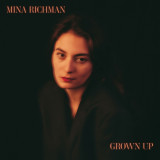
In Berlin geboren, aber in der Kleinstadt Bad Salzuflen aufgewachsen, pendelt Mina zwischen den Welten und entdeckt in der CD-Sammlung ihrer Tante Schätze wie Joan As Police Woman und Nina Simone. Soul und Blues, die Hip-Hop-Kultur und die Revolte der großen Singer-Songwriterinnen stehen Pate, als sie an ihrer Debüt-EP ,Jaywalker" (2022) arbeitet, mit der sie als beste Newcomerin für den PopNRW Preis nominiert wird. Von ihrem Vater ,aus Versehen" zur Feministin erzogen - wie sie es einmal in einem ,Zeit"-Interview formulierte - bediente sie sich für ihren Künstlerinnennamen beim berühmten Cher-Zitat ,Mom, I am a rich man". Ihr Solidaritäts-Song ,Baba Said" geht während der Revolution im Iran schlagartig viral und verschafft der Sängerin über Nacht auf dem ganzen Globus Aufmerksamkeit. Das Musikalische mit dem Gesellschaftlichen zu verbinden war ihr schon immer ein Anliegen. Mit renommierten Festivalslots bei dem New Fall, Herzberg und Reeperbahn Festival und Supportshows für Maxim, Anna Calvi und Alice Merton zeigt Mina, dass sie ,mit 25 Jahren schon eine ganz schöne Powerfrau ist." (WDR 5, 2022) Mit ihrem Debütalbum ,Grown Up" stellt sich Mina Richman nun dem Erwachsenwerden. Mit schonungsloser Ehrlichkeit kehrt sie in ihre Kindheit zurück und verarbeitet streitende Eltern, kulturelle Entwurzelung und den gesellschaftlichen, wie auch ihren persönlichen Umgang mit ihrem Körper. Ehrlich. Queer. Selbstbestimmt. Auch musikalisch ist Mina gereift und stellt einen Sound mit Einflüssen aus Soul, Folk, Indie und HipHop vor, zeigt dass Amy Winehouse, Ronda oder die Alabama Shakes nicht spurlos an ihr vorbei gegangen sind, beleuchtet die schönen Seiten des Erwachsenwerdens: Mut und liebe Menschen, die einen begleiten. Das Album ,Grown Up" wird am 15. März 2024 über Windig erscheinen und anschließend auf einer großen Release Tournee vorgestellt.
In Berlin geboren, aber in der Kleinstadt Bad Salzuflen aufgewachsen, pendelt Mina zwischen den Welten und entdeckt in der CD-Sammlung ihrer Tante Schätze wie Joan As Police Woman und Nina Simone. Soul und Blues, die Hip-Hop-Kultur und die Revolte der großen Singer-Songwriterinnen stehen Pate, als sie an ihrer Debüt-EP ,Jaywalker" (2022) arbeitet, mit der sie als beste Newcomerin für den PopNRW Preis nominiert wird. Von ihrem Vater ,aus Versehen" zur Feministin erzogen - wie sie es einmal in einem ,Zeit"-Interview formulierte - bediente sie sich für ihren Künstlerinnennamen beim berühmten Cher-Zitat ,Mom, I am a rich man". Ihr Solidaritäts-Song ,Baba Said" geht während der Revolution im Iran schlagartig viral und verschafft der Sängerin über Nacht auf dem ganzen Globus Aufmerksamkeit. Das Musikalische mit dem Gesellschaftlichen zu verbinden war ihr schon immer ein Anliegen. Mit renommierten Festivalslots bei dem New Fall, Herzberg und Reeperbahn Festival und Supportshows für Maxim, Anna Calvi und Alice Merton zeigt Mina, dass sie ,mit 25 Jahren schon eine ganz schöne Powerfrau ist." (WDR 5, 2022) Mit ihrem Debütalbum ,Grown Up" stellt sich Mina Richman nun dem Erwachsenwerden. Mit schonungsloser Ehrlichkeit kehrt sie in ihre Kindheit zurück und verarbeitet streitende Eltern, kulturelle Entwurzelung und den gesellschaftlichen, wie auch ihren persönlichen Umgang mit ihrem Körper. Ehrlich. Queer. Selbstbestimmt. Auch musikalisch ist Mina gereift und stellt einen Sound mit Einflüssen aus Soul, Folk, Indie und HipHop vor, zeigt dass Amy Winehouse, Ronda oder die Alabama Shakes nicht spurlos an ihr vorbei gegangen sind, beleuchtet die schönen Seiten des Erwachsenwerdens: Mut und liebe Menschen, die einen begleiten. Das Album ,Grown Up" wird am 15. März 2024 über Windig erscheinen und anschließend auf einer großen Release Tournee vorgestellt.
The composer behind one of the most sensational breakthroughs in Danish music invites you on a crackling, ever-changing and deeply personal journey. His third album Atmospherics drops after a decade in which Mike Sheridan has searched deeply to find and capture his inner sound.
Films, theatres and art museums have benefited from Mike Sheridan‘s sense of sound and melody for the past 10 years. An album has been a long time coming because, in the wake of his breakthrough at the age of 16, he needed to listen extra closely to his inner sounds.
With Atmospherics, he unfolds the music in a meeting between who he once was and who he is today.
Three years ago, he began to create what is now the album Atmospherics. The term refers to electrical disturbances in the atmosphere, such as during a thunderstorm, which can interact with and distort wireless signals. Here, the title refers to both the sound of the album itself, where computer collages, classical instruments crystal clear melodies and heavy rhythms collide, and to the electronic processing and reworking. But really, he thought it would be a quiet release, almost devoid of melodies. Themes and music slide in and out of each other on the album. There are moments of dub, techno, pop and modern compositional music.
There are sounds and beats that crackle, dissolve, replace each other, or connect with each other in new ways.In this way, Atmospherics can be listened to as a long exhalation from an artist who has dared to hold his breath longer than most.
Atmospherics features both Danish and international guests such as Agnes Aldén (a singer, songwriter and producer from Falun, Sweden), Indra Rios-Moore (a singer, songwriter and arranger, from the Lower East Side of Manhattan), BYLJA and Janus Rasmussen - as well as a host of Sheridan‘s regular musicians.
The artwork for Atmospherics is created by visual artist Nicolai Howalt.
out of Stock
Last delivered 2 years ago available to reorder, subject to availability
Considered one of the most innovative groups on the Colombian musical circuit in 1973, Columna de Fuego forged its sound by creatively and organically mixing elements of heavy rock with rhythms rooted in the music of the Pacific and Caribbean coasts of the country. Columna de Fuego, the first Colombian rock band to tour outside South America, was the supporting act for Leonor González —La Negra Grande de Colombia— for months and featured members of Los Young Beats, Los Speakers and Siglo Cero. Their only LP, recorded in Spain and released in Colombia only in 1974, was a turning point in the history of Colombian rock, an album full of funk, soul, cumbia and currulao that maintains a fast pace from start to finish. After unsuccessful attempts to establish themselves in Europe, the group parted ways; some members returned to Colombia and others stayed in Europe as part of La Banda Salsa, a vibrant and little mentioned chapter in the history of Latin rock. Roberto Fiorilli, the stand-out drummer of Colombian rock, returned to his native Italy. Over the following five decades, the myth of Columna de Fuego, that wonderful Bogota rock band that dared to experiment with the music of the Colombian coastline, grew. The curiosity of musicians interested in the traditional music and folklore of the coasts since the late 80's, the consequent mixture of different musical genres (modern and roots) at the end of the 20th century and the almost impossible desire of collectors to find a copy of the album or one of the band’s singles, gave it the status it should always have had as a pioneer, milestone and beacon. After remaining unavailable for five decades, we are proud to now present the first-time reissue of this obscure gem with its original artwork, including an insert with notes and rare photos. Sleeve
out of Stock
Last delivered 2 years ago available to reorder, subject to availability
It almost seems churlish to regard Celtic Frost as one of the great extreme metal bands, because they were so much more than that. It’s better to hail them as among the finest extreme and experimental bands of the 1980s. Refusing ever to do what was expected or demanded, the band constantly changed musical direction, always brought in surprising influences, and kept people guessing as to where they might venture next. Their catalogue of albums is formidable and unmatched. Each is not only unique, but part of an entire tapestry that only now can be appreciated for being a remarkable part of music history. Despite, or maybe because of, constant turmoil on so many fronts, Celtic Frost achieved an artistic level few others would even have dared to dream of aspiring towards. They climbed high because they were never afraid to fall. Which is why the band are now rightly regarded as icons, and iconoclasts.
Emperor's Return is the second release by the Swiss extreme metal band Celtic Frost. It was released in 1985 as an extended play and was their first record featuring American drummer Reid Cruickshank (a.k.a. "Reed St. Mark"). The band's bleak publicity photographs from this period had an influence on the fashion and style of the developing black metal genre. This EP has been out of print and available on its own since 1985.
It almost seems churlish to regard Celtic Frost as one of the great extreme metal bands, because they were so much more than that. It’s better to hail them as among the finest extreme and experimental bands of the 1980s. Refusing ever to do what was expected or demanded, the band constantly changed musical direction, always brought in surprising influences, and kept people guessing as to where they might venture next. Their catalogue of albums is formidable and unmatched. Each is not only unique, but part of an entire tapestry that only now can be appreciated for being a remarkable part of music history. Despite, or maybe because of, constant turmoil on so many fronts, Celtic Frost achieved an artistic level few others would even have dared to dream of aspiring towards. They climbed high because they were never afraid to fall. Which is why the band are now rightly regarded as icons, and iconoclasts.
Emperor's Return is the second release by the Swiss extreme metal band Celtic Frost. It was released in 1985 as an extended play and was their first record featuring American drummer Reid Cruickshank (a.k.a. "Reed St. Mark"). The band's bleak publicity photographs from this period had an influence on the fashion and style of the developing black metal genre. This EP has been out of print and available on its own since 1985.
The music is heartfelt but blunt, primitive yet refined and multi faceted, naïve yet occasionally black- minded. Music to disappear into just like you did in the TV series' slow but nervous storytelling that didn't lead to the end... think they dared Marcimain and Bärjed... to deliberately do something that doesn't really lead to the end. Like a thin thread that is stretched and stretched but does not break.
Beautiful, anxious, nervous and incomplete like life itself.
The music is heartfelt but blunt, primitive yet refined and multi faceted, naïve yet occasionally black- minded. Music to disappear into just like you did in the TV series' slow but nervous storytelling that didn't lead to the end... think they dared Marcimain and Bärjed... to deliberately do something that doesn't really lead to the end. Like a thin thread that is stretched and stretched but does not break.
Beautiful, anxious, nervous and incomplete like life itself.
Since we've known him, Robert Lloyd has made quite clear his enormous affection for the songs and sounds of Freakwater, the duo of Janet Beveridge-Bean and Catherine Irwin who've been wrongly denied their place as rightful and willful progenitors of alt-country's 'movement', which (frankly) is to their credit. Their genius in offering absolute authentic to the sound old-time Appalachian folk music with a modern façade that in no way negates tradition (one of their albums is titled Feels Like The Third Time) is unparalleled within the genre, and Freakwater remain under-appreciated. After the start of Covid, Robert dared approach Janet with the idea of recording together. Over the course of the long pandemic, songs were bandied about for months, and when recording was finally practical, a band was assembled with dates set up for a recording session in Valencia, Spain. Robert and Janet were joined by Robert's long-time ally, Pete Byrchmore, the musical foil for Robert's solo album on Virgin and a former Nightingale, Mark Bedford, the bassist for Madness and Terry Edwards' Near Jazz Experience, and Pablo Roda, Spanish mystery drummer, couldn't have worked out more perfectly. Tracks were selected without regard for collective presentation, just the goal of walking out of the studio with an album of perfect gems. Forget Lee & Nancy or George & Tammy, Rob and Janet have an immediate chemistry that only sounds long-lived - and too uniquely them to merit any comparison. The title track, Black Cat, Dark Horse is the sole Lloyd / Bean / Byrchmore composition and one of the record 's highlights. Jim Elkington, collaborator with Jeff Tweedy and Richard Thompson, contributes Heavy Reckonings and a song written with Janet, The True Lovers' Knot And The Lie, while Robert adds reworkings from past releases - Sweet Georgia Black and Black Country (with Pete) - not to mention the unreleased Eggs And Bacon. Janet brought One Shot and the unheard Freakwater song Arc Of A Smile. Covers of tunes from Dion and The Monkees and a magnificent Jon Langford song, "Tears Like Stars" round out the album. We daresay the album is among the finest you'll hear in 2023. That it doesn't fit perfectly into any preconceived genre is a testament to its quality. "Songcraft" is a word used infrequently today, yet Black Cat, Dark Horse will show that good songs endure. We're proud that Robert and Janet will find some new admirers through this album's release. The Michael Cumming / Stewart Lee film King Rocker made a case for Robert Lloyd-as-losthero; this album furthers that idea and shows a compelling side of Janet's talent and abilities which will be a surprise to her fans and serve as an entry point to exploring her many other compelling projects.
End of Everything is the intrepid seventh album from Mega Bog, a nightmarish experimental pop ensemble led by Erin Elizabeth Birgy. In 2020, Birgy was surrounded by seemingly endless turmoil: mass death, a burning planet, and a personal reckoning when past traumas met fresh ones. Living in Los Angeles, against the backdrop of brilliantly horrifying forest fires, she questioned what perspective to use moving forward in such dumbfounded awe. Deciding to seize something tangible, she produced a record that spoke of surrender, of mourning, and support in the face of tumultuous self-reflection. Writing on piano and synthesizer, instead of the familiar guitar, Birgy explored a spectrum of new sounds to illuminate a state of volatility and flux that was both universal and personal. Speaking of this transition, she describes the need “to feel… instantly. I didn’t want to dig into secret codes. I no longer wanted to hide behind difficult music. I was curious to give others the same with the music I create; to make music someone could use to explore drama, playfulness, and dancing, to shake the trauma loose.” Heavy grooves, metal guitar squeals, Italo disco bass lines, rhapsodic synth layers, and huge choruses stomp around the delightfully sanguine pop drama. Where previous records stretched out into the abstract and ethereal, End of Everything delivers a hit straight to collective awareness and healing. A seemingly disparate jukebox of sounds – ranging from Thin Lizzy, Bronski Beat, Franco Battiato and Ozzy Osbourne to 90’s house classics like Haddaway’s ‘What is Love’ and Corona's ‘Rhythm of the Night’ - foregrounded a new punchy theatricality in Birgy’s music. The songs she was creating at home followed suit with bolder hooks and more dancefloor energy than she’d ever dared before.
It almost seems churlish to regard Celtic Frost as one of the great extreme metal bands, because they were so much more than that. It’s better to hail them as among the finest extreme and experimental bands of the 1980s. Refusing ever to do what was expected or demanded, the band constantly changed musical direction, always brought in surprising influences, and kept people guessing as to where they might venture next. Their catalogue of albums is formidable and unmatched. Each is not only unique, but part of an entire tapestry that only now can be appreciated for being a remarkable part of music history. Despite, or maybe because of, constant turmoil on so many fronts, Celtic Frost achieved an artistic level few others would even have dared to dream of aspiring towards. They climbed high because they were never afraid to fall. Which is why the band are now rightly regarded as icons, and iconoclasts.
Released in 1987, only now can people understand just how far ahead of its time this album was. Not only did it have maniacal rhythms, but introduced electronica into extreme metal. On every level, it was a remarkable record, full of visionary ideas and ideals. This release includes alternate versions of tracks from the album and a cover of Dean Martin! The concept and art direction of the release was done by the man behind Celtic Frost, Tom G. Warrior.
It almost seems churlish to regard Celtic Frost as one of the great extreme metal bands, because they were so much more than that. It’s better to hail them as among the finest extreme and experimental bands of the 1980s. Refusing ever to do what was expected or demanded, the band constantly changed musical direction, always brought in surprising influences, and kept people guessing as to where they might venture next. Their catalogue of albums is formidable and unmatched. Each is not only unique, but part of an entire tapestry that only now can be appreciated for being a remarkable part of music history. Despite, or maybe because of, constant turmoil on so many fronts, Celtic Frost achieved an artistic level few others would even have dared to dream of aspiring towards. They climbed high because they were never afraid to fall. Which is why the band are now rightly regarded as icons, and iconoclasts.
Released in 1985, the band’s second album had an ominous pall of doom and gloom, enmeshed in a sound both primitive yet also Wagnerian in its vast scope. Many claim this was a massive inspiration for black metal bands later in the decade. In truth, though, none matched what was here. This release includes the ‘Emperor’s Return’ EP as well as a remix of Visual Aggression, and the concept and art direction of the release was done by the man behind Celtic Frost, Tom G. Warrior.