- 1: How Could My Baby Know
- 2: It S You Baby (You Re What Makes World Go Round)
- 3: Confessin A Feeling
- 4: I M Useless
- 5: Please Give Me Another Chance
- 6: Rainbow Road
- 7: Take The Weight Off Me
- 8: I M His Wife (You Re Just A Friend)
- 9: To The Other Woman
- 10: Maybe
- 11: I Want To Walk Through This Life With You
- 12: Do Right Baby
Cerca:deep city
- A1: Track 1
- A2: Track 2
- A3: Track 3
- A4: Track 4
- A5: Track 5
- A6: Track 6
- A7: Track 7
- A8: Track 8
- A9: Track 9
- A10: Track 10
- A11: Track 11
- A12: Track 12
- A13: Track 13
- A14: Track 14
- A15: Track 15
- A16: Track 16
- A17: Track 17
- A18: Track 18
- B1: Track 19
- B2: Track 20
- B3: Track 21
- B4: Track 22
- B5: Track 23
- B5: Track 24
- B6: Track 25
Imagine a world in which you are permitted, by a warlock, to go back in time to use an advanced yet primitive submarine to investigate the deepest waters in and around Japan, for the first time in human history. You are not permitted, but two Japanese scientists were allowed on such an aquatic adventure!
Here we have an underwater in-submarine field recording of their adventures, intermixed with a slippery-watery score, that surely represents the lurking fresh surroundings of the deep as they retreat further and further to the bottom of the ocean. The cameras, the retracting mechanical sea tentacle, their communication devices, are all audible now for you, as Deep Sea Animals is played out as a fresh digital radio play. All the audio has been preserved at Studio Isabellalei, by Milan W. from the original laserdisc, which was a part of the cinematic curatorial program at the opening for Spencer Clark’s album Avatar Blue, in Antwerp, Belgium.
With a purchase of the vinyl album of Deep Sea Animals on Pacific City Discs, you not only return to the prehistoric times of 1986, when two brave Japanese submarine pilots were to record deep underwater creatures, but you are also thus thrust back in time to Antwerp 2018, to a romantically titled, Event Horizon Cactus Cooler Laserdisc Theater. Just as well, the proceeds of this disk, tirelessly edited by Spencer Clark, will be donated to the preservation of the ocean, via the inspiring Sylvia A. Earle’s foundation, Mission Blue. Its not that you may or may not believe what I am now discussing with you, its that you can believe, because this disk is real, and thanks to Pacific City and Discrepant we will ride further into the super-natural realms of real life.
Blackfilm is an anonymous Hungarian artist who introduced himself with his self-titled debut in 2008, sold out in a few months and later reissued on both CD and vinyl format via Denovali in 2010. His debut has garnered widespread attention - "Evolving from downtempo electronic music to orchestral paroxysms and, insanely, passing from down-pitched nothingness to frozen urban landscapes, it becomes inevitable to resist." / "Dark and brooding, Blackfilm envelopes you like a thick fog creeping off a cooling swampland." (Headphone Commute) - and is still a classic.
Since then, he has relocated to London and released the collaboration master-piece - Along the Corridors' with Italy's heavy dub producer Eraldo Bernocchi in 2010. After eight years of silence Denovali now proudly presents his second solo album - Zero One Seven', in line with a re-issue of - Along the Corridors' on vinyl for the first time.
On - Zero One Seven', Blackfilm merges tracks spanning across drum and bass, dub and electronic. The sounds on the album are built from the ideas on the original Blackfilm - S/T' and - Along the Corridors' and progress to a sound built on new ground mixing modern production techniques and influences while at times referencing the Blackfilm sound we know from his previous releases.
The album maintains a consistent focus on atmospherics, beats and heavy bass ranging from darker dub and drum and bass influences to vocal tracks and complex ambient soundscapes. Production wise, the familiar Blackfilm style incorporating the use of synthetic sounds mixed with samples enables the album to create an intriguing, shifting atmosphere as the album progresses. A dystopian journey through haunting vocals, hypnotic drum patterns and complex sound design.
- A1: Flares
- A2: Boating For Beginners
- A3: The Good Ship Teignmouth Electron
- A4: A Sparrow Alighted Upon Our Shoulder
- A5: Terra Firma
- A6: Into The Wide & Deep Unknown
- B1: Good Morning, Midnight
- B2: A Sea Without Shores
- B3: Karen Byr Til Engil
- B4: Innocence
- B5: The Doldrums
- B6: Meditation
- C1: The House Latitudes
- C2: Radio
- C3: The Furious Seas Of Fogs & Squalls
- C4: Three Thousand Five Hundred & Ninety One Benches
- C5: The Captain's Log
- D1: The Mercy
- D2: She Loves To Ride The Port Ferry When It Rains
- D3: The Radiant City
- D4: A Pile Of Dust
- D5: At 19 41'10 40 North 79 52'37 83, West Lies The Shadow
- A1: Ewan Jansen - Motif Of A Fish
- A2: Fia Fiell - Caju
- A3: Cale Sexton & Sleep D - Strait Bass
- B1: Roman Nails - Fresh Fruit
- B2: Booshank - Bully (Deep Daddy)
- B3: Phil Stroud - City Living
- C1: Norachi - C376
- C2: Miris - Unity Of Opposites
- C3: Colours Of Infinity - Frequency Shift
- D1: Hotrod - Peppermint Darling
- D2: Kangaroo Skull - Black Shore
- D3: Senate - Chambers
Released by Butter Sessions and Noise In My Head who are also known for their offshoot Efficient Space (Sky Girl, etc) - All Exclusive Tracks! Scratching the surface of Australia's independent electronic massive, Butter Sessions and Noise In My Head finally compile the second volume of Domestic Documents. Featuring all exclusive tracks, Perth godfather Ewan Jansen joins new WA blood Phil Stroud and Senate, respectively making hectic percussion tracks and hell bent techno, as Newcastle transplant Roman Nails emerges with his squelching one take tape experiments. Meanwhile in Melbourne, Fia Fiell's ambient mind maze and Butter Sessions alumni Booshank target the cerebral cortex, Hotrod goes full turbo and live/DJ wingmen Miris and Norachi share the same side of their vinyl debuts (alongside the freakishly underrated Colours of Infinity - aka Kloke). Kangaroo Skull and Cale Sexton fly the flag for Temporal Cast, the latter on a calming club collab with Sleep D. - Liner notes from Ivan Smagghe and artwork from Misha Hollenbach (Perks and Mini) - Features many rarities reissued for the first time ever (Karen Marks' most wanted Australian cold wave single last sold for 290€ while Once traded for 170€) - All tracks officially licensed, sourcing original masters when available - Includes digital download
- A1: Abay
- A2: Tew Ante Sew
- B1: Mengedegna
- B2: Kahn
- C1: Sew Argen
- C2: Nafekeñ
- D1: Abet Wubet
- D2: Guramayle
- D3: Gud Fella
- D4: Guramayle (Slight Return)
180g Heavy double vinyl LP with liner notes by Tyran Grillo. Limited Japanese Obi for the first pressing. Original artwork by Russell Mills and photography by Jean-Baptiste Mondino.
The third Time Capsule is a body of dub reinterpretations by celebrated producer Bill Laswell of Ethiopian singer Gigi. Curated by Tokyo record collector, music researcher and seasoned reissue supervisor Ken Hidaka, it is the first time Illuminated Audio is pressed to vinyl after its CD release in 2003.
Ejigayehu Shibabaw was born in 1974 in Chagni, northwestern Ethiopia and by pursuing a career as a singer, went against her father’s strict, traditional gender roles. As Gigi, she embraced the same musical freedom she had strived for in her personal life, incorporating the Ethiopian church, funk, hip-hop, West and South African music into her work. She first settled in Nairobi, then Addis Ababa, where she quickly established herself as one of the city’s leading singers. A move to San Francisco in 1998 led to a long and fruitful creative partnership with bassist and producer Bill Laswell.
Around the same time, Chris Blackwell had stepped away from Island Records to start the art house film company and label Palm Pictures. He took an interest in Gigi and together with Laswell, pulled together an all-star cast of musicians for her self-titled US debut album, including Herbie Hancock, Pharoah Sanders and Wayne Shorter. It won international critical acclaim, not just for its musicianship but for making Gigi a “defining voice for the Ethiopian expatriate community”, as journalist Tyran Grillo praises in his Time Capsule liner notes. From the nation-defining 1896 victory over Italian invaders to the quiet revolutionaries who wear simple shemma garments, Grillo believes the themes in Gigi make it “a shower of sunlight on her homeland for those ignorant of its struggles.”
After its success, Blackwell encouraged them to go back into the studio to rethink the album and Illuminated Audio was born. “Anyone can make a voice sound worldly”, Grillo remarks, “but rare are those who can make one sound inner-worldly.” Gigi was clear with Laswell to give her vocals a minor role “because it’s already been done.” Instead her Amharic verse is fleeting, exhaling through the textures like ghostly fragments; soaring yet muted. Yet the album is still titled under her name, an assertion by Laswell of her central role in the album’s creation. Not only was it a fully endorsed project by Gigi, but she would be present throughout its development, giving feedback on half-finished ideas as Laswell played them back in the studio. “It works perfectly”, she reflected after the album’s release. “We wanted to capture the whole spirit of each track, and Bill’s remixes create a different music language that really puts you in a pleasant place”.
This new vocabulary takes its lead from a technical approach that Laswell had been perfecting during a furtive creative period at the turn of the millennium. Much like his ambient interpretations of Miles Davis (Panthalassa, 1998), Bob Marley (Dreams of Freedom, 1997), and Carlos Santana (Divine Light, 2001), Laswell approached Illuminated Audio by returning to the original multitrack masters. Gigi wasn’t just reworked, but recomposed into an expansive lattice of instruments, submerged in a watery ambience of dub and trance undercurrents.
Sonically, this new language that Gigi refers to, is manifested by the original album’s more understated parts being pushed to the fore. Explaining his contrasting methods, Laswell saw Gigi as being “put together in a way that fits”. Contrastingly, in Illuminated Audio, “a lot of things that I featured in the remix weren’t as audible in the original.” Instrumentation laying near-dormant, deep in the mix, are brought to the fore: the acid rock guitar and Wayne Shorter’s saxophone on ‘Tew Ante Sew’, Graham Haynes’ flugelhorn on ‘Nafekeñ’, Laswell’s bass on ‘Kahn’, the melodica in Mengedegna or the floating synths and talking drums in ‘Gud Fella’.
Brought to his attention by mentor DJ Nori, Hidaka describes Illuminated Audio as a “masterful sonic exploration into ethereal ambience and dub” and made sure this reissue also contained a full remaster to give its “deep musicality” much better dynamics and density in the overall sound. Hidaka admits that Laswell's music “is sometimes so out-there, it is often misunderstood” and, indeed, to dub album non-believers this might seem like a prolific producer imposing himself on another artist’s work; eternally developing rearrangements that never quite get to its destination. But that’s missing its true power and triumph. This is more than the reissue of a remix, but “a wholly unique musical entity”, as Hidaka describes. Illuminated Audio refers to the illuminated manuscripts that comprise the major part of Ethiopian art and its new compositions stand in proud solitude as a rare body of reworks that both informs and enhances their originals.
Dez Andrés, Detroit’s underground legend and genre-blurring maestro is back with another batch of reworked old skool bangers.
Since the late '90s, Dez has built a respectable catalog that blurs the boundaries between genres. One of motor city’s most prolific artists, his music can be summed up in one word: quality. Now he returns to DFM with a two-sided heater.
Dez flips Odyssey’s classic Native New Yorker into a gritty dembow style club weapon. With iconic vocal lines and signature piano riff, Dez injects his signature bounce and percussive punch, turning this disco anthem into a raw dancefloor destroyer.
Diving deeper, Dez revives Dr. Buzzard's Original Savannah Band’s classic Sun Showers, transforming it into a rhythmic, power groove tailor-made for sweaty basements, rooftop sets and smoke filled dance floors on red-lit nights that refuse to end.
- 1: Gravity
- 2: What Was I Made For?
- 3: One Bright Star
- 4: That Pleasure
- 5: From The Floorboards Up
- 6: Woo Sé Mama
- 1: Pieces Of A Dream
- 2: Time Of The Season
- 3: That Dangerous Age
- 4: Start!
- 5: Shout To The Top
- 6: Going My Way
- 1: Rise Up Singing
- 2: No Tears To Cry
- 3: Flying Fish
- 4: Wake Up The Nation
- 5: Village
- 6: The Cranes Are Back
- 1: Fat Pop
- 2: Dragonfly
- 3: Around The Lake
- 4: Foot Of The Mountain
- 5: Have You Made Up Your Mind
- 6: The Attic
- 3: Sea Spray
- 4: Days
- 5: Say You Don’t Mind
- 1: I Woke Up
- 2: Burn Out
- 3: Long Time
- 4: These City Streets
- 5: Wild Wood
- 1: Rip The Pages Up
- 2: Cosmic Fringes
Paul Weller releases Weller At The BBC (Vol.2) on Friday 24th April.
This second BBC outing gathers live session and live in concert performances, including intimate stripped back acoustic versions and re-workings of tracks across The Jam, The Style Council and Paul’s extensive solo career.
From timeless classics such as Start!, Shout To The Top and Wild Wood, to deep cuts and covers, like The Zombies’ Time Of The Season and Billie Eilish’s What Was I Made For?
The album also features some beautifully orchestrated tracks with the London Metropolitan Orchestra, arranged and conducted by Hannah Peel, including Aspects, Boy About Town and Have You Ever Had It Blue.
Following recent releases on Over/Shadow, Future Retro, Loop Progression and Bukva Sound, Peeb makes his debut on Wilderness with the Endless Skies EP, showcasing a deep, blissed out and atmospheric angle to his sound across 4 tracks that capture a sense of wonder, flowing from track to track to take you on another journey.
Double 12" release
The Story — From the Streets of Rome to the Male Productions Label
In the early 1990s, Rome lived in a kind of suspended moment. The city was still tied to its historic clubs, yet in the outskirts—inside abandoned warehouses, quarries along the coastline, and the wooded parks north of the capital—something new was beginning to stir. A nocturnal, constantly shifting movement fuelled by a hunger for freedom and a sonic curiosity that reached far beyond the mainstream.
Moving through this ferment was Francesco “Chicco” Furlotti. First an organizer of unconventional parties and underground nights, he soon became one of the driving forces behind Rome’s itinerant rave scene. Furlotti sensed that a wave of change was about to sweep across the city. It wasn’t just about parties: it was the rise of a culture, a new way of thinking about music, community, and belonging.
It was within those nights—later held with official permits, properly built sound systems, and an ever-growing crowd—that Furlotti recognized the existence of a distinctly Roman sound, and the need to capture it, preserve it, and give it tangible form.
So, in 1991, he decided to take a bolder step: to found an independent record label—small, determined, and far removed from the commercial logic that dominated at the time.
That was the birth of Male Productions.
Male was not a label like any other: it was a workshop, a gathering point, a creative hub where DJs, producers, friends, and wanderers converged. Within that environment, an artistic core took shape—Stefano Di Carlo, Leo Young, and Mauro Tannino, along with other collaborators orbiting around Furlotti. From their synergy emerged a project whose very name declared its mission:
The True Underground Sound of Rome.
The collective did not simply aim to release music; it sought to tell a story of Rome through sounds that defied categorization: house, techno, ambient, electronic mysticism, psychedelic visions… a unique blend, instantly recognizable, emotional, and experimental. The sessions unfolded using essential yet razor-sharp gear: Roland drum machines, analogue synthesizers, Akai samplers, stripped-down mixers. Few tools, endless imagination.
The first result of this work was the 12” Secret Doctrine, released in 1991 in an extremely limited run—around 500 promotional copies, according to accounts. The record captured something that until then had floated only in the air of Roman raves: enveloping atmospheres, deep rhythms, melodies built to make the mind travel far beyond the dancefloor. A sound that did not imitate what was happening in Detroit, London, or Berlin, but absorbed those influences and re-sculpted them with a distinctly Roman sensibility.
Yet, precisely because it was independent and detached from commercial circuits, Male’s output remained sparse: few EPs, few copies, irregular distribution. Over time, those records became rare artifacts—almost mythical objects within the Italian electronic scene. The legacy of Male Productions seemed destined to survive only in the memories of those early years, in the stories told after raves, and in the private archives of a handful of collectors.
Many years later, thanks to the almost accidental rediscovery of a few original copies of the first two releases issued by Male Productions, it became possible to undertake a meticulous process of recovery and restoration of the audio etched into those grooves, with the aim of preserving as fully as possible the quality and character of that unrepeatable sound.
We are therefore able today to present — at last in a complete and faithful form — the first two mixes created for Male Productions, now released on a double vinyl that brings back into the present the exact moment when it all began: the nomadic nights of the raves, Furlotti’s vision, the creativity of Di Carlo, Young and Tannino, and the sonic identity of a Rome in the midst of transformation.
This is not merely a reissue.
It is a historical document.
A fragment of a culture that changed the city.
The authentic sound of the Roman underground, finally returned to the world.
Dark, futuristic, fearless and built for those who understand that techno is not just style, but vision. Detroit Techno Records welcomes one of the true architects of Detroit electronic music: Suburban Knight. Known off-record as James Pennington, he is widely recognized as a foundational figure in the city?s history, an artist whose recordings helped define the darker, moodier and more cerebral edge of Detroit techno. His classic works such as ?The Groove? and ?The Art Of Stalking? remain touchstones of the form, while later activity with Underground Resistance further cemented his role in shaping the deeper mythology of the Detroit sound. Coming straight from Detroit, USA, DTRV011 is more than another catalogue entry. It is a new chapter from a genuine legend, an artist whose contribution to Detroit techno was never peripheral, but central. Suburban Knight remains one of the rare names whose music still carries the original weight of the city: dark, futuristic, fearless and built for those who understand that techno is not just style, but vision.
Bosconi Records proudly introduces Neon Cyberwave, the first solo EP on the label by Italian electronic visionary Miguel Herrnandez, marking a milestone in the evolution of an artist who has consistently bridged Detroit-rooted aesthetics with the experimental pulse of the European underground.
Based in the Val d’Elsa region between Florence and Siena, Miguel has forged a unique sonic identity shaped by his devotion to vinyl, his deep connection to the techno capital the “Motor City”, and his passion for deeply rooted yet still futuristic electronic culture.
His productions and DJ sets—built on a seamless fusion of raw electro, deep house attitudes, new beat flavors, and timeless grooves—have appeared on respected labels such as Bosconi, Rawax, and Norm Talley’s Upstairs Asylum. With Neon Cyberwave, he now delivers his most complete and personal statement to date.
The EP opens with “Neon Cyberwave”, a powerful acid-driven stomper built around a rolling 303 bassline, warm melodies, and an emotional breakout moment that captures both the effectiveness and the sensitivity of Miguel’s approach. It flows naturally into “Italo FM”, a track infused with Italo disco spirit—choir-like harmonies, a punchy bassline, and a groovy, ecstatic progression that turns into a genuine dancefloor trigger.
The journey deepens on the flip, where “VHS Direct Drive” introduces a dystopian atmosphere characterized by constantly shifting, unusually toned bass movements—unpredictable yet catchy, fresh yet rooted in classic electro DNA. This is followed by “Electric Soul Stranger”, where Miguel navigates Drexciyan undercurrents and subtle Gigolo-era references, balancing between straight rhythmic propulsion and broken-beat twists to create a cold, mental, transportive electro experience.
The record closes with the epic “Punky Shift”, a dramatic and powerful finale echoing the spirit of artists like The Hacker. Dramatic strings, an intense acid bassline, and a massive groove come together to shape a timeless closing track—one designed for peak emotional moments, sunrise sets, and long-lasting memories.
With Neon Cyberwave, Miguel Herrnandez has crafted a work that feels fresh yet nostalgic, classic yet forward-facing, and deeply personal. It stands as a versatile DJ weapon, a tribute to electro’s past and future, and a defining chapter in the artistic evolution of one of Tuscany’s most intriguing electronic voices.
From Wisdom Teeth’s recent compilation nagoyaka na kaze / 和やかな風 (quiet wind)—which cast a spotlight on the Japanese city of Nagoya—emerges “2++”, a new label launched by abentis, who curated the compilation alongside Facta and K-LONE as a central figure in the scene. Conceived as a series introducing facets of Nagoya’s underground electronic music to the world on vinyl, its inaugural release is abentis’ debut album, Dim Grow.
Across the album, intricately designed electronic mallet sounds—created using Ableton Live’s physical-modeling synthesizer—take center stage. Fresh and percussive like marimba or kalimba, yet simultaneously carrying an otherworldly, unreal quality, these tones form the core of the record’s sonic identity. In moments of near-silence, a crystalline resonance poised between glass and metal shimmers with subtle shifts in temperature, giving the album its distinctive texture.
While resonating with the sonic sensibilities of fellow Wisdom Teeth affiliates such as K-LONE, Tristan Arp, and Salamanda, abentis’ uniquely strange palette can be traced back to one of his strongest influences: Haruomi Hosono. In particular, Hosono’s mid-’70s tropical-infused solo albums — Tropical Dandy (1975), Bon Voyage Co. (1976), and Paraiso (1978) — serve as a key reference point. Symbolically reflected in Hosono’s marimba and vocal performance at a 1976 live show in Yokohama Chinatown, the marimba functioned as a central instrument for constructing imagined exotic landscapes inspired by Martin Denny and Hawaiian music.
For abentis—who worked at a local jazz bar before becoming active as a hip-hop beatmaker—the language of “tension chords,” a harmonic vocabulary rooted in jazz and R&B that hovers ambiguously between brightness and darkness, forms a consistent grammar throughout Dim Grow.
Behind the album’s core theme of “mallets + tension chords” lies a broad musical lineage: the harmonic sensibility of Claude Debussy, who anticipated the tensions of jazz; the proto-minimalist spirit of Erik Satie; the marimba-centered structures of Steve Reich; their continuation in Japan through Mkwaju Ensemble (with Midori Takada and production by Joe Hisaishi); and the subsequent branches into post-rock, electronica, and ambient music.
Growing up in Nagoya—an industrial city where creative independence is deeply valued—and being rooted in punk and hip-hop counterculture scenes naturally fostered abentis’ affinity with these predecessors. His practice between genres, combined with an encounter with the highly cross-pollinated musical perspective cultivated around Wisdom Teeth, provided the framework through which his own musical language crystallized. Dim Grow stands as the natural culmination of that journey.
Repress
The Collaboration - Having toured together over the years, Lattimore and Barwick now join forces to co-write and record this full-length album. Their creative synergy brings together harp, voice, and analog synths in a deeply emotional, immersive sound journey. The album was recorded at the Philharmonie de Paris with co-producer Trevor Spencer (Fleet Foxes, Beach House). This album continues a unique series of collaborations between the label and the Musée de la Musique, featuring historical instruments in contemporary composition. Since 2017, InFiné and the Philharmonie de Paris have co-developed a series of albums designed to highlight the extraordinary instrument collection of the Musée de la Musique. Following the albums InBach by Arandel (2020) and Saturn 63 by Seb Martel (2022), this third release is a meeting of two iconic contemporary ambient voices: Mary Lattimore and Julianna Barwick. The project offers the artists full access to the museum’s playable instruments for recording, sound conservation, and creative reinterpretation.
--
Tragic Magic brings together Julianna Barwick and Mary Lattimore, two of contemporary ambient, experimental and electronic music’s most celebrated composers, for a unique collaboration at the Philharmonie de Paris, with extraordinary access to the Musée de la Musique’s instrument collection, in partnership with the French label InFiné. The album features seven immersive, evocative compositions guided by the human spirit – intimate, grounded in friendship, both earthly and cosmic – and part of a greater continuum, reflecting the solace and transformative power of artistry across generations.
Co-produced by Trevor Spencer (Fleet Foxes, Beach House), Tragic Magic was created in just nine days, a testament to the “musical telepathy” that has developed between Barwick and Lattimore over years of touring and friendship. Arriving in Paris from Los Angeles shortly after the 2025 wildfires, their sessions combined improvisation with the emotions and experiences they carried, in a setting both inspiring and deeply supportive. Lattimore selected harps tracing the instrument’s evolution from 1728 to 1873, while Barwick chose several iconic analog synthesizers, including the Roland JUPITER and Sequential Circuits PROPHET-5. In freeform dialogue between voice and instrument, they create a meditation on tragedy, wonder, and the restorative power of shared experience.
The duo, often joined by Spencer, also explored the city, sharing meals and visiting museums and landmarks, each encounter leaving an impression on their next session. The experience allowed them to work intimately with rare instruments, blending their personal sensibilities with centuries of history, resulting in music that honors the past while remaining a deeply authentic expression of the present.
Throughout Tragic Magic, Barwick and Lattimore find something beyond themselves: a sense that while everything may not be okay, beauty persists. Their approach – transforming life into music, observing, feeling, and creating – continues a lineage of creative expression and visionary invention, embodied in the very instruments they employed for this project.
- 1: Layer After Layer
- 2: Indalo
- 3: No Abiding City
- 4: Rising Falling
- 5: The Bridge
- 6: Mama Carries
- 7: Eating The Other
- 8: What Did The Rain Say?
- 9: Tulip
Shimmering Xhosa traditions and deep electronic futures vibrate as South African sonic poet and composer Dumama unveils her groundbreaking debut solo album, Towards An Expanse. Sometimes gospel, sometimes electro-psychedelic space travel, Towards An Expanse unfurls from a languid lament into an ever-expanding sonic universe. Dumama defies conventional genre boundaries while excavating deep personal and cultural histories in this concise but boundaryless collection, recorded between New York, Johannesburg and Berlin. Dumama first gained international attention with her acclaimed 2020 collaborative album, Buffering Juju, created with fellow South African musician and artist Kechou, and lauded as Global Album of the Month by The Guardian. Her new solo work draws on a rich lineage of South African voices. Gugulethu Duma (aka Dumama) is a musician / composer / sonic poet / creative producer from the Eastern Cape Province of South Africa. Dumama is one of the few uhadi players in the world. Her use of the traditional Xhosa bowed instrument guides her profound story-telling, blending ancestral roots into an urgent electro-acoustic palette. The album was born out of sessions with acclaimed musician and producer Shahzad Ismaily in New York and South African powerhouse Nandi Ndlovu in Johannesburg.
Tokyo deep house master Soshi Takeda returns with a long-awaited six-song sequel to 2021’s landmark Floating Mountains, surfing deeper into mystery, motion, and liquid dreams: Secret Communication. Recorded across 2022 and 2023 at his home studio with a unique assemblage of 80’s and 90’s hardware, the tracks cruise through a latticework of skyways on lush pads, bubbling bass, and blissed BPMs, dusted in sunrise acid and cosmic piano. His is a dance music of idyllic emotions and inner worlds, yearning for new horizons.
Dramatic events overlapped with the album’s creation: “Wars broke out. On the other hand, my child was born. There were sad and beautiful moments in my life.” Secret Communication contains vistas, valleys, glimpses of lives unled, swirling above the grey noise of the city. From the jazzy daydream of “Can Imagination Transcend Distance?” to the sleek starlight house of “Rainstorm” to the farewell ecstasy of the title track, Takeda’s music touches and transports, a portal to places beyond. Fantasy and feeling, intention and inspiration, all become one: “When I listen to beautiful deep house, I feel a mysterious atmosphere. Dreamy scenes come to mind. I aim to create that sound.”

Deeply rooted in Japanese culture, Tanoshii Crew returns with an extraordinary new musical connection from Yamato, released through Tanoshii Records. In the summer of ’24, the label made its debut with the City Pop 1994 EP by Rukatama — marking Tama-chan’s very first vinyl release outside Japan. Now, the Italian collective presents something truly distinctive: a carefully curated vinyl compilation celebrating a wide spectrum of musical styles, designed to delight devoted record collectors and adventurous listeners alike — perfectly embodied by the Japanese word Tanoshikatta (“it was fun” / “a joyful experience”).
Back on PANORAMA Records, we turn to a beautiful slice of under-the-radar Jamaican reggae with Horace Martin – “Me Rule.”
Born in Kingston, Jamaica, Horace Martin was just 20 years old when he stepped into Channel One Studio to record the track in 1974. At the time he was building his name locally, performing in clubs and talent shows around the city while cutting sides in Kingston’s vibrant studio scene. “Me Rule” captures that moment perfectly — youthful confidence over a deep, steady rhythm.
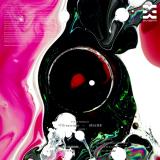
This record earned its place among the deepest collectors: Proper rootsy dancefloor reggae that feels just as good today as it did when it first came out of Kingston.
On the flip, things open up with a dubbed-out version of the rhythm titled “Rule,” credited to Prince Huntly. Stripped back, the dub extends the track — echo, percussion, and bass doing the work.
As always, PANORAMA Records continues its search for overlooked gems from across the globe — records with history, character, and real musical weight. Carefully remastered and brought back on 7inch, PAN013 is another example of these records finding their way back to the turntable.
- A1: Jugganauts
- A2: Recognized Thresholds Of Negative Stress
- A3: Boogie
- A4: Muzic Appreciation (Sweet Music)
- A5: Mark Of The Beast
- A6: Altered States Of Consciousness
- B1: Honeydips In Gotham
- B2: Strange
- B3: Old Man Jacob's Well
- B4: Bronx Bombas
- B5: Salt Water Taffy (Slo Jam)
- B6: Riders Of The Storm
Boogiemonsters were an American hip hop group composed of Bronx‑born rapper Mondo McCann, Alaskan native Vex Da Vortex (Sean Pollard), and Jamaican‑born brothers Myntric (Sean Myers) and Yodared (Ivor “Al” Myers). The members met while attending Virginia State University, quickly connected, and began recording demos and performing at campus events. Their early momentum led them to win first place at Howard University’s Hip‑Hop Convention.
Pendulum/EMI record label signed the four MCs and released their debut album Riders Of The Storm: The Underwater Album in 1994. The first single, “Recognized Thresholds of Negative Stress,” introduced their thoughtful, alternative approach to hip hop. It was followed by “Honeydips in Gotham,” a smooth tribute to the fly sistas of the city, and “Strange,” built around a slick Cameo sample. Another standout track, “Salt Water Taffy (Slo Jam),” is noted as one of the earliest non‑Roots session appearances by future producer Scott Storch.
Riders Of the Storm: The Underwater Album delivers a focused blend of rugged beats, sharp lyricism, and atmospheric production that stands apart in the 90s hip hop landscape. Its mix of conscious themes and deep grooves makes it essential for fans of underground hip hop. The album’s mellow, funky, alternative sound sits comfortably alongside groups like A Tribe Called Quest and De La Soul, giving it a timeless place in the era’s most creative and forward‑thinking releases.