The Collaboration - Having toured together over the years, Lattimore and Barwick now join forces to co-write and record this full-length album. Their creative synergy brings together harp, voice, and analog synths in a deeply emotional, immersive sound journey. The album was recorded at the Philharmonie de Paris with co-producer Trevor Spencer (Fleet Foxes, Beach House). This album continues a unique series of collaborations between the label and the Musée de la Musique, featuring historical instruments in contemporary composition. Since 2017, InFiné and the Philharmonie de Paris have co-developed a series of albums designed to highlight the extraordinary instrument collection of the Musée de la Musique. Following the albums InBach by Arandel (2020) and Saturn 63 by Seb Martel (2022), this third release is a meeting of two iconic contemporary ambient voices: Mary Lattimore and Julianna Barwick. The project offers the artists full access to the museum’s playable instruments for recording, sound conservation, and creative reinterpretation.
--
Tragic Magic brings together Julianna Barwick and Mary Lattimore, two of contemporary ambient, experimental and electronic music’s most celebrated composers, for a unique collaboration at the Philharmonie de Paris, with extraordinary access to the Musée de la Musique’s instrument collection, in partnership with the French label InFiné. The album features seven immersive, evocative compositions guided by the human spirit – intimate, grounded in friendship, both earthly and cosmic – and part of a greater continuum, reflecting the solace and transformative power of artistry across generations.
Co-produced by Trevor Spencer (Fleet Foxes, Beach House), Tragic Magic was created in just nine days, a testament to the “musical telepathy” that has developed between Barwick and Lattimore over years of touring and friendship. Arriving in Paris from Los Angeles shortly after the 2025 wildfires, their sessions combined improvisation with the emotions and experiences they carried, in a setting both inspiring and deeply supportive. Lattimore selected harps tracing the instrument’s evolution from 1728 to 1873, while Barwick chose several iconic analog synthesizers, including the Roland JUPITER and Sequential Circuits PROPHET-5. In freeform dialogue between voice and instrument, they create a meditation on tragedy, wonder, and the restorative power of shared experience.
The duo, often joined by Spencer, also explored the city, sharing meals and visiting museums and landmarks, each encounter leaving an impression on their next session. The experience allowed them to work intimately with rare instruments, blending their personal sensibilities with centuries of history, resulting in music that honors the past while remaining a deeply authentic expression of the present.
Throughout Tragic Magic, Barwick and Lattimore find something beyond themselves: a sense that while everything may not be okay, beauty persists. Their approach – transforming life into music, observing, feeling, and creating – continues a lineage of creative expression and visionary invention, embodied in the very instruments they employed for this project.
quête:julianna barwick
- 1
In search of the sublime, contemporary electronic musician Steve Hauschildt has designed grids and panoramas of sound across multiple releases through the rise and dissolution of his former band, Emeralds, an American touchstone of 2000s home-recorded psychedelic noise music. Consistent with his solo work is Hauschildt's ability to coil his craft in precise, varied, and distinctly physical forms. Gently spinning arpeggios converse with post-industrial decay. Sonic bers sway like pendulums from static melancholy to motorik bliss. Dissolvi, the artist's rst full-length with Ghostly International, engages sublimation from an ontological perspective: by dissociating the self. Hauschildt steps out from the singular path, for the rst time in a traditional studio, to compose and arrange contributions from friends. As a result, his most collaborative work to date extends a vast, vibrating framework in which to consider the state of being.
The album's title — a reference to cupio dissolvi, the Latin phrase meaning "I wish to be dissolved" — needn't be taken one-dimensionally or as purely solipsistic. It does, however, serve an apt reference. Physiological phenomena are of interest to Hauschildt. These back-of-mind ruminations nd their way out. Songs are cerebral in orientation, but beyond explanation, the music is truly visceral.
Involuntary eye movement inspires the serene, sanguine-nearing-suspicious "Saccade." Hauschildt feathers soft percussion beneath the echoed refrains of Los Angeles musician Julianna Barwick, together shaping a svelte suggestion of the anxieties brought about by modern-day surveillance; if everyone is being watched constantly, there is no individual, no self, only a broadly monitored and clumsily cataloged populous. The work of Chicago poet Carl Sandburg comes to mind: 'I am the people—the mob—the crowd—the mass.' The individual dissolves into the taxonomic crowd.
Minimalist techno impulses provide a stylistic through-line for Dissolvi. Understated synth phrases and drum grooves take hold in selective moments, like synchronistic structures onto which nebulous mists, like the rapturous voice of Gabrielle Herbst aka GABI on "Syncope," cling to and cloud, producing a dazzling rift in consciousness. The 7-minute centerpiece "Alienself" reiterates this creative logic, burbling like an amorphous body of water on a low-gravity planet, on the verge of dissolving, but never fully dematerializing.
The album was constructed in Chicago (where Hauschildt now resides) and partially in New York. "Much of it was recorded in a windowless studio which removed elemental or seasonal references to time in the music," says Hauschildt. "The focus this time was on mixing the album and incorporating a broader set of instrumentation. I describe my compositional approach as being quasi-generative." Embracing new methods and philosophical curiosities, and in turn, expanding the range of his repertoire, Hauschildt proposes a fascinating and profoundly rich experience in listening, being, and deliquescing.
- A1: Hjálmar Lárusson And Jónbjörn Gíslason - Jómsvíkingarímur - Ýta Feldi Eigi Rór
- A2: Julianna Barwick - Forever
- A3: Koreless - Last Remnants 4:20
- A4: Odesza - How Did I Get Here (Instrumental)
- A5: Anois - A Noise
- B1: Samaris - Góða Tungl
- B2: Ólafur Arnalds - Rgb
- B3: Rival Consoles - Pre
- B4: Jai Paul - Jasmine (Demo)
- C1: Four Tet - Lion (Jamie Xx Remix)
- C2: James Blake - Our Love Comes Back
- C3: Spooky Black - Pull
- C4: Sarah Neufeld & Colin Stetson - And Still They Move
- D1: Ólafur Arnalds Ft. Arnór Dan - Say My Name
- D2: Kiasmos - Orgoned
- D3: Ólafur Arnalds - Kinesthesia I
- D4: Hjaltalín - Etheral
- D5: David Tennant - Undone
Standing at the intersection where techno meets classical music, Ólafur Arnalds directs the newest Late Night Tales, set for release on 24th June 2016.
After releasing the breakthrough album 'And They Have Escaped The Weight Of Darkness', in 2014 he was awarded a BAFTA for best original music for the TV series Broadchurch. Arnalds' music has a quietude that seems perfectly apposite and that's evident here as each song drifts like an autumn wind towards the next.
Arnalds has enlisted the help of a few of his countrymen for the journey out west - electronic bands Samaris and Hjaltalín - and just as his records manage to combine the experimentalism and adventure of electronic music with a classical sensibility, here he weaves them perfectly, using tracks like Koreless' brilliant post-dubstep 'Last Remnants' alongside the enigmatic brilliance of Jai Paul. It's a perfect musical landscape that is eerie yet beautiful, as on Odesza's 'How Did I Get Here'.
As if Ólafur wasn't spoiling us enough, he offers up three exclusives: his own 'Kinesthesia I' and 'RGB' and 'Orgoned' by his techno side project Kiasmos. Alongside that we have the obligatory cover version (Destiny's Child's 'Say My Name') and also a Late Night Tales debut for David Tennant, reading a story by Anam Sufi, with whom Ólafur worked on Broadchurch.
When I was asked to do the next installation of the Late Night Tales series I thought "This will be fun and easy, only a couple of days work. No problem!". Six months later, I was still pulling my hair out in some kind of quest to make the perfect mix. As someone who has never really done mixes before, I learned a lot of things along the way and the whole experience was very inspiring. I decided to approach the mix in a similar way as I would one of my scores. This is the soundtrack of my life. I included songs from many of my friends and collaborators and tried to deliver a mix that represents who I am as an artist and where my influences are coming from - both personally and musically.'
Sea Oleena is the project of Montreal-based musician Charlotte Oleena. Drifting between ambient dream pop and atmospheric folk, her music is rich with textural warmth. With her softly whispered vocals and atmospheric tones, Oleena's music has been compared to acts like Grouper and Julianna Barwick, though in her more structured moments there are echoes of alternative pop icons the Cocteau Twins and Julee Cruise. Alded by her brother Luke Loseth, she released a stf-titled mini-album in 2010, followed by a second LP titled Sleeplessness a year later. Her third release, Shallow, arrived in 2014. Six years later, Sea Oleena returned with Weaving a Basket, a seven-track album that combines austere piano and guitar arrangements with ebbing swells of instrumentation and misty harmonies layered in a spectral chorus. Throughout the record, Oleena embraces the ambient backdrops of her surroundings - birds chirping, wind rustling, urban traffic - creating a close, intimate, and lived in listening experience. Released one year ago, in late fall 2020, these sounds capture the dual interiority and solemnity of that moment. The result is a wistful and impressionistic collection of songs, in turns haunting and hymnal.
- A1: Anna - Kalimba Dreams
- A2: Bonobo & Jacques Greene - Fold
- A3: Tsha - Renegade (Feat Ell Murphy)
- B1: Yotto - Just Over (Franky Wah Extended Remix)
- B2: Len Faki - Hymn (Anna Remix)
- B3: Rival Consoles - Recovery
- C1: Mind Against - Onlyl (Feat Tsha & Nimmo)
- C2: Sam Shure - Heir Of Snare
- C3: Victor Ruiz - Eventide
- D1: Wehbba - Symmetry
- D2: Odesza - This Version Of You (Feat Julianna Barwick) (Joseph Ray Extended Remix)
- D3: Parra For Cuva - Mimose
- E1: Agents Of Time - Zodiac
- E2: Gorgin - Heartbeater
- E3: Tao Andra - Dream On
- F1: Anna & Reb?Ke - Ignite
- F2: Binaryh - Daemon
- F3: Paul Roux - Baby Baby
Ostinato as resistance: Rafael Anton Irisarri’s landmark work reimagined. Marking the tenth anniversary of the American composer’s critically acclaimed album 'A Fragile Geography', this new edition arrives renewed, both sonically and visually.
First released in 2015 (Room40) during a period of personal upheaval and creative reinvention, it endures as a testament to resilience, transformation, and the connection we hold with the places that shape us.
Written in the aftermath of a devastating theft, A Fragile Geography was born out of loss. Just days before a cross-country move to New York, Irisarri’s entire Seattle-based studio was wiped out. Instruments. Recordings. Archives. Gone without a trace. He arrived on the East Coast to an empty room and the daunting task of starting over.
“This album wasn’t just a record; it was a lifeline,” Irisarri reflects. “It became a way to process the emotional chaos that followed: uprooting, instability, and ultimately, the slow, intuitive rebuilding of a life.”
Composed and recorded in the rural woods of the Hudson Valley, the album took shape in seclusion, surrounded by nature, and through a process guided by improvisation. Embracing limitations, Irisarri wove textural layers of field recordings with half-remembered melodies from his Seattle years, piecing them together like fragments of memory. Tracks like “Displacement,” “Hiatus,” and “Persistence” juxtaposed haunting stillness with restless momentum, mapping an inner terrain of grief, catharsis, and rebirth.
Among its defining sounds is “Empire Systems,” a monumental centerpiece built around a simple four-chord progression, organ textures, and guitar drones. Gradually, the track expands into layers of immersive loops and thick, enveloping distortion that wash over the listener like a rolling wave. Often cited as the album’s most majestic passage, it captures Irisarri at his most sonically ambitious. With a harmonically saturated structure crafted from restraint and repetition, it remains one of his most recognizable compositions: an exercise in the art of maximal minimalism.
From the outset, “Reprisal” received praise from BBC’s Mary Anne Hobbs, who championed the track on her radio show. Her support played a key role in introducing Irisarri’s work to wider audiences and solidifying his place within the lineage of electronic, drone, and experimental sound artists. A slow-burning elegy, the piece emerges from a haze of distortion and sub-bass, with dense, unrelenting drones carrying a sense of mounting tension. Just as it seems to collapse under its own weight, flickers of guitar emerge like distant light through fog. It’s a meditation on dissonance, resolve, and the elusive possibility of release.
The closing track, “Secretly Wishing for Rain,” is steeped in saudade: a longing for Seattle’s dour grey skies, lush green landscapes, and desaturated sunsets. Through it, Irisarri mourns a vanished chapter of life bound to the city, a time documented in scattered mementos and cherished collections, now permanently gone. A reflection on what could never be recovered: an era lost to time. Julia Kent’s looped cello motifs added a melancholic warmth to the track, marking the first collaboration between the two artists and sparking a musical dialogue that would keep growing in the years that followed.
More than a career highlight, A Fragile Geography has laid the foundation for Black Knoll studio, which Irisarri rebuilt from the ground up. The studio has since grown into a creative hub for countless projects, with Irisarri engineering records for iconic music figures like Terry Riley, Ryuichi Sakamoto, William Basinski, MONO, Devendra Banhart, Grouper, Emeralds, Steve Hauschildt, Julianna Barwick, and many others. Carried by its lasting influence, the album has quietly captured the ear of a younger generation, its sound and emotional arc finding new listeners in unexpected corners.
The album’s new visual language was reimagined in collaboration with Mexico City–based designer Daniel Castrejón. Irisarri captured ghostly images at Gaztelugatxeko Doniene, a historic coastal site in Bermeo, Euskal Herria. Castrejón then treated the photographs with distressed textures and spectral overlays. The final artwork channels the rugged, elemental forces that shaped both the music and Irisarri’s aesthetic, renewing his ties to ancestral ground inspired by the Basque homeland of his bloodline.
Mastered by Stephan Mathieu with exceptional attention to detail, this anniversary edition uncovers every nuance in the sound design, enhancing clarity and presence. With each listen, new elements emerge, inviting discovery and reconnection.
“I don’t experience this album as a document of grief anymore,” says Irisarri. “I hear adaptation and I'm reminded that when everything falls apart, something meaningful, maybe even beautiful, can emerge.”
Ostinato as resistance: Rafael Anton Irisarri’s landmark work reimagined. Marking the tenth anniversary of the American composer’s critically acclaimed album 'A Fragile Geography', this new edition arrives renewed, both sonically and visually.
First released in 2015 (Room40) during a period of personal upheaval and creative reinvention, it endures as a testament to resilience, transformation, and the connection we hold with the places that shape us.
Written in the aftermath of a devastating theft, A Fragile Geography was born out of loss. Just days before a cross-country move to New York, Irisarri’s entire Seattle-based studio was wiped out. Instruments. Recordings. Archives. Gone without a trace. He arrived on the East Coast to an empty room and the daunting task of starting over.
“This album wasn’t just a record; it was a lifeline,” Irisarri reflects. “It became a way to process the emotional chaos that followed: uprooting, instability, and ultimately, the slow, intuitive rebuilding of a life.”
Composed and recorded in the rural woods of the Hudson Valley, the album took shape in seclusion, surrounded by nature, and through a process guided by improvisation. Embracing limitations, Irisarri wove textural layers of field recordings with half-remembered melodies from his Seattle years, piecing them together like fragments of memory. Tracks like “Displacement,” “Hiatus,” and “Persistence” juxtaposed haunting stillness with restless momentum, mapping an inner terrain of grief, catharsis, and rebirth.
Among its defining sounds is “Empire Systems,” a monumental centerpiece built around a simple four-chord progression, organ textures, and guitar drones. Gradually, the track expands into layers of immersive loops and thick, enveloping distortion that wash over the listener like a rolling wave. Often cited as the album’s most majestic passage, it captures Irisarri at his most sonically ambitious. With a harmonically saturated structure crafted from restraint and repetition, it remains one of his most recognizable compositions: an exercise in the art of maximal minimalism.
From the outset, “Reprisal” received praise from BBC’s Mary Anne Hobbs, who championed the track on her radio show. Her support played a key role in introducing Irisarri’s work to wider audiences and solidifying his place within the lineage of electronic, drone, and experimental sound artists. A slow-burning elegy, the piece emerges from a haze of distortion and sub-bass, with dense, unrelenting drones carrying a sense of mounting tension. Just as it seems to collapse under its own weight, flickers of guitar emerge like distant light through fog. It’s a meditation on dissonance, resolve, and the elusive possibility of release.
The closing track, “Secretly Wishing for Rain,” is steeped in saudade: a longing for Seattle’s dour grey skies, lush green landscapes, and desaturated sunsets. Through it, Irisarri mourns a vanished chapter of life bound to the city, a time documented in scattered mementos and cherished collections, now permanently gone. A reflection on what could never be recovered: an era lost to time. Julia Kent’s looped cello motifs added a melancholic warmth to the track, marking the first collaboration between the two artists and sparking a musical dialogue that would keep growing in the years that followed.
More than a career highlight, A Fragile Geography has laid the foundation for Black Knoll studio, which Irisarri rebuilt from the ground up. The studio has since grown into a creative hub for countless projects, with Irisarri engineering records for iconic music figures like Terry Riley, Ryuichi Sakamoto, William Basinski, MONO, Devendra Banhart, Grouper, Emeralds, Steve Hauschildt, Julianna Barwick, and many others. Carried by its lasting influence, the album has quietly captured the ear of a younger generation, its sound and emotional arc finding new listeners in unexpected corners.
The album’s new visual language was reimagined in collaboration with Mexico City–based designer Daniel Castrejón. Irisarri captured ghostly images at Gaztelugatxeko Doniene, a historic coastal site in Bermeo, Euskal Herria. Castrejón then treated the photographs with distressed textures and spectral overlays. The final artwork channels the rugged, elemental forces that shaped both the music and Irisarri’s aesthetic, renewing his ties to ancestral ground inspired by the Basque homeland of his bloodline.
Mastered by Stephan Mathieu with exceptional attention to detail, this anniversary edition uncovers every nuance in the sound design, enhancing clarity and presence. With each listen, new elements emerge, inviting discovery and reconnection.
“I don’t experience this album as a document of grief anymore,” says Irisarri. “I hear adaptation and I'm reminded that when everything falls apart, something meaningful, maybe even beautiful, can emerge.”
Ostinato as resistance: Rafael Anton Irisarri’s landmark work reimagined. Marking the tenth anniversary of the American composer’s critically acclaimed album 'A Fragile Geography', this new edition arrives renewed, both sonically and visually.
First released in 2015 (Room40) during a period of personal upheaval and creative reinvention, it endures as a testament to resilience, transformation, and the connection we hold with the places that shape us.
Written in the aftermath of a devastating theft, A Fragile Geography was born out of loss. Just days before a cross-country move to New York, Irisarri’s entire Seattle-based studio was wiped out. Instruments. Recordings. Archives. Gone without a trace. He arrived on the East Coast to an empty room and the daunting task of starting over.
“This album wasn’t just a record; it was a lifeline,” Irisarri reflects. “It became a way to process the emotional chaos that followed: uprooting, instability, and ultimately, the slow, intuitive rebuilding of a life.”
Composed and recorded in the rural woods of the Hudson Valley, the album took shape in seclusion, surrounded by nature, and through a process guided by improvisation. Embracing limitations, Irisarri wove textural layers of field recordings with half-remembered melodies from his Seattle years, piecing them together like fragments of memory. Tracks like “Displacement,” “Hiatus,” and “Persistence” juxtaposed haunting stillness with restless momentum, mapping an inner terrain of grief, catharsis, and rebirth.
Among its defining sounds is “Empire Systems,” a monumental centerpiece built around a simple four-chord progression, organ textures, and guitar drones. Gradually, the track expands into layers of immersive loops and thick, enveloping distortion that wash over the listener like a rolling wave. Often cited as the album’s most majestic passage, it captures Irisarri at his most sonically ambitious. With a harmonically saturated structure crafted from restraint and repetition, it remains one of his most recognizable compositions: an exercise in the art of maximal minimalism.
From the outset, “Reprisal” received praise from BBC’s Mary Anne Hobbs, who championed the track on her radio show. Her support played a key role in introducing Irisarri’s work to wider audiences and solidifying his place within the lineage of electronic, drone, and experimental sound artists. A slow-burning elegy, the piece emerges from a haze of distortion and sub-bass, with dense, unrelenting drones carrying a sense of mounting tension. Just as it seems to collapse under its own weight, flickers of guitar emerge like distant light through fog. It’s a meditation on dissonance, resolve, and the elusive possibility of release.
The closing track, “Secretly Wishing for Rain,” is steeped in saudade: a longing for Seattle’s dour grey skies, lush green landscapes, and desaturated sunsets. Through it, Irisarri mourns a vanished chapter of life bound to the city, a time documented in scattered mementos and cherished collections, now permanently gone. A reflection on what could never be recovered: an era lost to time. Julia Kent’s looped cello motifs added a melancholic warmth to the track, marking the first collaboration between the two artists and sparking a musical dialogue that would keep growing in the years that followed.
More than a career highlight, A Fragile Geography has laid the foundation for Black Knoll studio, which Irisarri rebuilt from the ground up. The studio has since grown into a creative hub for countless projects, with Irisarri engineering records for iconic music figures like Terry Riley, Ryuichi Sakamoto, William Basinski, MONO, Devendra Banhart, Grouper, Emeralds, Steve Hauschildt, Julianna Barwick, and many others. Carried by its lasting influence, the album has quietly captured the ear of a younger generation, its sound and emotional arc finding new listeners in unexpected corners.
The album’s new visual language was reimagined in collaboration with Mexico City–based designer Daniel Castrejón. Irisarri captured ghostly images at Gaztelugatxeko Doniene, a historic coastal site in Bermeo, Euskal Herria. Castrejón then treated the photographs with distressed textures and spectral overlays. The final artwork channels the rugged, elemental forces that shaped both the music and Irisarri’s aesthetic, renewing his ties to ancestral ground inspired by the Basque homeland of his bloodline.
Mastered by Stephan Mathieu with exceptional attention to detail, this anniversary edition uncovers every nuance in the sound design, enhancing clarity and presence. With each listen, new elements emerge, inviting discovery and reconnection.
“I don’t experience this album as a document of grief anymore,” says Irisarri. “I hear adaptation and I'm reminded that when everything falls apart, something meaningful, maybe even beautiful, can emerge.”
- B5:
- A1: Give-Upping (Ft. Julianna Barwick)
- A2: Blue Rags, Raging Wind (Ft. Amigone)
- A3: Serpentine (Ft. Cassandra Croft)
- A4: No More To See (Ft. June Mcdoom)
- A5:
- B1: It's Change (Ft. Willy Siegel, Katie Dey & Julianna Barwick)
- B2: Traces In The Window (Ft. Aspidistrafly)
- B3: Whole30 Fight Club
- B4: Disiniblud
- B6: My Flickering Gift To You (Ft. Tujiko Noriko)
Rachika Nayar und Nina Keith veröffentlichen am 18. Juli unter ihrem neuen Projekt Disiniblud ein selbstbetiteltes Album!
Rachika Nayar und Nina Keith, aka Disiniblud, treffen sich in Brooklyn, in einem Park, der so klein ist, dass man nicht aneinander vorbeigehen kann, ohne sich zu bemerken. Sie reden. Erst über Musik, dann über alles. Über das, was war, über das, was nicht mehr sein wird. Post-Lockdown-Liebe auf Distanz, als würde man sich an jemandem festhalten, den es nie ganz gab. Buddhismus, Hinduismus, ein Soundtrack, den sie beide als Teenager geliebt haben. Ein Gespräch ohne Worte. Eine Verbindung, die sich anfühlt wie eine längst vergessene Kindheitserinnerung. "Disiniblud", das selbstbetitetelte Album, das am 18.07.2025 via Smugglers Way erscheint, ist das Echo davon. Rachika Nayar und Nina Keith verfolgen unterschiedliche musikalische Ansätze, die sie im gemeinsamen Projekt Disiniblud zusammenführen. Rachika veränderte mit ihrer 2022er LP "Heaven Come Crashing" ihr Repertoire: Statt Ambient-Gitarren setzt sie nun auf maximalistische Synthesizer, tiefe Sub-Bässe und Amen Breaks. Diese Fusion aus Post-Rock und Elektronika wurde von Pitchfork als Best New Music ausgezeichnet und fand Anerkennung in Medien wie The New York Times, Stereogum, Fader und GQ - zudem eröffnete sie Tourneen mit M83. Nina Keith ist bekannt für ihren autodidaktischen Kompositionsstil. Ihr Debüt "MARANASATI 19111" präsentierte sie mit Instrumenten wie Cello, Klavier, Klarinette und Flöte, um persönliche Erfahrungen und Erlebnisse im Zusammenhang mit Gemeinschaftstraumata und paranormalen Ereignissen musikalisch zu verarbeiten. Mit neuen Veröffentlichungen wie "Come Back Different" featuring Julie Byrne erweitert sie ihr Spektrum durch den Einsatz modularer Synthesizer und komplexer Vokalarrangements.
e a5. [it could happen]
[j] b5. [as is most (bimbo it out)]
[e] a5. [it could happen]
[j] b5. [as is most (bimbo it out)]
Der gefeierte Pianist Joep Beving veröffentlicht sein erstes gemeinsames Album mit dem in Berlin arbeitenden niederländischen Cellisten und Produzenten Maarten Vos. Ihr Album vision of contentmenterscheint auf Nils Frahms Label LEITER und folgt auf die Zusammenarbeit an Henosis, Bevings drittem Album aus dem Jahr 2019. Die LP, die von Frahm im LEITER Studio im Funkhaus Berlin abgemischt wurde, enthält acht neue Kompositionen und ist sowohl auf Vinyl als auch über alle digitalen Plattformen erhältlich. Während Beving noch nie ein komplettes Album mit anderen Musiker*innen aufgenommen hat, kollaboriert Vos regelmäßig mit Künstler*innen wie Julianna Barwick, Nicolas Godin (AIR) und Alex Smoke. "Endlich ergab sich die Gelegenheit, mit ihm Musik zu machen." sagt Beving. "Ich versuche immer, kleine Welten zu schaffen, in die die Hörer*innen kurzzeitig eintauchen können. Die Arbeit mit Maarten und Nils hat mir ungemein dabei geholfen, dies zu erreichen. Maarten ist ein wahrer Klangkünstler und Nils ist, nun ja... der Meister des Klangs!" Aus ihrer mitunter düsteren Arbeit, entstand eine universelle Lobrede auf das, was der Pianist "Trost finden in der Akzeptanz des Unvermeidlichen" nennt. Aber das Album ist weit mehr als das. Es ist auch eine erstaunlich persönliche Hommage an Mark Brounen, ihren Freund und - in Bevings Fall - Manager, der nach einem mehrjährigen Kampf gegen den Krebs während der Aufnahmen zu diesem Album verstarb. Der Großteil von vision of contentment wurde im Juli 2023 in "de Berenpan", einem Wald außerhalb eines kleinen Dorfes in der niederländischen Provinz Utrecht, geschrieben und mit verschiedenen Synthesizern, einem Cello und einem Klavier aufgenommen. Das Album vermittelt gewiss auf mehreren Wegen eine Idee von Ruhe und Gelassenheit, sei es in unserer Welt oder im Jenseits. Es beginnt mit den blechernen Klängen von "on what must be", und endet mit ruhigen, fast aufmunternden "The boat". Zwischen diesen sensiblen 'Buchenden" liegt ein halbes Dutzend Tracks: Das geisterhafte "Penumbra", das dumpfe, nostalgische "A night in Reno" und das amorphe, beunruhigende "Hades". Vos" schwermütige Cello-Klänge auf "The heron" werden dagegen schnell von einer zauberhaften Klaviermelodie erhellt, die nur durch Geräusche gestört wird, die von einer übernatürlichen Präsenz im Raum zeugen könnten. vision of contentment ist eine wunderbare Hommage an das Leben und alles, was danach kommen mag - kathartisch, spirituell erweckend und letztlich voller Liebe.
- A1: Everywhere All The Time
- A2: Withdrawing
- A3: In The Cellar
- A4: Very Fuzzy
- A5: Kept Secret
- A6: Death Pulls
- A7: Disappeared One Day
- B1: Pearl
- B2: Star
- B3: Familiar
- B4: Fell In Love With Her
- B5: Found Each Other
- B6: All Over The World
- B7: Listen To Radios
- C1: By Herself
- C2: Belong To Nobody
- C3: It Becomes Her
- C4: Truly Truly
- C5: Didn’t Exist
- C6: Picture Of Her
- C7: Like A Light
- C8: Black Raven Hair
- C9: Great Willow Tree
- C10: Slowly Eroding
- D1: Tulips
- D2: Wound
- D3: Abandon
- D4: Golden Age
- D5: Fairytale
- D6: Water Sprite
- D7: Rose
- D8: Moon River
Originally released on white vinyl for Record Store Day 2021, this much sought after soundtrack is now available on a limited run of Transparent Red Vinyl.
2020 saw the release of the critically acclaimed “Audrey”, a documentary film taking an intimate look at Audrey Hepburn’s life with access to never-before-seen footage from her family’s personal collection and produced by the multi award-winning team behind “McQueen” and “Churchill”.
The soundtrack was composed by Alex Somers, an American composer and producer who has written and collaborated on soundtracks including “We Bought A Zoo”, “How To Train Your Dragon Trilogy”, “Aloha”, “The Circle”, “Captain Fantastic”, “Shia LaBeouf's Honey Boy” and Taylor Swift's Netflix original documentary “Miss Americana”. His work was first noticed in 2009 with Riceboy Sleeps, his ambient album collaboration with partner Jónsi (Sigur Rós). Following “Riceboy Sleeps”, Alex co-produced Jónsi’s 2010 debut solo album “Go”. He then opened his own recording studio in Reykjavík where he co-produced and mixed Sigur Rós’ 2013 album “Valtari”, and continued to collaborate with artists Jónsi, Julianna Barwick, Jóhann Jóhannsson, Gyða Valtýsdóttir, Damien Rice, Amiina, Sin Fang, Briana Marela.
Als autodidaktische Musikerin und charakteristisch private Künstlerin, die ihr Leben ihrer Arbeit widmet, taucht die amerikanische Songwriterin Julie Byrne nach über sechs Jahren seit ihrem ihrem letzten Album "Not Even Happiness" aus einer zutiefst anstrengenden und generativen Phase mit der kraftvollsten, glänzendsten und lebensbejahendsten Musik ihrer Karriere auf. The Greater Wings wurde über mehrere Jahreszeiten hinweg geschrieben, mit Bildern von Nächten auf Tour, Zeiten der Isolation und den Fahrten quer durchs Land für die verschiedenen Kollaborationen zwischen Chicago, New York und Los Angeles. Die Aufnahmen begannen mit dem verstorbenen Eric Littmann (Phantom Posse, Steve Sobs), ihrem langjährigen kreativen Partner und Not Even Happiness-Produzenten, und endeten in den Catskills von New York mit dem Produzenten Alex Somers (Sigur Rós, Julianna Barwick). Obwohl sie die Plastizität des Verlustes in sich tragen, sind die Lieder universell, ungezügelt in ihrer Hingabe und Freude. Byrne lehnt sich weiter in Atmosphären, die sowohl weitläufig als auch intim sind; das üppige, beschwörende Songhandwerk fließt zwischen ihrer charakteristischen fingergezupften Gitarre, dem Synthesizer und einem neu hinzugefügten Klavier, das durch Ausschmückungen mit Harfe und Streichern erweitert wird. Es ist der transzendente Klang von Ressourcen, von Freundschaft, die nie ohne Romantik war, von Loyalität, die von innen heraus brennt wie ein brennendes Herz, und der Lebenskraft, die in unwiederholbaren Momenten heraufbeschworen wird - roh, wunderschön und wild. "Meine Hoffnung für The Greater Wings ist, dass es als Liebesbrief an meine auserwählte Familie und als Ausdruck der Tiefe meines Engagements für unsere gemeinsame Zukunft lebt", erklärt Byrne. "Durch die Trauer neu geformt zu werden, hat mir auch bewusster gemacht, was der Tod mir nicht nimmt. Das nehme ich mir zu Herzen, in Worte, in Töne. Musik ist nicht an eine lineare Zeit gebunden, so dass sie in der Lage ist, die Zukunft aufzuzeichnen und zu ihr zu sprechen: So hat es sich für mich angefühlt, als wir gleichzeitig lebendig waren und alles auf einmal geschah. Wie es sich angefühlt hat, an meine Grenzen zu gehen und zu stoßen, die Liebe, die diesen ganzen Kampf wert war. Diese Erinnerungen sind meine Werte, sie gehören zu mir."
- A1: This Version Of You (Feat Julianna Barwick)
- A2: Wide Awake (Feat Charlie Houston)
- A3: Love Letter (Feat The Knocks)
- A4: Behind The Sun
- B1: Forgive Me (Feat Izzy Bizu)
- B2: North Garden
- B3: Better Now (Feat Maro)
- C1: The Last Goodbye (Feat Bettye Lavette)
- C2: All My Life
- C3: Equal (Feat Lapsley)
- D1: Healing Grid
- D2: I Can't Sleep
- D3: Light Of Day (Feat Olafur Arnalds)
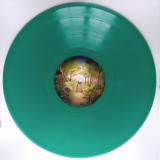
- Mintgrünes Doppelvinyl (140g) inklusive Downloadcode und exklusivem 12” Art Print.
ODESZA veröffentlichen ihr viertes Album auf Ninja Tune inklusive Features von The Knocks, Bettye LaVette, Låpsley, Izzy Bizu, MARO, Ólafur Arnalds, Julianna Barwick & Charlie Houston.
ODESZA veröffentlichen ihr viertes Album ’The Last Goodbye’ auf Foreign Family Collective/ Ninja Tune. Es ist das bisher ambitionierteste & emotional mitreißendste Album des Grammy nominierten Duos. Ein Projekt voller Glanz und Emotionen, nostalgisch und doch in der Gegenwart verwurzelt, ist es ein mitreißendes Klangerlebnis, das Themen wie Verbindung, Erinnerungen und den Einfluss, den wir aufeinander ausüben, anspricht. Es ist eine lebhafte Feier der Menschen und Momente, die unsere Fingerabdrücke hinterlassen haben und die in der gesamten Platte widerhallen. Es ist das bisher persönlichste Album des Duos und eine brillante Sammlung, die Vergangenheit und Gegenwart auf euphorische Weise miteinander verwebt. Neben The Knocks, Bettye LaVette und MARO werden auf „The Last Goodbye“ auch Julianna Barwick, Låpsley, Ólafur Arnalds, Izzy Bizu und Charlie Houston zu hören sein. Das Produzentenduo ODESZA besteht aus Harrison Mills und Clayton Knight, die zusammen Musik zu machen begannen, nachdem sie sich an der Universität in Washington, USA, kennengelernt hatten. 2012 veröffentlichten sie ihr von der Kritik gefeiertes Debütalbum „Summer's Gone“, gefolgt von der 2014 mit Gold ausgezeichneten Platte, „In Return“, die an der Spitze der Billboard Dance-/ Electronic-Charts debütierte und die Platin-Single „Say My Name“ enthielt - ein Remix des Tracks von RAC wurde später für einen GRAMMY 2016 nominiert. Ihr drittes Album, „A Moment Apart“, wurde 2017 veröffentlicht, ebenfalls mit Gold zertifiziert und brachte ihnen zwei GRAMMY-Nominierungen für das beste Dance-/ Electronic-Album und die beste Dance-Aufnahme für die Gold-Single „Line Of Sight“ ein. Das Album erreichte Platz 2 in den UK-Dance-Album-Top 40 Charts und Platz 2 in den iTunes-Electronic-Charts im Vereinigten Königreich und debütierte auf Platz 3 der Billboard Top 200 in den USA.
- A1: Continua
- A2: My Soul Or Something (Feat Kazu Makino)
- A3: Process
- A4: Woodland (Feat Serpentwithfeet)
- A5: Blue Hour (Feat Julianna Barwick)
- A6: Grasp (Feat Coby Sey, Slauson Malone & Sam Gendel)
- B1: We Are (Feat Hyukoh)
- B2: Condition (Feat Toro Y Moi)
- B3: Look Both Ways (Feat Pink Siifu)
- B4: All Over (Feat Panda Bear)
- B5: Skyline
- B6: Different Life (Feat Eyedress)
Crystal Clear Vinyl[27,69 €]
Nosaj Thing meldet sich mit seinem fünften Album 'Continua' samt hochkarätigem Ensemble zurück. Nach privaten Schicksalsschlägen in den letzten 5 Jahren schaut Jason W. Chung mit gleichgesinnten Künstlern aus Hip-Hop, Jazz, Soul und Avantgarde (u.a. HYUKOH, Toro y Moi, Kazu Makino (Blonde Redhead), serpentwithfeet, Malone und Panda Bear) nach vorne und legt eine Platte vor, die ermutigt, weiterzugehen. Nosaj Things Expertise in der Erzeugung einzigartiger, stimmungsgvoller Klanglandschaften führte ihn quer durch seine Heimatstadt L.A.: von Noise/Punk-Shows im DIY-Treffpunkt The Smell über DJ-Sets im Low End Theory bis zu Gigs mit Toro y Moi, The xx und The Weeknd. Seine 16-jährige Diskografie macht ihn zu einem Kultkünstler, der mit dem neuen Album nun alle Erwartungen an ihn als Komponist, Produzent und Arrangeur übertrifft.
- A1: Continua
- A2: My Soul Or Something (Feat Kazu Makino)
- A3: Process
- A4: Woodland (Feat Serpentwithfeet)
- A5: Blue Hour (Feat Julianna Barwick)
- A6: Grasp (Feat Coby Sey, Slauson Malone & Sam Gendel)
- B1: We Are (Feat Hyukoh)
- B2: Condition (Feat Toro Y Moi)
- B3: Look Both Ways (Feat Pink Siifu)
- B4: All Over (Feat Panda Bear)
- B5: Skyline
- B6: Different Life (Feat Eyedress)
Black Vinyl[27,94 €]
Nosaj Thing meldet sich mit seinem fünften Album 'Continua' samt hochkarätigem Ensemble zurück. Nach privaten Schicksalsschlägen in den letzten 5 Jahren schaut Jason W. Chung mit gleichgesinnten Künstlern aus Hip-Hop, Jazz, Soul und Avantgarde (u.a. HYUKOH, Toro y Moi, Kazu Makino (Blonde Redhead), serpentwithfeet, Malone und Panda Bear) nach vorne und legt eine Platte vor, die ermutigt, weiterzugehen. Nosaj Things Expertise in der Erzeugung einzigartiger, stimmungsgvoller Klanglandschaften führte ihn quer durch seine Heimatstadt L.A.: von Noise/Punk-Shows im DIY-Treffpunkt The Smell über DJ-Sets im Low End Theory bis zu Gigs mit Toro y Moi, The xx und The Weeknd. Seine 16-jährige Diskografie macht ihn zu einem Kultkünstler, der mit dem neuen Album nun alle Erwartungen an ihn als Komponist, Produzent und Arrangeur übertrifft.
Ryuichi Sakamoto, Daniel Lanois, Loscil, K Leimer, Deaf Center, Tangerine Dream, Arvo Pärt Wake is a distillation and reflection of the work of three Portland musicians thrown, like the rest of the world, into forced isolation by the continually-mutating curse of a natural world in disequilibrium. The product of involuntarily inward-looking emotional landscapes, Wake emerged sounding surprisingly expansive and confident. The trio uses a variety of instruments –including harp, fretless bass, piano, and a variety of synthesizers– to conjure sparkling panoramas of the imagination that are deep-pooled and impressionistic, bracing yet comforting. Mike Grabarak and Joshua Ward have performed together for years as a duo under the moniker of Location Services, while Derek Hunter Wilson has primarily worked as a solo composer in the classical realm. For the Points Of No Return compilation, Beacon Sound's 50th release and a benefit for the Beirut Musicians Fund, they recorded a collaborative piece entitled "Interdependence In Solitude" that was so promising the label offered to release an album if they continued down the path they had started upon. The resulting eight songs are simply mesmerizing. Made during a period of change and upheaval in the world and society where many people were disconnected from others, the album is the product of a collage-like dialogue built on trust and patience. While the musicians couldn’t physically be together for much of this time, they began sending musical ideas to one another in a conversational back-and-forth that acted as an anchor of stability – something they found they could turn to and depend on when things felt uncertain elsewhere. This comfort zone led to some transcendent moments of experimentation. “Delicate Need”, for example, features recordings of exaggerated pizzicato that were sampled and then run back through processing effects, which were then subsequently performed live over the original track. As things became less risky on the Covid front, they would occasionally meet for backyard rehearsals. Indeed, a recording of one of these rehearsals became the basis for the opening track “Photo Aware”. Wake will be available later this summer as a limited edition LP, with design work by Berlin-based Studio Bernhardt. The cover painting was created by Portland artist Nate Ethington. Highlights: – Derek was invited by the artist Gregory Euclide (Bon Iver, Erased Tapes) to participate in his label project, Thesis, along with artists such as Benoit Pioulard, Loscil, and Julianna Barwick. – Derek‘s first and second albums as a solo artist were released by Beacon Sound (Travelogue, 2017; Steel, Wood, & Air, 2019). – Location Services likewise released their 2019 album Reincorporate on the label. – The artists plan to tour together in 2023. Cascadia release shows TBA. Bios: Location Services is the Portland-based project of multi-instrumentalist Mike Grabarek (Magic Fades) and harpist Joshua Ward. They’ve released music on Beacon Sound and Beer On The Rug. They perform both written and improvised music. Derek Hunter Wilson is a composer and multi-instrumentalist based in Portland. He has released two solo albums on Beacon Sound and has also collaborated with visual artist Gregory Euclide for his Thesis Project label, resulting in a split 10" with Spanish musician Rauelsson. He has additionally collaborated with poets Zachary Schomburg and Brandi Katherine Herrera for several sound and performance pieces. He has performed live on the West Coast and in Berlin, sharing the stage with artists such as Colleen, Amulets, and Liima.
- A1: This Version Of You (Feat Julianna Barwick)
- A2: Wide Awake (Feat Charlie Houston)
- A3: Love Letter (Feat The Knocks)
- A4: Behind The Sun
- A5: Forgive Me (Feat Izzy Bizu)
- A6: North Garden
- A7: Better Now (Feat Maro)
- B1: The Last Goodbye (Feat Bettye Lavette)
- B2: All My Life
- B3: Equal (Feat Lapsley)
- B4: Healing Grid
- B5: I Can't Sleep
- B6: Light Of Day (Feat Olafur Arnalds)
ODESZA veröffentlichen ihr viertes Album auf Ninja Tune inklusive Features von The Knocks, Bettye LaVette, Låpsley, Izzy Bizu, MARO, Ólafur Arnalds, Julianna Barwick & Charlie Houston.
ODESZA veröffentlichen ihr viertes Album ’The Last Goodbye’ auf Foreign Family Collective/ Ninja Tune. Es ist das bisher ambitionierteste & emotional mitreißendste Album des Grammy nominierten Duos. Ein Projekt voller Glanz und Emotionen, nostalgisch und doch in der Gegenwart verwurzelt, ist es ein mitreißendes Klangerlebnis, das Themen wie Verbindung, Erinnerungen und den Einfluss, den wir aufeinander ausüben, anspricht. Es ist eine lebhafte Feier der Menschen und Momente, die unsere Fingerabdrücke hinterlassen haben und die in der gesamten Platte widerhallen. Es ist das bisher persönlichste Album des Duos und eine brillante Sammlung, die Vergangenheit und Gegenwart auf euphorische Weise miteinander verwebt. Neben The Knocks, Bettye LaVette und MARO werden auf „The Last Goodbye“ auch Julianna Barwick, Låpsley, Ólafur Arnalds, Izzy Bizu und Charlie Houston zu hören sein. Das Produzentenduo ODESZA besteht aus Harrison Mills und Clayton Knight, die zusammen Musik zu machen begannen, nachdem sie sich an der Universität in Washington, USA, kennengelernt hatten. 2012 veröffentlichten sie ihr von der Kritik gefeiertes Debütalbum „Summer's Gone“, gefolgt von der 2014 mit Gold ausgezeichneten Platte, „In Return“, die an der Spitze der Billboard Dance-/ Electronic-Charts debütierte und die Platin-Single „Say My Name“ enthielt - ein Remix des Tracks von RAC wurde später für einen GRAMMY 2016 nominiert. Ihr drittes Album, „A Moment Apart“, wurde 2017 veröffentlicht, ebenfalls mit Gold zertifiziert und brachte ihnen zwei GRAMMY-Nominierungen für das beste Dance-/ Electronic-Album und die beste Dance-Aufnahme für die Gold-Single „Line Of Sight“ ein. Das Album erreichte Platz 2 in den UK-Dance-Album-Top 40 Charts und Platz 2 in den iTunes-Electronic-Charts im Vereinigten Königreich und debütierte auf Platz 3 der Billboard Top 200 in den USA.
- A1: This Version Of You (Feat Julianna Barwick)
- A2: Wide Awake (Feat Charlie Houston)
- A3: Love Letter (Feat The Knocks)
- A4: Behind The Sun
- B1: Forgive Me (Feat Izzy Bizu)
- B2: North Garden
- B3: Better Now (Feat Maro)
- C1: The Last Goodbye (Feat Bettye Lavette)
- C2: All My Life
- C3: Equal (Feat Lapsley)
- D1: Healing Grid
- D2: I Can't Sleep
- D3: Light Of Day (Feat Olafur Arnalds)
ODESZA veröffentlichen ihr viertes Album auf Ninja Tune inklusive Features von The Knocks, Bettye LaVette, Låpsley, Izzy Bizu, MARO, Ólafur Arnalds, Julianna Barwick & Charlie Houston.
ODESZA veröffentlichen ihr viertes Album ’The Last Goodbye’ auf Foreign Family Collective/ Ninja Tune. Es ist das bisher ambitionierteste & emotional mitreißendste Album des Grammy nominierten Duos. Ein Projekt voller Glanz und Emotionen, nostalgisch und doch in der Gegenwart verwurzelt, ist es ein mitreißendes Klangerlebnis, das Themen wie Verbindung, Erinnerungen und den Einfluss, den wir aufeinander ausüben, anspricht. Es ist eine lebhafte Feier der Menschen und Momente, die unsere Fingerabdrücke hinterlassen haben und die in der gesamten Platte widerhallen. Es ist das bisher persönlichste Album des Duos und eine brillante Sammlung, die Vergangenheit und Gegenwart auf euphorische Weise miteinander verwebt. Neben The Knocks, Bettye LaVette und MARO werden auf „The Last Goodbye“ auch Julianna Barwick, Låpsley, Ólafur Arnalds, Izzy Bizu und Charlie Houston zu hören sein. Das Produzentenduo ODESZA besteht aus Harrison Mills und Clayton Knight, die zusammen Musik zu machen begannen, nachdem sie sich an der Universität in Washington, USA, kennengelernt hatten. 2012 veröffentlichten sie ihr von der Kritik gefeiertes Debütalbum „Summer's Gone“, gefolgt von der 2014 mit Gold ausgezeichneten Platte, „In Return“, die an der Spitze der Billboard Dance-/ Electronic-Charts debütierte und die Platin-Single „Say My Name“ enthielt - ein Remix des Tracks von RAC wurde später für einen GRAMMY 2016 nominiert. Ihr drittes Album, „A Moment Apart“, wurde 2017 veröffentlicht, ebenfalls mit Gold zertifiziert und brachte ihnen zwei GRAMMY-Nominierungen für das beste Dance-/ Electronic-Album und die beste Dance-Aufnahme für die Gold-Single „Line Of Sight“ ein. Das Album erreichte Platz 2 in den UK-Dance-Album-Top 40 Charts und Platz 2 in den iTunes-Electronic-Charts im Vereinigten Königreich und debütierte auf Platz 3 der Billboard Top 200 in den USA.
Contemporary pianist and composer James Heather announces his
second album, ‘Invisible Forces’, via Ahead of Our Time, Ninja Tune
founders Coldcut’s first record label.
An album influenced by the sensibility of electronic, ambient, orchestral
and post-rock music but channelled through solo piano and Heather’s
classical and jazz grounding.
With regards to his “superb” (Crack Magazine) and “masterful”
(Electronic Sound, Dummy) debut, ‘Stories From Far Away On Piano’,
the songs are grander, deeper and broader in emotional range and are
developed through a series of improvisation techniques. Heather
describes it as ‘pulse music’, with each track performed in a single take
and with their roots in this live improvisation, often honed on the road
where he moves between tender to more propulsive, trance-inducing
dynamics.
For fans of Jean-Michel Blais, Sarah Davachi, John Carroll Kirby, Otto A.
Totland, Ólafur Arnalds, Nils Frahm, The Cinematic Orchestra.
CD in slipcase with printed inner.
140g violet vinyl with holofoil detail sleeve.
“The sound Heather makes is captivating.” - Electronic Sound
“Masterful contemporary piano.” - Dummy
“A remarkable piece of music that yields more secrets the more it’s
played” - Clash
Featured in Coldcut’s ambient compilation ‘@0’ alongside Suzanne
Ciani, Ryuichi Sakamoto, Kaitlyn Aurelia Smith, Helena Hauff, Skee
Mask, Julianna Barwick, Steve Roach, Laraaji and Mira Calix.
Notable supporters of Heather’s music include James Lavelle (UNKLE),
Nils Frahm, Cillian Murphy, Flying Lotus’ Brainfeeder (via the live
session he did for them in 2021), The Cinematic Orchestra, The Bug,
Leandro Taub, Actress, Bicep, Martyn and Tim Noakes (Dazed).
James has collaborated with the likes of Dawn Richard, Coldcut,
Mumdance and Roger Robinson (King Midas Sound).
Die Londoner Produzentin und DJ Elkka (bürgerl. Emma Kirby) kehrt mit ihrer neuen EP, „Harmonic Frequencies“ zu Technicolour zurück und liefert eine passende Nachfolgerin der von der Kritik gefeierten EP „Euphoric Melodies“, die Anfang des Jahres erschien.
„Harmonic Frequencies“ wurde während einer Zeit der Unsicherheit in den letzten Monaten des Jahres 2020 geschrieben und zeigt Emma, wie sie die Emotionen, die sie zu dieser Zeit empfand, verarbeitet. Vom tanzbaren Opener „Harmonic Frequencies“, in dem Emma energiegeladen und ausdrucksstark den Vibe der vorherigen EP, „Euphoric Melodies“ fortsetzt, bis hin zu den atmosphärischen und kathartischen Momenten in „Music To Heal To“ und „Voices“ (in dem wir Julianna Barwicks meditativem Gesang hören), in denen ihre Absichten darin bestehen, zu nähren, zu beruhigen und wieder aufzubauen. Die EP ist eine Ode an die heilende Natur der Tanzmusik in all ihren verschiedenen Formen.
- Schwarzes Standardvinyl (140g) im Pappschuber inklusive Downloadcode.
'A Mythology of Circles' is the new album from Brooklyn-based composer and musical artist Faten Kanaan, her first to be released on Fire Records. Cyclical patterns and 'variation through repetition' are central to Faten's music. Harmony and counterpoint are composed intuitively and treated as narrative tools- with sound, silence, and the resulting mystical relationship between notes used as gestures to tell a wordless story. The album is separated into a 'dusk to evening' side, and an 'underworld/dream-state' side; highlighting the myths of Ishtar, Inanna, Orpheus, Persephone, and others. Inspired by cinematic forms and mythological story structures: from sweeping landscapes and quiet romances, to patterned tensions and dream sequences; Faten brings an earthy, visceral touch to electronic music. In symbiosis with technology is an appreciation for the vulnerability of human limitations and nuances. All the sections are played in real time, neither looped nor sequenced- allowing for subtle changes to unfold. The use of VST sampled choral voices in this album embodies the forlorn state of technological acceleration, and the desire to return to a vulnerable human sound. The album art also explores a complicated relationship with technology: the statue comes from a series of digital replicas, returning in its last stage to a more intimate and handmade feel. Composed, produced and mixed by Faten Kanaan, the album was mastered by Heba Kadry (Bjork, Ryuichi Sakamoto, Julianna Barwick). "Strangely haunting yet beautiful bouquet of nocturnal, electronic blooms ranging from poignant ambient vignettes to chamber-like pop, from Brooklyn's Faten Kanaan- a gifted musical story-teller" Boomkat
Los Angeles-based harpist Mary Lattimore returns with Silver Ladders, the full-length follow-up to acclaimed album Hundreds of Days. Since 2018, Lattimore has toured internationally, released collaborative albums with artists such as Meg Baird and Mac McCaughan, and shared a friends-based remix album featuring artists such as Jónsi and Julianna Barwick. At one of her festival appearances, Lattimore met Slowdive’s Neil Halstead: “A friend introduced us because she knew how big of a fan I was and Neil and I had a little chat... The next day, I just thought maybe he’d be into producing my next record.” He was. Lattimore traditionally records her albums holed up by herself, so the addition of Halstead’s touches as a producer and collaborator leave a profound trace. “I flew on a little plane to Newquay in Cornwall where he lives with his lovely partner Ingrid and their baby. I didn’t know what his studio was like, he’d never recorded a harp, but somehow it really worked
Recorded over nine days at Halstead’s studio stationed on an old airfield, Silver Ladders finds Lattimore exercising command and restraint. Her signature style is refined, the sprawling layers of harp reigned in and accented by flourishes of low end synth and Halstead’s guitar. The music can feel ominous but not by compromising vivid wonder, like oceanic overtones that shift with the tides. This material is colored by specific memories for Lattimore; “Neil has this poster of a surfer in his studio and I’d look at it each day, looking at the sunlight glinting on the dark wave. In these songs I like the contrast between the dark lows and the glittering highs. The gloom and the glimmer, the opposites, a lively surfing town in the winter turned kinda rainy and empty and quiet.”
Lattimore and Halstead reformed three existing demos and improvised the remaining four songs. Among the batch she brought with her, the title track recalls a trip she took to Stari Grad, Croatia on the island of Hvar. “I spent some days there just swimming in the bay, silver ladders right into the sea.” The image stuck with her when she found herself performing at a cliffside wedding overlooking the Pacific. “Before anyone showed up, I had time to set up and play and this song came to me, ‘Silver Ladders (to the sea)’, so I made a little recording on my phone to remember it.” This sketch expanded; a delicately glittering harp melody comes over the horizon, swelling and rolling towards the shore on ebbs of synth and refractory delay.
Die in Los Angeles lebende Harfenistin Mary Lattimore kehrt mit ihrem neuen Album ,Silver Ladders" zurück. Seit ihrem letzten Longplayer ,Hundreds Of Days" aus dem Jahr 2018 ist Lattimore international getourt und hat gemeinsame Alben mit KünstlerInnen wie Meg Baird und Mac Mccaughan veröffentlicht. Außerdem erschien 2019 ein Remix-Album von ,Hundreds Of Days" an dem sich unter anderem Jónsi und Julianna Barwick beteiligten. Bei einem ihrer Festival-Auftritte traf Lattimore Neil Halstead von Slowdive: ,A friend introduced us because she knew how big of a fan I was and Neil and I had a little chat... The next day, I just thought maybe he'd be into producing my next record." Das tat er schlussendlich auch. Lattimore nimmt ihre Alben traditionell allein auf, daher hinterlässt Halstead als Produzent und Mitarbeiter eine ganz eigene Note. Der Aufnahmeprozess in Halsteads Studio, das auf einem alten Flugplatz stationiert ist, dauerte über neun Tage. Lattimores unverkennbarer Stil ist auch auf ,Silver Ladders" elegant - im Vordergrund stehen sich ausbreitende Harfen-Schichten, welche mit aufblühenden Low-End-Synthesizern und Halsteads Gitarre angereichert werden. Die Musik kann sich teils bedrohlich anfühlen wie der Klang des Ozeans, der sich mit den Gezeiten verändert. Inspiriert von den Erzählungen aus Cornwall, die Halstead mit Lattimore teilte, sowie von diversen Gesprächen, Ideen und ihren eigenen Reisen, haben die Songs deutlich etwas märchenhaftes - und doch ist ,Silver Ladders" offen für eigene Interpretationen. LATTIMOREs Erinnerungen - ,the Cornish landscape, the hotel from the movie The Witches, the cream tea, winning the pub quiz, the Sunday Roast, the ghosts of all of the surfers who had died in the wild waves, the night walks to the top of the hill to see the moon shining on the water." - scheinen durch diese Werke hindurch, ohne sie zu definieren. In gewisser Weise gehören sie, ähnlich wie das Meer oder der Himmel, allen. Das ist die Schönheit ihres Handwerks!
- A1: Dim Arc - Breeze Shapes
- A2: Sunmoonstar - Sleepy Dragon
- A3: Emily A Sprague - Flew
- A4: Fools - I Can See Your Voice Thru The Trees
- B1: Cool Maritime & Kaitlyn Aurelia Smith - Daybreak
- B2: Constant Shapes - Wind Leaf Shimmer
- B3: Kathryn Shuman - Objects
- B4: Jeremiah Chiu - Poems One & Fourteen (Feat Stephen Honer)
- C1: Kacey Johansing - Whales Of Agate
- C2: Julianna Barwick - Newborn
- C3: Mary Lattimore - She Remebers Sitka
- C4: Geotic - Uncaught
- D1: Andy Strain - Patience
- D2: Bana Haffar - Circulations
- D3: Ulfur - Feathered (Feat Gyda Valtysdottir)
Compilation album curated by Kaitlyn Aurelia Smith
The directive for the composers featured on Breathing Instruments was, in effect, to accentuate the ways in which instruments sound like they are breathing. Some have recreated the literal experience of feeling or hearing the human breath. Others take a more abstract approach, where “breathing” is more motif than object of emulation.
From hushed pulsations and distant vocals in Kathryn Shuman’s ‘Objects creating a womb-like environment to Julianna Barwick’s blissful ‘Newborn’ the tracks give sonic form to the experience of emerging from the womb.
There is also a striking concurrence of woodland sounds throughout this collection from the ghostly tones of Emily A Srague’s ‘Flew’ to Cool Maritime and Kaitlyn Aurelia Smith’s dew dripped ‘Daybreak’.
Meanwhile the undulating seascape of Geotic’s ‘Uncaught’ conjures moments of Evening Star by Fripp/ Eno, but supplants that album’s crystalline production with the warm crackle of vinyl.
If we learn anything from Breathing Instruments it is that we are inextricable from the natural world.
War Jacques Greenes Debütalbum "Feel Infinite" (2017) der Soundtrack zum Vorglühen, so ist sein Nachfolger der Reflektionsmoment nach dem Rave, hochempfindsam, voller latenter Möglichkeiten. Gleichzeitig ist "Dawn Chorus" sein bislang kooperativstes Werk, an dem Filmkomponist Brian Reitzell ("Lost In Translation") und Cellist Oliver Coates teilnahmen, während Ambient-Künstlerin Julianna Barwick, Rapper Cadence Weapon und die kanadischen Sängerinnen Ebhoni und Rochelle Jordan Vocals beisteuerten. Statt Clubmusik macht Jacques Greene Musik über den Club, er remixt Radiohead, produziert Katy B und Tinashe und tourt mit The xx.
- 1