Search:dexter colt

Styles
All
  • 1
Dexter Colt - Syncretic

Dexter Colt

Syncretic

12inchINFINITE001
Infinite Search
30.10.2026

Infinite Search is the first label launched by Lifted Trax, and the beginning of a larger effort to highlight music coming out of Singapore and broader region.

The label will be home to the deeper shades of shop founder Dexter Colt’s productions, showcasing his dubby and introspective style that has coalesced over the last several years. The four cuts that make up Syncretic represent a melding of deep dance music styles, taking inspiration from dub techno, US deep house, leftfield electronix, UK tech and more, filtered through the perspective of Asia’s dancefloors. Limited run, vinyl-only release.

pre-order now30.10.2026

expected to be published on 30.10.2026

13,03 €
Oye Manny - Living Water

Singaporean label Darker Than Wax brings us to Texas with a fresh 12” from Houston-born producer Oye Manny. Following his release on Salon Recordings, Oye Manny has carved out a lane defined by deep rhythms, Latin roots, and pure authenticity, an ethos he continues to distill into sound on his new record Living Water. Drawing on his Colombian roots and keenly focused on what makes dancers move, Manny puts percussion at the forefront on Living Water – from the chord driven house stompers ‘Malta Sip’ and ‘Palmira’ on the A side, to the darker club tones of ‘Visaje’ and the slick musicality of ‘Youthful Expression ‘ on the flip, drums play a starring role. Completing the package is a remix from Singapore-based producer and Darker Than Wax core member Dexter Colt, providing a deeper, Chicago-inspired take on ‘Malta Sip’.

In Stock

On Stock and ready to ship

Last In: 7 months ago
12,56 €
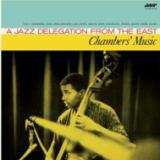
Paul Chambers - Chamber's Music feat. John Coltrane LP
  • Dexterity
  • Stablemates
  • Easy To Love
  • Time Was
  • Visitation
  • John Paul Jones
  • Eastbound
  • Violets For Your Furs

Chambers' Music , subtitled A Jazz Delegation from the East , was bassist Paul Chambers ' debut album as leader. Originally released in 1956 on Jazz West , it features Chambers with two his fellow bandmates from the Miles Davis Quintet, John Coltrane and Philly Joe Jones , along with pianist Kenny Drew . Featuring a wellrounded programme that includes Charlie Parker's 'Dexterity', Benny Goson's 'Stablemates, Cole Porter's 'Easy To Love', and Chamber's own composition'Visitation', the album also has the distinction of being the first record to include a composition by John Coltrane - 'John Paul Jones'


[f] John Paul Jones [aka Trane's Blues]

pre-order now17.07.2026

expected to be published on 17.07.2026

22,27 €
Dexter Gordon - Our Man in Paris LP
  • Scrapple from the Apple
  • Willow Weep for Me
  • Broadway
  • Stairway to the Stars
  • A Night in Tunisia
also available

Clear Vinyl[13,24 €]

Black Vinyl[25,63 €]


In 1962, Gordon relocated to Paris, where he became part of a vibrant jazz community

He was already a well-established figure in the jazz world due to his groundbreaking work in the 1940s and 1950s. His decision to live in Europe revitalized his career, allowing him to continue evolving as a musician away from the struggles in the USA: he enjoyed enormous respect in Europe, which allowed him to perform freely, often in clubs and on tours, without the burdens of American racism. Paris had long been a haven for jazz musicians: artists like Miles Davis, Thelonious Monk, and John Coltrane were celebrated in Europe, and the French jazz scene, in particular, became a hotspot for both American expatriates and European musicians. Dexter Gordon quickly became one of the leading figures in that scene. Our Man in Paris is a celebrated jazz album and it is widely regarded as one of Gordon's best works. It is considered one of Gordon's finest albums due to its blend of bebop virtuosity, lyrical improvisation, and the tight interplay between world-class musicians: a classic jazz record, beloved for its authenticity and the inspired performances of Dexter Gordon and his ensemble. This album is now considered a classic in the jazz canon that's not only a remarkable album because of its flawless execution and historical significance, but it also captures a pivotal moment in jazz history where American jazz musicians were embracing new experiences and sounds in Europe and captures the essence of Gordon's bebop roots while showcasing the influence of his time in Europe.

pre-order now29.11.2024

expected to be published on 29.11.2024

20,13 €
Freestyle Fellowship - Innercity Griots 2x12"

2024 Repress

Innercity Griots, the second album from Freestyle Fellowship, is perhaps *the* essential West Coast left-field rap album of the early ’90s. Released in 1993 on 4th & Broadway, it’s a towering, progressive hip-hop masterpiece that expanded rap’s boundaries through lyrical elevation and production innovation. Their talent was ahead of everybody else by light years. This is pure b-boy jazz.

The original single vinyl LP is now hideously scarce, and of course the sound suffers from not being officially released as a double. This Be With re-issue fixes both problems, and for completeness also includes “Pure Thought” from the CD version of the album. This incredible display of imaginative hip-hop sounds better than ever.

Freestyle Fellowship were some of the earliest technically dazzling rappers to come out of California. Mikah 9, P.E.A.C.E., Aceyalone and Self Jupiter - along with DJ Kiilu - forged their famed lyrical dexterity in the ultra-competitive crucible of the Good Life Cafe. Founded in Leimert Park, South Central LA in December 1989, this earthy health-food store and cafe was where the city’s finest microphone fiends would gather to showcase their freestyle skills at the Thursday night open-mic.

Innercity Griots has been described as the Rosetta Stone for rap styles. The group’s dense, vibrant wordplay and enviable interplay quickly earned the attention and respect of the city’s hip-hop underground. Frenetically trading acrobatic rhymes with agility and grace, the Fellowship used their voices as instruments like true virtuosos, spraying improvised raps like a Coltrane sax solo.

With the bulk of the album’s production handled by The Earthquake Brothers, and Bambawar, Daddy-O, and Edman taking over for some of the tracks, Innercity Griots dances between organic and programmed music, largely forgoing sampling and instead built around live jazz jams. The likes of Freddie Hubbard’s “Red Clay” and Miles Davis’s “Black Comedy” were used more as templates for house band The Underground Railroad Band to spiral out from. As Pitchfork noted in their recent 9.0 review of this classic album, “Freestyle Fellowship embodied the style and spirit of jazz on a molecular level. They shared the effortless cool and tough countenance of the great bebop players from the ’50s without verging into jazz-rap parody. Their innate jazziness felt tangible and hard-earned”.

The unusual approach to the music was matched by the Fellowship’s lyrics. Eschewing the tired rap tropes of the time, this multifaceted album instead explores their ruminations on greed and homelessness, weed, sex, survival, insecurity and tribalism.

Remastered by Simon Francis for double vinyl and cut by Pete Norman, we hope this long-overdue re-issue of Innercity Griots satisfies the legions of fans that have since been bewitched by the majesty of this record. It should also introduce some new listeners to yet another overlooked classic.

out of Stock

Order now and we will order the item for you at our supplier.

Last In: 2 years ago
27,69 €
BUILD AN ARK - REVISION - AN ANTHOLOGY 3x12"

Triple edition, packaged in thick PVC cover with a foldable double sided poster and download card.

Celebrating the 20 year anniversary of highly revered Jazz collective, Build An Ark from Los Angeles, California. Formed in 2003 and releasing albums between 2004 and 2010, the Carlos Niño co-ordinated project included contributions from luminaries such Phil Ranelin, Big Black, Miguel Atwood-Ferguson, Adam Rudolph, Derf Reklaw (R.I.P.), Dexter Story, Dwight Trible, Gaby Hernandez, Mia Doi Todd, Munyungo Jackson, Nate Morgan (R.I.P.) Waberi Jordan, Avotcja & many more.

This set was compiled by band leader Carlos Niño with recordings from 2001 to 2008 that have previously been released on Kindred Spirits.

Gilles Peterson says "It's a beauty!"

pre-order now01.07.2024

expected to be published on 01.07.2024

36,77 €
Pedro Vian - Earth, Our Planet? LP

Earth, Our Planet?”: A call for environmental awareness. This time, Pedro Vian - the founder of Modern Obscure Music - presents his fourth solo album (following his 2020 release, "Ibillorca"). Due for release in spring 2024, "Earth, Our Planet?" promises to immerse us in a moving odyssey, crossing the boundaries of musical genres to provoke an urgent meditation on the protection of our planet. On this occasion Vian has composed the album influenced by the myth of the eternal return, the compositions are long and repetitive, generating states of pure trance.
Pedro Vian, singular for his fusion of genres and styles, ventures into even more complex territories in "Earth, Our Planet?". From the first listen, it is evident that this work treads the line of convention and breaks the boundaries of electronic and experimental music with artistic dexterity. The album weaves together texture, hypnotic rhythms and melody. Each track reveals his distinctive ability to create immersive landscapes, guiding the listener into deep emotional introspection. This is not just music; it is a transformative experience.
The beauty of this album lies not only in the musical vision. The album features high-calibre collaborations that add layers of creativity and elegance. Trumpeter Pierre Bastien, whose early productions left an indelible mark on Aphex Twin's Reflex label, infuses "A Day in Rotterdam" with a unique emotional resonance. Violinist, Asia, renowned for her avant-garde approach and ability to conjure unique landscapes, elevates the album's opening tracks "Urobóros" and "Les Tambours Subterraniens". Their skill and sensitivity intertwine perfectly with Vian's artistic vision. In addition, Italian producer Daniele Mana, with whom Pedro Vian collaborated closely on his previous album "Cascades", known for his experimental approach and talent for creating extraterrestrial atmospheres also contributes to "Les Tambours Subterraniens". His artistic perspective adds more complexity and texture to the piece, pushing the boundaries of contemporary electronic music. There is also a collaboration with Raül Refree, an artist with whom Vian worked with last year, presenting “Font De la Vera Pau”, an album that The Guardian defined as "a wonderful piece of electroacoustic music, a captivating mix of strings and analogue synth drones which sometimes flirts with Alice Coltrane-ish spiritual jazz". With "Earth, Our Planet?", Pedro Vian not only offers up some of his best work to date, but it is also a call to reflect on our relationship with the natural world. As a part of a planet where environmental awareness is more crucial than ever, he urges us to protect and preserve our world as an extension of ourselves. This extensive work is a statement, Vian addresses the notion that too often we prioritise immediate needs over the well-being of the planet. It highlights the fact that we often consider the Earth as a possession when, in reality, we are but a part of it.

out of Stock

Order now and we will order the item for you at our supplier.

Last In: 8 months ago
23,32 €
BEN WEBSTER & HIS QUARTETT - WAYFARING WEBSTER LP 2x12"

Tenor saxophonist Ben Webster (born Kansas City, 1909) needs little introduction, Webster is regarded as one of the three foremost swing era tenor saxophonists - the two others being Coleman Hawkins and Lester Young. His ballad playing and sound inspired such later fellow saxophonists as Archie Shepp, Sonny Rollins and John Coltrane. Webster became famous for his unique sound, quick tempos, his solos that contained great virile rhythmic momentum, a rasping timbre and an almost brutal aggressiveness filled with growl, while his ballad playing was breathy, tender and sensual. The list of his collaborations is long, Ben Webster worked, recorded and played with legends from the likes of Art Tatum, Count Basie, Cab Calloway, Roy Eldridge and Dexter Gordon_but a dream came true when he was offered a permanent job in Duke Ellington's orchestra where his personal style matured. Webster stayed with Ellington until 1943, after which he formed his own groups and played with other small ensembles. From 1952 on he spent his time between Los Angeles and New York playing, freelancing and recording with a variety of soloists, among them high-profile singers like Billie Holiday, Ella Fitzgerald, Carmen McRae and Frank Sinatra. Despite excellent reviews of his albums, it was difficult for Webster to find steady work in the US during the early 1960's, and when in 1964 he got offered to play for a month in London he accepted and sailed to England. Webster never returned to the United States. In Europe he found plenty of work, playing residences in Scandinavia, settled in Amsterdam (1966-69) and then in Copenhagen (where he even has a street named after him). He toured frequently, playing in clubs and at big festivals with local bands or with visiting American musicians. Ben Webster suffered a stroke in Amsterdam in September 1973 following a performance in Leiden and died on September 20. Even when his health started to decline during his last years, his playing never did. To the last day Webster played with passion and intensity, delivering weight on every note. Webster is the subject of two renowned documentaries and two extensive biographies have been published about his legacy. Responsible for a plethora of excellent recordings he remains THE best-selling tenor saxophonist in jazz. Ben Webster was one of those unique jazz musicians whose presence came through on every recording (He recorded for prestigious labels including Verve, Impulse!, Prestige, Reprise, Blue Note_and countless others. On the album we are proudly presenting you today (Wayfaring Stranger recorded in 1970 by the NPS Radio network in The Netherlands) you will find mind-blowing high-quality Dutch sessions that were left dormant on a shelf and weren't commercially released for over 30 years! On 'Wayfaring Stranger' the listener is treated to no less than nine sublime tracks that document Webster's trademark relaxed-swinging but imaginative playing style that never gets boring. The album features an all-star line-up from the likes of Rob Langereis (Toots Thielemans), John Engels (Chet Baker, Dizzy Gillespie) and Cees Slinger (Dexter Gordon, Slide Hampton). Expect a 61-year-old Ben Webster in excellent form giving a warm, dusky, gritty yet funky performance where he delivers everything from up-tempo material, 12-bar blues jams to soulful expressive ballads. Webster's quartet is in constant musical dialog with each other, creating a unique back and forth between musicians at the top of their game. Tidal Waves Music now proudly presents the FIRST EVER vinyl release of this fantastic album (originally released as a limited Compact Disc edition back in 2000). This unique record comes as a deluxe 180g DOUBLE vinyl edition (strictly limited to 1000 copies) with obi strip.

pre-order now24.11.2023

expected to be published on 24.11.2023

48,11 €
Horace Tapscott - Live At Lobero Vol 2

Re-mastering by: Kevin Gray

This is a reissue of a now out-of-print album from live trio date by the legendary LA-based pianist, composer and multi-bandleader, Horace Tapscott. Pianist Horace Tapscott is always at his best when he is leading a trio. Born in 1934 in Houston, Texas, Horace came from a musical family centered around his mother, Mary Malone Tapscott, who worked professionally as a singer and pianist. When Horace was nine, the family moved to Los Angeles. As a teenager in the late 1940's, Horace was surrounded by the music of Central Avenue: Art Tatum, Charlie Parker, Coleman Hawkins, Dexter Gordon, were among the many cats on the set. Around this time, Horace also began to take music lessons from teachers Dr. Samuel R. Browne and Lloyd Reese, whose other students included Eric Dolphy and Frank Morgan. Horace's musical studies included trombone in addition to piano.

In 1952, Horace graduated from Jefferson High, got married to Cecilia Payne and went into the Air Force. Horace played in an Air Force Band while he was stationed in Wyoming for his term of duty. After mustering out, he returned to Los Angeles where he worked around on various gigs until he joined the Lionel Hampton Big Band as a trombonist.

In 1959, Horace finally went with the Hampton Big Band to New York, where his friend Eric Dolphy introduced him to John Coltrane. A tough winter, a lack of gigs, and too many nights on the floor of a friend's art gallery finally sent Horace packing for sunny Southern California, where a life with wife and family awaited his return.

The sixties saw Horace emerge as a die-hard leader of the Avant Garde. Horace began to gain public notice playing with his own group, that included alto saxophonist Arthur Blythe, bassist David Bryant, and drummer Everett Brown II. Horace also appeared on records for the first time.

Horace was always outspoken about racism, politics, stereotypes, and social ethics. His forward-minded vocal presence on and off the microphone is as much a part of his art as his piano playing. As a result, he was labeled a "dissident," categorized as an "employment risk," and black-listed from the music industry establishment in the early 1970's. None of this slowed Horace down. He began gigging sporadically at Parks and Recreation events and for churches around Watts. This "dark period," with his only regular gig at his friend Doug Weston's Troubadour on Los Angeles' "Restaurant Row", was also a time of intense creativity.

Around 1977, Horace reorganized the Pan-Afrikan Peoples Arkestra with the help of several old friends and many new faces. The Arkestra performances involve singing, dancing, and poetry in addition to the music. Soon after the new group's debut, Horace came to the attention of producer Tom Albach who contracted Horace to record a number of albums for Nimbus Records. Albach also helped introduce Horace to an international audience by arranging several European tours.

The 80's saw Horace emerge as one of jazz's premiere solo pianists. He recorded several solo piano albums for Nimbus.

pre-order now30.08.2021

expected to be published on 30.08.2021

30,21 €
Chora(s)san Time-Court Mirage - Blues Alif Lam

Having already unearthed three collections of archival ‘70s recordings by Catherine Christer Hennix, Blank Forms continues their annual illumination of the visionary Swedish composer’s music by turning to more recent work with this first-time vinyl edition of Hennix’s “Blues Alif Lam Mim in the Mode of Rag Infinity/Rag Cosmosis,” a 2014 piece first released as a CD in 2016 (Important Records).

The double album captures the April 22, 2014 premiere of Hennix’s composition by by the Chora(s)san Time-Court Mirage, her expanded just intonation ensemble, featuring a brass section of Amir ElSaffar, Paul Schwingenschlögl, Hilary Jeffery, Elena Kakaliagou, and Robin Hayward; live electronics by Stefan Tiedje and Marcus Pal; and voice by Amirtha Kidambi, Imam Ahmet Muhsin Tüzer, and Hennix herself. Intended to reveal the blues’ origins in the eastern musical traditions of raga and makam, “Blues Alif Lam Mim in the Mode of Rag Infinity/Rag Cosmosis” has its roots in Hennix’s 2013 realization of an “Illuminatory Sound Environment,” a concept developed in 1978 by anti-artist Henry Flynt on the basis of Hennix’s own “The Electric Harpsichord.”

As Hennix explains in Other Matters, Blank Forms’ 2019 collection of her writings:

“Rag Infinity/Rag Cosmosis presents fragments of ‘raga-like’ frequency constellations following distinct cycles and permuting their order, creating a simultaneity of ‘multi-universes.’ When two such ‘universes’ come in proximity of each other and begin unfolding simultaneously along distinct cycles, there is a kaleidoscopic exfoliation of frequencies as one universe is becoming two, but not separated—the effect of cosmosis is entrained, binding two or more frequency universes into proximity where their modal properties interact and blend, creating in the process entirely new microtonal constellations in an omnidirectional simultaneous cosmic order with phenomenologically ‘transfinite’ Poincaré cycles (cyclic returns to initial conditions).”

As with Hennix’s best work, the organic unfolding of this quivering drone belies a precision that opens onto the infinitesimal. Upon its mesmerizing ebb and flow, the vocalists incant a devotional poem written in Arabic by Hennix and featuring quotations from the Quran. Also reproduced on the album’s gatefold jacket, Hennix’s reduction of the sacred text to its most elegant formulation invites the contemplator to bring their inner knowledge to the composition for use as a prompt for meditation. Yet the piece offers depth to even the most secular listener willing to immerse themselves in music brimming with such serene intensity.

Catherine Christer Hennix (b. 1948) started her creative life playing drums with her older brother Peter, growing up in Sweden where she heard jazz luminaries, such as John Coltrane, Eric Dolphy, Dexter Gordon, Archie Shepp, and Cecil Taylor perform from 1960 to 1967. Directly after high school, Hennix went to work at Stockholm’s pioneering Elektronmusikstudion (EMS), where she developed early tape music, incorporating computer generated speech done at the Royal Technological University (KTH), where she was an undergraduate student. After traveling to New York In 1968, she met artists Dick Higgins and Alison Knowles who invited her to stay at the Something Else Press Town House where she had the opportunity to meet, among others, composers John Cage, James Tenney, and Phil Corner. During the following years she developed fruitful collaborative relationships with many composers in the burgeoning American avant-garde, including, most significantly, Henry Flynt and La Monte Young. Young introduced Hennix to Hindustani raga master Pandit Pran Nath and she would later study intensively under him as his first European disciple. While Hennix continued to make music performing alongside Arthur Russell, Marc Johnson, Henry Flynt, and Arthur Rhames, she also served as a professor of Mathematics and Computer Science at SUNY New Paltz and as a visiting Professor of Logic (at Marvin Minsky’s invitation) at MIT’s Artificial Intelligence Laboratory. In recent years Hennix has led the just-intonation ensemble the Chora(s)san Time-Court Mirage, which has featured musicians Amelia Cuni, Amirtha Kidambi, Chiyoku Szlavnics, Hilary Jeffrey, Amir El-Saffar, Benjamin Duboc and Rozemarie Heggen. She currently resides in Istanbul, Turkey pursuing studies in classical Arabic and Turkish makam.
pre-order now23.07.2021

expected to be published on 23.07.2021

37,77 €
Catherine Christer Hennix - Unbegrenzt
 
1

Unbegrenzt is the third in an ongoing series of archival records of the unheard music of Swedish composer Catherine Christer Hennix, co-released by Blank Forms Editions and Empty Editions. It follows Selected Early Keyboard Works and Selections from 100 Models of Hegikan Roku (named the #1 archival release of 2019 by The Wire), in addition to a two-volume collection of Hennix’s writing titled Poësy Matters and Other Matters.

Recorded in February of 1974 and featuring Catherine Christer Hennix (recitation, percussion, and electronics) and Hans Isgren (bowed gong), Hennix’s realization of Karlheinz Stockhausen’s “Unbegrenzt” (German for “unlimited”) from Aus den Sieben Tagen is an elaboration both rigorous and radically different from the canonical 1969 recording issued by Shandar. The collection of 15 text pieces written in Paris during May of 1968, Aus den Sieben Tagen, denies its performers notated direction and instead provides poetic cues that hinge upon Stockhausen’s conception of “intuitive music,” a Eurocentric perspective on improvisation antithetical to the vernacular forms Hennix had engaged with as a young drummer performing in Stockholm jazz clubs with musicians like Bill Barron, Cam Brown, Hans Isgren, Lalle Svenson, Allan Vajda, Bo Wärmell, and many others. While both Hennix and Isgren saw the formal prospect of Aus den Sieben Tagen as a productive development of and beyond La Monte Young’s event scores, she here steadfastly counters his rationalization of intuition with the Principle of Sufficient Reason. (Cf. Brouwer’s Lattice.) Eschewing the busy, conservatory-addled lapses into idiomatic citation of Stockhausen’s 1969 recording, Hennix’s alternative realization of the “Unbegrenzt” score’s instructions to “play a sound with the certainty that you have an infinite amount of time and space” is based on her concept of Infinitary Compositions, the trademark of her ensemble The Deontic Miracle which, at one time, considered adding Stockhausen, La Monte Young and Terry Jennings scores to its repertoire. Taking a mature, minimal iteration of Stockhausen’s compositional method of “moment-forming” to heart, her version’s dark, controlled feedback and amplified bowed gong subtly shift through an immanent sequence of formative moments, step by step. Its bubbling computer noise, percussion, and repeated ominous transient sounds of temple blocks over the bowed gong terminate with the integrated recitation of exotic text fragments from Hevajra Tantra which faithfully take Stockhausen’s score into deeper vistas of the unconscious and a more devastating opening to the unlimited time and space of a dreaming mind.

Audio restoration and mastering by Stephan Mathieu, with an essay by Bill Dietz.

Catherine Christer Hennix (b. 1948) started her creative life playing drums with her older brother Peter, growing up in Sweden where she heard jazz luminaries, such as John Coltrane, Eric Dolphy, Dexter Gordon, Archie Shepp, and Cecil Taylor perform from 1960 to 1967. Directly after high school, Hennix went to work at Stockholm’s pioneering Elektronmusikstudion (EMS), where she developed early tape music, incorporating computer generated speech done at the Royal Technological University (KTH), where she was an undergraduate student. After traveling to New York In 1968, she met artists Dick Higgins and Alison Knowles who invited her to stay at the Something Else Press Town House where she had the opportunity to meet, among others, composers John Cage, James Tenney, and Phil Corner. During the following years she developed fruitful collaborative relationships with many composers in the burgeoning American avant-garde, including, most significantly, Henry Flynt and La Monte Young. Young introduced Hennix to Hindustani raga master Pandit Pran Nath and she would later study intensively under him as his first European disciple. While Hennix continued to make music performing alongside Arthur Russell, Marc Johnson, Henry Flynt, and Arthur Rhames, she also served as a professor of Mathematics and Computer Science at SUNY New Paltz and as a visiting Professor of Logic (at Marvin Minsky’s invitation) at MIT’s Artificial Intelligence Laboratory. In recent years Hennix has led the just-intonation ensemble the Chora(s)san Time-Court Mirage, which has featured musicians Amelia Cuni, Amirtha Kidambi, Chiyoku Szlavnics, Hilary Jeffrey, Amir El-Saffar, Benjamin Duboc and Rozemarie Heggen. She currently resides in Istanbul, Turkey pursuing studies in classical Arabic and Turkish makam.
out of Stock

Order now and we will order the item for you at our supplier.

Last In: 5 years ago
27,02 €
  • 1
Items per Page:

Language