This time it's an great Various Artists release, featuring DJ W.E.B, 95 Steps, Tolga Fidan & Elliot.
Worth to check! (Vinyl only)
Search:dj technic
- A1: Abay
- A2: Tew Ante Sew
- B1: Mengedegna
- B2: Kahn
- C1: Sew Argen
- C2: Nafekeñ
- D1: Abet Wubet
- D2: Guramayle
- D3: Gud Fella
- D4: Guramayle (Slight Return)
180g Heavy double vinyl LP with liner notes by Tyran Grillo. Limited Japanese Obi for the first pressing. Original artwork by Russell Mills and photography by Jean-Baptiste Mondino.
The third Time Capsule is a body of dub reinterpretations by celebrated producer Bill Laswell of Ethiopian singer Gigi. Curated by Tokyo record collector, music researcher and seasoned reissue supervisor Ken Hidaka, it is the first time Illuminated Audio is pressed to vinyl after its CD release in 2003.
Ejigayehu Shibabaw was born in 1974 in Chagni, northwestern Ethiopia and by pursuing a career as a singer, went against her father’s strict, traditional gender roles. As Gigi, she embraced the same musical freedom she had strived for in her personal life, incorporating the Ethiopian church, funk, hip-hop, West and South African music into her work. She first settled in Nairobi, then Addis Ababa, where she quickly established herself as one of the city’s leading singers. A move to San Francisco in 1998 led to a long and fruitful creative partnership with bassist and producer Bill Laswell.
Around the same time, Chris Blackwell had stepped away from Island Records to start the art house film company and label Palm Pictures. He took an interest in Gigi and together with Laswell, pulled together an all-star cast of musicians for her self-titled US debut album, including Herbie Hancock, Pharoah Sanders and Wayne Shorter. It won international critical acclaim, not just for its musicianship but for making Gigi a “defining voice for the Ethiopian expatriate community”, as journalist Tyran Grillo praises in his Time Capsule liner notes. From the nation-defining 1896 victory over Italian invaders to the quiet revolutionaries who wear simple shemma garments, Grillo believes the themes in Gigi make it “a shower of sunlight on her homeland for those ignorant of its struggles.”
After its success, Blackwell encouraged them to go back into the studio to rethink the album and Illuminated Audio was born. “Anyone can make a voice sound worldly”, Grillo remarks, “but rare are those who can make one sound inner-worldly.” Gigi was clear with Laswell to give her vocals a minor role “because it’s already been done.” Instead her Amharic verse is fleeting, exhaling through the textures like ghostly fragments; soaring yet muted. Yet the album is still titled under her name, an assertion by Laswell of her central role in the album’s creation. Not only was it a fully endorsed project by Gigi, but she would be present throughout its development, giving feedback on half-finished ideas as Laswell played them back in the studio. “It works perfectly”, she reflected after the album’s release. “We wanted to capture the whole spirit of each track, and Bill’s remixes create a different music language that really puts you in a pleasant place”.
This new vocabulary takes its lead from a technical approach that Laswell had been perfecting during a furtive creative period at the turn of the millennium. Much like his ambient interpretations of Miles Davis (Panthalassa, 1998), Bob Marley (Dreams of Freedom, 1997), and Carlos Santana (Divine Light, 2001), Laswell approached Illuminated Audio by returning to the original multitrack masters. Gigi wasn’t just reworked, but recomposed into an expansive lattice of instruments, submerged in a watery ambience of dub and trance undercurrents.
Sonically, this new language that Gigi refers to, is manifested by the original album’s more understated parts being pushed to the fore. Explaining his contrasting methods, Laswell saw Gigi as being “put together in a way that fits”. Contrastingly, in Illuminated Audio, “a lot of things that I featured in the remix weren’t as audible in the original.” Instrumentation laying near-dormant, deep in the mix, are brought to the fore: the acid rock guitar and Wayne Shorter’s saxophone on ‘Tew Ante Sew’, Graham Haynes’ flugelhorn on ‘Nafekeñ’, Laswell’s bass on ‘Kahn’, the melodica in Mengedegna or the floating synths and talking drums in ‘Gud Fella’.
Brought to his attention by mentor DJ Nori, Hidaka describes Illuminated Audio as a “masterful sonic exploration into ethereal ambience and dub” and made sure this reissue also contained a full remaster to give its “deep musicality” much better dynamics and density in the overall sound. Hidaka admits that Laswell's music “is sometimes so out-there, it is often misunderstood” and, indeed, to dub album non-believers this might seem like a prolific producer imposing himself on another artist’s work; eternally developing rearrangements that never quite get to its destination. But that’s missing its true power and triumph. This is more than the reissue of a remix, but “a wholly unique musical entity”, as Hidaka describes. Illuminated Audio refers to the illuminated manuscripts that comprise the major part of Ethiopian art and its new compositions stand in proud solitude as a rare body of reworks that both informs and enhances their originals.
- A - Ricardo Eddy Martínez Y Expreso Rítmico - La 132
- B - Juan Pablo Torres Y Algo Nuevo - Rompe Cocorioco
- C - Farah María - Ámame Y No Pienses Mas
- D - Grupo Ismaelillo - Amanecer - Dj Koco Edit
- E - Fa-5 - Muévete Con Las Fuerzas Del Corazón - Dj Koco Edit
- F - Grupo Los Yoyi - Paco La Calle
- G - Juan Pablo Torres Y Algo Nuevo - Y Viva La Felicidad
- H - Orquesta Riverside - En Casa Del Trompo No Bailes
- I - Grupo Fa-5 - Ya Tengo Un Amor Verdadero
- J - Rembert Egües - Tema Para Un Amanecer
Two years since DJ KOCO aka SHIMOKITA curated his sold-out Mr Bongo Brazil 45 boxset, he is back with another Record Store Day special, this time turning his attention to Cuba. Following a meteoric rise to the top, the Japanese DJ / turntablist extraordinaire has won the world over with his unquestionable humility, refreshing positivity, and flawless skills. The DJ’s DJ, it’s as much about taste as it is technicality for one of the world’s best showmen.
When the idea arose for a Cuban Classics 45 Boxset to mark RSD 2026, DJ KOCO was top of the list. With a deep-seated passion for Cuban music, its melting pot of cultures, its focus on rhythm, and its undeniable groove, DJ KOCO presents a selection of his favourite Cuban cuts, as well as two exclusive edits for the boxset.
It kicks off with the Latin funk sounds of Ricardo Eddy Martínez y Expreso Rítmico’s ‘La 132’ from 1978, before rolling into one of two spellbinding Juan Pablo Torres y Algo Nuevo cuts found on the boxset. Elsewhere, you’ll hear Farah María’s slow disco ‘Ámame Y No pienses Mas’, an unusual American-leaning production for Cuba at the time, given the state of US-Cuban political relations in that period. Other highlights include Orquesta Riverside’s ‘En Casa Del Trompo No Bailes’, taken from a rare collectable 7”, channelling a low-slung Latin bounce which explodes into an Afro-Cuban dancer as the track progresses.
In signature style, DJ KOCO has also served up two exclusive edits for the boxset. These include a reworking of the Cuban children's band Grupo Ismaelillo’s quirky ‘Amanecer’, giving it a more DJ-friendly structure. You’ll also find DJ KOCO’s take on FA-5’s much-loved funky dancer ‘Muévete Con Las Fuerzas Del Corazón’ with its heavy b-boy/girl break from 1976.
Testament to Cuba’s vast and vibrant musical landscape, DJ KOCO has cherry-picked some of the finest recordings to emanate from the country, spanning a wide range of styles and rhythms. Yet what ties all the tracks on this boxset together, is a hip hop sensibility and thirst for a breaks-heavy, danceable energy which radiates through DJ KOCO’s masterful DJ sets.
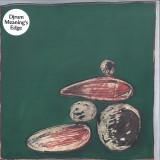
Djrum's first release since 2019, the Meaning’s Edge EP is an introduction to a whole new world. For the artist also known as Felix Manuel, it was created in the final stretches of six rather traumatic years work. Having carefully honed his techniques and aesthetics, and learned some hard-won emotional lessons over this time, finally he began to work in a quicker, lighter fashion – and to cleanse his palate a little by bringing in a fresh ingredient: his own flute playing. For listeners, though, it will serve as an appetiser, a way into the delights and complexities of this new phase of his creativity.
It’s a serious work in its own right, mind. The use of flutes – including Bansuri, Shakuhatchi, Western Classical, and synthesised all blending and blurring into one another – gives it a coherence and a sense of airiness that unites the five tracks over half an hour, however divergent their beats get. And as in all his music, Felix’s whole life is in here. Ethnomusicology studies, untold hours of DJing everywhere from the gnarliest squat raves to the most rarefied deep house clubs, explorations of his own neurological and emotional makeup, and the technical finesse of someone who is never not creating music or art, all roll into an experience that’s dazzling, delightful and keeps on giving.
Just the opening track ‘Codex’ alone touches on OG dubstep, Aphex Twin-like braindance, post-classical exploration, movie themes and more. The gentle tones and melodies that rise up out of it perfectly conjure Felix’s running theme of a protective bubble that provides a sense of safety and tranquillity even as the beats and acid gurgles and spurts all around it conjure up the slings and arrows of life’s difficulties.
The tone set, the EP moves through ultra-rarefied glass-like percussion in an almost ambient setting, hints of grime’s counterintuitive patterns, and even more hectic patterns influenced by Tanzania’s hyperspeed singeli style of dance music – but always with that perfect balance of chaos and control, unpredictability and protection. It rewards playing and replaying endlessly, it’s a profound and often joyous experience… and it’s only just the beginning. This is the return of a master craftsperson more focused than ever on his vision and vocation and ready to blow your mind all over again.
Mastered and cut on 140g black vinyl by legendary mastering engineer Matt Colton at Metropolis Studios, London. Pressed at optimal media, Germany.
Analog Fingerprints Vol. 0 is a compilation bringing together the early 2000s works of Marco Passarani under his Analog Fingerprints alias, collecting key tracks originally released on Rome’s Plasmek and Pigna labels.
For Numbers, the story starts long before the label itself. In their formative years, digging in Glasgow’s Rubadub, Passarani’s records felt like dispatches from a future city. Releases on his own Nature Records and on labels such as Generator and Interr-Ference Communications were mind blowing: rooted in Detroit techno, Chicago house and electro, yet pushing somewhere new. Much like fellow travellers Autechre, who would remix him in 2001, Passarani’s music balanced machine funk with restless experimentation.
Information was scarce, and you would hear these records first on the dancefloor or at listening stations in shops like Rubadub. Print fanzines like Ear and early web outposts such as Forcefield offered only fragments. But there was a palpable axis forming between Detroit techno and a new European wave of record labels including Skam, Rephlex, Clone, Viewlexx and Nature itself. It was the sound that defined Saturday nights at Rubadub’s ‘69’ parties in Paisley, just outside of Glasgow.
Passarani’s records, in particular, were instrumental in bringing together the future Numbers co-founders. Richard had already booked him pre-Numbers; meanwhile Calum (Spencer) and Jack (Jackmaster), then 16/17 year olds working alternate Saturdays in Rubadub, were so enamoured with the Roman sound that they travelled to Rome for the Bitz Festival in 2003 to seek out Passarani and Lory D at their source.
The first Analog Fingerprints release landed as a 12” on Plasmek in 2001, following the fractured, IDM-leaning 6 Katun material. For Passarani, the project marked a recalibration. A DJ first and foremost, he had moved into production via early computer setups, from a Commodore Amiga through primitive PC audio, Cubase and Logic, later experimenting with Ableton. The IDM scene had offered a playground for trial and error, but there was always a tension between abstraction and the dancefloor. Analog Fingerprints became the bridge: still intelligent, but with more dance than distance. After years of broken beats and complex arrangements, he wanted directness without surrendering identity.
Working closely with Francesco de Bellis and Mario Pierro in the Pigneto district, the trio formed Pigna as a vehicle for reclaiming a more accessible dance sound, deliberately steering away from the minimal wave beginning to dominate Europe. Sessions were fast, instinctive, often stretching late into the night with friends dropping by. It was a studio as social space, production as collective energy.
“In that constant search for balance, Analog Fingerprints was my way of expressing something closer to the classic dance floor. The track 'Tribute' - a tribute to my favourite early Detroit techno track of all time, 'First Bass' by Separate Minds - came after I realised I had almost lost my connection with the dance floor. The simplest step was to take inspiration from early Chicago and Detroit and twist it in our Roman ‘Pigna’ way. My goal was to create more accessible dancefloor tracks by mixing my unconscious Italo roots with my teenage love for that early US sound, ensuring the result was as far as possible from the minimal sound that was starting to dominate everywhere.” - Marco Passarani
Technically, the Analog Fingerprints tracks span a transitional era: Roland TR-909, SH-101 and Alpha Juno hardware met early software experiments. A Novation Drumstation rack stood in for the unattainable TR-808, syncing with TB-303 and TR-606. Yet the true secret weapon was Jeskola Buzz, a tracker-style modular environment that allowed step-by-step parameter control and strange melodic constructions, later exported into the audio sequencer. Even the lead on ‘Tribute’ came from an early PPG Wave-style plugin. It was hybrid thinking at a moment when digital tools still felt unstable but full of possibility for technologists like Passarani.
Behind the music sat Finalfrontier, a loose Roman collective orbiting Nature and Plasmek. Distribution and production were intertwined; importing obscure records into Italy built connections with like-minded outsiders across Europe and the US. Expensive phone bills and fax machines forged an “electronix network” that linked Rome to Clone, Viewlexx, Skam, Rephlex, Rubadub and Detroit’s Underground Resistance. There was a shared sense of survival and resistance, of operating against commercial systems.
Passarani recalls “The first time I found a sheet of paper inside an Underground Resistance 12” with info about upcoming releases... and a huge picture of Spock on the back. Imagine that: you love the music, you love Star Trek, and there’s someone on the other side of the ocean sharing those same values and sounds. It was the perfect match. We even gave our original company the suffix ‘Finalfrontier’: that says it all.”
Feedback in that era arrived physically: distributor faxes, conversations with visiting DJs, the experience of playing abroad and meeting kids who had connected with the records. Glasgow became a key node in a scattered outlier network. Passarani personally brought the first two Nature releases to Fat Cat in London, playing them in-store. Shortly after, a fax arrived from Rubadub in Glasgow requesting copies.
“I still remember that phone buzz and the fax paper slowly sliding out, with someone I didn’t know saying they wanted 75 copies of Nature 001. Or like the time we got a fax from the Rephlex crew just saying, “Hello Nature Records, Keep up the good work.” That was how we knew the message was getting through. It was a fantastic feeling; just one piece of thermal fax paper as an analog notification - the mood for the entire week would change.” - Passarani
The connection to Glasgow has since stretched across generations. As Passarani reflects, links often fracture as scenes renew themselves, but in Glasgow something different happened. New and old mixed seamlessly. There was a visible trust in what came before, and a willingness to carry it forward rather than discard it. Observed from Rome, it was deeply encouraging.
Analog Fingerprints Vol. 0 captures that moment of exchange: Rome to Glasgow, Detroit to Europe, experiment to dancefloor. It documents an artist recalibrating his sound and a network of scenes discovering one another in real time, connected by vinyl, faxes and shared intent.
Gatefold Sleeve
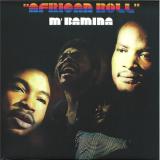
M’Bamina – African Roll (1975)
The story of an album born between Africa, Italy, and the nightclub culture of the 1970s
In the heart of 1970s Italy — a country undergoing profound social change and a music scene just beginning to open itself to distant sounds and cultures — an extraordinary, almost improbable story took shape. It is the story of a group of young African musicians who found their way to Europe, of a Turin nightclub that became a crossroads for communities and experimenters, and of an album which, released in small numbers and largely unnoticed at the time, is now considered a rare jewel of Afro-fusion.
The band called themselves M’Bamina — an ensemble of musicians from Congo, Cameroon, and Benin, who arrived in Italy in the early Seventies. Settling between northern Italy and the Pavia area, they began performing in small clubs and community events, bringing with them a vibrant rhythmic heritage: African polyrhythms, call-and-response vocals, funk-infused bass lines, and Caribbean or Afro-Latin colours absorbed along their musical journeys. Their raw, contagious energy on stage quickly drew attention.
Meanwhile, in Turin, another story was unfolding. There was a venue becoming almost legendary: Voom Voom, one of the city’s liveliest nightclubs, run by Ivo Lunardi. The club attracted an eclectic crowd — students, artists, foreigners, night owls — and Lunardi quickly understood that the dancefloor wasn’t just a place for music, but a melting pot for a new kind of cultural energy. Out of this vibrant atmosphere came his idea: to turn the club’s name into a small independent record label, Voom Voom Music, capable of capturing the spirit of those years and giving voice to unconventional projects.
When Lunardi heard M’Bamina, he immediately sensed that this was the sound he had been searching for: fresh, different from anything circulating in Italy at the time, and capable of blending African tradition with funk and European sensibility. He brought them into the studio.
Production was handled by Lunardi along with Christian Carbaza Michel, while the engineering was entrusted to Danilo Pennone, a young sound technician with a sharp, intuitive ear.
The recording sessions — held in Turin in 1975 — produced a remarkably warm and direct sound. The music feels almost live: grooves rooted in African tradition, but open to funk-rock structures and modern arrangements. It is a natural fusion, never forced. Tracks move between tribal rhythms, funk basslines, light electric guitars, congas and Afro-Latin percussion, with call-and-response vocals and melodies that echo both Congolese tradition and the lineage of Latin jazz. Not by chance, one of the album’s most striking tracks, Watchiwara, reinterprets a Latin standard through M’Bamina’s own rhythmic language.
The album was titled African Roll — a name that was already a statement of intention. It is African music that “rolls,” that moves, adapts, transforms within a new geographic and cultural setting. It is not strictly Afrobeat, nor Congolese rumba, nor Western funk: it is a spontaneous, hybrid blend, shaped more by lived experience than by any calculated aesthetic program.
When African Roll was released, the world around it barely noticed. Distribution was limited, and 1970s Italy had yet to develop a cultural framework for receiving such music. The national music press rarely paid attention to African or “world” productions. The album slipped into silence — though the band’s own story did not.
M’Bamina continued performing across Europe and Africa, even sharing a stage in Cameroon with none other than Manu Dibango. By the late Seventies, they moved to Paris, signed with Fiesta/Decca, and recorded a second LP, Experimental (1978). Meanwhile, the peculiar record they had made in Turin began to resurface quietly among vinyl collectors, Afro-funk enthusiasts, and DJs hunting for forgotten grooves.
That is when the album’s fate began to shift.
Over the decades, African Roll emerged as an almost unique document: a snapshot of an intercultural Italy before the word “intercultural” even existed, a fragment of migrant history, a spontaneous experiment in musical fusion born far from major industry circuits but rich in authenticity. Original copies began commanding high prices on the collector’s market, and the album became recognized as one of the hidden classics of European Afro-fusion from the 1970s.
Today, more than fifty years later, this reissue finally restores visibility and dignity to a project that deserves to be heard, studied, and celebrated. It is not simply an album: it is the testimony of a rare cultural encounter, born in an Italy unaware of how fertile such exchanges would one day become.
It is the story of a visionary producer, an extraordinary band, and a fleeting moment in which music, migration, and nightlife came together to create something genuinely new.
African Roll is — now more than ever — the sound of a bridge: between continents, between eras, between cultures. A record that, after rolling far and wide, has finally come home.
For the first time in more than a decade, Paul St. Hilaire (AKA Tikiman) presents a solo album – 100% Tiki.
Over his 30-plus year career, St. Hilaire has become one of dance music’s quietly legendary figures. Born and raised in Dominica, he moved to Berlin in 1994 and has lent both his voice and his musicianship to some of the most iconic electronic music from the German capital – and beyond. Renowned for his collaborations with Moritz von Oswald and Mark Ernestus (AKA Rhythm & Sound), he has also appeared on records with Deadbeat, Rhauder, Larry Heard aka Mr. Fingers and Stereotyp (G-Stone Recordings), amongst others.
However, few know the extent of St. Hilaire’s compositional and technical mastery. From his home studio in Kreuzberg, which includes an extensive collection of vintage hardware, self-built instruments and notebooks scribbled with endless lyrics, he has created a vast archive of material spanning ambient dub, avant-jazz, lush techno and lovers rock.
Tikiman Vol. 1 is a heady, downtempo tour de force of patois metaphors on education, displacement and personal vs. global histories, as is evident on slippy album opener “Bedroom in My Bag”: Mister, mister / Where are you going? / I’m heading for a faraway land / What are you having in the bag in your hand? / Help us to understand / He said, I’ve got my bedroom in my bag.
Overall, the album’s lyrics reflect on life between Berlin and Dominica, specifically St. Hilaire’s hometown of Grand Bay, where he has worked with various musicians famous for the island’s different genres of carnival music. St. Hilaire himself always favoured the island’s more “discrete” music, developing a sonic synergy between two different geographical strains of groove and minimalism, and combining them with foundational Caribbean mixing techniques, which provide the basis for his songwriting and distinct
baritone.
Tikiman Vol.1 offers a rare insight into St. Hilaire’s complex artistry, from the eyes-down grooves of “Little Way” and the guitar-heavy digi dancehall experiment “Keep Safe,” to the subtle hypnosis of “Ten to One” and the softly crashing synth waves of closer “Three And A Half”, evoking not only beaches but also coasts and borders. It’s a fitting expression of both the breadth of St. Hilaire’s work, as well as his history as one of the few black, Berlin-based artists who, despite remaining largely overlooked, has influenced the city’s electronic music culture since its beginnings.
Credits
Written & Produced by Paul St. Hilaire
Mastered by Stefan Betke
Artwork by Grant Gibson
Kynant Records was founded in 2015 by Richard Akingbehin, a British-Nigerian radio programmer (Refuge Worldwide), music writer and DJ. Originally specialising in deep techno and featuring artists such as Cio D’Or, Terrence Dixon and Donato Dozzy, Kynant has since launched a sub-label Kynant EX which focuses on ambient, dub and experimental electronics.
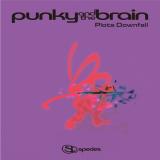
New label Species hits the ground running with its debut release. The outlet is an extension of globally-renowned booking agency Pieces, and will feature music exclusively from the agency’s roster, which includes some of the scene’s most formidable and talented DJs and producers. The first release comes from an exhilarating project - Punky & The Brain, AKA Otis and Paul Lution. Described by the duo themselves as “scientific experiments” the music is a fusion of playful excursions with their lab equipment, and their musical knowledge.
Together they have been experimenting in the studio, merging incisive technical prowess with straight up dance floor-focused rhythms. Their field research has tested emotional variables on numerous research subjects through live performances in the most renowned clubs. A Fender bass guitar and vocoder bring another dimension to their studio exploits, and this EP is the result of their preliminary scientific findings…
For the ninth installment of his Hardspace series, Len Faki once again dives into his personal vault to present four reworks that bridge the gap between raw funk and modern, high-impact club dynamics. True to the project's ethos, Faki has selected tracks that have been reshaped through his specific sonic signature to maximize their energy on today's dancefloors.
A1. DJ Assault - U Can't See Me (Hardspace Mix) The release opens with a relentless edit of Detroit legend DJ Assault. Faki takes the raw Ghetto-tech energy of the original and embeds it into a massive, modern framework. While the iconic vocal hook retains its street-level grit, the Hardspace update provides a significantly tighter groove and a powerful low-end presence, propelling the track from the warehouse straight into the present.
A2. Myles Sergé - Trans Milenio (Hardspace Mix) With Myles Sergé, Faki explores more hypnotic territory. He extracts the driving, repetitive elements of the original and sharpens the rhythmic angles. The result is a prime example of the Hardspace sound: a deep, almost meditative loop that gains entirely new spatial depth through subtle filter movements and a crystal-clear percussion layer.
B1. Jad & The - Deep Dark Grimey Dancefloor Moment (Hardspace Mix) On the flip side, Faki leans into the brooding atmosphere of Jad & The. As the name suggests, this mix is crafted for the "wee hours". Faki amplifies the "grimey" textures and contrasts them with a stoic, forceful beat. The trippy, almost menacing synth elements are rearranged within the stereo field, creating an immersive pull that is impossible to escape.
B2. Deepchild - Baller (Hardspace Mix) To close out the EP, Faki brings the jacking spirit of Deepchild's "Baller" back into the ring. Through meticulous re-arrangement and quantization, he gives the track the "tightness" essential for a modern DJ set. The playful, bouncing synths remain, but are now grounded by a heavy-duty beat foundation.
H009 is a hand-picked collection that demonstrates how Len Faki unites diverse musical personalities and eras under the Hardspace umbrella. Whether it's raw ghetto vibes or hypnotic deepness, every track has been transformed with technical precision and deep respect for the original to meet the demands of global dancefloors.
As Poorly Knit completes it's first arc of the Sun, it's children become four, as a new mini LP is born.
Tending to his crop with dreams of rotation, Bruce sows and scythes four new grains in the porky mill. Of this strange fruit, that further explores his increasingly familiar, hyper-real and sonically surreal work within this current “movement,” he finds his foothold once more in a wild world intensity: fear and fury grappled in equal measure.
What's more, in celebration of the plentiful harvest thus far, (let alone in the interest of seed diversity), Bruce invites four fellow reapers to the farm, offering their recipe from the spoils of the label's yield:
Vancouver based Brit-abroad, dj_2button pulls apart 'The Hand,' with his 'Accidental Mood Mix,' to be reborn as an Odyssian 13 minute stomper: "a fight of emotions, of light and dark; in quiet protest to the incessant fear mongering that slowly numbs us on a global scale." Balearic shores can be seen glimmering in the distance, whilst you are dragged by part man part (very horny) bull into the depths of dancefloor madness.
re:ni proves she is the captain of her own ship as sweet SSRI numbness billows in the sheets and fraying, dubwise halyards tether and tear through her devilishly elegant 'sertraline queen mix'. polyrhythms plotted and percussion plundered; the vocal from 'Golden Water Queen' sounds oh so sweet in the claws of its new Regina.
Hotly titted deep house reviver, fka boursin empties clips with their bubblegum 'boomkat mix,' of 'The Price,' swivelling the original's brash and bawdy bonce, to face a 120 reality we all need to wake up and start sniffing. Sprinkled with trauma on an icing of a bassline more than a little rood, boursin is packing enough cake for the whole function to take home in (dreadful) goody bags (and even allowed compression in the mastering - mental).
Last and indubitably not least, from lying somewhat dormant in the depths of UK dance music legend, none other than flippin' Untold (!?) rises to seal the release with typically megalithic prowess. Proving he was just resting his eyes for a bit, his 'A1 Mirabelle Mix,' weaves and whips an otherworldly beauty, technically tantalising 'Dham's Jam' in adornments both sour and sweet. It's nothing short of a cloaks and daggers banger, primed for the darkest of dancefloor cosmic moments, and serving as a little less-than-warm-reminder that Untold’s presence in the world of dance music is crucial as ever.
Frankly, if you couldn't tell from all the verbose waffle, they have all absolutely smashed and finessed it: they were all approached after expressing a real resonance from the previous releases and it's such an honour to have them and their fantastic visions on the label.
Available digitally or on high quality cassette, the final chapter of the Poorly Knit's first act has been woven whimsically into the fraying folds.
a A1. It Ain’t Over Till… 04:37
b A2. Wesley’s Sniped All Our Bleeding’ K (Re-Vamped) 05:40
[c] A3. Rockfall [05:06]
[d] A4. You Were Right [10:00
[e] B1. The Hand (dj_2button's accidental mood mix) [13:07]
[f] B2. Golden Water Queen (re:ni's sertraline queen mix) [05:36]
[g] B3. The Price (fka boursin's boomkat mix) [08:30]
[h] B4. Dham's Jam (Untold's A1 Mirabelle Mix) [09:42]
[a] A1. It Ain’t Over Till… [04:37]
[b] A2. Wesley’s Sniped All Our Bleeding’ K (Re-Vamped) [05:40]
[c] A3. Rockfall [05:06]
[d] A4. You Were Right [10:00
[e] B1. The Hand (dj_2button's accidental mood mix) [13:07]
[f] B2. Golden Water Queen (re:ni's sertraline queen mix) [05:36]
[g] B3. The Price (fka boursin's boomkat mix) [08:30]
[h] B4. Dham's Jam (Untold's A1 Mirabelle Mix) [09:42]
"Drop That Beat," the cult classic by Ixxel that became a staple in clubs and at festivals in the late '90s, is making its return. The iconic track receives a contemporary interpretation by Mosimann, plus a high-energy club remix from NightFunk. Together marking a rebirth that sounds both timeless and hyper-modern.
Mosimann, the French-Swiss DJ-producer, singer and showman, is a leading figure in the French electronic scene, known for his bold, modern and versatile sound. A six-time DJ Mag Top 100 DJ artist, he stands out with explosive live performances in which he not only mixes, but also sings, plays drums, and commands keyboards, a technical virtuosity that makes him a unique live phenomenon, comparable to showmasters like James Hype. His rework of "Drop That Beat" injects the track with that same hybrid energy and performance-driven power.
Mosimann: "This track is very important to me. Fred Rister was much more than an influence: he was the first to truly get me into music production when I was 20 years old. Before he left us, he handed me the stems of Drop That Beat and told me: 'If one day you feel like it, work on a version.' It took me years of reflection, doubts, and memories before I found the strength to do it. Today, with the blessing of the two original composers, I'm finally releasing this version. It's both a tribute to Fred, a nod to Jacky Core and the Captain where I played so many times, and a way to carry on the legacy of that '90s Belgian techno which, to me, still feels very present today."
Belgian house star NightFunk complements this perfectly with a tight, club-ready remix that pushes the track straight onto today's peak-time dancefloors.
With this dual reboot, the essence of "Drop That Beat" remains intact, while both artists inject the track with their own signature touch. The result is an energetic release that resonates with nostalgic fans and a new generation of ravers alike.
This special edition will be released on vinyl via Serious Beats Classics, once again spotlighting the track's timeless character. A must-have for collectors and DJs eager to weave a piece of dance history into their sets.
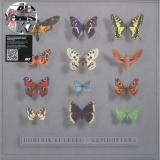
Lepidoptera - the scientific name for butterflies, meaning "scale-winged" - is also the title of the seventh studio album by renowned music producer, bestselling author, ecologist, and knowledge mediator Dominik Eulberg. More than just an album, Lepidoptera is an artistic manifesto: a celebration of butterfly diversity and a profound ecological statement. Set for release via !K7 Records, Lepidoptera blends his signature sound with an urgent ecological message. It marks the pinnacle of a music career spanning over three decades. Eulberg"s fascination with butterflies began in early childhood and has since become a lifelong passion. Drawing from years of experience as a producer and DJ, Eulberg presents his most technically ambitious work yet. At the heart of Lepidoptera are twelve native butterfly species, handpicked by Eulberg from the 3,700 known species in his homeland. Each track is inspired by one species, shaping the album"s structure and grounding its creative focus. The result is a richly textured and immersive journey that moves fluidly between pulsating, danceable rhythms, ambient soundscapes, and orchestral flourishes.
Dutch DJ & Producer Serti Drops New Album on Structured Records.
Structured Records, in collaboration with Pax Romana, is proud to present the new album from Dutch DJ and producer Serti, “If u are curious”, arriving worldwide on October 23, 2025, as a double vinyl release and on all digital platforms.
This album is the result of three years of experimentation and dedication, a project made from a pure love of music. Designed as a front-to-back listening experience, it moves seamlessly between high-energy tracks and more intricate, textural compositions, rewarding listeners who take it all in from start to finish.
While not a conventional club record, it features dancefloor-ready tracks built with raw intensity, driving beats, and striking melodic moments that hit hard on any system.
Serti crafted the album using a wide range of gear, including Eurorack modular systems, Sherman Filter Bank, DSI Pro 2, Korg MS-20, Digitone, and Analog Rytm.
Inspired by artists like Clark, Plaid, and Piezo, he experimented with off-grid melodies and live-played sequences, creating a dynamic record full of character and immediacy.
With this release, Serti delivers a bold statement: a record that combines technical skill, adventurous sound design, and undeniable energy, establishing him as one of the Netherlands’ most exciting new voices in electronic music.
- A8: Skip Beat_Crown Drum
- B2: Durandal Bank
- B3: La Joyeuse Bank
- B4: Excalibur Bank
- B6: Classic Cuts Bank
- A1: The King's Bank
- A2: Bass Armor Bank
- A3: Kingdom Symphonia Bank
- A4: Battle Weapon Sentences
- A5: Skip_Call Me King
- A6: Skip_Rockin' With The Best
- A7: Skip_I'm Gonna Win
- B1: Skip_Ahhh, Ah Yeah
- B5: Meli-Melody Bank
- B7: Skip_Wow Yeah
- B8: Skip_The King Of The Scratch
- B9: Skip Beat - Knight Drum
Enter DJ Fly’s sonic arsenal with this precision-engineered breakbeat, crafted as a high-performance toolkit for the modern turntablist.
This vinyl delivers a sharp selection of expertly curated sound banks, including signature samples from DJ Fly’s legendary DMC routines, along with exclusive, never-before-heard material. All content is organized into thematically distinct sections to optimize workflow and creative output:
Epic & Orchestral – Acoustic & Electronic Instruments – Modern Textures & One-Shots.
Custom skipless loops (skipproofs) are designed to streamline cueing and enhance performance fluidity across all scratching and beat juggling techniques.
Features one side cut at 45 RPM and the other at 33 1/3 RPM, providing expanded control over pitch, tempo, and phrasing – perfect for hybrid routines and intricate transitions.
Each bank is structured to ensure harmonic, stylistic, or tempo-based coherence (BPM-aligned), supporting seamless layering, real-time improvisation, and the construction of musically cohesive sets.
A precision-cut breakbeat, purpose-built for vinyl technicians and battle-ready routines.
a A1 - The King's Bank Am/90bpm
b A2 - Bass Armor Bank [Fm/180bpm]
[h] A8 - Skip Beat_Crown Drum [90bpm]
[j] B2 - Durandal Bank [133,33bpm]
[k] B3 - La Joyeuse Bank [83,33bpm]
[l] B4 - Excalibur Bank [100bpm]
[n] B6 - Classic Cuts Bank [100bpm]
[83,33bpm]
Leeds-based producer Nathan Alexander kicks off KUJE's debut release with PROFETIA EP, a bold four-tracker that drips personality and club-focused energy.
A rising name turning heads from the likes of Blasha & Allatt and NIX, Nathan brings his signature blend of cheeky rhythms and weighty low-end to the table. KUJE001 proudly marks the first chapter of the label's journey, dedicated to unearthing raw, unfiltered talent.
The A-side delivers serious impact: Bound is a propulsive dancefloor tool built for DJs, while Rabbit Hole hits hard with distorted effects and a Blawan-esque edge. On the flip, Tracer floats into spacey, bounding territory with a touch of psychedelic energy, already picking up early support. Closing the release is Technical Itch, a UK-rooted banger that ties together the artist's heritage with the label's forward-thinking intent.
Each track carries Nathan's unmistakable character-playful, punchy, and irresistibly 2-steppable. This is techno with a wink, made for sweat-soaked floors and heads-down moments alike.
Tunnel was made in Naples in 1978 by Giorgio Verdelli and Danilo Rustici only on 7inch and it was the theme song for two RAI radio programs. Going through the names of the musicians we begin with the inimitable voice and the splendid guitars of Danilo Rustici, then passing through the saxophones of Enzo Avitabile we arrive at the keyboards of Joe Amoruso, musician-arranger who left a great void with his untimely death. For Joe, who crossed his experience with Premiata Forneria Marconi, Zucchero, Vasco Rossi, Mauro Pagani and was part of that 'dream team' of Pino Daniele - made up of technically extraordinary musicians, but above all gifted with an inimitable sound - this one-off project represented his recording debut. 'Tunnel Lights' and 'Speed Up' have been brought to light by Dario Di Pace and Claudio Casalini, two visionaries who believe that Neapolitan music is a sonic mixture of ancient and modern musical registers even if it sometimes develops a conflict between tradition and modernity as the recovery of popular tradition is strongly opposed to the push for innovation. This therefore is the reason for a 12" reissue in which the evocative original songs - from almost 50 years ago - are reflected in the new versions created by a bevy of talented DJ-arrangers including Massimo Berardi (with the bassist Luca Andreozzi) and by the industrious and passionate Francisco & Malkuth (ed: Francesco De Bellis and Cosimo 'Cosmo' Mandorino in disguise) in turn assisted by other zealous musicians and dee-jays - including the very good and always very collaborative Raffaele Arcella - who took part in a remix of this EP with enormous fervor The 12" reissue of Tunnel was released both on the classic black vinyl and in the very limited red vinyl version, in order to reflect the lips of the extravagant cover, a graphic work by another brilliant and multifaceted artist: Lino Vairetti, legendary singer of the historic prog rock band Osanna. The envelope developed by Best Record is embossed (front and back cover) to further enhance the passion that Neapolitan musicians have always had in knowing how to combine their roots with all the other musical genres of the world.
Satya is excited to welcome Sweden’s very own Chris Llopis, a veteran of electronic music, with his highly anticipated EP Echo Ridge, to its vinyl only catalog.
Chris has been a prominent figure in electronic music since the late ‘90s, releasing on respected labels like Fabric Records, Tooloop, and Micronica. Inspired by a trip to Spain at age 13, Chris began DJing on Technics SL1210 turntables and later immersed himself in Copenhagen’s vibrant techno scene. His first vinyl release on Tatsu in 1998 brought him global recognition. Today, Chris’s sound blends timeless influences with modern techniques.
Echo Ridge is inspired by Chris’s love for funk-driven bass lines and the energy of underground raves. “I wanted to create tracks with strong rhythms and a playful edge,” he says. “The bass line is the soul of a track, and this EP captures the vibe of late-night moments when everything clicks.” The EP combines the groove-heavy minimal style of the late ‘90s with a fresh, contemporary edge, delivering tracks that energize the dance floor.
Chris’s creative process thrives during early morning studio sessions. “It’s the perfect time for clarity and creativity,” he shares. For Echo Ridge, Chris used iconic gear like the Juno 106, Elektron Analog Four, Eventide H3000, and Roland Space Echo RE-201, alongside Ableton 12 and Max for Live, to craft its warm, textured sound.
Out on the shelves June 13, 2025, the EP is a celebration of Llopis’s evolution as an artist and his deep connection to the dance floor. With its groove-driven energy and meticulous attention to detail, the release is a must-have for fans of minimal house and vinyl enthusiasts alike.
System Error is proud to present our first LP, a feature length presentation from Vortex.
A dedicated DJ since the ‘90s and deeply rooted in the Neapolitan underground, his highly technical, delicate sound is beautifully presented on this LP. Crafted exclusively with analogue machines, the LP seamlessly melds influences from House, Acid, Techno, Trance, and IDM, for a masterfully curated journey.
This record is dedicated to Cristiano’s family, and to Franco and Alfredo, with love, wherever you are.
Roberto Intrallazzi and Dario Piana, two unheralded sons of Italy’s original Afro-cosmic movement of the 1980s, have joined forces in the studio for the first time. The result is the 99% Stories EP, a collaborative debut for Leng inspired by the formative years of the duo’s near 45-year friendship and their shared musical roots.
The duo both started DJing in and around Milan in 1981, drawing inspiration from pioneering contemporary Daniele Baldelli. Intrallazzi found international success following the birth of Italy’s distinctive house scene, collaborating with other like-minded producers as part of FPI Project and Cube Guys, while Piana continues to be a prolific solo artist whilst also working extensively with mentor and friend Baldelli.
The EP begins with ‘Out Of Control’, a dubbed-out cosmic disco chugger with guitar snippets, spoken word samples and sonic textures over a percussive beat and low-slung bass guitar line. Fellow long- serving Italian LTJ Xperience drops a remix that highlights the acid-flecked electronic sounds, rubbery bass and hypnotic beats in his trademark style.
Intrallazzi and Piana explore the middle ground between psychedelic, pitched down acid and cosmic- disco on ‘Lazise’, offering up a blend of percussion-enhanced beats, undulating 303 motifs and intergalactic electronics, before once more reaching for the bass guitar to drive the vibraphone, bleeps, keys and vocal enhanced midtempo shuffle of ‘Saocraffen’.
The digital version of the EP has bonus cut: ‘SP-15’. Named in honour of the Technics turntables used by Daniele Baldelli at the iconic Cosmic Club – where he first showcased his hybrid and decidedly psychedelic ‘Afro-Cosmic’ DJ style – the track is murky, immersive, trippy and picturesque in equal measure, with waves of glistening synth sounds and musical flourishes winding in an out of a charred, midtempo cosmic disco groove. We have no doubt that Baldelli approves!
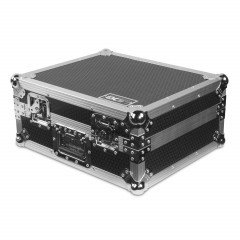
We, at UDG have further fined-tuned already a great design concept of our flight case into one specially for the most discerning DJ/producer. Constructed from aluminum thus providing an extremely stable structure with lighter weight compared to traditional flight cases. The inner sides are protected with pick & pluck foam that consists of two separate layers, each allowing user to create individualized adapted compartments. The pick & pluck foam allow you to pluck out any desired shape you require for various-sized DJ-controllers and providing the additional option of creating another slot underneath the controller for laptop or cable storage. This pick & pluck foam creating an easy, do-it-yourself customized system of case interiors.
The UDG Ultimate Pick Foam Flight Cases are designed to keep your gear protected from accidental damage when you transport it to and from gigs. They’re compact and lightweight yet tough enough to keep your gear safe.
EAN 8718969212694
Color Black
Weight 4,55 kg / 10.01 lbs
Outer Dimensions (W x H x D) 49 x 42.3 x 21 cm | 19.3 x 16.6 x 8.3 inch
Inner Dimensions (W x H x D) 48 x 41.3 x 20 cm | 18.9 x 16.2 x 7.9 inch
Material Aluminum
Protection Corrosion resistant aluminium profiles with strong rounded corners
Fully-lined with high density foam protective padding & foam on lid
Two side strong butterfly lock & solid metal hinges
Rubber feet at the bottom for support in standing
Extra's Lighter weight than traditional flight cases
Black Diamond finishing surface
Ergonomic & sturdy carry handle
Pick & pluck foam with two separate layers
Replacement pick & pluck foam is available to purchase
Rear cable access hole with cover
Fits Technics SL-1200MK7, SL-1200MK6, SL-1200 MK5, SL-1200 MK4, SL-1200 MK3, SL-1200 MK2, SL-1200GR, SL-1200GAE,
Denon VL12 Prime,
Pioneer PLX-1000, PLX-500
Reloop RP-8000 MK2, RP-8000 Straight, RP-8000, Reloop RP-1000M, RP-1000 MK2, RP-2000 MK2, RP-2000 USB MK2, RP-4000 MK2, RP-7000, RP-7000 MK2, RP-7000 MK2 GLD, RP-7000 MK2 Silver,
Audio Technica LP120-USB, LP120XUSB, LP1240-USBXP, LP1240-USB, LP140XP, LP3, LP5, LP7, LPW40WN,
Stanton STR8-150 M2, ST-150 M2, T.52, T.55 USB, T.62 M2, T.92 M2 USB,
Mixars STA, LTA,
Vestax PDX-3000, PDX-3000Mix, PDX-3000MKII,
or similar size turntable
2025 kicks off a new year with a new artist for Klasse Wrecks, it is with great pleasure we welcome Glasgow based DJ and producer Stevie Cox to our ranks. Stevie's second full length release is one of deep cerebral breaks and evolving technicoloured techno, 4 tracks that surprisingly weave an already defined and recognisable sound from the young artist. Dont expect over-thought and over-cooked musings though, Ms. Cox keeps it fresh, to the point and relevant with most tracks clocking in around 5 minutes. There is enough playfulness to keep the gurners smiling and enough well-thought out drumwork to keep the feet moving, this tight selection will most likely find its way into a variety of record bags during its lifespan.
Artist, producer, DJ and cultural trailblazer Peggy Gou returns with her latest single “Find The Way” on Gudu Records.
The first new track since the release of her debut album I Hear You, this latest single builds on her recent sonic terrain. Making a midsummer bid for song of the season, on “Find The Way” Gou addictively blends her featherlight breezy vocals with a balmy, technicolour 90s house beat lush with mellow keys, acid tinged synths and hypnotic basslines.
2024 has been a huge year for Gou already with the release of her hotly-anticipated debut album I Hear You on XL Recordings in June. Alongside glowing reviews from The Observer, NME, The Line of Best Fit and more, she’s also graced the covers of Billboard (US), Vogue Germany and L’Officiel Italia. A huge year for her in the live arena too, having played to over a million people in 2023, 2024 has seen a string of high-profile appearances at the likes of the Coachella, Ultra, EDC and Primavera festivals alongside a headline slot on Glastonbury’s Park Stage.
- A1: God Has Left The Room (Intro)
- A2: Somebody's Daughter Feat Kareen Lomax
- A3: Nowhere Fast
- A4: Henny Hold Up Feat Mother Marygold, Ric Wilson
- A5: Jinterlude Feat Jin Jin
- A6: Serotonin Moonbeams
- B1: Edge Of Saturday Night Feat Kylie Minogue
- B2: U Want 6 Grand 4 Wut (Interlude)
- B3: Blessed Already Feat Ric Wilson, Mabl
- B4: Strength (R U Ready) Feat Joy Crookes
- B5: Why Trax Records Still Sucks In 24 Feat Jamie Principle (Interlude)
- B6: We Still Believe Feat Jamie Principle
- B7: That's The Shhh (Pure Love) (Interlude)
- C1: Carry Me Higher Feat Joy Anonymous, Danielle Ponder
- C2: Henterlude Feat Joy Anonymous
- C3: Back 2 Love Feat Jin Jin
- C4: Brand New Feat James Vincent Mcmorrow, A-Trak
- C5: Count On My Love Feat Daniel Wilson, Kon
- D1: Godspeed Feat Dj E-Clyps
- D2: Secretariat Feat Shaun J Wright
- D3: Mercy (The Welcome) Feat Jacob Lusk
- D4: Mercy (The Godsquad Album Mix) Feat Jacob Lusk
- D5: Your Mom <3 (Interlude)
- D6: Happier Feat Clementine Douglas (Bonus Track)
The Blessed Madonna began with three magic words, scrawled in shoe polish on a broken - down box and hung on the wall at a small sweaty party: We Still Believe. “I think you have to give up completely to really understand what hope is. It was like 2011? I had spectacularly, monumentally failed. I left the label. I wasn’t DJing. I wasn’t putting out records. I was divorced and living on my Dad’s couch so naturally my friends and I decided to throw an illegal rave. We didn’t have any decorations, so I took a box and wrote, ‘We Still Believe’ on it. I needed to believe that something better was possible and that’s how it all started.” After years of $50 gigs, strung together by gas money and surfed couches, The Blessed Madonna cemented her reputation as a sublime technician behind the decks with a legacy of fluent and dynamic sets, spanning from disco to techno to house and back. One room sweatboxes, circus tents, theatres, massive festival stages and entire city blocks have all served as the canvas for her shows. After a jam packed 2023, from Glastonbury to Sonar to Boiler Room Bali, The Blessed Madonna has been filling the dance floor everywhere she goes and is now releasing her debut album.
2024 Repress
Coming through on the 17th release of the label is the multi-talented Charles Accarisi aka Chlär, one of the promising names currently surfacing in techno. A concept creator from the heart and on another level technically, both as a producer aswell as a DJ. Chlär delivers us a very strong yet diverse four-tracker selection made for the dancefloor, all killer no fillers. Highly essential!
- A1: Cabo Verde Band - Bo Terra Cabo Verde
- A2: Americo Brito & Djarama - Rapaz Novo E Malandro
- A3: Cabo Verde Show - Terra Longe
- B1: Elisio Vieira - Tchon Di Somada
- B2: Vlu - Rua D'lisboa
- B3: Galaxia 2000 - Coracao Dum Criola
- C1: Mendes & Mendes - Mitamiyo
- C2: Danny Carvalho - Roncanbai
- C3: Mendes & Mendes - Walkman
- D1: Jose Casimiro - La Mamai Ta Bem
- D2: Elisio Vieira - Bem Di Fora
- D3: Zeca & Zeze Di Nha Reinalda - Mocinhos
Arp Frique returns with a brand new release on his imprint Colorful World Records in collaboration with Rush Hour. A compilation of 12 Cape Verdean gems assembled with the help and knowledge of Americo Brito, there is a very special story behind it. Americo Brito, who features on Arp Frique’s original Nos Magia, is a proud and important member of the Cape Verdean community in Rotterdam. His story reveals the historical connections between radio, vinyl, Cabo Verde and Rotterdam’s international music scene in the 70s and 80s. Cape Verdean insiders say “we export all they have to other countries, only to import it back again”. Cape Verdeans have migrated all over the world, mainly to cities with big harbours, like New York, Boston and Rotterdam (Holland). Rotterdam became one of the main destinations (next to Portugal) on the European mainland. When Americo, like many of his friends and relatives moved to Rotterdam, he quickly became infected with the music virus. Surrounded on a daily basis by Cape Verdean music in Portuguese pensions and small hotels, this was where sailors ingested a dose of “sodade” through the interpretations of their beloved music by the local Cape Verdean artists. Americo took to the stage with his band Djarama in the 70s and 80s. The live music scene was buzzing and the Cape Verdean community had their own infrastructure for arranging shows, often in nightclubs where the band had to bring their own soundsystem. Interestingly, Americo didn’t stick to performing and recording music. He found another way to help spread the Cape Verdean magical secret of music across Rotterdam, Holland and beyond: “There was this spot in Rotterdam where all foreign radio stations were housed, all these different nationalities together, Surinam, Cape Verdean, Hindustani…Guy Ramos and some of my other friends made radio in the 80s there. I got involved in their radio activities. Later on I started to work as a technician and eventually as producer and radio DJ for “Radio Voz De Cabo Verde”. Radio became bigger and there were around 4 different Cape Verdean stations active at one point in Rotterdam. instrumental in the development of this was the attic of a Dutch friend, where “Radio Babalu” came to life. Radio has always held a special place in my heart.” Americo’s music collection stems from this era, also aided by his many travels across Europe to cities with Cape Verdean communities. Alongside Rotterdam local, Arp Frique, Americo unveils some of these songs: dancefloor hits and beloved radio gems known in the Cape Verdean scene by younger and older generations alike, and so far undiscovered by a “bigger” audience. The compilation showcases the worldly view of Cape Verdean music, incorporating knowledge from their travels in their compositions. It ranges from the obvious funana and coladeira, to the more unexpected influences of deep disco, new wave, uptempo reggae, jazz-funk and Brazilian pop music; demonstrating just the tip of the iceberg, but what an amazing t(r)ip it is!
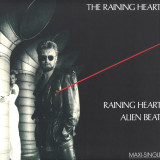
Raining Heart is a studio project originally created by the German musicians Peter Heckmann and Tobias Freund in 1986 in Frankfurt. Very much in the same vein as Art of Noise with its studio sound experimentalism, but with a Kraut edge to it. If there was one track that could be played for everyone at the G20 Summit whilst on LSD in hopes of achieving world peace, it might be “Raining Heart”, the first track on this EP, it’s just one of those tracks that makes you wonder what these people were eating for breakfast at the time. Nothing technically mind blowing, just crafted to perfection in terms of all the elements coming together in therapeutic beauty, (also clearly exposing Peter’s relationship with theatrical production). A downtempo chugger with the dreamiest of sounds, effortlessly transporting the listener to another dimension, the vocals are unthinkable, by Yucca Rose, an East Javanese Jazz singer, almost as if she was broadcasting from a radio station in a parallel universe. “Alien Beat” takes a more aggressive turn into some kind of neo rock direction generously decorated with a wide range of studio tricks that might have been ground breaking at the time. B-side offers two new remixes by Castro, a “K-hole Collage” version of “Raining Heart” taking the original theme to another dubbed out realm, and a “Bonus Beat” extension of “Alien Beat” that dissects the key elements of the original track in efforts to develop a more dancefloor oriented DJ tool. Remastered with original artwork.
* ONLY FOR THE NEW CONCORDE GENERATION !!!
The DJ stylus features
Replacement stylus offers a tactile feedback when seating, indicating a snug and secure fit, while a cut-out area in the front allows for far more accurate needle drops.
• Larger, wider and more robust stylus body
• Easier to grip and handle
• Better fix by metal spring
• Tactile feedback of correct mount
• Large stylus viewing cut‐out
Stylus MIX Technical data
Output voltage at 1000Hz, 5cm/sec. - 6 mV
Channel balance at 1kHz - 1,5 dB
Channel separation at 1kHz - 20 dB
Channel separation at 15 kHz - 15 dB
Tracking ability at 315 Hz at recommended tracking force - 100 μm
Compliance, dynamic lateral - 14 μm/m N
Stylus type - Spherical R 18 μm
Tracking force range - 2 - 4 g
Tracking force recommended - 3 g
Concorde cartridge weight - 18.5 g
Recommended exclusively for Concorde MkII MIX
Technics' SL-1200 turntable is back! This beautiful, matte black MK7 version is a direct-drive turntable with a 'coreless' motor that is lighter and more powerful than before. Thanks to its design, not only is it extremely reliable, but cogging issues should now be a thing of past. That means you can concentrate fully on doing what you do best.
SL-1210 MK7: Classic turntable with a modern look
Apart from its colour, the MK7 SL-1210 may look familiar, but it has a few new additions on board. This includes a microchip that comes from Blu-Ray technology and makes the turntable more accurate, also when scratching. It's possible to adjust the power as well as the braking time of the motor and, if you have a stylus that supports it, you can make use of 'reverse platter play'. Another change is the use of removable cables instead of fixed ones.
Die Technics 1200-Serie
Der originale SL-1200 wurde im Jahr 1972 als direktgetriebener Plattenspieler vorgestellt und erfreute sich sehr schnell einer außerordentlichen Beliebtheit. Er wurde weltweit ungefähr 3,5 Millionen Mal verkauft. Charakteristisch waren von Anfang an das hohe Antriebsmoment, die einfache Bedienung und die hohe Langlebigkeit. Er wurde sowohl von Audio-Enthusiasten als auch von DJs hochgeschätzt. Letztere verhalfen dem SL-1210 zum Kultstatus, gerade im Bereich der elektronischen Dance Music. Auch heute noch wird diese Modellreihe von DJs in aller Welt außerordentlich geschätzt.
Höchste Klangqualität getreu den Maßstäben der Technics Philosophie
Eisenkernloser Direktantriebsmotor für eine stabile Rotation und kräftiges Antriebsmoment
In einem direktangetriebenen Plattenspieler wird ein langsam rotierender Motor verwendet, der direkt mit dem Plattenteller verbunden ist und die Bewegung unmittelbar an diesen weitergibt. Das bringt zahlreiche Vorteile mit sich: Das Gerät erreicht eine beeindruckende Umdrehungspräzision, ein extrem kraftvolles Antriebsmoment, eine hohe Zuverlässigkeit über die gesamte Lebensdauer und ist wartungsfrei. Lange Zeit wurden dem Direktantrieb kleine Unregelmäßigkeiten in der Rotation durch das sogenannte Rastmoment nachgesagt. Für den neuen SL-1210MK7 wurde daher ein neuer Direktantriebsmotor entwickelt, der mit einem eisenkernlosen Stator arbeitet und damit die Ursache für das Rastmoment vollständig behebt. Gleichzeitig erreicht die Antriebskraft der Rotormagnete im SL-1210MK7 ihr Optimum. Der Spalt zwischen dem eisenkernlosen Stator und den Rotormagneten wurde so verbessert, dass es dem Drehmoment des früheren Modells SL-1200MK5 ähnelt. Das gleichmäßige Rotationsverhalten und kräftige Antriebsmoment ermöglichen eine präzise und originalgetreue Klangqualität bei allen Schallplatten.
Der empfindliche Tonarm sorgt für eine hochpräzise Abtastung des Schallplattensignals
Der Tonarm, der die in der Schallplattenrille enthaltenen Musikinformation ausliest, ist eine statisch ausbalancierte Konstruktion in S-Form – typisch für Technics Modelle. Das Tonarmrohr besteht aus leichtem, hochfestem Aluminium, während die Lagersektion der kardanischen Aufhängung über ein gefrästes Gehäuse sowie hochpräzise Lagerelemente verfügt. Dies sorgt für einen hervorragenden Abtastvorgang mit einem Minimum an unerwünschten Nadelbewegungen selbst unter rauen Bedingungen, wie z.B. beim Scratching.
Zweischichtiger Plattentelleraufbau mit verbesserter Vibrationsdämpfung
Der Plattenteller des SL-1210MK7 besteht aus einer zweischichtigen Konstruktion. Vibrationsabsorbierender Kautschuk überzieht die gesamte Unterseite des Tellers, der aus einem Aluminium-Spritzguss gefertigt ist. Diese Verbundkonstruktion verhindert unerwünschte Resonanzen und bietet hohe Stabilität bei überragender Vibrationsdämpfung, wodurch die Schallplatte vor schädlichen Vibrationen gestützt wird. Das Ergebnis ist ein ungestörter, authentischer Klang.
Hochstabiles Gehäuse und effektive Dämpfungsfüße für umfassenden Vibrationsschutz
Das Chassis des SL-1210MK7 besteht aus einem sehr stabilen, extrem vibrationsarmen Gehäuse. Das Aluminium-Spritzguss-Chassis ist fest an einer Konstruktion aus ABS(Acrylnitril-Butadien-Styrol-Copolymer)-Kunststoff befestigt, das mit Glasfasern verstärkt ist. Die somit erreichte Zweischichtkonstruktion bietet eine Festigkeit und Vibrationsdämpfung auf höchstem Niveau und garantiert somit eine originalgetreue, dynamische Soundreproduktion.
Für eine optimale Dämpfung sorgen die Dämpfungsfüße aus einer Feder-Gummi-Konstruktion. Der hohen vertikalen Dämpfung steht ein sehr steifes Verhalten in der horizontalen Bewegung gegenüber. Diese Kombination sorgt für eine unkomplizierte Handhabung besonders beim Scratchen und für eine sehr gute Störfestigkeit – auch bei sehr hohen Schallpegeln.
Abnehmbares Netz- und Signalkabel für höhere Flexibilität
Die Netz- und Phonokabel des SL-1210MK7 sind abnehmbar, sodass sie, z.B. im Falle eines Defektes, schnell ausgetauscht werden können. Die vergoldeten Phono-Anschlussbuchsen sichern dabei beste Klangqualität und Kontakteigenschaften.
Hoher Bedienkomfort trifft auf innovative Funktionen
Anpassung des Start-/Abbremsmoments
Der SL-1210MK7 überzeugt mit innovativen Motorregelungstechnologien, die vor allem bei der neuesten Generation von Blu-ray-Spielern eingesetzt und perfektioniert wurden. Durch einen Microcomputer hält der Regler sowohl dem normalen Abspielvorgang als auch anspruchsvolleren DJ-Anwendungen wie z.B. dem Scratching problemlos stand. Zudem kann der Nutzer das Startmoment und die Abbremsgeschwindigkeit an seine individuellen Vorlieben anpassen.
Pitch-Funktion für eine präzise und stabile Feinregulierung der Geschwindigkeit
Die Umdrehungsgeschwindigkeit des SL-1210MK7 kann auf 33-1/3, 45 oder 78 U/min eingestellt werden.* Der Pitch-Einstellbereich liegt bei ±8%/±16%. Dies ermöglicht eine hochpräzise und stabile Feinanpassung der Geschwindigkeit sowie das perfekte Matchen z.B. zweier SL-1210MK7 Einheiten im DJ-Betrieb.
* Die Verwendung von 78 U/min wird über den Haupt-Ein-/Ausschalter aktiviert.
„Reverse Play” für maximale Kreativität
Werden die Geschwindigkeitstaste und die Start-/Stop-Taste gleichzeitig gedrückt, dreht sich der Plattenteller in die Gegenrichtung. Die Reverse Play-Funktion wird über den Haupt-Ein-/Ausschalter aktiviert. Dies eröffnet dem DJ neue, kreative Möglichkeiten. Dafür muss das Tonabnehmersystem allerdings für den Scratch-Betrieb ausgelegt sein.
Traditionelles Design – perfekt für den DJ-Einsatz
Nadelbeleuchtung dank heller, langlebiger LED
Bei der Teleskop-Nadelbeleuchtung kommen ein neuer Druckmechanismus sowie eine helle, langlebige weiße LED zum Einsatz. Zudem wurden der Beleuchtungsbereich sowie die Belichtungsintensität angepasst. Verglichen mit den Vorgängermodellen ist somit eine bessere Sichtbarkeit der Nadel gewährleistet – selbst in sehr dunklen Umgebungen.
Durchgängig schwarzes Design
Die Bedienelemente sowie der Tonarm des SL-1210MK7 sind in Schwarz gehalten. Gleichzeitig wurde die Form der Bedienelemente der früheren Modelle beibehalten. In Kombination mit der matten Textur des schwarzen Gehäuses strahlt der Plattenspieler einen coolen Chic aus. Die LED-Tastenhinterleuchtung kann individuell in blau oder rot angepasst werden.
Technische Daten SL-1210MK7:
Technologie zur Umdrehungskonstanz
Eisenkernloser Direktantriebsmotor
Hochpräzise Motorregelung
Konstruktion zur Vibrationsentkopplung
Vibrationsdämpfender Plattenteller
Steife Gehäusekonstruktion
Dämpfungsfüße mit Feder-Gummi-Verbund
Hochwertige Bauteile
Tonarm hoher Empfindlichkeit
Vergoldete Anschlussbuchsen
Technics Definitive Design
Aus der SL-1200 Serie entwickelt
Plattenlaufwerks-Sektion
Typ: Direktgetriebener Plattenteller
Umdrehungsgeschwindigkeiten: 33 1/3, 45, 78 U/min
Pitchbereich: ±8%, ±16%
Anlauf-Drehmoment: 2.2 kg・cm
Anlaufzeit: 0.7 s. aus dem Stand auf 33 1/3 U/min
Gleichlaufschwankungen: 0.025% W.R.M.S.
Rumpeln: 78dB (IEC 98A-bewertet)
Plattenteller: Aluminium-Druckguss
Durchmesser:332mm
Gewicht:ca. 1,5 kg (inkl. Gummi-Auflagematte)
Tonarm-Sektion
Typ: Universell, statisch ausbalanciert
Effektive Länge: 230mm
Überhang: 15mm
Spurfehlwinkel:
Innerhalb 2° 32' (an der äußeren Rille einer Langspielplatte (30cm/12")
Innerhalb 0° 32' (an der inneren Rille einer Langspielplatte (30cm/12")
Kröpfungswinkel: 22°
Tonarm-Höhenverstellung: 0 - 6mm
Bereich der Auflagekraft: 0 - 4g (Direkte Abtastung)
Gewicht des Headshells: Ca. 7.6g
Tonabnehmer-Gewichtsbereich:
ohne Zusatzgewicht 5.6 - 12.0g (14.3 - 20.7g (einschließlich Headshell))
mit Zusatzgewicht 10.0 - 16.4g (18.7 - 25.1g (einschließlich Headshell))
Bohrungsabstand der Tonabnehmermontage: JIS 12.7mm
Headshell-Kabelanschlüsse: 1.2mmφ 4-Pin
Anschlüsse
PHONO (RCA) x 1, Erdungs-Schraubklemme x 1
Allgemein
Netzspannung: AC230 V, 50 Hz
Leistungsaufnahme: 11 W (Ca. 0.2W Standby)
Abmessungen (B x H x T): 453 x 173 x 372 mm
Gewicht: Ca. 11.2kg
Zubehör:
Plattenteller, Gummi-Auflagematte, Staubschutzhaube, Single-Adapter, Gegengewicht, Hilfsgewicht, Headshell, Überhangschablone, Schraubensatz f. Tonabnehmer-Befestigung, Phono-Anschlusskabel, Erdungskabel, Netzkabel, Bedienungsanleitung
Nightclub E Replacement stylus
Nightclub E is equipped with Special Elliptical diamond. Perfect for usage in clubs. Superb sound quality.
Club DJs and studio workers believe the Nightclub E to be an absolute high-end cartridge. It is indeed a no-nonsence performer with fascinating musical resources.
It's output is superb with a frequency responce rating high enough to compare the Nightclub E to any audiophile cartridge.
The special elliptical stylus guarantees sound with insignificant scratching.
Nightclub E Stylus Technical Data
Output voltage at 1000Hz, 5cm/sec. - 8 mV
Channel balance at 1kHz - 1,5 dB
Channel separation at 1kHz - 23 dB
Channel separation at 15 kHz - 15 dB
Frequency response - 20-20.000 Hz +/- 1.5 dB
Tracking ability at 315 Hz at recommended tracking force - 65 μm
Compliance, dynamic lateral - 20 μm/m N
Stylus type - Elliptical
Stylus tip radius - r/R 8/18 μm
Tracking force range - 2.0-5.0 g (20-50 mN)
Tracking force recommended - 3.0 g (30 mN)
Tracking angle - 20°
Internal impedance, DC resistance - 1000 Ohm
Internal inductance - 580 mH
Recommended load resistance - 47 kOhm
Recommended load capacitance - 200-600 pF
Concorde cartridge weight - 18.5 g
Nightclub MkI Replacement Stylus
Following in the footsteps of the legendary Nightclub series, the re-engineered Nightclub MkII boasts numerous sonic improvements in both club and studio settings.
With a new cartridge body, the Nightclub MkII offers increased output voltage for powerful, energetic sound and enhanced performance from integrated phono preamps such as the ones found in DJ mixers. Superb sound quality!
Club DJ and studio workers believe the Nightclub MkII to be an absolute high-end cartridge. It is indeed a no-nonsence performer with fascinating musical resources. Its output is superb with a frequency response rating high enough to compare Nightclub MkII to any audiophile cartridge. The special elliptical stylus guarantees sound with insignificant scratching.
Nightclub MkII Stylus Technical data
Output voltage at 1000Hz, 5cm/sec. - 8 mV
Channel balance at 1kHz - 1.5 dB
Channel separation at 1kHz - 23 dB
Channel separation at 15 kHz - 15 dB
Frequency response - 20-20.000 Hz +/- 1.5 dB
Tracking ability at 315 Hz at recommended tracking force - 80 μm
Compliance, dynamic lateral - 20 μm/m N
Stylus type - Special Elliptical
Stylus tip radius - r/R 13/25 μm
Tracking force range - 2.0-5.0 g (20-50 mN)
Tracking force recommended - 3.0 g (30 mN)
Tracking angle - 20°
Internal impedance, DC resistance - 1.000 Ohm
Internal inductance - 580 mH
Recommended load resistance - 47 kOhm
Recommended load capacitance - 200-600 pF
Concorde cartridge weight - 18.5 g
Ersatznadel für das System Ortofon Gold Concorde und Ortofon Nightclub MK II OM.
Das Ortofon Gold wurde von den limitierten Technics SL-1200 LTD inspiriert. Das Ziel: Den exklusivsten DJ-Tonabnehmer zu entwickeln, den es bisher gegeben hat. Das Gold-System ist ausschließlich als Concorde-Version mit elliptischem Schliff erhältlich, um den besten Sound zu garantieren, der mit einer Nadel möglich ist. Für DJs, die sich nur mit dem Maximum zufrieden geben.
Features
* Nadelschliff elliptisch
* herausragende Klangqualität
* sehr gut zum Mixen geeignet
technische Daten
* Frequenzgang: 20 Hz - 20 kHz
* Ausgangsspannung: 6 mV
* Auflagekraftbereich: 2,0 - 5,0 g
* empfohlene Auflagekraft: 3,0 g
Ten years after his first full-length effort ‘Man Is Deaf’ landed him firmly in the runnings for DJ Mag’s album of the year, prodigal son Michael Anthony Wright AKA Brassica returns to Civil Music with a deeply accomplished, painstakingly whittled LP of hydraulic electro slickness, rich synthscapes, and hooky, peak-time tearjerkers for the most discerning front-left lifers. ‘Tribeless Gathering’ is a barnstorming testament to Brassica’s stylistic and timbral deftness, touching down in the elusive epicentre of the club/home listening venn diagram with ease.
From the elastic, neon acid pointillism of opener ‘Hop Kweng’ to the mardy, miasmic plod of closing chugger ‘Changa Hill’, Brassica seamlessly segues between avenues of influence, his notoriously omnivorous musical knowledge roadmapping each turn. Raised on a diet of everything from early rave standards to metal, and schooled in avant garde sonics as a student of sound design at LCC, Brassica does a peerless job of sublimating his countless influences into a record of refined, heterogeneous, and most crucially, catchy, club moods.
Less spartan than his more recent oeuvre on Feel My Bicep, and less baroque than his technicolour experiments in postmodern synth pop with vocalist Stuart Warwick, Tribeless Gathering represents Brassica’s triumphant return to the main room, replete with rushy hooks primed for the planet’s finest soundsystems, and passages of heads-down tension bound to draw listeners right to the edge of their seats. Overall it is a concise and refined testament to Wright’s command of spectral sonics and effortless ability to pressurise a dancefloor. It is no surprise that he has also worked as a prolific mastering engineer, tuning music from a plethora of dance disciplines for maximum club impact. This work extends to his own projects (including this one), cementing them as rare expressions of complete artistry from studio to turntable.
As we delve deeper into the record, we are ushered through a series of accomplished and varied club moods, each channelling a unique cocktail of influences, but retaining a warm, ebullient analogue sensibility unique to Brassica’s work. This playful scope of influence calls to mind James T Cotton or Machinedrum’s experiments in dance music form, but Wright manages it all under one roof, wrangling everything from sashaying wub-laden two step to snarling Dillinja-esque FM damage into something inherently his.
Choice cut ‘Change Yourself’ layers an almost Cerrone-like piano refrain over radiant surges of saturated bass, dubby, strobing chords and a jagged, driving break, building to a jaw-clenching apex of dancefloor elation, while the rude, playful half-step of ‘Elevation’ breaks down the vintage speed garage formula into linear fragments, utilising a tight palette of resonant bass slugs, infectious synth leads and Papua New Guinea-style vocal strobes. The aptly named ‘Hold Tight’ fuses heart-in-mouth UK ‘ardkore pads with glissando acid disturbance and surgical snare fills in a formula which recalls the ethereal grit of Nubian Mindz’ 00s experiments in big-smoke break science, while the questing melodic arcs and arpeggiated squarewaves of ‘Pinball Marinara’ could easily have soundtracked an 80s sci-fi epic, beset with sparkling, bare-bones drum programming and hazy beds of sub sediment.
With ‘Tribeless Gathering’, Brassica both irreverently fuses and pays homage to the many unique and weird permutations of UK dance music. The short lived gathering of junglists, ravers and house hotsteppas of a similar name may have long since dissipated, along with the tribes themselves, but across these 11 tracks, he lays a blueprint for a new sound of togetherness.
TRM-202MK3 ROTARY MIXER
Back to the roots For some time now, rotary mixers have been making a big comeback in the world of electronic dance music. The TRM-202 MK3 from Omnitronic offers the DJ all the classic features of a rotary mixer with its ALPS knobs (Blue Velvet RK27) and the built-in 3-band frequency isolator.
Smooth transitions
The high-quality components provide a good and appealing sound. The large knobs of both channels allow very smooth transitions, which are difficult to set with a conventional mixer (with faders). For both channels, you can switch between 2 x line & phono inputs or sources. A microphone input is also available. The isolator's kill characteristics completely eliminate bass, midrange, and treble for creative mixing
Classic Rotary Mixer With 2 Input Channels And Integrated 3-band Frequency Isolator For Djs
Gain Control, 2-way Equalizer (highs/lows) And Phono/line Switching Per Channel
Dedicated Boost And Kill Cut
Kill Cut Feature Allows Djs To Completely Remove Low, Mid And High Frequencies For Amazing Mixing
Vintage Alps Potentiometers (blue Velvet Rk27)
High-grade Components Ensure Long Life And Excellent Sound Quality
Dj Microphone Input With Separate Level Control
Prefader Listening To Input Channels And The Master Output Via Adjustable Headphones Output, With Cue Mix/split Function
12-digit Stereo Led Level Meter And Master Level Control
Booth Output With Separate Level Control
Inputs: 4 X Line And 2 X Phono (rca L/r), Dj Microphone (xlr) And Headphones (jack)
Outputs: Master And Booth (xlr/rca L/r), Record (stereo Rca)
Technical Specifications
Power Supply: 100-240 V Ac, 50/60 Hz
Gain:
Line: 20 Db
Phono: 60-75 Db
Mic: 44 Db
Max. Output Level: 22 Dbu
Frequency Range:
Line: 20-20000 Hz
Phono: 40-18000 Hz
Mic: 20-20000 Hz
S/r Ratio:
Line: 85 Db
Phono: 77 Db
Mic: 80 Db
Thd:
Line: <0.03 %
Phono: <0.1 %
Frequency Isolator: - To +9 Db
Lows: 20 Hz To 300 Hz
Mids: 300 Hz To 4 Khz
Highs: 4 Khz To 20 Khz
Inputs:
Line: Rca L/r
Phono: Rca L/r
Dj Microphone: Xlr
Outputs:
Master: Xlr/rca L/r
Booth: Xlr/rca L/r
Rec: Rca L/r
Headphones Output: 6.3 Mm Jack (min. 32 Ohms)
Dimensions (w X D X H): 190 X 250 X 107 Mm
Weight: 2,7 Kg
Power Consumption: 6,5 W
Height: 10,7 Cm
Depths: 25 Cm
Width: 19 Cm
- A1: Unity Feat Red Eye
- A2: And You Feel
- A3: Redemption
- B1: Horsepower Feat Modeselektor
- B2: Mechanic Love
- C1: Hustle
- C2: Sandstorm
- D1: Black Ice Feat Skee Mask
- D2: Scratchy
- D3: Vertical
- E1: Breathe Underwater
- E2: Wind Mill Hill Feat J Manuel
- F1: Stargazer
- F2: Timesqueezed
- F3: Glove Box
- G1: Nyx
- G2: Ringworld
- G3: Scoop
- G4: Dreamweaver
- H1: Flashback
- H2: The Deal
- H3: Micro Expressions
- H4: Pentatonic Light
Fuelled by the Berlin-based duo's love of club music in all its forms ''FJAAK THE SYSTEM'' is FJAAK's most definitive album to date, a winding sonic odyssey that surveys the rave landscape, dipping between frantic euphoria and deep contemplation. Featuring sizzling collaborations with Modeselektor, Skee Mask, Red Eye and J.Manuel, the album draws a bold line under FJAAK's 15 years of mischief and mayhem, pulling together 23 tracks (culled from over 300, no less) that truly reflect the duo's boundless enthusiasm for the dancefloor. Grazing UK breakbeat, techno, 2-step, d'n'b, jungle, trip-hop and ambient, these elasticated, hybrid bangers paint a vivid picture of FJAAK's utopian club ideal, a place where genre boundaries evaporate and only the groove remains. Since graduating in audio engineering in the early 2010s, FJAAK have been challenging the logic of a maddeningly conservative club scene with their hardware only live shows, DJ sets a myriad of record releases. In 2019 they launched the label and platform Spandau20 with a steady flow of records and a mixtape series featuring new talent and established artists. With their rebellious attitude and notoriously energetic live sets, the duo have brought back a crucial lost ingredient to the rave: playfulness. And if their well-loved albums 'FJAAK', released on Modeselektor's Monkeytown imprint, and 'Havel' set the scene, 'FJAAK THE SYSTEM' rises above and beyond expectations, creating a new benchmark. It's not just blood, sweat and tears either, FJAAK's advanced technical knowhow and love of synthesizers and drum machines helps them formulate a sound that's conscious of dance music history, but focused on a brighter, more equitable future. Their second single 'And You Feel' is an emotional rollercoaster combining UK breakbeat with a dubstep-influenced bassline wobler and alluring vocals, emulating the moment the mind becomes a tranquil void through the crescendo of adrenaline like a strain of physical exertion. This is reflected on their new music video which shows an unexpected ''rage room'' scene.
Turntable section
Type
Direct Drive Manual Turntable
Turntable Speeds
33-1/3, 45 rpm (with switch 78 rpm)
Starting Torque
0.18 N・m / 1.8 kg・cm
Build-up Characteristics
0.7 s. from standstill to 33 1/3 rpm
Wow And Flutter
0.025 % W.R.M.S.
Turntable Platter
Aluminium diecast
Diameter : 332 mm
Weight : Approx. 1.8 kg (Including slipmat and slipsheet)
Tonearm Section
Type
Universal Static Balance
Effective Length
230 mm
Overhang
15 mm
Tracking Error Angle
Within 2° 32' (at the outer groove of 30 cm record)
Within 0° 32' (at the inner groove of 30 cm record)
Offset Angle
22°
Arm-height Adjustment Range
0 - 6 mm
Stylus Pressure Adjustment Range
0 - 4 g (Direct Reading)
Head Shell Weight
Approx. 7.6 g
Applicable Cartridge Weight Range
(without auxiliary weight)
5.6 - 12.0 g
14.3 - 20.7 g (including head shell)
Head Shell Terminal Lug
1.2 mmφ 4-pin terminal lug
Terminals
Audio Output
PHONO (Pin Jack) x 1, EARTH TERMINAL x 1
General
Power Supply
AC 110 - 240 V, 50 / 60 Hz
Power Consumption
8 W
Approx. 0.2 W (Standby)
Dimensions (W x H x D)
453 x 169 x 353 mm
Weight
Approx. 9.6 kg
Accessories
Turntable, Slipmat, Slipsheet, Dust cover, EP record adaptor, Balance weight, Head shell, Screw set for cartridge, PHONO cable, PHONO earth lead, AC power supply cord, Owner's Manual
Mit dem SL-1200MK7 erweitert Technics sein erfolgreiches Sortiment an DJ-Plattenspielern nun um ein Modell in Silber. Der neue SL-1200MK7 verfügt über die gleichen technischen Merkmale und den gleichen Bedienkomfort wie der SL-1210MK7, der sich seit Verkaufsstart im Januar 2019 zum Liebling der Vinyl-DJ-Community weltweit entwickelt hat.
„In den letzten Jahren wurde von DJs, internationalen Musikveranstaltern und unseren Vertriebspartnern vermehrt der Wunsch an uns herangetragen, das Technics Plattenspieler-Line-up zu erweitern und weiterzuentwickeln. Auch eine Silberversion des DJ-Plattenspielers, der für so viele Anwender auf der ganzen Welt die erste Wahl ist, stand auf der Wunschliste ganz oben“, sagt Frank Balzuweit, Produkt-Manager von Technics Europa. „Diesem Wunsch sind wir gerne nachgekommen und bieten mit dem SL-1200MK7 jetzt allen Interessenten ihr geliebtes Arbeitsgerät in der Optik ihrer Wahl an“, so Balzuweit.
Der SL-1200MK7 in Silber verfügt über dieselben technologischen und funktionalen Merkmale wie der SL-1210MK7 in Schwarz:
- Eisenkernloser Direktantriebsmotor mit leistungsstarkem Drehmoment und einer stabilen Rotation
- Präziser und robuster Tonarm, der die Musikinformationen der Schallplatte präzise wiedergibt
- Zweilagiges Chassis mit verbesserter Schwingungsdämpfung
- Stabiles Gehäuse und schalldämpfende Isolationsfüße zur Eliminierung von Vibrationen, auch unter erschwerten Bedingungen
- Anlaufdrehmoment / Bremsgeschwindigkeit-Einstellfunktion
- Pitch-Regler-Funktion für genaue und stabile Pitch-Anpassung
- Reverse-Play-Funktion erweitert die Flexibilität von DJ-Stilen
- Stylus Illuminator mit hoher Helligkeit und langlebigen LED-Leuchten
UDG Ultimate Flight Case Multi Format Turntable Silver not only transport your complete set up easily & securely, but also facilitates devices to be setup within minutes. With these premium features incoporated, the UDG Ultimate Flight cases provide premium professional quality in a very stylish modern black/ silver colored combination.
Fits: Technics SL-1200MK7, Reloop RP-8000MK2, Denon DJ VL12 Prime, Pioneer PLX-1000, Audio Technica LP120XUSB, or similar size turntables
Specification
Specification
EAN 8718969211734
Color Black/Silver
Weight 7,80 kg / 17.16 lbs
Outer Dimensions (W x H x D) 51.1 x 42.6 x 23 cm | 20.1 x 16.7 x 9.1 inch
Inner Dimensions (W x H x D) 45.1 x 38.6 x 7.8 cm | 17.7 x 15.2 x 3.1 inch
Material Heavy duty construction of 9 mm thick plywood
Protection Extra-wide silver solid aluminum profiles
Secure stacking due to stackable ball corners
Sturdy construction
Full padded interior keeps controller well-protected
High density diamond embossed EVA foam protective padding
Extra's Laminated in a black finish with a honeycomb/hexagonal "Stage Grip" pattern
Fits Technics SL-1200MK7, SL-1200GR, SL-1200GAE, SL-1210GR
Pioneer PLX-1000
Denon DJ VL12 Prime
Reloop RP-8000MK2, RP-7000MK2, RP-4000MK2, RP-2000MK2, RP-1000MK2
Stanton ST-150, STR8.150, T.52, T.55 USB, T.62, T.92 USB
Vestax PDX-3000
Numark TTX
Audio Technica LP120-USB, LP1240-USB, LP120XUSB, LP1240-USBXP, LP140XP, LP3, LP5, LP7, LPW40WN
American Audio Power Drive 2.2
Mixars LTA, STA
or similar size turntables
And accessories
2024 repress
WRWTFWW Records is very honored to announce the official reissue of Grauzone's essential 1981 maxi single with timeless classic "Eisbär", proto-techno beast "FILM 2", and romantic synth ballad "Ich Lieb Sie", just in time for the 40th anniversary of the Swiss band's formation. The three-track vinyl is sourced from the original reels, cut at 45rpm, and comes with its iconic artwork on a 350gsm sleeve.
Ich möchte ein Eisbär sein...Written by Martin Eicher after a nightmare in which he saw talking polar bears on the walls, and with music by the Grauzone crew consisting of Martin and his brother Stephan Eicher, Marco Repetto, Christian "GT" Trüssel, and Claudine Chirac (on saxophone), "Eisbär" is the most recognizable title from the band, a sublime mix of ingredients reflecting the transitional era it comes from - the raw energy of punk music still palpable, combined with the audacity of early electronics, the warm groove of a disco gem, beautifully fragile lyrics, and one of the best basslines ever. It became a mega hit, totally unplanned, but how could you resist such a track
"FILM 2" is the ultimate b-side monster, a menacing all-instrumental pre-techno masterpiece, slowly building to a magnetizing frenzy. An instant underground favorite, it was famously heard played at both speeds depending on the scenes and DJs you were frequenting, 45rpm as it was first intended, and 33rpm for the cosmic experience (search Daniele Baldelli's Cosmic C75 1982 mixtape online for a great example of this).
The maxi single ends with "Ich Lieb Sie", a synth-pop meets doo-wop ballad, a true love song oozing with innocence. Simple, stylish, and just right.
At the crossroads of post-punk, new wave, pop, and electronic experimentation, the Eisbär maxi offers three songs that are technically different but hold the same spirit, the perfect embodiment of Grauzone's music - wild, unpredictable, and youthful, yet sophisticated, catchy, and ingenious. The magic recipe for the good stuff.
Stephan Eicher went on to be, arguably, the most successful Swiss musician ever, with an international career extending from pop chanson to experimental escapades and collaborations with Moondog, artists Sophie Calle and John Armleder, and author Martin Suter among many other luminaries. Marco Repetto flourished as a techno and ambient producer, releasing multiple projects including releases on Aphex Twin's Rephlex label.
Grauzone and WRWTFWW will continue to collaborate on the band's 40th anniversary reissue campaign, with numerous projects planned for the year, including a vast selection of music, visuals, and literature never available before.
Pro S Replacement stylus
The Pro S entry-level cartridge is perfect for newcomers on the DJ scene who want to start off with decent, but not too expensive equipment.
The Pro S has a spherical diamond stylus which minimizes scratching and a solid cantilever which can survive hectic activity at the turntable.
No matter what the application, the Pro S provides remarkable versatility for virtually any setting.
The sound quality is absolutely not to worry about.
The Pro S is a consistent performer and a fine all-arounder!
Pro S Stylus Technical data
Output voltage at 1000Hz, 5cm/sec. - 5 mV
Channel balance at 1kHz - 2 dB
Channel separation at 1kHz - 20 dB
Channel separation at 15 kHz - 15 dB
Frequency response - 20-18.000 Hz +/-2 dB
Tracking ability at 315 Hz at recommended tracking force - 70 μm
Compliance, dynamic lateral - 7 μm/m N
Stylus type - Spherical
Stylus tip radius - R 18 μm
Tracking force range - 3.0-5.0 g (30-50 mN)
Tracking force recommended - 4.0 g (40 mN)
Tracking angle - 20°
Internal impedance, DC resistance - 750 Ohm
Internal inductance - 450 mH
Recommended load resistance - 47 kOhm
Recommended load capacitance - 200-600 pF
Concorde / OM cartridge weight - 18.5 g / 5.0 g
Maximum vocal power and prime time dramatics by Chrissy and Carrie Wilds. The San Francisco based DJ and producer shows his stylistic versatility and technical capability to work with vocals, melodies and sound sources. Like a facsimile of the late 1980s house/freestyle record that you never owned, Things Can’t Go On Like This Forever ticks all the right boxes. Heartfelt vocals (by the great Carrie Wilds): check! Timely social message: check! Melodic euphoria: check! Old school house and true school freestyle flavor: check! Comes in various mixes and with a freestyle bonus beat special.
Additional airtime is given to the now classic Chrissy production So I Go Dancing. Done in a traditional remix fashion by Gerd Janson it highlights all the features of the original and again Carrie‘s enchanting voice, extends the included hysteria and adds a few snare rolls. Let‘s go dancing to brighten the darkness. Dance music in its purest and maybe most US-American form.
Technics' EAH-DJ1200 DJ headphones have run with the RP-DJ1200 concept and taken it to new heights with more advanced functionality, a better design and superior sound quality that meets all the demands of today's DJs. You'll be able to monitor your beats like never before, even at the biggest clubs and gigs. Extra-large 40mm drivers with CCAW voice-coils deliver clear, detailed sound that stays free of interference thanks to the durable 2,500 mW input and, to match the looks of the SL1200MK7, this robust pair of EAH-DJ1200 headphones are similarly cloaked in black.
For Both Carefree and Careless DJs
Blessed with a lightweight, on-ear design, the Technics EAH-DJ1200 headphones are equipped with a lockable rotating mechanism to suit the style of all DJs, including one-ear monitoring. Because they can be folded up, they won't take up much storage space and Technics agreeably throw in two TRS mini-jack cables plus a TRS jack adapter. It's worth mentioning that these removable cables can be locked into place to prevent them from accidentally coming loose during the set; perfect for both carefree and, dare we say, slightly more careless DJs.
Driver Unit
40 mm
Impedance (with Detachable Coiled Cord)
45 Ω
Sensitivity
106 db / mW
Power Handling (IEC)
2500 mW (IEC)
Frequency Information - Frequency Response (with cord)
8 Hz - 30000 Hz
Operating Temperature Range
0 °C to 40 °C
Weight (without cord)
Approx. 233 g
Weight (with Detachable Straight Cord)
Approx. 251 g
Supplied Accessory
Detachable Straight Cord: Approx. 1.2 m, Detachable Coiled
Cord: Approx. 1.5 m (Extended Length 2.2 mm), Carrying
Pouch, Plug Adaptor (6.3 mm)
Plug
3-Pole 3.5 mm Stereo Plug
Cord - Cord Length (detachable straight cord)
1.2 m
Der DJ1200 begeistert mit einem natürlichen, detaillierten und harmonischen Klang. Auch bei hohem Eingangspegel und den damit verbunden extremen Lautstärken ist der Ton stets verzerrungsfrei. Unabhängig von der Lautstärke sorgt der On-Ear für eine rauschfreie und komfortable Sound-Kontrolle. Der Technics EAH-DJ1200 verfügt über ein sehr geringes Gewicht und ist mit einem 270-Grad-Schwenkmechanismus für beide Ohrmuscheln ausgestattet. Diese sind unabhängig voneinander wegklappbar und variabel arretierbar. Somit kann der EAH-DJ1200 zur Sound-Überwachung auch mit nur einem Ohr verwendet werden und ist flexibel einsatzbereit.Für perfekten Sitz sorgen das gepolsterte Kopfband und die schweißabweisende Kunstleder-Ohrmuschel-Polsterung, welche sich angenehm auf der Haut anfühlt. Darüber hinaus kann der DJ-Kopfhörer für den Transport kompakt zusammengeklappt werden. Zum Lieferumfang gehören ein 1,5 Meter Spiralkabel, ein 1,2 Meter langes gerades Kabel sowie ein 6,3-mm Klinkenstecker-Adapter. Beide Kabel verfügen über einen praktischen Verriegelungsmechanismus, welcher ein versehentliches Ablösen des Kabels effektiv verhindert. Mit seinem modernen Design und der Verwendung hochwertiger Materialien überzeugt der Technics DJ1200 auf ganzer Linie. Durch die matt-schwarze Optik passt der Kopfhörer perfekt zum Technics DJ-Plattenspieler SL-1200MK7 und fügt sich bestens in die Technics DJ-Welt ein.
Treiber
40 mm
Impedanz (mit abnehmbarem Spiralkabel)
45 Ω
Empfindlichkeit
106 db / mW
Frequenzgang
2500 mW (IEC)
Frequenzwerte – Frequenzgang (mit Kabel)
8 Hz – 30.000 Hz
Betriebstemperaturbereich
0 °C bis 40 °C
Gewicht (ohne Kabel)
Ca. 233 g
Gewicht (mit abnehmbarem Spiralkabel)
Ca. 251 g
Mitgeliefertes Zubehör
1,5m Spiralkabel, 1,2m gerades Kabel, 6,3-mm Adapter, Transporttasche
Stecker
3,5-mm-Stereostecker, 3-polig
Kabellänge
1,2m; 1,5m