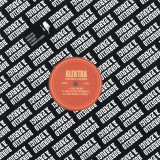
Daniel Monaco and John Noseda join forces for Alektra, a new project born out of a deep love for Hi-NRG and raw 808 sounds. Renowned for their dj sets, trips that delve into tropical obscurities, Chicago jack and Rimini romances, the pair have channelled a unique blend of untamed house and shimmering italo melodies into pure dancefloor euphoria. Their debut release, “Shake Your Body,” drops on Bordello A Parigi. Neon synthwork is punctured by clean punches of percussion, scaling melodies set firmly in the golden analogue era. Key stabs drive the track with Only Bee’s honeyed lyrics pushing the energy levels higher. In true 1980s anthem form, the flip is dedicated to the instrumental with the synthesizers and their hypnotic melodies taking centre stage: Alektra’s machines smouldering with fiery intensity. That same intensity closes, Only Bee’s mellifluous vocals given the limelight for the acapella close. Dancefloor definitions redefined. Welcome to Alektra.
quête:drop the lime
- 1
- A1: Montego Bay - Everything (Paradise Mix) 04 59
- A2: Atelier - Got To Live Together (Club Mix) 06 06
- A3: Golem - Music Sensations 04 56
- B1: The True Underground Sound Of Rome Feat. Stefano Di Carlo - Gladiators 05 26
- B2: Eagle Parade - I Believe 04 26
- C1: Dj Le Roi - Bocachica (Detroit Version) 05 28
- C2: Green Baize - Synthetic Rhythm 01 41
- C3: M.c.j. Feat. Sima - Sexitivity (Deep Mix) 05 30
- D1: Kwanzaa Posse Feat. Funk Master Sweat - Wicked Funk (Afro Ambient Mix) 06 31
- D2: Progetto Tribale - The Bird Of Paradise 06 29
- D3: Mbg - The Quite 06 59
Vol 1[28,99 €]
Googling “paradise house”, the first results to pop up are an endless list of European b&b’s with whitewashed lime façades, all of them promising “…an unmatched travel experience a few steps from the sea”. Next, a little further down, are the institutional websites of a few select semi-luxury retirement homes (no photos shown, but lots of stock images of smiling nurses with reassuring looks). To find the “paradise house” we’re after, we have to scroll even further down. Much further down.
It feels like yesterday, and at the same time it seems like a million years ago. The Eighties had just ended, and it was still unclear what to expect from the Nineties. Mobile phones that were not the size of a briefcase and did not cost as much as a car? A frightening economic crisis? The guitar-rock revival?! Certainly, the best place to observe that moment of transition was the dancefloor. Truly epochal transformations were happening there. From America, within a short distance one from the other, two revolutionary new musical styles had arrived: the first one sounded a bit like an “on a budget” version of the best Seventies disco-music – Philly sound made with a set of piano-bar keyboards! – the other was even more sparse, futuristic and extraterrestrial. It was a music with a quite distinct “physical” component, which at the same time, to be fully grasped, seemed to call for the knotty theories of certain French post-modern philosophers: Gilles Deleuze, Félix Guattari, Paul Virilio... Both those genres – we would learn shortly after – were born in the black communities of Chicago and Detroit, although listening to those vinyl 12” (often wrapped in generic white covers, and with little indication in the label) you could not easily guess whether behind them there was a black boy from somewhere in the Usa, or a girl from Berlin, or a pale kid from a Cornish coastal town.
Quickly, similar sounds began to show up from all corners of Europe. A thousand variations of the same intuition: leaner, less lean, happier, slightly less intoxicated, more broken, slower, faster, much faster... Boom! From the dancefloors – the London ones at least, whose chronicles we eagerly read every month in the pages of The Face and i-D – came tales of a new generation of clubbers who had completely stopped “dressing up” to go dancing; of hot tempered hooligans bursting into tears and hugging everyone under the strobe lights as the notes of Strings of Life rose up through the fumes of dry ice (certain “smiling” pills were also involved, sure). At this point, however, we must move on to Switzerland.
In Switzerland, in the quiet and diligent town of Lugano, between the 1980s and 1990s there was a club called “Morandi”. Its hot night was on Wednesdays, when the audience also came from Milan, Como, Varese and Zurich. Legend goes that, one night, none less than Prince and Sheila E were spotted hiding among the sofas, on a day-off of the Italian dates of the Nude Tour… The Wednesday resident and superstar was an Italian dj with an exotic name: Don Carlos. The soundtrack he devised was a mixture of Chicago, Detroit, the most progressive R&B and certain forgotten classics of old disco music: practically, what the Paradise Garage in New York might have sounded like had it not closed in 1987. In between, Don Carlos also managed to squeeze in some tracks he had worked on in his studio on Lago Maggiore. One in particular: a track that was rather slow compared to the BPM in fashion at the time, but which was a perfect bridge between house and R&B. The title was Alone: Don Carlos would explain years later that it had to be intended both in the English meaning of “by itself” and like the Italian word meaning “halo”. That wasn’t the only double entendre about the song, anyway. Its own very deep nature was, indeed, double. On the one hand, Alone was built around an angelic keyboard pattern and a romantic piano riff that took you straight to heaven; on the other, it showcased enough electronic squelches (plus a sax part that sounded like it had been dissolved by acid rain) to pigeonhole the tune into the “junk modernity” section, aka the hallmark of all the most innovative sounds of the time: music that sounded like it was hand-crafted from the scraps of glittering overground pop.
No one knows who was the first to call it “paradise house”, nor when it happened. Alternative definitions on the same topic one happened to hear included “ambient house”, “dream house”, “Mediterranean progressive”… but of course none were as good (and alluring) as “paradise house”. What is certain is that such inclination for sounds that were in equal measure angelic and neurotic, romantic and unaffective, quickly became the trademark of the second generation of Italian house. Music that seemed shyly equidistant from all the rhythmic and electronic revolutions that had happened up to that moment (“Music perfectly adept at going nowhere slowly” as noted by English journalist Craig McLean in a legendary field report for Blah Blah Blah magazine). Music that to a inattentive ear might have sounded as anonymous as a snapshot of a random group of passers-by at 10AM in the centre of any major city, but perfectly described the (slow) awakening in the real world after the universal love binge of the so-called Second Summer of Love.
For a brief but unforgettable season, in Italy “paradise house” was the official soundtrack of interminable weekends spent inside the car, darting from one club to another, cutting the peninsula from North to centre, from East to West coast in pursuit of the latest after-hours disco, trading kilometres per hour with beats per minute: practically, a new New Year’s Eve every Friday and Saturday night. This too was no small transformation, as well as a shock for an adult Italy that was encountering for the first time – thanks to its sons and daughters – the wild side of industrial modernity. The clubbers of the so-called “fuoriorario” scene were the balls gone mad in the pinball machine most feared by newspapers, magazines and TV pundits. What they did each and every weekend, apart from going crazy to the sound of the current white labels, was linking distant geographical points and non-places (thank you Marc Augé!) – old dance halls, farmhouses and business centres – transformed for one night into house music heaven. As Marco D’Eramo wrote in his 1995 essay on Chicago, Il maiale e il grattacielo: “Four-wheeled capitalism distorts our age-old image of the city, it allows the suburbs to be connected to each other, whereas before they were connected only by the centre (…) It makes possible a metropolitan area without a metropolis, without a city centre, without downtown. The periphery is no longer a periphery of any centre, but is self-centred”.
“Paradise house” perfectly understood all of this and turned it into a sort of cyber-blues that didn’t even need words, and unexpectedly brought back a drop of melancholic (post?)-humanity within a world that by then – as we would wholly realise in the decades to come – was fully inhuman and heartless. A world where we were all alone, and surrounded by a sinister yellowish halo, like a neon at the end of its life cycle. But, for one night at least, happy."
Hot Creations recruits Italian duo ItaloBros as the pair deliver three vibrant tracks across their latest EP, ‘Gosadera’
Hailing from Scalea, Italy, ItaloBros have been riding the wave of success, captivating dancefloors worldwide at venues like Ushuaia Ibiza, Motion Bristol, and PM Open Air in Buenos Aires and boasting releases on Circus, Material and Knee Deep In Sound, amongst others. With 2022 seeing the pair team up with Jerëmie for the release of their single 'Attention' on Hot Creations sister label' Hottrax, February now sees the duo step into the limelight as they drop their solo debut EP on the renowned Hot Creations with a trio of blazing tracks across 'Gosadera’.
Already becoming a mainstay in Marco Carola’s sets, ‘Gosadera’ kicks off with an orchestra of vibrant
trumpets and lively bongos layered on top of a relentless, grooving bassline. Next, ‘Story’ takes on their old-school roots, teasing lush piano chords complete with vibrant, punchy drums. Closing out the EP, ‘Amira’ showcases a deeper, sultry vibe with alluring male vocals at the core.
Driving anywhere in Texas can cost you half a day, easy. For example, it'll take you over four hours just to get from R&B singer Leon Bridges' hometown of Fort Worth down to Houston, where the psychedelic wanderers in Khruangbin hail from. The state is vast, crisscrossed with rugged expanses of road flanked by limestone cliffs and granite mountains, forests of pine and mesquite, miles of desert or acres of sprawling grassland, all depending on what part you're in. And it's all baking under the Texas Sun that lends its name to Bridges and Khruangbin's new collaborative EP. "Big sky country, that's what they call Texas," Khruangbin bassist Laura Lee says. "The horizon line goes all the way from one side to another without interruption. There's something really comforting about that." On Texas Sun, these two members of the state's musical vanguard meet up somewhere in the middle of that scene, in the mythical nexus of Texas' past, present, and future-a dreamy badlands where genres blur as seamlessly as the terrain. It calls equally to the cowboys boot-scooting at Billy Bob's in Fort Worth, the chopped-and-screwed hip-hop fans rattling slabs on the southside of Houston, the art-school kids dropping acid in Austin, the cross-cultural progeny who grew up on listening to both mariachi and post-hardcore out on the Mexican borders of El Paso. All of these things, overlapping in a multicolored melange, purple hues as vivid and unpredictable as one of the state's rightfully celebrated sunsets. A journey through homesick reminiscences, backseat romances, and late-night contemplations, the kind of record made for listening with the windows down and the road humming softly beneath you. Like the highways that inspired it, Texas Sun is guaranteed to get you where you're going-especially if you're in no particular hurry to get there.
Igor Tamerlan is a stranger in his own land. Born in 1954 the Hague and spent most formative years in Paris, Igor suddenly had the urge to relocate to Bali in 1986. “I want to settle in Indonesia and marry a local girl,” he told his sister shortly before flying out.
His next journey would be as audacious as his time in the Fifth Republic. Born from a prominent Indonesian expatriate family in Paris with ties to Indonesia’s first prime minister Sutan Sjahrir, Igor earned a degree in architecture at Ecole nationale supe´rieure d’architecture de Paris-La Villette.
He could have been a brilliant architect or a political scientist (he was accepted to Sciences Po), but his passion for music distracted him from his academic works. He was after all named after Russian composer Igor Stravinsky.
During his brief stint at Sciences Po, Igor spent most of times hanging out at recording studios and rub shoulders with the likes of singer-songwriter Jean-Jacques Goldman and Michel Polnaref. He had a brief encounter with The Rolling Stones at the Cha^teau de Thoiry studio in the early 1970s.
But Igor’s musical education and his occidental eyes appeared to be ill-suited for Indonesia. His first record, titled Langkah Pertama (First Step) on the mainstream label Musica was met with a shrug and was a commercial dud. An experimental record blending the influence of Spanish motifs, Francophile production and a whiff of hip hop and ska was seen by critics as being too alien. His sarcasm-laden lyrics and his biting critique of excessive materialism among the upper tier of Indonesia’s nouveau riche in the album was met with confusion from the audience. He was just too far ahead of his time.
He left the label Musica – or may had been dropped – soon after Langkah Pertama and decided to go independent. He then relocated to Bali and set up a state-of-the-art recording studio in Sanur, across the street from Southeast Asia’s first boutique hotel where luminaries like Mick Jagger, David Bowie, Sting, Yoko Ono and Ringo Starr stayed for their holiday.
From the studio, Igor recording everything from the sounds waterfalls, geckos, minibuses to motorized rickshaw and mix them with hip hop, jazz, electronica, dub and Balinese gamelan. A visionary, Igor was the first musician to use MIDI, which started to be available globally in the early 1980s.
On paper, songs like “Bali Vanilli” should not work, a mish mash of disparate elements mentioned above, sung in three languages, Balinese, English and Bahasa Indonesia while tackling the subject of overtourism. The song was also the first to introduce rap to an unsuspecting audience. But for some strange reason “Bali Vanilli” became a sensation and overnight Igor became household name. And in 1987, long before overtourism was an issue, Igor broached the subject to a national audience in Indonesia on the possible destruction of nature and culture from tourism.
Ever an iconoclast, Igor decided to step out of the limelight following the success of “Bali Vanilli” and in early 1990s he relocated to Indonesia’s cultural capital, Yogyakarta. Here, he worked on some more experimental music while juggling as music video director. He passed away in 2018 at the age of 64.
The 10 songs in this compilation, Bali Vanilli: Experimental Pop from Paradise Island (1987-1991), are some of Igor’s best works, music that would have gone into obscurity had it not been for the diligent work of film director Alfred Pasifico Ginting, who managed to track down some of the master tapes while researching on a documentary on the musician.
These recordings have never before been released outside of Indonesia. Igor would have been proud with this reissue project.
- A1: Suzanne - Greg Bowman
- A2: Livin’ In The Middle - Rick Steffen
- A3: A Place In Your Heart - Charmer
- A4: Warmth - Bluejays
- A5: Oh Realle - Saffire
- A6: Love Be Kind - Greg Boehme
- B1: Gypsy Wind - Allan Mackey
- B2: Small Talk - David Ireland
- B3: Back In My Arms - Dan Strimer
- B4: Let It Flow - David Hollen
- B5: Paradise Island - Gasper & Dukes
A warm breeze drifts through the open cabin of the boat, carrying the scent of salt and sunwarmed teak as it stirs the linen curtains. The man moves easily, bare feet against the wooden floor, the slow rhythm of the harbor rocking beneath him. He flips through his records with a knowing touch, pulling out a favorite—something smooth and mellow, with buttery vocals and melodies that drift like a sailboat on calm waters. The needle drops, and honeyed guitar riffs spill into the air, effortless and sunlit. He reaches for the bottle of rum, the ice in his glass chiming softly as he pours, then adds a squeeze of lime, a lazy stir. Outside, the water glows in the last light of day, golden ripples stretching toward the horizon. He leans back against the cushioned bench, drink in hand, the music swirling around him like the evening breeze—unhurried, weightless, exactly where he wants to be.
Small Talk brings together a carefully curated selection of long-forgotten, yet remarkably smooth and captivating soft rock and AOR tracks from the ‘70s and ‘80s, compiled by Brandon McMahon. These lesser-known songs are drenched in lush harmonies, dreamy guitar riffs, and mellow rhythms, capturing the essence of an era without the mainstream recognition. For those with an ear for the obscure and a taste for the subtle, Small Talk offers a fresh perspective on an era’s most overlooked gems.
- Piranhas (Feat. J-Spliff &Amp; Estee Nack)
- Facelift (Feat. Estee Nack, Raz Fresco &Amp; Daniel Son)
- Overkill (Feat. Hus Kingpin)
- You&Apos;Re Dead (Feat. Al.divino &Amp; Crimeapple)
- &Apos;83 Canadian Hollow Tips (Feat. P-Dirt, Raz Fresco &Amp; Daniel Son)
- Head Hunters (Feat. Izrell)
- Welcome To Hell (Feat. P-Dirt, Dj Eclipse &Amp; Ill Bill)
- Maximum Overdrive (Feat. Raz Fresco, Goretex &Amp; J-Spliff)
- White Crown Pt. Ii (Feat. Casual, Dj Eclipse &Amp; Planet Asia)
- Call Me Snake (Feat. P-Dirt &Amp; J-Spliff)
- Wild Style Warz (Feat. Raz Fresco &Amp; Da Flyy Hooligan)
- Writing On The Wall (Feat. Izrell &Amp; J-Spliff)
When we last heard from Bay Area producer DEAD PERRY, he was riding high on the critical success of "The Art Of Re-Animation" album. That album was a re-imagining of legendary Hieroglyphics crew emcee Casual's work from his "Big Head Science" album.
However on the forthcoming "Acoustic Shadows" album, as the title implies things get a bit dark. As he relays "when I made (The Art Of Reanimation) with Cas, I wanted to cater to the specific sound that Hieroglyphics has, but put my spin on it without making it too dark (though there are a couple of dark gems sprinkled throughout). I knew that my next album was going to be a solo LP and I wanted it to be something special. Dark and grimy has always been my style of beat making so I wanted to showcase that with this record."
However, the title also has a double meaning to the producer. "The term Acoustic Shadows comes from a Civil War phenomenon that refers to a sonic blind spot. Due to geographical obstructions disrupting sound waves you could think you are a great distance from the battlefield while you could already be in it. It also refers to my style keeping to the shadows and out of the limelight, when I only appear in photos wearing a mask, it's not because I'm on that post MF Doom craze, it's because I came from graffiti and graffiti artists let their art be their only face to the public."
That style is showcased throughout the forthcoming album, including his choice of collaborators include Casual, Daniel Son, Estee Nack, Al Divino, Raz Fresco, Ill Bill, Goretex, Hus Kingpin, Crimeapple, Planet Asia, Da Flyy Hooligan, Izrell, P-Dirt, J-Spliff and cuts from DJ Eclipse. Concepts also lent itself to the grime including the John Carpenter-esque synth laden "Call Me Snake" track, which inadvertently inspired the emcees. As DEAD PERRY relates "I give the beats a place-holder title until the track is done so this one was 'Die Kurt Russ.' P-Dirt chose to create the concept off the beat title. Crafting that song was a fun experience." It also has a full circle moment as DEAD PERRY and Casual expand their "White Crown" single from their previous project on this release enlisting Planet Asia to drop an additional Afro-Centric verse.
- Piranhas (Feat. J-Spliff &Amp; Estee Nack)
- Facelift (Feat. Estee Nack, Raz Fresco &Amp; Daniel Son)
- Overkill (Feat. Hus Kingpin)
- You&Apos;Re Dead (Feat. Al.divino &Amp; Crimeapple)
- &Apos;83 Canadian Hollow Tips (Feat. P-Dirt, Raz Fresco &Amp; Daniel Son)
- Head Hunters (Feat. Izrell)
- Welcome To Hell (Feat. P-Dirt, Dj Eclipse &Amp; Ill Bill)
- Maximum Overdrive (Feat. Raz Fresco, Goretex &Amp; J-Spliff)
- White Crown Pt. Ii (Feat. Casual, Dj Eclipse &Amp; Planet Asia)
- Call Me Snake (Feat. P-Dirt &Amp; J-Spliff)
- Wild Style Warz (Feat. Raz Fresco &Amp; Da Flyy Hooligan)
- Writing On The Wall (Feat. Izrell &Amp; J-Spliff)
When we last heard from Bay Area producer DEAD PERRY, he was riding high on the critical success of "The Art Of Re-Animation" album. That album was a re-imagining of legendary Hieroglyphics crew emcee Casual's work from his "Big Head Science" album.
However on the forthcoming "Acoustic Shadows" album, as the title implies things get a bit dark. As he relays "when I made (The Art Of Reanimation) with Cas, I wanted to cater to the specific sound that Hieroglyphics has, but put my spin on it without making it too dark (though there are a couple of dark gems sprinkled throughout). I knew that my next album was going to be a solo LP and I wanted it to be something special. Dark and grimy has always been my style of beat making so I wanted to showcase that with this record."
However, the title also has a double meaning to the producer. "The term Acoustic Shadows comes from a Civil War phenomenon that refers to a sonic blind spot. Due to geographical obstructions disrupting sound waves you could think you are a great distance from the battlefield while you could already be in it. It also refers to my style keeping to the shadows and out of the limelight, when I only appear in photos wearing a mask, it's not because I'm on that post MF Doom craze, it's because I came from graffiti and graffiti artists let their art be their only face to the public."
That style is showcased throughout the forthcoming album, including his choice of collaborators include Casual, Daniel Son, Estee Nack, Al Divino, Raz Fresco, Ill Bill, Goretex, Hus Kingpin, Crimeapple, Planet Asia, Da Flyy Hooligan, Izrell, P-Dirt, J-Spliff and cuts from DJ Eclipse. Concepts also lent itself to the grime including the John Carpenter-esque synth laden "Call Me Snake" track, which inadvertently inspired the emcees. As DEAD PERRY relates "I give the beats a place-holder title until the track is done so this one was 'Die Kurt Russ.' P-Dirt chose to create the concept off the beat title. Crafting that song was a fun experience." It also has a full circle moment as DEAD PERRY and Casual expand their "White Crown" single from their previous project on this release enlisting Planet Asia to drop an additional Afro-Centric verse.
- Piranhas (Feat. J-Spliff &Amp; Estee Nack)
- Facelift (Feat. Estee Nack, Raz Fresco &Amp; Daniel Son)
- Overkill (Feat. Hus Kingpin)
- You&Apos;Re Dead (Feat. Al.divino &Amp; Crimeapple)
- &Apos;83 Canadian Hollow Tips (Feat. P-Dirt, Raz Fresco &Amp; Daniel Son)
- Head Hunters (Feat. Izrell)
- Welcome To Hell (Feat. P-Dirt, Dj Eclipse &Amp; Ill Bill)
- Maximum Overdrive (Feat. Raz Fresco, Goretex &Amp; J-Spliff)
- White Crown Pt. Ii (Feat. Casual, Dj Eclipse &Amp; Planet Asia)
- Call Me Snake (Feat. P-Dirt &Amp; J-Spliff)
- Wild Style Warz (Feat. Raz Fresco &Amp; Da Flyy Hooligan)
- Writing On The Wall (Feat. Izrell &Amp; J-Spliff)
When we last heard from Bay Area producer DEAD PERRY, he was riding high on the critical success of "The Art Of Re-Animation" album. That album was a re-imagining of legendary Hieroglyphics crew emcee Casual's work from his "Big Head Science" album.
However on the forthcoming "Acoustic Shadows" album, as the title implies things get a bit dark. As he relays "when I made (The Art Of Reanimation) with Cas, I wanted to cater to the specific sound that Hieroglyphics has, but put my spin on it without making it too dark (though there are a couple of dark gems sprinkled throughout). I knew that my next album was going to be a solo LP and I wanted it to be something special. Dark and grimy has always been my style of beat making so I wanted to showcase that with this record."
However, the title also has a double meaning to the producer. "The term Acoustic Shadows comes from a Civil War phenomenon that refers to a sonic blind spot. Due to geographical obstructions disrupting sound waves you could think you are a great distance from the battlefield while you could already be in it. It also refers to my style keeping to the shadows and out of the limelight, when I only appear in photos wearing a mask, it's not because I'm on that post MF Doom craze, it's because I came from graffiti and graffiti artists let their art be their only face to the public."
That style is showcased throughout the forthcoming album, including his choice of collaborators include Casual, Daniel Son, Estee Nack, Al Divino, Raz Fresco, Ill Bill, Goretex, Hus Kingpin, Crimeapple, Planet Asia, Da Flyy Hooligan, Izrell, P-Dirt, J-Spliff and cuts from DJ Eclipse. Concepts also lent itself to the grime including the John Carpenter-esque synth laden "Call Me Snake" track, which inadvertently inspired the emcees. As DEAD PERRY relates "I give the beats a place-holder title until the track is done so this one was 'Die Kurt Russ.' P-Dirt chose to create the concept off the beat title. Crafting that song was a fun experience." It also has a full circle moment as DEAD PERRY and Casual expand their "White Crown" single from their previous project on this release enlisting Planet Asia to drop an additional Afro-Centric verse.
ŽUR (‘Zhure’, party) is absolute cult and one of the most rare Yugoslavian disco funk albums, originally recorded in 1981, reissued on Everland Music for the first time since the original vinyl came out more than 40 years ago. The album was carefully and brilliantly remastered by grammy nominated sound engineer Jessica Thomson.
Boban Petrović is a legend of Belgrade's sophisticated disco funk scene from the late 70s and early 80s.
Back in the second half of the 70s Boban started one of the first disco clubs in Belgrade and he was one of the biggest organizers of private house parties.
The finest balance between Boban Petrović's big-hearted party-maker-turned-philanthropist personality and his hustler one was achieved on Žur.
On Žur, he is at home, in his safe place, since the parties, the music and the people are the first out of many things he had completely figured out in his life. He is at the top of his game, occasionally bothered by a casual heartbreak, but always feeling himself, coming out playful and fundamentally peaceful, satisfied and ready to transcend himself in order to put the rest of the world in the limelight. In fact, Žur isn’t about the party, music, lyrics or its, hands down, beautifully balanced sonics. It’s about Boban and the funk he lived thoroughly. The funk before, but the funk he lived after this album even more so. All the ups and downs that he faced since the moment the first needle dropped on a Žur record to this very day are on this album as the unwritten destiny of that lighthearted character he played.
In short, ŽUR represents the essence of underground club life in Belgrade from the late 70s, when the album was recorded.
The quality of this trust is confirmed by the fact that Boban Petrovic's music is still actively listened to today, not just anywhere, but at the finest club events.
High end production and extremely authentic arrangements outside the mold of classic disco music, and lyrics that literally convey the vibe of his already jet-set lifestyle in Belgrade at the time.
Shortly after his musical career, Boban Petrovic became a businessman of the conscious class. He was living in Spain on his own luxury yacht for years, he had a private airplane, a car park. But all this time living on highest class level he never lost his identity. In all his offices, yacht, airplane and everywhere was playing loud funk music and he was dressed like a musician who just finished or need to start a gig.
Along the way Boban also wrote two books: Rokanje 1 & 2 describing the time when the album ŽUR was created.
The ŽUR album is one of the the holy grails of disco funk music releases on a global level.
- 1: Prepad
- 2: Svetski Osmeh
- 3: Daj Mi Sansu
- 4: Progresio Sam
- 5: Djuskaj
- 6: Kupatilo Je Shvatilo
- 7: Meterology
- 8: Otisli Smo
Original[30,88 €]
ŽUR (‘Zhure’, party) is absolute cult and one of the most rare Yugoslavian disco funk albums, originally recorded in 1981, reissued on Everland Music for the first time since the original vinyl came out more than 40 years ago. The album was carefully and brilliantly remastered by grammy nominated sound engineer Jessica Thomson.
Boban Petrović is a legend of Belgrade's sophisticated disco funk scene from the late 70s and early 80s.
Back in the second half of the 70s Boban started one of the first disco clubs in Belgrade and he was one of the biggest organizers of private house parties.
The finest balance between Boban Petrović's big-hearted party-maker-turned-philanthropist personality and his hustler one was achieved on Žur.
On Žur, he is at home, in his safe place, since the parties, the music and the people are the first out of many things he had completely figured out in his life. He is at the top of his game, occasionally bothered by a casual heartbreak, but always feeling himself, coming out playful and fundamentally peaceful, satisfied and ready to transcend himself in order to put the rest of the world in the limelight. In fact, Žur isn’t about the party, music, lyrics or its, hands down, beautifully balanced sonics. It’s about Boban and the funk he lived thoroughly. The funk before, but the funk he lived after this album even more so. All the ups and downs that he faced since the moment the first needle dropped on a Žur record to this very day are on this album as the unwritten destiny of that lighthearted character he played.
In short, ŽUR represents the essence of underground club life in Belgrade from the late 70s, when the album was recorded.
The quality of this trust is confirmed by the fact that Boban Petrovic's music is still actively listened to today, not just anywhere, but at the finest club events.
High end production and extremely authentic arrangements outside the mold of classic disco music, and lyrics that literally convey the vibe of his already jet-set lifestyle in Belgrade at the time.
Shortly after his musical career, Boban Petrovic became a businessman of the conscious class. He was living in Spain on his own luxury yacht for years, he had a private airplane, a car park. But all this time living on highest class level he never lost his identity. In all his offices, yacht, airplane and everywhere was playing loud funk music and he was dressed like a musician who just finished or need to start a gig.
Along the way Boban also wrote two books: Rokanje 1 & 2 describing the time when the album ŽUR was created.
The ŽUR album is one of the the holy grails of disco funk music releases on a global level.
- A1: Progetto Tribale - The Sweep
- A2: Onirico - Echo Giomini
- A3: Open Spaces - Artist In Wonderland
- B1: Alex Neri – The Wizard (Hot Funky Version)
- B2: M C.j. Feat. Sima - To Yourself Be Free - Instrumental Mix Energy Prod
- B3: Mato Grosso - Titanic Expande
- C1: Dreamatic - I Can Feel It (Part 1)
- C2: Carol Bailey - Understand Me Free Your Mind (Dream Piano Remix)
- C3: The True Underground Sound Of Rome - Secret Doctrine
- D1: Don Carlos - Boy
- D2: Lazy Bird – Jazzy Doll (Odyssey Dub)
Vol 2[28,99 €]
Volume 1 of this expertly curated project of 90s Italian House - put together by Don Carlos.
If Paradise was half as nice… by Fabio De Luca.
Googling “paradise house”, the first results to pop up are an endless list of European b&b’s with whitewashed lime façades, all of them promising “…an unmatched travel experience a few steps from the sea”. Next, a little further down, are the institutional websites of a few select semi-luxury retirement homes (no photos shown, but lots of stock images of smiling nurses with reassuring looks). To find the “paradise house” we’re after, we have to scroll even further down. Much further down.
It feels like yesterday, and at the same time it seems like a million years ago. The Eighties had just ended, and it was still unclear what to expect from the Nineties. Mobile phones that were not the size of a briefcase and did not cost as much as a car? A frightening economic crisis? The guitar-rock revival?! Certainly, the best place to observe that moment of transition was the dancefloor. Truly epochal transformations were happening there. From America, within a short distance one from the other, two revolutionary new musical styles had arrived: the first one sounded a bit like an “on a budget” version of the best Seventies disco-music – Philly sound made with a set of piano-bar keyboards! – the other was even more sparse, futuristic and extraterrestrial. It was a music with a quite distinct “physical” component, which at the same time, to be fully grasped, seemed to call for the knotty theories of certain French post-modern philosophers: Gilles Deleuze, Félix Guattari, Paul Virilio... Both those genres – we would learn shortly after – were born in the black communities of Chicago and Detroit, although listening to those vinyl 12” (often wrapped in generic white covers, and with little indication in the label) you could not easily guess whether behind them there was a black boy from somewhere in the Usa, or a girl from Berlin, or a pale kid from a Cornish coastal town.
Quickly, similar sounds began to show up from all corners of Europe. A thousand variations of the same intuition: leaner, less lean, happier, slightly less intoxicated, more broken, slower, faster, much faster... Boom! From the dancefloors – the London ones at least, whose chronicles we eagerly read every month in the pages of The Face and i-D – came tales of a new generation of clubbers who had completely stopped “dressing up” to go dancing; of hot tempered hooligans bursting into tears and hugging everyone under the strobe lights as the notes of Strings of Life rose up through the fumes of dry ice (certain “smiling” pills were also involved, sure). At this point, however, we must move on to Switzerland.
In Switzerland, in the quiet and diligent town of Lugano, between the 1980s and 1990s there was a club called “Morandi”. Its hot night was on Wednesdays, when the audience also came from Milan, Como, Varese and Zurich. Legend goes that, one night, none less than Prince and Sheila E were spotted hiding among the sofas, on a day-off of the Italian dates of the Nude Tour… The Wednesday resident and superstar was an Italian dj with an exotic name: Don Carlos. The soundtrack he devised was a mixture of Chicago, Detroit, the most progressive R&B and certain forgotten classics of old disco music: practically, what the Paradise Garage in New York might have sounded like had it not closed in 1987. In between, Don Carlos also managed to squeeze in some tracks he had worked on in his studio on Lago Maggiore. One in particular: a track that was rather slow compared to the BPM in fashion at the time, but which was a perfect bridge between house and R&B. The title was Alone: Don Carlos would explain years later that it had to be intended both in the English meaning of “by itself” and like the Italian word meaning “halo”. That wasn’t the only double entendre about the song, anyway. Its own very deep nature was, indeed, double. On the one hand, Alone was built around an angelic keyboard pattern and a romantic piano riff that took you straight to heaven; on the other, it showcased enough electronic squelches (plus a sax part that sounded like it had been dissolved by acid rain) to pigeonhole the tune into the “junk modernity” section, aka the hallmark of all the most innovative sounds of the time: music that sounded like it was hand-crafted from the scraps of glittering overground pop.
No one knows who was the first to call it “paradise house”, nor when it happened. Alternative definitions on the same topic one happened to hear included “ambient house”, “dream house”, “Mediterranean progressive”… but of course none were as good (and alluring) as “paradise house”. What is certain is that such inclination for sounds that were in equal measure angelic and neurotic, romantic and unaffective, quickly became the trademark of the second generation of Italian house. Music that seemed shyly equidistant from all the rhythmic and electronic revolutions that had happened up to that moment (“Music perfectly adept at going nowhere slowly” as noted by English journalist Craig McLean in a legendary field report for Blah Blah Blah magazine). Music that to a inattentive ear might have sounded as anonymous as a snapshot of a random group of passers-by at 10AM in the centre of any major city, but perfectly described the (slow) awakening in the real world after the universal love binge of the so-called Second Summer of Love.
For a brief but unforgettable season, in Italy “paradise house” was the official soundtrack of interminable weekends spent inside the car, darting from one club to another, cutting the peninsula from North to centre, from East to West coast in pursuit of the latest after-hours disco, trading kilometres per hour with beats per minute: practically, a new New Year’s Eve every Friday and Saturday night. This too was no small transformation, as well as a shock for an adult Italy that was encountering for the first time – thanks to its sons and daughters – the wild side of industrial modernity. The clubbers of the so-called “fuoriorario” scene were the balls gone mad in the pinball machine most feared by newspapers, magazines and TV pundits. What they did each and every weekend, apart from going crazy to the sound of the current white labels, was linking distant geographical points and non-places (thank you Marc Augé!) – old dance halls, farmhouses and business centres – transformed for one night into house music heaven. As Marco D’Eramo wrote in his 1995 essay on Chicago, Il maiale e il grattacielo: “Four-wheeled capitalism distorts our age-old image of the city, it allows the suburbs to be connected to each other, whereas before they were connected only by the centre (…) It makes possible a metropolitan area without a metropolis, without a city centre, without downtown. The periphery is no longer a periphery of any centre, but is self-centred”.
“Paradise house” perfectly understood all of this and turned it into a sort of cyber-blues that didn’t even need words, and unexpectedly brought back a drop of melancholic (post?)-humanity within a world that by then – as we would wholly realise in the decades to come – was fully inhuman and heartless. A world where we were all alone, and surrounded by a sinister yellowish halo, like a neon at the end of its life cycle. But, for one night at least, happy.
2024 Repress
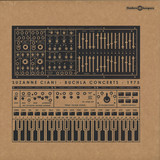
Finders Keepers invite you to witness the incredible first ever Buchla synthesiser concerts/demonstrations providing a distinctive feminine alternative to The Silver Apples Of The Moon if they had ever been presented in phonographic form. This is history in the remaking.
This spring Finders Keepers Records are proud to release an archival project that not only redefines musical history but boasts genuine claim to the overused buzzwords such as pioneering, maverick, experimental, groundbreaking and esoteric, while questioning social politics and the evolution of music technology as we've come to understand it. To describe this records as a game-changer is an understatement. This record represents a musical revolution, a scientific benchmark and a trophy in the cabinet of counter culture creativity. This record is a triumphant yardstick in the synthesiser space race and the untold story of the first woman on the proverbial moon. While pondering the early accolades of this record it's daunting to learn that this record was in fact not a record at all... It was a manifesto and a gateway to a new world, that somehow never quite opened. If the unfamiliar, modernistic, melodic, pulses, tones and harmonics found on this 1975 live presentation/grant application/educational demonstration had been placed in a phonographic context alongside the promoted work of Morton Subotnick, Walter Carlos or Tomita then the name Suzanne Ciani and her influence would have already radically changed the shape, sound and gender of our record collections. Hopefully there is still chance.
In short, Suzanne was a self-imposed twenty-year-old employee of the Buchla modular synthesiser company, San Francisco's neck and neck contender to New York's Moog. Buchla was run by a community of festival freaks and academic acid eaters whose roots in new age lifestyles and the reinvention of art and music replaced the business acumen enjoyed by its likeminded East Coasters. In the eyes of the consumer the creative refusal to adopt rudimentary facets like a piano keyboard controller rendered the Buchla synthesiser the more obscure stubborn sister of the synth marathon, steering these incredible units away from the mainstream into the homes and studios of free music aficionados, art house composers and die-hard revolutionaries. Championed and semi-showcased by composer Morton Subotnick on his albums The Bull and Silver Apples Of The Moon, Buchla's versatility began to open the minds of a new generation, but the high-end design features and no-compromise modus operandi was often confused with incompatibility and, in the pulsating shadow of Moog's marketing, the revolution would not be televised nor patronised. Suzanne Ciani, as one of the very few female composers on the frontline (and also providing the back line) did not lose faith.
These concerts' are the epitome of rare music technology historic documents, performed by a real musician whose skills and academic education in classical composition already outweighed her male synthesiser contemporaries of twice her age. At the very start of her fragile career these recordings are nothing short of sacrificial ode to her mentor and machine, sonic pickets of the revolution and love letters to an absolutely genuine vision of and 'alternative' musical future. In denouncing her own precocious polymathmatic past in a bid to persuade the world to sing from a new hymn sheet, Suzanne Ciani created a bi-product of never before heard music that would render the pigeon holes ambient' and futuristic' utterly inadequate. Providing nothing short of an entirely different feminine take on the experimental records' of Morton Subotnick and proving to a small, judgmental audience and jury the true versatility of one of the most radical and idiosyncratic musical instruments of the 20th century. These recordings have not been heard since then.
The importance of these genuinely lost pieces of electronic musics puzzle almost eclipses the glaring detail of Suzanne's gender as a distinct minority in an almost exclusively male dominated, faceless, coldly scientific landscape. Those familiar with Suzanne's work, a vast vault of previously unpublished non-records', will already know how the creative politics in her art of being' simultaneously reshaped the worlds of synth design, advertising and film composition before anyone had even dropped a stylus in her groove. Needless to say this record, finally commanding the archival format of choice, courtesy of the Ciani and Finders Keepers longstanding unison, was not the last first' with which this hugely important composer would gift society, and the future of a wide range of exciting evolving creative disciplines.
You have found a holy grail of electronic music and a female musical pioneer who was too proactive to take the trophies. With the light of Buchla and Ciani's initial flame Finders Keepers continues to take a torch through the vaults of this lesser-celebrated music legacy shining a beam on these non-records' that evaded the limelight for almost half a century. You can't write history when you are too busy making it. With fresh ink in the bottomless well, let's start at the beginning. Again. You, are invited!
Slip this delirious disc out of the lime/slime green sleeve and you're up close and personal with the new chapter in the TD saga.
A dance floor triptych of such seismic scale that the crew spent two years trying to wrangle the tracks on wax, finally finding a plant with the power to press them up.
Sprawling across the A-side is the devastating 'Doner Summer', an instrumental extension of some lost Munich disco masquerading as an Anatolian excursion. Ditching the vocals and cutting the kase, the crew lay down a galloping groove topped with Turkish licks and disco strings, take us into the psychedelic swirl of a tumbling drum breakdown before hitting the big red button marked banger for a searing second half. Firing up the hardware, TD blast this one further into the Phuture, dropping technoid sequences, nagging 303 and Cowley-style FX fuckery for a full on club assault.
In the alternate B-side universe, Hans Zimmer lost his dread note and Denis Villeneuve was forced to turn to Talking Drums for the Dune soundtrack. They obliged with the sci-fi rai of 'Chaba Ranks', reshaping an Algerian OG with a dancehall kick, off beat vamps and star-crossed synths, then letting loose with a heavy bass tone.
|In time honoured fashion, the team also drop a dub version, cutting out the vocals and focussing on those additional elements for the wildly cosmic 'Chaba Skanks'.
Now who's getting the spice in?
Limited Press - Numbered Insert - Drum Fun Guaranteed !
- A1: Get Down • A2. The Cross • A3. Made You Look
- B1: Last Real Nigga Alive
- B2: Zone Out (Feat. Bravehearts)
- B3: Hey Nas (Feat. Claudette Ortiz & Kelis) • B4. I Can
- C1: Book Of Rhymes
- C2: Thugz Mansion (N.y.) (Feat. 2Pac & J. Phoenix)
- C3: Mastermind • C4. Warrior Song (Feat. Alicia Keys)
- D1: Revolutionary Warfare (Feat. Lake) • D2. Dance
- D3: Heaven (Feat. Jully Black)
Repress! PRESSED ON BLUE & WHITE SWIRL VINYL! Housed In A High Gloss Jacket With Each LP Tucked Into A Printed Inner Sleeve
Nasir "Nas" Jones' 2001 record Stillmatic was considered a major comeback for the 90s rap icon. It signalled a return to the gritty, urban chaos of his acclaimed debut album, after releasing record after record of gradually more mainstream material, and Nas' return to prominence in the highest echelons of hip-hop. In spite of this newfound critical clout, Stillmatic's release did nothing to squash his then ongoing feud with fellow New Yorker Jay-Z, who had gone so far as to challenge Nas to a pay-per-view rap battle. A challenge Nas rejected, stating "If Jay-Z wants to battle, he should drop his album the same day I do and let the people decide." Nas fans never would get the no-holds barred lyrical battle with Jay-Z many had speculated. What they got instead was one of Nas' most personal and introspective releases to date in 2002. Not long after Stillmatic's release, Nas spent much of his time away from the limelight to tend to his ill mother, who would pass on from breast cancer in 2002. His experiences with his mother's mortality as well as the fallout of his feud with Jay-Z, who continued to produce diss tracks as Nas tended to his mother, would inspire much of the lyrical material on his next record. God's Son was released in December of 2002, and like Stillmatic before it, was subject to major critical acclaim. On God's Son, Nas effectively took the battle-hardened demeanor he had cultivated and tore it down across 14 tracks that were emotionally insular, though still dusted in urban grit, and still finding time to shoot back at Jay-Z's potshots on tracks like "Last Real Nigga Alive" and "Mastermind." Assisting Nas was a slew of top-tier producers like The Alchemist, Eminem, Ron Browz, and Salaam Remi, over samples of James Brown, the Incredible Bongo Band, Fela Kuti, and Beethoven, and guest vocals from Alicia Keys, Kelis, Claudette Ortiz of City High, and even a posthumous 2Pac.
Warehouse Find!
Time to welcome Soul 223 to the label with his debut Delusions EP entitled Fear Of Stopping. Something of a complete legend in our eyes and ears, Steve Pickton has been releasing top drawer tuneage for over two decades both as Stasis on influential labels such as B12 and Peacefrog and more recently as Soul 223 on equally well regarded imprints like Delsin, Soul Jazz and Neroli. Always one to shy away from any limelight or self promotion it's true to say that this underrated British producer remains something of an anomaly, staying true to his underground roots where faceless, shadowy and obscure reigns supreme over the latest over-exposed cover star. This ethos naturally carries through into his music where you will always find both expansive beauty and unrefined rawness in equal measures ensuring his tracks always sound fresh rather than over produced or contrived.
Fear Of Stopping opens the EP with a low-slung disco groove providing the backbone for intermittent pad washes and reversing stabs. The focus here is firmly on the drums and simple conga riff with thankfully very little else to deter you from this sublime slice of abstract dance music.
Next up we have a remix from another ridiculously talented producer who chooses quality over quantity, having only ever had one release under his own name, albeit for one of the most respected labels in the world; Rush Hour. Maxi Mill came to our attention having released one of the tracks of 2011 namely To The Next. On this, his first ever solo remix he brings a brilliant bump to the EP with a raw, warehousey and bass-heavy workout. Just the right amount of strings and pads keep the deep vibe intact but the filtering bass and jacking drums definitely take this one to the floor.
Flipping over we have Walberswick in it's Hoist Covert Mix incarnation. Almost thirteen minutes of spaced out, deep Detroit house music awaits you, ready to lure you in and cocoon you with it's warm and hypnotizing machine funk. Lovely to hear the old Stasis influence working it's way into this one sounding both decidedly old-school and completely futuristic and otherworldly as only the best tracks ever do.
Closing the EP we have Birdbrook Rain dropping the BPM's for a beautifully sparse track that brings with it an almost desolate and disconnected feeling, echoing synths providing a naive melody while a dusty pad shifts simply beneath. A little slice of magic concluding a fresh and interesting EP, we hope you agree.
Repress!
‘Shapes,’ the third album from London-based multi-instrumentalist, Robohands, fuses elements of jazz, krautrock, hip hop and ambient music. For fans of Khruangbin, Yusef Dayes, CAN, Coltrane and 70s library music moods.
Shapes is the solo project of London based composer, instrumentalist and producer Andy Baxter. His debut LP Green was released on Village Live Records in 2018 and was received with much love and acclaim in the UK Jazz, hip hop and surrounding scenes.
His follow up full-length, 'Dusk’, dropped in 2019, combining soul, funk, Latin & experimental moods. It featured vocalists & musicians from around the world including legendary New York French horn player, John Clark, who has worked with Isaac Hayes, Gil Evans Orchestra, McCoy Tyner, Jaco Pastorius, Ornette Coleman and many more greats.
'Shapes' is inspired by 1970s library music and their legendary composers including Piero Umiliani, David Axelrod, Brian Bennett and co. The album builds on these influences and incorporates modern motifs, contemporary jazz/hip hop drumming styles with a nod to 1990s Mo Wax artists such as DJ Shadow. The theme for the record is future/nostalgia, mixing vintage & modern instruments and production techniques.
Much of ‘Shapes’ was recorded with JB Pilon at Buffalo Studios in Limehouse, London. Due to the COVID restrictions that changed everything in 2020, the remaining parts were recorded in Andy’s flat using a collection of old mixing desk preamps and instruments.
For the heads – ‘Shapes’ features an array of vintage snares, including a 1960's Ludwig Pioneer and a mono, overhead ribbon mic on the drum kit provided extra old school points! The kick drum was re-amped through a huge vintage bass amplifier on a couple of tracks to give it some real character: “My favourite guitar sound achieved on this LP project is a Sontronics Sigma ribbon microphone in front of a WEM Dominator amp, which you can hear on the track 'Odysea'. The bass sound for all the tracks is a 1973 Fender Precision into an old Altec valve preamp, the one used on most Motown recordings."
Locked in a 486 glow, lightblink machines nightlight, being enters lighttime limelight. The long nineties already distending, the Major midbloats, crowds throng superclubs- strobelit honeys on a podium in Ibiza already blasted a stratosphere away from mildewed badflats, emphysemic parlours, the fug of week old washing drying slowly on the rad. Ach we’ll hang it out in the morning fire another joint of badhash and turn that tape over. We are being Here. beings disconnected, shut ins, psychick worriers, long walks to and from clubs, mostly dark, always raining, or mizzling anyway, lug bigbrick machines into cabs and Venue, setup and playing live and right now from the lounge lobby at Sativa, down the stairs from the caustic, twitching thrashpit being sits, being works. Dole sludge, shirking class zeroes, scoff pizza rolls w salad cream, that headchef gaffer never reckoned you’d graft at the potwash, a slick fur of rotfood dish slop residue right to the elbow, absolutely bowfin. Rumours of other places, people, scenes, tapes sent and emissaries return, invites to get trains, overnightbus south to London. being brought water to the ‘wells in South London and monthly emissions snaked out into the world, into badflats elsewhere where gowched couch tatties sprawl and the being burrowed deep into memories.. Tea is toast and sandwich spread and endless crisps as the binbags pile high in the backyard, the being blinks, it’s a twilit morning and it’s time to go to bed.
Driving anywhere in Texas can cost you half a day, easy. For example, it’ll take you over four hours just to get from R&B singer Leon Bridges’ hometown of Fort Worth down to Houston, where the psychedelic wanderers in Khruangbin hail from. The state is vast, crisscrossed with rugged expanses of road flanked by limestone cliffs and granite mountains, forests of pine and mesquite, miles of desert or acres of sprawling grassland, all depending on what part you’re in. And it’s all baking under the Texas Sun that lends its name to Bridges and Khruangbin’s new collaborative release. “Big sky country, that’s what they call Texas,” Khruangbin bassist Laura Lee says. “The horizon line goes all the way from one side to another without interruption. There’s something really comforting about that.” On ‘Texas Sun’, these two members of the state’s musical vanguard meet up somewhere in the middle of that scene, in the mythical nexus of Texas’ past, present, and future - a dreamy badlands where genres blur as seamlessly as the terrain. It calls equally to the cowboys bootscooting at Billy Bob’s in Fort Worth, the chopped-andscrewed hip hop fans rattling slabs on the southside of Houston, the art-school kids dropping acid in Austin, the cross-cultural progeny who grew up on listening to both mariachi and post-hardcore out on the Mexican borders of El Paso. All of these things, overlapping in a multi-coloured melange, purple hues as vivid and unpredictable as one of the state’s rightfully celebrated sunsets. A journey through homesick reminiscences, backseat romances and late night contemplations, the kind of record made for listening with the windows down and the road humming softly beneath you. Like the highways that inspired it, ‘Texas Sun’ is guaranteed to get you where you’re going - especially if you’re in no particular hurry to get there. Khruangbin and Leon Bridges are critically acclaimed artists with extensive coverage in print and online, including the New York Times, NPR, FADER, four Grammy nominations (Leon Bridges), The New Yorker, Washington Post and Pitchfork, among many others.
Having established himself in the UK's contemporary Jazz funk scene with a slew of high calibre releases, Dr Rubberfunk holds a reputation for quality productions surgically delivered by an accomplished multi-instrumentalist and producer.
After being hounded to join the roster in his early career, he signed to Jalapeno Records in 2008, and the years since have seen him release multiple albums, produce label artists, such as Izo FitzRoy, and be regularly called upon to bring his flair to remixes across the roster.
In 2018 he stepped back into the limelight to release a series of limited 7" singles, winning praise from fans throughout the 45s scene. This wide-ranging support led to the release of his LP 'My Life at 45' in early 2020, garnering critical acclaim from the likes of Bandcamp, BBC 6Music, Fatboy Slim and Blues & Soul Magazine, to name a few.
Now, and not a moment too soon, Dr Rubberfunk brings us a pair of outstanding beat treats from his back catalogue, pressed to 7" vinyl for the very first time. Featuring 2 tracks originally written for the 2006 Red Bull Beat Battle at the behest of Rocksteady Crew legend Mr. Wiggles, 'Come Back Breaker' & 'Beats Working' have become firm favourites with breaking crews worldwide.
Drawing on his continued influences from the sample-based collages of early cut and paste pioneers, 'Come Back Breaker' and 'Beats Working' suitably highlight the lessons learnt from that era. Coupled with the good doctor's signature drums and rolling basslines, spoken words snippets and needle-drop samples get the party started and carry it on well past bedtime.
Following the well received inclusion of Bonus Beats on all of the 'My Life At 45' series 45s, and upholding the noble drum-a-pella tradition, Dr Rubberfunk went back to his original session recordings to bring you 'Drums Working' - grab yourself two copies and keep the beats working for days!
‘I Want You To Be Mine’ has all the hallmarks of classic 1960’s Rocksteady, an era which many refer too as the Golden Age of Jamaican music. Over the top of a live one-drop beat, cool & deadly sax and warm analog guitar & bass Deemas J rides the riddim in a ‘old time style & fashion’ whilst Rachel Wallace provides the perfect accompaniment with her gorgeous vocal. On the B-Side we have the deeper cut ‘Questions’, where Deemas delivers a poignant poem over Adam Prescott’s moody instrumental in the style of Linton Kwesi Johnson. Featuring live instrumentation from Harry ‘Papa B’ Bradford (Sax), Clifford Junior (Guitar) & Guillaume Metenier (Hammond Organ). As an integral part of the Reggae Roast Soundsystem team Adam has established himself as one of the finest selectors in the world. Initially with some early support and guidance from Mark Iration (from the Leeds based Iration Steppas), Adam was quickly recognised as one of the key players in the re-emergence of British Reggae, producing first class original songs featuring the likes of Cornel Campbell, Macka B, Sugar Minott, Ranking Joe, Rod Taylor, Johnny Osbourne & Earl 16 to name but a few. Add to that consistent play on BBC Radio One & Rinse FM plus huge support from Sir David Rodigan, featuring Adam on his ‘Best Of British’ show on 1Xtra, Adam has become one of the hottest prospects in the revival of soundsystem music. Deemas J has built a formidable reputation as a go-to MC & vocalist with equally genre-busting credentials; His background in Reggae & Jungle means that his lyrical skills and style holds no bounds. He currently works with 3 of the top London Reggae Soundsystems, Unit 137, Reggae Roast & Solution Soundsystem as well as running his own Sound Limey Banton Bass in Guernsey. He has released music on some very well known labels such as Irie Ites, Irish Moss & Tru Thoughts, which released the cult LP ‘Wrongtom Meets Deemas J in East London’. More recently his latest release ‘Muhammed Ali’ received fantastic support from Don Letts, Sir David Rodigan & Ras Kwame. His virtually endless CV boasts collaborations with everyone across the worlds of Drum & Bass, Old School, Garage, Reggae and Hip hop, including High Contrast, Andy C, DJ EZ and Nick Manasseh to name just a few as well as touring the world with Manudigital
Making his first appearance on Ferox Records back in 1993 - Affie Yusuf has been producing techno, acid, and house music for over two decades, gracing heavyweight labels such as Force Inc. Music Works, Superstition Records, 909 Perversions and Chemical.
Affie is regarded as one of the most influential UK acid pioneers throughout the 1990's, releasing under his own name, and as part of House of 909 and Traffik with Trevor Loveys.
In the 2000's Affie & Trevor launched their label Tragic Magic, and founded the Machines Don't Care collective, alongside Sinden, Toddla T, Fake Blood, Detboi, Hervé, and Drop The Lime
Affie is also produces with collaborator Mr. C of the Shamen, and is resident DJ at London's long running 'I Love Acid' clubnight.
Born in Southampton on the south coast of England in the early 1970's, Affie Yusuf has established himself as one of the most important and influential pioneers of UK acid, techno and house, with a career that spans three decades.
Brighton's Dismantle second single with Wheel and Deal once again delivering his multi genre club smashing sounds.Destroy: Destory is the angry big brother of his first Single Computation & Word Dance! Dismantle delivers the goods again with his bouncing Electro / crack house step. The bit crushed vocal 'Destroy' breaks the epic build to a monster drop that gets every dance floor screaming for the wheelers! This track has been smashing it worldwide with support from N-Type, Hatcha, Mistajam, Shy Fx, Hizzle guy & Kutz to name a few.Computation VIP: The previously unreleased Dubplate! This wasn't going to see the light of day! A staple in the bag of N-Type, MistaJam, Hatcha, Soap Dodgers, Benton, Walsh & The Others! A sick little rework of the original track that launched Dismantle in to the limelight last year. Dismantle is join from strength to strength, and is a force to be reckoned with in 2012.
- 1