
- Erleichtert das Scratchen
- Schont den Motor des Plattenspielers und schützt die Schallplatten
- Durchmesser ca. 290 mm
- Höhe 3 mm
Disponible
En el almacen y preparando para el envío
Ültimo hace: 63 Días
5,46€
- Erleichtert das Scratchen
- Schont den Motor des Plattenspielers und schützt die Schallplatten
- Durchmesser ca. 290 mm
- Höhe 3 mm
En el almacen y preparando para el envío

- Erleichtert das Scratchen
- Schont den Motor des Plattenspielers und schützt die Schallplatten
- Durchmesser ca. 290 mm
- Höhe 3 mm
En el almacen y preparando para el envío
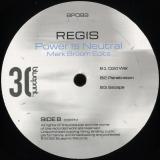
Following his recent appearance on Blueprint, Mark Broom returns to the label with a unique project, revisiting the work of techno pioneer Regis. Entitled "Power Is Neutral", the release sees Broom rework a selection of seminal Regis recordings originally released on Downwards Records across the albums Gymnastics (1996), Delivered Into The Hands Of Indifference (1998) and Penetration (2001).
Known as one of the key architects of the Birmingham techno sound, Regis (Karl O'Connor) helped shape British techno through his work as co-founder of Downwards Records and a catalogue that continues to influence generations of artists.
For Mark Broom, few artists embody British rave culture quite like Regis. Drawing on source material that has long stood as a cornerstone of UK techno, Broom approaches these edits with both respect and imagination. As Regis puts it, "Mark Broom is like some modern day Bagpuss... he has fired up his techno mouseorgan and polished old relics to make them all shiny and new."
Power Is Neutral delivers six expertly crafted reinterpretations that bridge the raw energy of Regis' original works with Broom's unmistakable contemporary dancefloor sensibility, bringing these timeless tracks to a new generation of listeners.
Haga su pedido ahora y le encargaremos el artículo en nuestro proveedor.
Mental Electro indus. Deep breakz. Excellent record !
debe ser publicado en 30.07.2026

Following his recent appearance on Blueprint, Mark Broom returns to the label with a unique project, revisiting the work of techno pioneer Regis. Entitled "Power Is Neutral", the release sees Broom rework a selection of seminal Regis recordings originally released on Downwards Records across the albums Gymnastics (1996), Delivered Into The Hands Of Indifference (1998) and Penetration (2001).
Known as one of the key architects of the Birmingham techno sound, Regis (Karl O'Connor) helped shape British techno through his work as co-founder of Downwards Records and a catalogue that continues to influence generations of artists.
For Mark Broom, few artists embody British rave culture quite like Regis. Drawing on source material that has long stood as a cornerstone of UK techno, Broom approaches these edits with both respect and imagination. As Regis puts it, "Mark Broom is like some modern day Bagpuss... he has fired up his techno mouseorgan and polished old relics to make them all shiny and new."
Power Is Neutral delivers six expertly crafted reinterpretations that bridge the raw energy of Regis' original works with Broom's unmistakable contemporary dancefloor sensibility, bringing these timeless tracks to a new generation of listeners.
Haga su pedido ahora y le encargaremos el artículo en nuestro proveedor.
The Pitch is a quartet made up of Boris Baltschun, Koen Nutters, Michael Thieke and Morten Joh. Founded in Berlin in 2009, they play a hypnotic form of structured improvisation full of acoustic exploration and electronic intervention. On Neutral Star, The Pitch are joined by Australian guitarist/composer extraordinaire Julia Reidy for a record of star gazing electro-acoustic jazz.
Reidy's playing and compositional technique between Takoma-style fingerpicking and Glenn Branca'esque microtonality, perfectly complements the loose improvisational framework The Pitch is providing. Endless ≠ Limitless, a recent piece by Reidy and Joh, is transformed from a washed-out/obscured tape delay composition into a colorful, meandering ensemble piece with a swarming character - blooming with intrigue for the patient ear. The B-side strikes a more gentle tone: the 24-minute Neutral Star begins with a siren-like overtone whose drone-like flowing slowly morphs into a deterritorial modality with jazzy undertone. Accompanied by constant eruptions of vibraphone, clarinet, electronics and double bass punctuation – while permanently questioned by Reidy's drippingly pearly steel guitar work. Slowly evolving into new territories through the expansive instrumentation and keen listening between the players.
The fact that Neutral Star was recorded in one take (by Rabih Beaini in his Morphine Raum studio/venue) in front of a live audience and without overdubs is hard to believe, even for the trained ear. The recording appears to be too multilayered for a single snapshot, with its compositional structures constantly shifting and moving against themselves, counterintuitively and anti-cyclically. Reidy´s playing has been described as "unstable harmonic territory, and the collaboration with The Pitch interprets this concept brilliantly - adding further non-places to the territory. And the listener, however, is never left alone in the process of tectonic shifts - at least as long as their listening is attentive and contemplative at once.
Haga su pedido ahora y le encargaremos el artículo en nuestro proveedor.

After decades of DJ-ing and recording for acts in the Dutch underground hip-hop scene (like Osdorp Posse, Def P & Beatbusters, Onderhonden) and being a mainstay of events like Rauwe School and In Full Effect, DJ Daan releases his first solo record. Six atmospheric instrumental tracks sprinkled with some mild turntable action, meant to sit back and chill out to.
Haga su pedido ahora y le encargaremos el artículo en nuestro proveedor.
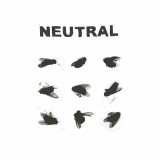
Neutral is the no wave / anti-rock duo of Dan Johansson (Sewer Election, Ättestupa, Amateur Hour, etc.) and Sofie Herner (Leda, Enhet För Fri Musik), both with deep connections to the Swedish noise scene. As Neutral, the two smear voice, guitar, organ, and smoldering noise into narcoleptic songs that rewire the strategies of Dome by way of Gate and Mars. Lågliv translates to ‘lowlife,’ an apt metaphor for neutral’s subterranean murk and shambolic discontent that they languidly manifest as a punk dourness emptied of all rock ’n’ roll theatrics. Desperate, demolished, and dejected.
Lågliv was originally published as part of the instantly out of print boxset, On Corrosion - a 10 cassette anthology from 2019 that was housed in a handcrafted wooden box and featuring full albums from Kleistwahr, Neutral, Pinkcourtesyphone, Alice Kemp, She Spread Sorrow, G*Park, Relay For Death, Francisco Meirino, Fossil Aerosol Mining Project, and Himukalt. The collection also stood as the 50th release for The Helen Scarsdale Agency.
debe ser publicado en 04.04.2025

First re-press after 10 years to be out in February 2025!
OCTOBER 2013 WE'LL RELEASE THE 3RD PART FROM OUR TRIBUTE TO SPENCER KINCY SERIES CALLED "GEMINI TRAXX". GCTX003 - GEMINI - IN NEUTRAL (2xLP)
SPENCER'S LEGENDAY ALBUM FROM 1997 WILL COME WITH FULL COVER. ALL TRACKS WILL BE RE-MASTERED.
Haga su pedido ahora y le encargaremos el artículo en nuestro proveedor.

For the first time ever, Neutral Milk Hotel's much-beloved, endlessly influential 1998 album In the Aeroplane Over the Sea is available on cassette. On too many "best albums of the 1990s" lists to recount, In the Aeroplane Over the Sea gives us Jeff Mangum's powerful solo acoustic work, full horn-section marches, history, religion, and sex _ everything you hoped for and more!
m 1.13[UNTITLED TRACK]
[m] [UNTITLED TRACK]
debe ser publicado en 17.11.2023

The two full-length records that Jeff Mangum made as Neutral Milk Hotel sound both in and out of time. Like translations of a shared subconscious, 1996's On Avery Island and 1998's In the Aeroplane Over the Sea give voice to the perennial spirit of youthful epiphany, of beginning to see the world clearly, to process and express it-no matter when you encounter them. With lo-fi indie rock, accordion, singing saw, tape collages, the so-called "zanzithophone" and beyond, Neutral Milk Hotel created an eternal entry into their Elephant 6 scene and an enduring feeling of possibility. Mangum was born in the small city of Ruston, Louisiana, in 1970, coming of age within the '80s and '90s indie and punk undergrounds, a movement of teenagers recording in their bedrooms, sharing zines and trading tapes, listening to hardcore and experimental music on college radio. For all the mythology Mangum's elusive persona has accrued-particularly during the 15 years immediately following Aeroplane, when he abruptly left the band behind-it's the beguiling songs themselves that have resonated so deeply for generations. In 2011, Mangum collected nearly all of the band's recorded output in a limited-edition box set (self-released under Neutral Milk Hotel Records, a small operation helmed by Mangum and his mother) which is now re-pressed by Merge. // CONTENTS: Black matte box is a 2-piece telescoping casewrapped package. Outer shrink-wrap includes a front sticker with "Neutral Milk Hotel," and a back sticker listing box contents. The box set includes 2 folded posters, each printed one side and each 24 x 24 inches when flat, and 1 postcard, printed front and back with box set information and sized 3.75 x 5 inches. Vinyl records: 1. In the Aeroplane Over the Sea: LP is 11 tracks pressed 33RPM to black vinyl in a gatefold jacket + printed insert for full album download. --- 2. On Avery Island: 2-LP is 12 tracks pressed to double black vinyl in a gatefold jacket + 11 x 11 printed insert + printed insert for full album download. Sides A, B and C pressed 45RPM. Side D pressed 33RPM. --- 3. Live at Jittery Joe's: 12-inch picture disc is 11 tracks pressed 33RPM to a full color picture disc in a heavyweight poly jacket + printed insert for full album download. --- 4. Ferris Wheel on Fire: 10-inch is 8 tracks pressed 45RPM to black vinyl in a printed jacket + postcard insert + printed insert for full album download. --- 5. Everything Is: 10-inch is 7 tracks pressed 45RPM to black vinyl in a printed jacket + postcard insert + printed insert for full album download --- 6. "Little Birds": 7-inch is 2 tracks pressed 45RPM to black vinyl in a printed jacket + printed insert for full album download 7-inch housed in a heavy-weight poly jacket. --- 7. "You've Passed": 7-inch is 2 tracks pressed 45RPM to black vinyl in a printed jacket + printed insert for full album download. 7-inch housed in a heavy-weight poly jacket. --- 8. "Holland, 1945": 7-inch is 2 tracks pressed 45RPM to black vinyl in a printed jacket + printed insert for full album download. 7-inch housed in a heavyweight poly jacket.
debe ser publicado en 24.02.2023

debe ser publicado en 22.09.2022

Neutral’s seminal album, Grå Våg Gamlestaden, is widely
considered ground zero for the explosion of creativity that has
transpired in the Swedish Underground ever since. It is the noisy
experimental rock album that opened the door and welcomed in
so many artists working behind the scenes. Gothenburgers Dan
Johansson (Sewer Election) and Sofie Herner had previously
made music together in the band Källarbarnen when they started
discussing a new methodology and a fresh sound for recordings
in 2013 under a new name as a duo.
After witnessing Herner and Johansson’s live performance in
an artist’s studio in the spring 2014, Gustaf Dicksson, who was
running the Omlott record label at the time as well as performing
under his own moniker, Blod, offered to release an album by
Neutral on the spot.
Herner recorded most of the instruments and voice, Johansson
worked on manipulating the recordings, experimenting with
reel-to-reel techniques. The title of the album translates as “Grey
Wave Gamlestaden” and was chosen as an inside joke about the
neighbourhood Gamlestaden where Johansson and Herner lived.
A major theme on the recording is a certain kind of bleakness
but with a wry smile closely identified with the spirit of the
neighborhood.
In the fall of 2014 Grå Våg Gamlestaden was released,
limited to 200 copies, and sold out quickly without many copies
making it outside of Sweden. Around the same time, Johansson
and Herner joined forces with other underground artists in their
widening circle to form a sort of Gothenburg supergroup making
music together as Enhet för Fri Musik.
Grapefruit’s reissue of Grå Våg Gamlestaden is the first time
Neutral’s masterpiece has seen the light of day since it sold out
quickly in 2014. This vinyl-only gatefold reissue is limited to
300 copies.
debe ser publicado en 15.05.2021

Welsh trio HMS Morris return with their second album, the futuristic, bilingual alt-pop psych odyssey that is Inspirational Talks.
Hailing from Cardiff HMS Morris make a colourful, eclectic and eccentric sound. They've previously cited the work of Syd Barrett as an influence but their penchant for creating sparkling avant-garde music as deliriously catchy as it is experimental also makes them comparable to Welsh contemporaries. There's elements of Gwenno's synth-laden pop, touches of Cat Le Bon's otherworldly psychedelic songcraft and lashes of the quirky multi-instrumental indie alt-pop of Gruff Rhys.
debe ser publicado en 02.11.2018

I am very happy and excited to present the new EP by 'Claudia Anderson' on Singular Rec., it's her second release on the label and it's a real pleasure.
She cooked a really varied record once again, 'Liquid Forms' takes place on A1 and it's real voodoo here, the effect of this track is very unique, it's space and deep, surrounded by many little effects that give such a special result, then comes 'Neutral State', a timeless dub & house feeling, very loopy, that reminded me some STL cuts.
'Be One' opens the B... I ve been really sensible to its very sexy percussion's play and delayed lead, it transports literally during all the length, it's very high quality.
To end properly this ep, Claudia did a superb ambient cut, everybody knows I love ambient and so here I ve been charmed... it's a deep, noisy atmospheric track that close the all perfectly, with simple little percussions that come and go, just what it takes...
It's a confirmation of all the good I thought about Claudia's talent, a very subtle, deep and charming record, and I hope you will like it as much as I do!
Marcelus.
Haga su pedido ahora y le encargaremos el artículo en nuestro proveedor.

Born in São Paulo, Caetano Malta embodies the vibrant creative energy of one of Latin America's most dynamic cities. A singer, songwriter, and multi-instrumentalist, he has spent more than twenty years crafting a distinctive musical universe shaped by Brazil's rich and diverse traditions. Tropicalia, MPB, Afro-Brazilian rhythms, psychedelic folk, and contemporary pop blend seamlessly in his work with effortless elegance.
Over the years, he has become a highly sought-after collaborator. Since 2004, he has performed with numerous leading Brazilian artists, including Lucas Santtana, Bixiga 70, Karina Buhr, and many others. After two decades of international touring, he eventually settled in Paris, where he became the guitarist for Flavia Coelho, Luiza, Guts, among others. As a songwriter, he has also co-written with artists such as Lucas Santtana, Wado, MOMO, Rubinho Jacobina, and Arto Lindsay.
With Eterna Juventude, his long-awaited debut solo album, due for release in autumn 2026, Caetano Malta reaches a new artistic milestone. The record reveals a radiant songwriting style where harmonic sophistication, organic rhythms, and instantly memorable melodies come together naturally. Filled with joyful energy and deep tenderness, Eterna Juventude celebrates imagination, movement, and childhood's unique ability to reinvent the world. It is a remarkably accomplished debut, showcasing an artist whose singular voice and musical identity are already fully formed.
debe ser publicado en 16.10.2026

It’s hard to describe dreamy acid techno without referencing 747’s Aurora Centralis. The title track captivated dancefloors in the late 2010s, serving as an emotional and interstellar reprise. Nine years after its original release, the record returns in this white-out reissue edition. The Aurora Centralis EP is a teleportation into a cosmic dream state through four 303-fuelled cuts. The title track’s surreal electronic vocal levitates us into a reverie. Continuing the excursion, Tenke takes us on a journey to the centre of the earth with a thumping acid bassline, before Night Passage drifts in with gentle allure and neutrally buoyant, disorienting trance. A fourth, vinyl-only version of Tenke sees us off with the hypnotic Oxidized Edit.
En el almacen y preparando para el envío
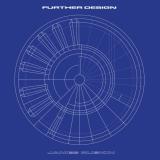
UK techno lynchpin James Ruskin celebrates 30 years of Blueprint with a remastered edition of his 'Further Design' LP, releasing 4th September 2026. Founded by Ruskin and Richard Polson in 1996, the infl uential label has spent three decades documenting uncompromising techno through releases from the likes of Rommek, Kr!z, Truncate, and many more, with 'Further Design' originally landing in 1998. The anniversary celebrations have already seen Mark Broom revisit seminal Regis recordings on the 'Power Is Neutral' EP, with further releases from Kerrie, Nastia, and more to follow, alongside a merchandise run later this year.
James Ruskin has been a constant presence in techno for over three decades. He defi ned the sound of British techno through his DJ sets, productions, and the releases on his infl uential Blueprint label. His stripped-back, functional, and forward-thinking sound has remained utterly uncompromising, with performances at clubs and festivals around the world while never straying from underground ideals. Substance over trends has always been his MO, through a catalogue spanning Blueprint, Tresor, and numerous collaborations that remain timeless.
The purposeful titles of the tracks on this essential album hint at the minimalist approach to sound. This is bold, linear techno with 'Enter', 'Below', and 'Indirect World' kicking off with rolling low ends and smart sound designs that even now sound futuristic. The likes of 'The Divide' bring spangled synths and crunchy percussive textures that jerk you into motion, while 'Time And Place' is an immersive cosmic odyssey and 'Unknown Destination' melts the mind with liquid synth work that loops around hypotonic rhythms. 'Work' is another perfectly calibrated cut with meticulous percussive placement and the shimmering of bells that dissolve space and time.
It is testament to Ruskin's original vision that 'Further Design' remains as evocative today as it was upon its release, full of otherworldly imagery and grooves that continue to move dance fl oors around the world.
debe ser publicado en 23.10.2026
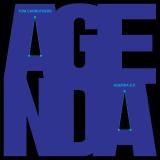
With Agenda EP, Tom Carruthers closes a landmark trilogy on Skylax Records, following Neutralise EP and Deepline. Three records. Fifteen tracks. One coherent vision of machine-driven house music stripped to its raw, functional core. This final chapter dives deeper into direct, club-focused energy, where groove, repetition and tension do the talking. Agenda is less reflective, more physical — built for movement, sweat, and long transitions in dark rooms. Opening track “Chrome” sets the tone: sharp drum programming, metallic pressure, and looping synth phrases that lock the body into motion. “Agenda (Raw Mix)” follows with a tougher, stripped-down approach — no excess, just pure rhythmic insistence rooted in early Chicago jack and warehouse discipline. “Beat Down” pushes further into machine funk territory, where relentless patterns and rugged textures meet in hypnotic repetition. On the flip, “Fade Away” brings a deeper, moodier tension — a late-night track where subtle emotion seeps through minimal structures. Closing cut “What You Want” is classic Carruthers: jacking drums, understated melody, and a groove that feels timeless rather than retro. As with the previous releases, the visual identity is handled by H5, whose modernist, reduced artwork mirrors the sonic philosophy: clarity, impact, and purpose. Agenda EP completes the Skylax trilogy as a statement of intent — not revivalism, not nostalgia, but dance music reduced to its essential elements.
En el almacen y preparando para el envío
Ein aufmerksamer Zuhörer der Welt zu sein, bedeutet, von Sprache umgeben zu sein. Sprache hallt durch fast jeden Raum, in dem sich Menschen aufhalten, ob unerwünscht oder erwünscht, banal oder tiefgründig. Worte stehen auf der Seite und klingen im Ohr nach, vermehren sich endlos. Diese Überfülle fasziniert den Komponisten und Musiker Ben Vida schon lange, aber in den letzten Jahren hat sie zu einer neuen Art des Musikmachens geführt, die die Vorrangstellung der Sprache in unserer Klang- und Kulturwelt gleichzeitig hervorhebt und hinterfragt. Sanft und spielerisch bricht Vida die Hierarchie von Bedeutung und Klang der Sprache auf, bis sie in egalitärer Harmonie existieren. Oblivion Seekers ist Vidas neuestes Album in diesem Kompositionsstil, nach der Zusammenarbeit mit dem New-Music-Ensemble Yarn/Wire The Beat My Head Hit aus dem Jahr 2023. Wie bei seinem Vorgänger liegt der Fokus der Musik auf koordinierten Duetten aus gesprochenem Wort in neutralem Ton, wobei die variablen Rhythmen der bewegten Worte komplexe interne rhythmische Strukturen schaffen. Er wird von den Stimmen von Nina Dante, Christina Vantzou, John Also Bennett und Félicia Atkinson, die einen einzigartigen Klang erzeugen, der weder ihrer noch seiner ist und in seiner Geschlechtsdarstellung, seinem Akzent und seiner Aussprache fließend ist. Die instrumentalen Kompositionen, die den Hintergrund des Albums bilden, haben den ungezwungenen Fluss eines Dialogs, gesprächig, aber zurückhaltend, selten als Motor der Veränderung. Es herrscht eine ruhige, konzentrierte Stimmung, die durch den zurückhaltenden Rhythmus der Stimmen noch verstärkt wird, sodass man das Gefühl hat, die Musik sei ein langes Mantra, das nie ganz zu seinem Ausgangspunkt zurückkehrt. Der Effekt ist bezaubernd, gleichermaßen einschläfernd und fesselnd, und suggeriert Wiederholung, ohne sich jemals genau gleich zu bewegen. Die Instrumentierung der vier Stücke des Albums variiert; ,Be Yr Own Abyss" wird durch den wellenartigen Kontrapunkt der Saxophone geprägt, während der mehrdeutige Klang des Vibraphons über ,Oblivion Seekers" schwebt und Frasers anschwellender Bass den einzigen dramatischen Auftritt des Albums liefert. Die Musik verändert sich im Ohr, während der Text die Form und Bewegung der Komposition ständig neu definiert und in einen neuen Kontext stellt, auch wenn sie in ihrem jenseitigen Glanz konsistent bleibt. Der Text besteht oft aus Sprachfetzen, denen Vida während seines Lebens beim Komponieren begegnet ist: zufällig mitgehörtes Gemurmel in der Schlange im Supermarkt, eindrucksvolle Sätze aus einem Roman, den er gerade las, Eindrücke von Musik, die er immer wieder auf seinem Plattenspieler hörte. Kleine, ansonsten unbedeutende Details sammeln sich an, nicht um eine Erzählung zu bilden, sondern um einen Eindruck vom komplexen Prozess der Bedeutungsfindung zu vermitteln, der im täglichen Leben stattfindet. Charaktere und Szenen tauchen im Bild auf und verschwinden wieder, und Sätze, die nach einer Erklärung verlangen, dürfen einfach vorbeiziehen. Vidas Liebe zu Robert Ashley ist gut dokumentiert, aber vielleicht noch bedeutender sind Mark E. Smith und The Fall, Neil Tennant und die gesprochenen Verse der Pet Shop Boys, die gesamte Geschichte des Hip-Hop und Meredith Monk. Die Art und Weise, wie die Worte dargeboten werden, ist genauso wichtig wie die Worte selbst und offenbart eine Intentionalität und Direktheit, die Vida mit den abstrakten Konstruktionsmustern des Textes hervorhebt und untergräbt. Auf Oblivion Seekers ist der omnidirektionale Lärm der Marmor, den Vida abträgt, um zu beleuchten, wie wir die unermessliche Fremdheit der Welt verarbeiten. Der Triumph des Albums besteht darin, dass wir nichts von dem schönen Geheimnis verlieren, wie diese Zeichen unsere äußere und innere Welt miteinander verbinden.
En el almacen y preparando para el envío

Genre neutral raw cuts from Rotterdam! SCHwuNG RECORDS presents its first weapon of music destruction featuring the debut of Proposition Joe. A four tracker that leads you from starters to desert. Proposition Joe is dead! Shot in the head by Chris Partlow and Marlo Stanfield, we respect Joe. Now Let's Dance!
En el almacen y preparando para el envío
Chaos is fundamental for creating something powerful. It teaches us to be at ease with how things are, to listen to ourselves, and find our own order’. (Enrico Sangiuliano)
Pioneering, avant garde yet chart-storming sound designer/producer/live performer Enrico Sangiuliano drops EP ‘Order In Chaos’ as release #1 in his self-destructing countdown imprint ‘NINETOZERO’, out 20th November. The EP’s three tracks respectively represent a triptych of sound exploring tension, release, and dissolution, with violinist and composer Vito Gatto joining Italian techno/melodic maestro Sangiuliano for tracks 1 and 3. The EP blends electronic, classical and electro-acoustic genres, resulting in a fresh, unique product that defies typical techno expectation, as Sangiuliano and Gatto explore the concept of disorder as a creative playground.
‘With this chapter, we dive into chaos – something that can be uncomfortable, but is the place in which you can find unexpected or new ideas. Chaos is fundamental for creating something powerful. It teaches us to be at ease with how things are, to listen to ourselves, and find our own order’. (Sangiuliano)
The ‘Order In Chaos’ EP continues a momentous year for Enrico Sangiuliano, and heralds his upcoming all-night-long SOLO show at Nitsa in Barcelona (Nov 28th, tickets here). His highly acclaimed NINETOZERO label has also previously featured Charlotte de Witte, Antonio d’Africa, Mattia Saviolo, GMS, Alex Lentini, STOMP BOXX, Zimmz, Secret Cinema and About Sofiya.
Vito Gatto is a Milan-based violinist, composer and sound explorer. He is the founder of label/collective NeMu (‘Neutral Mutation’) producing Italian projects at the interface of electronic and organic sound. His self-description as ‘Making sounds, looking for silence’ makes him the perfect collab partner for ‘Order In Chaos’, which ‘embraces the paradox: chaos births order, and order dissolves back into chaos.’
‘Whilst classically trained, I have always been fascinated by the world of electronic music, in all its expressive forms’ Gatto says. ‘I use real instruments and natural sound sources processing them through electronics to enhance their unpredictability, always remembering that the core of music - whether classical or electronic - is communication and storytelling. This philosophy guided our creative synthesis on this release.’
The collaborative workflow combined remote and in-person studio work over roughly a year, culminating in these three key tracks reflecting different musical and conceptual layers.
‘Order In Chaos’ EP tracks:
Enrico Sangiuliano & Vito Gatto ‘Adaptation for Strings and 909’: A cinematic overture built from the raw intimacy of Vito Gatto’s violin, processed and layered with unquantized 909 drums. Out of grid, out of rules. Drama and turbulence surge until thunderous kicks strike like sudden storms. ‘This track symbolises both of us. Vito sent the strings, I added the iconic Roland 909. It has no structure and no grid, the arrangement is not precise, it’s a very pure track and a great example of disorder and freedom.’
Enrico Sangiuliano ‘Order in Chaos’: The title track is a pure techno weapon and dancefloor igniter: rolling, stripped, euphoric. A shape-shifting lead synth constantly mutates, flirting with disorder until the kick restores gravity. Chaos becomes dancefloor order.
Enrico Sangiuliano & Vito Gatto ‘Dissolution’: The closing moment. Strings and drums dissolve into a weightless drone. Beatless and infinite, it invites surrender into space. ‘This cinematic track slowly melts ‘Order in Chaos’, adding processed organic sounds and field recordings from the mountains.. coming back to nature, and silence.’ (Gatto).
Still #0 to go in the NINETOZERO countdown… And then what? With Sangiuliano, it’ll be something unexpected and brilliantly innovative.
En el almacen y preparando para el envío

Hot off his killer 2024 remix of Tiga and Hudson Mohawke’s “BUYBUYSELL,” UK-New Zealand DJ/Producer Keepsakes makes his proper Turbo debut with the Impossible (Eating the Sun) EP. From merciless techno bangers to caustic track titles that will absolutely shred your preconceived notions about the world and sneer at them as they writhe bleeding on the cold, hard ground, this release validates our label’s OCD-level commitment to living on the edge of something at all times.
The title track doubles as a massive forest rave bomb AND the No. 1 battle weapon for opening DJs looking to fuck over the headliner, while “Bongo Funeral” reimagines tribal techno as the chief export of a village ruled by emotionally unavailable gremlins. Next, “Snacks at Waco” makes skillful use of a hammering industrial beat to hammer home the importance of loyalty and community, and “Parasocially There for You” deftly soundtracks anxiety dreams about meeting your favorite podcaster. Finally, closer “Nimby Orgy” likely represents the very first sexual aftercare banger. NOTE: we’ve heard bad things about both NIMBYs and YIMBYs, and as such have adopted a militantly neutral position on the matter of who is f-ing and s-ing in our backyard.
Given that Keepsakes is a vinyl-only DJ, we’ve done him the courtesy of making this release available both on vinyl and digitally. While this would have been an incredible opportunity to completely shut him out of playing his own tracks, we decided that this would be unfair to the music itself. Because at the end of the day, Turbo takes its marching orders from Harmony, Melody, Rhythm, and Timbre, and to betray even one of our ethereal masters would be tantamount to kicking our own vision square in the nuts. IOW: ain’t never gonna happen.
En el almacen y preparando para el envío

Dystopian Context: Episode 3
In a futuristic society where science has advanced to the point of creating bio-synthetic hybrids, a groundbreaking discovery emerges: the ability to imprint memory onto energy.
Initially developed to enhance machine control, this breakthrough was soon applied to living beings. Its consequences mirrored genetic determinism, shaping behavioral patterns and influencing individual will.
This technology enables certain elites to manage and condition the population, restricting autonomy through the manipulation of energetic memory.
However, a group of resistance fighters has uncovered an advanced data-erasure technique called Vibracid, capable of deleting imposed memories and restoring self-determination.
The struggle is not between different species, but between those who monopolize scientific power and those who seek to reclaim their freedom and forge their own destiny.
Vibracid (Corrosive Vibration)
A technique for data erasure and elimination, designed for the eradication of records and the neutralization of control mechanisms.
Limited to 150 copies.
En el almacen y preparando para el envío

"Mix made with 95 % exclusively prev unreleased original materials - edits, outtakes, versions, takes + oneoffs from recording sessions over the past few years.
Made with stems from recent projects and collaborators, including: raw nug tape recordings + snippets Jordan playing flute in a waterfall cave (the one i used in 'Night') + drum edits, live recordings from decks mixing sessions, Róisín's harp and vocal takes from upcoming project, track with Mari, remix for Felipe’s well frozen piano album, Etienne de Lavaulx zither improv mixed from youtube, demos, outtakes and voice memo type field recordings, unreleased track with Joel, unreleased edit of guitar part from JQ,+ outtake from Planet Inc sessions.
peace and blessings
x"
- Florian TM Zeisig
Professionally duplicated at a carbon-neutral facility
Edition of 120
En el almacen y preparando para el envío
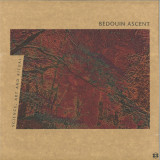
'Science, Art And Ritual' is a story of ‘process'. Growing up in Harrow (a then quiet suburb of London) in the 70’s and 80’s from the age of about 10, Kingsuk Biswas aka Bedouin Ascent's ears opened up to sound as he scanned the airwaves. The undeniable righteousness of 80’s dub via David Rodigan’s Roots Rockers shows was the first prominent influence he received, and with punk roots —and his burgeoning record collection— became exposed to the breathless post punk experimentation that followed in the early 80’s sweeping up free jazz, noise, dub and much more. Throughout though, he maintained his fascination with Indian Classical music which was a mainstay in his parent’s house and spoke with the same infinite space as Joy Division's 'Unknown Pleasures', and King Tubby’s Studio dispatches. Through those teens he assembled and de-assembled, knocking about with fellow travellers —punk bands, garage, space rock, noise. Something was happening. On-U Sound, ECM, Factory Records kept him plugged in and sane.
At that time Kingsuk's core studio setup revolved around his vintage Gretsch, Fender Jazz, Moog, TR-606 and rudimentary FX. He added congas, folk instruments, pipes, hand percussion, gongs, and jammed out shards of funk, noise, jazz fusion, electro and ambience into his hungry Tascam Portastudio. By 1987 these had morphed into what we’d now refer to broadly as techno, but the genre didn't exist beyond the reverberating walls of his bedsit, and he hadn’t yet plugged into the global conversation.
'Science, Art And Ritual' was released in 1994 by Rising High Records and was presented as Bedouin Ascent's debut album, although 'Music for Particles' (released in 1995, again on Rising High) was recorded even before —'SAR' sessions span from 1992-1993, whereas 'Music for Particles' were earlier from 1989-1992, with some older 4-track references from about 1986 too.
Weaved in throughout the album are subconscious references to music that Kingsuk heard in the past that still remained within sight as companions. The opening track "Ancient Ocean III", referencing the extinct ocean Tethis, unapologetically channels Tackhead, Colourbox, Mantronix and Lee Perry. The style was also deliberately juxtaposed to the prevailing sound in techno at the time, which had locked onto a rigid form of symmetrical kicks and light snare drums. Elsewhere 80’s soul and funk are frozen and captured in fragile glass lattices. Electric pianos resound throughout, such as in "He Is She", probably a half-memory of 70’s MOR radio from childhood sleepy night drives. A duel between kick drums from three generations of Roland drum machines —TR-808, TR-707 and R-8— is a central theme in "Transition-R", all in conversation, calling and responding. These were not just machines to Bedouin Ascent, but part of an extended family, with heart and soul.
Three decades after seeing the light, Lapsus is proud to present a special 30th anniversary reissue of this
left-field techno gem in a repackaged and redesigned edition. All pressed on a deluxe 3LP marbled vinyl and including a limited lithographic insert print of the original album cover. All tracks have been restored and remastered directly from the original DAT tapes, and the album also features previously unreleased tracks such as "In the Clouds" and "Thru Water" —regularly performed live at that time and produced in the same period as the album sessions in 1993.
'Science, Art And Ritual’ may refer to esoteric traditions in Indian philosophy, but equally embodies the collision of the science, the art and the ritual that is at the core of being immersed in a deep musical journey.
En el almacen y preparando para el envío

Aboutface presents - Pensée Sculpture
Following a period of theta wave and hemi-sync techniques, Le Sculpteur d’Esprit (the Mind Sculptor) arrived in this dimension to transport listeners through 4 portals of altered-consciousness into thought-worlds where interactive sculptures are revealed in their own minds, as the artist themselves.
‘Close your eyes. From the darkness, a transparent triangular pentagonal prism appears in the distance, with its soft outlines refracting all colours from the spectrum. As you gently glide closer, you notice an unfamiliar world through the other side of the prism, this is the portal to your thought sculpture (Pensée Sculpture) number 1’
Fomat: Limited edition of 300 carbon neutral ISCC-certified Bio-Vinyl by Deepgrooves, Amsterdam, NL. Includes an artwork insert with the English translation of the Pensée Sculptures.
Credits:
Field recording, clarinet, flute, guitar electronics and all artworks by Aboutface
Additional Violin by Taro. Cello by Abdelrahman Hariry (Cello).
Pensée Sculptures channelled by Aboutface, translated into French by Noemie Decaen. Bonus content & the digital version of this release is available via the included Bandcamp download code. All artworks and music by Aboutface.
En el almacen y preparando para el envío

Diagonal welcome the return of Iranian composer and sound artist, Ata Ebtekar (SOTE), for his first outing for the label since 2019's "Parallel Persia" and "Artificial Neutrality". His catalogue runs to 15 albums (both under the Sote moniker and as Ata Ebtekar), plus a clutch of 12"s, remixes and a number of other projects via Mute, Opal Tapes, Warp and more.
"Soundsystem Persepolis" is Ata's response to the iconic performance at Persepolis by Iannis Xenakis in 1971. It's a five track collection of a futurism, a pummelling, rhythmic and harmonically complex trench of computer music.
En el almacen y preparando para el envío

Out on the street, indie rock was an exciting way of life for boys and girls alike in the gay 90s. Here's a couple of voices from the fertile Denver scene, Lisa and Hilarie of Secret Square, picking a favorite from the Drag City young galaxy of stars. In addition to Secret Square, Hilarie played drums and sang for The Apples In Stereo and today plays and sings in The High Water Marks. Lisa played bass with Neutral Milk Hotel for a little while and later played guitar, sang and led the band Late Night in Los Angeles.
Lisa Janssen: Way back in 1993, I was working in a record store in Denver, CO. My employee pick of the month was Julius Caesar by Smog. I told the kids, BUY THIS, it's the GREATEST record EVER. I love it so much I'm going to MARRY IT. Raw, fragile, desperation, then triumph over desperation. Bill Callahan knew a special, secret language. My lecherous boss had the audacity to ask me, "What does he mean by "I am Star Wars Today?"
En el almacen y preparando para el envío

Oceanvs Orientalis teases his highly anticipated album 'Portrait of the Obscure’ on Crosstown Rebels with the third and penultimate single ‘Neurality’, remixed by 8Bit and Cecile head honcho Nick Curly. Istanbul-based Safak Oz Kutle, aka Oceanvs Orientalis, is a producer and live act who blends the rich sonic cultures of Turkish, Kurdish, Armenian and Arabic music to curate his take on electronic music. The first two singles from his forthcoming album on Damian Lazarus’ legendary Crosstown Rebels have showcased his diverse sound at its fullest, and now the third offering and final single ahead of the LPs release confirms him once again to be a standout talent as he unveils the captivating sonics of ‘Neurality’.
An absorbing and stirring production, ‘Neutrality’ brings a darkly involving groove that is multi-layered and hypnotic, with several shimmering vocals, jangling percussive lines and ethereal pads all locking you in for an enthralling ride. A remixer who needs little introduction, Nick Curly is as integral to the tech house genre as anyone in the scene, heading up key labels such as 8Bit and Cecile while helping to define the genre as we know it today. His interpretation is deep and warm, with slinky drums carefully deployed amongst vocal whispers that bring human soul. An excellent final preview into what’s still to come, ‘Neurality’ delivers another exceptional production, leading perfectly into the release of the full-length project this April.
En el almacen y preparando para el envío

“Ruins are the style of our future cities, future cities are themselves ruins.” - Izosaki Arata
A note from Lawrence English: Nostalgia is not an ideology, though in this moment, we could be mistaken for thinking it might be just that. Over the past years, the idea of nostalgia has been filtered through various political and technological lenses and has become a tool used for forgetting, rather than remembering. Instead of embracing histories’ complexities and inconsistencies, this version of nostalgia seeks only singular recollection. This contemporary phenomenon of nostalgia has become a methodology at best, and a weapon at worst, used to erode the past and project forward a collapsed and unimaginably sanitised version of things, places, and ways of being from former times. It’s this projection that sees it playing a mounting role in a social pathology associated with reducing the imagined possibilities of future.
The Rest Is My Ghost is a record that interrogates the manifestations of this reductive futuring and celebrates those that have tried (and failed), and those who continue to push back against decayed and revisionist positions. It’s a record that considers the weaponisation of nostalgia for the purposes of cloaking possible futures.
In recent times, I’ve proposed a term for this weaponised use of nostalgia, something I have called Acid Nostalgia. I offer it as a shorthand to describe the de-contouring of the future through a corrosive fixation on a flatten rendering of the preceding times. It is, in part, a certain type of lazy cultural scripting where tropes of the past are presented in the absolute, as empty pictorials; photocopies without any original from which to draw actual meaning, or useful detail.
Acid Nostalgia describes an increasingly common political projection of nostalgia that exists without any subjective connection to the memory surrounding and contained within it. Like acid poured onto a surface, this use of nostalgia seeks to erodes and smooth out the complexity and texture of lived connection and longing, which has until recently guided contemplations of nostalgia. Acid Nostalgia instead erases the texture of histories and de-contours the past, and in doing so dematerialises the horizon of possibility, which by its very nature marks the beginning point for any (and all) imaginable futures. Acid Nostalgia is a dreamless screen, where uncertainty, restlessness and aspiration are subjected to corrosion, breaking down and neutralising the wellspring of futures which are birthed from within the ambiguously charged, complex and at times chaotic atmospheres of the present.
The Rest Is My Ghost is not however some universal reading of these things and happenings. Rather it draws its breath from a very personal pathway carved through my own fraught experiences of nostalgia and framed through a disparate collage of chance encounters, situations, places and provocations. It takes oblique notes from civic and architectural references such as Japan’s Metabolist movement, Hong Kong’s ‘one line sky’ and Los Angeles’s vanished Sodium Vapour lights. It interpolates texts – factual and fictional – by authors such as Franco Berardi, Kate Crawford, JG Ballard, Katsuhiro Otomo, Mark Fisher and Alexei Yurchak who have each so wonderfully sought to rupture the familiarity of now, and push us towards other ways of imaging ourselves, our surroundings and our very ways of being in this world.
I also owe a debt of thanks to Adam Curtis in helping launch what has become this edition. It was his provocation, in a conversation we shared about an overwhelming and profound sense of uncertainty around being able to predict the immediate future and how to respond to that, which sparked the earliest inklings of this edition.
The Rest Is My Ghost is ultimately a record about the promise of constructions and connections to come, material, social and political. It's a record that accepts the fragility of failure as a source of ultimate potential, and a position from which the deepest freedom of imagination might be sought and summoned forth to conjure even the most unimaginable, (but) possible futures.
Haga su pedido ahora y le encargaremos el artículo en nuestro proveedor.
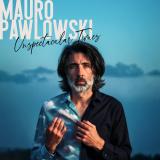
Mauro Pawlowski's 'Unspectacular Times' is the sound of an artist completely at ease with himself, and with the world, in all its ordinary, unglamorous beauty. Ten songs rooted in everyday observation and emotion, produced by Scorpio Twins (Stephane Misseghers and Bruno Coussée) with a full 24-carat 80s gloss: lush synths and basslines.
Where everything around us seems to demand maximum volume and instant outrage, Pawlowski turns that logic quietly inside out. These are songs about love that sneaks up on you, desire that builds in an art gallery, and a Nobel Prize winner falling off his bike and giving a thumbs up. Small moments, but in Pawlowski's hands, that's where everything worth paying attention to actually lives.
Guest appearances from Brianne Dunne (Daryl Hall & John Oates) and Pol Coussée, a Belgian saxophonist who found his way from London to Toronto and has played alongside Barry White and Isaac Hayes.
Following the 70s-tinged 'Eternal Sunday Drive', his second album on Unday Records 'Unspectacular Times' is Pawlowski's most pop focused to date. His most recent chapter in a career that has taken him from Evil Superstars to dEUS, through theater, dance, film and more alter egos than most artists have albums.
debe ser publicado en 19.06.2026

Thirteen years later, building on everything they had learned about capturing the purest sound, Guttenberg returned to produce The Ultimate Demonstration Disc Volume 2. Designed to bridge the gap between technical terminology and the listening experience, this collection serves as a practical guide to the audiophile lexicon. On each track, Guttenberg "spells out" exactly what to listen for, providing clear musical examples of concepts like "transparency" and "soundstage depth." By using a custombuilt recording chain and avoiding dynamic range compressors, equalizers, or overdubbing, the album captures a "live" session exactly as the microphones heard it - resulting in a sound so neutral and natural that it can be used to reveal the subtle differences between high-end speakers, electronics, and cables.
debe ser publicado en 05.06.2026

The long-overdue recognition of a songwriting genius The lyrics of Dan Treacy"s band Television Personalities transport listeners to a parallel universe consisting of unique mixtures of euphoric Sixties references and harsh social realism: brightly coloured, psychedelic worlds in which Syd Barrett, Salvador Dalí, Andy Warhol and the young Woody Allen meet, or a dreariness of marital crises, unpaid bills, loneliness and depression. Nuances: rather rare, and when they do occur, so subtle that they take the listener"s breath away. Admired by Kurt Cobain and Pavement, praised by Alan McGee, covered by the Tindersticks and musically immortalised by MGMT ("Song for Dan Treacy"); the Television Personalities are one of, if not the reference band of indie pop, which - the world has never been fair - was denied major chart success. "If I Could Write Poetry" now brings together for the first time the lyrics of 100 of Dan Treacy"s most important songs. But this book is much more than a collection of lyrics; it also contains very personal impressions, anecdotes and tributes from around 50 musicians, friends and fans. Contributors from the German-speaking world include artists such as Carsten Friedrich (Superpunk, Die Liga der gewöhnlichen Gentlemen), Bachmann Prize winner Tex Rubinowitz, and musicians Phillip Boa and Klaus Cornfield (Throw that Beat in the Garbagecan). The book is published and edited by Gregor Kessler, who emphasises that he found it difficult to maintain his professional neutrality towards Dan Treacy, as he has been an avid listener of Television Personalities records for four decades now. An English-language publication
debe ser publicado en 08.05.2026

Are U Mad At Me marks a huge, cowboy boot-wearing step for the Brooklyn-based songwriter. Fields proves that genre is as fluid as sexuality, as the album saunters across country, pop, disco, grunge, and classical with ease. Across 12 tracks, Fields traverses bangers like power pop lead single “Party Girl” and two-stepping second single “Hands Off The Hat” (co-written with Grammy award-winning songwriter Melody Walker) all the way to tragic ballads like “Apalachicola to Tallahassee” (co-written with Karen Pittelman of Karen & The Sorrows) and the closing “Uncle Charlie’s.” He makes light of gender-neutral bathrooms marked with unicorns instead of stick figures in the guitar-driven “Pronoun Meltdown” and calls out a husband cheating on his wife with another man in the tragicomic ballad of “You Should Tell Your Wife.”
Are U Mad At Me arrives at a pivotal time in the roots music scene and the world at large. Fields, who is now rapidly becoming one of New York City’s queer country leaders — through his East Village residency at Lucinda Williams’ new honky tonk and dive bar and through his musical mentorship work through The Recording Academy — has been working tirelessly for this moment for more than a decade. Performing under this moniker since 2013, Fields has released three LPs and two EPs. He’s recorded on queer country pioneers Lavender Country’s 2022 reunion album, Blackberry Rose, and served as the band’s touring pianist. Additionally, his 2023 protest song duet with Mya Byrne, “Burn This Statehouse Down,” made it onto NPR music critic Ann Powers’ list of favorite songs of the year.
debe ser publicado en 01.05.2026

Until We Are Free is the debut album from fabric, a collective of musicians from diverse backgrounds united by a shared goal: to fuse irresistible rhythms and grooves with a direct, socially conscious message that draws vital attention to the contradictions of modern life. The project's name itself evokes the idea of a living, dynamic ensemble—a creative intertwining of different threads, from musical genres to founding musicians and guest collaborators, all actively woven into the social fabric.
The record blends funk, soul, and Afrobeat with a sharp, contemporary urban attitude, resulting in a sound that functions simultaneously as sonic resistance and an invitation to the dancefloor.
It finds its place in a lineage that runs from Fela Kuti and ESG to The Comet Is Coming, Sault and Jungle.
At its core is the conviction that music and civic engagement can coexist seamlessly without being didactic. While the lyrics—entirely in English—tackle themes of rights, equality, and freedom, the groove remains the heartbeat: constant, pulsing, and relentless.
Mixed by Tom Campbell (whose credits include Sault, Little Simz, Adele, Michael Kiwanuka, and Jungle) and featuring art direction by Raissa Pardini, Until We Are Free is a soundtrack for complex times. It is an invitation to refuse neutrality and isolation, and to imagine—together—new possibilities for movement, resistance, and the future.
fabric's singles "Taste This Sound" and "Fight!" have been featured in FIP's Spotify Playlists "FIP Radio (en live)" and KEXP's "New This Week" and "KEXP Rotation".
debe ser publicado en 17.04.2026
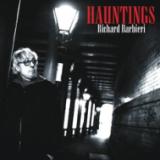
10 songs from what is possibly the best anarchopunk band currently in existence. The dynamics of the tracks are refreshingly simple, a powerful yet neutral- sounding recording, with very little embellishment or stylized production to hide behind, approaching filth with distorted guitars, haunting bass lines, and steady drum beats, all elevated by the combination of the three voices perfectly balanced between melody and hatred. In a quantized world, one can perceive an endearing dose of human spirit through their tense and disturbingly melodic expressions. A modern Anarcho Punk classic that is surprising to find 40 years after the wonderful bands that spawned the genre, especially England. Includes poster and insert with lyrics.
Since reviewing Pomegranate Seeds: An International Benefit for Mutual Aid in Gaza, the compilation put out by the DISSIDENTS, I've been hunting for more VAMPIRE material, so when I saw I was assigned this LP I became very excited. VAMPIRE is an Australian band that plays apocalyptic anarcho- punk. A sense of extreme urgency pervades VAMPIRE's sound, and What Seems Forever Can Be Broken is ten songs that combine the demanding hardcore of CONFLICT, with a foundation of CRASS, and the rough-hewn delivery of raw punk. The resulting album is dark, hauntingly mesmeric, but also aggressive with a sense of communal voice. In other words, this is anarchopunk that is of the moment, and articulates exactly what contemporary punk is about without being preachy or elitist. This is that eye-to-eye, in-the-trenches vocalization of criticism that comes off as eye-opening and perspective-altering. What Seems Forever Can Be Broken is by far my favorite release thus far in 2025, but also might be the best album I've heard in a really long time. Like, this is benchmark-level material, so definitely give this a listen.
debe ser publicado en 10.04.2026

Für seinen monumentalen „Ring“-Zyklus versammelte Karajan ein Weltklasse-Ensemble von Sängerinnen
und Sängern, die über einen neutralen Stimmklang verfügten und eine klare Deklamation des Textes boten.
Seine Berliner Philharmoniker waren mehr als fähig, dieser Herausforderung gerecht zu werden. Karajans
„Ring“-Zyklus hebt sich von anderen Einspielungen durch seinen geradezu überirdischen Ansatz ab, der auf
Schönheit, Lyrik und Struktur ausgerichtet ist.
Dieses außergewöhnliche Aufnahmeprojekt erscheint nun in der Original Source Series für höchsten audiophilen Klang; erstmals verwendet OSS als Quelle das originale Stereo-Masterband, ein Zweispur-Tonband.
Die audiophile Vinyl-Serie The Original Source präsentiert herausragende Aufnahmen in ganz neuer Klangqualität. Dafür haben die renommierten Emil Berliner Studios die originalen Mehrspurbänder mit eigens für
die Produktion der Serie entwickelten Technologien in 100% analoger Qualität (AAA) neu gemastert und
geschnitten. Die klanglichen Unterschiede zu den Originalveröffentlichungen sind beträchtlich: Größere
Klarheit, mehr Feinheiten und Verbesserungen im Frequenzgang, zugleich weniger Nebengeräusche, Verzerrungen und Komprimierungen ermöglichen ein audiophiles Hörerlebnis wie nie zuvor.
Veröffentlicht auf 180g-Vinyl und präsentiert in einer 3-LP-Box-Edition mit den originalen Covern und
Liedtexten, umfasst diese limitierte und nummerierte Ausgabe zusätzliche Fotos sowie Faksimiles der Aufnahmeprotokolle und Bandkartons.
debe ser publicado en 03.04.2026

Incl. Remixes by Red Axes, Roman Flügel & Abe Duque
What does it mean to exist in sound?
It does not begin with a beat, but with a choice. With the moment when someone decides not merely to inhabit the space, but to shape it – and in doing so, makes themselves visible.
Roman Flügel stands as a constant in the background. Not as an authority, but as a collective consciousness. Since the 1990s, he has moved through club music like a seeker, never content with the first answer. House, techno, experimentation – these are not genres, but states of being. His remix thinks, hesitates, opens, strikes like a surging acid wave, warping reality and demanding true presence.
New York taught him that club music is never neutral. It is body, friction, attitude. Abe Duque’s remix carries a strangely enchanting relentlessness, a resistance to smoothness – as if the dancefloor were a place where freedom is not claimed, but fought for.
Red Axes do not enter this space; they conjure it. Their sound is raw, repetitive, circular, as if deliberately refusing linearity. House, dub, and acid elements become material for a movement that is more trance than structure. Their remix does not ask where it is going; it asks why one should ever stand still.
And then there is Tim Paris. Not at the center, but as a narrator. As someone who knows that the voice is an attitude. “That Boy” is not a pose, but a mirror, ironic, direct, vulnerable. Paris moves between new wave house and club, always aware that identity is never fixed, but formed in the moment.
This remix record is not a gathering of names. It is a situation, four perspectives on the same question:
What does it mean to exist in sound?
Yet sound alone does not tell the full story: like music, the visual is a space to be shaped, felt, and deciphered. The cover of Tim Paris feat. Foremost Poets – That Boy, created by Konstantin Fürchtegott Kipfmüller, a visual artist at the Hochschule für Gestaltung in Offenbach under Heiner Blum, embodies this principle. Drawing inspiration from the urban environment, Kipfmüller transforms traces of decay, weather, and time into abstract narratives that, like the music of Tim Paris, Roman Flügel, Abe Duque and Red Axes, unfold meaning layer by layer. The result is no mere adornment, but a mirror of the sonic landscape: every line, every surface an echo of the question of what it means to exist – fully, in the moment, in sound.
Haga su pedido ahora y le encargaremos el artículo en nuestro proveedor.

Vinyl[22,65 €]
Death Is Not The End present a further volume of Arja Kastinen's eerie amalgamations of 110 year old wax cylinders with her own meticulously transcribed takes, this time focussing in on Armas Otto Väisänen's field recordings of kantele player Iivana Mišukka (b. 1861 d.1919).
"Ivana Mišukka (1861–1919) was one of the Karelian kantele players recorded by the folk music researcher Armas Otto Väisänen on wax cylinders in 1916 and 1917. In the early 20th century, the remote areas of Border Karelia were undergoing the final phase of a transformation in musical culture, with the ancient runo song tradition giving way to newer forms of music. This transition is reflected in Mišukka's repertoire and choice of instrument. The ancient small kantele, hollowed out of a single piece of wood, was already rare at the turn of the century. Mišukka's kantele was a new type of instrument with 26 strings, constructed of several parts, but he played it using the traditional plucking technique. Like other Border Karelian kantele players, his repertoire consisted of music rooted in runosong culture, as well as newer dances and songs from the east and west. Most of the recorded material falls into the latter category.
Ivan Bogdanov Mišukka was born out of wedlock in Suursara village, Suistamo, on 1 May 1861. He began playing the kantele at the age of five or six, quickly mastering the instrument. In adulthood, he was considered one of the area's best master players. Mišukka was landless for most of his life and lived in different parts of the Suistamo parish. His first wife, Tekla Markintytär, died in 1897 at the age of 40, and his second wife, Jevdokia Filipintytär Jeminen, died in 1907 at the age of 50. Seven children were born from the first marriage, two of whom died young. The third wife, Maria Ignatintytär Gurnan (Kuurnanen), was a well-known master of lamentations. Together with Maria, Iivana Mišukka worked as a tenant farmer in the village of Suursara. Mišukka suffered from rheumatism, which prevented him from participating in physical work like Maria. This was apparently partly the reason why Iivana Mišukka went to earn extra money by playing the kantele on gig trips. He often had other traditional artists from Suistamo as his travelling companions, such as the runosingers Konstantin Kuokka and Iivana Onoila. Iivana Mišukka died in Leppäsyrjä village, Suistamo, on 18 May 1919 at the age of 58, and his kantele was donated to Teppana Jänis.
Mišukka only used 14 of the 26 strings on his kantele, playing the same tunes either a fourth higher or lower. He tuned his kantele to the major scale using fifths, except for a low seventh scale degree on the upper strings, but not below the fundamental. Since he did not use the seventh note of the scale on the upper strings at all, he could use the major scale both lower and a fourth higher with this tuning. According to Mišukka, the sound of higher, or 'finer', strings is 'more beautiful', while that of lower ones is 'greater'. Among runosingers, the size of the thirds varied, ranging from major to minor to neutral. A similar phenomenon can be observed in kantele tunings, where the third, sixth and seventh scale degrees vary in a comparable way.
During a meeting, Väisänen suggested that Mišukka play the smaller kantele belonging to Konstantin Kuokka. The idea was to bring it closer to the horn to improve the recording quality. However, the kantele was completely out of tune, and now Mišukka tuned it to the Lydian scale (track 18).
Using the old plucking technique, Mišukka placed his right middle finger on the fundamental tone, his right index finger on the second scale degree, his left middle finger on the third scale degree and his left index finger on the fourth scale degree, and his right thumb on the fifth. The thumb also played the notes above the fifth note of the scale. As Mišukka remarked to Väisänen: 'Peigaloll' tuloo enemb ruadoa' (the thumb has to do more work). However, he did not use the seventh note of the scale on the upper strings at all. Below the fundamental note, he played the seventh and sixth notes of the scale with his right middle finger of and the fifth note of the scale with his right ring finger. This fifth scale degree below the fundamental is almost always used as a drone. Sometimes, when the melody required it, Mišukka, like other players, also varied the fingering. He would also occasionally strike the same string with the side of his fingernail after plucking it.
The wax cylinder recordings of Karelian kantele players are kept in the archives of the Finnish Literature Society in Helsinki, Finland. Copies were made of them onto reel-to-reel tapes in both the 1960s and 1980s. The 1960s copies are mono and the 1980s copies are stereo. However, not all kantele recordings from these decades have survived.
The sound of the kantele is difficult to hear in wax cylinder recordings due to its low volume, and it occasionally becomes completely obscured by noise. During the copying process, the cylinder sometimes rotates unevenly, resulting in breaks or jumps in the music. Additionally, the rotation speed of the cylinder in the copies does not correspond to the performance speed of the original music, which alters the pitch. However, since Väisänen's precise notes are available in the archive, it is possible to deduce the melodies, their speed, and the tuning level of the kantele in the recordings. Of the copies of the original recordings from the 1960s and 1980s, I have selected the one that best met the requirements of this publication and adjusted the speed of the recording to align with Väisänen's notes. To enhance the listening experience, I have replayed the songs, which now partly overlap the old recordings on this release."
— Arja Kastinen
debe ser publicado en 27.03.2026
