
pre-ordina ora29.03.2022
dovrebbe essere pubblicato su 29.03.2022
30,46 €
dovrebbe essere pubblicato su 29.03.2022

Beginnend mit dem fröhlichen Ska von Lord Creators Unabhängigkeitshymne 'Independent Jamaica' zeigt das Chapter One Album den wahren Verlauf der jamaikanischen Musik in den 1960er Jahren mit einer virtuellen Who's Who der Reggae-Musik, darunter Bob Marley, Peter Tosh, Toots & The Maytals, Rico, Skatalites, John Holt & Alton Ellis. Wunderschön verpackt mit Innenhüllen mit seltenen Fotos und Liner Notes von Steve Barrow von Blood & Fire.
Disponibile in Stock e pronto per la spedizione

Boxset !
Overview
Arguably the greatest Jamaican record producer of all time, Lee ‘Scratch’ Perry was instrumental in transforming the island’s national sound throughout the Sixties and Seventies, with his unique approach to music making pushing the music beyond previously perceived boundaries.
To mark the first anniversary of his passing, the very best of his work is showcased across a number of products, all of which effectively demonstrate why Perry was widely venerated figure for so long..
The deluxe box set comprises four vinyl LPs and four CD sets featuring his best known and most influential recordings including a previously unreleased mix of Junior Murvin’s powerful ‘Police And Thieves’, UK chart-buster ‘Hurt So Good’ by Susan Cadogan and the Upsetters’ boss reggae classic ‘Return Of Django’, as well as numerous major Jamaican hits.
Aldo included in the set is a 50 page fully illustrated page book, penned by Scratch’s official biographer, David Katz and featuring an array photos by celebrated photographer Adrian Boot, and a newly designed two sided full colour 24” x 24” poster.
The 2x gatefold LP and 2x CD set collection focus upon of the legendary music-maker’s best known productions from the Sixties and Seventies, performed by some of the giants of Jamaican music, with both extensive notes on the man whose talent and imagination took reggae to new heights of excellence.
Disponibile in Stock e pronto per la spedizione

BCUC – Bantu Continua Uhuru Consciousness – have been channeling the spirit of Soweto for over twenty years. Indigenous funk, hip-hop consciousness, and punk rock energy fused into something utterly original and deeply rooted. Their mantra: Music for the people, by the people, with the people. From humble beginnings rehearsing in a shipping container, a stone's throw from the church where Desmond Tutu organized the escape of the most wanted anti-Apartheid activists, they kept believing in their dream of self-empowerment. Today they command festival stages worldwide: Glastonbury West Holts, Roskilde, Afropunk Brooklyn, WOMAD, Fusion, Sziget, FMM Sines, Beaches Brew, Boomtown, Colours of Ostrava, Couleur Café – to name just a few. In 2023, BCUC were honoured with the prestigious WOMEX Artist Award, an accolade usually reserved for more established artists, in recognition of their fearless work and transcendent live performances.
THE ROAD IS NEVER EASY
The Road Is Never Easy is BCUC's fifth album and their debut on Outhere Records. On this new offering, BCUC take listeners on another Afro-psychedelic journey into the soul of Soweto. It feels like a gospel sermon colliding with a punk concert, "guaranteed to touch untapped corners of your soul" (OkayAfrica). BCUC's music is deeply rooted in history and echoes the voices of the ones who came before. The road was never easy for the people of Soweto who originally came to work in the mines of Egoli, the City of Gold, Johannesburg. When apartheid finally ended after a long struggle, it was hoped that life would improve. But more than 30 years later, many of those initial hopes and dreams are still waiting to be fulfilled. This album is about that struggle. The album contains 10 brand new songs – a record for BCUC, whose previous albums featured an average of 3 songs. It represents the culmination of more than two decades of performing together and building a reputation as a powerful live act. These ten songs encapsulate that same live energy, each one building gradually and drawing you into BCUC's Afro-psychedelic stream of consciousness. It's a seismic tour de force through life in Soweto today. Songs like Amakhandela (Breaking All the Chains) connect history to daily life: "How is this precious metal inflicting so much pain in us," sing BCUC, "this government has been telling us we are free, but we don't benefit from being free." The album also talks about all the hopes and dreams that remain: "I have too many wishes and dreams in my head," BCUC sing in Um duma khanda, "I think I am losing my mind". The album ends with the soothing Matla a rona ke Bophelo, "our strength is life", praising the spirits and thanking the elders for protection. The Road Is Never Easy is about the harsh reality of life in Soweto, where "people always carry heavy loads". BCUC are street poets trying to deal with that burden: sometimes revolutionary, sometimes soothing, but always hopeful and compassionate. "When you are from Soweto you can't retreat nor surrender." (Sebenzela)
RECORDING
The album was largely recorded in Munich, Germany during tour breaks over two sessions, each three days long. It took place in a small studio located in a German WW II bunker converted into rehearsal spaces. The songs were recorded in one take altogether in one room, with only a few overdubs added, mainly backing vocals, by BCUC at Fourways studio in Johannesburg. BCUC have created their own distinctive way of writing, or rather, finding and creating their songs. The recording process is like an improvised live performance. They bring their ideas into a zone where the music, the rhythm and the spirits take over until the song starts to form. In this Afro-psychedelic zone BCUC create their unique poetry that feeds on the dreams still dreamt, the hopes, the fears and the temptations lingering everywhere. BCUC's songs need to breathe and time to build. The right take was the one when the song took over, and just like their live performances, no one knew beforehand where the song would take them. During the recording, BCUC just let it all flow out: inner turmoil, cries of rebellion, but also resilience and a search for healing, love, unity and compassion. You don't have to be from Soweto to feel the deep meaning and impact of this music. In these times of so much hate and division, BCUC are like a campfire for people to gather around.
PRODUCTION & ARTWORK
"BCUC have a unique magic," says Outhere's Jay Rutledge, who produced the album. "It blew our minds. It's like punk and pure gospel at the same time. Their music can make you dance and it can make you cry, all at the same time. And when the song is over, you feel you're not alone in this world anymore. We felt compelled to do this." The album cover is based on a matchbox design, matches being a common household item in South Africa even today. "These were the matches people used to burn government buildings and cars," explain BCUC. Little messages, addresses, or phone numbers used to be scribbled on the back of these boxes; each one a reminder of the strength, resilience, and resistance that once drove the struggle for freedom in Soweto. BCUC keep this flame burning. The Road Is Never Easy is a heavy spiritual road trip, a deep dive into the subconscious of Soweto and a quest for truth, justice and sanity in this crazy world. BCUC tackle the harsh realities of the voiceless, guided by the spirit world of their ancestors. Rather than reinforcing stereotypes of poverty, BCUC's portrayal of Africa is one rich in tradition, rituals and beliefs. "We bring fun and Afro-psychedelic fire from the hood," says vocalist Kgomotso Mokone.
Ordina ora e ordineremo l'articolo per te presso il nostro fornitore.

The Cabildos remain one of the most enigmatic names to emerge from the 1970s library music scene. Little is known about the group, except that their name was inspired by Johnny Cabildo, an Italian keyboardist and composer who had relocated to Florida. Their recorded legacy is strikingly concise: just three albums—Yuxtaposición (1972, released under the name Cabildo's Three), Cross Fire (1974), and the later Where Is the Cat? (1979).
Entirely instrumental, the Cabildos' music is driven by deep grooves and a vibrant blend of Latin influences, funk, and jazz fusion, often enhanced by Afro-tribal percussion. Conceived primarily for use in films, documentaries, and advertising, their work naturally belongs to the world of synchronization music.
Cross Fire stands out as a particularly compelling chapter in their catalog, distinguished by an impressive range of textures and moods achieved through the minimalist interplay of bass, drums, and keyboards alone.
Now reissued by Redi Edizioni on clear red vinyl, this excellent record returns with a faithful reproduction of the original artwork, offering a renewed opportunity to appreciate one of library music's most elusive gems.
dovrebbe essere pubblicato su 20.02.2026

"This is the time that we, who have benefitted from the Last Poets shouldbe able to say, 'it's the Last Poets. It's them we should be honouring, because we did not honour them for so many years_"
KRS One wasn't just addressing the hip hop fraternity when he uttered
those words by way of introducing the video for Invocation - a poem
written thirty years ago, around the time of the Last Poets' last significant comeback. He was speaking to everyone who's been affected by the word, sound and power issuing from the most revolutionary poetry ever witnessed, and that the Last Poets had introduced to the world outside of Harlem at the dawn of the seventies.
In 2018 the two remaining Last Poets, Abiodun Oyewole and Umar Bin
Hassan, embarked on another memorable return with an album -
Understand What Black Is - that earned favourable comparison with theirseminal works of the past, whilst showcasing their undimmed passion andlyrical brilliance in an entirely new setting - that of reggae music. Trackslike Rain Of Terror ("America is a terrorist") and How Many Bullets demonstrated that they'd lost none of their fire or anger, and their essential raison d'etre remained the same.
"The Last Poets' mission was to pull the people out of the rubble o f their lives," wrote their biographer Kim Green. "They knew, deep down that poetry could save the people - that if black people could see and hear themselves and their struggles through the spoken word, they would be moved to change."
Several years later and the follow-up is now with us. The project started when Tony Allen, the Nigerian master drummer whose unique polyrhythms had driven much of Fela Kuti's best work, dropped by Prince Fatty's Brighton studio and laid down a selection of drum patterns to die for. That was back in 2019, but then the pandemic struck. Once it had passed, the label booked a studio in Brooklyn, where the two Poets voiced four tracks apiece and breathed fresh energy, fire and outrage into some of the most enduring landmarks of their career. Abiodun, who was one of the original Last Poets who'd gathered in East Harlem's Mount Morris Park to celebrate Malcolm X's birthday in May 1968, chose four poems that first appeared on the group's 1970 debut album, called simply The Last Poets. He'd written When The Revolution Comes aged twenty, whilst living in Jamaica, Queens. "We were getting ready for a revolution," he told Green. "There wasn't any question about whether there was going to be one or not. The truth was many of us still saw ourselves as "niggers" and slaves. This was a mindset that had to change if there was ever to be Black Power." He and writer Amiri Baraka were deep in conversation one day when Baraka became distracted by a pretty girl walking by. "You're a gash man," Abiodun told him. The poem inspired by that incident, Gash Man, is revisited on the new album, and exposes the heartless nature of sexual acts shorn of intimacy or affection. "Instead of the vagina being the entrance to heaven," he says, "it too often becomes a gash, an injury, a wound_" Two Little Boys meanwhile, was inspired after seeing two young boys aged around 11 or 12 "stuffing chicken and cornbread down their tasteless mouths, trying to revive shrinking lungs and a wasted mind." They'd walked into Sylvia's soul food restaurant in Harlem, ordered big meals, then bolted them down and run out the door. No one chased after them, knowing that they probably hadn't eaten in days. Fifty years later and children are still going hungry in major cities across America and elsewhere. Abiodun's poem hasn't lost any relevance at all, and neither has New York, New York, The Big Apple. "Although this was written in 1968, New York hasn't changed a bit," he admits, except "today, people just mistake her sickness for fashion." Umar is originally from Akron, Ohio, but had arrived in Harlem in early 1969 after seeing Abiodun and the other Last Poets at a Black Arts Festival in Cleveland. That's where he first witnessed what Amiri Baraka once called "the rhythmic animation of word, poem, image as word- music" - a creative force that redefined the concept of performance poetry and stripped it bare until it became a howl of rage, hurt and anger, saved from destruction by mockery and love for humanity. When Umar's father, who was a musician, was jailed for armed robbery he took to the streets from an early age where he shined shoes and raised whatever money he could to help feed his eight brothers and sisters. By the time he saw the Last Poets he'd joined the Black United Front and was ready to join the struggle. Once in Harlem, Abiodun asked him what he'd learnt in the few weeks since he'd got there. "Niggers are scared of revolution," Umar replied. "Write it down" urged Abiodun. That poem still gives off searing heat more than fifty years later. In Umar's own words, "it became a prayer, a call to arms, a spiritual pond to bathe and cleanse in because niggers are not just vile and disgusting and shiftless. Niggers are human beings lost in someone else's system of values and morals." And there you have it. It's not just race or religion that hold us back, but an economic system that keeps millions in poverty and living in fear - a system born from political choice and that's now become so entrenched, so bloated on its own success that it's put mankind in mortal danger. It was many black people's acceptance of the status quo that inspired Just Because, which like Niggers Are Scared Of Revolution, was included on that seminal first album. Along with their revolutionary rhetoric, it was the Last Poets' use of the "n word" that proved so shocking, but it would be wrong to suggest that they reclaimed it, since it never belonged to black people in the first place. There's never any hiding place when it comes to the Last Poets. They use words like weapons, and that force all who listen to decide who they are and where they stand. Umar's two remaining tracks find him revisiting poems first unleashed on the Poets' second album This Is Madness! Abiodun had left for North Carolina by then where he became more deeply enmeshed in revolutionary activities and spent almost four years in jail for armed robbery after attempting to seize funds related to the Klu Klux Klan. Meanwhile, the 21 year old Umar was squatting in Brooklyn and had developed close ties with the Dar-ul Islam Movement. A longing for purity and time-honoured spiritual values underpins Related to What, whilst This Is Madness is a call for freedom "by any means necessary," and that paints a feverish landscape peopled by prominent black leaders but that quickly descends into chaos. "All my dreams have been turned into psychedelic nightmares," he wails, over a groove now powered by Tony Allen's ferocious drumming. Those sessions lasted just two days, and we can only imagine the atmosphere in that room as the hip hop godfathers exchanged the conga drums of Harlem for the explosive sounds of authentic Afrobeat. Once they'd finished, the recordings and momentum returned to Prince Fatty's studio, since relocated from Brighton to SE London. This was stage three of the project, and who better to fill out the rhythm tracks than two key musicians from Seun Anikulapo Kuti's band Egypt 80? Enter guitarist Akinola Adio Oyebola and bassist Kunle Justice, who upon hearing Allen's trademark grooves exclaimed, "oh, the Father_ we are home!" Such joy and enthusiasm resulted in the perfect fusion of Nigerian Afrobeat and revolutionary poetry, but the vision for the album wasn't yet complete. He wanted to create a new kind of soundscape - one that reunited the Poets with the progressive jazz movement they'd once shared with musicians like Sun Ra and Pharoah Sanders. It was at that point they recruited exciting jazz talents based in the UK like Joe Armon Jones from Mercury Prize winners Ezra Collective, also widely acclaimed producer/remixer and keyboard player Kaidi Tatham, who's been likened to Herbie Hancock, and British jazz legend Courtney Pine, whose genius on the saxophone and influence on the UK's now vibrant jazz scene is beyond question. The instrumental tracks on Africanism are in many ways as revelatory and exciting as the Last Poets' own. It's important to remember that the kaleidoscope of styles and influences we're presented with here aren't the result of sampling but were played "live" by musicians responding to sounds made by other musicians. That's where the magic comes from, aided by Prince Fatty's peerless mixing which allows us to hear everything with such clarity. Music fans today have grown accustomed to listening to all kinds of different genres. Their tastes have never been so broad or all- encompassing, and so the music on this new Last Poets' album is as groundbreaking as their lyrics, and perfectly suited to the era that we're now living in. John Masouri
dovrebbe essere pubblicato su 06.12.2024

From Cape Town to Cairo, and now to fans, stages and screens around the world, PJ Morton shares his newest album, fully made in the motherland. Cape Town to Cairo is a collection of songs that he created in 30 days throughout 4 countries in Africa — South Africa, Nigeria, Ghana and Egypt. Described as the best trip of his life, this transformative journey began as just the seed of an idea last fall, but instantly grew into his most sonically-sprawling and immediately-inspired record to date. With no music, lyrics or preconceptions, he stepped foot onto the continent with two thoughts: a wild dream to write and record his next LP in less than a month, and a mission to immerse himself in as many different cultures, stories and communities as he could.
Surrounded by featured collaborators like Fireboy DML, Mádé Kuti, Asa, Ndabo Zulu, and Soweto Spiritual Singers, as well as additional producers including P.Priime and The Cavemen., his own live band and local musicians, PJ Morton used music as his common language. Always his greatest way of communicating, he expressed his feelings and experiences of Africa through songs he and others were forming together on the spot, side-by-side in different studios, cities and towns for the very first time. None of the tracks were written before he arrived or after he left, and the arrangements showcase both the countries’ native genres as well as the innate, stylistic instincts that have made Morton a 5x GRAMMY-winner and 20x GRAMMY-nominee, whether it be his soul, R&B and gospel roots, or the pop prowess he has further honed as a member of Maroon 5.
“When you’ve been in music as long as I have, you’re constantly looking for inspiration,” says PJ Morton. “And you’re looking for the things that made you want to do it in the first place. I’ve made albums every type of way you can think, so I wanted to try something I hadn’t done before. As a Black American who had never been to South or West Africa, I knew there was something there waiting for me. So I put a little pressure on myself to make a full record in a month, but I also said, ‘If I’m gonna go to Africa, I want to see Africa.’ We made music, but we also formed connections. We made new friends, and this is just the start.”
ESSENCE adds, "This trip is not just a physical move, it's a spiritual return…The soul of Africa pulses through every note he plays and every word he sings,” and VIBE adds that “the multi-faceted artist is fully embracing a new phase in his life.” Cape Town to Cairo marks PJ Morton’s first album since 2022’s Watch The Sun, which featured collaborations with Stevie Wonder, Nas, JoJo, Wale, Jill Scott, Alex Isley and more. Since then, Morton has become the first Black composer to write an original song for a Disney attraction, having just finished making the music for Tiana's Bayou Adventure, opening on June 28th, 2024 at Disney World and Fall 2024 at Disneyland. He also won his latest GRAMMY earlier this year, worked with Samara Joy on “Why I’m Here” for Regina King’s Netflix film Shirley, and landed a cover of his song “Don’t Let Go” as the soundtrack to Apple’s iPhone 15 commercial.
PJ Morton recently returned from headlining his debut shows in Asia, New Zealand and Australia, and announced an extensive Cape Town to Cairo Tour for North America summer and fall 2024. Following iconic performances at New Orleans Jazz Fest, The Kennedy Center, Roots Picnic and Newport Jazz Fest, Morton will embark on a run of more than 25 dates across the country, including New York City’s Beacon Theatre, Chicago’s Chicago Theatre, Nashville’s Ryman Auditorium, Los Angeles’ The Wiltern, and dozens of others.
On the heels of his headline tour and Maroon 5’s Las Vegas residency, PJ Morton will publish a life-spanning new book titled Saturday Night, Sunday Morning. The memoir sees him recounting and reflecting upon a trailblazing path that continues to defy expectations and straddle the tensions of music and faith, race and culture, expression and identity. As the son of two pastors and gospel artists, Morton grew up grounded by the sound of the Church, but soon found himself drawn to R&B, pop and soul, writing songs that the industry, his family and community struggled to understand. In the face of mounting pressure, rejection and constant miscategorization, he committed himself to a steadfast path of independence: making music on his own terms, launching his own record label, joining one of the biggest bands in the world while staying true to his New Orleans roots. The risks he took paid off, and through his transformation from preacher's kid to the busiest man in showbiz – performing everywhere from his local congregation to the Super Bowl, collaborating with everyone from his father to Stevie Wonder, Erykah Badu, Jon Batiste and Lil Wayne – he hopes to encourage readers and listeners to overcome obstacles as they seek their dreams.
dovrebbe essere pubblicato su 27.09.2024

Due to popular demand "Live In London," the highly anticipated release from legendary British Reggae group Aswad is now in physical form! This album marks a new era for the band, their first feature release in over a decade, making it a poignant moment in their storied career. With the passing of the late great Angus "Drummie Zeb" Gaye, this album stands as a powerful tribute to his memory, indomitable spirit and will for the work to continue. Passionately produced by principal members Tony Gad and Soloman, recorded in the heart of London at the iconic Jazz Cafe, this electrifying album captures the essence of the British-born reggae movement at its finest. Mixed by Christian Cowlin of The Wailers and mastered by Mark Gittins at Sensound Studios, each track from "Babylon" to "Just A Little Herb" shines a beacon on the band's unparalleled musicianship and electrifying stage presence. Don't miss your chance to be part of reggae history and experience the power of Aswad like never before! Exclusively from SMC Records, a division of The Spaine Music Company.
dovrebbe essere pubblicato su 30.08.2024

"Direct heir to the fusions of Maloya rhythms from Réunion Island, like Alain Peters, Danyel Waro, René Lacaille... Bonbon Vodou is the sweet and sour confectionery concocted by Oriane Lacaille and JereM Boucris. Bathed in the sweetness of clear voices and carried by a devastating groove, Bonbon Vodou distills joy and propagates a trance wave.
Bonbon Vodou renews in French and Reunion Creole the melodic-fantastic marriage of grouple (couple group) Areski B./B. Fountain.
On her unique mini-drums, Oriane makes bodies shake to the pulsations of the Island of Meeting. JereM, with his oil can body guitar and North African reminiscences, hybridizes these rhythms of heady melodies.
The creoleness of Bonbon Vodou is expressed in a bonfire, which summons Brassens in choir as well as the explosive ternary of the Indian Ocean. To make this fire crackle a little more, the duo joins in a fantasized “side band”: the Piment Piment, three captivating musicians for an enhanced Bonbon Vodou formula. Roland Seilhes: the pied-noir blanc-bec at the hips (sax, clarinets and flute) Juliette Minvielle: the aerial wildness of Béarn (string drum, keyboards and percussion) Yann-Lou Bertrand: Panam ivory (bass, flute, trumpet, percussion)
Bonbon Vodou as a quintet explores even more deeply maloya and the mosaic of swaying and telluric rhythms gleaned from the four cardinal points.
If the duo adopted the Creole spelling of AFRODIZIAK it is because it extends the very real dream of their African roots.
Singing about the beauty of crossbreeding and the harshness of metic life.
The quest for hidden treasure, the lives of migrations and island lives are imbued with it.
“Bonbon Vodou sides with the practices of enchantment” Vinciane Despret "
* The title Afrodisiak quotes “We love life as much as possible” by Palestinian poet Mahmoud Darwish
Ordina ora e ordineremo l'articolo per te presso il nostro fornitore.

Black Vinyl[31,05 €]
Das Album Bob Marley mit dem Titel ”Africa Unite” ist das Ergebnis von den besten afrikanischen Künstlern, um die größten Hits von Bob Marley neu zu interpretieren. Auf dem Album sind Künstler wie Davido, Rema, Sarkodie, Ayra Starr, Tiwa Savage, Fireboy DML, Oxlade & Tems zu hören, die jeweils einen Klassiker von Bob Marley neu interpretieren. Dieses verbindende Projekt symbolisiert den Einfluss, den Bob Marley auf das moderne Afrika hatte. Africa Unite für die Welt!
Ab dem 04.08 als CD und auf roten und schwarzem Vinyl verfügbar.
dovrebbe essere pubblicato su 04.08.2023

Stimela were a popular and successful South African Afro-fusion outfit led by guitarist, vocalist, songwriter, producer and arranger Ray Phiri. The band was formed under the name ‘The Cannibals’ during the 1970s when Phiri got together with drummer Isaac Mtshali, keyboard player Thabo Lloyd Lelosa and bass player Jabu Sibumbe. They initially started out as instrumentalists, but later evolved to Afro-fusion when they joined forces with vocalist Jacob “Mparanyana” Radebe in 1975. The story of ‘The Cannibals’ ends when Radebe died in 1978 but the ‘Stimela’ story was only just beginning.
In 1979, after a life-changing experience in Mozambique (where they were stranded for three months) the band members had to sell all their belongings to take a train home. This trip was a watershed moment as it was here where they conceived the new name for the band: The Zulu word for “locomotive-train” STIMELA.
Stimela would soon become little short of an institution in their home country of South Africa. With soulful tunes and gripping lyrics, the band has recorded platinum-winning albums such as Fire, Passion and Ecstasy, Shadows, Fear and Pain & Look Listen and Decide. In addition to recording their own material, the group supplied instrumental accompaniment on albums by a lengthy list of legendary artists. Stimela would go on to gain global fame after being featured on Paul Simon’s iconic 1986 ‘Graceland’ album and the mega tour that followed.
Ray Phiri would enter into many successful collaborations with major acts and artists such as Harari, Joan Baez, Willie Nelson and Manu Dibango. In 2017 he was diagnosed with lung cancer and died at the age of 70. Phiri has received many awards in recognition for his contribution in the music industry, one of these is the Order of Ikhamanga awarded to him by the South African president. This was to honor his sterling contribution to the South African music industry and the successful use of arts as an instrument of social transformation.
Stimela is the tale of a South African band who have battled their way through dark days to take their rightful place in the forefront of the South African apartheid-era music invasion. One of their most memorable tracks “Whispers in the Deep” was even restricted from being broadcasted by the old South African Broadcasting Corporation.
On the album we are presenting you today (Fire, Passion and Ecstasy from 1984) the unique sounds of Ray Phiri’s Stimela are fully showcased. Expect infectious hypnotic build-up grooves, cinematic lowdown jazz-funk, Afro-soul, delightful reggae, gospel influences and funky synth-boogie sounds…all with a touch of early eighties new wave and hints of Island disco mixed with sensual bubblegum pop. It comes as no surprise that the album has now become a sought-after item due to its addictive and original-sounding nature, a must-have for any self-respecting record digger!
These recordings completely encapsulate Stimela’s fusion style. They managed to craft a modern South African sound that continues to influence SA musicians to this day. Never in a rush, yet always with a sense of purpose and direction – like the steam train after which they took their name.
Tidal Waves Music now proudly presents the first reissue of this fantastic Afro-fusion classic since 1990 (originally released in 1984 on Gallo Records) & this is also the first time the album is getting a release outside of the African continent. This rare record (original copies tend to go for large amounts on the secondary market) is now finally back available as a limited 180g vinyl edition (limited to 500 copies) complete with the original artwork. Also included is a double-sided insert containing rare pictures of the band.
dovrebbe essere pubblicato su 13.06.2023

Strut continue their deep dive into the archives of Black Fire Records with a new reissue of Oneness Of Juju’s Bush Brothers & Space Rangers, showcasing the band at the peak of their powers in 1977.
Oneness had enjoyed two fruitful years with Black Fire prior to these recordings, breaking through with the African Rhythms and Space Jungle Luv albums. “When we recorded African Rhythms we didn’t use a guitar,” explains bandleader Plunky Branch. “So, when vocalist Jackie Eka-Ete and guitarist Ras Mel Glover came in in around ‘75, that moved our sound into a more soulful direction. The drummer on this album, Tony Green, was the drummer with Gil Scott Heron and he added a little more sophistication to our soulfulness. African percussionist Okyerema Asante was also fully incorporated into the band after joining in 1976. By 1977, we were in full production mode recording songs; one or two of the tracks here also feature Brian Jackson, known for his work with Gil.”
Primarily recorded at Arrest Studios in Washington DC, the album is packed with landmark Oneness tracks including ‘Be About The Future’ (“possibly the first ecology-themed song that I know of”) the George Clinton-influenced ‘Plastic’, an acoustic alternative version of ‘African Rhythms’ and strong covers of Caiphus Semenya’s ‘West Wind’ and Bobby Womack’s ‘Breezin’’. Plunky continues,
dovrebbe essere pubblicato su 13.05.2022

Rare Nigerian Afrobeat-Afropop Album.
First vinyl reissue since 1985.
Solo Album by Ofege Frontman Melvin Ukachi.
First Ever Release Outside Of The African Continent.
180g BLACK vinyl limited to 500 copies (w/obi strip). Non-Returnable.
Melvin Ukachi needs little introduction, the Lagos (Nigeria) based vocalist and bandleader is a living legend. Melvin is known for his fantastic solo albums, his vocals for the afrobeat star-groups M.F.B. and Ozzobia…but his biggest legacy is without a doubt him being the singer and bandleader of Ofege.
Melvin formed Ofege in the early 1970s (when he and the other band members were all still a bunch of teenagers). Due to their vibrant combo of sweet harmonies, hooks & fuzz, Ofege would become one of the most legendary Nigerian groups of all time, with expressive sales and national stardom to follow. At the turn of the century (and because of tracks appearing on various compilations) Ofege would receive international acknowledgment for being the first of their kind and THE ultimate West-African psychedelic funk band!
Melvin Ukachi recorded four milestone albums with Ofege: ‘Try and Love’ (1973) ‘The Last of The Origins’ (1976), ‘Higher Plane Breeze’ (1977) and ‘How Do You Feel’ (1978). When the Ofege story came to an end, Melvin recorded two astonishing solo albums: ‘Evolution-Bring Back The Ofege Beat’ (1981) and ‘I am Ok’ (1985). Both of his solo recordings have now become much sought-after holy grails for collectors and fans alike.
On the album we are presenting you today (I AM OK from 1985) the listener is treated to Ofege’s trademark sound…but we’re also shown a perfect glimpse of the late 70’s afrobeat works combining soul, jazzy rhythms, William Onyeabor style laid back electro funk synths & fluid boogie-danceability. The female backing vocals and handclaps by Princess Bunmi Olajubu (Femi Kuti) also deserve a special mention because they add so much depth and grooves to this amazing record.
Expect some serious local ‘all-star’ guest musicians on this record as well. Next to him playing the synth, Jake Sollo also produced this gem of an album! To top things off the tracks were recorded and mixed at the legendary RAS Studio in Akwa, Nigeria…all slickly engineered by John Malife (Black Children Sledge Funk Band, T-Fire, BLO).
‘I AM OK’ was released on CRS Nigeria in 1985 and is a total Afro-pop-funk classic that begs for a special place in your record collection. It’s tight, funky and Melvin’s soulful vocals are to die for. This record is a monster!
Tracklist:
I'm Ok , I Don't Mind , Come and Dance , We are Fine , Keep on Loving Him , Wanted , I Wanna Hide You
dovrebbe essere pubblicato su 25.03.2022
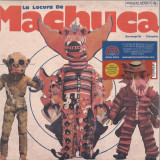
La Locura de Machuca is the story of one man’s bizarre odyssey into Colombia’s coastal music underground, and the wild, hypnotic sounds he helped bring up to the surface.
One night in 1975, a successful tax lawyer named Rafael Machuca had his mind blown in Barranquilla’s ‘Plaza de los Musicos’. Overnight he went from a high ranking position in the Columbian revenue authority to visionary production guru of the newly formed record label that bore his name, Discos Machuca, and for the next six years he devoted his life to releasing some of the strangest, most experimental Afro Psychedelia Cumbias ever produced. La Locura de Machuca is the story of one man’s bizarre odyssey into Colombia’s coastal music underground, and the wild, hypnotic sounds he helped bring up to the surface.
The Colombian music industry was thriving in the mid-seventies, but while homegrown bolero and vallenato tunes were doing well on the charts, it was imported African records that were setting crowds on fire at the picos – the sound-systems that fuelled neighbourhood parties – and wherever those records were played there were always a handful of groups who were inspired to plug traditional Cumbia directly into the electric currents coming from across the Atlantic.
It was these obscure bands, who fused Colombian and African rhythms with the swirling organs and psychedelic guitars of underground rock, that fired Machuca’s imagination. While the label made its money releasing popular hits by legends such as Alejandro Durán and Aníbal Velásquez, that money was poured back into a unique run of experimental releases by fringe artists such as La Banda Africana, King Somalie, Conjunto Barbacoa, and Abelardo Carbono, one of the godfathers of Champeta Criolla.
When Machuca couldn’t find groups to realise his particular vision, he simply created them himself. Drawing on a fearsome roster of musicians associated with the label, he assembled bands that lasted only as long as it took to record an album ,and unleashed the results – complete with arrestingly unusual album covers – under a series of different names such as Samba Negra or El Grupo Folclórico. This unorthodox approach led his longtime recording engineer, Eduardo Dávila, to describes Machuca’s productions as the “B-Movies of Colombian music.”
The story of Doctor Machuca and his eccentric exploits tells of one of Colombia’s most atypical and peculiar record companies; a defining pillar of Afro-Caribbean psychedelia. His productions have come to represent the roots of Champeta and set the pedigree standards for Afro and Costeño avant-garde. The seventeen tracks on La Locura de Machuca, harvested from the darkest, strangest corners of the Discos Machuca catalogue, sound like little else recorded before or since.
Ordina ora e ordineremo l'articolo per te presso il nostro fornitore.

Caiphus Semenya, AKA Mr Letta Mbulu, is a South African legend, and Listen To The Wind, his iconic debut album, is simply a superb modern-soul/boogie album. It’s also incredibly rare, especially in good condition, so Be With is delighted to present this reissue.
Now a revered composer, musician, and arranger, Caiphus left apartheid South Africa in the 60s for self-imposed exile in Southern California together with his wife, Letta Mbulu. Settling in Los Angeles he started working with the likes of Hugh Masekela and Miriam Makeba and other exiled and semi-exiled South african artists, as well as, of course, his wife Letta.
Caiphus also found himself working with and composing for a broad range of jazz and pop artists, including Lou Rawls, Nina Simone and Cannonball Adderley. His facility with both jazz and African forms served him well. His LA stay was also the beginning of an ongoing collaboration with Quincy Jones, the fruits of which can be tasted in Caiphus’s African compositions for the scores to Roots and Spielberg’s adaptation of The Color Purple.
Given his decades of work behind the scenes, it’s no surprise that it took until 1982 for Caiphus to get around to putting out the first album of his own. But all that experience shows. Listen To The Wind is a deeply impressive synthesis of early 80s US production and instrumentation together with his traditional South African musical roots.
It’s stylistically diverse but the ingredients are never diluted. There are elements of boogie, soul, funk and jazz, all shot through with pan-African flavour, and moving effortlessly from uptempo floor fillers to more meditative, slower soulful tracks. Produced by Caiphus himself, he makes full use of a stellar line up of session musicians including Nathan East, Michael Stanton, Sonny Burke and Paulinho DaCosta. And of course, there are Letta’s show-stopping vocals. To our ears, Listen To The Wind is just one big party, and lord knows we need that more than ever right now.
Opener “Angelina” is one of Caiphus’s most beloved tracks at Be With HQ. It’s a breezy, feel-good SA boogie-funk classic. Harmonic and horn heavy, it sounds as fresh today as it would’ve done in the early 80s. If this one doesn’t make you move, you may need your pulse taking. The drum breakdown alone, a little over halfway through, is sensational.
It’s followed by the gentle reggae lilt of “Play With Fire”. A real melodic slo-mo delight, carried by the tropical vibes and, above all else, by the extraordinary performance of Caiphus himself and his backing singers.
Closing out side one, the spectacular “Umoya” is driven by triumphant horns and slick bass. With its proto-Graceland vibes, we reckon Paul Simon must’ve been listening. Hard. Caiphus trades verses with the unmistakable tones of Letta, and it sounds divine. Yes, it’s as good as anything on Letta’s canonical In The Music… The Village Never Ends. A wide-eyed wonder, made for unity and togetherness, it’s all infectious, smiling faces for nearly nine minutes. But never mind nine, we could party to this for ninety minutes and “Umoya” would leave us re-energised for ninety more.
Elegantly firing up side two is perhaps the album’s best known track. “Without You” is a heavenly slice of modern soul, an end-of-nighter to end them all. Smooth strutting, disco-fied funk with that unmistakably South African sound, it’s just sublime, with those lyrics that keep coming back to smiling faces and community, “without You the sun won’t shine”. Big with the likes of Rush Hour’s Antal, this is aural perfection.
“Ziph’inkomo” is a soul-soothing, swooning epic. Gently building throughout, its final few minutes are genuinely stirring as the backing vocals and instrumentation swell. Jaw-dropping. The irresistible groove of frantic, percussive workout “Gumba Boogie” closes out what must surely be one of the greatest artistic statements of the 1980s. If his friend Quincy wasn’t feverishly taking notes for Thriller, then you could’ve fooled us.
With Simon Francis handling the mastering of this Be With edition, you know it sounds as fantastic as ever. The cover art, as breezy as the music, has been faithfully restored. All that’s missing is you.
Ordina ora e ordineremo l'articolo per te presso il nostro fornitore.

The release of Rising Son in 1986 on Greensleeves began a new era for Augustus Pablo edging his Rockers revolution into the digital age. In his own words Rising uon “mix-up the vibes a little more” from steppers like ‘Pipers of Zion’, revival reggae ‘African Frontline’ and the deep and heavy ‘The Day Before The Riot’. Recorded at Channel One, Tuff Gong, Dynamic & HC&F and engineered by Phillip Smart and Scientist.
Ordina ora e ordineremo l'articolo per te presso il nostro fornitore.

"The two Portuguese-speaking African islands of Sao Tomé & Principe, located in the Gulf of Guinea, created an unique music called Puxa : a refined mixture of various musical components from both sides of the Atlantic Ocean. A blend of Semba, Merengue, Kompas, Soukouss, Coladeira patterns, often pushing forward with a voodoo-like energy, solid bass lines, delicate melodies and backing harmonies of the rich Sao Tomean melodic traditions. Very first compilation focusing on the golden age of these island’s sounds, the 16 tracks selected will surely set fire on all dance floors !
Léve-Léve is the first ever compilation devoted to music from São Tome and Principe, two small islands situated off the coast of Gabon in central Africa. The album unravels a story of liberation where the music of Africa, Europe and the Americas unify with a carefree spirit personified by a phrase the islanders use all the time: “léve, léve” (“take it easy”). With echoes of Angolan semba and merengue, of Brazilian afoxê, of coladeira from Cape Verde and dance music from the Caribbean, it is a sound fiercely proud of its island heritage, sung in local dialects and using distinctive local rhythms.
On this record you can hear the cultural and social history of São Tome and Principe, and how live music represented its beating heart. Once known as the “Chocolate Islands” (remarkably, these two tiny islands were the largest cocoa producers in the world, though now this title acts as a reminder of its colonial past), through the years leading up to independence from Portugal, music would be a fundamental voice of liberation and conviviality. Os Úntués were one of the first groups to make an impression, releasing a couple of 7 inches in Angola – the litmus test of success for any of the islands’ groups. They united unique rhythms and dances like socopé, puita and dança-congo – borne from the islands’ largely slave-descendant population – with the sound of pop music beamed in on the radio from Europe, even adding in a little bit of soukous and Brazilian instrumentation. Their main rivals were Conjunto Mindelo, who fused São Toméan rhythms with rebita, an Angolan style, to create high energy puxa, a truly original island rhythm.
From the mid-1970s, coinciding with independence from Portugal in 1975, the islands’ groups featured an even stronger African influence and nowhere was that more apparent than with Africa Negra. They would listen to the latest records from Gabon, Zaire and Cameroon, taking inspiration and trying out phrasing from the greats of Central African guitar playing, developing a devoted fan base off the islands, as well as on. A score of other bands would follow a similar musical path, with a few getting their dues overseas in Angola, Cape Verde, Portugal and across Africa.
Os Leonenses (led by the iconic Pedro Lima), Conjunto Sangazuza, Sum Alvarinho and Conjunto Ecuador were just some of the other bands that formed a lively home-grown music scene that lit up the islands’ bars and open-air shows from the 1950s through to the mid-90s. Regardless of class or age, they were responsible for keeping the population entertained come the weekend, with Sunday matinee shows the highlight of the week, the music not stopping from midday until midnight.
As a Portuguese island colony that was for many years populated with slaves brought from Africa, São Tome and Principe has much in common with other Lusophone countries and boasts a richly complex and idiosyncratic musical DNA. Whilst the musical tapestries of Angola and Cape Verde are well known, São Tome and Principe’s secrets were assigned to the islanders themselves. Until now."
Ordina ora e ordineremo l'articolo per te presso il nostro fornitore.

Art is a matter of different phases and influence. The artists' core reaches out like heat waves. And very rarely do these artists' core merge like Brigitte Fontaine and Arseki Belkacem have. Their Saravah Era lasted ten years (1969 to 1979), ten years of "folle sagesse" (crazy wisdom), above all genres and song limitation.
"Le plaisir secret que donne une chanson, dessin à la craie sur le mur de tes sons" (the personal delight within song, a chalk drawing on your wall of sounds) whispers Areski, right after Brigitte's voice on the penultimate song of the double album "Vous et nous". Released in 1977, this free flowing record contains 33 songs, it's their 6th album after "Comme à la radio", "Brigitte 4", "Je ne connais pas cet homme", "L'incendie" and "Le bonheur", and it continues to spread the wide and generous spectrum of the couple fully blossoming talent. Electronic experiments, North African trance, refined acoustics and medieval drones gracefully blend with the acid and candid tongues of the singers, surprising us each step along the way. The making of this record was also full of twists and turns. It started out as a solo effort by Areski at Jean-Pierre Chambard's studio. Little by little, as Areski was filling tapes with poems and improvised skits, Brigitte would sneak into the studio at nightfall, adding her voice here and there, her whispers then became screams, giving fuel to the fire in a total blaze, a surreal blaze. The solitary work ("je") thrived to become us ("nous") and you ("vous") ...
Benjamin Barouh, June 2018
Ordina ora e ordineremo l'articolo per te presso il nostro fornitore.
