2025 Repress in Arctic Pearl Vinyl
Alles fließt, nichts bleibt wie es ist. Diese philosophische Erkenntnis gilt auch für das dritte Studioalbum der aufstrebenden niederländischen Rockband DOOL. Der treffende Titel "The Shape of Fluidity" zielt keineswegs nur auf die musikalische Innovation. Sondern das Album dreht sich um Themen wie persönlicher Wandel, physische Veränderung, psychologische Weiterentwicklung und die sich erneuernde Welt um uns herum. DOOL und insbesondere Sänger/in und Gitarrist/in Raven van Dorst stellen Fragen: Wie wirkt sich der Wandel auf uns aus? Wie bleiben wir uns selbst in einer Welt treu, die so unglaublich herausfordernd und aggressiv gegenüber dem Individuum ist? Wir müssen so fließend wie Wasser sein, um in diesem Ozean von Möglichkeiten und Ungewissheiten erfolgreich zu navigieren - und Frieden mit Chaos und Unbeständigkeit zu schließen. Musikalisch setzen DOOL den auf den beiden vorangegangenen Studioalben eingeschlagenen Weg fort, der emotionale Rockmusik mit Elementen aus dem Metal kombiniert. Dabei demonstrieren die Niederländer eine auffällige Reife und Kontrolle im Songwriting, die aus Jahren der Erfahrung gewachsen sind. "The Shape of Fluidity" zeigt eine eklektische, aber nahtlose Verschmelzung von Progressive und Post-Rock sowie Doom und Heavy Metal, die mit einer stets präsenten Eingängigkeit und hintergründigen Dynamik kombiniert sind. Es ist offenkundig, dass sich das Album thematisch mit dem Konzept der Identität vor dem Hintergrund einer sich ständig verändernden Welt befasst. Die Texte des Albums sind eng mit der Biografie von Leadsänger/in Raven verknüpft. Von Geburt an intersexuell, entschieden die Ärzte chirurgisch, dass der Säugling als Mädchen durchs Leben gehen solle. Dies führte zu einer Existenz auf der Suche nach der eigenen Seele, dem Kampf gegen Tabus und die Überschreitung von Grenzen, bis Raven vor kurzem beschloss, das zurückzufordern, was andere versuchten hatten, ihnen wegzunehmen - und ihre hermaphroditische Natur zu akzeptieren. Der Bandname DOOL leitet sich vom niederländischen Wort für "Wandern" ab. Bereits das im Jahr 2017 erschienene Debütalbum "Here Now, There Then" landete einen sofortigen Volltreffer. Der frisch-wilde Rock- und Metalsound aus den Niederlanden wurde von den renommierten deutschen Magazinen Metal Hammer und Rock Hard zum "Album des Monats" gekürt. Auch Vice (US), Aardschok (NL) und De Volkskrant (NL) überschütteten die junge Band mit Lob. Mit ihrem zweiten Album "Summerland", das 2020 erschien, übertrafen DOOL die ohnehin schon hochgesteckten Erwartungen. Es gab weitere "Album des Monats"-Auszeichnungen in den deutschen Magazinen Rock Hard (10/10) und Sonic Seducer sowie eine #2 Soundcheck-Position in Metal Hammer (DE) und Metal.de, und eine weitere #1 im polnischen Metal Hammer - mit einem Berg herausragender Kritiken auf beiden Seiten des Atlantiks. Mit "The Shape of Fluidity" bieten DOOL sehr viel mehr als nur verdammt coole Musik. Die zusätzlichen Dimensionen von Tiefe und Bedeutung sind Teil ihres einzigartigen Reizes und kommen auf dem neuen Album deutlich zum Vorschein. Mögen sich alle, die wandern, unter der fluiden Flagge von DOOL versammeln!
Search:fluidity
Alles fließt, nichts bleibt wie es ist. Diese philosophische Erkenntnis gilt auch für das dritte Studioalbum der aufstrebenden niederländischen Rockband DOOL. Der treffende Titel "The Shape of Fluidity" zielt keineswegs nur auf die musikalische Innovation. Sondern das Album dreht sich um Themen wie persönlicher Wandel, physische Veränderung, psychologische Weiterentwicklung und die sich erneuernde Welt um uns herum. DOOL und insbesondere Sänger/in und Gitarrist/in Raven van Dorst stellen Fragen: Wie wirkt sich der Wandel auf uns aus? Wie bleiben wir uns selbst in einer Welt treu, die so unglaublich herausfordernd und aggressiv gegenüber dem Individuum ist? Wir müssen so fließend wie Wasser sein, um in diesem Ozean von Möglichkeiten und Ungewissheiten erfolgreich zu navigieren - und Frieden mit Chaos und Unbeständigkeit zu schließen. Musikalisch setzen DOOL den auf den beiden vorangegangenen Studioalben eingeschlagenen Weg fort, der emotionale Rockmusik mit Elementen aus dem Metal kombiniert. Dabei demonstrieren die Niederländer eine auffällige Reife und Kontrolle im Songwriting, die aus Jahren der Erfahrung gewachsen sind. "The Shape of Fluidity" zeigt eine eklektische, aber nahtlose Verschmelzung von Progressive und Post-Rock sowie Doom und Heavy Metal, die mit einer stets präsenten Eingängigkeit und hintergründigen Dynamik kombiniert sind. Es ist offenkundig, dass sich das Album thematisch mit dem Konzept der Identität vor dem Hintergrund einer sich ständig verändernden Welt befasst. Die Texte des Albums sind eng mit der Biografie von Leadsänger/in Raven verknüpft. Von Geburt an intersexuell, entschieden die Ärzte chirurgisch, dass der Säugling als Mädchen durchs Leben gehen solle. Dies führte zu einer Existenz auf der Suche nach der eigenen Seele, dem Kampf gegen Tabus und die Überschreitung von Grenzen, bis Raven vor kurzem beschloss, das zurückzufordern, was andere versuchten hatten, ihnen wegzunehmen - und ihre hermaphroditische Natur zu akzeptieren. Der Bandname DOOL leitet sich vom niederländischen Wort für "Wandern" ab. Bereits das im Jahr 2017 erschienene Debütalbum "Here Now, There Then" landete einen sofortigen Volltreffer. Der frisch-wilde Rock- und Metalsound aus den Niederlanden wurde von den renommierten deutschen Magazinen Metal Hammer und Rock Hard zum "Album des Monats" gekürt. Auch Vice (US), Aardschok (NL) und De Volkskrant (NL) überschütteten die junge Band mit Lob. Mit ihrem zweiten Album "Summerland", das 2020 erschien, übertrafen DOOL die ohnehin schon hochgesteckten Erwartungen. Es gab weitere "Album des Monats"-Auszeichnungen in den deutschen Magazinen Rock Hard (10/10) und Sonic Seducer sowie eine #2 Soundcheck-Position in Metal Hammer (DE) und Metal.de, und eine weitere #1 im polnischen Metal Hammer - mit einem Berg herausragender Kritiken auf beiden Seiten des Atlantiks. Mit "The Shape of Fluidity" bieten DOOL sehr viel mehr als nur verdammt coole Musik. Die zusätzlichen Dimensionen von Tiefe und Bedeutung sind Teil ihres einzigartigen Reizes und kommen auf dem neuen Album deutlich zum Vorschein. Mögen sich alle, die wandern, unter der fluiden Flagge von DOOL versammeln!
We’re excited to presentStill Hope–the firstfull solo EP from Fluidity for Integral Records, following the success of ‘Feeling Inside’, his debut feature on the Glow VA series. This Bristolian is one of the future Dnb collective's rising talentsswiftly making his mark on the scene with a liquid style all his own;refined, subterranean, rolling.
Coming with four explosive tracks covering the full intelligent spectrum; fromthe very deepest and most intricate melancholic vibes, through to the harder edged sounds the listening journey is nothing short of pure vibe. Intertwining atmospheric pads, blissed out chords, slickened percussion and groove pass through harmonic growls and alluring sub basslines of infinitely emotive soundscapes.
- A1: Intro + Dreams Feat Liv East
- A2: Fruits Of The Universe Feat Douniah
- A3: Define Us Feat 30/70 & Dreamcastmoe
- A4: High Feat Cor.ece
- B1: Vibin Feat Ben Westbeech & Sanity
- B2: Without The Sun Feat Oliver Night
- B3: Bells
- C1: Rearrange Yourself Feat Ben Westbeech & Obi Franky
- C2: Downstream With Life On Planets
- C3: Be Real Feat Life On Planets
- D1: Looks Like It (Space Talk)
- D2: Illusions (Midnight Dub) Feat Ava Lavá & Life On Planets
- D3: Simulate Feat Goya Gumbani & Javonntte
DJ Support: Laurent Garnier, Dennis Cruz, Girls Of The Internet, Horse Meat Disco, Stacey Pullen, Elliot Schooling, Solomun,Marco Carola, Joseph Capriati, The Martinez Brothers, Dam Swindle, Soul Clap, Luke Solomon, Riva Starr, Franky Rizardo, Archie Hamilton, Silvie Loto, Fouk, Austin Ato, Salomé Le Chat, Blackchild, Jean Pierre, Black Loops, Kassian, Seamus Haji, Melvo Baptiste, Rimarkable, Sophie Lloyd
In-demand Amsterdam-based duo Makèz step into new ground with the release of their album ‘Arriving Home Elsewhere’, via ANOTR’s No Art label. A kaleidoscopic project that moves between deep house, cosmic jazz, R&B, broken beat, and club-ready energy, the record is both a declaration of identity and a dissolution of boundaries - proof of the duo’s rare ability to merge worlds without diluting or compromising their true essence.
Where most albums that span electronic realms lean on functionality, ‘Arriving Home Elsewhere’ reaches for something much more expansive. The project is a true hybrid: half shaped for the intimacy of a headphone listen, half designed for the electricity of the dancefloor. together forming a seamless continuum between reflection and release. Tracks like ‘REARRANGE YOURSELF’, ‘BE REAL’, and ‘LOOKS LIKE IT (SPACE TALK)’ are stripped to the core of house music’s driving pulse, made for bigger systems and peak-time release. In contrast, ‘Dreams’, ‘Fruits of the Universe’ (with douniah), and ‘Without The Sun’ (with Oliver Night) explore lush, textured arrangements where live instrumentation and improvisation carry equal weight to rhythm and groove.
Collaboration is at the heart of the LP, with Makèz inviting a constellation of voices who each expand the project’s palette. Ben Westbeech, Liv East, and SANITY bring soulful intensity; 30/70 and dreamcastmoe connect Amsterdam to Melbourne and DC; Cor.Ece and Oliver Night weave delicate threads of emotion; Goya Gumbani and Javonntte guide the production with their vibey, groove-led performances; while Life on Planets reprises his role as a core creative partner, appearing across the album on tracks including the standout ‘BE REAL’ and the previously released ‘ILLUSIONS’ alongside rising Amsterdam talent AVA LAVÁ. Together, these contributions shape an album that feels less like a singular statement and more like a living, breathing ecosystem.
For Makèz, ‘Arriving Home Elsewhere’ is as much about philosophy as it is about music. The title encapsulates a tension central to their art: the feeling of belonging to multiple worlds without ever being confined to one. Jazz, house, soul, and experimental club sounds are not separate influences but parallel languages, and in merging them, the duo has created a record that mirrors the fluidity of contemporary identity and expression. And while it may speak in many voices, the LP tells one clear story - that of Makèz, arriving, again and again, home elsewhere.
Phosphor’s fourth release connects two promising talents from Barcelona’s underground scene: French producer Vince Void and Mexican DJ Gamba. Together, they deliver a finely crafted EP that blends punchy club dynamics with dreamy, psychedelic touches. From electro with 80s Italian accents to glitchy grooves and spacey breaks, PHP004 stands as a floor-ready release, moving with a subtle balance of tension and elevation.
Vince Void takes the A-side with two effective cuts. “Thunder” builds on a saturated Italo-style bassline and crisp, stripped-back drums, creating a steady tension that works perfectly at the start of a set. “Fashion Victim” switches the mood with acid-tinged grooves, glitchy stabs and a playful swing. It’s less linear but just as effective, adding contrast and movement to any DJ set.
On the B-side, DJ Gamba goes deeper. “The Universe”, in collaboration with Quim, weaves lush pads and shimmering arps into a rolling club structure, with subtle breakbeat accents that add lift and fluidity. To close, “Your Vision” slows the pulse slightly, blending filtered melodies, melancholic textures and a steady groove, locking in emotion without losing the club energy.
‘3' saw the core Lifted duo of Max D & Matt Papich unravel their visions of excess into their most divergent and wide-eyed collection to date. Presented here by Peak Oil in a vinyl edition featuring the painting of Jordan Kasey (yes, related to Martin Kasey, saxophonist on 2019’s LP 2) and packaged for a seamless listen.
First scene ‘Chefs’ places us squarely off-center, landing in a cinematic environment that feels a bit like steadycam Luis Bunuel , wine bottle whoo-ing and horn fanfare. Its music without a hard surface, defined more by its fluidity and characters, found sounds and performed dialogue. “Cymbecko” shifts gears into blissful ambient dub, and paves the way for a Luke Stewart led excursion into the uncanny that is ‘Trip Tongue’. Stewart’s upright bass never stops seeking, while Jordan GCZs Rhodes barely touches down before lifting back up into and out of Jacob Long’s (Earthen Sea, Esau) liquid tone sheets. An outside world of percussion accompanies.
The mood morphs and the scene cuts in hard with “Born in the Roof”, slacker techno that grows shimmering parts, Perlon for potheads. Voiceover slacks right with it, a half-convo caught in the billowing chorus of fx. “Macarena” snaps things into focus, working almost like an open window to airing out the heady fog. Simplicity in the vignette.
After “Mecha Perfume & Variety”, “Snow Dancing” reignites the drama, with burning guitar by Jonny Nash taking a plucky and sliding lead over wildly fused drums by Max D, we get a test of new depths for Lifted with the somber and exuberant “Whipped Cream”. Crackling like a radio but with modern propulsion in the form of richly evocative pads courtesy of Motion Graphics, it sounds like a dinner, a space trip, a storyboard, a scene, threaded together in bouncing, oblique ways.
"Bobby V" drops refreshingly, timed like a credit roll and leaving an afterglow that feels more tuned-in than ever.
Players on this album include: Luke Stewart (Irreversible Entanglements, Blacks Myths), Jeremy Hyman, Jonny Nash (Melody As Truth), Jordan GCZ, Matt Papich, Josh Levi, Mezey, Hirama, Dawit Eklund (1432 R), Motion Graphics, Max D, Jacob Long (Earthen Sea, Esau)
d 4.Born In The Roof Radio Mix
e 5.Macarena Radio Edit
WEorUS has long been synonymous with forward-thinking electronic music, and their upcoming vinyl release further cements their reputation for sonic innovation. Featuring four distinct tracks from Anushka, Dragosh, Fabrizio Siano and Kaitaro, this record presents a nuanced exploration of groove, minimalism, and jazz-infused experimentation.
The release opens with Anushka’s “LVOE” a track that radiates warmth and rhythmic fluidity. Built upon a foundation of deep grooves and hypnotic layers, it embraces organic textures that evolve subtly throughout the arrangement. Expect an inviting bassline, shimmering synth work, and a rhythmic interplay that beckons dance floors into motion.
Dragosh delivers “Lampone” a groovy minimal cut that balances intricate percussive elements with a refined sense of space. There’s an air of elegance in the way this track unfolds—tight drum programming meets delicate sound design, resulting in an immersive experience that feels both intimate and expansive. A staple for selectors who appreciate understated yet compelling compositions.
Fabrizio Siano’s “What is Jazz” a contemporary minimal jazz experiment that defies conventional genre boundaries. Jazz-inflected chords weave through delicate electronic structures, resulting in a fusion that feels both nostalgic and futurist. A celebration of improvisation and groove, this track adds a sophisticated touch to the vinyl.
Dark, introspective, yet strangely hypnotic, Kaitaro’s “Nightmare” introduces a deep minimal aesthetic that veers toward atmospheric intensity. Layers build with eerie precision, each element strategically placed to create an evolving soundscape that feels cinematic yet firmly rooted in club dynamics. This is minimal at its finest—moody, unpredictable, and meticulously crafted.
- A2: Bass Armor Bank
- A8: Skip Beat_Crown Drum
- B2: Durandal Bank
- B3: La Joyeuse Bank
- B4: Excalibur Bank
- B6: Classic Cuts Bank
- A1: The King's Bank
- A3: Kingdom Symphonia Bank
- A4: Battle Weapon Sentences
- A5: Skip_Call Me King
- A6: Skip_Rockin' With The Best
- A7: Skip_I'm Gonna Win
- B1: Skip_Ahhh, Ah Yeah
- B5: Meli-Melody Bank
- B7: Skip_Wow Yeah
- B8: Skip_The King Of The Scratch
- B9: Skip Beat - Knight Drum
Enter DJ Fly’s sonic arsenal with this precision-engineered breakbeat, crafted as a high-performance toolkit for the modern turntablist.
This vinyl delivers a sharp selection of expertly curated sound banks, including signature samples from DJ Fly’s legendary DMC routines, along with exclusive, never-before-heard material. All content is organized into thematically distinct sections to optimize workflow and creative output:
Epic & Orchestral – Acoustic & Electronic Instruments – Modern Textures & One-Shots.
Custom skipless loops (skipproofs) are designed to streamline cueing and enhance performance fluidity across all scratching and beat juggling techniques.
Features one side cut at 45 RPM and the other at 33 1/3 RPM, providing expanded control over pitch, tempo, and phrasing – perfect for hybrid routines and intricate transitions.
Each bank is structured to ensure harmonic, stylistic, or tempo-based coherence (BPM-aligned), supporting seamless layering, real-time improvisation, and the construction of musically cohesive sets.
A precision-cut breakbeat, purpose-built for vinyl technicians and battle-ready routines.
a A1 - The King's Bank Am/90bpm
[b] A2 - Bass Armor Bank [Fm/180bpm]
[h] A8 - Skip Beat_Crown Drum [90bpm]
[j] B2 - Durandal Bank [133,33bpm]
[k] B3 - La Joyeuse Bank [83,33bpm]
[l] B4 - Excalibur Bank [100bpm]
[n] B6 - Classic Cuts Bank [100bpm]
[83,33bpm]
- A1: Without Any (Featuring Jason Nazary)
- A2: Kiarostami's Stash
- B1: Infidelian (Featuring Jason Nazary)
- B2: Godspeedu
- B3: Organs Without Borders (Featuring Aria Rostami)
- C1: May Plastic Blossom In Spring's Air
- C2: Vulnerable In A Spreadsheet
- C3: I See Machines (Featuring Raheel Khan & Mhz)
- D1: Kick It Until It's Bent
- D2: Close Your Eyes Okay Now Open Them
- D3: Children Of Alcoholics Drunk On Revolution
"tilt your back
pay respect
hand on heart
we were raised without table,
without manners,
where is it we gather this time?
In ‘Of No Fixed Abode,’ Saint Abdullah and Eomac extend their experimentation with genre dissolution to press upon the tensions that exist between culture, place, and migration. This fourth collaborative LP addresses the inherent fluidity of cultural memory, accepting our inability to remain fixed in the past, and explores how best to carry its spirit forward into an ambiguous future.
Through extensive research into 50 years of Persian pop, they meticulously reinterpret the legacies of artists like Andy, Hayedeh, and Fereydoun Farrokhzad, refracting samples by way of gritty beat work-outs akin to more contemporary musicians like Rezzett and Madlib. Through extensive archival research and sampling, they recontextualise these iconic melodies, placing reverie and frenetic drum programming in conversation with one another in a fashion that seeks to express a sense of two disparate tendencies cohabiting together, all while refusing homogenization. This reimagining extends beyond mere homage, serving as a conduit for exploring the narratives of migrant experiences, both in the UK and globally.
Sonically ‘Of No Fixed Abode’ plays with new sampling techniques, utilising the quick-fire intensity of the Roland SP404 with the cool precision of digital DAWs, and features collaborations with drummer Jason Nazary, sound artist Aria Rostami (both New York based), New Zealand-based mHz, and a vocal collaboration with London-based artist and musician Raheel Khan."
Gradually, the latest album by Julien Mier, is a sonic journey that delves into the transitions of life, identity, and the blurred boundaries between art and personal growth. With a trilingual brain, Mier reflects on how language shifts have shaped his sense of self throughout his life and the music that he writes. Gradually is his exploration of shapelessness—an urge to break free from rigid musical genres and get closer to his most fundamental expression. The album is composed of nine tracks, each representing a distinct cultural and linguistic influence, all tied together by the theme of gradual evolution.
The first section, Ciel, Soleil, and Espace (French for Sky, Sun, and Space), draws on Mier’s French heritage, evoking the feeling of childhood memories bathed in a warm, nostalgic glow. This fluid, atmospheric section mirrors the soft, ever-changing air, symbolising a time of pure, untainted intention. It feels like a hazy, sepia-toned dream, as fleeting and elusive as the scent of an old friend. The gentle flow of the music mirrors the flow of wind, effortlessly shifting from one element to the next, a reflection of the innocence and clarity of youth.
The second section, Steen, Zee, and Zand (Dutch for Stone, Sea, and Sand), channels the influence of Mier’s childhood in a small Dutch dune village. These tracks are grounded in the hard-edged textures of electronic dance music, a genre that introduced him to a world of rhythm and movement. With a sonic palette of blues, greys, and more defined shapes, this section captures the solid, enduring forces of nature—earth, water, and stone. It’s a sonic landscape rooted in stability, a foundation from which everything can grow. The tracks build from the fluidity of the first section into more structured, rhythmic territories, mirroring the natural transition from childhood innocence to the discovery of deeper, more grounded musical influences.
The final section, Scrap (a collaborative track with the Japanese producer Daisuke Tanabe), Soil, and Spark, dives into the exploration of the world beyond familiar borders. Mier’s relocation from the Netherlands to Australia in 2016 is reflected in these pieces, which grapple with the contrast and complexity of different cultures and environments. These tracks are tinged with rust-red hues and a sense of eroded beauty, evoking a more fragmented, distorted view of the world. The music here is marked by tension, conflict, and the erosion of once-solid forms—symbolic of the digital and ecological storms that shape our modern existence. The closing piece, Spark, signals a new beginning, a hopeful initiation into the cycle of renewal.
The album artwork for Gradually is a conclusive visual representation of this journey, captured in the final frame of an analog film roll that began in the Netherlands and concluded with an image of the streets of Sydney, Australia—a perfect metaphor for the album’s narrative of gradual transition and discovery.
Evighet proudly unveils its fifth release, EVIGHET005, featuring the Sky City EP by Dave N.A., the prolific producer from Yerevan known for his refined sound design and emotionally resonant compositions. With a catalog that spans labels such as Typeless Records and Uppers & Downers, his work continues to bridge precision and sensitivity, exploring the borders between rhythmic architecture and ambient introspection. On Sky City EP, Dave N.A. constructs an intricate sonic landscape where lush atmospheres coexist with fractured breaks and IDM-inspired rhythms. Rooted in the traditions of Jungle and Breakbeat yet unbound by genre, each piece reveals a narrative built from texture, movement and space. His music invites reflection while maintaining a dynamic forward energy, evoking the sense of motion through memory and dreamlike transitions. A central moment in the release is “Bloom”, which features a collaboration with Hayk Karoyi on flute. His performance adds an organic depth and melodic fluidity, weaving through electronic layers with warmth and clarity. The result is a delicate interplay between human breath and machine pulse, blurring the boundary between the natural and the synthetic. Sky City EP marks a new chapter for Evighet, reaffirming the label’s dedication to sound as a medium of exploration and storytelling. Through this release, Dave N.A. captures both emotional immediacy and compositional detail, expanding the label’s evolving narrative with a vision that feels deeply personal yet universally resonant.
Following his contribution to FUSE’s Various Artist release last summer with the standout ‘Life’s A Bleep’, Melbourne-born, Berlin-based DJ/producer Reflex Blue returns to Enzo Siragusa’s renowned imprint with his first full EP on the label, ‘Fragments’.
His fusion of deep, sub-heavy house, heavily influenced by turn-of-the-90s UK tech house and forward-thinking electronic spheres, has welcomed releases on labels such as Limousine Dream, Kalahari Oyster Cult, and Craigie Knowes, while making appearances at the likes of Slapfunk, S.A.S.H. and more.
Now, with ‘Fragments’, he takes his sonic explorations to FUSE once more, delivering a high-energy selection primed for dancefloor impact. ‘Ruff City Dub’ brings heavyweight low-ends, shimmering textures, and UKG touches to kick things off , setting the tone for the EP’s dynamic and versatile feel. ‘Tightening The Screw’ follows with crisp drum programming and hypnotic, off-kilter synth work, offering a clever balance of wonk and precision. On the B-side, ‘Love 2 Rhythm’ oozes funk and fluidity with its rolling percussion, soulful vocals and rubbery bass licks, while ‘Freakin’ In The Neighbourhood’ merges influences from rave, electro and more with a modern, high-energy twist for a no-nonsense, late hours hitter.
Welcome to Aqualaxy, a collaborative project where Warning joins forces with art historian C.C. McKee from Philadelphia and international queer activist dia_shi from Berlin. Accompanying McKee’s book on the debut album by late-90s electronic pop band Aqua, Aqualaxy is a compilation of contemporary queer artists from North America and Europe commissioned to create their own takes on songs from Aqua's debut album. The result is an expansive blossoming variety of music, from sizzling trance pop, to eerie darkwave atmospheres, to cheeky dancefloor weapons.
With Aqualaxy, Warning presents a release that playfully deviates from the label's usual tracks, highlights trans musicians, and offers fresh takes on nostalgic favourites to the community. Embrace Aqualaxy’s endless fluidity, a space where everything becomes possible, where some changes aren’t even a second thought. Did you know that when the kobudai reef fish reaches a certain size she changes her sex from female to male? Did you know that when the largest female in a school of Clownfish dies the male swaps sex to take her place? Protogyny, protandry, it all just seems like fun; not to mention the host of genders and ways of fucking we don’t even have words for as humans! In Aqualaxy, everything is possible under the water. Imagination, life is your creation!
Refined, eccentric beatscapes from Teakup. The tempo and mood are wide ranging, from the swampy heaviness of 004.1, to the hovering stasis and textural play of 2 & 3, to the rushing fluidity and clarity of 4. Midwestern electro and techno blend with bass continuum influences and northern European glitch, modular, and minimal sensibilities.
Diogo Silva, Nuno Fulgêncio and Rui Martins collectively go by the name Bardino. With their sound consisting of an inventive mix of
electronica, rock, jazz, the Porto-based trio are pushing their sound into unchartered waters. A feeling that will be reinforced after
experiencing their new album, ‘Memória da Pedra Mãe’.
Their enthralling music draws upon the imagery of the beautiful and rugged scenery of their home country. ‘Centelha’ , their previous
album (released by Saliva Diva in 2020) was recorded in Chaves,
in the very remote region of Trás-os-Montes. Their 207 EP of the same name was created in the rustic heart of Serra das Meadas. In this
latest offering, the mention of "Pedra Mãe" (Mother Stone), refers to a rare geological phenomenon popularly known as "breeder stones"
found in isolated, deserted, and inhospitable places. On the inspiration of the new album, they explain that they want to refer to "the
importance of collective memory in the cohesion and identity of communities and the process of creating new memories, a process that
is both natural and conflicting, since it mirrors a tension between past, present and future".
The album was recorded in the summer of 2023 at Arda Recorders in Porto and produced by João Brandão and Rui Martins. In this
new material, Bardino's resources expand: Nuno Fulgêncio's drums, Diogo Silva's bass and Rui Martins' veritable arsenal of keyboards
(acoustic and electric piano, various synthesisers) are augmented by the alto and tenor saxophones of Brian Blaker (who stands out in
"Memória" and "Black Mica"), the guitar of Leonardo Outeiro (who features on "Punctum No 2") and, already indicating their affiliation
with the Porto label Jazzego, Hugo Oliveira, who records as Minus & MRDolly (and is a guest on "Pedra Mãe") and Sérgio Alves, aka
AZAR AZAR (who plays piano and Moog on "Tília"). Bardino's entry into the increasingly unavoidable Jazzego catalogue also reinforces
their obvious links to a new wave of projects that have been experimenting with different tangents to the notion of "jazz", taking this
music as part of a wider set of coordinates.
Over the course of eight tracks, and clearly benefiting from the distinct imprint of the recognised quality work of João Brandão, one of
Portugal's current best producers, Bardino presents dense, deeply cinematic music of the highest definition, in which the different
instruments translate a broad emotional and visual landscape, with solos of enormous elegance arranged over grooves that induce the
idea of movement. All the musical coordinates mentioned earlier are present, but perhaps in this new material you can feel a greater
fluidity, certainly the result of honing the vision of the central trio through a vast experience collected on stages all over the country. And
there are even echoes of a decidedly Portuguese songbook, as is so clearly felt in "O Semeador", something new in the range of aesthetic
references embraced by Bardino. This is, in fact, music that thrives on a benign tension between past, present and future, in the sense
that it embraces traditions and history, seeks a new framework in this diverse now and dares to project itself forward. Because the future
is the best of all locations.
Nick Beringer debuts on INFUSE to open the label’s 2021 schedule, offering up his stellar ‘Blue Blood’ EP.
A rising DJ and producer at the heart of Berlin’s minimal house scene, Rubisco boss Nick Beringer has formed a growing reputation as a ‘go-to’ artist for quality productions across the genre in recent years, with his diverse
discography welcoming material via the likes of Raum…Musik, Taverna Tracks, Mulen Records and Berg Audio to name just a few. With a sound fusing classic Detroit house and techno with more modern shades, ranging from electro-tinged elements through to more dubby textures, the German talent kickstarts 2021 with an impressive debut outing on FUSE sister imprint INFUSE as he delivers his four-track ‘Blue Blood’ EP.
Lead cut ‘Concave’ is a perfect example of Beringer’s ability to fuse genres and nuances with ease and fluidity as skipping percussion licks guide skittering sci-fi electronics and sweeping atmospherics throughout an up-front EP opener, whilst vinyl only cut ‘Aint Got Nobody’ delves into deeper realms as squelching basslines merge with icy hats and infectious vocal iterations. The lively title cut ‘Blue Blood’ opens the B-Side in style as warping synths weave amongst aquatic melodies and deep sub-bass, before closing out proceedings via the dynamic, off-kilter tones of final production ‘Second Hand Emotion’.
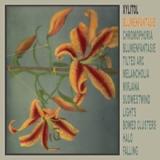
Xylitol, aka producer and DJ Catherine Backhouse, shifts up the refinement and musical breadth for her second album Blumenfantasie, the follow-up to her Planet Mu debut Anemones.
With Blumenfantasie, Xylitol wanted “to make space and for the music to float and propel at once”, finding routes through the pointillistic figures, cascading synths and the meditative stillness of kosmische musik and bolder breakbeat programming. She reaches this delicate balance through careful subtraction, hoping “to convey a sense of intimacy and sadness but without sentimentality” which she manages with a feel and sound that's raw and intuitive.
Blumenfantasie rolls through detailed jungle workouts that flutter and bleep, through beatless ambience, taking a rare dip below 160 bpm for the elegiac Mirjana, the album’s most explicit nod to Krautrock with a drum break chopped up from Amon Duul II’s anthemic ‘Archangel’s Thunderbird’, through to Halo, a bare bones grime rhythm that calls to mind the missing link between industrial pioneers Nurse With Wound and Wiley's Eskibeat.
Catherine cast her net to draw in experimental audiovisual duo Sculpture and Reading based post-rock band The Leaf Library as collaborators, pulling the former’s whirling eddies of musique concrète into a slice of sublime aquatic jungle, and the latter’s radiophonic folksong into a dark and disorientating breakbeat workout equally indebted to Source Direct as to Broadcast.
Blumenfantasie moves with a confident, self-effacing fluidity which has been informed by DJ Bunnyhausen’s more regular DJ gigs. She speculates ‘if this album feels more cohesive than its predecessor it's likely because I've been DJing a lot more, with Worthing Techno Militia, with central and eastern european electronica collective Slav to the Rhythm, as well as being part of Italo Disco crew Flex. Moving between these zones seemed to open up hidden pathways between the disparate musical trajectories they represent.'
While Anemones contrasted the rough and the delicate, its successor is an album built for the head, hips and heart, with painterly sounds and a sense of intimacy that encourages deep listening while keeping its eyes on the strobelight and its feet on the dancefloor.
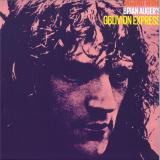
Strut Records highlights a landmark in British jazz-rock with Second Wind, the 1972 album from keyboard visionary Brian Auger and his powerhouse group Oblivion Express. Capturing a fully matured lineup, the record finds Auger expanding his fusion language - bridging jazz sophistication, funk-driven rhythm, and soul-infused songwriting with the clarity and fire that defined his early ’70s work.
Though Auger’s roots lie in the lineage of hard-swinging jazz organ and the improvisational fire of the ’60s British scene, he has never been an artist content with tradition. With Second Wind, he moves further into a hybrid language that fuses rhythm with harmonic depth and groove, without sacrificing sophistication. His playing is expansive yet precise, translating the electricity of live performance into a studio work that breathes with immediacy.
At the heart of this era of Oblivion Express is the telepathic rapport among its members. Vocalist Alex Ligertwood (in one of his earliest major recordings before Santana fame) brings a soulful intensity that feels both grounded and forward- looking. Second Wind contains tracks that have become deeply significant in Auger’s discography - original compositions Second Wind, and Truth to name a few - but it was Auger's high octane revisioning of Eddie Harris' Freedom Jazz Dance, (adding new lyrics to the original instrumental) that genuinely broke barriers. The track became a DJ friendly classic and highlighted the groups deeply original approach.
The rhythm section of Barry Dean and Robbie McIntosh balances weight and fluidity, giving Auger the space to stretch across Hammond organ, Rhodes, and keys with characteristic boldness. Their collective sound is one of seamless motion: jazz-inflected lines swelling into rock-driven crescendos, funk-leaning grooves locking with vocal hooks, moments of quiet clarity emerging between bursts of improvisation.
Second Wind stands as a pivotal moment in Auger’s discography: a record that bridges the exploratory spirit of his earlier projects with the more groove-oriented approach that would soon bring international attention. More than five decades later, it remains a vivid document of a band carving out its own language. Music born of instinct, collaboration, and a restless desire to push beyond the expected.
Yuvi Havkin aka Rejoicer returns with an exceptional collaborative album, California Space Craft. On this aptly titled record, he joins forces with seasoned LA bass polymath Sam Wilkes — known for his inspired studio work with Sam Gendel and his dynamic live performances alongside Louis Cole and KNOWER — and drummer Tamir Barzilay, completing the LA-connected trifecta alongside a select handful of key featured guests. The idea for California Space Craft was born out of a series of inspired live sessions in Los Angeles between 2019 and 2022, notably at Listen to Music Outside in the Daylight Under a Tree, where the trio’s natural chemistry first began to bloom. The resulting recordings encompass a wide variety of inspired sound stylings, as one would expect from any of these accomplished artists on their own; however, the sum is truly greater than the parts here, with the fluidity of their freeform improvisations over a dedicated three-day recording session feeling remarkably focused as a cohesive whole. Opening track “Traveling Light” sets the LP’s tone with equal parts Sly & Robbie-style, space echo– drenched rhythms and the cozy kosmische, guitar-led feel of early-2000s genre-fluid explorers like Tortoise. As we continue on to “Ritual in G#,” we are reminded that this is indeed a unique and timeless sonic space the trio has created, as Havkin’s crisp Rhodes chords anchor an ever-evolving psychedelic sound bed. The soaring trumpet of Avishai Cohen adorns the Afrobeat-indebted “Lion Water,” with Barzilay laying down a proper Allen-esque groove, while “Further (with you),” featuring Nitai Hershkovits on keys, offers a defining look at the titular concept of the album — with pure Cali feels coalescing effortlessly into sciNew Release Information fi narrative modes and a proper dose of Rejoicer futurism. Elsewhere, “Her Hair in the Air” shines with fresh polyrhythmic intention, illustrating the balanced bond between the three collaborators at their conversational peak, and the brisk synth strokes of “Early Porpoises,” alongside LP closer “Oceanic Friends” — again ideally named — double as a grand, in-stereo ride into the blissful Pacific sunset horizon. California Space Craft embodies the power of open, collective intention and musical kinship, offering memorable, uplifting moments and an aural glimpse of hope, warmth, and loving melodious calm in an otherwise quite chaotic time for humanity.
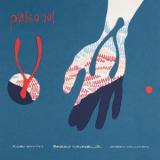
Barry Walker Jr. is a pedal steel player and guitarist whose roots in Americana, Country and Folk traditions influence his melding of minimalism, ambient and spiritual music. The Portland-based instrumentalist is also a member of the Rose City Band, known for his gorgeous phrasing and deft interplay with guitarist Ripley Johnson. On Paleo Sol, Walker demonstrates his singular voice as a pedal steel player and composer. Evoking the American western ranges and basins, the album embodies a longer, geologic view of time that patiently marvels at the ripples of change throughout lifetimes and ages. Walker is joined on Paleo Sol by drummer Rob Smith (Rhytion, Pigeons) and bassist and Mouth Painter bandmate Jason Willmon (Fruited Planes). Paleo Sol"s tranquil landscapes glide, built on warm finger-picked guitar figures and pedal steel swells coupled with deft percussion and bass touches by Smith and Willmon respectively. The trio plays with exceptional fluidity either completing each others phrasing or working together to build momentum. Smith notes: "The drums are not keeping time as much as evidencing its elasticity, mixing into the other instruments, changing phase states." Every gesture on the album is rich with intention, moving with grace and playing with timbre and time.
- Mean Street
- Dirty Movies
- Sinners Swing!
- Hear About It Later
- Unchained
- Push Comes To Shove
- So This Is Love?
- Sunday Afternoon In The Park
- One Foot Out The Door
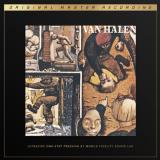
The song titles on Van Halen's aptly titled Fair Warning don't lie. The likes of "Unchained," "Mean Street," "Push Comes to Shove," "One Foot Out the Door," and more indicate the mood the band channels on its double-platinum 1981 record — the nastiest, darkest, and fiercest album of the group's storied career. For the fourth time in four years, Van Halen throws down the gauntlet to all challengers and emerges victorious.
Sourced from the original analog tapes, pressed on MoFi SuperVinyl at Fidelity Record Pressing, and strictly limited to 5,000 numbered copies, Mobile Fidelity's UltraDisc One-Step 180g 45RPM 2LP set plays with unfettered clarity, dynamics, and immediacy. Benefitting from superb groove definition, an ultra-low noise floor, and dead-quiet surfaces, this vinyl edition captures what went down in the studio with tremendous realism and involving presence.
Taking a more controlled approach in the studio and still completing everything in less than two weeks, Van Halen and producer Ted Templeman relied on studio amplifiers to direct the sound. Further diverging from the live-on-the-floor approach of its earlier albums, the ensemble also employed overdubs to great effect. The result: Dense, stacked architecture that underlines the hard-hitting tenor of the songs — and which comes alive like never before on this reference edition that looks as good as it sounds.
The premium packaging and gorgeous presentation befit the reissue's select status. Housed in a deluxe slipcase, it features special foil-stamped jackets and faithful-to-the-original graphics that illuminate the splendor of the recording. Aurally and visually, it is made for listeners who want to immerse themselves in everything involved with the album, including the iconic cover art adopted from William Kurelek's haunting painting, "The Maze."
Isolated frames from Kurelek's childhood-inspired work — including a man bashing his head into a brick wall, a guy pinning down an adversary as he delivers bare-fist blows to his face and others watch with apparent glee, a boy tied down on a conveyer belt and being sent through the equivalent of a meat saw — adorn the front and back covers. The sunnier visual disposition of Van Halen's prior efforts gives way to something sinister and tortured, traits reflective of the music within. The band members, too, are visually depicted not in glamorous shots but in a serious black-and-white portrait in which the quartet is clad in black leather jackets.
Tough, aggressive, stark: Fair Warning comes on like a series of bare-knuckled punches to the solar plexus and boasts lyrical narratives to match. Though not a concept record, the concise album revolves around themes of roughing it on the streets and struggling to survive amid dim prospects. Singer David Lee Roth reportedly penned many of the initial lyrics after traveling to Haiti and observing extreme poverty. The characters and situations populating Fair Warning reflect hardscrabble existence, last-chance desperation, and underlying danger.
Witness the crazies, poor folks, and hunters of “Mean Street”; the former prom queen turned pornographic actress on “Dirty Movies”; the menace and vice of “Sinners Swing!”; the streetwise hustle of “Unchained”; the isolation and alienation of “Push Comes to Shove”; the desire for escape on “One Foot Out the Door”: A carefree California beach party Fair Warning is not.
Having said he felt angry and frustrated during the sessions, guitarist Eddie Van Halen uses the forceful arrangements as a playground for his seemingly unlimited arsenal. Supported by a crack rhythm section and a hyped-up Roth, he performs with an almost impossible combination of punk-like intensity, technical finesse, lyrical fluidity, and unbridled emotion. The virtuoso was increasingly butting heads with Templeton and seeking a freedom in the studio he believed denied him.
No wonder he plays like a bat out of hell. Listen to the rapid-fire manner in which he slaps the high and low E strings on the 12th fret of his instrument on “Mean Street,” instilling the tune with funk flair and metal-spiked sharpness. For the pouty strut of “Dirty Movies,” Eddie Van Halen contributes slide guitar magic made possible after he sawed off the lower portion of a Gibson SG so he could reach further down the fretboard.
Related intensity, urgency, and daredevil momentum punctuate the surging “Sinner’s Swing!” A heavily flanged, delicately melodic introduction frames the attitudinal “Hear About It Later,” among the most creative arrangements of Van Halen’s career. And do riffs come any bigger or magnetic than those on the high-wire kick of “Unchained”? As for the out-of-left-field “Sunday in the Park,” an instrumental composed on an Electro-Harmonix micro-synthesizer: Who but Eddie Van Halen to supply creep factor in such an ingenious way?
Despite selling fewer quantities than Van Halen’s prior efforts, Fair Warning remains for many diehards the record that epitomizes all of the band’s immense strengths —Roth’s manic energy and tongue-wagging humor, Alex Van Halen’s rhythmic heartbeat-in-your-chest bombast, and Michael Anthony’s lucid bass lines included. Arriving when the New Wave of British Heavy Metal and new-wave movements were taking flight, it signaled a shot across the bow from a band determined to stay a step ahead and provide proof nobody could touch what it delivered.
More than four decades later, Fair Warning still sounds that alarm.
- A1: Get Up I Feel Like Being A Sex Machine
- A2: Brother Rapp (Part I & Part Ii)
- A3: Bewildered
- A4: I Got The Feeling
- B1: Give It Up Or Turnit A Loose
- B2: I Don’t Want Nobody To Give Me Nothing
- B3: Licking Stick
- C1: Lowdown Popcorn 9.Spinning Wheel
- C2: If I Ruled The World
- C3: There Was A Time
- C4: It’s A Man’s Man’s Man’s World
- D1: Please, Please, Please
- D2: I Can’t Stand Myself (When You Touch Me)
- D3: Mother Popcorn
James Brown wants to know one thing before he and his band begin Sex Machine. “Can I get into the thing, really?,” he asks. His cohorts enthusiastically respond in the affirmative. And for the next hour and change, Mr. Dynamite gets into it and more, turning in a sweat-soaked, feet-moving, hip-swiveling, emotion-purging, in-the-red, drop-everything-you’re-doing-and-dance performance for the ages. Ranked by Rolling Stone among the 500 Greatest Albums of All Time, the sweeping 1970 effort towers as a testament to Brown’s inimitable legacy as well as the peak powers of his voice, vibrancy, and bands.
Sourced from the original master tapes, pressed at Fidelity Record Pressing, and housed in a Stoughton gatefold jacket, Mobile Fidelity’s numbered-edition 180g 33RPM 2LP set presents Sex Machine in audiophile sound for the first time. It explodes with the energy the lightning-strike music demands. Dynamic, immediate, present, airy: Everything from the brassiness and fluidity of the horns to the snap and decay of the snare to the swell and carry of the organ comes across in full-range perspective.
Then there’s Brown’s superhuman singing, which here emerges with a purity, naturalism, and transparency that ensure you feel everything. Screeching, shouting, pleading, moaning, preaching, stinging, commanding, testifying, crooning, humming: The Godfather of Soul contributes one of the finest vocal performances known to man. This definitive 55th anniversary reissue of Brown’s monster funk statement further exhibits a combination of clarity, solidity, separation, and imaging that helps bring to light what he and his crack ensembles committed to tape. Both in the studio and on the stage.
Just how lifelike does this reissue sound? Senior Mobile Fidelity Sound Lab engineer Krieg Wunderlich, who handled the remaster, notes: “There were some artifacts that sounded a bit like mistracking. But they turned out to be breath blasts on the vocal microphone. That is part of history. JB was workin' hard, and breathin' hard. And there was an edit the timing of that was truly strange. Again, a part of history.”
Originally marketed as a live album, Sex Machine contains six songs recorded in the studio and later overdubbed with canned crowd noise and reverberation. Save for “Low Down Popcorn,” the tracks on the latter half stem from a phenomenal performance captured in October 1969 at Bell Auditorium in Brown’s adopted hometown of Augusta, GA. The special relationship between the singer, the audience, and the location is palpable.
As the 1960s gave way to a new decade, Brown experienced immense success and dealt with unexpected change. Soul Brother Number One soon expanded his idea for an official live album captured in Augusta when the ensemble that backed him on that date morphed into the original version of the world-famous J.B.’s just months after the show. The virtuosic abilities, sticky chemistry, and rhythm-forward nature of the J.B.’s prompted him to book a one-off session in Cincinnati, OH, on a late July night.
Anchored by brothers William “Bootsy” Collins and Phelps “Catfish” Collins, the group — as well as two different drummers — laid down a nearly 11-minute rendition of “Get Up I Feel Like Being Like a Sex Machine” and a thrilling medley of “Bewildered,” “I Got the Feeling,” and “Give It Up or Turnit a Loose.” A pair of then-recent studio singles cut in separate locations in 1969, “Brother Rapp” and “Low Down Popcorn,” each featuring his prior group, took care of the second LP worth of material that complements the originally planned live set.
Complicated? Somewhat. Unusual? Definitely. But just as he elevated the expectations for all present and future R&B artists, Brown not only makes it all work. He makes it positively electrifying.
“Get Up I Feel Like Being Like a Sex Machine” is alone deserving of a dissertation on the art of funk music, seeing it moves up and down akin to an oil derrick, witnesses Brown unleashing a trademark series of grunts, squeaks, and “good god” asides, and glides to a hypnotic groove that won’t quit. Or look to the syncopated rhythms of “Brother Rapp (Part I and Part II),” one of multiple pieces here that signify the point where Brown began viewing every instrument as a percussive tool. Brown closes the three-song medley with his new band with a skedaddling “Give It Up or Turnit a Loose,” which provides jolts on the order of sticking your finger into a socket.
Not that the actual live material falls short in any way. Setting an insistent tempo for the vitality that follows, “I Don’t Want Nobody to Give Me Nothing” positions Brown as a role model, leader, and self-sufficient entrepreneur. All simmer and boil, the short and sweet “Licking Stick” dares you to keep pace. The floating, almost comforting “Spinning Wheel” spotlights the instrumental prowess of Maceo Parker and company, and functions as a seamless segue into the tender, horn-saluted “If I Ruled the World.”
And Brown and his mates still aren’t done. Just try to resist the one-two closing punch of “I Can’t Stand Myself (When You Touch Me)” and “Mother Popcorn.” Mercy.
Ain’t it funky? Sure ‘nuff.
Lisbon-based duo Garoa—formed by Brazilian musicians Raphael Soares (drums, percussion) and Henrique Dias (piano, synthesizer, guitar, percussion)—craft an evocative soundscape that merges Afro-Brazilian rhythms with ambient textures. Their latest release, recorded in May 2024 at Estúdio Fetra, presents a free-flowing exploration where harmonies and rhythms unfold organically, avoiding rigid structures and embracing improvisation full time.
The album’s compositions are anchored by the interplay between Soares’ fluid percussion and Dias’ expansive harmonic approach. Tracks like “A Sandália Quadrada de Lampião” and “Xaxado de Chicago” weave percussive patterns reminiscent of Brazil’s Nordeste, blending them seamlessly with atmospheric synthesizers. “Baião de 2” and “Farofa e Cachaça” carry the unmistakable swing of Brazilian traditional forms, reinterpreted through Garoa’s lens of modernity and free flowing spontaneity.
Produced and mixed by Kellzo, the album captures the spirit of a collaboration that thrives on fluidity and openness. Garoa doesn’t aim for definitive statements; instead, they invite the listener into an evolving sonic landscape, where tradition and experimentation walk hand in hand.
»Chronotopia« is the second album by composer-performer Elisabeth Klinck. After collaborating closely with artist Oscar Claus to blend her violin playing with electronic soundscapes and field recordings on her 2023 debut Picture a Frame (Hallow Ground), Belgian electroacoustic artist Elisabeth Klinck now turns inward. On Chronotopia, she takes a more song-oriented approach, embracing her voice as a vital counterpart to her violin, intertwining their sounds like threads in a dynamic, multicolored fabric. The record marks an essential turning point in her artistic evolution and opens up a rich internal world. It is a tapestry of sound, emotion, and curiosity spun from—both literally and figuratively—her growing voice.Klinck, who works as a composer and performer in theater, wrote the pieces between tours and recorded the album in the same place as its predecessor, the Spanish Pyrenees. Though the outside world isn’t as explicitly reflected in the recordings as it was the case on »Picture a Frame,« her sophomore album responds to the outside world by capturing both the expansive serenity of the mountains and the frenetic pulse of life on the road. Eschewing her previous, more atmospheric and abstract approach, Klinck creates a landscape that is built on the song and filled with intimacy. Her music feels at once vulnerable and deeply human, balancing the rawness of improvisation with the careful precision of melody-led composition.Klinck describes »Chronotopia« as a playful exploration of time—its fluidity, its constraints, and its influence on how we navigate the world. These notions reverberate through her melodies and lyrics, which dance between moments of shimmering clarity and messy, beautiful chaos. These contrasts are further accentuated by the cunning interplay of voice and violin, which itself reflects the artist’s fascination with duality and transformation. Recorded in both organic and controlled environments, »Chronotopia« blurs the lines between intuition and design. The »time space« into which Klinck invites her audience is a place where sound becomes touch, time bends like light, and every moment carries the thrill of discovery
Burnski's Pilot takes flight once more with another journey into the heart of minimal and tech house, this time with Joolmad at the buttons. He is a UK artist making bold moves on the likes of Pillz and TSOL where he has showcased a contemporary take on the classic tech sound. 'Superlative' opens up here with bouncy drums and steel percussion to get things moving then 'Wobbler' gets more playful with some twisted acid lines and silky synth wisps that keep things trippy. 'Gone For' is more of a straight up driver with thudding kicks and warped sirens and 'Yurgen' has a woozy late night fluidity to it.
On Biotope, Valentino Mora ventures even further from the dancefloor, delving into a rich, psychoacoustic realm shaped by modular and spectral synthesis. Built primarily around the Rossum Panharmonium, a module that analyzes and re-synthesizes audio into evolving harmonic clusters in real time, the album conjures an imagined ecosystem, where sound behaves with the logic and fluidity of organic life. Eschewing traditional field recordings, Mora instead sculpts textures and gestures that feel deeply natural yet are entirely synthetic. Inspired by elements such as soil composition, air, humidity, light, temperature, and the chemical properties of both land and aquatic environments and the living creatures that inhabit them, the soundscapes emerge as a kind of sonic biology. The result is a collection of slow-moving, tension-laden compositions that blur the boundaries between physical sensation and abstract design. Biotope unfolds like a closed ecosystem: modular synthesis treated as a breathing entity, shaped by resonance, friction, and organic motion. It embodies a kind of mystical biology, where textures mimic living forms, and frequencies pulse with intent. This is music to be felt as much as heard, Biotope invites you to listen with your skin, not just your ears.
Whispers of Granite is the exciting new collaboration between Norwegian vocalist and vocal composer Trude Eidtang and German keyboardist and composer Andreas Hack. Their debut album, Liquid Stone, offers a unique fusion of melancholic folk, indie and progressive rock, enriched by Trude's expressive vocals and Andreas' atmospheric instrumentation. Trude Eidtang is renowned for her evocative, haunting voice and deep emotional resonance within the progressive rock genre. She first gained recognition as the lead vocalist of White Willow, later founding her own project When Mary, where she crafts vocal-driven organic-electronic music that blends art-pop, indie, and conceptual storytelling. Andreas Hack is a celebrated German composer and keyboardist known for his innovative work in progressive rock. As a founding member of Frequency Drift, Andreas helped shape the band's distinctive, atmospheric sound. He has also expanded his creative range through projects like Feeling of Presence, which delves into ambient and post rock, and most recently, Haven of Echoes, known for its progressive and evocative sound. The collaboration between Trude and Andreas in Whispers of Granite brings together their individual strengths to create a compelling and immersive musical experience, drawing influences from folk, indie, and cinematic music, combining melancholic progressive rock with lush, atmospheric textures. Trude's vocals are at the heart of the music, intertwining seamlessly with Andreas' atmospheric keyboard work and intricate guitar arrangements. Together, they craft a sound that balances melancholy and hope, fragility and strength. The album's title, Liquid Stone, reflects the thematic duality that runs throughout the project. It symbolizes the tension between fluidity and permanence, capturing the transformational shifts Trude explores in her lyrics. The fusion of organic and industrial elements in the music mirrors the interplay between raw human emotion and the rigid structures of the world. Liquid Stone marks a bold step into new musical terrain.
Lars Bartkuhn returns to Rush Hour with “See The Light”, as deep and complex as we have come to expect but as always his ever-present hunt for new inspiration and unique approaches is clearly evident across all 3 mixes of this beautifully deep yet pulsating track!
Originally written as a final foray into house music for the legendary Needs co-founder, this production aimed to “push boundaries within the world of electronic dance music, integrate fresh new elements, bring new compositional perspectives to the listener and to create overall rewarding experiences.”
It’s a deeply personal track, best summarised by the incredible piano solo in the Full Experience Mix. In Lars’ own words, “I am ten million light years away from being a good pianist, but for some reason I NEED to play those kind of things…even if they are raw, primitive and incomplete and lack parameters like elegance, fluidity and wisdom - I need to express myself in that very moment in this exact way.” It’s these unrestrained moments of brilliance that create rich palettes of sound with deep textures, organic rhythms and joyful melodies that keep your ear constantly engaged.
The Full Experience Mix is a near-13 minute trip through lush vocals, complex percussion, deep chords and raw piano solos that guides the listener through the changing motions of “See The Light”. Backed by two dub mixes, Inner Experience hones in on the keys and synths - truly elevating those striking notes. Opening with atmospheric percussion, the Dub Reprise settles into a chugging rhythm that brings the drums to the forefront.
“When a musician/composer really goes ‘all in’ there is almost nothing impossible. If you really pour out your heart and give all the sweat and tears you have you create a kind of zone where everything fits together in mysterious ways.” - Lars Bartkuhn
José James just can’t leave the ’70s alone. Or maybe it’s the other way around. The singer, songwriter, bandleader, and producer was born in 1978, after all, but over his past 17 years of fundamentally forward-looking, blessedly mercurial music, he keeps getting pulled back in. His 2013 Blue Note breakthrough No Beginning No End revisited the hooky, funky, jazz-streaked songcraft of the time through a modern crate-digger’s ears. On 2020’s No Beginning No End 2 — James’ debut on his own Rainbow Blonde Records — he went back through the portal with a small army of fellow celebrated eclecticists. Just last year, there was the album 1978, a richly layered love letter to said year that felt deep, luxe, and cool. It’s as if — vested with the restless fluidity of jazz, the tuned-in sensitivity of soul, and the revisionist grit of hip-hop — he is trying to play his way into the exact moment when, culturally speaking, everything was about to change.
“I'm still so fascinated by the tension in that era of all these seemingly clashing things happening at once,” says James. “The loft scene, the jazz scene, Elton and Billy, Bob Marley, the Isleys, Funkadelic, disco being this behemoth in a way I don't think we even understand today… And then there’s where everybody went from there — into hip-hop, into punk rock, exploding jazz. It's like a summation of the ’70s, and it's about to transform. It's the peak of the rollercoaster.”
Literally breaking into history is impossible, of course, but James’ new LP, 1978: Revenge of the Dragon, does feel like breaking through or bursting out. In loving contrast to its predecessor, the fresh set plays hot, like a Friday night out at the Mudd Club in its prime. Though he’s dreamt up albums with collaborator counts approaching the dozens, James gathered a tight crew for this one. Himself and Taali on vocals. BIGYUKI on keys and analog synth. Jharis Yokley on drums. Bass split between David Ginyard (Blood Orange, Terence Blanchard) and Kyle Miles (Michelle Ndgeocello, Nick Hakim). And an all-star brass lineup: Takuya Kuroda on trumpet, young lion Ebban Dorsey on alto sax, and genre-spanning ronin Ben Wendel on tenor sax. They set up in Dreamland Studios near Woodstock, a restored 19th century church, and recorded live to tape, two tracks, drums pushed to the max — “a small homage to the rise of punk,” says James.
In that place out of time, the band laid down a handful of choice covers and some wild originals, like the single “They Sleep, We Grind (for Badu),” a decades-collapsing cut powered by an ugly groove. Steeped in dub, funk, and sampledelia, James chants an artists’ mantra (“They sleep, we grind / Man, f--- your nine to five”), makes lyrical callouts to Marley and Nas, and channels everything from George Clinton to J Dilla, not to mention the earthy mysticism of Erykah Badu. In 2023, James released and toured his Badu covers LP, On & On. “Living in her musical house for a year was transformative,” he says. “This is my summary of everything I learned through her, tying it to this idea that artists move differently. We are in society but we are outside, too, looking out and in at the same time. Our hours are different, our schedules are different.”
To that point, James and co. actually began each day in the woods, filming the album’s visual companion piece, Revenge of the Dragon, an honest-to-God kung-fu short complete with bad overdubs, training montages, camera tricks, and plot twists. The film pays tribute not only to the genre’s greatest year (1978, of course), but also its cinematic exchange with Blaxploitation, plus James’ own recent Shaolin training and admiration for Bruce Lee as a culture-bridging force (the LP’s cover recreates an iconic shot of Lee). On top of that, says James, “We had this immediacy in the studio. Live, one take, no overdubbing. I feel like that's where the martial arts piece comes in, where it's about being relaxed but also aware, and there's immediacy in your movements.”
Across the project, tribute takes that refracted, multifaceted form. From his personal late-’70s playlist, James chose four covers reflecting the era’s disco-fied churn: the MJ-meets-Quincy dancefloor masterpiece “Rock With You”; Herbie Hancock’s prescient vocoder fever dream, “I Thought It Was You”; and a pair of Black-radio hits from two bands whose fans typically wouldn’t have been caught dead in the same stadium: “Miss You” by the Rolling Stones and the Bee Gees’ “Inside and Out.” All of it gets filtered through a contemporary Black (and beyond) lens, coming out loud, free, funky, and buzzing — dynamic, yes, but also of a joyous piece.
1978: Revenge of the Dragon transports you to a crowded room where all this is playing out in real time. That feeling is helped out by opener “Tokyo Daydream,” a bass-driven swan dive into a neverending night of boutique bar-hopping and neon revelry. Later, “Rise of the Tiger” finds James bringing rare braggadocio to a propulsive track with growling synth lines and a hunger for whatever comes next. And then there’s the closer, “Last Call at the Mudd Club,” which with its upbeat energy and string of Stevie-inspired pickup lines, evokes the sort of unabashedly elated track the DJ throws on at 3:56 a.m. before everyone is kicked out. “I wanted to leave the album on that note,” says James. “If this was a night out in New York, this would be the last thing you hear before you get in that taxi and go back to your apartment.” Or, perhaps, back to 2025.
- Apartment Life
- The Machinist
- The Men Are Fighting
- Lakeland
- Seven And Seven
- Over & Over, Pt. 1
- Bells And Bells
Fit for Consequences: Original Recordings, 1984–1987 is the first ever archival release from Repetition Repetition, the “two-man electric minimalist band” consisting of Ruben Garcia and Steve Caton hailing from Los Angeles in the mid 1980’s. Repetition Repetition’s unique blend of cosmic art-rock minimalism / maximalism was self-released across a series of cassettes produced in micro editions, and while garnering the attention and participation of luminaries such as Harold Budd, remained under the radar during the band’s existence. Fit for Consequences: Original Recordings, 1984–1987 collects select material from across the duo’s catalog.
It was over a plate of Mexican breakfast food when Ruben Garcia and Steve Caton first told Harold Budd of Repetition Repetition and the worlds they intended to explore by respective way of synthesizers and guitars --- a rendezvous instigated by the former’s fan mail to the legendary composer. If the upstarts entered this restaurant from a one-way street of admiration, they would leave with not only Budd’s interest but, sometime later, a blessing in the wake of many hours shared by the three in Garcia’s Los Angeles home recording studio: “This is going to be difficult, but God help them, I think they’re great,” noted Budd in a USC lecture in 1985. Now several degrees removed from prior rock music aspirations, the real game was afoot.
Between 1984 and 1988, Repetition Repetition operated within something akin to the underground of the experimental underground, although even that designation perhaps overstates the case. The duo’s sparse output consisted of three cassettes self-released on Garcia’s Third Stone Music label: Repetition Repetition (1985), Lakeland (1987), and The Machinist (1987). Their songs would also be included during this period on Trance Port Tapes’ vital scene-scanning compilations assembled by A Produce. Live performances occurred with similar infrequency, but Garcia and Caton counted converts in quality over quantity, numbering among them the aforementioned Budd, a Chambers Brother, and, judging by a memorably drop-jawed reaction following a rare Repetition Repetition gig, Jackson Browne.
Likewise, critical support materialized in the form of KCRW deejays Brent Wilcox and Dean Suzuki, whose steady airplay positioned Repetition Repetition’s music amidst fearless company like Jon Hassell, Hiroshi Yoshimura, and Richard Horowitz. Yet, to hear fellow Trance Port featured players like Tom Recchion and Bruce Licher of Savage Republic tell it, Garcia and Caton moved as ghosts --- a notion more vexingly endorsed by the silence of record companies that failed to come knocking --- and therein lies an overarching truth to the work itself.
Journey to the heart of Repetition Repetition and one discovers a collective ear impossibly attuned to the hypnotic possibilities of stylistic convergence, the resulting music possessed of seamless multimodalities which beckon to a glimmering plane of the disembodied. Where Caton sought his artistic fixes at an intersection of popular genres, Garcia zoned in on the sonically spare, drawing from the same wellspring as the Enos and Rileys of his personal avant-garde pantheon, and in their coming together the two tapped into a deeper cosmic source. Synthetic walls of keyboard sound in forever states of reprise met waves of shimmering --- and at times even punishing --- guitar in reply, their soundscapes hovering convincingly between, as suggested in fittingly dualistic fashion in a press kit assembled by Garcia, such disparate sensations as bird flight in one song and oil drilling in the next.
But don’t call it a push-pull dynamic, as this was a creative partnership founded upon fluidity and organicism by way of, naturally, repetition. In contrast to, say, the Bressonian ideal of repetitive motion as a great stripping away, the concept in the hands of Garcia and Caton equated to ascendancy via continuous unfolding, a maximal route to minimalism. To be sure, their recording philosophy morphed over the course of the act’s short history, and what started as a process defined by consistent in-person interplay developed into a more isolated method formulated by Garcia, who eventually took to his own one-man bedroom-studio sessions in order to fully chart any and all potential ostinato-loaded paths which he could travel down, the Tascam-captured resonances subsequently provided to Caton as blueprints from which to take flight himself, adding layer upon layer of steel to the proceedings.
If the practice and execution changed, however, the evidence certainly didn’t rest in the results: The seamlessness remained, and, despite the brevity of their time together, so has Repetition Repetition. With this finely calibrated collection of songs in Fit for Consequences: Original Recordings, 1984–1987, Freedom To Spend sees to it that the private worlds of Garcia and Caton can now be visited by all rather than just the count-‘em-on-both-hands lucky few whose musical endeavors or collector vocations carried them into this once-distant dimension.
Repetition Repetition’s Fit for Consequences: Original Recordings, 1984–1987 will be released on Freedom To Spend in vinyl and digital editions on May 30, 2025. The collection includes extensive liner notes from Bill Perrine, and wil be offered alongside Over & Over, a supplemental collection of music available exclusively as a mail order cassette from Freedom To Spend and RVNG Intl.
Recorded in 1957, this remarkable collaboration pairs Thelonious Monk’s angular piano style with Gerry Mulligan’s warm baritone saxophone. Backed by Wilbur Ware on bass and Shadow Wilson on drums, the quartet strikes a unique balance between Monk’s unpredictable harmonies and Mulligan’s melodic fluidity. Tracks like “Round Midnight” and “Straight, No Chaser” showcase their contrasting yet complementary approaches, blending complexity with swing. The interplay between Monk’s percussive chords and Mulligan’s smooth phrasing creates a dynamic, compelling listening experience. A jazz dialogue to savor.
- A1: Où Mène La Nuit
- A2: Adorer Feat Thomas De Pourquery
- A3: Aïeul Inconnu
- A4: Jeune Versant Feat. Malik Djoudi
- A5: Le Fil
- B1: Fleuve Des Âges
- B2: Pas Lents Dans La Neige
- B3: Elle S’envole
- B4: Party
- B5: Rappelle-Toi Feat. Rozi Plain
Fragility, modesty, delicacy... Frànçois’ voice evokes illustrious contemporaries, from Devendra Banhart to Vincent Gallo, whose vocal inflections sometimes echo behind the uniquely French timbre.
Artists like Malik Djoudi with his captivating pop, in-demand jazzman Thomas de Pourquery, and British folk artist Rozi Plain all lend their talents to Âge Fleuve. These three delightful collaborations blend seamlessly into the album’s 10 tracks. But the album’s fluidity is also felt in the flavor of certain compositions, like the upbeat “Où mène la nuit,” a kind of mystical inquiry into the whirlwinds of youth. Then there’s “Aïeul inconnu”, whose apparent melancholy pairs perfectly with its elegant groove. “Adorer”, the duet with Thomas de Pourquery, is an uplifting track that jumps wholeheartedly into the joy of living in the “present moment”.
Âge Fleuve—or rather, a “liquid inspiration”— is built on a heritage of memory. And when one delves into the mystery of this heritage, the answer becomes clear: “We’re here, under this part of the river, further downstream. Everything communicates, everything is in motion.” In other words, an album flowing through the river of our sensory, intimate, and universal heritage.
Taking our time has become a sort of ESP modus operandi, often proving that when variables are left to cook long enough—relationships, styles, politics, moments in culture—we may collectively yield a more considered result. Once in a 'Blue Moon', we set sights on a record that conducts some strange voodoo, some rare combination of elements that commands our entire being. Entering our atmosphere with a concise 6-track debut, dub technician Brendon Moeller has brought us exactly that. Although we’ve long been admirers Brendon’s work, separated by only a few degrees—he and ESP’s Lovefingers are the same age and shared a decade of salad days in New York City—it took another decade before enough courage was mustered to suggest we actually work together. Our reticence has seen Brendon’s aesthetic and palette evolve over the years, and the label has simultaneously sculpted a tone of its own, but now we’re more than proud to finally marry his highly refined output with our, let’s say, “deliberate” appetite. 'Blue Moon' touches everywhere Brendon has been as an artist—from the obtuse corners of ambient to IDM, dub techno to liquid drones and bass—yet the vocabulary is honed and succinct, relying on a very intentional handful of expressions. This is almost an exercise in restraint, all 6 tracks are delivered from a disciplined and committed point-of-view, but what we find most captivating is the exploration that this allows in terms of depth, texture, fluidity and pacing. There is a complexity hidden in plain sight that begs to be studied, a comfort that allows us to slip inside like a warm bath, an addictive tingling sensation that we must prolong indefinitely. Even as we write this testimonial, the album is going on a fourth repeat and we languish the intervening silence between tracks. This is being under the spell of Brendon’s 'Blue Moon'.
“My introduction to “noise” came from a record shop in Lake Worth, Florida ran by a musician named Kenny 5. Kenny had left Detroit sometime in the mid nineties and had begun selling used records and CD’s from the downtown strip of this tiny southern Florida city in a humble shop sandwiched between a deli and a dog grooming business. Kenny previously was on labels like Amphetamine Reptile and timeSTEREO, and the records and videotapes that would be on repeat at his shop were a vast sonic expanse that spoke to the eclecticism of his experience as a touring musician participating and adjacent to American noise culture through the early to late 90’s. In 1998, I was eleven years old and I would order a pizza with him and watch VHS tapes of Japanese noise and deathmatch bootlegs, as well as any other sonic and subcultural rarities that far outstripped my age to comprehend (notably the RRR “Journey Into Pain” compilation and various Vanilla Tapes videos). This widecast net of information formed an introduction to a reality that did not fall deaf on me, but it took many years later for me to reorient the specific freedoms of what this dense and cathartic sound culture had imparted on my life and would continue onward to.
What does this have to do with this selection of choice recordings from the Secret Boyfriend catalog for the enmossed label? For the uninitiated, Secret Boyfriend is the long running moniker of Ryan Martin, North Carolina musician and label proprietor of the Hot Releases imprint. For over a decade from this writing I have watched Secret Boyfriend, and Hot Releases by extension as a curatorial and archival effort, embodying the multiplanal capacity that noise loosely functions from as an umbrella ideology and formalist avenue for sound creation. For anecdotal purposes, from (before) 2006 until roughly 2023 the East Coast of the United States showcased a vibrant network of eclectic regional festivals that saw wide swaths of artists addressing and negotiating the notion of what qualified “noise” from a conceptual and ideological perspective. Some festivals honed in on particularities in aesthetics and tropes, and others had a kind of “catch-all” implementation that allowed for a salvation of the sort of alienated and singular artistry that was amassing throughout these territories. While clear guidelines had been set from regional predecessors as to how noise with a capital “N” should maneuver, Secret Boyfriend is emblematic in the spirit of fluidity that was either implicitly coupled to the notion of the genre, or grew to evolve towards or devolve from.
Within Secret Boyfriend performances, I have seen and admired a mirroring from a ravenous appreciator of this culture at large back towards itself. Typical of a Secret Boyfriend set is an interchangeable narrative arc wherein blistering feedback laden scrap metal improvisations are forayed into naive ambient or “pop” songs, or skipping CDs, or mixer feedback play, or delayed Roland 707 drum workouts all at once and in a unique hegemony. Secret Boyfriend's stylistic mastery of each endeavor is at once an homage to a history of loving listening and enacting, while a brave step into the realm of actualizing the unique fluidity of his own practice. In performance and the action of network engagement, Secret Boyfriend operates a survey of that which he sought to hear and that which he cultivates around his work. His operations are mirrors, and the project (alongside his other peers) is a reflection on the ethos of his time.
Conversely his recording practice narrows in on these moments and allows for a different kind of intimacy or alienation for the non live listener. This record of selected “pop songs” (let's call them that) is particularly poignant at a time when the culture Martin mirrors is at a strange crossroads with itself. The aforementioned festival networks necessarily change and shift. The onlookers become the artists, the artists find new horizons, and the spaces for these cycles fade into locales of a distant memory. It seems, from my perspective, that audiences currently yearn for a more bottlenecked experience, searching for some ontologically vetted manifestation of an idea, of a sound and less for an experience that functions in opposition to our collective banalities. This makes sense in the face of general global catastrophism that plagues us. We need certainty of what something is somewhere, don’t we? Noise as an idea has expanded and contracted to so many iterations of itself it is hard to tell what it even is, and it is particularly difficult to identify in the absence of solid network activations a moment to reflect on its own complexities and nuances. In the face of so much change, I argue that the language of noise culture at large has on one hand become increasingly didactic and predictable, and laughably inclusive and non linear on the other. Probably has always been this way, but now we are in the midst of a moment of extreme access and indexicality, which somehow cauterizes expansion and naivety and chance.
This record highlights the Secret Boyfriend that obscures didacticism by highlighting output that opens up for more challenging catharsis and emotive signal processing. It provides an entry to the materialism of a cultural field full of ecstatic complexity and beautiful inconsistency. In these muted moments Secret Boyfriend has given us over his career we have an argument for evolving languages that further challenge our notions of what is supposed to happen and how it is supposed to be presented. In his more song oriented expansiveness, we can punctuate the ability to think in new modalities. Listening to these recordings reminds me of the polarity of sitting in the record store as a kid and understanding that His Name Is Alive is on 4AD and (gasp!) timeSTEREO. This trite early impression that nothing is really as different as our imaginations might want them to be, and that we can do whatever we want mostly within the creative realms we work through is an important filter to look through Secret Boyfriend as a project and a vessel. If we can achieve abandon and vulnerability through our artistic endeavors, then we have a sound model for, maybe, new potentialities. If that’s too much projection, or just complete liberal bullshit, I am fine with that. Secret Boyfriend's oeuvre at best offers us moments of reprieve to ponder these complexities, or at least a moment to zone out on a drive through North Carolina Highway 54.
You have one pocket of life that you must do whatever you want to inside of. Secret Boyfriend does it affectionately, in a variety of forms, and always with deep sentimentality. These recordings are a wonderful set of songs to begin further investigation from. Thank you Ryan for allowing as many avenues as possible to continue a broad cultural exchange and conversation that intersect and refract while being the kind of artist that is brave enough to not phone in the effort.”
- Nick Klein , May 2024
The acclaimed trio of Mikkel Ploug, Sissel Vera Pettersen, and Joachim Badenhorst is set to release their fourth studio album, Lento, on November 1, 2024, through the Klein label. Following their celebrated albums 'Equilibrium', 'Walking Voices', and 'Liquid Light', this new release further cements the group’s position as an innovative voice in contemporary music.
Lento offers an evocative blend of jazz, folk/world, classical, minimalism, and avant-garde influences, crafted through a dynamic mixture of free improvisation and original compositions. The trio’s unique synergy is evident in every track, pushing the boundaries of genre while maintaining an intimate and expressive core.
The trio comprises of the Norwegian vocalist and saxophonist Sissel Vera Pettersen, a multifaceted artist known for her collaborations with Chick Corea and Marilyn Mazur, Her contributions to Lento showcase her versatility, moving seamlessly between voice and saxophone with a fluidity that anchors the group’s explorative sound.
On guitar is Danish virtuoso Mikkel Ploug, who is renowned for his work with saxophonist Mark Turner and composer Bent Sørensen, Ploug's playing on Lento is both intricate and expansive. Completing the trio is the Belgian reed player Joachim Badenhorst, whose talents on the clarinet have earned him a spot in Downbeat Magazine’s "Rising Star" polls. Badenhorst is known for his work with Han Bennink Tony Malaby’s, Kris Davis and his own projects Carate Urio Orchestra and Zero Years Kid.
Having garnered praise from critics and fans alike for their previous albums, the trio continues to evolve and captivate. Lento is a testament to their ability to fuse disparate musical elements into a coherent, deeply moving whole. Expect meditative passages, explosive bursts of improvisation, and moments of pure musical dialogue that transcend traditional boundaries.
Robert Sotelo is a bedroom pop songsmith who lives in Glasgow. Sotelo has released six albums since 2017, three of which came out on Upset The Rhythm. He also performs in Order of the Toad, Dancer and Nightshift. Mary Currie is best known as half of touchstone DIY experimentalists Flaming Tunes, alongside Gareth Williams (of This Heat). Currie also performed in Officer! with Mick Hobbs amongst others.
Introduced via a mutual friend, Sotelo approached Currie last year about collaborating on four songs he was constructing with producer/electronic guru Joe Howe. This resulted in the ‘Dream Songs’ 7” EP (out October 4th on Upset The Rhythm).
Not only does the title capture the hazy, reflective nature of the music it also expounds on the origin of tracks. Sotelo experienced several lucid dreams in the first half of 2023 that left him in a state of confusion. He recalled visiting parts of London vividly, including a disused theatre of great familiarity, yet it slowly transpired that these places and circumstances were not real, much to Sotelo's disbelief.
These reveries informed the lyrical narrative of the four songs from the forthcoming EP. Currie took a similar approach with her lyrics, focusing on memory and time for her passages on the record. Currie recorded her parts in London (assisted by her good friend Alison Craig) and then sent them to Howe, alongside additional location recordings to consolidate into the mixes. These four tracks flutter with a minimalist bass, drum machine and keys dynamic, allowing Sotelo and Currie’s vocals to speak deeply into the back of your mind. ‘Expectations’ is a pensive triumph of whirled moments and momentum with Currie’s final words lending much gravity “the outcome of my days is always the same, a void that must be filled, a battle against time that drags us along; mutating, spinning, ebbing, flowing. Begin again, we work to give value to time.” ‘Telegraph Hill’ boasts a glossy fluidity, as it plays with images of motorways, ancient citadels, crows, paralysis and emanations. ‘Lady Fortune’ meanwhile is a tranquil treatise on fate, imbued with finessed electronic embellishments and clarinet flourishes. You can't quite trust where these songs will take you, they feel particularly mercurial. Dreams indeed.
‘Dream Songs’ by Robert Sotelo & Mary Currie will be released on October 4th, followed by some live performances from the band. These will include the aforementioned EP tracks, as well as recreated cuts from the Flaming Tunes era, leaning into happenstance rather aptly.
Expected late October/early November
Scott Gilmore’s Volume 01, an Analog Synth Gem, Makes Its Vinyl Debut - Pressed at 45RPM for maximum fidelity.
Recorded on a vintage Tascam 388, the LP version of Gilmore’s alluring, easy-going instrumental electronic record arrives in the physical world via In Sheep’s Clothing Hi-Fi Records.
Los Angeles, CA — When the Los Angeles electronic musician and multi-instrumentalist Scott Gilmore recalls the creation of the songs on Volume 01, he describes specific moments of spontaneous inspiration. “I remember sitting at the tape deck, watching the leaves outside the window as they flittered in the sunlight—a moment of stillness that became intertwined with the melody I was recording,” Gilmore recalls, speaking of the track “Song For Cate.”
This sense of simplicity and presence is at the heart of Volume 01, which was recorded entirely on a Tascam 388 using a carefully curated selection of instruments.
Volume 01, an intimate, instinctual album that mixes lo-fi digital rhythms, strummed guitar, and melodic synth layers, is a collection of songs that captures Gilmore’s magnetic fluidity and the spontaneity of his process. Initially released digitally and as a limited edition cassette, Volume 01 is set to be issued on vinyl for the first time by In Sheep’s Clothing Hi-Fi.
The Tascam 388 is a classic mid-1980s analog machine that combines an 8-track reel-to-reel tape recorder with a built-in mixing console. Volume 01 exudes the kind of hazy, nostalgic warmth that only such recorders can provide. For the nine-song album, Gilmore harnessed analog synths including the Arp Odyssey, Yamaha CS-01, Korg DW-8000, Hohner Pianet T, Roland TR 606, and Roland SH 101, as well as bamboo alto saxophone, clarinet, electric guitar, and electric bass.
The album is awash in brief, propellant pieces. At just over four minutes, the relatively epic “Horizon Line” is driven by a three-note snare pattern, a two-note cymbal tap, with a humble bass-line serving as the rudder; Gilmore’s improvised keyboard runs move with an intuitive, conversational glee. The pensive "Shade" sounds like it could be a Penguin Cafe Orchestra demo. Closing track “D. Hareem” runs on a wobbly time signature but with an insistent, determined rhythm that belies genre descriptives. “I prefer to not know what I’m making as I compose,” Gilmore says. “It’s when I can’t clearly define what the music is that it’s then something that I want to put out into the world.”
In hindsight, Volume 01 was a portent. After its 2016 cassette release, Gilmore connected with International Feel, the Balearic imprint run by Marc Barrot, to release the sublime Subtle Vertigo. In 2019, Gilmore’s music caught the attention of Marc Hollander, the experimental composer and founding member of Aksak Maboul, which led to a signing with the Belgian label Crammed Discs. That deal enabled the creation of Gilmore’s solo album Two Roomed Motel and Doctor Fluorescent, a retro-futuristic, Vocoder-heavy 2020 collaboration with Eddie Ruscha V, a.k.a. Secret Circuit). Across these projects, Gilmore’s work has been mentioned in the same sentences as Stereolab, Arthur Russell, Woo, Air, R. Stevie Moore, and others, all of whom have combined synths and non-synths to memorable effect.
With the upcoming vinyl release, Volume 01 will set into wax an enduring set of works, offering listeners the chance to experience analog artistry in its most authentic, tangible form. In Sheep’s Clothing Records is honored to bring Gilmore’s work to vinyl.
REISSUED!!! Received an 8.1 rating from Pitchfork. "Sadly, many will hear Chris Corsano & Bill Orcutt's latest LP, Made Out of Sound, as 'not-jazz,' though it would be more aptly described as 'not-not-jazz.' In a better world, it would warrant above-the-fold reviews in Downbeat, or an appearance on David Sanborn's late-night show (if someone would only give it back to him). More likely, we can hope for a haiku review on Byron Coley's Twitter timeline to sufficiently connect the various improvised terrains trodden by this long-time duo—but if you've been able to listen past the overmodulated icepick fidelity of Harry Pussy, it should surprise you not an iota that Orcutt's style is rooted as much in the fractal melodies of Trane and Taylor as it is in Delta syrup or Tin Pan Alley glitz. As for Corsano, well, it may seem daft to call this particular record 'jazz' (because duh, it has a drummer), but to me Corsano is beyond jazz, almost beyond music, his ambidextrous, octopoid technique grappling many stylistic levers and spraying a torrent of light from every direction. Corsano's ferocity has elevated many 'mere' improv records to transcendence, but here he's crafted his polyrhythms within more narrative channels, bringing to mind his 'mannered' playing in the lamented Flower-Corsano duo. It's not 'groove' playing precisely, but it follows many grooves simultaneously, much like Orcutt's own melodic musings—which is why they're so naturally lock-in-key here. Which maybe makes it all the more surprising that Made Out of Sound was in fact recorded in different rooms on different coasts at different times, and stitched together by Orcutt on his desktop. Corsano recorded the drums in Ithaca, NY, and (as Orcutt states), 'I didn't edit them at all. I overdubbed two guitar tracks, panned left/right. I'd listen to the drums a couple times, pick a tuning, then improvise a part, thinking of the first track as backing and the second as the 'lead', though those are pretty fluid terms. I was watching the waveforms as I was recording, so I could see when a crescendo was coming or when to bring it down.' Fluidity ties the tracks together. With a little more groove and a little less around-the-beat maneuvering, one could almost hear the boiling harmonic layers as Miles-oid in 'Man Carrying Thing,' but with new-found Sharrockian modalities, Corsano accentuating the tumbling nature of the falling notes. The Sharrock vein continues with 'How to Cook a Wolf,' its Blind Willie-esque melodic simplicity and repetition extrapolated 360-style in a repetitive descending riff that falls into Cippolina-isms (by way of Verlaine ) until the end crashes upon the shore. Much like Orcutt's last solo album, Odds Against Tomorrow, there's a gentler, almost pastoral flow to some tracks ('Some Tennessee Jar,' 'A Port in Air,' 'Thirteen Ways of Looking') that calls to mind the mixolydian swamplands of Lonnie Liston Smith—but unlike Odds , other tracks ('The Thing Itself') smash that same lyricism into overdriven, multi-dimensional melodic clumps that push several vector envelopes at once in an Interstellar Space vein. With the help of Corsano, Orcutt has managed to slither even further out of the noise/improv pigeonhole lazy listeners/writers keep trying to shove him into. Looking at the back cover of Made Out of Sound , we should not see Orcutt hurling a guitar into the air with post-punk bravado, Corsano toiling behind him in the engine room—we should witness an instrument levitating from his hands, rising on invisible major-key tendrils of melody, fired by percussion, spiraling into an invisible event horizon..."—Tom Carter
"Following the resonating success of their initial collaboration, the TLF Trio—comprising Danish cellist Cæcilie Trier (CTM), pianist Jakob Littauer, and guitarist Mads Kristian Frøslev—reunites on Latency with electronic music legend Moritz von Oswald for the follow-up to their debut album, 'Sweet Harmony.'
TLF Trio, along with Moritz von Oswald, once again delves into the realm of chamber music, this time with two new songs further exploring the intricate acoustic dynamics of their instruments with electronics. As the second instalment in this musical journey, 'New Songs & Variations' builds upon the minimalistic, sculptural, and narrative qualities of its predecessor, weaving a tapestry of expressive and plural voices.
Moritz von Oswald, a central figure in the electronic music scene since the early '90s, brings his wealth of experience to the project, reinterpreting two of TLF Trio's previous works. From his early days as a classical percussionist to groundbreaking collaborations in the techno sphere, von Oswald's influence has left an indelible mark. His role in co-founding Basic Channel/Rhythm & Sound and contributions to the Berlin-Detroit-Chicago axis have defined various strains of modern music.
'New Songs & Variations' not only captures the rich history and influence of Moritz von Oswald but also showcases his ongoing exploration into classical, experimental, and improvisational contexts. From recomposing Ravel and Mussorgsky’s music for Deutsche Grammophon to acclaimed collaborations with jazz trumpeter Nils Petter Molvær, composer Laurel Halo, or Afrobeat pioneer Tony Allen, von Oswald's versatility continues to evolve.
TLF Trio and Moritz von Oswald invite listeners to embark on a sonic journey that bridges the past and the present, mirroring the transformative essence of Louise Lawler's distorted image, which graces its cover—a testament to the delicate fluidity and shape-shifting nature of the music contained within.
Compossed by Moritz von Oswald, Cæcilie Trier, Claus Haxholm (beat on Chrome), Jakob Littauer and Mads Kristian Frøslev.
Mastered by Kassian Troyer at Dubplates & Mastering.
Artwork by Louise Lawler. Formica (adjusted to fit, distorted for the times, slippery slope 2), 2011/2012/2015/2017. Courtesy the artist and Sprüth Magers. As adjusted for Latency.